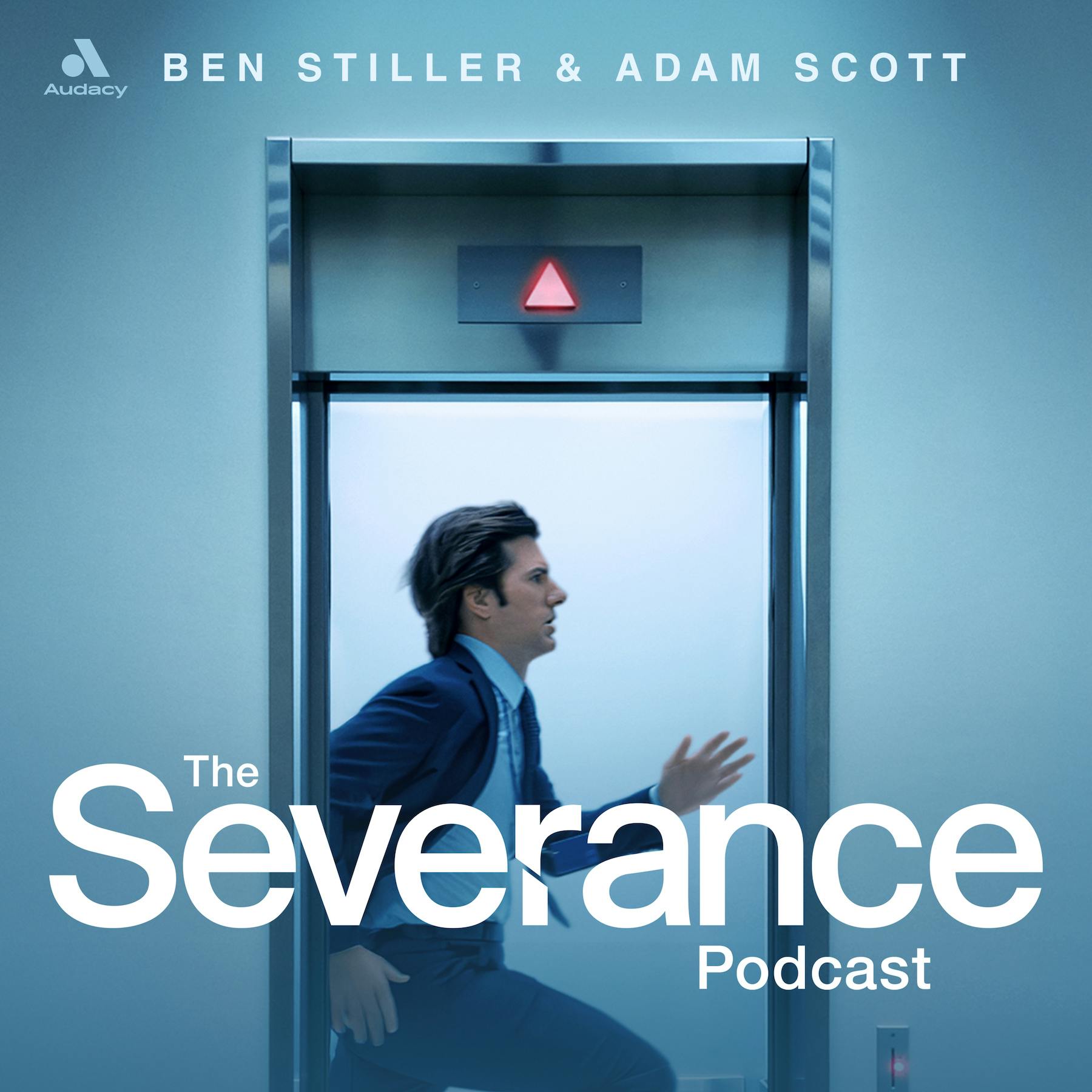
S1E1: Good News About Hell (with Dan Erickson and Jackie Cohn)
To learn more about listener data and our privacy practices visit: https://www.audacyinc.com/privacy-policy
Learn more about your ad choices. Visit https://podcastchoices.com/adchoices
Press play and read along
Transcript
Speaker 1 Adam.
Speaker 2 Yeah.
Speaker 3 I want you to close your eyes and imagine you're working in Lumen's HR department.
Speaker 2
Okay, give me a second. It takes me 10 minutes to close my eyes.
Oh, wait. I did it right away.
Speaker 3 Okay, keep them close. If our partner, ZipRecruiter, was helping Lumen hire for various roles, how do you think HR would feel about ZipRecruiter's ability to search resumes quickly via keywords?
Speaker 2 Let me get into character here.
Speaker 2
I think they'd love it. It's efficient.
It's targeted. We can search words like cure lover and affinity for long hallways.
Speaker 3
Okay, you can open your eyes now. Oh, thank you.
So if you were actually a business owner and not an actor who plays a guy who works at a weird company like you do in the show. Hey, wait a second.
Speaker 3 ZipRecruiter has all these tools and features and more. And they're designed to make hiring faster and easier.
Speaker 3 So see for yourself when you try ZipRecruiter for free at ziprecruiter.com slash severance.
Speaker 2
ZipRecruiter excels at speed. It's smart technology.
Starts showing your job to qualified candidates immediately.
Speaker 2 And if you've you've got your eye on an exceptional candidate, you can use ZipRecruiter's invite to apply message to personally reach out to them.
Speaker 3 Yeah, see how much faster and easier hiring can be with ZipRecruiter. Four out of five employers who post on ZipRecruiter get a quality candidate within the first day.
Speaker 2 You know what? Lumen should make ZipRecruiter a perk. It's way more fun than a finger trap.
Speaker 3 Finger traps are not even fun.
Speaker 2 No, I actually get legitimately claustrophobic when I use a finger trap.
Speaker 3
Yes. I know.
Even the prop ones.
Speaker 2 Totally.
Speaker 3 Because the finger traps are real.
Speaker 2 It freaks me out when I use it.
Speaker 3
You know what else is real? What? ZipRecruiter.com is real. So go to it, ziprecuiter.com/slash severance right now to try it for free.
That's right.
Speaker 2 Ziprecruiter.com slash S-E-V-E-R-A-N-C-E.
Speaker 2 Hey, everybody. Welcome to the Severance podcast, a breakdown of every episode of Severance.
Speaker 2 This is episode one, where we're going to talk about the pilot of Severance, good news about hell.
Speaker 3 I'm just so excited we're doing this. Me too.
Speaker 2 You are Ben Stiller. You are the executive producer and director of
Speaker 2 Severance.
Speaker 3 And you are Adam Scott, the star and one of the producers also, and the living heartbeat of the show.
Speaker 3 You are.
Speaker 3 And here we are talking about this thing that we've been working on for a long time.
Speaker 2 It's so weird because we've been talking about it and working so hard on this for so long and to be standing back and actually getting some perspective on the show like this.
Speaker 2 It's really actually great to do this.
Speaker 3 Yeah, and it's really interesting also to kind of go back and actually have to think about what we have done from the beginning and how it's progressed because it's been a long time. Yes.
Speaker 3 It's been a sizable chunk of our lives.
Speaker 2 Yes, because you first reached out to me about it in January of 2017.
Speaker 3 That's right. So to actually go back and check emails and talk to people who worked on the show and to look at the progression of it,
Speaker 3 it's been, yeah, since 2016 was when we became aware of it at Red Hour, our production company. And here we are about to have season two premiere.
Speaker 2 Yeah.
Speaker 3 And so it's kind of a great opportunity to go back over season one and
Speaker 3 refresh my memory because I didn't go back and look at this stuff for a while.
Speaker 2 No, me neither. And it's January 17th on Apple TV Plus, season two of Severance will premiere.
Speaker 2 Yeah, and so we're going to do a full rewatch of season one and thought it could be fun for people who haven't seen the show or people who have seen the show to maybe go through the show right along with us.
Speaker 3 Yeah, and I think we're going to, I've never done this before, but it's really interesting to just kind of go beat by beat through the show and the memories that come up and talk about how certain things came about and the creative process, I think, a little bit, which was very different than the process of making it the second season.
Speaker 3 I think one of the main things was just that we were in this bubble, sort of literally and figuratively, with the show.
Speaker 3 And nobody really knew what we were doing and had any sort of opinion on it because nobody knew what it was.
Speaker 2 At all.
Speaker 3 And so we were kind of figuring it out as we went along.
Speaker 2
Yeah. And making season one, we started the day after Election Day in 2020.
So we were in the midst of hardcore lockdown in New York City. So it was
Speaker 2 a wild environment to be shooting in.
Speaker 3 Yeah, and we can talk a little bit about that when we get into talking about
Speaker 3 the episode. And also, there's going to be spoilers, but on each episode, there'll only be spoilers for the episode we're discussing.
Speaker 3 So anything that's a spoiler that's about anything coming up, we will not say or will be edited out judiciously
Speaker 3 by our producers.
Speaker 2 By our judicious producers. But before we get into episode one, we wanted to talk about how this show came to be in the first place, which a lot of which totally predates me.
Speaker 2 So I'm excited to hear about all of this.
Speaker 2 So we're going to bring in our friends and co-workers, the creator of the show, the big brain behind everything, Dan Erickson, the great Dan Erickson, and executive producer of the show who first brought the project to you, if I'm not mistaken, Ben, Jackie Cohen.
Speaker 3 Yes. They're bringing Dan's brain in in a jar right now.
Speaker 2 And then his body 10 minutes later.
Speaker 3 Yes. And there'll be
Speaker 3 some sort of a technology hooked up directly to his medulla oblongata to.
Speaker 2 That's right.
Speaker 3 And there'll be a synthesized AI voice.
Speaker 2 That's right. Everything you hear coming from Dan is an AI voice coming from a brain in a jar, is what we're trying to do.
Speaker 3 He's so ahead of the curve because we've been doing it for the last five years with him like this.
Speaker 2 He writes scripts. Yeah.
Speaker 2 We just put a brain next to a computer and then scripts get written.
Speaker 2
Jackie Dan, welcome to the studio. Hello.
Hi.
Speaker 3 Hey.
Speaker 2 So excited to have you here.
Speaker 1 I'm excited to be here. Although I do have to say, I'm not thrilled with the voice you guys have picked for me
Speaker 1 for my brain, my jar brain. I was told that John Toturo's voice would be representing me.
Speaker 3 It's so cool if you could just see Dan's brain just glowing whenever he speaks.
Speaker 2 And when he's upset, it just vibrates in the water. Yeah, yeah.
Speaker 3 Seriously, though, Dan, great to see you.
Speaker 1 So good to see you.
Speaker 3 Thank you for being here. And Jackie.
Speaker 3
You're the best. We've worked together over the years.
Maybe, Dan, you should start out by just talking about when you first decided to send the script to Red Hour.
Speaker 3 And I'm sure Red Hour is the name of my production company.
Speaker 3
I'm sure you didn't send it anywhere else. That was the only place you saw it.
Oh, I would never.
Speaker 4 I would never. Only to me, right?
Speaker 1 Absolutely not. No, I.
Speaker 2 When you were writing it, you were like, Jackie Cohn. Jackie didn't like that.
Speaker 2 Yeah. Yeah.
Speaker 1 No, it was obviously the only place that I sent it.
Speaker 1 No, I mean, I had been working on the script for a while. As I was writing the initial pilot,
Speaker 1 I was
Speaker 1 literally working a series of office jobs I had just gotten to LA and
Speaker 1 sort of found on Craigslist like the first office job that I could find which was at this door factory just a factory that makes and repairs and ships doors and gates throughout the greater Los Angeles area and so I was in this kind of small windowless sorry I mean party time.
Speaker 1 It was that sounds wild. I remember very little of that time just because of
Speaker 1 all of the partying that we did that we did there.
Speaker 2 Those door people. Those
Speaker 2 pure thrills.
Speaker 3 But you'd come from New York?
Speaker 1
Yeah, yeah. I had graduated NYU in 2012.
And so, yeah, moved out here with a lot of debt and not a single contact to my name. So sort of
Speaker 1 came here, though, assuming that this degree was going to open every door.
Speaker 1 And it did bring me two doors, but not in the way that i thought it opened the doors to the door factory it opened the door to the door factory you're like wait hold on no it's not what i said i meant so then you're at the door factory and is that where you first like put pen to paper and started thinking about severance yeah yeah and i i i always i i want to i always hesitate a little bit to tell this story because i don't want to throw anyone under the bus because i was very grateful for that job sure and the people there were very nice and and treated me very kindly
Speaker 1
But it was the last thing in the world I wanted to be doing. And I think everybody there knew that.
And so I was just walking, I was walking into work one day. It was 9 a.m.
Speaker 1 And I literally just had the thought like, God, what if I could jump ahead? And suddenly it would be five and I would have done the day's work, but I wouldn't have to experience it.
Speaker 1 I could just cut out that eight hours. Right.
Speaker 3 And that's not throwing anybody under the bus at work at all.
Speaker 1 Yeah, no, I think everybody there, including the bosses, probably had had had the same thoughts.
Speaker 1 They were like, if only we didn't have to deal with Dan all day.
Speaker 2 Can I just ask really quick, what is it exactly you did? Just so we know how mundane and shitty it was.
Speaker 1 It was a lot of...
Speaker 2 Sorry, I was
Speaker 1 literally like cataloging different hinges because they had this big inventory of different door parts, like hinges and knobs, but it wasn't all super organized.
Speaker 1 And they were like, we need somebody to come in in and just make sure that we have like an
Speaker 1 ironclad log of what all we have.
Speaker 1 And so it was mostly that.
Speaker 4 And didn't you have like a basement office?
Speaker 1 It was in the basement, so there was no windows. And so I think that's where a lot of the kind of lumen.
Speaker 4 Basement themes come from?
Speaker 2 Yeah, yeah. That actually sounds great.
Speaker 3 Does that actually make you, when you open a door now, do you like think about, oh, this is like a Jackson 238 now?
Speaker 2 Yeah. Yeah.
Speaker 1
Like honestly, a little bit. I mean, I've forgotten most of my door knowledge by now, but there was a while where I knew all the terminology for everything.
Right.
Speaker 1 Just from the vibration I feel opening it, I'm like, oh, that's an X19 Omega.
Speaker 2 Maybe we can have
Speaker 2
an episode that's just all door hinges. Sure.
Okay, let's make a note on that. We're going to make to that episode.
Great.
Speaker 2 So, Jackie, when did you find the script? How did it come to you, and what did you think?
Speaker 4 Yeah, so
Speaker 4 I was a TV exec at Red Hour at the time.
Speaker 4 I actually got the initial script in 2015.
Speaker 4 It was a version of the script that Dan and I were actually talking about that is very sort of whimsical and a little bit less grounded than the one we ended up
Speaker 2 moving forward with.
Speaker 3 Yeah.
Speaker 3 Can I just say something?
Speaker 3
I read that script last night for the first time. I'd never seen that version of it.
Whoa, it is crazy.
Speaker 1 This is before it became the extremely straightforward show that it is today.
Speaker 4 Yeah, the totally normal.
Speaker 1 You You know, the very normal.
Speaker 2 I've never read this. Can you describe it a little bit?
Speaker 1 Well, so there's a number of differences. The biggest difference is that in that original version,
Speaker 1
it's actually Mark waking up on the table. And I believe that he is birthed out of like a giant sphincter in the ceiling.
And so he's sort of plopped down naked onto the table.
Speaker 1 But he wakes up and we sort of go through his first day.
Speaker 4 You would love this. Adam would love this version.
Speaker 1 And he's like being trained by this sort of snarky young woman named Helly and comes in and meets Irving and Dylan.
Speaker 1 But we go through the day, but it's a much more kind of like Terry Gilliam Brazil vibe. And I would say also like more overtly comedic at times
Speaker 1 where it was sort of this silly, heightened, magical realism world where like, you know, he's crawling.
Speaker 1 There's at one point where like he's crawling up through these different levels and it's this like endless column.
Speaker 2 It's a closet, right? Yeah,
Speaker 4 it's a storage closet that never ends and he climbs up to like an upper hallway.
Speaker 2 Right.
Speaker 1 That's fun. But we go through in that version, we go through his first day and he's waking up and he's confused and he gets the input survey and everything.
Speaker 1 And it ends, I believe, with his welcome video from himself.
Speaker 1 But then in the second half of the episode, we cut back to like three days earlier earlier and we get to see how his Audi came to be at the company. And he's the sort of depressed guy.
Speaker 2 Did he lose his wife?
Speaker 1
He's divorced. Yes, right.
He's divorced in this virginity.
Speaker 3 He's divorced. Doesn't he go on a job interview somewhere? He goes to...
Speaker 4 He meets it like a blockbuster.
Speaker 1 It's like it's a crazy eagle video, I think. But yeah, he goes to interview to be a video store employee.
Speaker 1
And on his way there, he hits a cat. He like hits and kills a cat with his car.
Sure.
Speaker 1 And then at the interview, he's so guilt-ridden that he like leaves the interview and he goes back to find the cat and it's gone. And I think he knocks on the door and Cobel opens the door.
Speaker 1
Oh, interesting. And he's like, I'm sorry, I killed your cat.
And she's like, come in. And then, and then there's a sequence where like she
Speaker 1 There's a sequence of her showing him her pet rat, who she then tortures, but then she switches and the rat, it turns out, is severed. And so she switches and suddenly the rat is like snuggling her.
Speaker 1
And that's how she sort of explains to him what severance is. Oh, interesting.
And she's like, you know, you could do this.
Speaker 3
Yeah. And then the next day, he goes back.
He tells the police about
Speaker 3 hitting the cat.
Speaker 1 About hitting the cat. And I guess the rat torture
Speaker 1 would be the crime. Right.
Speaker 3 And then he takes them back to the house and the house is gone.
Speaker 1 Yeah, the house is gone.
Speaker 3 And there's just a port-a-potty there.
Speaker 1 Yeah.
Speaker 2
Yeah. Interesting.
This sounds like a really fun, but exhausting version. Well, Jackie.
Speaker 4 Jackie texted me last night.
Speaker 1 She was like, I feel like I'm reading the cartoon version of Sex.
Speaker 2
Yeah, yeah, yeah. It sounds crazy.
I'm not kidding.
Speaker 3
He gets in the port-a-potty at the end. He gets in the and then she talks to him.
Cobel, and he says, hello. And she goes, hello, Mark.
And she's like talking to him from like the port-a-potty.
Speaker 2 Oh, that's so wild. It sounds like...
Speaker 2 influenced by like eternal sunshine like a little more directly. Yeah, yeah, yeah.
Speaker 4 But it was more fantastical and some of the characters were a little more heightened.
Speaker 3 But there are elements of
Speaker 3 that script that survived into the pilot in terms of like the input survey and things like that.
Speaker 1 Yeah, like direct passages from the input survey that stayed.
Speaker 2 Well, correct me if I'm wrong, but it sounds like that tone is not where we ended up landing, but it sounds like in order to to find the tone that we did land on, you had to reach that far and experiment out on those outer edges of
Speaker 2 kind of this wild tone in order to really zero in on what we ultimately found.
Speaker 2 Does that make sense?
Speaker 1 Absolutely, yeah. And I mean, by the time that the script got to Red Hour, it was already a bit more subdued from that.
Speaker 1 And that had, you know, happened from me talking to, you know, my manager and various other people about the script and sort of
Speaker 1 zeroing in on the emotional core of it, which was kind of the loneliness of
Speaker 1 this main character.
Speaker 1 And so it became a bit, it came down from there.
Speaker 1 But yeah,
Speaker 1
I think we did need to go there first. We sort of had to go to 11 first.
Yeah. And then like, okay, let's retain
Speaker 1 that same spirit and that same kind of soul, but
Speaker 1 take it to a more sort of recognizable human place. Yeah.
Speaker 4 And it was almost like it was the origin story of how Mark came to be severed.
Speaker 2 And so eventually there was a version of severance that you then passed along to Beth?
Speaker 4 Yeah, so after that, the first scripts that we got in 2015, I met with Dan.
Speaker 4 We went to breakfast, La Brea Bakery, and I just thought Dan was, he had just the strangest brain and everything was unique and funny and offbeat.
Speaker 4 And for me, at least, I'm always trying to find things that feel like there's no way there's anything out there like this, but it also has like a deeper meaning in some way.
Speaker 4 And when I read that revised version of the script, I really responded to sort of the idea of compartmentalizing your pain in this way, but also like using a work-life balance as a way into that.
Speaker 4 And I just felt like it was funny,
Speaker 4 slightly left of center, but like very human at the core. And so I brought it to the team at Red Hour, and we sort of just started diving in and developing it
Speaker 4 and figuring out a version that was maybe slightly more commercial than the previous one that we had gotten.
Speaker 2 The one where Mark drops out of a giant sphincter in the same one. Yeah, that's the one I'm talking about.
Speaker 1 And figuring out the exact right amount of rat torture.
Speaker 2 Yeah, right script.
Speaker 3
Right. And there was just something about it to me that tonally reminded me of shows that I loved but felt very, very unique.
And we sat down, I guess, at Red Hour.
Speaker 1 It was. I remember specifically because the Red Hour office in LA at that time had this spiral staircase going down into this sort of basement area.
Speaker 1 And I remember like I showed up and I don't know if it was Jackie or who was there, but they were like, Ben is waiting at the base of the staircase for you.
Speaker 3 That's what I always do.
Speaker 1 And I sort of descended the staircase.
Speaker 4 That's how Ben starts every meeting.
Speaker 1 This darkened space. Hello.
Speaker 3 It seems to have a psychological advantage.
Speaker 1 I mean, my memory of it is that I came down the stairs and you were just like standing there, kind of like Hannibal Lecter. And it's only
Speaker 2 like a spotlight thing.
Speaker 4 Yeah.
Speaker 2 Yeah.
Speaker 1
And, you know, I was nervous. Again, I was, and this is true, I was driving for postmates at the time.
Like I was not working in the industry in any way.
Speaker 4 I do actually remember one story you told me because you were driving postmates and you were coming to meet us to talk about a version of the script and you said that you had dropped like
Speaker 4 an entire order that afternoon, but you got to have the chicken nuggets anyway.
Speaker 1
Yeah, yeah. No, it was after.
It was after we had had a meeting. I was driving around and
Speaker 1 I was driving a little like Vespa-style scooter at the time, and the food flew off the back and got run over by a truck.
Speaker 1 And so I went over to my friend's house and just sadly ate this roadkill chicken.
Speaker 2 And look at where Dan is now.
Speaker 1
But, you know, so imagine I'm in that. That's sort of the overall emotional state I'm in in life.
And then suddenly I'm told, you know, Ben Stiller wants to talk about producing this thing.
Speaker 1 And so I was very nervous going into that meeting.
Speaker 1 But then Ben could not have been lovelier and was sort of immediately started talking about all of the things that I loved about the script, like in a very similar way and really put me at ease.
Speaker 1 So within about five minutes of the meeting, you know, I no longer felt like I was in Silence of the Lambs. I felt like I was starting work on something really cool.
Speaker 2 And Dan, for you, I just note like starting out in show business is so difficult.
Speaker 2 And like you were saying, like a meeting like that with someone like Ben, even if nothing ever came of it, just having this meeting where someone's telling you what you did is interesting and good, that must have been a huge shift for you.
Speaker 1 No, that, that day started off this period of my life that actually continues to this day, which is like every day.
Speaker 1 I have the thought of like, okay, if this is as far as it goes, awesome. Like if this is as far as it goes, that's already really cool.
Speaker 3
Yeah. And meanwhile, I was thinking, this isn't just a sample.
This is a show.
Speaker 2 This is a show.
Speaker 3
Because, you know, there's sort of that attitude like, well, it's just a sample. Well, why can't it actually be a show? Right.
And so that was, yeah, 2017.
Speaker 3 And I immediately, when I read the script, thought of Adam because I just thought there's a tone here that was based in these sort of,
Speaker 3 first of all, I was a fan of Adam's. You know, I'm a fan of yours.
Speaker 3
Likewise. I obsessed.
over stepbrothers is when I really first was introduced to Adam's work.
Speaker 2 I remember the first time I met you was at a premiere for, I don't remember what it was, but you and Christine walked up to me and you started talking about stepbrothers with me.
Speaker 2 And I was like, wait, I had the moment that you had, Dan, where I was like, wait, Ben Stiller is talking to me about step. This is crazy.
Speaker 3
Well, I had the same reaction to your performance in Step Brothers that I did to Dan's script. It was just like, this is genius.
This is so funny.
Speaker 3 When something like really hits you and makes you laugh and makes you, you know, it's just like, anyway, it was so, I was very excited. And then we worked together
Speaker 3 in Secret Life of Walter Mitty
Speaker 3 and
Speaker 3 had, you know, that relationship from that and had a great time working on that.
Speaker 3 And then, yeah, immediately reading Mark Scout, I was like, this is Adam Scott, because the tone of the show has, is sort of based, for all the weirdness of the show, it's sort of based in a workplace comedy.
Speaker 3 And I've always felt that.
Speaker 3 And it's almost like that genre and it's subverted and twisted around.
Speaker 3 And I also knew that Adam was really interested as an actor in going beyond
Speaker 3 certain things that he'd done before, as all actors are interested in doing different kinds of things.
Speaker 3 But I thought this was an amazing sort of fit because Adam could take that other element, which is what the show had, and add that in and go much deeper with it.
Speaker 3 And so I immediately called you up a couple days later. Yeah.
Speaker 2 And I remember what I had in my mind for the next several months, however long it was, was just the big hookie idea of the show, of this world where this technology exists.
Speaker 2 And that was something that for me was unshakable. It's just such a good idea.
Speaker 1 Aaron Powell, Jr.: Well, and I remember, Ben, the first time that you came up to me and asked, like, hey, what do you think about Adam Scott? for Mark.
Speaker 1 And it was so surreal and exciting because when I was writing it, I had had the thought.
Speaker 1 I was like, yeah, it's like, you know, it's like an an, it's like the version of Adam Scott that we could get, like is, is, is who will eventually play this role.
Speaker 1 And so when Ben, you know, brought up Adam Scott, I just, I tried to be cool.
Speaker 2 I was like, huh, yeah, yeah, sure, that'd be good.
Speaker 1 But I was so excited.
Speaker 3
Yeah, which I was very happy about, too, because we had never worked together before, too. And just like, you know, seeing that we were in sync that way.
Yeah.
Speaker 1 I mean, I just remember you saying, like, at the core of this is a man who wants to disassociate from huge parts of his life and himself, and that's so sad and haunting.
Speaker 1 So let's make sure that that's our North Star, like wherever else this goes, that that's kind of the North Star.
Speaker 1 But then, you know, at the same time, we were trying to figure out how to pitch it to distributors and
Speaker 1 we're bringing it to Apple. And so I worked with Ben and worked with Jackie on this pitch document where I got it in my head.
Speaker 1 I was like, what this needs to have is like a bloody coffee mug print on it, like as though someone like took a bloody coffee mug and laid it down on the page. Yeah.
Speaker 1 And so we, you know, I was working on that for a while. And I was, you know, this was, this was all just me and my house at this point, like trying to figure this out.
Speaker 1
And so I tried a bunch of different things. I tried like food coloring and everything.
And guys, I haven't, I've never told you this, so I hope you still like me after I tell you this.
Speaker 1 But eventually I was like, it doesn't look like blood.
Speaker 2 Yeah.
Speaker 1 And so I was like, well, it needs to be blood. And so.
Speaker 2 What?
Speaker 1 So, so the ring that ended up on the document that we have here, we each have all looking at right now. I bought a little like lancing needle that you get to draw blood.
Speaker 2 Whoa.
Speaker 1 And I, and I literally poured my own lifeblood out in order to make this. So when you look at the document, you are looking at my literal blood.
Speaker 4 And fun fact, we made no copies of it. So each of them are originals.
Speaker 1 And I, and
Speaker 1 that's not true. That's not true.
Speaker 1 But I didn't tell you guys that because I thought if I tell them this, they're going to think I'm crazy and they're not going to make the show and they're going to call the police.
Speaker 1 And so I have never told a soul about this actually
Speaker 1 until this call.
Speaker 2 So it's incredible. Yeah.
Speaker 2 It does look like
Speaker 2 real blood.
Speaker 4 I will tell you, though, we went through probably 30 iterations of just the coffee stain on this.
Speaker 4 We were done with the document that we were using to pitch it. And then Dan would just come in every day with new little bloodstain circles.
Speaker 1 So, if you guys want to know why I looked so gaunt during that time, that's why.
Speaker 2 You used seven pints of blood trying to get this perfect.
Speaker 1 I was legally dead.
Speaker 2 Okay, right after this break, we'll get into the pilot titled Good News About Hell. Right after this,
Speaker 2 you know, I've been on a bit of a self-improvement kick lately, and one of my very favorite ways to unwind and actually learn something has been through Masterclass.
Speaker 2 I started with a few classes I'd always wanted to take, like Aaron Sorkin on storytelling, Annie Leibovitz on photography, Steve Martin on comedy.
Speaker 2
You could sit there, you can watch Steve Martin talk about comedy for a couple hours. It's incredible.
And honestly, it's become a bit of a ritual in my life.
Speaker 2 I'll pour a cup of coffee, take a walk, pop on a class, and feel like I'm doing something for myself that's both relaxing and inspiring.
Speaker 2 With Masterclass, you can learn from the best to become your best.
Speaker 2 Plans start at just 10 bucks a month, billed annually, and you get unlimited access to over 200 classes taught by world-class chefs, business leaders, writers, artists, you name it.
Speaker 2 You can learn anytime, anywhere on your phone, laptop, TV, even on the go with audio mode or offline downloads.
Speaker 2 And there's no risk because every new membership comes with a 30-day money-back guarantee. Masterclass always has great offers during the holidays, sometimes up to as much as 50% off.
Speaker 2
Head over to masterclass.com/slash severance for the current offer. That's up to 50% off at masterclass.com/slash severance.
Masterclass.com/slash severance.
Speaker 2 Okay, episode one. So going back and re-watching episode one, I was like,
Speaker 2 this show's crazy.
Speaker 3 Yes.
Speaker 2 Like it had been a while since I'd watched the pilot, and it's really good. It's crazy.
Speaker 3 Yeah, it's weird to look at it now a few years later because I feel like we were all so in it when we were making it. Yeah.
Speaker 3 And because you didn't know what it was going to be, and I had that experience for the whole season, really, just of like hoping this whole thing would work. Right.
Speaker 3 But the ability that we had within the bubble of COVID and all of that really was, I think, something that helped us kind of just not think about the outside world that much and just kind of go for it.
Speaker 2
Totally. Yeah.
No, I totally agree.
Speaker 2 So let's get into the episode. First, I want to talk about that opening shot.
Speaker 2 Helly Britt Lauer, who we're going to talk to for episode three. She's just lying there on the conference table, and there's this disembodied voice, which is me, asking her questions.
Speaker 2 Ben, what was kind of the visual
Speaker 2 idea there?
Speaker 3 Yeah, I mean, it was just, you know, the idea of the conference room, this sort of claustrophobic, weird room that has one door and no windows.
Speaker 3 And I think from the beginning, we had an idea of what the visual style of the show was going to be that to me was like really informed by Dan's writing.
Speaker 3 And that image, which was so striking to me on the page, there's so many many layers to that, and it's kind of disconcerting.
Speaker 2 There's something embryonic about it as well.
Speaker 3 Yes, embryonic, and I think disturbing too. Yes.
Speaker 3 And so the scene kind of just like lent itself to, okay, figuring out how do we show this graphically and then trying to like kind of have these shots that kept us with the claustrophobia of Helly's experience.
Speaker 2 Yeah. And we should also mention our incredible director of photography, Jessica Lee Gagne.
Speaker 3 Yep, Jessica, Jessica, who I had been working with on Escape at Danamora, and then we went over onto this, and Jeremy Hindel, our production designer, who came up with all these sets.
Speaker 3 But, you know, then there's this like, you know, Pepe, Mark Scout. You know, who are you?
Speaker 2 Who are you?
Speaker 3 And it sort of has to work retroactively because one of the great things in the structure of the pilot is that we later see Mark and Irving's side of the scene.
Speaker 3 So it has a different context when you see it later in the show. And also the first line, who are you? Sort of the thesis of the the show.
Speaker 2
Yeah, for sure. The broadest of themes for the show.
And Helie can't really answer any questions. One of the questions is, name a state, to which he replies, Delaware.
And that's about all she can do.
Speaker 2 But that does earn her a perfect score on the test.
Speaker 1 Yeah. And this gets into something that we still talk about to this day, which is like exactly what does and doesn't transcend the severance barrier.
Speaker 1 Because, of course, these characters can can speak, they can walk, they have some retention of the skills or memories
Speaker 1 or at least the skills that they've accrued on the outside. And so, we talked about, you know, that they probably have some
Speaker 1 sense that there is a place called America, that there are states, and all this, all these sort of vague things that they're aware of, but they can't name any specifics about their own lives.
Speaker 2
That's right. Like later on, they talk about the movies.
Like, Irving thinks we're cutting bad words out of movies. So they know what movies are.
Speaker 1 They know what movies are. And I think the idea is like, you know, if she knew the answer to any of the other questions, that would mean too much had gotten through.
Speaker 1 If she couldn't name a state, that would mean not enough had gotten through.
Speaker 2 That's right.
Speaker 3 Yeah, no, that scene kind of, you know, became about Helly's realization that she doesn't know who she is. And then we went straight to, you know, title card.
Speaker 3 And then the kind of polar opposite from the sterile environment to you
Speaker 3
in your car crying. Yeah.
You know, we see Mark on the outside for the first time. Yeah.
Speaker 3 And so the Lumen building is the Bell Labs building that was built in the late 50s, early 60s and designed by Iro Saarinen. And Jessica, our cinematographer, found it Googling, looking for,
Speaker 3 we were looking for office buildings.
Speaker 1 Oh, I didn't know it was, yes.
Speaker 3 Yeah, yeah, yeah.
Speaker 3 And we saw that she found this shot, this overhead shot of Bell Labs in Holmedale, New Jersey that had this insane sort of egg-shaped parking lot around the building that was so huge.
Speaker 3 It was, and looking at it from above, it's just the scale of it was massive.
Speaker 3
And so we went down there and checked it out. And that was, I think, the first location we found.
And it dictated so much for us.
Speaker 3 And the biggest thing when we got there that we realized was that nobody had filmed anything there.
Speaker 2 Yeah, that is crazy to me.
Speaker 3 I mean, because when you're making something, the big question you ask when you get to a cool location is like, well, what else did they film here?
Speaker 3 You How many episodes of Law and Order did they do here, especially in New York?
Speaker 2 I feel like it's something that's always on your mind, something that I think is great, is locations, even actors.
Speaker 2 Can we find new stuff to put on that people haven't seen before?
Speaker 3 Yeah, I feel like that.
Speaker 3 particularly for me with music sometimes and definitely with locations. And in New York, it's hard because there's so many things that are filmed there.
Speaker 3 But this was a little bit out of the zone, as they call it, which is like sort of like like a 25-mile zone. You can drive out of the city to get somewhere without being on location.
Speaker 3 Interesting. This was further away, but it was so perfect.
Speaker 3 And when we walked in and saw the scale and the design elements that were still there from the original time it was built, it was like no question, this is the place. And so, yeah, we did that scene.
Speaker 3 And I remember thinking, oh, this is like a tough scene for an actor to do. And you just were just so available with that.
Speaker 3 And at that moment, this was the reason I knew why you were so right for this role.
Speaker 2 Well,
Speaker 2 I remember it being
Speaker 2 challenging and something that I was
Speaker 2
sort of dreading. Like, no, you know, when you have a big emotional scene coming up, it's always in the back of your mind, like, here it comes, you know.
And
Speaker 2 it was a really emotional, obviously, day, and it was, it was heavy, but you were right there with me on Milwaukee. I had lost my mom
Speaker 2 less than a year before.
Speaker 2
You knew that. And we kind of dove into that scene together.
Yeah.
Speaker 2 So that's, that's what that scene is.
Speaker 3 If you're and I think it's so important in the show because it just it just gives you a root and a sort of a grounding in who Mark is and like really what this is all about.
Speaker 3 This guy is going to do this thing because he doesn't want to feel this pain.
Speaker 1 Yeah. And I think it really contextualizes everything because he is, especially Audi Mark, is often so guarded throughout the rest of the show that to start with that moment of solitary vulnerability
Speaker 1 really just told us so much about him. Yeah.
Speaker 3 And then, as he walks into Lumen through the parking lot, that's the first time we hear the theme of the show.
Speaker 2 Are you ready for Mr. Scout?
Speaker 2 Teddy Shapiro.
Speaker 3
Yep, Teddy Shapiro. The best.
Theodore Shapiro, who is a wonderful composer who I go back to dodgeball with, probably pre-dodgeball. Alpha.
Speaker 3 And I've known him for years. He's just amazing, a great person and a really, I think, brilliant composer.
Speaker 2 Sure is.
Speaker 3 And
Speaker 3 he actually wrote most of the music for the show before we ever started filming the show. Wow.
Speaker 3 So we had this long run-up time when we were prepping and COVID affected us because we actually were going to start shooting the show in March of 2020.
Speaker 3
And then, of course, COVID hit and everything shut down. We continued to prep remotely for a while.
Nobody knew what was going on.
Speaker 3
But we didn't actually start shooting or prepping in real life again till October of 2020. Yeah.
And then started shooting in November. So during that time, Teddy was able to write a bunch of music.
Speaker 3
And, you know, we were trying to figure out like what's the theme song for the show. And and I asked him, like, what do you think? And he just sent me a file with three different pieces on it.
Yeah.
Speaker 3 And he said, each one of these could be the theme of the show.
Speaker 2 And they were all good. Yeah.
Speaker 3
But there was one that I listened to. I was like, I love this.
It's like creepy and weird and it builds out. And catchy, too.
It's catchy. I thought it was amazing.
Speaker 3
And so I said, I think this is the one. And he's like, great.
I like that one too.
Speaker 3 And that was it. So then we decided to play it as you're walking into the building for the first time.
Speaker 2
Yeah. And that's a real, yeah, re-watching it and hearing that title for the first time.
It's really amazing.
Speaker 2 So Mark walks into the building, gets in the elevator, and this is where we first see the transition.
Speaker 3
Yes. Yeah.
And that was written in the script, really not as anything visual, as I recall.
Speaker 1 Yeah, no, I was thinking of it more as just a performance thing, kind of, and that we would eventually figure out what had happened.
Speaker 3 And i remember that we had those discussions and i felt like we needed to do something just something to indicate that there was some sort of a change and you know one of the things i love about the show is that it's it's so simple it's not really science fiction the only science fiction part of it is that there's this chip really and maybe there's an ethereal mystical quality to you know that we don't know about But I think the idea that this guy just has a chip in his head and he just goes, you're just going down an elevator.
Speaker 3
Yeah. And something's triggering the chip.
But it's the same guy. It's the same building.
Nothing else is changing.
Speaker 3
But I thought it would be important to have some sort of visual sort of indicator. And so Jessica and I were talking about it a lot.
And the idea came up.
Speaker 3 I honestly don't remember when we came up with it, but it was just basically the idea of like doing, you know, the old Zolly thing, which
Speaker 3
has been around for a very long time going back probably, and Hitchcock Hitchcock was sort of the most, Vertigo was like the most famous. Yep.
And then Spielberg. The Jaws.
Yeah. The Jaws.
Speaker 3 And Jaws is probably my maybe top two movies
Speaker 3 or one, maybe. And I thought, well, if we can do like a subtle Zolly, which now a Zolly is the camera is dollying in, which means it's on wheels pushing towards the...
Speaker 3
actor and at the same time you're zooming out on the lens. So you have a zoom lens that can zoom in and out and make things bigger or smaller, but then the camera itself is coming in.
So
Speaker 3 the lens is zooming out while the camera is going in.
Speaker 3 And so it gives this effect where you get like this parallax on the background that makes you feel like something's going on, that, you know, that... that the background's coming closer.
Speaker 3 But the other thing it does is it changes the shape of an actor's face because if you go from a long lens, like a telephoto lens, which compresses the image, and you zoom out to a wide lens, it literally makes a face look different.
Speaker 3 because the way that the glass works, if you put a lens right up to the face of someone that's wide, you know, they'll look kind of a little bit distorted when you see those sort of like kind of crazy, distorted, you know, images of people is what creates that effect.
Speaker 2 And I remember that we had kind of the three walls of the elevator set up with the dolly track and the camera, but it was sort of movable.
Speaker 2 So when we were, depending on which stage we were on, before we figured out exactly what we were going to settle on, what I was going to do when you guys were zolleying into me, when we were just experimenting and sort of figuring it out, you would always have that sort of nearby,
Speaker 2 depending on what we were shooting. And when we had time, we would go over and try and figure it out.
Speaker 3
Right. We did a lot of tests on it.
We always do a lot of tests to figure out what stuff looks like.
Speaker 3 But the main essential element of making it work, I think, is the acting, because Adam would have to kind of, we figured figured out, like, let's do something that changes your consciousness.
Speaker 2
Or you had the idea to like, let's maybe flutter the eyes. Yes.
That could be a signal that something's happening.
Speaker 1
Yeah. And I still don't know how you do that as well as you do, by the way.
I've literally filmed myself seeing if I can do it, and I can't even get close.
Speaker 2 Well,
Speaker 2 we did a lot that didn't work. And as soon as like we're doing one that feels wrong, it's like, no, let's try.
Speaker 3
We did it a lot. We did a lot.
And actually, looking back at the first episode, the first one is very subtle. Yes.
And we got a little less subtle as we went along.
Speaker 2 Yeah, yeah, yeah, yeah.
Speaker 1 By the end, it's going to be like
Speaker 4 Mark's head falls off when he severs.
Speaker 1 We're going to have to have a slide whistle sound effect.
Speaker 3 But honestly, it's your change in demeanor. And you did a lot of work to create any mark.
Speaker 4 And out of it. That was incredible.
Speaker 3 And there's just so many differences in those two characters that are
Speaker 3 technical things that you do.
Speaker 2 Yeah. And doing the Zolle really helped with that because you would have to go from one to the other super fat, like in an instant.
Speaker 2 So it kind of helped just frame up, like, okay, super quick, what's the difference between these two?
Speaker 2
And so that it actually helped because often in season one, we were jumping between Audi and Innie during the day. We would go back and forth a bunch.
Yeah.
Speaker 3
Yeah. I think it ended up being like sort of an average of I'd say about 12 to 13 takes per zolle to get one right.
Yeah, probably.
Speaker 1 That's the one that's where we
Speaker 2 ended it up at.
Speaker 3 So, yeah, so you go down to the
Speaker 2
second floor. And then we have the long walk in the hallway.
The infamous long walk in the hallway. How long is it, really? Do we know?
Speaker 1 45 minutes.
Speaker 2 Yeah, 45, 50 minutes.
Speaker 3 It's like a two, is it like a minute and 30 seconds or a minute and 45 seconds?
Speaker 2 Yeah.
Speaker 2 Yeah. I remember on like take three, you were like, you know what? How about about halfway through, you check your watch?
Speaker 3 Yes. Well, no,
Speaker 3
this is what I love about this shot is, first of all, it came up because we just wanted to use all the hallways we had on our set. Yeah.
It was just like almost a lark.
Speaker 3 We said, hey, why can't we just try doing, and we don't use a steady cam in the show usually.
Speaker 3 So it's a Dolly camera like on a rig with wheels. And we had this team
Speaker 3 pulling you through these hallways. And we said, let's just go do use every turn we have in every hall on our set that Jeremy Hindel built that takes up the whole stage.
Speaker 3 And so we did it, and it happened to be like, oh, wow, this is actually really interesting.
Speaker 3 And there's a certain point in the shot where you, I think, as a viewer, going, this is going on a really long time.
Speaker 3 And that's exactly when Adam checks his watch, and there's like a little meta-moment there that always makes me laugh. And then just it keeps going.
Speaker 2 So then Mark walks into MDR, walks into the office, and we meet Dylan and Irv, Zach Cherry, and John Taturo.
Speaker 2 And we immediately jump into their rapport.
Speaker 2 Yeah.
Speaker 3
Yeah. Do you want to take...
I have to just say, this is the scene that made me want to do the show
Speaker 3 because it was just so specific and so fun. Should we take a look at it?
Speaker 2
Yeah, yeah, for sure. Yeah.
Hi, kids. What's for dinner? God damn it, Irv.
We warned you. About the greeting? You were kidding.
No, we sincerely hate it. How many reasons did we come up with? Eight.
Speaker 5 Eight reasons.
Speaker 2
Chief among them, the latent condescension. And it's confusing.
Like, did the kids make you dinner in this scenario? Yeah, what kind of a shit dad are you?
Speaker 4 I mean, I think what stands out and still in the episode now is how human they all are on the inside
Speaker 4 and how it feels like just banter from office space or one of those office comedies, but also like the innocence of those characters.
Speaker 3 Yeah, and the
Speaker 3 other thing that's going on there when we were cutting the scene together is also
Speaker 3
we're showing what refining is. Yeah.
That's right. So we're kind of setting up, you know, these files and the numbers.
And I always love that about the show, too.
Speaker 3 It's like that, just like, what is this? What is this?
Speaker 4 But also that they don't know what it is. Yeah.
Speaker 4 It's just, it's like such a great sort of metaphor for so many corporate jobs where you're doing like a very small job that like turns into something else once it goes beyond you, you know?
Speaker 2
Right, right. Just moving widgets around.
Yeah, exactly.
Speaker 2
So then we pretty quickly meet Mr. Miltrick, Tramel Tillman, the great Tramel Tillman, who walks in and pulls Mark out and brings him over to Ms.
Cobel's office. And this is where we meet Ms.
Speaker 2
Kobel, Patricia Arquette. And Kobel's first, the first thing she says to Mark is, you look awful.
You look hungover.
Speaker 1
I don't know where that came from. I've certainly never been told that by an employer.
No, no, no, no, no.
Speaker 2 At the door factory, maybe?
Speaker 1 Some of these things that just, you know, I don't know where they came from.
Speaker 4 Just small jabs that Dan puts in there. Yeah.
Speaker 3
But that's also like one of the great little details that can only happen on this show is like, oh, he's coming in. He doesn't know he's hungover.
She knows he might be hungover. Yeah.
Speaker 1 And at this point, you know, in the episode, we don't really understand what severance is yet.
Speaker 1 And so you read the scene one way the first time you watch it, and you don't even notice necessarily, like, it's not like mark says like well i don't know if i'm hungover how would i know if i'm hungover no but you know you you re-watch it later and your your uh reaction makes perfect sense and maybe maybe it's because he was crying out in his car that's probably you know yeah yeah yeah and he's probably hungover honestly he's probably hungover and
Speaker 2 of particular note for me watching at this time was when she says a handshake is available upon request so I say,
Speaker 2 I would like her to handshake. And her reaction to me requesting the handshake right after she told me it's available upon request,
Speaker 2 her reaction is just like, How dare you?
Speaker 3 Yeah, and yeah, that little reaction of hers when she's taken aback is one of my favorite little moments. That's great.
Speaker 3 And then the changing of the key cards. Yes, and they look ceremonial kind of.
Speaker 2 They look essentially exactly the same, but there was a
Speaker 2
slight color difference. Yes.
So Mark is informed that he's going to be taking Petey's place because Petey is no longer with the company. And his first
Speaker 2 duty as department chief is to train a new recruit, Helly R.
Speaker 2 And we cut to Mark and Irv.
Speaker 3 One of my favorite things about the pilot in the structure of it, that all of a sudden we're back where we started the show.
Speaker 3 And yet we're seeing it from a completely different perspective.
Speaker 3 And we realized that everything that Mark was saying that sounded kind of stilted and pre-packaged is actually stilted and pre-packaged for a reason.
Speaker 3 And then, uh, you know, this moment that leads up to you finally like opening the door, right?
Speaker 2
And talking about that. Yeah.
So we start a conversation, and Britt is just incredible right off the bat. Just, you can tell this is just going to be a wrench thrown into the works here.
Speaker 3 Yeah, this is one of my favorite little exchanges when
Speaker 3 she decides to rebel against you. Yeah.
Speaker 2 Should we watch that? Yeah.
Speaker 2 Okay. My name's Mark.
Speaker 2 And
Speaker 2 so I, you know, a few years back, I woke up on this table in this room and
Speaker 2 a disembodied voice asked me 19 times who I was.
Speaker 2 And when I realized I couldn't answer, I told that voice I would find him. and kill him.
Speaker 2 I don't know why I said that. I mean, I was scared to.
Speaker 2 Did you kill the voice?
Speaker 2 No.
Speaker 2 No, that voice's name was Petey, and he became my best friend.
Speaker 2 So, look,
Speaker 2 there is a life to be had here, Helie.
Speaker 2 A life to be had?
Speaker 3 It's just like the innocence of Mark in these early episodes.
Speaker 2 Yes. Yeah.
Speaker 4
I was just going to say the same thing. Like, and also just how much of a company man he is at this point.
like ready to read from the binder, you know, verbatim.
Speaker 3 Yeah.
Speaker 3 And also, I like how it sort of like shows the dynamic between you two in the beginning where there's like, you know, there's some sort of a connection, but you are so in the sort of, you know, drinking the Kool-Aid there.
Speaker 3
Yeah. But then you kind of like decide to go off book again and just talk to her and tell her about your experience where we learned about Petey.
But then you have to go back to the book again.
Speaker 3 And so it's sort of like the beginning of like where we're going to be going, which is like Heli's going to be pulling Mark out of his comfort zone.
Speaker 2 Yeah, challenging him to the kind of edges of what he's able to do. And then he just has to keep going back to the book, back to Lumen, until eventually she kind of pushes him further and further out.
Speaker 2
Okay, so the orientation here does not go well. She says she wants to leave three times, which means they have to let her try and leave.
So we go out to the stairwell.
Speaker 2 And that, I remember, was a really tricky sequence to conceive and figure out and do.
Speaker 3 Yeah, that was just another one where it was sort of written in that like she goes out and she comes back in and she goes out and she comes back in.
Speaker 3 And we had to figure out how to show the audience what this actual experience is.
Speaker 2 Like how it feels.
Speaker 1 Yeah.
Speaker 3 And just it always made me laugh, Daniel. Like, you know, and you say, like, yeah, you laughed, but then you came back.
Speaker 2 Yeah.
Speaker 2 And just how frustrating and claustrophobic it is to walk out of a door and just immediately walk back in.
Speaker 3 Well, it's also, yeah, the constant, you know, sort of tension between the innie and the outie.
Speaker 3 And yeah, that was a very, very involved situation that involved a lot of cameras.
Speaker 3 At one point, we had the heli POV cam that Jessica, our cinematographer, who is basically around the same size as Britt, wore her costumes
Speaker 3
and is her POV when you see her. And it's like a helmet cam that she's wearing so she can look down and see her arms.
But that's actually Jessica, our cinematographer.
Speaker 2
That's amazing. It was a weird day.
And it totally works, too.
Speaker 2 So then what happens next?
Speaker 3
Basically, like, yeah, when she doesn't leave, you take her to Kobell's office. Right.
And then, right, and you bring her in, and you've gotten, you've got your cut on your head. That's right.
Speaker 3
And are getting the band-aid put on by Mr. Milchik, like a little child.
That's right.
Speaker 2 A blue band-aid.
Speaker 4 I mean, again, the single-slanted band-aid was amazing. Yeah.
Speaker 2
I feel like we need to do a tie-in with Johnson and Johnson. Yeah.
I know. Yeah.
Speaker 3 There's a brand partnership.
Speaker 2 It's probably not done that.
Speaker 3
And then while you're getting your first aid, then Kobel meets Helie and sort of tells her, Mark can't screw this up. We get a sense of your dynamic with Ms.
Kobel.
Speaker 3 And because here's a video that you're going to watch that explains everything.
Speaker 2 That's right. That's how we get the video.
Speaker 2 And then Mark goes in and asks Kobell if she's mad at him. And she gives him some pretty oblique, emotionally confusing answers.
Speaker 3 Which was this little speech about hell
Speaker 3 was also in the very early drafts of the script, too. This idea that anything a human can imagine, they can create.
Speaker 1 Yeah. And I love how Patricia delivers that line of, you know, you know, what makes the difference? The people, which on its face is such a kind of kind and optimistic line.
Speaker 1 But of course, there's a threat behind everything.
Speaker 2 100%.
Speaker 2 So then Helie watches the video of herself, which is quite strange.
Speaker 2 Let's listen.
Speaker 6 I have, of my own free accord, elected to undergo the procedure colloquially known as severance.
Speaker 3 It's very, to me, again, like one of these things in the show where it's just like, what a weird thing to have your Audi talking to you.
Speaker 3 And that's always been something that the show, to me, is like always exploring in different ways this connection between the Audi and the Innie. Yeah.
Speaker 3 And like what seeps through and what doesn't seep through. But in this moment with you, which I think is so good too, where you, you know, she says, I'll never leave here.
Speaker 3 And you say, no, you'll leave at five.
Speaker 2 Yeah.
Speaker 2 And every time you find yourself here, it's because you chose to come back, which is also kind of ominous. And then she gets a single word from Irving, which is maybe the greatest.
Speaker 2 He just just says, hello, hello.
Speaker 2 John Tuturo.
Speaker 2 Okay, so Mark is leaving work, and there is a gift card from Pips on his windshield as an apology for the injury on his head, which was sustained when,
Speaker 2 of course, Helly threw the little speaker at him in their confrontation
Speaker 2 in the conference room.
Speaker 3 Pips for me resonated because as a kid, I lived in New York, but in the 70s, my dad's brother lived in Beverly Hills, and we would come out to visit him in L.A., and there was a backgammon club called Pips on La Ciendega Boulevard in the 70s.
Speaker 2 Where you would literally go and play backgammon? Yeah, yeah. Well, my uncle, Arnie, would.
Speaker 3 And it was like super cool. And I was like, oh,
Speaker 3 that's where the grown-ups go and play backgammon at Pips.
Speaker 2 I would love to have a place to go play backgammon with other grown-ups. Yeah.
Speaker 3 Well, can you imagine? We should have been alive in the 70s.
Speaker 2 Do you guys want to start a club right now or let's get out of here?
Speaker 3 But I did love the idea of Pips in the show too, because just the idea of getting a gift card and they're trying to like kind of like gloss over his injury, lying about the injury too.
Speaker 2 Yes, it's a total lie, how he sustained it. It makes no sense.
Speaker 3 Yeah. And also before he goes to Pips, there's that moment where he's pulling out and he almost hits Heli.
Speaker 2 Yeah, that's right.
Speaker 3 And I just love that sort of moment of these two people who don't know each other in the outside world but yet have just had this whole interaction it's just one of those yeah fun moments a really important moment uh for the audience um so mark goes home and we see that his home life is a a bit drab
Speaker 2 and as he's in the midst of his um lonely routine at home there's a knock at the door it's his sister devin played by the luminous gentolik just the most incredible
Speaker 2 dan can you explain this as a non-dinner dinner party?
Speaker 1 I don't know that I can.
Speaker 2 Okay.
Speaker 1 But yeah, no.
Speaker 1 I'm honestly not sure where this idea came from, except that it felt like a pretentious, contrarian thing that people in this world might choose to do, you know, to focus on the social element of dinner by foregoing the actual food.
Speaker 2 It is so stupid.
Speaker 2 These fucking people
Speaker 1 are the worst. It is the perfect
Speaker 4 for the character of Ricken.
Speaker 2 Oh, yeah. Michael Chernis.
Speaker 3 Michael Chernas, so perfect. Yeah.
Speaker 2 And something, just one little detail of how hilarious Michael Chernas is, is when they're talking about, they keep bringing up food and the absence of it and how great it is during this scene.
Speaker 2 And at one point,
Speaker 2 Donald Weber's character, Patton, is talking about Donald Weber is incredible as well.
Speaker 2 Him pretentiously pontificating about food and why we don't need it. And
Speaker 2 you can see Chernus as Ricken kind of looking at him. Like, Ricken still doesn't quite get why they're doing this.
Speaker 2 He's like agreeing with how great it is, but you can tell he's like, ah, okay.
Speaker 4 Oh, right, right. It's also possible they're all starving.
Speaker 2 Oh, 100%.
Speaker 1 All of them are sneaking off to the kitchen to sneak food.
Speaker 2 Yeah, yeah.
Speaker 1 I remember one of the first conversations I had with Michael was about this scene. And I sort of came to him and I was like, listen, I know that this probably seems like
Speaker 1 really crazy and heightened.
Speaker 1 And
Speaker 1 he was like, no, no, no. I know people just like this.
Speaker 1 He was like, I actually don't think this is that heightened.
Speaker 3 Why don't we want to take a look at that?
Speaker 2
Well, so you walk in at 9 a.m. and then suddenly it's 5 and you're leaving.
Well, they stagger us a little.
Speaker 2
And then, conversely, when you're at work, you can't access outside memories. So, in effect, that version of you is trapped there.
Well,
Speaker 2 I mean, not trapped,
Speaker 2 but what?
Speaker 2 No, no, I'm curious. What were you going to say? But not trapped, but but what?
Speaker 2 What were we going to say?
Speaker 2 So, I suppose we know where you fall in the congressional goings-on. Okay, I think we may be missing the point here.
Speaker 2 The point is that Mark made a decision, and that decision was controversial
Speaker 2 ethically and socially,
Speaker 2 morally,
Speaker 2 scientifically.
Speaker 2
But Mark, I stand behind you without reservation. So well said.
Thank you. Absolutely.
I definitely stand behind Mark.
Speaker 4 Ricken coming in with the most grating defense of severance.
Speaker 3 The fact that he just keeps going with scientifically.
Speaker 2 And he ends up somehow turning it back and making himself heroic for standing behind Mark.
Speaker 1 This scene, I think, was really indebted in the writing of it to Eternal Sunshine.
Speaker 1 And especially because there's that scene where I think he gets the card saying, you know, this person has forgotten you. And he's with his friends.
Speaker 1 And one of them is like, oh, yeah, I've heard of that. That's like a new thing.
Speaker 1 And just, I love moments like that where you put sort of the central concept of the show in the context of the world. And you're like, okay, so this is something that people know about.
Speaker 1
It's not like a secret, but it is controversial. To get that through the voices of these just fucking morons.
Yes.
Speaker 3 Yes. That scene really accomplishes a lot in terms of just orienting the audience to what this world is.
Speaker 3 And also like feeling, you know, how Audi Mark's sense of isolation too, and which leads right into the cut to the sandwich of, you know, actually eating.
Speaker 3 And it's, you know, Mark and Devin eating together. Like I said, you guys had such an amazing chemistry from the beginning as a brother and sister.
Speaker 3 I think if you see that in that scene, it's one of my favorite scenes in the show, actually. Oh, really?
Speaker 2 Yeah. This one?
Speaker 3
Yeah, it is. I love how it looks, and I love how understated you both are.
And there's just so much lived lived history between the two of you.
Speaker 3 I remember seeing that scene thinking, okay, this is like the feeling of what the show should be.
Speaker 2 Well, I do remember loving playing that scene because, you know, when she says
Speaker 2 forgetting about her eight hours a day is not the same as healing, that's roughly what she says. And Mark's response is, the work thing has helped.
Speaker 2 I've so many times had to play the version of that scene where it's,
Speaker 2 yes, but my wife died and
Speaker 2 just kind of digging in on all of the, this,
Speaker 2
the thing that really struck me about this scene is this is how this conversation would actually go. Right.
You wouldn't be
Speaker 2 recontextualizing everything for the audience and kind of digging in again and again.
Speaker 2 You're talking like a brother and sister who have already had a bunch of conversations about this. And this ends up cutting so much deeper than those other versions.
Speaker 2 So, that night, Mark is trying to sleep. He can't, so he gets up to get a glass of water.
Speaker 3 May I just can we go back
Speaker 4 to the beds?
Speaker 1 The bed scenes.
Speaker 2 Oh, did we skip the beds? Oh, my gosh.
Speaker 3
The bed scenes are so one of my favorites, also. Oh, yeah.
I guess I have a lot of favorites.
Speaker 2
The beds, we have to talk about it. Okay, so where did because that's really funny.
Where did that come from?
Speaker 1 I, I, again, a lot of the stuff with Rick and I honestly can't tell you. I, I think it was just sort of trying to
Speaker 1 put myself in the headspace of that kind of
Speaker 1 pretentious, quote-unquote, forward-thinking person who assumes that their new way is the way.
Speaker 3 But is that an actual psychological theory that if you don't move a baby out of,
Speaker 3 let the baby evolve from the crib to the small bed, to the bigger bed.
Speaker 4 To the race car bed.
Speaker 3 As I'm saying it, I'm realizing there's no way that's actually.
Speaker 2
It might be now. No, it's not.
It's so dumb. The room is filled with beds.
Speaker 3 And you're in the speed racer bed.
Speaker 2 Right.
Speaker 1 Yeah, you're in the one that the kid is going to be in from like
Speaker 1 six to 11.
Speaker 3 It's a bed they don't need for another six years. Right.
Speaker 2 It's going to be ridiculous.
Speaker 1 It has to be there for them getting used to it.
Speaker 3 The other moment that I really enjoy in that scene is when Ricky just comes and touches your foot. Yeah.
Speaker 1 I think that might be my favorite moment.
Speaker 2 Yeah, that's 100% Michael Trunas.
Speaker 3 Just a really uncomfortable foot-touching moment that you both kind of endure.
Speaker 4 I think people really enjoyed you tonight, Mark.
Speaker 2 Everything Rickin does is just so condescending.
Speaker 2 Okay, so now Mark gets up in the middle of the night because he can't sleep in the race car bed. and goes to pour himself a glass of water.
Speaker 2 And while he's doing so, he looks out the window of the kitchen and sees someone standing in the backyard staring staring at him with an unusual look on his face, right?
Speaker 2 Like a familiar look on his face.
Speaker 3
Yeah, and he's wearing a suit. Yeah.
This was always one of
Speaker 2 one of your favorite. I'm not going to say this again.
Speaker 3 He says he looks like a businessman.
Speaker 1 There's a businessman in the yard.
Speaker 3 The next morning, yeah.
Speaker 3 It's the first time that we're, you know, that we're seeing who we know is going to be Petey.
Speaker 2 Yeah.
Speaker 2 Later that day, Mark is at Pips using his gift card in the VIP section, and Ms.
Speaker 2 Selvig calls, who at this point is just someone who we've heard him talk on the phone to a couple times about moving her trash cans out of the way.
Speaker 2 It's just some neighborhood nuisance he's dealing with. Yeah, yeah.
Speaker 1 By the way, I had to completely rethink the rules of trash pickup to make this work because I never understood what she was doing.
Speaker 3 This was so talk to me because I know them all.
Speaker 2 You do.
Speaker 2 Dad knows all trash rules.
Speaker 3 No, my wife makes fun of me for not understanding recycling for the
Speaker 3 podcast.
Speaker 2 What do you not understand?
Speaker 3 That I can tell you.
Speaker 4 You don't know which one goes where?
Speaker 3 I just have questions about how it all really goes down.
Speaker 2 Maybe you and my kids could have a conversation because they don't seem to understand it either.
Speaker 1 But yeah, that's really the biggest story hole in the whole show is that in this town, recycling and trash are picked up on different nights, and each house only has one spot.
Speaker 1 So you can't have them both out at once.
Speaker 2 Yeah.
Speaker 3 I also just want to say before we gloss over that the VIP section at Pips was for me something that I sort of angst it over.
Speaker 2 What do you mean? Well, just. Is it your favorite scene, by the way?
Speaker 3 It's also my favorite scene. No, this isn't actually not my favorite scene.
Speaker 2 Me neither.
Speaker 3 Okay.
Speaker 1 I hate the scene.
Speaker 3 Yeah.
Speaker 3 But the idea of, like, I really was thinking, like, can we get away with the VIP sign in this diner? It's going to be so ridiculous that it says VIP.
Speaker 3 And there's like a little stanchion, you you know, which is the
Speaker 3 little rope.
Speaker 3 But it really makes me laugh because it's just sort of there. And it's kind of like for those who choose to enjoy it, the sign is there.
Speaker 2 Yes.
Speaker 2 It's almost like Lumen
Speaker 2 is
Speaker 2 trying
Speaker 2
much harder on the inside. of their company.
And out in the world, they're doing just the bare minimum to get the bare minimum.
Speaker 1 Petey storms the VIP section.
Speaker 2 Yeah, Petey just shows up and interrupts Mark's call with his neighbor about recycling. And he sits down and tells Mark that he's his friend from work.
Speaker 2 Yeah, yeah.
Speaker 3 Also, at this point in the episode, I'm always surprised at how much has actually happened in this episode.
Speaker 3
We do a lot of stuff in this episode. Yeah.
I mean, we're setting, there's just like so many things that are being introduced to the audience. Me too.
Speaker 2 Rewatching it, I was like, oh my God, we're already here. Yeah, yeah.
Speaker 3 But I'd have to say say that in the writing of it, what this sets up really is, you know, this is setting up the trajectory of where we're going to go.
Speaker 3 And this was a tough scene for you guys as actors because there is a lot of exposition in it. And it's also like asking the audience to
Speaker 3 buy a lot of stuff.
Speaker 3 And I always felt like if we can make it through this scene with the tone of the show that people will buy this, then
Speaker 3 we'll be on our way. But I think by you continuing to ask him, and also he looks a little crazy too,
Speaker 3 but you have to kind of take a little bit of what he says at face value. That's right.
Speaker 2 It was challenging because I had to sort of think, this guy, the stuff he says is absurd.
Speaker 2 So like you said, kind of have to take that with a grain of salt, but it has to be compelling enough for me to end up going after it.
Speaker 1 Yeah, yeah. And of course, you know, Yule is incredible.
Speaker 3
The best. The great Yule Vasquez.
I've known Yule. How long have you known Yule?
Speaker 2 I've met him on
Speaker 2 Severance.
Speaker 3 I've known Yule for probably like 25 years.
Speaker 2 Oh, you have? Yeah, yeah. He's a New Yorker.
Speaker 3 He's a New York theater actor and film and television actor, too, and just
Speaker 3 really
Speaker 3 has so much intensity and is also very funny, too.
Speaker 2 He's fantastic.
Speaker 2 Lovely, lovely guy, too.
Speaker 3 The best.
Speaker 3 And so then that...
Speaker 3 He gives you that note that sort of like lays out where the series is going, right? Yep.
Speaker 2 A red card, which is just a great little visual cue because it becomes important that we are able to keep track of this card through the next few episodes.
Speaker 3 To my favorite niece.
Speaker 2 That's right. Yeah.
Speaker 3 The other thing in the PD scene, reintegrated PD says, I'm your best friend. You're my very good friend.
Speaker 2
Yeah. Great line.
Yeah.
Speaker 1 Yeah. And his delivery on that is just spot on.
Speaker 2 It's perfect.
Speaker 1 Because again, that's another one that could have been overplayed, but it's just
Speaker 1
you feel in that moment that this was their dynamic. Yeah.
And he's actually really happy
Speaker 1 to see his work friend again and be sort of, you know, messing around with his work friend again. Yeah.
Speaker 2
From there, we go out into the parking lot. Mark reads the card that Petey gave him.
And under the Ewell reading out the card from Petey, we see Mark back at home moving the recycling can.
Speaker 2
And then Mrs. Selvig appears and starts talking to him.
Now, this is a big reveal in the show. So there must have been a really specific way you wanted to shoot and reveal this.
Speaker 3
To shoot it, yeah. Basically, the idea was like, let's not show Patricia until we have to.
But I think you kind of know her voice.
Speaker 3 But we basically just held on you for as long as we could until we had to cut to her.
Speaker 3 And I always felt like, okay, the audience is probably going to get it or they're getting it as it goes along.
Speaker 3 But you also get a sense of your kind of funny relationship with her, but you also have a little bit of a sense of
Speaker 3 just something's off and weird with her. Yeah.
Speaker 2 She's just weird. Yeah.
Speaker 3
And she, I love Patricia's Ms. Selvig.
Me too.
Speaker 3 She always, well, we could talk about it more in two, but she just created a whole funny, weird, but yet still connected to
Speaker 3 Kobell.
Speaker 2
It's so good. I just have one question about this, Ben.
Is this your favorite scene?
Speaker 3 This actually is my favorite scene.
Speaker 2 Okay. Yeah.
Speaker 2
All right. Well, that is the end of our first episode of the Severance Podcast.
Thank you to Dan Erickson and Jackie Cohn. Well, thank you for being here.
It was so fun having you guys.
Speaker 3 So glad you're back.
Speaker 3 I'm so glad you were here for the first one.
Speaker 3 So I also just want to say,
Speaker 3 before we go away,
Speaker 3 just a shout out and credit credit to all the Severance podcasts that are out there, the Rewatch podcasts, the ones that are breaking down each episode.
Speaker 3 They're so much fun for us to check out and to listen to. And I just so appreciate how invested you are in the show and also how well-produced your podcasts are.
Speaker 3 And it's great to be another Severance podcast out there joining some of these amazing fan podcasts.
Speaker 2 Yeah, it's super flattering. And like you said, they're just, they do such a great job and so smart.
Speaker 3 Yeah, it might be fun to cross-pollinate at some point with some of those podcasts. Have a lot of guys on and
Speaker 3 we could go on one or something like that. It could be really fun.
Speaker 1 It'd be great.
Speaker 2 The Severance Podcast with Ben Stiller and Adam Scott is a presentation of Odyssey, Pineapple Street Studios, Red Hour Productions, and Great Scott Productions.
Speaker 3 If you like the show, be sure to rate and review this podcast on Apple Podcasts, the Odyssey app, or your other podcast platform of choice.
Speaker 3 Our executive producers are Barry Finkel, Henry Malofsky, Jenna Weiss-Berman, and Leah Rhys-Dennis. The show is produced by Xandra Ellen and Naomi Scott.
Speaker 3
This episode was mixed and mastered by Chris Basil. We have additional engineering from Javi Crucis and Davey Sumner.
Show clips are courtesy of fifth season.
Speaker 2 Music by Theodore Shapiro. Special thanks to the team at Odyssey, Maura Curran, Eric Donnelly, Michael LeVey, Melissa Wester, Matt Casey, Kate Rose, Kurt Courtney, and Hilary Schuff.
Speaker 3 And the team at Red Hour, John Lesher, Carolina Pesakov, Jean-Pablo Antonetti, Martin Valderutin, Ashwin Ramesh, Maria Noto, John Baker, and Oliver Ager.
Speaker 2 And at Great Scott, Kevin Cotter, Josh Martin, and Christy Smith at Rise Management.
Speaker 3 We also had additional production help from Gabrielle Lewis, Ben Goldberg, Stephen Key, Kristen Torres, Emmanuel Hapsis, Maria Kavanaugh, and Melissa Slaughter.
Speaker 2 I'm Adam Scott.
Speaker 3 I'm Ben Stiller.
Speaker 2 And we will see you next time.
Speaker 5 Here for the Lowe's early Black Friday deals? You're right on time for some of our biggest savings.
Speaker 5 We're talking up to 50% off select major appliances, plus up to an extra 25% off when you bundle select major appliances. Holiday lights going up soon? Select ladders are up to 50% off right now.
Speaker 5
Get Black Friday prices without the Black Friday crowds. Lowe's, we help.
You save. Valent through 1119.
Selection varies by location. Select locations only.
While supplies last.
Speaker 5 SeeLows.com for more details.
