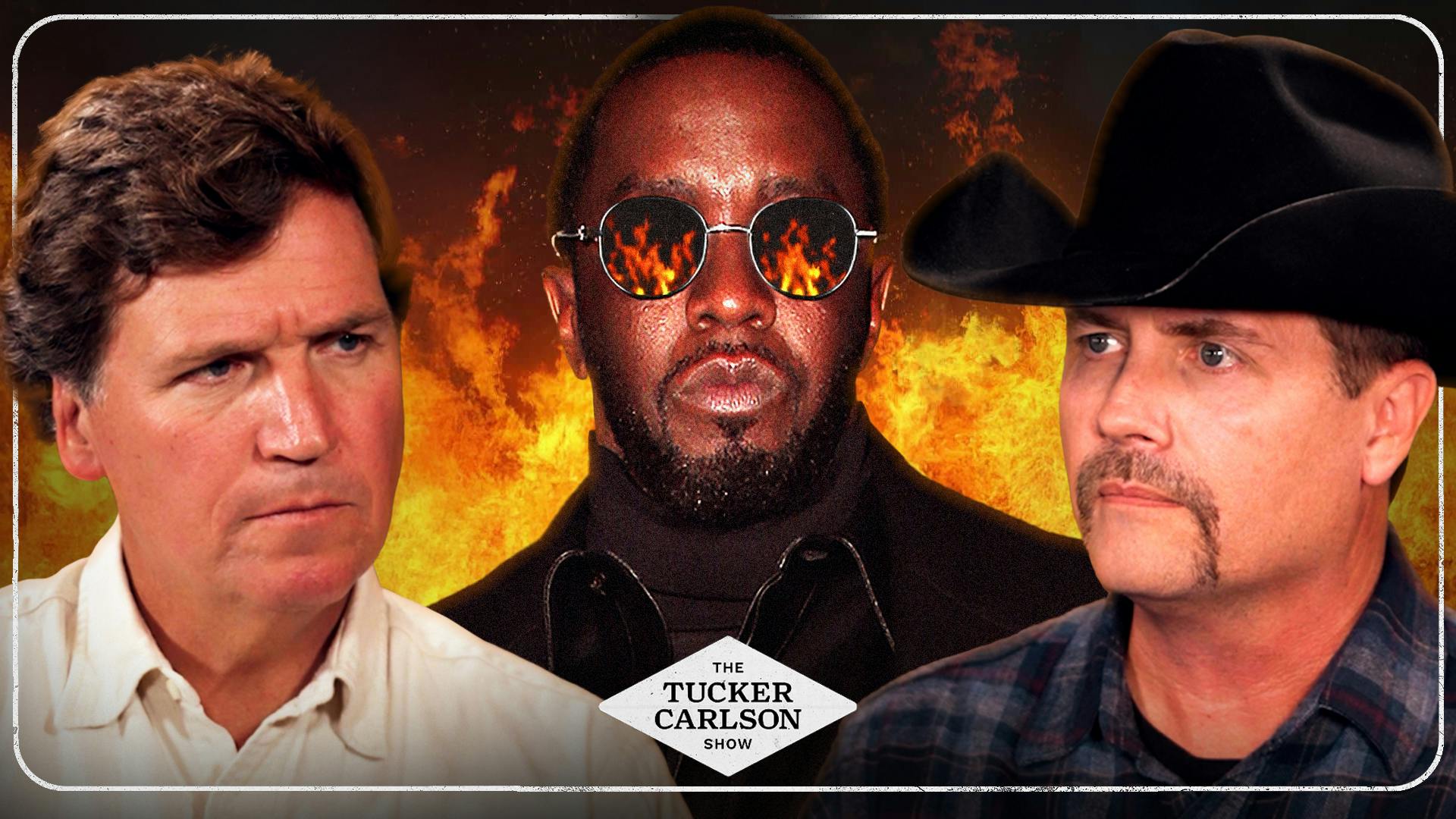
How Casey Putsch Built the Most Efficient Car in the World, and Why the EPA Hates Him for It
(00:00) Why Is the Auto Industry Dying?
(11:23) How Putsch Built One of the Most Efficient Cars in the World
(15:52) Dieselgate and EPA Corruption
(20:00) The Problem With Electric Vehicle Mandates
(30:44) Why the Media Is Pretending Putsch’s Car Doesn’t Exist
Paid partnerships with:
Jase Medical: Go to https://Jase.com and use code TUCKER at checkout for a discount
Eight Sleep: Get $350 off the Pod 4 Ultra at https://EightSleep.com/Tucker
Hillsdale College: Take a free online course today at https://TuckerforHillsdale.com
Learn more about your ad choices. Visit megaphone.fm/adchoices
Press play and read along
Transcript
Speaker 1 The holidays are all about family, but at the Chrysler Wrap-up the Year sales event, it's all about you.
Speaker 1 Enjoy every mile in the most awarded minivan in America, the Chrysler Pacifica, with the most standard safety features in its class, available stow-and-go seating, and the available stow-and-back built-in vacuum.
Speaker 1 Make the most of the holidays with a great deal at the Chrysler Pacifica Wrap-up the Year Sales Event.
Speaker 1 Based on Ward's Small Van segment, based upon the latest available competitor information, Chrysler is a registered trademark of FCA US LLC.
Speaker 2 Okay, so here's my theory. The death of the U.S.
Speaker 2 auto industry was a bigger deal than I think we realized, maybe a harbinger, hopefully not, but perhaps a harbinger of like what happens to the country going forward.
Speaker 2 So Detroit dies and people are like, oh, Detroit's such a mess. My wife is from there, so I've been there a lot.
Speaker 2
But you never thought like that would happen to the rest of the country. Oh, no, we're going similar ways.
We are. That's exactly right.
I live in the greater Toledo area, and that's baby Detroit.
Speaker 2
Toledo, exactly. Home of Champion Spark Plugs.
Yeah. Yeah.
No longer.
Speaker 2 So
Speaker 2 I guess the question is, if we want to prevent this from spreading like the cancer that it clearly is, I think it's important to know the cause of it.
Speaker 2 So, why did the auto industry, which was the most important non-defense industry we had, why did it die?
Speaker 2 I would say largely regulation and the nature of trying to find more profit and where you ship things.
Speaker 2
It was a lack of pride in having a workforce in the future tomorrow. And those are the two things I would stick with.
Because since, you know, in my opinion, I've been a car guy for a long time.
Speaker 2 Wait, you didn't mention the unions. Everyone blames the unions for the destruction of Detroit.
Speaker 2 I think that's a secondary symptom. I mean, that's a big thing, but I think culturally it has to do more with where we're going and what happened.
Speaker 2
I mean, the automotive industry right now, if you look at new cars, I don't own a new car. The newest vehicle I own is early 2000s.
Really? The newest. Yeah.
Speaker 2 And honestly, I've been thinking like that's. And you're a professional car guy and you have no UK cars.
Speaker 2 Yeah, no, I work on all my own stuff from exotics to building race cars, helping students building airplanes to finish stuff. Like I know automotive history.
Speaker 2 And honestly, kind of the sweet spot for cars to daily drive are the 1980s and 1990s. What? We've just gotten worse since then.
Speaker 2
In what ways? Consumer culture. You know, they try to find new ways to make money, give something to buy a new model year.
But cars haven't really gotten any better since the 1990s.
Speaker 2 They're coming more like a cell phone. And then you get more and more and more regulation, which just stymies the automotive industry into building just the one thing.
Speaker 2
That's why all the cars look the same. That's why there's no real innovation.
That's why anything interesting ends up being wildly expensive.
Speaker 2
And then the two things that are always used as, shall we say, the scapegoat is either the environment and the EPA or safety. But it's not always about that.
And if you're really worried about safety.
Speaker 2 Wait, wait, those are scapegoats? Well, not scapegoats, but reasons to force things into be a certain way. Because if you speak up and question anything, they'll always say, environment, safety.
Speaker 2
It seems like that's always the way. But we're always just quagmired in this regulation and direction.
Well, you're blowing my mind.
Speaker 2 So I get, I mean, getting older is a process of realizing how many of the lies you've internalized and believed.
Speaker 2 And I guess if you had asked me when I woke up this morning what destroyed Detroit, I would say, I mean, I'm not actually even that against unions, to be honest with you, but I would say, well, everyone says the unions and EPA and safety.
Speaker 2
Ralph Nader and the EPA and the UAW. True.
But no. True.
It's deeper, you're saying. Well, it is.
And okay, you know, I'm an individual. I build stuff.
Speaker 2 I think about the nation, individuals, community, my family, my friends. Like, we want a car that gets us there, that we can fix, that we can afford, right? But it's not what we're making.
Speaker 2 Another thing, which I want to mention, two points.
Speaker 2 The other thing that's happening nowadays is we don't really innovate or make anything new anymore that people can afford, really.
Speaker 2 And I'm finding another It seems like a symptom across culture of just everything now is about money from one pocket to to another. It's not about really creating something new or building tomorrow.
Speaker 2 And I started to see that in the automotive industry with the nature of hybrids to electric.
Speaker 2 They have a purpose, but they're not a solution for everything.
Speaker 2
But the political push and powers are trying to make it a solution for everything. And I look at this and go, no, no, no, no.
This isn't about...
Speaker 2
This isn't about what's best for everybody or even the environment or anything. This is money from one pocket to another and a power play.
What does that mean, money from one pocket to another?
Speaker 2 So
Speaker 2 the, it's kind of a, it's a deeper discussion that led to
Speaker 2 when I built what I called the Omega car, which I built that high-efficiency diesel car that I thought would be more recyclable, lower environment impact, affordable,
Speaker 2 and a good car in a direction to go.
Speaker 2 And if I make, can I just back up a second, kind of what I saw?
Speaker 2
So, you know, in my teens and 20s, I'm just a normal car guy. I liked fast cars and going on dates with pretty girls.
That's pretty much all I cared about. So, fast cars and fast women as well.
Speaker 2
Well, they say in Kentucky, what is it? They say beautiful horses and fast women. No, I meant beautiful women and fast horses, something like that.
But
Speaker 2
no, that was kind of all I cared about. But my grandfather always talked about politics and things going on in the world.
And while I didn't really care so much to look into it, things stuck with me.
Speaker 2
Yes. And I remember in, was it 2008, 2008 when Obama was running? People are all excited.
I'm like, okay. And I remember watching all the presidential stuff.
Speaker 2 That was kind of the first time I really started paying attention to politics when I was a younger guy. And we're watching the Democratic National Convention and Obama's talking.
Speaker 2 And I remember, and I remember thinking, this guy's full of crap. That's just my gut feeling.
Speaker 2
I didn't know where it came from. I didn't really know that much of politics, but I'm just like, this guy is full of crap.
You didn't think he was Black Jesus? No, no. I mean, you sound like a racist.
Speaker 2 I'm just, I don't care.
Speaker 2
I don't care. That's the spirit.
So I just thought he's full of crap. And so so I'm listening, get to the point, and he goes, and I'll help Detroit retool.
Speaker 2
So the energy efficient cars of tomorrow will build here for the sake of the nation and world. I'm like, bullshit.
You're not going to.
Speaker 2
This isn't, you're not doing a Kennedy speech like we're going to the moon for the decade is out. You're not going to do it.
I just absolutely, I just, it just, it ticked me off.
Speaker 2
And I've remembered it to this day. And of course, we have the.
Why did you know he was not going to do it?
Speaker 2
Because Detroit's not going to change. He's not going to change that.
Like a politician changes their own oil, let alone know how a car works or the industry or what to do with it. Fair.
Respectfully.
Speaker 2
Fair, fair. No, with no respect, I would say.
No, you know, and I can think of some, you know, military leaders and such saying things that I'll be a little kinder about.
Speaker 2 We don't want to take advice from, you know,
Speaker 2
pants suits in Washington. It's like, what do they know about it? Respectfully.
But things like that go across the board. So I'm thinking, he's not doing anything.
Speaker 2 Well, the other thing that interesting happened was the financial crisis, 2008, 2009, right?
Speaker 2 Now, I didn't fully understand what was going on that again. I cared more about going on dates and fast cars than politics and things going on at the time.
Speaker 2 But the family business we had was a small town public golf course in the Midwest, you know, 18 holes, worked our butt off.
Speaker 2 My father worked seven days a week, six o'clock in the morning, 10 o'clock at night, every day throughout the entire of the season. So we worked.
Speaker 2 I know, like, being in a small town, everybody makes fun of you. Oh, you're rich, you just sit on a golf course all day.
Speaker 2 I'm like, no, we're changing oil and like diesel tractors and backlapping mowers and mowing and putting on banquets and doing family business
Speaker 2
to backlap a mower. Oh, sorry.
That was
Speaker 2
so if you mow a fairway or a green, it's not a rotary blade that cuts by kind of like whacking the rest. It's actually a reel which comes through and slices on a blade.
Yes. Well,
Speaker 2
they get dull. And so you have to sharpen them.
And it's dirty and you beat up your knuckles. And that's kind of the work you actually do in the winter with the golf.
By hand, like with a file?
Speaker 2 Oh, no. You have to run them backwards.
Speaker 2 with a dirty compound with like grit on it and you have to adjust it
Speaker 2 like she left
Speaker 2 right exactly exactly thank you sorry to interrupt no it's all right i just kind of bring that up because that that was my world at the time we worked hard and we saw that but at that time i started to see how it was affecting people in little tiffin oio uh on a daily basis loans housing loans business loans and i also saw how that affected eventually when the family was thinking of selling the business
Speaker 2 You couldn't get lending for something like that.
Speaker 2 And I started to see how that hurt everything. But where I was going with it in relation to the overarching things with the automotive industry.
Speaker 2
So now we're bailing out the automotive industry, tax dollars, huge amounts of money. Okay.
Huh. Paying attention.
Speaker 2 And I had lived in Columbus, Ohio at the time, head of my little shop working on vintage race cars and things like that, and riding my motorcycle around.
Speaker 2 And after we were bailing out the automotive industries, I kind of remembered back and I'm like, so I wonder, is Obama going to try to make everything efficient now? Are they going to do anything?
Speaker 2 And I see us, we just kind of doubled down on making bigger trucks and muscle cars and things, which I have to tell you,
Speaker 2
I love big trucks and muscle cars and fast cars. Okay.
Like if you can afford the fuel and do what you want, don't get in my way. You can pry my sports cars out of my cold dead hands.
Okay. Don't.
Speaker 2 But, you know, it doesn't mean I don't necessarily want something that could be better for his daily driver or I can't think of something that might be more efficient.
Speaker 2 So I was noticing that. And I'm thinking,
Speaker 2
this is wrong. Something's wrong here.
And just in what I was doing and, you know, researching various materials and thinking of building cars and it's kind of what I do, you know,
Speaker 2 I started to realize there's a myriad of ways that we can mass produce
Speaker 2 cars, automobiles, that will be less toxic, less environmental impact, cheaper, more efficient than what we're doing.
Speaker 2
Because in a sense, all of our cars are stamped metal boxes with chairs bolted in them. Yeah.
We've been doing that since the mid-1930s. We have.
Speaker 2
Not much has changed. And it's been a long time.
And I'll say this also, which I think you might enjoy as a history guy. So, SR-71 Blackbird, right? CIA spy plane, Mach 3.
Speaker 2 They came up with that in the late 1950s.
Speaker 2 We had to go to the trouble of getting all the titanium, I think, from Russia at the time, which required a zillion shell companies and orchestration just to get the material to build it.
Speaker 2 And we build an aircraft effectively in the late 1950s, 1960, that'll do Mach 3 and can map hundreds of thousands of miles of the Earth's surface and before GPS existed, be able to plot the stars through broad daylight and through clouds in the late 50s.
Speaker 2 And we're still making cars like the 1930s now.
Speaker 2 I think that's BS. Yeah.
Speaker 2 So
Speaker 2
to be fair, you've also seen the death of innovation in aviation as well. That's true, too.
I mean, the 747 came out in 1969. True.
Tell me we've made it, and I was born that year, 55,
Speaker 2
six years ago. When was the last time we built a plane that cool? 1969? We haven't.
And to be fair, there's a lot of things that we still like the B-52 bomber. It's still around.
Speaker 2 Buff is eternal, they joke, you know? And so there's a lot of great designs from back when that are still perfect designs now and can be upgraded.
Speaker 2 It doesn't mean that we have to have innovation for innovation's sake. Some things just work,
Speaker 2 but sometimes you need new things.
Speaker 2 But as a younger guy at the time,
Speaker 2
I was frustrated by all this. And I'm like, you know what? I'm going to build a car.
I got a point to prove.
Speaker 2
And my thinking at the time was, it can't be electric because nobody knows what the heck a kilowatt hour is back then. We're not accustomed to thinking like that.
We think miles per gallon.
Speaker 2
How fast is it? It zero to 60. You know, things like that.
That's kind of the two things that matter most to people. And can you use this? And how much does it cost? So it's like, okay.
Speaker 2 I want to build a car that'll be representative of something that can be mass produced that, let's say, it costs about $20,000 or less. I made it diesel, turbo diesel.
Speaker 2 So I looked around for what I felt was about the most efficient engine reasonably available and built the car. Now, I said something like 11 years ago on video, so I can prove it.
Speaker 2 I said, it will get over 100 miles a gallon and it will do zero to 60 in under five seconds.
Speaker 2 Now, I built the car. I even showed it at a private like car event with sports cars and exotic cars and told everybody about my concept.
Speaker 2 But when I got it all together and done, I realized, I don't have a voice. Like,
Speaker 2
what am I going to do with this thing? If the world doesn't know it it exists and nobody hears about it, it doesn't exist. You felt like Nikolai Tesla at this point, I'm sure.
Perhaps.
Speaker 2
I don't, maybe I, you know, he's a, he's an interesting character. Yeah, for sure.
Certainly. And I sat on it.
I just put it in my garage for better part of a decade because I didn't have a voice.
Speaker 2 But other things going on in life.
Speaker 2 I was doing my non-profit Genius Garage, which I really believed in because we can go into some big problems with the American educational system, especially higher education.
Speaker 2 I think we're stymieing our youth, the families in the future. And I think it comes from predatory lending and loans you can't default on.
Speaker 2 And I think the schools are creating this vacuum monster that is not the real world with majors that are not providing jobs and creating an environment for political radicalization.
Speaker 2 But that's another topic.
Speaker 2 But the reason I say that. Everything you just said is
Speaker 2
obvious, and it's crazy that it still exists. But let me just back up to the vehicle itself.
Yes, if you don't mind, without getting boring on that. No, I'll come back to that.
Speaker 2 Explain how you get 100 miles to the gallon on diesel and it goes zero to 60 in under five seconds. Like, how, how, what is that? How big is the motor? Like, tell us about the cool.
Speaker 2
Let me ask you a question. Yeah.
So I don't know what you drove here and let's pick your average car or SUV. Yeah.
Yeah. Put it in neutral.
How hard is it to push it?
Speaker 2
Pretty, pretty hard. Pretty hard, right? Yeah.
Like, I know it sounds silly, but when you work on cars, if you spend your day pushing around cars, you start thinking about how efficient they are.
Speaker 2 Look at a car and SUV going down the road or a semi. How aerodynamic do you think that is?
Speaker 2
Not super aerodynamic. No.
I drive a Silverado. Not
Speaker 2
a dynamic. There's nothing about our cars that are remotely efficient at all.
So
Speaker 2
how do you get that? You just make the actual car, not so much the drivetrain. You're not looking for a magic bullet.
Everybody wants a magic bullet. You make the car more efficient.
Speaker 2 Like the...
Speaker 2 Lower coefficient of drag.
Speaker 2
Somewhat lighter weight where you don't need weight, just less rolling resistance. You make it actual, efficient, good design.
We don't do that with the automotive industry anymore.
Speaker 2
And the reason I chose diesel is because people would understand that. Diesel is also a very flexible fuel.
We can make biodiesel.
Speaker 2 You can make diesel effectively out of what's left over from the meatpacking industry, the winemaking industry, agriculture, you name it.
Speaker 2 And this is fascinating too, because, and I got to get into why I talked about the car, but since that time, I got word back from people kind of more in traditional automotive media and whatnot.
Speaker 2 No one would talk about it or write about it. And it kind of pissed me off.
Speaker 2 Because back when it was in a concept and I just talked about it a little bit on my YouTube channel, some places would report about it.
Speaker 2 But why is it when it was just a concept and a YouTuber was trying to do something efficient and like maybe eco-friendly and whatnot, they'd write about it.
Speaker 2 But then when it actually did what I said it was going to do, they wouldn't.
Speaker 2
It actually gets 100 miles to the gallon? Yeah. First time out, I didn't even have all the fairings on it.
I haven't even tuned it.
Speaker 2 It was 104.72 miles to the gallon, just driving through the countryside normally with stop signs and turns and such. Just jumping in without even tuning it more.
Speaker 2
The first time I took it out, we were just idling and doing hard pulls and everything else. I looked at it.
I'm like, we just got like 88 miles to the gallon. We're not even trying.
Speaker 2
That's crazy. Well, and the other thing.
Considering gas is pretty, it's like three bucks or something. Yeah.
Right here. Yeah.
Yeah. I mean, it's expensive.
It's more expensive in Europe.
Speaker 2 And like, okay, I have some gas guzzlers for sure. I like V12s and stick shifts and straight.
Speaker 2
So tell me about the engine in this vehicle. It's largely conventional.
It's turbo, which is good for diesel because it allows you some flexibility
Speaker 2 to cruise more. But if you want to make power, you can crank in the boost and do some things to make it efficient.
Speaker 2
And I experimented even with some catalytic converters and such that will even be better. So there's nothing crazy about the drivetrain.
There's no magic bullet there. What about the other thing?
Speaker 2 I got to point this out. That drivetrain, when I started, had 130,000 miles on it.
Speaker 2
It's no spring chicken. What was it from? What did you call it? Volkswagen.
Pre-Dieselgate. Dieselgate's an interesting thing to talk about, too.
Speaker 2 But
Speaker 2 what's Dieselgate?
Speaker 2 That was the big scandal that Volkswagen went through with allegedly cheating their emissions on tests.
Speaker 2 That was back in
Speaker 2 2015, I think. Right.
Speaker 2 That was a big scandal, which is interesting because in looking back on it now, it seems to tie into more with
Speaker 2 not regulating a car company so much for the betterment of all, but an attack, it's the way it kind of looks like to me.
Speaker 2 An attack on Volkswagen. I would say diesel because Volkswagen was, and I don't know about now, but it certainly was the best and most efficient.
Speaker 2
The engine I use was from back in like 2000 when they made it. Volkswagen.
Yeah. Good engine.
And it's manual, more efficient that way.
Speaker 2
The transmission's manual? Yeah, manual. Less parasitic losses.
It's just, it's cheaper to produce, gets better miles to the gallon. And,
Speaker 2 you know, back in the day, day,
Speaker 2
sports cars, if they were manual, would have better zero to 60 times and such. No longer true.
Yeah, no longer true. Our automatics have gotten a lot more interesting and whatnot.
Speaker 2
But manual transmission still makes for more efficient driving. Yeah, because there's less parasitic drag.
There's less losses in the drivetrain. Huh.
Interesting. Like meaningfully more efficient?
Speaker 2 Well, especially in that time, in the 2000s, probably
Speaker 2
could be five to seven miles to the gallon on the highway. Oh, wow.
Maybe even maybe only like three, but it's still a lot. And when you consider millions of cars over years, that's for sure.
Speaker 2
Or even your car over years. And it doesn't all have to just be about like, oh, we have to do this for the sake of the environment.
These are costs that hit people's pockets. Oh, I completely,
Speaker 2
I wasn't thinking about emissions, even. Yeah.
So,
Speaker 2 well, that's amazing. So, and what about what about emissions on this vehicle? I'm trying to get to like in regard to mine or the whole scandal specifically.
Speaker 2 It's the basic stuff that diesel would have. I mean, you've got a pretty serious catalytic converter, you've got the
Speaker 2 exhaust gas regulation and such. And
Speaker 2 without getting an overly nitty-gritty, diesel does have some things about it that
Speaker 2
the EPA likes to go after. But it's kind of strange, and I'm curious to see what happens in the future.
So you probably, I'm sure you saw this.
Speaker 2 The Supreme Court ruled differently on the Chevron deference. Of course.
Speaker 2 Which I'm really fascinated to see how that changes the nature of the way laws are interpreted. Aaron Ross Powell, Jr.:
Speaker 2
The question before the court was, can federal agencies create legislation when the Constitution says, no, Congress creates the laws. Right.
On how it's interpreted. Right.
Speaker 2 But for generations, the federal agencies, including EPA, but all of them, from the Department of Education to the Department of Defense, have come out with regulations that have the force of law that no one ever voted for and that no elected official had a hand in.
Speaker 2
So it's anti-democratic, right? That's the idea. That's probably the reason why some of my friends complain about the ATF.
I think they're pretty good at making laws.
Speaker 2 Well, the ATF has all kinds of other problems like shooting innocent people, but yes, no, absolutely. Yeah.
Speaker 2 But
Speaker 2
they create regulations that no one voted on and that no elected official administers. So it's like, as a citizen, I have no recourse.
So that's not democracy. That's tyranny.
Yeah.
Speaker 2 So that's that's the conceptual
Speaker 2
explanation. Exactly right.
And, you know, it's not looking for a, you know, a way around something or a loophole, but like what is right? Like, what are we actually doing here? Where are we going?
Speaker 2 Yeah. You know, and the beauty of the Congress is they have two or six years
Speaker 2
between elections. So they're pretty accountable to voters.
And if voters don't like the way they vote, they can turn them out, at least conceivably, right?
Speaker 2
One hopes. One hopes.
But the Undersecretary of Douchebaggery is completely beyond the control of any voter. So like that's, again, tyranny, right? Yes.
Yeah.
Speaker 2 And that that affects things greatly because when you over-regulate things,
Speaker 2
it just makes it difficult to innovate or go anywhere. Right.
You know, and the thing of it is, so going back to the car, the car I built, so I mentioned to you, got 104.72 miles to gallon.
Speaker 2 And I video recorded the whole thing because I want to know what does this thing actually do? Because last year was a very important year. It was an election year.
Speaker 2 One thing that also drove me nuts, so if you look at, so the Biden administration and even Gavin Newsom's pushing electric vehicle mandates like large electric vehicle mandates not like back to the clinton era when it was like i don't know one to two percent of vehicles sold by a certain times need to be electric no they're big ones and i had a huge problem with you know biden's administration doing that because i'm like this destroys innovation you know and the other thing you go into and i don't want to beat up on electric because it you know it has its purpose in places i think all kinds of drivetrains and energy do and i don't mean that as just like political bs rhetoric i mean that genuinely but it's not a band-aid fix
Speaker 2 Well, so how are we going to charge them?
Speaker 2 Our grid? Yeah, how? I'll tell you this. So I did some math with all this.
Speaker 2 Let me tell you this. So the next day, I'm coming right back to this point on the math.
Speaker 2 The next day after I did the initial mile per gallon testing on my car, I did zero to 60 times with it.
Speaker 2 So I put accelerometers and GPS in this car, also my 93 Dodge Viper RT10, C7 Corvette Gransport, and my neighbor's Tesla Model 3 rear-wheel drive with the full charge.
Speaker 2 My car that got 104 miles a gallon beat the Dodge Viper by two-tenths of a second and exactly matched the Corvette Gransport and the Tesla.
Speaker 2
Damn. That's without like computerized traction control.
That's me just driving it. Everybody loves and appreciates first responders.
Speaker 2
When things go haywire, they're the ones who show up and make you safe, protect you, not just you, but the entire country. Most people agree they're heroes.
But what happens if they can't show up?
Speaker 2
First responders cannot be everywhere all the time. And if there's an emergency, particularly a big emergency, there aren't enough to go around.
So you have to be your own first responder.
Speaker 2 Before an ambulance arrives, before a doctor can help, it is up to you to protect yourself and your family.
Speaker 2 And if it's a medical emergency, you could be out of luck because you don't have the right medications. Most people do not have the medications they need at home.
Speaker 2
There's an answer to that. It's called the JACE case.
It's a simple but smart solution to a problem most people don't even think about.
Speaker 2 It's a set of emergency prescriptive medications curated by medical experts. You've got peace of mind knowing that no matter what happens, you are totally prepared.
Speaker 2 Even if you're a prepared kind of person with stuff stored in your cellar, you probably don't have the right medications.
Speaker 2 Well, if there's an infection or any kind of crisis and you don't have access to first responders, you're going to want a Jace case, medications on hand when they matter most.
Speaker 2 Go to jace.com and use code Tucker at checkout for a discount. Jacejase.com.
Speaker 2 Check out code TUCKER.
Speaker 3 A incredible nutritional supplement called Immuno150 is now available to the public.
Speaker 3 It contains 13 vitamins, 17 herbs, 18 amino acids, 17 antioxidants, 9 exotic fruits, COQ10, turmeric, and 70 plant-derived colloidal minerals.
Speaker 3 It may be the best health supplement in the world because of its 70 minerals. There's nothing like this amazing product.
Speaker 3 It supports the body with everything it needs to become healthy and stay healthy.
Speaker 3 Immuno 150 contains seven times more minerals and many more vitamins and enzymes than found in foods and most nutritional supplements. Immuno150 can be ordered from Amazon or Walmart.
Speaker 3
Or call 844-519-3400. That's 844-519-3400 or visit the website immuno150.com.
That's immuno150.com
Speaker 4 this episode is brought to you by progressive insurance do you ever find yourself playing the budgeting game well with the name your price tool from progressive you can find options that fit your budget and potentially lower your bills try it at progressive.com Progressive Casualty Insurance Company and affiliates.
Speaker 4 Price and coverage match limited by state law. Not available in all states.
Speaker 2 So what was 0 to 60 in that? 4.61.
Speaker 2 And I probably could have done better, but honestly, the tires are over a decade old now because I built the car a while ago and such. But that was real world driving.
Speaker 2 And yeah, I gave it, and I got videos of it if you look me up. How did you beat the Tesla? It matched the Tesla, but that was only with the Tesla to full charge.
Speaker 2 It would consistently get a little slower every time as it would lose juice.
Speaker 2
Just because the nature, obviously, of an electric vehicle just gives you massive advantage. Yeah.
And the Tesla is simple.
Speaker 2 You just stick your foot down and computers, that's the best it's going to do. My car would actually probably beat it if I gave it some clever traction control and such in it, to be honest.
Speaker 2
But that's not the point. The point of it is, so I'm like, I'm going to run some numbers.
Just out of curiosity.
Speaker 2
What is the carbon footprint of burning one gallon of diesel? Oh, interesting. Okay.
EPA has got numbers for that. Okay.
Speaker 2 What's the carbon footprint on average, the United States electrical generation, whether it's nuclear, wind, coal, whatever?
Speaker 2 National average of the carbon footprint of a kilowatt kilowatt hour of electricity. Say like you're in a perfect world charging your electric vehicle at home.
Speaker 2 And then I just did the basic math on, okay, what's the carbon footprint of my car on diesel getting over 100 miles a gallon versus the electric car charged at home, national average over 100 miles.
Speaker 2
My car beat the electric car. It had a lower carbon.
Yeah.
Speaker 2
And it has a much lower one to manufacture, and it's easier to fix. So that's when I went, okay.
I also did some other fun math.
Speaker 2
Respectfully towards Cole, I think. But hold on.
Just to be fair, can it be turned off by remote by a politician who doesn't like your politics? Thank you. No, it can't.
Oh, it can't. No, it can't.
Speaker 2
But I don't feel comfortable with it. Oh, you don't? Well, how are we going to get it? I don't care.
You're not.
Speaker 2
It's going to stay that way. I like your spirit.
Yeah. Yeah.
Yeah. No, thank you for bringing that up.
That's very important. Because
Speaker 2 the other thing about
Speaker 2
well done, sir. Yeah.
For real.
Speaker 2 No, I get it.
Speaker 2
Yeah. Good.
Good.
Speaker 2
Sorry, I shouldn't say that. I get too excited on the strike.
You remember the days of school, like you could have a gun rack because people were reasonable human beings in a community.
Speaker 2
California, we didn't have a lot of deer hunting then. Right.
We'd surfboard. But you could still, yeah, exactly.
But now you can still do it. I kind of, I kind of get my independent spirit.
Speaker 2 I'm like, I'm going to put a gun rack in my Viper, not because I need it, just because. America.
Speaker 2 I totally agree.
Speaker 2 And that's the other thing about the electric car. So when I look at it, all the governmental control and what it appears to me globally is going on with much of that and the push.
Speaker 2 And then the other thing that doesn't make any sense.
Speaker 2 So the Biden administration doing the big electric vehicle mandates and such and push, but excluding Tesla from their meetings at the White House and summit and all that. Really?
Speaker 2 So what you're telling me is the thing that you want to do with industry and cars and transportation is super important, but not as important as the politics with the guy with the biggest electric car company in the world?
Speaker 2
I don't like that. Well, they're just criminals.
I mean, we know that now. That was a criminal
Speaker 2 organization running our country. I know.
Speaker 2 I think a lot of my grandmother, who was married to my World War II vet granddad, of course, she always said, give them a fair trial and hang them in the morning.
Speaker 2
And that phrase has been ringing in my mind a lot lately. She sounds like my kind of woman.
So, but let me just back a little bit. So you create this vehicle in your shop, right? At home.
Yeah.
Speaker 2
And you think that you could build it for 20 grand? Is that true? Okay, 20 grand. So it gets 140.
It's mass-produced, of course.
Speaker 2
Yeah. At scale.
Not as a prototype. But Obviously.
Speaker 2 So, but
Speaker 2 it gets 104 miles per gallon.
Speaker 2 It matches the Tesla off the line. You get to 60 in under five seconds.
Speaker 2
So that's like kind of the dream package right there. Yeah, be fine.
And it runs on a readily available fuel that you can buy at any. Yeah, and I only put a, and we have the infrastructure for it.
Speaker 2 Well,
Speaker 2 you can fill up at a gas station. I only put a five-gallon tank in it.
Speaker 2 Because at 100 miles a gallon, like, I'm going to need to get out and, you know, have the call of nature or stop at a gas station before.
Speaker 2 But if I put a bigger bigger gas tank on, I can drive from New York to LA
Speaker 2 and on one tank, yeah, of course.
Speaker 2
Okay. Um, now I have to point this out because there's lots of smart people watching, they'll get it.
Okay, things like crash testing, um, airbags, uh, climate control, all that jazz. Okay, great.
Speaker 2
It'll add a few hundred pounds more to it. Maybe I'll make the car a little bit better.
But the other thing that happens when you actually develop and build something like that, you tune it better.
Speaker 2 I still can get those numbers and meet all of those same okay. So can I just ask, like at that point, it's like if you invent something
Speaker 2 that is truly useful and that, you know, at 20 grand-ish,
Speaker 2 a new suburban's like pushing a hundred grand right now, like the cars are out of control. Who can afford that? I couldn't agree more.
Speaker 2 If you're spending that much money on a car, go buy a vintage Ferrari or something, you know? I don't know that I've ever bought a new car in my life, but I don't plan to, but.
Speaker 2 But people want new, whatever, leaving that hole aside, but what you just described is something that like almost by definition would be successful so why can't you find someone to build it at scale well it's 2025 and we live in the
Speaker 2 in a wonderful country but one that has evolved into a lot of industrial complexes and they don't like change
Speaker 2 yeah but i mean
Speaker 2 you know no one wants ai
Speaker 2
We're getting it anyway. Well, yeah, but we're getting massive change.
It's power. That's power.
Speaker 2 It's control and money, and they can do it, and they will. Which I have to say one thing, which I think you may appreciate.
Speaker 2 AI effectively is a synthetic god that we're creating. Oh, of course.
Speaker 2 How much of a biblical warning disaster is that?
Speaker 2 Oh, you don't have to dig too deep to be.
Speaker 2
We're destroying the entirety of the human experience. I just wanted to say.
And people themselves, right? Yeah, it's replacing human beings. I know that'll end one.
Apex of the golden calf.
Speaker 2 And by the way, I've done, I don't know how many interviews on the topic of AI around the world. I've been to a lot of different countries to learn just for myself more about what's happening there.
Speaker 2 And the one question that no one can answer is, like, what's the benefit of this?
Speaker 2 Like, no control for others. Yeah.
Speaker 2
None of the benefit. Yeah, whatever.
I don't want to sound like an old guy,
Speaker 2 but I feel like one when I hear this topic. So, but anyway, just back to
Speaker 2 the point.
Speaker 2
Like, why specifically, so you've been talking about this on your podcast, on YouTube. Yeah, my YouTube channel.
Yeah. And which has has a lot of viewers.
Speaker 2 And um, why has no one called you to say, you know, I'll front you a couple hundred million bucks and we'll just build a facility and the the difficulty with things like this is so
Speaker 2
okay. First of all, you think, How do you do that? Okay, with what I'm talking about is not something that can be reasonably just scaled from a garage.
Like, what am I going to do?
Speaker 2
Just build a few little ones here, sell them. Yeah, eventually, I would buy one.
You got to do something. I'm selling one.
I would buy what's it look like? I'm sorry.
Speaker 2
Oh, it's it's uh such a bad interviewer. I haven't even asked the basement.
Oh, you should. It's it's it's pretty cool.
Speaker 2
Can you describe it? Give me a word picture. I'm trying to think there's anything that quite looks like it.
It's slippery.
Speaker 2
It looks like a cross between an exotic car and a little bit of a Bonneville Salt Flats car. Wow.
You didn't mention Cybertruck. Does it have hard lines? No.
Speaker 2 Really?
Speaker 2 Well, I'd like it to be efficient.
Speaker 2 Oh.
Speaker 2 Rather than just interesting for aesthetic stake.
Speaker 2 Respectfully, I don't mean that as a dig.
Speaker 2
No, no, I'm not attacking the Cybertruck. I I personally think it's incredibly unattractive.
The Cyber Truck? Yes.
Speaker 2
I just like the meme. And I respect the Cybertruck, by the way.
I did a Cyber Truck review. Yeah.
I think it's a really interesting vehicle. I'm glad it exists.
Speaker 2
But I'm just saying, aesthetically. Yeah.
It's pretty good looking. It's a little different because we're accustomed to seeing what we're seeing.
There's so many angles for me.
Speaker 2 Oh, no, I was talking about my car, not the Cyber Truck.
Speaker 2 Okay, sorry. I'm obsessed with no, the Cyber Truck, the best meme, is there's a DeLorean and an F-117 Nighthawk, right? Yeah.
Speaker 2 And F-117 is like the military guy, and the DeLorean's kind of like the mom. And the Nighthawk's like, what do you mean he's my son?
Speaker 2 He doesn't look anything like me. And they show the Cybertruck, and he's like, oh, you know.
Speaker 2
I'm more like 1935 Packard, you know, just soft lines. I have a 31 Buick Phaeton.
Is it pretty? Yes, very. Yeah, of course it is.
So anyway, I keep interrupting you. Tell me what it looks like.
Speaker 2 What would you compare it to something that people might want to do? Well, it's mid-engine. Okay.
Speaker 2 So the engine's within the wheelbase, but behind the cockpit um it's two seat it has uh butterfly doors similar to like a mclaren f1 in that regard was efficient um it has something of an open tail because i it was very important the way the air flows around it but also underneath it um so that i can make it highly efficient so you know the bottom of the it's a monocoque structure where it's not like a tube frame with a body stuck on it.
Speaker 2 The whole car is itself the structure as well.
Speaker 2 So the air, the way it flows over it through the radiator in the back, also to the heating of the motor, and the way that then intersects the trailing edge, and the way the air flows around it.
Speaker 2
It's just all designed to be design efficient. Sounds amazing.
And you can even use the structure of the, shall we, the chassis or the structure.
Speaker 2
So, I can even make the stereo system very small and effective and efficient because naturally, acoustically, it works out well for that, too. So, it's a lot of fun with design.
I just,
Speaker 2
every once in a while, you need somebody who looks around at the world and goes, This is wrong. We can do better.
I can do better. I'm going to do better.
And that's, that's just.
Speaker 2 So you build this thing. Can you register it? Yeah.
Speaker 2
Just like go to the DMV and register it. Yeah.
It's registered no different than like an assembled vehicle or a kit car. There's a lot of ways to or a modified vehicle.
It's just like a make
Speaker 2 car I made. Yeah.
Speaker 2 Huh. Amazing.
Speaker 2 Car guy stuff.
Speaker 2 What do people say when you drive it around?
Speaker 2 I keep it relatively under wraps because, respectfully, for as much time as it took me to build and what it represents, I consider it kind of valuable to trust out there in the wild with people on their cell phones and stuff.
Speaker 2
So I kind of go with a low profile, but people are definitely interested and enamored by what it is. But they're not beating down your door.
Correct. And that was the other interesting thing.
Speaker 2 So nobody reported on it, even though, you know, I got a few hundred thousand views on it when I said everything I wanted to say and show it and did the numbers, right?
Speaker 2 I would think if somebody builds a diesel car that represents being affordable and recyclable, mass produce that gets great fuel efficiency and has a low carbon impact and all people would be into that well one word i got back from an automotive media was telling they said we don't report on dirty diesel and the other was diesel's dead and i thought about that and i go hang on
Speaker 2 diesel is like one of the most used fuels there are wait who who wrote that um it was said it wasn't written it was said to us so these are like professional car reviewers correct they won't touch it they won't write about it
Speaker 2 why do this is it obviously obviously a much deeper question but why do the worst people in the world the most small-minded the stupidest the meanest
Speaker 2 um the people with like the most unbalanced unhealthy personal lives why do they all go into journalism do you think
Speaker 2 that's a better question for you but i do i've been pondering this for like 35 years and i well understand it there are certain personality types um and i see the worst ones as kind of like we talk about like the dark triad personality traits which is like you know psychopathy and machiavellianism and narcissism etc you know, these kinds.
Speaker 2
I'm going to get in a lot of trouble for this. No, I love it.
I totally thought about this. No, I've been around.
So, in the normal car world, sports cars and such, I'm going to get in trouble.
Speaker 2
I love exotic cars. I really do.
Okay. Like, when I was a kid, my dad showed me the movies Grand Prix with James Gardner and Le Mans with Steve McQueen.
Speaker 2
Please tell me you've seen at least one of these movies, right? I don't know. Okay, well, watch Le Mans with Steve McQueen.
Just getting a good vibe.
Speaker 2 It's Steve McQueen being himself and just Le Molson straight in Le Mall, early 70s, Porsche flat 12 against a Ferrari V12 just singing it and like as a kid I'm like I want that you know what I mean so I love exotic cars because for me something like a v12 Lamborghini is like yes I can't be Steve McQueen at Le Mall but I can drive this you know what I mean yeah
Speaker 2 but
Speaker 2 um nowadays they're paddle shifted and any anybody that wants to flex can buy them so if somebody ever said to me hey Casey I need you to find me the most narcissistic sociopath possible.
Speaker 2 I'm like, no problem. Let's find the most Lamborghinis.
Speaker 2 And the reason I bring that up now. And you say they're paddle ship, meaning the
Speaker 2 anybody can drive them. They don't take any more.
Speaker 2 They don't take any more skill or appreciation for the machinery, respectfully. How were they, were you like double clutching? And like, how hard were they to operate
Speaker 2
for? Like when there was standard transmission. Things like that back when, you know, carbureted.
Like anything. You got to treat a muscle car right a little bit.
Speaker 2
You know, something that's carbureted. An old Harley Davidson a little harder.
You don't have to know how to operate it. Yeah.
I mean,
Speaker 2 if you get the privilege of driving something like an old Lamborghini or Ferrari from the 70s or earlier, you got to to be a little sympathetic. You got to understand the transmission.
Speaker 2
You got to be able to rev match gears and such. You're not going to be doing wild burnouts and such.
You got to understand the carburetors and letting it warm up and appreciate it.
Speaker 2 And we're an industrial age where you don't have to do that.
Speaker 2 But to answer your question relating to journalism, I make that joke about certain things attract certain personality traits because those personality traits can do well.
Speaker 2
So, you know, they also say Washington, D.C. is Hollywood for ugly people.
That's for sure. And I think a lot of the traits of Hollywood to Washington, D.C.
to journalism are the same
Speaker 2 kind of manipulative sociopath tendencies that you can lie to somebody with a smile perfectly and
Speaker 2 find the structured crazy chess game to ruin people's life and power play your way up and find power in the middle. I mean, I think, I mean,
Speaker 2 everything you're saying is true, but it's just disappointing to see it in journalism, not because crap. There's people with weird personal lives going to journalism and they're cowards.
Speaker 2 Of course, Most people are, unfortunately, but
Speaker 2
they have no curiosity. I know.
And that's what drives me insane. Thank you.
If there's one quality that defines journalism and a journalist, it's the desire to know more. Right.
Speaker 2
And they spend their whole lives trying to, you know, attack you, call you a racist for wanting to know more. It's insane.
So somebody called me, well, actually, you did call me.
Speaker 2
And you're like, I built this car that gets 104 gallons. I mean, miles to a gallon.
I'm not even a car guy, really, but I'm like, well, that's kind of crazy on a diesel motor, really? Engine? Yes.
Speaker 2
And, you know, I tried to be polite and qualify myself. Oh, but I just told you that it was amazing.
I was like, really? Is that really true? I guess you got video of it, so I guess it is.
Speaker 2
So I don't know why if I was a professional car reviewer, I'd be like, I'm coming to your house. I want to see what this is.
Yeah.
Speaker 2
And to be fair in a manner of speaking, I didn't really invent anything. I just designed something better and thought about.
the world independently. And like, I'm doing this.
Speaker 2
It needs to represent what we actually can do and where we can go. And I, I just, I have to do this.
Not all sleep aids are made by pharmaceutical companies. You probably heard about 8 Sleep by now.
Speaker 2 They developed the country's most innovative products for sleep. Almost everybody in our office uses something they make called the pod, and they love it.
Speaker 2 And there's a reason that professional athletes and lots of other smart people do too.
Speaker 2 You add the pod to your mattress like a mattress cover, and it helps you get a better night's sleep and fill with vitality at the start of each day in an intimidating way almost. It's amazing.
Speaker 2 How does it do it? Well, it uses advanced technology to track your sleep and automatically adjust the temperature of your side of the bed to what's perfect for sleep.
Speaker 2 And temperature makes all the difference. It's backed by over 600 million hours of data.
Speaker 2 They've also used those insights to create their new product, Sleep Elixir, to help you get quiet before you go to bed, fall asleep faster, and stay knocked out longer.
Speaker 2 No grogginess, no weird side effects, just better deep sleep.
Speaker 2 So if you're ready to take sleep and recovery to the next level, go to 8sleep.com slash Tucker to get 350 bucks off your Pod 4 Ultra full refund for 30 days if you don't love it. It works.
Speaker 5 The holidays mean more travel, more shopping, more time online, and more personal info in more places that could expose you more to identity theft.
Speaker 5 But LifeLock monitors millions of data points per second. If your identity is stolen, our U.S.-based restoration specialists will fix it guaranteed or your money back.
Speaker 5
Don't face drained accounts, fraudulent loans, or financial losses alone. Get more holiday fun and less holiday worry with Life Lock.
Save up to 40% your first year. Visit lifelock.com slash podcast.
Speaker 5 Terms Apply.
Speaker 6
K Jeweler's early Black Friday sale is happening now. Get up to 50% off Black Friday deals and up to 40% off everything else.
Don't miss this sale. Start your season with savings.
Only at K.
Speaker 6 Exclusions Apply. ck.com slash exclusions for details.
Speaker 2 Were you obsessed? I don't think obsessed. No, but I mean, did it, was it the kind of thing that occupied your thoughts in bed and like, were you really fixated on it?
Speaker 2 I mean, yeah, because I design the things in my head.
Speaker 2 You know, I'll do like a drawing or an engineering drawing or something just to communicate and show somebody else, but I'll run all the simulations and design the entire structure and everything in my head.
Speaker 2
My wife gets on my case sometimes. We go on a date or she's like, I can see the hamster wheel turning.
I'm like, I'm sorry. Well, that's how creativity works.
Speaker 2
It just, you know, germinates in your head. You gotta get an idea of living.
But no, the journalists, I appreciate you saying that because they follow along. They want their power within their bubble.
Speaker 2 But the thing that's that's kind of crazy to me when I say they're gutless, you would think they would actually get better views and more clicks if they broke the mold to show something interesting that maybe goes against popular narratives, but they don't.
Speaker 2 Oh, they spend their lives dutifully ignoring things. I mean, there are megaliths around the world, including in the United States, huge stone structures.
Speaker 2 And nobody, including any structural engineer in the United States, has no idea how they were built in the pre, you know, internal combustion age, in the pre-industrial age.
Speaker 2
Like, there's literally not even a good guess as to this, how this was built. And I, of course, I don't know the answer either, but I mean, that's such an amazing thing.
When were the pyramids built?
Speaker 2
Nobody knows. How were they built? Nobody knows.
I can't get that out of my head. And again, I'm not pushing a conspiracy theory.
I'm just noting what we don't know. Yeah.
Speaker 2 And I don't know why, like, everyone's like, shut up. Shut up.
Speaker 2 What? No, I'm glad you said that. And there's a lot of other structures that are popping up more nowadays in archaeology.
Speaker 2
And there's even guys that do like surface LIDAR and they're seeing things in fields and such. And it's as silly as it is.
Explain what that is for people who don't know what you're talking about.
Speaker 2 To be perfectly honest, I don't know it as well, but I think through the satellites and stuff that we can use now, like nerds, and I mean that in a nice way, spend the time like looking over, it shows the exact topography of the ground.
Speaker 2
Exactly. Without vegetation and suggestions underneath it.
Yeah. So if you start seeing geometric shapes and stuff, might be something.
It might be man-made, you know, or at least made. Yeah.
Speaker 2
Well, and the other thing is, so maybe not too long ago, 10, 20, 30 years ago, we think, oh, we've discovered everything. We're brilliant.
We know everything. It's the opposite of truth.
I know.
Speaker 2 I know.
Speaker 2 I really,
Speaker 2 I don't know if I'll have time or what the future will bring, but I really want to do some videos where... you go to interesting places of the world to see and find these things.
Speaker 2
And one thing I'd really like to do is motorcycles around Saudi Arabia. Yeah.
Because it is a fascinating kingdom with some really interesting history. I was just there.
Well, yeah. Yes.
Speaker 2 And I was out in Alula, which is
Speaker 2
a truly ancient right. That's the place you want to see it.
Yeah, one of them. Right out from Riyadh.
It's quite amazing, but the archaeology there, which is, you know, the Saudis have a lot going on.
Speaker 2
They're building a whole new society. Yeah.
And I don't know that they are, you know, focused on, like most emerging nations are not, focused on archaeology.
Speaker 2 All of the archaeological sites of significance in the Middle East, in the, you know, the near east, the Levant,
Speaker 2
were discovered by the Brits and the French. Right.
All of them. They'd sat there for thousands of years.
The locals were like too busy trying to stand up. Well, they knew of it.
Speaker 2 I don't want to say normal for them, but that's their home. But it took people from the outside to be like, wait, what the hell is that? You know, where was whatever, Sodom and Gomorrah?
Speaker 2 You know, yes, yes, right, yes. I mean, how much of that is biblical land, like the land of Midian, you know, which they know.
Speaker 2
But the point is, that process of discovery and of creativity is driven by a common impulse, which is curiosity. Yeah.
And so when you don't have curiosity,
Speaker 2 you're never going to discover or create. But
Speaker 2 more important, I think, for the moment we're living in, it's like, why don't you have curiosity? Why is curiosity discouraged?
Speaker 2
Like, that is a very deep, and I don't know the answer, but I find it scary. There's something sinister about that.
Don't ask questions. Well, why? Social media is doing it to us.
Yeah, but why?
Speaker 2 What's the
Speaker 2 well, I mean, I don't even have very interesting, crazy views on anything, but I know just from talking about World War II, there are people alive who are in World War II.
Speaker 2
It's like it just happened 80 years ago. People like denounce you as some Nazi.
I couldn't be more against the Nazis just for the record, but it's like, what was Rudolph Hess doing in Great Britain?
Speaker 2
That's like a really interesting question. No, not a lot.
They murdered Rudolph Hess in Spandau. in his 80s.
I think it's really clear that he was killed. So he wouldn't say why he flew over.
Speaker 2 People just won't talk about this. But it's like, but why? Why is that scary to anybody?
Speaker 2 And the megalith thing and the archaeology thing. Why are these scary questions?
Speaker 2
What's the answer? I don't understand. I'll say it.
So you said relating to your car is about control, right? Yeah. I don't want this because they can't control it.
Speaker 2 It's the same thing of like saying you can pry this, whether it's a sports car or firearm out of my cold, dead hands.
Speaker 2 If people don't ask questions and they're not interested in their own history or culture or the past or any others and they can't relate it's easier to keep them in one place and your thumb on them i i think that's i mean look if but i i don't begrudge people a lack of interest in anything i mean every person makes his own decisions about what he cares about and yeah and you know his beliefs his religion all those things you know i'm like very i guess liberal in that sense i just I'm worried when people attack me for being curious.
Speaker 2
Yeah, I don't, I'm not. And all these people on the so-called right, you know, whatever, a lot of which is like totally fake.
There's nothing right about it.
Speaker 2
They're leftists or they're, you know, obeying the same masters start attacking you for asking, oh, just asking questions. It's like, yeah, I am just asking questions.
Like, that's okay.
Speaker 2 In fact, that's like
Speaker 2
Western civilization. That's what Martin Luther did.
And the thing that, frankly, is so dangerous about.
Speaker 2
No, it's perfect. And frankly, that's what I think is so dangerous about AI.
Yeah. The journey, the life journey to find the wisdom, to learn, to seek the truth.
Will that stop it?
Speaker 2 And then who's controlling it well the iphone has not made us better informed you know the internet has not made us better informed in fact it's centralized control over information in effect
Speaker 2 um when wikipedia is the first search result and wikipedia is completely controlled by the us government by the intel agencies fact
Speaker 2 and the results in wikipedia are shaped subtly sometimes not so subtly to
Speaker 2 produce a worldview yeah that is inherently dishonest.
Speaker 2 It's not true. And if you get your history through Wikipedia,
Speaker 2 I look at Wikipedia every day.
Speaker 2 I'm not, you know, there are certain great things about Wikipedia, but big picture, you're going to have no idea what happened in the past if all you do is read Wikipedia. No, how can you?
Speaker 2 I mean, we can think of so many popular things through history that are just that way where people only know one superficial level.
Speaker 2 Are you kidding me?
Speaker 2
Oh, no. No, it has.
It has made everything more extreme and pigeonholed everything.
Speaker 2
And it's a dumber. Like, people don't read books.
Well, here's something I noticed just from. Sorry, now I'm really good.
Oh, no, you're right. Well, just from doing automotive YouTube.
Yeah.
Speaker 2 It still works the same as every other YouTube and human interaction, all that.
Speaker 2 I,
Speaker 2
it's kind of a funny way to put it. So I was a car guy before YouTube, right? I built cars.
I did all that sort of thing.
Speaker 2 A lot of people that become more prominent in the automotive region of YouTube, they weren't as big a car guy. They kind of just rose up as an interesting character.
Speaker 2 And they're happy to be somewhat famous, make some money, do their thing, get acknowledgement.
Speaker 2 And as I grew that, which is funny, because the entirety of the reason I went on YouTube was just to try to get some exposure for the nonprofit I was doing because I couldn't get any with traditional media.
Speaker 2 I was kind of pissed off. Yeah.
Speaker 2 So I ended up there for that reason, but kept it going because it's like, okay, well, I have something of a voice. This is good for the nonprofits.
Speaker 2 Give it exposure or just try to have a life and go somewhere, you know?
Speaker 2 But what I noticed is
Speaker 2 they call the people that are creating the content the influencers.
Speaker 2 They're the influenced because they're always chasing an algorithm. And the the algorithm wants to keep you in one place.
Speaker 2
It doesn't let you evolve. It doesn't let you do anything.
No, it's totally right.
Speaker 2
It's a pseudo-reality. And I see how that affects the culture in young people.
I don't like it. No, it's
Speaker 2 the snakey tail for sure.
Speaker 2 I wonder though, like, I'm sure this has occurred to you, and I'm terrible at business, so don't take my advice, but like, Since you have designed something that has inherent utility and obvious mass appeal,
Speaker 2 and I'm naive enough to think that still matters. Like if you make a great thing,
Speaker 2 people want it and they'll pay for it, especially if it's cheap. Why not just do like a crowdfunding situation where you're like, all right, you know, I designed this vehicle.
Speaker 2
It costs 104 miles to the gallon on diesel fuel, which you can buy anywhere. And that, you know, can match an electric vehicle off the line.
Like, who wants to send in money and let's make this thing?
Speaker 2
Right. Well, it's how you scale it, right? So in my thinking, if you do a crowdfunding type of thing, that's very grassroots, respectfully.
Yeah.
Speaker 2 And I would have to go a different direction with the car where they'd kind of almost be like self-assembled prototype type things. And that's cool.
Speaker 2 But honestly, the thing I kind of worry about doing that, starting a small scale versus something else, is that I don't want to do something in a sense too good to where they try to change the laws and ruin the ability for people to build their own cars.
Speaker 2 I know that sounds a little kooky. But
Speaker 2 the other thing is, if you think of like private equity guys and such, typically they want a faster return on such.
Speaker 2 And the problem is when you're thinking of something that, frankly, upsets an industry and relates to the automotive industry, how do you integrate it?
Speaker 2 Can you use the process to make smaller parts that can be profitable in industry? Do you start smaller like that?
Speaker 2
Do you want to do all big scale and create a car company from the ground up? Because that's no small task, monetarily speaking. No, it's not.
And there's only so many
Speaker 2 idealistic rogue billionaires in the world, you know, and that's generally what it takes, unless you have a government that wants to make something happen. happen.
Speaker 2 If you can make a vehicle like this for 20 grand, why not just sell it for 50 grand on the internet, I'd buy one.
Speaker 2 You have a point, but you got to scale that to a point that works because there's a big difference between doing something in a small manufacturing to
Speaker 2 mass production.
Speaker 2 There's got to be a way to get it out there.
Speaker 2 Well, Elon's first car with Tesla, the Roadster, was a Lotus Elise chassis with a different body and electrified. And the guys that I knew who had those originally were rich guys.
Speaker 2
They had Ferraris and Lamborghinis, and that was their cool toy to start with. What's this car called, by the way? The Tesla Rose.
The original one. Oh, mine.
The Omega car, I called it.
Speaker 2 The Omega car. Yeah.
Speaker 2
I'd like an Omega car in Forest Green. Could you do that? Oh, yeah.
Actually? Yeah, why not?
Speaker 2
I'd buy it in a second. Can you ship them? You can.
You can. We'd have to talk if you want to prototype something, though.
Maybe we'll make something special. Yeah.
Hold your fly rods. Yeah, for real.
Speaker 2 If you can't use it, what good is it? You know? I'm getting one.
Speaker 2
So I just want to go back to something you said in the very first moments of this interview. You said that you don't own any, you're obviously a car guy.
You build cars.
Speaker 2
My happiness is way too wrapped up in the ability to just drive my own car. Yeah, I love, but whether anybody's around or not, I don't care.
I just let me drive my own car.
Speaker 2
But you like wrenching on them, too. Yeah, it's rewarding.
I don't necessarily want to do it all the time. No, no, it's awful.
Speaker 2 I try to,
Speaker 2 my hands have healed up enough I won't bleed on on my white shirt today. That's nice.
Speaker 2
But can I ask, like, you said that you don't have any vehicle older than early 2000s? Newer, newer than early 2000s. Rather, newer.
I beg your pardon. So
Speaker 2 why is that? Like, what's bad about cars made in the last 25 years? And please be very specific. Oh, I will.
Speaker 2 The first problem with new cars is you lose money hand over fist to depreciation.
Speaker 2 And then if you have to take out a loan for it, you're also paying interest on that.
Speaker 2 And one of the fastest ways I see normal people in general lose money is on new cars.
Speaker 2
And they do it because they're afraid they can't work on it or service it. That's exactly right.
That's basically the only reality. That's exactly right.
Speaker 2 But then you get dealerships that just find new ways to not do their warranty work because that's where they make a lot of money. And that's a separate thing.
Speaker 2 So a new car, I mean, that's nice if you can afford it.
Speaker 2 But rather than buying a new $100,000 truck or SUV, I'd rather buy this nice used one for, I don't know, 15 or 20 and spend the rest of the money.
Speaker 2 I'll go, you know, if you got it, go buy a a Benjamin Ferrari or a muscle car, something cool, you know, at least keep your money and have some fun. But it's more than that.
Speaker 2 Cars, I would say, in the last 20 to 25 years,
Speaker 2 the evolution is not for the sake of the car and the person and so much of the experience. It's more for the sake of the nature of dealing with regulation and keeping a profit margin and building it.
Speaker 2 And when you do that, you make things that are inherently more prone to failing in the future and less serviceable. And that's not good for ownership or an actual lifespan.
Speaker 2 So everything,
Speaker 2 I mean, I grew up working on a motorcycle with a carburetor and
Speaker 2 rebuilding the carburetor, adjusting the flow bowl, you know, had a timing light, adjust the points. I mean, all that stuff, just like really super basic mechanics.
Speaker 2
And, you know, there are lots of downsides to that. They break a lot, but you could understand it.
My feeling is the vehicles that I have had that are newer, I mean, I have no idea how they work.
Speaker 2
I don't, fuel injection is still kind of a mystery to me. I'm sorry to say that.
It is. It works the same way as a carburetor.
It's just metered and more complicated.
Speaker 2 Well, I guess this trend toward making everything electric.
Speaker 2 I bought a truck last year,
Speaker 2 a Chevy truck, which I've always had. And I was at a gas station, and all of a sudden on the dashboard, it says, stop we're downloading information from the internet or something.
Speaker 2
While you were driving? No, I was stopped. It just specifically wanted you to stay stopped so it can.
So it could, I don't know, download software. I sold the car immediately.
Speaker 2
I brought it back and sold it. They wanted all your data to provide it to insurance companies to wreck your life, I'm sure.
Is that true?
Speaker 2
Okay, insurance companies will be the downfall of cars in driving. I guarantee it.
And the other thing is all the cameras that are out there, everybody's putting cameras on their car.
Speaker 2
I'm like, okay, you can. Cameras on their car? Well, I'm sure you've seen it.
Like, people are buying little cameras to see what happens.
Speaker 2
If somebody does something stupid on the road, you can use that to protect yourself legally, legally, right? That's why they sell it. It's never occurred to me, but yes.
Okay.
Speaker 2 What happens when those are mandated in every car everywhere? What happens when you're completely mandated control? Car shuts off at exactly 55 mile an hour speed limit, no matter what.
Speaker 2
It's just another method of slippery slope of control. And it'll come from insurance companies.
And the law enforcement can turn off your car from afar, correct? Yeah, and they do.
Speaker 2
Well, with certain cars. Yeah, certain cars.
So
Speaker 2 when's the last year you could have a car that can't be controlled?
Speaker 2 Oh, that's a good question because I don't mess around with those cars very often or ever. But if you, is it fair to say that? The ones that are connected to the internet are a satellite in some way.
Speaker 2 You know, OnStar kind of came about with your mirror, and I don't really know much about it, but that was kind of the first, I think, mainstream way when we saw cars were being specifically connected to something beyond yourself.
Speaker 2 So would you say pre-911 cars
Speaker 2
are not connected? They're a lot safer in terms of that. The other thing, too, in the early 2000s, a system called Handbus System came out.
Handbus. It was to make wiring more efficient.
Speaker 2 You theoretically have less wires, but everything is tied together through almost like a spinal cord of the computer, and it has to speak to each other. And that was something else.
Speaker 2 There's kind of a beginning of the end and being serviceable in the future and not creating cars with a lot of glitches.
Speaker 2 It does feel like everything
Speaker 2 is, you're going to have like fly-by-wire cars.
Speaker 2 We already do.
Speaker 2 The other thing is, a couple small points that are also happening.
Speaker 2
The right to repair your own private property is under attack. That's for farmers.
What does that mean?
Speaker 2 Aaron Powell, Jr.: Well, I think there was a big thing going on with John Deere tractors where farmers couldn't service their vehicles.
Speaker 2
They have to take them to the dealership and have to plug in with the computer that only the dealership has through the company. And forgive me if I got this wrong.
I think it was John Deere.
Speaker 2 But that's something that's happening everywhere. Because if manufacturers of dealerships want more money, well, they want you to service with them.
Speaker 2 If they make it so you can only service with them no matter what, well, then they're going to,
Speaker 2 in an authoritarian way, force you to let them make the money, which is, frankly, another method of control.
Speaker 2 And when you start adding all of those things up, you just keep taking away all the power for the people before eventually you get to a point where will you even be able to own your own car anymore?
Speaker 2 And will you driving it be a liability to where if we have self-driving cars, it just takes you there at the most efficient time that whatever the it wants you to
Speaker 2 wants you to.
Speaker 2 So that's like an attack on human autonomy, obviously. Yeah, it's where we're, it's where that's going.
Speaker 2 So I had a Harley Davidson, you know, since I was in college in 1971, which, you know, I could kind of understand. Great bike.
Speaker 2 But
Speaker 2 I bought a new Harley last year and they delivered it, you know, big,
Speaker 2
fun bike, fast, you know, like six speeds, which is actually comfortable. Crazy to me.
And just the transmission is like great. I mean, my bike, you downshift, you got to pop the throttle.
Speaker 2 No return spring in the throttle. You got to pop it like that to get it down.
Speaker 2 And so the shifting in this thing was just like beyond belief. But when they delivered it to my barn,
Speaker 2 I said, let's talk about how to change the oil, obviously. And they go,
Speaker 2
you know, no, no, no. We don't, we actually recommend bringing it to the dealership.
And I was like, yeah, but it's changing the oil in a motorcycle is like not hard.
Speaker 2 And they're like, well, you know, there are gaskets and gaskets. Why would it be a gas? Why did you you have to replace a gasket to change the oil? Anyway, I brought it back to the dealership.
Speaker 2 Didn't want it. Oh, really? You're like, and now I'm done with you guys.
Speaker 2
I did. They were great.
I don't mean to attack them in any way. They were awesome people.
Most motorcycle people are great people, and they definitely were.
Speaker 2 But I didn't want a motorcycle where you had to replace a gasket.
Speaker 2 I mean, like, pop the jugs off, okay? But
Speaker 2 you'll change a little like copper O-ring or aluminum O-ring or something on the drain plug. But like, of course, you always have to change it.
Speaker 2 Is this one of those crazy modern manufacturing where you have to disassemble the engineer and they're like, whoa, whoa, whoa, whoa, whoa. I was like, I'm not rebuilding the lower end.
Speaker 2
I just want to change the oil. And they're like, you know, most of our customers bring that back to the dealership.
And I was, and
Speaker 2
I don't know. I didn't like that at all.
And I felt like there was a scam involved. Yeah.
Which is the one you described, right? Yeah. It just triggers something kind of in your
Speaker 2 background. Something's wrong here.
Speaker 2 Yeah.
Speaker 2 Well, and I don't say those things in a like kooky conspiracy, conspiratorial type of way, but it's literally where we're going.
Speaker 2 And, you know, when I see things like that, and I mentioned about it'll be insurance companies that ruin it for everybody. Because the other thing is,
Speaker 2 what happens when they start making it where you can't drive your older cars anymore? Do you ever feel like you can't trust the things you hear or read?
Speaker 2 Like every news source is hollowed, distorted, or clearly just propaganda lying to you? Well, you're not imagining it.
Speaker 2 If the last few years have proven anything, it's that legacy media exists to distort the truth and to control you, to gatekeep information from the public instead of letting you know what's actually going on.
Speaker 2
They don't want you to know. But there is, however, a publication that fights this that is not propaganda, one that we read every month and have for many years.
It's called Imprimus.
Speaker 2 It's from Hillsdale College in Michigan.
Speaker 2 Imprimus is a free speech digest that features some of the best minds in the country addressing the questions that actually matter, the ones that are not addressed in the Washington Post or in NBC News.
Speaker 2
The best part of it, it is free, no cost whatsoever, no strings attached. They just send it to you.
Hillsdale will send Imprimus right to your house. No charge.
All you got to do is ask.
Speaker 2 Go to tuckerforhillsdale.com and subscribe for free today. That's tuckerforhillsdale.com.
Speaker 2
The only way this stays a democracy is if the citizenry is informed. You can't fight tyranny if you don't know what's going on.
Imprimus helps. It's free.
Don't wait. Sign up now.
Speaker 7 The second half of the basketball season is here and the race to the playoffs continues on Prize Picks, the best daily fantasy sports app to cash in on your favorite sports. The app is simple.
Speaker 7 Pick more or less on at least two players for a shot to win up to a thousand times your cash. Download the Prize Picks app today and use code FIELD and get $50 instantly when you play $5.
Speaker 7
That's code FIELD on PrizePicks. They get $50 instantly when you play $5.
Win or lose, you'll get $50 for just playing. Guaranteed.
Prize Picks. Run your game.
Speaker 2
Must be present in certain states. Visit PrizePicks.com for restrictions and details.
You may have noticed this is a great country with bad food. Our food supply is rotten.
Speaker 2
It didn't used to be this way. Take chips, for example.
You may recall a time when crushing a bag of chips didn't make you feel hungover, like you couldn't get out of bed the next day.
Speaker 2 And the change, of course, is chemicals. There's all kinds of crap they're putting in this food that should not be in your body, seed oils, for example.
Speaker 2 Now, even one serving of your standard American chip brand can make you feel bloated, fat,
Speaker 2
totally passive and out of it. But there is a better way.
It's called masa chips. They're delicious.
I've got a whole garage full of them.
Speaker 2
They're healthy, they taste great, and they have three simple ingredients, corn, salt, and 100% grass-fed beef tallow. No garbage, no seed oils.
What a relief.
Speaker 2 And you feel the difference when you eat them, as we often do. Snacking on masa chips is not like eating the garbage that you buy at convenience stores.
Speaker 2
You feel satisfied, light, energetic, not sluggish. Tens of thousands of happy people eat masa chips.
It's endorsed by people who understand health. It's well worth a try.
Speaker 2
Go to masa, m-as-s-a-chips.com slash tucker. Use the code Tucker for 25% off your first order.
That's masa chips.com
Speaker 2
tucker. Code Tucker for 25% off your first order.
Highly recommended. So I always felt that cash for clunkers, do you remember that program? Yes.
Speaker 2 That was, that was a little earlier before I started paying attention to those on it.
Speaker 2 So the federal government basically paid clunkers, like perfectly fine cars built before a certain date, you could redeem them for cash.
Speaker 2 And then they just melted them.
Speaker 2
And I felt like there was something pretty sinister about that. But maybe I'm just like one of those paranoid wackos who don't think Randy Weaver deserved to be killed.
I don't know.
Speaker 2 Maybe I'm just on the fringe. If an industry...
Speaker 2 No, if an industry is no longer about innovation and it's so big that it can't fail and it's pushed to go a a certain way.
Speaker 2 Well, then the best way to ensure that it succeeds is force you to buy something new, even if it's not in your own best interest. Exactly.
Speaker 2 But it does, you know, you raised the question, which is how do you service vehicles made before 9-11? And that is why people don't want them. And I must say
Speaker 2 made before. You said you ones made before easier to service and the ones made after.
Speaker 2 Well, no, I mean, it's like if you buy an older vehicle, and I drive an older vehicle, so I know, it's like you can't just, I mean, you have to know someone who can fix it.
Speaker 2 Yeah, of course, to an extent. Yeah.
Speaker 2 But are we entering a world where there won't be any mechanics who can
Speaker 2 who know what a carburetor is, for example?
Speaker 2
I don't know about that so much. It's specialized, but they're simple.
You can look at it and know the basic principles that are going on. It's the newer stuff that's crazy.
Speaker 2
For instance, my father-in-law recently got my mother-in-law this nice newer SUV. I think it's a BMW.
I think it's a hybrid SUV. She likes it.
Speaker 2 And my father-in-law look at it and go by, and we're like, there's a lot of servos and things whirring and buzzing.
Speaker 2 And I don't want to say it, but because I'm saying it now, it's kind of like, when is this thing going to break? And how much is that going to cost? Yeah. No, you're not going to reasonably fix that.
Speaker 2 And then when that thing is older, that all these highly specialized little mechanisms and circuit boards and servos or whatever go bad, who's making that? And is it worth making it anymore?
Speaker 2 Or is it just another giant, complicated, toxic, wasteful thing that we go on in this vicious consumer cycle?
Speaker 2
No, they just crush it. Well, some older cars you can still fix.
This goofy story, maybe, but I bought a, for $8,000, I bought a 1996 Rolls-Royce off Facebook Marketplace, kind of as a joke.
Speaker 2
And I'm like, I don't know, this might be kind of cool. I love the car, and I ended up fixing it up for almost nothing.
And I got a car that in 1996. Did it run? Yeah.
It was a great car.
Speaker 2
Taking off family trips and all in it. I didn't have to do that much.
It was a Rolls-Royce. Yeah.
It was like $170,000, $80,000 in the 90s. But where I'm going with it is.
The way you roll.
Speaker 2 Hey, look, I may not be wealthy, but like I can live well if you got a toolbox and some know-how and you think for yourself, you know. But where I was going with it is that car is fixable.
Speaker 2
The way it's constructed. What kind of engine does it have? It's got a VA.
It's all aluminum naturally aspirated VA. The transmission's general motors-based.
Speaker 2
So when I needed stuff to fix it, I just... got it locally.
It was no big deal. And sure, there's some things that are old Rolls-Royce on it, but it's built differently.
Speaker 2 It's built to where you can actually repair the part, not just be a parts-changing
Speaker 2 type of mechanic like modern things.
Speaker 2 And people get into technology for technology's sake nowadays, but it's the philosophy of design that goes behind it.
Speaker 2 We're locked in this consumer industrialized, only new is better, more complicated, more expensive, more regulated.
Speaker 2 When the mentality and the know-how, should we say, of the first half of the 20th century, we built things that could actually be repaired.
Speaker 2 We built things that can be serviceable, that can last to an extent.
Speaker 2 So why are we not still using good design and engineering mindsets and technology, you know, direction with modernity in a way that's actually useful for people and communities and a nation and rather than just an industry?
Speaker 2 I'm most struck by, I mean, because we've deindustrialized is part of it.
Speaker 2 So that makes sense to me. You know, why, why can't we build this or that thing? Why haven't we been to the moon, you know, in 50 years?
Speaker 2 Assuming we went in the first place.
Speaker 2
I kind of get that because there are fewer competent engineers. Everyone's a marketing major.
Okay, that makes sense. What I don't understand is the decline in design,
Speaker 2 and not just in automotive, but
Speaker 2 across the society, the civilization, actually. We're making things uglier, aren't we? Why is that?
Speaker 2 That's a cultural issue. I was in another city, I won't name it, but a nice kind of tertiary city,
Speaker 2 but a growing city with a lot of nice people in it, affluent.
Speaker 2
And I was driving through, this was last weekend, I was driving through an affluent neighborhood with one of my children who's a design person. And I said, that house is black.
This is new built.
Speaker 2 It was a brand new house. Yeah.
Speaker 2 Normally, that would have meant in Europe, you got the black pellet, don't come here.
Speaker 2
Yeah. Back in the day, right? Like, if you're in Amsterdam.
A black house? Like, what? What? Amsterdam. And then I saw another.
And then I saw like three more. I I said,
Speaker 2 like, do these people hate themselves? What is this? She goes, it's disgusting. And I felt that way, but like, what, why would you ever paint a house black?
Speaker 2 Or why would you build, like, what the hell is going on with design? What's your theory? Actually, I went
Speaker 2 in college in Winchester, Ohio State, third generation there. And originally I was going in for automotive design or product design.
Speaker 2
I really should have gone into engineering. That's my forte.
But where I'm going with this is it's housed within fine art in colleges. Yeah.
Speaker 2 And
Speaker 2 I generally dislike modern art. Okay.
Speaker 2 I think that if you don't have
Speaker 2
the technical skill to do something actually beautiful, then I don't care about your hoo-hoo abstract ideas. Right.
But where I'm going with this is
Speaker 2 so-called art and design and product design has been influenced over the 20th century going back to like the Frankfurt School in Europe, which frankly was a lot of communist mindset that infiltrated the art world.
Speaker 2
And it's made sure it's anti-Western civilization, anti-Christian civilization. It's anti-beauty.
That's a good point. Hopefully.
It's the simplest thing. In fact, I gave you this small detail.
I
Speaker 2 ended up hating my experience there. I ended up quitting after like a year and a half and designing my own major just to get the hell out of school because
Speaker 2 I was kind of pissed off, actually, because there was one specifically, I remember in this one class, we get to design something for the whole semester, right?
Speaker 2
And we're going to design a bathroom scale. I'm like, okay, I thought about it.
I'm like, this sucks.
Speaker 2 With the way they're teaching us to have an aesthetic, do the simplest thing possible, which is somewhat communistic in a way, you know,
Speaker 2
it seems almost so that's the imperative, make it as simple as possible. The simplest, most boring thing possible.
I'm like, what is the point?
Speaker 2 Let's just have a white room with one was silly chair in the back of it. We'll just sit there and hate our lives.
Speaker 2 Like anything beautiful, anything classic, they shied away from design, literally pushed away. What about natural? Natural beauty? That's not their thing.
Speaker 2
It does seem like there's a very intense, like almost visceral hatred of nature coming off design people. It's like strangely, yes.
Strangely. But in regard to the story, I have to tell you.
Speaker 2 So the bathroom scale, I thought to myself, this is going to take a semester? It doesn't even have to function.
Speaker 2 And if they just want to make the simplest thing possible, okay, here, here's a round piece of glass with an L C D display on it that tells you to go eat a salad. Like, well, I don't want to do this.
Speaker 2 And so I met with the academic advisor and I said, I will meet all of your academic requirements for this class, but please let me design something at my level right now. Let me design a car.
Speaker 2 And they said, no,
Speaker 2
they would not let me design anything. Just because there's too much initiative and too much creativity? They wouldn't let me do it.
Did you pay for this experience? Yeah, sadly.
Speaker 2 And that's a problem with the American educational system. You know, libraries are free.
Speaker 2 Yeah.
Speaker 2 You know, there's a lot of nice people out there that can help you learn. But
Speaker 2 so I stayed around in that program for another semester. I didn't do anything the whole semester.
Speaker 2 The night before the exam and presentation, I just Ferris Bueller'd a bunch of stuff together and ran around. I don't know, got a B plus, and I just designed cars on things on my own.
Speaker 2 But how insane is that that in college, when you're actually paying to be there and there's supposed to be design and product design, that they won't actually let students do what they're capable of doing or push a boundary or go anywhere.
Speaker 2 They literally keep a thumb on you like that. I quit the program after that
Speaker 2 and I stopped caring.
Speaker 2 Where fortunately when I was in high school, and hopefully people have teachers that actually care, that matter, I had art teachers that made the world a difference for me and a lot of other people.
Speaker 2
Yes. That was huge.
And people write things off now in,
Speaker 2 you know, pre-college, things like shop, home ec, vocational art.
Speaker 2 engineering, drawing. Those are some of the most important things you can possibly have.
Speaker 2 But we got rid of all of those things to push college prep way more than, I don't know, third wave feminist literature. I don't know.
Speaker 2 Rethink what you just said and ask yourself, do I really mean? Do I mean what I said?
Speaker 2 Well, that, I don't know, that architectural draftsmanship is more important than, say, the color purple by Alice Walker.
Speaker 2 You mean the things that actually make you contributing, functioning, individual member of society? That elevate beauty and truth over like garbage by some low IQ unhappy chick. Yeah.
Speaker 2 That go into an academic vacuum that's not the real world that's fueled by loans you can't default on
Speaker 2 whether there's going to be a job for you or not
Speaker 2 you know I would say beneath your car design exterior lies a fairly incisive and bitter critique of the society I think and look around yeah I don't like liars I don't like being lied to and that goes culturally too I don't either I completely agree so how
Speaker 2 well I just I just have to be clear on this how if
Speaker 2 there are other eccentric people out there who would like one of these vehicles that you've designed,
Speaker 2 would you be willing to make them to order?
Speaker 2 Yeah, I could do that. You have to think about the structure of who wants to do what.
Speaker 2 Early adopters are usually people that can afford something. It's going to cost more than 20 grand when you're building something, but certainly that can be done.
Speaker 2 I could make lower production numbers and you could build something and a bit of a movement too from the ground up. Well, it'd be cool to build it with a gas tank sufficient to get coast to coast.
Speaker 2 It's very doable. And the other thing is,
Speaker 2 I like to do amateur race driving and vintage racing. So I like to make cars that are fast.
Speaker 2 And for me, it's kind of fun the idea to make things that get over 100 miles a gallon that beat Dodge Vipers and Corvettes and Teslas.
Speaker 2
You know, that's what we did back when we bustle cars wasn't. So how do people find you if like if you made it this far in the internet? I'm shockingly easy to find.
You are.
Speaker 2
So perhaps a little scary. So maybe find a nice method rather than I just look out the window one day and go, ugh.
So you're not giving your home address.
Speaker 2
Not at this moment. But are you open to kind of custom builds? Of course I'm open to doing things.
I mean, you know, I have a nice enough life. I have a wife.
Speaker 2 I have a cute daughter, a nice neighborhood and neighbors and toys to play with, but there's more to life than that. Can you find
Speaker 2 men to work for you?
Speaker 2
Of course. In fact, I've been mentoring college students for the last decade plus.
I can call up half of them.
Speaker 2
They've got great jobs. It gets to a larger question.
I mean, the trades are not dead, correct? No, they're not dead, and they're vastly important right now. More people should be going into them.
Speaker 2
I know. You wouldn't have all the student debt.
But in your life, if you all of a sudden got an order for 15 of these vehicles, could you find the people necessary to do that?
Speaker 2
Yeah, I could put that together. Wow.
Okay.
Speaker 2
Well, even if there's something that I don't know, I'm going to find it. Yes.
Like you make it happen. But, you know, one man can't do everything by themselves.
You know, if you...
Speaker 2 If you're building something and nobody wants it, well, that's a problem. You need to build something somebody wants.
Speaker 2 And if it requires a team of people coming together, whether that's with talents or resources or finances to do it, then you find a way.
Speaker 2 Do you think if you started doing this, the government would jump on you? It depends on how you do it. It is a game.
Speaker 2 And to be honest, when I look at the car and what I've done with that or with the educational nonprofit or anything else in life, I look at how do I have the biggest positive impact I possibly can?
Speaker 2
You know, and right now, the biggest impact with regard to the car is talking about it. So people do know what's possible.
So hopefully maybe they kind of,
Speaker 2 you know, wake up for a second from the cell phone, look around and think.
Speaker 2 That's a vastly important thing to do. So I think it has tremendous value there.
Speaker 2
But, you know, I want to build something. You know, I'm an America first kind of guy.
Like, why in the heck are we not building these things here? Yeah. Why? We should.
Speaker 2 You know, and I'll give you an example. I've been around the sun, I don't know, 43 times in my life, right?
Speaker 2 When I was younger, and and we were working in a little town golf course that's a family business, and a lot of the guys that golf at our golf course
Speaker 2
were blue-collar. Everybody there is largely working class, old World War II vets, that sort of thing, right? Yeah, it's Toledo, yeah.
Yeah, well, and that was even Tiffin.
Speaker 2
But the point I'm making is, or if I'm like riding a motorcycle around Toledo or something, I'm like, nothing's changed. Nothing's changed in the last 50 years.
There's people out here.
Speaker 2
They want to work. They want a job.
They want a community. But what's going on out there in the world that doesn't allow people to have that anymore?
Speaker 2 And that's that's what frankly ticks me off and usually i get ticked off and then i think and plan and do something yeah
Speaker 2 well there's an instinctive hatred coming from our leaders for those kind of people i know it's pretty obvious i know um casey i really appreciate your taking all this time amazing thank you and i'm gonna order a vehicle from you i appreciate it it'd be fun thank you
Speaker 2 We want to thank you for watching us on Spotify, a company that we use every day. We know the people who run it, good people.
Speaker 2 While you're here, do us a favor: hit, follow, and tap the bell so you never miss an episode. We have real conversations, news, things that actually matter.
Speaker 2
Telling the truth always, you will not miss it if you follow us on Spotify and hit the bell. We appreciate it.
Thanks for watching.