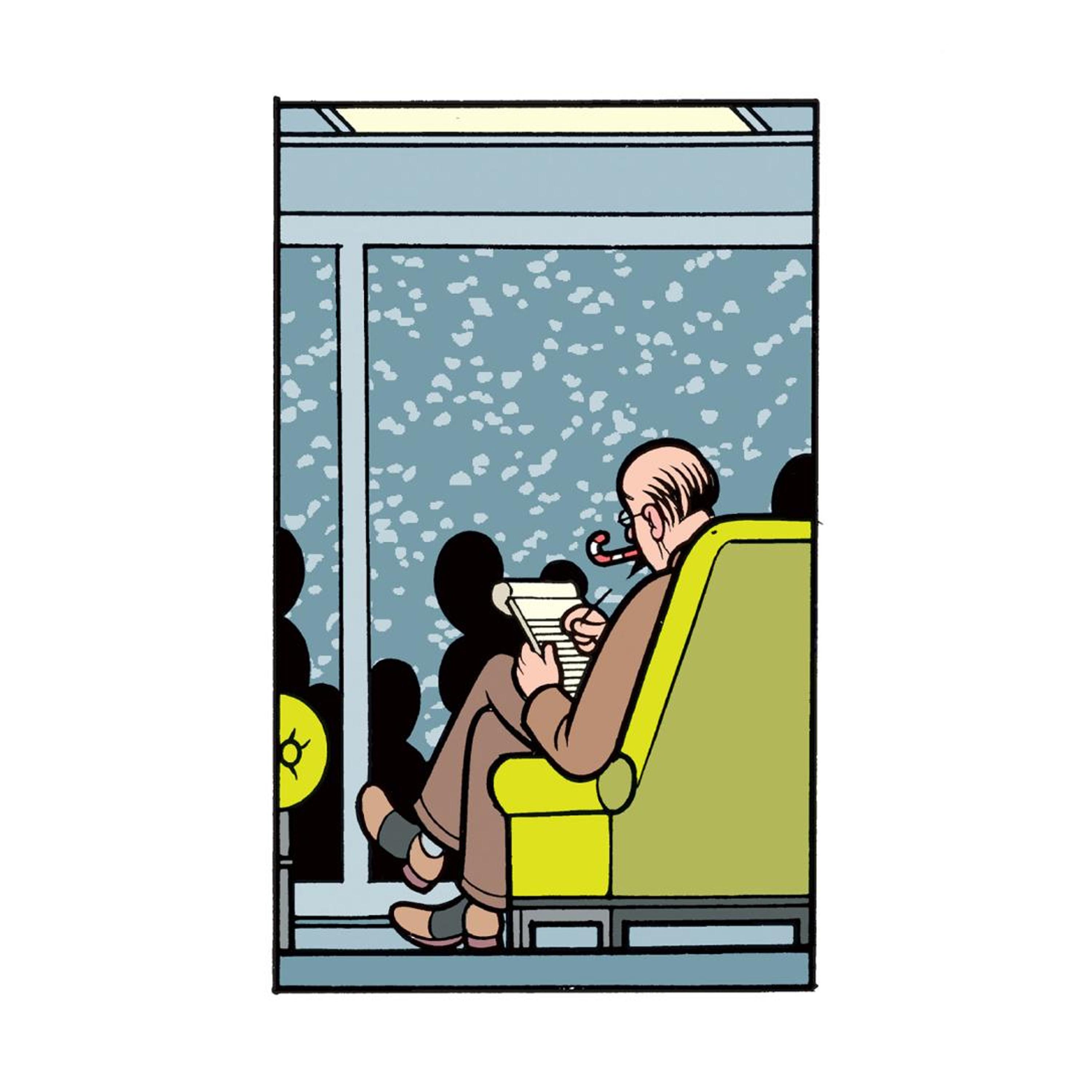
245: Allure of the Mean Friend
What is it about them, our mean friends? They treat us poorly, they don't call us back, they cancel plans at the last minute, and yet we keep coming back for more. Popular bullies exist in business, politics — everywhere. How do they stay so popular?
Visit thisamericanlife.org/lifepartners to sign up for our premium subscription.
- Prologue: We hear kids recorded at Chicago's Navy Pier and at a public swimming pool discussing their mean friends. And Ira Glass interviews Lillie Allison, 15, about the pretty, popular girls who were her best friends—until they cast her out. (5 minutes)
- Act One: Jonathan Goldstein interrogates the girls, now grown up, who terrorized him and his classmates years ago in school—and finds they can be just as scary as ever. (18 minutes)
- Act Two: We conduct an experiment to test whether being nice actually pays by equipping two waitresses with hidden microphones to record their interactions. Each waitress is instructed to be super friendly with half of their tables while remaining aloof with the other half. We then compare the tips to see which approach was more profitable. (10 minutes)
- Act Three: A case study in every word from a friend meaning its opposite. (4 minutes)
- Act Four: An excerpt of Bernard Cooper's story about the bill he got from his own father, for the entire cost of his childhood. Actor Josh Hamilton reads. (19 minutes)
Transcripts are available at thisamericanlife.org
This American Life privacy policy.
Learn more about sponsor message choices.
Press play and read along
Transcript
Speaker 1 Support for this American life comes from ATT. You know that feeling when someone's already looking out for you before you even need it?
Speaker 1
ATT brings that kind of reliability to your connection with the ATT guarantee. Staying connected matters.
That's why ATT has connectivity you can depend on, or they'll proactively make it right.
Speaker 1
That's the ATT guarantee. Terms and conditions apply.
Visit at.com/slash guarantee for details.
Speaker 2
In a way, the the story is always the same. There was this kid.
She was mean. She was popular.
Speaker 2 It's such a fixture of childhood. You can just walk up to a kid on the sidewalk or at a public pool and they'll tell you.
Speaker 4
The popularist is this girl. She's in my grade.
She's really mean.
Speaker 4 And she has a lot of friends.
Speaker 4 I wanted to play with her, and then she had no friends, so she said yet. The other day, I wanted to play with her again, and her friends were there, and she said, get lost.
Speaker 6 Sometimes she
Speaker 6 She be being mean to my sister and I don't like that
Speaker 6 She always telling somebody what they can and can't do. She act like she a boss of people.
Speaker 4 She thinks she got the rhythm in a gear.
Speaker 5 I'm mostly the popular one in my class, but I have a lot of other popular friends.
Speaker 5 This boy in my class, he liked me and every time he would come by me, I would tell him to get out of my way.
Speaker 5
Everybody says that he's like the nerdiest boy in our class. He'll start bothering me and me and my friends.
I'll tell him to leave us alone. My friends even tell him, don't even look at her.
Speaker 2 I talked to a high school sophomore about all this, Lily Allison, 15, in Woodsholm, Massachusetts. And she said in high school anyway, It's kind of like the laws of nature.
Speaker 2 Someone always will end up on top.
Speaker 9 Because there's always going to be the girls who are are the most popular and then that the guys look at the most and that get the friends because they're so pretty.
Speaker 9 There's always going to be those girls.
Speaker 9 And I think once people get the idea that they have that power, they're going to use it. And they know that they can be mean to people and still be loved by everyone.
Speaker 9 You have nothing to lose, so why don't you go ahead and be mean to everybody that's not as good as you?
Speaker 2 In Lily's class, the girls like that, the popular ones, have been her best friends.
Speaker 9
When I became friends with them, it was in seventh grade and there was none of that. It was before, like, it was before the superlatives and before there wasn't most attractive.
Right.
Speaker 9 Like, I'll admit, I was one of those girls until the first time they kicked me out of their little group. And then I saw how it really is.
Speaker 9 That's what we were. We were the four blondes.
Speaker 2 And what was it like to be one of those girls?
Speaker 9 Um, it was fun, you know. I mean,
Speaker 9 the attention is kind of fun.
Speaker 9
Look at them looking at us. It's fun.
It makes you feel powerful.
Speaker 9 I mean, like, part of being one of the four blondes is that everybody does the same thing, shaves their legs every day, has a perfect matching outfit. You know what I mean?
Speaker 2 Yeah.
Speaker 9 Makeup always has to be perfect. Not too much, not too little.
Speaker 9 Suck up to the teachers.
Speaker 9 Like, I remember I went, like, two weeks without wearing a skirt, and one of them called me and was like, you have to wear a skirt tomorrow. You've worn pants too many days in a row.
Speaker 9 And if you don't fit that,
Speaker 9 then
Speaker 9 you get a you get kicked out for a little while.
Speaker 2
Lily got kicked out at the beginning of the summer. She made a mistake.
She didn't do what the other girls wanted at some party.
Speaker 3 So they called her up to kick her out.
Speaker 9
One of them is like, she's the mean one. It's kind of like the Spice girls.
We all have our own little, our own little like identity, you know what I mean?
Speaker 12 Yeah.
Speaker 9 There's like the tough one, the cute one, the smart one, you know what I mean?
Speaker 12 And the mean one. Yeah.
Speaker 9 And so when we all got in this fight, they called me up and they put the mean one on the phone. They'd tell her
Speaker 9 what to say. She'd say it to me, then put me on hold, figure out what else they wanted her to say, and then say it.
Speaker 2 Wait, they put you on hold? So you just sit there on hold, waiting for them to come up with the next mean thing?
Speaker 9 That's right.
Speaker 9 And they didn't even realize how mean it was.
Speaker 2
Of course, it doesn't always end in high school. And this isn't just about teenage girls.
There are popular bullies in business and in politics, and very successful ones in politics.
Speaker 2 Our movies and TV shows are full of them. Today, in our show, The Allure of the Mean Friend, and what is so alluring about them in the first place?
Speaker 2
Explained from WB Easy Chicago, it's This American Life by Myra Glass. Our show today in four acts.
Act one, Return to the Scene of the Crime.
Speaker 2 In that act, Jonathan Goldstein interrogates the girls, now grown up, and terrorized him and his classmates years ago in school and finds that they can be just as scary as ever. Act two,
Speaker 2 Does Niceness Pay?
Speaker 2 In that act, we conduct a little scientific experiment on tape with hidden microphones about whether niceness can triumph and be rewarded in a normal business setting, a setting that will surely be familiar to you.
Speaker 14 Act three,
Speaker 2 and what's going on with you? A case study in every word out of a friend's mouth, meaning its exact opposite.
Speaker 2
Act four, keeping it in the family. In that act, Bernard Cooper's amazing story about the bill that he got from his own father for, well, the entire cost of his childhood.
Stay with us.
Speaker 2 Support for this American life and the following message come from Recorded Future. Every day, millions of cyber threats compete for attention, but only a few truly matter to your business.
Speaker 2 Recorded Future cuts through the noise with actionable intelligence. That's why they're trusted by major corporations and organizations around the world.
Speaker 2 They foresee spotting the signals that others miss and acting before threats become crises. Recorded future, know what matters, act first.
Speaker 1 Support for this American Life comes from CNN. Stream Anthony Bourdain Parts Unknown Prime Cuts now, exclusively on the CNN app.
Speaker 1 These rarely seen, never-before-streamed episodes dig deep into the Parts Unknown archives, with personal insights from Anthony Bourdain and rare behind-the-scenes interviews about each season.
Speaker 1
Anthony Bourdain, Parts Unknown, Prime Cuts, now streaming exclusively on the CNN app. Subscribe now at cnn.com slash all access.
Available in the US only.
Speaker 2 Clarity is a competitive advantage, especially when it comes to the economy. That's because anybody can know what's happening, but understanding why it matters is crucial.
Speaker 2 Hi, I'm Kai Rizdahl, the host of Marketplace. We provide the context you need to understand how the economy influences our everyday lives, from our local communities to the global conversation.
Speaker 2 You'll be smarter every time you listen, and these days, that's priceless. Listen to Marketplace on your favorite podcast app.
Speaker 2
This is American Life. Today's program is a rerun.
Act one, return to the scene of the crime. It wasn't hard for Jonathan Goldstein to find the girl who terrorized him in high school.
Speaker 2 Up until a year ago, they were roommates.
Speaker 15 Sometimes, when I'm talking with my friend Jackie Cohen, I will suddenly stop and just look at her. I look at her as though I have only just then realized who it is I am sitting there talking with.
Speaker 15 Jackie Cohen, I will say, shaking my head in disbelief. Jackie Cohen.
Speaker 15 For you see, Jackie Cohen was the meanest, most popular girl in our junior high, a shepherd among sheep. Nowadays, Jackie Cohen and I are friends, good friends.
Speaker 15 In fact, for two years we were roommates, during which time she was a very nurturing figure in my life, cooking for me, taking care of the bills, and doing most if not all of the cleaning.
Speaker 15 My domestic role was confined to stuff like drinking Jim Beam and keeping her up past her bedtime with my impression of Robert De Niro and Edith Bunker doing the lobster scene from Annie Hall.
Speaker 12 Alvie, a lobster crawled into my poison.
Speaker 15 Just the same, sometimes when I feel like it, I can see her through the eyes of my grade 7 self.
Speaker 15 And when I do that and say the words Jackie Cohen, it is as though it is no longer just a name of the woman before me, but a name for something famous, like a soft drink or a rock band.
Speaker 15 If I could go back in time and tell the young Jonathan Goldstein that one day he would be friends with the most popular girl at Western Laval Junior High, that young Jonathan Goldstein, taking in the utter absurdity of such a proposition, would laugh convulsively until his nose produced mucus and his eyeglasses needed adjusting.
Speaker 15 Let me explain to you the power that was Jackie Cohen's.
Speaker 15 So great was her authority that in grade 7, my best friend Robert Siolik wore a three-piece suit to school with the intention of asking her out for Souvlaki.
Speaker 15 I'll never forget the exhilarated look on his face as he ran back to our locker bank to tell me that, while Jackie Cohen had turned him down, she did say that they could be high-bye friends.
Speaker 15 This meant that when they saw each other in the halls, they could nod to each other, hi and bye.
Speaker 15 Robert loosened his necktie like a middle-aged ad exec who had just closed an important account.
Speaker 15 Another thing was that Jackie Cohen didn't like bad smells. She liked nice smells, like perfumed fancy erasers or freshly mimeographed sheets of paper.
Speaker 15
So if someone's smell was not to her taste, she would leave a note on their desk. The note would read, You smell, use deodorant.
Jackie Cohen would call it being honest.
Speaker 15 Jackie Cohen was also the only 13-year-old girl in school who could actually pull off a successful withering look.
Speaker 15 There was a month where I sat behind her, and one time during a French dictation, I was seized with an uncontrollable attack of coughing.
Speaker 15 It would later be diagnosed as a whooping cough that would leave me in bed for a week with a fever of 103, but at that moment it was nothing more, nothing less, than a nuisance to Jackie.
Speaker 15 She let me know this by whipping her head around, her straight brown hair lashing about like a thousand throwing stars, and witheringly looking me straight in the eye.
Speaker 15 Jackie turned back around and I grit my teeth, vowing not to allow a single cough to escape my mouth. My eyes tearing, I clenched my fists, and I trembled.
Speaker 15
I knew, objectively speaking, that Jackie Cohen's dictation was more important than my own health. I knew that.
The teacher, finally seeing my condition, sent me out to get some water.
Speaker 15 At the fountain, just as I was about to drink, my knees buckled and I began to throw up.
Speaker 15 I wasn't the kind of kid who vomited much, and the experience felt very personal, sort of like crying in your underwear.
Speaker 15 The special ed teacher in the room next to the bathroom came out and walked me back to my class. Jackie, who sat beside the door, as was the want and responsibility of the most popular, let me in.
Speaker 15 Seeing me, she gave me this look, not the withering look I had grown accustomed to, but another look, a look that until then I had only seen on the face of adults. It was a look of profound pity.
Speaker 15 I saw in that look a sorrow for everything she had ever put me through, and for years I held that look close to my heart.
Speaker 16 Jackie had really good hair.
Speaker 15 This is Mary Claude. She was Jackie's best friend all through school and they're still best friends now.
Speaker 16
Very good hair. Nicely layered, kind of feathered.
And she had a special technique. Well, first of all, she always walked around with a comb in her back pocket that stuck out for all to see.
Speaker 16
And we'd go to the bathroom. A big part of the day, of course, was going to the bathroom.
And she had a special technique.
Speaker 16 She'd she'd bend her head over she'd count one two three and then take her two index fingers and say flip and flip her hair back and then it would fall like the feathers would all fall beautifully in place
Speaker 15 what was Jackie Cohen's allure Did people like her despite the fact that she was mean or did they like her because she was so mean?
Speaker 16 I think it was a bit of both. Because when you were with her, you felt really alive, and she was so fun and she was so full of life, so it was great being with her.
Speaker 16 But then, before you knew it, you were on the outs.
Speaker 16 She was looking for a certain quality, and if you didn't have it, you got kicked out.
Speaker 16 You know, so it was also maybe like the
Speaker 16 fun, the excitement of never knowing when your turn was going to come to be on the outs. You know, and you were always trying to do your best to stay on the inside.
Speaker 16 So it was pretty exciting.
Speaker 15 Did she ever did, I mean, did my name ever come up in junior high?
Speaker 15 Did she ever mention my name?
Speaker 14 Oh, yeah.
Speaker 16 I remember a time you were new to school. You're the new kid.
Speaker 16
And I wanted to go over to talk to you. And Jackie said, oh, no, don't go talk to him, Mary.
Don't talk to him. He looks dirty.
Speaker 15 She thought I looked dirty?
Speaker 16 Yeah, she did.
Speaker 15 That was how my name came up.
Speaker 16 Yeah, that you looked dirty. You were the dirty-looking new kid.
Speaker 2 Okay, first of all, the new kid.
Speaker 15
The party Mary Claude is referring to was in grade 6. I had been going to that school since grade 3.
I was in the same school as them, evidently completely unnoticed, for 3 years.
Speaker 15 And second of all, dirty.
Speaker 15 Although my boyhood toilette was second to none, and although I was facially hairless, for some strange reason I gave off the distinct impression of having a 5 o'clock shadow all over my body.
Speaker 15 So I decided to confront these slanderous accusations at their source. Ladies and gentlemen.
Speaker 15 Jackie Cohen.
Speaker 15 Jackie Cohen.
Speaker 17 Tom, please don't tell me the whole interview is going to be like this.
Speaker 15 I asked Jackie Cohen if she remembered calling me dirty and new to marry Claude, and she said she did. I then asked her to repeat the very line to me right to my face.
Speaker 17
You know what I said. Come on.
Why don't you say it?
Speaker 3 All right, I will.
Speaker 14 All right, fine.
Speaker 15 You said, don't talk to him because he's dirty.
Speaker 8 Well, maybe I was dirty.
Speaker 14 You were, and you still are.
Speaker 15 Jackie Cohen and I spent a very combative hour talking, during which time she would not admit to any actual meanness.
Speaker 15 The furthest she would go in making any kind of concession was in acknowledging that back then, she, quote, took care of business.
Speaker 15 A whole lot of business. Listen, no one's on trial, okay?
Speaker 15 We're here just two friends chatting.
Speaker 15 No, Jackie Cohen did not think she she was mean in school. Take the whole story of Robert Siolik asking her out in junior high.
Speaker 15
You know, Mr. High-Bye.
And she stood firmly behind her actions.
Speaker 17 Jonathan, he was wearing a three-piece suit and his voice was like several octaves too high. What am I going to say to the guy? Yes?
Speaker 14 And, and.
Speaker 17
Not only did I tell him no, but I left him with his dignity. I actually had him thinking that we had a good thing going.
We were going to be high-bye friends.
Speaker 15 So what you're saying is that you're defending it. You're saying it was actually,
Speaker 15 it's a nice thing that you did.
Speaker 17 It was very nice, wasn't he very happy when he came into the room?
Speaker 15 He was happy, but I mean, he didn't know any better.
Speaker 19 Exactly.
Speaker 17 You want me to go on a date with that guy?
Speaker 15 Feel the way that laugh shivers you down to your toes, the way it taunts as it entices? That is the effect of a popular mean girl's laughter.
Speaker 15
The truth is, that Jackie Cohen is no longer a popular mean girl at all. She's actually a doctor who works with the homeless.
She's a really good person.
Speaker 15 But I still can't help relating to her as though the old Jackie Cohen is still somewhere buried inside of her. Let me ask you this.
Speaker 15 What happens to the mean girl?
Speaker 15 Is the mean always there?
Speaker 17 John, these questions are boring, man.
Speaker 14 No, you don't like that one. That's okay.
Speaker 14 Okay, let's say okay.
Speaker 2 Okay, let's do a little bit of role-playing, shall we?
Speaker 14 Okay.
Speaker 15 You're going to be the grade eight Jackie Cohen, and I'm going to be the grade eight Jonathan Goldstein, okay?
Speaker 15 And I'm in the you know, I'm in the Western Laval Junior High Radio Club, and I'm sitting there to interview you.
Speaker 14 All right?
Speaker 8 Okay, here we go.
Speaker 14 Okay,
Speaker 14 Jackie? Yeah.
Speaker 15 Can I have a bit of your time to interview you?
Speaker 3 No.
Speaker 8 Why?
Speaker 17 I'm busy.
Speaker 14 But thank you.
Speaker 15 But you're just leaning against the lock, or you're not.
Speaker 20 But thank you, Jonathan. I'm really not interested.
Speaker 15 No, you see, you wouldn't even be that polite.
Speaker 20 You're right.
Speaker 20 Honestly, I would have laughed and walked away.
Speaker 15 You see, this was the Jackie Cohen that I never got to talk to anymore. She's never like this.
Speaker 15 I mean, sure, she's always eager to let me know when someone in the room smells better than me, and she's quick to point out that my pasty white gut jiggles when I play air guitar, but it always feels like a mere taste of the greatness that once was.
Speaker 15 So we continued to parry and thrust our way along.
Speaker 10 Is this over yet?
Speaker 15 And eventually the subject came around to Jackie's older sister, Maureen.
Speaker 15 Now let me just explain to you Maureen. As mean and popular as Jackie Cohen was, Maureen Cohen was more mean and more popular.
Speaker 20 Well my sister definitely taught me some of the tricks of the trade. By being very, very, very cruel with me
Speaker 17 and very bossy, very demanding.
Speaker 20 She would say that really she was doing me a big favor because without her, I would never have made it in this world.
Speaker 20 But I was just such a boring, nice little kid and, you know, she added a lot of spice to my life.
Speaker 15 In the pursuit of my mean, popular girl scholarship, I knew I now had to talk with Maureen.
Speaker 15 I was not in the same city as her, so I asked my friend Joshua Carpati if he would be good enough to go to her house and hold a mic to her while we talked on the phone.
Speaker 15 Josh has been scared of Maureen for years, and here he was, sitting with her in her living room while her seven-year-old played on the floor at their feet.
Speaker 15 As Maureen provided a rare behind-the-scenes glimpse of her thoughts and actions, Josh sat just a few inches from her, a microphone gripped in his sweaty, nervous hand.
Speaker 15
And as I talked with her, Maureen acknowledged that she had been mean in high school. She made no bones about it.
And to her, there was nothing to regret.
Speaker 15 It was high school, and that's just how people acted.
Speaker 21 The way you had this image of me of being really mean all the time.
Speaker 15 But in an alluring way. You know what I mean?
Speaker 15 Like, people crave it somehow. Like, obviously, it works.
Speaker 21 Well, some people like to be abused, and you just sort of, like, tap into it, you know?
Speaker 15 Right, and then you satisfy that craving that they're not even entirely aware of.
Speaker 22 That's right.
Speaker 15 Well, how do you detect that?
Speaker 21 I don't know. You talk to someone and
Speaker 21 you just
Speaker 21 feel whether or not, you know, you can play with them or not. Like, I think Josh loves the fact that I pay that kind of attention to him.
Speaker 15 Josh, the young man who's uh holding the microphone for you right now.
Speaker 21 Yeah, who's so scared he won't even look at me.
Speaker 15 At this point, I started to get worried for Joshua. He had been reluctant even to go to Maureen's house, so I knew that at that point, as Maureen spoke his name, he was a shaky, disoriented mess.
Speaker 15 Can you ask Josh if he's nervous with you right now?
Speaker 21 Josh, are you nervous around me right now?
Speaker 21 He doesn't want to answer because I'm here.
Speaker 15 Uh can you just put him on the phone for one second so I can ask him?
Speaker 14 Yeah, here, hold on.
Speaker 21 He wants to ask you a question.
Speaker 12 Hello,
Speaker 15 can you t uh are you afraid to talk in front of her?
Speaker 15
You know. You're afraid.
Just d say yes if you're afraid.
Speaker 22 Yes.
Speaker 12 Okay.
Speaker 15 Has she got you on your guard?
Speaker 24 Yeah, sure, yeah. Yeah.
Speaker 15 When I was finished speaking with Maureen, I called Josh up on a cell phone, and he talked with me from his car. car.
Speaker 22 It's so f ⁇ ing hot in this car. I'm telling you, man, you know, you should be paying me extra.
Speaker 15 So what was it like in there?
Speaker 22 I gotta tell you, it was a little intimidating.
Speaker 24 There's a certain type of woman,
Speaker 22 you know, usually
Speaker 22 either Jackie or related to Jackie, that really, you know, they know how to put me in my place.
Speaker 15 So when she says that
Speaker 15 there are some people who crave to be abused,
Speaker 15 You would be one of those people.
Speaker 26
She was looking directly at me when she said that. She was looking directly at me and she was pointing at me with her index finger.
You know, not a lot of mystery there.
Speaker 12 But why this allure?
Speaker 15 Why are we so drawn to
Speaker 15 these mean girls? Because they know.
Speaker 26 They look at you and they know.
Speaker 26 Other women who are nice or who are too timid, they try to pretend that you're not who you are, which is garbage. But someone like Maureen Jackie, they look right at you and say, I know your garbage.
Speaker 26
You know your garbage. Why pretend? You know, I'm never going with you.
I'm marrying the dentist.
Speaker 26 I'm not even gonna look at you and You're gonna come over to my house, which is the biggest house I've ever seen in my entire life
Speaker 26
and you're gonna say you see this garbage. This is what a real man provides for me.
You know, you come here and you tape me for your stupid friend's radio show, and then you get the hell out.
Speaker 26 Well, I pick up my children whom I got through having sex with my dentist husband in my big house.
Speaker 3 Now get the f out, garbage.
Speaker 22 Out
Speaker 26 well i mean with you she thinks of you as a harmless eccentric you know like a 90 year old english guy pottering about in his garden me she sees like a like an unwelcome dog turd you know that somebody's trekked in from outside and it's it hurts me it really hurts me i mean i think it would be too strong to say that i love maureen but i i love maureen
Speaker 3 I, you know, I, I, yeah.
Speaker 2 Want equals fear. But wait, wait, is it the fear that that...
Speaker 26 Look, John, I'm not a sociologist.
Speaker 26 I don't know what's going on. I'm a piece of garbage to her, and it makes me want to just crawl up next to her, you know, like a flea on a tick, on a tick on a dog.
Speaker 26 You know, I just want some of that good, good blood, you know, even if it's my own blood.
Speaker 15 What about when, Jackie said that, like, like that, like saying that you could be high-by friends is actually a nice thing. What do you think of that? To that guy who asked her out?
Speaker 26 High-bye friends?
Speaker 26 You know what high-bye friends really means?
Speaker 22 It means that when that guy went home later that night and hanged himself,
Speaker 26 that's the sound the rope made.
Speaker 15 Jackie Cohen.
Speaker 15 Jackie Cohen.
Speaker 15 Do you miss
Speaker 15 that person that was able to do those kinds of things?
Speaker 17 No, but I think you do.
Speaker 20 I think you miss the mean Jackie Cohen.
Speaker 17 I think you really do.
Speaker 19 You inquire about her a lot.
Speaker 17 I think you do.
Speaker 15 Is the sky sky that unleashes a bolt of lightning into the forehead of a friendly woodsman mean?
Speaker 15 Is it mean of the ravenous lion to devour the frightened zebra?
Speaker 15 As the first terrible bites sink into his legs and stomach, does the zebra look into the lion's eyes as though to say, Why are you doing this to me, friend?
Speaker 15 And why, by my very nature, have I demanded it?
Speaker 15 When I bring all this up with Jackie, I realize that only the zebra would do a story like this.
Speaker 15 The lion could care less.
Speaker 2 Jonathan Goldstein, his podcast Heavyweight, will be returning this fall for a ninth season, now with Pushkin Industries. There are already some new episodes in their feed.
Speaker 2 You can find it where we get your podcasts.
Speaker 2 Tact 2. Does niceness pay?
Speaker 12 Okay, sure.
Speaker 2 Niceness might not get you the most friends in high school.
Speaker 2 Niceness might not help your career in the NFL or on the trading floor of the New York Stock Exchange or in any super competitive line of work.
Speaker 2
But you would think that there might be a place for it somewhere. Like, for instance, waitressing.
The whole point of the job is to help somebody else. Well, consider this story.
Speaker 2 A waitress in Chicago named Troy Morris was working a Friday night shift with another waitress, Amy Regali.
Speaker 12 Here's Troy.
Speaker 23 I worked with her Friday night and she was almost in tears because
Speaker 14 the
Speaker 23 tips just for the last week have been horrible, horrible, horrible. Like she's getting less than 15%.
Speaker 23
And so she couldn't stop thinking about it. And just every check, she'd look at it and just be like, I can't believe it.
And she's just like, I can't do this anymore. Look at people hate me.
Speaker 2 This is Amy.
Speaker 17 Like, I don't know what I'm doing wrong.
Speaker 19 I'm trying so hard to do everything perfect and all of these people are tipping me below.
Speaker 2
It made no sense. She'd been there four years, longer than anybody, knew the menu better, gave very quick service, and on the niceness scale.
Here's the word Troy uses to describe Amy.
Speaker 23 Super helpful. She's the sweetest person and smiles and just patient and
Speaker 12 caring.
Speaker 2 On Sunday, Amy worked again, and this time Amy says her attitude was different.
Speaker 19 I definitely went into it with this attitude of kind of giving up, just like, I washed my hands of this. I'm just going to serve them and walk away because I was so frustrated.
Speaker 2 And what happened to your tailors?
Speaker 17 They were great. They were a lot of them over 20%.
Speaker 19 It was wild.
Speaker 23 And I came in because we switched shifts, like, she's getting off and I'm coming on. And she's just like totally beaming, really happy.
Speaker 23
I made great tips. She's like, I can't believe it.
Now I know what to do.
Speaker 2 Now I know what to do, not be as nice.
Speaker 23 Yeah, just not care.
Speaker 2 We can actually quantify exactly how much niceness was costing Amy. The difference between 15% tips and 20% tips works out to around $50 per shift.
Speaker 2 Is it possible that any waitress could make more money by being less nice? We decided to do a little experiment to find out.
Speaker 2 We would wire two waitresses with hidden microphones and then have them be super nice to half their tables and cool, aloof with the other half. They'd give equally good service to both tables.
Speaker 2 We did our experiment in the restaurant where Troy and Amy work, Lula Cafe in Chicago's Logan Square. It's the kind of place that everybody always wants to have in their neighborhood.
Speaker 2 Small, wonderful food, but it's not expensive. Today's show is a rerun, but back in 2003 when we did this experiment, half the entrees cost six bucks or less.
Speaker 2 There There was Moroccan couscous, there was vegetarian sushi, there were lots of carefully made sandwiches.
Speaker 2
Amy had no interest in being wired for sound, but Troy was game. Like most of the staff, she's young looking.
She wore a neon zebra skirt and calf-high boots to work.
Speaker 2 Her arms were bare, so you could see her tattoos.
Speaker 23 Okay,
Speaker 23 that is really good.
Speaker 13 It's a little bit of a lighter, like brighter flavor.
Speaker 2 Here she is with one of the tables that she's being nice to, table number four, winning them off a glass of wine that she thinks won't go with her meal.
Speaker 23 So just so you know, it's like a little bit on the sweet side.
Speaker 23 You want like something fuller? Is that what you're thinking?
Speaker 2
In two minutes, Troy has their whole story. They're visiting from out of town.
They seem to be falling in love, and they found this very non-touristy, out of the way place through careful research.
Speaker 2 She praises them on their homework.
Speaker 23 Good job, you guys.
Speaker 2
Nice is her usual style as a waitress. She recommends specials, she chats, she's a sweetheart.
Being aloof took a little more effort for her.
Speaker 8 So, um,
Speaker 23 table two that just sat down. Normally I would have already talked to them, but I make him wait a little while.
Speaker 2 When she finally goes to table two, which has three serious-looking people in their 40s, she doesn't ask them how they are, or if they have any questions about the menu.
Speaker 2 She doesn't recommend the sturgeon, which is her favorite, or anything else. These are her first and practically only words to table two.
Speaker 17 Hello.
Speaker 9 Have you guys decided?
Speaker 2 When they ask her to recommend a wine, she swallows and tells them.
Speaker 11 You know what?
Speaker 23 All those red wines will go good with what you're getting.
Speaker 23 Quite honestly.
Speaker 2
And then there was the guy sitting at the bar alone. Noticeably good looking, reading the New York Times.
Troy gave me the rundown.
Speaker 23 This regular guy that always sits there and orders a lot and he never tips great.
Speaker 23 He always tips like just exactly 15%.
Speaker 12 Perfect for the experiment.
Speaker 2 Usually Troy liked talking with him.
Speaker 24 If she played it aloof, would her tiptoe up?
Speaker 2 She walked over and he asked her what she was up to these days.
Speaker 8 Oh, you know.
Speaker 8 Working.
Speaker 2 Could you change your hair, he said? Is it different?
Speaker 23 Maybe I washed it.
Speaker 2
And so, hours pass. People finish their meals, and when Troy starts collecting their money, the early results all seem to point in one direction.
Take Table 2, the table she barely spoke with.
Speaker 2 Troy handed me their check.
Speaker 3 How does it look?
Speaker 2 Okay, doing a little math here. Table 2,
Speaker 2 it's 17.6% is what they tipped.
Speaker 23 Oh, really? And I wasn't nice to them at all.
Speaker 2 And yet?
Speaker 23 They tipped over 15%, which is good. Oh, I can't wait to see what Table 5 tipped.
Speaker 8 Let me look from the...
Speaker 2
Table 5 was the hardest table by far. Very demanding.
And she was very attentive.
Speaker 23 Check this out.
Speaker 2 Okay, Table 5 he was searching up to. Like, I've never...
Speaker 10 She's so nice to see her.
Speaker 23 I've never seen Christmas. I got them to GoFood.
Speaker 23
I picked out their wine. I helped them figure out what food they wanted.
And look, it was $84, and I got a $13 tip, and I was so nice to them.
Speaker 2 So that's just a little over $15.
Speaker 23 Wow. And they were the most demanding, and I spent the most time with them than anybody.
Speaker 2 But the biggest revelation of the night came when Troy retrieved the check from that guy who was sitting at the bar.
Speaker 23
I can't believe this. Look at this.
Okay, remember the guy who I said
Speaker 23
I'm always nice to him, but he always tips like the minimal most. He tipped 20%.
I was mean to him for the first time.
Speaker 3 Look at.
Speaker 23 Can you believe that?
Speaker 3 Wow.
Speaker 2 He tips five bucks.
Speaker 23
Over 20%. Never.
That's never happened. And it totally, I can't believe it, that's hilarious.
Speaker 23 But
Speaker 23 that's really disturbing.
Speaker 23 I have to be mean to him now anymore.
Speaker 2 By the end of the first night, it seemed pretty clear. Aloofness pays.
Speaker 2 But then, when I came back a second night and hooked up a second waitress with a hidden wireless microphone, I got very different results.
Speaker 2 The second waitress, Callie Roach, is 23 with super short hair. She laughs at a local restaurant reviewer referred to her in the paper as a waitress.
Speaker 2 And on her night, everyone tipped 20%, or even a touch more. That was true of the regulars who she was aloof to.
Speaker 2 It was true of the man who Callie doted on who was taking his grown daughter out to dinner. It was true of the couple who Callie joked around with about their difficult-to-open bottle of wine.
Speaker 6 After the struggle.
Speaker 27 Yeah, I got like little hand hickeys.
Speaker 10 I'm like, geez, this is.
Speaker 2 Even the other waitress working on Wednesday, Natalie, who does not have an aloof bone in her body, was getting 20% and more from every table.
Speaker 2 And the more I talked to Callie and Troy and Amy and the rest of the staff, the more everyone agreed the majority of their customers are just set in their ways.
Speaker 2 They'll give whatever they always give in any restaurant like this to any server.
Speaker 2 Sure, you get a handful of customers like the guy Troy waited on at the bar, who you can nudge this way or that through force of personality, but it's just a few tables every shift.
Speaker 2 And that's all Troy and I were seeing that first night. This is Natalie.
Speaker 18 50% of the people will tip exactly the same, whether they get great service or you know they might tip a little less for lousy service but most people they tip what they're gonna tip or you know I've noticed a lot of people just look at the first two numbers on the check and and will double it or round down you know there's there's a pattern and people tip the same.
Speaker 27 I think generally if you're not chatty and overly nice you'll still get the same tip.
Speaker 12 Here's Callie.
Speaker 27 You can just tell that people are gonna tip you at 18% because they got their food when they wanted it and it doesn't matter how much you're you know giggling and inquisitive. Like
Speaker 27 Sundays I usually get tipped four or five dollars every table. Doesn't matter what I do.
Speaker 2 Because of this she says she has a policy and she's only half joking as she says this that she tries to limit the number of times that she smiles at customers or shows her approval to exactly two times.
Speaker 12 Two times.
Speaker 2 First time when they place their order she always tells them what a very fine choice they made and then she smiles.
Speaker 2 And then at the end of the meal, she drops off the check and she smiles a second time, as if to say, you see, I do like you.
Speaker 2 Because done wrong, she says, friendliness not only will not pay, friendliness can cost you.
Speaker 27 Because if you're nice and enjoying yourself, they don't need to make you feel any better.
Speaker 27
They already think you're having a good time. That's what my theory is.
They already think you're having a good time. Why are they going to tip you for having fun?
Speaker 14 You know?
Speaker 27 If you're like, you know, if you're doing it just to get through it, you know, they know that you're working.
Speaker 2 Troy and Amy have also decided that niceness has its limits.
Speaker 2 For the first time in their years of waitressing, because of these discussions in the last two weeks, they have both stopped knocking themselves out, running around for their most demanding tables.
Speaker 2 They're efficient, they're pleasant, but that's it.
Speaker 2 This is what they've learned. It's not that aloofness pays, it's that niceness doesn't pay.
Speaker 2 Thanks to the owners of the Lula Cafe, who want to assure you that this is a rerun you're hearing and that they no longer let radio shows conduct experiments on their customers.
Speaker 2 In fact, in 2024, they won a James Beard Award specifically for outstanding hospitality. Those waitresses Amy Troy and Callie are no longer at Lula.
Speaker 2 Troy and one of the owners of the cafe, Leah Childs, were in a Chicago band called Tallulah. This song is from the band's album, Step Into the Stars.
Speaker 2 She
Speaker 2 knows
Speaker 2 where
Speaker 2 she's going.
Speaker 2 She's on time.
Speaker 2 Coming up, if you seem so nice, why do I feel so bad? And more. That's in a minute from Chicago Public Radio when our program continues.
Speaker 1 Support for this American Life comes from BetterHelp. Most FSA dollars expire at the end of the year, so it's time to use them or lose them.
Speaker 1 With BetterHelp, you can invest those funds in taking care of your mind with online therapy. Join today and you can be matched with a licensed therapist in as little as 24 hours.
Speaker 1 Visit betterhelp.com slash TAL to get 10% off your first month.
Speaker 1
Support for this American Life comes from GoodRX. Cold and flu symptoms got you down? Find relief with GoodRX.
You can save an average of $53 on flu treatments.
Speaker 1 Plus, save on cold medications, decongestants, and more. Easily compare prescription prices and instantly find discounts of up to 80%.
Speaker 1 GoodRX is not insurance, but works with or without it and could could beat your copay price. Save on cold and flu prescriptions at goodrx.com/slash T-A-L.
Speaker 1 Support for this American Life comes from Mattress Firm. Restless partner keeping you up? Those constant movements can make it hard to get the rest you need.
Speaker 1 Mattress Firm's sleep experts will match you with a bed for deeper rest, like a Temper-Pedic. Its unique temper material absorbs motion for undisturbed rest.
Speaker 1
Shop Mattress Firm's Black Friday sale and save up to $500 on select Tempur-Pedic Adjustable Mattress Sets with next day delivery. Restrictions apply.
See mattressfirm.com or a store for details.
Speaker 2 It's his American Life from Ira Glass. Each week in our program, of course, we choose some theme, bring you a variety of different kinds of stories on that theme.
Speaker 2 Today's program, The Agore of the Mean Friend. What is it about?
Speaker 2 We've arrived at Act 3 of our show, Act 3. And what's going on with you? We have this from Mike Albo.
Speaker 3 You're here early.
Speaker 11 Oh my god, do you have my scarf? Did you bring it?
Speaker 11 No, that's okay.
Speaker 11 No, it's just that I got it in India when I was there, and it's just this really beautiful thing, and I really treasure it. It's just really important to me.
Speaker 11 It's not like the cheaply made Barney's co-op stuff that you buy. I don't mean you buy, I mean you buy.
Speaker 11 Oh, I wish you would have remembered. No, that's okay.
Speaker 3 You're so flaky.
Speaker 3 Are you sick?
Speaker 11 You look sort sort of tired. Is there something wrong? Oh, you went out drinking last night?
Speaker 11 It's so great how you can still do that. You're so crazy.
Speaker 3 Did you throw up?
Speaker 11 Oh, no, I just melted up for a second. Okay, so I didn't want you to hear this from someone else, but I just made $2 million.
Speaker 11 Yeah, so I'm pretty happy about it. My agent's pretty happy about it.
Speaker 11 It's just really lucky, because, you know, like with the recession, it's like I made my money before the apocalypse and I'll be able to live comfortably. It's just sort of locked in.
Speaker 11 And I can't tell you about the details of the deal, but if you could just do me a huge, huge favor and just don't mention it to anyone, I know you have sort of a problem being discreet.
Speaker 11 Oh, order something? Oh, no, no, I'm not drinking anymore.
Speaker 12 Oh, no.
Speaker 11
Go ahead, have fun. I'm just not drinking anymore.
I just realized there's a little bit more to life. But go ahead, have fun.
Speaker 3 You're so crazy.
Speaker 24 So what's up with you?
Speaker 11 Oh my god, when was the last time I saw you? I am totally hanging out with Toby Maguire and Reese and Ryan and David Blaine. We jokingly call it the Millionaires Club.
Speaker 11 Oh, you know that children's book I wrote really fast for no reason? It's a funny, sunny day? Well, I just found out it's sung like crazy and can barely stay on the shelves.
Speaker 11
And I got another voiceover gig. It's weird, they just like my voice.
I don't even have to leave home, I just call it in.
Speaker 11 I don't know, I just sort of fell into it. You should try it, but it's really hard to get into, but you should try it.
Speaker 3 You're looking for a place?
Speaker 3 Good luck.
Speaker 11
God, it's so hard to find a good place right now. This guy called me and begged me to take his beautiful 4,000 square foot loft space.
It's $300, but he's actually paying me to live there forever.
Speaker 11 So what's going on with you?
Speaker 11
I think your body looks good. It's normal.
It's a normal body.
Speaker 12 Really?
Speaker 11
Well, that's too bad. Well, I just feel like you need a little bit more confidence in yourself, you know? Like, I feel like I'm a direct person.
I say what I feel.
Speaker 12 You're more...
Speaker 12 You're more.
Speaker 11
I don't know what you are. But I have to say, I don't know how you do it.
I'm so glad I'm not single. It looks so hard.
Speaker 12 Oh yeah. Yeah, I just ran into Carl.
Speaker 3 No?
Speaker 24 He looks good. He's good.
Speaker 11
He's good. Yeah, he says he hasn't talked to you.
No, he seems like he's moving forward. I mean, you guys broke up and he's just sort of moving on with his life.
Speaker 11 He's in this really good relationship right now and they just bought this huge, beautiful place upstate and they're fixing it up together.
Speaker 24 We just had a really good time talking.
Speaker 11 And you know what? He's been working out.
Speaker 2 His body looks amazing.
Speaker 11 You know, when you and Carl were going out, I never really understood why you liked him, but now I totally do.
Speaker 11 So nothing's going on with you?
Speaker 11 No, I'm sorry, I'm just remembering a funny joke that Carl told me. What?
Speaker 11 No, I'm listening.
Speaker 2 An excerpt from Mike Albo's short story, The Underminer, which he co-wrote with Virginia Heffernan. Mike is also the author of the young adult novel, Another Dimension of Us.
Speaker 2
Act 4. Keeping it in the family.
Of course, you can evade a mean friend. A mean relative, however, is forever.
This next story is an excerpt from a much longer work by Bernard Cooper.
Speaker 2 This story follows Cooper's father as he eventually goes to a psychiatric hospital, but what happens in this part of the story takes place a while before that. The actor Josh Hamilton wrote it for us.
Speaker 2 When I was 28 years old, my father sent me a bill for his paternal services. Typed on his law firm's onion skin stationery, the bill itemized the money he'd spent on me over my lifetime.
Speaker 2 Since he hadn't kept tabs on the exact amounts he'd doled out over the years, expenditures were rounded off to the nearest dollar and labeled food, clothing, tuition, and incidentals.
Speaker 2 Beneath the tally, in the firm but detached language common to his profession, he demanded that I pay him back.
Speaker 2 The total was somewhere in the neighborhood of $2 million,
Speaker 2
an especially hefty sum in 1978. I remember being impressed by the amount.
What an expensive life I'd lived.
Speaker 2 I was shocked and insulted too, of course, not only because my father had made such a calculation, but because my life could be added up or reduced to a single figure.
Speaker 2 To see your existence in the form of a bill gives all your loves and fears and struggles the cumulative tumult of being human, about as much poignancy as a check for a cup of coffee.
Speaker 2 It read,
Speaker 2 Your obligations to your father, the party of the first part, are considerable, and the only way to impress upon you, the party of the second part, the necessity of compensating him for the fiscal burdens he bore on your behalf, is to make his sacrifices evident in the form of the following, recorded herein as a legal and binding document.
Speaker 2 Should you fail to make payment in full, this matter will result in actions for which I advise you to hire counsel.
Speaker 2
I double-checked his signature. It was his all right, the letters rich with loops and convolutions.
Go ahead, I thought, let him dunn me. See if I pay.
Speaker 2 No parent in his right mind asks his child to reimburse him for that child's life. I didn't ask to be born, I thought melodramatically.
Speaker 2 Besides, had I known I'd be charged for my boyhood, I might have eaten fewer snacks, been easier on my shoes, more frugal with my allowance.
Speaker 2
I couldn't help but dream up a doozy of a counterclaim. Its itemizations even more preposterous than my father's.
Chronic insecurity, $90,000. Narcissistic wound, $75,000.
Oedipal complex, $7,000.
Speaker 2 Since, of course, these damages were psychological in nature, it was both difficult and whimsical to assign them a monetary value. But the punitive spirit of this counterclaim was gratifying.
Speaker 2 For a while, at least. Then the whole petty endeavor depressed me, and I thought, is this what we are to each other? A flurry of demands that can't be met? Hurts for which there's no restitution?
Speaker 2 During the restless days and nights that followed, I couldn't settle on a convincing or comprehensible reason to explain why my father had sent me the bill, though I suspected the catalyst might have had something to do with his offer a few months earlier to buy me a new car.
Speaker 2 He'd made the offer on a day I'd come to visit him at his Spanish house in Hollywood, the house in which I'd grown up.
Speaker 2 As I pulled into the driveway, he was busy watering birds of paradise in his front yard, sturdy orange flowers that he'd cultivated to his constant astonishment from a bed of drab gravel.
Speaker 2 Back then I drove a fiat whose paint had oxidized to the overall color and texture of rust.
Speaker 2 The car sputtered as I shifted into park and the sagging tailpipe, which I'd had to bind to the car's undercarriage with electrical tape, coughed a cloud of noxious exhaust.
Speaker 2 Just a year after I purchased the car with money from a small inheritance left me by my mother, it fell apart with an almost vengeful rapidity.
Speaker 2 The vinyl upholstery of the bucket seats began to rub off on passengers' hands and thighs in sticky black patches.
Speaker 2 Soon the seats were nothing but lumps of raw foam, and even those were crumbling like sponge cake. One of the rear windows no longer rolled up, the pane trapped within the door.
Speaker 2 On cold nights, a stray dog made the back seat its home, leaving behind a legion of fleas to feast on my ankles as I drove around town.
Speaker 2 It was humiliating to be seen inside the car, especially in Los Angeles.
Speaker 2 When idling in a stoplight beside a purring sports car with rear stabilizers, anodized hubcaps, and a leather interior, I had to force myself to remember that an automobile does not a man-make, and that I was a writer who placed a higher value on words than on material possessions, which is to say that I cultivated a hollow sense of superiority around new cars.
Speaker 2 My father sauntered toward the fiat as I got out. peeking through the perpetually open window despite my attempt to block his view.
Speaker 2 Stocky and balding, in a state of continual agitation, my father was also capable of a tenderness that seemed to light him from within, and that stirred me like daybreak stirs a bird.
Speaker 2 Hey, he said, looks like you could use a new set of wheels.
Speaker 2 I can't afford a new car, I told him.
Speaker 2 I distinctly recall facing my father, his gardening clothes stained with grass and darkened by perspiration, and shaping my tone so that I sounded neither pitiful, I'm too poor, or petulant, I'll never be able to buy a new car.
Speaker 2 Before I knew it, my father and I were ensconced in his white Eldorado, gliding with the frictionless speed of a dream toward a Toyota dealership in West Covina, whose ads he'd seen on TV.
Speaker 2
He pointed a stubby finger at his chest. Let me handle this, he said.
I've bought plenty of cars in my life, and I know how to deal with these bastards. You watch.
I'll beat them at their own game.
Speaker 2 They won't know what hit them.
Speaker 2 On one hand, dad's braggadocio made me feel invincible, as though I were in the company of a seasoned pro.
Speaker 2 On the other hand, it relegated me to the role of admiring onlooker and suggested that I was too incompetent and naive to buy my own car, which was entirely true.
Speaker 2 I floundered when it came to the treacherous etiquette of negotiating a major sale.
Speaker 2 a feat which required, it seemed to me, a keen mistrust of one's fellow men coupled with a barely sublimated bloodlust.
Speaker 2 I'd watched my father often enough to know that such transactions excited him into what can only be described as a rapture of antagonism.
Speaker 2 He didn't mind yelling threats and pounding desks and generally hurling himself bodily into the arena of commerce.
Speaker 2 Still, if a new car required me to be embarrassed by his aggression, bring on the blushing.
Speaker 2 And so I let myself relax into the plush bucket seat, cradled and safe as the caddy whizzed past slower traffic, huge and unassailable, as regal as a motorized mansion.
Speaker 2 As we walked across the asphalt lot of the Toyota dealership, triangular plastic pendants rippled and snapped in the breeze.
Speaker 2 I thanked Dad in advance and told him that I didn't need white walls, an air conditioner, or a radio. Basic transportation would be just fine.
Speaker 2 He nodded and forged ahead, his stride martial, his shoulders squared. Secretly, I hoped my modest expectations might endear me to him even even more.
Speaker 2 Maybe he'd close the deal that very day, before his mood changed, before I said something that would inadvertently set him off, before he said crap or bastard to the dealer.
Speaker 2 My excitement was indistinguishable from panic. I wanted a beautiful new Toyota more desperately with every step.
Speaker 2 I wanted an end to the self-consciousness I felt on the road, an end to the shameful sense that the thunderous rumbling and rank exhaust were coming from my person rather than my car.
Speaker 2 The showroom felt bracingly cool after the heat of West Covina. Highlights glittered in the flawless paint jobs of the display models.
Speaker 2 In the center of the room, a sleek new convertible turned around and around on an enormous platform, as if swooning to the muzak.
Speaker 2 The second we entered, salespeople, sensing prey, rose from their desks and converged.
Speaker 2 It occurred to me that we would be the prize for the fastest walker, the one whose handshake or hail greeting reached us first.
Speaker 2 The victor was a skinny man whose snug black suit lent him an eel-like iridescence. Or perhaps I was just seeing him as my father might, slippery, unctuous, not to be trusted.
Speaker 2
Dad shifted his weight to meet the man's gaze, his posture erect. He kicked a tire as if to gauge, through his knowing toes, the vehicle's overall quality.
He squinted at the sticker price.
Speaker 2 John, said my father, reading the salesman's name tag, firstly, I'm an attorney. Secondly, when it comes to cars, I'm not some idiot off the street.
Speaker 2
A cousin of mine is fleet manager of a Cadillac dealership in San Bernardino. A complete fabrication as far as I knew.
If we cut through the crap, you just might make yourself a sale.
Speaker 2
My son here, I'm buying the boy a car, doesn't need any bells or whistles. I'm Bernard, I said to the salesman.
He shook my hand without taking his eyes off my father.
Speaker 12 Well, Mr.
Speaker 2 Cooper, Edward, attorney at law.
Speaker 2
I gotta hand it to you, Mr. Cooper.
It's nice to meet a customer who knows what he wants and comes prepared to do business. Makes my job a whole lot easier.
Speaker 2 My father shot me a sidelong glance as if to say, watch and learn.
Speaker 2 I'm going to make this painless, said the salesman. He spun on his heel and walked toward the glass door that led to the lot.
Speaker 2 We followed him outside to a veritable poppy field of new corollas, till we reached a red two-door that John claimed was the least expensive automobile on the lot.
Speaker 2 This is the cheapest? asked my father.
Speaker 2 Though it pains me to do so, I must add that my father's gold star of David had loosed itself from the mid-interior of his shirt to glint conspicuously in the afternoon light.
Speaker 2 The sight of which, given my father's unabashed haggling, caused a cord of shame to vibrate inside me.
Speaker 2 I felt compelled to explain to the salesman how my father had worked hard for everything he owned. He was a hoarder, a scrimper, a seeker of bargains who could never take his solvency for granted.
Speaker 2 And in this respect, he was like thousands of people who'd grown up poor and endured the depression, Jewish or not.
Speaker 2 But that was a lot to explain to a salesman, especially on the cusp of a deal that would change my life.
Speaker 2 And to put it bluntly, if my father was conforming to the cliché of the cheap Jew, I was that cliché's beneficiary. I peered at the car, feigning disinterest.
Speaker 2 Quite a performance considering how I coveted that little red corolla. Mr.
Speaker 2 Cooper, said the salesman, I know a shrewd man when I see one, and I'm going to do something that could put my job on the line. But before I tell you what it is, Mr.
Speaker 2 Cooper, I want you to promise that you won't say a word to my boss.
Speaker 2 I'd once heard that repeating a person's name is a way to make them feel important, to win them over, and John, it seemed, had heard the same. Mr.
Speaker 2 Cooper, I'm going to let you drive out of here for a mere $200 over the factory price. I'm going to scratch my commission on this.
Speaker 2 Frankly, I need the sales points more than I need the money, and if we can lock up this deal pronto, it'll be worth my while, and of course, worth yours.
Speaker 2
Here, metabolism obscure his memory. My heart was running on all cylinders.
My mouth went dry.
Speaker 2 You've got to be shitting me, John, said my father.
Speaker 2 I know you can give it to me under factory.
Speaker 2 I'm not paying a penny more than factory, period.
Speaker 2
As I said, Mr. Cooper, I don't mind giving up my commission, but I can't lose money on the deal.
I'm giving you the best price you're going to find in L.A. County, in the state of California.
Speaker 2 Other customers were milling uncomfortably close to my Corolla, trying out driver's seats, adjusting rear-view mirrors. I wanted to turn to my father and blurt, why would he lie?
Speaker 2 I'm not buying it, my father said sternly. It took me a second to realize he meant the dealer's story, not the car itself.
Speaker 2 I know how this game is played, and I'll play along up to a point, but we've reached that point, so let's see what kind of deal you can give me.
Speaker 2
Shop around if you don't believe me, Mr. Cooper.
Then come on back. The offer still stands.
Better act quickly, though, because this baby isn't going to stay in the lot much longer.
Speaker 2 I guess you didn't hear me, said my father.
Speaker 2
Look at me, Mr. Cooper.
I have no reason to lead you on.
Speaker 2
My father gave John the once-over, then turned to me. Let's go, he said.
We're taking our business elsewhere.
Speaker 2 Before we took a step, the salesman curtly thanked my father and walked away.
Speaker 2 The two of us waited a moment with a tacit understanding that his retreat might have been a strategy to provoke my father into giving chase.
Speaker 2 Sun beat down from a cloudless sky, asphalt softening beneath our feet. I think he's basically an honest man, I mumbled.
Speaker 2 Honest, my ass.
Speaker 2 My father looked at me with something like pity. I'd never catch on, would forever remain a sucker, a rube.
Speaker 2 Muzak faintly wafted from the showroom as the salesman swung the door open and walked inside.
Speaker 2 Well, Dad announced, show's over. And we trudged across the lot toward his caddy.
Speaker 2
The drive back to Los Angeles took a good 40 minutes. My father still fumed from the encounter with the salesman, his ears and neck flushed with blood.
Dad insisted that the deal was far from over.
Speaker 2
The guy's playing hardball, but you watch. The phone will be ringing when we get back to the house.
It'll be him, and he'll say.
Speaker 2
My father launched into an imitation of John cooing, Mr. Cooper this and Mr.
Cooper that.
Speaker 2 My father promised that when the call finally came, John would apologize for being too hasty and lower the price. I'd have my car before I knew it.
Speaker 2 One day passed.
Speaker 12 Two.
Speaker 12 Three.
Speaker 2 Each day I called my father on various transparent pretexts and attempted to find out whether I'd heard anything from the salesman. On the fourth day I steeled myself and asked him outright.
Speaker 2 Keep your pants on, grumbled my father. I said he'd call, didn't I?
Speaker 2 By the end of the week, however, my pants were sagging. The car had probably been sold.
Speaker 2 In the meantime, I'd researched the prices at other Toyota dealerships around town and discovered that John's offer was the best of the bunch.
Speaker 2 And so I called my father in a last-ditch effort to own the car. Dad, I said, I've done some comparative pricing.
Speaker 12 So?
Speaker 2 I think we should go for the Corolla before it's sold. And if it's a matter of not wanting to pay more than the factory price, and who can blame you, I'd be happy to contribute the extra $200 myself.
Speaker 2
The proposal had about it the pleasing hue of teamwork, and I wished I'd thought of it days ago. It's not about the $200, bucks, shouted my father.
It's a waiting game.
Speaker 2 He's holding out, so I'll come running back and throw my money at him.
Speaker 2 If you can't sit tight for a while, if you have to have everything you want right when you want it, you might as well forget the whole damn thing.
Speaker 2 Before he hung up, he said, and don't pester me anymore. I'll call you when the car is ready.
Speaker 2 The bill arrived after a month of silence.
Speaker 2 By then I'd given up on the car, resigned to drive the fiat until it broke down completely, or until I could afford to make payments on a new car, whichever came first.
Speaker 2 I suspected my father might brood about our day at the dealership, but I wasn't prepared for the extremity of his reaction, if in fact the bill was a reaction.
Speaker 2 Whenever I tried to make a connection, the machinery of cause and effect began to break down.
Speaker 2 Perhaps in the intervening month, my father had become more offended by my offer to supplement the cost of the car, thinking I'd I'd implied he couldn't afford it, couldn't pull off the deal on his own.
Speaker 2 Who was I, he must have wondered, to offer him money?
Speaker 2 And yet, even taking into account the full force of my father's volatility, it seemed unlikely that my offer of $200 would result in him suing me for $2 million.
Speaker 2
As the days wore on, my longing for the car grew dimmer, while my father's no doubt deepened. My plan should have worked.
That car should be ours.
Speaker 2 Thrusting him back to the deprivation he knew as a boy.
Speaker 2 The salesman's refusal to call must have undermined his notion of how the world worked, how bargains were struck by men like himself, men possessed of wile and nerve.
Speaker 2 What had happened, or failed to happen, defined his every paternal assurance, his promise that the phone would ring, the salesman buckle, the car become mine.
Speaker 2
How humiliated he must have been to know that I awaited his call. That he'd asked me to wait must have made it worse.
My father's refusal to be in the wrong meant that I'd have to wait forever.
Speaker 2 20 years have passed since I opened that bill, and for most of those years, I'd taken it for granted that at some point during our afternoon in West Covina, my father had given the dealer his telephone number.
Speaker 2 But I've sifted through that trip a dozen times.
Speaker 2 squinting against the glare of new cars, breathing the icy air of the showroom, and I can't recall my father handing over one of his business cards or filling out a form of any sort.
Speaker 2 Even if my father had been right after all, the salesman wouldn't have known where to reach him.
Speaker 2 What number to call.
Speaker 2 Josh Hamilton, reading an excerpt from a story by Bernard Cooper, which first appeared in the LA Weekly and is now part of the book, The Bill from My Father.
Speaker 2
Special thanks today to Adrienne LeBlanc, Karen Thomas, and Jay Allison. Our website, thisamericanlife.org.
This American Life is delivered to public radio stations by PRX, the Public Radio Exchange.
Speaker 2 Thanks, as always, to our program's co-founder, Mr. Tori Malatea.
Speaker 2 You know, whenever I send anybody over to record him, he says, you know, you come here and you tape me for your stupid friend's radio show, and then you get the hell out.
Speaker 2 I'm Eric Glass, back next week with more stories of This American Life. I love
Speaker 2 and I lied. I lied, but my heart would not be high.
Speaker 2 Tina,
Speaker 2 but when I got
Speaker 7 This message comes from Capital One. Banking with Capital One helps you keep more money in your wallet with no fees or minimums on checking accounts and no overdraft fees.
Speaker 7
Just ask the Capital One bank guy. It's pretty much all he talks about in a good way.
Capital One, what's in your wallet? Terms apply. See capital One.com/slash bank.
Capital One NA, member FDIC.
Speaker 1 Support for this American Life comes from Donors Choose. Donors Choose connects public school teachers with donors to fund classroom needs, including school supplies.
Speaker 1
Donations put books, art supplies, and special projects into the classrooms that need them most. Make a difference today.
Donate now at donorschoose.org/slash local.