850: If You Want to Destroy My Sweater, Hold This Thread as I Walk Away
The tiny thing that unravels your world.
Visit thisamericanlife.org/lifepartners to sign up for our premium subscription.
- Prologue: Ira talks to Chris Benderev, whose high school years were completely upended by an impromptu thing his teacher said. (8 minutes)
- Act One: For Producer Lilly Sullivan, there’s one story about her parents that defines how she sees them, their family, and their history. She finds out it might be wrong. (27 minutes)
- Act Two: For years, Mike Comite has replayed in his head the moment when he and his bandmate blew their shot of making it as musicians. He sets out to uncover how it all went awry. (13 minutes)
- Act Three: Six million Syrians fled the country after the start of its civil war. A few weeks ago, one woman watched from afar as everything in her home country changed forever – again. (9 minutes)
Transcripts are available at thisamericanlife.org
This American Life privacy policy.
Learn more about sponsor message choices.
Press play and read along
Transcript
Speaker 1
Support for this American life comes from Indeed. Hiring isn't just about finding someone willing to take the job.
You need a person with the right background who can move your business forward.
Speaker 1 Spend more time interviewing candidates who check all your boxes with Indeed-sponsored jobs. Receive a $75 sponsored job credit with Indeed sponsored jobs at indeed.com slash American.
Speaker 1 Terms and conditions apply. Hiring, do it the right way, with Indeed.
Speaker 1 A quick warning, there are curse words words that are un-beeped in today's episode of the show. If you prefer a beeped version, you can find that at our website, thisamericanlife.org.
Speaker 2 This is not a setting where Chris was used to learning anything important, much less having his whole world rocked by something somebody said.
Speaker 2
He was 15 in health class in San Juan Capistrano, California. As Chris remembers it, it was the beginning of the period.
Class was just beginning to settle down.
Speaker 2 The teacher was also the school's basketball coach.
Speaker 4 You know, in my memory, he's sort of the standard-issue, I don't know, tallish white guy coach with like neatly parted brown hair.
Speaker 4
And, you know, the bell rings, class is supposed to start. And we're all just, you know, talking over him, not listening.
And he's trying to get class started.
Speaker 4
And I think he's getting understandably a little annoyed. And then at...
At one point,
Speaker 4 one of the girls said loudly, like, we're all going to be friends forever.
Speaker 4 And then he gets our attention and said something like, you know, just for your information, you're not gonna all stay friends forever.
Speaker 4 And let me tell you a little bit about like how friendships work.
Speaker 4 He says, like, in a couple of years, you know, high school's gonna end and you're gonna all scatter to different jobs or colleges and you're gonna start falling out of touch with each other.
Speaker 4 And eventually, you're not going to talk to most of any of these other people.
Speaker 5 And now, you might remember that
Speaker 5 is such,
Speaker 2 it's real, it's very true, but like, what a funny thing to say to a bunch of kids.
Speaker 4 Yeah, it's like suddenly he had our full attention.
Speaker 2 But then the teacher kept going. He wasn't done.
Speaker 4 He got very specific and said, okay,
Speaker 2 you might stay in touch with a few friends from high school.
Speaker 4
He said, like, well, then you're going to get into your 30s and your 40s. And it'll be harder.
You know, you'll be working. And then, you know, some of you might get married.
Speaker 4 And your free time, a lot of that should go towards your spouse. And if you have kids,
Speaker 4 oh, like whatever little free time you have left, like that'll go to the kids.
Speaker 4 And finally, he said, like, the only friends you're going to be left with are the parents of whatever kid your little toddler or whatever randomly sidles up to because they both like the same part of the playground.
Speaker 4 Like that person, that parent, that's going to be your friend.
Speaker 2 That is a very thorough and vivid and
Speaker 2 not inaccurate like
Speaker 2 picture of the future that it's amazing that he went into that much detail.
Speaker 4 Yes, by then we were like, I remember a sort of like stunned silence at that point. And maybe
Speaker 4 there's like one person who said, like, no, or like, no, he's wrong, or we're going to stay friends or something.
Speaker 4 And then the class, and then the class began, and I don't remember anything else from that day.
Speaker 2 Chris is actually one of the producers on our show, Chris Bederev. And he says he remembers the other kids in class kind of shrugging this off, like, yeah, whatever.
Speaker 4 But he couldn't.
Speaker 2 Did you think it was true?
Speaker 4 Absolutely. I thought that he...
Speaker 4
I remember thinking, oh no, I hope that he's wrong, but it sounds like he's right. That's what I remember thinking.
It had the air of truth. Like, partly because it was so specific.
Speaker 2 The playground detail, especially. Before this moment, Chris hadn't bothered picturing what the future was going to be like very much.
Speaker 2 He had a vague sense that things were going to get better and better.
Speaker 2 But now, thanks to this random speech by this otherwise forgotten teacher, he realized the future he was facing?
Speaker 4 It's going to get
Speaker 3 tedious and
Speaker 4
small and narrow and boring. Because like when you're in high school, like what is better than hanging out with your friends.
Right. Like that was the best thing you could do.
Speaker 4 And so you're going to have less and less of that.
Speaker 4
And this tiny world where you don't even get to pick your friends. I don't know.
That just seemed very sad at the time and scary a little bit.
Speaker 2 In fact, his senior year approached, as graduation day approached, Chris says that this tiny two-minute speech by this teacher totally colored how he was seeing it. He loved his friends.
Speaker 4 I was scared of the end of high school in a way that I think most 18-year-olds
Speaker 4 It seemed like this was going to be the beginning of the end. And so I became very kind of nostalgic and also fearful, like, you know,
Speaker 4 a doomsday clock or something was running down.
Speaker 2
Chris actually tracked down the health teacher recently. And of course, he had no memory of making that speech.
Though he said it was exactly the kind of thing that he might have said.
Speaker 2 And in fact, he did remember saying it at some point to his own kids. This teacher said that he would like to believe that he meant it in a kind of nice, cherish these special time sort of way.
Speaker 2 And he was horrified at the thought that this made Chris or any other kid feel bad for the rest of high school.
Speaker 2 But it just goes to show you how somebody can say something off the cuff that can accidentally turn somebody else's world completely upside down.
Speaker 2 We asked listeners if they ever experienced this, and hundreds responded. Some of the sentences that were said casually to them, later alone, they obsessed over.
Speaker 2 It's not your glasses that are uneven, it's your face.
Speaker 2 You must have been surrounded by some pretty insensitive people growing up.
Speaker 2 No, no, you're the only circumcised one in the family.
Speaker 2 And one last one said by a childhood acquaintance at a funeral:
Speaker 2 Jenny, little Jenny, you're the one that nobody liked.
Speaker 2 In Chris's case, the teacher's comment obviously stayed with him.
Speaker 2 How old are you now?
Speaker 4 I am 38.
Speaker 2 And how many friends from high school are you in touch with?
Speaker 7 A few.
Speaker 4 A few. Count.
Speaker 4
Three or four. Three or four.
And really only one that I see regularly.
Speaker 2 So the guy was right.
Speaker 4 Yes, he was absolutely right.
Speaker 4 He fully predicted my future.
Speaker 2 These days, Chris is married. One child.
Speaker 4 In fact,
Speaker 4 the only friends I've made recently are the parents of the other kids who were in my son's daycare. Yeah.
Speaker 2 And in fact, now that you are married and have children, is your life tedious and narrow and boring?
Speaker 4 In some ways it is, but I like it. I really like it.
Speaker 4
I obviously like spending time with my kid and my wife. And like the people I made friends with that are the parents of the kids randomly assigned to my kids daycare class.
Yeah, they're delightful.
Speaker 2 What a day in my program. If you want to destroy my sweater, hold this thread as I walk away.
Speaker 2 We have stories about the things that people say that unravel your world, turn it upside down, shake it like a snow globe. Pick your own metaphor for this.
Speaker 2
Some of these offhand things that people say are completely accurate. Others are the exact opposite.
And it can be really hard sometimes to tell which is which.
Speaker 2 We have real-life case examples, including somebody who thinks his life was completely upended after a single brief real-life encounter with Weezer from WBEZ Chicago. It's This American Life.
Speaker 4 I'm Ira Glass.
Speaker 2 Stay with us.
Speaker 1 Support for This American Life comes from Superhuman, the AI productivity suite that gives you superpowers everywhere you work.
Speaker 1 With Grammarly, Mail, and Coda coming together, you get proactive help across your workflow so you can outsmart the chaos. Experience AI that proactively helps you go from to-do to done faster.
Speaker 1
Unleash your superhuman potential today. Learn more at superhuman.com slash podcast.
That's superhuman.com slash podcast.
Speaker 2 Support for this American Life and the following message come from FreshWorks. Software is a choice that can make or break a business, create better or worse experiences, propel or throttle growth.
Speaker 2 Too often, so-called solutions end up becoming blockers instead of enablers.
Speaker 2 Freshworks builds uncomplicated service software designed to deliver exceptional customer and employee experiences with enterprise-grade solutions.
Speaker 2 Their AI-assisted IT and customer service software is purpose-built to eliminate friction, make employees more effective, and make organizations more productive.
Speaker 1 Learn more at freshworks.com.
Speaker 2 This is American Life, Act 1. The World Has Turned and Left Me Here.
Speaker 2 So let's kick off the show about people saying things that unravel your picture of the world with this from Lily Sullivan.
Speaker 11
In my family, there's a story, the kind your family never forgets. It's about a hitchhiker.
It happened decades ago in 1974. There were three women in a car.
Speaker 11 My aunt Manuelita, her daughter, and their cousin. Manuelita was driving.
Speaker 13 And I was going in my car, and in here I saw him head shaking like this.
Speaker 11 Holding his finger in the air.
Speaker 10 Uh-huh.
Speaker 11
Manuelita is now 96, and her daughter in the car, Anita, remembers more of the details. So I'm going to let Anita tell a lot of this.
She was a kid at the time, 10 years old.
Speaker 14 For me, it was such a shocking event.
Speaker 14 It permeated every cell of my being, meaning like I just remember it all very clearly we were in the car my mother was driving she was always impeccably dressed if she was going out
Speaker 14 and
Speaker 14 it was raining that day my mother exited the freeway
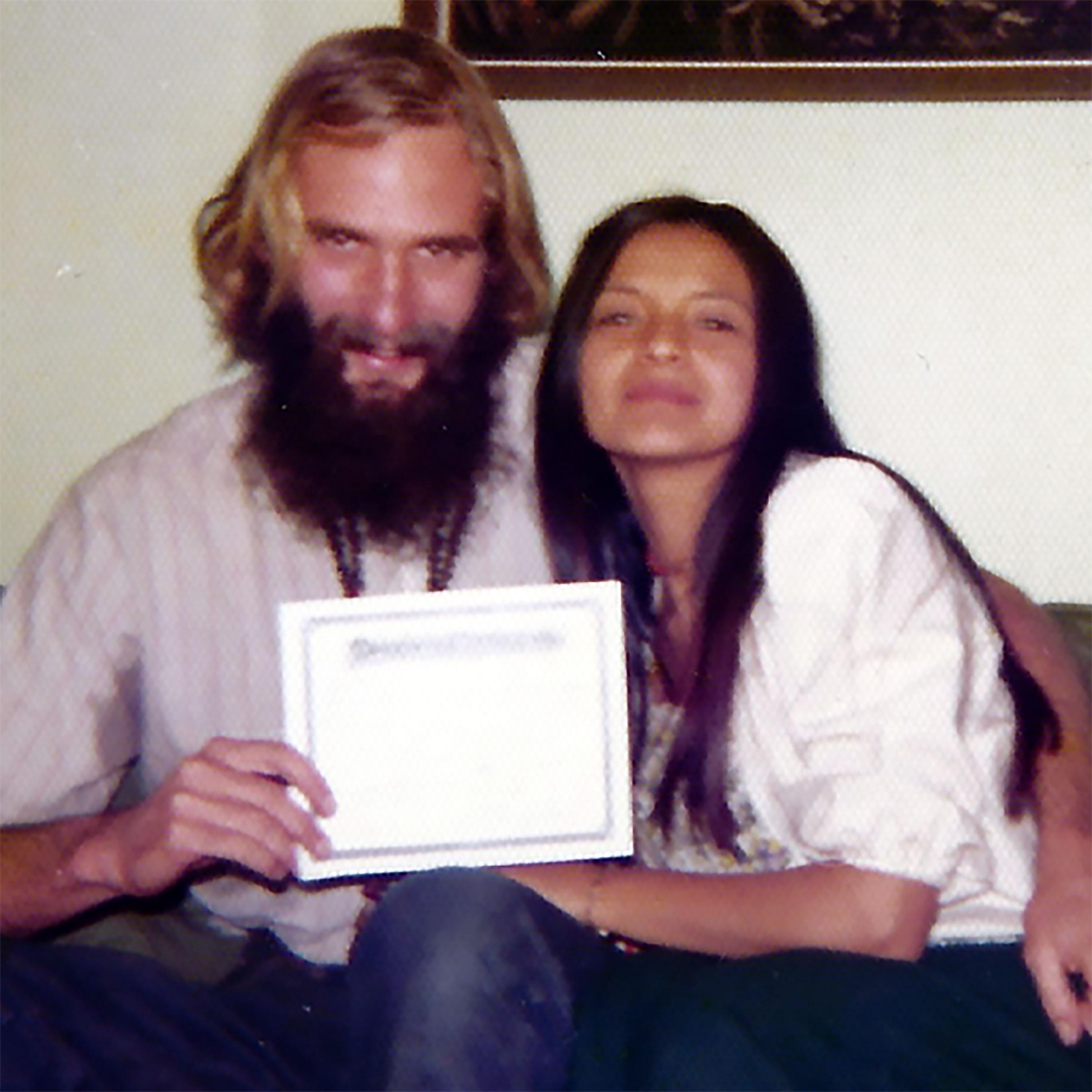
Speaker 14 and she spotted this young man hitchhiking he was tall and lanky and he had long blonde dirty blonde hair well because it was wet it was raining you know and his beard was just like down to his chest.
Speaker 14
And he had his shirt inside out and misbuttoned. And she said, oh, he has such kind eyes.
And I was like, no, he doesn't. You can't see his eyes.
It's raining.
Speaker 13 Then she said, no,
Speaker 7 I was not afraid of him.
Speaker 11 But she was.
Speaker 7 Yeah.
Speaker 11 Anita was scared because they were in Northern California and there were serial killers, a few of them, around there in the 70s. Even at 10, Anita knew this.
Speaker 11
All three women in the car were small, all under five feet. Anita in the front seat, their cousin Cecilia in the back.
Again, here's Anita.
Speaker 14 And then, of course, I was protesting loudly, don't stop the car.
Speaker 14 And Cecilia even said, no, Manuelita, don't do it, don't do it.
Speaker 11 Manuelita stopped anyway. The man came to the window.
Speaker 14 And he had to talk through the passenger side window where I was sitting and kind of like freaking out that he was in my face now.
Speaker 11 Anita remembers sitting stock still, staring straight ahead, afraid to make eye contact, as a stranger somehow talked them into letting him into the car.
Speaker 14 And my mother didn't speak very good English. Neither did Cecilia.
Speaker 14 But guess who did speak Spanish?
Speaker 11 Serial killer-looking white guy. Turns out, fluent in Spanish.
Speaker 11 The hitchhiker lumbered into the back seat next to Cecilia. Cecilia had only been in the country a few weeks at that point and was like, what on earth? She was 26.
Speaker 14 And Cecilia, you know, she was all dressed prim and proper and
Speaker 14 she even had little white gloves on.
Speaker 14 And he had a booming personality to match a booming voice. He had a great voice.
Speaker 14 He got in the car and everybody calmed down when we heard him speak to Cecilia so kindly. And my mother introduced them and she pointed out that, you know, she had just come.
Speaker 11
Cecilia had just come to the U.S. from Peru.
And this is how the story started.
Speaker 14 Their life changed, our lives changed. It was like a meteor hitting the earth when we met Brian.
Speaker 11
Brian, that was the hitchhiker's name. Which I know because that guy's my dad.
Cecilia, that's my mom. And this story, it's the story of how our family came to be.
Their legendary first meeting.
Speaker 11 It was followed by a similarly legendary first date. My mom's sister and cousin dressed her up in their own clothes, white bell bottoms, white platform heels.
Speaker 11 My dad showed up in a poncho, and he took her hiking in the redwood forest.
Speaker 11 where it rained.
Speaker 11 He ended up carrying her so that she wouldn't ruin the shoes she'd borrowed.
Speaker 11
Two weeks later, they eloped, headed off to Reno, but ended up stopping in a random town nearby where marriage licenses were $5 cheaper. They got married at 7 a.m.
on Christmas Eve.
Speaker 11 Anita remembers them coming home after with their marriage license.
Speaker 14 I can remember even the knock on the door and I ran to open it.
Speaker 14 And
Speaker 14 there they were standing there. I yelled to my mom that they were here and she came running and...
Speaker 11 Her mom, Muanulita.
Speaker 14 She welcomed them in and I don't know what happened next, but they came back married and
Speaker 14
they loved each other till the end. Wow.
Yeah.
Speaker 11
That's so cool. It's like, it's such a good story.
Like I said, legendary.
Speaker 11 This story is the bedrock foundation of how I see my parents, especially my dad. I picture him at 26, his miss-button shirt, catching rides through the West Coast alone.
Speaker 11 This big white guy from Detroit climbing into this car full of immigrants, just exuberant and thinking, wow, I'm going to marry this lady.
Speaker 11 And I picture my mom at 26, having just arrived in the country, self-contained, determined, seeing this weirdo and deciding, yes,
Speaker 8 him.
Speaker 11
When you enter the family, this is pretty much the one story we make you memorize. And then you could be a citizen of the family.
Here's my brother-in-law, Lars.
Speaker 11 How many times do you think you've heard this story?
Speaker 7 Oh, I don't know. Many times,
Speaker 7 50, 100.
Speaker 7 Many times.
Speaker 11 And the meaning of this story has always been clear.
Speaker 12 If they didn't pick him up, we would, all of us wouldn't be here right now.
Speaker 11
Here I am with my niece and nephews. I wouldn't be here, and you wouldn't be here.
Your mom wouldn't be here.
Speaker 16 And Sammy wouldn't be here.
Speaker 12 Sammy wouldn't be here.
Speaker 16
Deanna wouldn't be here. Marion wouldn't be here.
Wally wouldn't be here.
Speaker 16 Anyone that we know wouldn't be here.
Speaker 11 Well, we wouldn't be here to know them.
Speaker 11
There's something predestined about it. This is such an important story, I thought.
You know what? I'm gonna visit the spot where the meteor struck. My dad died 10 years ago.
I miss him, always.
Speaker 11
And he doesn't have a grave. He insisted on cremation by, quote, the cheapest means possible.
He didn't like fancy things. And I also think that he didn't want to be a burden.
Speaker 11
Anyway, when I want to remember him, there's not like a location I can go to. I can't like put flowers by a tombstone.
So how about this place?
Speaker 11 This legendary spot where he climbed into a car and our family began.
Speaker 11 So, can't be hard. So where was it?
Speaker 11
Anita says it was by the freeway exit by our house. Manuelita says it was an on-ramp heading downtown.
They're not definitive about it. So I went to the third person in the car that day, my mom.
Speaker 11 And she says, sure,
Speaker 11 I know exactly where it was.
Speaker 11 And then she starts to tell me this story.
Speaker 6 I remember, what I remember is that we were walking down the street, walking to the car. And Brian said, hola?
Speaker 11 Brian, my dad.
Speaker 6 And Manolita said, hola, hola, we all say, hola.
Speaker 11 You saw him when he was walking?
Speaker 10 Yes.
Speaker 6 He was walking to go to the bus stop.
Speaker 11 The bus stop? He was taking the bus?
Speaker 11
This is not the story I'd always heard. In my mom's version, they weren't in a car.
She and Manolita were walking down the street. They just left the Jacksons' house.
Speaker 11
The Jacksons were a family where my Tia Manoelita worked as a cook. She says it was a beautiful day, not raining at all.
And most importantly, dad wasn't hitchhiking.
Speaker 11 Was he like holding up a sign or something saying he wanted to ride? No.
Speaker 11 Because the story's always been hitchhiking.
Speaker 7 No.
Speaker 11 Wait, Mom, but your story and Anita's story is completely different. She remembers it clearly.
Speaker 6 That
Speaker 6 was walking.
Speaker 11 Then why does she remember this other story?
Speaker 7 I don't know.
Speaker 11 From my mom's point of view, this is especially mysterious because she's quite certain that Anita wasn't there. Not in a car, not on the street, not there for this moment at all.
Speaker 11 I don't think Anita was.
Speaker 12 Anita remembers it.
Speaker 17 I don't think she was. No, no, no.
Speaker 11 This kind of knocked me over.
Speaker 11 The hitchhiking story, as I've said, is the origin story of my family.
Speaker 11 My mom's had a private version of it for 50 years that she's kept to herself during the many, many conversations where we tell it.
Speaker 11
When my dad died 10 years ago, we wrote about this story in his obituary, like printed it in our local newspaper. We ran that obituary by my mom.
She didn't think it was worth correcting?
Speaker 11
Dad was the memory keeper of our family. A big-hearted, big-brained guy who held on to everything that happened.
Who had chickenpox first as a kid? Natalie, he'd say.
Speaker 11 What was the name of that iguana that we had that died? Mari iguana, he'd say.
Speaker 11 He would absolutely know exactly where this happened. And the thought that he's not here to tell us, it makes him feel so...
Speaker 7 gone.
Speaker 11 Like we had a favorite photo of him and we have no idea where it is anymore.
Speaker 11 When my dad died, it was sudden. And it devastated me.
Speaker 11
As time passes, we've lost so much of him. His clothes have lost his smell of wool and sawdust, and too much tied laundry detergent.
And this,
Speaker 11 it was like losing a big piece of him again.
Speaker 11 Because in his absence and in our negligence, we simply forgot to remember.
Speaker 15 Unforgivable.
Speaker 11 I had to fix this.
Speaker 11 I had to get to the truth.
Speaker 11 I force the three of them, Monolita, Anita, and my mom, to sit down together to try to work this out. Come to some agreement about what happened and where.
Speaker 11 Anita is stunned to hear that my mom and Manolita don't think she was in the car.
Speaker 14
So, yeah, my story's not going to change. I was in the car.
I was in the front seat. You were in the back seat.
Speaker 11 Mom turns to me.
Speaker 7 I don't remember never Anita being around.
Speaker 11 She tells the others, they weren't even in a car.
Speaker 11 But Manulita, you remember him hitchhiking and you were driving and you pulled over, right?
Speaker 13 Oh, yeah, of course. That's why
Speaker 13 I pick him up.
Speaker 7 Yeah.
Speaker 11 She remembers walking, but you all were walking.
Speaker 13 No, we were not walking.
Speaker 13 Oh, yeah, I was driving.
Speaker 13
Yeah, I was driving. Yeah, hitchhiking.
He was hitchhiking.
Speaker 11 This went nowhere.
Speaker 11 And the fact that we've been telling this hitchhiking story for 50 years, and my mom's never mentioned that she thinks it's complete bullshit, I have to say, that's very much like my mom.
Speaker 11
She's eminently capable of keeping her thoughts and feelings to herself. She has feelings, obviously, but she shows love in concrete ways.
An unasked for plate of fruit, a bowl of soup.
Speaker 11 She'd give me her kidney or hide a body from me, no questions asked. But sitting around gabbing about feelings, not her thing.
Speaker 11 She finds that trying.
Speaker 11
She'll either roll her eyes or blurt out something explosive and walk away. Or clam up.
Here's us in the car.
Speaker 11 Mom, so, but, but I just, is it interesting to you that you have one memory and other people have a different memory? Is it interesting?
Speaker 10 Um,
Speaker 6 I know that
Speaker 5 stories are like that.
Speaker 11 I know, I know, but is it interesting? I want to talk about the feelings of it.
Speaker 7 That's good.
Speaker 6 Yeah, that's how we met.
Speaker 11 Yeah, but what's it like? How do you feel?
Speaker 7 Nothing.
Speaker 6 It's okay.
Speaker 11
She gets impatient. She dodges.
And in response, I get impatient with her about everything. I compulsively nitpick everything she does.
Can you put your bag in back?
Speaker 11 Because of the noise, it's too much noise.
Speaker 11
Rustling that bag makes noise that gets on the mic, I tell her. So does her beaded necklace.
Could you take off your necklace?
Speaker 6 Yep.
Speaker 11 Rather than engage with me, she whips out her little pot of Mary Kay cold cream and starts dabbing it on her cheeks and forehead.
Speaker 11 Okay, can you just put the cream on after we go?
Speaker 15 Okay.
Speaker 10 But it's just
Speaker 11 you can't be messing with it as we drive. Okay.
Speaker 11
I'm a nightmare. She She lets it go.
She's a good mom.
Speaker 11 Of course, the day my parents met, there was one other person there.
Speaker 11 My dad.
Speaker 11
I'd interviewed him in 2010, years before he died. Before he even got sick.
I've never been able to bring myself to listen to that recording. Just too hard.
Speaker 11 So I had no memory of what we talked about that day, but I had a hunch that if I'd done an interview with him, I would have asked him to tell me this story.
Speaker 11 I had no idea where this interview was, but I'd given him a copy and I knew he would have kept it.
Speaker 11 The week I talked to my mom, I spent hours digging through old file cabinets and boxes in the garage. I finally found it one night at 2 a.m.
Speaker 11 I threw on all the lights, ran into bed, and listened immediately.
Speaker 19 Okay,
Speaker 19 how did you meet mom?
Speaker 19 I was hitchhiking on Rio del Mar Boulevard,
Speaker 19 and
Speaker 19 Manuelita picked me up, and I believe Anita was in the car, too.
Speaker 13 Oh, my God.
Speaker 11 Of course, he has all the answers.
Speaker 19 Anita said, No,
Speaker 19 don't even think of stopping for this guy. And Manuelita said, He's cute.
Speaker 19 And
Speaker 19 that's how I met your mom. What kind of car were they driving? Huge.
Speaker 19 A Lincoln Continental.
Speaker 19 I mean, it was like a Star Wars machine. You know,
Speaker 19
the front of it went by, and then five minutes later, the rear of it went by. It was huge, biggest car in the world.
Manuelita is the smallest person in the world.
Speaker 19 And what did you think when you got in the car?
Speaker 19 I said,
Speaker 19 she's a cutie.
Speaker 19 That's the first thing you thought when you got in the car. Of course.
Speaker 19 You weren't like, who are these tiny ladies picking up a huge?
Speaker 19 Oh, why did you think she was cute?
Speaker 19 She was very self-confident. And
Speaker 19 oh, really?
Speaker 19 Well, you know your mom.
Speaker 19 She's nothing if not self-confident.
Speaker 19
She's smart. smart.
Yeah, she's really smart.
Speaker 19 Really smart.
Speaker 19 So they picked you up on Rio del Mar. In front of what? Like what what would it be there today?
Speaker 19
Same. It hasn't changed.
Rio del Mar and uh w right by that bridge, you know the bridge on Rio del Mar Boulevard.
Speaker 19
The one by like um the little bridge. It goes across that little ravine.
Oh, right there? Yeah, right there, uh-huh.
Speaker 19
And so then what happened in the car? When did you get out? They invited me over to dinner. Mine, what did.
So I went over to dinner. Anita was against this.
Very much against this.
Speaker 11 And then, did you ask mom out?
Speaker 19
Either that or Manuelita asked us both out. I think Manuelita asked us both out.
She said,
Speaker 19 when are you coming to take her out? Something like that.
Speaker 19 What did she say? I said, oh, I don't know, tomorrow? She goes, okay.
Speaker 11
This recording is from 14 years ago. I haven't really heard his voice in 10 years since he died.
I hadn't forgotten, but I sort of had forgotten how much fun we had just talking to each other.
Speaker 11 And my dad told the same story as Anita and Manaolita.
Speaker 11
This story my dad tells about their meeting was not news to my mom. She says, yeah, we always disagreed about that.
Of course he said that. He's got it wrong.
Always has.
Speaker 6 I remember we had are your last when we told people how we met.
Speaker 12 People laugh.
Speaker 6 Because he wants to say one thing, I won't say another thing.
Speaker 11 I've thought a lot about why my mom prefers her version, where he's walking to a bus stop and not hitchhiking.
Speaker 11 And the main thing I keep thinking about is, in my dad's version, my mom's people make the first move. Their meeting is kind of random, a split-second fluke.
Speaker 11
But in the version my mom likes, everyone's on foot on this rainless, beautiful day, and my dad sees them and approaches. He makes the first move.
Which is maybe more romantic.
Speaker 11 Everyone wants to be chosen.
Speaker 11 I run my hypothesis by her. She kind of blinks at me blankly, slightly impatient.
Speaker 11 Nothing.
Speaker 11
The day after I found that interview with my dad, I woke up early and the mismatched memories, it all started clicking together. Okay, this is just me in my room.
It's Wednesday.
Speaker 11 Last night I listened to that recording and dad said it was in Rio del Mar right by the bridge.
Speaker 11 So I think
Speaker 11 I just figured it out. I think their car was parked on the street a little ways from the Jackson's house.
Speaker 11 And they had to walk to the car from the house.
Speaker 11 So my mom remembers that walk.
Speaker 11 and then they got in and had just started driving when they hit that bridge and saw my dad that's like a block away from the jacksons
Speaker 11 no time at all easy for my mom to forget and there he stood not at a bus stop but hitchhiking
Speaker 7 okay
Speaker 11 here's me explaining my theory to my mom
Speaker 11 and you had barely gotten in the car you went around the corner and dad was right there
Speaker 11 we drove around the corner maybe because what dad said, and dad has a really good memory, you know?
Speaker 6 Oh, yeah, I know.
Speaker 11 But what I think might have happened is, mom, your feet, can you stop?
Speaker 6 Yeah.
Speaker 11 I think you guys might have just gotten in the car, barely driven, and then he was right there.
Speaker 6 Yeah, I think so.
Speaker 6 I think that's where it is.
Speaker 11 You think that sounds right?
Speaker 6 I think it sounds right.
Speaker 6 Yeah,
Speaker 6 that's how I remember. Not much driving.
Speaker 6 Yeah.
Speaker 11 Do you want to go drive and see where he said?
Speaker 8 Let's go look at the drive.
Speaker 6 It was close by.
Speaker 11 We drive to the spot my dad said. You remember?
Speaker 19 Rio del Mar and
Speaker 19 right by that bridge. The little bridge that goes across that little ravine.
Speaker 11
The Jackson house is maybe a minute away, around the corner. There are trees everywhere.
An intersection between residential blocks. Not much around.
Speaker 18 Except for.
Speaker 18 There's a bus stop.
Speaker 6 He was walking here.
Speaker 11 Mom, it's it's a bus stop. Yeah.
Speaker 11 I've never seen this bus stop before. She had been talking about this bus stop the whole time, and I didn't believe her.
Speaker 10 Mom, but it's the bus stop.
Speaker 11 The one you've been talking about. Yeah, uh-huh.
Speaker 6 But he was walking to the bus stop.
Speaker 11 I think this is it, Mom.
Speaker 6 I'm so glad.
Speaker 11 I I knew this road like the back of my hand,
Speaker 11 and I'd never seen a bus stop there.
Speaker 11 But here it was, tucked under some trees. Just a sign and a little bench.
Speaker 10 Mom, good job.
Speaker 18 The past memory never goes away.
Speaker 11 I'm so relieved.
Speaker 10 Yeah.
Speaker 6 Very close. Everything is so close.
Speaker 10 Good job.
Speaker 6 We found the bus stop.
Speaker 6 Wow.
Speaker 11
This was it. Okay.
What I'd wanted to find
Speaker 11 the place our family began.
Speaker 11 A bus stop I'd driven past a million times.
Speaker 11 Not the fanciest spot in the world, but pretty. Place you wouldn't mind visiting again.
Speaker 11 My mom said, next time I'm in town, we should go sit at that bus stop. Bring champagne, toast my dad.
Speaker 11 Probably get a ticket, she said.
Speaker 8 But to hell with it.
Speaker 11 Part of what made this whole project a little weird for me was this thing that I've mentioned a few times That my mom doesn't really like discussing feelings But I learned something talking to my sister Kim about all this stuff that driving home I really wanted to tell my mom Do you know that when he was sick
Speaker 11 Manuelita came to the house and she was sitting with him
Speaker 11 and
Speaker 11 he was sick, you know, he was just lying down and not really talking that much at that point. But he did say to her, he said, Manuelita, thank you for my life.
Speaker 11 Did you know that?
Speaker 10 He said, I don't remember.
Speaker 18 I think he said something, yeah.
Speaker 11 What um
Speaker 11 what does it feel like to hear that he said that?
Speaker 18 It's nice.
Speaker 11 Tell me more. Tell me more about what it feels like.
Speaker 18 Well, I feel you're like crying.
Speaker 10 What?
Speaker 18 Like crying.
Speaker 10 You feel like crying? Yeah.
Speaker 10 Sure, we had nothing to die so fast, so soon.
Speaker 11 Well, like, I think when I hear that story,
Speaker 11 it's kind of beautiful to me because he loved his life so much.
Speaker 18 He loved it. Yeah.
Speaker 11 And he loved his family, and he loved you.
Speaker 10 Yeah.
Speaker 10 Yeah.
Speaker 10 Right?
Speaker 18 She said thanks to it too. And kind of, you know, we're not perfect.
Speaker 18 We can forgive each other if we
Speaker 18 if we forgive us.
Speaker 11 I brought up my dad's last days, and my mom's mind went straight to their last night together. Cut to the heart of her grief.
Speaker 11 To this moment when he was dying, and they forgave each other for their hurts.
Speaker 11 We've never talked about this.
Speaker 11 My mom never talks like this.
Speaker 18 You know, she said number one, like everything was in order, and
Speaker 18 I forgive him whatever he did, we were not perfect, and he forgived me to whatever I did.
Speaker 18 So we talked in the room, you know, then.
Speaker 11 Yeah.
Speaker 18 And then we hug, and so like we sleep together the last night.
Speaker 10 But
Speaker 6 I was so afraid to touch him, I didn't want to hurt him. So I just touched his legs, his feet, and
Speaker 18 that's what he slept the whole night through, no problem.
Speaker 11 Mom didn't stop there. She told me something else.
Speaker 11
When I was nine, my parents hit a rough patch in their relationship and decided to separate. After a few months, they got back together.
I never really knew how or why.
Speaker 11
We didn't like to speak about that time in my family. But as I was talking to my mom about all this, she brought it up.
You want to know the real hitchhiking story? She said.
Speaker 11 And she told me that during the time they were separated, one day, she was driving down the street and she saw my dad was walking.
Speaker 11 And as she approached him on the road, he saw it was her in her Volvo, and he threw his thumb in the air.
Speaker 8 Cool joke, huh?
Speaker 11 So she stopped, picked him up. A couple days later, they got back together.
Speaker 11 That's the important story, she said.
Speaker 11 After that, my parents stayed married another 20 years.
Speaker 11
And during that time, they had a blast together. Sometimes inseparable.
The best time of their marriage, my mom tells me. After they returned to that root moment where everything started.
Speaker 11 Only this time, it wasn't random chance.
Speaker 11 It was his choice to flag her down.
Speaker 11 And hers to scoop him up.
Speaker 2
Lily Sullivan is a producer on our show. Special thanks to Lily's sisters.
This song is one of their dad's favorites. He used to play it for them on the piano when they were growing up.
Speaker 2 Down in the leaves of chair.
Speaker 2 Coming up, a one badly tuned instrument on one song at one concert can change your life.
Speaker 2 That's a minute from Chicago Public Radio when our program continues.
Speaker 1
Support for this American Life comes from GoodRX. Cold and flu symptoms got you down? Find relief with GoodRX.
You can save an average of $53 on flu treatments.
Speaker 1 Plus, save on cold medications, decongestants, and more. Easily compare prescription prices and instantly find discounts of up to 80%.
Speaker 1 GoodRX is not insurance, but works with or without it and could beat your copay price. Save on cold and flu prescriptions at goodrx.com slash TAL.
Speaker 1 Support for this American Life comes from BetterHelp. Most FSA dollars expire at the end of the year, so it's time to use them or lose them.
Speaker 1 With BetterHelp, you can invest those funds in taking care of your mind with online therapy. Join today and you can be matched with a licensed therapist in as little as 24 hours.
Speaker 1 Visit betterhelp.com/slash T-A-L to get 10% off your first month.
Speaker 2
This is American Life. I'm Eric Glass.
Today's program. If you want to destroy my sweater, hold this thread as I walk away.
Speaker 2
We have stories about small moments between people that suddenly change how everything looks. We've arrived at Act 2 of our program.
Act 2, What's With These Homies Dissing My Girl?
Speaker 2 In his early 20s, Mike Comete wanted to be a professional musician. He was trying his absolute hardest to make that happen until one day it all came undone.
Speaker 2 Weirdly, right in front of Weezer, Mike tells what happened.
Speaker 3
The band I was in was invited to play on one of the medium-sized stages, which is a huge deal for us. There'd be over 2,000 people watching.
It'd be the biggest stage we'd ever played on.
Speaker 3 But then, I saw that Weezer was also playing Bonnaroo.
Speaker 3
It felt like some kind of faded opportunity. We were actually covering a Weezer song in our set.
And so I had this big idea. Our front person, Julia, was a musician who had blown up on YouTube.
Speaker 3 She had thousands of followers on social media. What if we got them all to tweet at Weezer's lead singer, Rivers Cuomo, to see if he'd come sing with us? I asked Julia if she was game for it.
Speaker 3
And shockingly, it worked. Better than we could have hoped.
Rivers didn't come sing with us.
Speaker 3 Instead, he invited Julia to come play her ukulele and sing with Weezer during one of their songs on the main stage.
Speaker 3 Julia's visibility of Bonnaroo would be multiplied tenfold. If this went well, who knows where it could lead? Maybe Weezer would bring us on tour with them as their opener.
Speaker 3 Our agent immediately submitted us to their team for some of their upcoming shows. Or maybe Rivers would write a song with Julia, play on our record, or she'd play on theirs.
Speaker 3
The possibilities kept me up at night. I was 22.
I'd only been playing music professionally for a year at that point. But I was convinced this would be the moment that would transform our careers.
Speaker 3 The day of the show, Julia split off from our group to rehearse with Weezer on their tour bus. I felt a little sting finding out I wasn't going to meet them too.
Speaker 3 Weezer went on a little before sunset. Me and the rest of the band sat way back in the crowd on some bleachers, while Julia was somewhere backstage.
Speaker 3 There had to be at least 20,000 people between us and Weezer. I couldn't believe that a dumb idea I'd cooked up in a rehearsal had led to this.
Speaker 3 The song Julia was going to play on was called Trippin' Down the Freeway. Weezer started it a few songs into their set.
Speaker 3 Julia is off stage for the first half of the song, but after the guitar solo, Rivers brings the band down to a vamp and has Julia come out, kind of dramatically.
Speaker 3 Julia walks on stage, drumming her yuke, but something sounds off.
Speaker 3 They are not in the right tuning. She's in a different key.
Speaker 3 For a split second, I'm convinced I'm having a nightmare. I try telling myself to wake up.
Speaker 3
Nope. Weezer is still on stage, having a conversation mid-song about Julia's tuning through the PA system.
Rivers pivots.
Speaker 3 He turns to the crowd and starts talking about how Julia had ended up on stage with them that day. About Twitter, about Julia's fans.
Speaker 3
He's making fun of her. I start clenching my jaw from the stands.
I said, I don't know, man.
Speaker 3 This is Weezer.
Speaker 3 This is a professional knife.
Speaker 3
I'm mortified. I can't believe how mean he's being to her.
Just so passive aggressive.
Speaker 3 At this point, our crew member who's been sitting next to me, excitedly filming Julia's big moment, quietly stops recording and puts down her camera. This isn't her video.
Speaker 3
Someone else posted this one to YouTube. I couldn't help thinking, I'd been the one to suggest she do this in the first place.
This was on me.
Speaker 3 After an excruciating 62 seconds of improv, Rivers wanders across the stage to where Julia is trying to retune with another band member.
Speaker 3 I'm just gonna sing, she says.
Speaker 3 Rivers counts off and starts singing. Julia jumps in.
Speaker 3
Julia looks so small from where we're sitting, but I can tell she's holding your ukulele by her side as she sings. They finish the song.
Rivers thanks Julia and she walks off the stage.
Speaker 3 I'm sitting in the bleachers, shocked by what just happened. Weezer keeps playing a bunch of my favorite songs, and I can't enjoy them.
Speaker 3 The next day, Rivers tweeted at Julia and thanked her for playing despite the mishap. A few weeks later, Weezer's manager officially turned us down for the opening spot on tour.
Speaker 3
In the music business, you need some moment to pull you out of obscurity and propel you forward. And it felt like for us, Weezer had been it.
Instead, we'd blown it.
Speaker 3 And that was the beginning of the end.
Speaker 3
After Bonnaroo, Julia and I stayed busy touring, just the two of us, for a while. But then things slowed down.
Julia and her management were about to part ways.
Speaker 3 I started getting nervous about being able to support myself, so I tapped out of touring with Julia and got a full-time job where a lot of struggling musicians and actors end up, at the Apple store.
Speaker 3
And so this is when I started watching and re-watching that video, The Weezer Performance. I've been doing that for the last 14 years.
Each replay, I keep hoping that it won't be as bad as I remember.
Speaker 3 But it always is.
Speaker 5 I'm still stuck on what the fuck happened.
Speaker 3 And in particular, was it our fault? On stage, Rivers had made it seem like it, but I've gone through the details again and again. Julia had received tuning instructions from Weezer's road manager.
Speaker 3 Were those incorrect? Had Julia done the math wrong tuning her yuke?
Speaker 4 Had I?
Speaker 3 I'd helped her with that.
Speaker 3 I found a video of Julia rehearsing with Weezer on their tour bus. She was in the wrong tuning there, too, but no one had noticed.
Speaker 3
Julia might know what went wrong, but I never really talked to her about that show. Only once right after.
It was uncomfortable. She was clearly upset, had been crying.
Speaker 3 She asked to let it go, so I did.
Speaker 3 But she must remember something from that day.
Speaker 5 So I called her.
Speaker 3 When is the last time you thought about the Weezer performance?
Speaker 20 It doesn't like revisit me in the quiet dark night.
Speaker 17 Okay.
Speaker 20 I think when Weezer comes up, like if Weezer is on at a party, I might or might not be like, I've played with Weezer once and I'm totally
Speaker 5 fumbled.
Speaker 3 Julia lives in Austin, Texas now. She's still releasing music, but her career has shifted more towards life coaching and guided meditation.
Speaker 3 Her memories of the Weezer incident were not as vivid as mine.
Speaker 3
She didn't remember how she and Weezer got in touch. She didn't remember what year it happened.
She definitely did not have the email from the road manager about the tuning.
Speaker 3 And she never puzzled over why her tuning was off. Because for her, that whole show was a totally different experience.
Speaker 20 When Rivers was saying all that stuff about her on stage, it never registered to me as like anything, anything other than like a musician just trying to make the show go.
Speaker 20 Oh my God.
Speaker 3 I feel like I've just been stewing in it for so long, being like, that dude was an asshole to my friend. Oh Mike.
Speaker 20 No way, man.
Speaker 20
I have never once thought that Rivers was mean. I didn't know what to say in that moment.
I didn't know what to do. Like he could have just been like, okay, never mind.
Speaker 20 But the fact that he came up with a real-time solution to be like, yeah, just sing. I was so grateful.
Speaker 3 I watched this video
Speaker 3 probably more often than I should.
Speaker 3 I feel like I'm responsible for it.
Speaker 3 In a way that's like, if I had just not said anything in that rehearsal that day, we could have just gone about our days and rehearsed and just had our set at Bonnaroo.
Speaker 3 And then you would have come to Weezer's set and sat in the bleachers with us. And we just would have enjoyed Weezer together.
Speaker 11 Mike, don't you dare.
Speaker 3 But instead, you went on stage with him and this thing that could have changed your career, in my view, had this effect that this like,
Speaker 3 you seemed so sad afterwards and devastated. And I was like, oh my God, if I had just said nothing, this wouldn't have happened to you.
Speaker 5 God,
Speaker 14 I...
Speaker 20 I don't think that experience had any sort of detrimental pivot for my career. The thing that made my career not happen is that I couldn't take the pressure.
Speaker 20 It's not that you,
Speaker 20 I think that you
Speaker 20 offering that Weezer thing
Speaker 20 was brilliant.
Speaker 20 I wish I would have done a bunch of different things, but like not playing with Weezer and not fucking up on stage is not one of my regrets at all.
Speaker 7 I'm glad.
Speaker 3 Julia was so much more at peace with the day than I was. She said the band, our band, wasn't sounding good to her anyways.
Speaker 3 She thought opening for Weezer was a long shot, even if she had been in the right tuning for tripping down the freeway.
Speaker 3 But also, the moment Julia remembered most from that performance wasn't the mistake.
Speaker 3 It was the part of the video that I usually skip over, the moment where it works out, right after Rivers asked Julia if she wants to sing.
Speaker 20 I'm looking Rivers Cuomo in the eye.
Speaker 20 Once we decide to start singing, everyone cheers and we start like dancing together and we put our arms around each other and we're like head to head singing like full blast, tripping down the freeway.
Speaker 20
And I felt like we sounded really good together. Yeah, I don't know.
Like all of that feels
Speaker 20 important
Speaker 5 to me.
Speaker 3 You can't see any of this in the video I'd been replaying all these years. That one was shot from way back, near the Bleachers, where I watched the show.
Speaker 3 I almost couldn't believe what Julia described, but changing up the wording of my YouTube search, I found another video from that day, filmed close to the stage.
Speaker 3 You can see everyone's faces, and even when the tuning mistake becomes apparent, they're smiling and they're laughing.
Speaker 3 Julia and Rivers dance. They're having a great time.
Speaker 3 Watching it, I felt this wave of relief. It's what I was missing all these years.
Speaker 3 Julia was okay, and I believed her that the band didn't break up because of a tuning mistake. And this moment wasn't why I stopped playing music for a living.
Speaker 3 After Julia and I talked, I finally heard back from Weezer's former road manager. She found the email they'd sent us before the performance, and the instructions were wrong.
Speaker 3 There would have been no way for Julia and me to tune correctly with them.
Speaker 3 I had the full answer now, but I was surprised by how little it mattered to me. I was over it.
Speaker 2 Mike Comete, he is one of the super skilled people who work here at the show doing audio mixes and adding music to our stories. Diane Wu produced this story.
Speaker 2 Here is Mike playing guitar and singing with Julia, whose full name, by the way, is Julia Noons.
Speaker 2 This is a song they used to cover together years ago.
Speaker 6 And I'm ashamed I ever tried to be higher than the rest.
Speaker 17 But brother, I am not alone
Speaker 17 We've all tried to be on top of the world somehow
Speaker 17 Cause we have all been losers
Speaker 17 I don't wanna be laid down
Speaker 17 No, I don't wanna die knowing
Speaker 17 Just trying to be the winner
Speaker 17 So I wanna make it clear now
Speaker 17 I wanna make it known
Speaker 17 That I don't care about any of that shit no more
Speaker 17 Don't care about being a winner
Speaker 17 Or being sleuth with women
Speaker 17 Or going out on Fridays
Speaker 17 Being the the light for parties. And no,
Speaker 17 no more.
Speaker 17 No.
Speaker 2 Act 3.
Speaker 2 And if you see her, tell her it's over now.
Speaker 2 In this last act, we turn from small personal moments to big news that the whole world experiences, but that hits some people very, very personally.
Speaker 2 You probably saw the headlines and reports that a couple weeks ago, after his family ruled Syria for over 50 years, the president/slash dictator Bashar al-Assad was run out of his own country very suddenly.
Speaker 2
Assad ran a government that did not tolerate dissent. He used chemical weapons against his own citizens.
He spent much of the last 13 years brutally crushing an uprising.
Speaker 2
Hundreds of thousands of Syrians were killed, tortured, disappeared. More than half the population was displaced in that conflict.
Six million Syrians fled the country.
Speaker 2 So, when a rebel coalition forced Assad out two weeks ago, Syrians all over the globe had their world turned upside down.
Speaker 2 And a few of us here at the show called around to see what that's been like for them. Diane Wu put together this story.
Speaker 15
The regime collapsed late on a Saturday night. My coworkers and I talked to a few Syrians who are living abroad now about what that night was like for them.
One was up studying for an exam.
Speaker 15
Another was out to an anniversary dinner, kept checking his phone. But the person I want to tell you about is Selma.
She was in London on Saturday.
Speaker 15 She lives in another part of England, but watching the news by herself in the days before that, she felt like she had to be around other Syrians.
Speaker 15 So she got on the train and headed to her friend's apartment. She'd been crashing there since Thursday.
Speaker 21
It's like this tiny one, a tiny one in an apartment. It's like a studio.
So it's this tiny, tiny studio. We're all sitting together on this couch, five of us, and we're all like on our phones.
Speaker 21 And then the TV is on and we're all checking.
Speaker 21
And there's like barely any space. I don't know if I would describe it as crashing because we didn't sleep.
So
Speaker 21 none of us were sleeping, actually.
Speaker 21 It felt like we were on duty for some reason, you know, like we were like on call constantly.
Speaker 15
It felt like their job to not look away. Something huge was happening back home.
The rebels kept taking more and more ground each day, liberating more and more cities with hardly any pushback.
Speaker 15 Everyone was worried that Assad would do something desperate, like retaliate with chemical weapons or bombings, or that Russia would jump in. Salma and her friends were barely keeping it together.
Speaker 21
One of them, it's not funny, but he kept fainting. And so he would go into the room and then just like almost pass out.
So the first thing I did was I didn't know what to do.
Speaker 21 So I gave him a tomato with like salt on it and I just shoved it into his mouth.
Speaker 21 And I was like, okay, like, I think your blood pressure is dropping. And
Speaker 15 were you guys like, like, were you worried or freaked out? Or was he kind of like, oh, no, this is something that happens?
Speaker 9 Um,
Speaker 21 we were, I don't think we were super freaked out just because
Speaker 21 like a lot of us have medical training.
Speaker 9 Okay.
Speaker 21 It wasn't that big of a deal.
Speaker 20 That's handy.
Speaker 14 Okay.
Speaker 15 They noticed there is a pattern to his fainting. First, he'd start sweating profusely, then go stand in the door to cool off, then head towards the bathroom.
Speaker 21
By the third time, we kind of got the routine down. Like we saw him open the door.
We're like, he's about to pass out. Like, someone start, you know,
Speaker 21
doing, doing all the steps. We kept joking.
They're like, you have to, we have to, like, you you can't pass out now. Like, you got to be strong.
You got to make it till the regime falls.
Speaker 15 Selma told me that her friend who kept fainting had been detained by the regime when he was a teenager three times. He fled Syria after the third time, but his parents are still there.
Speaker 15 He was really concerned about them. Other people in the room were also having physical reactions from all the stress and fear.
Speaker 21 I think it was just like our bodies going into shock and like each person was kind of doing it differently.
Speaker 21 Like for me, I cry a lot and I have like panic attacks and then I throw up, which is kind of gross, but that's what would happen to me.
Speaker 21 Like I would get really nauseous, really nauseous, really nauseous. Like I would go and throw up.
Speaker 15 It was from inside this crowded apartment, scattered with takeout containers and nervous bodies, that these friends then witnessed a sudden unraveling that none of them had anticipated.
Speaker 15 Selma's from Damascus, the capital, which was the seat of the Assad regime.
Speaker 15 And as the rebels kept advancing across Syria, taking Hama and then Asweda and then Homes, her friends from those cities celebrated around her.
Speaker 15 If the rebels succeeded, her hometown would be the last to fall.
Speaker 15 When Selma saw a video of people standing on a tank in Umayyad Square in Damascus, singing Jannah Jannah, a revolutionary song, it was finally real to her.
Speaker 8 It was over.
Speaker 21
Knowing that we would be the last, I was holding it in. And so the first thing I did was I cried.
I hugged all my friends.
Speaker 21 I just I sat there kind of like staring at the wall, crying, crying, crying, crying.
Speaker 15 They stayed up all night and then celebrated more the next day in Trafalgar Square.
Speaker 15 Then Selma went home and mostly laid in bed in the dark for a few days, trying to make sense of this brand new world.
Speaker 15 Selma's family had left Damascus in the first year of the war, 2011, when she was 15. They moved to Connecticut.
Speaker 15 where she joined the soccer team and tried to do regular life while going to protests against the regime on weekends.
Speaker 15 Now she had to figure out how to reverse this thing she's been doing since she was a teenager, separating herself from Syria.
Speaker 21 I knew I couldn't go back with the regime there. And so I started like slowly distancing myself from my memories.
Speaker 21
Like before I would post a lot of photos and, you know, saying, I miss Damascus or I miss this or I miss my house and I miss that. And I stopped doing that kind of on purpose.
And even
Speaker 21 like between myself when I'm alone, if I would remember something or if I would find myself kind of like daydreaming, I would stop myself and I wouldn't let myself kind of go through with it.
Speaker 15 What kind of daydream?
Speaker 21 Like sometimes I would daydream about my house
Speaker 21 and like,
Speaker 21 sorry.
Speaker 8 It's okay.
Speaker 21 Yeah, I don't know. Like it's the place where I have a lot of good memories and
Speaker 21 and it's the place where like me and my siblings did this and did that and like sometimes I would just daydream about like walking into my room and and going back and like sitting in my living room and looking out the window and
Speaker 21 and I just I wouldn't let myself do that anymore and even like at times where I would have like dreams about like being in my house again I would like wake myself up and be like no like this isn't real
Speaker 15
someone else I talked to described it like this Siri was on a different planet from the one he lived on now. There was no way to visit it.
He had to flip a page, start a new life.
Speaker 15 Better not to think about it anymore.
Speaker 15 But now that the regime was suddenly gone, Syria was back on this planet, a place like any other place, and they had to reset their minds to take that in.
Speaker 15 Which was hard to do after so many years of doing the opposite. Salma started thinking about visiting home, not just in a dream way, but like the logistics of where she would stay when she went back.
Speaker 21 So we still have our house and now I'm like, would I stay at my house or would I want to stay somewhere else? Or
Speaker 21 what am I going to do? And now I can think of all the plans.
Speaker 15 The euphoria of the regime falling was laced with heavy feelings, too.
Speaker 15 In the days following the collapse, Isselma learned just how many people who'd been disappeared by the Assad government had been killed, were not coming home. She had another panic attack.
Speaker 15 Selma's been watching all kinds of videos coming out of the new Syria.
Speaker 15 And there's a particular type that delights her, one I wasn't expecting.
Speaker 21
It was a girl in a karate uniform. And this guy was standing across from her with something on his head.
I can't remember, like a water bottle. And she closes her eyes and she like
Speaker 21 karate kicks the water bottle off the top of his head with her eyes closed. And then the camera pans back and everyone's like clapping and cheering.
Speaker 21 I saw people doing parkour in Damascus, they're like doing like back flips in the street in the middle of a celebration.
Speaker 15 Watching these people just be silly and happy for Selma. She sees that as getting to watch them finally be free.
Speaker 21 In Latakia, someone was lifting weights, like in the street, like in the street, yeah, like in the middle of this, like there's like fighters kind of passing by on cars, like waving flowers, and he's like right on the side doing all of these moves
Speaker 21 in his like gym clothes. It's just so, so unserious so fun you know like
Speaker 21 it's things you could have done before but it's just the the the mentality of you're free you can do anything and and and
Speaker 21 you belong to this country or it feels like it's yours again i think the slogans of the regime were so damaging to our psyche like calling it stury al-asad assad syria just
Speaker 21
it removes you from the equation. So who are you in Assad Syria? You're nobody.
You don't belong.
Speaker 21 Seeing the people now and seeing their reaction that are slowly kind of feeling like it is theirs. Like,
Speaker 21
this is our country. We're the ones who are responsible for it now.
We're the ones who are going to take care of it.
Speaker 15 There's pretty much no way to overstate how much there is to do next, how many things will need to be figured out, how many unknowns there are.
Speaker 15 But one person told me: none of it could be worse than what we live through already.
Speaker 2 Diane Wu is a producer on our show. This story was co-produced by Hanny Hawaskley.
Speaker 2 I'm me,
Speaker 2 me, be
Speaker 2 goddamn, I am.
Speaker 2 I can
Speaker 2 sing and hear me,
Speaker 2 know me.
Speaker 17 If you want to destroy my sweater.
Speaker 17 Hold this thread as I walk away.
Speaker 2 That's Mike and Julia, covering Weezer's sweater song, Undone.
Speaker 2 Our program was produced today by Lily Sullivan.
Speaker 2 The people who put together today's show include Fia Bennon, Dana Chivis, Sean Cole, Cassie Howey, Hana Jaffe Walt, Henry Larson, Seth Lynn, Catherine Raymondo, Stone Nelson, Nadia Raymond, Anthony Roman, Ryan Rumray, Alyssa Schiff, Lily Sullivan, Christopher Sertala, and Matt Matt Tierney.
Speaker 2
Our managing editor is Sara Abdurrahman. Our senior editors David Kestenbaum.
Our executive editor is Emmanuel Berry.
Speaker 2 Special thanks today to Natalie Sullivan, Kim Sullivan, Sarah Kim, Steve Sopchak, Aaron Marie Kamate, Dave Burns, Todd Johnson, Leanne Victorine, Darianne Woods, and Yazen Abou Ismail.
Speaker 2 To become a This American Life Partner, which gets you bonus content, ad-free listening, and hundreds of our favorite episodes of the show right in your podcast feed.
Speaker 2
Go to thisamericanlife.org/slash life partners. The link is also in the show notes.
This American Life is is delivered to public radio stations by PRX, the Public Radio Exchange.
Speaker 2
Thanks as always to our program's co-founder, Mr. Tori Malatilla.
You know, he invented this new appetizer where you put a hot dog in a handful of straw. What's he call it?
Speaker 5 I'm at her class.
Speaker 2 Back next week for more stories of this American Life.
Speaker 2 I don't want to destroy your tank time.
Speaker 2 Hold me friends as I walk away.
Speaker 2 I dream
Speaker 2 I soon see Nexus lying on the floor,
Speaker 2 lying on the floor.
Speaker 2 I've come undone.
Speaker 22 This message comes from Charles Schwab. When it comes to managing your wealth, Schwab gives you more choices, like full-service wealth management and advice when you need it.
Speaker 22 You can also invest on your own and trade on Thinkorswim. Visit Schwab.com to learn more.
Speaker 23 Support for this podcast and the following message come from humana employees are the heartbeat of your business that's why humana offers dental vision life and disability benefits designed to help protect them award-winning service expansive networks and modern benefits that's the power of human care to learn more about humana's plans for companies of all sizes and benefits budgets visit humana.com slash employer