The future of vaccines
This episode was produced by Avishay Artsy and Denise Guerra, edited by Amina Al-Sadi, fact-checked by Laura Bullard, engineered by David Tatasciore and Andrea Kristinsdottir with help from Patrick Boyd, and hosted by Sean Rameswaram.
Listen to Today, Explained ad-free by becoming a Vox Member: vox.com/members. Transcript at vox.com/today-explained-podcast.
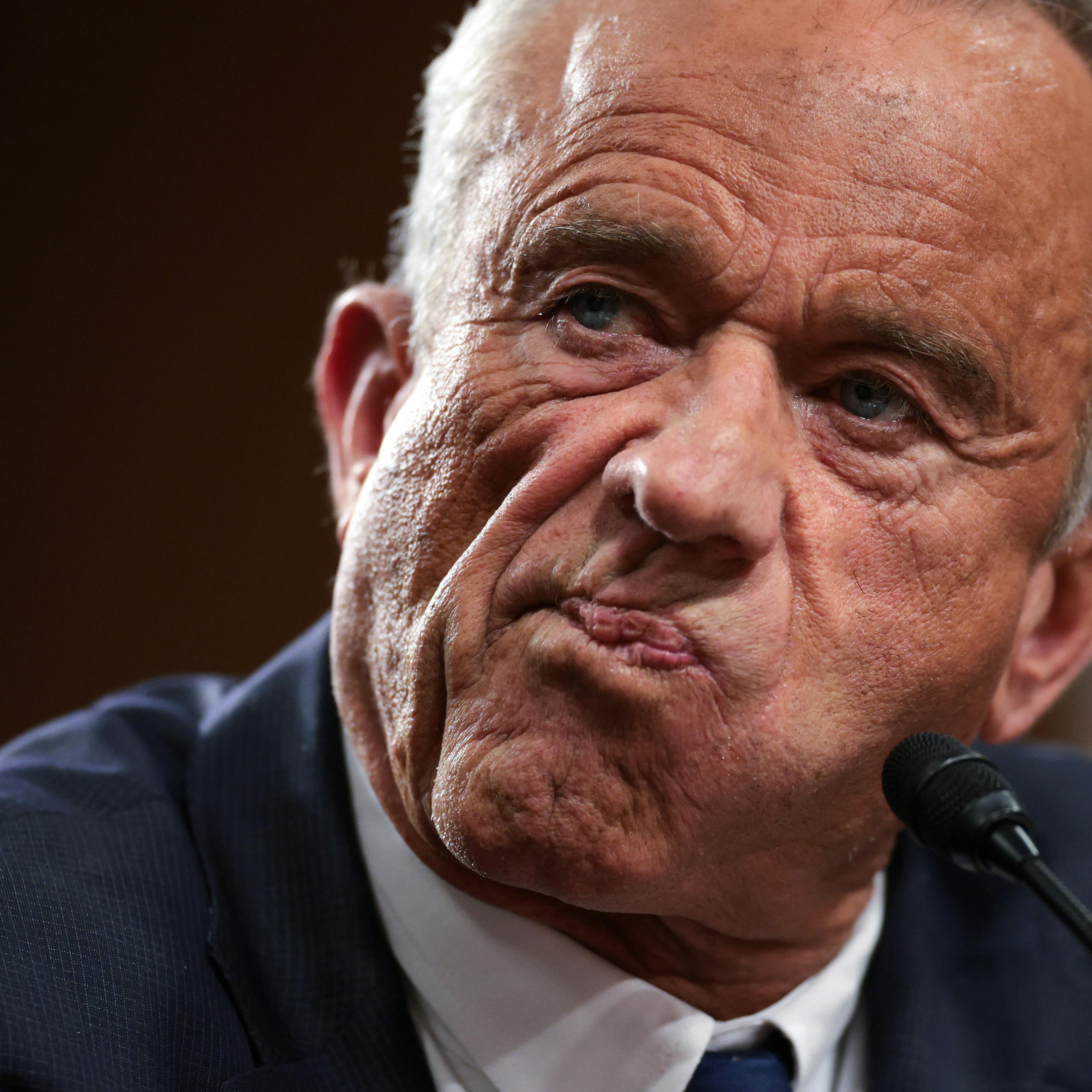
Photo of Secretary of Health and Human Services Robert F. Kennedy Jr. by Win McNamee/Getty Images.
Learn more about your ad choices. Visit podcastchoices.com/adchoices
Press play and read along
Transcript
Speaker 1 Here's by no means complete list of things RFK Jr., our nation's Secretary of Health and Human Services, has previously said about vaccines.
Speaker 2 I do believe that autism does come from vaccines.
Speaker 1 That clip's just over two years old. A few years before that, of course, we had the COVID-19 pandemic.
Speaker 2 The problem is the entire
Speaker 2 sort of medical cartel is now
Speaker 2 feeding at the tent. of big pharma.
Speaker 1 Just before the pandemic, he traveled to Samoa to talk about the perils of vaccinations. Later that year, 83 Samoans died in a measles outbreak.
Speaker 3 Anything you do differently?
Speaker 2 No, absolutely not.
Speaker 1 That was from his confirmation hearing, and then he got confirmed. And now he's trying to dictate which vaccinations you can get.
Speaker 1 And we're going to figure out what that means for you on today, Explain from Vox.
Speaker 4 Every story you love,
Speaker 2 every invention that moves you,
Speaker 2 every idea you wished was yours, all began as nothing.
Speaker 2 Just a blank page with a blinking cursor.
Speaker 2 Asking a simple question,
Speaker 2 what do you see?
Speaker 4 Great ideas. Start on Mac.
Speaker 2 Find out more on apple.com slash Mac.
Speaker 5 Support Support for Today Explained comes from Aura Frames. What is Aura Frames?
Speaker 5 Family portraits, candid selfies, breathtaking vacation shots can be sent from your phone to an Aura frame so you can share it with the people who matter most and you update them anytime, anywhere.
Speaker 5 For a limited time, you can visit auraframes.com and get $45 off Aura's best-selling Carver Mat Frames, named number one by Wirecutter.
Speaker 5 By using promo code TodayExplained at checkout, that's A-U-R-A frames.com promo code TodayExplained. They say this exclusive Black Friday Cyber Monday deal is their best of the year.
Speaker 5 So order now, they say, before it ends, and you can support the show by mentioning us at checkout.
Speaker 1 Today Explained, Sean Rams for him here with Catherine Wu, staff writer at The Atlantic. Catherine, you write about vaccines.
Speaker 1 What is the Secretary of Health and Human Services, Robert Floride Kennedy Jr., doing right now with mRNA vaccines?
Speaker 6 Probably the latest and biggest news is that he canceled half a billion dollars worth of grants to develop more mRNA vaccines.
Speaker 2 Hi, it's Robert F. Kennedy Jr.
Speaker 7 here, your HHS secretary.
Speaker 2 At HHS, we have a division called the Biomedical Advanced Research and Development Authority, or BARDA.
Speaker 2 Over the past few weeks, BARDA reviewed 22 mRNA vaccine development investments and began canceling them.
Speaker 6 And the public is is probably most familiar with mRNA vaccines in the context of COVID vaccines.
Speaker 8 Well, it's a new technology and it is proven in a very large group of clinical trials to be safe and highly effective.
Speaker 6 That's the first place we had successful mRNA vaccines and that is still where mRNA vaccines dominate the market.
Speaker 6 But they've been in development for tons of other diseases, not just infectious ones for a very long time. So this is a pretty huge deal.
Speaker 1 Remind me who was president when the COVID mRNA vaccine was developed.
Speaker 4 Ladies and gentlemen, the President of the United States, Donald J. Trump.
Speaker 6 Also Trump, just during his first term, not this one.
Speaker 4 I'm honored to welcome doctors, scientists, industry executives, and state and local leaders to our historic Operation Warp Speed vaccine summit. It's been some journey for all of us.
Speaker 4 It's been an incredible...
Speaker 1 So weird.
Speaker 1 How has President Trump advanced his campaign to like inoculate and protect Americans with mRNA vaccines in his second term so far?
Speaker 6 Ooh, let's see. He hasn't?
Speaker 6 So, you know, during the first term, Trump was the one who helped push forward Operation Warp Speed, that big partnership between government and pharma that got us all of these amazing COVID vaccines in record time and helped us, you know, beat back this pandemic that killed so many people in this country and others.
Speaker 4 Before Operation Warp Speed, the typical timeframe for development and approval, as you know,
Speaker 4 could be infinity. And we were very, very happy that we were able to get things done at a level that nobody has ever seen before.
Speaker 4 The gold standard vaccine has been done in less than nine months.
Speaker 6 And so far, you know, this shining beacon from Trump's first term is just kind of being systematically ripped apart.
Speaker 6 We've already talked about how Trump's administration has pulled funding for development of more mRNA vaccines. You would think that, you know, we want to build on that success, not so much.
Speaker 6 But, you know, they've also started to strip away Americans' access to COVID vaccines. They have removed or altered recommendations to get COVID vaccines in certain groups.
Speaker 6 They've made it harder for vaccine makers to get new COVID vaccines to market.
Speaker 6 And, you know, a lot of the new hires and advisors to the Department of Health and Human Services are taking aim at other COVID vaccine recommendations that could restrict access even further.
Speaker 6 I think it's very realistic that within a year or two, very, very, very few people will be able to get COVID vaccines, even when they very much want them and very much need them.
Speaker 1 We were all there when the COVID vaccines came out and the president, I believe, was like, you know, among the first to get them.
Speaker 9
I recommend take the vaccines. I did it.
It's good. Take the vaccines.
But you got, no, that's okay. That's all right.
Speaker 9 You got your freedoms, but I happened to take the vaccine.
Speaker 1 And they were touted as a miracle of medical science. How is that narrative being rewritten right now?
Speaker 6 Yeah, it's really fascinating, right? Like Trump himself used that phrase, medical miracle. And there is no reason that, at least no scientific reason, that he should have stopped believing that.
Speaker 6
The data on these vaccines has not changed. They're very safe, very effective.
They went through all the normal channels of vetting that get us safe, effective vaccines.
Speaker 10 The dedicated and independent experts at the FDA meticulously studied the results of the trials, and it has now passed the gold standard of safety.
Speaker 6 But right now, in his second term, Trump is leading an administration that is mostly pushing out information that these vaccines are dubious, they don't work.
Speaker 2 HHS has determined that mRNA technology poses more risk and benefits for these respiratory viruses.
Speaker 6
Which is not true. They have saved millions of lives.
Like studies have shown that they saved millions of lives during the pandemic.
Speaker 6 And they continue to protect people for everyone who is receiving them.
Speaker 2 He said that they were the deadliest vaccine ever made.
Speaker 6 There's no evidence to support that. They have done quite the opposite.
Speaker 6 And he's just basically cast doubt on the idea that they were studied really thoroughly and really carefully vetted by expert scientists who knew exactly what sorts of safety signals to look for.
Speaker 1
These vaccines were famously brought to market very quickly. I mean, that was part of the miracle we're referring to here.
That seemed to really,
Speaker 1 you know, spur a lot of these conspiracy theories about their efficacy. Was there any validity to the argument that they were produced too quickly, that there wasn't enough testing happening?
Speaker 6 I think the way you phrase your question is really important, right?
Speaker 6 Because too quickly is really about did they arrive so quickly that there wasn't adequate time to study them, make sure that they worked really well to protect against COVID, and they did so in a way that wasn't, you know, posing undue risk to the people who received them.
Speaker 6 And I think the answer is very soundly no. It's important to acknowledge that all this was done kind of on the shoulders of all the vaccine science that came before it.
Speaker 6
Scientists knew what to look for. They knew how to run these trials.
They knew how to scale up their technology.
Speaker 6 And yeah, they did it in ways that were unprecedented, but not unprecedented in ways that they were like shooting in the dark when they did this.
Speaker 1 So what happens now? You were saying that you can see a future in which
Speaker 1 even people who really want and need these vaccines won't be able to get them. How far away is that future?
Speaker 6 I think there are still enough people at federal health agencies that would fight back against that, that it could be a very dragged-out fight.
Speaker 6 Really stripping access to those vaccines instantaneously would also probably come under legal challenge really quickly.
Speaker 6 But I think it's something that a lot of sectors of the administration are starting to move toward.
Speaker 1 Operation Warp Speed obviously played a huge role in developing these vaccines, but it wasn't just an American effort by any means. If the U.S.
Speaker 1 is falling off right now and sort of denying the medical miracle that was,
Speaker 1 what's the rest of the world doing? And does that mean that you could fly to Canada to get your COVID vaccine or even get it delivered?
Speaker 6 Man, black market international vaccines, what a world.
Speaker 6 Yeah, it's a great question. And I think, you know, there's a couple things to touch on here.
Speaker 6 One is that cutting off funding for mRNA vaccine development here does cut off resources for the rest of the world, right? Like the U.S.
Speaker 6 is extremely powerful in terms of scientific firepower, money, and also, you know, up until very recently, foreign aid.
Speaker 6
If we stop developing vaccines here, that means there are fewer resources for other countries. There's also kind of a like a chilling effect that is very likely to happen.
If the U.S.
Speaker 6 says these vaccines are crap, they're not worth investing in, they're not worth recommending, they're not good enough for our people.
Speaker 6 Other countries have traditionally taken cues from the U.S., especially around vaccines. Other countries might look at what we're doing and pause and be like, well, we don't want to look weird.
Speaker 6 We don't want to be the outliers when the U.S. is doing this.
Speaker 1 But are we the outliers right now? It feels like we're the outliers.
Speaker 6 We totally are. And I would hope that other countries look at us and then look at, you know, the UK and be like, okay, maybe we start following the UK a little bit more right now.
Speaker 6 But it's tricky, right? Because I think in a landscape where these vaccines get more scarce and more expensive because the US isn't pouring resources into developing them.
Speaker 6
Those vaccines simply won't exist or might be worse than if the U.S. were pouring those resources in.
And the U.S. is simultaneously saying these aren't good enough.
Speaker 6 It becomes kind of an economical and almost political decision for other countries to just pause a little bit more.
Speaker 1 You know, Donald Trump has taken to wearing a hat that says Trump was right about everything.
Speaker 1 This is a man who loves a win,
Speaker 1 and he got a huge one in 2020 with the mRNA vaccine for COVID-19. Why do you think he won't take the win?
Speaker 6
I'm not Trump. I can't fully speak for him.
But I do suspect some of this goes back to what happened at the end of his term and what happened, you know, in the ensuing presidential term, right?
Speaker 6 The end of Trump's first term was really marred by the start of the pandemic.
Speaker 9 We don't call them rallies anymore because, you know, you're not allowed to have a political rally for more than 10 people.
Speaker 11
You're not allowed to go to church. You're not allowed to meet.
You're not allowed to talk to anybody. You have to stay in a prison.
Speaker 11 Your home has become your prison.
Speaker 6 He was widely criticized for letting things get as bad as they did in the U.S. in those early days.
Speaker 6 And even though, you know, he helped push vaccines along and that was a triumph, that didn't completely overshadow, I think, all of the other policy hiccups that made 2020 and much of 2021 really horrific in this country.
Speaker 6 The pandemic could have gone much better here if there had been a much better coordinated public health response, better communication.
Speaker 6 And so I think a lot of Trump's base felt really angered by that, and they felt angered by a lot of early pandemic policies. They felt betrayed by the government.
Speaker 6 And I think that has soured Trump's base on all things COVID, including vaccines.
Speaker 1 Read Katherine Wu at theatlantic.com. But it's not just the COVID vaccine listeners, all the other ones next on Today Explained.
Speaker 5 Support for J Explain comes from ATT. There's nothing worse than needing to make a call and realizing you can't connect, says ATT.
Speaker 5 And of course, every wireless provider will claim that they're the best, but ATT says ATT has the goods to back it up. According to Root Metrics, ATT earned the best overall network performance.
Speaker 5 While the other guys are busy making claims they can't keep, ATT says they're making connections on America's fastest and most reliable wireless network.
Speaker 5
No matter if you're at a concert, a huge sporting event, or just out enjoying nature, you can post when you want to post. Don't post when you're enjoying nature, guys.
Keep it in control.
Speaker 5
Call when you want to call and rest easy knowing that no matter where you go, AT ⁇ T has got you covered. When you compare, there's no comparison.
AT ⁇ T.
Speaker 5 Based on Root Metrics, United States Route Score Report 1H2025 tested with best commercially available smartphones, smartphones on three national mobile networks across all available network types.
Speaker 5 Your experiences may vary. Root Metrics rankings are not an endorsement of AT ⁇ T.
Speaker 5
Support for today's show comes from Upwork. You're the CEO of your business and the CFO and customer service.
That's a small business. Maybe you need some support.
Speaker 5 Upwork says that with Upwork Business Plus, they can bring you support in the form of top quality freelancers and fast.
Speaker 5 Instant access to the top 1% of talent on Upwork in fields such as marketing, design, AI, so much more.
Speaker 5 Upwork says that when you use Upwork Business Plus, you can source and vet candidates for skill and reliability.
Speaker 5 They can also send you a curated shortlist of proven expert talent so that you can delegate with confidence. Don't spin your wheels.
Speaker 5 Right now, when you spend $1,000 on Upwork Business Plus, you'll get $500 in credit. Go to upwork.com slash save now.
Speaker 5 You can claim this offer before December 31 2025 and again that's upwork.com slash S-A-V-E.
Speaker 5 Scale smarter with top talent and $500 in credit. Terms and conditions to apply.
Speaker 5 Support for today explain comes from Udacity. Udacity says they can help you prepare yourself to be able to use IT.
Speaker 5 Udacity is an online learning platform. It has courses in AI and tech, generative AI, agentic AI, Python, data science, so much more.
Speaker 5 When you learn with Udacity, according to Udacity, you're not just passively watching videos or reading articles, maybe even books.
Speaker 5 You're doing practical exercises and projects that prepare you for the job you want. That's why they claim 90% of Udacity graduates surveyed say they achieved their enrollment goal.
Speaker 5
Udacity just launched a master's degree in AI. When you have a certification from Udacity, they say recruiters and employers take notice.
You can check out Udacity today.
Speaker 5
The tech field is always evolving. You should be too.
You can try Udacity risk-free for seven days. You can head to Udacity.com slash explained.
Use code Explained for 40% off your order.
Speaker 5 Once again, Udacity.com slash explained for 40% off. Make sure you use the promo code EXPLAIND.
Speaker 2 Doctors are being paid to vaccine, not to evaluate. Today, Explained!
Speaker 3 I'm Lauren Weber. I'm a Health and Science Accountability Reporter for the Washington Post.
Speaker 1 And Lauren, in the first half of the show, we talked about mRNA vaccines, COVID vaccines, and how it's looking dicey for their future in the United States. But what is Robert F.
Speaker 1 Kennedy Jr.'s health department doing to vaccines at large?
Speaker 2 Well, I think it's important to understand that Robert F.
Speaker 3
Kennedy Jr. has a long history as an anti-vaccine activist.
For many, many years, he has falsely linked vaccines to autism.
Speaker 3 And since coming into office, he's executed many moves that public health experts say threaten access to vaccines.
Speaker 3 And there's a lot of concern that he's continuing to chip away at this bedrock of public health that ensures the public safety against infectious disease.
Speaker 1 And so this isn't just a COVID vaccine thing.
Speaker 3 No, it's a lot of vaccines that he has expressed issues with over the years. The polio polio vaccine.
Speaker 2 The polio vaccine contained
Speaker 2 a virus called simian virus 40, SV40. And now you've had this explosion of soft tissue cancers in our generation that kill many, many, many, many, many more people than polio ever did.
Speaker 3 Measles vaccine.
Speaker 2 We're always going to have measles, no matter what happens.
Speaker 2 The vaccine wanes very quickly.
Speaker 3 We are seeing growing hesitancy for parents when it comes to the childhood vaccine schedule. And that is something that Kennedy has also repeatedly asked questions about.
Speaker 2 What about the kids who lost IQ? One or two points.
Speaker 2 Who are depressed?
Speaker 2 Who are not functioning? Who can't,
Speaker 2 who are socially awkward?
Speaker 2 All of these injuries that are invisible from the vaccines.
Speaker 3 His hand-picked vaccine committee, the Advisory Committee on Immunization Practices, actually reiterated something that he's wanted to do for a long time, which is that they said they were going to dig into the childhood vaccination schedule.
Speaker 3 And that's something that for years Kennedy has said. You know, he's complained about the number of shots on the schedule and raised questions about whether or not they have harmful side effects.
Speaker 2 Today, children get between 69 and 92 vaccines before they're 18.
Speaker 2 Not one of those vaccines has ever been.
Speaker 5 Those are not all mandatory.
Speaker 2 Those are all mandatory.
Speaker 3 Questions that public health experts say are not based in fact.
Speaker 1 So does that mean there might be changes ahead for like mandatory childhood vaccines?
Speaker 3
It's hard for him to make those changes. Those are often made at the state level.
But there is growing concern from public health officials and public health experts that
Speaker 3 some of what he is doing could remove
Speaker 3 access to vaccines or vaccine development. I mean,
Speaker 3 there's also concern that he'll use the bully pulpit that is the head of HHS to continue to cast doubt on vaccines at a time that we're already seeing rising vaccine hesitancy.
Speaker 3 It's important to remember that, you know, for some diseases,
Speaker 3 if you are, if the number of folks vaccinated is underneath a certain percentage point, then, you know, you're more likely to see disease spread within the community.
Speaker 3 And depending on where you are, that could be the case. And so there's a lot of concern that as he continues to spread doubt about the vaccines, what kind of impact that could have
Speaker 3 going forward.
Speaker 1 And so
Speaker 1 you're talking about casting doubt on vaccines that maybe kids are getting, but this becoming a bigger issue for vaccines across the board.
Speaker 3 Yes, because if you continue to see increasing hesitancy, you're going to continue to see more risk of an outbreak.
Speaker 3 But on top of that, Kennedy has, he fired all the members of the Advisory Committee on Immunization Practices, which advises the CDC on vaccine safety.
Speaker 2 We fired that board because they were, it was an utterly, it was just an instrument. It was a sock puppet
Speaker 3 for the industry industry that it was supposed to regulate they said whether or not the cdc recommends various vaccines and they had a meeting in june um after all he had fired all of these members that were highly credentialed you know top scientific experts and replaced them um with what ended up being seven members who um many experts i spoke to said just did not have the same credentials many of whom had also expressed um
Speaker 3 concern about the code vaccine and some falsehoods about the code vaccine.
Speaker 3 And so there is some concern going forward that this advisory committee could alter what is the vaccine schedule as well as change how the government looks at vaccines.
Speaker 3 You know, we've seen for the first time the American Academy of Pediatrics for the first time in several decades, the AAP has said that they will be putting out their own vaccine recommendations that are different than the federal government because they don't trust in what Kennedy and HHS is planning.
Speaker 5 At a time when there's confusion in Washington around vaccine recommendations, I want to remind you that you can look to the American Academy of Pediatrics for clarity around childhood immunizations.
Speaker 1 Yeah, help us better understand the relationship the Department of Health and Human Services has when it comes to vaccines versus, say, the authority and power states have, because you're mentioning there that RFK doesn't actually have the power to say, hey, states, you're not going to issue those vaccines anymore.
Speaker 3 Yeah, so vaccine mandates,
Speaker 3 many of you listening may have kids that go to school. Those are set at the state level, but the state does often take its cue from the federal recommendations, from the CDC recommendations.
Speaker 3 But at the end of the day, states set their own rules. Right now, you know, the measles vaccine is mandated in all states for children entering kindergarten, I believe.
Speaker 3
And but that, so that would be difficult. It's not like Kennedy, with one stroke of his pen, could change that.
That would have to change at a state level.
Speaker 3 If his HHS, if his CDC comes out and says, we believe, or his FDA, you know, Food and Drug Administration comes out and says, we believe the XYZ vaccine isn't safe, then that could have a cascading effect on what that looks like for other, for kids going to school.
Speaker 1
So we've got RFK saying vaccines are bad generally. We've got, obviously, scientists strongly disagreeing.
And then we have the president sort of waffling between the two.
Speaker 1 As parents, as citizens, what is the public to do to make sense of the situation we're in right now?
Speaker 3 Well, I want to say one thing. I do think since Kennedy has gotten into office, he's been more careful than to just say vaccines are bad.
Speaker 3 I mean, I've reviewed many hours of his prior remarks before becoming Nature's Just Secretary, and he was much more upfront about saying vaccines cause autism, a false statement, than he has been since becoming Nature's Just Secretary.
Speaker 3 He does this thing that a lot of experts call double speak, where he'll sort of half-heartedly endorse a vaccine, but then talk about all of its potential side effects or say things about it that are misleading or untrue.
Speaker 2 I'm not going to take people's vaccines away from me. What I'm going to do is make sure that we have good science so that people can make an informed choice.
Speaker 2 And we are doing that science today so that we know the risks of that.
Speaker 2 product and we also know what the benefits are. And right now, we don't know the risks of many of these products.
Speaker 3 If you are an average parent and you're hearing kind of this whirlwind of things about questions and vaccines and what does it mean? Is it safe? What are the risks?
Speaker 3 I think it injects a lot of doubt into the average parent's mind who doesn't have time to read through all the studies or to understand exactly what's even being talked about.
Speaker 3 And so I think that leads to what we're seeing, which is a growing distrust in government institutions, a growing distrust in vaccines, and potentially a growing hesitancy that could get even worse.
Speaker 1 Are we seeing that confusion play out already?
Speaker 3
We have seen a growing number of parents opt their kindergartners out of vaccination. It's still a small number.
I mean, it's a little over 3%.
Speaker 3 It's not, I mean, it's not groundbreaking in the terms of it's not, the vast majority of Americans are still getting their child vaccinated, but we are seeing growing hesitancy over the last couple of years.
Speaker 3 And many folks that I speak to, both parents who have chosen not to vaccinate and experts, say we've seen a lot of reticence since COVID.
Speaker 3 There's a lot of people that took their distrust of the COVID vaccination and that distrust spread to the other vaccines.
Speaker 3 And a lot of anti-vaccine groups and activists really seized upon the COVID moment to push their message.
Speaker 1 Can the next president of the United States, as long as it's, I guess, not RFK Jr.,
Speaker 1 undo all of this if they so chose?
Speaker 3
I think it's really hard to undo fear. It's really hard to undo hesitancy.
It's really hard to undo the level of doubt that's been injected into this process. I mean, it's very striking.
Speaker 3 I mean, look, I mean, in Trump, in Trump's first term, there was also a measles outbreak, and the HHS secretary then, Alex Azar, forcibly went on TV and said, please get your child vaccinated.
Speaker 3 Please stop misinformation around vaccines.
Speaker 3 That is very different than what we have seen from this HHS secretary who, you know, has implied various things about the measles vaccination and at times questioned whether it's linked to autism.
Speaker 3 I mean, this is, it's a very different world in which we live.
Speaker 3 And while some of the actions he has done, about you know, you could change who makes up the advisory committee on immunization practices, you could change who staffs the FDA and CDC, sure, that could probably be changed.
Speaker 3 But I think the number of parents who now
Speaker 2 are
Speaker 3 very confused is going to be harder to push back upon.
Speaker 1 WashingtonPost.com is where you can read Lauren Weber, Avishai Artsi, and Denise Guerra produced our show today for the yellow website.
Speaker 1 Amina Al-Sadi edited, Laura Bullard fact-checked, David Tatashore, and Andrea Christensdaughter mixed with help from Patrick Boyd. This is Today Explained.
Speaker 13 Support for the show comes from Crucible Moments, a podcast from Sequoia Capital. Success is never a given, especially in tech, where everything is evolving at breakneck speed.
Speaker 13 The difference between victory and catastrophe can sometimes all come down to a counterintuitive instinct or ignoring conventional wisdom to make a bold decision.
Speaker 13
That's what Crucible Moments is all about. Crucible Moments is back with a new season telling us about the unlikely triumphs of tech giants like Supercell and Palo Alto Networks.
New episodes out now.
Speaker 13 and available everywhere you get your podcast.
Speaker 13 And at cruciblemoments.com. Listen to Crucible Moments today.
Speaker 12 Oh, the car from Carvana's here.
Speaker 12 Well, will you look at that? It's exactly what I ordered. Like, precisely.
Speaker 12 It would be crazy if there were any catches, but there aren't, right?
Speaker 5
Right. Because that's how car buying should be.
With Carvana, you get the car you want.
Speaker 14 Choose delivery or pickup and a week to love it or return it.
Speaker 12 Buy your car today with Carvana.
Speaker 14
Delivery or pickup fees may apply. Limitations and exclusions may apply.
See our seven-day return policy at carvana.com.


