Can Rubio end the Ukraine war?
This episode was produced by Kelli Wessinger, edited by Miranda Kennedy, fact-checked by Hady Mawajdeh and Miles Bryan, engineered by Patrick Boyd and David Tatasciore, and hosted by Astead Herndon.
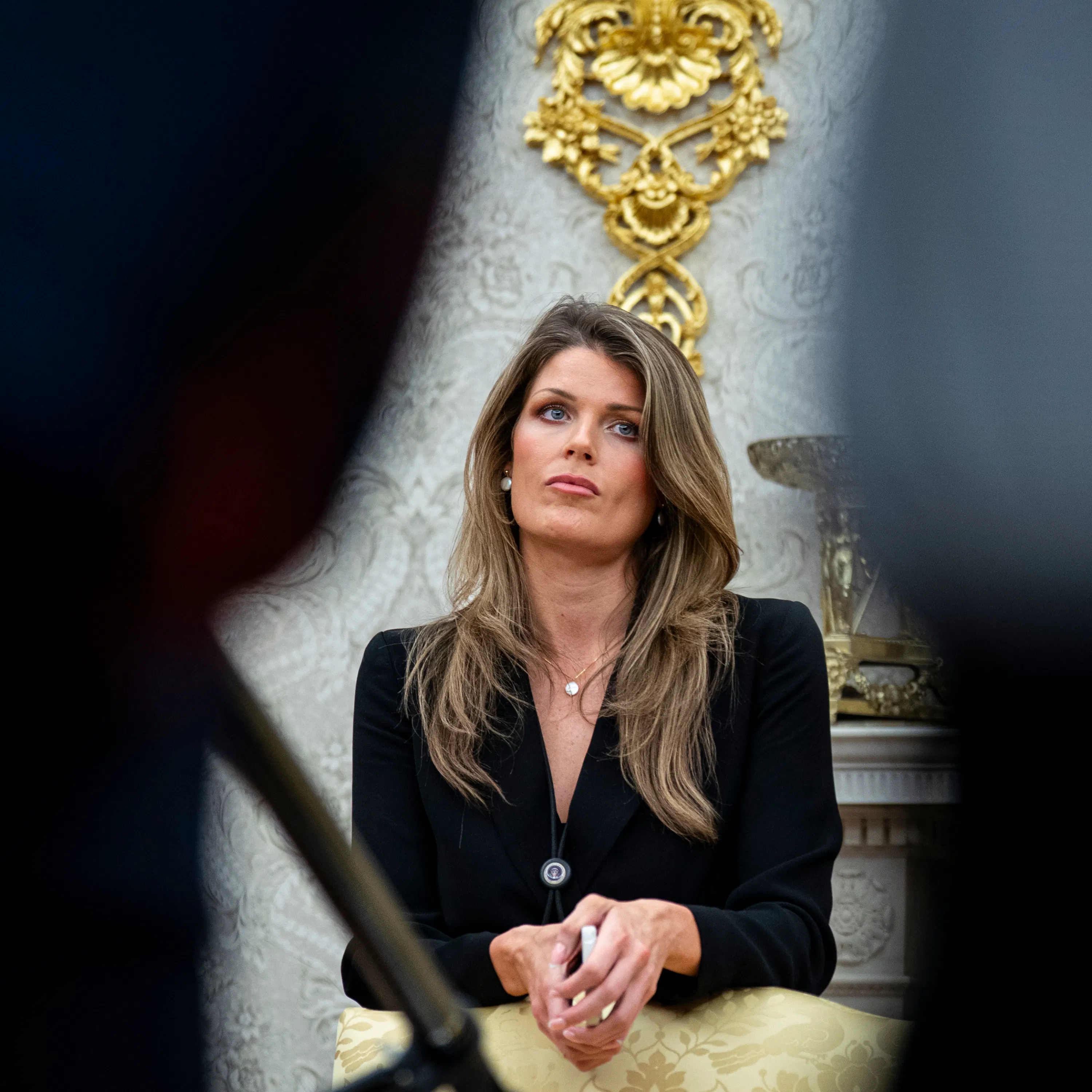
Secretary of State Marco Rubio in the Oval Office of the White House. Photo by Win McNamee/Getty Images.
Listen to Today, Explained ad-free by becoming a Vox Member: vox.com/members. New Vox members get $20 off their membership right now. Transcript at vox.com/today-explained-podcast.
Learn more about your ad choices. Visit podcastchoices.com/adchoices
Press play and read along
Transcript
Speaker 1 Donald Trump promised peace on day one.
Speaker 2 Before I even arrive at the Oval Office, I will have the disastrous war between Russia and Ukraine settled.
Speaker 1 But 316 days into his second term, things seem to be moving in the opposite direction in Gaza and Venezuela.
Speaker 1 And the proposed peace deal between Russia and Ukraine has just one little problem.
Speaker 3 Everyone hates it.
Speaker 4 Decisions with implications for Europe and NATO interests need the joint support of European partners and NATO allies, respectively.
Speaker 1 To get things back on track, Trump's envoy is in Russia today to try to rescue the deal. But it's one man, Secretary of State Marco Rubio, who is maybe the most important player.
Speaker 1 Can Rubio make peace between Russia and Ukraine? That's coming up on Today Explain from Box.
Speaker 5 Support for today's show comes from Crucible Moments, a podcast from Sequoia Capital. Perhaps you think if you have a good idea and work hard, success is inevitable.
Speaker 5 The truth is, according to Sequoia Capital, that almost every company, no matter how brilliant the idea, no matter how steadfast the founders, will encounter unthinkable obstacles that can make or break them.
Speaker 5 Unthinkable, no less. You can listen to Crucible Moments and hear about those unlikely triumphs over those unthinkable obstacles at Supercell, Palo Alto Networks, so much more.
Speaker 5 Check out CrucibleMoments.com or listen wherever you get your podcasts.
Speaker 6
Here's a tip from the Smartlist guys. Most of us buy unlimited data, then live on Wi-Fi like it's our full-time job.
That's why they started Smartlist Mobile, wireless for non-geniuses.
Speaker 6
Simple, right-sized plans based on what you actually use, not what big wireless loves to overcharge you for. No contracts, no overages, no gotchas.
And you can sign up in minutes.
Speaker 6
Plans start at 10 bucks a month with unlimited talk and text. And you can keep your number.
For a limited time, get your first month free on select plans. Use code VOX at checkout.
Speaker 6
Taxes and fees extra. Terms apply.
Visit SmartlistMobile.com. Don't get outsmarted.
Get Smartlist Mobile.
Speaker 1 This is Today Explained.
Speaker 7 Hey, I'm John Hudson. I'm a national security reporter with the Washington Post.
Speaker 1 Let's start with the team leading the Ukraine peace negotiations out of Washington. Who does Trump have doing it and what do we know about them?
Speaker 7 Yeah, it's an interesting team.
Speaker 7 He's got the main person leading it, which is Steve Witkoff, his special envoy, longtime friend, maybe one of his closest personal friends throughout his political and business evolution.
Speaker 7 He's got the Secretary of the Army, Dan Driscoll, who is a close, longtime contact of Vice President Vance.
Speaker 7 You've got a son-in-law, Jared Kushner, and you've got Secretary of State and National Security Advisor, Marco Rubio. So there's been a lot of cooks in the kitchen, and
Speaker 7 I don't know if anybody have had a Thanksgiving experience recently with a lot of cooks in the kitchen.
Speaker 7 You've had confusion, you've had different things being directed to different people,
Speaker 7
and it's been a little bit chaotic. And at the same time, they've probably pushed the ball closer to a deal than has happened before.
But they're not getting any style points in the process.
Speaker 1 I do want to focus on one member of the team who you talked about, Secretary of State Marco Rubio. What has been his role in this?
Speaker 1 And how should we see his lane in these Ukraine peace talks versus people like Witkoff or Kushner or others?
Speaker 7
Yeah, it's a great question. I mean, he's taken an increasingly prominent role.
At the moment when things were looking probably the messiest earlier last month,
Speaker 7 essentially when Witkoff had had his discussions with his Russian counterparts, and some of his plan leaked this 28-point plan,
Speaker 7 which a lot of Republicans and Democrats balked at as being too favorable towards Russia.
Speaker 8 For those who oppose the Russian invasion and want to see Ukraine prevail as a sovereign and democratic country, it is clear that Witkoff fully favors the Russians.
Speaker 8 He cannot be trusted to lead these negotiations.
Speaker 3 Actual traitor. Steve Wickoff is supposed to work for the United States, not Russia.
Speaker 7 That's when Trump tapped Rubio and Rubio came in.
Speaker 7 He met with the Ukrainians in Geneva, and he inched the deal slightly more in favor of the Ukrainians.
Speaker 9 So it is in my personal view that we've had probably the most productive and meaningful meeting so far. And so we're working through making some changes, some adjustments.
Speaker 9 Very productive first session with distinguished American delegation. We have very good progress and we are moving forward to the just and lasting peace.
Speaker 7 Some important things were taken out of the 28-point plan. For instance, there was a ban on Ukraine ever entering NATO.
Speaker 7 There were
Speaker 7
different restrictions on Ukraine's military that were included in that deal. Those were watered down and taken away after Rubio met with the Ukrainians.
And so, in general, what his role has been is
Speaker 7 trying to make what Witkoff started negotiating with the Russians into a more palatable form. And that role continued into this Thanksgiving weekend with meetings with the Ukrainians in Miami.
Speaker 7 And what happens from there is Witkoff then flies to Moscow and then brings that proposal for
Speaker 7 what the Trump administration's goal is, completing the deal and getting something that all sides can agree to.
Speaker 1 Interesting.
Speaker 1 So it seems as if Rubio was brought in after the blowback from some of that Witkoff plan leaking, and that Rubio seems to have what we may describe as a more traditional Republican foreign policy view and one that seems to incorporate kind of Ukrainian desires, at least more frontally.
Speaker 1 Is that fair to say?
Speaker 7 That's exactly right. Rubio is your traditional foreign policy hawk.
Speaker 7 His natural predisposition is to be extremely suspicious of Russia, hawkish towards Russia.
Speaker 10 I think their goals are very clear, to maintain their weapons capabilities in a way that furthers their desire to be a dominant power at our expense if possible, and to diminish our capabilities in return.
Speaker 7
Never really trusting its motives and extremely supportive of traditional U.S. allies, which the Ukrainians would be considered in this respect.
So he has reverted to
Speaker 7 that role towards his instincts without trying to totally throw a wrench into this peace deal process.
Speaker 1 How should we think about this Rubio view of the world, which I think we would describe as kind of more traditional Republican foreign politics, kind of pre-Trump?
Speaker 1 And how does that fit in with this administration, which has embraced so much kind of like situational isolation? Rubio would seem to be at odds with the White House on some of this. Is he?
Speaker 7
Yeah, no, I think that's right. I think that was going into the formation of this administration.
That was the question everybody had, of course, because Rubio is the OG foreign policy.
Speaker 1 Right, exactly.
Speaker 7 You know, it used to be difficult to find a war that Rubio was not interested in the United States getting involved in.
Speaker 10 Is it not, if in fact we want to stabilize Ukraine, isn't part of that stabilization to give them the ability to defend themselves in the future from any other aggression that may exist?
Speaker 11 We are at war with a radical jihadist group more capable than any terrorist group and any armed insurgency this nation has ever confronted. We can defeat them.
Speaker 11 If we employ the power of the United States.
Speaker 12 If you cross this threshold, you will face military action on the part of the United States. We don't want that to happen.
Speaker 12 But the risk of a nuclear Iran is so great that that option must be on the table.
Speaker 1 That kind of muscular U.S. foreign policy we're used to hearing about.
Speaker 7 That was him.
Speaker 7
That was his stock in trade. What I will say is he is still that man, and those are still his perspectives, but he has had to suppress a lot of those urges in taking this job.
And
Speaker 7
in many ways, he has suppressed that while, you know, looking at the world as an entire global chessboard. So like, yes, he would like an extremely hawkish.
policy on Venezuela.
Speaker 7 He'd like it in the Middle East and he'd like it in Europe. But where does it matter more? I think for him,
Speaker 7
Latin America is more important. And so he's winning it when it comes to Venezuela.
But
Speaker 7 on Russia and Europe issues in general, I can tell you,
Speaker 7 he immediately, upon coming into office, started engaging with his counterpart, Sergei Lavrov. And from all of the readouts that I've gotten from those conversations, it has been pragmatic.
Speaker 7 He has not been sort of a fire-breathing hawk. And so this evolution of Marco Rubio happened very early on.
Speaker 7 And he's been quite amenable to Trump's priorities and trying to be a helpful facilitator and not push Trump where he's uncomfortable being pushed on.
Speaker 1 Now, last week, a bipartisan group of senators came out and said that Rubio told them that a 28-point peace plan that the U.S. was pushing Ukraine to accept was actually written by Russia.
Speaker 13 The leaked
Speaker 13 28-point plan, which according to Secretary Rubio, is not the administration's position. It is essentially the wish list of the Russians.
Speaker 1 Can you recap of what we know about that plan and what happened there?
Speaker 7 Yeah, a super confusing incident. And what I attribute to is just having all of these cooks in the kitchen.
Speaker 7 And when he was brought in was at a sort of peak moment when the Trump administration and Steve Witkoff in particular were being criticized for putting together a deal that was very
Speaker 7 pro-Russian in the way that many people viewed it. And people were saying,
Speaker 7 you know, it might actually just be a copy and paste of a Russian wish list. And piling on all of this,
Speaker 7 there was a security conference happening in Canada, and some lawmakers on record during panels said that, in fact, Rubio himself told them that this was a straight-up Russian wish list.
Speaker 7 Rubio has since denied that. He got on the phone with those senators after they said it and said, no,
Speaker 7 you misinterpreted what I said.
Speaker 7 All we can say is this was very ugly and messy. It was a very sort of ugly look for the administration, and nobody really had a lot of confidence in the process at that point.
Speaker 7 And these questions continue to dog the administration to this day.
Speaker 1 My last question is, what should we expect from the talks this week?
Speaker 1 Do we know anything about what might be the outcome?
Speaker 7 So I think the smart money is on the Russians having a pretty negative reaction to what they're seeing, but possibly not negative enough to make Trump angry.
Speaker 7 They have tried to really walk the fence when it comes to that.
Speaker 7 What we need to understand is a few things. One,
Speaker 7 how much has Marco Rubio shifted this deal in the favor of the Ukrainians? If he shifted it too far in favor of Kyiv, we're expected to see a negative reaction from the Russians.
Speaker 7 At the same time, Ukraine is embroiled in a corruption scandal.
Speaker 7 It's possible that they may have
Speaker 7 softened their position significantly out of fear that the Trump administration might cut them off completely in terms of military and intelligence support.
Speaker 7 So that's not a simple answer to your question.
Speaker 7 Basically, long story short, there's a lot of unknowns of what's going to happen.
Speaker 7 What we should first see is: are they going to make the terms of the deal public? And once they do, how is Moscow? going to react. All of the big unknowns right now.
Speaker 1
Well, we don't come to you for simple, John. We come for you for nuance.
And so we appreciate your time. And thank you.
Speaker 7 Thanks, Instead.
Speaker 1 Coming up, the view from Ukraine.
Speaker 5 Support for Today Explained comes from Vanta. Customer trust can make or break your business, according to Vanta.
Speaker 5
And the more your business grows, says Vanta, the more complex your security and compliance tools can get, left unchecked. Chaos.
That's where Vanta comes in, says Vanta.
Speaker 5 Think of Vanta as your always-on AI-powered security expert who scales with you.
Speaker 5 Vanta says Vanta automates compliance, continuously monitors controls, gives you a single source of truth for compliance and risk.
Speaker 5 Whether you're a fast-growing startup like Cursor or an enterprise like Snowflake,
Speaker 5
Vanta fits easily into your existing workflows so you can keep growing your company. Get started at Vanta.com/slash explained.
That's V-A-N-T-A.com/slash explained. Vanta.com/slash explained.
Speaker 5 explained.
Speaker 1
Support for Today Explained comes from Built Rewards. It's no secret that rents have been rising in recent years.
It's always been a big monthly expense, and it only seems to be getting bigger.
Speaker 1 Built says that they make paying rent a little more fun. Built Rewards is a loyalty program for renters.
Speaker 1 With Built, Every rent payment can earn you points that can be used towards flights, hotels, lift rides, amazon.com purchases, and so much more.
Speaker 1 When you pay rent through Built, they say you unlock access to exclusive benefits from a network of more than 45,000 partners, including some in your own neighborhood.
Speaker 1 And if you link your credit cards, Build says that you can earn Build points on top of your regular card rewards.
Speaker 1 And they just announced Build Cash, a way to unlock even more value from Build's partners. Join the loyalty program for renters at joinbuilt.com/slash explained.
Speaker 1 That's j-o-i-n-b-i-l-t dot com slash explained. And make sure to use our URL so they know we sent you.
Speaker 15 Avoiding your unfinished home projects because you're not sure where to start? Thumbtack knows homes, so you don't have to.
Speaker 15 Don't know the difference between matte paint finish and satin or what that clunking sound from your dryer is? With thumbtack, you don't have to be a home pro.
Speaker 1 You just have to hire one.
Speaker 15 You can hire top-rated pros, see price estimates, and read reviews all on the app. Download today.
Speaker 14 Ukraine.
Speaker 14 Ukraine explained.
Speaker 1
We're back. It's Today Explain, and I'm Estead Herndon.
Luke Harding has been reporting from Ukraine for the last four years, and we've heard from him several times on the show.
Speaker 1
He's also covered Putin for several years inside Russia. So he is, to say the least, a little skeptical about the efforts by the U.S.
and Russia to make peace in Ukraine.
Speaker 3 This peace deal, inverted commas, I'm waving my arms around just to make clear this is inverted commas,
Speaker 3 was
Speaker 3
released 28-point peace deal, which the Trump administration said it was a U.S. plan.
And actually, of course, it wasn't a U.S. plan at all.
It was a Russian plan.
Speaker 3 Basically, it was the surrender documents that was coked up between Steve Witkoff, Trump's special envoy, who's been to Moscow many times.
Speaker 3 He's making his sixth trip to Russia as we speak, and Kirill Dmitriev, who is Vladimir Putin's emissary, a businessman.
Speaker 3 And they got together in October in Miami at Witkov's place and hammered out this deal again in Inverted Commons. And
Speaker 3
it was originally written in Russian. And I think I was the first person to point this out.
I speak Russian. And I read the the text, and these kind of Russian bureaucratic phrases leapt out at me.
Speaker 3 Things like,
Speaker 3 one of the phrases was, it is expected that Russia will not attack any other country. It is expected.
Speaker 3 It's a very weird sort of passive, clunky formulation instead, unless you speak Russian, in which case you recognize immediately that it's a zhedatse, ajedertsa.
Speaker 3 And this is the sort of bureaucratic thing chucked into newspaper reports, into negotiations, ajedats.
Speaker 1 Well, can you you tell me what are the top lines from the 28-point peace plan that has since become 19? And can you tell me which parts of it are specifically offensive to the Ukrainian side?
Speaker 3 Well, instead, basically, all of it,
Speaker 3 it demands that Ukraine withdraws from
Speaker 3 the Donbass, Donetsk province, including areas in the north of Donetsk where I was recently, where hundreds of thousands of people live, civilians still, that Ukraine just withdraws, even though Russia has been unable to conquer since 2014.
Speaker 3 There's also a veto over Ukraine's future security choices, saying that Ukraine can't join NATO, that there are restrictions on its EU membership,
Speaker 3 and
Speaker 3 there are no meaningful security guarantees from the American side. It prohibits
Speaker 3
European peacekeepers. I mean, it's bonkers.
It's just a Kremlin wish list.
Speaker 1 For Russia, by Russia.
Speaker 3 For Russia, by Russia, but also with the support of Donald J.
Speaker 1 Trump. I mean, okay, so I get why Ukraine isn't happy, and I understand why that also applies to NATO and Europe.
Speaker 1 But now it seems that the Thanksgiving deadline has come and gone without this being signed, the deadline that Trump imposed. I don't have a deadline.
Speaker 7 I just, you know what the deadline for me is when it's over?
Speaker 1
U.S. and Russia are having talks on Tuesday.
Where do we expect this to go from here?
Speaker 3
An actual peace deal is going nowhere. That there won't be a peace deal.
The Russians don't want a peace deal.
Speaker 3 Their strategy is to push forward
Speaker 3 village by smash village in the east and south of Ukraine, create facts on the ground, and meanwhile screw as many concessions as they can from the American side.
Speaker 3 That there will be talks, that there is a process, that the Russians are dangling all sorts of deals
Speaker 3 in front of the American delegation, featuring the Arctic, oil, critical minerals, American oil majors returning to the Russian market,
Speaker 3
which they left after 2022 and so on. So it's not just Ukraine, it's much bigger.
And I mean, it's more business than geopolitics. So this will continue,
Speaker 3 but actually,
Speaker 3 there's no end to the war inside.
Speaker 1 Can we go back and compare it to maybe previous peace plans that were on the table? How is this one similar or different to previous options that Russia was presented with?
Speaker 3 I mean, the thing is that all of these plans, I mean, there have been various iterations, there are three things which are not resolved and really, I would say at the moment, not resolvable.
Speaker 3 One of them is how Ukraine ends up. Now, most Ukrainians accept that
Speaker 3 some loss of territory is inevitable. It's going to be very hard and possible to get everything back.
Speaker 3
But the sort of Ukrainian starting point is the existing front line. And that's the European position as well.
The Russian position is is that large chunks of Ukraine, four provinces,
Speaker 3 only one of which Russia fully controls, are now part of Russia.
Speaker 1 Can you tell me about the author of this peace plan?
Speaker 1
You mentioned his name previously, Kirill Dmitriev. It seems as if he's Putin's special envoy and is playing a big part of this round of peace talks.
Who is he?
Speaker 3
Well, Dmitriev, he speaks fluent English. He studied in the U.S.
Ironically enough,
Speaker 3 he grew up in Kiev
Speaker 3 and then moved to Moscow. And
Speaker 16 he's ambitious.
Speaker 3
He is ruthless. He is not actually from the sort of traditional Russian diplomatic institutional background.
He's not from the foreign ministry.
Speaker 3 He's more of a kind of commerce guy, a kind of business guy. And he's also a really
Speaker 3 prolific tweeter and user of X.
Speaker 3 And he's got one ultimate ultimate reader in mind, and that's Donald Trump. And it's all about globalists stopping peace, how
Speaker 3 Russia and America are working together to end this conflict, and so on. I mean, so he's very much kind of leaning into Trumpian
Speaker 3 rhetoric about getting a deal and so on. But I mean, what's interesting about it is it's right in the sweet spot from a Russian point of view
Speaker 3 where sort of MAGA ideology and Russian ideology overlaps. There's a sort of pitch that,
Speaker 3 you know, these two countries are natural allies rather than adversaries, that they are conservative, they are Christian, they hate woke, they hate gay people, trans people,
Speaker 3 etc. That there's a sort of civilizational element, that they're strong, sovereign countries, great powers with spheres of influence.
Speaker 1 You mentioned how Dmitriev is a commerce guy and how previously you talked about how central Donald Trump's business interests are to how the United States is approaching this peace plan between Russia and Ukraine.
Speaker 1 Should we see Dmitriev's role in this peace plan as just another sign that this is more about business to the White House than it is about so-called peace?
Speaker 3 Yeah, yeah, absolutely is.
Speaker 3 I mean, there was an absolutely fascinating investigation by the Wall Street Journal a few days ago laying this bare and showing that some of the beneficiaries or the possible beneficiaries of a reset with Russia are people close to Trump, friends, donors, and so on.
Speaker 3 That there have been secret meetings, back channels between, for example, Exxon, Mobil,
Speaker 3 and
Speaker 3 Russian oil majors, which are run by friends of Vladimir Putin's people like Gennady Timchenko, Arkady Rotenberg. These are basically Putin's bankers.
Speaker 1 So you mentioned how Russia and Putin don't seem to have a clear incentive to find peace or anything. They're seeking to drag this out.
Speaker 1 So what should we expect this week in terms of these negotiations?
Speaker 1 Is there any takeaway that's likely to come from this?
Speaker 3 I mean, I think the only takeaway is Trump's... infinite capacity to believe that the Russians are sincere when
Speaker 3 they are absolutely not sincere at all. I mean, there'll be plenty of rhetoric about how they made great progress, there were brilliant talks, et cetera, et cetera.
Speaker 3 But what you have to remember is that Russia's demands, essentially for Ukraine's capitulation, have not changed since 2022. They are the same.
Speaker 1 Considering the importance of U.S. support of Ukraine,
Speaker 1 how should we view the Secretary of State, Marco Rubio, who's been playing a newly important role? How has his involvement impacted these discussions?
Speaker 3 I mean, I think Marco Rubio is in his role in
Speaker 3 these negotiations. I think it's absolutely fascinating because Rubio, I think, is serious.
Speaker 3 His comments off negotiations on Sunday with the Ukrainian delegation were interesting. I mean, he talked about not just about Ukraine surviving as a modern state, but also prospering.
Speaker 3 And, you know, I think it's interesting. And it seems to me there's a clear division between Rubio, who is
Speaker 3 more of a traditionalist in the foreign policy mold and I think believes in American power
Speaker 3 and is less enamored of Russia, and J.D. Vance,
Speaker 3 actually, who really, really appears to hate Ukraine and to be all in for Russia and more on the kind of isolationist wing.
Speaker 3 And Rubio is the sort of traditional foreign policy person who I think doesn't wholly want to sell out Ukraine, genuinely wants peace. I think Rubio is an absolutely key player of all this.
Speaker 3 And I'm just curious as to who is going to win this competition between Vance and Rubio over the coming months and years.
Speaker 1
That's Luke Harding of The Guardian. This episode was produced by Kelly Wesinger and edited by Miranda Kennedy.
It was fact-checked by Hadi Mwagdi and Miles Bryan.
Speaker 1 It was engineered by Patrick Boyd and David Tadashore.
Speaker 1 And one last note, it's Giving Tuesday today. And this holiday season, we invite you to join Vox as an annual member and we'll gift a free membership to a reader who can't afford it.
Speaker 1
By joining today, you'll get 30% off of your annual membership and we'll match that membership. So go to vox.com slash members to join.
That's vox.com slash members to join.
Speaker 1 I'm Estead Herndon and this is Today Explain.
Speaker 1 Support for the show comes from Microsoft Copilot, an official AI sponsor of the NFL.
Speaker 17 Copilot is giving NFL teams AI-powered insights to help players and coaches analyze plays, identify formations, and make faster, more informed decisions for real gains.
Speaker 17 Copilot is turning data into insights and insights into tangible action on the field.
Speaker 17 Because when teams have real-time, AI-powered insights that help them perform at their absolute best, everybody wins. You can make Microsoft Copilot your AI companion for NFL Game Day and every day.
Speaker 17 See how at aka.mslash copilot NFL.
Speaker 1
Ja sell na Bic Mac, McNuggets, or un sausage, egg, and cheese, McFriddles, pie tuento hocomo un meal, y a hora. Oof, nava comodarte un gustaso por tam poco.
Los extra value meals están de regreso.
Speaker 16 Gana por la mañana con el extra value meal, sausage, mc, muffin with egg, hash browns, and a cafe.
Speaker 16 Poros 6 dollars. Ba-ba ba-ba-ba! Preces and participación can varias, los preci de la promomióción pueden sermonors que lo de las comidas.