The Devil's Food
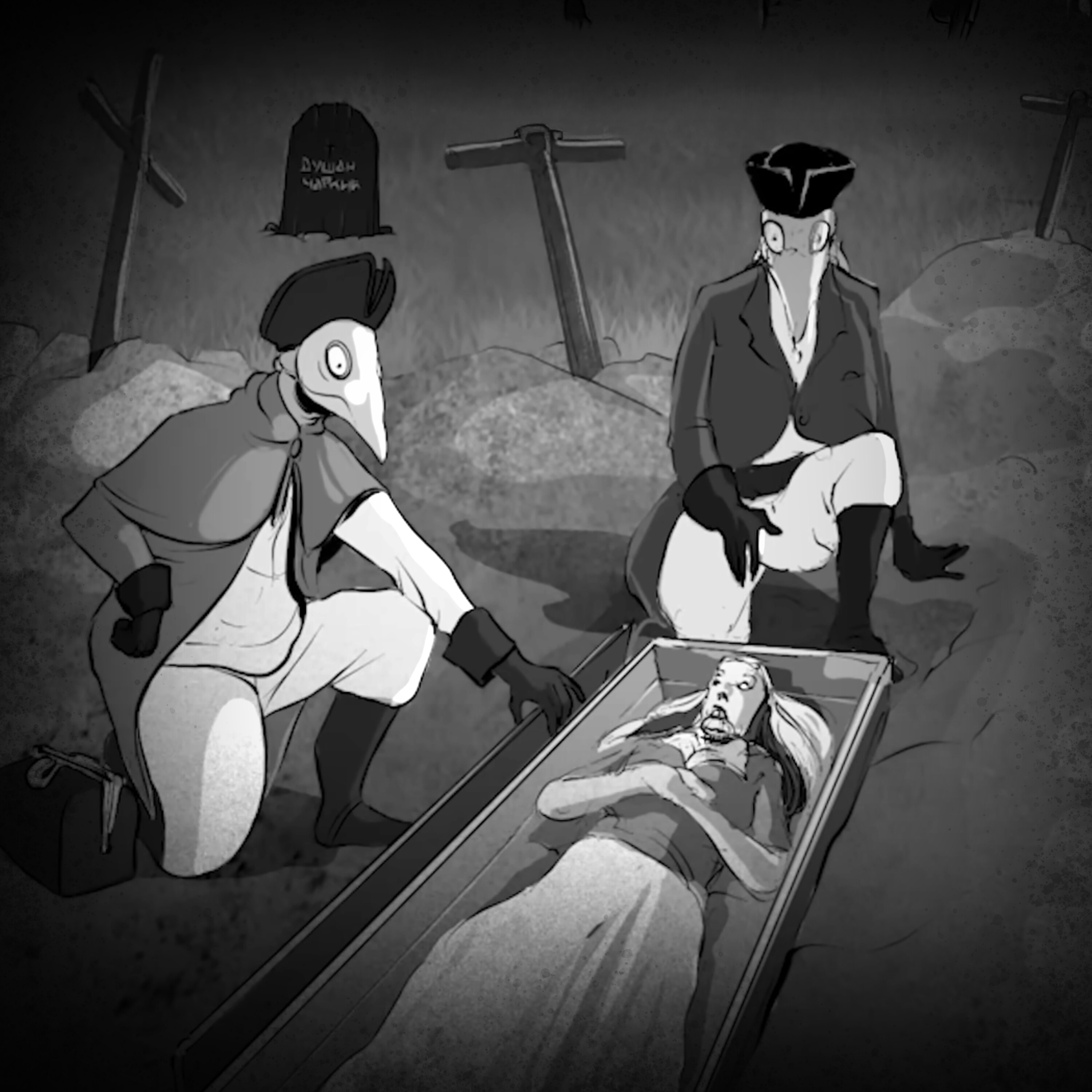
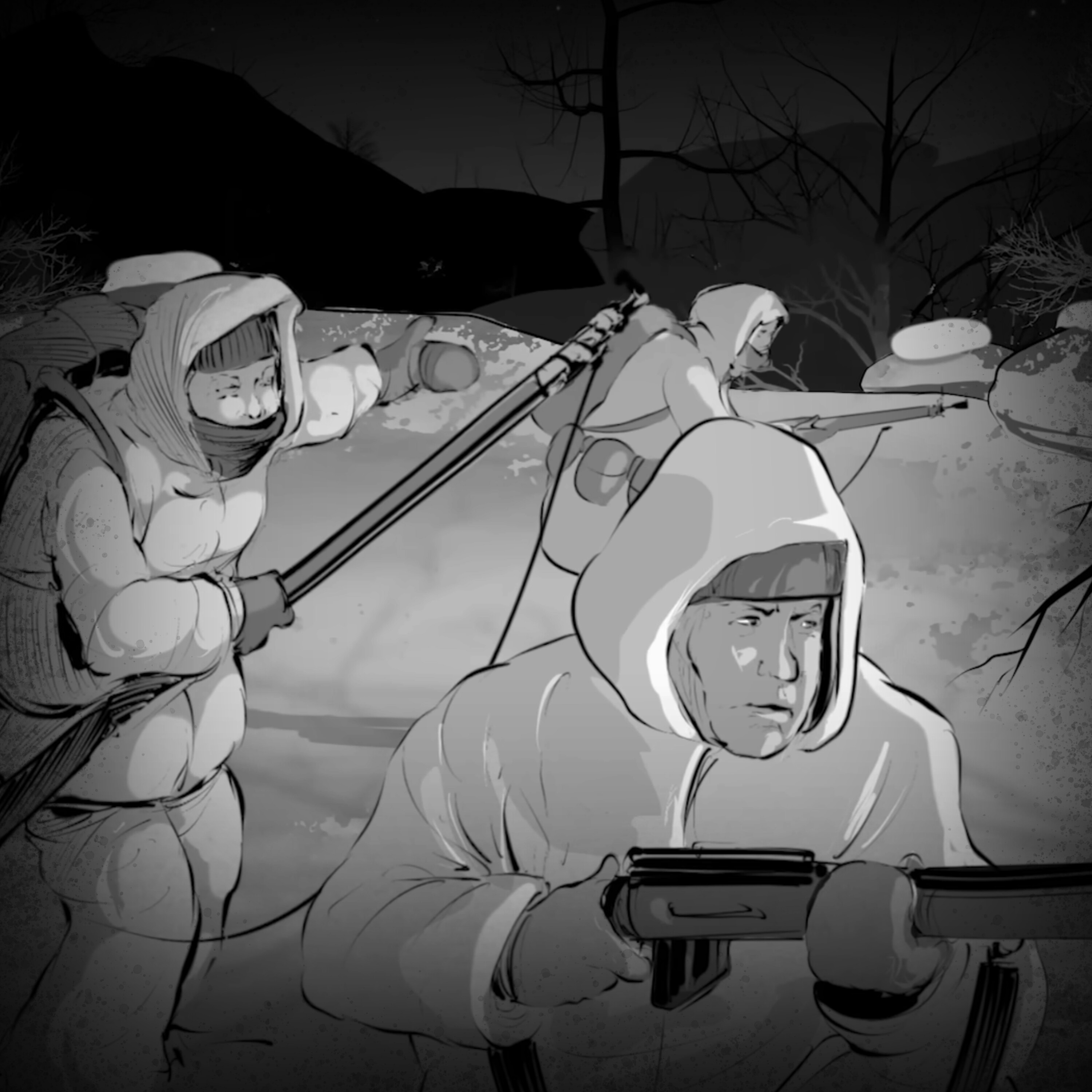
The rules of engagement are clear when facing another army, but they are useless against a more primal foe. From the African plains to the mangrove swamps of Burma, soldiers discovered that the greatest danger wasn't the enemy in the opposite trench, but the man-eaters that saw both sides as nothing more than prey.
See Privacy Policy at https://art19.com/privacy and California Privacy Notice at https://art19.com/privacy#do-not-sell-my-info.
Press play and read along
Transcript
Speaker 1 Why choose a sleep number smart bed?
Speaker 2 Can I make my sight softer?
Speaker 3 Can I make my sight firmer?
Speaker 1 Can we sleep cooler? Sleep number does that, cools up to eight times faster, and lets you choose your ideal comfort on either side. Your sleep number setting.
Speaker 1 Enjoy personalized comfort for better sleep night after night. It's our Black Friday sale, recharged this season with a bundle of cozy, soothing comfort.
Speaker 1
Now only $17.99 for our C2 mattress and base plus free premium delivery. Price is higher in Alaska and Hawaii.
Check it out at a sleep number store or sleepnumber.com today.
Speaker 4 What's going on? I'm Arch Manning, Veori athlete and college quarterback. Whether I'm running, training, traveling, or just unwinding at home, I love doing it in my core shorts from Veori.
Speaker 4 With a breathable boxer briefliner, they're quick to dry, super versatile, and stand up to even my most intense training sessions. Plus, they come in three inseams and a ton of colors.
Speaker 4
Ready to try a pair? Go to Veori.com/slash Arch and get 20% off at checkout. I think you're going to love them as much as I do.
That's vuri.com/slash arch and get 20% off your first order.
Speaker 4
Exclusions apply. Visit the website for full terms and conditions.
Not only will you receive 20% off your first purchase, but enjoy free shipping on any U.S. orders over $75 and free returns.
Speaker 4 Have a great day.
Speaker 5 This episode is brought to you by Progressive Insurance. Do you ever find yourself playing the budgeting game?
Speaker 5 Well, with a name-your-price tool from Progressive, you can find options that fit your budget and potentially lower your bills. Try it at progressive.com.
Speaker 5 Progressive Casualty Insurance Company and affiliates. Price and coverage match limited by state law, not available in all states.
Speaker 1 Fair warning, this episode does contain very graphic depictions of violence.
Speaker 1 One of the worst things that can happen to any warfighter is wet boots.
Speaker 1 Long patrols through various terrains are bad enough, but then your feet get wet and stay wet for the next several hours, maybe even days.
Speaker 1 There really is no way to explain that kind of misery, knowing that you have to keep moving and you're not going to get time to sufficiently dry them out, and your feet are basically just going to rot.
Speaker 1 I have to assume that this waterlogged misery transcends cultural barriers and was no less hated by all soldiers from the many wars throughout history.
Speaker 1 No less the Japanese men who were slogging their way through the jungles of Southeast Asia during the 1940s.
Speaker 1 I personally spent my fair share of time wandering around various jungles all over the Pacific during my time in the Marines.
Speaker 1 In some cases, the same jungles those guys were fighting in during World War II.
Speaker 1 So I can say with certainty that those men's feet were constantly submerged in water, especially those who were trekking through the dense and swampy jungles of what is now Myanmar.
Speaker 1 Back then, the country was called Burma.
Speaker 1 Most unfortunately for them, history would tell us that, at least for one Japanese regiment, neither their socky boots nor the Allied soldiers were the worst thing they had to deal with in the Burmese swamps.
Speaker 1 No, little did they know it, but as they were forced into a large-scale retreat by encroaching enemy forces, their fight quickly became one of survival against massive saltwater crocodiles.
Speaker 1 And the crocodiles won.
Speaker 1 From the pages of history, from Ramry Island to Sierra Leone, these are just some of the true stories about what happens when very unlucky soldiers fall prey to some of the most vicious man-eating predators on Earth.
Speaker 1 I'm Luke Lamana,
Speaker 1 and this is Wartime Stories.
Speaker 1 During the second half of the 19th century, the so-called Scramble for Africa was underway. underway.
Speaker 1 Despite being neglected by the competing imperial powers for much of the 1800s, the discovery of valuable raw minerals such as rubber, diamonds, coal, and iron ore prompted a surge in European colonization of Africa.
Speaker 1 With little regard for the native African populations, France, Belgium, Germany, Italy, Portugal, Spain, and of course the British Empire rushed to establish their rule over portions of the continent.
Speaker 1 In 1870, Europeans controlled a mere 10% of African territory. By the beginning of the 20th century, that figure had risen dramatically to over 90% of the continent being claimed by European rule.
Speaker 1 In the 1890s, the British began making moves to better solidify their hold on the East African interior, hoping to connect their resource-rich territories in Uganda to ports located in the Kenyan city of Mombasa.
Speaker 1 Now, Africa is massive, so given the distance between the African interior of Uganda and this vital coastal city of Mombasa, this would be no small feat connecting them and would require one of the most expansive railway networks yet seen on the continent.
Speaker 1 The British began construction on the railway line in 1896, transporting thousands of laborers over from India to supply the large workforce.
Speaker 1 Progress on the railroad was slow from the start, with many workers dying due to the hazardous working conditions and exposure to the unrelenting African sun.
Speaker 1 But in spite of all this, the British-run Ugandan Railway Committee continued to push forward with the project.
Speaker 1 Two years later, the railroad had finally made it into Kenyan territory, arriving along the banks of the Savo River in 1898.
Speaker 1 In order to progress any further, a bridge across the Savo needed to be constructed. At the urging of their colonial employers, the workers begrudgingly got on with the task.
Speaker 1 Having been brought in to oversee the timely completion of the bridge was a young British officer by the name of Lieutenant Colonel John Henry Patterson.
Speaker 1 Born just outside the town of Ballymahan in County Longford, Ireland, in the year 1867, Patterson spent much of his early years in the outdoors, hunting small game and practicing his marksmanship.
Speaker 1 When he turned 17, it was then no surprise to his family and friends that he chose to enlist in the British Army.
Speaker 1 Patterson was a good soldier and a reliable leader, rising quickly through the officer ranks, soon finding himself stationed in British-controlled India.
Speaker 1 Surrounded by so much unfamiliar terrain, when he wasn't busy with his military duties, Patterson began spending much of his downtime exploring the exotic Indian wilderness.
Speaker 1 Because of his early experiences with tracking and hunting the many small rodents and birds back in Ireland, Patterson now found himself feeling a bit adventurous.
Speaker 1 Bold as he was, he wanted to try hunting something more exciting. the most dangerous predator in India, the Bengal tiger.
Speaker 1 Evidently, Patterson did eventually become very efficient efficient in tracking and hunting even these animals.
Speaker 1 After he was transferred to Kenya with his new assignment overseeing the Sabo Bridge construction, in spite of the swath of new jungles and savannas to explore, Patterson was disappointed.
Speaker 1 With thousands of workers on a tight deadline and Arab slave traders operating in the area, he realized there would likely be little time for exploration or hunting.
Speaker 1 But if Patterson had arrived in Africa hoping for some excitement, he wouldn't have to wait long.
Speaker 1 Being unfamiliar with this new area, neither he nor the Indian workers realized that they were already being hunted themselves.
Speaker 1 On Patterson's very first night of overseeing the construction project, he was jolted awake by a blood-curdling scream, soon followed by a panicked commotion of Indian workers.
Speaker 1 Rushing out of his tent, Patterson and his interpreter worked to quiet the frightened men and assess what had just happened. Piecing together their frantic testimonies, it painted a gruesome picture.
Speaker 1 In the dead of night, a large, maneless lion had managed to sneak its way into the campsite. In a brazen attack, the animal had dragged one of the defenseless Indian workers out from his tent.
Speaker 1 Before anyone could do anything to stop the attack, the lion had dragged the man into the surrounding jungle, his pained cries disappearing into the night.
Speaker 1 His body, what was left of it, was found the next day, barely recognizable.
Speaker 1 Now, lion attacks were not that common, nor were they expected, especially considering the amount of zebra and wildebeest and other animals more commonly preyed on by lions seen wandering the area.
Speaker 1 So as horrible as it was to think their campsite was now being targeted by a man-eating lion, Patterson had hopes that it would be the last they would hear of it.
Speaker 1 Unfortunately, the lion would return the very next night, and then the next, and many more nights over the following weeks.
Speaker 1 As the death toll climbed, Patterson soon realized there had to be at least two lions stalking them, if not more.
Speaker 1 The railway project was difficult enough with the hot days and chances of injury.
Speaker 1 Now the men had trouble even getting some rest, fearful of being dragged off and ripped apart in the middle of the night.
Speaker 1 The blood-curdling screams of their fellow workers seemed to echo in their ears every time they closed their eyes.
Speaker 1 There was an interval of several months when the attacks ceased, but word began trickling in from other nearby settlements of similar lion attacks.
Speaker 1 And when the lions finally returned to the railway camp, the attacks only seemed to intensify. with almost daily killings.
Speaker 1 Patterson ordered that large bonfires be constructed and kept burning through all hours of the night.
Speaker 1 The workers also constructed crude fences made from whistling thorn trees, the sharp spikes hopefully providing some additional defense to stop the lions from entering their tents.
Speaker 1 But both of these measures failed. The lions simply ignored the fires and leapt over the thorns or clawed their way through them.
Speaker 1 Patterson noted that early in their killing spree, only one lion at a time would enter the inhabited areas and seize victims.
Speaker 1 But later, they became much more brazen, entering together and each of them seizing a victim. As the attacks mounted, hundreds of workers began fleeing from Savo, halting construction on the bridge.
Speaker 1
And at this point, colonial officials began to intervene. The lions didn't discriminate.
According to Patterson, one district officer named Mr.
Speaker 1 Whitehead was attacked by one of the lions after arriving at the nearby Savo train depot in the evening. His assistant, Abdullah, was killed.
Speaker 1 while Whitehead escaped with four deep claw lacerations running down his back. In spite of the dangers, the bridge project had to continue.
Speaker 1 But after months of being relentlessly stalked and watching their friends be ripped apart, the workers who fled the site refused to return to work unless something was done about the lions.
Speaker 1 What's more, Patterson soon found that the laborers were every bit as furious with him as they were with the man-eaters.
Speaker 1 The Indian men were a superstitious bunch, and since the attacks seemingly coincided with Patterson's arrival, some Indian workers considered him a bad omen.
Speaker 1 They were saying he was responsible for bringing two evil spirits, in the form of lions, to feast on the living.
Speaker 1 With nothing else to do for it, perhaps even hoping to clear his good name of such rumors, Patterson grabbed his rifle.
Speaker 1 With the arrival of other British officials and a reinforcement of around 20 armed sepoys, the traditional riflemen of the Indian military, the men quickly went to work devising a series of ambushes to capture and kill the lions.
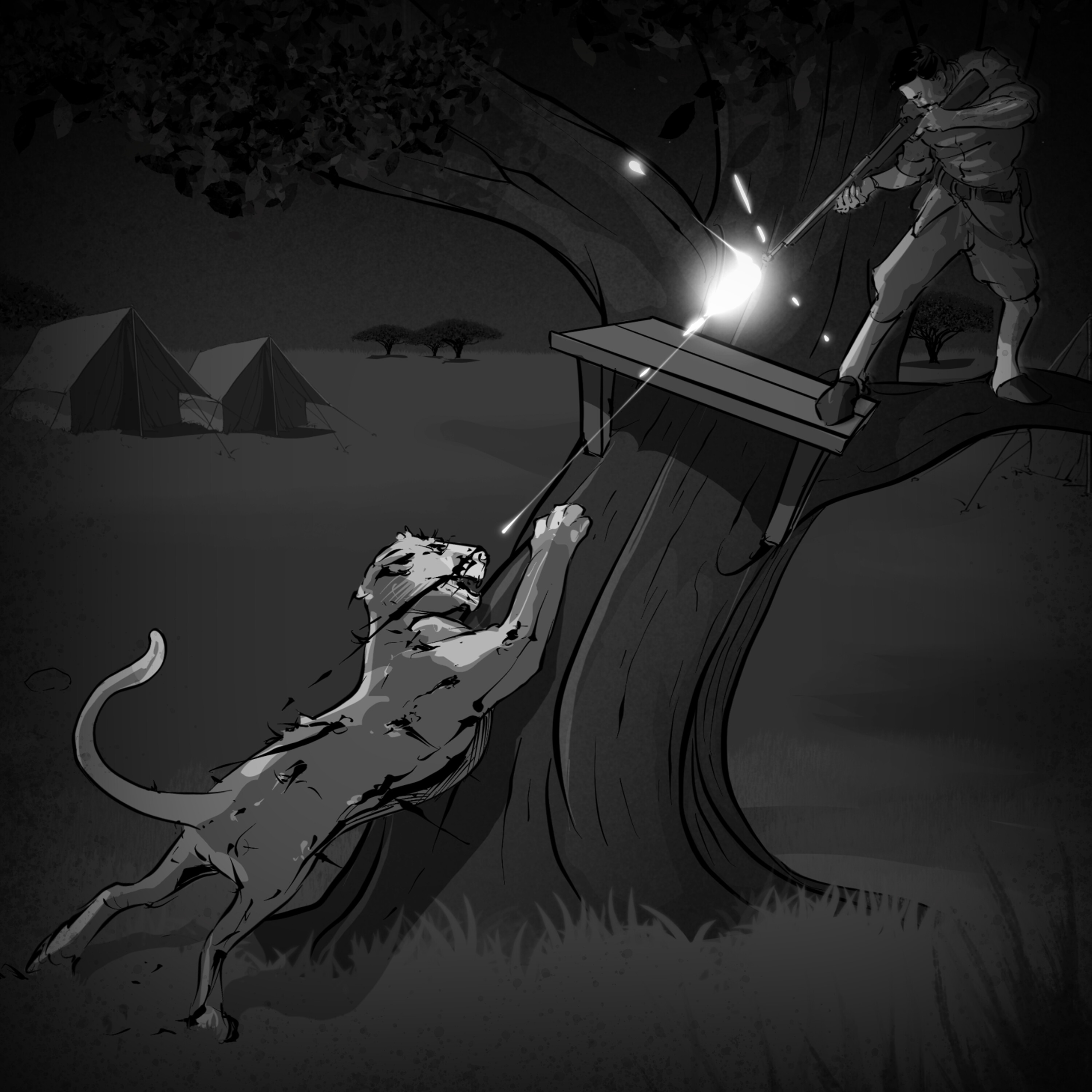
Speaker 1 Each night, Patterson, along with some of the other men, waited on concealed platforms mounted in trees with high-powered rifles. The first stakeouts were unsuccessful.
Speaker 1 The lions either didn't show up, or they managed to escape without being hit by the men's rifle fire. Finally, after several nights, Patterson struck one of the lions in its hind leg.
Speaker 1 It quickly took off into the jungle, but eventually returned, and now it seemed completely disinterested in the bait.
Speaker 1 Either the animal simply chose to stalk Patterson by coincidence, or it knew that this man in the tree was the one who had injured him.
Speaker 1 Looking back on their experience with it, they said it was as if the lion had a personal vendetta.
Speaker 1 Even before they had started hunting them, Patterson remarked that the levels of aggression displayed by these lions were unlike anything he'd ever seen, including his encounters with tigers.
Speaker 1 Fortunately, before it reached the tree, Patterson spotted it slinking through the high grass toward him. He took aim and fired, striking it in the shoulder.
Speaker 1 The lion dropped instantly, the bullet having passed through its heart, but the second lion still remained at large. The men then waited till daylight to inspect the lion that Patterson had killed.
Speaker 1
It was a male, nearly 10 feet in length from nose to tail. It took eight men to carry the body back to camp.
About 20 days later, the men finally had another chance at the second lion.
Speaker 1 Using a goat as live bait, Patterson lured the animal into a kill zone. Again, he managed to strike this lion with a single shot, before it then took off, having suffered only a minor injury.
Speaker 1 After another 11 days of failed attempts, The hunters finally managed to shoot the animal two more times. But compared to the first, this lion was much harder to to take down.
Speaker 1 In spite of its injuries, it managed to escape again. The night following their last two successful shots, the lion would reappear.
Speaker 1 As with the first lion, it also now ignored the goat and instead began sprinting towards Patterson's tree.
Speaker 1 It scrambled up the tree towards him, snarling viciously, and very nearly reached the platform he was standing on.
Speaker 1 before it finally collapsed in the branches after being struck by another six shots from both Patterson and the men in nearby trees.
Speaker 1 Patterson said the lion died gnawing on a tree branch, still trying to reach him.
Speaker 7 Did you know that parents rank financial literacy as the number one most difficult life skill to teach? Meet Greenlight, the debit card and money app for families.
Speaker 7 With Greenlight, you can send money to kids quickly, set up chores, automate allowance, and keep an eye on your kids' spending with real-time notifications.
Speaker 7 Kids learn to earn, save, and spend wisely, and parents can rest easy knowing their kids are learning about money with guardrails in place.
Speaker 7 Try GreenLight risk-free today at greenlight.com/slash wondry.
Speaker 8 Looking for a cruise experience that's truly different? Virgin Voyages offers all-in-voyage pricing with over $1,000 in value included.
Speaker 8 From Wi-Fi to dining at more than 20 restaurants, it's all covered. As an adults-only cruise line, every experience, from wellness to nightlife, is thoughtfully curated.
Speaker 8 It's no wonder Virgin Voyages has been voted world's best by travel and leisure for three consecutive years and by Condé NAS Traveler Readers.
Speaker 8 This winter, discover seven night Caribbean escapes from Miami. Choose between Grand Cayman and Jamaica or Puerto Rico and the Dominican Republic.
Speaker 8
Plus, experience the exclusive beach club in Bemini, Bahamas. And in 2025, even more adventures await as Virgin Voyages expands to new destinations, including Aruba, St.
Lucia, and Curaçao.
Speaker 8 Whether relaxing in a private terrace hammock or enjoying world-class entertainment, there's never a dull moment on a Virgin Voyages sail.
Speaker 8 Learn more at virginvoyages.com or contact your travel advisor.
Speaker 1 With the two mainless lions now dead, the British officials managed to regroup their Indian laborers.
Speaker 1 The workers then flooded back to their posts on the Savo River, eventually completing the railway bridge in February 1899.
Speaker 1 For his actions, Lieutenant Colonel John Henry Patterson was declared a hero by both the British press and Indian workers, who, despite hating him just months earlier, presented Patterson with a custom silver bowl.
Speaker 1 On it, an inscription said, Sir,
Speaker 9 we your overseer, timekeepers, mistaris, and workmen, present you with this bowl as a token of our gratitude to you for your bravery in killing two man-eating lions at great risk to your own life, thereby saving us from the fate of being devoured by these terrible monsters who nightly broke into our tents and took our fellow workers from our side.
Speaker 9 In presenting you with this bowl, we all add our prayers for your long life, happiness, and prosperity.
Speaker 9 We shall ever remain, sir, your grateful servants, Babu Purshotam Hurji Pramar, Overseer and Clerk of Works, on behalf of your workmen. Dated at Sabo,
Speaker 9 30th January, 1899.
Speaker 1 Of all the accolades and trophies Patterson had won during his military service throughout the years, he said that he treasured that humble bull more than anything else.
Speaker 1 Over the last 120 years, the story of the Savo Man-eaters has risen to nearly mythological heights, inspiring numerous books and no less than five Hollywood film adaptations.
Speaker 1 With the story being subjected to so many retellings and dramatizations, certain details have tended to become a bit distorted.
Speaker 1 For many years, the number of deaths attributed to the two lions has varied dramatically, with Patterson himself claiming that the lions killed as many as 135 people.
Speaker 1 Many experts claim that the number of Indian workers killed was likely far lower, at around 28 to 31 victims.
Speaker 1 But Patterson said there were also many African workers who had been killed, but were left unaccounted for.
Speaker 1 With this in mind, combined with the known eating habits of the maneless lion, Researchers have speculated that a death toll as high as 70 could be possible.
Speaker 1 The underlying question is what made these lions such feracious man-eaters? Lions do typically stick to usual prey, like zebras and wildebeests.
Speaker 1 Scientists have speculated that a regional outbreak of cattle plague might have devastated local animal populations, leaving the lions without a primary food source.
Speaker 1 Others have suggested that the violent Arab slave traders may have indirectly contributed to the lions' new preference for human flesh.
Speaker 1 During his time at the Savo River, Patterson said he saw many shallow graves and poorly buried bodies left behind by these roaming Arab gangs.
Speaker 1 The lions, seeing an easy meal, would quite possibly have scavenged the fresh corpses.
Speaker 1 At least a few experts experienced with the African ecosystem have suggested that those two male lions were likely elderly and possibly had resulting tooth decay.
Speaker 1 This would mean they were unable to hunt their normal prey. This is apparently when predators become man-eaters.
Speaker 1 since men are much easier to catch, especially when they are fast asleep in their tents. And male lions are not against hunting together, especially when they are outcasts from the regional prides.
Speaker 1 Having had the two man-eating lions skinned and preserved, Lieutenant Colonel Patterson kept them in his home as skin rugs.
Speaker 1 In 1924, he then sold them to the Field Museum of Natural History in Chicago, where they were taxidermied. You can still see them there today.
Speaker 1 The Sabo man-eaters are on permanent display for anyone willing to come face to face with two of Africa's most notorious man-eating predators.
Speaker 1 In the words of Lieutenant Colonel William Albert Waitman, a British Army veteran of World War II's Pacific Theater,
Speaker 1 the jungle can be your friend and it can be your worst enemy, depending on time, place, and circumstances.
Speaker 1 Setting aside the oppressive humidity and wide array of flesh-eating diseases, the jungle happens to be home to some of the most dangerous wildlife on Earth.
Speaker 1 Poisonous insects, venomous snakes, carnivorous reptiles.
Speaker 1 Now, the soldiers of the Imperial Japanese Army were both feared and respected for their mastery of the jungle environment and often used it to their own advantage, but they were no less vulnerable to its many dangers.
Speaker 1 For the men of the 2nd Battalion, 121st Regiment stationed on Ramri Island, a large landmass just off the coast of Burma, even their ancient samurai warrior code was of no help to them against man-eating predators.
Speaker 1 By January 1945, the war wasn't looking good for Imperial Japan. As the Americans were preparing to invade the Japanese home islands, the British and their Indian allies were pushing into Burma.
Speaker 1 In order to support their own troops fighting on the mainland, the British wanted an airfield and supply base. Ramri Island was the most ideal location for it.
Speaker 1 The only thing stopping the construction was an entrenched garrison of about 1,000 Japanese soldiers.
Speaker 1 The Japanese were well aware of the coming invasion and had fortified the island, centering their defense around Ramri Town and the beaches of Chaupu, where the British were expected to land.
Speaker 1 But when the Allied attack began on January 14th, British forces landed to the west of the anticipated landing site, therefore facing minimal Japanese resistance.
Speaker 1 The Japanese fought with their usual tenacity, but the complex assault attacking them from the air, the land, and the sea, inevitably broke through their lines, forcing the Japanese to retreat.
Speaker 1 The Japanese were well known for their unwillingness to surrender.
Speaker 1 The 900 surviving soldiers quickly pulled back into the island's dense mangrove swamps, planning to escape to the far side of the island.
Speaker 1 The British followed, but decided to quickly surround the swamps rather than walk through them. Their plan was to isolate the Japanese while using loudspeakers to call for their surrender.
Speaker 1 True to form, the Japanese flatly refused to give up, their sense of honor clearly overwhelming the hopelessness of their situation.
Speaker 1 But as night fell on February 19th, their honor would quickly give way to absolute horror.
Speaker 1 At some point during the night, British troops standing watch on the outskirts of the mangrove swamps were startled by the sounds of men screaming. Rifle shots started flashing in the darkness.
Speaker 1 The increasing screams and thrashing of men in the water was unlike anything the battle-hardened troops had ever heard.
Speaker 1 Bruce Stanley Wright, a soldier who was an eyewitness to the event, would later write about the massacre.
Speaker 3 That night was the most horrible that any member of the ML crews ever experienced.
Speaker 3 The scattered rifle shots in the pitch-black swamp, punctured by the screams of the wounded men crushed in the jaws of huge reptiles, and the blurred worrying sound of spinning crocodiles made a cacophony of health that has rarely been duplicated on Earth.
Speaker 3 At dawn, The vultures arrived to clean up what the crocodiles had left.
Speaker 1 Capable of growing up to 20 feet in length and weighing in at over 4,000 pounds, the saltwater crocodile is said to have one of, if not the most powerful bite force in the natural world.
Speaker 1 Combined with its jaws lined with jagged teeth, it's more than enough to crush any bone in the human body.
Speaker 1 Similar in tactics to the alligator, but far more aggressive, saltwater crocodiles hunt by ambushing their prey, quickly dragging their victims underwater.
Speaker 1 Caught in the jaws of the crocodiles, Japanese men did not die quickly.
Speaker 1 They either drowned in the muddy water or felt themselves being twisted around as the crocodiles began their death rolls, tearing away flesh and limbs.
Speaker 1 What's more terrifying is that saltwater crocodiles are known to work together with group hunting strategies, particularly when attacking large groups of prey.
Speaker 1 The unfortunate Japanese regiment really did find itself facing an army of another kind.
Speaker 1 Standing helplessly in waist-high water in a pitch-black swamp, the rest of the night and the following days was, as the British soldier said, a living hell.
Speaker 1 Perhaps the samurai Bushido code only stretches as far as surrendering to humans, because when it came to facing off against hundreds of massive crocodiles, at least a few of the Japanese changed their tune.
Speaker 1 But since the crocodiles were not about to take any prisoners, they surrendered themselves to the Allied troops, and no one could really blame them considering the nightmare they were living in.
Speaker 1 Little by little, the surviving Japanese men began emerging from the swamps, looking starved, diseased, wounded, and badly dehydrated.
Speaker 1 Having listened to the carnage for days, the British men were no less chilled to see how few of the Japanese actually survived.
Speaker 1 Of the 900 Japanese soldiers who had retreated into the swamps, only 20 ever came back out. The rest were either eaten alive or died from exposure.
Speaker 1 In reality, the actual death toll remains undetermined and is often debated, but the Ramry Island incident maintains a very grim placeholder in the annals of war history.
Speaker 1 According to the Guinness Book of World Records, the event maintains the unenviable distinction of having the most human fatalities in a crocodile attack.
Speaker 1 Of course, awful as it is, we all hope that this event keeps that record.
Speaker 2 Ever wonder where that cool product product you just discovered on Amazon actually came from? Chances are it's from an independent seller.
Speaker 2
They actually make up more than 60% of everything sold in Amazon's store. We are talking about real entrepreneurs building their dreams, one sale at a time.
These aren't massive corporations.
Speaker 2 They're small businesses started by people just like you, turning their innovative ideas into successful brands.
Speaker 2 Whether they're crafting sustainable products from their garage or scaling their family business to reach customers worldwide, these sellers are redefining what's possible for small business.
Speaker 2 So, next time you're shopping, think small. Check out amazon.com slash support small.
Speaker 1 This final story takes us back to the African continent and deals with what is arguably the most dangerous predator known to mankind.
Speaker 1 Nestled on the West African coast, the country of Sierra Leone was devastated by civil war throughout most of the 1990s.
Speaker 1 Led by a man named Fonde Sanko, the Revolutionary United Front launched a nationwide offensive to topple the Sierra Leonean government.
Speaker 1 While the RUF saw itself as a revolutionary movement advocating for social justice and equitable resource distribution, particularly concerning the country's diamond wealth, the war quickly devolved into a series of tit-for-tat atrocities committed by both rebel and government forces.
Speaker 1 Instead of winning the hearts and minds of the civilian population, both sides embarked on a campaign of terror against the innocent lives they were claiming to protect.
Speaker 1 Of the many war crimes seen throughout Sierra Leone's civil war, mass killings, mutilations, torture, and sexual violence were widespread.
Speaker 1 As both federal and RUF troops engaged in this senseless bloodshed, they also adopted the awful practice of conscripting small children, some as young as seven years old, into the ranks of their armed armed forces.
Speaker 1 While militias loyal to the federal government were most certainly pressing children into service, it was the RUF's more aggressive approach to child recruitment that drew international condemnation.
Speaker 1 Seeing impressionable young boys and girls as the perfect candidates to absorb their radical ideals, RUF rebels would forcibly take the children from their families, then plunging them into a world of cruelty and violence.
Speaker 1 Through endless beatings, threats, and psychological manipulation, the RUF hoped to inspire rage in these children, which was enhanced by pumping them full of alcohol and various strong painkillers, drugs, and amphetamines.
Speaker 1 Numb to physical pain, stirred into a violent frenzy by their commanders, and given assault weapons, these children were then unleashed on the unsuspecting rural towns and villages of Sierra Leone.
Speaker 1 often taking part in both combat and bloody massacres alongside their adult leaders.
Speaker 1 Over the course of the decade-long conflict, it is thought that at least 80% of the RUF's combat units were comprised of children aged 7 to 14 years.
Speaker 1 During the conflict, many humanitarian groups from all over the world began pouring into Sierra Leone, helping thousands of displaced persons with everything from food, shelter, medicine, and resources to track down their missing loved ones.
Speaker 1 A top priority for many of these organizations quickly became the rehabilitation of captured child soldiers.
Speaker 1 In a process known as deprogramming, the children were immediately pulled from their militant environment before entering various institutes dedicated to formal education and psychological healing.
Speaker 1 Unfortunately, many of these children held on to their violent tendencies.
Speaker 1 often made worse by post-traumatic stress and withdrawal symptoms as aid workers attempted to get them off various substances.
Speaker 1 As the teachers and psychologists encouraged the children to open up about their experiences and they began recounting stories of gun battles and massacres, the children also began mentioning something even more gruesome.
Speaker 1 In the year 2000, author Alex McCormick went to Sierra Leone in order to to collect stories for her upcoming book, The Mammoth Book of Man-Eaters, over 250 terrifying true accounts of predators from prehistory to present.
Speaker 1 Hoping to learn more about the supposed Man-Eaters of Sierra Leone, McCormick was introduced to a teenage boy named Francis.
Speaker 1 Francis was one of the children forced into the service of an Army infantry unit five years earlier.
Speaker 1 Through tears and the gentle reassurances of his psychologist, he told McCormick about one particularly horrifying experience.
Speaker 6 Shaking with terror at the recollection, casting nervous glances over his shoulder and at the psychologist who had been deprogramming this boy soldier, he said he had been press-ganged into an army infantry unit as a sort of servant.
Speaker 6 when it overran a position held by Sanko's Revolutionary United Front. We were starving, Francis whispered, tears in his eyes, pleading for a form of compassion he could not find for himself.
Speaker 6 The huts all around were burning. A few of the rebels were killed and the rest ran away, vanished into the bush.
Speaker 6 We were so hungry.
Speaker 6 So hungry.
Speaker 6
We saw that they had left a pot of food on their fire. There was hot tea, too.
We were so hungry, he sighed. It was good food.
I had not eaten like that for months.
Speaker 6 Not since I was taken from my home home and made to join the army. It was really good.
Speaker 6 I dug down for more meat with my knife. When I pulled it up,
Speaker 6 a hand hung from it. A human hand.
Speaker 6 At that point, Francis collapsed forward, shivering, as if he'd suddenly been seized by a bout of malaria. Around us, the flies buzzed in the stunned silence.
Speaker 1 While acts of unrestrained brutality were common on both sides, it was now clear to McCormick that certain RUF and government factions had developed a terrifying reputation for cannibalism.
Speaker 1 While verified reports of the practice are hard to come by, the sheer amount of eyewitness testimony from both civilians and combatants seemed to make it very credible.
Speaker 1 One of the groups often mentioned as having a taste for human meat was that of the GEO tribesmen.
Speaker 1 As mercenaries fighting on behalf of the RUF, the GEO, native to neighboring Liberia, were known for two things, brutality and ritualistic cannibalism.
Speaker 1 Drawing inspiration from their warrior traditions, the GEO mercenaries would regularly eat the flesh of their enemies, believing that they would acquire the strength and courage of the men they were eating.
Speaker 1 This practice was apparently so common among the GEO people that markets in the remote Liberian jungles were said to sell dried pieces of human meat.
Speaker 1 Even the bodies bodies of recently deceased people weren't spared, with families being said to have to guard their burial plots to ensure their loved ones weren't dug up and thrown into the cookpots.
Speaker 1 But the Geo weren't the only man-eaters in Sierra Leone.
Speaker 1 In another instance, witnesses described seeing Commajor militiamen, loyal to the federal government, cutting out the hearts of their enemies in the heat of battle.
Speaker 1 and later roasting and eating the hearts in a display of dominance.
Speaker 1 Working as a photojournalist for Human Rights Watch, Corrine Dufka also recalled numerous tales of cannibalism, one of which was also conveyed to her by a young child soldier.
Speaker 10 There was one demobilized child soldier who gave me a detailed description of how they caught Ekomag soldiers, West African peacekeepers, during the January 1999 offensive.
Speaker 10 then tying them up and cutting out their livers.
Speaker 10 He described to me how they cooked them.
Speaker 10 I've heard it from enough people that I tend to believe it.
Speaker 1 According to the Anonymous Child, everyone within the unit was expected to take part in the cannibalism.
Speaker 1 After a while, consuming human flesh became as easy as eating any other meat, with some even scrambling to fight over the best bits.
Speaker 1 In 2000, the United Kingdom would formally intervene in the country's civil war on the side of the government, fully dismantling the RUF by 2002 and ending the war that had claimed over 70,000 lives.
Speaker 1 Despite the occasional flare-ups of regional conflicts, Sierra Leone is largely at peace.
Speaker 1 However, the war scars still run deep.
Speaker 1 While far from being the bloodiest conflict on African soil, The sadistic violence and cannibalism seen during the Sierra Leonean Civil War are a stark reminder that the world's most dangerous predators are
Speaker 1 and always will be
Speaker 1 humans.
Speaker 1
Wartime Stories is created and hosted by me, Luke Lamana. Executive produced by Mr.
Bollin, Nick Witters, and Zach Levitt. Written by Jake Howard and myself.
Speaker 1
Audio editing and sound design by me, Cole Lacascio, and Witt Lacascio. Additional editing by Davin Intag and Jordan Stidham.
Research by me, Jake Howard, Evan Beamer, and Camille Callahan.
Speaker 1
Mixed and mastered by Brendan Kane. Production supervision by Jeremy Bone.
Production coordination by Avery Siegel. Additional production support by Brooklyn Gooden.
Speaker 1 Artwork by Jessica Cloxon-Kiner, Robin Vane, and Picada. If you'd like to get in touch or share your own story, you can email me at info at wartimestories.com.
Speaker 1 Thank you so much for listening to Wartime Stories.