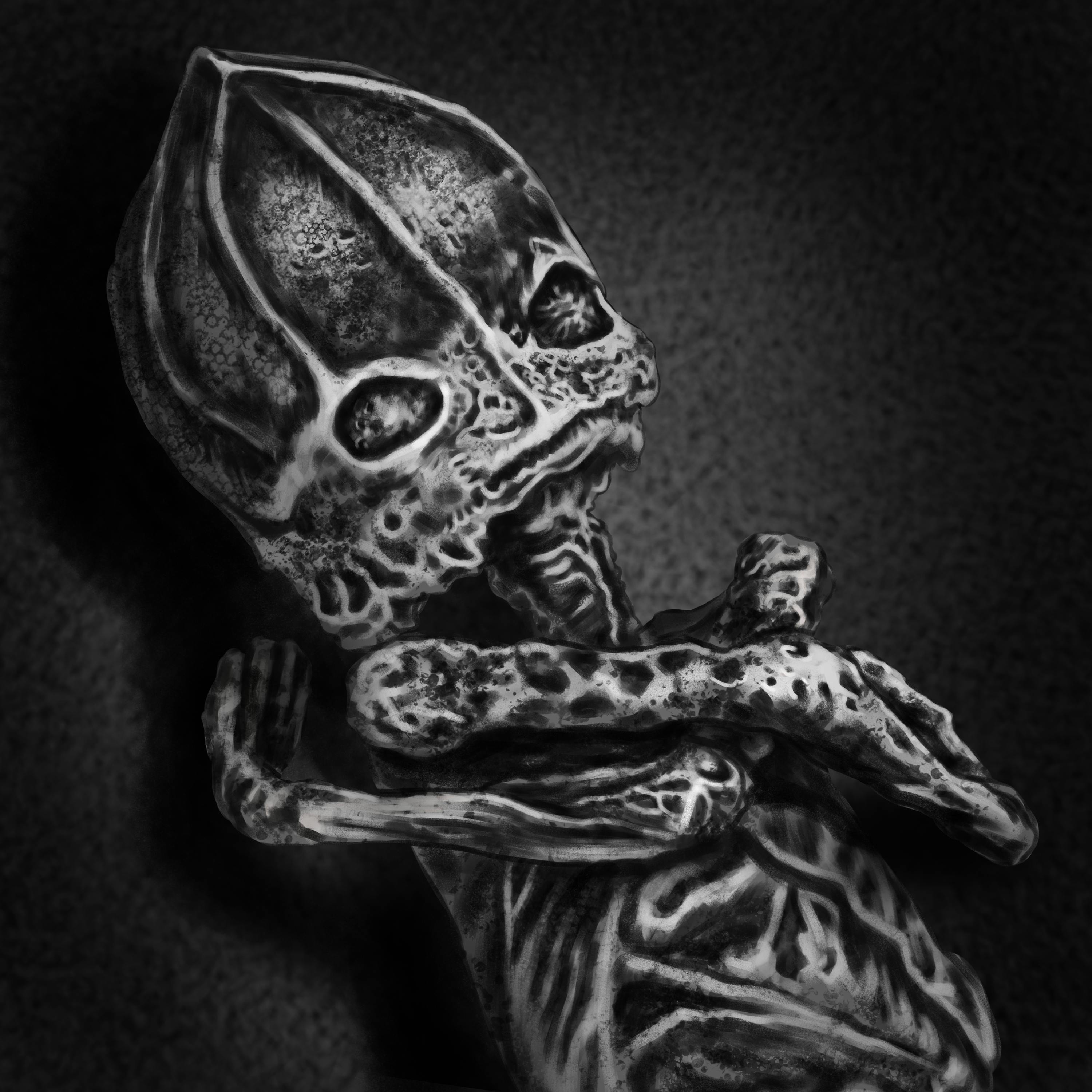
The Baby Aleshenka
MUSIC
Tracks used by kind permission of Kevin MacLeod (incompetech.com) Licensed under Creative Commons: By Attribution 3.0
Tracks used by kind permission of CO.AG
Learn more about your ad choices. Visit megaphone.fm/adchoices
Press play and read along
Transcript
Speaker 1 So, I am a big fan of the It movies, and I'd be willing to bet that a lot of you are too.
Speaker 1 Well, there's a new series coming out made by the same director, and it takes place 27 years before the movies in the 1960s. It explores the origins of Pennywise the Clown.
Speaker 1 The new HBO original series, It Welcome to Derry, is now streaming on HBO Max.
Speaker 1 But if you're a real fan like me, you're looking for more, which is why I'm also going to be listening to the It Welcome to Derry official podcast.
Speaker 1 This is where hosts Mark Bernardin and Princess Weeks dive deep into each episode after it airs.
Speaker 1 They talk to the cast and crew, including the show's creators like Andy and Barbara Muscietti about the making of the show.
Speaker 1 And I'm looking forward to what they have to say about the little Easter eggs I'm seeing in the trailer, like the Shawshank State Prison Bus.
Speaker 1 New podcast episodes drop every week after the episode airs on HBO Max.
Speaker 1 Stream new episodes of HBO's It Welcome to Derry Sundays on HBO Max and listen to the It Welcome to Derry official podcast wherever you get your podcasts.
Speaker 2 One night, whilst walking through the woods on the outskirts of her town, an elderly woman discovered what she thought was an abandoned infant lying in the dirt.
Speaker 2 She carried it home and resolved to raise it herself, but what began as an act of compassion would soon spiral spiral into a mystery that left her community asking whether the baby Aliashanka was even human.
Speaker 2 Life in the remote Siberian wilderness has long been defined by endurance.
Speaker 2 To those living far from the reach of Russia's great cities, existence here is stripped down to its most basic form, survival against the elements.
Speaker 2 To outsiders, this world may seem bleak and unforgiving, a place untouched by the comforts of modern life.
Speaker 2 But for the people who inhabit the endless forests and frozen valleys of the Ural Mountains, such isolation is simply a way of life.
Speaker 2 Their days follow a rhythm as old as the land itself. Wake, work, eat and sleep.
Speaker 2 The silence of the tundra is broken only by the low hum of wind through pine and the distant rumble of machinery from scattered industrial towns.
Speaker 2 To those raised in the city, the lack of distraction would feel unbearable. Yet for these rural communities, life's simplicity is both grounding and familiar.
Speaker 2 Many families still live as their ancestors once did. relying on their own hands, their neighbours and the turning of the seasons.
Speaker 2 Radio, television, and other luxuries of the modern age have found their way into even the most remote corners of the Urals, but they have done little to change the people.
Speaker 2 Tradition remains a constant.
Speaker 2 And yet, every so often something breaks through that quiet routine.
Speaker 2 An incident so strange, so utterly alien to their daily reality, that it draws the world's attention to these forgotten places.
Speaker 2 In 1996, one such event would do exactly that.
Speaker 2 What began as an ordinary day in a small Siberian town would soon become the center of one of Russia's most unsettling mysteries.
Speaker 2 The town was Kaishdem, a modest settlement at the southern edge of the Ural Mountains within the district of Chelyabinsk Oblast.
Speaker 2 To most, it was an unremarkable place, known primarily for its rugged landscape and biting winters. But beneath its quiet exterior lay a darker legacy.
Speaker 2 Kaistem had once been a fortress during the days of the Tsars and later a crucial cog in the Soviet war machine.
Speaker 2 During the Great Patriotic War, its factories produced the tanks and weapons that helped repel the Nazi invasion.
Speaker 2 After the war, it became home to one of the Soviet Union's most secretive scientific complexes, the Mayak Nuclear Facility, a hub for weapons research and plutonium refinement.
Speaker 2 In September of 1957, catastrophe struck.
Speaker 2 An explosion at the Mayak plant released a massive plume of radioactive material, spreading contamination across nearly 20,000 square kilometers and poisoning the nearby Tierka River.
Speaker 2 Though the city of Chelyabinsk was spared the worst, The fallout blighted the surrounding villages for generations.
Speaker 2 In the years that followed, whispers circulated of birth defects, genetic abnormalities and strange illnesses.
Speaker 2 Environmental groups later described it as one of the worst nuclear disasters in history, second only to Chernobyl.
Speaker 2 Nearly 40 years later, the town of Kaishtem would once again find itself in the headlines.
Speaker 2 Only this time it wasn't radiation that captured the world's attention, but a discovery so bizarre that it would would challenge science itself.
Speaker 2 As the story goes, on a dark and eerily quiet night in May 1996, an elderly woman named Tamara Vasilyevna Prosverina was walking along a woodland path near the small Russian town of Kalia Navy on the outskirts of Kaishtem.
Speaker 2 The night was still save for an odd sound drifting through the trees, faint, high-pitched, and distressing.
Speaker 2 At first, Tamara thought it was the cry of an injured animal, but as she listened more closely, it began to resemble the wail of a child in pain.
Speaker 2 Following the noise, she made her way towards a clearing near the town's rubbish dump.
Speaker 2 There, amongst the discarded debris and broken glass, she found something that would change her life forever. A small, frail figure lying on the ground.
Speaker 2 To her eyes, it looked like a baby.
Speaker 2 Without hesitation, she wrapped the trembling form in a blanket and carried it home, convinced that she had stumbled upon an abandoned infant.
Speaker 2 Two days later, Tamara was visited by her daughter-in-law, also named Tamara.
Speaker 2 The younger woman found her mother-in-law in good spirits and at first noticed nothing out of the ordinary.
Speaker 2 It was only as she prepared to leave that the elder Tamara casually asked whether she would like to help feed the baby.
Speaker 2 Taken aback, the younger woman hesitated. Her mother-in-law had mentioned nothing about a baby during their visit.
Speaker 2 Assuming there must have been some misunderstanding, she followed her into the bedroom, and there, beside the window, stood a crib.
Speaker 2 What she saw inside was like nothing she could have imagined.
Speaker 2 The figure lying in the blankets was far too small to be a newborn, and yet its head was grotesquely large, nearly twice the size of its body.
Speaker 2 Its skull appeared elongated and uneven, as though hardened into natural ridges.
Speaker 2 The skin had an odd, greyish tone and an almost leathery texture. The creature's eyes were huge, darting rapidly back and forth, their pupils expanding and narrowing like those of a cat.
Speaker 2 Its arms were thin, its fingers unusually long, and there were no signs of genitalia or even eyelids.
Speaker 2 When it ate, it did so in a deeply unsettling way, sucking food through a small circular opening in its face rather than chewing.
Speaker 2 Though two sharp teeth were visible, its jaw did not appear to move at all.
Speaker 2 Tamara Jr. would later claim that the being was not of this world.
Speaker 2 When she asked what it was called, her mother-in-law smiled proudly and replied that she had named it Alyoshunka, Little Alexi, after one of her deceased grandsons.
Speaker 2 In the days that followed, Tamara's increasingly strange behaviour began to draw the attention of her neighbours.
Speaker 2 She could often be heard moving about her small apartment, talking and cooing in the gentle, affectionate tones of a new mother.
Speaker 2 To the other residents of the building, her insistence that she had a baby came as a shock, and to most, a cause for concern.
Speaker 2 No one had seen any sign of a child entering her home, and when pressed for details, she would simply smile or change the subject.
Speaker 2 Neighbours later described her demeanor as erratic and evasive.
Speaker 2 She would appear cheerful one moment, agitated the next.
Speaker 2 Some dismissed it as harmless eccentricity, whilst others began to suspect that her mind was beginning to fail her.
Speaker 2 One night, those fears seemed confirmed when a neighbour was awoken by frantic knocking at her door.
Speaker 2 Standing in the hallway was Tamara, trembling and distraught.
Speaker 2 She begged for help. saying that her baby was ill and that she had no medicine to give him.
Speaker 2 Alarmed, the neighbour called the authorities, but when the police arrived, they did not come to render medical aid.
Speaker 2 Instead, they escorted Tamara to a nearby hospital for psychiatric evaluation, where she was then admitted for observation and placed under protective custody.
Speaker 2 Some later reports tell a slightly different version of events, suggesting that Tamara had in fact collapsed in her apartment after falling ill.
Speaker 2 and that concerned neighbours had called for an ambulance.
Speaker 2 Whatever the case, she was taken away against her will, pleading with the medics not to separate her from her baby, who she insisted was still at home waiting for her.
Speaker 2 Her protests went unheard.
Speaker 2 To the police and hospital staff, her claims only confirmed what they already suspected, that she was suffering from the early stages of mental decline.
Speaker 2 Those who knew her agreed.
Speaker 2 For years, Tamara had been known locally as a gentle but eccentric figure who sometimes displayed unusual habits.
Speaker 2 She would wander the nearby cemetery collecting wilted flowers from graves, taking them home to arrange around her apartment.
Speaker 2 To most, this was simply a harmless quirk, an old woman's oddity in a forgotten corner of the world.
Speaker 2 But, in hindsight, it became clear that there was something far more troubling behind her actions.
Speaker 2 Because whilst the townspeople townspeople were dismissing her as delusional, one grim detail went unnoticed.
Speaker 2 When Tamara was taken into custody, little Al Yushunka was left alone in her apartment.
Speaker 2 After an exhausting day, I'll often be shopping online where I spend way too long choosing what to get.
Speaker 2 But when I finally decide and go to checkout, I realise the credit card I need is on the other side of my home and the walk to that credit card feels like a Herculean task.
Speaker 2 But then I see that purple shop button which has all of my payment and shipping information saved and I sing Shopify's praises.
Speaker 2 Because Shopify makes everything easier from checkout to creating your own storefront.
Speaker 2 Shopify is the commerce platform behind 10% of all e-commerce in the US, like Heinz or Deathwish Coffee.
Speaker 2 Shopify gives you a leg up from day one with hundreds of beautiful ready-to-go templates to express your brand's style.
Speaker 2 Spread your brand's word with built-in marketing and email tools to find and keep new customers.
Speaker 2 You can tackle all of those important tasks in one place from inventory to payments to analytics and more. If you want to see less carts being abandoned, it's time for you to head over to Shopify.
Speaker 2
Sign up for your $1 per month trial and start selling today at shopify.com/slash bedtime. Go to shopify.com slash bedtime.
That's shopify.com/slash bedtime.
Speaker 3 This episode is brought to you by Progressive Insurance. Fiscally responsible, financial geniuses, monetary magicians.
Speaker 3 These are things that people say about drivers who switch their car insurance to Progressive and save hundreds. Visit progressive.com to see what you can save.
Speaker 3
Progressive Progressive Casualty Insurance Company and Affiliates. Potential savings will vary.
Not available in all states or situations.
Speaker 2 From this point onwards, accounts become hazy and increasingly contradictory, leaving researchers to piece together what might have happened from fragmentary statements and local hearsay.
Speaker 2 Yet one name continues to surface at the center of the affair: Lieutenant Vladimir Benlin, a police officer from the nearby town of Novogorny.
Speaker 2 At the time, Benlin was dealing with a routine theft case involving Vladimir Nerdinov, a petty criminal well known to the local authorities.
Speaker 2 Nerdinov's offences were usually small scale, stolen wiring, scrap metal and the occasional break-in.
Speaker 2 But he had a reputation for being unpredictable.
Speaker 2 During what should have been a straightforward interrogation at the Novogorny station, the conversation took a bizarre and unsettling turn.
Speaker 2 Seemingly out of nowhere, Nerdinov told Benlin that he was in possession of a dead baby and that he wanted to hand it over to the police.
Speaker 2 He allegedly explained that he had no use for such a thing and didn't know what else to do with it.
Speaker 2 At first, Benlin thought the man was joking or trying to distract from his own charges.
Speaker 2 But something in Nerdinov's tone, calm, matter matter-of-fact, almost detached, convinced him to investigate further.
Speaker 2 Later that same day, Benlin accompanied Nerdinov back to his modest apartment on the edge of town.
Speaker 2 Inside he was led to a small side table where a cloth bundle lay. When the officer pulled it back, what he saw made his stomach turn.
Speaker 2 The object inside was, indeed, the mummified remains of a tiny humanoid body, body, no longer than 25 centimeters in length, its skin taut and leathery, its head grotesquely enlarged in proportion to the rest of its frame.
Speaker 2 The being had no visible hair, its eye sockets were shallow and overlarge, and the skin itself was an unhealthy grey-brown.
Speaker 2 The skull appeared covered in irregular dark patches, as though burnt or bruised, and the entire form looked simultaneously ancient and unborn.
Speaker 2 Too developed to be a fetus, yet too malformed to resemble a human infant.
Speaker 2 Benlin questioned Nerdanov about how he had come into possession of such a thing.
Speaker 2 The man told him that he had once frequented the apartment of Tamara Prosferina, the elderly woman who had earlier been detained for psychiatric evaluation.
Speaker 2 He had witnessed her feeding and speaking to what she claimed was her adopted child. When she was later taken away by the authorities, the child was left behind.
Speaker 2 Upon returning to check on her home days later, he had found it dead and decided to take it with him, either out of pity or curiosity, depending on which version one believes.
Speaker 2 Other tellings of the story add another twist, that Tamara Jr., frightened of being alone with the strange creature, had called Nerdinov for help.
Speaker 2 When they discovered the body lifeless, she had begged him to give it a proper burial, a promise he apparently never kept.
Speaker 2 Whatever the truth, Lieutenant Benling confiscated the remains immediately and began arrangements for scientific analysis.
Speaker 2 Perhaps he wanted to trace the family responsible, or perhaps to expose what he suspected was a cruel hoax.
Speaker 2 But when the first results began to emerge, it became clear that what he had uncovered would only deepen the mystery surrounding the being known as Aliashanka.
Speaker 2 Forensic analyst and clinical expert Dr.
Speaker 2 Lyubov Ramanova stated that testing had revealed the infant's body and skin were unlike those of any known human child, something altogether alien as she carefully described it.
Speaker 2 She outlined a number of biological anomalies that could not be explained by even the most severe deformities or congenital defects.
Speaker 2 Ramanova noted that the skull was made up of only four bones and showed clear signs of unnatural elongation.
Speaker 2 The fingers were unusually long and narrow, ending in pointed tips, whilst the body itself was far too short to physically support the oversized head.
Speaker 2 The cranial cavity, she added, was especially sharp and tapered. a configuration that no malformed infant she had ever encountered had exhibited before.
Speaker 2 To her, and she stated this cautiously, the specimen was not of human origin and could never have been a human child to begin with.
Speaker 2 In the weeks that followed, rumours swept through Kalia Navi.
Speaker 2 Neighbours began whispering that Tamara Prosverina had been caring for an alien baby in secret and that the police had removed her to suppress the truth.
Speaker 2 The story quickly gained traction and soon reached the attention of the regional press.
Speaker 2 A local television broadcaster caught wind of the claims and contacted Lieutenant Benlin for clarification.
Speaker 2 In response, he recorded a short video of himself examining the remains.
Speaker 2 The footage depicted the officer turning the body over in his hands, comparing its size to his palm and rotating it under the light.
Speaker 2 From the tone of the recording and the hesitant commentary of those present, it was clear that no one in the room truly understood what they were looking at.
Speaker 2 These first local reports acted as a spark that ignited national curiosity.
Speaker 2 Within days, journalists from across Russia began arriving in the town and the so-called Keistem Alien became front-page news.
Speaker 2 Some reporters were genuinely investigating the mystery. Others seemed more interested in sensationalism and profit.
Speaker 2 Many locals began offering their own versions of events, some sincere, others clearly opportunistic, and the media was only too willing to pay.
Speaker 2 The feeding frenzy escalated when Japanese broadcasters including MTV Japan and Asahi TV flew in and reportedly threw money at anyone who could provide a story or a photograph.
Speaker 2 As publicity grew, the narrative began to fracture.
Speaker 2 Certain residents accused Tamara Jr. and Vladimir Nerdinov of orchestrating the entire affair for attention and financial gain.
Speaker 2 But, in truth, neither sought to capitalise on the story at all.
Speaker 2 They refused interview fees, avoided public appearances, and declined to speak further with the press.
Speaker 2 Far from being fame seekers, they appeared deeply uncomfortable with the attention.
Speaker 2 Their reluctance only added to the sense of mystery, and for many, strengthened the belief that what had been found in that small Russian town was far stranger than anyone was willing to admit.
Speaker 2 Perhaps unsurprisingly, the arrival of numerous journalists and TV reporters brought an increased number of alleged UFO experts, hoping to get a glimpse of the baby Alyashunka.
Speaker 2 What no one knew at the time was that the baby was no longer even in Kaishtem.
Speaker 2 Ben Lin had passed it to a UFO research academy, headed by the noted ufologist Boris Zolotov, who claimed he wanted to conduct further testing on the body.
Speaker 2 Ben Lin's hopes for a definitive answer started to dwindle as the weeks turned into months and no word came back on the results.
Speaker 2 When Zolotov was finally located, he gave a bizarre media interview regarding baby Alyshanka's fate.
Speaker 2 According to him, he had asked one of his assistants to transport the body by car to a lab in another town, when out of nowhere, a large metallic craft landed in the middle of the road, blocking the vehicle's path.
Speaker 2 The assistant stated that the craft's occupants had stepped out and, wordlessly, asked her to hand the body over to them.
Speaker 2 The assistant complied and the craft flew away.
Speaker 2 But when asked to identify identify the area where this encounter supposedly took place, Zolotov could not trace the location and refused to discuss the matter any further.
Speaker 2 If this was indeed the case, then it would seem that Alyashunka was taken back by his own people, and the matter would have been closed for good if not for the lack of credence given to those who told this story.
Speaker 2 Some researchers theorise that Zolotov was intercepted by government agents and ordered to turn the body over to them.
Speaker 2 A purported eyewitness even claimed to have been visited by an investigative team of an unknown group, who urged them to sign confidentiality papers and speak nothing more of the body.
Speaker 2 There is also the supposition that Zolotov was in fact approached by an eccentric collector interested in purchasing Alyashanka and readily sold it to him for a significant sum.
Speaker 2 But this is all speculation which cannot be confirmed. The only thing we know for certain is that Alia Shankar's body was never seen again.
Speaker 4 Hi, I'm Lexi, your friend and jeweler at Shane Company. If you're planning to propose this holiday, we're ready to make creating your engagement ring a warm, welcoming experience.
Speaker 4 At Shane Company, we're all about your style, your budget, your dream engagement ring. Explore the widest selection of diamonds and ring settings ready for you to see in person.
Speaker 4
Or visit us at shaneco.com. You'll have your ring in days, not weeks.
Our friendly jewelry consultants don't work on commission. There's never any pressure, just perfect proposals.
Speaker 4 Shane Company, your friend and jeweler.
Speaker 5 To protect your brand, all the content your company creates needs to be on-brand. Meet Adobe Express, the quick and easy app that empowers marketing, HR, and sales teams to make on-brand content.
Speaker 5 Now everyone can edit reports, resize ads, and translate text.
Speaker 5 Brand kits and locked templates make following design guidelines a breeze and generative AI that's safe for business, lets people create confidently, help your teams make pro-looking content.
Speaker 5 Learn more at adobe.com slash express.
Speaker 2 With that, Ben Lin thought he'd heard the last of it.
Speaker 2 Then, in 1997, a woman approached him claiming she had taken the original shawl which Tamara Sr. had used to wrap the baby in and kept it hidden throughout the media frenzy.
Speaker 2 She told him she would hand it over to him for a full DNA examination on the condition that he would investigate the matter seriously, a condition he was only too eager to agree to after everything that had happened.
Speaker 2 Benlin took the shawl to Tamara Jr. and had her confirm that it was the exact same one her mother-in-law had used to cover Alyashanka with.
Speaker 2 With her consent, he then took it to the Vavilov Institute of General Genetics in Moscow.
Speaker 2 What followed was several years of constant research and testing, and waiting, before eventually the results came back inconclusive.
Speaker 2 To the disappointment of some, the tests found no residue indicating extraterrestrial origin, but they did discover several particles of organic material mixed with human DNA and flex of female blood.
Speaker 2 suggesting a miscarriage or abortion.
Speaker 2 Trace amounts of alcohol were also found, hinting that the baby had been washed or doused with the substance just prior to being handed over to Benlin.
Speaker 2 Although the body itself was missing, this circumstantial evidence led the researchers to conclude that it could not have been anything more than an undeveloped fetus.
Speaker 2 In April 2004, Dr. Irina Yermaleva, one of the initial researchers who had studied the body firsthand, recanted her original 1997 statement and declared that there was nothing alien about the baby.
Speaker 2 To her, the creature was no hoax but a genuine mummified body that was once living tissue.
Speaker 2 She found that the state of the body corroborated with numerous cases of miscarried fetuses, often found within 20 to 25 weeks of development.
Speaker 2 She claimed that she had counted a complete rib cage and ample shoulder girth as well as wrist bones and whilst the head was indeed the strangest aspect of all she explained that it might have only partially formed during development.
Speaker 2 In her expert opinion, Dr. Yermaleva stated that the body was deformed as the result of radioactive fallout which had enormously affected the area of Kaishtem following the nuclear disaster in 1957.
Speaker 2 She believed the infant had been born prematurely or was likely miscarried. and that the distraught mother had then abandoned it in the forest for Tamara Sr to find.
Speaker 2 On the other hand, Benlin's clinical assistant Lyubov Ramanova did not agree with this finding.
Speaker 2 According to her, deformities and premature birth defects were nothing compared to what she had seen in the infant's body.
Speaker 2 She described that Aliashunka was simply not of human origin and could note at least 20 different features which she stated were not commonly found in deformed children.
Speaker 2 There were many differences in the head and there were a lot of sharp edges in the cavity, something not found in children's skulls.
Speaker 2 She insisted that human fetuses could not live more than a few hours once exposed.
Speaker 2 Aliashunka had apparently lived for a few weeks before passing away, and whilst experts insist that Aliashunka was nothing more than an underdeveloped fetus, There is still the testament from Tamara Jr.
Speaker 2 claiming that the baby was alive and able to consume food, an impossibility for a human child of that age.
Speaker 2 Despite this, it must be said that Aliashunka did bear a striking resemblance to the Atacama alien, which was discovered in a deserted Chilean town in 2003.
Speaker 2 The two specimens shared many similar features, with neither of them resembling a distinctly human form.
Speaker 2 However, further tests were carried out on the Atacama alien in early 2018. and the results were conclusive.
Speaker 2 The bones most definitely belong to a malformed malformed human fetus, which somewhat supports the idea that baby Alia Shunka may also have been completely human.
Speaker 2 Even so, the Kaishdem alien was still making headlines in 1999 when Tamara Senior attempted to flee the institution where she was being treated for mental health issues.
Speaker 2 One night in September, she was seen on a road outside the facility.
Speaker 2 Attempts to hail her went unanswered, when suddenly out of the darkness came a speeding car, running down and killing the elderly woman in what had looked to be a deliberate hit and run.
Speaker 2 Some conspiracy theorists suggest there was more to this death, due to reports that she was going to be placed under hypnosis to recount the entire experience.
Speaker 2 Could she have been silenced? And could Dr. Yermaleva have changed her story due to similar death threats?
Speaker 2 Again, we are left with more questions than answers. and although the case may be closed, there is a newfound appreciation for the story, which appears to grow with each recounting.
Speaker 2 What was Alyashanka? Was he truly an underdeveloped fetus, the tragic result of a radioactive disaster? Or was he an alien who lay dying before being discovered in a swampy marsh?
Speaker 2 Did the Russian government attempt to cover it up? to the point of threatening people and even silencing the old woman as a final measure?
Speaker 2 Or are we simply reading too much into an otherwise mundane story?
Speaker 2 Alia Shankar's origin cannot be determined even to this day, despite a great deal of media coverage and continued interest in his story.
Speaker 2 Since its publication, it has been met with plenty of skepticism and an equal amount of credibility at the same time.
Speaker 2 No one denies that something was found in the forest outside of Kaishtem and that whatever it was briefly touched the life of an elderly woman who selflessly accepted it as though it was her own child.
Speaker 2 Though it is sad that we find no happy resolution to this case, we can always take comfort in the knowledge that, at least in this instance, we saw a rare and brief display of warm-hearted humanity.
Speaker 2 An elderly woman willing to take in and care for what most others would have rejected, regardless of whether Aliashanka was alien or entirely human.
Speaker 2 If indeed he was of extraterrestrial origin and was taken back by his own people, and if there is something that passes for an afterlife in that community,
Speaker 2 then it is our heartfelt hope that he found peace amongst the stars.
Speaker 6 The holidays are all about family, but at the Chrysler Wrap-up the Year sales event, it's all about you.
Speaker 6 Enjoy every mile in the most awarded minivan in America, the Chrysler Pacifica, with the most standard safety features in its class, available stow-and-go seating, and the available stow-and-back built-in vacuum.
Speaker 6 Make the most of the holidays with a great deal at the Chrysler Pacifica Wrap-up the Year Sales Event.
Speaker 6 Based on Ward's Small Van Segment, based upon the latest available competitor information, Chrysler is a registered trademark of FCA USLLC.