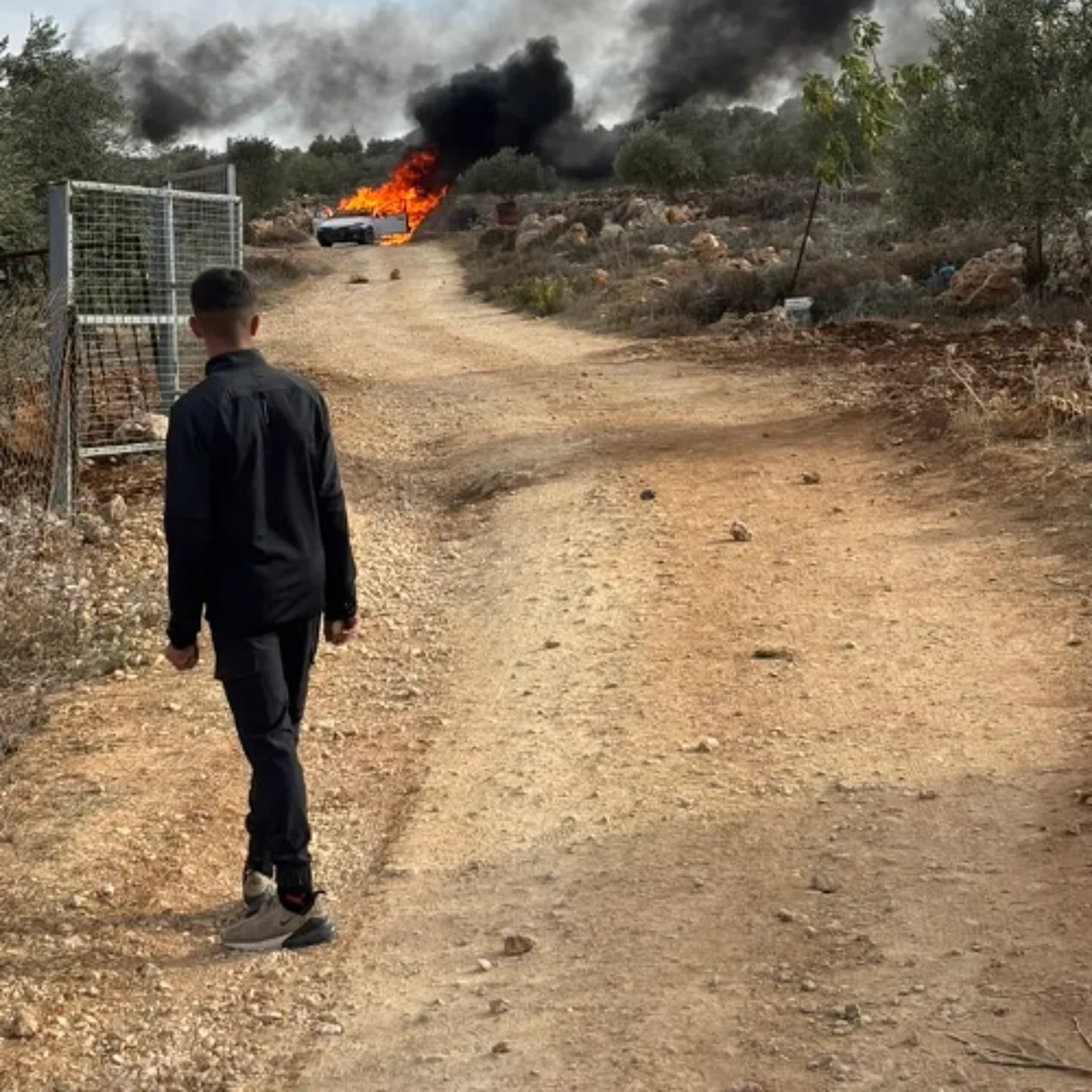
983 - The Killing Fields feat. Jasper Nathaniel (11/3/25)
Follow Jasper’s substack: https://substack.com/@infinitejaz
Follow Jasper on Twitter: https://x.com/infinite__jaz?lang=en
Follow Jasper on Insta: https://www.instagram.com/infinite_jaz/?hl=en
And links for Volunteering in the West Bank:
To volunteer in the West Bankhttps://palsolidarity.org/join-ism/https://www.defendpalestine.orghttps://cjnv.orgFundraiser for Umm Al-Khair as it faces impending demolition: https://secure.everyaction.com/LYmVAbNl2UOxgBcaP1mkFA2
Press play and read along
Transcript
Speaker 0 All I wanna be is ill jumbo.
Speaker 0 All I wanna be is ill jumble.
Speaker 0 We need a problems and pay slows.
Speaker 0 All I wanna be is ill
Speaker 1 All right, joining us now on the program is journalist Jasper Nathaniel, who is just recently back stateside after several weeks in doing reporting in the West Bank. Jasper, welcome back to the show.
Speaker 1 Thanks for having me back. I just want to begin with like
Speaker 1 this most recent reporting trip to the West Bank, because you've been many times before, but I want to talk about the timing of this recent trip.
Speaker 2 And could you describe the context based on your previous reporting and what you know that made it so important for you to travel to the west bank at the exact moment when the so-called ceasefire in gaza had been implemented yeah you know the the situation in the west bank uh has been spiraling for years um as we talked about last time as you guys know um you know it actually started before october 7th when smocherich pulled off this sort of remarkable bureaucratic coup to take over governance of the west bank and basically cleared away all the guardrails to let settlers fulfill all their messianic dreams.
Speaker 2 And after October 7th, it just continued to get worse as all eyes were on Gaza and the sort of breathless cover of October 7th.
Speaker 2 And at various times in the last two years, over the course of the genocide, when there have been
Speaker 2 you know, quiet moments in Gaza or, you know, ostensible ceasefires, pretty much without fail, every time the violence in the West Bank ticks up.
Speaker 2 And, you know, there's evidence that points to, in some cases, there's been like actual quid pro quos where Smochrich or Ben Gavir or some of these other right-wingers in the Knesset and in the cabinet agree to vote in support of a ceasefire or in support of sending in more aid to Gaza on the condition that like new outposts are legalized or some other policy is pushed through in the West Bank.
Speaker 2 And so actually when I when I planned this trip earlier this year, I didn't know that it was going to be right around the same time as the ceasefire.
Speaker 2 What I knew was that it was olive harvest season, which is historically a dangerous time in the West Bank because it's
Speaker 2 such an important meaningful time for Palestinians, both
Speaker 2 for their livelihood, because a lot of Palestinians in the West Bank make their living off of the olive harvest, but also because it's
Speaker 2 a perfect time for the settlers to go and terrorize the Palestinians in their olive field. So I was going really for that timing.
Speaker 2 And then it just so happened that the ceasefire and this prisoner exchange all happened right when I got there. And
Speaker 2 I don't,
Speaker 2 maybe I'm too close to it to know if the
Speaker 2 incredible spike in violence just in the last month in the West Bank was related to the ceasefire or just because of the olive harvest. But
Speaker 2 it should go without saying that, I mean, first of all, the 20-point peace plan or whatever Trump calls it makes no mention of the West Bank.
Speaker 2 It was in a previous draft and then it got stripped away from the one that was finally agreed to. Again, probably negotiated that way by Smotrich or Ben Gavir or maybe even Nenyahu himself.
Speaker 2 But
Speaker 2 it's just been on fire, basically.
Speaker 1 I mean, it would seem counterintuitive, like from
Speaker 1 most normal human perspectives, like to do what they did in Gaza and then to have that be like semi-officially brought to a close.
Speaker 1 You'd think that they would want to, I don't know, keep people's attention elsewhere. But like, as you've documented, it's just like they have, they've gone all in on the West Bank.
Speaker 1
Like it's just no stop. It's like no stop whatsoever.
Like, and if anything, they're using the technical pause of hostilities in Gaza to just ramp up their attacks on Palestinians in the West Bank.
Speaker 2 Yeah. And
Speaker 2 as I've said many, many times, like the, you know, Gaza is not, the land itself of Gaza is really not all that significant to
Speaker 2 the religious Zionists or,
Speaker 2 you know, certainly the settlers.
Speaker 2 They want the land because they want all the land and they want to ethnically cleanse the Palestinians out of it. But Gaza is not all that significant in the Old Testament.
Speaker 2
It was never like a home for the Jews, really. The West Bank, they call it Judea and Samaria.
It's where the
Speaker 2 ancient kingdoms of Israel are.
Speaker 2 And so that, you know, all things equal, the vast majority of the religious Zionists in Israel who are increasingly influential and powerful are much more concerned with
Speaker 2 taking the West Bank. Well,
Speaker 1 Jasper, your reporting on this most recent trip has garnered quite a bit of international attention and has caught on in the broader press because of your reporting regarding a settler attack on Palestinians in one of these olive harvests, which you
Speaker 1 have
Speaker 1 copious amounts of video footage of.
Speaker 1 I wanted you to talk about that incident because you tell us a little bit about what your trip was like in the in the days or weeks leading up to that incident. Like what who did you talk to? And
Speaker 1 what did you report on leading up to that incident?
Speaker 2 Yeah, my first stop was Umel Khair, which is in Masfri Yatta. It's a little Bedouin village in the South Hebron Hills.
Speaker 2 And if it sounds familiar, it's because this is where Auda Hathalin, who was an activist who was involved in No Other Lay on the documentary, he was a teacher and really just a beloved figure there.
Speaker 2 He was murdered on camera by a notorious settler named Yinan Levy.
Speaker 2 And, you know, in response, Levy, of course, never did a day in jail. And the
Speaker 2 19 villagers who were mostly family members of Audi Hathaleen were arrested and detained and tortured. And so it was, this place has been.
Speaker 2 tormented and you know it's a very small community and i can't overstate like how important of a figure outlines was and so when i went there um i mean, this place is, it's, it's grieving, it's mourning.
Speaker 2 And, you know, his presence is just everywhere. And he has three small children that are now running around without a father.
Speaker 2 And what's happened in the last two, three months since that murder is that settlers from an outpost up the hill have decided to, excuse me, from a settlement up the hill, a legal settlement called Carmel, built an outpost literally directly adjacent to the village.
Speaker 2 And there was some court proceedings and actually the locals, Palestinians were able to get a halt on the construction in the Israeli courts, but it didn't stop them, of course.
Speaker 2 And so while I was there, we were
Speaker 2 every single day, settlers from the settlement were coming down the hill and basically harassing us, harassing people, destroying property.
Speaker 2 There was one incident which just honestly,
Speaker 2 I don't want to say it cracked me up, but it was so absurd where basically I was watching Palestinian kids play soccer and I was filming it on and off because it was exciting. It was a soccer match.
Speaker 2 And as I was doing that, this basically huge crowd of settlers starts streaming down the hill into the outpost to like, I don't know, celebrate some Jewish holiday that even I'm not familiar with as a Jewish person.
Speaker 2 And so they are basically walking
Speaker 2 like directly next to the soccer field. And as it's happening, all of a sudden this settler with a huge gun starts screaming at me in Hebrew.
Speaker 2 and um he like waves over two soldiers and starts pointing at me and I was like oh shit what have I done and they they the the soldiers demand that I come to them and I look at the Palestinians next to me I'm like what should I do they're like go go you have to go talk to them so I do and um basically what had happened was the the settler with the gun accused me of filming his children um and the way he was saying it was like
Speaker 2 you know this very like accusing me of being a creep basically like this guy's filming our children
Speaker 3 did he think you had like a soccer fetish
Speaker 2 he knew exactly what was happening it was he was just like you know i i said i was like i was actually filming a soccer game and you guys walked right through it um
Speaker 2 and but it was just such a like perfect example of the way they are constantly putting their children on the front lines.
Speaker 2 I mean, in a lot of cases, it's the kids who are actually like going into the settlements and terrorizing people and causing violence and harassing.
Speaker 2 I think last time we spoke, Willie, you coined the term feral street urchins.
Speaker 2 But in this case, like this particular incident was not violent, but they were using their children to accuse me of wrongdoing.
Speaker 2 And I, you know, basically I got, they, they took my passport and like detained me very briefly and then I got off. But this town
Speaker 2 actually like four days ago
Speaker 2 was issued
Speaker 2 by the military demolition orders for basically the entire village.
Speaker 2 And so, again, like this place is grieving. And
Speaker 2 it's just, it's completely unambiguous what happened there. I mean, there was a murder.
Speaker 2 And I mean, it really just goes to show like the way Israel is treating even the most, or especially the most vulnerable communities in the West Bank. So that was like the first few days of my trip.
Speaker 1 Well, actually,
Speaker 1 before I get into something else you filmed on this recent trip there, could you just tell us a little bit more about the background of this murder?
Speaker 1 Like you mentioned who was killed, but like what were the circumstances surrounding this killing?
Speaker 2 So Yinan Levy is a notorious violent settler to the extent that when I traveled there last year, long before this murder, I was warned about him and I was shown his picture.
Speaker 2 And basically they said, you know, if you see settlers, you know, there's a protocol basically to avoid confrontation at all costs.
Speaker 2 But if you see him, go the other way because he carries a gun and he is, he will shoot you, basically. And so he's a known figure.
Speaker 2 Even actually Biden, in one of the like few good things that he did for the Palestinians, he sanctioned a number of violent settlers and Yanon Levy was actually one of them.
Speaker 2 Now, I don't know if it actually did anything, but
Speaker 2 he was sanctioned. Trump comes in and literally on his first day of office lifts the sanctions.
Speaker 2 Again, I'm not like implying there was a material impact here, but point being, this guy was well known to the authorities. Smocherich had armed him, given him
Speaker 2 weapons, night vision goggles, ATVs, just poured money into his outpost. And, you know, the way this guy is thought of by the right-wingers in Israel is basically like a Jewish pioneer.
Speaker 2 He's on the front lines, you know, finding new frontiers for the land of Israel, literally pushing the boundaries. And so in the case of this actual murder,
Speaker 2 this guy, Yinan Levi, he runs a construction company and
Speaker 2 he was uh commissioned i believe by the state um
Speaker 2 to build this outpost that ends up right next to umel khair so he was there with a bulldozer crew um
Speaker 2 and they drove the bulldozer right through the village cut their um i believe electricity and water um pipes and cables and a bunch of the villagers basically came out and confronted him and this part is all on video first the bulldozer swings around and knocks a guy out cold.
Speaker 2
This is one of Auda's cousins, I believe. And then you see Yinan Levy basically waving his gun around, shouting, and then he just starts shooting.
And
Speaker 2 he hits Auda Hathalen, who was standing about 100 feet away in the community center, holding his three-year-old child.
Speaker 2 And by the way, there's just kids everywhere in this community, and kills him. And after that happened,
Speaker 2 the police show up, the Israeli police, and there's a video of this too.
Speaker 2 Yinan Levi is basically seen smoking cigarettes and chatting with the police very casually and pointing out which Palestinians he wants arrested. And they all then get arrested.
Speaker 2 And the next day, you know, this Yinan Levy actually does get...
Speaker 2 He has to go to court for a day. He's immediately let off, but he's joined in court by several members of the Knesset.
Speaker 2 The major headlines in some papers in Israel say he survived an attempted lynching. And
Speaker 2 it was used by these sort of nefarious figures as
Speaker 2 justification for further arming the settlers there, for further supporting their endeavors to destroy this community. And that is what has played out since.
Speaker 2 And it's, it's, you know, this is a, in this instance, it was caught on camera, but this is the kind of thing that happens all over the West Bank every single day.
Speaker 2 And always, always, whenever there is any sort of a violent incident,
Speaker 2 regardless of who is hurt, they will then use it to say, you see, we need more security, we need more weapons, we need more presence there.
Speaker 2 And so literally the settler, the infamously violent settler murdering the famously peaceful father and teacher and activist, then it ends up being Chris for the mill for them to go and, you know,
Speaker 2 potentially demolish the village in the coming days. Well,
Speaker 1 another individual that these people require military protection from and violent vigilante justice to meet out on their behalf is a Palestinian grandmother who you filmed being brained with a club by one of these jackals in her olive orchard, in her olive field.
Speaker 1 And
Speaker 1 this is more or less what has caught on in
Speaker 1 the sort of mainstream press has had to deal with this because there's video of it. Now, you lay this out in a very good piece you wrote on your Substack called A Lynch Mob in the Olive Fields.
Speaker 2 But can you just give us like a sort of a minute-by-minute breakdown of what happened when you and others including this grandmother were attacked in this olive orchard so this is in a town called termasaya which is one of a handful of villages villages in the west bank which is actually predominantly made up of palestinian americans so the you know the the place i was just talking about um al-khair these are this is a bedouin community um they don't have much money their infrastructure is you know uh is is fragile to say the least termis Termis Aya, I mean, these people live in mansions, just to be frank.
Speaker 2 And
Speaker 2
the town is actually mostly built on the American economy because a lot of the men, well, they have businesses in the U.S. The farmer that I was with was an attorney.
He owned a family law practice.
Speaker 2
And then they come back to the West Bank with their children to raise them there. And so they go back and forth.
So the point is,
Speaker 2 These people are actually not accustomed to facing violence.
Speaker 2 They've They've been somewhat or relatively insulated from the violence of the occupation in a way that most other places in the West Bank have not. And, you know, these people also are
Speaker 2 nominally, you know, should be protected by the American embassy there. Now, in the last couple of years,
Speaker 2 violence has started to show up in these places. And it comes down to the fact that the settlers are basically setting their sights higher.
Speaker 2 I mean, they are now looking at these mansions and thinking, hey, you know, maybe we can, maybe we can live in those places.
Speaker 2 And so they're, they're now, you know, what they've been doing all over the West Bank for decades, they're now starting to do in these wealthier American communities, which is build outposts closer and closer to the village and basically creep in on them.
Speaker 2 So in this town, Termisia,
Speaker 2 Violence has been increasing in the last couple of years.
Speaker 2 Because of that, the farmers in the village all decided that this year, everybody was going to go out together in basically one caravan into their olive fields. And the olive fields basically
Speaker 2 are
Speaker 2 the buffer zone between
Speaker 2 two settlements, Shiloh and Adayad, and then the village itself.
Speaker 2 And then you've got the olive fields in between and the settlers have been building outposts there and basically preventing Palestinians from accessing their land.
Speaker 2 They're literally, this part just absolutely killed me when I saw it. The settlers are living in these beautiful farmhouses built by the villagers.
Speaker 2 We saw a settler like doing housework outside of a farmhouse that the guy who I was with had built.
Speaker 2
So anyway, we all decide to go out together. And, you know, I want to just mention that like in this particular town, it's not really principally about income.
I mean, certainly a lot of them
Speaker 2 make money from this, but it's more a matter of, number one, pride, but actually more importantly, they really see the olive fields as
Speaker 2 a place where if they don't maintain a foothold there, then the settlers are basically at their doorstep.
Speaker 2 And so, if they don't keep going out into the olive fields and showing some resistance to these violent settlers who are getting closer and closer, they're going to be in the village soon.
Speaker 2 And so, that's really the big reason why.
Speaker 1 It's not clear that the settlers understand these olive fields in exactly the same way.
Speaker 2 A hundred percent. A hundred percent.
Speaker 2 And they, you know, like it should be said that as much as they are, they sort of appear to be these like rogue maniacs, they're incredibly strategic in where they are building these outposts, how they are sort of creeping in.
Speaker 2 And so it's very clear to the people, particularly those who live like right on the olive fields, that...
Speaker 2
This is the land that they need to fight to keep or else they will be attacked in their homes next. And as you said, well, like the settlers know it too.
So anyway, we all decide to go out together.
Speaker 2 The day before we're supposed to go out, a farmer gets a little too brave and he goes out with his son and immediately he's attacked by settlers.
Speaker 2
He basically gets his face bashed in and gets his truck destroyed and manages to escape and had to get his face all stitched up. And we met him right after it happened.
And I mean, it was...
Speaker 2
very predictable, but also just incredibly ominous because, you know, it was just clear that the settlers are just waiting. They know what's coming.
And so the next day,
Speaker 2 October 19th, so just over two weeks ago, we all meet in the center of town at about 7.30, maybe like 40, 50 farmers in like eight or nine or 10, maybe 10 or 15 cars and trucks.
Speaker 2 And we start driving out into the olive fields. And within two or three minutes, we are stopped because there's a settler standing in the middle of the road,
Speaker 2 just brandishing a pistol
Speaker 2 and, you know, very clearly staring into cars and intimidating us. And, you know, it's effective.
Speaker 2 When it's, you know, you run into settlers all the time, but when a settler has a gun, then
Speaker 2
you don't challenge them. So immediately we turn around.
And I should say that I later.
Speaker 1 I would also say you wouldn't challenge them because given the reaction of the American embassy and American politicians, I don't think you could really count too heavily on the American state backing you up should you get shot by one of these maniacs.
Speaker 1 Yeah.
Speaker 2 And just to put a fine point on it, this town is made up of Americans. So we're talking about an Israeli settler who this guy is
Speaker 2
a known menace around Termis Ayah. He has been for years.
His name is Amishav Malt. He's the leader of the local outpost.
Speaker 2 A police officer told me that he shot a Palestinian a couple of years ago and had his gun taken away and he's apparently gotten it back.
Speaker 2
So this is an Israeli settler who has been terrorizing Americans day in, day out for years. And the U.S.
Embassy, of course, has done nothing.
Speaker 2
So on this particular day, he's talking on his cell phone. And as he's talking, we see other settlers start to sort of appear behind him.
So it's very clear that like
Speaker 2
they know we're there. And, you know, they're ready for it.
So we turn around, we try to go in another way. And this time we actually make it into the olive fields.
It's like a 20 or 30 minute drive,
Speaker 2
you know, across pretty rugged terrain to get into the olive fields. I'm with a farmer named Yasser Alcom, who is, like I said before, he's an attorney.
He speaks with a pretty much American accent.
Speaker 2 He's in his 60s, so he's not a young guy, and he's never been attacked before.
Speaker 2 He's much more like what you would expect in just like an old lawyer in California than he is like what you would expect to meet in Palestinian olive fields. So we go out together and
Speaker 2 his olive fields are pretty barren.
Speaker 2 It's possible that it's because settlers had already already got into the trees, but it's it's probably just it was a bad season because of the weather and climate change and whatnot.
Speaker 2 So we decide to leave and
Speaker 2 we turn around to leave in his car and the road that we came in on is now blocked by settlers. And
Speaker 2
Yasser says, okay, it's fine. There's, you know, we can just go the other way.
There's another road. So we go the other way.
And this time
Speaker 2 there is an army jeep blocking the road. Now we're at basically the bottom of a hill and the army Jeep is maybe 100 meters up on the top of the hill.
Speaker 2 And Yasser says, there's no way I'm driving towards that Jeep because famously, a Palestinian car driving towards a Israeli military Jeep is perfect justification for them to, you know, blast through your windshield with their M16.
Speaker 1 Real quick, though, a detail that comes out in your story is like, at that distance, how would a soldier tell what's a Palestinian car versus an Israeli car? Ah, well, interestingly enough,
Speaker 2 how would they
Speaker 2 differentiate the?
Speaker 1 Oh, right.
Speaker 1 Their license plates are literally different colors.
Speaker 2
Like, what is it, yellow or something? So they can see from a distance. Yeah.
Yes. Exactly.
So Israeli plates are yellow and we obviously don't have them.
Speaker 2 And so it's actually incredibly dangerous for us to drive up towards, I mean, because they were blocking the road. So we talk about it.
Speaker 2 And, you know, Yasser, even though we're both American, he's got brown skin and I don't.
Speaker 2 And so we decide like I will get out of the car with my hands up, walk towards them and, you know, ask them to help us basically. So that's what, that's what we do.
Speaker 2 So I get out, raise my hands, immediately they're aiming their guns at me, which I should say is just like standard procedure in the West Bank.
Speaker 2 And when I get close enough, I call out to them and I explain that
Speaker 2 I'm American and I just, we are trying to get out of the olive fields. We're trying to get back into the village of Termasiah, but we're blocked by settlers and we need help getting by them.
Speaker 2 And they sort of question me for a little bit. At one point, one of the soldiers says,
Speaker 2 do you have family here? And it's like very clear. He's asking, are you a real American or are you a Palestinian American? And
Speaker 2
finally, they just, they asked to see my passport. And then they say, okay, you know what? Get in the car and come up.
You're fine.
Speaker 2 So I'm thinking, okay, they're going to help us get out of the olive fields.
Speaker 2 And, you know, I think this is probably obvious, but the soldiers know that the settlers in the olive fields are attacking Palestinians every day.
Speaker 2 Like that's why they're, you know, that is like theoretically why they're there to prevent these violent confrontations. And I told them that.
Speaker 2
I said, we're trying to get out and we're being blocked by settlers. We need help.
So I get back in the car. We drive up the hill.
Speaker 2 As we get up towards the top of the hill, with the army jeep still there, I see right next to them is the settler with the gun, Amishov Malt.
Speaker 2
And he is on his ATV. And again, he's talking on his phone.
And on the other side of the army jeep, there's a Palestinian car that's been completely smashed.
Speaker 2 The windshield is shattered and at least one of the tires had been slashed. And then there's a couple of Palestinian workers standing outside of it.
Speaker 2
And it's very clear that like they've just been attacked. And now the settler is still lingering there.
And the military is there,
Speaker 2 I guess, separating them. So I...
Speaker 2 shout out the window and all this is recorded um in that substack piece that you mentioned well so i shout out i say are you going to move the settlers?
Speaker 2 And the soldier says, yes, yes, we're going to move them and then, you know, and then you can get by. And so we're like, okay, great.
Speaker 2 Right after he says that, the soldiers get back in the jeep and just speed off, just like jet away, like cartoonishly fast, leaving us alone with the settler with a gun, who, again, I later learned is a
Speaker 2 famously violent leader of the local outpost who is known to all of the Israeli authorities, including the military who's who's there.
Speaker 2 So now it is me and Yasser in his car, this other Palestinians in their damaged car, the settler with the gun who's talking on his phone on his ATV.
Speaker 2
He then, the settler, drives away in the same direction that the military went. And so we think, okay, maybe we're actually good.
So we start to drive back into the village.
Speaker 2 And then I realize the damaged car is
Speaker 2 struggling to get out because, you know, flat tires. And so I get out of the car and I tell Yasser, you go ahead and I'll catch up with you.
Speaker 2 I'm going to help basically try to push the car to the ridge of the hill so it can roll back down towards the village. So I get out of the car and I start pushing the car.
Speaker 2 This is about four minutes after the military and the sador left.
Speaker 2 As I'm pushing the car, suddenly huge rocks start raining down around me and I turn around and there is a just enormous mob of masked settlers wielding huge clubs coming over the ridge running towards us.
Speaker 2 And so
Speaker 2 I
Speaker 2 run for my life, basically. And
Speaker 2 I, you know,
Speaker 2 I was filming for some of it, which in hindsight, I probably would have put my phone away a little sooner. But I mean, I was shouting at them, American press, American press, which I will say
Speaker 2 in the past has actually slowed them down. We had an incident two days earlier in another town, Al-Masra al-Sharqia, where we were
Speaker 2
surrounded by settlers with huge metal rods. And I started shouting at them like, you all want to be in the American newspaper? And they sort of backed off.
In this case, I mean,
Speaker 2 I have since seen the video that somebody else took from across the olive fields. And it looks like a horde of zombies pouring over the hill.
Speaker 2 So I don't know if, you know, I doubt they could hear me or what. But basically,
Speaker 2 They chased me
Speaker 2 down the hill. I also also learned from watching video later that they dragged the Palestinian guy out of his car and he miraculously escaped and ran away as well.
Speaker 2 But basically, I run down the hill being chased by these guys. They're throwing rocks and
Speaker 2
it's just pure chaos at this point. They set the car on fire.
So now there's a car
Speaker 2 burning and exploding.
Speaker 2
A Palestinian fire truck appears or comes at some point. So there's sirens.
Point being like there's a very, very, very loud commotion.
Speaker 2 the soldiers cannot have gone too far in those four or five minutes um but of course the soldiers were nowhere to be seen so i get back down to yasser's car i get in the car and this
Speaker 2 settler um
Speaker 2 who had a huge club that was clearly like turned into a weapon. It's not a stick.
Speaker 1 It looks like a shale, like a shalely, like, like, like a stick with a knotted like fist on the end of it.
Speaker 2 Yeah, or like a golf club or something. and he um i mean he was basically like chasing me i mean we're we were in a foot race and um
Speaker 2 and i should say like a couple kilometers away from here is where uh a palestinian american named saifula musalet who was 20 years old was beaten to death by a mob of settlers exactly like this and i had just been reporting on that weeks earlier i was with his family when they were in washington dc trying to get justice so point being like i know these guys are not playing around.
Speaker 2 So I get into the car and the
Speaker 2 settler with the club smashes through our rear windshield.
Speaker 2 And we're stuck because there's like a log jam of Palestinian vehicles trying to get out.
Speaker 2
He smashes through our rear windshield. Both the officer and I think he's going to drag us out of the car or this mob is going to drag us out of the car.
And
Speaker 2 it could be bad. I mean, you know, there are dark thoughts going through both of our heads we later discussed.
Speaker 2 The settler then runs around the car and this is when we see um this woman standing under an olive tree maybe like 30 feet in front of us and he starts running towards her he throws a rock at her and i mean you can actually hear in the video like we see him running towards her and and both of us actually thought for all the terrible settler violence we've seen, we both thought like, he's not going to attack that woman.
Speaker 2 What kind of a like complete psychotic maniac clubs an older woman completely defenseless in a hijab standing under an olive tree and sure enough he goes and he um
Speaker 2 he knocks her unconscious his first blow knocks her out cold i watched her body go completely limp and then he stood over her and hit her twice more in the head with his club um
Speaker 2 it was the i mean it was the most heinous shocking act of violence I've ever witnessed in my entire life. And
Speaker 2 you got to remember, like, there's a hundred or dozens of settlers behind him too, running, clubbing cars, throwing rocks.
Speaker 2 The guy with the club then runs ahead and he clubs two international activists. And it's just pure chaos.
Speaker 2 Basically, what ends up happening is
Speaker 2 I get out of the car to help the older woman with what I, who I later learned with two members of her family who showed up. I think maybe grandchildren or nephews or something.
Speaker 2 And we help her into a car to get away. The settlers eventually retreat because they reach close enough to the village where there's now a crowd of Palestinians waiting there for them.
Speaker 2 And they, you know, apparently were not interested in actually facing off against like a crowd.
Speaker 2 They just wanted to, you know, club grandmothers or beat like independent journalists running by themselves. So
Speaker 2 it, the aftermath, I mean, it was like a, it looked like a war zone. I mean, there were people screaming,
Speaker 2 serious injuries. One of the activists was really, really, really badly hurt.
Speaker 2
Three or four, or maybe even five cars were on fire. And it was just pure chaos.
And I emphasize that because I just want to say that after this video starts to go viral
Speaker 2 and
Speaker 2 it starts getting reported on, I think BBC was like the first big publication to do a story on it.
Speaker 2 It included a response from the IDF, who of course denied my claim, which I had then made at that point, that the IDF lured us into the ambush, which I stand by a thousand percent but but they also claim that the idf showed up and dispersed the confrontation which is a categorical lie and it should come as no surprise that they would lie about it but like it is just like there it's not a stretch of the truth it just is a thing that didn't happen that they say happened so that was the sort of timeline of the attack itself um so uh as you mentioned like the this video has broken through but uh you said like you you you helped this this grandmother out what can you tell us about who she is And you indeed, you got to spend some time with her.
Speaker 1 She was in the ICU. Thankfully, she was
Speaker 1 discharged from the hospital, and you got to spend some time with her. What can you tell us about who she is and just like what her experience of life in the West Bank is like?
Speaker 1 Obviously, you know, colored by this recent attempted murder.
Speaker 2
She is much more like what you would imagine an olive picker in the West Bank would be. She's from a working class family.
They don't live in Termasia. They live in a neighboring town.
Speaker 2 And she was basically a hired worker who one of the landowners in Termasia had hired to help pick olives. And she was actually there with several members of her family.
Speaker 2 And so this is what she did every year. And it's not like the way you think about sort of day laborers in the U.S.
Speaker 2 It's, well, I'm not an expert on this, but in no way does it feel exploitative. Like it's a real sort of celebratory family affair when the workers and the landowners get together.
Speaker 2
They're all picking olives together. They're all breaking bread together.
And,
Speaker 2 you know, she doesn't speak a word of English. She
Speaker 2 has never, never been in the spotlight in any way. And she didn't ask for any of this, obviously.
Speaker 2 When I met her,
Speaker 2 she was...
Speaker 2
It was, I think, maybe five days after the attack. She had just gotten out of the hospital.
And, I mean, she was completely shell-shocked. And I mean, you could really see how badly injured she was.
Speaker 2 I mean, first of all, she has a brain injury.
Speaker 2 When you saw the video, I was a shot.
Speaker 1 It was amazing to me. She didn't die.
Speaker 2 Like, I mean, the true savagery of the violence is astonishing.
Speaker 1 Yeah.
Speaker 2 Yeah. No, it's really a miracle.
Speaker 2 She's incredibly
Speaker 2 battered and scared.
Speaker 3 But
Speaker 2 I think that she was starting to register that, you know, this had become sort of a worldwide event. And that's not...
Speaker 2 I don't, you know, I don't know her that well, obviously, but like, I don't think she thinks in that sort of a paradigm.
Speaker 2 Like, you know, she's, uh, she was there to pick olives, not to make a global statement.
Speaker 2 But I think that, you know, enough people had talked to her about it and she had seen the coverage that she was starting to realize
Speaker 2 this, you know, this has become a big deal. And, and by the end of our meeting, um, she was very sort of quiet and reserved at first.
Speaker 2
And I actually was feeling like, I think we're imposing and we should go. I was there with Yasser and actually the mayor of the town.
Um, and then she, uh,
Speaker 2
her, her like brother-in-law comes in and we start chatting and she loosens up a little bit. By the end of the meeting, she was smiling and actually laughing a little bit.
And,
Speaker 2 you know, we joked that maybe I would be her neighbor one day. And point is like,
Speaker 1 oh, so now they're okay with American Jews taking their land.
Speaker 2
Well, it's funny because the mayor of the town, the mayor told me that when Palestine is free, he's going to give me a pot of land. And I was like, oh, okay.
We actually have a word for that.
Speaker 2 It's called, it's called settling.
Speaker 2 So I'll just settle right in on your, on your land.
Speaker 2 But no, I mean, you know, the other thing I'll just say is like,
Speaker 2 I, I've been
Speaker 2 like,
Speaker 2
to be clear, as we've said, like, this happens every single day. There was actually nothing remarkable about that day except the fact that I was there to film it.
And so,
Speaker 2 and there's a lot, there are activists in the West Bank who are out here doing protective presence, documenting this stuff every single day.
Speaker 2 So like what, what I did and where I happen to be was not altogether unique, but the
Speaker 2 level of attention that this brought to the West Bank as a whole and to Termis Aya, I mean, the image was shown on the Senate floor.
Speaker 2
It was like covered all over the world. It actually became a huge story in Israel.
It was like one of the biggest stories in the country.
Speaker 2 And I think that, you know, some people from Israel actually have told me that it really like
Speaker 2 The image itself of, you know, a, frankly, a muscular man in a mask wearing, you know, the little Jewish, what's it called? Tsitzi or something. Felix, maybe you know? The little crowd.
Speaker 3 You mean Teas?
Speaker 2 No, not the little side worms, the things like by their waist.
Speaker 3 Oh,
Speaker 3 yeah, I don't know what the fuck those are.
Speaker 2 Those things, those little Jewish things.
Speaker 1 Well, Jasper, like,
Speaker 1 you bring that up, but like, I've seen a lot of reaction to this from people who have
Speaker 1 used the fact that the attacker was wearing a mask to say, aha. But like, how can you be so sure that was a Jewish settler?
Speaker 1 And like, and not, in fact, a Palestinian pretending to be or just like attacking one of their own?
Speaker 2 Your response. Your response to these allegations, sir?
Speaker 2 My response is
Speaker 2
it could have absolutely been a horde of 100 Palestinians attacking. No, I mean, of course not.
Like it's, it's just.
Speaker 2 And as I write in that piece, like, I actually ended up talking to, giving a police statement at the request of the people in Termasiah.
Speaker 2 I was like, not sure if I should do it or not, but they wanted it to be documented.
Speaker 2 and the police officer who was leading the investigation was questioning me if i had any proof that they were jews and i said to him like i look man i'm not going to play this game with you like we both know these are settlers obviously and and i actually have been like sort of tickled by how many uh of these like crazy zionist accounts on x have responded by saying these are arabs in disguise um but they're not they're settlers and we know it also because even the chief of police in the west bank who was ben gavir's personal personal bodyguard at one point, who's a right-wing nut job,
Speaker 2 like he, a text message that he sent to a group of officers was leaked where he said he was horrified by it and they must bring him to justice.
Speaker 2 So like it, it registered in Israel as a PR crisis that they then had to. find a way to clean up.
Speaker 2 I didn't hear any like legitimate Israeli authorities or media trying to claim that they were not settlers.
Speaker 3 That's, I feel like a new style of Hezbollah or a new style of Hezbollah communication where they say something that doesn't,
Speaker 3 it certainly is not going to sway anyone who's on the fence.
Speaker 3 One of the last few remaining American liberal Zionists who
Speaker 3 loves every war committed outside of Israel's borders, but is still ostensibly against settlements. It's too ridiculous and stupid to win them over.
Speaker 3 It certainly isn't going to sway anyone who is decidedly sympathetic to Belstonians,
Speaker 3 and it isn't particularly useful cover for them.
Speaker 3 More so, it seems like it's just these types of things that, or like the free press Starvation article, it's just sort of like a demonstration of how far are you willing to go?
Speaker 2 Yeah.
Speaker 3 How ridiculous are you willing to be? How much are you willing to just like ignore reality? To
Speaker 3 both show your dedication and to kind of like mock everyone who's disgusted by this, and especially the people this happened to.
Speaker 3 I mean, this entire thing, this entire thing was like looking into America in probably like five years. Because
Speaker 3 what you just said, what you said about this poor woman who is beaten horribly, like people, people have, people have been, you know, killed instantly by far less
Speaker 3 awful looking head injuries. But
Speaker 3 what you said about her not realizing until after the fact that it had become like this global media firestorm,
Speaker 3 that seems to be like a new universal trait in
Speaker 3 societies with a huge reactionary contingent like this, where
Speaker 3 the reactionaries are vicious and feral.
Speaker 3 But they're also calculated.
Speaker 3 And part of their part of their feeding process is thrusting some hapless individual into the public sphere, someone who never intended on being a public figure, doing something so terrible to them that they become a public figure and then digging into their past, embarrassing them further, making them relive the incident over and over and over again.
Speaker 3 This may be embarrassing for them, but they are also
Speaker 3 savoring her.
Speaker 3 the feeling of repeatedly violating her.
Speaker 1 And just like, sorry, just to add on to what you said, Felix, like how ludicrous these defenses or denials are, or like this new style of propaganda that Felix is talking about, is also about a demonstration of power.
Speaker 1 Because like the fact that like by voicing criticisms or like, I don't know, propaganda like this, it is embarrassing or should be embarrassing for the person doing it.
Speaker 1 But the fact that they feel so free to be able to do it is a demonstration of their own impunity that they're able to enjoy.
Speaker 1 And going off of that, like, could you talk a bit about your interactions with with representatives of the U.S.
Speaker 1 government when you're trying to bring attention to the savage assaults being carried out on American citizens? And
Speaker 1 what should be of concern, you think, to the embassy of the country it's happening in?
Speaker 2 Or the elected representatives?
Speaker 2 Yeah.
Speaker 2 I really got to hand it to Chuck Schumer. He really came through here.
Speaker 2 No, no.
Speaker 2 Well, maybe I'll start there.
Speaker 2 My mom, who is,
Speaker 2 you know, granted, she's she's moved further and further left in the last two years on this issue, but she is a sort of classic Jewish.
Speaker 1 A lot of moms have.
Speaker 2 Yeah, but she is a sort of classic New York Jewish liberal, watches MSNBC. She has voted for Chuck Schumer and Kristen Gillibrand for, you know,
Speaker 2 probably most of them, but she's probably not missed a vote for either of them. So
Speaker 2 I personally, like, I've made a video the night that it happened where I called on
Speaker 2 Schumer, Gillibrand, and Dan Goldman, who is my other representative. All three of them, of course, are in the bag with APAC, but I said to them,
Speaker 2
I'm still in Termasiah. I am back in the olive fields tomorrow, and I am in danger.
I am literally in danger. And by the way,
Speaker 2
I'm with lots of other Americans who are too. And I'm calling on you to make some calls.
Like call your friends in the Israeli government or in the military and tell them not to kill us.
Speaker 2
And my mom, and you know, they, of course, nobody responded. And these, this video was viewed like millions of times.
So it obviously like their staffers saw it.
Speaker 2 My mom has called their offices literally every single day, right before I got on with you guys. She called me and was like, I just shoot out Jill Brand's staff or block.
Speaker 2
So like they, they have just completely ignored. me and my mom.
And
Speaker 2 at Schumer's staff, at one point, like somebody got back to her and was like, we saw the video, we're horrified.
Speaker 2 We have have a meeting with Senator Schumer tomorrow to discuss it and we'll get back to you. And then they just never responded to her after that.
Speaker 2
As far as the U.S. Embassy, I actually did speak with them on the day of the attack.
Some guy reached out after seeing the video and
Speaker 2 he was
Speaker 2 just so horrified by what he saw. And he said to me, like,
Speaker 2
he was like, man, enough is enough. Like, this has got to stop.
And for a minute, I was maybe like dazed and naive enough to think like, oh, this guy wants to help me. And then
Speaker 2
he was like, I just have to have some internal meetings. Then I'll be back to you with next steps on like how to.
I'm going to run it by the Huckabee.
Speaker 2 Yeah. Yeah.
Speaker 3 So then he the next classic technique, the classic technique. I'll get back to you after this.
Speaker 2 Well, literally, the next text was like an hour later or something. And
Speaker 2 he was like, unfortunately, there's nothing we can do to protect you. It is the responsibility of the host nation to protect you.
Speaker 2 And I said, okay, just to be clear, like it was the military of the host nation that led me into this attack and that failed to protect me um and he says well that's how it's supposed to happen um and then he said like you know in nations where the host nation failed to protect americans we pull our embassy and then i said so are you pulling the embassy so are you pulling the embassy from israel and the next response actually which i have not talked about in hindsight it's hilarious i said so are you pulling the embassy from israel he responds please reach out to public affairs and gives me an email address for u.s embassy public Affairs.
Speaker 2 And then there was a time like, I mean, the thing is like this event, you know, the video was so shocking, but this was one of like 10 instances in three weeks when I was, you know,
Speaker 2 witnessing some sort of violence or in like acute danger.
Speaker 2 There was another incident maybe a week later where I was in a town called Duma where we were really, really surrounded and being threatened by very scary settlers.
Speaker 2 And I called the embassy and I reached out and they just completely ignored me. So
Speaker 2 yeah, I mean, the U.S. government
Speaker 2 left me to die and has left the Americans there to die. And again, I want to just emphasize right before this trip, I was in Washington, D.C.
Speaker 2 with the families of Palestinian Americans who are trying to get the U.S. government to acknowledge that their children have been murdered or abducted.
Speaker 2 I was also staying at the house of the 16-year-old Palestinian American kid, Mohamed Zaire Ibrahim, who is in Israeli military detention since February, and the government has done virtually nothing to help him.
Speaker 3 so it's like these towns these american towns uh really have just been completely abandoned by the u.s government to a degree that it's just like yeah out of all the instances of american citizens being brutalized murdered uh everything else in the west bank has there ever been an instance of the u.s government actually like putting pressure on anybody and it leading to an arrest or persecution or anything if you talk to the families, they all sort of say that like there were some people
Speaker 2
in the U.S. government that like sort of became their champions and their allies.
And they all ended up basically saying, actually, sorry, there's nothing we can do.
Speaker 2 I mean, just like the families that were in DC, it was the family of Rachel Corey, who was, you know, run over by an Israeli bulldozer in 2003 in Rafah in Gaza.
Speaker 2 It was the family of
Speaker 2 Aisenior, who was a Turkish-American, who was shot by an Israeli sniper, I think maybe a year or two ago.
Speaker 2 Family of Saifula Musalet, the 20-year-old who was beaten to death, the family of Taufik Abdel-Jabbar, who was killed by an Israeli sniper last year, and then the family of this kid, Mohamed Zaher Ibrahim.
Speaker 2 Not a single one of them
Speaker 2
did the U.S. investigate the crime.
In every single one, they deferred to Israel to investigate.
Speaker 1 Yeah, and the thing I wanted to bring up is that while you're over there, while this is going on, and like I think what you say about how like these families, like their initial point of contact will be someone in the U.S.
Speaker 1 government who sympathizes with them and wants to help them.
Speaker 1 But then like at some point on the chain of command or whatever, they just run into a wall and then they have to come back sheepishly and I think like quite nauseatingly and have to say like there's nothing I can do.
Speaker 1 In the killing of Shireen Abu Akla, just this week, we found out that the military police officer who was was assigned to investigate this killing, oh, he was assigned by his superior to basically do what he does.
Speaker 1 He's a military police officer to investigate this shooting.
Speaker 1 And he concluded that she was shot by an Israeli soldier, and there is no possible way that this shooting could have been anything other than intentional.
Speaker 1 It's just coming out now because that is a conclusion that he drew when he was assigned this investigation by a superior officer.
Speaker 1 But when he brought the results of that investigation to the superior officer, the superior officer bottled it and said, the Israeli military said it was an accident, and that's what we're going with.
Speaker 2 So he's like, And this was during Biden, this is Biden-Blinken, to be like, this is the Biden-Blinken State Department.
Speaker 1 And it was like,
Speaker 1 this is an American officer being assigned this investigation who has been being like basically completely shunted to the side in favor of the officers of a foreign military and what they say.
Speaker 1 And like this, this pattern, as you said, like happens over and over and over again.
Speaker 1 And this military police officer guy was quite rightly like terrified and like astounded that such a thing could happen. But yet it happens all the time.
Speaker 1 And then taken like as a whole, when you see all of these incidents, it just does seem that there is a ceiling on how much, on what any investigation can show or any fact that can be brought to light as it regards the
Speaker 1 brutalization and murder of Palestinians, be they American citizens or not, in the West Bank.
Speaker 2 Yeah, I mean, every time I go to the West Bank, there's like part of me, you know, I try to go with an open mind and think, you know, I, of course, I have my biases, but I like allow myself to be open to being surprised by something.
Speaker 2 And
Speaker 2 every time it just goes the other way, like in this particular case,
Speaker 2 I mean, this is just clearly my like American white privilege speaking, but like I was actually shocked that
Speaker 2
the embassy was like, fuck off. Like, I, I was like, are they really going to just leave me to die? There's no way.
I'm Jasper from New York. Like, they're not going to do that to me.
Speaker 2 And they just straight up, like, basically told me to go fuck myself. And actually,
Speaker 2 a contact that I have who worked in the State Department and knows Mike Huckabee personally texted him, sent him the video and said, Jasper is in danger and would like to speak to you.
Speaker 2 And he literally passed them off to the press office and then the press office declined to speak. So like they actually, you know, it's, it's like.
Speaker 2 on another level, I want to say, I don't even know if it's racist against Palestinians because I'm not Palestinian. Like it actually is just pure deference to Israel.
Speaker 2 I mean, they are literally allowed to kill Americans. And
Speaker 2 yeah, like, again, you know, people know this, but just experiencing it firsthand, it really, it actually still managed to shock me, which I guess is good that I'm still able to be surprised like a child.
Speaker 2 So that's nice. Yeah.
Speaker 3 I mean, that I always think about when Chuck Schumer said that
Speaker 3 when Trump said that Chuck Schumer is now Palestinian. You know, the famous firebrand Chuck Schumer, a founding member of Palestinian Islamic Jihad.
Speaker 3 I mean,
Speaker 3 Palestinian definitely is like a racial category for the Israelis,
Speaker 3 but it's also like, it's amorphous. You can become Palestinian just through sheer proximity.
Speaker 3 And that, like, anyone who gets brutalized by the Israeli military in the West Bank is a Palestinian by virtue of their blood spilling.
Speaker 2 And you also see it in
Speaker 2 the accounts by David Adler when he was arrested from the flotilla.
Speaker 2 He got special treatment
Speaker 2
for being a Jew who dared to challenge Israel. He got like a special humiliation, special abuse.
So
Speaker 2 in their eyes,
Speaker 2 you're even you're a traitor. You're a turncoat.
Speaker 2 And on some level, like it's even, I don't want to say it's worse because it's certainly certainly not worse than what the Palestinians go through, but it's a special kind of resentment that they have for you as a Jewish person or even just as a non-Palestinian if you dare to stand with them.
Speaker 3 Yeah.
Speaker 1 Jasper, there's another thing I have to ask you about in terms of like how this video has sort of caught on and like penetrated the veil of the mainstream press to a certain degree.
Speaker 1 It's even got, you know, a few senators are talking about it. And I think it's because of like how stark the just the simple image of like what it portrays is.
Speaker 1 So like there's really like, there's no denying it.
Speaker 1 There's no way around it there's no way to shade it however i gotta say did you i'm sure you saw the video of daniella weiss who's like the i don't know the crone in chief of the official like israeli settler movement uh a british journalist attempting to show her that video and her refusing to look at it my question is who keeps letting this woman give interviews with the foreign press like do they think that like she provides a sympathetic view of who they are and what their movement stands for and i guess my broader question is i know like you've dealt with these people, but have you ever like talked to one of these settlers?
Speaker 1 Like who the fuck are these people is my question.
Speaker 2 Well, in fairness to Danielle Weiss, who is known as the godfather, the godmother of the settlement movement. I mean, she was literally there in, I think, 67, if not 68, leading the charge.
Speaker 2
In fairness to her, she did say, I don't believe in videos. And she closed her eyes.
So she didn't actually have a chance to see it and respond to it.
Speaker 2
It's funny. I was actually just talking about this with my dad last night.
Like,
Speaker 2 it's hard to tell if she just like enjoys this role. I mean, she must just enjoy this role because
Speaker 2 that's what I mean.
Speaker 1 I think she does enjoy it. And it's the impunity with which she can just say, I don't believe in videos.
Speaker 2 Or like, I said,
Speaker 1 and the only violence that takes place in the West Bank is attacks on settlers and not vice versa.
Speaker 2 It's the impunity.
Speaker 1
And I have to talk to who wouldn't enjoy the ability to like just forthrightly. I mean, it's not even lying, really.
Like, I mean, like, obviously it is.
Speaker 2 Well, it's kind of like when your grandparents,
Speaker 2 yeah, when your grandparents get to a certain age and they just start saying whatever they think and it's like, grandma, come on, you can't say that they can kill kids.
Speaker 2 But, uh, but to answer your question, Will, like I have, um, been into a couple settlements, including some that are, are sort of like known as extremist settlements.
Speaker 2 And I've talked to lots of people. Um, I think maybe those days are over for me, but um,
Speaker 2 I mean,
Speaker 2 everybody that I have talked to in a settlement is just as racist and sort of,
Speaker 2 you know, maniacal and sociopathic as the rest. And they all have the same view that, you know, the Palestinians are, you know, terrorists who
Speaker 2 if they let their guard down for one second, they will come and kill them and kill their whole families.
Speaker 2 But, but
Speaker 2 They are not, they're a little, the ones I've talked to at least are savvier than Danielle Weiss and they will frame things in in terms of security and they all have like a handful of you know palestinian attacks that they reference as justification for every last thing they've done like for example the just unbelievable system of checkpoints and like bottling off communities a settler said to me um
Speaker 3 well
Speaker 2 If you think about it, if there's a terrorist in Nablus, Nablus is like a huge city, by the way, and there's 15 exits out of Nablus, and we shut it down to just one exit out of Nabilis, it's much harder for that terrorist to get out.
Speaker 2 And it's like completely lost on them that, I mean, you're, you're talking about a huge city of people that you have just shut in.
Speaker 2 So, you know, they're, they're a little bit more like, they talk kind of like just, I don't know, like right-wing Republic, far right-wing Republicans, but they all, in my experience, I mean, look, there's really no reason to become a settler unless you want to join the project of ethnic cleansing.
Speaker 2 Like there's actually plenty of space in Israel to live if you like really feel like you need to go live there, but you decide to move to the West Bank, A, because the government's going to give you subsidies and
Speaker 2 maybe even give you a house and pay you to do it. But because you believe in this project of turning
Speaker 2 the, you know, Judea and Samaria, as they call it, into just a Jewish territory that's part of Israel. And so they have different ways of saying it.
Speaker 2 Daniella Weiss is like particularly ghoulish in the way she talks about it, but I think that's more or less how all of them feel.
Speaker 1 Well, I mean, like, I want to use her as the example because, like, Per Felix's earlier point, like, it can't possibly be that they think
Speaker 1 that this makes them look good to an international audience. In fact, I think they know exactly the truth of it, which is that they come across just as ghoulish as they appear to be.
Speaker 1 But it's a demonstration of their power that they have that they get to decide what truth is, and they can do it so brazenly.
Speaker 2 But I also want to just add, Will, like, I actually much prefer interviewing a settler than than a like liberal Zionist who can tell
Speaker 2 because
Speaker 2 they are just they just come right out they know what they believe in
Speaker 2 yeah well they and they like frankly are real like adherents to the the early Zionist manifestos like they understand they you know they got the assignment and they're still doing it and you know they they have this line that they love to use which I think is like so interesting where they will say like if if the Jewish state, if the state of Israel was founded based on its claims to, you know, biblical and historical claims to the land itself, then our claims in East Jerusalem, in Samaria, in, you know, these various places in the West Bank are much stronger than any claims they have to Tel Aviv or Haifa or other places in Israel, which is 100% correct.
Speaker 2 It's 100% correct.
Speaker 2 And that is why, like, you know, when you open the box, when you open Pandora's box of an ethno-state that requires ethnic cleansing in order to maintain a Jewish majority, like you can't shut it.
Speaker 2 Now, the, you know, the settlers in the West Bank are just using the exact same language that the Zionists used for decades.
Speaker 2 And it's, you know, we talked about this last time, but it's why like archaeology has been so central to the state too, because the same archaeologists who in the 40s and 50s were, you know, uncovering evidence of ancient Israel in
Speaker 2
48 Israel just hopped right over the green line after 67 and were like, hey, look at this. It's even more Jewish over here.
And like, hey, like, they're in southern Syria and Lebanon.
Speaker 2
And like, everywhere they look, they're finding pottery shards with Hebrew letterings. So it just, you know, it goes on and on.
And that is sort of the Zionist project.
Speaker 3 Yeah, it's, I mean, it's kind of remote.
Speaker 3
We talked about this last time. We briefly touched on this.
How
Speaker 3 20, 30, 40 years ago,
Speaker 3 Zionist American organizations,
Speaker 3 APAC, the thing that Edward Bronthman was in charge of. I mean, actually, Edward Bronthman himself would repeatedly do this, where there was a comprehensive defense of every
Speaker 3 cross-borders Israeli military operation, as they would term it. But
Speaker 3 the occupation of the West Bank or settlements in general, in the case of Bronfman, were like crossing a red line.
Speaker 3 And it was, that was for the longest time, like the acceptable mainstream American position and the acceptable like Zionist American position.
Speaker 3 And it's just, it's shocking when you look at it how untenable it is.
Speaker 3 Because it is like, okay, so this 3,000-year-old endless like blood claim on the land, it ends right here.
Speaker 2 Yeah. Yeah.
Speaker 3 it it's like yeah it's like it is like trying to
Speaker 3 if like there was a John Anderson type candidate running in the third Reich
Speaker 3 it just doesn't it just does not
Speaker 3 I I'm surprised it held together for as long as it did but um
Speaker 3 going back to a little what you said about um Danielle Weiss, it is
Speaker 3 and the type of American that like lives in a settlement. It's so interesting because it is, that is like the highest form of of spite because it fucking sucks.
Speaker 2 It's terrible.
Speaker 1 You have to live in a fucking prison, basically.
Speaker 2 Have you seen what these settlements look like?
Speaker 1 It's like it's terrible.
Speaker 3 And then you compare it to like Barry Weiss or Ben Shapiro or anyone else.
Speaker 3 They don't even want to live in Tel Aviv.
Speaker 2 They want to be able to get away from the money.
Speaker 1 Yeah.
Speaker 3 Yeah.
Speaker 3 Yeah.
Speaker 3 Like Tel Aviv is too like gross and annoying for them.
Speaker 3 But like, yeah, these people, these people are taking like a, an absolute decimation of their average quality of life just out of like sheer racial animus and spite.
Speaker 1 It's like all the people that say that they're going to leave New York tomorrow when Zaran wins. Like, they all say they're going to move to Florida, not fucking Israel.
Speaker 2 Yeah.
Speaker 2 Well, you know, I will say, though, just to emphasize, like.
Speaker 2 The Israeli government is pouring just unbelievable, disproportionate amounts of funding from the taxpayer base into
Speaker 2
turning these settlements into beautiful, well-run cities. I mean, they're bringing 5G over there.
They're connecting highways. Like they really are going all out to make it a better place to live.
Speaker 2 But yeah, I mean,
Speaker 2 the settlers, you know, I try not to like generalize them too much, but in this sense, like you can generalize that, you know, you have chosen to be part of a project.
Speaker 2 In this project, you have chosen to live directly next to your enemy like why would you
Speaker 2 people that you claim all want to universe like kill you immediately yes and like it's just
Speaker 1 and like by the way and every day you're behaving in a way that makes it more likely that they will eventually do that and
Speaker 2 and and that's why that soccer story to me is like so perfect it's like man nobody asked your fucking kids to come walk through this palestinian soccer game like you could stay up there on top of the hill you could stay in israel but you decided to come over here to march your family right through this soccer game to be in the frame of the video that I was taking so that you could then play the victim and claim that, you know, I'm,
Speaker 2 you know, taking creepy pictures of your children, which then they will feed into the machine of villainizing the Palestinians and justifying, you know, demolishing their villages and basically just getting them out.
Speaker 1 Jasper, my last question for you is, like, do you expect there, like, do you you expect there to be any changes in policy towards the West Bank going forward?
Speaker 1 And I'm bringing this up in light of the fact that our current president, Donald Trump, when he is asked about it, does seem sort of tired of talking about it.
Speaker 1 And he's sort of waved it away in recent,
Speaker 1
when he's been asked by reporters, he said, like, they're not going to annex the West Bank. It's not a problem.
We've taken care of that.
Speaker 1 Like, Trump seems to be tired of talking about it or dealing with it and seems to be adamant that he's going to say no to Netanyahu's government and their attempts to further annex the West Bank.
Speaker 1 Do you place any credence in that, or do you just think like Rubio and the Huckabee are basically like they have their hand at the till of policy as it regards Israel and the West Bank?
Speaker 2 No, I do actually put credence in that specifically because
Speaker 2 for two reasons. One of them is because the UAE has basically threatened to withdraw from the Abraham Accords if Israel annexes the West Bank.
Speaker 2 And that was sort of the, you know, the crown jewel foreign policy achievement of Trump's first term.
Speaker 2 And he also is, you know, obviously deeply financially tangled up with like the Saudis and the Gulf states who all have sort of a political motivation to prevent a formal annexation.
Speaker 2 But the other thing is that there's a lot of people who believe, including myself, that Nenyahu himself does not want to formally annex the West Bank. Because once you do that,
Speaker 2 you have decided, you are now unilaterally saying this is part of Israel.
Speaker 2 And now you either have to give citizenship to the 3 million Palestinians there, which, you know, erodes at the Jewish majority, or you are just coming out and saying like this is an apartheid regime, which they deny because it's a military occupation there and it's not technically part of Israel.
Speaker 2 So I think they would much rather do what they're doing now, which is a de facto annexation, where they are just taking all the laws in Israel and systematically bringing them over into the West Bank.
Speaker 2 They are dismantling any sort of
Speaker 2 remnants of authority that the PA, the Palestinian Authority still has, and they are just making it like Israel and just, you know, further marginalizing the Palestinians there without having to deal with these thorny questions around, you know, citizenship and potentially harming normalization.
Speaker 2 So I think what they're doing now is sort of ideal for them. Just in terms of like, is anything going to change? I mean, this is like, I think about this all the time.
Speaker 2 When I'm in bed at night trying to solve the conflict of the Middle East.
Speaker 2
Like, same. It's, it's impossible.
It's impossible to, I mean, like my prognosis, like anybody who's spent time there or who watches the news is like incredibly bleak. There's so much momentum
Speaker 2 that is just in the, in the favor of Israel and the far right, despite the fact that the entire world is turning against them, like politically, diplomatically.
Speaker 2 Like there's nothing slowing the settler movement right now, really, except for,
Speaker 2 and I don't want to
Speaker 2 maybe I take that back, not except for, but one thing that is actually making a difference is activists and journalists and just people going into the West Bank and documenting what's happening.
Speaker 2 And I want to just like actually
Speaker 2 make a really clear call to action to people, if that's okay, that like Any Palestinian on the ground in the West Bank who is in a place that is under siege, which is the majority of the West Bank, will tell you that the more, frankly, like it sucks, but the more Westerners that are there that are documenting what's happening, that are just providing presence, like that is one of the only things that is slowing down the settlers.
Speaker 2 And, you know, it's so easy to feel completely powerless watching what's happening. I mean, with the genocide and with just with Israel's like, just, you know, rogue behavior, but it's, you can go.
Speaker 2
It's actually not that difficult. I mean, unless you're like, I think maybe Will and Felix, you guys might not be able to go at this point.
You may be on a list, but like most of your listeners,
Speaker 2 but, but like, you can pretty easily get into the West Bank.
Speaker 2 And there's lots of organizations,
Speaker 2 which maybe will, I can send you some after
Speaker 2
that you can like share links to them. But like it's not that hard to go.
And you don't necessarily have to like,
Speaker 2 you know, put yourself in the middle of a
Speaker 2
dangerous situation. There's other ways that you can just provide presence.
But the point is, like.
Speaker 2 The incident with the woman being clubbed on video, what it actually showed in my mind was that Israel is on some level still responsive to
Speaker 2 international outrage. Like they did actually the next day
Speaker 2 send the military out to protect the Palestinians, not out of a sincere care for them, obviously, but because they knew if there's another vicious attack on film, it's going to cause even more outrage.
Speaker 2 So do they have any idea
Speaker 1 who wielded the club? Has there been any arrests made?
Speaker 2 Well,
Speaker 2 there's been no arrests made. No, but I can't get into too much detail about this, but like I was actually
Speaker 2 contacted by
Speaker 2 a very high-level officer in an Israeli intelligence agency that actually shocked me when I got the call and asked me to speak with them.
Speaker 2 And I talked it over with my Palestinian friends, Palestinian lawyers, Israeli human rights lawyers, and they all said,
Speaker 2 you should talk to them, actually. So I went in and talked to them and
Speaker 2 I
Speaker 2 I told them, like,
Speaker 2 they basically both said to me, it was two guys, and they said what we saw was one of the most horrible things we've ever seen. They called it terrorism, which I was actually surprised to hear.
Speaker 2 And they said, like, we will hold them accountable. And I said to them,
Speaker 2 you guys are full of shit.
Speaker 2 Like, maybe the two of you on an individual level, like, see this video and are horrified by it. But, like, the system is not going to support you in this.
Speaker 2 What I ended up thinking, though, and I said this to them was basically like, I think it's possible. I think they are doing an investigation.
Speaker 2 And I think it's possible that they will find the guy who clubbed the woman and drag him in front of a judge and maybe give him some jail time to make sort of a symbolic token arrest to show that they did something.
Speaker 2 But what I made very clear to them was
Speaker 2
that's nothing. Like that, that counts for almost nothing if you don't dismantle this terror network in Termos Aya and beyond.
I mean, it's actually very straightforward what they need to do.
Speaker 2 They need to evict the hundreds or thousands of settlers that are living in the olive fields, in the farmhouses built by the Palestinians. They need to get them out and they need to keep them out.
Speaker 2 And they need to do that all across the West Bank, obviously, like even forgetting the fact that like the whole project is.
Speaker 2 illegal under an international law just if you focus on this one town i said to them like you know as well as i do this is not about one bad apple like this was first of all it was a mob second of all the military was involved so like there are things that you could do to dismantle this this whole thing.
Speaker 2
And they basically didn't respond to that part. So, I think the best case scenario is that maybe they make an arrest.
Maybe it has like some.
Speaker 2 I mean, listen, it would be good if that happened because, like, the people of Termasia are living in fear. Um, and maybe it would send some kind of a message.
Speaker 2 But, in terms of like the systemic rot that undergirds this whole thing, I mean, I've seen no indication that that is something that they're going to take on.
Speaker 3 I, I, I think that's a really important point to make. That, like, um, they still, as much as
Speaker 3 much impunity as they seem to have like they still do need they need this country to do
Speaker 3 everything
Speaker 3 and they are fucking terrified of the seismic shift that's occurred in public opinion obviously that hasn't manifested in policy change but um
Speaker 3 the the boomers aren't in great health you know they know that there is like a day what right
Speaker 3 um
Speaker 3 as for like uh me and will being on a list if we tried to go there do you think it would work if i went
Speaker 3 i changed my mind
Speaker 2 like i just showed it on i'm like whoops i was wrong hey guys i was don't listen to any of that stuff i said i was having a 12 year long mental breakdown i'm not there now there is a process whereby you can contact the canary mission and do a video where you recant all your public views and they will publicly
Speaker 2 i'm not even i'm not even kidding there's a page on the canary mission for people who have recanted their views and have been removed from the blacklist and added to the good list so feelings they're not even on there but you you could just like preact proactively make a video and get it out there and then i think you might be able to get it yeah that's it that's that is awesome that like literally spanish inquisition
Speaker 2 God,
Speaker 3 that.
Speaker 3 I need to watch the Apologies, Archety.
Speaker 3 I need to know the stories behind that.
Speaker 2 Like, geez. They're like hostage videos, but
Speaker 2 you can hold up today's newspaper and
Speaker 1 recant everything you've said over the last 10 years.
Speaker 2
I think it's good of them to show amnesty, frankly. So I'm going to personally give Canary Mission credit in this instance.
Thank you for that.
Speaker 2 And if I ever find myself there, I will have a video to you within 24 hours.
Speaker 2 Felix, I think we should do it.
Speaker 1 Let's go to Tel Aviv. Let's make Alia.
Speaker 1 Let's eat disco pizza. Let's go to a rave and you know, just like have fun for once.
Speaker 1 None of this sad, depressing shit.
Speaker 1
Let's dance in that weird, fucked-up way that they all do where they just sort of jump up and down. They're loving it.
They're having a great time.
Speaker 3 I love the jumping up and down dance. We would be the first people who bring Molly into the country that isn't 89% meth.
Speaker 2 It's a good business opportunity to
Speaker 1 think about all the babes we could pull once we once we get right with the state of Israel.
Speaker 2 Oh, actually,
Speaker 2 I need to just tell you guys one more thing, which is hilarious.
Speaker 2 A friend in the West Bank who will remain nameless, a Palestinian friend, is on Tinder. And
Speaker 2 the Tinder is unable to discriminate between settlers and Palestinians.
Speaker 2 And so swiping through it, it is literally like, it's actually like 90% settlers. And
Speaker 2 man, those projects. What are they listening to actually the hobbies section?
Speaker 2 To tell you the truth, it's actually like alarming how normal, like most them just look like normal Israelis.
Speaker 2 And every once in a while, you get like a complete psychopath who's like, you know, holding up a, like a bloody Palestinian flag or something. But it's just like
Speaker 2 everything about the situation in the West Bank is just so absurd and weird because of the settlements. But anyway, I think you two would do quite well over there on settlement Tinder.
Speaker 3 Do they have Settlement Raya?
Speaker 2 Settlement Raya?
Speaker 1 Yeah, yeah.
Speaker 1 Then you can get hooked up with Danielle Law Wise. You know, you got to have a certain level of celebrity to get on Settler Raya.
Speaker 3 Me and my 82-year-old wife are having a kid.
Speaker 3 That
Speaker 3 actually reminds me,
Speaker 3 we had a friend on Twitter. He's not on Twitter anymore, but
Speaker 3 we had a friend, Ali, from
Speaker 3 South Beirut
Speaker 3 several years ago on Twitter, and he actually
Speaker 3 he matched with like a an Israeli soldier who was like, you know, illegally in Golan Height.
Speaker 3 And like, obviously, you know, like, you know, called her a Nazi and everything.
Speaker 3 It's,
Speaker 3 yeah, I would guess that, like, the more urbane ones are on Tinder, and that accounts for them, for,
Speaker 3 you know, the underrepresentation of the Hills Have Eyes type settlers.
Speaker 3 It could be a cultural thing where the really scary ones, like, have all gone to like bumble or something.
Speaker 2 Yeah, that's actually it, Felix. The feral street urgents are on bumble
Speaker 2 because that way they can't message first, which is ideal over there.
Speaker 3 They're shy.
Speaker 2 All right. All right.
Speaker 1
Well, we'll leave it there for today. Jasper Nathaniel, thank you for your time.
Thank you for your reporting. And
Speaker 1 people should follow your sub stack
Speaker 1 if they're interested in the West Bank. Yeah.
Speaker 1 And we will include links to those calls to action that you made about possibly volunteering as sort of like an activist or some sort of
Speaker 1 Western presence in the West Bank to
Speaker 1 make the ongoing siege and ethnic cleansing maybe just a tad bit more problematic or difficult for the occupation forces and their
Speaker 1 sort of cutting edge of the feral Americans who move there to kill people and steal their homes.
Speaker 2 It also just feels good to, frankly, like get out of the U.S. culture war and remind yourself about the actual war where people are being killed and to be closer to it.
Speaker 2
But yeah, thank you guys for having me. I really appreciate it.
And I'll talk to you both soon. All right.
Speaker 2 Thanks, man.
Speaker 1 Cheers.