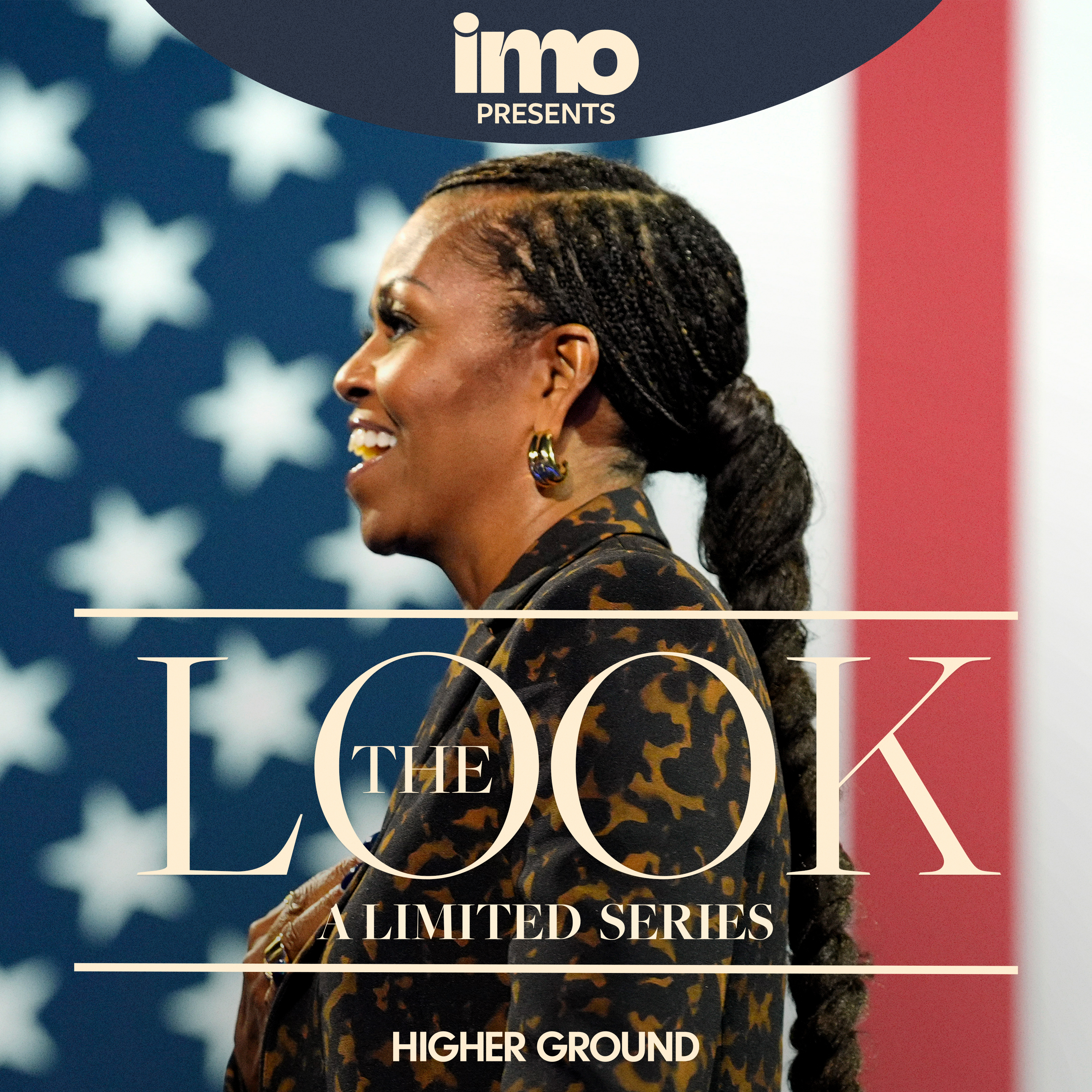
“Telling Myself That I Was Enough” with Conan O’Brien
Conan sits down with Michelle to talk about growing up feeling different and swap hard won lessons about relationships and marriage. Plus: Michelle tells stories of her White House travels, including an unexpected invitation from the Queen that ended in a solid gold room.
Find the episode transcript here: audible.com/tlp/episode3
See Privacy Policy at https://art19.com/privacy and California Privacy Notice at https://art19.com/privacy#do-not-sell-my-info.
Press play and read along
Transcript
Speaker 1 The light podcast is presented by Starbucks and Intuit.
Speaker 2 It is such a joy to be with you here tonight for this occasion.
Speaker 2
This is a joy. I'm going to tell you an interesting thing from my perspective.
I've played a lot of theaters. I'm used to it, I go someplace and everyone's excited to see me, okay?
Speaker 2 Everybody in the crowd's there because they wanted to see me. This is thanks, two people.
Speaker 2 Oh, my parents are here. That's great.
Speaker 2 This is different. This is a one one time, one-time occasion where nobody's here to see me and I could not be happier about that.
Speaker 2 I was getting my makeup done. They put some makeup on me because I'm the whitest man in America.
Speaker 2
And it's not a good thing. And they're putting makeup on me.
And the woman said, What do you think? And I said, No one's going to be looking at me tonight.
Speaker 2 And I was very happy to be right. I am thrilled and honored to be a part of this tonight for this incredible book, which really spoke to me, the light we carry.
Speaker 2 And who better to talk to about this book than the esteemed author? Let's get her out here.
Speaker 2 Ladies and gentlemen, Michelle LeBel.
Speaker 2 I'm a virtuous part
Speaker 2 and brace. I'm invincible.
Speaker 2 I'm a merciful.
Speaker 2 Woo!
Speaker 1 Conan, I am happy to see you. Thank you.
Speaker 3 Okay, that's
Speaker 2 we're up to three people right now.
Speaker 1
Hey, everyone. This is Michelle Obama, and welcome to the Light Podcast.
No matter how young or how old we are, there's probably something that leaves us feeling like we're out of place.
Speaker 1 Maybe it's the color of our skin or the shape of our nose. Maybe it's the accent we speak with or the way we worship.
Speaker 1 Maybe you're a strong-willed black girl who towers above her classmates, like me when I was in high school. Or maybe you're a gangly, fire-engine, red-haired jokester with unique dance moves.
Speaker 1 Which leads me to my friend Conan O'Brien.
Speaker 1 Look, I like to kid him, but there's no one better than Conan to talk with about a topic like this. He's not just funny, he's thoughtful and perceptive, and he has a huge heart.
Speaker 1 We've known each other for years now, and our friendship reflects that. When we get together, it's not just superficial small talk.
Speaker 1 I trust and respect his instincts about people and life generally, and I believe the feeling's mutual. That's why we're so comfortable being candid with one another.
Speaker 1
When we met up for this conversation, the weather was dreadful. It was dreary, cold, and pouring rain.
And yet, like he always does, Conan brought enough light to warm the entire theater.
Speaker 1 And I have a feeling you'll feel some of that too. So let's get started.
Speaker 2
This is an absolute joy. It's so nice to see you.
You make me happy every time I see you. I think you have that effect on people.
Speaker 2 We've had some dark times recently in the last couple of years. And
Speaker 2
you are doing your best, as you say, to get your light out there. And I think that's a noble thing.
And thank you very much for doing that.
Speaker 1 Thank you for sharing this experience with me.
Speaker 2 I told you, we were chatting a little before the show, and I revealed that this was a surprise to me, and it shouldn't have been, but I read the book, The Light We Carry, and there were so many things in the book that I could relate to.
Speaker 2 You know,
Speaker 2 what resonated with me is that you talk a lot about growing up feeling different, feeling other,
Speaker 2 and a lot of people would first maybe go to a race, but what you're talking about is beyond that, includes that, but goes beyond it because height was an issue for you.
Speaker 1 That was one of the first, you know,
Speaker 1 most people would think I would talk about race in this chapter of feeling different or feeling invisible, but I wanted to make sure that the definition of differentness was broad because so many people feel it.
Speaker 1 And the first time I felt it was because I grew up in a black community.
Speaker 1
I wasn't other in my home. And that didn't happen until I went away to college.
But I was the tall girl.
Speaker 1 And I don't know how many people are the tall girls in the world, right? So that whole thing, you grow up, nothing fits you. Clothes weren't made for you.
Speaker 1 Everything I spent my life tugging on my pant sleeve. You know, I tried to make sure because my parents never let me slouch because they were like, uh-uh, you know, sit up.
Speaker 1 So, and I took dance to make sure that I had decent posture. You know, my mom made all my clothes and it was just like, oh, Lord, please, let's not go to the Butterwick session.
Speaker 1
She was like, everything. She's like, oh, you don't, I can make that.
And I was like, mom, no, no.
Speaker 1
I just want to go to a department store and get the jeans with the tag, with the Gloria Vanderbilt label. I just desperately wanted to be like the girls I saw, the peppy cheerleaders.
And I use that.
Speaker 1 And you shared that you are a paper.
Speaker 3 I did too.
Speaker 2 I never had pants that fit me.
Speaker 3 At all.
Speaker 2 I can prove it because I had a friend who was an artist, and he did a sketch of me when I was in high school that I think they have. And it depicted me.
Speaker 2 This is long before I'm a famous person or anything.
Speaker 2 And he includes, my pants don't fit. My feet are way too big.
Speaker 1
Man, your feet. It was a mess.
Look at those feet.
Speaker 2 And also, when I was a kid growing up
Speaker 2 i had stop laughing when i
Speaker 2 we're here to lift people up and there i really think this crowd this crowd is bullying me right now i think
Speaker 2 but my um when i was a kid i was the only one in my family that had bright orange hair and my mother would cut it in a bowl
Speaker 2 and uh but it was just That business of going straight across the head. And so I
Speaker 2 hated having freckles.
Speaker 3 Yeah.
Speaker 1 And I hated having orange hair and I remembered seeing people on TV who had black hair you know piled up high like the guy on Hawaii 5-0 just I'd see people on TV and I'd go like that's how you're supposed to look not like this and that's you know one of the challenges in this world particularly in this country when there are such so few definitions of what it it can mean to be human, you know, and particularly in this country, we fall for it, you know we we fall for the okey-doke because if somebody can look the part and it's usually they're white they're male they're in a business suit
Speaker 1 they act like they have money and power
Speaker 1 and
Speaker 1 that is the definition of
Speaker 1 you know
Speaker 1 who who matters, who belongs, right?
Speaker 1
And I start with height because so many of us in this country feel othered. We feel different.
We don't see ourselves reflected anywhere.
Speaker 1 And I hear from young people who talk about feeling invisible because they don't see any signs of themselves anywhere in the world. And that is an eerie feeling.
Speaker 1 I first felt it when I went away to Princeton, where at the time when I went, not only were there a handful of black people, but there weren't many women.
Speaker 2 It was only, when you were there, it was only 12 years after.
Speaker 1 Only 12 years after Princeton had gone coed which is nothing so i had i had never been in an environment where there was no sign of me there were no black people on the walls there were no black people in the town i we walked around campus i was an oddity and that was the first time i realized there are whole parts of this country that don't even know i exist You know, they have never seen somebody like me.
Speaker 1
So no wonder they're crossing the street when a black coed co-ed comes down the street. They've never seen me before.
And so many of us are living in a world where we feel othered.
Speaker 1 That's why it's so important for us to tell our stories, to put more stories of mattering out there.
Speaker 1
I write about, you know, women now, we've got so many role models. You know, we've got Serena now out there.
I never knew, I didn't have a Serena to look up to.
Speaker 1
Somebody who was beautiful, strong, fast, outspoken. That wasn't a role model for me.
I write about Mindy Kaling now. Rewriting the whole story of who belongs in television.
Speaker 1 Allie Wong, who's one of my favorite comedians.
Speaker 1 All of those women, their representation is so important because one of my tools for being visible is that I have to stop measuring myself in other people's mirrors.
Speaker 1 You know, I have to get out of their mirrors and start, I had to start telling myself that I was enough.
Speaker 1 And I try to tell young kids this, you can't wait for somebody else to see you because just like at Princeton, they didn't even know I was there. They didn't even know to look for me.
Speaker 1 So I don't want kids waiting to get their visibility from somebody else. That starts in here.
Speaker 1 That's the work of redefining what matters. And my role model for doing that was my father, a man who had every reason to feel invisible.
Speaker 1
He was a black working-class man in segregated Chicago who had MS and walked with crutches. He had every reason to feel small in the world and feel unseen.
But my father carried himself with a light.
Speaker 1 a sense of pride and dignity. Even I tell the story of how sometimes my father would trip and fall.
Speaker 1 And there's nothing more frightening than to see the person who is feeding you literally fall to the ground, a grown man, and the vulnerability that you feel in that time.
Speaker 1 But my father, he learned, he would have to learn to laugh that off, get up, and keep moving.
Speaker 1 And so when I start feeling invisible, I think about the light that my father has demonstrated for me, the visibility that he's seen from within.
Speaker 1 And
Speaker 1
that has been a tool for me throughout my life. I have stopped waiting for people to see me.
I've stopped waiting for there to be a role model in order for me to see and appreciate myself.
Speaker 1
I have to change the definition of who matters. And that's why representation and storytelling is important.
Why do I write these books?
Speaker 1 I have thoughts in my head, but I think the more stories that I can tell about a little black girl from the south side of Chicago who is working class, there's gonna be some kid out there that's gonna see themselves in the way that I didn't have somebody to see.
Speaker 1 And it is important for us to put our stories out there. I want little girls like this little beautiful girl right there, yes you,
Speaker 1 yes you, to know that your story matters.
Speaker 1 That I see you with hair like mine and that beautiful smile and you belong and I want you to practice that message now every day
Speaker 1 so that you're not like me at 58 wondering am I good enough when I know I doggone am good enough
Speaker 4
Fashion is at the center of my life. I have been interested in fashion since junior high.
I had a teacher that used to call me Gloria Vanderbilt. I mean, I'm very committed.
Speaker 4 I would say that on a list of 10, it's it's nine.
Speaker 4
Okay, it's important to me. I have a hair care company encouraging women to accept their natural hair.
My mother relaxed my hair when I was seven years old, right?
Speaker 4 And so for the longest time, I didn't even know what my natural hair pattern was. I didn't know that it was as curly as it is.
Speaker 4 Making that transition, transitioning from relaxing my hair, straightening my hair, you know, holding to a European standard and embracing, you know, my natural curls.
Speaker 4 So in that process, there was a lot of learning. And so, you know, there was a time in the workplace where it wasn't acceptable to wear your hair in an afro or to wear braids.
Speaker 4 And I'm just happy that, you know, at this point in life, that we're at a time where a lot of African-American women are accepting their hair.
Speaker 4 And also, too, that we have legislation that gives us safe spaces in order for us to be our natural selves.
Speaker 1 We'll be right back with more of my discussion with Conan.
Speaker 2 You
Speaker 2 mentioned your mother.
Speaker 2 She's an incredible person.
Speaker 2 You and I did an event together,
Speaker 2 this is before COVID, and
Speaker 2 there was some situation where I found myself in a room with a bunch of people, and your mom's there, and she is the most serene person,
Speaker 2 completely, completely unaffected by
Speaker 3 your success. That's an understatement.
Speaker 2 Yeah, I mean,
Speaker 2 just this very Zen, yeah, this is what's happening, but such
Speaker 2 a, that is a testament, because I think it's very rare
Speaker 2 when you,
Speaker 2 in my career, I've seen many people who I've been close to go through the gauntlet of fame and the glare, and they change. A lot of people change, and some people don't.
Speaker 2 Some people are always themselves. And your mom seemed to be, she just, and she lived in the White House and just thought, well, I'd rather be at home, I guess.
Speaker 1
Oh, my God. And she wouldn't, you know, we'd have to beg her to partake in anything, to travel abroad.
You know, why would I want to go to China?
Speaker 1 Because it would be a cool trip.
Speaker 1 The only thing that would finally, and we'd play this dance all the time, you know, there's a big, because I would always try to travel, do a big trip with the girls, because I never pulled the girls out of school for anything.
Speaker 1
It was like, you are normal kids. This isn't about you.
Go to school.
Speaker 1 This, this security, they're only trying to protect you because you become a risk to the president if you get kidnapped nobody's thinking about you
Speaker 1 so I have that in I have that in me too it's like you're not special
Speaker 1 this is not about you this is about your father go to school
Speaker 1 but I would try to plan one trip in the summer right before camps and all that started and you know we've been to Venice we've been you know we've seen the Pope we've visited the queen who
Speaker 1 gave the kids a ride. This was off
Speaker 1 script too. I mean we went to London after our first visit and we just went for a regular trip and the queen, Her Majesty, heard that we were there and invited us over.
Speaker 1 Yeah, just like
Speaker 3 just come over. I've had that happen.
Speaker 1 She didn't call.
Speaker 1 But the people called the people and okay, we thought, okay, we're going to Buckingham Palace. This was after this visit
Speaker 1 this is how kind she was to our family so they they said just come by the Her Majesty wants you to just see the palace and nobody was there we walk in it's me the girls mom and Mama Kay who's the girl's godmother who's also a traveling companion and the queen showed us the gold room there is a gold room a room full of gold y'all
Speaker 1 everything in the palace was like this is what we were trying to do in the white house the rose garden our rose garden was like
Speaker 1 their rose garden we were in a buggy riding through the roses forever and i was like now this is a rose garden um
Speaker 1 she let the kids sit in her car um
Speaker 1 I mean, we were there for like an afternoon and then they set up tea for us. And here we're sitting just in some room in the palace.
Speaker 1
And who comes down to greet us but Her Majesty just with her purse in her house. I was like, you do carry that purse everywhere.
You wanted to be like, where are you going? You're at home.
Speaker 3 I've always wondered about that.
Speaker 2 Why?
Speaker 1
It's with her everywhere. She came down for a visit.
She had her purse. And I was like, I hear you.
Speaker 1 But anyway, I digress.
Speaker 1 Those were the kind of trips.
Speaker 3 Those are funny digressions. That was great.
Speaker 1 Those are the kind of trips that my mother would be like,
Speaker 3 you've seen one gold room. You've seen them all.
Speaker 1 So
Speaker 1 we went to Rome once, saw the Pope.
Speaker 1
I think she met two popes, right? So the last, one of the last trips we took was going. to Italy again, going to Venice.
So the question was, mom, do you want to come? Want to come to to Italy?
Speaker 1 I've been to Italy.
Speaker 1 Why would I want to go again?
Speaker 1 Because it'll be a re Venice is different than Rome.
Speaker 1 So usually she would only go because in the end I'd say the girls need you to go. Okay then, if the girls need me to go, then I'll go.
Speaker 3 I'm like, oh,
Speaker 2 lady.
Speaker 5 Get over yourself.
Speaker 1 But anyway, she is not in she's not impressed with me. She still, I say this, my brother,
Speaker 1 she still loves him more.
Speaker 1 She's still that mother that loves her son. She's like, I know you were first lady, but Craig is just,
Speaker 1 did you taste his wine?
Speaker 3 His wine?
Speaker 1 He had the best wine.
Speaker 3 And I was like, Ma,
Speaker 1 we live in the White House. His wine is not that good.
Speaker 1 I know it's not that good.
Speaker 2 Well, now we're getting to some stuff here. This is
Speaker 1 mothers and their sons. I am a victim.
Speaker 3 Uh-huh.
Speaker 1
So she kept us all grounded in the White House. And I have a chapter in there because I've always tried to get my mom to write a book.
And
Speaker 1
what do you think she would say? Nobody wants to hear what I have to say. I was like, yeah, Ma, they do.
They really do. You know, you have done a lot in this world.
My mom is one of seven.
Speaker 1 And this is in the time where I don't think people realized that women probably had postpartum. And now looking back and knowing my grandmother, I was like, my grandmother was depressed.
Speaker 1 We always just thought she was snobby, right?
Speaker 1 She was tired.
Speaker 1 But you did, especially as black people, you didn't recognize that.
Speaker 3 She...
Speaker 1 Her mother was very particular about things in the house.
Speaker 1 And my mom told the story of how they had this one glass dining room table in the living room, seven kids, and they were never allowed to touch the glass table, but they were forced to get dressed up whenever there was company and sit dressed up.
Speaker 1
They couldn't say a word. Kids were to be seen and not heard.
And my mother remembers just sitting for hours listening to adults talk. and thinking, these people are so stupid.
Speaker 1
They're not even saying anything. She said she remembers in her head that they're not even making sense, but she couldn't say anything.
And they couldn't touch the glass table.
Speaker 1 So they went years, never touching that glass table, seven kids, never broke until one day one of her mother's friends came over, sat on the table, and broke it.
Speaker 1 And my mother cracks up about that story. She's like, We just laughed and laughed and laughed about it.
Speaker 1 But my mother decided then and there that she wasn't gonna raise her kids to be seen and not heard my mother was able to parent in a way that was the opposite of what she saw and I think a lot of people who don't have a certain thing we question if we didn't have a dad or we didn't have a mother that saw us or we didn't live in a perfect household that how can we parent with what we don't have My mother and father, both who had interesting relationships with their parents, they did the opposite of what they wanted you know and that's another tool it's like you can learn from the brokenness you know you can learn about what you don't want to do my parents were brilliant parents they didn't come from brilliant parents but they worked hard to do the opposite of what was done to them so I think we all have the ability with the right set of tools to grow beyond what we've ever seen.
Speaker 1 And, you know, I want I want people people to embrace that. I want parents particularly to understand that you don't have to have stuff to be a good parent.
Speaker 1 You know, don't break your neck trying to, and I know kids are like, don't tell them that.
Speaker 3 Don't
Speaker 1
helicopter them and do not give them a lot of stuff. If you give them your love and gladness, that's all that they need.
That's all that they need, even if they say they want more.
Speaker 3 My name is Marion Robinson and I am Michelle's mother. She was definitely the person that she is now from the day that I met her.
Speaker 3
She was very tenacious and hardworking and she always wanted everything perfect. The story I tell about Michelle is one she hates.
She had a coloring book like all little children have.
Speaker 3 And when my husband and I looked at her coloring book, we saw that each page that had a little mark outside the line was scribbled on. And she moved on to another picture to color.
Speaker 3
It had to be perfect. And that was when she was very little, maybe three, three years old.
And my husband and I asked each other, did you tell her to do that?
Speaker 3
And both of us said, I didn't ask her to do that. That's crazy.
She did homework over and over again.
Speaker 3
Sometimes I would even have to ask her to please put that pencil and paper down and relax. And she did the same thing when she took piano lessons.
She just kept playing the song over and over again.
Speaker 3 So that was just her.
Speaker 1 We'll be right back with more of my discussion with Conan.
Speaker 2 You talk about how
Speaker 2 you witnessed when you met
Speaker 2 the president, President Obama, when you met him for the first time and you met his family, that his family dynamic was different from yours.
Speaker 2 They were huggers. Is that right?
Speaker 1 It was, you know, hugs and I love you and I miss you and I, you know, we didn't do that in our house.
Speaker 2 You know, and I relate to your story.
Speaker 3 Yeah.
Speaker 1 But if you know, I have a whole chapter on partnering well because that's a big question that I get from young couples, especially young women. How you find a man? How'd you do that?
Speaker 1
And they see us and they're like, hashtag couples goals. They see me and Barack, and it's like we all look all hugged up all the time.
And,
Speaker 1 you know, and we are, I love him. That's my boo.
Speaker 1 But I share that chapter because I see two,
Speaker 1 first of all, we don't talk enough about the real of marriage, you know, so you got a lot of young people who don't know how to pick partners, don't know why they're getting married, don't know what marriage is and how hard it is because nobody ever shares the truth of it.
Speaker 1 But one of the things that makes marriage hard is that you're trying to pool two lives together, two different temperaments, two different ways of being.
Speaker 1
And like you said, Barack grew up in Hawaii. His mother lived abroad, worked abroad.
So they would see each other once a year, you know? And so I always said he learned to love at a distance.
Speaker 1 And when you're loving at a distance, the words matter, right? I mean, that's all you have are the words, the letters and, you know, and hugs. And you've got to get it all in right there,
Speaker 1
right here and now. I grew up the exact opposite.
I grew up on the south side with everybody
Speaker 1 I've ever known within seven blocks of each other. You know, we, we, me and my family lived above my great aunt.
Speaker 1 We lived around the corner from my mother's mother, the woman I told you about, who was kind of, she, of course, they separated from my grandfather, who was our favorite.
Speaker 1
He lived around the corner from her, you know, with another aunt. My father's parents lived maybe 10 blocks away.
We saw each other all the time.
Speaker 1
And you celebrated everybody's birthday, seven kids, all these grandkids. There was a birthday every weekend, you know.
We were just like, I don't need to hug you because I'll see you tomorrow, right?
Speaker 1 So that's a different way of showing affection. And when you merge those two ways of being, there's a whole lot of compromise that has to happen around how you interact.
Speaker 1
And it takes work to figure out the balance of how do I get what I need and how does he get what he needs. That's why there's no such thing as 50-50.
I've never experienced 50-50 in my marriage.
Speaker 1 Right.
Speaker 1 You know, and this, I don't want to have to compromise. And it's like, well, then you want to live by yourself, which is fine.
Speaker 3 You know,
Speaker 1 that is a worthwhile ambition. I don't want my daughters to feel like marriage is the only option for them to be happy.
Speaker 1 You You know, if they choose to be married, then I want them to do the work to be whole individuals so that they know what they want and they know how to look for another whole individual to come to the table with.
Speaker 1 But I think there are a lot of young girls in particular who just dream of the wedding. You know, they spend more time with on Pinterest with the wish books and the everybody knows the third dress.
Speaker 1 now everybody wears three dresses it's not just one you got to have the wedding dress the reception dress and then the after-party dress
Speaker 1 and then you got the pre-engagement and the bachelorette thing and before you know it you've spent a hundred thousand dollars and you don't even know that dude
Speaker 1 because guess what young couples don't do they don't talk because everybody's trying to not look thirsty I've talked to too many young women who have been dating dudes they don't even know, and they're they're not asking questions like, What's your family like?
Speaker 1
How do they show love? Little things. And I was like, Why don't you know that? What's his mother's name? You don't know his mother's name? You guys have been talking.
Does he have a mother?
Speaker 1 Why didn't you ask him if he has a mother? That's going to tell you something.
Speaker 3 Well, I don't want to look thirsty.
Speaker 1 And it's like the thing that I say is that real love is nothing but thirsty.
Speaker 3 Barack,
Speaker 1 I knew Barack was the right one because he wasn't playing any games. He wasn't trying to pretend like we were dating but weren't, you know.
Speaker 1
He wasn't trying to relabel something. I could count on him to call me back.
I'm like, if dude's not even calling you back, don't bother. Move on to the next one.
Speaker 1
The guy you should marry should call you you back. He should do what he says.
Same thing for women. If she's playing games, move on.
You know, you can't enter a relationship in game playing mode.
Speaker 1
You can't enter marriage playing a game. You know, you have to know who you're dating.
And too many young people are out here playing it casual
Speaker 1 until they get married and they've never practiced not casual.
Speaker 1 And then it gets hard.
Speaker 3 Yeah.
Speaker 1 And they want to quit. And it's like, but it's just been two years.
Speaker 1 But if you can't get through those rough times, and that's, that is all marriage guarantees you is uncertainty and difficulty, right?
Speaker 1 There is no happily all the time.
Speaker 1
It is impossible. So I don't want young people to quit.
First of all, I want them to think harder before they do marry. And then once you're in there, if you're with somebody you like and respect
Speaker 1 and it's just hard, you don't divorce that. You work on that, you work through that to get to the other side of that.
Speaker 1 Because let me tell you, if you think the grass is greener, as my mom would always say, Every man, you're gonna leave him and go to, and he's gonna have the same issues.
Speaker 1 You're just gonna get readjusted to that. I tell the story of my mom, mom, in becoming of how she would go through, she told me this.
Speaker 1 She would go through a period every spring when we were little little where she would think about leaving my dad.
Speaker 1 And it was like it would be right around spring, and she'd do her spring crelining and open up the windows and let the fresh air in.
Speaker 1 And she's thinking, this is the time I'm going to leave your father.
Speaker 1 She tells me this later, and I'm like, what?
Speaker 1 And she said, and I would play that out in my mind and think,
Speaker 1 no,
Speaker 1
you know, I love this man. I love this life.
It was like she did an annual recommitment to
Speaker 1 through herself unbeknownst to my father. Thank God.
Speaker 2 He had no idea.
Speaker 3
He had no idea. He's hanging by a thread.
That's right.
Speaker 1 But I think we have to, you know, we have to share more the reel of marriage so that young people, you know,
Speaker 1 don't run away when it gets hard. And I think some women feel like they have to settle for casual, right? Because of the, you know, the numbers game, right? I know for black women,
Speaker 1 you know, you start doing the math if you're looking for your black king, right?
Speaker 1 And the numbers are low, and our numbers are high. I see too many women who are settling for less and less and less, you know.
Speaker 1
And I know all the men out here, I'm about to tell them, don't do it. Keep your bar high.
You know, I mean,
Speaker 1 be okay with being alone if that's what has to be.
Speaker 1 I mean, I wish people find love, but I have seen too many people in bad relationships, and that's some of the loneliest feeling you can be is to be with somebody that doesn't love you the way you deserve to be loved.
Speaker 1 So
Speaker 2 I think I speak for everybody here.
Speaker 2
I've been, talk about thirsty, I've been so thirsty for optimism. I've been really thirsty for optimism and I'm very tired.
We talked about this.
Speaker 2 We have a news cycle that's run by an algorithm that's constantly telling us it's all over. We're done.
Speaker 1
Every year is worse than the next one. This is the worst year ever.
Yeah. And then the next year is the worst year ever.
Speaker 2 And
Speaker 2 I find it, and I think it really gets to these young people. I think it gets
Speaker 2 because my perspective is different. My perspective is there's so much good and there's so much positivity and there's so many.
Speaker 2 I mean, I'm really impressed with the young people I meet.
Speaker 3 And I think...
Speaker 1 I am too.
Speaker 2 But I think what you're doing, you earned the right a long time ago to, if you wanted to, just say, I'm going to sit at home and watch Netflix.
Speaker 2 You know, you know,
Speaker 2
you earned that right a long time ago. You did your part, but you're still out here and you're exposing your frailty and your vulnerability.
And that is a brave thing to do.
Speaker 2 And it's an amazing gift you're giving people. So on behalf of everybody here, thank you very much.
Speaker 2 Ladies and gentlemen, Michelle Obama!
Speaker 2 Thank you.
Speaker 3 When I wake up in the morning, love.
Speaker 1
Being in a relationship isn't easy. It takes work, real work.
to find any semblance of success or stability. And the truth is, being single isn't easy either.
Speaker 1 You're always wondering where or when you might meet that special someone. You're getting all those questions from parents and aunties about when you're going to couple up.
Speaker 1 And don't get me started on the apps and texting and sliding into people's DMs.
Speaker 1 So all I can say is that whether you're in a relationship right now or not,
Speaker 1 You deserve someone who treats you with a baseline of dignity and respect.
Speaker 1 That's the foundation that has to exist before you can start diving deeper into your own vulnerabilities and intertwining your lives and ultimately leaning on one another in a way that can be truly beautiful.
Speaker 1 And really, that gets back to this idea of belonging that Conan and I also talked about.
Speaker 1 A lot of us are hoping to find not just a partner who makes us feel understood and accepted, but also others who welcome us with open arms, family, friends, colleagues, and yes, even a talk show host.
Speaker 1 I'm so grateful to explore all of that and more with Conan.
Speaker 1 Thanks again for listening. Talk to you again soon.
Speaker 1 And the world's all right, Wendy.
Speaker 5 This has been a Higher Ground and Audible Original. Produced by Higher Ground and Little Everywhere.
Speaker 5 Executive produced by Dan Fearman and Mukta Mohan for Higher Ground and Jane Marie for Little Everywhere. Audible executive producers Zola Mashariki and Nick D'Angelo.
Speaker 5
Audible co-producers Keith Wooten and Glenn Pogue. Produced by Mike Richter.
With additional production by Joyce Sanford, Dan Gallucci, Nancy Golumbiski, and Lisa Polak.
Speaker 5 Production support by Andrew Epin, Jenna Levin, Julia Murray, and Colin McNulty. Location recording by Jodi Elf.
Speaker 5 Special thanks to Melissa Winter, Jill Van Locheren, Crystal Carson, Alex Mae-Seely, Haley Ewing, Marone Haile Meskel, Sierra Tyler, Carl Ray, and Jerry Radway, Meredith Coop, Sarah Corbett, Tyler Lechtenberg, and Usra Najum.
Speaker 5
The theme song is Unstoppable by Sia. The closing song is Lovely Day by Bill Withers.
Audible Head of U.S. Content Rachel Giyatza.
Head of Audible Studios Zola Mashariki.
Speaker 5
Copyright 2023 by Higher Ground Audio LLC. Sound recording copyright 2023 by Higher Ground Audio LLC.
Voiceover by Novina Carmel.
Speaker 5 This episode was recorded live at the Masonic Auditorium in San Francisco.
Speaker 5 doubtless,
Speaker 5 double,
Speaker 5 daughter,
Speaker 5 daughter,
Speaker 5 daughter,
Speaker 5 that body looked good.