Episode 388 - The Siege of Kars
https://www.patreon.com/lionsledbydonkeys
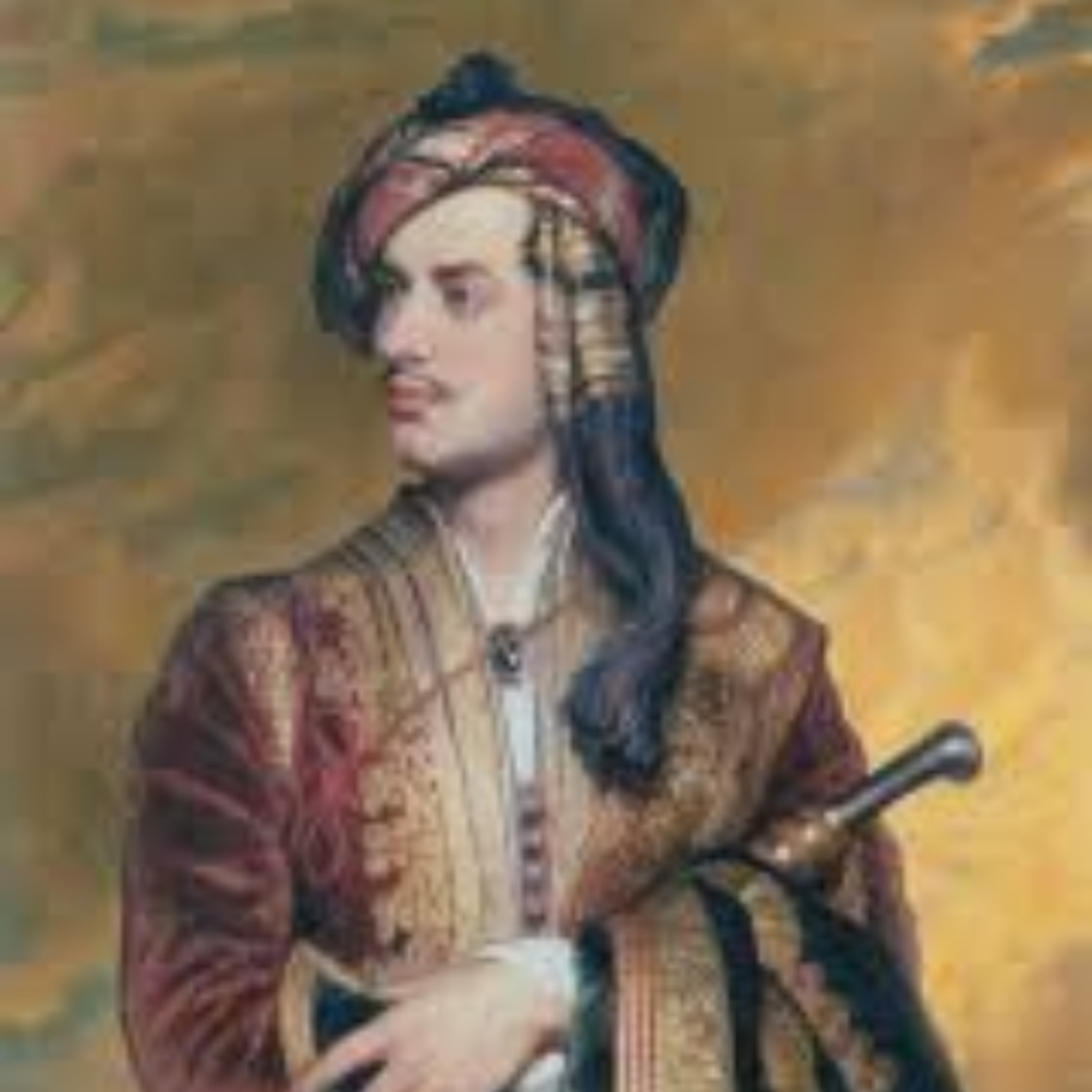
Towards the end of the Crimean War the Russians invade the Ottoman Empire, coming up against the Fortress City of Kars. Command of the Ottoman forces fall to an old drunk, British man who may or may not be the bastard child of Prince Edward, all of the Turkish officers under him are actually Hungarian, and one American catholic.
Sources:
Winifred Baumgart. The Crimean War: 1853-1856
Raugh Harold. The Victorians at War: 1815-1914
Humphrey Sandwith. The Siege of Kars 1856
William Edward David Allen, Paul Muratoff. Caucasian Battlefields: The History of the Wars of the Turco-Caucasian Border 1828-1921
Press play and read along
Transcript
Speaker 1 Hey everyone, it's Joe. If you like what we do here on the show, consider supporting us on Patreon.
Speaker 1 Just $5 a month gets you access to our entire bonus episode catalog, as well as every regular episode, one full week early.
Speaker 1 Access to all of our side series that are currently ongoing and our back catalog of those as well. Gets you e-books, audiobooks, first dibs on live show tickets and merchandise when they're available.
Speaker 1 And also gets you access to our Discord, which has turned into a lovely little community.
Speaker 1 So go to patreon.com/slash lionsled by donkeys and join the Legion of the Old Crow today.
Speaker 1
Hello and welcome to the Lines of My Donkeys podcast. I'm Joe and with me is Tom.
We are the legal representation for the proposed TV pilot, Midwest One Piece.
Speaker 1 We're responding to multiple lawsuits on behalf of Disney, Shona Jump, Goku, and Purdue Pharmaceuticals. We made claims that Goku, as his day job, operates as an assassin.
Speaker 1 We understand this now to not be true, and he has never once been fined by the Dutch police for illegally parking his Nimbus cloud.
Speaker 1 We also understand that One Piece is the property of Shona Jump, mm, Ijira Oda. And as far as we know, Disney has never once cut off anybody's hands for IP theft.
Speaker 1 Furthermore, we would like to apologize to Purdue Pharmaceuticals for the assumption that, even in a post-apocalyptic version of Michigan, that there would only be one loose OxyPill on the market.
Speaker 1 How you doing, buddy?
Speaker 2 I'm doing good. I like that even in the post-apocalypse, the Sackler family have
Speaker 2 still have robust supply chain economics for the OxyContin supply specifically for Detroit. It's kind of like that thing in, you know,
Speaker 2 Children of Men where the joke is like, what if the rest of the world is normal? Britain just chose to be like that.
Speaker 2 It's like, in the post-apocalypse, like the Detroit is like the bullet farm for oxies.
Speaker 1 That was the most realistic lawsuit I could think of is Purdue Pharmaceuticals being really mad that we would claim that even when the world ended, they wouldn't be able to crank out oxy pills yeah and morton joe is just like do not become addicted to pain relief
Speaker 1 getting a legal notice from go
Speaker 1 i have never once had a a traffic citation i'll have you know
Speaker 1 though i i i still firmly believe disney has cut off at least one person's hand Oh, definitely.
Speaker 2 It's like the whole thing with Disney that like nobody has died in the park because there's tunnels underneath to cart the body out. So it's like pronounced dead off the grounds.
Speaker 1 I believe that it is standard. Like, why do you think all Disney characters have those big gloved hands? Their original ones are cut off and they're replaced with the giant gloved hand.
Speaker 2
Oh, what's the name? Cast members. That's the people in the costumes.
When the cast members take the costume off, the hands are just the same.
Speaker 1 It's the cost of giving fealty to the mouse.
Speaker 1 Now, we had so much fun talking about a different siege this month that I figured, why not talk about another one?
Speaker 1 Because if there's one thing we love on the show, it's sitting behind a wall, debating with our friends over whether we'll be killed via shitting ourselves to death or catching a cannonball to the head, only to have that cannonball comically replace our heads and then us dance around in pain as our hands reach up and touch our new, confused, cannonball head, while all of our friends point and laugh and say shit like, oh, wow, look at all cannonball head over there.
Speaker 2 Yeah, I mean, like a circle is one of my favorite shapes, and encirclement is one of my favorite military tactics.
Speaker 1 So what's your least favorite shape?
Speaker 2 Oh,
Speaker 2 I would say a nonagon. I don't think shapes should have nine sides.
Speaker 1
That's fair. Yeah.
They should cap out at either zero being a circle or four being a square.
Speaker 2
I mean, no, a circle has one side. It's just one continuous side.
Did you not?
Speaker 2 Well, actually, no, asking, did you not do geometry in school is like a moot point because you definitely did not go to that class.
Speaker 1
No, I didn't. I don't think we had geometry in school.
I was thinking rather than sides, like corners, circles have no corners, squares have four corners. It's the perfect number of corners.
Speaker 2
And then we can get into ranking the triangles. Like, I think at least a lateral triangle is pretty good.
Isosceles, a little bit overrated. I'm not going to lie.
Speaker 1 And many people be saying this.
Speaker 1 Look at that triangle. All gassed up.
Speaker 2 Engineers sound off in the comments, rate the shapes.
Speaker 2 some real tetrahedron heads in the chat you're you're welcome to shape rating with joe and tom
Speaker 2 you could tell it's super early in the board that joe has had no coffee and i've had way too much coffee and way too many cigarettes to give myself a nicotine headache so now we're just like riffing on shapes uh look all things in perfect balance
Speaker 1 You know, you can't have too much coffee and too much cigarette.
Speaker 1 You have to have, you know, enough of one and too much of the other perfect equilibrium i have had not either it's a lot of equivalent exchange but for your uh bloodstream i suppose yeah uh under doctor's orders i have been uh told not to drink white monster first thing in the morning uh because apparently that's not good for your health so
Speaker 2 i've been reduced to drinking kenko instant coffee
Speaker 1 delicious see this is why you ignore doctors and embrace rfk jr thought
Speaker 2 What has he said now?
Speaker 1 I mean, I assume he'd be fine with you not only drinking White Monster in the morning, but injecting it directly into your arm.
Speaker 2 I mean, the last thing I saw him say was like, oh, Americans need to have more saturated fats in their diet. And I'm like, I don't think that's the case.
Speaker 1 If there's one thing that we have plenty of in our diet in the United States, it is saturated fat.
Speaker 1 Now, this episode also gives us a chance to talk about a war we've only really talked about twice, and that is the Crimean War.
Speaker 1 A war probably best known by everybody for the small fact that way more people died of cholera than actual battle.
Speaker 1 And, you know, that dumb thing that Brits did with horses that one time, and maybe Florence Nightingale. Those are probably the things it's known for the most.
Speaker 2 The poem,
Speaker 2 the
Speaker 2 somewhat emergent collapse of the
Speaker 2 Russian Empire bourgeoisie in terms of like in Ukraine,
Speaker 2 the Balaclava is named after
Speaker 2 something that happens in this war that a poem came out of. Loads of weird English guys die.
Speaker 1 That happened to be one of the few things we have talked about is the charge of the light brigade. And it's really, really stupid.
Speaker 1 I promise one day we'll do a series on the real meat of this conflict, which is mostly cholera.
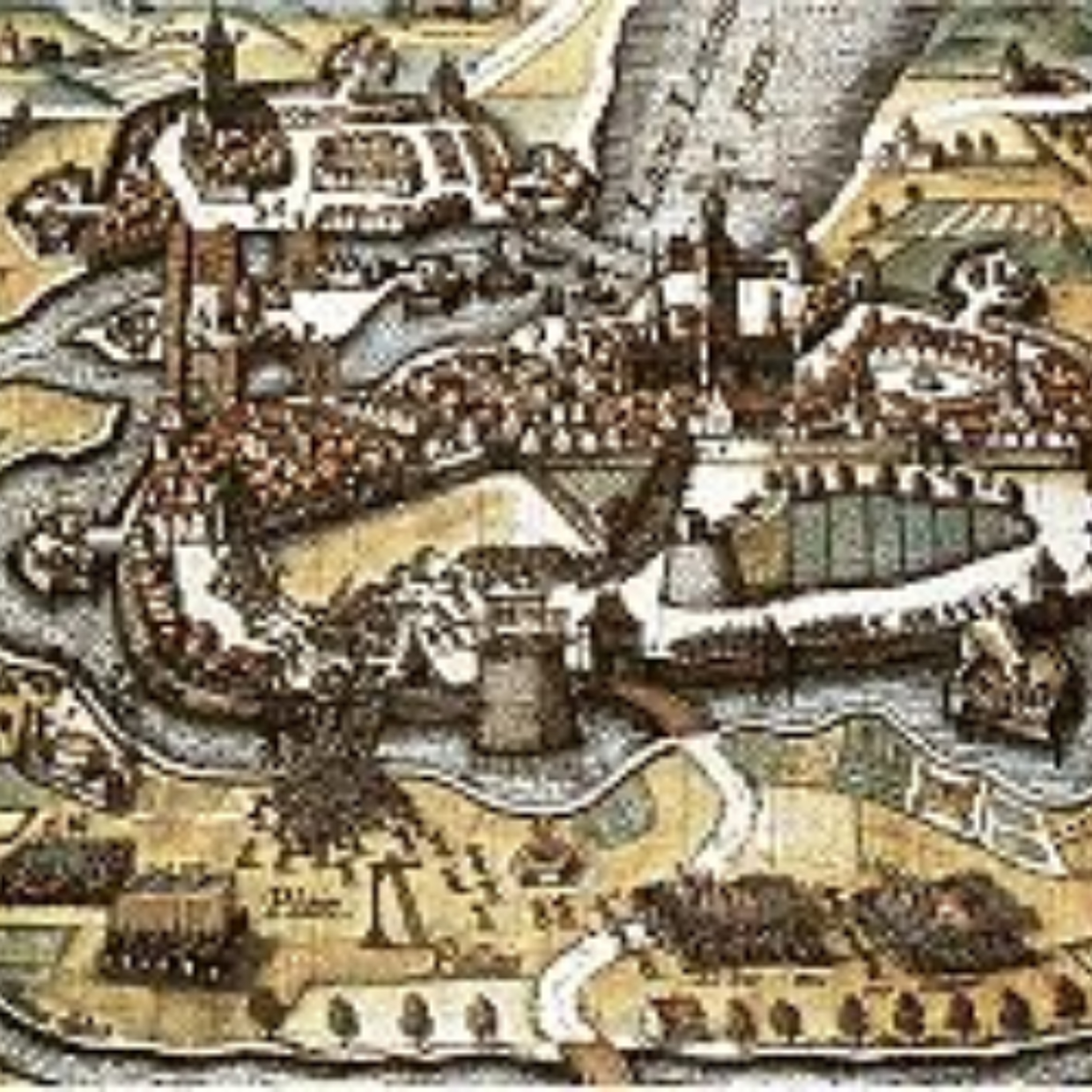
Speaker 1 But today we're going to talk about a lesser-known battle and one of the last major operations of the war, the siege of Karse.
Speaker 1 And Karse might be a place where maybe some of you have never heard of it before, which isn't that surprising.
Speaker 1 It's a city in the South Caucasus, a place most people don't know anything about other than, you know, purposefully misusing the term Caucasian nowadays.
Speaker 1 Kars is an ancient Armenian city that is one of those places that's so old, nobody's entirely sure of its whole history or even where its name originally comes from.
Speaker 1 There's still arguments about that.
Speaker 2 But people do know that it is the site of the world's first phone accessory stand.
Speaker 2 Fuck off.
Speaker 2 Would you like to buy a faux leather pocket watch case?
Speaker 1 I'm getting a pop lock for my wristwatch back in the 1800s.
Speaker 1 By the 800s, it was made the capital of the kingdom of Armenia for a short time before various invasions started. And long before, surprise, surprise, it fell under the flag of the Turkish Empire.
Speaker 1 Then it went back to the Armenians and the Georgians for a bit and back again, spent some time with the Persians, back and forth until the time we're talking about today, 1855, when it fell under the flag of the holy mother moon Turk, the Ottoman Empire.
Speaker 2 I mean, what is more appropriate than it falling to the Persians, and you just have to listen to a guy says like, no, I am not Arab, I am Persian.
Speaker 1 To be fair, that's a three-way argument in cars. The Georgians, the Armenians, and the Persians are all trying to insist that, no, we're not Arabs.
Speaker 2 Please look at a map.
Speaker 2
If you've ever known people from Iran, never call them Arabs. They will be like, no, I'm Persian.
I'm like, okay, I learned that pretty quickly. And then you just get hit with Habib, you come to Iran.
Speaker 1 To be fair, they're not Arabs.
Speaker 2 I know, I know. Very different.
Speaker 1 They're culturally very different.
Speaker 2 Yeah, I mean, to be fair, I did learn recently
Speaker 2
that the new term for that particular like area is like, well, a little bit further east is no longer called the Middle East. It's called West Asia.
And I'm like, you know what?
Speaker 2 That actually makes it sense. That's a bit better.
Speaker 1 It depends on who you talk to.
Speaker 2 There is,
Speaker 1 I'm not really going to get into this a whole lot, but specifically in the context of, say, because recently California undid a lot of its race-based legislation dating back to the 20s.
Speaker 1 regarding making people effectively legally white so they have had they would have rights
Speaker 1 and one of the people they did that with was armenians i've heard some people say armenians were like were like west asian people it's like no we've settled this we are caucasian yeah we we are from the caucasus mountains from the caucus region it's not our fault that you use the term incorrectly you don't have to give us a new term we have one for ourselves
Speaker 2 yeah i mean like you yeah they put you in the same basket as uh jerry dingleboof whose like family came from the netherlands like 300 years ago.
Speaker 2 It was like, no, I think those two things are different.
Speaker 1 Yeah, you don't have to change what we are to make yourselves feel better.
Speaker 1 Georgians, Armenians, Azeris, we're all Caucasian people.
Speaker 2 Yeah, what we need to do, and this is like by
Speaker 2 my most anti-fascist take, is that we need to Balkanize the white race. We need to bring back
Speaker 2 We need to bring back Lombrosan,
Speaker 2
Lombrosan ethnic identities. It's like, get the calipers out.
Actually, no, the skull and facial-based measuring is not really a good categorization.
Speaker 2 I think a good categorization is: is the rug on the floor or on the wall? That's like, have a kind of like a matriculation thing. So it's like we're kind of filtering where people are from.
Speaker 2 It's like, is the rug on the floor or on the wall? Do they, you know, drink tea or drink coffee?
Speaker 1 You know, hey, spoken like a man with the brain pan of an Ohioan.
Speaker 2 Does their car have a catalytic converter or not?
Speaker 1 Well, to be fair, my stepdad falls into currently being in that category of not having one, despite the fact it was just stolen from him.
Speaker 1
I think this is the third time I've told the story. And that's not because I'm repeating myself.
It has happened three times in a couple of years. To the point he has just stopped replacing it.
Speaker 2 Yeah, through a weird combination of factors, now your stepfather is just categorized as Tajik.
Speaker 2 We don't know why. They're just like, he's filling out the little like bubble sheet and like looking at the results is like, why is it saying I'm Tajik?
Speaker 2 I don't really get it, but okay.
Speaker 1 The third time he goes into AutoMax to get a new catalytic converter or whatever the fuck the O'Reilly's auto parts, I think, is in one
Speaker 1
nearest to his house. They're just like, look, at this point, we just have to give you a Georgian passport.
We're sorry.
Speaker 2 He's going to have to shave his head, learn how to use capsicum peppers correctly.
Speaker 1
He's have to get really into wrestling. It's weird.
The Ottoman Empire at the time of the Crimean War was an empire in terminal decline.
Speaker 1 But like we all are during our increasing age, they were in denial.
Speaker 1 In just the last few decades, they had suffered through the Serbian Revolution, the Greek War of Independence, the constant losses in the field at sea, and virtually every other way to the surrounding superpowers of France, Britain, and Russia.
Speaker 1 They take away one piece of land, one piece of power, one bit of influence at a time.
Speaker 1 We've talked about this before, but just to hit on it again, Russia was doing the classic invading bit by bit from the east while the French and the British were doing that as well, before swinging back around to exploit the Ottomans from within to prop them up against the Russians to keep them from gaining too much of the dying empire.
Speaker 1 That isn't to say that the Russians didn't also do this from time to time. Like there was a point where they sent troops to Constantinople to protect the Ottoman government.
Speaker 1 Everyone was doing everything they could to part out the Ottoman Empire like a really shitty Buick Skylark.
Speaker 2 Yeah, just the Russian soldier getting deployed to Constantinople and suddenly he becomes Mistislav the Muslim.
Speaker 1 Actually, hold that thought.
Speaker 1 This might come up later.
Speaker 2 Oh, fuck off.
Speaker 1 I know I've said this multiple times on the show, but it remains one of my favorite historical topics just because of how ridiculous everything is.
Speaker 1 But the Ottomans, desperate to reform and stabilize themselves, took out massive loans from the French and the British that they could not pay back, which was, of course, by design.
Speaker 1 They had fallen for the sovereign payday loan scam known as a debt trap. In turn, the Europeans set up offices within the empire to service these massive debts.
Speaker 1 These offices eventually employed more people than the Ottomans' owned Ministry of Finance and effectively put them in control of the Ottoman budget.
Speaker 1 A power they used to, in turn, take out more loans from themselves.
Speaker 2 It's fucking amazing, honestly.
Speaker 2 I love over-leveraged collateralized debt that is then used to subsequently loan out more money, therefore further collateralizing more assets and contributing to the destruction of your empire.
Speaker 1 I'm not sure what the British belt and road system would be called, but you know.
Speaker 1
Tea and horses. I don't know, it's 1800s.
The British haven't invented a belt yet.
Speaker 2 The Ottoman's pulling up up and says like, hey, let me hold $5.
Speaker 2 Let me hold five onions.
Speaker 1 At this point, the Sultan is working only in hard cash because sovereign debt has just taken... They put a giant boot over the Sultanate Palace.
Speaker 2 He's just like
Speaker 2 trading in turban wraps. So it can be like, oh, yeah, I'm working outside the system, man.
Speaker 2
The government controls the currency. I'm breaking free.
I'm leaving the Matrix. You want to buy five onions?
Speaker 1 I've invented onion coin.
Speaker 1 One of the major reforms at the time was trying to get the badly out-of-date Ottoman military up to everybody else's standards. They built their first officer's school.
Speaker 1 They bought heaps of French hand-me-down equipment and disbanded, or at least tried to disband, the Janissary Corps to make way for a more professional standing army.
Speaker 1 The real reason for the disbandment of the Janissaries was rather than an elite fighting force like they were supposed to be, and in fact had been for a very long time, they had over another long period of time transformed into something more of like a political interest group similar to that of the late stage praetorian guard they kind of leveraged their way into political power economic power they were doing everything other than winning battles uh because they were badly out of date militarily tactically equipment wise everything and they refused to change because We're the Janissaries.
Speaker 1 We control everything. You can't make us change.
Speaker 2
Yeah, much like today, you have so many American politicians who's like, yes, I did get my little finger blown off in Afghanistan. Please let me access the nukes.
That's right.
Speaker 1 It would be like if a civil war reenactor became the Secretary of Defense and insisted that everybody needed to use muskets still.
Speaker 2 Yes, bring back the button chops.
Speaker 1 They wielded a ton of power behind the scenes and fluency Ottoman court.
Speaker 1 But virtually every time they took the field in battle, you know, doing the job that they were meant for, they got crushed in increasingly lopsided defeats.
Speaker 1 Though their disbandment was not accepted quickly by them or various other people, this led to multiple rebellions. I'm thinking we're eventually going to do a history of these later at some point.
Speaker 1 I just wanted to point out that it's kind of too simplistic to just say the sultan hit the big Janissaries go away button and they all went aw and went home.
Speaker 2 Like, that's not what happened. No.
Speaker 1 What was birthed out of this was known as the New Order Army, which is a nefarious title given one of the series we've talked about recently.
Speaker 2 I
Speaker 2 believe that we should all have big hats and we should be allowed in the deepest core of political life.
Speaker 1 It's me. I think we should serve the Sultanate forever.
Speaker 2 I think we should all be given a state-issue large boot that we can live in.
Speaker 1 And this is the sound of thousands of groans of people who thought we were done with the Mickey Mouse voice.
Speaker 2 No.
Speaker 1 You're wrong. They would be trained and drilled like European soldiers, by European soldiers, and they were even taught French as an operational language, which wasn't super uncommon.
Speaker 1 Like remember back to our series on the invasion of by Napoleon of Russia, where the operational language of the Russian officer class was French. This was not uncommon.
Speaker 1 Frenchmen came in to advise and build new foundries so modern military equipment could be built in the Ottoman Empire.
Speaker 1 And this process pretty much failed entirely and was abandoned, but restarted at various points by other Ottoman leaders down the line.
Speaker 1 One of the major hurdles that the Ottomans had to jump with this new professional army was, you know, the institutions to support a standing professional army, which they just did not have.
Speaker 1 Namely, taxations and payment systems to fund it. This just did not exist yet.
Speaker 1 So they end up having to build those alongside the new army, which also failed. Corruption was endemic in the Ottoman military and government.
Speaker 1 Virtually everything was stolen thanks to the fractured nature of Ottoman rule.
Speaker 1 Depending on the leader of a given area or even the head of a given ministry, people tended to rule those like they were independent and really only paying a tax to the sultan to prove their loyalty.
Speaker 1 All while they were parting everything out for themselves.
Speaker 2 It's interesting when you look at, like, a lot of people will posit World War I as
Speaker 2 in terms of like warfare and geopolitics like the real turning point of
Speaker 2 moving into modernity in terms of like
Speaker 2 warfare combat political belligerence and stuff but I think realistically for me the real turning point is the Crimean War it's like when you have in terms of weaponry in terms of tactics in terms of like geopolitics like it becomes something different than it was before especially when you put up the ottomans which at the time are considered a world power alongside their allies, France and Britain in the war and their enemies, Russia.
Speaker 1 And you see their struggle to attempt to modernize. You see the struggle of the so-called old world trying to become like everyone else.
Speaker 1 And you see why a lot of these old structures just couldn't move on. Russia as well, to be fair.
Speaker 1 You know, a badly out of date bureaucracy, endemic corruption, idiot-esque nobles running everything into the ground, generations of missed reforms, botched agrarian reforms, botched civil service reforms, stopping and starting other attempted reforms like the New Order Army, the Tanzimat period and the Ottoman Empire, which we talk about more in the Armenian Genocide series.
Speaker 1 It's all these stopping and starting because nobody will fully commit to reformation because it means not being in complete control.
Speaker 2 Also as well, like this is kind of the point of, I would kind of see it as the beginning of the end of like Eurocentric monarchism being very central to the like the running of the country, but also the military.
Speaker 2 Like after this point, like obviously that bleeds into the 20th century, but like this is kind of really the beginning of the end in my mind, anyway.
Speaker 1 I agree with that. I would go further and say, specifically in the context of, say, Russia,
Speaker 1 that is the real spear in the heart when it comes a couple years well a couple decades after this in the russo-japanese war that really primes russia to collapse horribly in world war one and you know obviously world war one puts the the the true literal stake to the heart of the romanov dynasty but i don't think it happens quite like that without the russo-japanese war that's that's one of my opinions where the rest of world history looks a whole lot different if japan gets their teeth kicked in in that war and russia does not uh though i think the old order kind of withstands time a bit better.
Speaker 2 Yeah, and like the, you know, the Crimean War is like, look, this is going to be me like being literary wanker, but like if you've read like Dostoevsky and Tolstoy, like you understand like how deeply the Crimean War is like embedded in Russian political life, but like Russian kind of society after the fact.
Speaker 2 And it really is kind of this almost like malignant tumor that like keeps growing up up to the point of like the destruction of the Russian empire and I feel I'm belaboring the point not because like I want to sound smart it's more so like I think people massively underestimate how important the Crimean War is for like European and kind of Euro-centric geopolitics and in the context of military history, like the Crimean War was a cluster fuck for virtually everyone involved to the point that it led to true modern reformations of a lot of old systems.
Speaker 1 We'll talk about that in this episode as well, where like the Crimean War is the last major war that Britain fights using like the paid commission system because it was a bit of a controversy, let's say, where
Speaker 1 even if you were very qualified individual, like to say go to Sandhurst, you had to pay.
Speaker 1 To get promoted from lieutenant, you had to pay.
Speaker 1 If you were available for promotion or showing promise, but you couldn't pay, you didn't get promoted.
Speaker 1 And that was, you know, the true dying gasp of that old system, which had been around for quite a long time.
Speaker 2 Yeah. And it's really like the, I suppose, you could kind of look at it as like the birthplace of like modern militarism in terms of like the weaponry that's used, the tactics that's used.
Speaker 2 And like you said, like the command structure is like, this is where it kind of all changes. Yep.
Speaker 1 So stay tuned to more Crimean Crimean head stuff when we eventually do that series.
Speaker 1 Through all this attempt at a modern, the new order process, the Ottomans were eventually built a core of around 30,000 men, which is tiny when you think of how big armies were getting back in the day.
Speaker 1 And since they were the one group of quality professional soldiers that the Ottomans had at their disposal, leadership was terrified of sending them into the field.
Speaker 1 And in fact, they were actually really terrified of even sending them anywhere other than Constantinople, worried that if they moved them away, it would make the government possibly susceptible to a coup, or some Janissaries or Janissary adjacent loyalists might see it as a chance.
Speaker 1 So they just kind of stood around while Janissary rebellions constantly popped off, and they just kind of kept their best soldiers close at hand in case anything threatened them personally.
Speaker 1 As the Crimean War kicked off in 1853, virtually none of the professional Ottoman force was in the the field.
Speaker 1 Instead, the Ottomans fell back on what they always had, levied armies of local conscripts and militias pressed into service.
Speaker 1 And I know what you're probably thinking, wasn't everybody using large armies of conscripts? Yes, largely.
Speaker 1 But the main differences is, say, when you're conscripted in France or Russia, even, let's say,
Speaker 1
you'd go through a standardized form of training. You'd get your uniform, learn how to march, learn how to use your gun, learn how to be a soldier.
I'm not saying that the training was magnificent.
Speaker 1 I'm just saying it existed. How conscription generally worked in the Ottoman Empire is regional base.
Speaker 1 So a dude from the government would just rock up to your village and snatch a whole bunch of men that looked vaguely of age and throw them into like a column marching out.
Speaker 1
They would get no standardized training. no standardized issuance of uniforms or even boots.
They'd get nothing.
Speaker 1 They'd get a rifle and kind of told, hey, by the way, in case you haven't heard, we're fighting Russia.
Speaker 2 Like, oh, okay. Like,
Speaker 1
very little thought put into it. And they were supported by, for a lack of a better term, militias.
These militias were normally made up of Kurdish, Circassian, or other loyal Muslim levies.
Speaker 1 And these were generally used to keep non-Muslim troops in line as a kind of death squad. We've talked about them before, but we'll talk about them more a little bit later on.
Speaker 1 In short, the makeup of the Ottoman military was more of a bunch of random guys than an organized military structure, because that's what had always worked for the Ottomans in the past.
Speaker 1 The officers of the Ottoman military who did take to the field had once again become political monsters.
Speaker 1 Ranks were gained due to favoritism, political maneuvering, bribes, or family connections, more than education or talent, which isn't to say other countries weren't doing much of the same.
Speaker 1 Remember, we've just talked about how the British officer system worked. And when they saw that, oh God, this doesn't work in this day and age anymore like it used to, they kind of got rid of it.
Speaker 1 But the Ottomans, still largely based on favoritism, connections, bribes. Russia, same, but to a lesser extent.
Speaker 1 The French officer system was probably the best one working in the war, but that one was still kind of clinging on to the days of old.
Speaker 1 In the context of the Crimean Crimean War, this meant that the Ottoman soldiers were simply not prepared for anything.
Speaker 1 The Ottoman reforms never reached the entire Ottoman military, and as such, the Ottoman military had no organized system for transportation, for supplies, or even medical care.
Speaker 1
They didn't have field hospitals. So that meant if you got wounded or sick, you either survived on your own or died.
Whatever, not the army's problem.
Speaker 1 I guess we found found Turkish RFK Jr., but that's not to say that medical care for soldiers during the Crimean War were anywhere in the world was wonderful.
Speaker 1 Like they still didn't quite understand how to stop the spread or treat cholera, for example. That's famously what Florence Nightingale is known for, amongst other things.
Speaker 1 But, you know, if you catch a bullet to the leg or whatever, they could save your life.
Speaker 1 Your chances were certainly better in a hospital tent than just like sitting out on the Anatolian plane and bleeding out.
Speaker 1 They had a vague understanding of infection.
Speaker 2 Yeah, it's a knockright.
Speaker 1 It's really, really bad. So in a lot of cases during the war, the Ottoman army was just fully seconded to a European commander.
Speaker 1 In other cases, the Ottomans just recruited any European with military experience into their ranks with a massively inflated paycheck to make the job seem more appealing.
Speaker 1 A lot of these guys, most, if not all of them, came from the professional officer classes of other armies that simply no longer existed, thanks to their armory being conquered or whatever, them being a criminal or being part of a revolt that failed and then they had to run away so they didn't get executed, which is why a ton of these guys were Hungarian or Polish.
Speaker 1 As if think of the years, revolutions of 1848 all just kind of went tits up. And a lot of those guys, well, a lot of the Germans simply moved to the United States.
Speaker 1 We've talked about that before, but a lot of people ran to the Ottoman Empire because they knew they'd be safe there. And with their professional education, they'd get a pretty sweet gig.
Speaker 1
They would take Turkish names, attempt to learn the language. Sometimes they converted to Islam.
Sometimes this was forced, other times it was not.
Speaker 1 And then they would climb through the military and political ranks of the empire. Some of these guys ended up being incredibly powerful within the Ottoman Empire.
Speaker 2 My name is Mohammed Gunter.
Speaker 2 Very nice to meet you. Actually, hold that thought.
Speaker 2 Fuck off.
Speaker 1 This is the part of this story, this episode, that is going to hit you, Tom, with constant curveballs.
Speaker 2 This is like being hit by a Kentaro from Fist of the North star.
Speaker 1 Except Kentaro is now named like Ismail Pasha. And this is where we find ourselves in 1855.
Speaker 1 The siege of Sevastopol, the real central theater and effort of the entire Crimean War, had been going on for about a year at this point.
Speaker 1 The Allies, that being the French, the British, and the Ottomans, had been attempting to break the Russians there, and it was slowly working.
Speaker 1 That is, of course, when everyone wasn't shitting themselves to death by the tens of thousands thanks to cholera and dysentery.
Speaker 1 The Russians were desperate to take pressure off their men trapped inside of this shitting death palace.
Speaker 1 So, Tsar Alexander II ordered the Russian commander of the Caucasus, Nikolai Miravyov, to advance into the Ottoman-held Caucasus and draw Allied attention elsewhere.
Speaker 1 Miravyov was a classic when it comes to imperial attitudes towards the people that they consider subjects. He was born in St.
Speaker 1 Petersburg, he had spent most of his very long military and political career putting down revolts throughout the reaches of the empire, mostly in the North Caucasus against Dagestanis and Chechens.
Speaker 1
To the Tsar, he was something of an expert on what they called the mountain peoples. And by that, I mean he was a horrible fucking racist.
So I guess what I'm saying, he was your average Russian guy.
Speaker 2 How do you defeat an enemy who's scooting along the ground on their ass?
Speaker 1 He attempted to invade Chechnya, but his entire army was defeated via double-egg takedown.
Speaker 2 And there's just Chechen guys doing double-egg takedowns of horses.
Speaker 1 He saw the Caucasians, both north and south, as either Arabs or Persian invaders into what should be Russia.
Speaker 1
He called Dagestanis, Chechens, Armenians, and Georgians black monkeys and black asses, which are common slurs you'll still hear today. Jesus Christ.
So fun fact, yeah.
Speaker 1 He also thought that they were lazy and mostly useless, which you can imagine meant his soldiers, which were drawn mostly from that area, really hated him.
Speaker 2 Yeah.
Speaker 1
It was common for Russian commanders to control their men through brutal violence. And Moravyov was a commander during the Napoleonic Wars.
He's old.
Speaker 1 And if you remember our series on Napoleon's invasion of Russia, life in the Russian army was so horrible, so brutal, and so short that families held funerals for their boys before they were conscripted because they knew they would never be coming back.
Speaker 2 So if he fought in the Napoleonic Wars, he's in his 70s at this age? Yeah.
Speaker 2 He's quite old.
Speaker 1 He's old in a time where an old Russian military commander generally doesn't live that long, which you know means he is the meanest old fucker you've ever met.
Speaker 2 Yes, unkillable.
Speaker 1 And
Speaker 1 this kind of brutal treatment of Russian conscripts had not gone away because commanders had no reason to think that there was a problem with it because, hey, we won, right? It must be working.
Speaker 1 Kars was chosen as a target because if taken, it could act as a gateway into the Ottoman Caucasus and possibly scare the Ottomans so badly they might sue for peace separate from the Allies and pull their troops out of Sevastopol.
Speaker 1 Kars was another outpost of the Ottoman Empire like so many others, staffed mainly by untrained conscripts supported by local militias and commanded by an entrenched kleptocratic dickhead named Zarif Mustafa Pasha.
Speaker 2 Oh,
Speaker 2 ding, ding, ding, ding, ding, ding, ding. Another guy who's a dickhead called Pasha.
Speaker 1
It's a trend. I mean, Pasha is a title, I should point out, for people who don't know like Ottoman naming conventions.
Okay. But But if you earn the title, oh boy, are you a real piece of shit?
Speaker 2 Yeah, if we translate that to America, I suppose it's like, we got General Johnny Big Penis.
Speaker 1 I mean, if you see someone with the name Pasha, they should be treated with the same level of respect as like CEO or consultant to blank.
Speaker 2 You know, like, oh boy, what did you do?
Speaker 1 How many people did you kill to get here? It was there in 1853 that a British commander was sent to act as an advisor. His name was wonderfully William Fenwick Williams.
Speaker 2 Oh, Billy Williams.
Speaker 2 It's me, Billy Williams.
Speaker 2 Jesus Christ, of course, a fucking English guy called Willie Willie is going to show up.
Speaker 1 Oh, Willie Squared. Williams is part of what the British called their Turkish contingent.
Speaker 1 This was their organized group of officers sent to the Ottoman military to either advise or just command entirely.
Speaker 1 And as you can imagine, the British were not going to give the Ottomans the cream of the British crop, let's say, the promising core of up-and-comers in the officer ranks.
Speaker 1 Instead, the Turkish contingent was mostly made up of British officers who had been serving for decades in India.
Speaker 2 Say, Willy-Willy, you've done your time in Injar. Will you go deal with the perfidious Turk for us, please?
Speaker 1 This is not the episode to go and tell the horrible shit that British officers in India got up to, but they were stereotypically known in British military circles for being lazy alcoholics who did nothing but spend their careers in easy service, getting drunk and doing unspeakable crimes to the population that we won't go into.
Speaker 1 They were given a derogatory nickname to these guys. They were hilariously known as old Indians, despite the fact that absolutely none of them were actually Indian at all.
Speaker 2 They were doing the OGE Prelove.
Speaker 1 It was something of an insult because if you rode out your career in Indian service, like it meant that you weren't a good commander because you weren't commanding anybody.
Speaker 1 You're mostly just sitting in a very hot office destroying your liver for four years and then you die.
Speaker 2 Yeah, it's kind of like a make work job for like fail zones.
Speaker 1 Well, it's like what we, uh, Nate and I and a lot of other people on the show have joked about over the years.
Speaker 1 Like India had to exist as an off-valve for like the weirdest people in British society to be sent to.
Speaker 1 Willy-Willy was one of those. Who was the last viceroy of India?
Speaker 1 Everybody's favorite astronaut.
Speaker 2 In an effort to learn a bit more technical skills for
Speaker 2 photography, I have like a workbook that is used in colleges and stuff. And I've been going through and doing the assignments.
Speaker 2 And one of them was to look at portraiture done by people throughout like one artist per decade. And I was looking at one of them and I was like, oh, there's Louis Mountbatten.
Speaker 1 Nobody likes to surprise Mountainbatten.
Speaker 2 Well, unless you're the IRA.
Speaker 2 Or the fishes.
Speaker 1 So, on top of being one of these old drunks, Williams was also rumored to be the bastard son of Prince Edward, which would have made him Queen Victoria's half-brother. Now,
Speaker 1 this is generally considered to be a lie, spread by Williams himself, though nobody could confirm that the lie came from Williams.
Speaker 1 But when people asked Williams about, are you Prince Edward's bastard son, he would never deny it.
Speaker 1 I would like to believe because it makes everything funnier.
Speaker 2 But
Speaker 1 despite him being, you know, a military afterthought, an alleged alcoholic, and a lazy, do-nothing commander, the corruption in Kars Garrison was so open and easy to see that even Williams couldn't miss it.
Speaker 1 For starters, the number of soldiers that were supposed to be in Zarif's garrison were about half of what they were on paper.
Speaker 1 The reason for that was a classic, time-worn tactic known as ghost soldiering.
Speaker 1 For people who don't know, that is when a soldier disappears from the rolls, whether he dies, goes AWOL, leaves service, his conscription time is over, whatever, the commander doesn't take them off because the way the payment system works is all the money for the soldier's pay is delivered to the commander.
Speaker 1 The commander is then supposed to disperse it to his men. So the more people you have on your rolls that don't exist, the more money you get to keep.
Speaker 1 And also, sometimes he would just invent soldiers that didn't exist at all when he wasn't skimming enough money.
Speaker 2 Yeah, the most
Speaker 2 time-honored tradition of soldiers, lying and thieving. Also, I just remembered: do you want to know who took that photo of Louis Mountbatten that gave me a jump scare?
Speaker 1 Oh no, who was it?
Speaker 2
It was Yusuf Karsh. I don't know who that is.
Our famous American Armenian photographer.
Speaker 1 Nope, got nothing for you, buddy.
Speaker 2 Yeah, for fuck's sake.
Speaker 2 Sorry,
Speaker 2 Armenian Canadian. That's probably what you don't know.
Speaker 1 Yeah, I don't know any Canadians famously.
Speaker 1 Never heard of a single well-known.
Speaker 1 I don't think I could name a single famous photographer, regardless of where they're from.
Speaker 2 It's just because he's Armenian. You people know each other.
Speaker 1 Yeah, we all know each other. That's why I'm going to fucking Serge Tonkian's house after we're done recording.
Speaker 2 Yeah, you got some sweet iPhone cases for him. That's right.
Speaker 1 I'm going to sell him a fucking fanny pack full of chopped up catalytic converter, you fucking asshole.
Speaker 1 Shouldn't you be in Boston, you big-headed fuck?
Speaker 2 Fuck you.
Speaker 1 But that wasn't the only thing that Zarif was stealing.
Speaker 1 Due to the Ottoman logistical system being the same as their pay system, which boiled down to just give everything to the commander, he'll pass out uniforms or... ammunition or whatever as needed.
Speaker 1 Not that the commander was also in charge of like the books of keeping all that. He had a quartermaster, but things could only be passed out at the commander's orders.
Speaker 1 So instead of doing that, he just stole it all.
Speaker 1 He got first dibs on ammo, clothing, and food, stealing it, and then selling it back to civilian camp followers, who then would in turn sell it back to the army with Zarif making a cut of all of it.
Speaker 2 All the soldiers, like, is Sarif walking around with like golden boots on?
Speaker 2 I literally got ants on my feet right now.
Speaker 1 He's got like black leather gloves, a big fat necklace. His horse has got like spinners on it.
Speaker 2
I mean, look at him. You put the spinners on the horse.
Does that mean it's the horseshoes that spin around?
Speaker 1 It's the whole legs just rotating at the shoulder joint.
Speaker 1 Oh, and to make matters worse for your everyday soldier in this situation, your direct commander, so your company commander, battalion commander, whatever, they weren't even there.
Speaker 1
They took command and then just stayed in Constantinople. So they had no food, no clothing for winter, no ammunition.
They didn't even have officers.
Speaker 1 So it's kind of hard to classify this as a garrison of soldiers at all. It's more of just like a militarized squat.
Speaker 2 Like
Speaker 1 they're in a fort. Like they have to be there, you know, but they have no one in command of them, not really.
Speaker 1 Like, Zarif is hanging out nearby in a sick palace that he has built out of, I assume, a pile of stolen uniform jackets.
Speaker 1 When William showed up to the garrison, he was shocked to find them not fighting anybody, but still dying in large numbers due to starvation and exposure to the elements.
Speaker 1 He was an advisor rather than a direct commander.
Speaker 1 And when he got to Kars, he was so disgusted by how he saw the Ottoman soldiers are being treated that he wrote to a friend saying that if he was given command, his first order would be to execute every Ottoman officer for what they had done.
Speaker 1 While he couldn't do that, what he could do was take notes about everything he was seeing and send it off to his commanders in Constantinople or other British military advisors.
Speaker 1 And eventually, through a year-long campaign of narking on Zarif, Williams was given command of Kars. Unfortunately, he did not go on the hanging spree he promised, but he did fire everyone.
Speaker 1 Like, for example, all the people that were still in Constantinople, he gave them one week to show up to work. And when they didn't, they were all relieved of command.
Speaker 1 And then he was allowed to replace them all.
Speaker 2 I hate when Willy Willies is busting my balls.
Speaker 1 Getting my Willy busted by Willy-Willy. Then he went about promoting Ottoman officers he saw as honest, if at least partially competent.
Speaker 1 He saw men that wouldn't steal being more important than those that would steal, but would have a decent education.
Speaker 1 You know, people who knew how to do their job if you forced them to do it, but would show up to work wearing 10 fur coats and six wristwatches. He didn't want those people.
Speaker 1 He knew your everyday soldier would not like them, would not trust them, would not listen to them.
Speaker 1 I'm just imagining that scene from Friends where Joey puts on all of Chandler's clothes and starts doing lunges, but it's just a single Ottoman officer wearing an entire battalion's worth of uniforms walking around.
Speaker 2 16 pairs of boots, brother.
Speaker 1 One of the men that he came to rely on was Mehmet Vassif Pasha.
Speaker 1 Vassif was Georgian from Guria, which is interesting if you've been listening to our Patreon series about the anarchist Republic of Guria that's coming.
Speaker 1 He was sold into slavery when he was a child and grew up in Constantinople. Like most slaves during that time, he was converted to Islam by force.
Speaker 1 He took a Turkish name, but became an artillery officer in the army.
Speaker 1 From there, he rose through the ranks, becoming a military governor of several places before ending up as Williams' second in command.
Speaker 1 Then lacking any logistical system to speak of, Williams had to build one so that his garrison of about 16,000 men, now blanketed in snow by December, would survive.
Speaker 1 He tasked that to a British officer, William Olferts of County Armagh. So there's your random Irish guy for the episode.
Speaker 2 Of course, of course. Well, if he's from Armagh, I don't know if he, and he's in the British Army, I don't know how much he identifies as Irish.
Speaker 1 Not going to argue with that at all.
Speaker 1 He also tasks other British and Ottoman officers with rebuilding the Karst fortifications, which the last commander, of course, allowed to fall into disrepair.
Speaker 1
And in a revolutionary move, he began training the garrison for the first time. This is left to an Ottoman officer named Amir Bey.
Bay, again, being a title.
Speaker 1 Except his real name was Charles de Schwarzenberg, a French-born Belgian noble.
Speaker 2 Okay, I just gotta stop here. I think, you know,
Speaker 2 the Ottomans', you you know, DEI initiative of dying, eating, and invading should not include Belgians.
Speaker 1 And nothing should include Belgians. It's a hard rule.
Speaker 1 Now, De Schwarzenberg was from a noble family who managed to go bankrupt, run to Hungary, join the Hungarian Revolution of 1848, get captured by Austria before being released, and then running to the Ottoman Empire because he had nowhere else to go.
Speaker 1 This is not the weirdest guy who ends up here, I promise.
Speaker 2 Just I cannot wait. Just wait.
Speaker 1 Since it it was winter and attacking Kars would be stupid, even for Russians, Williams and his staff spent months preparing for the spring thaw.
Speaker 1 It wasn't until June 29th, 1855, when the forward elements of the Russian army appeared outside of Kars. The army sent in Cossacks first.
Speaker 1 I assume because the Cossack commander heard there was a French guy named Schwarzenberg inside and they just could not be contained. Look, that joke would have been funnier if Nate was here.
Speaker 1 In response, Williams deployed his own cavalry to confront them but this turned out to be a pretty big mistake you see the ottoman cavalry weren't uniformed trained cavalry they were militia and we've talked about this specific kind of militia before the bashi bazooks they're primarily albanian and circassian men sent to places where the majority population was turkish or muslim they were a death squad and like all death squads they were really not that good at fighting people who would fight back to make matters worse they had been completely unwilling to train in the months where every other Ottoman soldier or militiaman in Karas was being put through their paces.
Speaker 1 So while they rushed out to fight the Russians, they broke at first contact, rushing right back towards the gates of Kars.
Speaker 1 They abandoned all sense of orders, and rather than try to set up some kind of skirmishing line or really do anything to slow down the Cossack advance, they just smashed into the gate and like When men inside were trying to close it, the Bashi bazooks just began stabbing at them and shooting them to be be forced to be allowed back into the city.
Speaker 1 In the chaos and the confusion they created to try to force their way back into Kars, the Russian infantry began to advance because their commander saw this cluster fuck as an opening where they could just possibly skip any kind of siege and just storm right into the fortress.
Speaker 2 Yeah.
Speaker 1 That is when the British commander of the exterior redoubts, Captain Thompson, lowered his artillery, filled it full of canister shot and began pumping it into the advancing Russians at near point-blank range, which generally solves most problems, I will say.
Speaker 2 Yeah, I mean, when you're making human mulch, you're in a good place.
Speaker 1 Yeah, yeah. Anytime a whole bunch of ball bearings are zipping out of a barrel of a cannon and you can make eye contact with the guy doing it, you're not long for this world.
Speaker 2 Yeah.
Speaker 1 Now, this broke any idea of storming the gates, and they quickly withdrew. From there, Moraviov dug his forces in for a siege.
Speaker 1 And since the whole point of this thing was to scare the Ottomans into withdrawing from Sevastopol, this actually was a better idea anyway.
Speaker 1 Because the longer you're chilling in Kars, the more time they have to worry and pull their men back to maybe relieve the defenders or break the siege or whatever.
Speaker 1 So he hung back, occasionally firing artillery, but never really all that much. The goal was to wait out the supplies of the defenders and win via starvation.
Speaker 1 Despite the city holding, news of Kars under siege did exactly what the Russians wanted it to.
Speaker 1 Panic rippled through Constantinople, and as soon as the Ottoman commander of the war effort Crimea, Omar Pasha, heard of the siege, he immediately demanded to move the Ottoman army away from Sevastopol and relieve Kars.
Speaker 1 And Omar Pasha is a guy we'll certainly talk about more when we eventually do a series in the Crimean War.
Speaker 1 He's another one of those guys that could only really thrive in a place like the Ottoman Empire.
Speaker 1 He was Serbian, an officer in the Austro-Hungarian army, and all the way up until he got caught literally red-handed, breaking into his unit's safe to steal money inside, at which point he deserted, ran to Bosnia, converted to Islam, was circumcised as an adult, and commissioned into the Ottoman ranks.
Speaker 1 He's dedicated, I'll say, I'll give that much.
Speaker 2
Look, maybe he was suffering from like fumosis or anything. Don't put the circumcision down to like just an aesthetic choice.
Maybe it was medically necessary.
Speaker 1 He had that mental illness where people have like hate a limb and needed to be cut off, but he just really hated his foreskin.
Speaker 2 Oh, he had big body integrity disorder, aka the thing that made the eunuch maker cut people's legs off.
Speaker 1 There you go.
Speaker 2
We will not be pursuing that sentence anymore. Go listen to Beneath the Skin.
We did an episode on the Eunuch Maker.
Speaker 1
Yeah, go listen to Beneath the Skin. And in case you don't have a map handy, Crimea and the Caucasus aren't exactly neighbors.
So it would take some time.
Speaker 1 And obviously, the rest of the Allies didn't want Omar to pull his men out of the war. So they purposely began to slow him down, trying to convince him not to do it.
Speaker 1 In the meantime, the British and Ottomans inside Karas were reinforcing their positions, with construction of trenches, bunkers, redoubts, all being supervised by a military engineer for the first time, Colonel Henry Atwell Lake.
Speaker 1 In the meantime, the men inside did their best to convince the watching Russians that they actually had no shortage of supplies by constantly building cooking fires, even though they were on strict rations.
Speaker 1 They would also throw like rotten food into the fires so the smell of the food would be smelled by the Russians, which god that must have really sucked if you're inside the fort being incredibly hungry all the time and yes it's rotten food but it doesn't smell that way once you throw it in the goddamn fire you know like
Speaker 1 eat that shitty oozing pork so bad
Speaker 2 yes it has worms in it the worms are also a source of protein exactly because you have to worm max your way through the siege yes this is the hidden secret of hitting your macros is you have to to eat worms.
Speaker 1 It's true. I do it all the time.
Speaker 2 Yeah, if you never heard of Joe just picking a handful of worms out of his bucket of worms he has in his kitchen.
Speaker 1 Yeah, if you go to a live show, you'll actually see me in an alley lifting up wet stones looking for worms and bugs that are underneath and just foraging, you know? Free protein.
Speaker 2 Why'd you think they call it going for some grub?
Speaker 1 Exactly.
Speaker 1 Hey, Pumba was onto something. That pig was jacked.
Speaker 1 Despite Williams' best efforts, he had been unable to unfuck the supply situation inside the fort. He discovered another reason for this as the siege locked in around him.
Speaker 1 The guy he trusted to man the storehouse had been selling off all the stuff he managed to restock since the last thief had been relieved of command.
Speaker 1 So mad at this and wanting to make an example, Williams had the man taken out back and shot in front of everybody.
Speaker 2 Didn't believe in magic until he saw his dogs turn into snakes. It's a tale as old as time.
Speaker 1 Even the people of Karis, who had been buying the Pilford supplies, were much better off than the garrison defending them.
Speaker 1
And to his credit, Williams refused to order people to turn over their food to the army. I'm not going to say this out of kindness or empathy or anything.
He was being practical.
Speaker 1 He was worried that if he did do this, which most military commanders would do, it would cause an uprising, which he would not be able to handle.
Speaker 1 Soldiers were soon forced to live on little more than barley soup and whatever could be scavenged.
Speaker 1 However, Williams and other officers spent their own money to try and buy food back from the people of Karst to give it to their soldiers, as well as strict orders for any soldier under pain of death to never steal food from the locals.
Speaker 1 And I need to point out here, much as I hate admitting it, seems like a pretty good officer, all things considered.
Speaker 1 I know we tend to shit on officers around here, and for good reason. We have to give it up for a real one.
Speaker 1 He at least wasn't just like, fuck them civilians, which virtually every other officer we've ever talked about would do.
Speaker 2 Yeah, pretty much.
Speaker 1 Now, this dynamic of have-and-have-nots only lasted so long because eventually the civilians also ran out of food and they were starving right alongside the soldiers.
Speaker 1 There was nothing for anybody, with everyone scavenging anything edible they could find.
Speaker 1 And according to the letters of Captain Thompson, during this time, he was able to bond with his new Ottoman soldiers by drinking coffee with them, smoking pipes with them, and of course, wrestling shirtless in the trenches.
Speaker 2 Listen, the three most time-honored Turkish traditions of drinking coffee, smoking cigarettes, and homoeroticism, you know.
Speaker 1 Imagine you're some poor fucking conscript somehow surviving in the garrison of cars, living off of a little more than barley boiled in water.
Speaker 1 And then every single day, a shirtless, oiled up British guy would just shoot a double egg on you while you're running off to the trenches to take a cholera shit.
Speaker 2 I mean, if you're oiled up, hitting a double leg and it's like a wave dashing in fucking Super Smash Bros. It's like you're fucking like sliding.
Speaker 1 Slip and slide through the trenches with your homies.
Speaker 2 Yeah.
Speaker 1 But the good times, and by that I mean the times where people were not actively starving to death, would not last past July.
Speaker 1 Soon, more and more soldiers are being taken to the British Field Hospital for malnutrition. And at minimum, one man died every day.
Speaker 1 And of course, disease was not far behind, with cholera sweeping through civilians and soldiers alike.
Speaker 1 In the desperation of what had to seem like the world's slowest apocalypse for those experiencing it, discipline began to slip amongst a group of militia made up of the Laz people, who are from a coastal Georgia-Turkish region.
Speaker 1 They ignored orders and attempted to rob civilians at knife point because they were known for carrying incredibly large knives. Yeah, the Georgian buoy knives, if you will.
Speaker 1 So, second-in-command Mehmet and a British major named Christopher Teasdale led his men out to arrest them, which somehow erupted into a knife fight.
Speaker 1 So the British officers have swords and the Laz have knives and they're just stabbing the shit out of each other until eventually the British and the Ottomans win out.
Speaker 1
The Laz militia leaders are arrested, publicly flogged. One man is shot in front of everybody.
So everybody could see what happens when you steal from the civilians.
Speaker 1 And I should point out here, this is certainly the right thing to do given the circumstances.
Speaker 1 However, it did cause morale within the LAS militias to plummet, seeing how they just watched their leader get his skull ventilated by a guy named Teasdale.
Speaker 2 Yeah, I mean, like, yeah, you're slurping on that barley juice and you're just like, I am starving to death for no reason, and my boss just got shot in the head. What am I doing here?
Speaker 1 Yeah, they won't even let me rob people at knife point.
Speaker 1 So desertion began to become a problem amongst the laws militias, while people from other units were not too far behind them.
Speaker 1 Soon, multiple people per night were trying to sneak out of Karst, deciding that taking their chances with the mountains or being captured by the Russians was better than their chances inside the city.
Speaker 1 Pretty much the entire summer passed this way, with a rare scattering of firefights and an exchange of artillery. But that changed in September 11th, 1855.
Speaker 1 A different kind of September 11th, since nobody had any planes to crash into cars yet.
Speaker 2 Yeah, you're just like stuck inside cars and all you hear is a Russian soldier outside like slurping on some like soup with vegetables in it going, oh, so tasty, so good. Tasty looks good in my tummy.
Speaker 1 Imagine being flexed on by an average Russian conscript because the amount of food that he has. How demoralizing is that experience?
Speaker 2 They're just like on the other side of the wall waving a carrot at you.
Speaker 1 Yeah, covering themselves in beets and mayo be like, damn, we got so much of this shit we can just waste it.
Speaker 1 Now, that's because September 11th, 1855 is when the siege of Sevastopol ended in an allied victory. Word got to the defenders of Kars, who celebrated by firing off cannons in honor of the victory.
Speaker 1 Didn't even bother to fire them at the Russians because they knew what was the point. They just kind of fired them into the air.
Speaker 1 However, over on the Russian side of the line, Moravyov was pissed, and he knew now that, fuck a siege, I have have to take Kars immediately.
Speaker 1 If for anything else at this point, it was to ransom it back to the Allies in exchange for the territory that Russia had lost.
Speaker 1 September also brought with it the first hints of winter, which the Russians hoped would put them at the advantage, but also knew they did not want to wait out winter, even well supplied outside of a siege.
Speaker 1 But it did make things in Kars even more miserable if that was even possible at this point. So he ordered his first all-out assault on Kars on 4 a.m.
Speaker 1 on September 29th, betting on a blanket of morning fog covering his advance. However, that did not work at all.
Speaker 1 The fog lifted very early, and Ottoman and British sentries spotted nearly 20,000 men advancing towards the redoubts held by Major Teasdale and General Ismail Pasha.
Speaker 1
Except, his name wasn't actually Ismail Pasha. His name was Grigory Kometi.
He was Hungarian, a general in the Austro-Hungarian army, and fought on the wrong side of the revolution.
Speaker 2 Once again, being defeated by fumbling a baddie and losing the thick ah fog.
Speaker 1 I hate when that happens. I was waiting to tell you this, but virtually every Ottoman officer working under Williams was actually Hungarian.
Speaker 2 What if a Turkish guy was Hungarian?
Speaker 1 All except one, Nassim Bey, who served directly under Ismail. You want to guess where Nassim Bey was from?
Speaker 2 Oh,
Speaker 2 okay.
Speaker 2 I'm going to operate on like weeb logic and like what is the funniest place that someone could be obsessed with the Ottoman Empire? I'm going to guess America.
Speaker 1 Nailed it.
Speaker 2 What? Dude was from Philly.
Speaker 2 This is the reverse of everyone being performatively obsessed with Philadelphia and like their football team around the world. Like this guy's like, nah, fuck that shit.
Speaker 2 I'm going to be really into the Ottomans.
Speaker 1
Yeah, he's really into the Constantinople Eagles. His real name was Washington Carroll Tevis, and he probably had the strangest life of anyone in this episode.
He was a West Point grad.
Speaker 1
He fought the Mexican-American War, converted to Catholicism, which remember would be really weird for an American to do back then. Yeah.
Got commissioned by the Ottomans.
Speaker 1
He would survive the Crimean War. He becomes one of the first officers to volunteer for Union service during the outbreak of the American Civil War.
He joins the Fenian Brotherhood afterwards.
Speaker 2 Whoa.
Speaker 1 He then becomes one of the main planners, organizers, and leaders of the Fenian invasion of Canada. But he wasn't a Fenian brother at all.
Speaker 1 He was a fucking spy for the British, infiltrating the Fenian Brotherhood from within. It somehow gets weirder.
Speaker 2
That wouldn't have happened if he had actually converted to Islam. It's like, say, the Shahada brother.
Like, abide by the five pillars. Do not betray your spiritual brothers of Islam, aka the Irish.
Speaker 1 See, then you know he's really into it because then he has to do the adult circumcision thing.
Speaker 1 When you commit to that,
Speaker 1
so after this, he ditches the U.S. again.
He goes and joins the papal army. He gets knighted by the Pope.
Speaker 1 He then ditches the Papal Army, fights for France during the Franco-Prussian War, ditches France, goes to Egypt during the modernization efforts that we've talked about before, before going back to France to die in 1900.
Speaker 1 Fucking Christ, dude, pick a struggle.
Speaker 2 Take a fucking day.
Speaker 1 This dude was busy.
Speaker 2 Jesus Christ. Like this period, like the kind of last, I suppose, 50 years of the Ottoman Empire just has the greatest collection of guys.
Speaker 1 You know how we already joked that India is the off vent for weird British people, but the Ottomans are the off vent for everyone else.
Speaker 1 If you show up and you have something to offer the Empire, a professional military education, whatever, they're like, yep, sure, welcome aboard, bay, pasha, whatever. We don't give a fuck.
Speaker 1 They don't give a fuck. I mean, they're just kind of what like UAE does today.
Speaker 1 Based on slavery.
Speaker 2 Instead of Habibi come to Dubai, it's fucking Habibi come to Constantinople.
Speaker 1 Yeah, pretty much.
Speaker 2 Getting ye old letter-based Instagram DMs.
Speaker 1 Anyway, back before I fell into the Tevis hole, the Russians were attacking Kars.
Speaker 1 I should point out here that while Karst was in the mountains, the area where the Russians were attacking from was virtually just an open prairie, meaning they were marching shoulder to shoulder into lines of cannons and trenches in three different columns.
Speaker 1 They didn't even bother to fire a preparatory bombardment before their assault, thinking it wouldn't even be necessary.
Speaker 1 They thought the men inside Karst would be so diseased and starved that they wouldn't be able to put up any fight at all.
Speaker 2 But they were wrong.
Speaker 1 The men manning the trenches, and shitting cholera all over one another, fought tooth and nail. The Russians were torn to shreds as their band played alongside them.
Speaker 1 Imagine marching into battle against Karst and your military band is playing all the things you said by tattoo.
Speaker 1 According to a letter written by Williams, the Russians had, quote, advanced with his usual steadiness and intrepidity.
Speaker 1 But in getting within range, he was saluted with a crushing fire of artillery from all points of the line.
Speaker 1 This unexpected reception, however, only drew forth hurrahs from the Russian infantry as it rushed up the hill and redoubts and breastworks.
Speaker 1 These works poured forth a fire of musketry and rifle, which took such fearful effect on close columns of attack.
Speaker 1 Now you can't shoot down a human wave attack of Russians when they're jacked up full of tattoo.
Speaker 1 You know, the musket balls running through their head.
Speaker 2
Yeah, it's okay. You know, you got the Mayo-based super soldiers running you down.
It's hard to defeat them. Yeah.
Speaker 1 In a thick enough layer, Mayo will stop a rifle.
Speaker 2 I mean, what is a human wave if not like a. Well, especially a human wave of Russians is like a wave of Mayo, so.
Speaker 1 But the Russian columns pressed on, storming over the right and left flanks, going around the central redoubt and advancing on the city of Kars itself.
Speaker 1 The central redoubt poured fire on them from every angle, while a reserve position, commanded by Colonel Lake, charged directly into the Russian flank and threw them back.
Speaker 1 But the Russians wouldn't quit, much like the fog.
Speaker 1 I hate you for putting that in my head again.
Speaker 2 Fog so thick it won't quit.
Speaker 1 They kept pressing the attack for 12 hours. They'd take the trenches, only be thrown out of them again by a countercharge, only for the Ottomans to again be thrown out of them.
Speaker 1 Each time they'd be retaken with bayonets, knives, trench clubs, shovels, and I assume by more than one British or Ottoman soldier pinning a man down and vomiting all over them like they're rage zombies from 28 days later.
Speaker 1 Because remember, they're all sick as fuck.
Speaker 1 It's like getting the shit kicked out of you by a skeleton in a uniform. Happy late Halloween.
Speaker 1 The Russians had been mauled, leaving behind nearly 7,000 dead and at least 10,000 further wounded, limping back to their camp.
Speaker 1 One of the first things the Ottoman soldiers did was loot the dead for winter clothing and any food they might be carrying in their pockets. Quite literally, a run-your-pocket situation.
Speaker 2 Hey, give me those pocket onions, bitch.
Speaker 1 Who has beets now, motherfucker?
Speaker 1 Taking loose fucking chopped-up boiled beets. The defenders, however victorious, were still in a dire situation, though.
Speaker 1 The cholera outbreak was not going away, and it was claiming more and more men as they grew weaker from starvation.
Speaker 1 The one hospital in Kars had become flooded with civilians and soldiers to the point there wasn't even a place to put them all anymore.
Speaker 1 Soon, soldiers simply crawled off to die alone in abandoned houses like a dog. The only hope of relief, Omar Pasha's army, was too far away to be any help to the men of Kars.
Speaker 1 As news eventually reached Williams that, rather than marching right for them, Omar invaded Russian-held Georgia, seizing Sukhumi and Migrelia.
Speaker 1 And while he had won, he was too bogged down to make it to Kars anytime soon. As the Russians maintain the siege and Williams is coming to accept that no help was coming, October turned into November.
Speaker 1 And with that, Williams' face was sitting through the winter in Kars, with no food, no medical supplies, more cholera than anything else, and of course the Russians still outside.
Speaker 1 He decided he needed to order a surrender, but before he made it official, he told all of the foreigners serving in the Ottoman army, hey, you might want to take this chance to run for it.
Speaker 1 I've heard that you're not going to be treated so well.
Speaker 1 The next morning, he officially offered his surrender to Moravia. He accepted and sent all the militiamen back home unarmed, keeping only regular soldiers as POWs.
Speaker 1 Officers were kept in a mansion in Reyazon for the remainder of the war and were prisoners really in name only.
Speaker 1 The Battle of Kars became such a well-known event, both in Britain and in Russia, that they were treated like celebrities, with Tsar Alexander II coming to hang out with the Williams on a few occasions before he was released in 1856.
Speaker 1 The POWs were, of course, treated terribly if you were a normal soldier.
Speaker 2 It goes without saying.
Speaker 1 They were pretty much just put in a fenced zoo for cholera.
Speaker 2 Yeah, if you're an officer like Willy Willy, you might get to hang out with the Tsar. I don't know.
Speaker 1 Yeah, they just hung around and drank and talked about the battle.
Speaker 1
This battle all but revitalized Williams' career and reputation. He was made a baron.
He was promoted. He was given just about every award, not called the Victoria Cross.
Speaker 1 Afterwards, he was made British commander of North America during the American Civil War. He held several governorships before finally dying in 1883.
Speaker 1 Teasdale became the first South African to be awarded the Victoria Cross and became the personal aide-de-camp to Queen Victoria.
Speaker 2 Whoops.
Speaker 2 Not good.
Speaker 2 Yep.
Speaker 1 So it was actually kind of a funny side story here. When Tevis went back to the U.S.
Speaker 1 to serve in the Union Army, he would then run into Williams, who was in Canada at the time, but would travel back and forth to D.C.
Speaker 1 to talk about how not to let this war spill over because the British were kind of sort of helping the Confederacy.
Speaker 1 So they did run into each other again.
Speaker 2 And they're like, oh, shit.
Speaker 1 What up, Ismail? Like,
Speaker 1 don't go by that anymore.
Speaker 2 My name is Brian now.
Speaker 1 There's actually even rumors, I mean, unsubstantiated conspiracy theory, I suppose is the best way to put this, that their connection between Williams and Tevis is how Tevis became an agent for the British Empire.
Speaker 1 But we don't know for sure.
Speaker 2 Oh, interesting. Yeah.
Speaker 1 So maybe he was encouraged to go back and join the Union to be a spy, but we don't know if that's true or not. He seemed to really only spy in the Fenians.
Speaker 2 I mean, listen, he's definitely on the side of the British because who did hate most?
Speaker 2 Yeah, exactly.
Speaker 1 The terms of the Treaty of Paris that ended the Crimean War gave Karst back to the Ottoman Empire, and the Ottomans gave portions of Russian Georgia they had just taken.
Speaker 1 And thankfully, as we all know, nothing bad ever happened in this region ever again.
Speaker 2 The end.
Speaker 1 I'm really happy that peace has been brought to the Caucasus and Crimea specifically. I'm really happy that nothing bad has happened or continues to happen there.
Speaker 2 Yeah, nothing ever happens.
Speaker 1 Yeah, especially in the Caucasus.
Speaker 1 Tom, we do a thing on this show called Questions from the Legion. If you'd like to ask us a question, you can support us on Patreon.
Speaker 1 $5 gets you absolutely everything, including Discord access, where we have a whole channel dedicated to questions from the Legion. Today's question is, biggest restaurant pet peeves?
Speaker 1 What are they?
Speaker 1 I'm picking from the way this question was framed as like, what about restaurants pisses you off rather than
Speaker 1 something about some other asshole in the restaurant pisses you off?
Speaker 2 Yeah.
Speaker 1 I fucking hate fusion restaurants. If I see a restaurant that's called something X Fusion, I know it sucks and I'm not going to it.
Speaker 1 I'm sorry. A lot of people are probably mad at me about that opinion, but I've yet to be proven wrong.
Speaker 2 Joe has decidedly come out against Tex-Mex, the original fusion.
Speaker 1 No, that's the difference. Tex-Mex is not called like Mexican Texan fusion restaurant or whatever.
Speaker 1 Like if it's a restaurant that takes two things that have no business together and calls it a fusion something, it is ass. It's always because it's going to do both of those things badly.
Speaker 2 Yeah.
Speaker 2 Okay. So I have a million of these.
Speaker 2
So one, it's too bright in there. Two, the music is too loud.
Three,
Speaker 2 if it has those
Speaker 2 stupid metal stools that you can't sit comfortably on, I am like stealing something. If they make you,
Speaker 2
yeah, I'm fuck it. I'm stealing something.
I'm stealing your napkin holder.
Speaker 2 I hate when if they're because a lot of places in London will have like it's a discretionary surcharge on it that sounds so you don't have to tip, but like I will like tip anyway, but like I've gone to places where like they'll try and double dip on it where like they won't let you know there's a discretionary charge on it.
Speaker 2 Yeah. Um what else? Ooh, I hate when they charge for sparkling water.
Speaker 1 No, you should not charge for water.
Speaker 2 Give me the free sparkling water.
Speaker 1 I also have one to add going off of your tipping thing.
Speaker 1 If you are in a place where tipping is not normalized and you know that restaurant staff are paid a legal decent wage, meaning that they do not have to live off your tips and they try to slip in the tip thing anyway because they know you're from a place where tipping is normal.
Speaker 1
Pisses me the fuck off, especially as someone like... I live in a city that isn't like heavily infiltrated by Americans, so it's not really much of a thing here.
But if you go to Amsterdam,
Speaker 1
every single fucking place will ask for a tip. And I'm not against tipping wait staff.
Of course I'm not. I'm American.
Speaker 1 I'm grown up with this being a normal thing, but it's a place where it's not normal. And they know if they just put it first, that you'll reflexively do it.
Speaker 2 Yeah.
Speaker 2 Like I always tip just because I worked in the service industry for a while.
Speaker 2 And it's like, oh, you know, it's, I find it actually you get a like, especially over here, they might give you like a, you know, a free drink or whatever at the end.
Speaker 2 And usually I'm pretty like nice to the wait staff i'm just like chatting away to them or whatever um a pro tip for anyone listening if you're looking to go to a restaurant you've looked up the menu online if it looks like a somewhat decent restaurant and it has a massive menu it is going to be dog shit because there is no way anything with a massive menu is going to be shit anything you can't have a kitchen that makes that many things good And I should add another addendum onto my tipping statement so people don't get really mad at me.
Speaker 1 The places where this happens, the restaurants taking that money. They are not giving it to the wait staff.
Speaker 2
Absolutely. Absolutely.
Oh, also, I will, and this is like a real pet peeve with
Speaker 2 particularly like living in London is if I'm going out for a meal, and especially if it's somewhere nice, like I went to for a nice meal like last week or maybe the week before.
Speaker 2 It was really, really nice.
Speaker 2 And in like this little booth, food was really good, drinks were really good, but like there was constantly the people behind me were like taking photos of their food with the flash on and i'm like i know like influencers need to get their bag too but please be like somewhat cooth with your photos like i don't need you to see in the periphery of my vision like you taking a million photos of your food while i'm trying to have a conversation maybe i'm just old this is me being unknown coded now it's like no I don't want the music too loud.
Speaker 2 I don't want it too bright. I don't want to see your fucking phone.
Speaker 1 No, I'm in full agreement. I think that I have been to restaurants with you where we've experienced all of those things.
Speaker 2 Yeah.
Speaker 1
Like, there's a place where the music is supposed to be loud. You go to those places because the music is loud.
You don't want to be surprised by loud music, especially while you're eating.
Speaker 1 A normal pub situation that has loud music, fucking hate that too.
Speaker 1 If you're going to loud music, you're going to A, a concert venue or B, a club, right? Like, nobody wants to go to a normal ass bar and not be able to hear their friends.
Speaker 1 That's why you went there there and not the other places.
Speaker 2 Oh, I have even more.
Speaker 2
I hate Smash Burgers. I'm sick of Smash Burgers.
I'm sick of paying £15 for what is the equivalent of it.
Speaker 1 What is up with London and their obsession with Smash Burgers? It's very weird to me.
Speaker 2 It's because
Speaker 2
economically, Smash Burgers do sell really well. They use less beef.
They take less time to cook. So your turnover of covers is way higher.
And you can do them quite easily for takeaway.
Speaker 2 Um, okay, and like you can make more of them in terms of storage for like in your cold dry store underneath the or near the grill. They're easy to print.
Speaker 1 I also have some weird
Speaker 1 trend thing.
Speaker 2 Yeah, like it is a new trend my age.
Speaker 1 I don't understand what these kids are eating anymore. You know what I'm saying?
Speaker 2 Um, but also, in addition to that, I hate small plates so much. It's like, no, I don't want to eat six small plates of something and pay the equivalent for like two meals just for me to feel full.
Speaker 2 Let me pay 20 quid or 25 quid for something that is a proper size plate, that is an actual meal. I don't give a fuck.
Speaker 1 I don't want to pay six pounds for olives, especially if you don't know what you're getting into because they don't advertise themselves as that place. I've had that happen to me before.
Speaker 1 I was very unhappy.
Speaker 1 Anyway, that's two old people yelling about restaurants.
Speaker 2 Hey, if you want to, like, anytime we travel and like meet, like, travel for work or whatever and go for lunch, it's like 90% of the time me and Joe are just like, let's get a burger.
Speaker 2 It's fucking easy.
Speaker 1 Yep. And that has only backfired on us on a couple of occasions.
Speaker 2 That burger that we had in Glasgow the day before the show sucked.
Speaker 1 Oh, it was, that was not good.
Speaker 1
It was so bad that I just didn't have. I think.
I mean, our tradition, or at least my tradition when we travel for work, is living off of horrible Tesco sandwiches
Speaker 1 and the meal deals, which I do not recommend. But the burger was worse than a Tesco sandwich.
Speaker 2
Yeah, it was like, you ate your burger, your fries. I gave you like half of my fries because I was like, this burger sucks.
I'm just going to finish it and then I'm done. Yeah.
Yep.
Speaker 1 Tom, you host other podcasts. Plug those other podcasts.
Speaker 2 I am the producer for a new show called Blood Work. It's about the economy of violence.
Speaker 2
I am the co-host and producer of Beneath the Skin, the show about the history of everything told through the history of tattooing. You can see my photography at Scam Golden.
That is G-O-L-D-I-N.
Speaker 2 It's a joke about Nan Golden. And you can buy my books at beneaththeskinshop.com.
Speaker 1
And this is the only show that I host. You know the deal.
Support us on Patreon. We have multiple different tiers, but $5 gets you absolutely everything.
Speaker 1 Every normal episode a week early, years and years and years of bonus content. Side series like History of Armenia and Lions Loaded by Robots.
Speaker 1 It It gets you e-books and audiobooks, gets you Discord access, gets you first dibs on live show tickets and merch when they're available, and it'll get you one handful of raw beats drawn from the pocket of an 1800s Russian soldier while supplies last.
Speaker 1 So, support the show, leave us a review on wherever you listen to podcasts. Until next time, beware the fog.