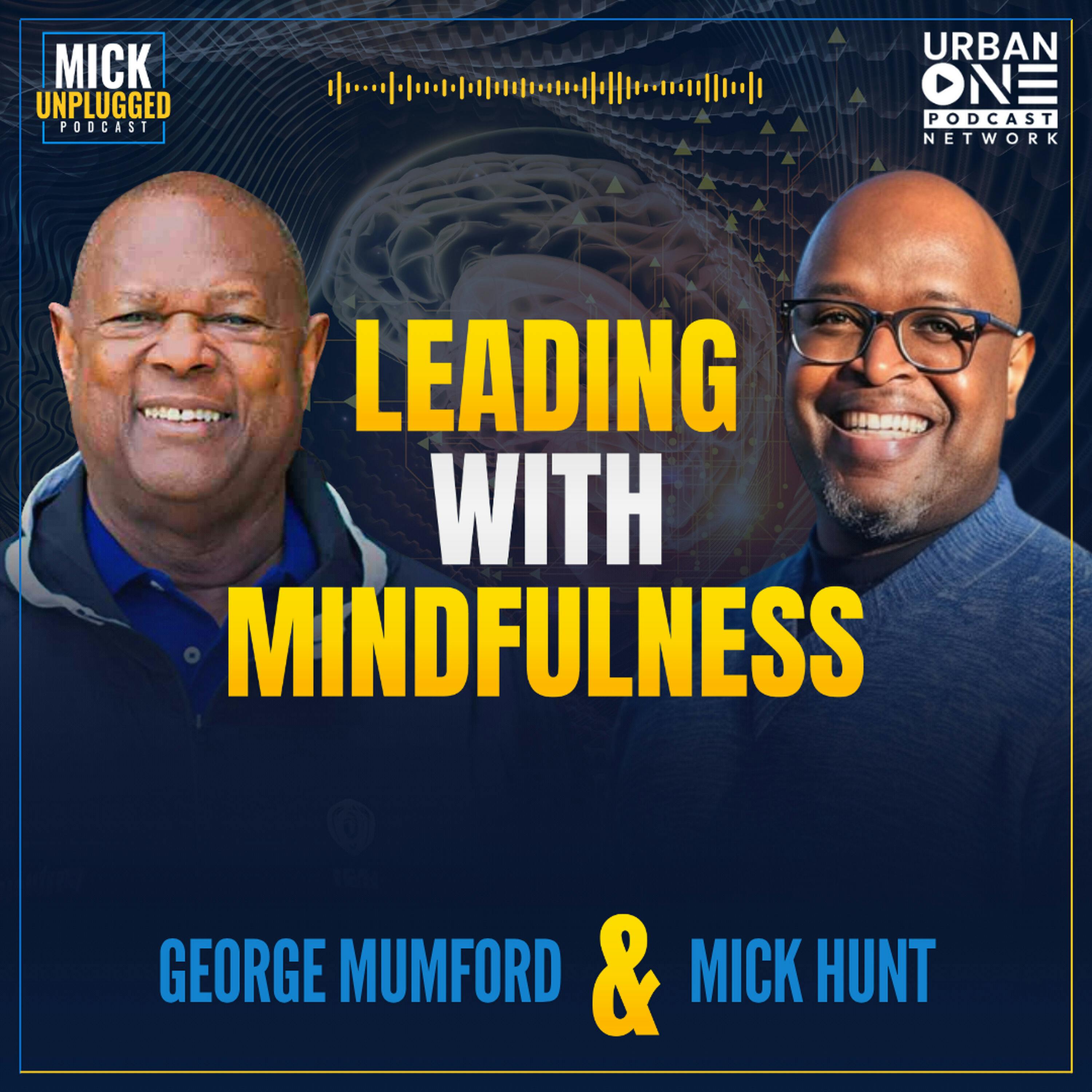
George Mumford Discusses Pure Performance, The Zone, and Lessons from Champions
Takeaways
Pure Performance Is About Presence: The highest level of achievement, or "pure performance," is found when you perform an activity solely for the love and authenticity of the moment—expressing your true self rather than focusing on external outcomes.
Unlocking Potential Requires Letting Go: Growth and progress come from giving yourself permission to make mistakes, learning from them, and then letting them go so you can move forward—true freedom comes from self-acceptance and self-regulation.
Leadership Is Empowerment: Great leaders, like Michael Jordan after working with George, learn to meet people where they are, inspire them to grow, and give others a meaningful say in the mission, shifting from control to collective ownership.
Sound Bites
“Elite performers are unlocked by their hunger for growth—the willingness to embrace discomfort and uncertainty is what propels them to the next level.”
“Creating space between stimulus and response is the heart of emotional intelligence; it unlocks the freedom to choose your attitude and actions.”
“You don’t need to be perfect to make progress—mistakes are just feedback. The key is to make the next play and stay present.”
Quote from Mick: “Unlocked has changed my life. It’s literally a book that I reference at least three to four times a week... we have unlocked sessions where we talk through things as a group and as a team—because what one person is struggling with is probably something someone else is going through.”
Connect & Discover George:
Instagram: https://www.instagram.com/george.mumford/
LinkedIn: https://www.linkedin.com/in/george-mumford/
Facebook: https://www.facebook.com/search/top?q=george%20mumford
Website: https://georgemumford.com/
Book: Unlocked: Embrace Your Greatness, Find the Flow, Discover Success
FOLLOW MICK ON:Instagram: https://www.instagram.com/mickunplugged/ Facebook: https://www.facebook.com/mickunplugged/ YouTube: https://www.youtube.com/@mickunplugged LinkedIn: https://www.linkedin.com/in/mickhunt/Website: https://www.mickhuntofficial.com Apple: https://podcasts.apple.com/us/podcast/mick-unplugged/
See omnystudio.com/listener for privacy information.
Press play and read along
Transcript
Speaker 1
You know, as leaders, we talk about performance all the time. Business performance, mindset, focus.
But let's be real, performance shows up in every part of life.
Speaker 1
Half of young people today face psychosexual challenges at some point. Things like performance anxiety, low desire, or just feeling off.
It's normal. It's human.
We just don't talk about it enough.
Speaker 1 And that's where Mojo comes in. Mojo is the world's first AI sex and relationship therapist built from over 50 years of sexology research.
Speaker 1 It gives you short, guided sessions that help you reduce anxiety, rebuild confidence, and improve communication, all privately, on your own time.
Speaker 1 I tried it myself, and what I love is how practical it is. It's judgment-free, it's easy to use, and it's actually doable.
Speaker 1 No pressure, no awkwardness, just real tools that help you understand yourself and your relationships better. This isn't about quick fixes.
Speaker 1 It's about learning to show up with confidence and calm in moments that matter the most. Head to mojo.so forward slash MCUnplugged for your seven-day free trial and start feeling the difference.
Speaker 1
That's mojo.so slash MCUnplugged because great leaders don't avoid tough conversations. They grow through them.
Mojo offers educational psychological support and is not a substitute for medical care.
Speaker 3
This is a Netsy holiday ad, but you won't hear any sleigh bells or classic carols. Instead, you'll hear something original.
The sound of an Etsy holiday, which sounds like this.
Speaker 3
Now that's special. Want to hear it again? Get original and affordable gifts from small shops on Etsy.
For gifts that say, I get you, shop Etsy. Tap the banner to shop now.
Speaker 2 So it was like not just performing, but I'm talking about pure performance.
Speaker 2 Now, leap performance is one thing, but pure performance is when you're doing the thing for the activity in and of itself for no reason other than being in the moment and expressing yourself honestly and love and being who you are because you're unique.
Speaker 2 There's no one like you.
Speaker 3 Welcome to Mick Unplugged, the number one podcast for self-improvement, leadership, and relentless growth.
Speaker 3 No fluff, no filters, just hard-hitting truths, unstoppable strategies, and the mindset shifts shifts that separate the best from the rest. Ready to break limits? Let's go.
Speaker 1 Ladies and gentlemen, welcome to another exciting episode of Mick Unplugged.
Speaker 1 And today, we're talking to a gentleman who didn't know, but two years ago literally changed my life and my approach to leadership and the mental preparedness.
Speaker 1 He's the mindfulness coach behind the legends like Michael Jordan and Kobe Bryant. He's a master of unlocking peak potential and the author transforming the way we think about focus and flow.
Speaker 1
Please join me in welcoming the wise, the transformative, the legendary, the guy I call the GOAT, Mr. George Mumford.
Mr. Mumford, how you doing today, sir?
Speaker 2
Thanks, Mick. I appreciate you.
It's my honor to be here. And
Speaker 2
I can't tell you how. Delighted I am to hear that the book had value for you.
And more importantly, that the book is is helping you unlock you.
Speaker 1 Unlocked.
Speaker 2 We need you to be unlocked. We need everybody to be unlocked.
Speaker 1 Unlocked has changed my life. It's literally a book that I reference at least three to four times a week.
Speaker 1
I pull out quotes on a weekly basis. I talk to my team internally, and we have once a month, George, I got to give you credit.
We have unlocked sessions where we talk through things
Speaker 1 as a group and as a team, because as you know what one person is struggling with or going through is probably something else that someone else is going through they were just afraid to talk about it out loud and so we we really have unlocked sessions and we have a lot of mental clarity on a monthly basis and to that i owe you brother i like that
Speaker 1 So before we go into unlocked, George, one of the things on the podcast that we really talk about is your because, right? That That thing that's deeper than your why.
Speaker 1 I like to call it like your true purpose, your true reasoning. And for a lot of people, that changes over time and it should change over time.
Speaker 1 If I were to say today, 2025, George Mumford, what's your because
Speaker 1 today?
Speaker 2 To unlock the divine spark in each and every human being.
Speaker 2 So I'll give you the whole spiel as a child I developed several years back, and I forget when I did it, but it's a lifelong thing to unlock the divine spark in each and every human being.
Speaker 2 The values that are at the heart of who I am are love,
Speaker 2 curiosity, truth, wisdom, integrity, selfless service, compassion, courage.
Speaker 2 That for which I can be counted on for is to be loving with a warrior spirit, with a serving and compassionate heart, pursuing excellence and wisdom with grace and ease.
Speaker 2 That's what I'm up to. And those are my guiding ideas, my guiding principles.
Speaker 1 Man.
Speaker 1
And early on, I know. So, when I say early on, I'm going to say college years.
You went to the University of Massachusetts.
Speaker 1 A lot of people may not know, man. You were the roommate of a man that we called Dr.
Speaker 2 J, Julius Irving.
Speaker 1 Talk to about those days with you, man.
Speaker 2 Yeah, no, it was, it was, you know, I talk about it in my other book,
Speaker 2 The Mindful Athlete Secret to Pure Performance. So, just to give you an idea, so fast forward, this is 1969,
Speaker 2 and
Speaker 2 I'm going to University of Massachusetts at Air Amherst,
Speaker 2
and it was the last orientation weekend. So it was the weekend just before classes started.
So
Speaker 2
it was that Labor Day weekend. So it started, I think, Thursday, Wednesday, Thursday, whatever it was.
And so I stayed on campus and didn't have to.
Speaker 2 And so
Speaker 2 we were playing, me and a couple of my friends, we were playing pickup basketball. So we went to this outdoor court.
Speaker 2 and this dude was out there playing, and he had on street shoes, and he was dunking on people.
Speaker 2 And I was saying, well, who's this homie here? I mean, who, where are you? But I knew about him. Once he told me he was, because my friend of mine said, hey, man, this is this guy, Julius Irving.
Speaker 2
You got to check him out. He's the real deal.
And so, and that, and that's that's how we became friends. And
Speaker 2 then eventually, you know, we were roommates.
Speaker 2 And I was his roommate, you know, while he was
Speaker 2 when he was just about to go pro. yeah um so yeah so i had that experience and then my other roommate uh al skinner uh actually played played with julius in in um
Speaker 2 in in uh
Speaker 2 new york nets and with uh 76ers uh so he was my other roommate um
Speaker 2 and of course patino rick petino was there when i was there so i know all those we all hung together patina was from oyster bay so sometimes we used to ride home you know with him me him and al you know sometimes we you know if i was going to hang out out with Al on the weekend, sometimes we drop Rick off on the way to Long Island.
Speaker 1 You know, we're going to have to have a separate story because I know you got some stories, and all of them we probably can't tell on this podcast, but wow, to be a fly on the wall with George Mumford in some of those conversations have to be legendary.
Speaker 2 Yeah, so just to show that you're not the only one that feels that way,
Speaker 2 I don't know when it was, several years back, the last time they had the NBA
Speaker 2
All-Star Game in LA, and Junius had a podcast. And so he wanted to interview me for the podcast.
So I actually was there right in the middle of it all.
Speaker 2 And as I'm going in, Isaiah Thomas is saying, Wait a minute,
Speaker 2 you two going in there. I want to come in.
Speaker 2
Junior said, Well, I'll get with you later, but we just got to do this thing. Because Isaiah was saying, Oh man, I want to hear what these roomies are going to talk about.
Right. Right.
Speaker 1 We're going to set up a separate one for that one. That's going to be amazing.
Speaker 2 Anyway, just to say, you're you're not alone because people, and you know, it's funny, if I wasn't in the conversation, I'd be interested in it.
Speaker 2 Exactly.
Speaker 1
Exactly. That's wow, man.
So, you know, obviously you've worked with legendary, I'm going to say the best of the best and Michael Jordan and Kobe Bryant.
Speaker 1 How, I mean, I know the story, but I want the audience to know, how did it come about working with Michael Jordan?
Speaker 2 Yes.
Speaker 2 So people probably know my story about, you know, getting into recovery, getting injured in college, and
Speaker 2 not fulfilling my dream of playing in the NBA or even playing in college.
Speaker 2 So
Speaker 2
I got addicted to pain meds, then alcohol and drugs and all that. So fast forward, so I got clean in 1984, fast forwarding.
I was a functional substance abuser, so I always worked and everything.
Speaker 2 So I was fortunate enough to be able to continue to work and to do things. But when I got clean
Speaker 2 and then I started realizing that
Speaker 2 about me and how I had to go inside to unlock myself, but it was that gift of desperation that allowed me to look at it and start to see, okay, getting connected to my power source, high power, whatever you want to call it,
Speaker 2 and
Speaker 2 just figuring out, you know, how to unlock myself.
Speaker 2
And so that's, and it started that way. And I was still working, but then I went back to graduate school.
But then I got on this mission, which I think the competitive edge is learning
Speaker 2
and achieving. And when you learn and you achieve, you actually generate this.
energizing enthusiasm. But what am I learning about? It's not so much about subjects.
Speaker 2 It's about me, my mind-body system, and who I am, my body, mind, heart, and soul, and how I can relate to others, being in the network of relationships. So that's how it got me there.
Speaker 2 And when I got into recovery, part of my recovery was if you want to keep it, you got to give it away. And if you want to learn it, you got to teach it.
Speaker 2 And so
Speaker 2 it got me into it.
Speaker 2 So just going through it, and then I ended up working at the Center for Mindfulness, which used to be the stress reduction relaxation program at UMass Medical Center. And
Speaker 2
where I worked there for five years. I was, you know, I had a prison project, director of prison projects.
Then we set up an inner city clinic on the
Speaker 2 other side of the railroad tracks.
Speaker 2 So some folks that live in the hood, you know, that live on the other side of railroad tracks, we had a satellite clinic for them to learn how mindfulness-based stress reduction. So in the interim,
Speaker 2 the founder, John Cabot-Zen, and my boss, he used to go to Omega Institute, this place in New York. And at the same time, Phil was
Speaker 2 running this program called Beyond Basketball, where it really was, it was a fundraising activity for his teammate, a teammate he had with the Knicks. His name was Eddie Mas.
Speaker 2
And so he was doing this. So they had, it was like a fantasy basketball weekend for people when they come and play and everything.
And so they were there together and Phil and
Speaker 2 actually John and Phil's wife Juna at the time were talking about
Speaker 2 you know, the team and this process that she was learning because she was a she was a social worker. So she was she was doing a training.
Speaker 2
And they knew Phil because they were always there and whatnot. And so Phil was told John that he needed somebody to come in and help the guys deal with the stress of success.
So this was 1993.
Speaker 2 This is after they won their first three-peat.
Speaker 2 And so Phil, because Phil is
Speaker 2
like me, he believes in the whole person. It's not like shut up and dribble.
I'm interested in your body, your mind, your heart, and your spirit. And you're like one of my, you know,
Speaker 2 you're my peeps. You're one of my congregation, if you will.
Speaker 2 that you know i'm concerned about your your well-being beyond basketball just about you being the best person you could be but making sure that i i value you as a as a divine spark you might even say or a human being or a masterpiece the word i use and so he brought me in and of course when i got there
Speaker 2 By that time, Michael Jordan, we talked in July, and by the time I got there in October, Michael was gone, and so they were in full-blown crisis.
Speaker 2
And then that started my relationship working with Phil. And so that's how I got into it.
That's how I began.
Speaker 2 I was still working at the medical center, but at the same time, it was like when you're at a medical school, they like papers. They like publicity.
Speaker 2 They like people knowing that you're going out and what we're researching and what we're offering is of value to the community.
Speaker 1 You know, every morning before I walk into a meeting, before I hit record on the podcast, before I lead a team, I start with one scoop, AG1, because leadership starts with energy, clarity, and consistency.
Speaker 1 And that's exactly what AG-1 gives me, a simple, foundational habit that keeps me one scoop ahead of the chaos. It's not another supplement sitting on the shelf.
Speaker 1 It's a micro habit that sets the tone for my day.
Speaker 1 Inside that one scoop, superfoods, B vitamins, antioxidants, probiotics, and functional mushrooms that support your energy, focus, and overall wellness.
Speaker 1
Especially in seasons like this, travel, long days, and short nights. AG-1 keeps me grounded.
I don't chase health anymore. I lead it.
Speaker 1 If you've been looking for something to help you stay consistent, stay fueled, and stay ready, AG-1 is that move. I use it, you should too.
Speaker 1 Head to drinkag1.com forward slash MC to get a free welcome kit with an AG1 flavor sampler and a bottle of vitamin D3 plus K2 when you first subscribe. That's drinkag1.com forward slash MC.
Speaker 1 Because great leaders don't just prepare for the day, they prepare their body for it. Have you ever felt like the banking system is stacked against you?
Speaker 1
I remember overdraft fees hitting me at the worst time and feeling like I was always playing catch-up with my money. That's why I love QIIME.
Chime understands that every dollar counts.
Speaker 1 When you set up direct deposit, you get access to features that actually help you get ahead. Getting paid up to two days early, fee-free overdraft coverage up to $200, and no monthly maintenance fees.
Speaker 1 CHIIME has already spotted its members over $30 billion.
Speaker 1 That is real progress. Plus, with over 47,000 fee-free ATMs nationwide, more than the top three national banks combined, you can access your money when you need it without worrying about fees.
Speaker 1
I use QIIME, and you should too. Work on your financial goals through QIIME today.
Open an account in two minutes at chime.com/slash MC. That's chime.com/slash MC.
Speaker 1 Chime feels like progress.
Speaker 4 Chime is a financial technology company, not a bank. Banking services and debit card provided by the Bank Corporation Bank NA or Stride Bank NA.
Speaker 4 Members, FDIC, spot me eligibility requirements and overdraft limits apply. Timing depends on submission of payment file.
Speaker 4
Fees apply at out of network ATMs, bank ranking, and number of ATMs, according to U.S. News and World Report 2023.
Chime checking account required.
Speaker 1
Yep. Yep.
And so, with Michael and with Kobe,
Speaker 1 how did you
Speaker 1 help elite athletes like those to translate mindfulness into performance?
Speaker 1 Because you are literally, a lot of people talk about high achieving, high performance, peak performance, but none of them are George Mumford.
Speaker 1
Like, I think you were the person that really, number one, brought it to the world's attention. So I'm giving you credit.
I know you're not going to say that. I'm going to say it for you.
Speaker 2 Yeah.
Speaker 1 But there is a thing to get mindfulness into actual performance.
Speaker 1 And then when you're working with greats like Jordan and Kobe, who from the outside, everyone already thinks that they're there and you can get with them and see that they've got another level that they can teach you.
Speaker 1 Like, how do you do that, brother?
Speaker 2 Yes. Well, it's interesting because
Speaker 2 being around greatness all my life. You know, in terms of, you know,
Speaker 2 All-Americans in high school, but, you know, room with Julius and being around him, and people don't realize he was like Michael Jordan before Michael Jordan, because even as college students, he couldn't go anywhere.
Speaker 2 He would draw a crowd and they line up for the game, you know, hours before and whatnot. So it was me just trying to connect with them.
Speaker 2 I knew I wanted to serve, and I knew I wanted to share what I had.
Speaker 2 And so I talked to them about being spiritual warriors. I talked to them about being in the zone, being in flow, and explaining to them, like with MJ, especially, it's like
Speaker 2 helping him understand why he was able to do what he was doing. And also,
Speaker 2 I didn't have to ask him about the next level because him and Kobe and guys like that, Dr. J,
Speaker 2 you can name, you know,
Speaker 2 LeBron, you know, all of the elites, you know, going back to my day when I watched the Celtics, you know, just watch the Celtics and, you know, I had favorites, Jerry West, Elden Baylor, you know, I can go on and on, Oscar Robertson.
Speaker 2 But there was something about the idea I'd noticed when I used to watch these cats play.
Speaker 2 And like for for the first three quarters, you know, they'll be shooting shots and they'll be doing things.
Speaker 2 But when the fourth quarter came, let's see, I was there, I was in the middle, I was watching this stuff.
Speaker 2 One of my first basketball games I watched was Elgin Bella scoring 61 points against the Celtics in the playoffs and the championship. So I saw that they hit another level when it came crunch time.
Speaker 2 They hit another level. And of course,
Speaker 2
I studied this stuff and I was very interested in flow in the zone. So I studied it.
So if you want to learn something, you teach it and you investigate, you explore it.
Speaker 2 And of course, I live in flow a lot now, but when I was an athlete, I had flow experiences.
Speaker 2 And I remember when it took my game to like a whole other level, all of a sudden it's like, whoa, man, this is like, ooh, this is different. This is different.
Speaker 2 And
Speaker 2 so,
Speaker 2 yeah, so it was just a matter of me knowing I wanted to serve and just
Speaker 2 you know, going there and meeting people where they are and then figuring it out. There's something about when you see elite performers, they're unlocked.
Speaker 2 And one way to get unlocked is the only way to get unlocked really is to say yes to whatever's coming up and then figuring out what you need to learn.
Speaker 2 What the universe is teaching you. Because if you don't learn the lesson, you keep getting it.
Speaker 2 So you learn. So it was about this
Speaker 2 joy of discovery, but also this idea of wanting to help people alleviate or eliminate suffering altogether. So it was like not just performing, but I'm talking about pure performance.
Speaker 2 Not lead performance is one thing, but pure performance is when you're doing the thing for the activity in and of itself for no reason other than being in the moment and expressing yourself honestly and love and being who you are because you're unique.
Speaker 2 There's no one like you. And so, and Bruce Lee used to talk about it in terms of martial arts is to honestly express yourself.
Speaker 2 And so these folks are unlocked, but there has to be this hunger, this desire to want to go to the next level.
Speaker 2 Because what people don't understand is when you go to the next level, it's not like, oh, everything is peaches and cream when you go to the next level. No, they go in that process.
Speaker 2
You have to go through what Soren Kerry got talked about. He said, one side of the coin is freedom, potential.
The other side is uncertainty and anxiety.
Speaker 2
So you have to tolerate discomfort and anxiety. It comes with it.
And so everybody will say, you know, I have clients that say, oh, I want to be like Mike. I want to be like Kobe.
Speaker 2 I said, okay, here's what's required. Well, I ain't signed up for that
Speaker 2 because it hurts.
Speaker 2 You have to get comfortable being uncomfortable. And if you're not uncomfortable, you're not growing.
Speaker 2
You see what I'm saying? So with those guys, I didn't have to do anything but just show up. Of course, I had a lot of street cred being Dr.
Jay's roommate. Okay.
Speaker 2 But also my authenticity and talking about, well, this cat used to be a dope fiend, man. He's like.
Speaker 2
He was in the shooting gallery. Now he's behind the bench of his NBA championship team during the championship run.
How the hell does that happen?
Speaker 2 how do you get from there to there? You see what I'm saying? And so, just
Speaker 2 so a lot of it is because I have not made one free throw,
Speaker 2 one, one turnover, or one cyst.
Speaker 2
My job is just to help people be who they are. So, I just chip away.
And, you know, like Michelangelo, you know, when they asked him, How does he create these works of art?
Speaker 2
And he said, All I do is chip away to get to the masterpiece that's already there. So, that's what I do.
I ain't fixing anybody.
Speaker 2 I'm just helping people unlock, helping people understand, hey, you know, what you need to succeed is inside, it's an inside job.
Speaker 2
And if you go in there and you access it and you express it and share it with the rest of us, that's the bomb. That now we're into something.
And so that's what I do.
Speaker 2
And some people they get it and they're looking for that itch. They're not waiting for something.
They're proactive. They're saying, okay, I'm doing this, but I got to get better.
And so,
Speaker 2 case in point, when Kobe, after Kobe won
Speaker 2 the championship, maybe it was, it might have been 2009. I don't know what year it was, 2009.
Speaker 2
But during the offseason, he's down in Houston working on his post-game with Elajuan. Yep.
Now, he just won a championship.
Speaker 2
But that was a thing. Magic the same way.
Okay, I know Bird is working hard. I got to work hard.
Dr. J, I ruined him, man.
He's always working on his craft. And so you see what I'm saying?
Speaker 2 But it's not. work.
Speaker 2 So you couldn't tell the difference between practice and a real game because every time they got on the court,
Speaker 2
their job was to get better. And this is what I tell my clients.
I tell people, you don't have to get a whole lot better. Just you can get a little bit better 1% each day, each day, each day.
Speaker 2
You want to be able to finish practice or the game and say, I got better today. Yep.
I made progress today. And so these guys already knew that.
All I was doing is just helping them.
Speaker 2 say, okay, here's what you can do. And they just took what I got and just ran with it.
Speaker 2 That is, and I used to say to people all the time, I'm not disrespecting anybody, but I said MJ was the kind of dude that,
Speaker 2 you know, this killer instinct, and people talk about it. You know, you have magic bird, and all I'm talking about, even with the dream team, dude just has this,
Speaker 2
you know, this energizing enthusiasm or energy. His energy is off the charts.
His focus is off the chart. But that's because he was always challenging himself, always looking for something.
Speaker 2 And so I used to say, MJ was like, you know, he had the killer instinct. And I said, well, Kobe's the closest thing to him
Speaker 2 from my experience, you know, working with them, of close and personal. And then when Kobe got to the point where he hurt his hand, I talked about this in the book, His Finger, and he didn't miss a B.
Speaker 2
He changed his shot, still shot a high percentage. And that's what it was.
He just saw it as a challenge and just moved on and said, okay, I'm going to change.
Speaker 2 You know how much it takes to do something like that? Or working on a three-point shot in the summertime, making 1,300 made threes a day.
Speaker 2 See, he's doing stuff, you know, that mamma mentality, you know, that's, you know,
Speaker 2
you know, it's a secret, but, you know, you know, he could be talking about me. Right.
Right. You know, and that's where, you know, that's it, because I got the same kind of, that's why I think we,
Speaker 2 but it's quiet. I got a quiet passion.
Speaker 2 I'm kind of, I'm like one of those silent assassins, you know, you don't even know, you know, until you say, oh, no, man, dude, just got, got me, and I had it coming.
Speaker 2 But he's just doing his thing and i'm not saying it like it's me or whatever what i'm really saying is we all have that yeah they don't have anything we don't have they just have a will and an intention
Speaker 2 to just be who they are and be unlocked and so if we all unlock we we we'd get that kind of
Speaker 2 um
Speaker 2 we'd have that kind of uh satisfaction with our performance you know pure performance where we're just in the moment you're just performing you're not doing it you're doing it for no reason.
Speaker 2
You're doing it for the love of it and of itself. Now, there's certain levels of that, but it's like when you see somebody performing like that, it's contagious and it's amazing.
Absolutely.
Speaker 2 And that's what we love about sports because we have this ability to go beyond what we think is possible in
Speaker 2 every second,
Speaker 2 every action.
Speaker 1 Wholeheartedly. And that translates into the real world, the business world, your personal life.
Speaker 1 And so for me, unlocked, and I'm going to, again, I'm going to do a shameless plug for unlocked right here.
Speaker 1
So unlocked with the subtitle of Embrace Your Greatness, Find Your Flow, and Discover Success. Like, I promise you, I don't care where you're at in life.
I don't care where you're at in business.
Speaker 1 This book is for you. So, George, what I want to do, I want to highlight a few of my favorite quotes because I now get to talk to the source.
Speaker 1 It's rare that you can have your favorites and then talk to the source. I'm going to eat all of this up, right?
Speaker 1
So, so chapter three, one of my quotes, chapter three is mental discipline training, right? So, see, I remember everything. This is how much I read this book.
Okay.
Speaker 1 You say that we need to create space between any given stimulus we may receive and our response to it.
Speaker 1 And so me and my team, when we broke that down, we said, you know what? George is explaining what we call emotional intelligence, but in a very articulate way.
Speaker 1 Create space between any given stimulus and your response to it, right? Like that simple. Like to me, that's keeping the simple thing simple.
Speaker 1 I just love how you just, again, it's a quote from the book, but it articulated and resonated with me because I'm like, that's emotional intelligence right there.
Speaker 2 Yeah.
Speaker 2 So, you know, let's, let's just talk about emotional intelligence because, you know, I'm, well, you, you probably know this, but your readers don't know this, up and your listeners don't know this.
Speaker 2 I'm a recovering perfectionist, okay?
Speaker 2 So when I learn something, whatever I do, I'm all in, right? Yeah, right. And um,
Speaker 2 so I'm coming up on 41 years of sobriety in July, July 30th. And over that time, I've read over a book a week,
Speaker 2
okay? So, emotional intelligence, this is what we call EQ. This has to do with the heart, uh, social-emotional, you know, and our relationships and whatnot.
So, there's four components to that.
Speaker 2 And, you know, traditionally, we talk about it as self-awareness, self-regulation,
Speaker 2
social awareness, and relationship development. They say relationship management.
I don't like the word management because you manage things, you lead people.
Speaker 2 So, it's more according to Stephen Covey, anyway, and he sold 50 million copies of his book, so he knows what he's talking about. So,
Speaker 2 so it's it's and so it's about this idea that we have this ability as human beings to step back and observe our experience.
Speaker 2 So, we're talking about a certain kind of awareness like mirror-mindedness, awareness that's inclusive. It just allows us to see things, and we can, through our self-awareness, we can self-regulate.
Speaker 2 That means we can, you know, which is another part of
Speaker 2
emotional intelligence, we can regulate our thoughts, feelings, behaviors, and even how we interpret things. We have autonomy, and that's it.
We make choices, we are responsible.
Speaker 2 When we accept responsibility, then we can choose and we can make choices. And so, I don't care what situation we're in, there's always a little bit of space, right?
Speaker 2 But if we can create more space, if we can pause and reflect, if we could be still in know or be still to we know, I'm going in Bible over here, but you get what I'm saying.
Speaker 2 You create space and in that space, and this is what Victor Franco talked about, in that space is the freedom and power to choose. Now, how do you use that space?
Speaker 2 Well, if you have a principle-centered purpose or life, now in that space, you get to choose according to your values, according to your goal, according to who you say you are, and what you say you want to do.
Speaker 2 And so, for the most part, we are an automatic pilot, and we got these programs that are running without our permission.
Speaker 2 And so,
Speaker 2 I'm talking about we have this ability to sit back and observe things, and then that observation we can start to see how things are, how things arise and pass away.
Speaker 2 We start to see how things are connected. We start to see that when I'm just real basic stuff.
Speaker 2 So, you know, with this, you know, reptilian brain, that emotional, you know, that reptilian brain, it knows fight, flee, freeze, and fun, which is like, you know, you, you know, become a doormat, whatever it is, however you want to look at it.
Speaker 2 But here's the thing. So when we get in, and it's interesting, because the fight is
Speaker 2
helpful, because sometimes you got to fight. You got to use that fight to look.
Okay, I'm going to go here to look for food or I'm going to go here where I can figure stuff out or whatever.
Speaker 2 So the fight, fight, or freeze.
Speaker 2 And so, but we have the middle brain, which is the emotional brain, and then we have the prefrontal cortex where we can actually you know use you know we can you know the executive function right so a lot of times when you get emotionally hijacked uh we get something happens like i'll talk about my boy dennis rodman when he was when he was on the sideline and he tripped over the reporter and ended up kicking him it was like that was a hijack because this dude could have ended his career At blinds.com, it's not just about window treatments.
Speaker 5 It's about you, your style, your space, your way. Whether you DIY or want the pros to handle it all, you'll have the confidence of knowing it's done right.
Speaker 5 From free expert design help to our 100% satisfaction guarantee, everything we do is made to fit your life and your windows. Because at blinds.com, the only thing we treat better than windows is you.
Speaker 5 Black Friday deals are going on all month long. Save up to 45% off site-wide, plus an additional 10% off every order right now at blinds.com.
Speaker 2 Rules and restrictions apply.
Speaker 3 I am so excited for the spa day.
Speaker 4 Candles lit.
Speaker 3 Music on. Hot tub warm and ready.
Speaker 3
And then my chronic hives come back. Again, in the middle of my spa day, what a wet blanket.
Looks like another spell of itchy red skin.
Speaker 3
If you have chronic spontaneous urticaria or CSU, there is a different treatment option. Hives during my next spa day? Not if I can help it.
Learn more at treatmyhives.com.
Speaker 2
So instead of having the space and choose your response, there was no space. It was an automatic automatic reaction.
And so when you're in survival mode, that's what you do.
Speaker 2
And what you see is danger. Nine out of 10 thoughts are danger.
So when you're in survival mode, then you're not in growth mode. You're not in a mode where you can have space and you can think.
Speaker 2
So you're in fear, no space. You're in love or growth mode.
You have space. And so we have to understand that it's like...
Speaker 2 And it's interesting because I didn't put my glasses on, but
Speaker 2 it's like being in survival mode or growth mode. If you're in survival mode, if I have on the fair glasses, I'm looking for danger and I'm probably going to fight you or run
Speaker 2 or freeze until I figure stuff out or play dead, whatever it is, and then farm, whatever, you know, just tell you what you want to hear so I can stay safe. Okay.
Speaker 2 You know, it's like, you know, they say attack dogs, when they have attack dog on you,
Speaker 2 if you show any kind of emotion, they attack you. But if you do this, they...
Speaker 2 they calm down. And so
Speaker 2 this is our nature, right? And so we are learning how to say, when I'm in survival mode i'm probably not seeing things clearly and i'm probably because here's the secret
Speaker 2 and this guy bruce lipton he wrote a book called the biology of belief he said on a cellular level the cell is either in survival mode or growth mode you can't be in both so what we're doing is we're creating a space so we can actually choose and see before we leap right and so now we're making wise choices and we're also learning how stuff works does that make sense and so that self-regulation, so I, so what I, what I teach is self-awareness, self-regulation to get the self-mastery.
Speaker 2 So self-mastery is getting to the point where it doesn't matter what happens to you.
Speaker 2
I don't mean like it doesn't matter, but whatever happens to you, you get to choose your attitude and how you're going to respond. or react to it.
Are you going to withdraw and freeze?
Speaker 2 Or are you going to open up and use your resources to align yourself to make the choice, the best choice available for you in that time?
Speaker 2 And so we some bad mom foes. We got disability, but
Speaker 2 you got to own it and you got to train it.
Speaker 2 You got to train yourself
Speaker 2 so that you can be in the moment and you can see clearly, but in that space, and as you do it more and more, instead of having this much space, you have this much space.
Speaker 2
Each space, and I call it the eye of a hurricane. So, one of the ways I think about it.
And, you know, and the Bible talks about this stuff. It says, be still and know, right?
Speaker 2 It also talks about a double-minded man is unstable in all his ways. Yeah.
Speaker 2 So, if you're not of one one-minded, if you're not in the moment, you're not focused on the one thing, then you're on shaky ground.
Speaker 2
I'm not making this out. This is what the Bible says, and you can see it for yourself.
Yes, sir. You get what I'm saying? So, so the best thing we can do is understand: am I in survival mode?
Speaker 2 If I'm in survival mode, then how do I get out of it and get to growth mode? Or how do I create space?
Speaker 2
So, and sometimes we react to it, but can we reflect on that and say, okay, when it happens again, this is what I'm going to do. That's right.
So, you're learning. So, that's the competitive edge.
Speaker 2 Does that make sense?
Speaker 1
I love it. It totally makes sense.
It totally makes sense. I have to go to chapter seven, though, George.
Speaker 2 Yeah.
Speaker 2 Because
Speaker 1 chapter seven.
Speaker 2 Yeah.
Speaker 1 I think you wrote it for me.
Speaker 1 Ladies and gentlemen, the title of chapter seven is Letting Go of Mistakes.
Speaker 2 Yes.
Speaker 1 George.
Speaker 1 I need it every, I read chapter seven once a week.
Speaker 2 Okay, that's good.
Speaker 1
My quote that I go to, and we literally just had this call last Tuesday with the team. 100% of the time, we need to be moving towards our goal.
Understood.
Speaker 2 Yes.
Speaker 1 But then you follow up and you say, in order to do that, we need to be able to let go of our mistakes.
Speaker 1 And George, I pause every time I read it because it's like every time I read it, I feel like I'm reading it for the first time. And I'm like, dang it, Mick.
Speaker 1 You don't have to be a perfectionist at everything. You can learn from the mistakes, but you got to let go of them at some point, right?
Speaker 1 Because we're taught, learn from your mistakes, learn from your mistakes. But what George taught me was,
Speaker 1 yeah, but at some point you got to let go. And so, George, for the viewer, for the listener that's like me,
Speaker 1 that struggles letting go of mistakes, how do we do it?
Speaker 2 That's really important because we get identified with it.
Speaker 2 And
Speaker 2 we're in it and we're focusing on it instead of when you make a mistake. It's interesting, if you play an instrument
Speaker 2 you know you're playing a guitar and you hit the wrong note if you stop instead of just keep playing people won't even notice it but then you mentally note okay
Speaker 2 I need to
Speaker 2 reflect on that when I'm not not now but later I need to you know the post performance I need to reflect on it and and say okay how do I change that what do I need to do so that I hit the right note.
Speaker 2
You understand what I'm saying? And so, but we're not on mistakes. Mistakes are just feedback.
This is a neuro-linguistic programming thing. There's no such thing as failure, just feedback.
Yeah.
Speaker 2 So it's telling you, okay, so the question is, what do I need to learn and practice so that I can do it?
Speaker 2
And what's it telling me? And you see people all the time is like we talk about basketball. We're in the playoffs.
It could be ice hockey, but let's talk about basketball. And so you miss a shot.
Speaker 2 You say, okay, I got to make the next shot. Instead of when you miss a shot, you got to say, okay, so what do I need to do?
Speaker 2 You mentally know, okay, I got to next time, I just gotta keep my elbow in, or stick it, or use my feet, whatever it is, you mentally know, but then you have to drop it and then make the next play.
Speaker 2 It's always about the next play. If you're in a mistake, that's how you get scored on, or that's how you carry that mistake for the rest of the game or the rest of that sequence.
Speaker 2 And so, they have to be, you know, short,
Speaker 2
you'd be able to just let it go or just drop it for now, bracket it and set it aside. You'll get to it later.
But right now, it's the next moment. You got to make the next play.
Speaker 2
I love it. What's important now? That's the thing to win.
What's important now? Just
Speaker 2 do the next thing, and once again, it comes back: do what you know to do, and the next step will be given to you. It's just really simple.
Speaker 2 You know, this stuff, I'm not making this up, it's just really, really simple. But we get attached to it and we think about it.
Speaker 2
And the more you think about it, the more you reflect on it, the more it's in your mind, and it's preoccupying. So you're not really here.
You're still in the past. You're not in the moment.
Speaker 2 And so, this idea of, so how do you do it? You just notice it.
Speaker 2 But even calling a mistake creates a whole physiological reaction where you get in the survival mode and you're trying not to make a mistake. And that's when you make more mistakes.
Speaker 2 You're trying, you know, and you, and so you have to understand, oh, it's as simple as just saying, oh, that's it, feedback. No judging, just notice it.
Speaker 2 Okay, bracket it, and then we'll get back to it because that's telling you where your opportunity is.
Speaker 2
See, that's the mindset of an elite performer is you see it as a challenge, but you also see it as an opportunity to improve. Yeah.
Instead of seeing it as
Speaker 2 a
Speaker 2 reflection on who you are.
Speaker 1 Nope, I agree.
Speaker 2 And what I wrote down. Does that make sense?
Speaker 1 It totally makes sense because what I wrote down the first time I read it was I wrote, George gave me permission to make a mistake.
Speaker 1 Because I think a lot of times we hold that in and we bottle it up, right?
Speaker 1 Like we can't make mistakes, but you can give yourself permission and then your outlook changes and and for me i i know you talk about flow a lot it allows me to get into flow and stay into flow when i give myself permission to make a mistake and it can make it can be a mistake in anything whatever i'm working on at that time that's right i give myself the permission and so i wanted to thank you for that because literally up until two years ago when i read the book i thought I couldn't make mistakes.
Speaker 1 And if I did make a mistake, I had to learn from it to never make it again. But what you said was let it go.
Speaker 2 Give yourself yourself permission.
Speaker 2 Yeah, and it's like everything else: we have an emotion, we have a feeling, and we identify with it and we become it and we keep focusing on it, we keep it in our mind, and we can't let it go.
Speaker 2 And the more we think about it, the more you know, it's like
Speaker 2 it has velcro, like you have velcro on both things. If you try to push it away or pull it towards you, you're stuck with it.
Speaker 2
And the idea is not to get stuck because if you're stuck with that, you're not available for the next thing. That's it, you're actually imprisoned, you're actually locked.
Yep,
Speaker 1 Yep. So, speaking of locked, I want to go rapid fire with you because you've been so gracious with your time.
Speaker 1
I know you're busy and I don't want to hold you on, but I want to ask you a couple of rapid-fire questions. You talk about just now locked.
What's the cost for the listeners and viewers?
Speaker 1 What's the cost of staying locked?
Speaker 2 Freedom,
Speaker 2 power,
Speaker 2 love,
Speaker 2 gratification.
Speaker 2 what's lost is your life.
Speaker 2 You're not, you know, but the thing, first thing is self-expression power and
Speaker 2 your ability to do whatever, you know, to have,
Speaker 2
to be spontaneous. That's another way of saying to be in the zone.
And what is spontaneity means being of one's own self, being of your own mind. So nothing is, you're not.
Speaker 2 being reacted upon you are acting you actually uh you have autonomy you get to choose. Yeah.
Speaker 2
You get to direct your attention. And so, so that's the cost when you're locked up.
It's like,
Speaker 2
say it another way. So I have this pad of paper, and let's say I have, you don't have to know the reading, but I got all this writing on it.
And so with the writing there, there's no space to create.
Speaker 2 You got to fill in in between.
Speaker 2 But if I show you this, it's a blank slate.
Speaker 2 There's nothing there, but here's the secret.
Speaker 2 There's nothing there.
Speaker 2 And because nothing is there, everything is there yeah
Speaker 2 so now you that's with your imagination then you have room you're not restricted you don't have restrictions it's not like you know you're you're in a you know let's think about you're in a coffin or sarcophagus and you close the lid and you're safe in there but you're stiff can't move
Speaker 2 life is about movement life is about having getting out of the getting out of these you know out of the you know getting out of the box or or getting to the point where you can just be able to move the way you you need to, yeah, instead of being restricted.
Speaker 2 So, and so, and it's a mental thing. So, when you get locked up mentally, your body, your mind, your heart, and your soul are all locked up.
Speaker 2 Love it,
Speaker 2 love it, love it.
Speaker 1
Two more questions. So, I'm a Chapel Hill guy.
I'm a UNC grad. I'm a tar hill through and through.
Speaker 1 So, I tell people all the time between Michael Jordan, Lawrence Taylor, and myself, we have a lot of world championships from UNC grads.
Speaker 2 I know a lot of NC grads, man.
Speaker 2
Yes, sir. Rick Fox.
Yeah, just name a few.
Speaker 1 Worthy, Vince Carter. Like, we could, we could have a whole session just on U.S.
Speaker 2
Fergus, yeah. On and on.
Kenny, Kenny Smith,
Speaker 2 Charlie Scott, one of my favorite dudes, yeah, from NC, you know, back in the day when they didn't have too many of us.
Speaker 1 Yep, yep, absolutely. So
Speaker 1 you, you're not going to give yourself enough credit, but I'm going to ask you this because
Speaker 1
you work with MJ, you work with Jordan, and you're going to say he was already there. He was already great, which he was.
Not denying that.
Speaker 1 But what's one thing that you had to help MJ unlearn to become Michael Jordan?
Speaker 2 It's interesting. Well,
Speaker 2 he says it all the time. I helped him with his leadership.
Speaker 2 When he came back, you know, he's coming back after getting beat up by
Speaker 2 the, you know,
Speaker 1 bad boys,
Speaker 2 and whatnot. And then he came back at the 18 months, and these guys are all in the shadow of that, but yet they haven't won anything.
Speaker 2 But yet,
Speaker 2 but it was like, okay, so you guys don't really know what it takes
Speaker 2
to really do this. And you guys, you know, you got to put in that, you know, it's old school, you know, you got to fight for this stuff.
Yeah.
Speaker 2 And so one of the things I helped them do is be able to meet people where they are and realize that they don't see where you are, but you have to meet them where they are.
Speaker 2 Then it's called leading and pacing. It's a neuro-linguistic programming
Speaker 2 technique or filter, if you want to look at it that way.
Speaker 2 It's like you meet people, you develop the rapport, and then
Speaker 2 you meet them where they are, and then you decide, you give them a say on where they're going. See, this is a part of leadership that's really important.
Speaker 2
When you're a leader, you give other people a say in where you're going because then now they're they're in it. It's not your team, it's our team.
It's not your company, it's our company.
Speaker 2
And we have to get that one where everybody has value. And my job and what I was telling them is you have to model, trust, and inspire.
That's it.
Speaker 2 You have to model the behavior, but then you have to trust them and inspire them to do it.
Speaker 2 Because I remember when Phil talked about, talking to Michael, about letting the other guys have more, you know, be more involved. And he had ideas about, okay, so, and he wasn't wrong.
Speaker 2 You know, you got a post player and he's got the ball. He's got to learn how to have footwork and learn how to control.
Speaker 2 So he's not just a post player, he has to learn other skills so that he can, he can, he can handle the ball, he knows how to pivot away from pressure, and he understands the game.
Speaker 2
And so that's the thing. So everybody has to learn, practice, so that they can perform.
Does that make sense? And so, so, so, he had to open that up. And so, as leaders, as people,
Speaker 2 even our
Speaker 2 people we engaged in, we have to see them as, just my opinion, as they're of what they're possible of becoming instead of seeing them where they are. Yes, sir.
Speaker 2
And then and then encouraging them, inspiring them, but they got to do the work. So that's where it becomes challenging because they have to take ownership.
I say, I am responsible. I make choices.
Speaker 2
No BND. The BND is not allowed.
You know what the BND is?
Speaker 1 What's that?
Speaker 2 Blame and denial.
Speaker 2
Love it. No BND.
Blame and denial. It's like, I am responsible.
Boom. Once you embrace it, yeah, okay,
Speaker 2 I didn't ask for this, but now that I'm here, how am I going to, what am I going to do in that space between stimulus and response? And am I going to be who I say I am?
Speaker 2
Am I going to do what I say I want to do? I have that opportunity, but I have to self-regulate. I have to, and it's uncomfortable.
And part of us is comfortable blaming other people or denying it.
Speaker 2
But if I could say, yeah, I can't take responsibility for. I can't control some things, but I can always choose how I respond to it.
And that's where the ultimate freedom is, being able to choose.
Speaker 2
And that's what we can do. And then once you do that, now you develop this ability to know, it doesn't matter what happens on some of it.
What matters is what you're going to do.
Speaker 2 Are you going to get down? You know, stoo cool in the game. What you're going to do? Right.
Speaker 2 Get up off the wall. You know, you got to get up to get down.
Speaker 2
I'm just saying. That's it.
You know, and that's it. But once we all assume responsibility and say, okay, here's my role.
Here's how I can contribute. Here's how I can help.
Speaker 2
So it's our team, it's our community. It's not waiting for somebody to come by.
And as a country and as a society, we have this choice.
Speaker 2
We're waiting for other people to save us instead of saying, we are the solution. We the people.
We have to say, hey, you know, you know,
Speaker 2 true north, you know, there's principles involved here: love, compassion, you know, seeking to understand, and I'm the other one.
Speaker 2
You know, I can't just make you a thing and then treat you like any old thing. No.
And if somebody else is doing that in my name, I gotta say, hey, I'm not down with that. Right.
Speaker 2 And we don't treat people that way. Right.
Speaker 2
You know, we don't relate to each other that way. We have to have mutual benefit, mutual respect.
We have to understand how to do that.
Speaker 2 Now we hold people accountable, but you don't have to make them into objects where you can just hate on them or treat them any old way.
Speaker 1 I love it, man. I love it.
Speaker 2 So that's
Speaker 2 with us. You see what I'm saying? And so when we can do it, and me as a leader, that's how I lead.
Speaker 2 I model the behavior, but I give people a say in what we're doing. I say, okay, what do you want to do? And it could be like where I'm going and you're not going in the same direction.
Speaker 2 There's a book called Good to Great. They said, before you get on a bus, you decide
Speaker 2 and decide where you want to go. You make sure you have the right people on the bus and the wrong people off the bus.
Speaker 2
And that's the thing. And that's a choice.
Do you want to be here? Yeah, okay.
Speaker 2 Here's what we're into. If you're not into that, you know, as my father used to say, don't let the door hit you where the dog should have bitch you.
Speaker 2 You know, nothing, nothing personal, but you got to go. Like my father was saying, you don't have to go home, but you got to get out of here.
Speaker 2
You got to get off this bus. You know, nothing personal, but you made a choice not to be here.
So,
Speaker 2 you know,
Speaker 2 good luck. But, but if this is what we're up to, and if you're in for it, if you have the same values we have,
Speaker 2 you know, if their core values align with true north, like all the things I talk about, you know, compassion, seeking to understand mutual benefit, mutual respect, love, compassion, being curious and trying to understand this thing in joy and love, not in this fear or, you know, um, trepidation.
Speaker 2 No, it's like you gotta, you gotta be all in, yes, sir. You gotta say yes to it, yes, sir.
Speaker 1 Last one, George, and this is a plug for you for the viewers and listeners that are like, man, all this, all this wisdom that George has been dropping, if they want to potentially work with you or find you, follow you, where should they go?
Speaker 2 My website, georgemonford.com.
Speaker 2 They can go there and they can, you know, and you go on, and the website will tell you all you need to know. You know, you can, you email and you can get on the email list.
Speaker 2
But there's a lot out there. If you go to YouTube, I have a YouTube channel with what I do at Home with George every Thursday.
So we got over 200 episodes of that.
Speaker 2 You know, obviously, you can get my book in, you know, at Amazon or any, you know,
Speaker 2 Random house, Penguin, all of those
Speaker 2 bookplaces.
Speaker 2 But it's really, and then if you just Google my name on it on Google me, you'll see all kinds of stuff.
Speaker 1 That's my favorite line in the world.
Speaker 1 When you're at that status, when you can just say, Google me, you know you're somebody. As George would say, you know you are a bad mofo at that point.
Speaker 2 Well, you know, it's interesting because I have this friend of mine rolling and he was teaching
Speaker 2 interviewing course at VTech.
Speaker 2 And so I went to work with him, and his students interviewed me. And that's when
Speaker 2 I became aware of it.
Speaker 2 He said, okay, here's the process.
Speaker 2
You got to find out who this guy is and what you can find out. They went on Google and there's all this stuff.
I said, whoa, I had no idea. I had all that stuff was on Google.
And so that's it.
Speaker 2
You know, it's like anything else. You want to go to Google.
Now, here's the interesting thing. Just like there's a Google and you can put in a subject and you get the information.
Speaker 2 When we go inside, there's a part of us, there's that place of rest, the stillness, the Idol Hurricane I talk about, where
Speaker 2 all the answers we need are already there.
Speaker 1 Yes, sir.
Speaker 2 It's just like Google, if you just reflect on it and think about it,
Speaker 2
you can get access or to access you. Oh, you need to go to this one or talk to this one.
Or like you said, I need to talk to Mr. Mumford.
I need to read this book.
Speaker 2
And so, just so you know, my Mindful Athlete book, I read that over 60 times. Wow.
And the Unlogged book, I probably read about 15 times already, 20 times.
Speaker 2 And every time I read it, I find something else. And I said, well, who wrote that? That's some good stuff.
Speaker 1 Well,
Speaker 1 now I feel good.
Speaker 2 Yeah, but here's the thing is when you get in the flow, when you are accessing that higher consciousness, or when you're coming from that silence, there's a wisdom and creativity, man, that you have no idea.
Speaker 2
That's when you see people in the zone of flow, that's what it is. But if you ask them, they say there's no self-consciousness.
It's like, I'm not there
Speaker 2
because the spirit is just moving through me. The call of love, whatever, it's moving through you.
And you just know stuff. You have a premonition.
You know, oh, this is going to happen. Don't know.
Speaker 2
I don't know how you know it, but you know it. And you could see it.
And this is what I tell my athletes, whether they're a hockey goalie or soccer goalie or whatever.
Speaker 2 It's like when you are in that silence, your body's already moving where the ball is going to go. Yeah.
Speaker 2
Now you're playing on a spiritual level and you start to see things. And the same thing.
If you're in the outfield, you know,
Speaker 2
you know, you can see your body starts going, but we get in the way and we start thinking, well, should they or that? No, man, shut up. Just be still or no.
Just be still.
Speaker 2 And your body, you did the training now and let it take over.
Speaker 2 But that's when we're not into this, how am I doing?
Speaker 2
You know, I'm compelled by fear or desire. No, you're not compelled by either one.
You're just in your center and you're just honestly expressing yourself fully deployed in the moment. That's it.
Speaker 1
Yes, sir. Mr.
Mumford, it's been an absolute honor and pleasure to have you on this show.
Speaker 1 Again, the icon that you are, the legend that you are, but who
Speaker 1 you are means the world to me. So I'm just so honored that you took some time out of your busy schedule to spend with me.
Speaker 2
I appreciate you saying that. And the thing is, is being unlocked.
And you're not unlocked all the time, just for a moment or whatever, and then you keep unlocking, unlocking.
Speaker 2 But the same capacity that you see in me is in you and everybody else.
Speaker 1 Yes, sir.
Speaker 1
Yes, sir. I appreciate it.
To all the viewers and listeners, remember, your because is your superpower. Go unleash it.
Speaker 3
Thanks for tuning in to this episode of Mick Unplugged. If today hits you hard, then imagine what's next.
Be sure to subscribe, rate, and share this with someone who needs it.
Speaker 3 And most of all, make a plan and take action because the next level is already waiting for you. Have a question or insight to share? Send us an email to hello at mickunplugged.com.
Speaker 3 Until next time, ask yourself how you can step up.