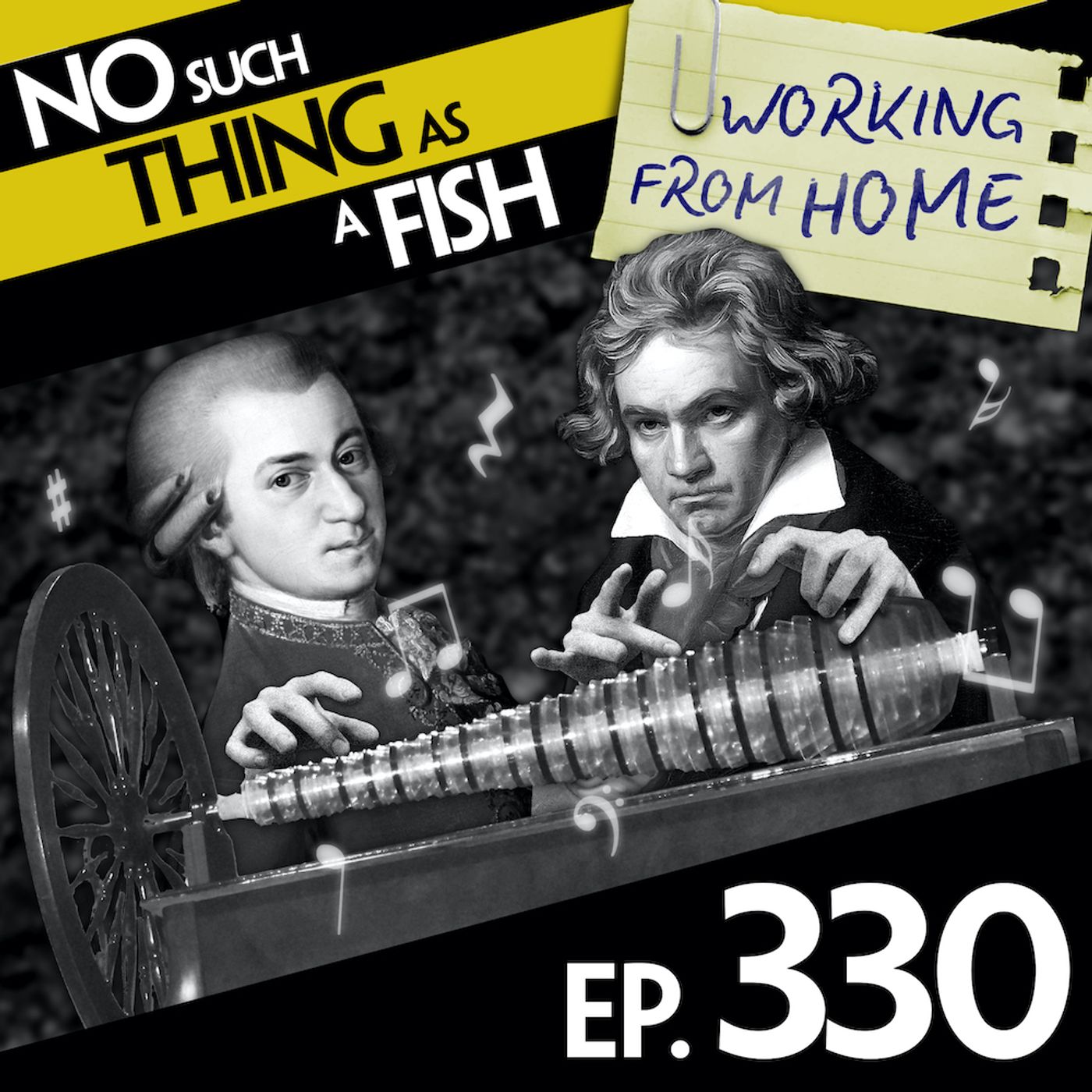
330: No Such Thing As An Antarctic Vindaloo
Visit nosuchthingasafish.com for news about live shows, merchandise and more episodes.
Press play and read along
Transcript
Speaker 1 Running a business online?
Speaker 2 Look legit and own your own brand with professional tools from GoDaddy.
Speaker 6 Instantly build trust with your customers and boost your credibility with an email that matches your domain so people know you mean business.
Speaker 9 There's never been a better time.
Speaker 11 Just go to godaddy.com/slash GDNow and choose from a wide variety of popular domains to find one that's right for you.
Speaker 11 Pair that with a professional email that works for all your business needs, from daily communications to email marketing and everything everything in between.
Speaker 15 That's a little price for a lot of credibility.
Speaker 12 For a limited time, get a domain and matching professional email for just 99 cents a month for one year.
Speaker 1 Go to godaddy.com slash gdnow and look legit with godaddy. That's godaddy.com slash gdnow.
Speaker 3 Again, go daddy.com slash gdnow.
Speaker 14 There's never been a better time to choose the domain and email that's right for you.
Speaker 17 New customer purchases only products auto-renew separately. See terms on site.
Speaker 16 go daddy.com slash gdnow
Speaker 18 What if Juliet got a second chance at life after Romeo?
Speaker 19 And Juliet, the new hit Broadway musical and the most fun you'll have in a theater. I got the I am the time.
Speaker 19 Created by the Emmy-winning writer from Schitt's Creek and pop music's number one hit maker. And Juliet is exactly what we need right now.
Speaker 19 Playing October 7th through 12th at the San Jose Center for the Performing Arts. Tickets now on sale at BroadwaySanjose.com.
Speaker 21 Hello and welcome to another episode of No Such Thing as a Fish, a weekly podcast coming to you from four undisclosed locations in the UK. My name is Dan Schreiber.
Speaker 21 I am sitting here with James Harkin, Anna Trasinski, and Andrew Hunter Murray.
Speaker 21 And once again, we have gathered round the microphones with our four favourite facts from the last seven days and in no particular order, here we go. Starting with you, Anna.
Speaker 21 My fact this week is that golden moles shine in all the colours of the rainbow and they'll never know it. Oh
Speaker 21 sad.
Speaker 21 It's what a tragic fact to open with. Is it because they're They're stupid?
Speaker 21 They don't even know their moles. Is this the reason?
Speaker 21 They don't know their moles, they don't have a concept of colour, they don't know what a rainbow is. There's a lot of reasons why, but it made me wonder if there were things that we don't know about.
Speaker 22 Do you know what I mean? It's like, and we're not smart enough to know what they are. So it could be that there are amazing colours that no one knows what they are that we give off or smells.
Speaker 21 Yeah, so dogs are doing a podcast saying, Did you know humans smell exactly like
Speaker 21 rotting mushrooms and they'll never know it.
Speaker 21 They've got the word dickhead written on their foreheads.
Speaker 21
Anyway, so back to the old moles. I read about them in this fantastic article in the London Review of Books.
It's by Catherine Rundle, and this is about the golden mole.
Speaker 21 And it's the first known iridescent mammal. So iridescent means it like it shimmers like, you know, when you spill petrol or in soap bubbles or a pigeon's neck.
Speaker 21 So they have this amazing fur, which is a very specific structure, which reflects and reflects light in a way that causes this rainbow effect to happen, but they are totally blind.
Speaker 21 So usually iridescence in nature is for attracting mates or maybe warning off a predator to suggest that you're poisonous. But this serves absolutely no purpose whatsoever.
Speaker 21 They're underground almost the whole time.
Speaker 21
They do have eyeballs, weirdly. We think the optic nerve isn't really functioning anymore.
They have eyeballs, but their eyeballs are covered with skin and fur, so aren't doing that much good.
Speaker 21 So yeah, they'll never know.
Speaker 22 And then we think that it's possibly to repel water, this particular sheen, or it could be to help them skid through holes when they're digging holes in the sand.
Speaker 22 They can go really quickly because they have these amazing, like, scale-like things on them. Uh, but the colour is just a byproduct of that, right?
Speaker 21 Yeah, it's one of those accidental bits of evolution, which are surprisingly rare, exactly. So, they've evolved to have this very specific structure to make them slippery.
Speaker 21 And it happens that that's all rainbow as well. So, they live in the deserts of southern Africa and I've seen videos of them and how they travel through the sand.
Speaker 21 But what's really funny is when you're watching the videos is they swim through the sand very close to the surface so you know where they're going.
Speaker 21 It's like someone trying to escape jail by digging a tunnel under the outside but doing it right at the surface. So you always know where they are.
Speaker 21 But they're really cool the way they the way they hunt because I think we may have seen the same thing Dan. They come out of the ground and then they hunt because they're blind.
Speaker 21 They they hunt by listening to the animals passing nearby, and they're mostly eating little insects and things. And the thing is, they can hear a lot better through sand than they can through air.
Speaker 21 So they'll just completely plunge their head into a pile of sand just to check where their prey is. And then
Speaker 21 they'll get a hear of its footsteps and then they'll move that way. It's really funny.
Speaker 22
They have, in your ear, you have three little bones, you might remember, like the hammer, the anvil, and the stirrup. And their hammer is massive.
It's like Thor's hammer inside their head.
Speaker 22 It's 10,000 times bigger than our hammer in our head.
Speaker 22 And the way that this helps them is when there are vibrations that come into their head, it resonates and it makes a sound way, way louder, which means they can hear specific frequencies really, really well.
Speaker 22 And so they can hear the frequency, which is about the same as wind rustling through grass. And they can hear that specific frequency really, really well.
Speaker 22 So when they're going around, they can just listen to where these tufts of grass are. And why is that useful? Because that's where the insects live.
Speaker 22 so they just hear this specific sound of wind going through grass they know exactly where it is and they head straight for it and they get their termites it's so clever
Speaker 21 not not so useful in the deserts of southern africa what do you mean well it's sandy yes but they have they have little tufts of grass in the desert right and in those in those tufts of grass that's where the termites live the termites don't live in the sand they live underneath the grass where there's a little bit of soil so that's exactly where they need to get to there aren't many of them around you're right, but it would be pretty silly for them to evolve this incredible ability in a bone 10,000 times the size of ours if they lived in a completely featureless environment.
Speaker 21 It would be,
Speaker 22 it would be stupid if they evolved so they could only hear ice cream bands, for instance.
Speaker 22 Because you don't get many ice cream bands there, but you do get tufts of grass.
Speaker 21
Yeah. God, I bet they'd kill for an ice cream band, though.
That's true. There's one part of their body that's a lot smaller than the bone in their middle ear,
Speaker 21
which is massive. It's their penis.
Oh, here we go.
Speaker 21 So, this is the disadvantage of being a golden mole, and it's very important to them.
Speaker 21 So, there is a hottentot golden mole, that's one of the species names, and females prefer males with bigger penises.
Speaker 21 And the reason for that is that they have no other means of differentiating between males.
Speaker 21 They're all underground, they're all blind, there's no way of telling who's an appropriate mate or not, apart from penis size.
Speaker 21
And the whole penis is approximately a millimeter and a half long. It's not huge.
Proportionally, is that okay? It's still quite small. It's still tiny.
Speaker 21 Proportionally, it's still small.
Speaker 21
It is quite, yeah. And they don't even have a scrotum, so they can't be judged on that.
So the whole penis is between 1.2 and 2.5 millimeters long, which is a tough.
Speaker 21
I mean, just to be clear, we're not judging them on anything, are we, Andy? Well, speak for yourself. I am.
Judge, judge, judge.
Speaker 22 There's not many people Andy could judge on this particular metric, but the one millimetre penis golden mole.
Speaker 21 you betcha
Speaker 21 those idiots with their even smaller penises
Speaker 21 just
Speaker 22 oh my god um i was reading the other day in fact this might have been something that was written by you andy i'm not sure about scrotums
Speaker 22 and about how um all mammals used to live
Speaker 21 sorry
Speaker 21 has andy been publishing scrotum papers in the background of this podcast
Speaker 21 It's about how they're much too big, actually, scrotums. And they make perfectly reasonable penises look small.
Speaker 22 Right. It was about how all mammals used to live,
Speaker 22 used to be nocturnal and used to hunt at night. And
Speaker 22 the reason was, one of the reasons was it was much colder at night.
Speaker 22 And if you were in the daytime, it was too hot. And if you didn't have a scrotum, your testicles would be inside your body and they'd get get too hot.
Speaker 22 And so one of the things that allowed mammals to live during the day was scrotums because then the testicles hung outside, which was a bit cooler, which meant they could spend time in the sunshine.
Speaker 21 Oh, wow.
Speaker 22 So without scrotums, we'd all be living at night.
Speaker 21
That's very cool. Yeah.
Yeah. Great theory.
Was that one of your papers, Andy? You don't seem to have a very good memory of it, but it was.
Speaker 21 To be honest, I write so many papers about the scrotum, but it's hard to differentiate them.
Speaker 21
Do they even like mating, though? Because they're super super antisocial. In fact, all moles are already antisocial, aren't they? But golden moles don't hang out together at all.
Massive loners.
Speaker 21 And I think they're quite bad parents.
Speaker 21 Again, in common with normal moles, which after when their kids are just a couple of weeks old, I think they literally take them in the burrow, they shove them up to the top, and then they seal the entrance.
Speaker 21
So their baby is just then stranded. They've got a bugger off.
You could say the golden moles, they are the massive loners with the tiny boners. That's how you can remember what they are.
Speaker 21 Yeah, that's a tagline. That's what you're chanting as you go through the desert bullying them, isn't it?
Speaker 22
Yeah, moles, like actual moles. You're right, they're really, they are loners.
They don't like to go anywhere near each other.
Speaker 22 And each animal has a territory which is about the size of a football pitcher.
Speaker 21 Whoa. That's a lot, isn't it?
Speaker 21 For one mole.
Speaker 22 That is a lot of
Speaker 22 real estate.
Speaker 21
That's insane. We should say, yeah, the golden mole is extremely mole-like, and I think it should be a mole because it does everything that moles do.
But it's actually not an official mole.
Speaker 21 It's miles away from it on the taxonomic tree, and they're more closely related to elephants than they are to moles. And in fact, according to the Wikipedia page,
Speaker 21
it's at the moment classified as a chrysochlorodite, but that's under review. So we're kind of unclear where we put them on the evolutionary.
What does that mean?
Speaker 21
It just means that they're classified as something, but we're not really sure where they are. And, you know, we might move them to another bit of the tree.
The Wikipedia page on them is really good.
Speaker 21 I don't know who wrote it, but some real expert. I guess you would have to be an expert on the golden mole to write about it.
Speaker 21 No, but some of the, you know, it's it's, I just shout out to Wikipedia because it's very clearly written and comprehensive. It also has this fact, which I loved.
Speaker 21 They have only one toe on each forefoot, which has evolved into the shape of a pickaxe. And all the other toes on their front feet have kind of withered away.
Speaker 21
So they are so efficient at digging through the sand that they need to get. Oh, cool.
Yeah. And that actually is a bit different to moles, isn't it?
Speaker 21 Because moles have those kind of big paddles on their feet where they push through the sand. But the golden moles, because they swim more like a shark, they've got to be slippery.
Speaker 22 Yeah, they're sometimes known as the shark of the dunes, aren't they?
Speaker 21 Are they?
Speaker 22 Yeah, and I think that's because, like Dan says, they're so close to the surface. They've probably got one of their pickaxes sticking up.
Speaker 22 So you can, or maybe even their one millimetre penis sticking up out of the sand.
Speaker 21 So you can see that's when we're doing backstroke.
Speaker 21 I just got one thing on moles. In 1519, a community in Italy launched a massive court case against moles on the grounds that they were damaging crops.
Speaker 21 And you can read the full sort of transcript of what the attorney's arguments were against and for the moles.
Speaker 21 And so the attorney for the defense of the moles, the moles couldn't come to court, so the attorney spoke for them in absentia, said they confer all these benefits.
Speaker 21 So they destroy noxious insects, for instance.
Speaker 21 And he eventually argued successfully that if they are sentenced to be exiled, they should be found a suitable place of abode and have safe conduct on the way there to secure them from harm from cats and dogs, etc.
Speaker 21 And the judge is there, and you can read his ruling where he did, in fact, agree the moles were to be exiled, but they were given safe conduct.
Speaker 21 And any pregnant mole or mole with young children had an extra 14 days to leave the community.
Speaker 21 There's no evidence as to how this was actually enforced afterwards.
Speaker 22 Quite often what happened with those kind of things is they would say, okay, well, let's say, for instance, rats.
Speaker 22
There are rats here. We need to get rid of them.
So we're going to make a law to say they have to go within 14 days.
Speaker 22 And then when they haven't gone in 14 days, they go, okay, well, we gave you a chance. We're now going to exterminate you.
Speaker 21 It's like killing God's creatures, isn't it? You have to give, because
Speaker 21 you shouldn't be destroying too much of God's creation without having legal authority to do it.
Speaker 21
Mole prison would be amazing though. That would be a really fun thing to film because obviously they'd all just tunnel away immediately.
Yeah, that would be a...
Speaker 21 The Great Escape would be a much longer film.
Speaker 1 Running a business online?
Speaker 2 Look legit and own your own brand with professional tools from GoDaddy.
Speaker 6 Instantly build trust with your customers and boost your credibility with an email that matches your domain so people know you mean business.
Speaker 9 There's never been a better time.
Speaker 11 Just go to godaddy.com slash GDNow gdnow and choose from a wide variety of popular domains to find one that's right for you.
Speaker 11 Pair that with a professional email that works for all your business needs from daily communications to email marketing and everything in between.
Speaker 15 That's a little price for a lot of credibility.
Speaker 12 For a limited time, get a domain and matching professional email for just 99 cents a month for one year.
Speaker 1 Go to godaddy.com slash gdnow and look legit with godaddy. That's godaddy.com slash gdnow.
Speaker 3 Again, go daddy.com slash GDNow.
Speaker 13 There's never been a better time to choose the domain and email that's right for you.
Speaker 17 New customer purchases only, products auto-renew separately.
Speaker 16 See terms on site, go daddy.com slash GDNow.
Speaker 23 Life's messy. We're talking spills, stains, pets, and kids.
Speaker 25 But with Anibay, you never have to stress about messes again.
Speaker 26 At washable sofas.com, discover Anibay sofas, the only fully machine washable sofas inside and out, starting at just $699.
Speaker 20 Made with liquid and stain-resistant fabrics.
Speaker 27 That means fewer stains and more peace of mind.
Speaker 28 Designed for real life, our sofas feature changeable fabric covers, allowing you to refresh your style anytime.
Speaker 18 Neat flexibility?
Speaker 29 Our modular design lets you rearrange your sofa effortlessly.
Speaker 24 Perfect for cozy apartments or spacious homes.
Speaker 26 Plus, they're earth-friendly and built to last.
Speaker 27 That's why over 200,000 happy customers have made the switch. Upgrade your space today.
Speaker 18 Visit washable sofas.com now and bring home a sofa made for life. That's washable sofas.com.
Speaker 25 Offers are subject to change and certain restrictions may apply.
Speaker 21 Okay, it is time for fact number two, and that's my fact. My fact this week is that Mozart and Beethoven both compose music for an instrument made entirely of glass.
Speaker 21 It was invented by Benjamin Franklin.
Speaker 21 Benjamin Franklin invented what was an incredible instrument, hugely popular in the 1700s and so massive that it was used by some of the biggest composers of the day.
Speaker 21 I had no idea there was a connection between Franklin and, say, Mozart and Beethoven. That's like,
Speaker 21
you know, here's... Come on, Franklin's connected to everyone.
He was the Giles Brandreth off and stuff like that. I mean, he knew everyone and he did everything.
Speaker 22 So, Dan, why don't you tell us about this glass instrument? Was it like a violin made of glass or a drum made of glass? That would work.
Speaker 21 Yeah, so it's called an harmonica and effectively it's kind of like a glass piano.
Speaker 21 So Franklin in the 1700s was seeing a lot of people play glass bowls that are tuned to notes, which you still see a lot of people doing.
Speaker 21 You know that thing with the wine glass, if you lick your finger and
Speaker 21 you run it over the lid and it's...
Speaker 22 Yeah, basically when the conversation dries up enough in a wedding, everyone starts doing that, don't they?
Speaker 21 Yes, exactly. And so he thought this is really beautiful music and you can see people making tunes out of it.
Speaker 21 The problem is, is that if you were going to play that at a gig, you have to line up 50 glasses. It's not practical because you could smash one and suddenly that's your C note gone.
Speaker 21 So what he did was he created an instrument whereby he had a glass blower in London turn it into effectively like a piano that you play.
Speaker 21 And just to say when you play it, it works by a foot pedal, right? So he made it horizontal. So usually you'd have the glasses standing up vertically, so you have to hold them down with one hand.
Speaker 21 And we've all done it at dinner parties but he put them horizontally and attached them all in a row and then you spun them around constantly with a foot pedal so I think you just had to sort of if you touched it with your hands it would be constantly spinning but then I can't work out where you put the jar of water
Speaker 21 I must watch a video of it because you've got to keep moistening your hands to keep it working. So presumably you have to keep dipping like a finger ball.
Speaker 22 Yeah, you have to do that. Although quite soon afterwards, there was a new version that was made, like an improvement, where there was a little trough of water underneath the glasses.
Speaker 22 So when they span, they kind of got moistened by themselves, which was quite clever.
Speaker 21 That's very crazy. That's crafty.
Speaker 21 It went from being a hugely popular instrument to suddenly a lot of controversy because people started noticing a few things about it and reporting that it was sending people mad.
Speaker 21 Oh, yeah, that's right. Yeah, and that
Speaker 21 in some cases, a few deaths were off the back of, supposedly off the back of it. And suddenly, books were publishing that this was a dangerous instrument.
Speaker 21 And then suddenly, they were saying it was the most dangerous instrument in the world and its reputation
Speaker 21 Yeah, it's extraordinary it basically fake news took it down as an instrument and there was a lot of theory that possibly there's a bit of truth to why people were sent mad which was off the back of the instrument itself and licking your fingers on an instrument.
Speaker 21 No, okay.
Speaker 21 So the theory was that there was there were crystal bowls and they were they were on this harmonica spindle and they they contained some lead and some people thought maybe the lead from the bowls, because you can play with both hands.
Speaker 21
If you haven't broad enough span, you can play 10 notes at the same time. It's quite impressive.
And people thought you can maybe absorb lead into you,
Speaker 21
into your fingers. That kills you.
Blah, blah, blah. Lead poisoning.
However, it has also been pointed out that this is unbelievably unlikely.
Speaker 21
Because at the time that the harmonica was being played, doctors widely prescribed massive doses of lead for various ailments. Food was preserved with lead oxide.
Food was cooked in lead pots.
Speaker 21 People drank from lead vessels.
Speaker 21 Like, the main main lead risk in the 18th century was not the glass harmonica, the spooky instrument.
Speaker 21 Yeah,
Speaker 21 I think it's just because it was spooky.
Speaker 21 It
Speaker 21
makes a really ethereal noise. And also, it was used by podcast favorite Franz Mesmer, wasn't it? So he used to go around mesmerizing people.
We've talked about him before, hypnotizing people.
Speaker 21
And he used the harmonica because it does make this very ghostly noise. And so it was associated with hypnotizing ladies.
It's always ladies.
Speaker 21 all part of the constant 19th century panic that anything women did that might be slightly challenging or might slightly encroach on the world of men must send them mad and cause them to faint so they should be banned from doing it.
Speaker 22 But actually all the best players of this instrument were women right?
Speaker 22 So
Speaker 22 the first person to publish a book about it was called Anne Ford. She published it in 1761.
Speaker 22 She was married to a friend of Gainsborough who was called Philip Thickness, which is quite a good name.
Speaker 22 And she was the person who actually came up with the idea of turning the glasses into an actual instrument.
Speaker 22 Whether Franklin took the idea from her and did it, or whether they came up with it independently, I don't know.
Speaker 22
But there was also someone called Marianne Davis, who is the most famous player, probably in the whole of Europe. And she went around Europe and taught it.
And like Mozart met her, and
Speaker 22 Mesmer, I think, watched her play and then decided to bring it into his mesmerization and stuff. So she was super famous.
Speaker 21 Yeah, there was a double Marianne. It was a Marianne sandwich, although not with anything in the middle, because she was the one who popularized it in Europe.
Speaker 21 And then maybe the best player of ever was this German lady called Marianne Kirch-Gessner. And Mozart, towards the end of his life, wrote lots of stuff specifically for her on the Harmonica.
Speaker 21
And actually, when he died, he was in the middle of writing her another piece. And she was very famous.
She was another Jars Brandis. She sort of knew everyone, like Goethe and Haydn.
Speaker 21 But she, maybe there was some truth to the Harmonica cursing people because she had caused her nervous breakdown.
Speaker 21 Yeah.
Speaker 22 In fact, all of the people who played it in the 18th century, all dead.
Speaker 21 That was a good line.
Speaker 21 But Marianne Kirchgessner was assaulted by Napoleon's soldiers in 1806, and she never really recovered from that. So that was more the cause of her nervous breakdown, I think, rather than
Speaker 21 the instrument. There's a great
Speaker 21 line about it from 1786. This is a German player called Karl Rülig.
Speaker 21 He said that the harmonica could make women faint, send a dog into convulsions, make a sleeping girl wake screaming through a chord of the diminished seventh, and even cause the death of one very young.
Speaker 21 And that was the guy who played it for a living. Look at my recommendation.
Speaker 22 I think someone actually did die, didn't they, at the time that someone was playing a Glass Harmonica, and it was like a cause and effect thing.
Speaker 22 Everyone was like, oh my God, it must have been Glass Harmonica that caused it. And that was like the start of the big sort of banning it.
Speaker 22 They banned it in churches and stuff like that, didn't they, in Germany?
Speaker 21 So, Dan, you mentioned that franklin picked up this glass harmonica idea by watching people play musical wine glasses and he actually did that in britain so in britain and ireland this was an extremely popular musical instrument before franklin made it vaguely acceptable to the rest of the world there would be concert halls that filled out with people just spinning their fingers around wine glasses and the most famous player was this amazing guy called richard puckridge or Puckridge.
Speaker 21 You know, there are various spellings. But have you guys read about him? He's amazing.
Speaker 22 He's amazing. I love him.
Speaker 21
He's the best. He's super fun.
So he was the self-proclaimed inventor of musical glasses. He
Speaker 21
spent, he had all sorts of crazy ideas for how to make his fortune. So he designed wings for human flight.
Don't think they took off.
Speaker 21 He said he had this idea, he wrote this paper about how you could regain youth by injecting yourself with the blood of young maids.
Speaker 21 And so he recommended blood transfusions between young maids and anyone over 60.
Speaker 22 Just on that.
Speaker 22 So when he came up with that idea, people took him quite seriously, some people, and there was a big kind of hoo-ha in the burial industry and the funeral industry because they were like, well, if people are going to live forever, then what are we going to do for a living?
Speaker 22 And so he supposedly agreed that everyone who was having this treatment would sign a contract that as soon as they reached 999 years old, they would have to pay a funeral company for the price of a burial.
Speaker 21 Wow.
Speaker 21 I think they discussed that in Parliament, didn't they? That was their token nod to what's such a funny idea. But what do the funeral people do for the first 900 years?
Speaker 21 So weird. I think they discussed that in Parliament, didn't they? That was their token nod to
Speaker 21 his ridiculous idea.
Speaker 21 I liked, he had an account once of doing a concert where three hours before the performance, he was going to do a concert on his glasses, which are obviously quite fragile, and three hours before the performance, a large, unmannerly pig entered the room and smashed the whole machine to pieces.
Speaker 21
That's an excuse for somebody who hasn't done the homework, hasn't learned the piece that they're going to need to play. They have a brilliant brainwave.
They think, get me a pig.
Speaker 22 Sorry, a pig ate my instrument. It's like,
Speaker 22
there was another thing I saw. It was a newspaper article.
He took out an advert to apologise because he'd done a concert that everyone thought was terrible. And the advert said, Mr.
Speaker 22 Pockrich takes this opportunity to apologise to the public for their disappointment. He added a glass too much to his instrument.
Speaker 22 And I can't tell whether that means he put one glass in there and it meant all his notes were off, or whether it's a euphemism for, I got really pissed and I couldn't do the concerts.
Speaker 21
It sounds like it's that. It's that, yeah.
That's true. That's so good.
Another banned instrument during the early 1900s was the saxophone. Nazi Germany banned it.
Speaker 21 They saw it as a symbol of jazz. So it wasn't that it was turning you into a different mental state.
Speaker 21
It was purely that they didn't like it at all. But churches banned it as well in the early 1900s.
The Vatican banned it in 1914.
Speaker 21 And I just love, I've never thought of a saxophone being in the Vatican church. No, sort of busting out a solo.
Speaker 21
What an image. But yeah, they banned it.
So maybe we'll never get to see it. Obviously, there was the thought that it suggested and promoted sexual dancing.
So
Speaker 21 that was a thing that they wanted to avoid as well. That is like a church sort of banning gangster rap in churches, though, isn't it?
Speaker 21
It's like people going, yeah, we weren't going to do this anyway, guys. Don't worry about it.
It's like me as a 14-year-old banning supermodels from my birthday party. There was never any prospect.
Speaker 21 Okay, it is time for fact number three, and that is Andy.
Speaker 21 My fact is that envelopes used to be made of clay.
Speaker 21 Wow.
Speaker 22 That must have been a hard job being a postman in those days, right?
Speaker 21 Yeah.
Speaker 21
So this is, um, we're used to envelopes being made of paper, obviously. That's what we think of as the classic material for them, but it's not.
It's not the original. So this is
Speaker 21 in Babylonian era times in 2000 BC, give or take.
Speaker 21 What you would do, if you were writing a message to someone, you would write a message on a clay tablet, and that would dry, and then that would be the thing that you were sending.
Speaker 21 But you wouldn't send that just open because anyone could read it.
Speaker 21 So you needed an envelope, and to make that, you would put more wet clay over the tablet, press the ends together to seal it, and then you put the whole thing in a kiln, bake it, and then you send that massive baked package of clay and the recipient has to smash it open, the outer envelope, to receive the tablet that's on the inside and that's what you do.
Speaker 22 That's a pretty exciting way of opening a letter, isn't it?
Speaker 21 Smashing it with a hammer.
Speaker 22 Yeah. I always think like sometimes I rip the end off an envelope to get the inside rather than opening it up with the seal.
Speaker 21
And I always think I'm pretty cool when I do that, but this is even better. Just imagine, this is next level.
Yeah. Imagine what fun you would have had in ancient Babylonia.
Speaker 21 But people's birthdays must have been interesting.
Speaker 21 You just spend about six hours beating away at clay.
Speaker 21 There really aren't very many samples of these things around because obviously they were designed to be smashed on delivery. There are some, thank goodness.
Speaker 22 Yeah, because Piers Fletcher, the producer of QI's, got one.
Speaker 21 Has he?
Speaker 22 Yeah, he bought one when he was in, I think he was in Iraq or something, many, many years ago, but he bought one.
Speaker 22 It's dated to 2028 BC. He knows when it's dated to.
Speaker 22 And he says you can see the thumbprint left of the person who put it in the kiln on the thing, which gives it some kind of human touch.
Speaker 22 But he says that it was an invoice for a consignment of animal fodder, which is not exactly the most exciting thing, because none of us can read Q neophon, which is what it was written in, right?
Speaker 22 So he might as well have said it was a love letter to someone or something.
Speaker 21 They very rarely were, though, weren't they? It was all accounting.
Speaker 21 I'm glad you clarified why he has it because genuinely I thought that was just a dig at Piers Fletcher's age because he is a middle-aged man. I just thought you were claiming that's how he got it.
Speaker 22 He got it for his 21st birthday.
Speaker 21 He's got a few of them, yeah.
Speaker 21 Didn't it used to be the case as well that a lot of these, and it was Sumerian and Babylonian, wasn't it? And they'd have the same stuff written on the outside as on the inside.
Speaker 21 So a lot of the time they were used as a protection against fraud. And so these were the very oldest ones.
Speaker 21 Basically, you'd have a record of a transaction, like I've sold you this many bumblebees for this many dinars, and you put that in your clay, and then you sealed it up, and then you wrote exactly the same thing on the envelope.
Speaker 21 And the way it worked was when the recipient got it, if there was a dispute over whether the envelope had been tampered with, then you smashed it open to check the inside. That's okay.
Speaker 21
So it was to make sure they were the same inside and out. Because otherwise, you could melt the clay, soften it, and then change it.
Put an extra zero on. I wanted this many D Not very craft.
Speaker 21
Or this many bees. Exactly.
Yeah,
Speaker 21 it's very open to this beef.
Speaker 22 You get a lot of envelopes that you can see in like postage museums that have got holes punched in them.
Speaker 22 And that's because they used to fumigate them when there were pandemics and when there were diseases going around.
Speaker 22 So, like, for instance, when there was yellow fever around, people would put little holes in and they would fire like formaldehyde gas or smoke or whatever to try and kill the kill the pathogens.
Speaker 22 And if you send a letter to any zip code in America that begins 202, 203, 204 or 205 then it will be irradiated before it gets there and that's because they're the zip codes of Washington DC around the federal agencies and they go to a special place where they're put on a conveyor belt and they've fired radiation at them which will kill any bacteria, any viruses, anthrax, all that kind of stuff.
Speaker 22 Then they're aired out and then they're sent. So if you're Donald Trump and you get a letter, it's going to be quite faded and crispy and a little bit yellow.
Speaker 22 That's all his mail is going to be a little bit like that because it's gone through this process.
Speaker 21 Yeah, it's so cool. And that was a response, wasn't it, to the anthrax spores that they were put in the post in Washington in about 2001.
Speaker 21
And five people died and, you know, there were lots of facilities contaminated. So this is kind of their way of dealing with that.
Yeah. Yeah.
Speaker 21 Apparently, people who work at the Royal Mail say one of the serious problems they have, the sorters who have to sort through the envelopes, is that people don't seal their envelopes.
Speaker 21 And there's lots of complaining about this online, and they say it's very annoying because often you have to match a card with its envelope and it's hard to do.
Speaker 21 I imagine there are lots of sort of missent things where the wrong card's been put in the wrong envelope.
Speaker 21 And they don't know why people do it, but there's speculation that it's based on the old paper rate. So this was something that was abolished in 1969.
Speaker 21 But I believe Piers Fletcher, formerly mentioned sender of cuneiform tablets, Does remember it he's posted about this on the forums before and this was if you wanted to send printed matter like newspapers or pamphlets it was just a hate me so it was a reduced price but you had to send it an unsealed envelope and then the postman would open the envelope check that you hadn't put anything other than a newspaper in there and then you know seal the envelope up after that and if you sent a sealed envelope then you'd have to pay extra so there's the idea that there are still some people out there who think that maybe you'll only have to pay a halfeny if you leave the envelope unsealed but yeah cheaper.
Speaker 21 Who is still paying a halfpenny for their stamps? Other than Piers Fletcher, producer of QI, who is doing that?
Speaker 21 It's hard to say.
Speaker 21 On the kind of unexpected antiquity of things, you know the window envelope?
Speaker 21 And that's the one where you've got the little plastic window so you can double up. You don't need to write the address on the envelope because it's part of the letter that you're being sent.
Speaker 22 You're not going to tell us they did that with cuneiform tablets, are you?
Speaker 21 No, I'm just, when do you think that was invented?
Speaker 22 Well I would say in the 50s.
Speaker 21
Thanks James. Good guess.
The 90s. 90s? Brilliant.
Even better guess for my purposes, Anna?
Speaker 21 I think I've got window envelopes at my house from before the 90s. I feel like I'd be cheating because I also researched this.
Speaker 21 Okay, okay. Well, hey, Anna, who was writing window envelopes to you when you were two years old and you were needing them?
Speaker 21 I was a very professional toddler.
Speaker 21 They were designed, first designed in 1901 and patented in 1902. They're older than powered flight, which I find very weird.
Speaker 21 You find it impressive that we had the technology of windowed envelopes before.
Speaker 22 I've got to say, Andy, do you think the Wright brothers, when they first flew at Kitty Hawk, everyone went, yeah, but it's not a windowed envelope, is it?
Speaker 21 Come on, mate.
Speaker 22 There is a guy in Sweden who's scared of them. He has a phobia of window envelopes.
Speaker 21 Really?
Speaker 22 Yeah, he was in court a few years ago.
Speaker 22
Basically, he'd been driving his scooter unregistered and without a license. And so they sent him letters saying you need to pay a fine or whatever.
But he says he had a phobia of window envelopes.
Speaker 22 And so he never opened any of them.
Speaker 22
And the court partially ruled in his favor, saying he didn't know what was inside them. And, you know, he just didn't like these official things.
He thought it might be something really bad.
Speaker 21 And he did get all the money together for the fine, but then this massive pig came into the room and ate all the money.
Speaker 21 Well, speaking of eating, you used to be able to eat the windowed envelopes, didn't you? What?
Speaker 21 In the original 1902 patent,
Speaker 21
just the window bit was made of rice paper. Yeah, don't eat the whole envelope.
Don't eat the whole envelope, absolutely not.
Speaker 21 But that would solve a lot of problems today because they really irritate me because they're not recyclable, are they? Because you can't recycled. They are, they are recyclable.
Speaker 21 No, this is one of the big modern myths of society. It's the biggest.
Speaker 22 God.
Speaker 21 Anna, what have you done? You've destroyed literally millions of windowed envelopes.
Speaker 22 I know because you've been getting these envelopes since you were two years old.
Speaker 21 They are recently. I always ate the window.
Speaker 22 Price paper is not see-through, I don't think. It's almost see-through, but it's not really see-through.
Speaker 21 So I think they weren't as good probably in the open days, the original patent. It was quite translucent
Speaker 21 rather than transparent.
Speaker 22 Also, if it gets wet, it just disintegrates.
Speaker 21 Another flaw.
Speaker 21 Well, then you can see the address better. So that's actually quite useful.
Speaker 21 Do you know you used to be able to buy stamps from post boxes? Wow.
Speaker 21
This is another era that producer of QI Piers Fletcher might remember. This was in the 1930s.
And
Speaker 21 again, quite short-lived.
Speaker 21 He does actually listen to these podcasts, can I just say? I know he does.
Speaker 22 He's going to be so excited. James is going to talk about my Babylonian cuneiform.
Speaker 21 Come around, family. Come round.
Speaker 21 Everyone, sit down. Come around, grandchildren, great-grandchildren, great-great-grandchildren, great-great-great-grandchildren.
Speaker 21 Well, as you'll remember, in the 1930s, post boxes were stamp vending machines.
Speaker 21 And if they had the word stamp engraved on them, you could put a penny in and you automatically got two stamps out of it.
Speaker 21 But they actually were abolished because they kept on just eating people's pennies and not dispensing the stamps.
Speaker 21 Nice idea, though.
Speaker 21
Very cool idea. Can I tell you my favorite envelope story from 2020? Yeah, of course.
We've all got one. Yep.
So this was in Ohio. A man called Dan Kane
Speaker 21 went to the post office to pick up a letter he was expecting from the College Avenue Student Loan Company.
Speaker 21
His daughter's tuition fee. It was a loan repayment scheme that he was doing.
So he went to pick up the letter. And when he got there, he was told that there wasn't one letter for him.
Speaker 21 But due to an administrative error, the college had sent him not one, but 55,000 letters of the exact same letter.
Speaker 21 Wow.
Speaker 21 There were 79 bins of mail that contained roughly 700 copies of the exact same letter addressed to him, and he had to bring them home. He had to take them home with him.
Speaker 21 Yeah.
Speaker 21 And when he got home, he opened it up to
Speaker 21 actually get the amount because he needed to pay back this loan and worked out that the company had accidentally used the wrong interest rate and they calculated the payment wrong.
Speaker 21
So they were going to have to send him another letter with the wrong amount. amount.
That's amazing.
Speaker 21 Yeah, and he worked out that roughly it would have cost them about, or someone worked out, it would have cost them $11,000 American dollars to have posted
Speaker 21 mail. Imagine how much worse that would have been in the days of clay envelopes.
Speaker 22 Do you want to know what my favorite story from 2015 about envelopes is? Yes.
Speaker 21 Oh, yeah, we're all good. I'd sort of rather have your 2020 one if you need.
Speaker 22 I'm afraid I don't have one.
Speaker 22 In 2015, there was a guy in Gloucestershire who got a Christmas card that just said England on the envelope.
Speaker 22 He was walking down the road and the postman said to him, I don't suppose you're expecting anything from Germany are you? And he said, well, I've got a few friends in Germany.
Speaker 22 And he said, well, do you want to have a look at this? It just says England on it. And he looked and on the back, it was the address of his friends in Germany.
Speaker 22 And he opened it up and it was a Christmas card from his friends in Germany.
Speaker 21 And he said, how did you know it was for me?
Speaker 22 And he said, and the postman said, oh, I was just wandering around. I've just been asking people.
Speaker 21
I've been asking millions of people. It was from Christmas 1993.
And he'd finally made it to that town. Isn't that amazing? And what they reckon,
Speaker 22
this is what they reckon happened. Probably it used to have the correct address on.
And then it said England at the bottom, but maybe it was on a label. And the label peeled off.
Speaker 22 So it got to the right area.
Speaker 21 It got to the right post office, but it hadn't gotten the actual final address on it.
Speaker 22 And so this postman goes, Well, I might as well just try everyone that I see and just ask just in case. And he managed to find the right person.
Speaker 21 I'm just sort of imagining a guy with a beard down to the floor in ragged clothes who lost his job 25 years ago, just stumbling down the road. Is it you? Yeah, I've found him.
Speaker 21 He eventually opens it when he's desperate, works out it's for him.
Speaker 1 Running a business online?
Speaker 2 Look legit and own your own brand with professional tools from GoDaddy.
Speaker 6 Instantly build trust with your customers and boost your credibility with an email that matches your domain so people know you mean business.
Speaker 9 There's never been a better time.
Speaker 11 Just go to godaddy.com slash GDNow and choose from a wide variety of popular domains to find one that's right for you.
Speaker 11 Pair that with a professional email that works for all your business needs, from daily communications to email marketing and everything in between.
Speaker 15 That's a little price for a lot of credibility.
Speaker 12 For a limited time, get a domain and matching professional email for just 99 cents a month for one year.
Speaker 1 Go to go daddy.com slash GDNow and look legit with GoDaddy. That's godaddy.com slash GDNow.
Speaker 3 Again, go daddy.com slash GDNow.
Speaker 14 There's never been a better time to choose the domain and email that's right for you.
Speaker 17 New customer purchases only products auto-renew separately. See terms on site.
Speaker 16 Go daddy.com slash GDNow.
Speaker 26 Life's messy.
Speaker 23 We're talking spills, stains, pets, and kids.
Speaker 25 But with Anibay, you never have to stress about messes again.
Speaker 26 At washablesofas.com, discover Anibay Sofas, the only fully machine-washable sofas inside and out, starting at just $699.
Speaker 20 Made with liquid and stain-resistant fabrics.
Speaker 27 That means fewer stains and more peace of mind.
Speaker 28 Designed for real life, our sofas feature changeable fabric covers, allowing you to refresh your style anytime.
Speaker 18 Need flexibility?
Speaker 29 Our modular design lets you rearrange your sofa effortlessly.
Speaker 24 Perfect for cozy apartments or spacious homes.
Speaker 26 Plus, they're earth-friendly and built to last.
Speaker 27 That's why over 200,000 happy customers have made the switch. Upgrade your space today.
Speaker 18 Visit washable sofas.com now and bring home a sofa made for life. That's washablesofas.com.
Speaker 25 Offers are subject to change and certain restrictions may apply.
Speaker 21 Okay, it is time for our final fact of the show and that is James.
Speaker 22 My fact this week is that in 1939 America made a huge vehicle to drive across Antarctica. Unfortunately they put no tread on the tires so it couldn't drive on ice.
Speaker 21 Amazing.
Speaker 22 It's so cool. It's a thing called the snow cruiser
Speaker 22 and they knew that they wanted to drive across Antarctica and they knew that they would need something absolutely massive to do so because they wanted to drive it out somewhere and then do a load of experiments when they were in there and so they invented this enormous machine it was in the middle of america where they invented i think somewhere near boston
Speaker 22 and they had to get it from boston to the boat and then from the boat to antarctica and then from the antarctic boat to the middle of antarctica to do these things and they got it all the way to the antarctic and they realized that the wheels were just spinning around whenever they tried to go anywhere They added some chains to it to try and get a bit of grip and that was slightly better.
Speaker 21 But they found out that the only way they could get anywhere was to drive the whole thing in reverse and so they drove in reverse for 92 miles to the middle of the Antarctic and they got there and they could start doing some experiments but they couldn't really get it back and so they ended up just leaving it there so amazing incredible which poor person had a horrendously cricked neck after eating that so bad isn't it no you can just drive anywhere you i mean you can just drive backwards can't you don't need to look around it's antarctica What are you going to bump into?
Speaker 22 You're going to bump into penguins or big lumps of ice or something, right?
Speaker 21 It just sounds hilarious, the process of getting it there in the first place, right?
Speaker 21 There's this photo of transporting it because I think it left from Boston, but it was made in Chicago, maybe it was transported from Chicago.
Speaker 21 And so to get to Boston, it had to drive and it just drove along ordinary roads.
Speaker 21 And there was this huge pile up because there's this giant 55-foot-long, its wheels are twice, three times the height of a normal car just sitting in the middle of a motorway all the cars around it like what the hell is this yeah they stopped in a place called framingham in massachusetts on the way and they just stopped it in the middle of the road and so there was a traffic jam of 70 000 cars behind it just get a pass wow
Speaker 21 um it was cool it had a plane on it it had a biplane on the roof for research so it needed to carry a thousand gallons of fuel just to fuel the plane and then it needed obviously thousands more gallons of fuel all over it.
Speaker 21
And it had to have two spare tires, but the tyres were 10 feet tall. So they were just in the back.
Yeah, each tire had to be transported by a dog sled, I think.
Speaker 22 Yeah, there's a brilliant picture on the Atlantic website of 14 dogs pulling a single tire that just shows how big it was that they had to do that.
Speaker 21 And they had to go backwards as well. That was the really difficult thing for the dogs.
Speaker 21 Yeah.
Speaker 21 And
Speaker 22 in that article, actually, there is a photo of it abandoned just after they decided, look, we're not going to take it back. And then there's a later photo where it's kind of slightly buried by snow.
Speaker 22
And then there's a final photo where it's almost completely buried by snow. And there's like a little hatch where people can go in and out.
And then someone went back
Speaker 22 like in the 40s to see if it was still there and they could find it. And actually, it was kind of, they could still use it, really.
Speaker 22 I mean, they couldn't really use it much in the first place, but it was still kind of working. And they found it again in the 50s, in 1958.
Speaker 22
But now they literally don't know where it is. And it's probably covered under some snow, or it might have drifted off on an iceberg or something.
But we literally don't know where this thing is.
Speaker 21
Wow. It's amazing.
Maybe some penguins have made it into a home. Oh, that would be nice, wouldn't it? So lovely.
Yeah.
Speaker 22 There's one theory that the Soviets knew where it was and they went back and stole it.
Speaker 22 Why?
Speaker 21 It's useless. Guys.
Speaker 21 Do you know the first motorized vehicle in Antarctica, as far as I know?
Speaker 21 No.
Speaker 21 It actually went with Shackleton. Oh, really?
Speaker 21 Yeah so this was in his first Antarctic expedition in 1907 and it was an Arrol Johnston car which were the makers of the first cars in Britain.
Speaker 21 It was basically a big bit of PR for the car so quite inconvenient for the actual expedition.
Speaker 21 It did have it had skis and it had special oil that didn't freeze and it had a silencer on the exhaust that doubled as a foot warmer so it siphoned the warm air around to the front to where your feet are.
Speaker 21
But they took it with them and so they had to bring it on the boat. They had to unload some of their crucial supplies and equipment from the boat to make room for this car.
They brought it with them.
Speaker 21 They got it off the boat, put it on the snow. And much like James's vehicle he mentioned, they started spinning the wheels and they just went deeper and deeper into the snow.
Speaker 21 They thought, okay, we'll tug it with this for a bit. Maybe we'll get it working.
Speaker 21 They lasted two miles of pulling it along with them before Shackleton's crew went, can we just leave this chat behind, please? And they abandoned it in the snow.
Speaker 22 But yeah, first car in the Antarctic there was a car in the Antarctic from a Shackleton very recently it was Patrick Bergle who was Shackleton's great grandson you guys must have read about this it was a modified Hyundai Santa Fe but he actually did manage to get it working right so they said that the only modification was that they made the tires really really big and really really loads of air inside so it was as much as you could like it could roll over your foot and you wouldn't feel it.
Speaker 22 That's how much air was in the tires, and that meant that it would never sink into the ground. And I imagine they had a lot of tread on there as well.
Speaker 22 And they said that basically this is exactly like a normal Hyundai Santa Fe, apart from these tires. But then they did say, Oh, there is one other modification that it runs on jet fuel.
Speaker 22 But the reason is because jet fuel doesn't freeze quite as easily as normal fuel.
Speaker 21 Aha. But would that in that kind of atmosphere
Speaker 21 lessen its punch when you put down the accelerator?
Speaker 22 Yeah they went only on average about 20-25 miles an hour I think on the same time.
Speaker 21 But that must have taken ages.
Speaker 21 Did they go all the way across?
Speaker 22 They went 5,800 kilometers across. Whether they went to the very end, I think they might have gone to the middle and back.
Speaker 21
I bet that was dull. I bet it was exciting for the first couple of hours.
And then old Shackleton's great-grandson thought, what was my granddad thinking? Didn't he work in tedious?
Speaker 21
He's a marketing executive, this guy. Yeah.
He's not a Pundra Explorer. Nah.
Speaker 21 He just had to sit in a passenger seat of a car to be there for a few weeks.
Speaker 22
They've basically gone, we have a car which can do this. Anyone can do it, really.
Who can we get to do it? Does do any of them have any relatives left, the people who went in the first place?
Speaker 22 But they did have one thing. Sorry, just on this really quickly.
Speaker 22 They did have one thing where they had a number of these vehicles going across and they had to be roped together because, like you said, there can be crevasses.
Speaker 22 And apparently, one of them did fall into a crevasse, but luckily it it was kind of roped to all the other cars so they could pull it out. So it was kind of dangerous, I think.
Speaker 21 Yeah, yeah, yeah, definitely.
Speaker 21 That's very self-sacrificing of the other cars. I'd be because it could happen the other way, right?
Speaker 21 If the crevasse is big enough and you're in the front car and you've made it over and then you're dragged back in by the tailgators. What? Come on, Anna.
Speaker 22 I mean, you're a team going across the Antarctic.
Speaker 21
You're not like, I don't have. Fuck it.
I'm in the front car. The rest of them can do what they want.
Speaker 21 I think we've learned in the touching the void episode of No Secretary Fish, who's cutting the rope.
Speaker 21 Yeah, I don't have the right attitude for polar expeditions.
Speaker 21 This fact was about driving backwards. I found the guy who's driven backwards for the longest time.
Speaker 21 Okay.
Speaker 21 There is a taxi driver in India called Harpreed Dev who has driven everywhere backwards for about a decade now. He's a...
Speaker 22 Does this mean that at the end,
Speaker 22 on your meter, on your taxi, he ends up having to give you money at the end
Speaker 21 um so he's been issued with a special government license to drive anywhere in reverse in his home state and he has a he has a big old siren on his cab to warn people but it's so surreal seeing footage of him just driving around backwards all the time he's reversed the gearbox so he's got you know five gears in reverse and one forward and he says that the only disadvantage to this great career he's got is that he gets frequent pains in the neck, extremely bad back problems, and suffers what he calls severe vomiting.
Speaker 21 Oh man, I know.
Speaker 22 The worst thing about that with the severe vomiting is he's facing in the direction of his passengers, isn't he?
Speaker 21 You'd pull the glass window across.
Speaker 21 I definitely must have missed a detail there.
Speaker 21 Why is he driving backwards, sorry? No, you didn't. No, you did not miss a detail.
Speaker 21 He thought it would be fun and he thought it would be a fun gimmick. And then, despite the dangers of it, the government of the area also thought that was a great idea and gave him license.
Speaker 21 Yeah, yeah. I think
Speaker 22 if one person is doing something extremely weird and dangerous, but everyone else knows he's doing it at least, then everyone else can mitigate their actions to help him, right?
Speaker 21 It's written on the side of the cab that this is a backwards taxi. I think you can see that when he's coming towards you.
Speaker 21 Yeah, he did try to drive backwards to Pakistan to promote peace, but he did not have the permission to cross the border, so he was somehow. again.
Speaker 21 Right.
Speaker 22 We were talking about people going across Antarctic
Speaker 22 a few seconds ago.
Speaker 22 The first person to walk solo across Antarctica only brought one pair of underwear from the entire 38-day trip, and unfortunately, he shit himself on day 16.
Speaker 21 I'm impressed he held it in that long.
Speaker 21
Day 14 of Antarctic journey, going great so far. Day 15, still absolutely not regretting my underpant decision.
Day 16, Oh, no.
Speaker 21 The thing is,
Speaker 22 before he set off, he did an interview with Business Insider and he said that he was only bringing one pair of underwear and he was going to use the weight that he could take.
Speaker 22
He was going to use it for food. So he's like, I don't need the underwear.
I just need food. Which kind of makes sense without the idea of retrospect.
Speaker 21 of realizing that it didn't. And what happened was it was the food that was a problem.
Speaker 22 Obviously, it is always the food that's a problem in that situation. But
Speaker 21 he shouldn't have taken vin de la
Speaker 22 he took he took these things he was called colin o' brady and he took these um 1180 calorie colin bars that had been made especially for him and so they had loads of protein loads of good stuff in them and he was just going to eat these bars all the way across but one morning he just got the munchies and he just started eating all of these colin bars they contain coconut oil nuts dried cranberries, cocoa powder.
Speaker 22 And he decided to eat just loads and loads of them. And he had about 2,000 calories worth in one go, which is about the equivalent of eight Big Macs.
Speaker 22 And then the next morning, well, you all know what happened.
Speaker 21
Wow. That is not exhibiting the kind of self-control you expect.
But he, old Colin, is a very controversial figure in Antarctic law. He certainly is, yeah.
Speaker 21 Because so he claims to be the first person to have crossed the Antarctic fully unassisted and unsupported.
Speaker 21 So, that originally went to this Norwegian guy called Borge Auslan, and that was in the 90s, I think. But then they changed the definition to say that unsupported had to mean without even a kite.
Speaker 21 So, Borge had used a kite on like two occasions, very, very briefly, to get himself sort of out of snow drift.
Speaker 22 Can we just explain how that works? Because it sounds like he's just having a bit of fun with a kite.
Speaker 21 That's really fun.
Speaker 21 Was he allowed to take his yo-yo with him,
Speaker 21 Sorry, it's for transport. It's not like you stop, you fancy a hobby.
Speaker 21 So I guess you're on your sled or whatever, and you harness the wind that's going in the right direction to pull you along with your kite or to help you, to give you a bit of extra oomph.
Speaker 21 And he travelled a lot further to do his trip than O'Brady, who's just done his.
Speaker 21 And a lot of people see Bourguay as the person who really achieved this.
Speaker 21 And O'Brady's quite a self-promoter and he's written this book where he says everyone said it couldn't be done and National Geographics interviewed everyone who advised him.
Speaker 21
They were all like, no, we told him it's pretty simple. Yeah, pretty straightforward.
And it was like, there were times I was told they wouldn't be able to rescue me.
Speaker 21 And then someone's done an interview saying getting rescued in the Antarctic is kind of like ordering an Uber these days. You just, you just call someone up and
Speaker 21 get you out of there.
Speaker 21 It's very hard to see on the Uber map though, because against a featureless white background, he could be two minutes away, it could be three days.
Speaker 21 Unfortunately, there's a huge shit stain in the snow next to him. He cleaned his pants.
Speaker 22 You know, you were saying about you could use the wind with these kites. Do you know how you can tell which way the wind is going in Antarctica?
Speaker 21 No.
Speaker 22 Well, there's a few ways you can just put your lick your finger and hold it up.
Speaker 21 Not if you want to keep the finger.
Speaker 22 That's true, yeah. One almost foolproof way is to look at which way the penguins are pointing.
Speaker 22 So if there is a storm coming in Antarctic, the penguins will drop to their bellies and they will point their beaks in the direction that the wind's going to come because they know that there's a storm coming and they don't want to get blown over.
Speaker 22
I was reading this. This was an Antarctic scientist called Lizzie Meek who was writing about this.
But isn't that cool?
Speaker 21 You can just see which way the little penguins are pointing. That's really funny.
Speaker 21 Do you know who the first person possibly to set foot on the Antarctic continent might have been?
Speaker 22 Was it QI producer Piers Fletcher?
Speaker 21 This is so random, but I just came across this in my notes that I found ages ago. There was this amazing discovery in the 1980s where some bones were found in Antarctica.
Speaker 21 And until then, we thought that the very first Antarctic landing was a sealing expedition in 1820. And they found these bones and they've dated them to somewhere between 1815 and 1825.
Speaker 21 And they are the bones of a 21-year-old indigenous Chilean woman, which is just extraordinary because no one had gone near the continent, we didn't think until then and suddenly there's this young Chilean woman there no one knows where on earth she's come from or how she got there there's a suggestion that maybe the sealers who were European sealers had found someone from Chile who would know more how to survive in that kind of environment and taken her with them then left her but we just have no idea wow I just find that incredible mystery yeah I found a page on Wikipedia which is the list of crimes in Antarctica because as we were saying before, there's all these sort of, you know, to the point where you can order an Uber to get rescued.
Speaker 21 There's all these research stations that are planted.
Speaker 21 I don't think you can order
Speaker 21
to get rescued. Yeah.
No.
Speaker 21
Well, it'll arrive backwards. That's the thing.
It will.
Speaker 21 Sorry, what I meant is it's the point of you could almost, in theory, it's sort of got that sort of dense with places.
Speaker 21 And yeah, so there's all these, you know, research units where scientists are hauled up for ages.
Speaker 21 And as a result, there's a big list of the crimes that they've committed, which is always really hard because they're isolated for so long. But the first crime on the list was from 1959.
Speaker 21 And it was in a Soviet research station. And it was between two scientists who got into a massive argument, then fight over a game of chess.
Speaker 21 And it just got so heated that the guy who lost became enraged, was said to have picked up an ice axe and attacked the guy.
Speaker 21 And it's really hard to tell, actually, whether or not the wound was fatal, because there's two different stories that have been presented as a result. Some say he survived, some say he didn't.
Speaker 21 But afterwards, chess games were apparently banned on all Soviets, Russia, Antarctica. That really feels like not the main issue.
Speaker 21
Keep hold of your axes. All need for weapons and courage.
Chess. No.
Speaker 21 No, but I just like that. I like the little communities that are out there that you rarely hear about.
Speaker 21 In 2014, there was a scientist who decided to launch his tinder app while he was out there and he matched with someone in that on antarctica um yeah unfortunately there were a helicopter rideaway 45 minutes and they were leaving the next and they just get an uber
Speaker 21
Okay, that's it. That is all of our facts.
Thank you so much for listening.
Speaker 21
If you'd like to get in contact with any of us about the things that we have said over the course of this podcast, we can be found on our Twitter accounts. I'm on at Schreiberland.
Andy?
Speaker 21 At Andrew Hunter Ebb.
Speaker 22 James? At James Harkin.
Speaker 21
And Anna? You can email podcasts at qi.com. Yep, or you can go to our group account, which is at no such thing, or our website, no such thingasoffish.com.
It's got links to merch that we've released.
Speaker 21
It has all of our previous episodes. Check it out.
Anyway, as ever, we hope you're all well. We hope you're all safe.
And thank you for continuing to listen to us in these crazy times.
Speaker 21
We will be back again next week with another episode. We'll see you then.
Goodbye.
Speaker 26 There's nothing like sinking into luxury.
Speaker 25 At washable sofas.com, you'll find the Anibay sofa, which combines ultimate comfort and design at an affordable price.
Speaker 27 And get this: it's the only sofa that's fully machine washable from top to bottom, starting at only $699.
Speaker 20 The stain-resistant performance fabric slip covers and cloud-like cloud-like frame duvet can go straight into your wash.
Speaker 26 Perfect for anyone with kids, pets, or anyone who loves an easy-to-clean, spotless sofa. With a modular design and changeable slip covers, you can customize your sofa to fit any space and style.
Speaker 20 Whether you need a single chair, love seat, or a luxuriously large sectional, Anibay has you covered.
Speaker 29 Visit washablefas.com to upgrade your home.
Speaker 20 Right now, you can shop up to 60% off store-wide with a 30-day money-back guarantee.
Speaker 18 Shop now at washable sofas.com.
Speaker 12 Add a little
Speaker 23 to your life.
Speaker 20 Offers are subject to change, and certain restrictions may apply.
Speaker 31 When you think about businesses that are selling through the roof, sure, you think about a great product, a cool brand, and brilliant marketing.
Speaker 31 But an often overlooked secret is actually the businesses behind the business making selling simple. For millions of businesses, that business is Shopify.
Speaker 31 Nobody does selling better than Shopify. They're the home home of the number one checkout on the planet and the not-so-secret, ShopPay, that boosts conversions up to 50%,
Speaker 31 meaning way less carts going abandoned and way more sales happening.
Speaker 31
Businesses that sell more sell on Shopify. Upgrade your business and get the same checkout all birds and skims use.
Sign up for your $1 per month trial period at shopify.com/slash start selling.
Speaker 31
All lowercase. Go to shopify.com/slash start selling to upgrade your selling today.
Shopify.com slash start selling.