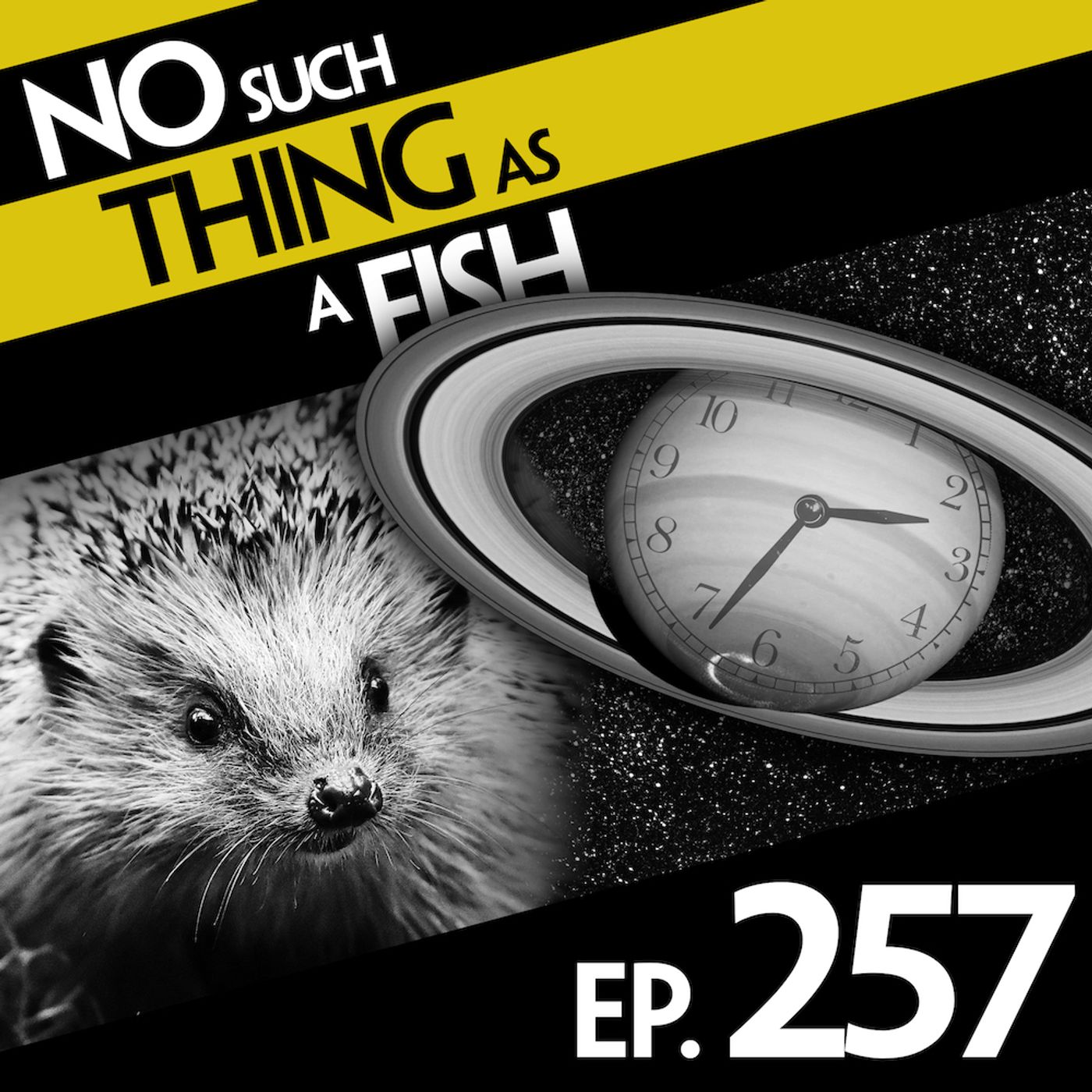
257: No Such Thing As A Squilkman
Dan, James, Anna and Andrew discuss kissing hedgehogs, the time on Saturn, and competitive ploughing.
Press play and read along
Transcript
You really want to be better with your finances. You try to put money away in savings.
You look for deals. You wrote out a budget once a long time ago.
You still overdraft from time to time and you still have debt. The truth is managing money is not easy, but Rocket Money can help.
Rocket Money shows you exactly what you're spending every month.
From there, the app helps you make a budget that meets your financial goals. The app even gives you real-time alerts when you're about to go over your budget so you don't spend too much.
With Rocket Money, you can also see all your subscriptions at a glance and cancel the ones you don't want right from the app.
Rocket Money can even try to get you a refund for some of the money you wasted. Plus, you can use the smart savings feature to start putting more money away.
Rocket Money analyzes your accounts to determine the optimal time to stow away cash without going over your budget. Our members report that the Rocket Money app save more than $700 a year.
Getting better with money doesn't have to be a pipe dream. Rocket Money can make it a reality.
Go to rocketmoney.com/slash cancel or download the app from the Apple app or Google Play Stores.
Hear that? Those are Pioneer Brand Soybean and Cornfields, the number one seed brand in the U.S. ready to harvest.
The combine reaps and separates row after row of innovative genetics.
Soybeans fall into bins and bounce off the tin with unbeatable yields. Pioneer Corn and Soybean Seed is the number one brand in the U.S.
This is what it sounds like to plant number one.
Learn more at pioneer.com/slash top crop.
Hello, and welcome to another episode of No Such Thing as a Fish, a weekly podcast coming to you from the QI offices in Covent Garden. My name is Dan Schreiber.
I am sitting here with Andrew Huntson-Murray, Anna Chaczynski, and James Harkin. And once again, again, we have gathered round the microphones with our four favorite facts from the last seven days.
And in no particular order, here we go. Starting with you, Andy.
My fact is that in the 19th century, champion plowers were traded like Premier League footballers.
Wow. I don't know how exactly like Premier League footballers it was.
It wasn't for like £10 million. No, exactly.
I think the sums are a bit lower.
But there was a big thing where there were lots of plowing competitions in the 19th century where
you had to plow up and down a field, and there are all these metrics in plowing about whether you're doing it right or wrong.
And squires who had lots of plowmen would kind of pet them against each other, and then the winners would win a year's wages, and then they might be transferred.
Can I ask what a squire is? Because I associate that with King Arthur times, and this is the 19th century. That's probably where it started.
Yeah.
So that's a kind of assistant to a nobleman, isn't it? Okay. But in the later times, it's more of a kind of
junior aristocrat, sort of a slight landowner. Okay.
So for example, you get the word squierarchy, which is a word for quite affluent families from the country. It's not a very common word.
I think do you get the word?
I don't use it casually in public conversation. It is a less common word.
I think you used to get a squishup, which is someone who is a squire and a bishop. That's great.
Wow.
Again, don't use that in normal conversation.
Do they just do that like squookman who delivers the milk but also is a squire?
Does that just apply?
Smashing the words.
So it was landowners, and they would get have these competitions so that their land got plowed, basically.
And so, like, for instance, the first one ever in Kent was in 1867, or the first big one in Kent. And that was run by a guy called Mr.
Hart Dyke, who owned a massive amount of land in Kent and who then later had children who had children who had children who had Miranda from the TV. Miranda
and Tom Hart Dyke who we know. Yeah.
Oh
he was he's still he works in in agriculture to an extent. He plants things.
Yeah so there's a massive garden in Kent which he runs from his ancestral home which was where this plowing competition took place. Wow is it? That's so cool.
He got on a side note he got he was famous for being stolen or kidnapped by gorillas out in the Dorian Gap.
And they held him for months and they let him go finally and then he went back to get directions.
And while he was kept by the guerrillas, they um or the gorillas he um
kind of you can't say it can you can't. Yeah, he did.
Although Dan pronounced it so profoundly like the word gorillas. It was like you were emphasizing an oh.
Gorilla.
It's important that you clarify. I'm slowly realising we're talking about humans and not actual gorillas.
It's the humans that took him. Yeah, so while he was kidnapped by these fighters,
he kept like a little garden, didn't he, where he was kept and like he would ask them for plants and stuff like that to kind of keep him sane. A squirrella is someone who's a squire and a guerrilla.
Squire,
anyway, I should say that where this comes from, because it's a really good story. It's a guardian long read on the World Plowing Championship.
And it's an incredible read.
It's 5,000 words of plowing action, and it's so good. So there are all these things you have to do right.
Basically, you have to plow up and down. And plowing, we should just say what it is.
It's turning soil upside down, basically.
So, you're inverting it, which means that you're bringing nutrients to the surface, and you're plowing weeds and other plants back into the earth, so they break down and they feed the soil.
So, the aim is that you prepare a field for planting. Yeah, that's what plowing is.
Yeah, but I mean, is it necessary? Maybe we'll come on to that later. Yeah, maybe.
Plowing is very controversial in this day and age. Is it? Yeah.
Because it kills the soil. Yeah.
Ruins farms.
And we've been been doing it for thousands of years.
And now people have suddenly started doing this thing called till-free farming or no-till farming where they've realized you can just spread the seeds on unplowed land and they can actually get better yields.
That means they don't ruin farms.
It's a thing. This is why they've been doing it in South America for years because their land isn't as robust as ours.
And so they've realized that it's been really drying it out and ringing the nutrients. Because the idea is that we suddenly disturb this massive ecosystem with this plow.
You dig down, you wrench up all these insects and stuff, and you plop them on top, and they don't know what they're doing.
Well, it's an argument, and experiments are happening, and they're getting kind of similar-ish results to plowed fields, so there might be something in it.
I mean, imagine if it turned out plowing had been totally pointless all of these years. Wow, I mean,
it hasn't been. There's been these amazing competitions going on, if you think about it, and it's still, and it's what they say it's the biggest event in Europe, the one that happens in
Ireland, the outdoor event. In 2017, 291,000 people went along to the plowing competition.
I read an article about it, and it said that two-thirds of the attendees have absolutely no interest in agriculture whatsoever. What are they there for? It's because it's a huge event.
You know, when you sometimes go to a village show because you're a bit bored of a Saturday, it's like a massive version of that. It's a festival kind of thing, isn't it?
And that attendance is twice as much as Glastonbury. Here are some of the things that you can actually see at it.
So, outside of the plowing, there's a robotic milking machine that milks 40 cows, so you can watch that. Cool.
There's a pestaurant which serves mealworms and crickets, local locusts.
Tractor football, so that's one of the new championships. Yeah, so it's teams of tractors push a giant football around a field.
A giant one, yeah, yeah, yeah.
And then they say there's the RTE tent, where they have a very famous commentator/slash news broadcaster called Marty Morrissey, and you can meet him, and then they say in brackets, or his cardboard cut out.
Yeah, it's a massive deal. And the same person has been at the head of the National Plowering Association, which is the organisation that runs it, for 68 years now.
It's this 85-year-old woman called Anna Mae McHugh, who I think is a bit of a legend there, basically.
And so it's quite impressive that she's a woman, because only about 2% of plowers who enter these contests are women.
And she said, I was reading an interview with her, and she was saying that there's this contest for farmerettes, which are the female farmers. And
they sort of compete over who's going to be queen of the plow.
And it used to be that the queen queen of the plow, if you won that title at the contest, you were given a hundred pound dowry as long as you were married by the age of 25. Oh, yeah, that's good.
Right on, sister.
Actually, on that, the first Farmette competition was in 1954. That was the first time they allowed women in, and not many people were happy about it.
Some people said it was introducing Hollywood Raza Mataz at its worst.
Sounds like it.
We weren't introducing May West in or anything like that.
I also said that you were allowed to enter it if it was open.
This is from, I should say, this is from Andy's article, not your article, but the one that you forwarded to us, which, as Andy says, is fantastic.
And it said the Farmette class was open to girls and women that were single, married, or widowed. Which are the three, I guess, options of life generally.
But not divorced.
Get right out of here. You might be right.
So
just while we're on plowing and sexism, there is a really interesting theory that plowing created sexism in the first place.
Strap in. It's so good.
I wonder why you were so against plowing other.
So plowing was invented with agriculture about roughly 10,000 years ago, 10 to 8. And
the original plows were called scratch plows, so they don't turn the soil over, they just literally dig a little trench through it, and you don't need too much strength to do it, but you do need
quite a lot of upper body strength to do that. And before that,
lots of women had been in charge of fields and cereal growing because they were using hose.
And then, when ploughing was invented, and I mean hose,
hose and then we're on the subject of sexism. I thought you
were
used to plant crops. Okay, do you think that's where the phrase bros before hose comes from?
But then, when plowing was invented, suddenly the men were in charge, and in Mesopotamia, there's this flip from mother goddesses to male gods, and this is the really weird thing, thing, it still happens today, as in the effects might still be being felt.
So, women descended from plow-using societies are much less likely to work outside the home or BMPs or run businesses.
Whereas in countries like Rwanda and Botswana and Madagascar, which are mostly hoe-using places, and everyone's giggling again, but in those countries, women are much likelier to be in the labor force.
And exactly, it's because of, but what's the reason that it drove women out? Is it the weight of the strain? Up a body struggle.
So, it was when people had to pull the plow or direct the animals exactly um the first world plow champion was a guy called jim eccles from ontario and the only write-up i could find um said that he was so shy he only entered because his friends talked him into it
and the second champion was hugh barr of antrim and eccles only came eighth in this competition because according to the article i read he had the bad luck of drawing a plot with a bump in it
so it's all down to how lucky you were with your little bit of field
it's about how you deal with these obstacles, you know? It's true.
And all the international competitors in that second one, which was in Ireland, hated it because they had stony fields in Ireland and you didn't get stony fields anywhere else around the world.
So you have to clear the stones out of the way, I think, before you start. So Richard Herring, whose new podcast is about him clearing stones from fields.
Is he secretly training for the next international
cloud championships? Oh my god.
Okay, it's kind of embarrassing how bad I am at budgeting. Let me see your charges.
Fine. You spent over $600 on takeout last month.
I can't cook. You know this.
Yes, I have had your disgusting food, but you're literally paying for a meal subscription on top of that.
Whoa, whoa, whoa, wait.
That can't be right. Look, just get Rocket Money.
It shows you all of your expenses in one place and even tracks your subscriptions.
And if there's a subscription you don't want, which for you, there are a lot you don't need, you can just cancel right in the app with a few taps. So you mean I don't have to call anyone to cancel?
Nope. No hold times or anything.
And they'll even try to get you a refund on some of the months of wasted money, which is a lot of money for you. Okay, okay.
And if you thought I was done, I'm not.
The app can also help you make a budget that works for your income. Anytime you get close to your spending limits, it alerts you.
So you know exactly where your money is going at all times.
All right, Emin. What do I have to do? Go to rocketmoney.com/slash cancel or download the app from the Apple or Google Play Stores.
Listen, these are fields of pioneer brand corn and soybeans, the number one one seed brand in the U.S., ready to harvest. The combine roars through proven genetics.
Grain falls into bins until they overflow with unbeatable yields. Pioneer corn and soybean seed is the number one brand in the U.S.
This is what it sounds like to plant number one.
Learn more at pioneer.com slash top crop.
Okay, it is time for fact number two, and that is James. Okay, my fact this week is that the American Center for Disease Control has warned against kissing hedgehogs.
How come?
Because they can give you illness. They can give you salmonella specifically.
And there have been 11 in January they said that there have been 11 people in eight states who have got a strain of salmonella and in ten of the eleven cases the people had reported recent contact with a hedgehog.
It's too much to be a coincidence. It's too much.
It's too much. I can only think that the 11th person is lying.
This happened in Missouri, in Minnesota, in Colorado, Maine, Mississippi, Nebraska, Texas, and Wyoming.
And we already knew that hedgehogs can give you salmonella, but it seems like it's a particularly bad strain at the moment in America.
It's so widely spread across all the different states that it makes you think as though each state has one person and they all know each other and they just have a hedgehog kissing club and they're just like sending videos around to each other.
It could be that. Or it could be just one widely traveled hedgehog
who's just going around attacking people. Is it French kissing that they're doing with the hedgehogs or is it just it doesn't specify but I think it's nuzzling.
Okay. Right.
If you imagine like a you could do that if you're a small child with a hedgehog wouldn't you? If I had a pet hedgehog I would definitely kiss it at some point. Would you? Yeah.
Okay. I get attached.
That sucks.
It's airborne, right? So they don't even have to have snogged it. Some hedgehog owners might have just been near it and it's got in the dust between the hedgehog and the turbine.
It can do, but it dies quite quickly in the air, I think. Maybe you hold the hedgehog and then you put it down and you suck your finger
for whatever reason you like. You're going to suck your finger for any reason.
Although you shouldn't, incidentally, while we're on giving advice about what to do with hedgehogs, you shouldn't have sex with them because it wasn't exactly too well.
I know in 2007, a Serbian man needed emergency surgery after he had sex with a hedgehog on a witch doctor's advice.
She told him it would cure his premature ejaculation, and it actually just left him severely lacerated because they're covered in needles.
Anywho, sorry, salmonella. Yes, so other
animals in the US that can give you salmonella or that have given people salmonella in the last few years include chickens, ducklings, guinea pigs, frogs, turtles, geckos, and bearded dragons. Ooh.
These have all given people salmonella recently. Or from kissing or from.
I don't know. I don't know what kind of eating undercooked bearded dragons.
You know, when you eat a slightly undercooked bearded dragon, you often feel sick afterwards.
A turtle was in that list, and I was reading a story of in China. There was a man who made the news not too long ago because he decided to get rid of his pet turtle.
So he was releasing it back into the wild. And as he did so, he decided to give it a goodbye kiss.
But unfortunately, it was a snapping turtle, and it grabbed onto his lower lip and refused to let go.
And you can see video footage of his face, which does not look good. Basically, it kind of locked on and didn't come off.
Yeah, so don't kiss turtles. I think just don't kiss other animals.
Is that
enough, isn't it?
Well,
there is a study,
I think it was in 2015, and it was analysing, you know, how people kiss their dogs.
Yeah, I mean, I include that in animals. Yeah, no, you're right,
but it was at the University of Arizona, and they were trying to find out whether the microbes in dog guts might be good for humans and whether they might actually it's like having a probiotic yoghurt basically kissing a dog right um it is not as delicious
but it's weird is this is really weird dogs and their owners end up having very similar gut bacteria
so you end up with the same kind of microbiome and so the study was pairing people with dogs for three months and testing them to see if there was any change yeah
is that so does that mean it's a good idea to kiss your dog because at least that you won't get strange bacteria or it's kind of pointless actually because you're not getting any new bacteria you didn't have already.
Yeah, I think they were saying it could have good effects, but also obviously it could have bad effects because what a useful piece of advice.
It probably means if you have your dog's bacteria in your stomach, then it'd be easier for you to digest dog food. Yeah.
Come Brexit.
Look at the pedigree chump.
Do you guys know the.
What do you think is the food stuff that most commonly gives people salmonella? Chicken. Eggs.
Bearded dragons.
Salmon. Or is it?
Salmon.
I used to think that. I used to think salmon.
Really? Salmonella, yeah. Sorry, it was just found by a guy called salmon.
Salmon. No.
Is it salad or something? It is, yeah. It's leafy greens.
So I didn't know this. We don't give them enough stick.
It's cucumber and melon are responsible for... are responsible for 20% of cases of salmonella, whereas chicken is only 19.
Oh, what a sticky, enormous difference.
Hey, it just overtook it at the last minute. I'm immediately going to go home, throw away the melons, and replace them with raw chickens.
Anyway, this is true. And generally, meat, so chicken, beef, and pork, account for 33% of salmonella poisonings, whereas leafy greens, again, a huge lead with 35%.
And so we never talk about that. And I think the salmonella you get from salmonella you get from the meats can be a more virulent strain.
So it produces the most deaths. But really, avoid salad, I think, is the next piece of advice.
I think that's good advice. You said that it was invented, it was discovered by Mr.
Salmon,
actually, discovered by his assistant, Theobald Smith.
Daniel Salmon was the other guy. And Theobald Smith was also the first person to discover that ticks could spread disease, and he also discovered anaphylaxis.
Did he not? Wow, he's quite a big deal.
That is a big deal. It feels like he didn't get the credit he deserved there.
No.
Smith and Ella is probably a harder word to say. Maybe that's why.
Anaphylaxis is sometimes called the Theobald Smith phenomenon.
But again, don't use that in conversation because people have no idea what you're saying.
I think if you're ringing 999 when someone's having anaphylactic shock, don't say who's suffering the Theobald Smith phenomenon to sound clever.
Hedgehogs? Yeah. Yeah.
There was a tradition in the Victorian times of having a hedgehog in your kitchen to go around eating insects. Oh, wow.
Hedgehogs seem to make quite fun pets for some people.
So they love running in their wheels. Didn't know this.
They love running in their wheels more than anything. So like a hamster, but more enthusiastic.
And I was on these sites which were saying, which were giving advice about how to keep hedgehogs.
They were saying you've got to take the wheel away as soon as the hedgehog gets pregnant because they love the wheel so much that they'll keep running while they give birth, for instance. Wow.
They'll often then trample down the thing they've just given birth to because they'll keep running. No way.
They won't look after their babies because they're too busy running in the wheel.
And sometimes they pick up the little hoglets, so that's what you call the little hedgehogs, in their mouth to take them onto the wheel.
So at least they're with them, but then they'll just run over them. It's like heroin.
It's like heroin, yeah. It's like hedgehog heroin.
That's another thing you shouldn't indulge in while pregnant, I believe.
Special advice. That's amazing.
That's incredible.
Yeah. During pregnancy.
They have very loud sex. Hedgehogs.
Do they? Yep, very loud sex. Especially if they're sleeping with a man from Serbia.
Oh, for God's sake, already?
But they do have loud sex, even when having sex with each other. And there was a man in Germany who called police once.
He was in his apartment and he was reporting heavy panting happening under the common stairwell in his house. So we called the police saying, Can you stop these heavy panters? And
the police came round and they just found two mating hedgehogs under the stairs.
And as the police spokesperson said, we just found two hedgehogs loudly engaged in ensuring the continuity of their species. And so they left me to it.
Right, yeah. Because they last a long time, which is why they were still doing it when the police came around.
They can go on for hours.
Which, again, I guess is why they're particularly believed to sports out of it.
Okay, it's time for fact number three, and that is my fact. My fact is scientists have finally worked out what time it is on Saturn.
And what time is it?
It's, well, yeah, we don't know.
We know how long they're... I can't tell you exactly right now what time it is on Saturn.
I can tell you how long a day is on Saturn, and that's what they've worked out.
It's 10 hours, 33 minutes, and 38 seconds. Now, this is new from what we thought decades ago, up by, as the article says, several minutes.
It's a very interesting reason of how they found it out.
So, Cassini, which was the spacecraft which has been taking all the images that we have of Saturn, it was an incredible mission that has ended now.
I believe that the Cassini is actually burnt up into Saturn's atmosphere now.
But everyone was looking for how long it took to rotate via looking at the planet. And there was a student of astronomy at UC Santa Cruz who started looking at the data about the rings of Saturn.
And what they noticed is that the rings themselves started taking impressions of them, kind of like how if you were having an earthquake on Earth, you could use seismology to work out how strong it was.
Say, they were noticing that a similar thing was going on with the core of Saturn that was releasing certain
seismological waves that were being recorded in the rings.
So what the guy did was he made a simulation of how fast the core would be turning by using the waves that were imprinted on the ring on a computer simulation and by doing that was able to match it up with what the spin would be and that came out at 10 hours, 33 minutes and 38 seconds.
When they discovered the rings, it was a pretty confusing episode. So Galileo, the first person to observe the rings and describe them.
Poor guy, this is in 1610 and he saw it with a telescope and he sent this cryptic message to Kepler saying I've seen the highest triform planet and Kepler told King Rudolph and Rudolph said what the hell are you on about Galileo?
And Galileo said I think it's three planets side by side because he was sort of seeing it as three.
But then so he wanted to have another look at it so he waited a couple of years for some reason and then
after a couple of years what he didn't realize was that he was observing them at the Saturn ring plane crossing.
So that is when Earth crosses like into the exact plane of Saturn's rings. So then it happens about once every 13 to 15 years.
And at that point, because they're so flat, if you're looking at them face on, you can't see anything. So they completely disappear.
So Galileo looked, they'd totally gone, and he was really freaked out. He said, I have no idea what's going on.
I'm so sorry. It seems like I've lied.
That's bad luck. It's really bad.
How often does that happen? Every 13 to 15 years. God, so it's the same thing of that timing, you know.
If we didn't look again, we would assume that it didn't have it, but it was just that little blip where suddenly it just doesn't to us. Yeah.
And then you film again a bit later. Oh, yeah, the second check.
How did he know it was the same one? I would have thought I'd just seen a different one. A different planet? Yeah.
Yeah.
I thought Galileo knew what he was looking at.
I guess that's what astronomers do for a living, isn't it? They could predict where the planets were going to be. They knew which was which.
Yeah.
He was a smart guy, Andy. Okay, well.
If not that you're not, but probably in different ways. Yeah.
I would like to see him improvising the Jane Austen play.
I think we all would actually love to see that.
Amazing. I'd actually go and see it.
But the rings of Saturn, they're 180,000 miles wide and they're only 300 feet high. Yeah.
That's crazy, isn't it? They're 400 kilometers wide, like the actual ring bit there, so they're that many miles across the road.
Around the from one end of the ring to the very furthest on the other side of the planet, yeah, yeah. But yeah, they are incredibly flat.
I think someone worked out that if they were the equivalent of paper, so if they were the thickness of paper, then you'd need a sheet of paper that was 1.7 miles across.
wow that's the equivalent there's a theory that i just saw in the new scientist this afternoon which says that the planet pluto might be a billion comets squished together
that's how all the planets are really aren't they they're just bits of rock and dust squished together i guess i think there was an alternative theory but i have i literally just saw it as we sat down so yeah it's not even um even saturn began as a pebble
Just begins as a pebble going around and then another pebble squashes into it and then bigger pebbles bigger pebbles eventually you've got Saturn.
That's such a nice fable. You'll make a great dad, James.
With your kids feeling a bit small, you can always say, even Saturn was once a pebble. That's great.
Look at him now. Look at him now.
Or her.
Did you guys know, just speaking of sort of time and space, that there are two different days on Earth? So we have two different days. There are seven in a week.
Oh, my God.
I've been saying that all wrong.
Oh, my God, what's after Tuesday? It's not Monday again.
That is embarrassing.
There are two different types of day on Earth. So there's a solar day, which is the one that we know, which is the 24-hour day.
But actually, the more legit day. So if I asked you,
what is the definition of a solar day? How quickly we spin around.
Yeah. How many degrees have you spun around? Yeah, 360.
Incorrect.
It's actually a tiny bit more than 360. So a sidereal day is 23 hours and 56 minutes.
And that's how quickly the Earth does one rotation of 360 degrees but actually because we are also rotating around the sun every time the earth rotates in order to get from midday one day to exactly midday the other it needs to spin that tiny bit more because you've moved around a bit more so our 24-hour day is actually you're spinning around a bit more than 360 degrees and i didn't know that
how does that affect our working life and pay and stuff well so i think what you can say is actually the day is four minutes shorter than you thought so you can go home from work four minutes earlier than you planned.
That's great, great. It's going to change your life.
Let's do it. Yeah.
Finish now?
We'll just stop this podcast four minutes before the end.
Yeah, so do you know how long a day is on the Sun?
How long it takes the Sun to rotate once on its axis? Yeah, as opposed to when it's light, which is all the time.
It's 24.5 Earth days on the equator, but 34 Earth days at the poles. And this is always a problem, isn't it? Because they're big gas things and things are spinning at different speeds.
Yeah, so if you're on a holiday, you would have your holiday at the pole of the Sun because you get longer. Still hot this time of year.
I don't know if you want longer. I think you want to shorten that holiday as much as possible if you're holidaying on the Sun, don't you? Well, unless you've got very good
factor sun cream. Yeah, okay.
That's amazing, though. It has two different days or three.
It's endless different days. Okay, yep.
So, Saturn, Saturn is a god in Roman mythology, right?
So there's also Jupiter. Jupiter, all the planets are gods, basically.
Not Earth. Apart from Earth.
Unless you count Gaia, who's a Greek goddess.
But Jupiter's father- Jupiter the fifth planet, then the Saturn the sixth. Jupiter's father is Saturn, right? Right.
And then the next planet is Uranus.
And Uranus is the father of Saturn. So Jupiter,
next planet, father, next planet, father. So the solar system is basically a big, who do you think you are? Yeah.
In some traditions, Mars, the fourth planet, is the son of Jupiter.
So yeah, it's like a family tree going outwards. That's a way you can remember.
And so is Uranus's father Neptune? I think we didn't know about Neptune.
And the father of all the gods is that cartoon dog from
That is really cool. That's really cool.
Yeah, it's Pluto knocked out because that just didn't work for the system. It actually is a planet, but they're like, no, no, no.
you really wanna be better with your finances. You try to put money away in savings.
You look for deals.
You wrote out a budget once a long time ago, yet you still overdraft from time to time and you still have debt. The truth is, managing money is not easy, but Rocket Money can help.
Rocket Money shows you exactly what you're spending every month. From there, the app helps you make a budget that meets your financial goals.
The app even gives you real-time alerts when you're about to go over your budget so you don't spend too much.
With Rocket Money, you you can also see all of your subscriptions at a glance and cancel the ones you don't want right from the app.
Rocket Money can even try to get you a refund for some of the money you wasted. Plus, you can use the Smart Savings feature to start putting more money away.
Rocket Money analyzes your accounts to determine the optimal time to stow away cash without going over your budget. Our members report that the Rocket Money app saved them more than $700 a year.
Getting better with money doesn't have to be a pipe dream. Rocket Money can make it a reality.
Go to rocketmoney.com slash cancel or download the app from from the Apple App or Google Play Stores.
Hear that? Those are Pioneer Brand Soybean and Cornfields, the number one seed brand in the U.S., ready to harvest. The combine reaps and separates row after row of innovative genetics.
Soybeans fall into bins and bounce off the tin with unbeatable yields. Pioneer Corn and Soybean Seed is the number one brand in the U.S.
This is what it sounds like to plant number one.
Learn more at pioneer.com/slash top crop.
Okay, it is time for our final fact of the show, and that is Chaczynski.
My fact is that the first ever blood transfusion to be scientifically recorded used a goose quill to connect an artery in the neck of one dog to the jugular vein in the neck of another. Wow.
And it was successful. The dog was okay.
One of the dogs was okay.
It was half a success.
Well, the dog was okay that they wanted to be okay. The dog that was receiving blood.
Exactly. So it's actually quite mean.
This was done in 1666 by a guy called Richard Lower or Lower, who was from Cornwall. And he travelled up to the Royal Society in London and did it in front of an audience.
And he apparently got a medium-sized dog. I don't know why the size was that relevant, but he severed its jugular and bled it until it was approaching death.
And then thought, okay, cool, now we can see if we can save this dog.
And he did that by then sort of severing the artery of a secondary dog, attaching a quill between the two two and siphoning the blood from the secondary dog into the next one.
But then you need a third dog to save the second dog and
they called that day the massacre of 500 dogs.
No, it would only ever be the massacre of one. It's only ever the last dog on the congola that dies.
But could you not like put it in like a circle so that everyone gets everyone else's? Oh yeah. Wow.
He should have done that. I don't know why he didn't do two goose quills and swap them.
But no, he didn't. He just bled.
You could put it a second quill at the back end of the dog, couldn't you?
One in the neck of the dog and one in the bum of the dog. I think think it works like that, doesn't it?
And then you get the blood just going around, you know, you've got two hearts, you've got two circulatory systems. Yeah, just like a circuit.
I don't know, the blood doesn't go from the head to the bum and the back.
Yeah, I think that would work. Yeah.
It said the transfusion came to an end when the emittant dog, which is the one who gave the blood, began to cry and faint and fall into convulsions and at last die. Oh,
yeah, they weren't, their animal rights weren't as strong in the older phrase.
But it was successful, which is kind of weird, actually, because just like humans, really, when you're doing blood transfusions in pets, it's good to have the same blood type.
I think dogs have the same blood type. I know cats have A, A, B, and B.
Yeah, I think they're different A's and B's, aren't they? As in they're different proteins on the
butt hang on. Would a...
I've never considered that. Would a great Dane have different types of blood to a Scotty? Because they're also all dogs.
So all dogs can give blood to all other dogs, but I feeling they can't give it to humans because of the antigens on the
yes. Although I didn't know they could give it to all other dogs.
I think so. It's the same species, isn't it? It's just different.
Yeah, but all humans can't give blood to all other humans.
Oh, sorry. No, yeah, you're right.
Yeah, so it's the same as humans, as in the case of the body. So a type Scotty and a Type A Schnauzer.
Yes, that would be. Yeah, yeah, yeah, yeah.
If you're a bird, any kind of bird, then you can have a transfusion from any other kind of bird. Wow.
So a robin could donate to an ostrich, but you'd need quite a lot of robins.
That's incredible.
So donating blood between
animals, they started
injecting blood from, let's say, a calf into a person. That was a year later after this first experiment.
And he died. So it was banned for a long time.
The person died.
But there was this weird rash of cases in the mid-19th century where doctors just started saying, well, milk will probably work just as well, and putting milk into people's bloodstreams directly.
Yeah.
They thought, because it's got these little oily droplets and fatty droplets, they thought, well, they might turn into white blood cells.
And they just, there were two doctors called Boville and Hodder. And this is all from.
I found this journal called Transfusion, and this is the 1969 edition, but they wrote up the whole thing.
And their first patient was said to respond dramatically to 12 ounces of cow's milk. But two of the patients who they transfused the following week died, and people kept dying as well.
Well, I didn't say respond dramatically.
And it happened for 25 years at least that people were just putting milk into your blood. Well,
that's how they started doing it, even in the 17th century. So, Christopher Wren did a lot of this bizarrely before he got into building cathedrals.
But he was involved with Richard Lauer with his first transfusion, and he used to inject dogs with water, milk, beer, wine, and opium to see if any of them work as blood transfusions.
He once said, I have injected wine and ale into a living dog, into the mass of blood by a vein in good quantities, till I have made him extremely drunk. But soon after he pisseth it out.
But also, the idea of putting animal blood into humans, there was a big theological debate about what you would be doing if you were putting foreign blood into someone else's body, because supposedly the soul would be contained inside some of that blood.
So you're altering the whole person.
So what they used to plan out was if they were going for someone who was a bit wild, they would get sheep's blood because that was a calm, nurturing, Jesus-like animal that would then give a sort of balance of a soul to this wild character.
Equally, if they had someone who was very shy, they might adopt an animal that had a bit more of a wild attitude, and the idea was to inject them with that blood. Yeah.
Although, so sheep are Jesus-like. Lamb, lamb of God.
Lamb of God. Okay, yeah, yeah, yeah.
Simones. There's a weird thing.
This is so on just taking blood and putting it into other people.
We've said before, you know, the Secret Service in America, they have several pints of the President's blood type
in his car, which is pretty cool. But I read this piece in The Atlantic about how the Secret Service was protecting Barack Obama's DNA because, you know, we all shed millions of cells a day.
So the DNA is intact. So if you, let's say the president shook hands with you and you got a few live cells or he sneezed and he threw away the tissue,
you could make, you can now make cells into other cell types.
So you could make synthetic sperm cells from the president's sneeze in a tissue, and then you can, you know, they can't fertilize eggs with them, but you could say, oh, look, we've got evidence of this.
So they could, what
is they might clone Barack Obama or I think it's not exactly that you'd make another president.
Why do you want another one? Who doesn't want another Barack Obama? Why is there you? I'll take a sterile sperm cell of Barack Obama as president of America.
But
you could fabricate evidence of an affair,
or for example you can analyze the genetic markers of diseases so you could say well he's more prone to Alzheimer's or to this heart disease and you could cast doubt on their legitimacy that way.
You could prove that he was born in Africa. Yes, you could, yeah.
So this is a real problem.
So do they presumably have Trump's DNA as well? I think a lot of people have Trump's DNA.
In Japan, blood type is a super important thing, isn't it? I don't think we've mentioned before, I think we've done it on QI, but it's on job applications and stuff.
It's so related to, thought to be so related to who you are and what you're like. Kind of like how we see maybe star signs, but much more believed in and invested in.
And yeah, you'll have to say on your application what blood type you are. But they, I mean, saying horoscopes, they, in the morning TV shows in Japan, they have the blood type horoscopes.
They do do that.
It's so weird. Yeah, and on Asian,
Asian countries on their Facebook profiles, that tends to be a thing and you're about. You would have your blood type in there because it tells you a lot about who you are for potential, you know.
I didn't even know what my blood type was until earlier this year. That's weird, isn't it? I still don't know my mom.
I don't know. I always call my mum whenever I need to know it.
She knows it. Well, she's very deaf, though, so she always says, A.
I need to know my blood type. Oh,
a B.
Thanks, mum. A, B.
Okay, that's it. That is all of our facts.
Thank you so much for listening.
If you'd like to get in contact with any of us about the things that we have said over the course of this podcast, we can be found on our Twitter accounts. I'm on at Schreiberland.
Andy.
At Andrew Hunter M. James.
At James Harkin. And Anna.
You can email podcast at qi.com. Yep, or you can go to our group account at no such thing or our website, no such thingasoffish.com.
We have all of our previous episodes up there. We also have a page of links to all the tour dates that we're going to be playing in the next few months.
And look out for some European ones.
Very exciting. We're going to a place called Europe.
Okay, we'll be back again next week with another episode. We'll see you then.
Goodbye.
Attention, parents and grandparents. If you're looking for a gift that's more than just a toy, give them something that inspires confidence and adventure all year long.
Give them a Guardian bike, the easiest, safest, and number one kids bike on the market. With USA-made, kids-specific frames and patented safety technology, kids are learning to ride in just one day.
No training wheels needed. It's why Guardian is America's favorite kids bike and the New York Times and Wirecutters top pick three years in a row.
This holiday season, Guardian is offering their biggest deal of the year. Up to 40% in savings on all bikes, plus $100 in free accessories.
Guardian bikes have become the most sought-after gifts of the season, and inventory is going fast. So don't wait.
Join over half a million happy families who've discovered the magic of Guardian.
Shop now at GuardianBikes.com. That's GuardianBikes.com.
It never happens at a good time. The pipe bursts at midnight.
The heater quits on the coldest night. Suddenly, you're overwhelmed.
That's when Home Serve is here.
For $4.99 a month, you're never alone. Just call their 24-7 hotline and a local pro is on the way.
Trusted by millions, HomeServe delivers peace of mind when you need it most.
For plans starting at just $4.99 a month, go to home serve.com. That's homeserve.com.
Not available everywhere. Most plans range between $4.99 to $11.99 a month your first year.
Terms apply on covered repairs. What do you think makes the perfect snack? Hmm, it's got to be when I'm really craving it and it's convenient.
Could you be more specific? When it's cravenient. Okay.
Like a freshly baked cookie made with real butter, available right now in the street at AM P.M. Or a savory breakfast sandwich I can grab in just a second at AM P.M.
I'm seeing a pattern here.
Well, yeah, we're talking about what I crave. Which is anything from AM P.M.
What more could you want? Stop by AMPM where the snacks and drinks are perfectly cravable and convenient.
That's cravenience. AMPM, too much good stuff.