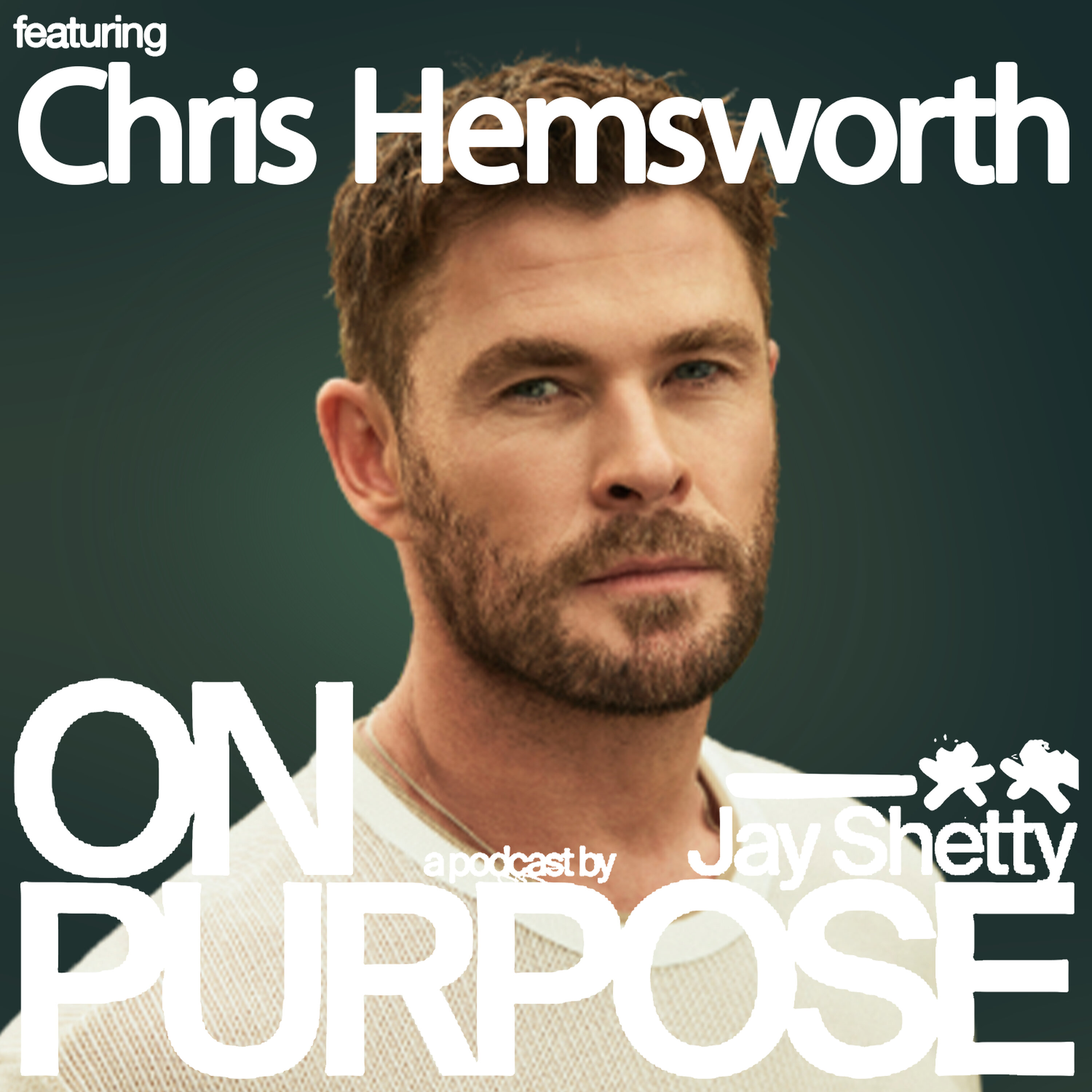
CHRIS HEMSWORTH EXCLUSIVE: The Untold Story of His Anxiety, Fear of Failure & The Diagnosis That Changed Everything
**This interview was filmed on November 29th, prior to the heartbreaking and tragic events in Bondi over the weekend. Our hearts are with everyone in Australia during this incredibly difficult time.
__________
Today, Jay travels to Australia to sit down with Chris Hemsworth at the Crystalbrook Byron, not the superhero the world knows, but the grounded, introspective man shaped by his upbringing in the Australian outback. Chris opens up about his early years living in an Indigenous community, the adventures that sparked his imagination, and the strong family roots that still keep him centered. Jay explores how those moments from Chris’s childhood laid the foundation for the man he is today.
Chris opens up about the pressure and anxiety he faced in the early stages of his acting career and how the pursuit of excellence often came at the cost of inner peace. He talks about the constant pull between ambition and being present, the balance of preparation and surrendering to the creative process and the grounding force of lifelong friendships.
In one of the most personal moments of the conversation, Chris talks about learning of his father’s Alzheimer’s diagnosis and how it changed his relationship with time, family, and legacy. He reflects on the emotional experience of documenting their journey together, navigating memory loss, caregiving, vulnerability, and the urgency it created to slow down and show up fully for the people who matter most.
In this interview, you'll learn:
How to Stay Present in a High-Pressure Career
How to Reconnect With Your Childhood Self
How to Build True, Grounding Friendships
How to Be Fully There for Aging Parents
How to Slow Down and Be Intentional With Your Time
How to Balance Ambition With Inner Peace
How to Bring More Curiosity Into Relationships
We forget sometimes that the best parts of life aren’t about achievement or perfection. They’re about being present, staying connected, and having the courage to show up. Every challenge and moment of doubt is a chance to look inward and reconnect with what really matters.
With Love and Gratitude,
Jay Shetty
Join over 750,000 people to receive my most transformative wisdom directly in your inbox every single week with my free newsletter. Subscribe here.
Check out our Apple subscription to unlock bonus content of On Purpose! https://lnk.to/JayShettyPodcast
What We Discuss:
00:00 Intro
01:08 Discovering Gratitude in Childhood
05:10 First Encounters With Fame
08:24 Arriving Somewhere You Never Planned
13:40 Losing Yourself to the Role
15:34 The Weight of High Expectations
20:31 Managing Mental Overload
25:31 Naming Your Stressors
28:56 The Fear of Saying No
31:29 Passing Down Healthy Money Values
34:03 Navigating Your Way Through Grief
38:22 How Family Keeps You Grounded
41:39 What Makes a Real Friend?
44:48 The Alzheimer’s Diagnosis
54:11 Realizing How Precious Time Truly Is
57:41 Witnessing Your Parents Grow Older
01:01:55 Honoring the People Who Raised You
01:06:50 The Rare Feeling of Getting It Right
01:10:18 Messages for Your Younger Self
01:13:57 Staying Connected to Your Childlike Self
01:19:39 Lessons We Learn From Our Children
01:22:30 Being Fully Present With Your Partner
01:28:12 Helping Children Understand Alzheimer’s
01:31:18 Appreciating the Beauty in Life
01:34:24 Knowing When It’s Time to Slow Down
01:38:47 Who Takes Care of the Caregiver?
01:42:30 Chris on Final Five
Episode Resources:
Chris Hemsworth | Instagram
Chris Hemsworth | X
Chris Hemsworth | YouTube
Chris Hemsworth | TikTok
Chris Hemsworth | Facebook
See omnystudio.com/listener for privacy information.
Press play and read along
Transcript
This is an iHeart podcast.
Guaranteed human.
Hey, audiobook lovers. I'm Cal Penn.
I'm Ed Helms. Ed and I are inviting you to join the best-sounding book club you've ever heard with our new podcast, Iarsay, the Audible and iHeart Audiobook Club.
Each week, we sit down with your favorite iHeart podcast hosts and some very special guests to discuss the latest and greatest audiobooks from Audible.
Listen to Iarsay on America's number one podcast network, iHeart. Follow Iarsay and start listening on the free iHeart radio app today.
She'd throw things, wander, and started hoarding. Mom's Alzheimer's was already so hard.
But then we found out she had something called agitation that may happen with dementia due to Alzheimer's disease. And that was a different kind of difficult.
So we asked her doctor for more help.
Seeing symptoms like these in a loved one, it could be time to ask their doctor about Rexulti, Rexpiprazole 2 milligrams, the only FDA-approved treatment proven to reduce the symptoms of this condition.
Rexulte should not be used as an as-needed treatment.
Elderly people with dementia-related psychosis have increased risk of death or stroke, report fever, stiff muscles, and confusion, which can be life-threatening, or uncontrolled muscle movements, which may be permanent.
High blood sugar can lead to coma or death. Weight gain, increased cholesterol, unusual urges, dizziness on standing, falls, seizures, trouble swallowing, or sleepiness may occur.
Learn more about these and other side effects at Rexulte.com. Tap ad for PI.
I'm glad her doctor recommended Rick Sulte. Talk to your loved one's doctor.
Moments matter.
If you're an HVAC technician and a call comes in, Granger knows that you need a partner that helps you find the right product, fast and hassle-free.
And you know that when the first problem of the day is a clanking blower motor, there's no need to break a sweat.
With Granger's easy-to-use website and product details, you're confident you'll soon have everything humming right along. Call 1-800-GRANGER, clickgranger.com, or just stop by.
Granger for the ones who get it done.
We're watching memories disappear in front of us. Everything we thought was solid and true and consistent was going to dramatically change.
Chris Hemsworth, welcome to On Purpose. Thanks for having me.
It's great to be here. We're in Byron, is that? Byron Bay.
To be specific, so I come to Byron to interview you.
And I was just sharing with you when I first started the show, you were on that top list of people i wanted to sit down with so it took me seven years to get to byron bay thank you
but i'm really really grateful so yeah i've been such a fan of your work loved watching your interviews uh felt felt just a connection to what you're doing and then as you've gone into this world of limitless and now this incredible documentary with your father it's it's such a phenomenal evolution from the authentic version of you that I feel we've always got to see in interviews.
So I appreciate it. Thank you.
Yeah, really, really special. Yeah.
I love the show and
I'm glad you could make it out here and we could do this in my hometown. Yeah, it's beautiful.
Well, I wanted to dive right in because in the doc, we get such a up close and personal feel of who you are, your family, your parents. And I love understanding how people became who they were.
So the first question is, what's a childhood memory that you have?
that you feel defines who you are today that feels like it is such a strong part of your personality today what you see in the documentary is
the road trip my dad and I take back to
the community that we grew up in, this Indigenous community, Northern Territory in the outback of Australia. And they were
definitely my most vivid earliest memories.
I have trouble remembering kind of years earlier than that and years after that, you know, because I think, one, it was so starkly different to the environment in Melbourne where I grew up.
But I think there was, it had such a profound impact on me due to, for so many reasons, the connection with the land, the people in that community,
the experience itself was so dramatically different to anything else I'd done. But
the immersion within that, that, that,
in Indigenous culture in Australia and having,
feeling the sort of influence from the,
I guess, the sort of traditional way of life that they they embodied and the
welcoming we received in that town.
I still have,
when I think about who I am and my appreciation and sense of gratitude and place in the world,
definitely
I'm brought back to that period of my life. I try and think of a sort of a single sort of thing for you, but that period of time for me is the most
the most vivid and wonderful. What images flash in your mind when you're thinking about that time?
Not owning a pair of shoes, not having a TV,
being the only white kid in an Indigenous school,
buffalo walking down the street,
being five hours drive from the nearest shops. You know, it was like a little remote community in the middle of the outback.
And
but how normal it all felt, you know, and to be sort of thrust back into that environment now would be sort of a shock to the system in many ways. But that was
as familiar and comfortable and
organic as sort of anything I've ever felt. And,
you know, I see photographs now that prompt
instant sort of visceral feelings and a deep sort of
nostalgia and...
and warmth and happiness, you know, and a sense of connection because that was, you know, we lived in a tent at one point, you know,
with my parents and my older brother. We then lived in a sort of a, you know, a very older, sort of run-down house.
But
it was as,
you know, wonderful of a childhood as you could ask for.
You know, there was no, it was sort of boundless, the opportunities where the imagination could go and the sort of the physical experience, you know,
it was.
Again, unlike kind of anything else I've had since then, you know, there was a real sort of Peter Pan quality to that sense of fantasy and adventure that was instilled in us from that age.
But that environment definitely awoken in us. Yeah.
And I guess when you're living it, you don't know how special it is. Yeah,
I think like all of our experiences that, you know,
the norm is what is in front of you, you know. And if I had something to compare it with at the time, I may have, but it was, that was my way of life.
And then it was kind of a shock coming back to Melbourne and
and
adapting into, I guess, the world that,
you know, suburban neighborhood, you know, structured sort of,
you know, town that we lived in and catching the bus to school and a train and all the sort of the usual things. That for me was an adaptation that was, I remember kind of going, oh, this is.
This is very different to
where we had sort of, where we'd come from. Yeah, your dad in the documentary says that as a kid, you would say, I'm going to Hollywood.
Going to Hollywood. Yeah, I'm going to Hollywood.
Where did that come from, from this world that you grew up in? I think part of it was growing up in Northern Territory because there was this sort of sense of adventure instilled in me then. And
I remember my dad reading Lord of the Rings and The Hobbit to me and my mum as well. And that sense of sort of fantasy and
imagination awakened through
a sort of...
a very big cultural difference, but also, I think,
being outdoors, you know, the opportunity for not boredom, but not being continuously stimulated and entertained like we are sort of nowadays with devices and so on.
There was, I guess, being in that environment awoke something in me that I still now
either try and get back to or when I do attach myself to it, it ignites that sense of fantasy and that sense of adventure.
But through reading books and then when we moved back to Melbourne,
every weekend was,
you know, we would go to the movies or we'd hire a film or we'd go on hikes and we'd go surfing and we'd go camping.
And I remember from a very young age, not wanting to be an actor, but wanting to be one of those characters in one of those films, one of those books.
And the closest thing I could be to, you know, an elf in the Lord of the Rings was, you know, if I dressed up and played one in a movie or the closest thing I could, you know,
get to as far as intergalactic travel or something was playing the character in that movie.
And I guess it was sort of an escapism of sorts, but not that I was escaping from anything I didn't want to be a part of. It was,
it kept me captivated, you know, and still does. The transportation to other worlds and inhabiting other characters and other spaces.
It's, yeah. And it sort of, it comes from a different,
each film and each character I sort of look at
and that sort of journey I embark on
it there's a sort of a real organic
attachment to it as far as
I wouldn't say I'm seeking out that character as much as I sort of arrive and then as you sort of
fall into a character or fall into a film it then sort of takes on a life of its own and takes you to places that I think you just have to be open to you know interpretation but open for the journey you mean by playing a character yeah it opens up a different mindset or different for sure yeah it probes different parts of your soul or psyche.
And there's a premeditated sort of approach and a sort of calculated approach. And then there's an absolute sort of
demolishing of all that preparation and surrendering to the process.
And that's the part I love.
And you only get that through an extreme amount of preparation and calculation. But then
the letting go portion of it,
which is where the risk is involved. But then that for me is where the greatest adventure occurs, is through kind of really leaning in and really surrendering to the experience.
That rings true.
I had the fortune of sitting with Kirby Bryant before he sadly passed away on the show, and he talked about how structure leads to spontaneity.
But it was that discipline, as you're saying, leads to the ultimate ability to be free and surrender.
But as I hear you say, I'm wondering, it's obviously not something that you mathematically, strategically access, because you're saying it's happening in this really natural, authentic way where it leads you.
What roles made you feel that way? Or which ones are the ones that have a strong memory for that for you, where you went, oh, wow, this led me to a place I didn't imagine it would.
I mean, it's interesting because I sort of, I think I undulate from the extreme analytical,
over-ruminating, calculated analysis of something, and then into the sort of, you know, more sort of mad scientist, you know, intuitive sort of approach. And,
But they go hand in hand. You know, the sort of the polarity between the two,
I find is, is, is really helpful. And
I'd say the, I did a film with George Miller, part of the Mad Max series called Furiosa. And that for me was
probably the greatest example of that kind of character taking over and being led into a place which you...
you didn't plan for, but it only
the sort of improvisational portion of it or the experimentation of it or the, you know, throw caution in the wind and just leap in head first
came from months and months or actually a couple of years because I had read the script two years before.
And while I was doing other films, I was thinking about that character. It began to sort of infect my thoughts, you know, daily.
And to the point where I had to kind of...
try and put it aside because I had to get back to the film I was currently on.
I was talking to George Miller about that and he goes, well, selfishly, I don't mind. You know, you can give our character more of that.
And it was the first time I kind of started journaling as the character and started doing a,
you know, he was a pretty ugly, villainous individual on paper and on screen as well, I guess.
But I had to find a way to sort of understand and empathise with his position. And from his point of view, he was the hero, as in, you know, everyone's.
And so. By the time I got to set,
everything that I'd sort of planned began to fall away.
And each day was, again, kind of an experiment and a real sort of deep dive into the psyche of this individual and what were the sort of justifications for his actions, which were perceived from one angle as, you know,
horrific, but from his angle and his position, from where his people were standing, survival of the fittest.
And yeah, I've had that a few times in my career, but that certainly stands out as one of the biggest ones.
I feel like there's so much empathy in becoming an actor because you're trying to understand this character that you don't know, but you have to kind of get to know and you may not feel what they feel.
One of my friends is an acting coach in LA and he invited me to just go watch one of his sessions with actors at night.
So I went to see him a couple of weeks ago and I was just like, if anyone feels lonely, they should just go to an acting class.
Everyone was so encouraging of each other and there was this real camaraderie that everyone had and everyone would give each other feedback.
And all of it was about dissecting character and emotion, feeling.
And I was like, wow, I've learned more from this than, you know, about human emotion and about human potential and depth than you would going to a class because there's so much study and there's so many layers and there's so many.
And as I'm hearing you talk about it, I'm like, yeah, there's such a, but it sounds like you love that. Like it sounds like
I mean, I've always had a big interest in psychology and understanding our sort of.
inner workings of our soul and our psyche and us as human beings and how we interact with one another and and nature versus nurture, and the how and why of it all. And
for me, there's just something therapeutic about the experience of acting and putting on the clothes of a completely different individual and having the chance to
look at the world through a different lens.
And I see that as a real gift
compared to a lot of sort of, I guess, you know,
our working life, it is, there's just an abundance of creativity and exploration there, which I find, you know,
incredibly helpful. Just even, I mean, from each character I find I come out,
whether or not I agree with their character or not, I've been able to sit in their shoes for a moment and look at the world in a different way.
And I think there's a sort of humility that's forced upon you in that sense, which I find.
I find
a really interesting sort of experiment. And as you've pointed out, I think very healthy for all of us to do.
I know a a lot of directors that, you know, have never acted and it scares the hell out of them, but they go and do acting classes for that reason to understand the psychology.
Also, understand how you're going to come at
this character or what the position is that you might take. And as opposed to standing on this side of the fence and making assumptions, stepping into those different environments certainly,
I don't know, gives you a greater sense of agency over them. Yeah.
Has there ever been a character you played where you felt, I wish that one didn't rub off on me
or left a bit of them with you there.
I mean,
I find
it's not that the lines get blurred, but I've been on press tours defending my character and then being tapped on the shoulder and like, the guy killed a bunch of people.
I'm like, oh yeah, okay, besides that part.
And so it's sort of,
I don't think the
state I will get myself in for certain characters through the day,
a very heightened sort of
fight or flight type state where I am, there's a sort of feels like there's electricity running through my bones. And
you've, especially when there's a lot of dialogue and there's a lot of reaction,
a lot going on, that I find very hard to switch off. It's not so much the
character that I'm trying to shake, it's the energy that's required to play that character.
And I find it with one of the hardest things that the high to come off is improvisational sort of comedy. You know, and I remember doing
when we did Ragnarok,
there was a lot of that in there, and it was a very new version of the character.
And I would get into this sort of ecstatic, sort of, you know, electrified state and be kind of drinking coffee and Red Bull and Slam and, you know, energy drink to try and elevate that more.
And then it was like, well, I'd have to kind of rein that in and get home. And I'd just be sort of twitching and
go to the gym and try to come off that. So I find that the residual effect of the state of the character more so than the...
Yeah, it's more about getting into character.
Yeah, Because you could put that that I don't necessarily have to believe I am the you know
um leader of an army or whatever,
and it's it's more well, what would I feel in that situation that you then embody? And then that sort of takes up, yeah, that's fascinating to hear, yeah. And that, yeah, the
jitters are real. Like, that's like you've talked before about this idea of how your acting career has actually brought on huge anxiety and stress.
Where's that come from?
I remember when I first started acting, I had
immediately, once I sort of locked into the idea that I was going to become an actor, it was an absolute obsession. It was an addiction.
It was all I talked about it.
There was sort of, there was no shadow of a doubt that was what I was going to do. And there was an
ignorance and a naivety that was there. um about the reality of that how difficult that was going to be but that it you need a fair amount of madness, I think, to sort of excel in any space.
There needs to be a certain amount of
absolute, deeply profound sort of commitment to it.
You talk about Kobe Bryant and anyone who's excelled in their field and
a number of...
sports players and individuals that I look to, they're sort of on the spectrum in some sense.
There's a sort of a mastery there, which is otherworldly, but it does require a sort of an insane dedication dedication to it. So I remember when I was finishing high school, it became this obsession.
That was all I was going to do. And everything I was going to do from it was, I was going to help pay off my parents' house.
I was going to do this. I was going to do that.
I was going to take care of my family and friends. And, you know, look at all the amazing things I could do.
And every time I go into a job, as small as it was and inconsequential, in my mind, it was like, if I screw up this one scene,
then it will somehow make its way to Hollywood from Australia and I'll never get a job again. If I screw this one audition,
and it was that kind of pressure. It was I was thinking 10 years ahead.
And then so by the time I got onto
Home and Away, which was, you know, the big soap opera, longest running soap opera in Australia, which
is London, you're aware of. I flew into that
experience with enthusiasm and excitement. And it was great for a couple of months.
And all of a sudden, I was hit with this
wave of anxiety because I was looking at the outcome rather than the sort of process. And I was looking at the,
I'm doing it for this reason and that reason rather than being in the moment and in the present. And it really detracted from what I was doing each day.
And it would be the last thing I'd think about before I go to bed was
what scenes I'd screwed up and how I should have done this, I should have done that. And as soon as I'd wake up, it'd be like a shot of adrenaline about what I was going to screw up.
And I don't know what I think it came from a sort of expecting too much of myself, which is, there's a slight sort of contradiction to that too, because as I said, it requires that obsessive,
you know,
addictive sort of concentration. But
it's the ability to sort of hold that obsession and that absolute need and want for it to
achieve something great that you want to achieve. And then at the same time, to completely let it go and not care.
And so I had to do this strange dance around trying to convince myself I didn't care. But in the preparation
time to to motivate myself i would have to care a hell of a lot and and so
it's sort of the um
you know the
the the two the two voices the jekyl and hyde version of of oneself that is sort of
both need to be kept in check you know it's it's your purpose pulls you your fear pushes you there's a sort of strange um balance with the two extremes I find useful, but also terrifying when not kept in check.
And
that sat with me for years, that anxiety. And then I remember,
and I've talked about this in a couple of interviews, but reading a few books around performance anxiety specifically and looking at different sports players and musicians and
people who performed at a high level of public speaking. And they took their...
all their sort of measurements, you know,
the physical sort of responses prior to these engagements and said, are you scared or are you excited?
And whether half the group was in the scared category, half isn't excited, the physical response was exactly the same across the board, elevated heart rate, all the things you would imagine.
So it was about
the sort of the takeaway was it was about an interpretation to that feeling.
And so when I would have nervous energy come up and all those things that at one point I would signal to myself for fear, I could just
narrate that in a different sense and say, oh no, this is my signaling for excitement. This is not my signaling for fear.
And again, that's, I still have to keep that in check.
And it sort of out of nowhere will take me down one path or the other. And I've got to kind of wrangle my way back to the preferred place, which is, which is the, the enthusiastic excited, you know.
Yeah. What's fascinating about that, as I'm hearing you say it, is
it actually makes you better at what you do. Yeah.
Like that pressure, it sounds like that you were putting on yourself when you're doing home and away. Yeah.
Even though it wasn't a great experience for you, it's making you better at the thing.
And that's what I find so fascinating about people like yourself or high-performing athletes or any of the types of people you mentioned is that the thing that makes you better at the craft doesn't necessarily improve the quality of your life and your mind.
And that's that dance you're talking about, which is, so I've got to kind of be able to unleash the beast to be able to do the work that I do.
But then I don't want the beast to eat me because then there's nothing left when the beast is, you know, satisfied for sure it's sort of a blessing and a curse in a way and it's because i i've had experiences when
you know the thing i was trying to remove which was that heightened sense of awareness and the and then in fact the you know you're absorbing too much information and it's every little movement or sound
i'm like oh god i wish i could numb that i wish i could reduce this sort of state and be more present And then I've found my way to that place either through
not caring for one reason or another, being purely exhausted, you know, your night shoots, you just got, there is no adrenaline left in the body. I'm like, oh, this is great.
I'm comfortable.
And the first note is, yeah, it's a bit flat. And the next take, you know, and I'm like, oh, great.
The thing that I've been trying to get rid of is actually the secret source.
And so that became, again, about the interpretation. I don't think the feeling itself is the problem.
It's our
label we put upon it, you know, which then causes all the problems. And so I say this to friends of mine who are auditioning on set and having anxiety or problems.
I'm like, you got to just, you've got to make friends with it. You've got to look at it.
It's very hard to recognize now, but it is a gift in that sense. It is your spidey senses coming alive.
It is the ability to think quicker and react faster and be more attuned to things if you're allowing it in the space, as opposed to,
you know, don't think of a pink elephant. What do they think of? That's a pink elephant.
And I've had so many people talk about like meditation prior to
walking on stage stage and calming down.
For me, that is like a house of cards because it's like you're in that state and then the one little thing sets you off.
Whereas I, beforehand, want to get my state and myself into that ecstatic sort of state because it's on my terms. So now I own it as opposed to it being something that creeps in the back door.
I'm like, no, I want this, bring it on, big, deep breath, kind of, you know, absorb it, use it.
And then, and then I found that that is, has been really beneficial and I've been able to use it for the good
version of it as opposed to it transforming into the one we're afraid of. Yeah, yeah, yeah.
Well, it's what I hear you saying is that when it's in control of you, it feels like pressure and fear.
And then when you're in control of it, when you're embodying it, it's now part of your narrative and part of your purpose and part of you feeling like, oh, this is fuel for how I want to perform rather than this is just reminding me of, hey, if I miss these three things, no one's going to care about me and I'll mess this up.
And that obviously is not helpful at all. And so you're saying befriending it is transforming it from being pressure and fear to being friendship and purpose.
Absolutely.
Yeah, there's an acceptance to it. There's a surrendering to it.
There's an ownership to it as opposed to it being something you're trying to avoid.
But that only comes through, I think, understanding the mechanisms or the mechanics around the fact that it is beneficial if you have that relation to it.
You know, it is the worst thing in the world if you're trying to avoid it. Yes.
You know, shallow breath, heart rates up, sweaty palms, like you can't think, everything just shuts down.
You know, but if it's like, no, no, these, the, the, these, these, this physical response, this emotional response, I've programmed myself to see as a positive, therefore it can be. Yeah.
Yeah.
You know, and again, you'll, you'll see me break down
at one point go, that trick ain't working today, is it, Chris? Yeah.
Did you know Microsoft has officially ended support for Windows 10? Upgrade to Windows 11 with an LG Gram laptop. Voted PC Mag's Reader's Choice top laptop brand for 2025.
Thin and ultra-lightweight, the LG Gram keeps you productive anywhere. And Windows 11 gives you access to free security updates and ongoing feature upgrades.
Visit lgusa.com/slash iHeart for great seasonal savings on LG Gram laptops with Windows 11. PC Mag Reader's Choice used with permission.
All rights reserved.
It's the gaming event of the year featuring T-Pain's Nappy Boy Grizzlies versus Neo's Gentleman's Gaming.
It's a 4v4 matchup featuring Call of Duty, Tetris, Track Mania, Tony Hawk Pro Skater 3 Plus 4, and Tekken 8. Season 0 of the Global Gaming League is live streaming on YouTube and Twitch.
Head over to GlobalGamingLeague.com.
Global, global, global, global, global, global, global, global, global,
Season 2 of Unrivaled Basketball is here and the talent is unreal. The best women's players on the planet are running it back with even bigger moments and bigger stakes.
Don't miss as Paige Beckers, Nafiza Collier, Kelsey Plum, Brianna Stewart, and more take the court and redefine the game. This isn't your regular season.
This is Unrivaled, where the pace is faster, the energy is higher, and every athlete shines.
Unrivaled Basketball, Season 2, sponsored by Samsung Galaxy, tips off January 5th on TNT, True TV, and HBO Max.
I don't know. I've had a similar experience with public speaking where I've been public speaking for years on stages.
And if I really care, and that's my narrative kicking in, if I really care, I'll still get sweaty palms. I'll still be shaking a little.
I'll feel my heart rate go up.
And I've learned that all of those things are just a sign that I care.
Because I know if i get asked to speak someone i don't really care yeah then i won't feel any of those things yeah and so i'm like oh i feel like there's some stakes here and yeah this is important and then i have my practices to embody that and feel good about that but then at the same time when i went on tour two years ago and we were doing nearly 50 shows across the world i was i was feeling a completely different level of anxiety than i'd ever felt and and i remember two days before when we were in rehearsals, I was just feeling really tight-chested.
I talked to my doctor and went in for a checkup and they were like, it's just stress. And I was like, why am I stressed? I do this all the time.
But there's always, what still makes you nervous or what still gives you a little bit of that stress now?
I mean, this stuff, you know, depressed, you know, walking a set, it all definitely awakens that feeling. And then it's a constant sort of dance and adaptable sort of experience.
But I think...
You know, I probably have a much easier time now playing a character than I would being myself. Like, in fact, with
this series, Limitless, that was very new to me to, you know, be in the documentary space and play Chris. And I felt really uncomfortable from that.
And I got better with it probably in the second season and this and this last episode with my dad. But earlier on, it was like,
I have nothing interesting to say. I'm not educated on these topics.
And I'm sort of a guinea pig in the experience. So maybe that's a good thing.
But
you're far more critical of yourself than you are, I think, of someone you're pretending to be. Like you said before, it's a signaling that you care, I guess, that discomfort, that anxiety.
It's the signal that it's important on some level and it's something that should be respected and paid attention to rather than, oh, I'm anxious. How dare I be anxious?
And then the criticism and the judgment. And then it's like slippery slope.
Yeah, yeah. It's so interesting to me how so many of us.
It's easier to pretend to be someone than play ourselves, not just for actors, but all of us.
Whether you're playing a performance at work in a persona or a persona with your friends, and it's so hard to just let go of that persona.
And it's almost like when I speak to comedians, they're always like, Yeah, I just feel everyone just wants me to be funny all the time.
And they just feel that constant pressure around friends, family, everything. And they just want to be normal and have a bad day or whatever it may be.
And,
you know, everyone feels that pressure to perform in a certain way. Yeah.
And it's almost like we're waiting for the person we can take off the outfit around and just kind of let go.
I remember my mum talking to me about this years ago, and she was a high school teacher at the time.
And I said, I'm nervous about this, that, and the other, and being on a set and a producer and this. And she goes, it's the same in any environment.
She goes, me as the teacher.
Okay, well, the principal is the producer and my students are the audience or, you know, and my work colleagues or the other cast members.
In any line of work, you're faced with this. It's this sort of a human experience that you can't escape.
And
she talked about the same thing about kind of
understanding that and accepting that it always is a challenge. It's always a navigation of sorts.
And rather than looking at it as
my experience is unique and special to everyone else's and has more pressure than yours or this, that.
That's the trapping. As soon as you kind of understand it is more common than uncommon, I think there's some comfort in that.
Like I remember listening to
Anthony Hopkins and Kate Blanchett Blanchett and, you know, people I'd worked with and admired and looked up to talking about, you know, imposter syndrome and this might be my last job and thinking, really?
But there was deep truth in that, you know, they still had that doubt, but aware of the fact that maybe that doubt was a good thing because it kept you humble, it kept you motivated, it kept you pushing forward and searching, as opposed to
thinking you have all the answers, you know, and then there's a sort of, and there's a lack of humility. Yeah.
Yeah. Well, you've talked about that as well, right?
You've talked about that idea of fearing saying no,
because what if it all disappears?
And when I read that you said that, I was like, wow, like that, you just wouldn't expect that.
But we have these codings from whether when we were young or wherever we picked them up, where there's like a sense of like, oh, well, this could all just go away. Yeah.
You're growing up in a house, you know, loving, beautiful. household and great parents, but we had no money.
And I remember the kind of financial burden that was on my parents and overhearing conversations about bills and, you know, them borrowing money from our grandparents or their parents to, you know, before payday came on every Thursday or, you know, the $20 we might have had in our piggy bank kind of saying, Can we worry that?
We'll give it to you next week. And not that they ever put that on us by any means and probably tried to shelter us from that.
And, um, but being very aware of it.
So I felt that responsibility and that need to
remove that pressure for them from a very early age,
but still
this crazy irrational thought that, oh, it's going to run out or it's going to be taken away and I won't be able to do that thing. It's like, we've already done that thing.
You know, they're all taken care of. They're family, cousins, friends, you know.
And not to say my career couldn't end tomorrow, but financially, that wouldn't be a concern due to kind of what we've put in place.
And it's, I don't know, it's irrational, it's illogical.
But again, I think it,
I don't know, it's sort of, I don't mind a little bit of that just to keep you hungry.
But it has to be tempered, like all of it. Yeah.
Because the insanity of too much of that thinking is incredibly detrimental. And you never enjoy what you have because it's always about, oh, I need to get more.
I need to just not enough.
Or what else can I, do I do to secure this even more? And it's this obsession with
safety, I think we all have and the need for abundance and security. And
But then I look at my own childhood
where I couldn't have felt more secure and safe. And,
you know, so money isn't the answer to that yet. You sort of trick yourself into thinking it is.
And whether that's from societal sort of understandings and expectations and the sort of our relationship to money as human beings and
how we signal or represent safety and comfort in the wrong spaces, maybe, but it's a constant navigation, isn't it? Yeah, it's almost like what you're talking about is the power of pattern.
It's almost like when you've had a thought that has been practiced, so with you giving the examples of like, oh, we're going to borrow this money here and we'll pay it back next week.
And so you're constantly living in a cycle of we don't have enough. We're going to have to figure it out.
And that doesn't disappear when an external situation changes. We can all relate to that.
I mean, I can relate to it in my life too.
And what I love about what you said the most was it's not about, I think everyone over, and I don't like it when anyone says this whole money can't buy happiness stuff because I'm like, well, it solves a lot of problems for a lot of people.
And I don't think that's the point. But I love what you just said about this safety idea that you felt safe growing up and it wasn't because of that.
And I think that's an even more powerful truth where it's like, oh, wait a minute. What about if it was about safety? And we all want to feel safe and secure.
I felt very safe and secure because my, I've always described it as my mum's love was like this protective shield where I never grew up ever questioning whether I was lovable or not. Yeah.
My mum loved me so much. And that makes me feel very safe.
And that wasn't because we had money growing up and it wasn't because we always knew what was coming next. It was because you felt loved and you felt safe and secure because of that.
For sure.
And so there are certain problems that money solves and it's not safety. Yeah.
And it can provide and help for that, but safety is a more core emotional need
that comes from other things.
Another thing I've talked to my mum about, the fact that the lessons I learned and the person I am, my brothers, who we are,
you know, growing up in that household, we didn't have money. Well, now my kids, we have money.
What's that going to do to them?
Are they going to not learn the same lessons that we've had and have the same sense of sort of gratitude and appreciation for things?
And she said, you could look at, you know, households that had a lot of money, households that had little money. And you could pick about the same amount of successful stories versus unsuccessful.
And at the end of the day, it comes down to love, security, safety. Do I feel like I'm connected and part of this household and appreciated and I'm safe to explore who I am as an individual
or not? You know, regardless of the sort of exterior environment, the larger environmental, sort of superficial elements of it, it's around those core components
of love and connection. And that always gives me comfort, you know,
when I'm sitting here thinking I'm destroying my kids, like having this big house and, you know, abundance and all this so on.
But there's always a complex one to sort of navigate in any space, I guess. Yeah, yeah, yeah.
I think it's true, though. I think
it's what you've been saying this whole conversation already. It's that you keep talking about how everything's somewhat of a gift and a curse.
Yeah. And it is that, right? Like everything is.
And as soon as you accept that everything's binary and there is no black or white,
it is all gray.
And it is all teaching people to see the gray and see the nuance and see the complexity and recognizing that complexity is simplicity in the sense of as soon as you accept that it is all of it,
then all of a sudden it's simple. Whereas when you're trying to find a definitive right way of doing it, it's pretty impossible to find it.
And you can rack your brain forever. It is.
And the sort of the thing you're searching for only exists because of the thing you're not searching for, like the polarity of things.
And it's the, you know, there's no north with her to south. There's not a one-sided mountain that there's that you, you know, you only know love because you know grief.
And I had this, a friend of mine passed away recently and I had this, the normal response of grief and anguish and pain and the why and the questions.
And then through that, all of a sudden, this, this lightness and this stillness, because
all the trivial things that I was ruminating around day to day, all of a sudden dissipated.
And it was like, wow, it's that simple. It can be gone in a second.
And I wouldn't know one without the other. And so
the sort of grief is as much a blessing as the love is and the joy because they coexist you know that they there isn't an individual experience you can't have one without the other and and that that for me
I find
helps navigate
the complicated spaces of life and and the sort of moments of adversity is kind of
realizing that they're sort of one and the same thing.
And I don't do that. I don't exist there all the time, but every now and then, and I feel like I get a glimpse of it, and there's a quiet peacefulness to it.
You know, it's like the sort of the louder it gets, all of a sudden things just stop. Alan Watts talks a lot about that.
I love his sort of
philosophy around what he presents in that way. Yeah, I'm sorry for your loss.
It's
always like, yeah, I mean,
it was a sort of out of nowhere kind of
tragedy, as
we all experience at some point.
But I just remember having that moment, that sort of
very odd sort of lightness in amongst the grief, which made me pause for a moment and consider where that came from and where that stems from and what that sort of
what that message is. Yeah.
Yeah. It's your grief is only as deep as your love could be.
Yeah.
If you don't feel grief about something like that, well, it's probably because you didn't
have that love and care. And it's, but yeah, it's not that that's easy to recognize in the moment or pause.
And but when you get that access, it's something worth holding on to. Yeah.
And that was trying to reconcile the sort of dichotomy around those two feelings. You know, the
sort of, I almost then followed a guilt that I wasn't feeling as sad as I was a moment ago. And it's like, what is this sort of complex kind of, you know, push and pull between those two states?
And it's like, I don't know, living in the questions. rather than needing the answers to it, you know, all the time.
The sort of the answers of trying to define the definitive why to something and the absolute certainty of something is just like a danger and a trapping, I find. Yeah, yeah, for sure, for sure.
Yeah, and we will just, and the funny thing is, even if you get a perfect right answer, you still won't be satisfied with it. You'll kids tomorrow.
Yeah, exactly. Yeah.
Because then you'll be like, wait a minute, if I look at it from this angle,
it's fascinating how the human mind wants completion. Yeah.
Yeah. But still keeps locating all the incomplete loops.
Absolutely. To get lost in.
It's like the only certainty is uncertainty or you know the only constant is inconstant yeah like
yeah yeah it's a uh it does number on you for sure it's like i don't know if you're when you're a kid you're kind of lying awake at night thinking about how big the universe is or what happens when we die and the nothing and then like uh oh
it's like you're kind of your brain arrives at a place of
nothingness you know and that's as terrifying as it is kind of liberating yeah does it help to have uh brothers in the industry too because i mean that's rare yeah that that you know all of you have got incredible careers and it's like how does that is it helpful to be able to share some of these challenges or or do you find that that's not really the case no it is definitely yeah this is a sort of a point of reference or a or a
there's a there's a camaraderie for sure and a support network between the three of us
you you're in your sort of quieter moments of reflection you can kind of go is this normal am i kind of you know wrong to feel this that and the other and what's your experience in that and so absolutely, having someone who is a complete sort of, you know, safe house for those discussions is a real benefit.
Yeah, it's really powerful. I feel like that's the hardest thing for most artists or athletes or people who go and live otherworldly lives.
And then it's almost like you have all your best friends back home or the people you grew up with. Yeah.
And you need them because they're the only ones who remind you of where you started and where it came from, but they don't understand
the new world that you deal with. And so you kind of have this version of it where they can reconcile with you the challenges.
It's not like, oh, well, Chris, you're rich and famous.
It doesn't matter. It's like they're like, oh, no, those things are still real.
And you still experience imposter syndrome and you still experience anxiety.
And they can vouch for that because they probably go through the same thing. Oh, for sure.
I mean, I feel very lucky
to have them in the same space.
But I'd say the thing that has had the biggest effect on me is that the team of people I get to work with, which is from
the hair and makeup team,
my costume guy that I travel with, my assistant, my trainer,
that group I've known for about 14 years.
My assistant, my trainer I've known for 35 years, I went to school with, they're my two best mates. And to have the five or six of us travel together
is
in, I thought was quite common. Why wouldn't you bring along your mates and have the same people with you?
And the amount of people I've met in the highest of positions that live this isolated, lonely existence and don't have true friendships around and groups of people who remind them who they are really and remind them, or there's a grounding quality to that.
I thought, it's such a tragedy. You know, to give this abundance of opportunity and this sort of,
you know,
one in a million chance to sort of participate in this journey where you get to travel and you're dealing with all this
experience and
activation and interaction with the world on a level that most of us wouldn't get to experience. Yet you're doing it alone.
You have no one to share it with. And I think that's the
social connection. It's like it's only as good as
the people standing either side of you that get to walk that journey with you. Because
there's times when you become a little jaded about it. There's times it becomes a little normal.
There are times when it becomes boring and you have someone to shake you and go, hey, pretty cool.
Remember where we came from, remember what we could be doing, remember what we used to do?
is incredibly invigorating. And I find myself
the thing I'm most grateful for, I think, in my career is having those core people with me constantly. Yeah.
How do you define a real friend? Someone you can laugh with and who you can laugh at each other.
And it's not offensive or it can be and that's okay.
Someone you can really push it too far with and they're going to go, I'll let that one slide. I'll get you next time.
A true friend who
keeps you humble I think keeps you grounded the sort of the sort of obvious things to say but you know through thick and thin they still stand there next year and whether it was all to be take if it all got taken away they'd still be there having a laugh patting you in the back saying well we gave it a shot
and I've got a lot of those people in my life I'm very thankful for yeah I love that it's it's definitely it's British banter is a big thing but I got to learn that Australian banter's as strong if not better as well because Because when I was touring in, when I toured Australia two years back and we did three shows at the Sydney Opera House, we did Melbourne and Brisbane.
And
I have lots of moments in my show where I bring people up on stage and we're going through all sorts of experiments and activities. And every single person would banter back.
Like there was no one who's letting me get away with the joke at their expense. And I was like, this is amazing.
It was so much fun. Everyone was so fast.
The quips were great. It's good.
It's a good self-deprecating sort of quality. Yeah, yeah.
And I love that too. I feel like, you know,
I have a WhatsApp group with all my best mates back in London. Yeah.
And all we do is just roast each other all day long.
So whether someone posts something on social media or send this video out, whatever it is. And I think that that's such a good test of friendship.
Oh, for sure.
And when me and my wife's from London too, when we moved to America,
me and my wife roast each other just as you would roast one of your boys. And everyone on my team would just think we were having a massive argument because they just weren't used to it.
So they thought we hated each other. It's our love language.
Yeah, exactly. Yeah.
We were like, no, this is our, you know, it's not passive-aggressive.
This is just how it works. Yeah.
I think that there was a study done recently.
And I don't know where I read it, but talking about that it is a sign of true friendship that you can roast each other and give each other shit. And it's a sign that there is a.
I don't know, there's a trust there because you don't, I wouldn't speak this way to someone that I didn't know that well and didn't trust that it was going to go okay with.
It'd be, it'd be, yeah, in trouble. Yeah.
The worst was when I first moved to LA and I was learning about getting a stylist and all this kind of stuff.
And my friends would just take terrible pictures of me off the red carpet and just keep putting them in the group. And they're like, why are you wearing a skirt? What are you doing?
I'm sure you've had a million of those. Oh, for sure.
My semi-no send me pictures of like, you know, certain sort of fashion sort of moments and looks.
And it's like, oh, it's number seven, you know, a hand on the air and they're scratched above the head.
And you kind of, I find myself doing those shoots and then stopping myself because three or four guys back home are going to see it and tell me better
rather than the vast majority of people who might not think twice about it. Yeah, yeah.
Yeah, I love that. And you need that.
You need that. Yeah, you need that.
I think about it all the time.
Every time a hairstylist tries a new hairstyle, whatever it is, I'm like, yeah, all right,
I know who's going to send me a picture of this tomorrow. Yeah.
It was, I'm so grateful that I got to see the documentary because
I
went through a really,
and I shared this because of how powerful it was for me to watch it. And so my greatest spiritual mentor who I grew up around in London, he passed away during the pandemic.
And I couldn't go back to his funeral.
I was stuck in the United States and he was based in London. And I just remember finding out, it was almost like everything changed for him and changed for us in like a night.
It felt that way at least
when we became aware.
Yeah, no, no, but it was watching your experience with your father was so beautiful because
it was all the, I was like, people are going to watch this and they're going to know what to do.
And that is such a beautiful thing to give people. It's such a gift to give to people because I didn't know because I'd never been through it.
I'd never seen anyone publicly go through it.
So when I watched it, and I can't wait for everyone who's listening and watching right now to watch it too, because.
It gave me a real resolve to be like, yeah, this is going to help people. It's going to help a lot of people.
Right.
And I wanted to ask you about that. Your father, obviously, got diagnosed with Alzheimer's.
It's like, what was that like the day you found out? Like,
how did you even notice it before the day you found out? Did you start to notice things?
Yeah,
it's funny. I remember in the first season of Limitless
and Peter Attia,
I did a bunch of blood work and
looking at my genetics. And the plan was on camera.
He was going to tell me about, you know,
what I had a predisposition to and what I had a vulnerability to, what my strengths were and so on. And he said, oh, I don't want to do this on camera.
I've got to talk to you about something.
And I thought, oh, God, what is this? You know, and Darren Aronofsky called me. He said, Peter wants to call you.
And
I got really nervous about what he was going to tell me. And he said, you've got two copies of the APOE4 gene, which you get a copy each from each parent.
A two is not so bad. A three is a little worse.
The four is
the worst one. And you've got two.
And it basically, I think, 1% of the population has two copies of these genes. And it puts you in a high-risk category for Alzheimer's.
It's not a predeterministic gene.
It's just an indication that you have a greater vulnerability to Alzheimer's. He told me that and I was like, a moment of sort of shock, a moment of what does this mean?
And then about 15 minutes later, I was like, eh, just something old people get, whatever. I told my parents about it.
And I remember my dad saying, oh, look,
don't worry, mate, we'll figure it out.
And I was like, yeah, I'm not concerned. It's just a strange thing to be told.
And he was like, it's fine, mate. You know, plenty of time.
We'll figure out what you need to do to prevent it and so on.
And I remember vividly that conversation of him sort of telling me not to be concerned about it. And then about two or three years later,
my mum saying to me, I think we've got to get dad checked because there's these
signs and things I'm concerned about. The obvious ones, memory and sort of slight mood.
changes and shifts and forgetfulness and so on. So he went and got tested and
found out he had two copies of the ApoE4,
as did my mum, which so if you've got one in the one in one percent of the population is Apo4. I don't know what the math is on an APO4.
Temporarily finding each other.
So then by default, me, Luke and Liam all have two copies of ApoE4. So this sort of anomaly of
genetic sort of combinations.
But my dad,
I was immediately hit with
the reality of what that meant for him because I had just gone through a, ah, it's a long way down the track. Don't worry, push it aside.
Then all of a sudden it was right in front of us. And
it was incredibly confronting. But
again, I think the
we'll figure it out mentality was still very prominent.
And then as it began to get worse,
it became a real sort of shaking into the moment and a real sort of
shock to the system. system and oh wow this sort of everything we thought was solid and true and consistent was going to dramatically change and shift um
yeah and then and then
and then we um
i remember when i was looking at doing another episode for that series
the discussion around would i do something around brain health with my dad and my first instinct was I just spent a lot of the pressure for the previous show trying to tell people that I didn't have Alzheimer's.
And, you know, and I thought, I don't want to go through that, but I also don't want to exploit or feel like I'm in any way, putting him in an uncomfortable position or exploiting this kind of condition.
And how's it going to make him feel? And I spoke to him about it, and he was like, oh, absolutely.
Yeah, no, let's, you know, maybe this will help shed some light on the issue and people will benefit from it. And we might learn something along the way.
And off we went in that direction.
But there was a huge amount of grace and humility in his attitude to it. You know, he says it in the documentary, but his biggest concern was being a burden.
Yeah.
And that was heartbreaking to to hear and consider. And
I had never even,
up until we shot the documentary,
I didn't know even how he felt about it, you know, because I hadn't asked him. And I felt this strange mix of sort of guilt while shooting, as well as concern
for his condition, but guilt that I hadn't asked this prior. Now I'm doing it on camera.
And so it was this strange sort of orchestration of events.
But what came out of it and what wasn't planned was this beautiful sort of connection that my dad and I were able to have and this beautiful discussion that we probably wouldn't have had otherwise.
And
someone who had just seen it recently, he said, I'm about at the same,
you know, I got diagnosed a few years ago. I'm in the same spaces your dad's in.
And he said, I wish my kids could see this documentary.
I hope they see it because there's so much stigma around it, they don't know what to say. They don't even talk to me about it.
They don't ask me how I'm feeling about it.
They don't ask me, Am I afraid? Am I concerned? What am I concerned about? They just sort of talk to me about the footy or they talk to me about, you know, work.
And that was a sort of a beautiful moment of realization. I was there with my dad, and I said, This is hopefully what this is going to do for people, is
it motivate people into reaching out and removing the sort of awkwardness around the uncomfortable conversations and actually reaching out to people and allowing each other to be vulnerable, allowing each other to talk about their fears and their concerns and help navigate it together as opposed to,
again, having blinkers on and sort of burying our heads in the sand.
Did you know Microsoft has officially ended support for Windows 10? Upgrade to Windows 11 with an LG Gram laptop. Voted PC Mag's Reader's Choice top laptop brand for 2025.
Thin and ultra lightweight, the LG Gram keeps you productive anywhere. And Windows 11 gives you access to free security updates and ongoing feature upgrades.
Visit lgusa.com slash iHeart for great seasonal savings on LG Gram laptops with Windows 11. PC Mag Reader's Choice used with permission.
All rights reserved.
It's the gaming event of the year, featuring T-Pain's Nappy Boy Grizzlies versus Neo's Gentleman's Gaming.
It's a 4v4 matchup featuring Call of Duty, Tetris, Track Mania, Tony Hawk Pro Skater 3 Plus 4, and Tekken 8. Season 0 of the Global Gaming League is live streaming on YouTube and Twitch.
Head over to globalgaming league.com.
Season two of Unrivaled Basketball is here and the talent is unreal. The best women's players on the planet are running it back with even bigger moments and bigger stakes.
Don't miss as Paige Beckers, Nafiza Collier, Kelsey Plum, Brianna Stewart, and more take the court and redefine the game. This isn't your regular season.
This is Unrivaled, where the pace is faster, the energy is higher, and every athlete shines.
Unrivaled Basketball, season two, sponsored by Samsung Galaxy, tips off January 5th on TNT, True TV, and HBO Max.
It's such a big thing and it's such a hard thing that it's hard to be like, oh, when we've had hard things happen in the family before, we'd talk about it.
This is different to that, even though everyone's an adult now. Yeah.
You know, your family and everyone's grown up. It's a difficult conversation to have.
And it's, have you, as a family always had open conversations and emotional conversations and difficult conversations, or has there not really been a need to have one? And
no,
we have,
but there hasn't been a need as,
I guess, as important as this one. You know, it wasn't as personal.
Like we've obviously had, you know, people die and situations occur and things that we were all
confronting and the
human experience of tragedy
and so on.
it wasn't as in front of us as this was. And the interesting, the complex thing about,
I think, dementia and Alzheimer's is it's
when the signs first start to show, they're very subtle. So
you still sort of think, oh, we can manage this, you know. And
then it gets over time a little worse. And depending on the regression, you know, some people it happens in six months and they're sort of vegetable catechonic tattoo state.
Whereas, and there's some people it's a it's a slower regression.
And so, again,
there's an easy
option to sort of ignore those subtle changes. And I think this experience made it far more prominent for all of us than we had to pay attention to it.
And even my mum had said, you know, my dad did the interviews. She's like, I've never even heard him talk like that.
I didn't even know he felt that. I didn't know he was experiencing that.
And because he didn't want to put that burden upon someone else.
And so, yeah,
I guess I'm thankful for the opportunity to
embark on this sort of journey with him as far as the documentary went, because it ignited something in, I think, all of us in my family to be a lot more proactive and a lot more present and a lot more connected because, you know, we're watching sort of memories disappear in front of us.
The first time you're going through it,
and and same as my experience, like before the pandemic, before he did pass away, I would go back to see him. Yeah.
And every time I'd go back, I'd notice, especially because I was living in LA.
So every time I'd go back, I'd notice big changes than the people who were with him every day. And it was like, I'd go back maybe every four months to see him or whatever it was.
And it's like the first time he'd, he'd still remember my name, but he'd forget that I was. there after like 10 minutes and then say hello again.
And then the next time I'd go, he'd remember my name, but then he'd only, he'd forget me every 30 seconds or whatever it was.
And then, you know, you just, I saw that decline because I wasn't with him every day. How long between when he was
diagnosed and when he maybe like, I think I'd have to check the exact time, but maybe like three to four years. Wow, yeah.
Yeah, like three to, yeah. Yeah.
Yeah.
It's, it's my the same time my dad was diagnosed, um,
the a friend of ours was diagnosed. And
my dad's actually
in a remarkable position compared to a friend of ours who can barely speak and
that glazed, vague look of sort of confusion comes 24-7.
My dad is the short-term memory, you know, and it's the older memories are still very strong and evident.
He can sit here and recognize people, but there's some repetition now occurring more than there was. But,
you know, I'm thankful that it hasn't happened as fast as a lot of instances, you know. Yeah.
Yeah. It was, it was about probably four, maybe even five years ago, you know.
yeah, that's, yeah, no, I'm happy to hear that too. And it was, it's beautiful to watch you go back to your childhood home, like rebuilt, rebuilt, redesign.
And when everyone watches it, they'll know what I mean when I say that. But just like, it's such a special thing to do.
Like, I can't imagine what it felt like for him and for you to even go back there as like a
fully grown adult because he was an adult when he was there last. But, you know.
No, and it was.
The reminiscence therapy is what it was called about, you know, this basically
stimulating old old memories in the hippocampus and triggering memories that held a great amount of
larger emotional responses.
So whether it be exhilarating, exciting, nerve-wracking, those intense memories to stimulate those via looking at old photographs, talking to old friends from the past, discussing things that happened in the past.
What we did was a very elaborate supercharged version of that.
We had a film crew with us and a production, and they basically took the house that we grew up in
and stripped all the furniture out and somehow sourced furniture and posters and DVD players and whatever, you know, that we had as kids and set the house up the way it was when we lived there.
And it was
beyond sort of comprehension when I first walked in. I was struggling to sort of articulate how I felt about it because my brain.
didn't know what to do with it. And
it was remarkable sort of seeing
my dad sort of come to life in moments and
it trigger all of his other memories.
And then my mum going through the house and it triggering a different experience for her, you know, it was a reminder of the passage of time and the memories she had then, but the memories we may not have
in a few years time or that are disappearing.
But it was.
Yeah, a pretty wild experience. Yeah, yeah.
It just fully takes you back. And it's, I imagine that while you're doing this because you're doing the supercharge version there's a sense of
i wonder how your thoughts on how making memories has changed
because we say that as humans like oh we should make let's make memories but i don't know if we really think about it as profoundly as you do when you're faced with yeah not knowing how many more you can make and how many of the parts.
So how is it, how is your thought process on like make the idea of making memories been impacted? I think my time time that i spend with him now is um
is is a lot simpler than
than i would have thought
i would have attempted in the past i thought there had to be a bigger experience but to do something you know
incredibly memorable and so and i've realized now that the the greatest moments are just sitting there being with him and and seeing him have someone listen to him and see him have someone see him and pay attention and and
watching him through this even this documentary
all of a sudden he had agency in something again you know and and not just because of
certainly having alzheimer's the awareness around i'm losing control and i'm i can't sort of lead the pack or be in charge of you know this space i'm very much a passenger or maybe a patient But also
that thing that happens at a certain age. And I've watched my parents, you know, the last kind of 10 years, the transition of,
wow,
they've been the authority and now they're looking to us. And what that does to the ego and
it takes a great amount of grace and humility to go, oh, I now have to
seek support where I used to lead the way and I don't have the answers to that. And now.
You know,
my kids may be the authority on a lot of these subjects, you know, even though we thought we were, you know, all through our
egoic, youthful times. But the
that sort of transition. And so for him, that was really, you know, I looked at that, making the documentary as a,
I thought, I was very thankful for watching him. And a lot of the crew said this.
Wow, as the days went on, he really sort of took charge and felt like he was in the driver's seat again.
And I think that's really important for people to remember is to still give them some agency and still, as much as there is a lack of control, but i don't know allowing them to embody some authority and narrative on their life as opposed to like now you just have to sit in this space and and um have your hand out and yeah yeah you think you're helping but actually you're hurting yeah it's it's like you and i try and
you know i ask my dad questions i know the answers to but just to that i know he he'll it feel like he has um
hopefully he doesn't hear this because
he'll forget it anyway
But, you know, I'll ask him things just to sort of stimulate some, again, agency and authority in his thinking. Yeah.
I mean, it must have been pretty amazing to see him ride a motorcycle.
Yeah, I mean, even that, like, yeah, that's pretty impressive. Like, when I saw that, I was like, wow,
that must feel great for him to get because he used to be a,
you know, it, it just, to me, that, that also must feel like some agency for him to still be so active in that way.
Yeah. And that's the thing I think I'm most scared for for him, and I think probably he is, is there will come a time when he won't be able to do those things.
And at the moment, you know, I mean, you saw races in historic races with old Harleys and different bikes and things, and you know, we'll blitz the pack, and young blokes will rock up on their bikes, and he's going and they'll go, whoa, who is this guy?
And he ends up on the podium a lot of the times in these races. He's an incredible rider still.
But I don't know at what point that will occur.
But that, that for me, I brings me great concern, you know, as it does for him as well, well because it will be the i think the most obvious representation of um
the lack of agency and and that you're taking a real back seat to things you know yeah well no hearing you talk about is just genuinely so
as as hard as it is for you and obviously for your family and even just hearing you say how hard it was to make a documentary about something so personal, I definitely think that even hearing you talk about it today, I'm like, this is helping people because I feel like there's so many
it's not talked about enough, and there are so many families that go through it.
And like you said, it's it's so easy to pretend like it's not happening or try and just tell that person what actually happened because that's what our logical brain does.
And what did you learn about your dad through this experience only that you wish you'd learn sooner or understood earlier?
My dad had
certainly
has always been my hero. You know, he's represented such nobility and integrity and compassion and strength and
a great,
a deep, profound sense of justice and injustice and right and wrong and has been very present and vocal about situations like that.
You know, he worked in child protection and taking care of the most vulnerable of us and being children, you know.
And there were big shoes to fill, you know, and
but I think what I didn't realize watching this documentary was that he had all the same fears and concerns that I had, or I have.
And he isn't
unshakable and unmovable and he's human. And watching him be vulnerable and express concern and fear about things
made me love him on an even deeper level.
It's like, oh, wow,
the walls came down, you know, and I don't think he was
presenting those walls out of avoidance, but
he wasn't as
not emotionally available, but he wouldn't let you see that side of him as much. And now there's this gentler, sort of open, vulnerable side, which
I wasn't aware of as much as before.
And
I think that... I'm very thankful for that.
It was quite beautiful sort of watching his interviews, which I wasn't present for, but the master interviews that I watched afterward.
like, oh my God, I had no idea
that those were the things he was considering, but also the sense of humor he had with it and the humility and the sort of self-deprecating sort of nature that he had even in discussing the most difficult things, you know.
It must be really special that you have all those tapes. Yeah, absolutely.
I had,
I think you said this at the start of our chat, but he
had a friend of mine say,
because I was really concerned about doing this. And even through it, and even after we'd finished, I was talking to the director.
I was like, oh, it's just a good thing.
Again, I don't want to feel like this is exploiting any of this. And he said, you know, I lost my father really suddenly and never had a chance to have these conversations.
And the fact that you've been able to have this experience and force these conversations out of one another.
What a gift. And then so many people who were at the screening, the premiere a few weeks ago, said, I wish I had done this, or I am now am going to do this.
I'm now going to reach out to my parents or that loved one or friend that I hadn't said these things to because it was just a reminder of the fleeting nature and of all of it, you know? Yeah.
Well, that's, that's what's amazing about it, that it doesn't have to be all some. It's like, you know,
it's just about having time and space to reconnect and see your parents for who they are and who they didn't show you because they were protecting you and who they didn't want to or they weren't ready to.
And it's hard because we all have, everyone has different relationships with their parents and everything. But
there's something beautiful about being able to just sit there and see them and
them allowing you. Because even like making the documentary was like, on one hand, I sort of,
we're out to sort of understand Alzheimer's or dementia and
find the fix, find the silver bullet, you know.
look into reminiscence therapy, look into different medications, look into different modalities and approaches on how to handle it.
And then by the end of it, it was exactly that. It was like, oh, well, this is about connection.
This is universal to all of our experience. This isn't just about Alzheimer's.
This is about supporting one another and being there for one another and being part of a family and a community and that interconnected nature of all of it, as opposed to the one lane with dementia, Alzheimer's, cognitive health.
It was about. was about love and support and connection.
And that for me was the biggest takeaway, I think, you know, or as equally as sort of beneficial as the connection with my dad was about what it meant universally to all of my relationships.
What did you learn about yourself that you weren't aware of or that you hadn't come across before?
I felt just that I was doing something right, I think. I know that sounds kind of strange, but I had so much doubt and criticism and concern about it.
And then I was sitting at the premiere and my dad kept like holding my hand and just never done that, you know. And he was both emotional and laughing.
And I thought, oh, wow, this is like out of all the things I've done and things I've put on screen and the things I've made, this feels
profoundly
important and deeply personal, but special and unique to probably anything I'll ever do again.
And I don't know,
a little bit of what we were saying before, but
I don't walk around thinking I've sort of
the thing I guess I
try and present of having figured it out and having this sort of,
you know, being entirely in control of things. I have more doubt than, you know,
well, as much doubt as anyone or more doubt than anyone. I don't know.
But I have a lot of inner criticism and so on. And this,
I don't know, I felt a real lift.
in that and I felt like
there was plenty that there are plenty more opportunities or should be to do things that have a deeper message and
can resonate um
on a larger scale and they can mean something it doesn't just have to be purely entertainment it doesn't just have to be it can have a deeper message you know and um
i don't know cut myself some slack i guess
i love that i felt a sense of sort of pride that i hadn't felt before yeah i love hearing that i'm glad you're finally giving yourself some credit.
And I'm not saying I'm kind of, you know, disapproving of everything I've done.
But
I don't know, it resonated on a different level to me. Yeah.
I think that's real. I think it's real.
I think that's, they just feed different things, right?
In the same ways that you can make something purely entertaining that makes people have the best time and laugh and whatever it is, making something that personal,
there's nothing like it.
Like, I'm sure it was almost more gratifying watching your dad watch himself oh 100 than it was ever seeing any of your movies because that's how we're designed like yeah i feel like we're like we're we're wired for generosity as humans and we're wired for that connection so it's it's um
you know when when you're seeing that person that you love watch themselves yeah it's way better than seeing yourself on a screen usually next to me and i spent as much time looking to him to see as i did at the screen and at the end of the the the film
something you said to me on the my first ever film i spent a small part in Star Trek, and he flew in for the premiere in LA with a mum.
And at the end of the film, he grabbed me, kissed me on the top of the head, and he goes, You were the best in your row.
And every single film I've done, he's like, You were the best in your row. You know, you were the best in your class type thing.
And it's this like his way of saying, you know, and then he would go on and give it a greater sort of summary of it all. But then I leant over to him and I said, You're the best in your row, you know.
And he goes, Yeah, not as bad as I thought it was going to be. And
this, again, there's a wicked sense of humor about it. Yeah.
No, he comes across. I mean,
obviously, I've never met your dad, but he comes across so lovable, so charming, so endearing, like just, you know, just a great dad. Like, he definitely, like, you know, he should know that he.
Yeah, yeah, exactly, exactly. A good, a good, like, good people, good, good human.
And there's that beautiful picture that almost the whole documentary is kind of centered on
of, you know, you and your dad. And I was wondering if you, if you would go back to that younger self in that picture what would you say to that younger self
um
i don't know i'd be
i'd be cautious to say anything because it
it's all it's worked out pretty well you know um
the slightly older version of that kid i'd say it's going to be okay you know in those sort of worrisome nights that I would kind of spin my wheels on one subject or another and be full of concern concern and anxiety and regret and guilt and all this kind of strange
concoction of emotions. I don't know why.
But
I would like to appease and remove some of that, if I could, to my younger self by saying, don't worry, just trust in the process and go with the flow a little more, you know.
But then again, as I said, I wouldn't change anything. So
I want to steer myself off the path.
Yeah, it's like almost if you went back and did that, then you wouldn't be doing doing what you're doing today. I want the same outcome, but I want it to be less challenging.
Isn't that all of us? That's so funny. That's literally it.
It was like, that's that would, that is everyone's desire in life. Yeah.
It's almost like never the case.
It's all even this, even you making this documentary, it was, it was uncomfortable. Yeah.
And now you're sitting back, reflecting, going, I'm really proud of it. It made me feel good.
My, you know, sitting with my dad, like, but it was an uncomfortable journey of, do I make it? Do I not? Is it, how's it going to look? And so it's such a, the discomfort to joy
arc. It's so real for all humans.
And I don't know how many times you tell yourself the adversity is what builds the strength, whether it's in the gym or whether it's
emotional experiences, it's like, you'll be better for this afterwards, always.
Yet each time, like, oh, why? Why me? Why again? Why is this happening? How can I avoid this?
How can I, you know, and it's like, it's a, it's a, I don't know whether you ever arrive at a place where you're just completely on board with the suffering, the challenges of the adversity.
And you're like, but then if you did, then it wouldn't be suffering. So then you're not learning anything.
Then you're not working up. Then you're not actually going through it.
Oh, I'm okay with this.
It's because it's not hurting enough. Yeah, exactly.
Give me an extra 10 reps. Yeah.
Oh, okay.
It's like when you've been in the cold plunge for seven minutes and now it's not. Yeah.
You've just normalized it. It doesn't matter anymore.
Just in there for the ego boost.
So now it's not doing anything.
You need to do it eight. It's like,
what do you think that younger self in that picture or even a bit older would say back to you? I think
they'd be like,
We're going where? You know, and have the I and I think that often about if my younger self
knew what was in stall or what was coming, they would be, you know, we're going to play a superhero, we're going to play dress-ups and we travel the world and be on this crazy, crazy adventure with our friends.
And
I think I think they'd be,
I think they'd be grateful. I think they'd be excited.
I think
they'd make sure I was enjoying it, you know, and not being caught up in the next one or the
over calculation of it all.
Yeah, it's almost like that. It's almost like living life from that perspective is the only
worthy one.
Because from that lens, you look at it and you go, oh, I'm grateful. I'm happy.
I'm joyful.
And there's some power in just looking back at your life from that younger self. For sure.
Yeah. And they'd look up and go,
you're doing a good job, you know?
It wouldn't have the criticism. Yeah.
It's it's like, who are you
trying to better the situation for that younger version of yourself or the dream you had then or this sort of the thing you um
you know the
the the sort of the prior imagining of it all, you know, and
yeah, and I've thought about that before, like the younger self would be wildly impressed by it, you know, so so should you. Yeah, but
but you know, you're like, well, yeah, am I? Well, that's the funny part, right? That, that, that younger self that's still inside of us
is the part of us that doesn't have the criticism and the judgment and the harsh words and just has like this childlike excitement and thrill and enthusiasm. Yeah.
And it's still there inside all of us. It's just you don't, you almost don't let it breathe because you kind of treat it as like not as smart or not as intelligent.
And that is what
I chase all the time
in a performance setting is like, how would the what would my mindset be
as a child in this in this situation? What would I, how vivid would my imagination be? How, you know, let it run wild. And
every now and then I get a hold of that or I find myself in that state and it's completely unencumbered with the thought and the criticism and you're like flying you're in the moment you know and um
and I had Downey Robert Downey say this to me once in a scene where I sort of improvise something and something happened and he comes up and he goes how do you feel I said I felt cool that was really cool and he goes it happens like a couple of times in my career he goes grab a hold of it remember it and I was like yeah but what it was was that
the non-judgmental childlike version of myself, you know, and I think to take that into all aspects of life, not just when I was in front of a camera, has been really important and has been a real lesson is to
be more adventurous and inquisitive and curious and not so much outcome-based focused, you know, just be sort of moment to moment and allowing that sort of the cheekiness of children and the sort of the slight rebellious sort of, you know,
less concerned with the rules version of how far it's come out. But like you said, you're like, oh, but then it's,
you know, that that's
inconsistent with how the the adult version should behave and that's irresponsible and so on it's like
doesn't matter i don't know
anyone getting hurt no yeah we'll carry on yeah i think there's a big difference between being child-like and childish yeah that's yeah and we don't often know the difference yeah and so we pressure down or suppress our childlike self yeah because we we're scared we might get childish and it's the intelligent self sees the childish part and goes oh whatever yeah but but it's the childlike self that we know exists and has that power.
There's this, when I'm doing workshops, I have this thing called the 30 Circles test. It's basically an A4 piece of paper with 30 circles on it.
And I'll do this with executives across the world and big companies and all the rest of it. And I'll say, you've got 30 seconds to uniquely complete 30 circles.
That's the only instruction they get.
And they all have a pencil. So everyone starts scribbling.
There's a timer. And then the time starts going down.
And then I go five, four, three, two, one. Time's up.
Some of them keep scribbling, like, you know, trying to get some more time in.
And then they stop and i ask them what they've done and the top five answers are always someone wrote the numbers one to 30 in every circle the second answer is people wrote a to z and then a b c d
and then people do squiggles people do emojis and little smiley faces sad faces footballs pizzas all that kind of stuff And that's pretty much it.
And these are like the smartest executives, CMOs, CEOs, whatever of all the big, you know, Fortune 500 companies and all the rest of it.
And then I've done the same thing with kids and with year olds usually. And I learned this from the person who built the 30 circles test.
And
the kids just come up with these amazing things. So this one boy, he put a line around it, put a little sign on top and then put lines on the circles.
And when I asked him what it was, he said it was a bag of tennis balls. And because he plays tennis.
And then there was this other girl who she did all this intricate line work, like straight lines on each piece and different things.
And then when I asked her what it was, she said it was a bird's eye view of a chessboard and and because she she loves playing chess and then my favorite one i always remember this one there's this little girl who did intricate circles and curves and all this kind of stuff and i asked her what it was she held the paper like this she goes this bubble wrap and it was just like this really like childlike you know and you never get an adult doing any of them no because we just hear 30 circles 30 seconds get the job done yeah and you get you get these kids who just have this little bit of freedom still where they haven't got trained to yeah shut shut that out but we haven't um
you know deeply embedded our neural pathways around ideas and and and uh
expectations and you know the assumption around the right and the wrong it's you know the the mind is is is wide open at that point and
yeah i think we all can do with a heavy dose of getting back to that that that that that time of our life yeah you you've been married for 15 years now yeah something like that
yeah yeah yeah 15 years.
And
you've got three wonderful children.
You know, it's like, and how old's the oldest now?
My daughter's 13. India, right? Yeah.
You're right. Yeah, yeah.
So she's 13. Yeah.
What would you say your kids have taught you
that you didn't anticipate they would?
I'd like to say they taught me patience. They're attempting to teach me patience, you know, because I don't know that I've figured it out.
I mean,
talk about the ways you kind of,
you know, can be in control and be an authority in spaces and have it all figured out. And then that door opens and it's just chaos.
And it's like, I'm failing
at every single component of this.
Again, the importance of time, you know, and
the things that I thought
were going to bring great joy and the things that I was going to provide and give comfort, security, it's far simpler than that. It's attention.
You know, they want your presence.
They want your space. They want your focus.
And
and we overcomplicate it so often with
the attempts at sort of more extravagant experiences and things. And yet they just want your time, you know, and that for me
has been
terrifying at times
realizing how quick it's gone, you know, and I think I'll get to that. And then a year goes by and I've done a couple of films or whatever and gone oh wow what which part of their um
you know brief childhood have i have i missed and
so the the the they've taught me a greater awareness around the importance of this moment because their personalities change every second and every day and every week and every month and and
you kind of you're mourning a version of that child every month because they're gone. You know, you look at the sort of the three-year-old and you think, oh, wow, this is it.
And can't wait till they're out. They're out of nappies and doing this.
And then all of a sudden they're four and five and they're out of nappies and you've put the stroller away.
And you're like, oh, God, I wish I had that version back. And then so you're constantly saying goodbye to little versions of these people.
And
so just pay attention, just be here, be present. And they don't care about the things, the sort of larger achievements and, you know, an award or a big film or this and that and the other.
You know, they do momentarily, oh, it's cool, whatever, gone. They just want you there.
And that's comforting, I find, you know, because the pressure you put on yourself about those, those, you know, more superficial sort of accomplishments and things
are important on one hand, but not as important as just being there. Yeah.
Yeah.
What's been the key to 15 years together?
Having fun, I think, you know,
both having a sort of an adventurous spirit,
making time for one another. I think the complicated times have been when it's been all work, all kids, and all of a sudden the us in the relationship is
sort of the non-existent. You know,
you're just kind of managing a household or the work family schedule and Elsa will be off and work and then I'll be off and work and then it's chaos at kids and the kid time.
And so sort of
removing ourselves from all of that and just having time for the two of us and making space for each other rather than
the rest of the world that can be so
all-consuming, you know. Yeah, that must be so hard though, right? With your schedule, yeah,
it is, it is. It's, it's, um,
I think it's as hard as sort of for anyone, really, you know, it's all relative, and
you know, we, yeah, it's challenging, but we also have opportunity to make it work. We have no excuse as far as like
how
much time we can make for each other due to the support we can get and due to our situation so um
yeah just making each other laugh you know just kind of because it's so the
there's so much
over sort of focus on these kind of the importance and the intense sort of things and the big decisions and then it's the same with the kids it's like the the stuff that really resonates and when you really get along and you really kind of feel like you're just here in this space
is when there's there's humor involved when there's adventure when there's curiosity, when there's
openness to kind of make a fool of yourself and self-deprecation, all that. It's, I think,
that's what you can hold.
There's always that spark and that attraction, but what it comes down to is friendship, companionship at the end. And
the moment you run out of things to talk about and you lack that curiosity and interest in one another,
that's what's concerning.
And that's a, you know, you got to, you keep digging, you know, sort of, again, coming to some arrival or insisting on a sort of finite conclusion to it is there's a finish line then, you know, and to understanding you don't entirely ever know each other and you'll continue to try and figure it out.
And
as you're trying to figure, as you're trying to greater, have a greater understanding of yourself as well in that experience, I think is important to keep at the... the front of your thinking.
It allows you to forgive each other. It allows you to be more compassionate with each other.
It allows you to have greater understandings for both your shortcomings and and and the things we might um
you know the the
the lesser versions of ourselves that we may we may think of um
yeah i think it's that that you know has kept us in check yeah i love the part of you saying when you still don't know each other like you're still getting to know like that's That's, I think, such a beautiful thing of like, you're, you still believe there's more to know about about this person yeah that you see every day yeah and live with and you still believe no there's more to know i don't know them fully yeah and that that keeps it fresh and new and exciting because there's an acceptance whereas as soon as you think oh i know them yeah and i know their habits and i can kind of predict everything they do yeah
And there is a part of that. And that's a helpful thing.
Like, oh, I know when they're tired and I know when they need space and I know when they're hungry or hangry or whatever it may be.
And that's helpful. Of course it is.
But then it's also the acceptance of I actually don't know them because they're changing and they're growing.
And I haven't seen the mother version or the mother of three or the mother, you know, there's all these iterations that we almost think, well, no, people stay the same. Yeah.
Yeah, and it is.
And it's having a sort of
allowance for that and a bit of compassion around,
you know, do we ever even know ourselves entirely? You know, how
could we ever entirely know somebody else?
But you have to keep reminding yourself to be curious and to sort sort of embody the humility to go, oh, I don't entirely understand and know that, but that's okay.
I don't have to, you know, I don't have to entirely,
you know, there's sort of a pattern recognition and you have your expectations and so on, but having a little more openness to.
and
curiosity, enthusiasm to understand
what is it that makes you tick today versus tomorrow versus yesterday, you know, as opposed to thinking, I know all of your tricks, you know all of mine. Yeah, yeah.
It takes away the sort of presumption, I guess, that we have around each other, which is,
you know,
is often cause for
complication, I think. You know,
I know why you did that. I know why you're going to do this.
And I know, and it's just like, then comes the eye roll and the contempt. And then you're down to dangerous.
That's it, you know. If Elsa was here sitting right next to you right now, what would she tell me about you that would surprise me?
Um,
you don't know.
I don't know. I'm gonna have to ask her.
You're gonna have to ask her. I'm gonna have to ask her
to have interviews. I'm like, What are you telling that? That's not true.
Is that really always
that's the best?
Does she do that? Does she react to it? Oh, yeah.
You know, in good ways. And then, ways I'm like, that's not true.
I don't know.
Did you know Microsoft has officially ended support for Windows 10? Upgrade to Windows 11 with an LG Gram laptop. Voted PC Mag's Reader's Choice top laptop brand for 2025.
Thin and ultra-lightweight, the LG Gram keeps you productive anywhere. And Windows 11 gives you access to free security updates and ongoing feature upgrades.
Visit lgusa.com slash iHeart for great seasonal savings on LG Gram laptops with Windows 11. PC Mag reader's choice used with permission.
All rights reserved.
It's the gaming event of the year featuring T-Pain's Nappy Boy Grizzlies versus Neo's Gentleman's Gaming.
It's a 4v4 matchup featuring Call of Duty, Tetris, Track Mania, Tony Hawk Pro Skater 3 plus 4, and Tekken 8. Season 0 of the Global Gaming League is live streaming on YouTube and Twitch.
Head over to globalgaming league.com. Com
Global, global, global, global, global, global, global, global, global, global, global, global, global, global. Season two of Unrivaled Basketball is here and the talent is unreal.
Paige Beckers, Nefiza Collier, Kelsey Plum, Brianna Stewart, and more are back to redefine the game.
Unrivaled Basketball, season two, sponsored by Samsung Galaxy, tits off January 5th on TNT, True TV, and HBO Max.
Have you had the conversation with your kids about their granddad's alzheimer's? Like, have you
walked through that part? Um, how do you explain it? What, how does that conversation work? Yeah, it's been really interesting because I um
they're the they're the biggest kind of lessons and the most sort of profound sort of shifts in our sort of
our growth, I think, as individuals is around confronting moments. And
it was very
important for me to have them understand what was happening and articulate what this meant and also what it meant for me, you know, rather than, I guess, protect or, you know,
avoid that situation for them or that discomfort. I was kind of, it was very important.
And so when I would talk to them about it, initially they were like, oh, okay, what does that mean? Yep.
He's going to forget his memories. Okay.
And then they'd go and see him. They go, oh, dad, he's fine.
Yes. And then they would come to me and go, oh,
he asked me this three times. And I said, well, this is what it is.
And now you might have to look after me one day. And this is what we do.
This is family.
This is the importance of, you know, this connection, the support we have for one another and having compassion for
vulnerable, challenging times. And
they've been great with it. You know, they have
big hearts,
my kids. I'm so thankful for that, you know.
And there is
an abundance of sort of compassion there. And they're like, okay, cool.
What do you need from us? You know, yeah, okay, cool. And they'll rally and go around.
And, you know, they'll ask dad questions and things and talk about old memories and things i've talked about with them and um
yeah and then they'll also be little maniacs
and not care about any of it on other occasions but for the most part they've they've been really good and it's my son one of my boys actually at this screening was really emotional and it really kind of i was really surprised And then he was like in the car on the way home, like
got really upset. He said, I just, I just love Craigie so much.
And I said, well, he's still here. You know, go, make sure you tell him.
And, and he said, I am. I want to go around there more.
And I want to, you know, have more barbecues and ride motorbikes with him. And, and it was this great kind of,
I think, sort of awakening for him. You know, it was real.
But until he saw that, the documentary, it wasn't as real. And
his brother, who
isn't probably as articulate with his sort of emotions, was,
it was still affecting him, you know, and both were like, and he was sort of agreeing. Yep, yep, let's look to come be with him more and let's, you know, let's make the most of this opportunity.
So, yeah, that must have been an amazing scene, their reaction to it as well. Yeah, it was, it was.
And it was, I wasn't even focusing on it. You know, it was, I was sort of right there with my dad.
And at the end of it, they were there in the car on the way home talking. And I went, oh, wow.
I was sort of
focused on this moment, but now this is the next generation, you know, coming.
And that's sort of the transference from one to the other and the experience that my dad had had and passed to me and now I passed to my kids and
yeah it's it's also the power of just media and storytelling in a way that if we could all personalize in a world where you're not a movie star and you're not making a documentary and it's almost like I went to two friends
70th birthday parties this year
and I've not known them. I've known them both separately, two, two different people.
And I've probably known them both for maybe the last 10 years, if that.
So I've not known them for like 60 years of their life. I've got to know them in the last 10.
And these birthday parties were filled with people they've known for, you know, nearly 70 years. And it was old friends.
And of course, their kids and grandkids and families.
And, you know, they weren't huge parties, but they were. They were big in that there were lots of very close people there, teachers and, you know,
business partners and just everyone. And it was so beautiful.
Like it was, it was such a special thing to attend as someone who's not 70 years old and go, wow, like what an incredible life these two people have lived. How amazing it is to see them celebrate it.
And how, and they're not movie stars and how amazing it is for their families to have made media about them.
So whether it's like a little homemade video of their highlight reel for 70 years or whether it's messages from over the years. And I was just like, the power.
And it's like, like, I've only known them for the last 10 years, but I'm like weeping at these videos. Not, and I haven't even been there for that long, like compared to everyone else in the room.
But there's a power to that and how connected we feel when you see someone's story being told. Yeah.
And it makes you wonder how much more we can all do that for our families and the people we love.
Yeah. Even if it's not on a big, you know, you're not going to a premiere or anything like that, but how much of a need there is for celebrating people at milestones.
Yeah, for sure.
And kind of taking a moment to create storytelling around them so other people can appreciate them better too. Yeah, it is.
It's, I think, the most important thing to
see one another and to be seen and to recognize in other, others the beauty and
what they have represented, what they have given you.
We don't often, you know, I mean, at the milestones, the parties and the birthdays and so on, we might, you know, offer that up, but I don't think we do it enough, you know, and that it
It's it's incredibly important because
you
You know without that recognition from someone else, we don't really know kind of our effect on the world We don't really you know, we can assume and and think this or that, but for the most part, it's a sort of imagined experience, you know, and the actuality of it and the reality of it when someone else taps you on the shoulder and says, Hey, this is incredibly important what you've done, and this is incredibly memorable and it had this amazing, profound effect to me.
What you said this one time, we um we don't yeah we i don't think we're as comfortable saying it or we don't sort of do it as often as we should yeah yeah and yeah it's a good it's this this was definitely a good reminder of that yeah we're sure to see it and and for everyone to recognize that you can do your own version of it like i mean that that's kind of what i was the whole time i was watching it i was just like yeah i wish i did that with my mentor and i wish we got the opportunity and in a good way not in a yeah not in a painful way in a in an excitement for everyone else who and you know doing it with my mum i remember a few years ago i interviewed my mum not on the podcast but just over dinner and it was my sister's 30th birthday we'd gone away together as me my mum and my younger sister and we just i just interviewed my mum over dinner it was my one of my favorite things i've ever done because i learned so much about her yeah that she'd never told me she's 70 now or she was at that point and it just it was so special just to ask her some questions that she would never tell me the story about or she wouldn't she never makes her life sound exciting or different or special and then you get into it and you go your life is all of those things
And yeah, just, yeah, what a beautiful thing to give people the right vocabulary. I wonder with everything you've been saying, what, what's something that you want to get better as, as a man?
I want to slow down a bit. You know, I
feel like
that I have been sort of chasing something for so long and
achieving something and arriving at a point and then quickly replacing it with something else. And
it's afforded me an incredible life, and I've achieved some wonderful things. And,
but it's,
I would love to take pause and take stock in kind of this moment more, you know. And
it's not to say I don't want to keep working and do achieving things, but I want to be less kind of
focused on the
outcome of it, you know, and just be there for the experience and be there for the joy and the thrill and the adventure and have a greater curiosity around it without being consumed with the what if it goes wrong portion of things, you know.
But it's a strange thing because as we've discussed a few times, you know, well, can you have one without the other?
But I, you know,
I have,
this has made me slow down a lot, you know, with my dad recently. And I'm looking at next year and I have films to do, but I'm turned down a lot of things just so I can be here with him more.
And because I know I'm not going to get 10 years down the track and go, I'm glad I did those extra three or four films. I'm going to say, I wish I spent more time with him.
And with my mum, you know,
and with my brothers and my wife, my kids and family and friends. And
because it's,
you know. You woke up and another 10 years has gone by.
And it's like, it's been fun, but a lot of it feels like a sort of a blurred polaroid photograph and i'm like god i just kind of remember that you know and but it was sort of all consuming and so busy and such intensity and such high emotions and and and such sort of big risk big reward big payoffs big big loss you know and and
that's fun and there's a sort of um excitement to that but
I find sometimes there's just pure exhaustion as well. And I just would like to kind of reset a bit and recharge and
have a greater amount of sort of stillness and not want so much from a situation. Just kind of
just be here. Yeah.
You know?
Is that why coming back here was so important instead of being in LA as well? Yeah, definitely. Definitely.
And it was right when I had kids. We were in L.A.
and we had a big, beautiful house there.
But it just didn't feel like home and it was chaotic. And every time I'd leave the house, I was reminded of work and reminded of what I was doing or what I wasn't doing.
And it was
documented by paparazzi and then plastered across sort of various news outlets and so on.
And it wasn't fulfilling on a sort of
a personal soul level. It didn't feel nourishing at all.
And we came back here just
for a holiday, but in a sort of
a subtle attempt from me to sort of
convince my wife to move here. And
it wasn't a hard
you know hard sell moment now it wasn't a hard sell at all she was instantly like oh this will do this is pretty special yeah is your is your dad's transition most hardest on your mum do you do you see that for sure
yeah that's the one that I
has become really complicated
because it's sort of
what's scary is she has the same two copies they hate Poe for
I think there's a higher probability probability of women getting it as opposed to men so she's in an even higher risk category um
and the stress and the um the concern that she carries
it is is is incredibly dangerous you know um and detrimental to her health and
so my brothers and i you know big attempt to sort of offload that as much as we can um
and also watching
you know you don't want to be
in a sort of romantic, loving relationship and then one have to be a carer and one have to be a patient, you know, it's such a tragedy. And I think at times
that's where the roles have been assigned. And there's good days and bad days.
But
I think
not being able to do the things that they used to do and not having the same connection and the same conversations that they used to have and that
there's a beautiful connection and love there, but there isn't the same depth to some of the conversations and the interactions they have now. There isn't the same
support and
obviously no one's fault, just there's sort of an inability or an incapacity to be there and provide that now because the memory isn't as
strong as it was. And
in the short term, things are
rapidly sort of declining. So,
yeah, we're sort of
trying to implement a lot of things currently for her health and for his, but also trying to allow there to be some autonomy in my mum's life as well and a bit of agency in her space.
So, she doesn't have to feel like she is
the carer. Yeah,
it's such a strange one, isn't it? It's like you're caring for the person who's actually unwell. Yeah.
And caring for the person who's caring for the person who's unwell. Yeah.
Who often gets forgotten sometimes, isn't it? Peter Attia said it to me when my dad was first diagnosed. He said, How's your mum? I said, oh, yeah, she's good.
She's fine.
He goes, she's the one I'd be concerned about.
Because your dad,
we can slow the regression of Alzheimer's sometimes.
We're yet to sort of reverse it, you know. But once it starts, that's the python.
He said, your mum isn't there yet, isn't it?
It doesn't have sort of cognitive decline. But he goes, but this is the environment where
it will promote that is is is the stress and the sleepless nights and the increase in cortisol
and that anxiety and concern he said all of those are like that's the environment for her to now sort of be forced down that path so he said we've got to pay attention there and that was a beautiful reminder from him and he said it a number of times i came in contact with him a lot and says how's your mum doing how's your mum doing um
yeah she's definitely a a big focus yeah love that uh chris it's been such a joy talking to you thank you you too Truly, just,
it's beautiful feeling let into someone's life and heart in this way because it just, you know, puts so much into perspective for all of us to hear you kind of be so vulnerable and so open.
It can't be easy. And of course, seeing the documentary, you just see how much you're letting everyone in.
And we end every episode with a final five.
These questions have to be answered in one sentence maximum. Often we go off-piece because I get enthusiastic and excited.
But Chris Hemsworth, these are your final five. we ask these to everyone on the show or at least a few of these uh so question number one chris what's the best advice you've ever received
best advice i've received um
i remember being asked this when i was doing home it away this soap opera many years ago and my answer was be kind and i remember the journalist at the time mocking me and saying, oh, it's like something in Reid on a teddy bear or whatever.
But that advice that was given to me by my mum is just be kind to people, be compassionate, has stayed true and been my North Star through everything I've ever done. And
in its simplicity,
there's some profound wisdom to it.
Be kind to yourself, be kind to others. It's about as,
you know, if we embody just that one thing, I think we'll, we'll do okay. Yeah, I love that.
Second question, what is the worst advice you ever heard or received?
I don't know.
It must be what I was afraid of. And what makes me nervous? This.
I love that.
What were all those tricks I was trying to? Yeah.
It was a good anxiety, Chris. Yeah, exactly.
The worst advice I've had on many occasions. It's just one more drink.
One more beer. It doesn't work out.
It doesn't work out. It's always the worst idea.
The one more. That was always the problem.
It leads to overweight Thor.
It leads to overweight Thor. It leads to confused Thor.
Yeah. Forgetful Thor.
yeah catastrophic thor
i love it uh question number three what do you believe makes a good dad
um
someone who
it truly embodies the things they're trying to to to bestow upon you you know someone who truly um
represents those virtues that they're trying to teach you. Rather than
you talking about it, their behavior represents that. And that has been my dad.
His actions spoke a lot louder than his words. And he didn't necessarily speak in sort of poetic one-liners that were
memorable. It was his
way he walked into a room and the way he treated people, the way he behaved and held himself and took care of people and was compassionate.
And he was true to his word and honest and still is and holds a beautiful amount of integrity and love. And
yeah, someone who models their behavior honestly.
Question number four. What do you believe makes a good son?
Being in not just a state of receivership, but also giving back.
And
I remember when my dad's father passed away. I was in L.A.
and he called me and
I said, oh, sorry about your dad. And I remember him
getting choked up and on the other end of the call, kind of thinking, oh, wow, he's crying. And I hadn't really seen him cry, I don't think, ever.
And very,
I was sort of listening and, okay, how are you all right? And then he started talking and we changed the subjects and we went.
And then afterwards, like maybe a year later, I thought, God, I wasn't there for him. And then as time went on,
realizing how important it was
for me also to show, give recognition and how important he was rather than just him taking care of me, realizing I had a part to play.
And so what makes it a good son is also the recognition that you have a position and a place to hold in this relationship.
And it isn't just to be taken care of, it's also to share that responsibility and take care of one another.
It's a convoluted answer, wasn't that? No, that's good. That's beautiful.
It's beautiful. I feel like we're living at a time where roles are so hard to understand and undefine.
And it's so beautiful to just have like a North Star of like as simple as it is to have like, yeah, your dad's a good dad's someone who's true to his words and lives by example.
That's a beautiful, simple thing that we can all try to aspire to live towards as opposed to, you know, complex ideas. I remember I have a friend of mine's dad who
was very well read
and
you know, would quote the various philosophy and
and psychologists and things and it was like oh wow that's a really interesting that's a great thing and i would take it about but he didn't embody any of it you know as the years went on i was like oh that's it's all talk you know it's it's not action and um
just to sort of yeah reiterate sort of what i was saying before it it's that it you know it's one thing to sort of be able to spout off wisdom and quotes and so on but it's like do you truly when push comes to shove is that what you're representing or not yeah
I'm trying to avoid the next question.
Uh, we're on question, oh, we did question four, we're on question five.
This is it, this is the one that I told you about, right, at the top of the show that you've been thinking about the whole time.
Yeah, so, uh, Chris, the fifth question that we asked every guest who's ever been on the show,
and by the way, everyone knows these questions, and no one ever prepares for it, so don't worry.
Yep, uh, fifth and final question: if you could create one law that everyone in the world had to follow, what would it be?
To have a uh a three-day work week or four-day, maybe,
to work less, you know
and um i think we would have
i think we would work harder and more efficiently when we do and our entire life wouldn't be around
productivity and work work work work work and it would be about hopefully more enjoyable experiences you know yeah i mean and the weekends are the weekends and beautiful and and and and needed and wanted and and waited for with such anticipation because we've worked yes But I think a day or two less would be universally beneficial.
I have no idea how humans signed up to a five-day work week.
Can you imagine when that got instated? How everyone just goes, Yep, we're going to. I don't know how we did it.
No.
Like, I don't know how we ever agreed going, yeah, we're all going to work five days a week. No.
And in some cases, six in some places across the world, like six, seven days, people are working and maybe
church on Sundays. Mental fatigue and the physical fatigue.
And now with phones and all the other ways we're sort of, you know, now it's 24 hours, right? There is no. There is no switching off now.
Yeah, brutal, yeah. Yeah, that's a good law.
I hope you get rid of phones. Maybe one day when you're when you're prime minister or you know some sort of yeah,
you can state a four-day work with three-day work start with Australia, and then you can figure out
test it. Yeah, yeah, Chris, it's been such a joy, honor, to talk to you.
Thank you, um, really wonderful getting to know you on such a deep level.
Thank you for being so open, vulnerable, and uh so grateful that you're sharing your and your dad's journey and your family's journey with us. I appreciate your time, mate.
Thank you very much.
Yeah, it was definitely worth coming 24 hours.
Thank you. It was amazing.
Thank you. Thank you, Latvia.
Thank you very much. Appreciate it.
Awesome, man. Thank you so much.
Such a big one. Thank you.
If you love this episode, I need you to listen to one of my favorite conversations ever.
It's with the one and only Tom Holland on how to overcome your social anxiety, especially in situations where you're not drinking and everyone else is.
We talk about his sobriety journey and so much more. He gets really personal.
I can't wait for you to hear it. It's going to blow your mind.
The quote is, if you have a problem with me, text me.
And if you don't have my number, you don't know me well enough to have a problem with me. Did you know Microsoft has officially ended support for Windows 10?
Upgrade to Windows 11 with an LG Gram laptop. Voted PC Mag's Reader's Choice top laptop brand for 2025.
Thin and ultra lightweight, the LG Gram keeps you productive anywhere.
And Windows 11 gives you access to free security updates and ongoing feature upgrades. Visit lgusa.com slash iHeart for great seasonal savings on LG Gram laptops with Windows 11.
PC Mag Reader's Choice used with permission. All rights reserved.
And now, Superhuman Shaq.
I keep telling them not to say that. I'm no superhuman.
Believe it or not, I struggle with moderate obstructive sleep apnea, or OSA.
In adults with obesity, moderate to severe OSA is a condition where breathing is interrupted during sleep with loud snoring, choking, gasping for air, and even daytime fatigue.
Let's just say it can sound a lot like this.
Sound familiar? Learn more at don't sleep on OSA.com. This information is provided by Lilly, a medicine company.
It's the gaming event of the year featuring T-Pain's Nappy Boy Grizzlies versus Neo's Gentleman's Gaming.
It's a 4v4 matchup featuring Call of Duty, Tetris, Track Mania, Tony Hawk Pro Skater 3 Plus 4, and Tekken 8. Season Zero of the Global Gaming League is live streaming on YouTube and Twitch.
Head over to globalgamingleague.com. Com, com.
Global, global, global, global, global, global, global.
This is an iHeart podcast.
Guaranteed human.