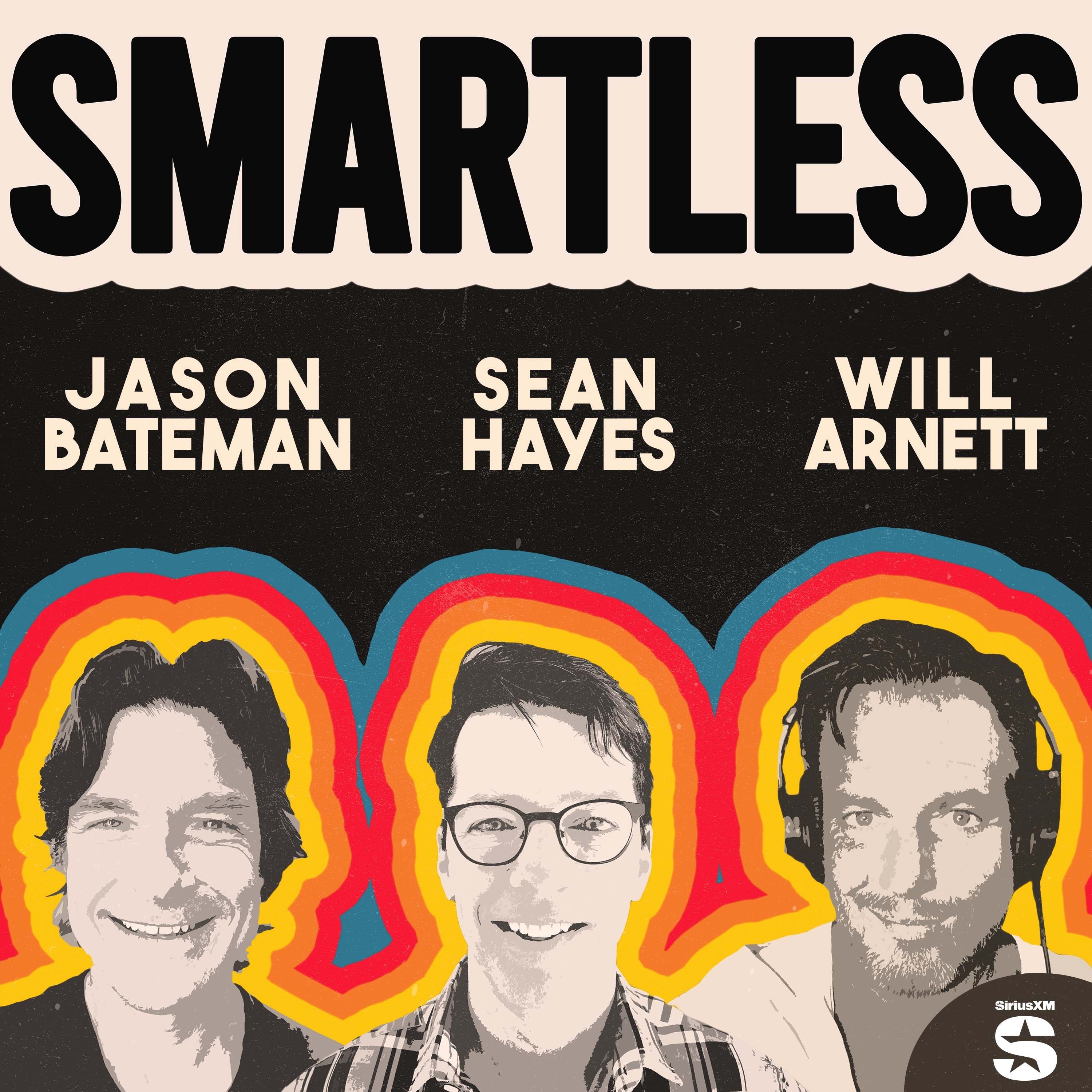
"RE-RELEASE: Paul Thomas Anderson"
This episode was originally released on 3/7/2022.
Press play and read along
Transcript
We've talked about sleep apnea before, but not about what you may be missing. Dreams.
Maybe the kind where your dog is giving you incredible life advice.
Get back to sleeping deeply with Inspire Therapy. It's a small FDA-approved implant placed during a short outpatient procedure.
It helps keep your airway open while you sleep, no mask or hose needed.
And a study shows over 90% of users prefer it over CPAP. Learn more, see if you qualify and view safety info at inspiresleep.com backslash safety.
If you've got travel coming up, visiting family, heading abroad, or even a dream trip for the new year, imagine feeling confident greeting people in their own language.
So I have a friend who recently got back from the south of France and she spoke a little bit of French, but to kind of brush up her skills, she used Rosetta Stone and just raved about it.
And it made the whole trip better knowing that she could speak the language. Don't wait, unlock your language learning potential now.
Smartlist listeners can grab Rosetta Stone's lifetime membership for 50% off. That's unlimited access to 25 language courses for life.
Visit rosettastone.com/slash smartlist to get started and claim your 50% off today.
Give a gift that keeps giving. Go to rosettastone.com/slash smartlist and start learning today.
You know how you get into those conversations that start simple, but suddenly you're three hours deep researching something wild? That's exactly when to use Claude, the AI for deeper thinking.
Like when you're fact checking a random claim, Claude can help you actually figure it out instead of just giving you the quick answer.
It matches that energy when you can't stop until you've gotten to the bottom of something.
Try Claude for free at claude.ai slash Smartless.
Okay, here we go. This is going to be a Smartless episode.
Let's tune up the ears, get the wax out. What are you doing? The papers are getting set.
The prep is done.
Okay, ready? Here we go. You guys ready to talk? Guys, guys,
guys, it's an all-new Smartless. Oh, God.
Smart.
Smart.
Smart.
Okay, hey, guys, look. Wait, check this out.
Oh, sure. Yeah, yeah.
Start right away. Yeah, start.
Have you been preparing, Sean? Did you see the
construction? No, that sign right where my finger is. Chicago.
Oh, wow. Wow, wow, wow.
Did you know that a week ago that you were going to be staying in that apartment?
I knew, I knew the name of it, but I didn't know where it was. Yeah, Sean,
for the listener, Sean started his stay there. What is it going to be like a multi-month stay in Chicago, right?
The first night he was there was
Valentine's, and appropriately,
he and scotty uh saw a couple um consummating valentine's right directly across the street
and and like in in kind of like it wasn't even like roll it was all the lights were on it was somewhat impromptu we won't get into the graphic details of it but it was clearly
not a planned uh consummation no all parties were upright is the point
it was it was half a wobbly h okay isn't that wild and Scotty's like, I go, what are you looking at? And he's like, come over to this window.
How long was he looking out the window before you noticed he was tearing it away? It was a minute.
And
he kept saying, come look at these people in love.
Right? He kept saying, look at these people in love. I mean, they were going to be.
This is love. In case you didn't know, it's Valentine's Way.
This is what love is. Okay.
Now, do you think they wanted to be seen? That's why the shades were up? Yeah. No, I think people are just used to living.
Well, Will, you can can speak to this. You've lived in New York City.
Do you just get used to the fact that people might be watching you or do you,
well, that? I think you go back and forth. I think that you have moments where you're like, oh, my God.
And then you also have moments where you're like, you just live your life and you don't think about it.
You can't think about it all the time. I mean, you could pull the shades down.
Sure.
I would suggest that those people who are engaged in that, in that moment,
didn't care.
And in fact, that probably was there to heighten their experience. Now, Seani, you're you're you're back out on the road.
Um, how's uh, we'll get to our guest here, apologies, but uh, Shawnee, how's the first few days of rehearsal going?
How's how's Oscar Levant? Good. So, Sean's doing a, it's not a musical, right? It's got some music in it, but it's no, it's a play, it's a play.
Okay, so he's going, so he's there now, he's a week into rehearsals, and uh, it's pretty arduous to rehearse a play for the listener. And, Sean, are you loving it or having regrets?
Oh, my my God, I love it so much. I mean, it's a ton of work, but thank you for asking.
Yeah, it's a ton of work,
but really rewarding.
You know what I love the most is the, we're in the process of sitting around talking about the play page by page, making sure everything makes sense and the backstory informs what the characters are doing.
It's kind of... Is this the first time the play is being done? Yeah, it's a brand new play by Doug Wright, who won the Pulitzer for I Am My Own Wife, and he wrote the movie Quills and amazing writer.
Well, let's plug Doug for sure.
Does he have a website?
Jesus. Oh, by the way, it's called Goodnight Oscar.
It's called Good Night Oscar. We know
where can people find their tickets? Our audience across the country knows Oscar Levant backstage at the tonight show. Nobody's going to go to the play now.
Everybody feels like they've already seen it. Well, maybe they'll check out Murderville again.
Yeah, exactly. Let's give that a try.
That's not a bad idea. That's not a bad idea.
How's that doing, Will? People seem to really be enjoying it. It's been very nice to see people enjoy it and have fun with it.
Listener, that's a show on Netflix called Murderville that Will Arnett brought to all of us. It's very nice.
And, you know, well, so we'll go from that, so from Goodnight, Oscar, to Murderville to the other big question we got a lot on the tour is, Jason, when are the final six episodes of
the market?
It's seven, but not a big deal. Seven.
I don't know. Well, I wanted to surprise people with the seventh.
Sorry. There's a bonus.
Yeah.
After the credits, there's one more.
They're going to announce that soon, but it's going to, I cannot say, but it will be soon. All right, here comes our guest, y'all.
Okay, okay, all right.
Sean, well, today I get into a little bit of trouble with you guys. I apologize.
I know that you hate it when I bring an academic on or a scientist, big brains in general, but this guy seems to
really just hold on. He seems to really be liked by those who have taken his class.
All right. He's been teaching filmmaking for almost 30 years now and out of some of the top institutions in town.
He's taught his students mostly through doing, in that he's managed to gather the funds necessary to himself make nine films on subjects as odd as a single digit, nighttime mucus, party drinks, hemophilia, major golf tournament, addiction, haunted textiles, and Italian candy.
And if you can believe it, these films have yielded him 11 Academy Award nominations.
Most importantly, though, he's got four kids, a house in the valley, and married to the coolest woman we three know. Gang, it's Paul Thomas Anderson.
No, yes. Oh, my God.
Yeah.
Hello. Oh, my gosh.
Hi, guys. It's so good to see you.
Did you guys have a guest with that list of subject matters? You really had me reeling on that. Did I bury it good?
That's a great intro. Huh? I worked on that for a full nine minutes this morning.
Paul, would you have been able to guess yourself with that intro?
Come on. Now let's guess it.
So a single digit, which one is that, man? Well, I did it in order. A single digit obviously is heartache.
Nighttime mucus?
Nighttime mucus. Come on.
Boogie nights, y'all. Party drinks.
Oh, God. Oh, my God.
Okay. Party drinks.
We've got punch drunk love, hemophilia, there will be blood.
Major golf tournaments, obviously the master.
Addiction is inherent vice. Haunted textiles.
We know and love Phantom Thread. And Italian candy out in theaters now.
Oh, wow. The Valley Famous Famous Licorice Pizza Record Store.
That's incredible.
All right. Pretty good.
I'm so proud of myself, Paul. You can see I'm just beaming.
Guys, we can't do early morning records. I'm still up to the city.
That's like the USA Today crossword version.
You know what I mean? That is. Oh, man.
Wait, but Oscar Levant is one of my heroes. Really? Oh, really? You go.
You too. He's amazing, isn't he? Yes.
You know, there's a great Oscar Levant show that he did that was here on KTLA Channel 5, and Fred Astaire was one of the... That's exactly right.
It was impossible to find forever and ever and ever.
I have the whole thing if you want it. No, well,
I remember it was this impossible to find thing. And then when this thing, YouTube, came around, I remember thinking...
I'll see if this thing can really find something I want. And I put in an Oscar Levant show, and there it was.
I said, oh, my God. I like YouTube.
It was there.
Yeah, yeah. Dear Mr.
YouTube, great job.
What's your,
while I'm thinking of it, because my brain doesn't hold stuff well,
the first shot in Magnolia was that when you go through the hallways and you go onto the sound stage, isn't that the tonight show stage? Yes.
Yes, right? Yeah. Speaking of the tonight show, Oscar Levant, all that stuff.
Yeah.
What is it called officially? It's NBC. It's where the Tonight Show with Johnny Carson, you know, they did that, but they also did the local news there.
They had,
you know, I remember a big deal was that we were shooting and we had to,
we had, it wasn't the days of Paul Moyer. Do you remember Paul Moyer?
And we just needed to move his space over, you know, a couple spots. And it was like, you know,
three days of negotiations to
move Paul Moyer's spot.
I do remember his not having it. And it was on a Sunday.
He wasn't even shooting. Oh, my God.
He wasn't even there. He just didn't want his stuff messed with.
He just didn't want his spot messed with.
Somehow I remember, I don't know how I'm remembering this. He had a bright, I think it was a bright red 9-11 DP Targa, like one of those with the big whale tails.
I like it.
Yeah. Like, really cut you off once on the screen.
No, I just remember being taken that a local newsman would have some big-ass flashy cool car, and he pulled it off. That guy, very, very cool.
Yeah.
He was a hand, it was a hand-to-hand fight with him and Ron Burgundy would be great. It is a very similar kind of, you know, thing.
Speaking of cool network
newsmen kind of a little bit of a reach, your dad was the voice of ABC for all of my years growing up in Los Angeles. Oh, really?
Yeah.
Like,
if I played that voice for you, you would, you'd, it'd knock you out. You'd be like, oh, my God, that's Paul's dad?
No question there. I just want to mention that as something very, very cool.
Well, actually, so Paul, we've talked about this briefly before once, because you mentioned your dad was the voice of ABC, as you said, and
he was like the original real promo guy on networks.
And my recollection is, and so I'm going to say this, and then you can tell me what you know about this, and if I'm wrong. He would record the promos for all the networks.
And the promo guys are when you watch a show, when you're watching a network and you hear, coming up tonight at 8 p.m., it's an all-new, blah, blah, blah, followed by.
Oh, that was your dad? That was your dad.
And your dad would sit in the room with the engineer right next to the board, and he had a 416, 416 a shotgun mic and he was the first guy to do that in that way. Is that right? Mm-hmm.
Mm-hmm.
I don't know for sure if that's exactly that technical thing, but that the image of that shotgun mic, you know, he would never go into the booth. He wanted to do it in the control room.
Was he because he was actually
in real time wanting the telling the guy how to modulate his voice and do all the EQ and stuff? I think that had something to do with it, too. And
I think he was smart enough or done it enough to know, like, I'm not going in the booth. I'm going to be with you guys.
You know, it's going to be exactly the same. I'm not, you know.
He also liked to smoke while he was doing it, too. And I think the other guy's weird.
Willie likes that. Willie does a little of that.
Not in the booth, not anymore.
But I will say that, like,
and then I'll get out of the weeds on this.
So traditionally, all the voiceover guys, especially in New York, where a lot of it used to be done back in the day, everybody used the mic that's a very common that I do have over here, what we refer to as an 87, a U87, and it's a great microphone.
Oh, thanks. Well, yeah, of course, let's keep going.
88. Your dad
changed that by using that shotgun mic, and he forever changed, and it became the West Coast microphone.
That all so, when I would come out here and go to a recording studio, they'd always have a shotgun mic, and it was because of your dad that that became the standard out.
Is that like the Johnny Carson one that was on his desk? Is that what a shotgun mic is? What is that? No, that no, no.
Okay, bye, everybody.
I'll see you later, Sean.
So, Paul, you did not know that, huh?
No, that sounds fantastic to me, and it doesn't seem too far from accurate. Even, you know,
he did obsess over that kind of stuff, and I probably passed a little bit of it on to me. Were you close to him? Yeah, very.
Oh, that's nice.
I got to go, you know, I had that opportunity to go to Prospect in Talmudge, which was where he would go to work at ABC.
And, you know, generally
that was sort of my first taste of being around anything that was show business related and that was magical to me. How old were you at that point?
Anywhere between the ages of probably five and you know nine, 75 to 75. Did it strike you as being like a peculiar thing for your dad to do?
I can say from my own experience, and I ask this because I say to my kids sometimes, like, it's
when they do stuff or I do stuff or they come in a work-related environment like it's weird right that this is what you're because it's weird to me yeah if my dad had done it and I sort of acknowledge it was it did it seem strange or just because it was your dad
it seemed strange only because it was not
I was proud of him but no one else could recognize this the pride you know it's just such a behind-the-scenes gig there's nothing there's nothing kind of famous about it you know you don't walk down the street and somebody say like wow there he is you know or if your your dad's a baseball player, hit Roma.
He's like, well,
there's no recognition to it, really.
But that's what he loved about it so much was that he could just kind of have this independent life, coyoteing around town and,
you know, doing his work and getting paid for it. So you're sitting there, you're watching kind of the sausage get made for television and in some aspect.
And
were you at that point starting to gather these images and interest in this process? And what it, oh, these are the people that are behind the curtain that create at least this lane of fake life. And
that started to build an idea for you about what you might want to do?
Or can you track the moment that you thought,
I want to do something like this?
I can't remember because for as long as my memories are there, I've wanted to make films for sure.
But you have to remember, I mean, Jason, you'll remember that there was like such a dividing line between making making films and making television.
Television back then was like,
you know, anybody can do it.
Movies is like this
gold ring, like not everybody gets to make movies, you know. Right.
So you started to experiment with little home movie. It's not.
It's not an uncommon story, right?
No, it's the same exact story as everybody else. But
I had the
camaraderie in that, which is so crazy.
Now, I mean, I look around my life right now, and I see my relationship to all the people in dark rooms that I work with, engineers and things like this, through the entire process of making a movie.
And you're like, this is exactly what my dad did. You go to a dark room each day and,
you know, try to make something happen. And the friendships that he had with those guys, I look back and I think, well, I was really inspired by it.
I always just thought that's what a friendship was.
You know, these kinds of, he was very close with all these technicians and guys that he worked with. And so those are the people that were around our house.
Yeah, one of my first experiences were people that were very, very close with the crew, or at least a full understanding of the importance of the crew, as opposed to sort of this
sort of terrible traditional kind of look at like, oh, you know, that's, you know, some people look at crew as sort of soldiers and that, you know, the folks that are in front of the camera are the ones that are
super important
when the opposite is actually the truth.
And so was that uh did did that start then understanding that oh my god this is this is really difficult and there's actually nobody on the set there that doesn't need to be there
well the only people that don't need to be there are like studio executives and producers and you know that what I learned probably from my dad it was like whoever's whoever's you know kick all the people out of the room that are not completely completely essential to the product you know you learn pretty quickly who isn't you know they They scatter.
So grabbing those early video cameras, movie cameras, stuff like that, that sort of pretty common story where you kind of point a camera at stuff and you kind of take little kid films and you little army men.
That's not uncommon. But what about the writing part?
Do you remember your first experience looking at a blank piece of paper and trying to figure out how to start from zero? Do you remember that being humbling or
surprisingly easy?
That's a really good question because I think you're right that
the story of the filmmaker with the eight-millimeter camera and then onto the video cameras, like there's a million of them, and that's generally how everybody starts.
But the writing part
always excited me
because I liked it. I think I got lucky that I liked it.
I liked putting paper into a typewriter
and typing out ideas. And
I liked seeing it on the page.
I liked looking at that idea.
I don't know, from an early age, I've always liked writing and formulating things on paper.
And when you learn on a typewriter, you learn how to make it right the first time because the last thing that you want to do is
go through that.
And I had
the one script. Do you still use a typewriter? No, I don't.
From time to time, I will just for fun to mix it up. But no, I don't use a typewriter anymore.
But I remember the one script that I had, I think I have to credit my mother for this, is I had the script for Holy Grail. Oh, wow.
Money Python. Monty Python? Monty Python.
It was published as a little book, and I loved that movie so much. This is like probably 78 or 79.
By the way, they're both like Monty Python. No, the actual Holy Grail, you've
done something. We're helping Tracy, okay?
So I had what was the script for that and I and then
I just copied that. I just copied how the formatting was of that.
It was a great way to learn. So I think writing is either something that you like doing or you don't like doing.
I mean, you know, it's, it's, yeah. I got a dumb, dummy question.
When you, no shit.
When you drive, when you're just driving around, like the
driving around during the day with your kids or whatever, do you constantly think in images or see images and think of filmmaking? like do you is it hard to turn it off
yeah it's no um
it's easy to turn off oh okay never mind it's not no i don't like walk around like rain man or something like that
because i i always think of like like whenever i'm driving around i always see like images or my god that'd be such and i see like a frame around it or something i'm not a filmmaker but especially when i'm you know like when you're listening to music do you find that happening sean all the time you basically start cutting videos right?
On the big beat change, your eyes go right, you know, and I dork out like that.
How many wham-inspired movies have you made, Sean, in your head? Oh, there's got to be like 12. I mean, you know, they wake me up before you go, go, was my holy grail.
You know, they're like, I was like, I can't believe there's this. This lends itself to a real cinematic.
This could be the best interview.
You don't get to talk.
I know, and this is why I like it. I just want to hear you guys.
I have to tell you, my favorite, I heard, listen to, I don't listen to. You haven't listened to this.
I have, of course I have.
But the one joke that stuck with me forever and ever and ever was Will saying something about
your father, Jason.
And by father, he meant the security guard at the 20th Century Fox Watch.
That sounds about. Don't make Jason cry.
Don't make Jason cry.
It stuck with me where I think about it. That's what I think about, Sean, when I'm driving down the road.
Every once in a while, I'll think about
something pops into your head. You think, God, that was really, really, really, really funny.
It's surprising when you're in the car and you're driving around, you're not thinking about Sean's dad peeling away from the house.
Because he's real handy in a car. Yeah, still hasn't come back.
Exactly.
And we will be right back.
People love Venmostash because it just makes sense. Something that can't always be said about about this podcast.
With Venmo Stash, you can get up to 5% cash back at your favorite brands.
You spend money with the Venmo debit card, you get cash back. Just like that, boom! Pick a bundle of your go-to's to shop with your Venmo debit card and earn cash back at them.
And you're free to mix things up. You can easily swap out your bundle of brands every 30 days.
Earn more cash when you do more with Stash.
Venmo Stash Terms and Exclusions Apply, max $100 cash back per month. See terms at venmo.me slash stash terms.
Let's be real. We all deserve snacks that hit that sweet spot, delicious and better for you.
That's where Skinny Pop Popcorn comes in.
Skinny Pop uses quality ingredients to bring you the light and tasty flavors you love. Skinny Pop keeps it simple and tasty, using quality ingredients to create light, craveable popcorn.
The original ready-to-eat flavor is made with just three ingredients, popcorn, kernels, sunflower oil, and salt. Nothing more.
Nothing weird.
And if you're feeling adventurous, they've got plenty of flavors to choose from. White cheddar, sweet and salty kettle, and more.
It's always non-GMO, gluten-free, with plenty of vegan-friendly options too. I started taking a little bit of a more break from the sweet side of my life with like candy bars.
I mean, I still eat them and stuff, but for movie night, I still go to Skinny Pop just because of the natural ingredients. I love it.
It tastes so good and it goes great with a movie.
And my favorite is the original Skinny Pop. I love it.
I eat a whole bag in one sitting almost. Skinny Pop popcorn, deliciously popped, perfectly salted.
Shop Skinny Pop now.
The holidays are nothing without family, friends, and
flannel. The flannel you can always count on, it has to be from LL Bean.
It's the shirt you wear when you pick out your tree, the one you wear when you're decorating it, and the one you're still wearing when you take her down. And when I say her, I mean the tree.
And it's the one you wear in the family photo where everyone's matching, whether it was planned or not. Now me, I'm a PJ guy.
I love a flannel top and a flannel bottom.
And if you get me a pair of flannel socks, I'll say thank you very much. I mean, it's perfect to wear and it's perfect to gift.
It's the flannel of the holidays.
Actually, it's the uniform of the season. And like all things, LL Bean, it's cozy, it's effortless, and darn it, it's made to last.
Go check out LL Bean Flannel, invited to the holidays since 1912.
And now, back to the show. Paul,
and forgive us for just being such fools. I'm sure we ruined many of your days having to listen to it.
Wait, I want to know about
Bradford.
Yeah, just cut him off, Sean. If you get an idea, start talking.
Go ahead, Will. Wait, I just want to get this out of the way.
I think I've seen, I'm pretty sure I've seen every single one of your films
and always been amazed by each one. But I just want to get this out of the way before I forget.
Boogie Nights.
Is it true that Leo was up for the part, but Mark got it, or Leo turned it down because he did Titanic? Or is there any truth to any of that? Sean loves the dirt, Paul.
That is very true, is that I asked Leo to be in Boogie Nights, and he spent many, many months agonizing and debating about it.
And ultimately,
what I didn't realize, or kind of came to realize about halfway into that, this sort of long decision-making process is that he had a choice to make, which was to either do Titanic or to do Boogie Nights.
And he chose to do Titanic, which, of course, in the long run catapulted into this massive worldwide fame. But on the other hand, I think possibly, but I think it was,
we laugh about it now, but he regrets missing the experience and doing it. But yeah, that's true.
Yeah, that's right. I just always wondered that.
It'd be, well, now you know.
So, again, I would have never
known. Will, was your question as good as that? Not as good as that.
Actually, that was very interesting and well done, Sean. Thank you.
Congrats. I like the idea.
back to google back to google sean
i thought you had to say i thought you were going to say and i to this day i still think leo made a huge error in judgment
you never let it go but but what was i'm no the question actually was just simply what was that first thing that you that you wrote and you said i should film this yeah and that you first thing you actually put to film that you from your own words well i did like short treatments and shot lists and things like that but really
funny enough that when I was
16,
just about to turn 17, I wrote a short film that was called the Dirk Diggler story that was what Boogie Nights became. And it was like a 20, it was like a 23 or 24 page script.
But I did it in the format that was so popular at the time. And all I had was this sort of bad video camera.
So I realized it wasn't going to look good. It wasn't going to look like a movie.
So I wrote this thing that was about 23 pages long, and it was interviews with people looking back at the life of this guy, Dirk Diggler.
Oh, A Current Affair was a very popular show at that time. I don't know if you remember that.
But they would always have these insanely over-dramatic, you know, and it was so preposterous that it was so trying to find a way into the story that I thought was interesting, which is the pornography that had surrounded me my whole life living where I lived.
Like, it was so obvious what was around me. And then writing it in this format was like a doable thing.
Like, okay, I can get somebody and and do an interview with them you know I mean it's a it's a format that's still at work you know
but at the time it was really like the most convenient and plausible way into a story with the equipment that you had at hand did you have you transferred that from from VA was it VHS
no it was eight millimeter eight millimeter video so a high eight I think they were have you transferred it to something that'll last and are we ever going to see it hopefully not hopefully it's somewhere no
it's transferred within an inch of its life. It's available.
I think maybe it's on YouTube. I'd have to look it up.
Oh, really? Yeah, I'm not sure. Wow.
It's not terrible.
There's still some jokes that are the same and things and some pieces that, you know, remained in Boogie Nights.
You know, what was great about that was that what I didn't even realize at the time, in terms of the writing, in terms of really learning how to write, was that I'd created this kind of these fictional characters in this fake documentary, right?
And then I realized what I had to do was adapt that, adapt these fake lives into a movie. And I spent the next,
well, probably about 10 years doing that. So I like wrote a 90-page version of this documentary.
And then I realized, well, I don't want to do that.
That's not the right format for this. I want to write this as a fictional film.
So I did that. you know, for 10 years.
I guess it was the way that I learned how to write, really, was practicing telling this story in multiple different ways.
It's funny that that seems to be a recurring theme with a lot of filmmakers and writers. I know, you know, Kenny Lonergan
used to do,
back in the day, Could Angels, this theater company in New York in the 90s, he did various scene nights on Monday nights where he would do the scene about a brother and a sister, and then just this guy who was kind of lost in his 20s in New York, et cetera, et cetera.
And it took on a bunch of different incarnations, a bunch of different scenes, which eventually then became This Is Our Youth, the play
that my then girlfriend, Missy Yeager, was in with
Mark Ruffalo and Josh Hamilton that then became kind of
really, I think, the inspiration for You Can Count on Me, you know, and but it was like this similar story, similar theme that he told in various ways over at least 15 years before he kind of landed on that.
Yeah.
I'm sure you can probably relate to that.
For sure. You know, maybe there's leftovers and you're just, I don't know, how deep is your well, I guess.
Well, to that point, I mean, do you find that it was basically a peeling the onion further and further back on a specific theme that you thought this sort of story was a fun example of?
And if so, what is that theme? Yeah, but that's a, can you write a theme? I can never write a theme. Well, I mean, but I mean, you tell me, you know what you're doing.
A theme of being, let's say,
the irresponsible chase of fame.
No,
I never have anything good like that. I always have like, just like, no, like, I never ever have, I have more like facts, like, well, what would, what really happens here?
And some steal from real life. Like, every story was essentially the same.
You know, it was like if the exaggerated version was the guy who steps off the bus and, you know, kind of comes to Hollywood with big dreams and takes his pants off.
and then the next thing you know he's a big star and it was any classic rise and fall story so I'm always just sort of following any steps of reality I mean I don't know I never I get so scared of writing to a theme or having anything like that beforehand I can remember at a certain point maybe needing help like like what is the story and luckily enough coming across singing in the rain and being like, oh, right.
It's just the same thing as like silent talkies. You know, it's this transitional time in whatever industry they're going from shooting on film to shooting on video.
Like use things like this to tell your story and whatever themes will will just emerge later. Well, yes, so you write a story and you basically just write a script because it's to oversimplify it.
This event runs to this event and this event and this event and now we have an ending and it's a fun story. And now you shoot it and all that worked out well.
Now you're in the editing room.
And you start to shape this, pardon the phrase, experience for the audience. And it starts to sort of present itself as a film.
And you start working with either temp music or the actual score.
And maybe themes start to develop for you as a viewer as you're viewing it, trying to keep the optics of a viewer.
Do you allow that to happen? And then does that inform the way you finish the film? And, oh, here's a little theme that's existing underneath this crunchy story that's kind of fun.
Do you find that that happens?
I find that that's exactly what happens with the exception that it does happen a little bit earlier. You know, that once you, I mean, listen, I'm not blind, you know, as you're writing something,
you may be
you're fighting off the idea that a theme is right in front of your face, but just because you want to try to tell something factually.
And what ends up emerging emerges, and you can't fight it. Hopefully, you like it, you're enjoying what's happening.
But you I think it and you keep a half an eye on it, but really you keep the other eye on what are the facts, what are the facts, what are the facts of the story, you know.
Why is that? Because I don't know, I find films that overindulge in
telling me the theme are
annoying, you know, and boring.
So,
but yes, to your point, that once you, and then you get into shooting and you're seeing dailies and you're seeing stuff emerge that is really exciting or stuff that is unexpected and you either embrace it or you say, perhaps this is not going in the right direction.
But very more often than not, you can't stop what's coming, nor should you, that you have to kind of be, surrender.
You're guiding a ship, but you're also surrendering a bit to the path that's happening. And, you know, performances kind of get bigger or smaller, whatever ends up happening.
And then it just keeps on going and you keep refining that through the editing and
all that.
One of the, if we can get into staying on the idea of themes, one of the themes of, it seems to me, of your films is that they're very specific visually and stylistically, each one different in its own way.
But you
they do seem so specific in the writing. And so what is your relationship like, again, going deeper into the weeds on filmmaking, but what is your relationship like with
your production designer and
your DP leading up to when you actually shoot?
Because it does seem like all of your films, I told you once at risk of further embarrassment to myself and to you, that, you know, for instance, There Will Be Blood, I feel like it should be just hung in MoMA and left there for people to watch.
It's an incredible piece of art in every way, from the writing to the direction to
the art direction, you know, production. What is that like for you leading up to actually rolling film and working with those departments?
Well, it's the great joy of collaboration, particularly when you're doing it with somebody that you love and work with.
Like, for instance, on that film, I had never worked with Jack Fisk, who's one of the great production designers who started his career with Terrence Malik and David Lynch.
They kind of go back to their beginnings together.
Anyway, I contacted Jack Fisk and had written the script, and I needed to kind of create, I need a lot of help with making oil derricks and the recreation of an early California town.
And there was only one person that helped do that. So it started a great collaboration.
Jack Fisk was,
you know, we were kind of trying to learn how to get oil out of the ground and
really trying to be, really, you know, do our research. And he said the greatest thing.
He's like, you know, I've found that if we can just get a children's book about this, it's really better than trying to really understand how to do it with all this kind of books that are this thick.
And it was one of these great lessons in, like, yeah, get the children's book first and don't be, you know, because it'll have drawings, it'll be simple. Yeah, and
it was like, wow, Jack Fisk gets the children's book first. All right, that's really good advice.
But we had the incredible joy of going to scout locations together and find a place to make this film. And I learned from him
one incredible trick that I still try to make true is that
the more you can have a location where everything's close together, the more freedom you have.
Here's what I mean by that: is that if you shoot a scene
over here and you see it a few days later, you think that's the worst scene that we've ever done, we should really try to do it again, is that you can go do it again. You know,
you kind of create your own, you create your own backlog, you create your own universe and try as as much as you possibly can to not move too much, but to have a variety of different looks and things happening.
So that, I don't know, I'm lost in whatever your question was. It was kind of like the collaboration.
That's
well, the simplicity sometimes yields some of the most complex and sophisticated results, perhaps. Yeah, and
that's my role.
Yeah.
Was there a similar process with Johnny Greenwood, who did the
for Tracy, was the composer on that film? I believe believe it was the first time he'd composed music for a film and first time you guys worked together. Yeah, yeah.
There was a piece of music that he had written for orchestra because he was already well-versed in how to write for string instruments. It wasn't like, don't let him fool you.
I mean, I know he's.
But obviously, his score was incredible, as was everything else in the film. It is really incredible.
And
it's an opportunity. You know, look, I think, I don't, now there was no kind of crazy, weird instrumentation or something like that.
He does do funny things with instruments where he'll detune certain pieces of the orchestra and keep others in tune. And so he has the ability to make it sound very familiar.
You're hearing string instruments, but that sounds just out of body enough that you can't quite place it.
So he's brilliant like that, but that sort of stuff, it's, you know, it's nice and it's trickery, but he writes beautiful music that complements the film and they go hand in hand.
And it was the beginning of a beautiful column. Do you consciously keep that in mind when you're writing? Like spaces, or do you listen to stuff when you write?
Yeah, for sure. I mean, I had all kinds of the stuff that I was listening to was stuff that he likes anyway.
Was it Penderecki or Schubert or, you know, even the piece that he had written for the BPC orchestra? So that was already kind of informing where my head was at.
And it was nice to go to him and say, like, you know, the movie lends itself too to just
wide open spaces and like a huge opportunity to fill long gaps of silence with music that can either be gigantically loud or even just simmering underneath.
So it was quite a good entrance into the game for him. I love that.
What's the music that you put on when you go like pick up the kids from school or whatever? Like what do you, what are your bands?
Yeah, what's the music you have to take off the stereo when your kids get in and put on
well, they're already sick of that smile record. They've been hearing that enough.
They're like, enough with that. Enough, enough, enough.
So, well, come on. What's Pearl listening to right now?
Pearl is listening to.
Well, you know what she's listening to is anything, and I don't know
many of the artists, but we just, we're kind of obsessed right now with this film, The Worst Person in the World. Yeah.
I don't know if you guys have seen it. It's in the trailer.
It looks great.
Oh, it's fucking magical, this film. And it's got this great soundtrack.
So we've just kind of been listening to all this variety of songs on that soundtrack which is everything from like Harry Nielsen and Todd Rundring to a lot of new stuff that I've never heard in my life you know
I want to ask you something about you know streaming versus wide release and and where we're at in the business of that and you know I was having this conversation with a friend and we were talking about how
For example, Westside Story or Licorice Pizza or whatever it is that's out there that's fantastic right now, how that would have fared with a really long, wide release run.
Would anybody see these things? Are we really, truly at the point where we just want to see stuff in our homes?
But to the filmmaker, I imagine, you want it to be seen on that big screen because of the genre of filmmaking, right? Because of the thing that lends itself to that.
So what are your thoughts about that? Well, yeah, I mean, I
don't know.
I kind of, I don't know. I mean, I like everything.
You know, I mean, I really do. I sound like Daniel Plainview is like, I like all kinds of religions.
They're all fucking
guy to me. And then I'm sticking your back.
Exactly.
But when you make a movie, isn't the idea in your head, I can't wait to see this on the big screen. Yes.
Right. Absolutely.
And so
with the business of this business, it just seems to be less and less that if it's not one of these big superhero movies, it's going to... Well, listen, that's exactly right.
I mean, to that point is
there's probably, you know, 30 theaters in this country where it would look great and sound great, and the rest are fucking filth.
I'm sorry, but it's like, you know, and that's the sad truth of it, is that I can understand why everybody says, like, oh, piss off. I'm staying at home.
You know,
you want me to pay for a babysitter and pay for parking and come in and look at this shit and look at it on a fucking screen that you guys haven't even, you know, I don't know.
It's hard to defend at a certain point.
But I'm sure that if god forbid the the business became a place where it's only event movies in in in theaters and the only place that you can expect your film to be seen is at home based on it's not a big effects thing or whatever you'd you'd much rather people see a film be able to make films and have them see it at home than make no films at all right but i don't know i think that's kind of bullshit too because the reason why is um when all these theaters were opening up again, you know, you have these huge, gigantic twenty-five plexes and stuff like that, and everybody was crying.
Oh, they're empty. It was like, well, what did you fucking think was going to happen?
But if you go to any of the great theaters, let's say in Los Angeles or New York, that are playing specialty programming, they're packed with people. They're all turning out.
They're film lovers.
They're people that you know are going to come out and turn out for this thing.
And because there's one theater with 400 seats that they can fill and they can do two shows a day or three shows a day and people will still turn up. It was like everyone's scratching their head.
No one's coming back for the movies. It's like, well, they're not coming back to these weird, horrible pyramids that we've built.
But Paul, I think that what you're maybe you're saying, and I don't want to put words in your mouth, but is there is a little bit of,
well, of course they're not going to come back because look, what you're putting in the theaters is part of the problem, A.
And I can say that, and I know it's hard for you to say because of your position in the films that you make, and you probably don't want to be that guy who says that, but you make the kind of films that you want that are really incredible films, and at the same time, you don't seek out
recognition for yourself in a way that a lot of other filmmakers seem to do. It's never about your own sort of
increasing your personal fame. So, my question to you is, how much of that are you aware of show business, in fact? Or are you kind of in your bubble of making the films that you make? No, um
I do and then I don't. I slip in and out of it because I love
part of loving
movies as much as I do, the history of movies and my, you know, my obsession with this work, which has been with me forever and is what I've made of my life.
It does involve being fascinated with the
way that it moves.
You know, like we were talking about before with Singing in the Rain, you know, that's a fantastic story, the way that what happened to the the movie business when it changed from talkies to.
So I constantly try to keep an eye on that, or try to understand it, or have enough friends in this business from over the years that I can call up and ask, you know, what does this mean?
What does this mean when this film is doing well? Or
what is going to happen here? What tides do you see turning? And it's nice to gauge that stuff.
I love this business, and I love movies so much that I have a real interest in seeing it survive.
But more often than not, the volume of my day becomes more about film preservation you know um and and film history and trying to keep that stuff alive because um
and then just sort of looking to see what's happening and reacting i suppose but i don't know um how often do you collaborate with with quentin tarantino on those efforts uh because i know he's he's got a real passion for the history of cinema and and and turning turning people on to stuff that perhaps they haven't seen
he's great about all that um but he he's amazing about it one of the best but he also really runs in his own lane, you know, because he, the person who I collaborate the most with that is Scorsese, because he has the Film Foundation.
He, since the 70s, since the late 70s, early 80s,
went around to every studio in town and said, look,
this is when it was really tragic, when the products they had made
since their existence were really fading away and dying and weren't being taken care of.
This is sort of just on the cusp of VHS coming around and home entertainment.
So he was really out there at the very beginning with the Film Foundation saying, This is the biggest cultural, historical thing that this country has to offer, and we have to preserve it, and we have to take care of it.
We have to invest money and time and
manpower into figuring this out. So, being a part of his Film Foundation has been
one of the great honors of my life. It's great.
We'll be right back.
My home, like your home, it's a retreat, right? It's your nest, right? And you want to be able to just lay out in that nest, you know, after a long day.
So, you know, like my couch, like your couch is probably deep. It's soft, highly crashable, right? The home should show off who you are.
And Ashley has styles that balance timeless appeal and modern trends to bring your personal look home.
Ashley offers well-crafted, affordable pieces built built to stand up to real life with great looks that are made to last.
More than just eye-catching design, get features like stain-resistant performance fabric options that are incredibly durable, stain-resistant, with machine-washable cushion covers.
Plus, Ashley provides fast, reliable white glove delivery right to your door. Now, my buns are very familiar with the Jerson Lowe swivel chair.
I sat in this chair at our show in Los Angeles that we did in front of a live audience.
And let me tell you something, I would have sat there for another three, four, five hours, but then we would have had to have charged everybody four or five times the amount they spent on the one-hour show.
So it didn't make any sense. But the Gerson Lowe swivel chair made that a temptation for me.
Visit your local Ashley store or head to ashley.com to find your style.
This podcast is brought to you by FedEx, the new power move.
You You know those people who still rely on old school business power moves, like showing up late to meetings because they're so busy or wearing a big shiny gold watch and making sure everyone notices it.
Maybe it's the person who takes long dramatic pauses every time they speak because they're so profound.
But let's be honest, all those old school power moves won't keep your supply chain moving smoothly. The real power move? Using data insights from FedEx to move your business.
business forward, like using predictive analytics to manage your entire supply chain or calling out logistics problems before they arise and sitting at the forefront of business intelligence.
That's how FedEx helps modern businesses stay ahead, anticipating change, rerouting around challenges, and keeping everything running smoothly. FedEx, the new power move.
Visit fedEx.com slash newpower move to learn more.
Life is full of choices like deciding whether to try that new food trend, which celebrity story to believe, or if the latest show is worth a stream or a skip.
At State Farm, their goal is to help you make decisions that you feel good about. And when it comes to choosing coverage, you can feel the same.
The State Farm Personal Price Plan can help you create an affordable price when you choose to bundle home and auto insurance. You have options to choose from to help best fit your needs.
It's about giving flexibility, offering coverage that makes sense, and supporting smart decisions for both today and tomorrow. So planning ahead feels easier and empowering.
Talk to a State Farm agent today to learn how you can choose to bundle and save with a personal price plan. Like a good neighbor, State Farm is there.
Prices are based on rating plans that vary by state. Coverage options are selected by the customer.
Availability, amount of discounts and savings, and eligibility vary by state.
All right, back to the show. Paul, I know you're a huge, you're a big comedy fan, and
you've obviously collaborated with Sandler and you and married the funniest woman in Hollywood. Yeah.
Yeah. Or in the world.
Maybe we can just say the world. Or Tracy.
I mean. Maya Rudolph Tracy.
Maya was one of our first guests. I said that to her.
I said, you were one of the first guests. She's like, no, no, I wasn't.
I said, I think you were. She was like one of the first two or three, right? Yeah.
Maya's one of those people, as you know, did you give her a piece of the pie? Because
she should have. We sent her a cake, though.
Yeah.
She should have. But she is one of those people that anytime you're doing anything funny, you go, so then it would be great.
And then you go, God, if we could get Maya
stamping.
it yeah you know she's so just how did you guys meet where that where that I know as Will was saying you've been a huge fan of comedy for a long time was it just did you just fan out on her and and say will you have dinner with me
it was just like that yeah it's simple
or did you swipe left or right how does I don't know how
see pa it's not easy is it it's not easy to bite your tongue with Bateman
he wants to hurt me I know I it you know it's funny.
I'm not sure what it is that it's, I guess it's like anything like, you know, I don't know,
there's like, you know, actors that wanted to be rock stars, or,
you know, musicians wanted to be actors, like people that are making serious films really just like, the one thing they really loved was comedies, you know, like I had made these films.
I thought that they were funny, but people were saying, like, hilarious.
You make really funny money.
Well, I think
really you never ask for a laugh, and that's what makes it so goddamn funny. There's no winking, it's great.
Sorry, thank you because I, yeah, because everything,
everything that that I watched or in my daily kind of existence was just like I just devoured that stuff. And I met Maya when she'd started SNL.
Um,
um,
and yeah, what was that meaning? How did you guys meet? Well, you know, the funny thing is, is that I make you laugh at home too, Paul.
She sure makes us laugh.
She just must be a cut-up at home.
Somebody once said to me, that reminds me, I think I told this once, somebody said to me years ago, when Amy and I were married, they said, what's it like being married to the funniest person in America?
And I said, you'd have to ask my wife.
But
I love that. Do you find that funny people are generally pretty serious when they're at home?
Yes.
Nothing funny about it. But I do want to know that.
How did you meet Paul? How did you and Miami? I really do want to know.
At SNL, right? At SNL.
That was the time with Will Farrell and Molly Shannon, and I had met Molly Shannon, and she said, you know, you could come and you can see how we do this.
And at the time, I was writing Punch Drunk Love, and I was obsessed with that time that Sandler had been there. So I accepted that offer to come and look and watch, you know, behind the scenes.
And then Molly said, Well, you know, you let's direct a, you can direct a short. So I directed a short with her in it and just got to kind of witness the inner workings of this whole thing.
And at that time, I was also getting to know Sandler and asking him about his time there. I was getting ready to make Punch Drunk Love with him.
And as I was getting ready to leave after my week there, my head was spinning.
I was like, well, that was great, but I don't want to fucking do that again because it was so much, it was a different pace of work.
And I was thrilled thrilled to have done it but that was enough of a taste
they said there was a piece of paper that somebody had put in my hands or something like that and I looked at it and it it with the information was on it that there was a a new cast member starting next week and her name was Maya Rudolph
and I can remember seeing her name on that piece of paper I don't know if you've had any feeling like this but you see something for the first time and you realize that's my life has just changed I don't know how.
I don't know why. I don't know what just happened.
And so,
but you know, you quickly kind of move on. You just, whatever, you have something else to do.
You have to eat it, you know.
But looking back, I obviously
that impulse, whatever that kind of, that shining kind of feeling that can happen to any of us if we're open to it happened.
And so I
roamed around and then I saw her
on television and I saw what she was doing and I had stayed in touch with a few people from the show and it's like, my God, this woman's amazing. And
on my way back through,
I stopped to watch and we met at the show. And then I had to go on to London
to work on Punch No Glove. And then I got to London.
I said, well, something didn't feel right.
And I just came back to New York. Wow.
And I came back and then.
That's fucking beautiful, man. Yeah.
For real.
So you come back to New York because you felt drawn back to her and called her and said, let's go out? Yeah.
No, why?
I wanted to make a joke in there so badly, but I love that story. I wanted to.
It just melted my cold heart.
Sean had that feeling, that same feeling of seeing something written when somebody pushed a flyer for a new Vons that was opening around the corner for her.
Oh, I thought you were saying when he drove by a new Chin Chin and he had to double back.
He knew his life was
left since jason jason felt the same way when he found out that deadline in hollywood had an app um
but but
but that is that's incredible man i love that maya reminds me too paul that you and i born the same day same year every year she reminds me i think of it all the time we're we're we're one and the same sean
june 6th are you guys june 26th 1970 june 26th 1970. you two guys are yeah but what city were you born in chicago evergreen park i was born in the hospital, Evergreen Park, but I just say Chicago.
Yeah.
Wow. You?
I was born
here in Los Angeles at what is now the Scientology Center, which was
St.
John's, I guess it was.
No, it was Cedars of Lebanon, it was called.
On Franklin? Or no, no, the far away.
Right there where Sunset and Hollywood meet, that big blue building. Almost near Prospect.
Yeah, right around the corner from Franklin. It went from Catholic to Scientology, that building.
That's right. That's amazing.
Hey,
you know, you mentioned Sandler. What was it you saw in Adam earlier than anybody else did?
Well, I always liked it when Adam would get angry. You know, the violent part of him would come out.
And it was like, and I guess I saw...
The story that I remember, there was a sketch called The Denise Show, where he's talking to his ex-girlfriend, Denise, who's played by Shannon Dougherty.
And it's a funny enough premise. And
he keeps trying to
woo her back. But there's a moment
when he starts screaming.
I think his dad calls up and is on the speakerphone and he starts screaming at his father.
And there was a moment where Sandler, Sandler screamed, he's so invested in it that the whites of his eyes turn black.
And it like, and I could just, there was a level of anger and commitment to this performance. I said, that is something else.
That he's not just streaming and being like, he, he, he, he potentially is, is completely psychotic underneath all of it. And I loved it.
That's great. I love that.
Yeah. And it was, um,
you know, he has a great physical way about him. And I, um,
yeah, loved working with, with Adam.
Do you ever have any desire to, especially now that there makes so many of these sort of limited series, does that ever, does that ever appeal to you, the idea of being able to tell 400-page script for a longer-
Okay.
I don't know. I want to be careful what I say here because I only in the past couple weeks have become a little bit preoccupied with
what seems to be a real unfortunate turn of events, which is 80-minute stories being turned into like nine-part, you know,
things that it just seems to be the kind of the call of the day. Like, this is what we're doing.
Yeah.
When in fact, you know, it's like, piss off. I, I don't, this is, this is stretched out way too much, you know? I mean, I was watching The Purple Rose of Cairo last night,
which is about 92 minutes and absolutely perfect and is packed so much story. You know, it's so interesting because people say that all the time.
They're like,
did you see so-and-so? Did you see the new series blank or whatever? And they're like, yeah, I tried to get into it. No, you got to wait nine episodes in.
Yeah, just waiting for it. It's really good.
Third one. Right.
I know. Fuck.
I'm saying
it'd be good after the first one. Yeah.
No, so I, but I only have been really feeling this lately when I, and I, and I don't have a leg to stand on because I haven't really, I don't, I don't want to sound
like an asshole here, but I, I haven't seen much of it because my viewing always goes like if I have opportunity to watch TV, I fucking end up, I'm watching old movies.
You know, it's just sort of like my
gravity pulls me that way with the time that I have in the day. But,
you know, sometimes you have a story that's very large, like a large-scale story, any kind of epic stories, and those are great.
And there used to be this opportunity, they would have like the winds of war or, you know, Roots or these huge mini-series. It was like, okay, that's fantastic.
That used to be a kind of work of art in and of itself. But now I feel this kind of slow-motion turn towards stories stretched out
too much, I think.
I guess underneath it, I have a fear that the painfully difficult challenge of telling a story in preferably under two hours, hopefully 90 minutes, will start to get lost because I think it's a very, very valuable storytelling.
You know, that structure is great.
I don't want to see that get lost.
There is the risk that we're rewiring how we appreciate those things. And I watched that
the story of Neville Chamberlain
signing the Munich Agreement with Hitler over the Sudetenland, et cetera, et cetera, trying to avoid war. This was just to unwind the other night.
To unwind. Yeah.
Untubioval. And
what was interesting was, was that he was telling this really simple story that was just a snapshot of that time and of that very specific story and these two guys who tried to alter the course of.
And I realized halfway through, I thought,
to your point, I was like,
I'm surprised that they didn't try to stretch it out and that they'd actually made this film became quite surprising to me while I was watching it because we've become so accustomed to, and our brains are wired to,
you know, great, there's going to be 12 episodes of this now. Right.
Yeah.
Let's talk about the opposite, trailers.
I think
you love trailers
based on how incredible your trailers are. And I think you cut them yourself.
I love trailers. Trailers are their own little art form, and
I have cut them in the past or collaborated with people.
The last one that we did was not cut by me, it was cut by a guy named Joel, who's got a company called Aspect Ratio.
And it was one of those great moments where I just handed the film over and said, Can you do something? And it was so perfect right away that we didn't say anything. We just said, That's it.
You know, it was great. And that was a really fun feeling.
But
yeah, I always
that that was one of the joys to me of going to sit in a movie theater.
I guess there's people, there's probably two types of people in the world, people that like to sit down and watch trailers and then people that like to watch the credits of movies. You know,
people who like to watch the credits and people that don't like to watch the credits. I like to watch the credits.
Yeah.
You once described having four kids in the best way I thought possible. And I think I mentioned this when we had Maya on,
which was, and I'll mash this up, you correct me, that having four kids is like having four cozy fires burning in the house, just hearing them run around.
And it sounds like you're as much of a homebody as I am. How do you manage to work as hard as you do and still be an incredible father to not one, not two, not three, but four kids? Well, I hope so.
I mean, time will tell.
Yeah, this is very dangerous. I remember there's these great episodes with Lucille Ball doing these radio interviews from the the mid-sixties.
I don't know if you've heard those.
They were on SiriusXM for a little while and they're the pon and you hear all these people talking about their strengths as parents and then you sort of realize, you know, that time has really proven quite differently that you know, there are these people talking about you know, we really spend time on the weekends and everything else, and you're like, uh-huh, uh-huh.
Stay tuned for the book.
I don't know. You know,
one of the benefits of writing, I suppose, is the ability to work from home, the ability to be present at home. And shooting movies about the valley.
Well, that helps, too. Yeah.
To not go too far away. But even still, I think that, you know, I don't know.
When I went to London to make Phantom Thread,
they did come for some of the time, but then they understood that for two months, you're not going to see me, you know. But that's okay.
Out of 12 months and a year, as long as I'm with you the other chunk of time, you won't miss me that much.
Sorry, Jason, when he says be present, it means that you are where you are and that you're aware of the surroundings and of other people, et cetera.
Got it. Not just
built in. Yeah.
Right. Understood.
Well, I will say I do love, and this is such a, this is almost trite to say, but your, your,
your affinity for your
love of telling stories about Los Angeles
in so many different ways and so many different times.
I find it really fascinating. You tell stories about the experience of California unlike anybody else.
And
because I think that there's always been that rub that California is not as interesting because it's newer
that you know that it's not the East Coast and it's always kind of looked down on in this way.
tell these stories about actually how rich it is. It's just different.
And they've got the Dodgers, right, Paul? Yes, they do. You know? Well, yes, they do.
Are you a Dodger guy? Yeah, catch him after that once. Come on.
Okay, so Tarantino says any great filmmaker only has 10 films in them. You've made nine.
Tell me that. Tell me that's not true.
Oh, that's horseshit. I don't know.
I don't understand what he's on about.
It's the story. Because I need more than one more film.
Yeah. You got it.
I mean, I don't know.
Are you going to do it like Clint Eastwood until they cart you off?
Yes. I don't know.
You have to, yes. What else are you going to do? Exactly.
I think, yeah, what else are you going to do?
You have to.
Because I would imagine your perspective on stuff changes as you get older. In other words, you would have made heartache differently today than you did then, no better, no worse, just differently.
It's one bad film. Yeah, I want to see what your brain is like when you're 85.
What's interesting to you and how you compose shots and all that stuff. So don't stop, please.
Well, thank you.
Keep thanking. Thank you for saying that.
Thanks for making really good shit, Paul. Yeah, Paul.
You're one of the fucking greats, man.
I always tell you that when I see you in person, because
I can't dress it up. I just can't dress it up, man.
You've really honored us with hanging out for an hour. Thank you, Paul.
Thank you so much. Thank you.
Are you kidding? Thank you guys. Really? Please say hi to my ass.
I sure will. I sure will.
I hope I see you guys in person for real soon.
I hope I can come see your Oscar Levant play, Sean. I really, genuinely am.
I love Oscar Levant. I would love for you to.
Are you playing? Who's playing Oscar Levant? That would be me. You're playing Oscar Levant? I'm playing Oscar Levant, yeah.
You should hear him play Rhapsody in Blue, too, on piano. You know, he's a classically trained pianist.
It's insane. Polly, thank you for being here.
We love you. We love you.
Thank you so much, Polly. Thank you.
Are you kidding? Thanks, guys. Hopefully, we'll see you out at the stadium if baseball gets her act together.
Fingers crossed. They will.
They will. All right.
Have a great day, man. See you.
All right. See you five.
Bye, Paul. Bye, buddy.
Bye, Paul.
That was a good guy, Jay. I love you.
Jay, oh, my God.
I mean, I've been working this for a couple of weeks with you guys saying I booked somebody that I'm excited about that you guys won't be excited about.
I tried to kind of fake it a little bit. I can't.
No, it's not.
You know, it's true, though. You know, when you name all his movies for Tracy, again, I know you said it at the top of this episode, but it's Boogie Nights, Magnolia, Punch drunk, love.
There will be blood. There will be blood.
Look at Christine's up now. The minister.
He doesn't miss. He never misses.
He never misses. And there's so many years in between him making those.
So you're like, oh, that's why it's so long because he invests everything that he is into these things. That's why,
what you said, nine, right? He's only made nine. Yeah.
Something like that. Yeah.
And they've all been great. Yeah.
He's
what a talent, that guy. I'm really, I'm just,
I think I seem pretty pretty casual all the way through that, but my goodness, is that guy a hero to me? Yeah, he's amazing. Yeah, same.
I've known him just a little bit over the years from through Maya, and
every time, I think at every time I'm always right on the edge at risk of embarrassing myself.
And I do end up saying stuff like,
your movie was incredible, and I can't get over it. And then I have to walk away.
Most of the time, I have to walk away. I really,
I'd love for him to make some big, broad comedy. The ones that I know he's a fan of
the stuff that
I was going to ask him that. Yeah.
I mean, I'm sure he gets that question a lot. So I'm glad none of us did because I wanted to ask him that too.
But like, you know, you think about his affinity for that
kind of comedy, you know, Monty Python,
SNL.
I bet it would just be stunning. But
yeah, he used to be around SNL so much, obviously. And
I see that. He must love it.
But, you know,
I liked our conversation about the streaming versus the wide release stuff because, you know, the wide release movies, when you go see them, you have to pay for them.
But when they're at home, they kind of feel like they're free, so you don't have to
buy from you is so remarkable. Smart.
Smart.
Smartless is 100% organic and artisanally handcrafted by Bennett Barbaco, Michael Grant Terry, and Rob Armjarf.
Smart Less
Building a portfolio with Fidelity Basket portfolios is kind of like making a sandwich.
It's as simple as picking your stocks and ETFs, sort of like your meats and other topics, and managing it as one big juicy investment.
That's pretty good. Learn more at fidelity.com/slash baskets.
Investing involves risk, including risk of loss. Fidelity Brokerage Services LLC, member NYSC SIPC.
Winter is the perfect time to explore California, and there's no better way to do it than in a brand new Toyota hybrid.
With 19 fuel-efficient options like the stylish all-hybrid Camry, the Adventure-Ready RAF 4 hybrid, or the rugged Tacoma hybrid, Toyota has the perfect ride for any adventure.
Every new Toyota comes with Toyota Care, a two-year complementary scheduled maintenance plan, an exclusive hybrid battery warranty, and of course, Toyota's legendary quality and reliability.
Visit your local Toyota dealer and test drive one today so you can be prepared for wherever the road takes you this winter. Toyota, let's go places.
See your local Toyota dealer for hybrid battery warranty details.