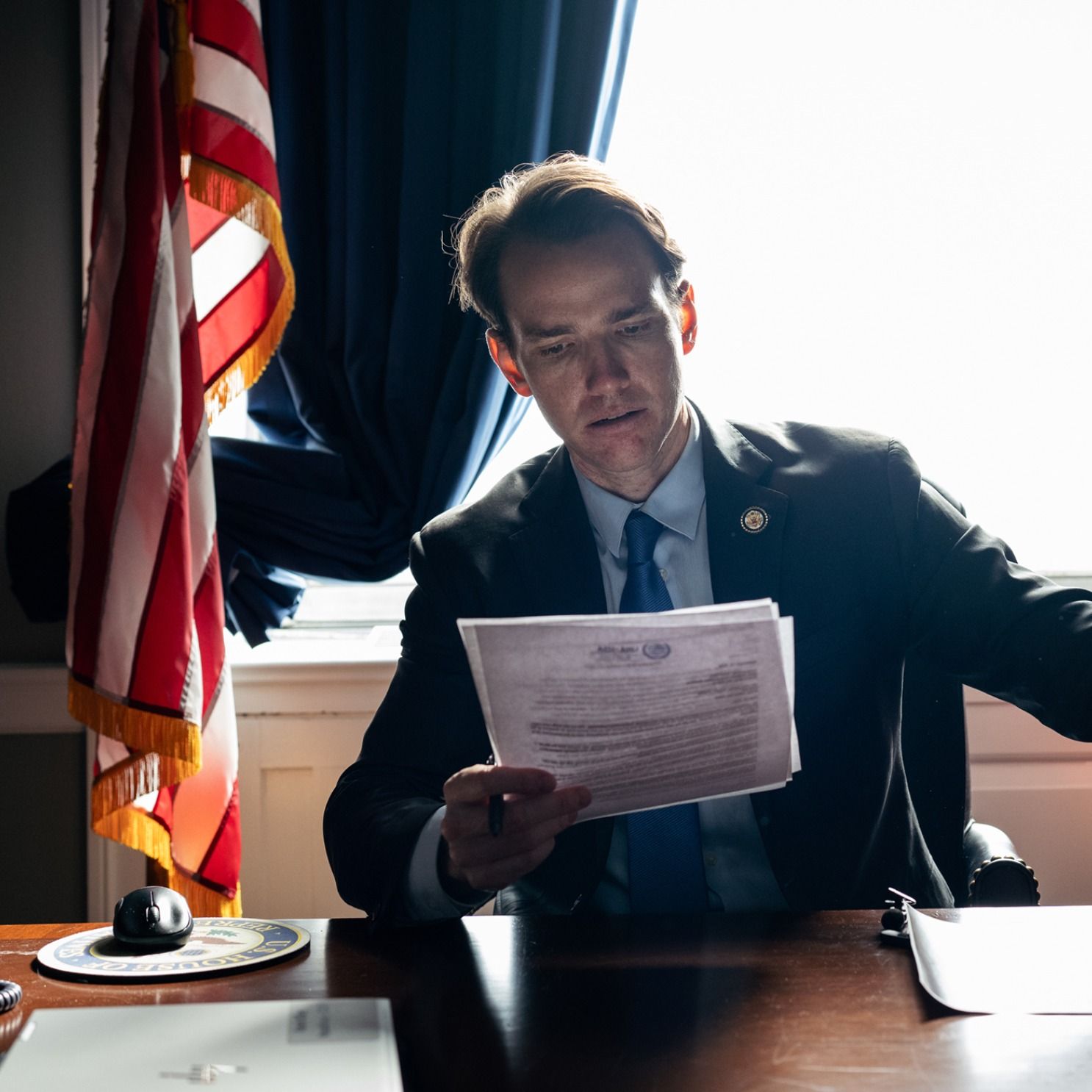
The House Republican Who Says His Party Is Mishandling the Shutdown
Mr. Kiley showed up to work in protest against Speaker Mike Johnson’s decision to send the House home indefinitely as the government shutdown drags on.
A new poll from The Washington Post found that more Americans blame the shutdown on Trump and congressional Republicans than on Democrats.
“The Daily” sat down with Mr. Kiley for a conversation about his one-man campaign to try to fix what he believes his party is getting wrong in this moment.
Press play and read along
Transcript
Speaker 1 How is internet culture shaping coming-of-age rituals around the world? And how are Get Ready with Me videos reaching a new audience? Hi there, I'm Isabella Rossillini.
Speaker 1 In the latest episode of This Is Not a Beauty podcast from L'Oreal Group, we learn about how beauty is shaping the internet from a London-based tech journalist and a Mexican teenager preparing for her kinsinera.
Speaker 1 Listen now on your favorite podcast platform.
Speaker 2 Yeah, I'm looking for what we like to call a little sub-language.
Speaker 2
Yes. I'm trying to get to the Capitol.
I'm trying to get to the Capitol.
Speaker 2 We found this was a little tricky area. Oh, they care.
Speaker 2 Yeah.
Speaker 2
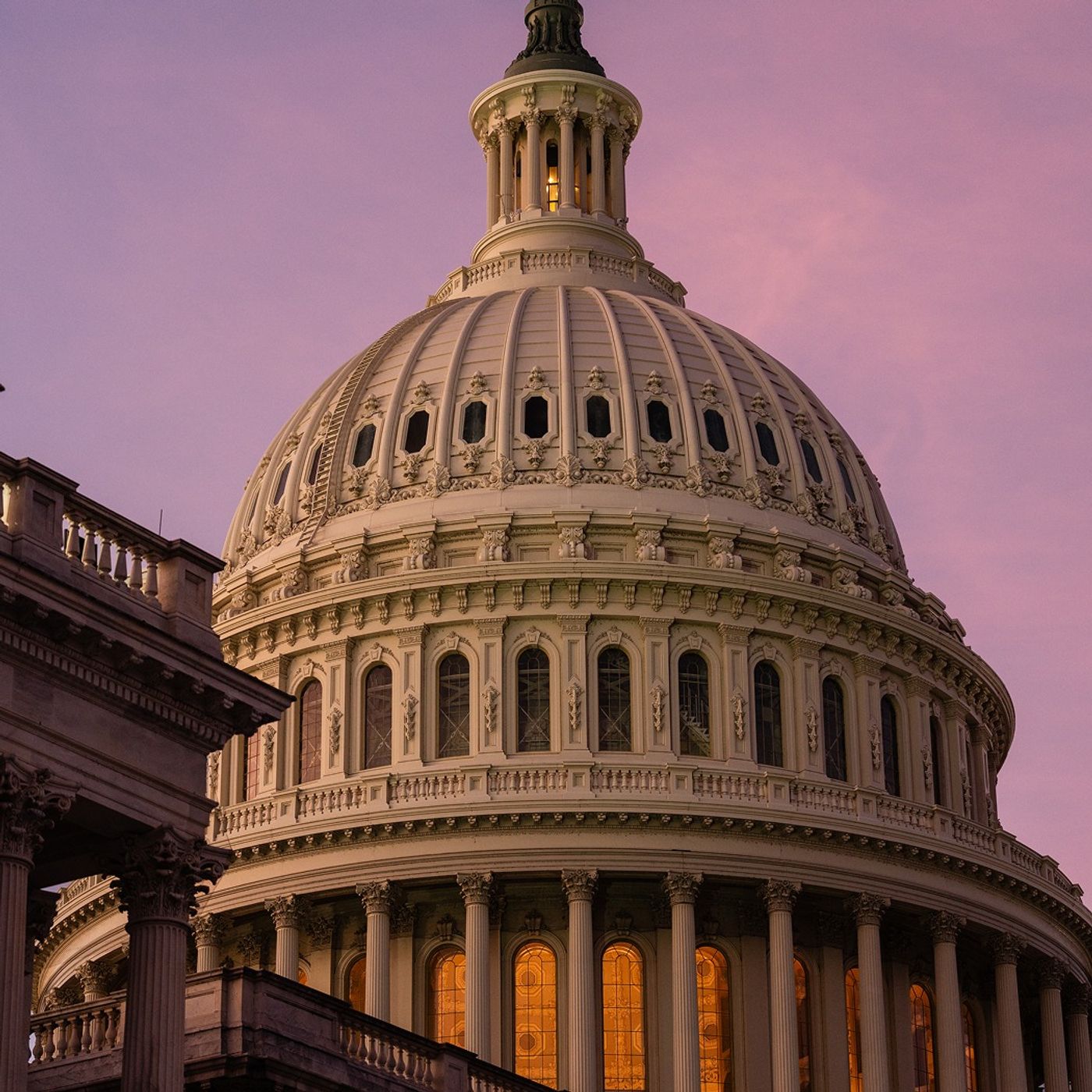
So we are starting our day here in Washington, D.C. in the Dirksen Senate office building.
which is not where we want to be.
Speaker 2 We want to be over on the House side because we're going to interview a Republican congressman there, Representative Kevin Kiley of California, who's become very interesting in this moment, which is the government being shut down, because he's very critical of how his party has been handling the shutdown.
Speaker 2 And at the moment, the Senate side of
Speaker 2 the Capitol complex is pretty busy because they're actually in session. The House side is not in session, and we're really curious what it's going to feel like over there.
Speaker 2 Okay, the Little Capital Subway train has arrived.
Speaker 2 Should we go in this one?
Speaker 2 Just so you know, we are recording
Speaker 2 a few unwitting participants in the podcast.
Speaker 2 Is this a normal level of busyness on this train or is this like a shutdown level of business? Shut down. Just quiet.
Speaker 2 After you.
Speaker 2 So now we're walking through a long corridor
Speaker 2 with house members, offices every few feet.
Speaker 2 And there's just newspapers stacked up outside these offices because these lawmakers aren't here.
Speaker 2 Okay, here we go. Kevin Kiley of California.
Speaker 2 Do we knock?
Speaker 2
Mr. Michael Bilbaro.
Nice to meet you. Try to meet you too.
Thanks for a pleasure. Coming by.
Hi. How are you doing? I'm Caitlin.
Nice to meet you.
Speaker 2 How are you, Al? How are you?
Speaker 2 From the New York Times, I'm Michael Balbaro. This is the daily.
Speaker 2 Today,
Speaker 2 Republican Congressman Kevin Kiley on what he thinks his party is getting wrong in this moment and his one-man campaign to try and fix it.
Speaker 2 It's Friday, October 31st.
Speaker 2 So should we let's get started. Okay.
Speaker 2 Congressman, I would normally say thank you for making time for us. And I mean that, but if we're being honest, there's not a ton going on here right now in the house.
Speaker 2 But you are here and you have been here pretty much every day since the shutdown started to make a point. And what is that point exactly?
Speaker 2 Well, I'd like to think it's about a little more than making a point, although it is also about making a point, you know?
Speaker 2 So substantively, I'm trying to just have constructive conversations with whoever's around and have had a number of those. And there are increasingly more people here.
Speaker 2 Back a few weeks ago, it was a little more lonely and it's still much quieter than when you have the usual chaos of Congress in session. But I also am trying to say, yeah, we should be here.
Speaker 2 And the speaker has made the decision to recess the House indefinitely.
Speaker 2 Exactly to kind of close it in a sense. Well, yeah, exactly, because we were supposed to be in session these five weeks.
Speaker 2 Like the House has a schedule that is set in advance, but all of the legislative business of the House has been canceled.
Speaker 2 And I've never seen anything like this, not to mention the fact that this terrible government shutdown is going on and we're not here to play any part in trying to find a way out of it. Right.
Speaker 2 In fact, those don't seem unrelated. And so you being here, it seems like, is a
Speaker 2 kind of act of protest. Does that feel right to you? An act of resistance against the decision to.
Speaker 2
I think I just characterize it as practicing what I preach. I'm like, you know, I'm saying we should be here.
So I'm
Speaker 2 Well, I just want to explain why we're talking to you in this moment.
Speaker 2 You're the pretty rare Republican to express some public frustration with how your party is approaching several issues facing the country right now, including, of course, the handling of the shutdown, the decision to basically close down the House.
Speaker 2 In addition to that, you've expressed some real frustration with how Republicans are carrying out partisan redistricting, which impacts you pretty directly, and we'll get to that.
Speaker 2 You've expressed some frustration over the refusal of your party's leadership to seat a newly elected member of this body who is a Democrat.
Speaker 2 And I think understanding all of those complaints and frustrations that you have can, I hope, shed some real light on the way Washington works right now or doesn't work right now at this pretty important time.
Speaker 2 So that's
Speaker 2 why we want to talk to you.
Speaker 2 And I think to have this conversation, we need to understand the perspective that you bring to those situations I just outlined and understand the district you represent.
Speaker 2 You're a California House Republican. They do exist.
Speaker 2
I think there are nine out of 54 of the California House. There are nine now.
There were actually 12 before the last election. Now we're nine to nine.
And you're elected in
Speaker 2
the first and the only midterm. of the Biden presidency.
That's correct, 2022. And at the time, it's a fairly safe Republican seat.
Speaker 2 You get President Trump, former President Trump at the time's endorsement. And when you win that seat, Republicans suddenly control the House.
Speaker 2 And I wonder what you saw as your mission when you were being sworn in. Was it to be a check on President Biden at that moment? Is it working with him and the Democrats? How did you see that role?
Speaker 2 Yeah, and the district is really kind of a purple district, for lack of a better word. I mean, President Trump won it by about a point and a half in 2020, by about three and a half points in 2024.
Speaker 2 So that has always informed my perspective as well that I represent folks who have very different views and who care about very different issues.
Speaker 2 And so coming in in 2023, I guess, I did see it part of my role as providing something as a counterweight because, you know, in California, we have this kind of one-party state.
Speaker 2 We have a super-duper majority. And, you know, you got to grant it.
Speaker 2 Yeah, even beyond sort of the partisan lens, it's just that the way that the state has been governed has veered very far in one direction.
Speaker 2 And then you kind of had layered on top of that some of the policies of the Biden administration. And so I said, look, where I'm able to work with the Biden administration, I will.
Speaker 2
When it's necessary to oppose them for what's best for our district, I'll do that too. Got it.
And then after the 2024 election, you're reelected.
Speaker 2 And of course, everything changes here in Washington because Donald Trump beats Kamala Harris, takes back the White House.
Speaker 2 Suddenly, every branch of the government is controlled by your party, which in theory is a dream come true for a House Republican like you.
Speaker 2
But over time, and this is what we're going to be talking about, you encounter some frustrations. And I want to talk about that journey toward what feels like some level of disillusionment.
It feels
Speaker 2 now like It's taking its loudest form with your frustration over the shutdown.
Speaker 2 But my sense is that it begins a little bit earlier when House Republican leaders start making decisions around redistricting, redrawing congressional maps. So can you talk us through that?
Speaker 2 I started raising concerns about this many, many months ago when sort of the writing was on the wall that there was going to be this
Speaker 2 redistricting domino effect across the country, where one state after another would redraw their district lines in order to advantage whatever party controlled the state politics in that particular.
Speaker 2 And just to be clear, right, this begins with President Trump asking several states, first Texas, to redraw their House congressional maps to maximize Republican Party advantage in future House races.
Speaker 2 So that's certainly one way to frame it. But I mean, the reality is this has been going on for a long time, like gerrymandering is as old as the country itself.
Speaker 2 So certainly, if you ask the people in Texas, they'd probably say, oh, we're, you know, responding to New York or some other state that has gerrymandered their state.
Speaker 2 But I think that the logic of this, that responding to what a prior state has done in order to sort of cancel them out, it just leads to this sort of race to the bottom that degrades democracy everywhere.
Speaker 2
And just explain why it degrades democracy everywhere in your mind. Yeah.
So, I mean, the basic line that you sometimes hear is that voters should choose their representatives.
Speaker 2 Representatives shouldn't choose their voters.
Speaker 2 And when you sort of are moving district lines around in order to arrive at the outcome that is preferred by incumbent politicians, then it really limits the agency of
Speaker 2
the voter to sort of choose the destiny of their state or their polity. That's one reason.
I mean, it's also just incredibly destabilizing when you do it mid-decade. Right.
Speaker 2
Well, that's the important phrase. And I just want to make sure listeners understand it.
What's so unusual about what's happening right now is that the president asked that house districts be redrawn.
Speaker 2
outside of the normal system of waiting for the census to tell us how many people live in a district. Like you said, it's called mid-decade redistricting.
Very unusual.
Speaker 2 And my understanding is that it literally touches off a chain of events that start to endanger your seat.
Speaker 2 So I want to talk about, first of all, what that felt like, but then what you asked the Republican leadership to do.
Speaker 2
Yeah, absolutely. I said from the moment this kind of was on my radar that it shouldn't be happening anywhere.
I'm against it in Texas. I'm against it in California.
It's pure political opportunism.
Speaker 2 So I just introduced a bill, a very simple bill that says in August.
Speaker 2 Yeah, that sounds right. That says you cannot redistrict mid-decade with the very narrow exceptions of a federal court decision under the Voting Rights Act.
Speaker 2 And so that would say that none of these redistricting shenanigans that we're seeing in any state are allowed to happen. It would say this is a truce, a ceasefire in the redistricting war.
Speaker 2 We could all move on with our lives representing the districts as they were drawn at the time of the last census. And what was the response? Because the way this works is you are a House Republican.
Speaker 2
If you want this legislation to go anywhere, you need to bring it to the leadership. That's right.
Yeah. So leadership has been unwilling to bring it to the floor.
Speaker 2 And I have urged them to do so publicly and privately and repeatedly.
Speaker 2 And I do believe that it is.
Speaker 2 Why? Why won't they bring it to the floor? I don't know.
Speaker 2 I've asked them to do it and
Speaker 2 it hasn't happened.
Speaker 2 And I think that if it did come to the floor, it would have a lot of support because I have members who tell me all the time that they think this is the right thing for them and for the country.
Speaker 2 And I don't just mean the people whose seats are going to be in jeopardy, like the Republicans in Texas. And I'm talking about the members of Congress from Texas.
Speaker 2
They were very much opposed to this attempt to redistrict in Texas. They don't want to see their district suddenly butchered or upended.
Right.
Speaker 2 And to be clear, it sounds like for you, this is both a principled position around the question of what is right and wrong when you partisan gerrymander mid-decade, and personal,
Speaker 2 because your district has become the target of Governor Newsom's retaliation to Texas's redistricting, he would like to redistrict Republican seats in California to maximize Democratic partisan advantage.
Speaker 2 And one of those seats is the third congressional district in California. That's your seat.
Speaker 2 So through a very kind of wild series of events, What started with President Trump ordering mid-decade congressional redistricting could result in you being drawn out of your own district?
Speaker 2
Well, it'll certainly result in my district being split into six different pieces or going six different directions. That doesn't sound good.
No, I don't like that at all.
Speaker 2 I do think I could still win re-election under the gerrymandered map, but I very much would prefer to continue to represent the beautiful third district as currently constituted. Right.
Speaker 2 But to put it pretty bluntly, and this is a very unusual situation, it sounds like your party's leaders are willing to sacrifice you in theory
Speaker 2 for the party's ongoing control of Congress and refusing to entertain the idea of introducing a bill that would stop that.
Speaker 2
I don't know what their motivations are, but their inaction is frustrating, certainly. All I'm asking for is a vote on the bill.
And I think that if it came to the floor, it would pass. Okay.
Speaker 2 So that seems like a very clear, existential even moment. of building frustration for you.
Speaker 2 And not long after that, because this has all happened in a very compressed period of time, we get the shutdown. And you have blamed Democrats for the shutdown.
Speaker 2 And I would understand why that makes some sense. They withheld their votes to approve a spending bill to protest the healthcare situation in the country.
Speaker 2 And yet, once the government is shut down, you become this voice of disapproval that Speaker Johnson and Republican leaders won't keep the House in session during the shutdown.
Speaker 2 And I wonder if you can take us back to that moment and what you tried to do to make the case to them that the House should stay in session despite the shutdown.
Speaker 2
Well, I'm not really sure it's a hard case to make, right? Like the House is supposed to be here. We have things to do.
I don't understand why this is a particularly radical position to take.
Speaker 2 There's no reason for the House of Representatives to close its doors. What was the argument that was put forth by Speaker Johnson to do it in the first place? It wasn't just done summarily, was it?
Speaker 2
Or was it? Pretty much. I mean, we just, you know, the last vote we had was on the CR.
You know, I voted for the CR, even though I don't like CRs and I think they're a bad way to govern.
Speaker 2
Consuming your resolution. A bill that would keep the government.
funded. Yeah, exactly.
I mean, I voted for it as the lesser of two evils because a government shutdown has such terrible consequences.
Speaker 2 And I do wish that Senator Schumer would pass the CR out of the Senate. But I've also said, look, this is politics.
Speaker 2 Sometimes you have to find a way to work with people who have a different position than you have in order to find the common ground that's best for the country.
Speaker 2 So that's another reason that the House ought to be here.
Speaker 2 Why it's more, even more important that the House is here during a so that you can actually have a conversation about ending exactly the shutdown.
Speaker 2 And as things are, those conversations are happening mostly in the Senate because the Senate's actually here attending to its ordinary business as well as trying to find those conversations.
Speaker 2 I mean, in a word, what does it feel like to you to have your party's leadership not be willing to ask you all to do your jobs during this moment?
Speaker 2
Well, it feels like we're being deprived of the opportunity to fight for our constituents that we're fine. What's that? I always joke.
I said, in a word. In a word.
Speaker 2 That's true. Bad? Is that a word? That's a word.
Speaker 2 I think you've called it embarrassing. I mean,
Speaker 2
you've conveyed the idea that this is just kind of beneath the institution. I do think it's embarrassing.
Like to have the, you know, the House of Representatives just not here.
Speaker 2
And serious work is not being done. Oversight of any number of institutions, reviews of potential legislation.
I mean, nothing of that kind is being done.
Speaker 2 And then there are the very, very urgent questions around the shutdown that are not being addressed. And let's just talk about one of them.
Speaker 2 Snap benefits. This is subsidies from the federal government that allow tens of millions of Americans to feed themselves and their family.
Speaker 2
They're going to run out within the next, I think, 24 to 48 hours. We're talking to you on Thursday.
So over the weekend, I think November 1st, they're going to run out.
Speaker 2
And the House not in session means you guys can't come up with a plan to address that. The Senate is talking about potential plans to end that.
Nothing concrete has yet come together.
Speaker 2 But if it did, you couldn't even vote on it. Yeah, exactly.
Speaker 2 I'm actually co-sponsoring a bill that says even if the government is shut down, we should continue providing SNAP benefits, but there's no opportunity to vote on that bill because the House isn't here.
Speaker 2
Right. There's no session in which to introduce the resolution.
I mean, let's move to the central question of this shutdown, which is healthcare, right?
Speaker 2 I mean, the Democrats would say there are a number of reasons why they shut the government down, but the primary reason is that health care costs are going to be surging, especially towards the end of the year, and it's going to make healthcare inaccessible to millions and millions of Americans.
Speaker 2 So,
Speaker 2 what
Speaker 2 do you want to see
Speaker 2 your party do or not do to bring that subject any kind of resolution in these shutdown negotiations? Because we know what the Democrats say they want.
Speaker 2 They want you all to approve subsidies for the Affordable Care Act that will expire that are making healthcare much more expensive. What do you want?
Speaker 2 If we presume for the moment that the House would ever
Speaker 2 pretty much
Speaker 2 on my side of the aisle, in addition to many on the other side of the aisle, who believe there needs to be some sort of solution here.
Speaker 2 And I i do believe that there's enough interest on both sides that there's going to be a deal what that looks like it remains to be seen is it going to be a long-term extension is it going to be a short-term extension all those things would need to be negotiated you know the republican leadership has taken this view that well we just can't negotiate about anything in any form when the leverage that's being held over us is a shutdown government which you know i certainly understand that perspective but at the same time i do remember a couple years ago uh when republicans were taking you know basically the opposite position uh with respect to the debt ceiling saying we're not going to pass a bill for a clean extension of the debt ceiling unless we get policy changes along the way.
Speaker 2 And so that's another reason why I think that we should at least be having conversations right now. Right.
Speaker 2 It feels fair to say, correct me if I'm wrong, that you're pretty much bewildered that amid all these cascading crises stemming from the shutdown that seem like they're going to make life pretty miserable for a lot of Americans, that the Speaker is not bringing the House back into session to address them.
Speaker 2 And I wonder why you think the Speaker is refusing to change course.
Speaker 2 I don't know what his real reason is, or I mean, not to say that. Did you pick up the phone? I have talked to him, sure.
Speaker 2 I mean, I don't want to, you know, share private conversations, but I haven't gotten any explanation that makes sense to me.
Speaker 2 And just to add the last one of these complaints you have, and it's very interesting to a lot of people that Speaker Johnson will not seat a Democrat duly elected by her constituents, a congresswoman, elect Grihalva.
Speaker 2 She's not yet actually been sworn in.
Speaker 2
What do you think of that? I think it's totally unacceptable. I mean, you know, and this one, I just don't understand.
Like, it's pretty basic stuff. She won her election.
Speaker 2 She's the duly elected member.
Speaker 2 But you probably do on some level understand, which is that she would give the Democrats the sufficient votes, along with four House Republicans, to force a vote on a resolution to
Speaker 2
direct the Department of Justice to release Jeffrey Epstein files. That could be very embarrassing to the president.
Yeah, I know that's been offered as possibly the reason.
Speaker 2 I mean, the reality is that that would be the case whenever she's sworn in. So whether that's the reason or not, I don't know.
Speaker 2
I just think that having someone get elected and then have to wait five plus weeks to get sworn in. And then the rationale offered is, well, the House hasn't been in session.
Well, it's not her fault.
Speaker 2 The House hasn't been in session. The House was supposed to be in session right after she was sworn in, supposed to be in session the week after that and the week after that.
Speaker 2 And by the way, even when the House isn't in session, you can still swear someone in. I mean, the question is, are these essentially amounting to anti-democratic moves by the Speaker of the House?
Speaker 2
It doesn't sit right with me. I mean, I don't know, you know, exactly.
And I don't mean anti-capital D Democratic. I mean the democracy.
Speaker 2 You said it doesn't sit well with you. Yeah.
Speaker 2 I mean, I, and maybe it just is as part of it as my perspective being like on the other side of this in California for six years as a member of the legislature.
Speaker 2 But I think we ought to have norms and rules in the House that apply regardless of the situation.
Speaker 2 I mean, just to bring this all together, I mean, these are your complaints. They're very clear.
Speaker 2 And I think we now need to talk about the role that you and arguably many of your House Republican colleagues may have played in creating the circumstances that you now object to.
Speaker 2 And you may object to me saying that, but
Speaker 2 I'd like to talk about that right after we take a short break.
Speaker 2 We'll be right back.
Speaker 3 Support for this podcast comes from GoodRX. Cold and flu symptoms got you down? Find relief with GoodRX.
Speaker 3 You could save an average of $53 on flu treatments, plus save on cold medications, decongestants, and more.
Speaker 3 Easily compare prescription prices at over 70,000 pharmacies and instantly find discounts of up to 80%.
Speaker 3
GoodRX is not insurance, but it works with or without it and could beat your copay price. Save on cold and flu prescriptions at goodrx.com/slash the daily.
This podcast is supported by Starbucks.
Speaker 3 At Starbucks, we've more than doubled paid parental leave, now up to 18 weeks, which means Starbucks baristas can spend more time with the best company they know, their families.
Speaker 3 At Starbucks, benefits like parental leave are just the the start.
Speaker 3 Why do tech leaders trust Indeed to help them find game-changing candidates? Because they know that it takes an innovator to find innovators. When it comes to hiring, Indeed is paving the way.
Speaker 3 Indeed's AI-powered solutions analyze information from millions of job seeker data points to match potential candidates to employers' jobs.
Speaker 3 You'll find quality matches faster than ever, meaning less time hiring and more time innovating. Learn more at Indeed.com/slash hire.
Speaker 2 So, Congressman, there are two pieces of legislation, as you know, that Democrats see as central to their case for shutting down the government and keeping it closed. You voted for both of them.
Speaker 2 Let me just explain.
Speaker 2 The first one is the president's domestic policy bill, what he calls the one big, beautiful bill, which, besides extending his tax cuts, changes the requirements for Medicaid, the rules, the work requirements in ways that will result in millions of people losing their health care through Medicaid.
Speaker 2 And on top of expiring subsidies for the Affordable Care Act, the argument from Democrats is that this is going to be financially ruinous to people's relationship to healthcare.
Speaker 2 Because you voted for that bill, I want to understand whether you see yourself as being a little bit responsible.
Speaker 2 for one of the kind of tentpole reasons why Democrats are now saying they've shut the government down, which is that they think it's just basically intolerable to have health care be inaccessible to this many Americans.
Speaker 2 So that's not really what they're making it about at this point, though.
Speaker 2 I know that Senator Schumer threw that out there initially as one of the things he wanted to change, but the idea of sort of unraveling a bill that was just passed was never going to be a viable negotiating position.
Speaker 2 So at this point, they've really just winnowed it down to the ACA subsidy issue.
Speaker 2 You're trying to say that you don't think the One Big Beautiful bill's cuts to to Medicaid are really motivating for the shutdown?
Speaker 2 Well, that's not even what they're sort of asking for at this point, is altering that.
Speaker 2 I mean, obviously, they're still talking about it, but really the focus has been on the ACA subsidies, which were created several years ago in the COVID years.
Speaker 2 And, you know, incidentally, when it comes to HR1 or the Big Beautiful Bill, whatever it's called these days, what was initially proposed were truly significant cuts to Medicaid across the country, which I was very much against.
Speaker 2 At the end of the day, not a perfect bill. It's a massive piece of legislation.
Speaker 2 You know, those were largely pared down to things like work requirements that I actually think make a lot of sense saying that if you're going to get access to taxpayer-funded health care, you should at least be looking for a job or working or volunteering 20 hours per week.
Speaker 2 So I don't think that
Speaker 2 the fact that that's not even what they're asking for right now, I don't think you can necessarily tie the two together.
Speaker 2 The only pushback I want to offer here is I believe estimates from independent groups and our colleagues at the times who have been looking into this is that those work requirements, which many people may agree with,
Speaker 2 will lead to millions, I think as many as 12 million people losing their healthcare through Medicaid.
Speaker 2 So I think when the Democrats have talked about a healthcare crisis that they want Republicans to help them address, that does feel kind of in a role. Well, again, look at what they're asking for.
Speaker 2 So initially, yes, Schumer did come out and say, like, when the government shut down, we want.
Speaker 2 everything in HR1 reverse, pretty much, which was not a negotiating position that was ever going to go anywhere. But now they've said, let's make it about the ACA subsidy issue.
Speaker 2 And I think that's a a little more reasonable ground to stand on in the sense that there's a lot of interest in both sides of the aisle on extending these subsidies, which are significant.
Speaker 2 Like if those go away suddenly with just this cliff, then you're talking about millions of people who are going to be paying a lot more for healthcare.
Speaker 2 Okay, so you'd prefer to meet Democrats halfway on the subsidies, not the Medicaid. I want to turn to the second piece of legislation that Democrats cite, which is the rescissions bill.
Speaker 2 And with that legislation, which you also voted for, Republicans approved a request from the president to claw back $9 billion
Speaker 2 in money that Congress had previously approved in a bipartisan way. And that was money for things like foreign aid, public broadcasting corporation.
Speaker 2 And what the Democrats say in shutting down the government is we can't trust our Republican colleagues anymore because anything we agree to, whether it's on healthcare or anything else, we don't know that they're not going to go back at the behest of the president and let him become the appropriator, not Congress, order House Republicans and Senate Republicans to just reverse everything that was already agreed to.
Speaker 2 That's what they think happened with the recision bill. So do you understand that worry from Democrats and how that motivated the shutdown? And if you do, why did you vote for the rescuit?
Speaker 2 Yeah, so I think this is actually the most maybe sympathetic part of their argument. Because here's the dynamic that we're working with, right?
Speaker 2 So the reason that you can't just pass a party line bill to keep the government open is because of the filibuster rule in the Senate, right? You need to have 60 votes in the Senate to pass it.
Speaker 2 So what's happening right now is that you don't have enough Democrats Democrats who are joining with Republicans to pass their version of the CR.
Speaker 2 You don't have enough Republicans who are joining with Democrats to pass their version of the CR. So spending bills by their very nature have to be bipartisan.
Speaker 2 Whereas rescissions bills, which can be sent to Congress with specific requests from the executive branch to undo appropriations that were made, those don't have the supermajority requirement.
Speaker 2 They can be done in a strictly party-line way.
Speaker 2 So if the position of the Democrat leaders right now is, well, we need to have some assurances that what is being done in a bipartisan bipartisan way isn't going to be undone in a party-line vote, then I don't think that's a necessarily unreasonable position.
Speaker 2
It's not an unreasonable position. It's not an unreasonable position.
So in other words, it is a reasonable position. So then why did you vote for the rescission?
Speaker 2 Well, those are totally separate questions, right?
Speaker 2 Because you can believe that a particular rescission is actually a good thing, while also sort of understanding the view that one side wants to be able to have a say in rescissions when they have a say in making the appropriations in the first place.
Speaker 2 Okay. And I just want to make sure I understand because I'm not entirely clear on how you can hold both both of those positions at the same time.
Speaker 2 If rescissions fundamentally undermine the process of bipartisan agreement on spending in a principled way that seems problematic, which you're suggesting, then how can you ever be okay with doing that?
Speaker 2 Well, you can imagine a bipartisan rescission, right? So let's say that in the beginning, this wasn't that, right?
Speaker 2 Yeah, in that particular instance, it wasn't, but that doesn't mean that you can't have it, right? So let's say. So why not wait to vote for the one that is bipartisan?
Speaker 2
Here I am attempting to hold you a little bit accountable for what you did. Sure, sure.
No, I understand that.
Speaker 2 But I mean, and to be clear, I think that the rescissions bill that did pass was not the ideal version of what a rescissions bill should look like.
Speaker 2 I mean, is it fair to assume that there's a meaningful amount of pressure that you may have felt to vote for a rescissions bill?
Speaker 2 That if I'm hearing you correctly, on principle, you don't really like all that much. No, I mean, I think there were good things about that rescissions bill as well.
Speaker 2 And again, rescissions are a legal process, like it's a power that the House has.
Speaker 2 And so at that point in time, we had the ability to pull back spending that was viewed as not good or not necessary in a simple majority threshold.
Speaker 2 But it's perfectly reasonable to then say, if you're the party that was on the other end of that, all right, well, we also have the ability to hold up a future spending bill until we get assurances as to how those situations are going to be handled at the moment.
Speaker 2 Which is what Democrats are doing right now. They're saying, how can we trust
Speaker 2 that this won't happen again? I mean, the reason I'm asking you these questions, and perhaps you've intuited it, is because
Speaker 2 so far I'm getting from you frustration around how the shutdown has been overseen by the leaders of your party.
Speaker 2 And of course, that's Speaker Johnson, his deputies for not calling the House back into session.
Speaker 2 But I'm trying to also understand if you feel that the votes you've taken create any personal responsibility for the circumstances that led to the shutdown, that deficit of trust that the Democrats feel around rescissions, as well as the changes to the healthcare system in the country.
Speaker 2 I mean, can you see that argument?
Speaker 2 I mean, I can certainly understand, you know, that given what has happened so far this year, from the perspective of someone like Hakeem Jeffries or Chuck Schumer, they want to use whatever tools they have available in order to be able to have more of a say in policy going forward.
Speaker 2 So, you know, I understand that position as far as it concerns the rescissions. And, you know, I think as well, the ACA subsidy issue is an important one.
Speaker 2 But we at the same time need to recognize that like a government shutdown is having terrible, terrible consequences for the country.
Speaker 2 And so the reality of folks not getting their SNAP benefits of a million plus workers either being furloughed or not getting paychecked, traffic controllers, you know, not able to keep the plane schedule running on time and everything else that comes with that.
Speaker 2 So we need to kind of keep ourselves grounded in that reality, right? That there are people that are really suffering right now. I have a related question about redistricting.
Speaker 2 You expressed dismay that
Speaker 2 the speaker didn't take up your proposed bill to ban mid-decade redistricting.
Speaker 2 which you've described as a threat to democracy.
Speaker 2 But I do want to push you on the idea that that redistricting, and I did this a little bit earlier, didn't come at the behest of Speaker Johnson, came at the behest of President Trump, the mid-decade redistricting.
Speaker 2 Are you upset with the president for ordering that in the first place? And if you are, why not criticize the president for initiating it? Well, because this concerns the House of Representatives.
Speaker 2
So, I mean, the speaker is the leader of the House. Sure does.
He's the representative of our conference.
Speaker 2 And, you know, I feel like if he had taken a strong position on this, then we wouldn't be where we are right now. And so, you know, the president.
Speaker 2 But isn't that like kind of two steps down the process of being willing to take up a law to prevent something that the commander in chief, the president. I mean, he didn't even just do a law.
Speaker 2 He could have taken the public position or abdicated more strongly in conversations with the White House.
Speaker 2 You wanted the House Speaker to say no to the President, which is not something he really does.
Speaker 2 I mean, I think that... The Speaker of the House is the representative of the legislative branch.
Speaker 2 So when it comes to things that specifically concern the legislative branch, obviously the Speaker needs to be and will want to be in alignment with the president on policy.
Speaker 2 But when it comes to the house as an institution, he's the leader of the house as an institution.
Speaker 2 So he's the one that I really hold accountable for protecting the house of the representation of the institution and representing our members.
Speaker 2 I mean, I think you're probably getting at my larger curiosity here, which is in showing up every day during the shutdown and saying that what's happening right now, the house not being a session, and saying that that's wrong,
Speaker 2 are you fighting the right battle in this moment, or are you missing the larger fight, which is what the president has done to Congress, to House Republicans like you in particular, and what he's asked you all to become in this era, which many would regard as, and please interrupt me if you disagree, so far a kind of rubber stamp for his agenda on things like healthcare, on things like Medicaid, on redrawing congressional maps whenever he wants, and so on.
Speaker 2 So in a very like definite sense, what every president in recent memory has tried to exert as much influence as they can over Congress, right? This is, I don't think that's even debatable.
Speaker 2 That's the entire reason they have an Office of Legislative Affairs in the White House that has a lot of people and that's constantly over on our side of Washington.
Speaker 2 But no one has done it with the skill of Donald Trump. Well, sure.
Speaker 2 It's the job of the House to work with the White House to advance the values and the agenda that we share, but also to maintain the integrity of the House and Article I as an institution.
Speaker 2 And so you think that's being maintained. I've heard some very knowledgeable people say, and perhaps it's somewhat in jest, that Congress is over right now.
Speaker 2 Maybe that's an extraordinary overstatement, but
Speaker 2 do you worry that Congress is placing this dynamic under this president, under the speaker, is taking you closer to irrelevance than is at all required?
Speaker 2
I think that's hyperbolic. I mean, the the whole reason we have a shutdown is that the Congress has not funded the government, right? And so that's relevance.
Right.
Speaker 2 And that's that's relevance in kind of like a bad way, right? But from the Democrats, like what makes House Republicans and congressional Republicans relevant in this moment?
Speaker 2
I'm just saying this is a clear example of how, you know, the power of the purse lies with the House. The House has failed to act.
So that's just kind of the separation of powers at work.
Speaker 2 But I mean, the bigger issue is that the House itself hasn't shown up. And so that's not something that, you know, has been a decision of the White House.
Speaker 2 It's not something that's been a decision of Chuck Schumer, the Democrats over in the Senate. It's a decision that's been made by the Speaker of the House and our own leadership.
Speaker 2
And that's why I've been focusing on our own leadership and trying to encourage them to do the right thing and bring us back. And I'm not the only one.
There are a number of others who have spoken up.
Speaker 2 And I think that's actually a majority opinion among our conference at this point.
Speaker 2 I mean, does that ultimately and inevitably lead to questions about whether this speaker should should be speaker if the majority of the conference does not like what is happening here?
Speaker 2 I don't think now is the time to raise those questions. I mean,
Speaker 2 certainly it can't be acted upon.
Speaker 2 Right, exactly. So someone asked me the other day, oh, are you going to vote to vacate the speaker? No, of course I'm not going to do that.
Speaker 2 And for a number of reasons, but in particular, like when you vacate the speaker, literally the house shuts down.
Speaker 2 So that's not a good remedy for the house not being here is to do something that by definition shuts the house down.
Speaker 2 And we actually dealt with that when McCarthy was uh vacated the house literally shut down for right i think it was three weeks then right while you're re-electing somebody else i mean forgive me but it does sound like you and others feel to a degree that the speaker is abdicating the role of congress i mean just to put that very clearly
Speaker 2 i don't know that i'd use that word that's a pretty loaded term uh but i'd say that uh certainly um not having congress in session for five weeks that we were supposed to be here uh or the house i should say has made it so the house has not been particularly relevant in terms of the path out of the shutdown, has resulted in members of the House not being able to represent our districts in the way that we were elected to do.
Speaker 2 And just saying, we passed the CR, we're going home, we're not going to come back, has made it a lot more difficult for us to talk about any of these issues.
Speaker 2 It seems like you're trying to make your voice clearly very heard by being here. You've done several interviews with other journalists, including some of my colleagues at the times.
Speaker 2 And yet, I wonder if you think it's working. The shutdown's still underway, and you being here, understandably, hasn't altered that situation single-handedly.
Speaker 2 And it makes me think about this question of kind of what is the place of Congress right now? What's the place of the House under Republican control? If showing up for work is what
Speaker 2 amounts at this moment to a demonstration of independence, of resistance, of protest. I mean, does that read as empowering, or it instead a demonstration of congressional powerlessness?
Speaker 2 Well, so, yeah, I was under no illusions that coming back, I was going to single-handedly end everything immediately. But I think that it has perhaps encouraged others to come back as well.
Speaker 2
And we see more people around now. We've seen more people speak out.
And so hopefully this results in pressure in the House coming back soon. Pressure to reopen.
Yeah, exactly.
Speaker 2 So I have a final question for you.
Speaker 2 What happens to you if, as we suspect, your seat seat is redrawn, the third congressional district in California, to the benefit of the Democrats, and you run and the chemistry and alchemy of that new district just is not going to get you over the line?
Speaker 2 Your time here comes to an end. I mean, how are you going to feel?
Speaker 2 Because as we established at the beginning of this conversation, you did your best to ask your own party to do what you thought was the right thing and the democratic thing, small D Democratic thing, to stop this mid-decade redistricting.
Speaker 2
And they're ignoring you. And the president, in some sense, is ignoring you.
And, you know, will you have been basically sacrificed by your own party?
Speaker 2 I mean, that seems to me like creating a prospective excuse.
Speaker 2 So if the gerrymander goes through, I'm confident that I can win re-election under the new map because in the last election in 2022, I got the second most crossover votes of any competitive district in the country.
Speaker 2 President Trump won my district by about three and a half points. I won it by about 11 points.
Speaker 2 With crossover votes, I I mean, folks who voted for Kamala for president have voted for me for a member of the House.
Speaker 2 And that's because I focused on issues that don't have a particularly partisan valence that just matter to the quality of life of the folks that I represent.
Speaker 2 And so I'm confident that whatever the map looks like, I'll have a strong path to re-election.
Speaker 2 Do you think this whole process of everything we're talking about and the positions you're taking and the public way that you're willing to challenge the leaders of your own party inevitably just makes you a more appealing candidate to a redrawn district, a less read district?
Speaker 2 I think that what I'm doing now is simply fulfilling the promises that I ran on, like, which is that I'm going to be an independent voice for my district,
Speaker 2
which, you know, is the third district as it's currently constantly. And compared to most House Republicans, you do sound quite independent.
Yeah.
Speaker 2
And I think that honestly, like, this is all, maybe this is the better answer to your question. Sure.
Like, I think this has all sort of served to
Speaker 2 underline the extent to which excessive partisanship is one of the most serious problems facing the country.
Speaker 2 So if you look at redistricting, like this is now, we're talking about bringing partisanship into actually the rules of the game itself, right? To like an even deeper structural level of our politics.
Speaker 2
Or you look at the government shutdown. This is where Congress can't even not even do its most basic job.
And you wonder why Congress has like a 13% approval rating on the part of the public, right?
Speaker 2 And so I think if you ask just about anyone, do you think partisanship is a big problem in the country right now? Almost everyone would say it's like the one thing that people can't agree on, right?
Speaker 2
Is that partisanship has just reached peak levels. And I think that these two episodes have really served to emphasize that.
I do think
Speaker 2 the redistricting and the shutdown. And, you know, as I said,
Speaker 2
trying to overcome that partisan divide was a big part of my message when I first ran. I think that's an even more urgent message now.
Right.
Speaker 2
That's why there would be a little bit of an irony if you end up getting squeezed out of the situation. People don't like partisanship.
You try to fight partisanship, you fail, you lose.
Speaker 2 Well, I don't think that's going to happen.
Speaker 2
We will see. Well, Congressman, really appreciate your time.
Of course. Thanks for having me.
Cheers.
Speaker 2 On Thursday afternoon, after we spoke with Representative Kiley, a federal judge expressed frustration with the Trump administration over its refusal to fund the SNAP Food Benefit Program for the Poor during the shutdown.
Speaker 2 The White House told the judge that it could not tap into billions of dollars specifically reserved for the SNAP program, a claim that the judge said was hard to accept.
Speaker 2 At the same time, a new poll from the Washington Post found that more Americans now blame the shutdown on President Trump and congressional Republicans than on Democrats.
Speaker 2 33% blame Democrats, while 45%
Speaker 2 blame Republicans.
Speaker 2 We'll be right back.
Speaker 4 This podcast is supported by AT ⁇ T. America's first network is also its fastest and most reliable.
Speaker 4 Based on Rootmetrics United States Root Score Report 1H 2025, tested with best commercially available smartphones on three national mobile networks across all available network types, your experiences may vary.
Speaker 4
Rootmetrics rankings are not an endorsement of ATT. When you compare, there's no comparison.
AT ⁇ T.
Speaker 3 Pancreatic cancer has long been one of the deadliest cancers. But at Memorial Sloan Kettering Cancer Center, we're changing that story.
Speaker 3 Our groundbreaking mRNA vaccine trial is showing early promise, training patients' own immune systems to fight pancreatic cancer with encouraging results in preventing recurrence.
Speaker 3 This Pancreatic Cancer Awareness Month, your gift will be matched to advance this promising research and fund the next breakthrough.
Speaker 3 That means $50 becomes $100, doubling your impact on life-changing pancreatic cancer research. Donate now at msk.org slash give.
Speaker 3 This podcast is supported by Bank of America Private Bank.
Speaker 5
Your ambition leaves an impression. What you do next can leave a legacy.
At Bank of America Private Bank, our wealth and business strategies can help take your ambition to the next level.
Speaker 5 Whatever your passion, unlock more powerful possibilities at privatebank.bankofamerica.com. What would you like the power to do? Bank of America, official bank of the FIFA World Cup 2026.
Speaker 5 Bank of America Private Bank is a division of Bank of America NA member FDIC and a wholly owned subsidiary of Bank of America Corporation.
Speaker 2 Here's what else you need tonight.
Speaker 2 But overall, I guess on the scale from zero to ten, with 10 being the best, I would say the meeting was a 12.
Speaker 2 Okay, I think it was a 12.
Speaker 2 On Thursday, after a high-stakes meeting with the leader of China, President Trump said that the two countries have de-escalated their trade war, agreeing to what amounts to a year-long ceasefire that would roll back tariffs as well as a shutoff of access to rare earth metals.
Speaker 2 The deal will lower the average tariff rate on many Chinese imports into the U.S. from around 57% to 47%,
Speaker 2 but the tariffs will remain historically high
Speaker 2 and just days before the election for New York City mayor two new polls released on Thursday showed that Zoron Momdani, a democratic socialist, holds a wide lead over his two rivals.
Speaker 2
One of the polls showed Momdani with a 16-point lead, the other with a nearly 25-point lead. But in a new video to his supporters, Momdani cautioned them against complacency.
People say we got this.
Speaker 2
It's over. Cuomo is cooked.
Do not believe it. Take nothing for granted.
Speaker 2 Today's episode was produced by Kaylin O'Keefe, Michael Simon Johnson, and Asta Chotharvedi.
Speaker 2 It was edited by Rachel Quester and Liz O'Balin, contains music by Dan Powell and Marion Lozano, and was engineered by Alyssa Moxley.
Speaker 2 That's it for the daily. I'm Michael Milbarro.
Speaker 2 See you on Monday.
Speaker 3 This podcast is supported by Bank of America Private Bank.
Speaker 5
Your ambition leaves an impression. What you do next can leave a legacy.
At Bank of America Private Bank, our wealth and business strategies can help take your ambition to the next level.
Speaker 5 Whatever your passion, unlock more powerful possibilities at privatebank.bankofamerica.com. What would you like the power to do? Bank of America, official bank of the FIFA World Cup 2026.
Speaker 5 Bank of America Private Bank is a division of Bank of America and a member FDIC and a wholly owned subsidiary of Bank of America Corporation.