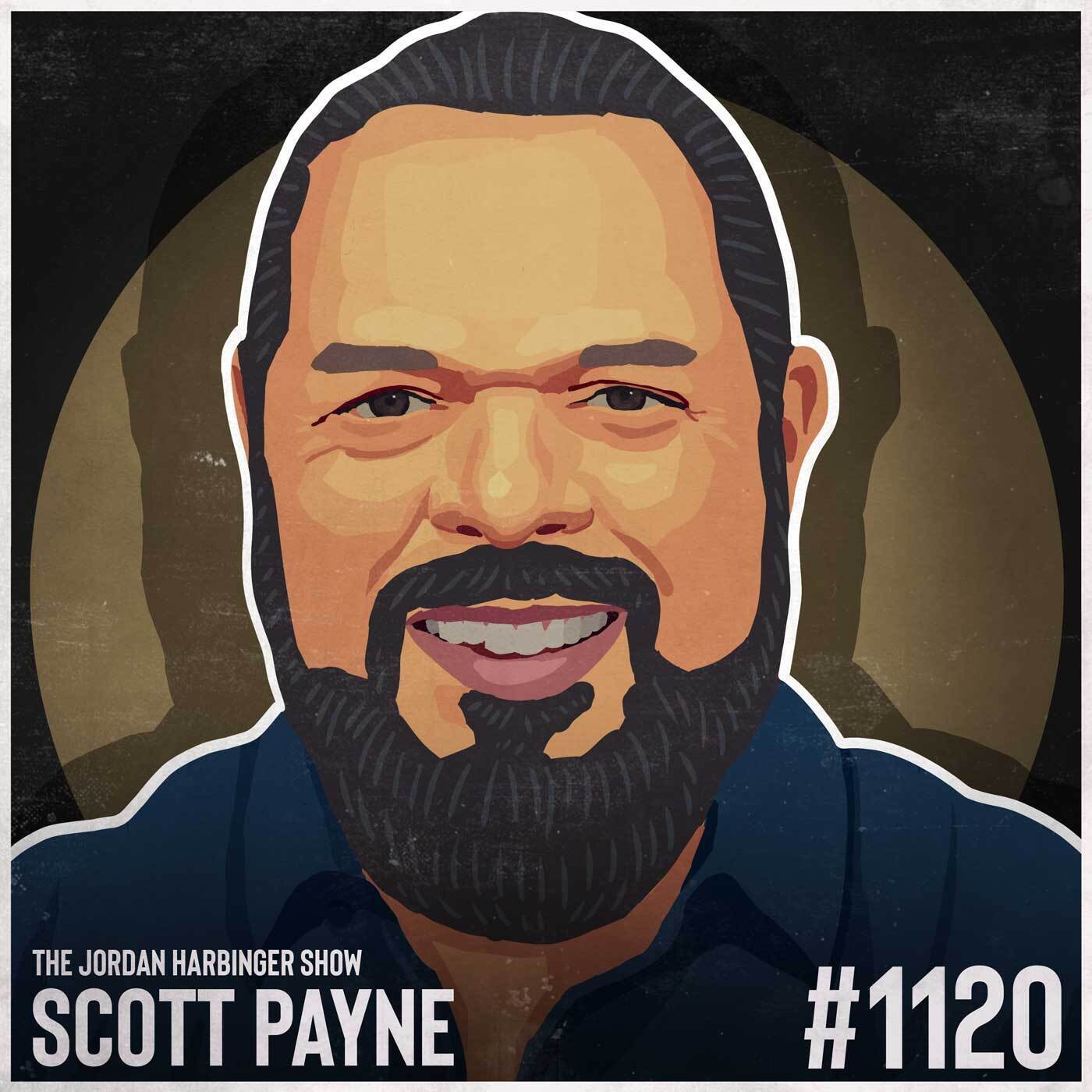
1120: Scott Payne | How the FBI Turned Me Into the Perfect Outlaw
FBI veteran Scott Payne takes us into the world of undercover ops: infiltrating biker gangs, near-death moments, and the psychological toll of betrayal.
What We Discuss with Scott Payne:
Scott Payne worked undercover for the FBI infiltrating The Outlaws motorcycle gang, forming relationships with dangerous criminals over an 18-month period to gather evidence on crimes including drug trafficking, stolen vehicles, and potential connections to murder.
Scott's undercover work involved serious personal danger, including a harrowing experience where he was strip-searched in the basement of the gang's clubhouse while wearing recording devices that could have gotten him killed if discovered.
The psychological toll of undercover work is significant — Scott describes forming genuine friendships with targets that he ultimately had to betray, as well as physical and mental exhaustion that led to a breakdown during the operation.
The FBI has developed safeguards for undercover agents' mental health, including psychological assessments and contact agents who provide support and maintain the agent's connection to their real identity during long undercover operations.
Success in undercover work depends on authenticity and adaptability. Rather than completely fabricating a persona, Payne maintained aspects of his true self while adjusting to his environment, allowing him to build believable relationships and respond naturally in high-pressure situations. This approach — staying true to your core self while adapting to challenging circumstances — can be applied in many professional and personal situations requiring resilience.- And much more...
Full show notes and resources can be found here: jordanharbinger.com/1120
And if you're still game to support us, please leave a review here — even one sentence helps! Consider including your Twitter handle so we can thank you personally!
This Episode Is Brought To You By Our Fine Sponsors: jordanharbinger.com/deals
Sign up for Six-Minute Networking — our free networking and relationship development mini course — at jordanharbinger.com/course!
Subscribe to our once-a-week Wee Bit Wiser newsletter today and start filling your Wednesdays with wisdom!
Do you even Reddit, bro? Join us at r/JordanHarbinger!
See Privacy Policy at https://art19.com/privacy and California Privacy Notice at https://art19.com/privacy#do-not-sell-my-info.
Press play and read along
Transcript
Speaker 1 This episode is sponsored in part by Dell. It's time for Black Friday, Dell Technologies' biggest sale of the year.
Speaker 1 Enjoy huge savings on select PCs like the Dell 16 Plus, featuring Intel Core ultra-processors, and with built-in advanced features, it's the PC that helps you do more faster.
Speaker 1 Plus, earn Dell rewards and enjoy many other benefits like free shipping, price match guarantee, and expert support.
Speaker 1 They also have huge deals on accessories that pair perfectly with your Dell PC and make perfect gifts for everyone on your list. Shop now at dell.com/slash deals.
Speaker 1 Coming up next on the Jordan Harbinger Show.
Speaker 2 He grabs a piece of clothing that I've got, and somewhere in that piece of clothing was another recording device.
Speaker 2 And while he's kneading it with his fingers and feeling it, you can hear an audible sigh out of me.
Speaker 2 He says, Hey, I'm not going to find anything in here that I don't want to, like some naked pictures of my old lady. And he laughs.
Speaker 2 But my laugh, because I'm still having an old crap moment, is like, heh,
Speaker 1 Welcome to the show. I'm Jordan Harbinger.
Speaker 1 On the Jordan Harbinger Show, we decode the stories, secrets, and skills of the world's most fascinating people and turn their wisdom into practical advice that you can use to impact your own life and those around you.
Speaker 1 Our mission is to help you become a better informed, more critical thinker through long-form conversations with a variety of amazing folks, spies, CEOs, athletes, authors, thinkers, performers, even the occasional rocket scientist, CEO, neuroscientist, or tech luminary.
Speaker 1 And if you're new to the show or you want to tell your friends about the show, I suggest our episode starter packs.
Speaker 1 These are collections of our favorite episodes on topics like persuasion and negotiation, psychology, geopolitics, disinformation, China, North Korea, crime and cults, and more.
Speaker 1 That'll help new listeners get a taste of everything we do here on the show.
Speaker 1
You know, I've said that so many times introducing the show that I wonder how many of you out there just do the intro along with me. I should maybe switch things up.
What do you think?
Speaker 1 Just anyway, if you're trying to tell friends about the show, you want to know where the starter packs are, just visit jordanharbinger.com slash start or search for us in your Spotify app to get started.
Speaker 1
So many of you just said that with me. I I know it.
You're just putting your laundry in the dryer and mumbling along.
Speaker 1 Today, Scott Payne, retired FBI undercover, went undercover with the Outlaws Biker Gang and a few other gangs that we're going to cover in future episodes of the show as well.
Speaker 1 Really interesting, of course, as these guys always, always are.
Speaker 1 Going undercover, close calls, how he may have been born for this, and how he made it through the FBI Academy, despite his unusual appearance and history.
Speaker 1
He's a really smart, really sharp undercover agent. This book was fascinating.
I think you're really going to enjoy this conversation as well.
Speaker 1 Here we go with Scott Payne, which, by the way, definitely sounds like a fake name that an undercover agent would actually use.
Speaker 1 I read the book. I really enjoyed it, but then I was like, oh, what does this guy look like?
Speaker 1 Did you look like the world's hairiest skinhead when you joined the FBI, or do you pick up like the Beth Cook bike or chic thing after you get an assignment?
Speaker 2
This is me. I cleaned up for the academy.
So, yeah,
Speaker 2
usually my look is a goatee with sideburns, but I've had long hair most of my life. And of course, when I'm a uniformed cop, you got to keep it short.
And then no facial hair back then.
Speaker 2
You can grow your mustache to the peak of your lip right there. And that's it.
But so I went into the academy and I had the cheesy, thin mustache and the high and tight.
Speaker 2 Because when you go to the PX on Quantico's Marine Corps base, most of the ladies working in the shop were Vietnamese. And no matter what I told them, I got the same haircut every time.
Speaker 2 It didn't matter.
Speaker 1
They're like, we're not listening. We know what you Marines want.
Here you go.
Speaker 2 The number one.
Speaker 1
Yep. That's funny.
That you have mustache regulations. I mean, mean, look, it makes sense that you do have that, but it explains why there's essentially a police officer mustache.
Speaker 2 Yep, for sure.
Speaker 1 Which is now kind of in. But before, I used to go to raves and stuff when I was younger and could stay up past 8 p.m.
Speaker 1 But you'd go there and some guy with that cop mustache would be like, hey, man, do you have any pills? And it was like, no, officer, I don't have any pills.
Speaker 1 Now, is it a cop or is it just a hipster who's ironically wearing a cop mustache? They're throwing me off now.
Speaker 2 Yeah, the
Speaker 2
first time I was at a rave party, I didn't know what the hell it was. I just remember they stopped serving alcohol at two in the morning at four.
Everybody was still going.
Speaker 2 And I was like, what the hell are these people on? I don't even like, how are you? Why are you staying?
Speaker 1
They must be sneaking booze in. You're close.
Yeah.
Speaker 2
They're like, you rolling, man. You rolling.
I'm like, I mean, yeah, I guess. I don't know what the hell.
Yeah, I drove here. Yeah, two days later, I'm like, somebody's, oh man, this rave.
Speaker 2 And I go, what the hell is a rave? And they're like, I was like, oh, shit, I was there.
Speaker 1 Yeah. I was there asking 18-year-old kids if they had pills dressed in a kangaroo suit.
Speaker 1 I know you're an undercover FBI agent, of course, but one thing I don't totally understand, and I guess I should, the answer is probably just somewhere between incompetence of these are the people we have.
Speaker 1 But when I go to parties, let's say in San Francisco or another city, it is beyond obvious who the undercover police are because they're way too old to be there.
Speaker 1
And they're wearing a costume that's kind of like one thing that you buy off Amazon. It's not, there's no thought put into it or anything like that.
And they're also not dressed regularly.
Speaker 1
And they never go like, hey, man, this DJ is amazing. Let's talk for a while.
Hey, do you have any pills? They just walk up and go, hey, dude, do you have any pills?
Speaker 1 And it's like, you're so obviously a police officer. And at first I was like, maybe it's just a guy who really wants pills.
Speaker 1 And then every time I see them arresting somebody out back, and I'm like, one dude fell for it.
Speaker 1 But if you want a real dealer and not just the drunkest kid who happens to have an extra pill in his pocket, you got to try a little harder. How come they can't do this? It can't be that hard.
Speaker 2
I don't think so. I mean, but it depends on who's training them and who they're grabbing.
It could just be street-level cops that don't have a lot of experience. I mean, I was there.
Speaker 2 The first time I ever bought crack, I didn't know what the hell I was doing. First time I ordered a prostitute, I didn't know what the hell I was doing.
Speaker 1
Yeah, I could see that. That would be tricky.
It seems like the the demographic for crack is not a normal-looking person.
Speaker 2
Yeah, we're talking mid-90s. So, yeah, it was still pretty prevalent, but I didn't look like a crackhead.
Even in then, I was like 270.
Speaker 1 Yeah, that's the other thing.
Speaker 1 It's like, if you got a real skinny guy that comes into the academy, you're like, okay, you're going to be our crackhead undercover because you're 140 pounds soaking wet and six feet tall.
Speaker 1 But if somebody's 270, hey, man, can I get some crack? Like, you, sir, have definitely not done this more than once because you are way too robust.
Speaker 2 What if I was getting it for the hooker I have back at the motel?
Speaker 1 That's fine. Yeah, I guess that's the way out.
Speaker 2 Hell no, I ain't using it, but this girl, you know, yeah.
Speaker 1
Yeah, she does this. This isn't going to make her pass out, is it? Oh, man, no, you're coming to the right guy.
Yeah, you'd have to come up with a one-liner backstory.
Speaker 1
Speaking of who trains you, you do know some legends, man. Jack Garcia, that was episode 392 of this show.
Joe Pistone, aka Donnie Brasco. Is he still around? He's like 85, probably.
Speaker 2
Let's see. It's February.
I think I saw him in like in November, somewhere around there, October, November. He was in Tennessee.
So he hit me up.
Speaker 2 And then, of course, I dropped what I was doing and went up to see him.
Speaker 1 Yeah, man, he'd be an interesting guy. I wonder if he even does media or if he's just like over it at this point.
Speaker 2
He's more of an introverted guy, but he does stuff. He still pitches shows and stuff like that.
Yeah, good for him.
Speaker 1
Like, oh, I just nipped the mafia in the bud after a legendary career. I can retire.
Nope, still working, age 85. That's pretty impressive.
Speaker 2 Yeah, I mean, he's a good getter.
Speaker 1 What is it like being taught by these legends of undercover police work?
Speaker 1 I'm sure it's an honor, but I assume also you feel some kind of pressure to not blow it after you take a course from one of these guys.
Speaker 2 Sure. There's differences.
Speaker 2 Like you were talking about earlier, the driving somebody off the street or somebody out of the office and going, I need you to go down there and get some pills versus you actually have a certification process intensive.
Speaker 2 You know, you've got good oversight. You've got a mentoring type program.
Speaker 2 The FBI, for as many faults as it has these days, the undercover program, at least the whole time I was around, around, was phenomenal.
Speaker 2
Some people say it's the toughest certification school the FBI puts on. I'll put it number two.
Number one would be the HRT selection process. That's our SWAT on steroids.
Speaker 2 But we have numerous former Navy SEALs, former Green Berets, former Ports Recon that come in the bureau and they go to HRT. And that is a two-week selection process as well.
Speaker 2 Also huge on sleep deprivation, but it is very physical. From my knowledge, from when I talked to a lot of guys and gals that were involved or on HRT, it's rare you make it your first time.
Speaker 2 You really want to get through the two weeks without getting injured. You see the undercover certification process.
Speaker 2 I'm not sure what it is now because right before I retired, there weren't that many undercover schools being put on. We went for quite a while.
Speaker 2 Some people blame COVID, but we just weren't putting them on.
Speaker 2 And that's at a headquarters level, so I can't answer why.
Speaker 2
No days off, huge on sleep deprivation, a lot of role playing. You're going to be the primary undercover probably twice a night.
So you may brutally die and fail in one scenario.
Speaker 2 You got to shake it off, get back on the horse, and get ready for the next one.
Speaker 1 I suppose that makes sense, though. You want people who can operate under pressure.
Speaker 1 And really, one of the best ways to enhance that pressure without injuring somebody is to make sure that they're dog tired when they do something and they can't think straight.
Speaker 2
It really brings out the weaknesses. My minor was psychology.
Two more classes. I could have had a double major, but I've seen people like literally nut out, and it's just from the sleep deprivation.
Speaker 2 And some people are so regimented, which I mean, I am daily, but generally, if you work a normal work week, you're going to eat breakfast about the same time every day, lunch about the same day.
Speaker 2 You'll probably go to the bathroom about the same time every day.
Speaker 2 But can you take that, flip it upside down, sideways, not get your three square meals a day, not get good sleep, miss your workouts, and that not have an adverse impact on your psyche?
Speaker 1
When I was 20-something, now, no. Now I got to, if I'm not in bed by 9 p.m., now it's like, oh, dad's pissed.
What's wrong with dad?
Speaker 2 I
Speaker 2
probably right there with you. One of the last schools I did, I was a counselor.
So there's 20 slots in the school. So there's a counselor for each group of five.
I got certified in 2002 with the FBI.
Speaker 2
I've been role-playing or teaching at the UC school from 2003 till I retired. And I've never known or seen a 100% graduation rate.
And it's not hazing. I mean, it doesn't mean you're a bad agent.
Speaker 2
You could be the best case agent in the world. You're just not cut out for undercover.
You made some mistakes that you couldn't recover from at that time at that school.
Speaker 1 Can you retake it if you fail?
Speaker 2
Rarely, but I have seen somebody fail. I think it was a two-year wait limit.
And then two years later, they came back and passed it. Yeah.
Speaker 1 Look, it's good that not everybody makes it. It would be too easy if that's the case, that everybody who gets tapped for it makes it through.
Speaker 2
Yeah, knock on wood. We've never lost a certified agent.
Oh, really? Not that you want to lose anybody. Yeah, but there was one guy on the martyr wall, and he did get ambushed in a covert drug bob.
Speaker 2 But to my understanding, and what they told me is he never went to the UC school, which I'm not saying that would have saved him or not. He just, it was a bad day.
Speaker 2 Somebody tried to rip him and somebody saw a gun and he pulled his gun and it didn't work out.
Speaker 1
Oh, that's terrible. Yeah, it really does highlight how dangerous this job is.
And we'll get into some of that in a little bit.
Speaker 1 Tell me about your first, first, I guess we'll call it your first undercover operation in high school.
Speaker 2 Yeah. You know, you grow up and you look back and you go, I was basically doing undercover work then, even though I was, you know, true name and everything.
Speaker 2
But at my high school, I had the shocker, long hair. I was a rebel, rule breaker, wearing sleeveless shirts and, I don't know, whatever, gloves.
Who knows, man? It was the late 80s.
Speaker 2
You have brass knuckles, a switchblade knife, everything in your jean jacket or whatever. But there was a vice principal, Lloyd Walker, Mr.
Walker, man.
Speaker 2 I don't know what it was, but the first two years, man, I was like, yeah, that dude does not like me. And I just kept getting in trouble.
Speaker 2 And we ended up becoming tighter after an incident at a talent show because I'm a musician, guitar player, singer, play some other instruments as well.
Speaker 2 But anyway, the band I was in, we did a talent show and I might have. grabbed my crotch one too many times on stage because I didn't have a lot of experience in front of a not beer drinking crowd.
Speaker 2 So after that, we started laughing laughing at each other, got to know each other. And I guess he saw my skill set because, you know, in the late 80s, my high school, there was a smoking area.
Speaker 2
So if you smoke cigarettes, there was a place you went to smoke. You had the group of potheads.
You had jocks. You had musicians.
You had smart kids. And I could go hang out with any of those.
Speaker 2
Not that I'm pretending to be them. A lot of things I was.
That's why I knew them. But I loved connecting with people and I could connect with people.
Speaker 2 And it turns out that at some point in high school, I don't know if it was my junior or senior year, but somebody did malicious damage to Mr. Walker's house and his car.
Speaker 2 I remember they keyed it, spray-painted the house, spray-painted his car, rolled the trees, rolling the trees, you can clean up, keying, and all the other stuff. And there were some racial slurs.
Speaker 2 And he called me into his office and I thought I was in trouble. And he called me in, and I'm like, hey, you know, what's up? And he told me, he goes, did you hear about what happened?
Speaker 2
I said, yeah, I did. And I knew where he lived.
And I actually drove by and saw it. And I guess he kept an eye on me and saw that I could fit in or connect with people in all these areas.
Speaker 2
And he asked me if I'd be willing to try to find out who did that to his place. And I said, yeah.
And I look back and I'm like, I guess that's brilliant undercover.
Speaker 2
Again, I'm a teenager. I don't have the skill set I do today, but talk to people.
Hey, man, did you hear about what happened to Mr. Walker's house? Oh, my gosh.
Yeah.
Speaker 2
You know, just kind of working the circles. And I pretty much figured it out.
There was one guy that anytime you'd bring it up, whether the weight room or whatever, man, he would just shut down.
Speaker 2
Whole facial expression would change. He'd just whimper away.
And
Speaker 2
if you knew his baseline, that wasn't him. I don't think he ever confessed, but yeah, I went back and told Mr.
Walker that.
Speaker 1
Yeah, that's interesting. That's tough when people don't admit it or say like, oh, yeah, Tommy did it.
He was talking about it during third period.
Speaker 1 It's different if it's a lack of evidence that's the loudest.
Speaker 1 So it almost seems like you had an intuition for this or a natural talent for this, because I don't know how many people would go undercover, ask a bunch of people, and then notice the person who wasn't talking.
Speaker 1
They're probably just like, well, nobody admitted it to me. So I guess nobody says they know who it was.
So we're stuck.
Speaker 2 I guess people is kind of my business.
Speaker 2 Even as an investigator, at the end of the day, you need to be able to sit down with somebody and have a conversation with them and gather intelligence, get information.
Speaker 2 Because if all that fails and computers shut down and phones, that's great. It's all good stuff, but it's all human intelligence and you just need to be able to talk to people.
Speaker 2 And I've always been pretty good at that. First impressions are usually spot on,
Speaker 2 but I've got friends and peers and mentors and people I've mentored that are polar opposites of my personality and they're unbelievable undercovers. It just depends.
Speaker 1
Tell me about your first few drug buys when you became an undercover. First of all, you mentioned surveillance in the book.
Where do you pee when you're sitting in a car for 12 hours?
Speaker 1
I could never do that. I pee every 20 minutes.
I don't know how these guys, where do they just bring a Gatorade bottle and they, okay. I'd need like a whole case of Gatorade bottles.
Speaker 2
It's not sexy. No.
Females clearly have a harder time, but.
Speaker 1 Gosh, you got to order something off Amazon to make that work, I guess.
Speaker 2 Or you just get a break.
Speaker 2
Somebody says, I'll take the I. Yeah, if you got the I, it's kind of tough to go do anything, which is you're the one watching.
If we're set up choke points where man, surveillance can be grain.
Speaker 2
It can also be very frustrating. There's always the ones where you're like, all right, targets rolling.
Okay, they're headed your way. You got them.
Speaker 2
And I'm like, you're not where you're supposed to be. Everybody had their point.
I moved a couple of hours ago. You're like,
Speaker 1 yeah, I had to go get some food. And you didn't tell anyone? Yeah.
Speaker 2
Surveillance, again, that's traditional law enforcement. Good work.
I've laid in woods for months watching a place just to get the time patterns of, depending on what it is.
Speaker 2
Let's just say it's an illegal gambling organization. And when I was a vice narcotics investigator in South Carolina back then, gambling was illegal.
I don't know if it is now or not, but
Speaker 2 other than like Indian Country or something on a reserve or federal land. But yeah, it's a good way to gather evidence or get information.
Speaker 1 This is off topic, but but whatever. There's a place near me in this Vietnamese shopping center, and I swear something is going on there.
Speaker 1 There's a really popular restaurant next to it, but this is a coffee shop.
Speaker 1 And no matter what hour of the day you go, whether it's at night to eat dinner or during the early day to eat lunch, there's a coffee shop in there.
Speaker 1
And I've gone in there to use the bathroom or whatever. First of all, the place is sketchy.
And the people coming in and out of there, their eyes are always bloodshot.
Speaker 1
They're always ethnically Vietnamese. It's not like one of those places where like trendy people go in and get Vietnamese coffee.
It's always like middle-aged dudes. They go in and they come out.
Speaker 1
Their eyes are bloodshot. They're just crazy looking tired.
They'll come out at all hours, any hours. And I'm like, what is this place? This is not just a coffee shop.
Speaker 1 This is either a brothel in the back or there's a casino in the back.
Speaker 2 Trying to get the bloodshot eyes. Maybe a lot of smoke, maybe? I don't know.
Speaker 1 Yeah. Or they stayed up all night doing.
Speaker 2 Or is gambling illegal?
Speaker 1 It's illegal in California, yeah.
Speaker 2
So it could be a card game. I don't know.
It could be anything. Yeah.
I'm not going to say anything about the type of people, this, that, and the other, but there's some red flags.
Speaker 2 Doesn't mean they're doing anything wrong, but it does seem a little sketch.
Speaker 1
I'll say my wife is Asian. She's Taiwanese, Chinese.
She has said the thing that you're probably avoiding saying, which is Asians love gambling.
Speaker 1
A lot of people love gambling, but like Asians from Asia, they love gambling. And I don't think that's racist or anything.
I think that's just like a cultural thing.
Speaker 1 But it happens to be illegal in California. So there's all kinds of ways that people do it that are either illegal and sketchy or totally fine.
Speaker 1
Like my father-in-law has Mahjong games going at his house, but nobody's trading money. It's just for fun and it's all his friends.
Yeah,
Speaker 2 especially if they bring it over, get the pipeline, like in Chinatown and New York City or just whatever. It could be little Italy for that matter.
Speaker 2
But people from overseas, when they come in, they bring the stuff with them. Yeah.
Because that's what they're used to doing.
Speaker 1 Honestly, if it's gambling, I personally don't really care. It's just when it gets to be like dicier than that, it starts to make the neighborhood a little less safe.
Speaker 1 And that's the only time I take issue with stuff like that.
Speaker 2 For me, in law enforcement, let's say you're in the southeast or you're somewhere where cockfighting is normal.
Speaker 2 And there's plenty of rural counties in Tennessee where cockfighting is normal, but it's a slippery slope.
Speaker 2 Because if you say it's law enforcement and you're like, hey, I'm not going to go in there and bust them because it's just, you know, cousin so-and-so and aunt so-and-so and it's just cockfighting.
Speaker 2 But yet out in the parking lot, everybody's openly trading opioids and cocaine and anything else, but you got a uniformed car there. It's a conflict of interest.
Speaker 1
And then what do you do with the proceeds? Well, Well, we got to launder this money through the noodle store. I'm not saying it's okay and should be legal.
I'm just saying, yeah, right.
Speaker 1 It's a slippery slope. That's 100% true.
Speaker 2
Prolawing Borzman. Yeah, you got to have that white line, man.
Boom. That's right.
Speaker 1 Now, that makes sense. There's a funny visual in the book where these two guys at the coffee shop that you go to, they dress you for undercover work.
Speaker 1
This is a funny visual that I hope makes it into whatever Netflix series or whatever you end up in. Take us through this.
I thought this was hilarious.
Speaker 2
So I was a uniformed cop in South Carolina. You got beat areas, right? Beat areas one through, I don't know, 15, whatever.
At my sheriff's office, they actually had us do follow-up investigations.
Speaker 2 A lot of places, uniform arrives, does the report, turns in, and that's it.
Speaker 2 But if it was like under $10,000 theft and stuff, they let you do it, which I really appreciated because it helped me start building investigative skills and learning on the street.
Speaker 2
But back then, there weren't really any cell phones. There were pagers.
What do you do? There was one gas station that served everything.
Speaker 2
I can't remember if it was a pantry, 7-Eleven, something like that. It was right where all three or four bead areas connected.
I think it was three right there.
Speaker 2
I would go in there and use their phone. They'd give you free coffee.
And plus, I mean, it's a great deterrent for crime.
Speaker 2 If you've got a cop car sitting in the parking lot, so I'd go in there and I had to talk. Again, I'm just connecting with people.
Speaker 2
But the manager was gay and his boyfriend worked there as well or his partner worked there. And they always used to bust my chops and I'd bust theirs.
And we'd laugh and pranks and whatnot.
Speaker 2
But when I found out I got bison narcotics and I was going to be going to narcotics, I went in and I go, hey, man, check it out. I'm going to narcotics.
But I had the high and tight still.
Speaker 2 I had the cheesy peach fuzz mustache. And they were like, so what do you think you're going to be doing? I'm like, well, I started throwing ideas out and they started laughing.
Speaker 2
They're like, do you scream, cop? You look like a cop. There's some things you got to change.
So they started helping me.
Speaker 2 I'm like, if I wanted to be buying cocaine in the bar scene right now, what would I be wearing? And they were like, they started picking clothes and sunglasses.
Speaker 2 So I started calling my fashion consultants.
Speaker 1 that's right yeah i guess if you're selling cocaine it helps if it looks like you got dressed while on a little bit of cocaine right not terribly unkempt but also a little bit like overly put together maybe or like a little bit of futuristic oakleys not cop oakleys the futuristic ones that nobody buys you wonder how they sell these things that's a line i think there's a line in the book they had a stack of sunglasses i was like hey man what about these and i put them on and the guy was like So yesterday.
Speaker 2
And I was like, I need you guys. I need help.
I got blue jeans and t-shirts, man.
Speaker 1 that's about all i got i don't know what you want to help me with it probably took all of their willpower to be like our coke dealer dresses like this here's a photograph of him and maybe we shouldn't actually do that maybe they were the coke dealers who knows that's really funny though they're like we'll never get busted by him because we're going to see him coming a mile away we're the ones that dressed him smart smart uh counterintelligence he's like at the inside scoop yeah I remember I had like some brand new tambourines.
Speaker 2
I had a baggy corduroy pants because that was the thing then. And then like, I don't know, like a t-shirt, whatever.
Oh, man.
Speaker 1 Again, if something's off, you just don't look the part. It's not going to work, man.
Speaker 2
You got to be believable. And this is where a lot of people think about undercover.
And when I'm out training and speaking, I mean, I'll ask, what do you think undercover is? Some people say acting.
Speaker 2
I go, okay, what else do you think it is? Lying. Pretend to be something you're not.
The true definition of undercover work is you're forming relationships that you're most likely going to betray.
Speaker 2 That sucks if you look at it that way, but you need to be able to figure out a way you're going to do it and rationalize it in your mind so it doesn't have an adverse impact on you.
Speaker 1 Yeah, I'm curious about that.
Speaker 1 I want to get through the FBI application process a little bit first, though, because I have to admit, I'm a little surprised you got hired in law enforcement, especially the FBI, with all the stuff that you did before that.
Speaker 1 Because I got buddies who I went to law school with, and they were basically told, you've smoked weed a few too many times to join the FBI.
Speaker 1 And these are like students at a good law school, and they were essentially told, don't even bother applying because you've smoked weed, I don't know, a dozen times in college.
Speaker 1 And then I read your book and I was like, I'm not sure that was totally accurate, or they're willing to let people slide a little bit.
Speaker 2
You read it as 15. Like I said in the book, I didn't lie.
And again, I'll tell people pretty much all through my law enforcement career, other than maybe a pedophile.
Speaker 2
But I sit down with you and we've arrested you. I can't tell you how many times I've said, look, I'm not saying that you're a bad person.
I'm not saying I disagree with what you did.
Speaker 2
What I'm saying is you're an adult and you chose to break the law and you got caught. And here we are.
So let's just start from there.
Speaker 2 But yeah, thinking of the undercover thing and the look, this is me. Again, I may shave it down to I look terrible with no facial hair, in my personal opinion.
Speaker 2
The last time I had no facial hair at all was 2000 and that didn't last that long. But you got to be you.
This is the way I was trained and this is what I think.
Speaker 2 Anytime you are something that you're not,
Speaker 2 pretend to be something that's opposite of you for a long period of time, especially in deep cover, generally one or two things is going to happen.
Speaker 2
You're either going to slip up and they're going to catch you, or you're going to become it. So I've always been Scott, the jovial country guy.
I may or may not have kids.
Speaker 2 I may or may not be a musician, singer. I may not have gone to college, played football in college, whatever.
Speaker 2 But you can pretty much bet I lift weights and I ride motorcycles. That's pretty much a given, no matter what I look like.
Speaker 2 But if your background is an accountant, like I've had friends that come up and they go, man, I couldn't do what you did. Again, my skill set didn't take me to Wall Street undercover.
Speaker 2 The FBI works everything. I've got plenty of friends, mentors, peers, people I've mentored that do some high-level stuff, art theft, all kinds of things, tons of money, very expensive stuff.
Speaker 2
And they're in nice hotels and they're having wine and cheese. And my skill set puts me in the woods with a bunch of...
drug addicts.
Speaker 1 Yeah, I know which one I would pick. Yours sounds fun, but I'm also like, well, you know, expensing this five-star dinner and hotel room sounds a little bit more comfortable.
Speaker 2 But there's always a propensity for violence because some of your, like your white-collar crimes and stuff like that, sometimes you have to worry about them more when you put that first handcuff on than you do the career criminal who's been to jail and said they don't want to go back because it's such a shock.
Speaker 2 And now they know, hey, this is real.
Speaker 1
Yeah, it seems like some of these guys think, I'll never go to jail. I'll never get caught.
I'm too smart for this. I went to a private school.
Speaker 1 Those are the people that seem like they're probably likely to have a crazy meltdown in the moment because they've never been tested before.
Speaker 2 Or it may not be that their freedom is threatening them, but by you arresting them and charging them, you're threatening their belief system of radical extremists.
Speaker 2 You got to be on your P's and Q's, man.
Speaker 1 Yeah, yeah, that's interesting.
Speaker 1 I guess for me, it was a little mystifying how the FBI wants, in theory, the agents to be able to think like criminals, but then they also have to be squeaky, clean boy scouts who've never smoked weed or only smoked weed a certain number of times.
Speaker 2 I would have never gotten hired. When I came in,
Speaker 2
as soon as I could, I grew my ponytail back. And I've had some older agents that seen me.
And I got down to Texas and there was one older guy.
Speaker 2 And he's like, Hoover would be rolling over in his grave if he knew you'd gotten hired. I said, Hoover would have never hired me, man.
Speaker 2
I said, I had earrings and tattoos when I got hired, but I never lied about anything I'd done. I was just blessed that I never got caught.
Had I been caught, it would have been a record.
Speaker 2 Then if you got a felon on your record, you can't be a cop.
Speaker 1
I didn't think about that. Yeah, I suppose that makes some sense.
You're doing all these drug buys. You're like you said, hookers, cocaine.
Speaker 1 Is it weird to then tell your Christian wife as a Christian, hey, I spent the evening buying hookers and cocaine. What did you do, honey? And she's like, I crocheted this blanket or whatever.
Speaker 2
I moved furniture because I was worried about you. Yeah.
I would say yes, but when we met and we started dating, I was already a bio-narcotics investigator. She was on mountain time.
Speaker 2
So I was in South Carolina. So she was always two hours behind.
So I might get off at midnight, but it's 10 o'clock her time. I'd call her and we'd talk for a couple of hours.
Speaker 2 But yeah, back then it'd be like, how was your night? I go, pretty good, man. I bought some cocaine, picked up a couple of hookers.
Speaker 1 The in-laws must have loved that.
Speaker 2 It was a pretty good joke the first time.
Speaker 2
What? He does what? But yeah. But that doesn't mean it was easy for her.
Yeah. It doesn't mean it's easy now.
Speaker 1 Tell me about the Outlaws. We've had undercover ATF agents and things like that on the show before who went under with the Hells Angels.
Speaker 1 We had another guy who went undercover with, I want to say, what are they called? Is it the Pagans?
Speaker 2 Could be the Pagans pagans or the mongols that was also ATF so the outlaws are they also a name brand like those two motorcycle gangs yeah outlaws and hell's angels are probably the two biggest I say the big four are probably one percent are clubs hell's angels outlaws banditos
Speaker 2 I don't know if pagans are mongols I think mongols are smaller pagans would probably come after that yeah those are some big ones ATF does do a lot of the biker things but that doesn't mean we can't work it I actually had that argument with a supervisor when I got to Knoxville.
Speaker 2
We were talking, you did undercut. I said, yeah, I was two years with the outlaws up in Massachusetts.
He goes, I thought the ATF worked biker gangs. And I said, you thought wrong.
Speaker 2
We can do them too, man. We could, we had Title 21 and Title 18.
We could work it.
Speaker 1 And while you're holding a bladder full of pee on a surveillance operation, that's the perfect time to support the amazing sponsors who support this show.
Speaker 3 We'll be right back.
Speaker 1 You've heard Scott on this episode talk about the value of relationships.
Speaker 1 I'm teaching you how to build and improve your relationships and scale them for free in our course over at sixminutenetworking.com.
Speaker 1 This is a course about improving your relationship building skills, inspiring other people to develop strong relationships with you. I know what you're thinking.
Speaker 1
I'm already good at this, or this sounds cringy. It is decidedly not cringy.
I've taught this to law enforcement agencies like the FBI. They use it in their practice.
They take a lot from this course.
Speaker 1
It's six minutes a day is all it takes. And many of the guests on the show subscribe and contribute to the course.
Come on and join us. You'll be in smart company where you belong.
Speaker 1
You can find the course for free. I don't need your credit card.
I'm not here to sell you anything. It's over at sixminutenetworking.com.
Now, back to Scott Payne.
Speaker 1 How do you approach a gang like that? You mentioned in the book that you had this vehicle theft power tool thing going on. Can you tell us about that?
Speaker 2
So maybe it's easier to say it like this. There are violations like the white supremacy stuff and things like that that happen really fast from my experience.
In other words, you're online.
Speaker 2
Hey, bro, what's up? What's up with you? Yeah, white power this, white power that. Yeah, man, you're solid.
You're solid too. Hey, can you get me a bomb?
Speaker 2 And everybody's like, holy shit, we got to find an undercover to go face to face.
Speaker 2 What I consider the more traditional is you've got a case team that's been working and building for a year plus easy, gathering intelligence.
Speaker 2 And now they've gotten the case to a point to where they want to do an undercover. And you're walking in there, hadn't been on the case ever, and they're expecting you to walk on water.
Speaker 2 They're looking at you like you're a specialist.
Speaker 2 Can you imagine if you'd been a case agent putting all your sweat and blood and tears and time into an investigation for a year and a half to two years.
Speaker 2 And I walk in there in the first 24 hours, I blow it because of something I did that was stupid. Yeah.
Speaker 1 Not a very popular guy.
Speaker 2
Not good at all. No.
I'm also a case agent. I wasn't just an undercover.
I led plenty of cases as a case agent through my career. So you hope that the team has good intelligence.
Speaker 2
I will tell you, you mentioned ATF, so I'll say this. Kind of the M.O.
for many, many years of biker stuff is you hang around. So you hang around, you become a hangaround.
Then you probate.
Speaker 2 Once you're probated in, you are a probationary member. And most clubs, it was a minimum of six months in their bylaws.
Speaker 2
You got to do six months and you're going to have a sponsor or somebody they'll call like your dad. Let's say, Jordan, you're my sponsor.
You're my dad.
Speaker 2 So for the next six months, depending on how much of an ass you are, you may have me running around doing stupid stuff. Like all weekend long, I'm serving the bar.
Speaker 2 I got my fanny pack with my go-kid in it, which is usually cigarettes, lighters, condoms, and dope or whatever else that they may need.
Speaker 2 You got me changing the oil on your bike and washing it at three in the morning, just a little hazing type rite of passage kind of things. But once you pass probation, you're now a member.
Speaker 2
And that was kind of the M.O. for a lot of undercovers.
And I'll tell you, I never patched with the Outlaws. I wanted to.
Speaker 2 Mentally, I would love to have a cut, but we went with a different route because
Speaker 2 over the last 30 40 years and one percent of biker clubs there have been hundreds and hundreds probably even more of undercovers whether it's at a state and local level or a federal level that have infiltrated biker gangs and gotten their patch which is for the listeners that don't know when you say cut colors patch it's the vest whatever gang you're in club you're in you've got a vest that's got the centerpiece you got a top rocker a bottom rocker all these other patches that means all kinds of things and i won't bore anybody with it but once you get that, you're a member.
Speaker 2 But like I said, there's been hundreds and hundreds that have infiltrated and gotten a patch, but the cases didn't work, or they lost themselves, or they lost their family, or there's all kinds of things that can go on.
Speaker 2 And I will tell you, before we get deep into the outlaw stuff, when the outlaws case happened, I was only about 10 years in the FBI, I think.
Speaker 2 And I was like, man, I'm in the middle of my career and I've already done one of these things. I'm probably going to have four or more of these before I retire.
Speaker 2 The longer I got in the tooth and the more I learned, it's really hard to have all the stars line up to be deep undercover in a violent gang where violent things are happening around you and the case is able to continue.
Speaker 2 Me personally have been involved in numerous cases.
Speaker 2 You start going and then the source craps to bed or somebody gets legitimately hurt and FBI and United States Attorney's Office is like, we're not doing this undercover. We're taking this problem.
Speaker 2
I'm talking like a murder or something. Or your management and your division loses interest.
They're like, this is taking too long. Shut it down.
So, with the outlaws, we had a lot of information.
Speaker 2 I say we, the FBI, the case team up there had been kicking butt. Specifically, there were two task force officers.
Speaker 2 One was a Brockton Police Department detective, and the other one was a sergeant with the Massachusetts State Troopers who was experts on Outlaw Motorcycle Club.
Speaker 2 So I go up there as a possible interview to be up the undercover for the case. And it was like very American idol-ish.
Speaker 2 I'm sitting at a table surrounded by FBI, of course, but DEA, local police departments, task forces.
Speaker 2
I think ATF was there too. And you're just getting grilled.
So, how many undercovers have you done? What do you know about undercover bikers? Have you ever been in a biker gang?
Speaker 2
This, that, and the other. So, I get it.
You're just trying to vet and make sure you got the right one.
Speaker 2
But whatever I did, I passed and somebody vouched for me who was a very well-respected undercover. So they had a lot of intelligence.
And they're like, hey, we know that this guy sells dope.
Speaker 2
This guy sells dope. We got a source that says this.
So everything's predicated. We're not just going in there blind.
Speaker 2
The intelligence was that there was a member named Spanky, and he loved to get attention. He had to be the center of attention.
He loved it, and he loved being surrounded by big dudes.
Speaker 2
I'm 6'4, and at that time, I was probably running about 280. Well, those are the days.
They had that pretty much down, but I'm asking questions. I'm like, hey, so where do they go?
Speaker 2 For the ones that don't know biker clubs, especially one percenters, they have a mandatory meeting every week and they call that church. Some do it on Wednesday nights, some do it on Thursday night.
Speaker 2 And depending on the club or the chapter, there'll be things like put your cell phones on airplane mode, leave them outside because we're going to talk business. Nothing illegal, of course.
Speaker 2 With the quotes, illegal.
Speaker 2 I said, hey, when they go to this strip club, do they wear their colors? And they said no.
Speaker 2
And I thought, this won't be so bad. I had my legend built, my backstory.
And because, I mean, what's the guy with this accent doing in Massachusetts?
Speaker 2 If I'm their own legitimate business, then what the hell is my business that brings me to Massachusetts? It's got to look real. You want it to be believable.
Speaker 2 And it needs to be something I can speak comfortably about.
Speaker 2 What I did is because I used to work in gentlemen's clubs before I became a cop, which I'll use that term loosely.
Speaker 2 It's more of an oxymoron because there's no gentleman in there and neither was I back in those days.
Speaker 2 But a little worldly we're living in the flesh as they say back then but i knew how those environments work so what i did is i made sure that i went to the clubs that particular club when nobody else like it wasn't fully outlaws you go into a place like that where it's about money you pay for a dance you pay twenty dollars over or whatever it is these days who i don't know but if it's 20 for a dance i pay more If it's a day shift or a slow shift, whatever, it's like watching fire spread, you know, like a wildfire.
Speaker 2
It's like, boom, they're like, hey, man, that guy's over there's got money. Plus, with his accent, I could start bringing some attention.
And that's, I just did me. And I start telling jokes.
Speaker 2
Human nature is always to exaggerate. The fish you caught was actually this big, but by the time you get to the 10th person, man, I caught it was a whale.
And that's what happened.
Speaker 2
By the time we decided to go and make the bump, I didn't want to go in with the source. I wanted to go in cold and do my own thing.
I went in and here they come. I get the call.
Speaker 2
Hey, man, they're leaving, blah, blah, blah. They're leaving the clubhouse.
This should be on their way. They walk in.
Well, it's like 13 to 15 outlaws and they all have their cuts on.
Speaker 2 And I'm like, boo, that changes things. Because before it was going to be a tattooed dude drinking, listening to heavy metal, staring at naked women.
Speaker 2 And now I'm like, okay, now how am I going to do this approach? Because I'm like, what do I do?
Speaker 2 Walk up to the whole group with this accent and maybe they've taken over the back bar and I say, hey, do you guys ride? I'm probably going to take a lick.
Speaker 2 And I just started being me, man, telling jokes and this, that, and the other. And sure enough, spanky bites, at least what I know of.
Speaker 2
He's the one that yelled over to me because I've got people laughing. I'm doing my thing.
And again, that's not the answer for every situation.
Speaker 2
I don't think that's really giving away too much trade craft. It's just me.
I'm just out there talking, attracting attention.
Speaker 1 Yeah, charm offensive. I like it.
Speaker 2
He's like, who the hell is that guy? Let's say you asked the bartender. The bartender's like, oh, that's Tex.
He comes here all the time. I'm not there all the time.
I don't even live there.
Speaker 2
But that's how that night played out. And next thing you know, he's yelling across the bar, where the F are you from? I'm like, I'm from here.
I cracked some stupid joke. And he starts laughing.
Speaker 2
And then I can't remember if he called me over or I sent a drink over or whatever. Not to be suspicious, just be like, I'm just being me.
I do the same thing that Scott Payne in a bar.
Speaker 2
And then he calls me over and we start talking. And I start saying stuff.
And they did. I remember being in the bathroom.
And I remember the door kicking open.
Speaker 2 And for the listeners that don't know, like in a lot of bars, especially in the men's, I don't know who women's bathrooms, but in a men's bathroom, you're walking up to a urinal and you've usually got some case in front of you at eye level and it's got posters and stickers and this concert coming up and this dancer's arriving then, you know, all that kind of stuff.
Speaker 2
But you got that plexiglass. You got a little bit of reflection.
So I'm looking and he kicks that door open, this big dude, Jack, named Scott Town.
Speaker 2 And I see him looking. around the bathroom and I see him, I can't remember if he pushed the stall doors open, but I know at a minimum he leaned down and looked to make sure there were no feet.
Speaker 2
Then I see him kind of walking up to me. But again, I'm watching a reflection and I think I'm getting ready to get jacked.
For a split second, I'm like, I'm getting ready to get roughed up.
Speaker 2
But he didn't. He just came up and said, So, what brings you to Massachusetts? He starts schooling me and questioning the crap out of me.
But we actually hit it off very well.
Speaker 2 And before the night was over, they had invited me to come to some Northeast Regional for the Outlaws, and it was the Lobster Fest in Brockton, Massachusetts at their Brockton Clubhouse.
Speaker 1 I see. So just, hey, come to our barbecue where we let other people come and hang around us.
Speaker 2 Yeah, you buy raffle tickets and you can win a raffle and whatever.
Speaker 1 Sort of weird to think about, but I guess they do legitimate club stuff and then they do all their criming on the side, I guess.
Speaker 2 Depends. Not everybody's dirty.
Speaker 2 I'm not saying that 1% of clubs are doing illegal stuff, but that's kind of what being a 1%er is.
Speaker 1 Isn't that the point? I've asked this before, but tell us what 1%er means because I thought that was the point.
Speaker 2 Yeah, it goes back to when the main guy, like selling motorcycles, coined the term basically that 99% of motorcycle enthusiasts are good people.
Speaker 2 It's only the 1% that are bad because people were coming back from World War II, all these guys and the Vietnam and all this.
Speaker 2 And it's just like all those years and they're creating these biker clubs that are doing nefarious things and raising hell and tearing stuff up and breaking laws.
Speaker 2 So his point was that's just 1% of the motorcycle riders. So they took that as a badge of honor.
Speaker 1 Yeah, that's right. So So the guys essentially co-opted the 1%er term, slapped the 1%er label on themselves, which is, yeah, we're not the ones out there just riding motorcycles.
Speaker 1 We're the ones that are breaking the law, the badasses.
Speaker 1 What's interesting about these guys is you started some pretty clever, I don't even know what you'd call it, like a fake side hustle where you say, hey, I'm moving cars.
Speaker 1 And the guy's, hey, I thought you had drugs or guns in this truck, but all I see is power tools. And you're like, exactly.
Speaker 1 So you're kind of implying maybe I'm drug trafficking, maybe I'm weapons trafficking, but I'm not necessarily saying that.
Speaker 1 And getting these guys to talk to you or ask you about doing more serious crimes, it didn't seem like they needed a whole lot of prodding.
Speaker 2
Not the ones in this particular case. I met Joe Doggs.
He was the president of the Taunton chapter. And as soon as he found out, pretty much immediately when he found out, where are you from?
Speaker 2
I'm like, Texas, but I'm down close to the border. I'm in McAllen.
His next sentence was, how much can you get a kilo of cocaine for? That was right out of the gate.
Speaker 2 So I'm like, there's your predication. If we were wondering, again, on a lot of cases, I'm just trying to ingratiate.
Speaker 2 We may know, like some of these white supremacy cases, just like you get in, I'm befriending it, I'm connecting, but are they really doing anything illegal or on a federal level? I don't know.
Speaker 1 Yeah, I guess that's the point of your investigation is to find out. If people want to sell drugs, how do you avoid accidentally helping them sell drugs to American people?
Speaker 2 Because you're helping them traffic drugs, or maybe it's fake drugs, or maybe you want to traffic a little bit to get to a lot, but how do you accidentally avoid committing pretty serious crime you got to keep control of it can you imagine if a kilo of cocaine was in our possession and then it made it onto the streets and anybody od'd on it or somebody did it and committed a crime that's all liability it's like giving a bad guy a gun wow it's like fast and furious which i talked about in a previous show give a bunch of people guns and then oops they're shooting border control agents with those same guns oops yeah we're trying to figure out who the pipeline is it could be you
Speaker 2 i wonder where they're getting all this cocaine from we get it from this undercover FBI guy.
Speaker 1
He thinks he's playing us, but man, he's got the best shedding in town. That would be a major issue.
You do not want to hear that on the witness stand when you're in court trying to prosecute.
Speaker 1 Where'd you get it? Oh, we got it all from the FBI. And you knew they were FBI? Yeah, but they had great stuff that they'd see in the cartel.
Speaker 1 One thing I thought was interesting and unique was the stolen cigarettes business.
Speaker 1 And this was a major flashback for me because when I was working in Detroit when I was a teenager, I got hired to be a guard in cigarette, an armed guard in cigarette trucks because they got robbed all the time and i didn't originally know why i thought they were dealing with money but it's because they're carrying like a hundred thousand dollars worth of cigarettes or more in the back of the truck and they go to 7-eleven and they drop off this and they go to whatever the other one and they drop off that and they do that all morning before the place really opens unless it's 24 hours and they stock those cigarettes and so if somebody steals the truck it's a hell of a lot easier than robbing a bank and it's more profitable because there's a driver who goes these ain't my cigarettes and he just goes home and you take the truck.
Speaker 2
Look in the northeast is your old school mafia stuff. They took out trucks all the time.
You see somebody selling mattresses. What the hell you got mattresses for? That's what they got off the truck.
Speaker 2
But think of cigarettes like in jail terms. If you're in jail, cigarettes are money.
That's currency. And you're talking about a separate case where I did that.
Speaker 2 But actually, I was just trying to do something.
Speaker 2 to show I was a criminal that we could control. And the cigarettes went so fast, I was like, ooh, this is it.
Speaker 2 Because I'm like, they don't have problems getting their dope, which I wasn't going to sell them dope anyway, but they don't have problems with this and this, but they all smoke and they hate the price.
Speaker 2 Let's just say that the one case that I did that in was around 2010-ish. Say the average carton back then was like $50 something
Speaker 2
for a carton. And if I'm selling them at a stolen price of $20 a carton, people were trading them.
And that's back when the opioid epidemic was really kicking off and growing.
Speaker 2 And that's when Oxy80s were prevalent and you could just crush them. And you're getting 80 milligrams of pure oxy, which is basically heroin.
Speaker 2
And they went for a dollar a milligram. I remember.
So somebody would give me two Oxy80s for a carton of cigarettes. I made profit on that, right? If you're a businessman, you're thinking about it.
Speaker 2
They just gave me $160 worth of pills. And I gave them $20 worth of cigarettes.
They're stolen cigarettes. You kind of start getting into that tradecraft thing, but it is what it is.
Speaker 2 That's what a lot of people got charged with, moving stolen property. But for me, depending on the group, I'm just trying to find what's sexy and what they trust me to do.
Speaker 2 Sometimes you don't have anything. Obviously, with the outlaws, I knew dope was a, are we going to do that right off the bat?
Speaker 2
And they'll nail three people, or are they going to keep working their case? It wasn't my decision. I'm just the undercover.
But on that case, I wasn't a case agent. I was there undercover.
But U.S.
Speaker 2 Attorney's Office works with the FBI and vice versa, and they come up with a plan and we cast that net wider. And are we really making an impact, taking the two guys off?
Speaker 2 And when we know we've got more, I mean, it's always, you go where the case takes you. And it is tough in long-term cases, I think.
Speaker 2 One of the toughest decisions, if you're the case agent or the undercover, is when to pull the plug.
Speaker 2 There's always that urge to go, hey, but 30 more days, or if I can just meet that guy, it's hard sometimes to really decide it's time to pull chalks. would take this baby down.
Speaker 1 I bet.
Speaker 1 I'm curious how the arrests happen, but I'm also, you mentioned in the book that your exposure to the opioid addiction and they doctors that were essentially writing prescriptions for people, but they didn't want people to pull into the parking lot.
Speaker 1 Tell me about this whole sort of racket they had with the vans taking addicts into the clinic. This was shocking.
Speaker 2
Yeah. I really started learning about it on the undercover case I was working.
And that's the first time I'd heard of being pill sick.
Speaker 2
I pick up a guy who's a possible target and he's just pouring sweat. He's like, Man, I'm sick as hell.
And I'm thinking, man, you may pull into, I don't know, RID-AIDS, CBS, Walgreens.
Speaker 2
Like, you may pull in there, man. I'll get you a Theraflu, Alkyl Sessal Plus, or something.
He goes, No, damn it, I'm Pillsick. And I'm like, What is pill sick? And that's when I started learning.
Speaker 2
But the opioid epidemic had started, and the mecca was Fort Lauderdale. It was Broward County, Florida.
I think at one point they had like 900 pain clinics in that county.
Speaker 2 So back then, that 2009-ish-10 era, there were, I think think in the case we were doing, we covered like at least four groups of people. So the way it would work is you get a sponsor.
Speaker 2
Let's say I'm the sponsor. I'm the one that's got money, but I come and recruit you, Jordan, and 15 other people.
And I say, look, I'll pay for your gas. I'll pay for you to get down there.
Speaker 2
I'll pay for your doctor visit and I'll pay for the prescription. but you got to bring the pills back to me.
If you're a user, then you get to keep half and I pay less.
Speaker 2
But I I take those pills and trade them and sell them on the street illegally. And that's what was happening.
But it was so bad. We started calling down as a case team.
Speaker 2 And I'm talking to drug diversion agents with DEA. And at that point, Florida didn't have any kind of system to track.
Speaker 2 So you could go down there and a carload, I mean, stacked in a piece of POS car that if you and I drove it, we couldn't make it out of this neighborhood I'm in.
Speaker 2
But they made it all the way to Florida and back. And they go down, they go to a doctor's office, they pay 300, 350 bucks cash.
You go in, they don't even hardly look at you. They write you a script.
Speaker 2
You're in the same building. You walk out the door and the pharmacy is under the same roof.
So you go ahead and get your script filled. They drive down the street to the next pain clinic.
Speaker 2 They hit three or four of them before they come back. Maybe they get pulled over by a state trooper or some kind of interdiction unit.
Speaker 2 following through the states and they seize everything, but there wasn't anything. There was no deterrent.
Speaker 2 And I mean, at one point, they had an MRI in the back of a tractor trailer, just the trailer itself, behind a strip club. So you could go get your MRI in between dances.
Speaker 2
And there were two brothers that had the American Pain Clinic, and it was huge. So eventually, Florida cracks down.
And what happens is the pain clinics start moving. They start getting out of there.
Speaker 2 And what they would do is they look and say, okay, out of all the out-of-state plates that were coming here and our out-of-state patients, where were the most coming from?
Speaker 2 And East Tennessee and southeastern Kentucky were huge. So in short, they moved up here and set up pain clinics.
Speaker 2
And as a case agent, me and a buddy of mine and the Haida task force did about a year and a half investigation. We were doing wiretaps.
I ran the undercover. We brought in undercovers.
Speaker 2
And it was, again, handover for cash. And I would be a sponsor and I would have you.
But then it was once a month. because they cracked down.
You couldn't just doctor shop.
Speaker 2
But once a month, I'm bringing everybody in or scattered throughout the month, and I'm paying for everything. And we're just turning the pills over on the street.
It looked like a fallout shelter.
Speaker 2
I mean, it was no secret. You walk in, and people are nodding out like they got a rig in their arm, like they're on heroin.
They're passed out in a chair.
Speaker 2 And back to what you were saying, one pain clinic we had in particular, they didn't like all the congregation of vehicles.
Speaker 2 And they did this in Florida too, but they didn't like it because they thought it attracted bad attention, law enforcement attention, if you will. So literally across a
Speaker 2 six lane highway three lanes maybe another three lanes or more in a huge parking lot let's just say a bunch of shops huge parking lot they're out there grilling they're throwing the frisbee they're throwing football and you watch them drop somebody off to go into the pain clinic and they're all limping i'm hurting i'm hurting and then they come out i don't know 30 minutes to an hour later they have the prescription in their hand and they're waving it like the kid on willy wonka he got the golden ticket and they're now playing Frogger, which is an old video game.
Speaker 2
I'm telling my age here. But they are dodging vehicles across six lanes of traffic, trying not to get hit by a car, running.
This is the same person that was limping walking in, by the way.
Speaker 2 And they're running to bring their script. And then they go to a pharmacy in Philadelphia.
Speaker 1
Geez, that's so tragic and gross. But, oh, man, what a mess.
And the doctors, of course, are just, they're getting paid, so they don't care. It's part of the racket.
Speaker 2 Yeah.
Speaker 2 And the one we did in Tennessee, we uncovered like dirty nurses dirty staff members but when you're running a wiretap you're usually trying to decode everything it might be a new gang with new slang and we're trying to figure out what cheddar is or we're trying to figure out what this one is and what are they calling the hamburger whatever their thing is doesn't matter whether it's the hispanic title three or whatever you're still trying to figure it out on the pill stuff the sponsor would call in and say i got two new members and they're go okay i need their name date of birth social security number because it's still medical so it made it easy to identify everybody but we ended up taking down four pill mills here, and our first round of indictments on a drug conspiracy was 102 people.
Speaker 1
Wow. Yeah, that's enormous.
This opioid stuff, the scale is just crazy. You mentioned dirty nurses.
We're both old enough to remember when dirty nurse was just an awesome Halloween costume.
Speaker 1 Now it's a criminal activity. Legit.
Speaker 2
Man. Yeah, it didn't look as good as the outfit.
No,
Speaker 1 I'm sure there's a discrepancy between the East Tennessee dirty nurse and the Halloween 90s dirty nurse. When do cover teams have to step in to an operation?
Speaker 1 If you get into a bar fight or something like that, that's one thing. But how do they assess what level of danger there is in an operation?
Speaker 1 Like, you don't want somebody to come get you because somebody is shooting their mouth off, but you do want somebody to come get you if they're like, oh, there's dudes on the roof with rifles aimed at our guy and they're going to kill him.
Speaker 1 And we heard chatter on the radio. But there's got to be a middle ground where it's like, okay, this looks dangerous, but we're not sure how dangerous it is.
Speaker 2 There's a lot of factors that go into that.
Speaker 2 And it's going to be situationally dependent but let's just take for instance the outlaws case it was the entire two years it was me the fbi case agent and the two task force officers and they got to know me so they know my baseline i've talked to people and they asked hey did you have a code word did you have this that and the other i'm like man i learned this early on as a narcotics officer at the sheriff's office Buy bus, they're supposed to be quick.
Speaker 2
You come in, you surround them with cars. I don't care if it's two inches.
It seemed like they'd always make it out and we're on a foot chase.
Speaker 2 And here's the thing: if you had a signal, like, okay, when I get what I need, I'm going to take my hat off and I'm going to tap my head. Never do that, ever.
Speaker 2
But for whatever reason, subconsciously, you don't realize it. We're all watching.
Undercover takes their hat off, taps their head, but it's just because their head was itching.
Speaker 2
So now you're rushing in. So there's so many things that go into that.
But for me personally, they're like, you have a code word?
Speaker 2 I'm like, yeah, if I yell help multiple times in a row, not help, but if I'm going help, help, help, that's my code word.
Speaker 1 I was wondering if you had a code word.
Speaker 2 It did like pineapple, pineapple,
Speaker 2
pineapple. I usually, boy, it sure is hot in the winter here.
Again, I say, it sure is hot in the winter. What are you talking about? Nothing.
Turkey. Turkey.
Help me. Yeah.
Speaker 2
No, so on that particular case, that's the Outlaws case. I've been undercover for a year and a half.
We had done numerous jobs.
Speaker 2 In other words, they had sold me reported stolen vehicles that I bought at a stolen price. And they believe we're going back to Mexico, which is, I lived on the border.
Speaker 2 I was using truthful things that you could find out that weren't lies. And why did the white guy not get cut out? The Gringo never get cut out?
Speaker 2 Because my story was, is I was the one that was paying the dirty Border Patrol and ICE agents at the checkpoints on the port of entry because otherwise I'd probably get cut out.
Speaker 2 They'd cut the Gringo out. And then that's when we started using some truck drivers and they were undercovers and we're out there.
Speaker 2 And it's kind of like a cameo appearance, which is just basically you're showing up. We're you're undercover, but we're putting vehicles and stolen stuff on your truck and then you leave.
Speaker 2
You don't really hang out. You can be a secondary undercover.
I've had a good buddy of mine, trucker Paul, he would come in in my undercover cases or vice versa.
Speaker 2 He would come in and not only would he bring in stuff in the truck or we would load stuff on the truck, he would stay at the house and we would go hit the bars and we would go to the targets residences.
Speaker 2
So that was a secondary undercover. But we started doing that and we did all kinds of jobs.
I mean, they even carjacked somebody.
Speaker 2 That means they took them out at gunpoint, stole the car, and they're like, hey, we need to get rid of this text. It's got Lojack on it, which is basically on star today.
Speaker 2 And they think that we're taking that to Mexico, but really we're gathering evidence. So I've done all kinds of things like that.
Speaker 2 There was speculated, which we pretty much knew we just couldn't pinpoint the person enough to be beyond a reasonable doubt to a jury.
Speaker 2 But a Hells Angel president and another Hells Angel were shot while they were riding in Bridgeport, Connecticut. The president was killed, but the other Hell's Angel didn't die.
Speaker 2 And he saw that it was a green truck with Florida plates. We knew that the outlaws from Florida were up visiting our outlaws.
Speaker 2 And later on, we got some stories of, hey, remember that thing we did up north, but we never could really get enough to pin it on somebody. But all that stuff was going on.
Speaker 2 And I'm calling and they're saying, hey, if you come out, you need to be strapping. I'm like, I don't even want to fly with that kind of stuff.
Speaker 2 They're like, well, when you get here, man, we'll get you a gun. We'll give you a vest.
Speaker 2 But we upped the ante about a year and a half in, and I started laying breadcrumbs of, yes, I did used to be in the dope game. They looked at me.
Speaker 2
They thought I was a high-ranking member of an international theft ring. But it made sense in the story that I laid out.
And they said, I finally let it be known that I used to be in the dope game.
Speaker 2 I backed out of it because some of them people that were close to me were starting to get popped. and I backed away from it.
Speaker 2 But lo and behold, my contact at the cartel reached back out to me and he needed help transporting some stuff. So we laid out this story that they believed and more importantly, they wanted it.
Speaker 2 As a drug dealer, you're always looking for good product for a lower price. That means you make more money.
Speaker 2 Actually, if it's really, really pure, most of the time somebody's going to step on it, which is in other words, for the people that don't know.
Speaker 2 If you've got a kilo of cocaine and it's 98% pure, you can step on it two, three times. And that means you you just mix something with it.
Speaker 2 And now you've got two kilos and now you've got three kilos for the same price. So they saw it as an opportunity to meet somebody from the cartel.
Speaker 2
And they ended up pulling security for we had 40 kilos of cocaine real and a thousand pounds of weed real. And again, that was 2005 to 2008.
So it's not like weed now.
Speaker 2 It was still a pretty big deal to be illegal back then. So we were lining that all up.
Speaker 2 It had been a year and a half, and the united states attorney's office said hey scott we'd like you to be able to get the outlaws that are going to be helping protect this drug shipment we would like to get them on a recording if possible talking about this while you're at the clubhouse because it helps with asset forfeiture and search warrants and stuff like that so of course i said yeah i mean that's what we do right i got a type a personality i'm going in i got this and i wasn't thinking and
Speaker 2
i go to the clubhouse joe dogs is the night before we're going to do the deal and Joe says, hey, man, I need you to come over to the clubhouse. I'm like, cool.
I've been there like 15 times.
Speaker 2
I mean, over that year and a half period. So I go and I get there and the door's shut.
I go up and I'm knocking on the door where they're having church, which is their weekly meeting, right?
Speaker 2
And he won't answer the door. And then the door opens and it's all weird because he's like poking his face in it.
I'm not supposed to be there. And he's like,
Speaker 2
we're a little busy. Why don't you go get something to eat? And then come back.
I said to him, like, why did you tell me to come? If you're not ready, why don't you tell me you were ready?
Speaker 2 So I didn't didn't think nothing of it. I go and we get something to eat, have a drink or two, come back and wait till Joey Dog says it's okay to come in.
Speaker 2
I go in and what happened is I have recording devices on me. I've got audio.
I've got video and audio. I've got a transmitter wired to the hilt, basically.
Speaker 2 But what I couldn't see is I'm cracking jokes like I normally do and they're all laughing.
Speaker 2 Let's just say my video recording device is facing to the left, but I'm turning to the right. What I didn't see is when I turn, man, they would go stone face.
Speaker 2 I'd be laughing like, ah,
Speaker 2 I didn't see it, right? I also didn't see Chocolate Scott in the back warming up. It looks like he's going to the beat of a song, but he's actually warming up because he's punching.
Speaker 1 I didn't know what. Shadow boxing.
Speaker 2
Yeah, shadow boxing. I didn't really know.
I missed all that. Through that two-year case, my closest relationship that I developed as Scott Calloway was he was a big dude.
Speaker 2
He didn't patch, but man, he was super respected by the Outlaws. And he and I just clicked.
We clicked so much, it was scary. Like how close we were
Speaker 2
was scary. Like we completed each other's sentences.
Literally, I could have been the same dude at that proverbial fork in the road if I went the opposite way that I ended up going.
Speaker 2
So it was Scott Town and then Clothesline, Brian DeLa Vega. Clothesline was the enforcer for the Taunton chapter, and he was my second closest contact.
And then it would be Joe Doggs and on down.
Speaker 2 So I'm in there. I'm having a few drinks.
Speaker 2 And for those that don't know, at least in this one percenter clubhouse, if you're not a patch member, once you're inside that clubhouse, the door's shut, multiple deadbolts, steel bar across the door.
Speaker 2
You are not allowed to touch it. You're not allowed to touch the phone because you're not a patch member.
But I was respected and, you know, I gained their trust. So I'm in there.
Speaker 2 And that's when Clothesline asked me, he says, hey, Tex, you got a minute. And I'm like, yeah.
Speaker 2 And out of all the times I've been in that clubhouse, as long as I'd hung out in there, there's one door I'd never went in. And that's the door we went in.
Speaker 2
And it was a tight stairwell that went down to, you could say it's a basement, but that's being generous. It was more like a cellar.
I couldn't stand up. I'm 6'4,
Speaker 2 probably 6'5 with boots on, maybe 6'6, I don't know, but I could probably touch the wall on both sides. So we go down in there and it's tight, it's dark.
Speaker 2
And now I'm starting to get that oh shit moment. I'm like, oh boy, I'm getting an adrenaline dump.
I'm like, this is not good. What the hell's going on?
Speaker 2 And with that adrenaline dump, it doesn't matter if it's a shooting or a car wreck.
Speaker 2 If you've been in a traumatic incident, you basically, when you have that adrenaline dump, you get auditory exclusion.
Speaker 2
So in other words, everything you're hearing sounds like it's whoosh, like it's going, whoa, you sound like you're underwater. And then you get time dilation.
Your eyes start clicking.
Speaker 2 You look and everything's slowing down and just clicking. And your hamstrings get rubbery and you can feel your heart beating and all that stuff.
Speaker 2
I go down there and I'm looking for plastic. I saw a rope.
They've already shown me they've got pistols and I didn't see plastic. Had I seen plastic, I probably would have tried to fight.
Speaker 2
But what am I going to do? 13 outlaws. I'm downstairs.
Do I think I can handle myself? Yeah, I do. But I mean, come on, what am I going to do?
Speaker 1 Yeah, you're not Captain America.
Speaker 2 My friend proceeds to tell me that there's a lot of shit going on. It's his job to take care of his brothers.
Speaker 2 And he tells me to take off all my clothes and write my full name, my address, my wife and kids' names, and my phone number, which he had. But so I'm really having an oh crap moment.
Speaker 2 So basically I take off my jacket, I take off my shirt or however many shirts I had on. It was Massachusetts, it's cold.
Speaker 2
And then I take off my boots and I drop my underwear and jeans down around my ankles. Yeah.
So I'm like, now I'm standing there and he's checking everything and checking me out.
Speaker 2
But when I go to write my name down, because of the panic and the oh crap moment, I forgot my middle name. It's not like me because I, I mean, I know it.
I created it. It's me.
Speaker 1 Most people don't forget their middle name under normal circumstances or any circumstances. Right.
Speaker 2
But as I'm doing it, and again, it feels like it's five minutes. It's probably only 30 seconds.
But in my mind, I'm going through a Rolodex. I'm going, Scott Joseph Calloway.
Speaker 2
Scott, I'm like, no, and I'm out of time. No, no, Joseph was my middle name on another alias I had.
And I'm doing all this stuff, just rushing, but I don't realize that I do,
Speaker 2 I never even knew I said it till
Speaker 2
I saw the recording. And I basically, I'm buying time.
I look at him and I say, what else do you need? My name and what else?
Speaker 2 And that's when they start yelling upstairs upstairs to the probate to say, hey, what do you need to run on that website? Now I'm getting some intelligence.
Speaker 2 I'm like, okay, they are going to run me on what was popular back then was whosarat.com.
Speaker 2 Anybody that was busted by a narc, they would try to get their picture and name and they put it on that website.
Speaker 2 And I knew they were going to Google me or whatever. So I'm doing that.
Speaker 2 And then I remember my initials were SAC because I thought it was funny because that's the usually SAC is the head of a division special agent in charge. And I knew I wasn't going to be one.
Speaker 2 I just thought it was funny to be SAC.
Speaker 1 We knew that from, we all know that from breaking bad, right?
Speaker 2
Yeah. Uncle Hank.
Uncle Hank. Yeah.
So I go and I remember my middle name. I write it down.
He pats me. It's scary.
I'm talking to him and I'm looking at him.
Speaker 2 And if you looked at my face, what I was saying in the clothesline was, tell me I'm going to be okay.
Speaker 2 And what I was picking up, no matter what he said back, was it's okay.
Speaker 2 He told me at one point, he said, trust me, man, he goes, if somebody was accusing me of being a Fed, I'd smash them in their fucking mouth. And I said, I'm not happy.
Speaker 2 but he said i wouldn't be either so he didn't find anything so i started to put my clothes back on and then he grabs a piece of clothing that i've got and somewhere in that piece of clothing was another recording device and
Speaker 2 he says hey i'm not going to find anything in here that i don't want to like some naked pictures of an old lady and he laughs
Speaker 2 but my laugh because i'm still having an old crap moment is like
Speaker 2
yeah and while he's kneading it with his fingers and and feeling it you can hear an audible sigh out of me. I don't know.
I'm doing it. I'm just watching this dude work this piece of clothing.
Speaker 2 He doesn't find it. In my world, by the grace of God, it's divine intervention.
Speaker 1 No kidding. Wow, that was scary.
Speaker 2 And then he hands it back to me, and I immediately go back into business and start talking. I'm like, can you hug me now? I'm cracking jokes because it's defense mechanism for me.
Speaker 2
And I'm like, oh, at least I didn't wear white. underwear, you know, stuff like that.
Yeah. You know, he goes, I know, man, it's scary.
Speaker 1 And I'm like, yeah, well, if I'd have seen plastic, and he starts laughing you know what's better than being stripped naked and having your head blown off at a root cellar the find products and services that support this show we'll be right back if you like this episode of the show i invite you to do what other smart and considerate listeners do which is take a moment and support the amazing sponsors who make this show possible All of the deals, discount codes, and ways to support the show are searchable and clickable over at jordanharbinger.com slash deals.
Speaker 1
Our AI chat bot also on the website can surface them for you. And if you can't find it or the AI can't find it or you're not even sure if it exists, email me.
I'm happy to surface that code for you.
Speaker 1 It is that important that you support those who support the show. And now back to Scott Payne.
Speaker 2
What happens is I go up and I'm pissed that night. And once that's done and the adrenaline dumped, I took it personal, which I shouldn't have.
Scott Calloway should have, but I'm Scott Payne.
Speaker 2 I'm an undercover FBI agent, but I was legitimately pissed off that My boy took me down there and did that to me. So I go to hand my equipment in at the end of the night.
Speaker 2 And this goes back to what you you talked about earlier. I go to hand my equipment in.
Speaker 2 And what I find out is pretty much every time I was in the clubhouse, I had a transmitter, but they weren't that great in 2005.
Speaker 2 And what I was told is most of the time I was in there, the cover team could never hear me. So somebody says, and I still teach this all over the place and speak.
Speaker 2 And somebody asked me, and now my wife has actually seen it several times. But
Speaker 2 they said, hey, man, what would you have done if he'd have found it? And Jordan, I remember it like it was yesterday. I only had two responses in my head.
Speaker 2 Because he had said some naked pictures of an old lady. If he would have said, hey, what's this? I was going to say, I don't know, some naked pictures of the old lady and try to buy some time.
Speaker 2 Or the only other response I had was this.
Speaker 2 The gig is up. I'm an undercover FBI agent and I can walk out of here and we can see each other in court or all hell is going to break loose.
Speaker 2 But in my mind, I thought it would have been a bluff because I didn't know if anybody could hear me or not.
Speaker 1 And then you find out later they couldn't?
Speaker 2 Well, I know, right? What I found out later is probably whatever, four or five in the morning, I'm turning over equipment in an undisclosed location to the case team.
Speaker 2 What I found out is at the beginning of the shift, it was the sergeant from Massachusetts State Troopers and Joe, the detective from Brockton.
Speaker 2 And when I had that first interaction with Joe Doggs, it made their spotty senses or the Holy Spirit.
Speaker 2 speak to them and they said something's not right and they heard the whole thing so what i didn't know is while i was down in the basement getting stripped at gunpoint, they had radioed back to Boston and said, hey, they got Scott in the basement and they're stripping him.
Speaker 2
And he's wired. From what they tell me, everybody was hauling ass down there with blue lights and sirens on.
My buddy had ended up becoming the case agent, Tim Quinn.
Speaker 2
He was, we went to the academy together in 98. Great dude, great guy.
And he got down there and he told me, he comes up to me and he says, man.
Speaker 2 When I was coming down that highway with those lights and sirens on, I felt like I was in there with you. And I i looked at him and i said you weren't
Speaker 2 i'm like man yeah i'm like you were on the high i'm like dude i was looking for any friend i could find down there in that basement but here's a crazy one it shows you that joe and higgy had gotten to know me well enough that they were listening they could hear my voice going octave higher or however high it went they could hear my throat tightening up but they were also listening to clothesline and what was being said and chocolate scott and they were ready they went ahead and radioed it in they put all their gear on bulletproof vest everything
Speaker 2 and they had been in that clubhouse several times on local search warrants and stuff so they knew the layout they knew that door was heavily fortified and their plan was to drive the van they were in if it came to it into the cinder block wall on the side of the door so easier to breach the wall than the door And that was their plan.
Speaker 2 I'm not saying it would have worked, but it was a plan.
Speaker 1 Something out of the A-team.
Speaker 2
I joke about it and I'm like, yeah, it it probably would have killed me because I'm in the basement, but reverse. Yeah, whatever.
Thanks, guys. Back up.
Yeah, no kidding. Here's the crazy one.
Speaker 2 I bought my wife at that time a burner phone. I don't want to use an undercover phone and call anything that's legit, like my wife or the FBI, right? So I bought her a burner phone.
Speaker 2 And no matter what time of night it was when I finished with the outlaws, I would call her and I'd say, hey, I'm on my way back to the hotel. I'll just call you when I wake up from sleeping.
Speaker 2
Sometimes she talked to me. Sometimes it's like, hey, love you and pass back out.
That night when I called her, Jordan, the first thing thing she said was, Are you okay? I said, Yeah, why?
Speaker 2
And she said, I don't know why. She goes, but I was driving around at such and such time of night with the girls in Texas.
And she goes, I just got this overwhelming feeling.
Speaker 2
And I pulled over on the side of the road and started praying for you. I looked at the time.
It's when I was in the basement getting stripped. Oh, wow.
So
Speaker 1 you had a real close call there, man. Real close.
Speaker 2
I joke about it now, but trust me, I was scared shit listening. Here's a funny comical though.
I'm sure. Guess what song was played?
Speaker 2 It took me like 15 plus times watching that video and listening to it, my recordings, to pick up on it.
Speaker 2 But the entire time I was in the clubhouse, the song from Leonard Skinner, Give Me Three Steps, was playing, which is basically about a guy wanting to get out.
Speaker 2 And if you can give him three steps, you'll never see him again.
Speaker 2 So I'm like, I don't know if that was a sign, but I wasn't picking it up. Get out.
Speaker 1 God, it's just, it's just terrifying. And you mentioned that you were close with this guy.
Speaker 1 You are making real, in air quotes, real friends with these, some of these criminals because you're spending so much time with them.
Speaker 1 And they'll tell you things like, I only trust a handful of people in life and you're one of them. And it's your job to bust them and keep them off the streets.
Speaker 1 But at some level, other than when they're strip searching you in a basement and maybe having to kill you, it's got to feel shitty to backstab these guys, right? Isn't there a little bit of that?
Speaker 2
Other than that thing you said about the killing and the stripping. Yeah.
No, it is. Again, I think I said it earlier, but.
Speaker 2 Undercover work essentially is you're building relationships and you're betraying them. And you got to figure out how you're going to do that.
Speaker 2 Scott, he had originally told me that he didn't join the Outlaws because he used to do stuff for the mafia and he got wrapped up in the conspiracy.
Speaker 2 He was looking at 25 to life and he paid somebody a shit ton of money to get out of it. And he had four daughters and he didn't want to do anything to risk going to jail.
Speaker 2 So when he was jumping all in, starting to talk about guns he could get and grenades and stuff and he wanted in on this dope stuff. I'm like, why are you doing this? Now, am I going dark?
Speaker 2 Am I going to the dark side? No.
Speaker 2 Am I giving up that I'm an undercover and we're doing an investigation no but am i throwing the guy a bone and saying hey why are you doing this you told me you stopped doing this because you got four daughters i don't want you to think you got to do it because of me he's all hell no i'm in and i'm like so in my mind i'm like okay i tried it's difficult i had one guy infiltrated on another case he would drunk dial me after he got arrested i would leave my uc phone on and he would be like go check and it'd be a voicemail hey it's your boy i miss you brother i know you was just doing your job man.
Speaker 2 I just want you to know I love you. And I'm like, I love you too.
Speaker 2 And then probably, I don't know, I've been retired since 21.
Speaker 2 So maybe somewhere around 2019, 2020, somebody sent me an obituary and they go, hey, man, isn't this the guy that you infiltrated and arrested? And it was him and he had passed away.
Speaker 2 And it's a somber moment. Did he do a lot of crime? And was he crazy when he wanted to be crazy? Yeah, but did I bond with him? Yeah.
Speaker 1 Yeah, man, it's got to be tough emotionally.
Speaker 2 does the fbi have any kind of program where maybe they keep an eye on your mental health a little bit during or your career or the operation we have several steps and this isn't giving anything away we have world working partners at every undercover school that i participated in there's always somebody from overseas if not multiple say
Speaker 2
Great Britain wants to come over and they want to observe our school and help. And we help each other with tradecraft and they may need us to help them on a case.
We may need them.
Speaker 2 Stuff like that, Australia, Italy, you name it.
Speaker 2
But so we have something called Safeguard. It is a process that was created by Joe Pistone, Donnie Brasco, and Steve Vann.
Steve Vann was a former FBI agent, retired. He was a legit psychologist.
Speaker 2 And after Joe did all that stuff in the mafia, and it was probably after he retired, but he came back under Louis Free, they created the Safeguard unit because they realized that there needed to be something to protect the undercover mentally.
Speaker 2
And that's now expanded. They assess people looking at child porn.
Imagine you look at those images all day long. You probably need to be checked on every now and then.
So at least I would.
Speaker 2 I know I would. I've seen plenty of pictures and it messed me up for a week.
Speaker 1
Normal people probably need something after that. You hear about that with the guys who do that for Meta, for Facebook.
Nobody wants that shift. It's on interview on Vices.
Nobody wants that.
Speaker 1 It's the worst job in the unit.
Speaker 2 Because I was the undercover coordinator in my division. If there's somebody that's looking at child porn and they're assigned that, then it's my job to make sure they're getting safeguarded.
Speaker 2 But basically, the safeguard assessment is something like you go in and you take psychological tests.
Speaker 2 So it spits out your scores on a graph, but then you're going to sit down with a clinical psychologist, either contracted in by the FBI who's assigned to that unit, or it could be an FBI agent who is transferred to that unit.
Speaker 2 And then after you go through the stuff with them, then you're going to sit down with a counselor, which would be somebody like a Joe Pistone or maybe even me at some point, or a seasoned undercover to talk about the other aspects.
Speaker 2
In other words, the old adage of you can't bullshit a bullshitter. Well, you can't UC a UC.
So you kind of, and it's there. It's, I've had some run-ins through the years.
Speaker 2 I may have disagreed sometimes, but that's just the management change. And just like anything else, but I will tell you that safeguard is needed.
Speaker 2 When I go out and I teach undercover operations and techniques to state and locals or whatever feds, I'm like, if you don't have it, you need something. I know we hate oversight.
Speaker 2 Nobody thinks they need it, it, but I'm telling you, you do. And it's not always going to be great.
Speaker 2 And you might have somebody that doesn't like you and you get put on timeout and you disagree and you fight and argue. But at the end of the day, it's meant for a good reason.
Speaker 2
And we also have a position in teams like a contact agent. So in other words, if you are the undercover, Jordan, and I'm assigned as your contact agent.
That means that I am unbiased to your case.
Speaker 2
I am not connected to your case in any way. If your case fails or succeeds, it's not going to help or hurt me in any way.
Only reason for being assigned to you is for your mental well-being.
Speaker 2 And that may mean that, and we picked that up from overseas and the CIA and stuff like that. If you are undercover, then I've been full-time, listed as full-time twice.
Speaker 2
And the only person I saw outside of other undercovers was. a contact agent.
I lost all contact pretty much with the FBI, except for maybe a briefing before not.
Speaker 2 I'm not really bonding on anybody, you know?
Speaker 2 So that guy, at that case, particularly that guy coming over once, twice a week, even if it's just to listen to me bitch or to tell me the gossip that's going on, it's really, really good.
Speaker 2 And you need that oversight.
Speaker 1 To keep you connected.
Speaker 2
Because there's so many horror stories and undercovers. It sucks that the same mistakes are being made today that were being made in the 80s.
You got a small department.
Speaker 2 You got somebody that's running the undercover, but that person is also the case agent who is going to get promoted if the case succeeds. I'm not saying people are going to do the wrong thing.
Speaker 2 It's just a bad foundation.
Speaker 1
Right. It colors your judgment, which affects your safety.
No, it makes complete sense.
Speaker 1 One thing I've noticed a lot with a lot of yellow undercover guys, whether it's ATF, FBI, regular police, you always end up not sleeping and getting addicted to stimulants like ephedrine, caffeine, whatever it is.
Speaker 1 And that would also affect your judgment.
Speaker 1 If you haven't slept for weeks on end or months on end, and you're taking 700,000 milligrams of caffeine a day to function with a biker gang, you need somebody who is maybe sleeping a normal schedule to sanity check your decisions.
Speaker 2
I became a society. I was always a speed freak.
I'm a power lifter, a football player. But as I got older, I'm like, I'm just going to stick to coffee.
Speaker 2
But let's talk about the outlaw case for that matter. You're drinking.
You can't be slurring on a recording.
Speaker 2 They're feeding you alcohol because they like you, but they go in their room and do a line of Coke or they do a bump of meth. What does that do? That servers you right up and they can keep drinking.
Speaker 2 So here I am at four in the morning, begging the bartender or asking and saying, hey, do you got any coffee? I go, yeah, I know. Coffee, beans, anything, grounds, you got anything?
Speaker 2
I'm going to crunch them and snort them or I'm going to chew them and eat them. Yeah.
I'll mainline that stuff if I can to try to stay awake. So yeah, you got to take care of yourself.
Speaker 2 But again, in our undercover certification process at the FBI, huge on sleep deprivation because the weaknesses will come out.
Speaker 2 And if you drink and you're going to drink when you're undercover, try it in the training environment.
Speaker 2 Don't wait to be tired and have a drink and totally lose your shit and slur all over the recording, which could be played back in a trial and put doubt in the jury's mind.
Speaker 2 See how you are, see how where you're at. No, I used to be so damn anal, like even that outlet.
Speaker 2
I would come back and I would listen to every single minute of my recordings because I wanted to get better. And if I heard myself slur at five in the morning, I'd get pissed.
I'd be like, damn it.
Speaker 2
But now I would keep listening. And within five minutes, I'd be back because I'd go in.
I'd go, okay. I was where I'd go in the bathroom like I'm taking a leak, but I'd pour the whiskey out.
Speaker 2
And I'm like, all right. And I'd just make it look like I'm drinking, but not because there's all kinds of things you got to look at.
But again, that depends on which groups you're infiltrating to.
Speaker 2 If you're infiltrating bodybuilders that work out at 10 at night, they might not be doing cocaine. They might not be doing a lot of heavy drugs and they might not drink.
Speaker 2 So you don't need to worry about that. But yeah,
Speaker 2 essentially, we're all adrenaline junkies anyway.
Speaker 1
Yeah, that's what it sounds like. How do you slash the team decide, you know what? We got enough fish in the net.
If we could pull the net up now, it's a success.
Speaker 1
Because I would imagine that there's certain parties that are saying, two more weeks. Trust me, I got this.
We're about to do another really big deal.
Speaker 1 And somebody else goes, no, we got a crap load of evidence. Like, who makes those decisions and how does that balance get made?
Speaker 2 It can be multiple facets, but it's really a team decision. In the case of the Outlaws, what happened was I crashed physically and mentally.
Speaker 2 I'd been going at a pace for three years, and I believe your threshold changes every day. I don't think there's always somebody tougher and badder.
Speaker 2
It's not the chest beating thing, but I had been at a pace for three years and I wasn't just an undercover. I was a case agent.
I was a SWAT operator.
Speaker 2 I led all the tactical and firearms training in McAllen and Brownsville, whatever. I ran my own cases, trained people.
Speaker 2 And I ended up doing that later in my career too, because it turns out that I love having a full plate and I'm a workaholic by nature.
Speaker 2 But when I moved and after crashing, I set up tripwires and accountability buddies because I had a hard time saying no. And if I took ownership of something, I didn't want to do a half-assed.
Speaker 2
But in the case of the Outlaws, we can fast forward. I'm down in Daytona on a world run with the Outlaws.
I end up having a panic attack. By that time, I was a zombie.
Speaker 2 I woke up after drinking the 5-6 in the morning. You could hear and feel the eggs of whiskey swishing in your belly.
Speaker 2 I tried to do basically a body workout in the hotel room, mountain climbers, burpees, push-ups, sit-ups, body squat, whatever.
Speaker 1 Pukalicious with all the whiskey going, oh.
Speaker 2
Yeah. But prior to starting that workout, I hit the inhaler.
I was on antihistamines and decongestants. I drank two cups of the strongest coffee I can make and I took three hydroxy cuts.
Speaker 2 So it's basically a cocktail for anxiety, but that's where I was at. And I just took the warrior mentality and I applied it to everything.
Speaker 2 What happened down there is I end up being invited into the clubhouse by the Southeast Regional President who I'd met through the undercover, who took a liking to me.
Speaker 2 He brings me back to the tenant area, which to my understanding, only patch members could be. And they talked in shitty code about basically that murder up in Connecticut.
Speaker 2 So when the Florida team heard that, they were like, holy shit, that is, you're in with this guy. What do you say? And they asked the Boston team, where are you guys at?
Speaker 2 And they said, we've pretty much done all we need to do. And they said, how about you don't take down your part? And then, Scott, you move to Florida and patch under Hillbilly.
Speaker 2
And I said, yes, but I didn't realize my body had already shut down. So I crash.
Safeguard comes in. They put me on timeout.
They say I can finish the case by phone.
Speaker 2
And then I just, I come up with the story on why I can't come back for a bit. Me and my wife are getting divorced.
I got to move her and my children to El Paso.
Speaker 2 But once that's done, I'm coming up north. And we were going to be creating our own motorcycle club that was already approved by the.
Speaker 2 national president to be the number one support club in the northeast.
Speaker 2 I lined up a couple of more deals for the case team and had my truck drivers go up there to pick up some stolen goods and brokered those deals. And then they took it down.
Speaker 2
But I could end it with this. You talk about friendships.
When they took down the case, I was in Nevada at an undercover school. It's the first time I ever taught that block just from notes.
Speaker 2 Like I said, I always kept my undercover phone on for at least a month after a case went down, just to pose threats or whatever. And I had my next tail, which was big, at least with the outlaws.
Speaker 2
And we finished up in Nevada early, early morning. And for whatever reason, I walked in and my phone was chirping.
And it was Scott Town reaching out to me.
Speaker 2
And he said, hey, man, we're broken voice because he just woke up. He goes, hey, I just want you to know somebody just called me.
Your truck drivers and Tim Sylvia, they got locked up.
Speaker 2
I don't know what's going on, but I wanted you to know. I knew what was going on.
We'd set up a reversal. And Tim Sylvia thought he was getting 10 kilos.
And they arrested everybody.
Speaker 2
And that was going to signify the beginning of the takedown. And I said, hey, man, sometimes my truckers do their own thing.
They're not always working for me.
Speaker 2
I said, I don't know about that trip, but I'm going to figure out what's going on. He said, listen, I'm going to get up and shower.
I'm going to find out what's going on. I'm going to call you back.
Speaker 2
And I said, okay. And our last words to each other was he hit chirp and he said, I love you, brother.
And my last words to him were, I love you too. And that's the last time we ever spoke.
Speaker 2 Because about 45 minutes after that, he got the door kicked in. Wow.
Speaker 1 Wow.
Speaker 1 Yeah, that would be such a weird feeling because you're like, I've done my job by screwing this guy over, but he was a criminal so the devil and the angel on your shoulder are kind of like well this is your fault they're pointing at each other right yeah it's a strange thing going on in mind weird it's tough you take something that you learned and you use it in the next case or you run it into a situation that's similar and you know how to handle it better
Speaker 1 Speaking of the next case, man, I'm definitely going to have you back talk about these white power gangs because that was what originally got me interested.
Speaker 1
These guys make the outlaws look stable and mainstream in many ways. And then some.
Yeah, exactly. Scott Payne, thank you very much.
We'll see you back in a couple of days.
Speaker 2 Absolutely, brother. Thank you for having me on.
Speaker 1 You're about to hear a preview of the Jordan Harbinger Show with an undercover ATF agent that infiltrated the infamous Pagans biker gang.
Speaker 4 Everyone was saying, hey, motorcycle enthusiasts, bikers are all bad. So they did this whole study and basically got a study and came back and said, hey, listen, 99% of them aren't.
Speaker 4 You know, 1% of these bikers might be problematic or gang members or what have you, but the rest aren't. Well, then the bikers, the real bikers, the outlaw bikers, were like, hey, this is great.
Speaker 4 We are the 1%. We're proud of being the 1%.
Speaker 4 I mean, you know, people think these are just a bunch of morons running around partying, and they're not. They're very sophisticated in how they move their money.
Speaker 4
They're very sophisticated in their structure. And they're also very sophisticated in what they do.
People are always like, oh, whatever made you decide to do a two-year undercover deal.
Speaker 4
And listen, I didn't sign up for a two-year undercover deal. That's just what it turned into.
Very few of these run for two years. You're always kind of just seeing how it's going to play out.
Speaker 1 And that's where, you know, some of this dumb luck comes into it.
Speaker 4 They assigned me to this hit squad inside the gang. Most of the gang members don't even know that this group exists.
Speaker 4 And it's selected by mother club members of what they consider to be their heavy hitters, you know, the ones that can do the real damn, dirty work. And so Hellboy, he had approached me.
Speaker 4
He's like, hey, they want you to be a part of this. We were going to be targeting Hell's Angels and we were going to be killing them.
You have to be very quick.
Speaker 3 in thinking.
Speaker 4 The reason why to go undercover is from the outside, you can deal with, you know, maybe some low-level members. You're never getting anywhere near the leadership.
Speaker 4 The only way to do that is to go undercover in the club and go up into the ranks. I would have failed if I didn't have some dumb luck on my side, and I had plenty of dumb luck throughout this case.
Speaker 1 To hear how Ken Croak spent two years risking his life, going through initiation in one of the most ruthless biker gangs in the world, check out episode 673 of the Jordan Harbinger Show.
Speaker 1 As you've heard on the show with many of the other undercover agents and operatives that I've interviewed, the bad version of you eventually starts to come out.
Speaker 1 The undercover version starts to seep into your daily life. There's an anecdote in the book where he forgets to take off some of his skull jewelry and replace it with his Christian cross.
Speaker 1 He's a man of faith, a quite strong faith.
Speaker 1 And it just seems like you could do something like that because you're tired and exhausted, but it's just a really good illustration of how these little bits of attitude, these little bits of, these little accoutrements, these little things follow you into your family life.
Speaker 1 And he said at home, I was basically a ghost. It took a huge toll on the family, as it always does.
Speaker 1 We really should acknowledge these guys for the amount of self-sacrifice they make in pursuit of keeping the rest of us safe.
Speaker 1 Oh, and after his close call with Clothesline, the guy who almost killed him in the basement, one of his close friends, in the book, he talks about how after that, he would flip the script on some of his targets and make them strip down to make sure they weren't wearing a wire, which is pretty funny.
Speaker 1
Imagine an undercover cop making you strip down. so that he can make sure that you're not wearing a wire.
Although, there's a lot of interference in undercover operations.
Speaker 1 So there's actually a chance sometimes that you make someone strip down to see if they're wearing a wire and a cop finds another cop wearing a wire.
Speaker 1 And that must be confusing and somewhat humorous, and it probably diffuses the tension when you find out that you're both cops, although I'm sure it's not good for the operation.
Speaker 1 All things Scott Payne will be in the show notes at jordanharbinger.com. Advertisers, deals, discounts, and ways to support the show, all at jordanharbinger.com slash deals.
Speaker 1
Please consider supporting those who support the show. Also, our newsletter, WeBitWiser, is a huge hit with y'all.
A lot of feedback from this.
Speaker 1 It's something practical that'll have an immediate impact on your decisions and your relationships, your psychology in under two minutes. It comes out on Wednesdays.
Speaker 1 If you haven't signed up yet, it's a great companion to the show. JordanHarbinger.com/slash news is where you can find it.
Speaker 1
Don't forget about Six Minute Networking as well over at sixminutenetworking.com. I'm at Jordan Harbinger on Twitter and Instagram.
You can also connect with me on LinkedIn.
Speaker 1
And this show is created in association with Podcast One. My team is Jen Harbinger, Jace Sanderson, Robert Fogarty, Ian Baird, and Gabriel Mizrahi.
Remember, we rise by lifting others.
Speaker 1 The fee for the show is you share it with friends when you find something useful or interesting. The greatest compliment you can give us is to really share the show with those you care about.
Speaker 1 So if you know somebody who's interested in the FBI, undercover cops, these sort of true crime-ish stories told from the law enforcement perspective, definitely share this episode with them.
Speaker 1 In the meantime, I hope you apply what you hear on the show so you can live what you learn. And we'll see you next time.
Speaker 5
Hey, it's Austin James. Yes, I'm living with diabetes, but it doesn't have to define me.
Thanks to the Freestyle Libre 3 Plus sensor, I get real-time glucose readings throughout the day.
Speaker 5 The Freestyle Libre 3 Plus sensor is small and easy to wear, giving me the freedom to focus on my life as a parent and a musician. Now, this is progress.
Speaker 5 You can get a free sensor at freestylelibre.us.
Speaker 6
Offer available for people who qualify. Visit myfreestyle.us to see alternating conditions.
Certain exclusions apply. Data on file, Abid Diabetes Care, or prescription only.
Speaker 6 Safety info found at freestylelibre.us.
Speaker 3 Hiring isn't just about finding someone willing to take the job. You need the right person with the right background who can move your business forward.
Speaker 3 If you want candidates who truly match what you're looking for, trust Indeed Sponsored Jobs. With Indeed Sponsored Jobs, your post stands out to quality candidates who actually fit the role.
Speaker 3
According to Indeed data, 90% are more likely to be hired and trusted by 1.6 million companies. Spend more time interviewing candidates who check all your boxes.
Less stress, less time, more results.
Speaker 3 Now, with Indeed Sponsored jobs. And listeners of this show will get a $75 sponsored job credit to help your job get the premium status it deserves at Indeed.com slash podcast 13.
Speaker 3
Just go to indeed.com slash podcast 13 right now and support our show by saying you heard about Indeed on this podcast. Indeed.com slash podcast 13.
Terms and conditions apply.
Speaker 3 Hiring, do it the right way with Indeed.