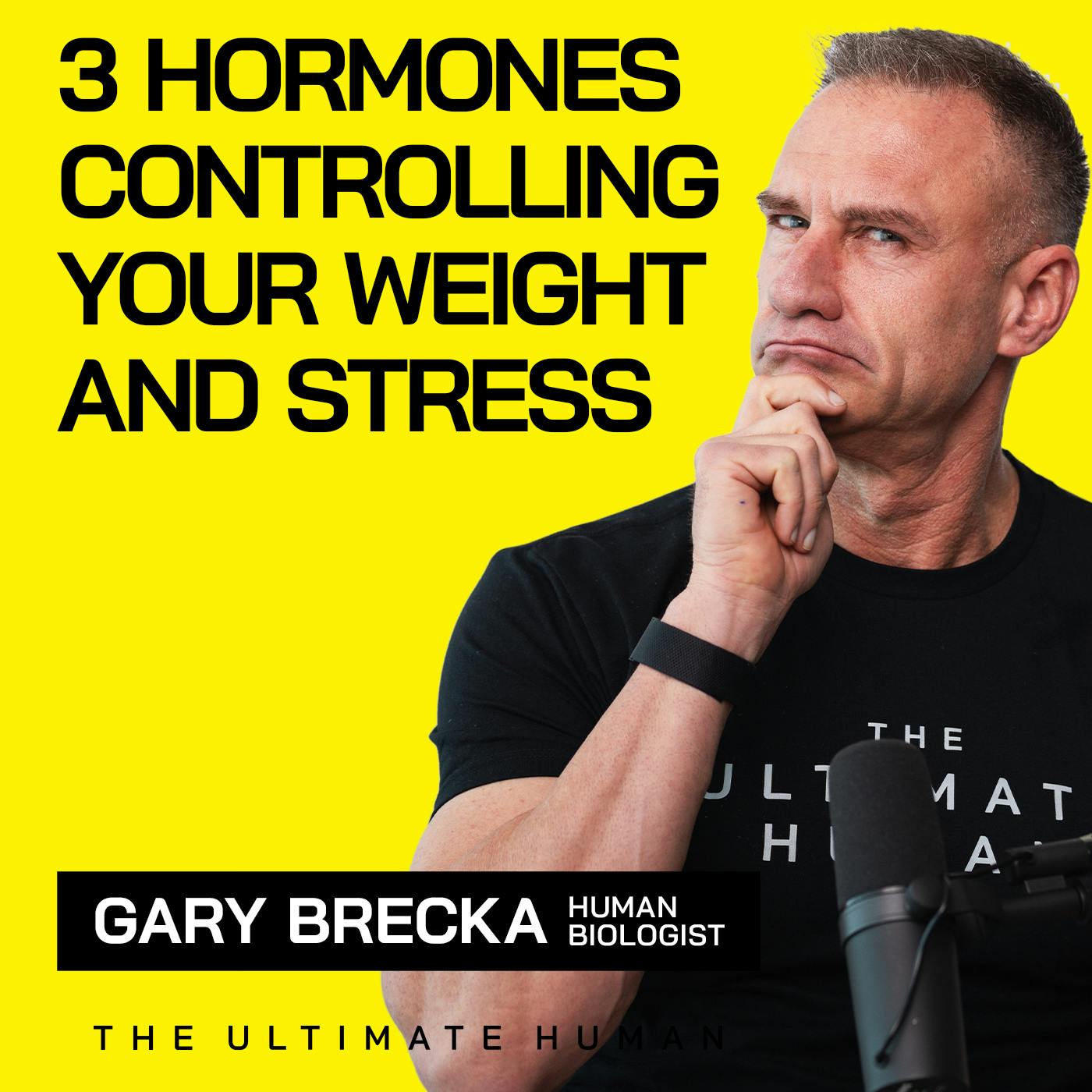
220. Cortisol, Leptin, and Ghrelin: Why Your Hormones Are Sabotaging Your Health
Join the Ultimate Human VIP community for Gary Brecka's proven wellness protocols! https://bit.ly/4ai0Xwg
Thank you to our partners
H2TABS: “ULTIMATE10” FOR 10% OFF: https://bit.ly/4hMNdgg
BODYHEALTH: “ULTIMATE20” FOR 20% OFF: http://bit.ly/4e5IjsV
BAJA GOLD: "ULTIMATE10" FOR 10% OFF: https://bit.ly/3WSBqUa
COLD LIFE: THE ULTIMATE HUMAN PLUNGE: https://bit.ly/4eULUKp
WHOOP: JOIN AND GET 1 FREE MONTH!: https://bit.ly/3VQ0nzW
AION: “ULTIMATE10” FOR 10% OFF: https://bit.ly/4h6KHAD
A-GAME: “ULTIMATE15” FOR 15% OFF: http://bit.ly/4kek1ij
CARAWAY: “ULTIMATE” FOR 10% OFF: https://bit.ly/3Q1VmkC
HEALF: 10% OFF YOUR ORDER: https://bit.ly/41HJg6S
RHO NUTRITION: “ULTIMATE15” FOR 15% OFF: https://bit.ly/44fFza0
GOPUFF: GET YOUR FAVORITE SNACK!: https://bit.ly/4obIFDC
GENETIC METHYLATION TEST (UK ONLY): https://bit.ly/48QJJrk
GENETIC TEST (USA ONLY): https://bit.ly/3Yg1Uk9
Watch the “Ultimate Human Podcast” every Tuesday & Thursday at 9AM EST:
YouTube: https://bit.ly/3RPQYX8
Podcasts: https://bit.ly/3RQftU0
Connect with Gary Brecka
Instagram: https://bit.ly/3RPpnFs
TikTok: https://bit.ly/4coJ8fo
X: https://bit.ly/3Opc8tf
Facebook: https://bit.ly/464VA1H
LinkedIn: https://bit.ly/4hH7Ri2
Website: https://bit.ly/4eLDbdU
Merch: https://bit.ly/4aBpOM1
Newsletter: https://bit.ly/47ejrws
Ask Gary: https://bit.ly/3PEAJuG
Timestamps
00:00 Intro of Show
01:07 Cortisol Definition and Reduction
05:00 What are Leptin and Ghrelin?
06:20 Effects of Consistent Calorie Restriction
07:30 Link to Study on Leptin Receptors: https://bit.ly/49nHUlX
08:30 How to Balance These 3 Hormones
The Ultimate Human with Gary Brecka Podcast is for general informational purposes only and does not constitute the practice of medicine, nursing or other professional health care services, including the giving of medical advice, and no doctor/patient relationship is formed. The use of information on this podcast or materials linked from this podcast is at the user’s own risk. The Content of this podcast is not intended to be a substitute for professional medical advice, diagnosis, or treatment. Users should not disregard or delay in obtaining medical advice for any medical condition they may have and should seek the assistance of their health care professionals for any such conditions.
Learn more about your ad choices. Visit megaphone.fm/adchoices
Press play and read along
Transcript
Speaker 1 So many things in our current environment, from consistent phone notifications to ultra-processed foods, can impact how well we can notice what our body is actually trying to tell us.
Speaker 1 We're exploring cortisol, leptin, and ghrelin today.
Speaker 1 I want to break down these complex biochemical concepts because they determine whether you feel energized or exhausted, or whether you maintain healthy weight or you struggle with cravings.
Speaker 1 These powerful chemical messengers can either work for you or they can work against you.
Speaker 1 Cortisol gets a bad reputation, but acute cortisol spikes are actually necessary for survival, leptin and grewin, two hormones that control your appetite and your energy balance.
Speaker 1 These work in opposition to each other, creating an interconnected dynamic for managing food and energy storage.
Speaker 1 Understanding these three key hormones gives you the keys to mastering stress resilience and appetite control.
Speaker 1 If you're unaware of how these systems work, it could leave you fighting an uphill battle against your own biology. Let's start with
Speaker 1 We're told all the time, listen to our bodies, but what does that actually mean? Today, we're talking about three hormones that tell us when we're hungry and when we're stressed.
Speaker 1 But so many things in our current environment, from consistent phone notifications to ultra-processed foods, can impact how well we can notice what our body is actually trying to tell us.
Speaker 1 Because these powerful chemical messengers can either work for you or they can work against against you. It's so important to understand these signals and how we can interpret them.
Speaker 1 I'm biohacker and human biologist Gary Brecca, and you're listening to the Ultimate Human podcast where we explore the cutting-edge science behind human performance and longevity.
Speaker 1 We're exploring cortisol, leptin, and ghrelin today.
Speaker 1 I want to break down these complex biochemical concepts because they determine whether you feel energized or exhausted or whether you maintain healthy weight or you struggle with cravings or whether or not you wake soundly or lie awake at night.
Speaker 1 Understanding these three key hormones gives you the keys to mastering stress resilience and appetite control.
Speaker 1 If you're unaware of how these systems work, it could leave you fighting an uphill battle against your own biology. Let's start with cortisol, known as the stress hormone.
Speaker 1 Cortisol gets a bad reputation, but acute cortisol spikes are actually necessary for survival.
Speaker 1 The problem, as many of you know, occurs when short-term stress responses become chronic, constantly elevated. Your cortisol levels naturally follow a daily circadian rhythm.
Speaker 1 They peak shortly after you wake up, giving you energy to start your day, and then they gradually decline, reaching their lowest point at night to allow for restorative sleep.
Speaker 1 This pattern gets disrupted, and then your entire hormonal system suffers. Recent research has revealed some new insights about cortisol management.
Speaker 1 A systemic review looked at dozens of clinical trials evaluating stress reduction interventions.
Speaker 1 Researchers looked at mindfulness practices, mindset shifts, and aerobic exercise, measuring their overall effects on lowering baseline cortisol.
Speaker 1 The most striking finding was that stacking more than one of these interventions had the best benefit. Single changes helped, but combining multiple techniques actually created long-term change.
Speaker 1 But here's something that might surprise you. A unique article introduced the concept of nature pills.
Speaker 1 Scientists found that the calm feeling you get out in the woods or on the beach isn't something you imagined. You actually have chemical and biological responses to it.
Speaker 1 Even brief 20 to 30 minute exposures to green spaces could significantly decrease cortisol.
Speaker 1 This happens through activation of your parasympathetic, the rest and digest system, and dampening of what's called the HPA axis, your body's primary stress response pathway.
Speaker 1 A meta-analysis supported these findings, linking increased natural environment exposure to reduced cortisol levels and improvements in mood and stress resilience.
Speaker 1 This establishes nature-based therapies as credible cortisol regulators that anyone can access.
Speaker 1 It's a well-known fact that Chinese medicine has actually used forest bathing for centuries to reduce stress levels. Natural cortisol reduction starts with understanding how your nervous system works.
Speaker 1 Deep breathing exercises, something I'm a huge fan of, stimulate the vagus nerve, promoting autonomic balance that lowers the formation of cortisol.
Speaker 1 Practicing at least five minutes of deep breathing several times a day has shown reductions in anxiety and fight-or-flight arousal.
Speaker 1 Mind-body integrative therapies like yoga and Tai Chi can also provide benefits.
Speaker 1 They combine breath control, gentle movement, and mindfulness, reinforcing cortisol-lowering effects through neuroendocrine modulation.
Speaker 1 These practices basically teach your nervous system how to shift from stress mode to recovery mode.
Speaker 1 Those nature pills I mentioned earlier, they represent one of the most accessible interventions available to mankind. Regular, brief immersion in natural environments effectively reduces cortisol.
Speaker 1 The best part is that it doesn't take a remote safari to accomplish. Parks, gardens, or even tree-lined streets can all provide the benefits.
Speaker 1
The key distinction here is between chronic elevation and acute spikes. Acute spikes help you respond to challenges and then return to baseline.
Chronic elevation is where the problems arise.
Speaker 1 Now let's talk about leptin and ghrelin, two hormones that control your appetite and your energy balance.
Speaker 1 These work in opposition to each other, creating an interconnected dynamic for managing food and energy storage. So leptin originates from your fat cells or adipocytes.
Speaker 1 As your fat stores grow larger, leptin levels rise, sending signals to your brain to suppress your appetite and elevate your energy expenditure.
Speaker 1 Ghrelin, produced mainly in your stomach, does the opposite. It stimulates hunger and it promotes fat storage, especially when your stomach is empty.
Speaker 1 A 2024 study detailed how these pathways influence hunger and satiety through interactions with different brain systems.
Speaker 1 One part of your brain, called the hypothalamus, handles basic appetite regulation, while a different part of your brain, the limbic system, adds emotional and reward-based eating behaviors to the mix.
Speaker 1 This interplay can get even more complicated. An analysis showed that when you consume less calories, ghrelin levels increase while leptin levels decrease.
Speaker 1 While that might sound good to not be eating a lot, many people don't know that eating less can actually create challenges for weight management.
Speaker 1 Your body interprets calorie restriction as starvation and responds by ramping up hunger signals while reducing the I'm full signal.
Speaker 1 While intermittent fasting and doing the occasional water fast has its place in protecting your health and metabolism, living in a constant calorie restriction may be messing with your hormone balance.
Speaker 1 In addition, follow-up research revealed that leptin can do so much more than suppress your appetite. It plays a role in many different systems, including reproductive health and immune function.
Speaker 1 Specifically, when leptin levels drop too low, women can stop ovulating and it can cause anyone to experience problems with their immune responses.
Speaker 1 Perhaps most importantly, recent research has identified leptin resistance as a major driver of obesity.
Speaker 1 A major study in the field examined leptin-resistant mice that also had a protein called MMP2 knocked out.
Speaker 1 When these mice were fed high-fat diets, they gained significantly less weight than expected, while the mice with the protein grew to enormous sizes.
Speaker 1 The picture of them is crazy to see, and I'll link the study below so you can take a look for yourself. This suggests that MMP2 might break down leptin receptors, contributing to the resistance.
Speaker 1 Bringing back back leptin sensitivity could be a breakthrough approach to weight management. To test these specific hormones, it's going to be important to know how they interact with your body.
Speaker 1 The most comprehensive evaluations include both fasting and post-meal sampling for dynamic hormone profiling.
Speaker 1 Balancing these hormones through natural means focuses on supporting the normal function of these appetite control systems.
Speaker 1 Sleep deprivation disrupts both hormones, leading to increased ghrelin and decreased leptin sensitivity. Sufficient protein intake stabilizes ghrelin and supports satiety.
Speaker 1 Protein requires more energy to digest and metabolize. It provides longer-lasting fullness compared to carbohydrates or fats alone.
Speaker 1 Eating more processed foods actually prevents the omphol signaling pathway from working properly.
Speaker 1 These foods are engineered to hijack normal appetite controls, leading to overconsumption and hormonal dysregulation.
Speaker 1 Another way to stay at ideal levels is maintaining regular meal timing, which helps align leptin and ghrelin rhythms.
Speaker 1 Your body thrives on predictable patterns, and irregular eating schedules can disrupt the natural flow of these appetite hormones. Another method is through regular physical activity.
Speaker 1 Exercise enhances leptin sensitivity, meaning your brain becomes more responsive to the hormone's appetite suppressing effects.
Speaker 1 Chronic stress management, once again, is so important because elevated cortisol disrupts both leptin and ghrelin.
Speaker 1 Stress can override normal appetite controls, leading to emotional and binge eating and cravings for high-calorie comfort foods. Now, these three hormones don't work in isolation.
Speaker 1 Chronic cortisol elevation disrupts leptin sensitivity and can increase ghrelin production. Poor sleep affects all three, raising cortisol while disrupting leptin and ghrelin balance.
Speaker 1 Irregular eating patterns stress the cortisol system while confusing the appetite regulation. In addition, the modern food environment presents new challenges to hormonal regulation.
Speaker 1 Ultra-processed foods, irregular eating schedules, chronic stress, and inadequate sleep all contribute to hormonal dysfunction that makes maintaining healthy weight and managing stress increasingly difficult.
Speaker 1 Unfortunately, some people struggle with weight management even when eating less food.
Speaker 1 When leptin receptors become less sensitive, the brain doesn't receive the proper signals, leading to continued hunger, even with enough energy stores.
Speaker 1 The good news is that these systems respond to lifestyle interventions.
Speaker 1 Supporting healthy cortisol patterns through stress management, sleep hygiene, and nature exposure creates the foundation for overall hormonal maintenance.
Speaker 1 Appetite balance responds to consistent sleep schedules, regular meal timing, adequate protein intake, and minimizing processed foods.
Speaker 1 These aren't complicated, but they require consistency to create lasting change.
Speaker 1 If this type of content interests you and you'd like to learn how to apply science in specific ways to your own journey, I invite you to join my VIP community.
Speaker 1 If exclusive content, live monthly QAs directly with me by asking me anything, and the ability to submit future topics that you'd like me to focus on so you can learn more about them, then you want to be one of my VIPs.
Speaker 1 You'll get access to our health optimization guides, including two on hormones that just came out. It's a closer look at how to put these ideas into practice.
Speaker 1 Our community is filled with like-minded people just like you.
Speaker 1 So if you want to be a part of the group, the VIP community, create true connection and community, then just click the link below in the show notes and skip being a listener and become an insider.
Speaker 1 We're giving you the tools to take over your own health because the key insight is that your hormones respond to your daily choices.
Speaker 1 The foods you eat, how well you sleep, how you manage stress, and whether you spend time in nature all directly influence these powerful chemical messengers.
Speaker 1 When you align your lifestyle with how these systems are designed to function, you gain the ability to take control of your stress resilience, your appetite regulation, and your overall health in significant ways.
Speaker 1 And that's just science.