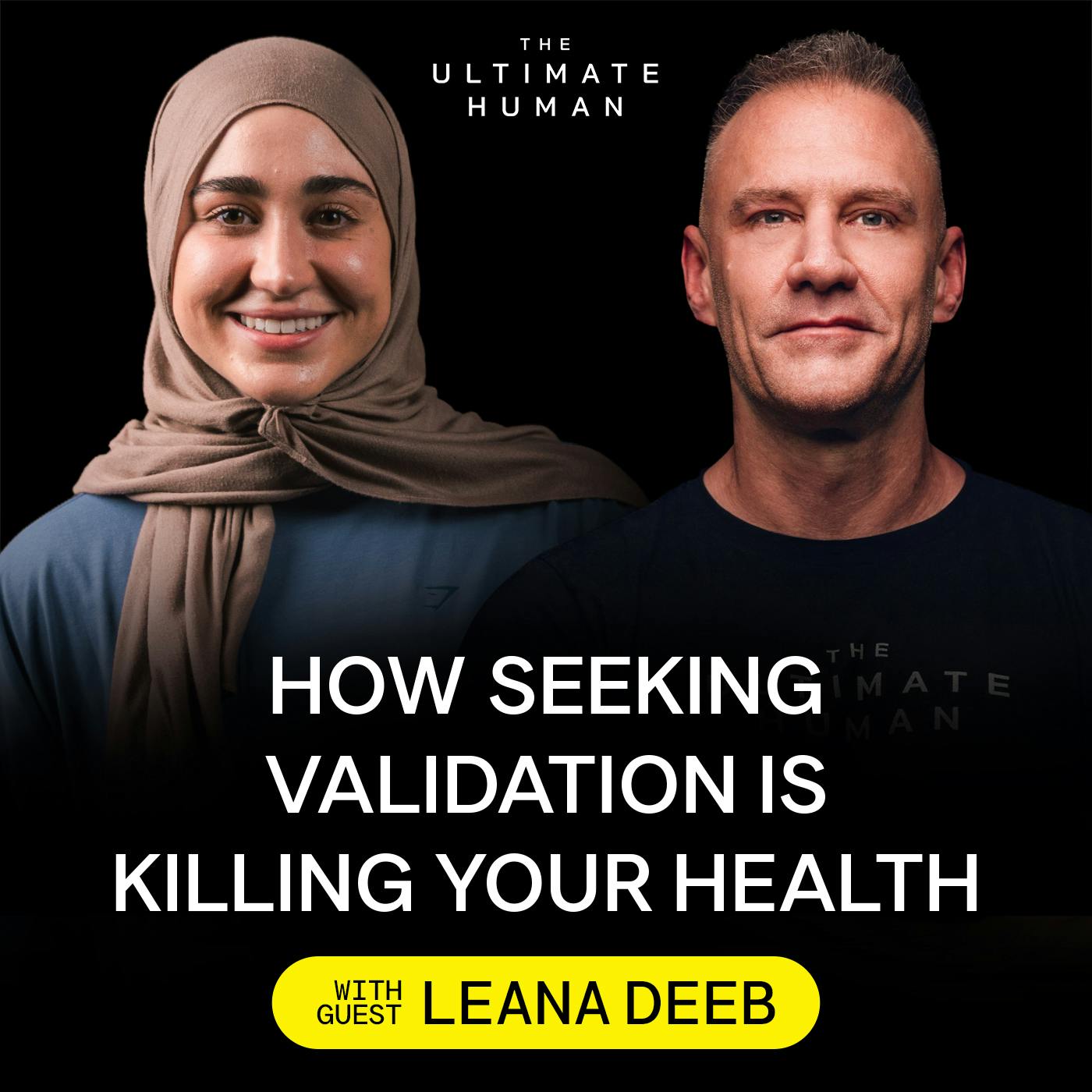
223. Leana Deeb: On Faith, Fitness, and Finding Purpose

1h 9m
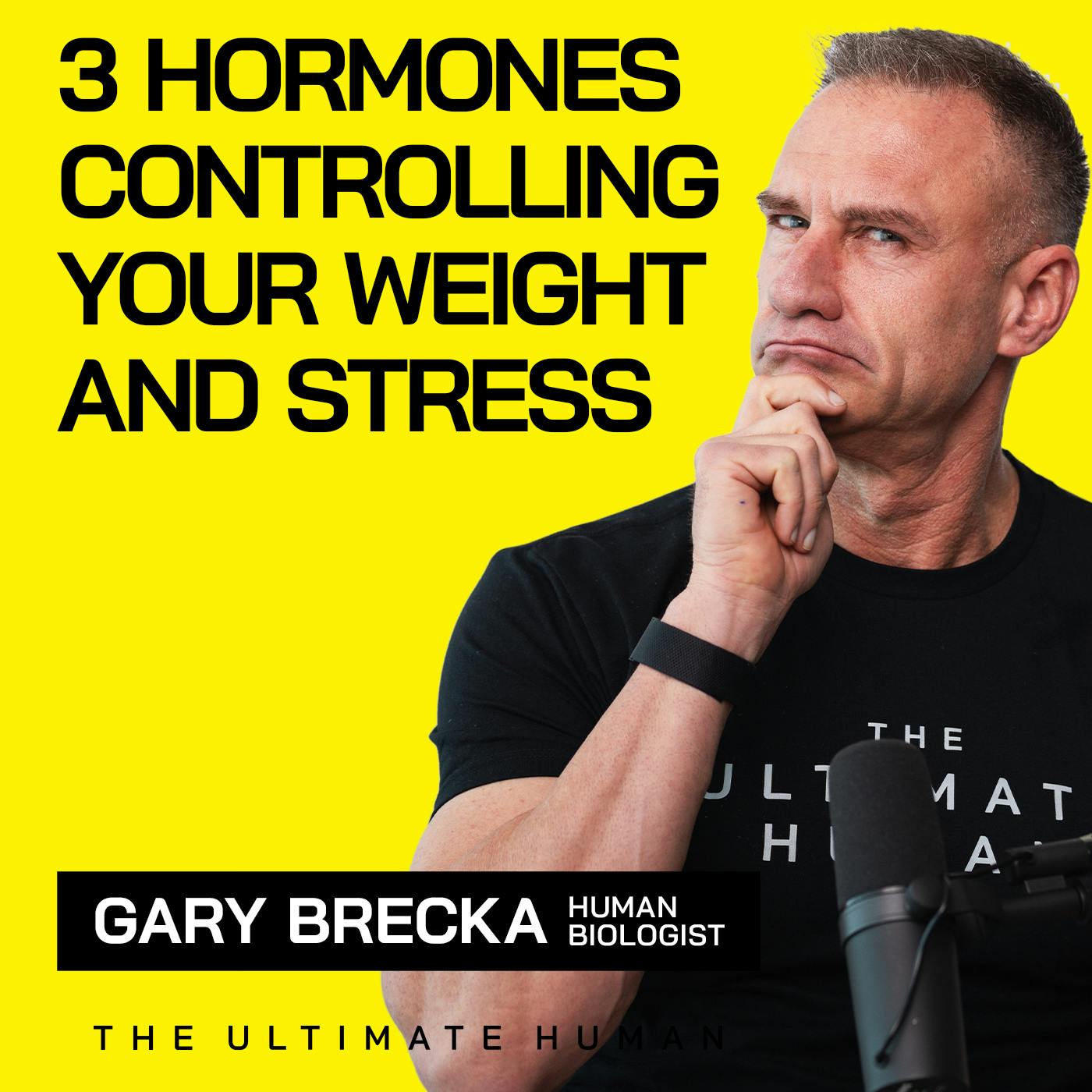
The fitness industry tells women that the more skin they show, the more they’ll grow; but what happens when a 24-year-old influencer proves that philosophy wrong? Leana Deeb shares her radical decision to transition from revealing fitness content to becoming GymShark’s first modest fitness ambassador. This raw conversation also opens up about chasing external validation and why women don’t feel safe in their own bodies, connecting the dots between constant appearance anxiety and physiological stress responses.

CLICK HERE TO BECOME GARYS VIP!: https://bit.ly/4hMNdgg

Download the “Uplift You“ app here: https://bit.ly/4irZ6ZW

Connect with Leana Deeb

Website: https://bit.ly/48cBchK

YouTube: https://bit.ly/4ajGlG4

Instagram: https://bit.ly/48AaO0i

TikTok: https://bit.ly/4plsFP

Facebook: https://bit.ly/4pM5UnP

LinkedIn: https://bit.ly/48HyfWu

Thank you to our partners

H2TABS: “ULTIMATE10” FOR 10% OFF: https://bit.ly/4hMNdgg

BODYHEALTH: “ULTIMATE20” FOR 20% OFF: http://bit.ly/4e5IjsV

BAJA GOLD: "ULTIMATE10" FOR 10% OFF: https://bit.ly/3WSBqUa

COLD LIFE: THE ULTIMATE HUMAN PLUNGE: https://bit.ly/4eULUKp

WHOOP: JOIN AND GET 1 FREE MONTH!: https://bit.ly/3VQ0nzW

AION: “ULTIMATE10” FOR 10% OFF: https://bit.ly/4h6KHAD

A-GAME: “ULTIMATE15” FOR 15% OFF: http://bit.ly/4kek1ij

PEPTUAL: “TUH10” FOR 10% OFF: https://bit.ly/4mKxgcn

CARAWAY: “ULTIMATE” FOR 10% OFF: https://bit.ly/3Q1VmkC

HEALF: 10% OFF YOUR ORDER: https://bit.ly/41HJg6S

RHO NUTRITION: “ULTIMATE15” FOR 15% OFF: https://bit.ly/44fFza0

GOPUFF: GET YOUR FAVORITE SNACK!: https://bit.ly/4obIFDC

GENETIC METHYLATION TEST (UK ONLY): https://bit.ly/48QJJrk

GENETIC TEST (USA ONLY): ⁠https://bit.ly/3Yg1Uk9

Watch  the “Ultimate Human Podcast” every Tuesday & Thursday at 9AM EST:

YouTube: https://bit.ly/3RPQYX8

Podcasts: https://bit.ly/3RQftU0

Connect with Gary Brecka

Instagram: https://bit.ly/3RPpnFs

TikTok: https://bit.ly/4coJ8fo

X: https://bit.ly/3Opc8tf

Facebook: https://bit.ly/464VA1H

LinkedIn: https://bit.ly/4hH7Ri2

Website: https://bit.ly/4eLDbdU

Merch: https://bit.ly/4aBpOM1

Newsletter: https://bit.ly/47ejrws

Ask Gary: https://bit.ly/3PEAJuG

Timestamps

00:00 Intro of Show

03:35 Leana Deeb’s Health Journey

08:27 Understanding God’s Divine Purpose

14:25 Impact of Faith, Connection, and Community

18:10 Core Pillars of Islam

25:33 Stop Searching for External Validation

31:54 Typical Day for Leana Deeb

36:26 The Uplift You Community

40:59 Material Success Does Not Equate to Actual Success

42:37 Supplementation and Daily Routines

48:56 Intention of Journaling and Practicing Gratitude

53:48 Discipline vs. Motivation

1:05:32 Psychological Cost of Not Living Authentically

1:08:04 What does it mean to you to be an Ultimate Human?

The Ultimate Human with Gary Brecka Podcast is for general informational purposes only and does not constitute the practice of medicine, nursing or other professional health care services, including the giving of medical advice, and no doctor/patient relationship is formed. The use of information on this podcast or materials linked from this podcast is at the user’s own risk. The Content of this podcast is not intended to be a substitute for professional medical advice, diagnosis, or treatment. Users should not disregard or delay in obtaining medical advice for any medical condition they may have and should seek the assistance of their health care professionals for any such conditions.
Learn more about your ad choices. Visit megaphone.fm/adchoices

Press play and read along

Runtime: 1h 9m

Transcript

Throughout all the times where I was experiencing the most success, I felt the most emptiest.

It felt like I had everything in the world materialistically, but deep down, I guess I just wanted to feel whole from within.

You had some success as a fitness influencer, but a lot of that was you were actually trying to fit this stereotypical mold of the female physique.

And one of the things you did, you took a successful level of impact and you just deleted it all and completely started over.

One thing that I really feel like my audience has stuck stuck by me is because I've consistently been vulnerable and constantly being authentic and telling them the things that I go through rather than just showing the high moments of my life all the time.

My vlogs truly help people create better habits, clean eating, journaling, meditation or prayer.

The fact that your faith gives you a connection and a community and that you share that openly is there's something to be said for waking up every morning and submitting before a higher power.

I always think to myself, do I have food? Do I have a roof over my head? Do I have a family that loves me? Then you have everything in life.

If you could just speak to the women about some of the ways that they could, on their own, find this true level of connection with themselves. So, I personally like to start off with.

Hey guys, welcome back to the Ultimate Human Podcast. I'm your host, human biologist Gary Brecca, where we go down the road of everything anti-aging, biohacking, longevity, and everything in between.

And today we're coming to you from the Middle East, from Dubai, United Arab Emirates. We are so excited to be here.
I've met so many fascinating, impactful

people.

And today's guest is no stranger to impact and no stranger to building an incredible community. I am so excited to run this podcast with you.
Welcome to the podcast, Liana Deep.

Thank you so much for having me here. You're welcome.

You're like, I am leaning in. You're welcome.

It'll pick up.

Leanna, there's

a theme that...

runs through my podcast guests. And it's interesting.
When I started the podcast, I wanted to just talk to like the leading MDs and PhDs and biohackers and research in

the wellness space and the functional medicine and longevity space.

And what I started to realize was the people that were creating the biggest impact, that had the most purpose, and that were the most driven, weren't necessarily the most credentialed, right?

At least on paper, right? They weren't the most credentialed. A lot of them don't have PhD, MD behind their name, but they've really shifted the needle for humanity.

And you've fit that narrative so well. You know, I think your story is fascinating.
But the common theme for all of them was that they solved some

problem in their life.

And

in solving this problem, they became one of the most impactful people in that arena. Sometimes it was a drug and alcohol addiction.
Sometimes it was a relationship issue.

Sometimes it was something like Lyme disease. And then they couldn't figure it out.
And they solved it.

And now they're like the most powerful soccer mom in the world because they're really helping people heal. Tell us a little bit about your story and what was the problem that you solved?

Yeah, so I

guess it started from when I was

younger.

Still pretty young. Yeah, I guess, yeah, 24.

Still already five.

Take it easy.

You don't look 20, 55.

So I guess.

Like you mentioned, not always feeling the most credentialed and everything, not being the most, yeah, I wasn't.

And I guess I wanted to just lean into something that gave me more drive, which was fitness.

I played college soccer growing up, but then I ended up dropping out of college and making some bad decisions in my life.

And that led me to the gym, which then gave me discipline, gave me drive, gave me ambition. And I wanted to communicate that to

millions of people. And it started off by just posting one piece of content in 2021.

And I was just

right out of the pandemic. So, okay.
Yeah. So, or it was right before the pandemic happened.
Okay.

And then throughout COVID, I was posting workouts and I guess everyone was on their phones at the time. And that's kind of when social media blew up even more.

And so just started spreading the message of practicing healthy habits like fitness, mindset.

And that kind of led me into two years of doing that

feeling a bit isolated,

purposeless, even though i had purpose of creating fitness content and inspiring millions of people to move their bodies and take care of themselves it was purely focused on aesthetics and how our bodies looked rather than training for our overall well-being and our minds and then that turned into finding a higher power in my life kind of transitioning into practicing faith and still doing fitness, but now fully covered.

And I guess that helped me find a deeper purpose of helping people find a higher power, helping people move their bodies for the right reasons, not only, of course, training for the way that you look is amazing, but also to train truly just for the way that you feel and for longevity, which is what you go on a lot about.

Yeah. So yeah, I guess that's kind of how everything started.
Yeah. You know,

interestingly, you know, you're Palestinian and Uruguayan, right? Which is really kind of an interesting combination.

And,

you know, if I'm, you're going to recall your story correctly, you know, you,

so you have this mixed heritage growing up.

You weren't particularly committed to your faith.

You know, you had some success as a fitness influencer,

but a lot of that was, you know, you were bearing your skin. You were actually trying to fit the...
the stereotypical mold of,

you know, the female physique and the female, you know, facial features and the, and, you know, trying to actually answer what society would normally say is, is the, the highest, you know, achievement a woman could have.

And then

something must have been missing in your life because

you didn't have this foundation of faith initially. You found this foundation and that's when your success success really exploded.

I mean, the level of success that you had it then versus the adoption of your message now is night and day.

And that's what I want to dig into for people because to me, that is very, that was very brave.

And it's also very risky, you know. I mean, there had to be a lot of fear around

this transition. And one of the things you did I found really fascinating was you took a successful business and, you know, a successful level of impact.
And you just deleted it all. Yeah.
Right.

And completely started over.

So I want you to talk about like

what gave you the impetus to do that? How did you know that I'm going to completely scrap what I've already built, which by the way, was not unsuccessful. It was, you had traction

and start over again.

And now looking back, you can always say, oh, that was a great idea.

But at that time, it had to be very, very fearful, especially for a woman, because you're going to leave the comfort zone of saying, I already know what society is asking for.

I'm just going to give them what they're asking for. And then say, you know what? I'm going to, I'm going to give them the most authentic version of myself.
Yeah.

And I think that realism and authenticity and intentionality is really fascinating. So can you dig into like,

where did you get the, you know, the intestinal fortitude to do that? First, thank you.

And

so I, I guess, taking it back to that,

so I was so afraid of losing the millions of followers and the millions of likes and the partnerships that I've built with the brands, they all invested into this girl who was showing her body.

And so, I guess

throughout all the times where I was experienced the most, experiencing the most success, I felt the most emptiest.

I wasn't close to family at the time. I

had friends, but slowly, the more that I was focused on my career, the less of the friends that I had. So I just felt very alone and empty.
I did have my team around me, but I

had a conversation with my manager and he spoke about giving charity, like all the success that I was, I was getting that I needed to give back because

I was very, I mean, 20, 21, 22 years old. You don't know what to do with.
all the money that you're earning. And so all I was doing was shopping, not managing it well.

And so as soon as I started giving in charity, I then started realizing the creator continues to give to me. Like, yes, I'm posting and I'm working hard, but where is all this success coming from?

And so I felt the need to just like look into every single faith. And I grew up in a background where my mom was a Catholic reverse.
So she converted to Islam when she married my dad.

But I kind of had. Differences of opinions with the religion of Islam because of culture and the way that culture kind of represents Islam and not really the religion.

So I started just looking into into the meaning of believing in a higher power, giving back,

having habits that are healthier in terms of

who you surround yourself with, addictions, different kinds of things, sleeping on time, waking up early in the morning, being a good person, lowering the ego. And it was just all these things.

And so I kind of just knew that if I wanted to make a commitment to God, I needed to follow the faith that I was practicing, which is Islam.

And so I didn't want to pick and choose the things that I needed to follow.

So I knew, okay, if I am committed to this relationship with God and to the meaning of what modesty and being a spiritual person was, it meant taking that next step of covering.

And

I knew that if I If I stay true to who I am, then nothing is going to go wrong. And that's when I just removed everything.
I notified, well, I, to be honest, I think that's what I'm saying.

Yeah, my dude, slow down.

My dude was a bit scared. They're like, okay, let's take it one pace at a time.
But

I'm a very impulsive person. So I kind of just was like, no, I need to do this right now.
Otherwise, I'm never going to do it.

It was just a continuous thing of like, maybe in a couple months, like maybe it like, yeah, pushing it back, pushing it back. And so then I was like, no, I'm going to do it right now.

Ripped a band-aid off, completely deleted everything and told my community they were very supportive. Of course, there was another side that was like, What are you doing?

Like, are talking about oppression, everything. And that's when I started to educate my audience as to my reason why.

And I also took them along the journey, which is so smart, which is what one thing that I really feel like my audience has stuck by me is because I've consistently been vulnerable and constantly being authentic and telling them the things that I go through rather than just showing the high moments of my life all the time.

Yeah. And so,

yeah, I just, I guess I got the courage from from God, just truly trusting that every single one of us has a divine purpose here on life. And

yeah, so it was. You know,

during that era, I mean,

there's sort of an unknown or an unspoken saying that I've heard a lot of times in the, in the, in the media space around women. It's like, the more you show, the more you grow.

For women that are trying to be fitness influencers, you took the polar opposite, you know, like the less you show, the more you grow.

And I think that, you know, that not only was that a really bold move, what's interesting is the data actually backs you up.

Because, you know, I talk about Blue Zone studies all the time and I talk about, you know, what really has an impact on people's health and well-being.

You know, we have a lifespan, but we also have a health span, right? Like, how many healthy, happy years are we going to have?

And some of the non-exchangeables in living a long, healthy, happy life are sense of community and purpose,

faith,

whole food diet, movement. And, you know, you're all about movement, faith.
I'm sure you're also about

eating healthy, but that connection and that community.

And I think what's fascinating is when you take this level of risk, for the community that you built, you're probably hoping that you would at least be able to restore the same community that you had.

Now it's 10 times the size, right?

And I, I, I want to drill into that because that authenticity and communication is what people are so, they're starving for. Like we are missing real connection.

We're missing community, right? Human beings are meant to do what we're doing right now. Actually sit down, have a conversation, like get to know each other.

And when everything is built around the more you show, the more you grow,

there's no commonality there, right?

So how much has that connection and community meant to you? And

you're very also very authentic about sharing your faith.

How does faith play into your daily life? And how has it played into the growth of your brand?

Yeah, so I,

to answer the first part, I

guess the community aspect, I noticed a difference from before it was purely people telling me like, your body is amazing and you inspire me to have a body like this. And now it's

abs. I want that.
Yeah.

And so now it's more of like, I want to be better for myself, my mind. I want to connect with my faith.
And it's women of all different backgrounds. It's all different faiths.

And that's what I love as well is the way that I share faith is trying to speak about it in a universal way because I have so many Christians, Jewish people following me. And

I think that faith has, because I have five daily prayers in Islam, you wake up in the morning before the sun comes up, you go to sleep not too late. It's teached me a different kind of discipline.

And also practicing things like Ramadan.

I know you speak a lot about fasting, what fasting does for your health and not always eating until you're full and the clarity that you have in your mind, all of these things.

And so I believe that faith and being healthy and eating clean, it just, it's just a way of life and it's, it's together. And

so faith and fitness, it's just been, it's been one thing and communicating that to my audience has also been able to give them more purpose and

find their purpose.

I think that when you When you believe in a higher power, not even just be so religious, when you believe in a higher power and have a sense of belief in something, you also have more drive.

And nowadays, I don't know if you see like Gen Z is turning a lot towards finding.

I know. I love this.
It's like, you know, I feel like a lot of times in society, the pendulum sometimes swings too far. Yeah.
And very often it's a good thing because it wakes people up a little bit.

Like, you know, the pandemic, you know, the. The worst thing, in my opinion, from a physiology standpoint, I'm a human biologist that we did was

social distancing, residential quarantining, masking, you know, because what we did was we disconnected people.

And we know from, I was a mortality researcher, excuse me, for years.

And we knew that if you wanted to cut a human being's life expectancy in half, and I mean in half, at any age, you put them in isolation.

And we think of isolation as being alone, right? I'm not talking about maximum security prison and you're in a cell. I mean isolation, the absence of connection and the absence of community.

And

the fact that your faith gives you a connection and a community, and that you share that openly,

I would say that's a large part of the reason why you are so successful at drawing people in from other faiths.

Because there's something to be said for waking up every morning and submitting and being humble before a higher power.

Whether that's Islam or Christianity or or Judaism or Buddhism, it's the fact that you are humble before this higher power.

Look, you don't need a special date to turn your life around because your biology doesn't wait. So neither should you.

Right now, for Black Friday and Cyber Monday only, you can join my VIP Ultimate Human Community for 70% off. Your first month is $29 instead of $97.

And you can start optimizing your biology today. Or if you're serious and ready to commit to your transformation, I'm also offering 30% off my annual membership.

And inside, you'll get weekly live coaching, protocols on mold spores, mycotoxins, heavy metals, how to get these things out of your body, advanced labs education so you can learn to read and interpret your own lab results, private Q ⁇ A's with me so you can ask me anything, and community support from like-minded people just like you.

And best of all, you're going to get access to my 10-month Becoming the Ultimate Human course, bringing out the ultimate human human inside of you.

I actually built this course outside of my VIP community, but decided to include it completely free. Plus, we're giving you two complete optimization guides to get started immediately.

So if you're tired of waiting for motivation, click the link below in the show notes and join now. Your future self will thank you.
Now let's get back to the ultimate human podcast.

For those people that are not really familiar with

Islam,

and there's a lot of connotations around Islam, positive and negative.

You know, I want to share a personal story in a minute,

but talk about what are the foundations of the religion? Why did you, at such an

adult point in your life, choose Islam? And what has it given back to you?

Yeah, so

I guess the core pillars of Islam is

there is Ramadan practicing fasting. I'm all in on that.
Prayers. Yeah.

There is

Hajj, which is more like, it's kind of like submitting and doing the, you go once a year to, or not once a year, you go once in a lifetime to Mecca. And then there is zakat, which is charity.

And

what is the last one? I can't think of the last one, but it's, it's maybe family. Might be family.
Something.

But

I would say that,

yeah, Islam is

what drew me into Islam was,

I would say, charity. So yeah, that was because you were already doing that.
Yeah, so that was the main thing that drew me into it.

And then I kind of had to, because I was, I grew up in that faith, which I wasn't really practicing. My mom doesn't cover.
My dad was always working. So I didn't get taught the religion.

I kind of just remember always telling myself I'll never wear the hijab or because we would practice Eid and we would go like once a a year, but that's all you do.

You don't really like practice a religion otherwise. Sure.
And so I kind of was like, since I was familiar growing up in this religion, let me just learn a little bit about it.

So I started like dissecting the teachings of the Quran. And I started off with modesty and what hijab meant.
And I think that kind of led me close because I was so curious about

why hijab was,

well, it was, I thought it was for a man, but it's not just for a man. And I think since that was my biggest kind of push away from it, I wanted to dive into the meaning of that first.

And I learned that it was about who you are as a person inside, protecting your beauty by, by loving yourself and not always relying like you need to show it off or seek validation. Because as women,

we love. feeling beautiful.
We just love feeling beautiful, not for the sake of a man, but for ourselves. And so to go out and want a sort of validation is just, I feel like it's human nature.

We want that.

And so suppressing that validation, which has taught me, if I suppress the beauty, seeking validation from beauty, then I will stop seeking validation from also success in many ways, which has been the next thing that I'm trying to overcome.

Because

when you're young and you see so many things on social media, you want to show people that you've made it. Yeah.

But it's like suppressing that as well and telling people that it's not about the materialistic things in the world, which I haven't. I don't make any mistakes either, right?

Because then it's like, but you're not afraid to do that. Yeah.
Yeah. So I guess that was kind of the beauty that

I got attracted to, which I feel like is in every single faith, though. Like that,

that's the same core message in

Christianity, maybe not wearing the hijab, but I know modesty in terms of the way that you speak to people, the way that you show up in this world. And so.

Yeah, I kind of just, that kind of attracted me and then started learning about it since and fell in love with it. Yeah,

I think you're helping break the mold in a lot of ways. I mean, you have an amazing partnership with Gymshark.

You're their only modest line, right?

For women.

Your videos are amazing because you show yourself exercising and working out and getting after it and all in these modest outfits. I think I saw a huge banner of you somewhere in London.

I was like, what was that all about?

It was like a Times Square poster. I was like, wow, she's rocking it.

Was that the Gymshark? Yeah, that was when we launched the first modest collection. Wow.
Yeah, in January. That's so.

That's so amazing. So I'll tell you a personal story.
Years ago, about five or six years ago, I got invited to speak here in Dubai.

And it was, believe it or not, it was at a women's empowerment conference. And I was actually talking about female hormones and some other things.
And

so I had this narrative in my mind about what the Middle East was like.

And just to be very honest,

I felt that a lot of customs, tradition, religion was built on oppression or suppression.

What I learned very quickly was that it was built on respect. And

it's a different level of respect, meaning it is how men respect women and how women respect themselves. And when I parachuted in here and

spoke at this event, I was here for about seven days. I met some of the most intelligent, well-spoken, passionate, like

beautiful women. And by beautiful, I don't just mean attractive, just beautiful souls.
And my wife, same thing. I brought my entire family.
It completely changed the narrative that I had had.

which I had formed through, you know, whatever media sort of portrays the Middle East to be like, certainly how they portray Islam.

And

I just formed my own opinion. And now I love this region of the world.
And I love the level of decorum and respect that it has.

And I think a lot of that has to do with modesty is not suppressing a woman's capacity to be herself. It is actually

allowing her to respect herself.

And I think that there's so many women listening to this podcast that have already been inspired by you.

But there's that thing that's missing, right,

in their life. Men have this too.
So if you could just speak to the women about like

what are some of the ways that they could, on their own,

find this,

you know, true level of connection with themselves.

Because I think exactly what you said about constantly seeking validation is a constant level of, you know, you're always open to being disappointed. Yeah.

So

if I were to tell the woman I was before when I was posting my body and

in worldly terms, I guess you could have, I had the one of like a perfect physique in many ways. That's what many women were telling me.

No amount of success, no amount of validation ever made me feel whole from within. And so I would tell the woman out there who looks on social media and compares herself.

And it's good, I feel like the world is going in a way where it's becoming all about how a woman looks and the

society's view of, or

the way that the world is viewing a woman's beauty is about

how her body looks, how her face looks. It's not about how her soul is.
And so I would say to

stop searching for validation from others and start truly pouring into yourself through not even telling women to just be modest, but before you leave the house, of course, you should put on outfits that make you feel strong and confident.

But I know when I would wear a tight dress or

always feeling the need to show my stomach because I felt like that was such a beautiful point to me.

Like my the core that i worked hard for i needed to show this because it meant that I deserve to be in this space.

But no, it should be who I am as a person and someone loving me for my soul and not who you are externally. So always reminding yourself when you leave, am I choosing to wear these outfits for myself?

Or am I choosing to wear a lot of makeup for myself? Or is it to prove to someone that I am beautiful or that I am or I do deserve to be here? Yeah.

And now I'm sure when you went through this transition too, there's there's like that, it's like a great shedding

too, because there were probably relationships or, you know, maybe even family

close to you at the time, friends, people in your sphere, maybe, you know, some of the

people on your media team.

You know, did

when you went through this process,

you know, did you shed a lot of people that just now no longer belong to your new narrative?

I think that's tough for a lot of women too, right? I mean, because this fear that a lot of women are in encourage exactly what you were talking about. Yeah.
Right.

So I definitely lost some of my friend groups

that were

at a time of my life, it was more around partying and,

you know, whether it's drinking or smoking, all these things, which it didn't align with me anymore. And

I would say my brand partnerships, everyone stayed because

which was actually, it was, it was definitely a teamwork thing. My manager always pushing, you know, that we're still committed to this relationship and that there was also

a deeper meaning behind the mission that I was on for the women that weren't being spoken to and the representation of modesty. And so to be completely honest, I didn't lose that.

I didn't lose that much. And I think that I thought I was going to lose so much, but I was prepared to.

No, it worked out in the end. But I just want to read some things because now I want to move into the present day.
I mean, Time 100 creators recognition,

brand partnership with Jim Shark,

which is your Leanna Deep, your modest collection. That launched in January 2025.
So pretty recently, you've been an Oxford Union speaker.

You have an UpliftU app and a movement, which I think is also amazing because, you know, social media and our phones are usually what disconnect us and you're trying to use that to create connection.

The Uplift You Women's Only Run Club,

you are, and a whole host of other brand partnerships and social media endeavors that you're involved in. You're a pretty active young woman right now.

So what does your platform look like now?

And where is Leanna Deeb going now in the fitness industry?

So I would say I am now leaning more into a mix of hybrid hybrid training.

So I've kind of transitioned just from purely strength training and training for the way that my body looks to now doing a bit of running and weightlifting.

I'm training for a marathon, which I'll be doing in February. And then you're going to do that fully covered.
Yes, fully covered.

That's going to be awesome. Yeah.
It's going to be toasty.

Yeah, it will be toasty for sure. Yeah.

So for you. Training for a marathon and podcasting is the next thing for me.

Still, of course, posting on every single platform, but podcasting and being able to share stories just like you're doing as well. I find it to be fascinating.

And also something that I've been yearning for is connection. And there's nothing like being able to meet new people, get to know them and be able to share that to.
my community as well.

So

now let's just get into some tips and tricks because that's what I guess

that's a lot of what my audience always loves, you know, advice.

So what is a typical day look like for you i mean certainly um you know now that prayers become a part of your daily routine i think uh that is a major major foundation of of of connection um but what does a typical day look like for you um you know going through your your meals and uh and your exercise routine by the way i watched some of your videos and i tried to i tried to do the uh kettlebell squat

it's awful Where you stand on one foot and you, you know, you raise your knee to 90 degrees and then you brought it back and you actually tapped it behind this foot and I almost face planted.

And I was like, how the heck with her?

I'll just stick to regular squats. But what does that typical day look like for you? Because fitness is still.
a major part of who you are and the impact you're having on the world.

It's not just your transition to your faith. Yeah.
So I would say I always start by planning my day around the five daily prayers.

So when I wake up is about an hour before the first prayer of the day.

So that's around like 4 a.m. Wow.
And then I'll have around like a two to three hour block of just reading and learning. So I like to read the Quran and take notes and practice that.

And then I'll get into some admin, speak to my team. And then I'll have breakfast, which I have been trying to cut out a lot of things in my diet because I do struggle with acne.

And so right now, it's been pretty consistent with just an egg white omelette and maybe some chicken sausage. Try to do a very high-protein diet and then healthy fats.

Drinking lots of water. I do electrolytes.
I need to get into the magnesium now. I need to get you into the H2 tabs.
H2 tabs. Yeah, that's what you're drinking now.
Yeah.

It's elemental magnesium that becomes hydrogen gas.

And another one of my favorites is something called Baja Gold, which is just the 91 essential minerals that come from a a mineral salt. It's probably the cheapest, most impactful biohack.

Like a $15 bag of this stuff will last you a few years.

And it's just mineral salt. But so you hydrate.

When is your first workout?

So I like to train around 9.30 to around like 11.30 in between that time because I do film in the gym and I don't like getting people in the back of my workouts.

So I want to choose a time where it's pretty empty.

I feel like with the way that social media is going, people don't like being recorded. So yeah.

After that, that's kind of when I start my main focus block where I film, I edit.

And then around five to six p.m., I try to start slowing down. I do eat lunch in between.
I meal prep usually because I just find it to be easier and saves time.

And then, yeah, I try to wind down, have at least like an hour to like an hour and a half before I go to sleep, remove all phones.

The first, the first two hours in the morning and around like the last hour of the day, I tried to do no cell phone at all, stop sleeping with my phone in my room. Yeah.

And I also went through a period where I had to really just, I was constantly getting distracted.

So I don't know if you use any kind of like locking apps, but I would, or maybe it's more of a Gen Z thing because we grow up with our like phones differently, but

I would lock my apps. Oh, with, yeah, and so it like, that's cool.

I just throw it on airplane mode and put it down and literally just walk away from it. I'm going to be better than the phone today, you know.

And I lay down and I have a little breathwork technique that I use when I, when I get in bed to try to create some separation between my day and

going to sleep, you know, I've, my sincere belief is that sleep is our human superpower.

And if you haven't mastered, you know, sleep, whole food diet and mobility,

you know, really nothing else matters in terms of your fitness journey. Right.
I mean, people are like, where do I start?

Should I use hyperbaric? Should I be doing sauna, cold punch? Should I be, you know, laying in a red light bed? And like, all those things are amazing.

But if you haven't mastered sleep, whole foods, and mobility, you know, exercise, basic exercise,

there's no sense in going to that.

If you know me, you know, I'm a huge believer in the benefits of hydrogen water.

H2TAB delivers cost-effective portable tablets that generate ultra-clean molecular hydrogen at 12 parts per million, one of the highest concentrations on the market.

With over 1,300 published studies showing benefits of oxidative stress, energy, recovery, brain function, and so much more, taking charge of your health has never been easier or more cost-effective.

Just drop a tablet in water, let it dissolve, and drink it back. It's less than a dollar a day, science-backed and part of my daily routine.
I never travel without this, and it is my favorite biohack.

Visit drinkh2tab.com. That's drinkh2tab.com and upgrade your hydration today.
Now let's get back to the ultimate human podcast. So what does your community look like now?

Like, what are women getting from

this app? What are some of the most common things that you're hearing from your audience, you know, when they say, this impacted me because of X or Y?

I would say the main thing are my routines. My vlogs truly help people create a better morning routine for themselves or a night routine.

Also, I would say workouts, but it's been the main, the main focus has really been habits.

People just starting to practice better habits, clean eating,

not using their phone as much anymore.

Journaling, that has been a massive thing. Meditation or prayer, if people that don't practice faith, they always say that I've started meditating because of you as well.

And it's helped me just calm myself down. And yeah, I would say my audience is

mainly, it's a little bit of men as well, but people that just are trying to be better in themselves every single day. And since I am someone who also is, I

used to really struggle with consistency. I used to be such a lazy individual.
I know the term lazy is a bit like off, but I used to be an extremely lazy individual and it took a lot of force from me.

And so I think that's also my community is like, we're just trying to be better constantly. And we're not the perfect people.
And so I love that. I mean, that authenticity is

very attractive. You know, I mean, it's, it's, when we talk about the universal law of attraction,

I think being intentional and authentic and vulnerable, I think authenticity is,

there have even been studies on this, the most attractive frequency, you know, that we can put out into the universe to bring people that are like-minded into

our tribe. And when we talk about community, I mean, what better community than one where you're actually open and honest with each other? And,

you know, one of the things I appreciated when I was going down the rabbit hole of your social media was you're pretty vulnerable on there.

You're not always the guru giving sage advice, you know, Yoda with all the young masters. You're very vulnerable about the things that you're struggling with.

And I think, you know, too, this is,

you know, right place, right time. I think a lot of women, especially, are looking for, you know, where do I belong?

Have you

seen

an increase in the number of women that are actually subscribing to your modesty, you know, philosophy as well? Like, and finding actually that they're more grounded in being modest?

I mean, tell me a little bit about that. Yeah.
And so I guess the community that I've built has, it's so weird.

I would always see women that were like familiar faces of girls that were wearing shorts and sports raws at the time with me. And they've now transitioned into being modest as well.
Yeah.

Even Christian women, because I had a mainly, I would say mainly Christian community or not really a Muslim background. And so.

Those women connecting with their faith and even in the in-person events, it's women that are telling me I am now practicing modesty more and trying to truly love myself from within and trying to even start a social media page and to communicate the same message that like I'm going through.

And so it's, it's showing me that so many women are practicing modesty, which I was afraid, like, are people going to be doing this?

Like, and that wasn't my intention was to like, you know, bring it to be modest to be a part of your movement, right? Right.

But, but it, it did inspire many women to go on the similar path for spiritual reasons and not only just faith. So it's been, yeah, it's been amazing.
Yeah.

I think, you know,

you also

sort of putting, putting it out there that I've heard you talk about the fact that you were at the highest part of your career,

success-wise and impact-wise, but you were at the lowest,

you know, days mentally.

Can you talk a little bit about that disconnection? Because I think

there's so many people listening to this podcast that are in

socioeconomic level of success. So, if you were looked at it from the outside in, you would say, wow, that person's really successful.
They have lots of followers, they appear to have lots of fans,

they're wealthy or well-off, you know, traveling the world, seem to be in a great relationship, but you never really know what's going on behind the scenes.

And you've talked a lot about that disconnect where you were at the peak of your career,

but yet you were at the lowest point mentally. Yeah.

So I

would say having all that success,

but

being in an apartment that was empty and I didn't have any connection to anyone. I didn't have any

kind of higher purpose in my life. It felt like I had everything in the world materialistically.
But deep down,

I didn't feel true. I didn't feel true love for myself.
I didn't feel that I had

a, I don't know, I didn't connect to my family that much. It was purely just about success and money.
And so

I really just,

I guess I just, I wanted to feel whole from within. I didn't want to keep

ignoring my feelings. And I speak a little bit about music.
And so I would always consume myself with so many things to ignore the emotions that I was facing.

And so I think it just reached a level to where I had to face my emotions head on and see what was actually wrong with me within.

And so cut out music, cut out everything that was like drawing me the like drawing me the wrong way. And that's when I realized I needed to seek something higher than me.

Otherwise it was going to just lead into a down, dark place in my life. Yeah.

So where do um in your in your daily routine? Where do like you fall on supplements? What kind of supplementation are you? Yeah, so

I started taking an omega-3.

I am taking some skin supplements. I do an electrolyte packet for hydration.

I would do a greens powders, but I do try to get in my whole greens more so because I know that's really where the true benefit is. But at the time when I did start taking it, I was eating faster.

You're traveling a lot now, too. I imagine.
Yeah. So sometimes I'll do caffeine.
Well, I do. Actually, I do.
Hey, I'm a fan of caffeine. Don't let me coffee.
Oh, yeah. Oh, yeah.
Really?

I just drink a mold-free,

you know, like an organic mold-free coffee because I

remember I so I have these little challenges I do, and I was doing a challenge on detox. And

fascinating that I did this urinalysis and found out that I had this ochre toxin A and aflatoxins in very high levels. And which is the afloxoxinox? So it's a mold

and it comes from coffee. The ochratoxin A is

a lot of that is found in non-mold-free coffee. I had no idea.
And here I am as

you know, I'm very woke to what I put in my mouth.

I'm very conscious about my sleep. I'm conscious about

my exercise routine. I'm conscious about my bedtimes.
I'm pretty, just very aware.

And this one just slipped right by me. And so I actually sent my coffees out for testing.
And I would take the beans and just put them in these big glass jars.

And I also ate a lot of nuts. And I would store the nuts in these big, tall glass jars too, full of ochratoxin A, half of the toxins.
And so I switched coffees and I did, you know, a mold detox.

I actually took tens of thousands of people through this

eight-week detox program. Felt amazing because, you know, these are the things that don't show up on labs.

You know, like your labs look great, but you have this crushing brain fog and you have fatigue and muscle soreness and all of this stuff that you can't explain. Doctor tells you it's all in your head.

But in any case, I'm a huge fan of

coffee. I just try to drink the...
the mold-free coffees.

Yeah, to be honest, I completely cut out coffee for about a year because I listened to something on mold being in coffee.

And also I was always relying on it rather than going to sleep on time and stuff. So I switched over to matcha.
Ah, okay.

You're part of the matcha. No, no, no.
It was

on me. I know.

Diana.

You're right. It was before the matcha trend.
It was before the matcha trend. Okay, good.
But I am slowly. Because it's like a religion now.

It is.

I was arguing with my podcast manager before this. I'm like, I just can't do it.
She's like, I just love my matcha. I'm like, oh, stop it.
You don't love it that much, you know?

It definitely does not have the same impact as, I know there's like more caffeine in it, but it doesn't have the same impact that coffee just gives you right away. Yeah.

So I'm kind of back on the coffee kick, but I do need to get into a mold-free because I'm not really keeping that in mind anymore. I also think, I also drink.
caffeinated drinks sometimes.

I try to this sounds like a confession. It's okay.
It does.

It does. I forgive you.
Okay. So, no,

I really don't have an issue with caffeine. I mean, I think we abuse it, obviously, like anything else.

And, you know, having it too late in the day, obviously impacts your sleep. But, I mean, I think we put way too much,

you know, people fall on one side or the other.

There really is no detriment to

prolonged use of caffeine, you know, in

200 milligram to 400 milligrams a day. You know, obviously, if you're overdoing it with anything, it can be detrimental.
Of course.

And, and, and I always encourage people that are drinking a pot of coffee a day to say, you know, what is going on in your physiology that's causing you to be tired? You know, are you anemic?

Are you low on hormones? I mean, let's let's get to the reason why you're tired, not why you're drinking so much coffee. Yeah.

But, uh, but it's funny. And I've, I've been trying to, I, I want to jump on the matcha bandwagon so bad.
I want to be a part of the part of the cult, but I

can't,

I just can't, I haven't found one yet that's like, it's so earthy to me. Yeah.
You know?

I mean, do you use sweeteners at all? Yeah, I'll use like an organic monk fruit or allulose. I'm big fans of those.

You know, a lot of times the monk fruit is mixed with erythritol or xylitol or other things. But if you can get a pure organic monk fruit

or a really good allulose, I mean, those are great.

I hate calling them artificial sweeteners because they're actually not artificial.

Those are in a category all their own. You know, I have no issues with monk fruit or

allulose. You know, the aspartames and urethritols, alliters, you know, those have those have some challenges.
But

I don't mind the artificial sweeteners because

the other side of that coin is that your blood sugar kind of looks like a heart monitor instead of looking like rolling hills. This Black Friday, I'm doing something really, really, really special.

I'm actually going to discount my genetic test kit by 30% in the UK only and give you 10% off the supplements. Why? Because so many of you don't know where to start with supplementation.

Some work, some don't. You've heard that your aunt is on Ashwagandh or St.
John's ward or CoQ10 or NED, and you don't know where to start.

What you have to do is test, find out what's deficient in your body, and give your body back the raw material that it needs to do its job. This is not a guess.

This is a test, and it will tell you individually by your own biology what's missing and we can replace that with supplementation.

So for Black Friday, take advantage of 30% off the test and 10% off supplements across the board. Now let's get back to the Ultimate Human podcast.
I want to go back just for a moment,

not to

your prayer and journaling from a religious standpoint, but

how prayer and journaling for you is

an outlet. You said you journal on a regular basis.
I'm not going to ask you what you journal about, but what is the intention of your journaling?

So I personally like to start off with a gratitude section in the morning because I feel like sometimes you have to force yourself to be gratitude at points in your life.

And that's something that I would struggle with and having a negative outlook on life. I think that you have to force yourself to feel happy, not always seeking happiness.

Like you have to make yourself feel happy. And so gratitude in the morning always and setting an intention for the day of what you want to achieve and where you want to spend your time.

And then I like to journal at the end of the night, reflecting of where I went wrong, how can I have a better day tomorrow, where did I go with my time, always thinking about, did I mess up here or could I have responded to this situation better and always reflecting and thinking about myself in terms of trying to be better, trying to respond to a situation better.

And so, I mean, I know you speak about ADHD and

ADD, which I don't, I don't want to diagnose myself, but sometimes I do struggle with focus and impulsiveness and stuff.

So it's been such a game changer to me in terms of just sitting with my thoughts before I react to a situation or

an argument, for example, like getting mad at things. So that has been life-changing for me.

And in terms of prayer, Just being able to speak to the creator of the world or the universe, whatever you believe in, about the things that you're going through or the things that you want to attract into your life or being just grateful and thanking what you have every single day.

That has just helped me have more appreciation on the super low moments of my life or when things go wrong. I try to think about, I know that the creator of the world is working in my favor.

So this situation happened for a reason. And I'm going to learn from it.
I'm going to grow from it. Everything has a blessing in disguise.
I always believe that.

So instead of just ruminating and getting upset and going into spiral,

I think about the benefit in this situation. And so that's what prayer and journaling has really done for me.
How do you cue into gratitude? Like, you know,

it's, it's, you know, I think that you're, you're, you're on a, a, a really important topic that, you know, the first thoughts we have in the morning and the last thoughts we have at night, because a lot of our day we can't control, right?

And you can't control how people, other people act towards you. You can't control what people are going to say about you on social media.

You can't maybe control how an interview goes. But

the way we wake up and the way that we go to bed, there was actually a Scandinavian study I'm actually reading right now.

So I don't want to quote it because I haven't distilled the entire study, but it was a practice that these Scandinavian parents were using on their kids to, right before they went to bed, they would answer the question, what was the last good thing that happened to me today?

And

they would answer that question. The kids would start thinking about it.
So that's sort of the last thought that they had when they went to bed at night was positive thought.

And again, I don't want to summarize the study because I haven't fully absorbed the conclusion section, but it had a very positive impact on not just their sleep,

but

their sense of self-worth and

resulting in a reduction in symptoms of attention deficit disorder and hyperactivity disorder and

being disruptive in class and not following directions. And so, you know, whether or not we know we're doing that, you know, we're actually having a positive impact on our physiology.

So is there a question that you ask yourself to

find what you're grateful for? Or is there a

journal prompt that you use? Or do you just sort of close your eyes and say, I'm grateful for the acts?

So I use a journal prompt where it's kind of question-based. I know it can be.
Can we get this journal? Yeah. Okay.
I have journals, yes. All right.

I'm selling your journals now and it wasn't even the intention So that's great because I think people need those kinds of prompts So tell me a little bit about that Yeah, so it starts with an intention and an affirmation which is I know some people are kind of iffy on affirmations, but I do believe telling yourself that you are worthy and you're capable and you are an individual who is disciplined, it does help you shift your mindset because I do believe that if you embody the identity of a hyper disciplined individual, you'll start to change your habits to become that individual.

And so

affirmation, intention, and then what am I grateful for? But I always think to myself, do I have food? Do I have a roof over my head? Do I have a family that loves me?

Then you have everything in life. Wow.
And so if you have those three things, all of the problems that you're facing are actually not that big.

You'll get through them because you always have overcome certain situations in your life. And so I think reminding myself of those three things are so important

because I feel like as humans, we're never going to be satisfied with things in life. So always reminding ourselves of just those basic fundamentals.
And then,

yeah,

it's shaped, it's definitely helped me shape. my mindset to always have more of a positive outlook, always take advantage of every single opportunity.
And

yeah, so I would say start with a journal prompt of

what are you grateful for. You know, it's interesting.
I've been deep down the rabbit hole of this because for years I didn't believe in the universal law of attraction.

And I kind of thought all of this, like practice gratitude. I was like, this is such a waste of time, right?

I mean, you should be out there getting after it. And the more I study the physiological impact of prayer, gratitude,

the ability for especially women to feel safe in their bodies. And by safe, I don't mean

you think somebody's going to attack you, but I mean you're accepting of your body and you feel safe. There's a reason why

82% of autoimmune disease is in women. You know,

if you took a hundred people that had autoimmune disease, 82 of them would be female, only 18 would be men.

The overarching reason for this is that women don't feel safe in their own bodies. They don't feel safe in who they are.
And what that causes, it causes the

autonomic nervous system to get trapped in a sympathetic state, this fight or flight state.

And I think your story is so impactful because

the stress of always trying to be beautiful, the more you show, the more you grow, of always looking for that external validation. This is exactly what creates that feeling of not being safe.

Like, I wonder what he thought of me. I wonder what she thought of me.
I wonder what they thought I looked like. I wonder if they liked my dress.

I wonder if they, you know, they know my fitness model. Was I fit enough?

You know, these, you know, constantly having to worry about the judgment of others keeps your nervous system in a different state. So there's now like direct scientific links between

prayer, community, sense of purpose, and the practice of gratitude in in your physiology, how strong your immune system is. So it's amazing that

you

are very much empowering women to have a healthier immune system. I know it sounds wild, but it truly is.
So what are some of the, like, what are some of these journal prompts?

Like, what, what do they look like in this journal to prompt people to draw into their

sense of gratitude? So the ones that I've mentioned are kind of, I would say you could even go deeper and

think about

simple things like, could I have responded to a situation different in my day?

Or also just,

I truly love just writing on a blank piece of paper and writing anything that comes to your mind about a situation that might be weighing heavy on you instead of bottling up all your emotions, truly just letting that out and

yeah i would say you kind of have to find what works best for you because some people like the prompts some people like just freely writing but i would say always think about it from a positive perspective create a ritual around it set a candle or an incense and get a nice cup of coffee or a matcha and

there's the matcha the matcha matcha and journaling it could be a concept and so i would say make it a ritual think of it as a positive way And then hopefully they will find the right prompt for them.

But it kind of takes a little bit of searching. Yeah.
I think,

too, I love what you've talked a lot about the difference between discipline and motivation

and how the more disciplined you've become,

the better your life has become. And can you talk a little bit about about that? Like, how do you define discipline versus motivation?

And for people that think all that organization and all that structure is just going to add extra stress to their life,

you know, what would you say to that? I would say discipline is the highest form of self-love.

And it has truly given me so much freedom in my life. Because if we are

a slave to our

desires, distractions, we're never going to be able to be free or experience peace. And so

I would say motivation comes and goes. So I never rely on motivation.
I always speak about to my audience, like get rid of the word motivation from your vocabulary. And discipline is

every single time that I've chosen to do something that I did not want to do, I felt so much better in myself rather than feeling

sorry for myself or feeling like, no, I'm not going to do this now. I can do it tomorrow.
I always feel so much regret.

So I now realize I have to be just disciplined. I have to always do the thing that I say I'm gonna do.

And that's when I have also the most self-love and integrity is when I commit to something that I'm gonna do every time that I would push something off or not stick to my word.

It was, it was the worst I've ever felt. And I also believe that I

never like to diagnose myself with things. And even if someone tries to diagnose me, I never try to accept it.

So if someone tells me that I'm depressed, I never want to accept depression because I want to be able to overcome that.

I feel like every time that I've accept depression or accepted that I'm always going to be an anxious person, it's so hard to overcome. And so

when I went to the gym and I showed up on the days that I didn't want to go and I did the work that I didn't want to do, that is when I'm not. depressed or when I'm not feeling well.

But then there's this, there's this narrative that's like, no, give yourself a lot of grace. Like, yes, grace, but how much grace? And how much should we give into, oh, I, you know, maybe not now.

I don't feel like it. Like, I stopped having the dependency on always doing things when I felt like doing it.

Taking emotion out of it because I was just going with too much emotion. And that's when I started to see the most success and

the best I've ever felt is when I'm disciplined. I just want to shake those people and be like, stand for something.

Like, like, stand for something. You can't just be this sort of mushy, I do, you know, it's whatever I feel today.
And maybe I'm feel differently tomorrow.

And I'm very fluid in who I am and where I'm going and what I expect out of life. And like, that is when crushing depression comes in, when you actually have no identity to call your own.

And I, and I'm not even talking about what the rest of the world thinks about you, which is what you think about yourself. If you don't know who you are, how do you know where you're going?

And I think that, you know, I find that fascinating. Do you

do you do you check any particular biomarkers in your, do you do blood work or do you ever look at biomarkers to kind of say, okay, I'm doing well on my health journey. My hormones are balanced.

My blood sugar is good. Yeah.
So

I used WOOP for a long time. Also kind of testing out aura.
Yeah.

I know I'm kind of cheating on whoop right now, but with aura ring, trying to just test out both and see how I feel. With

I do like tracking my sleep.

I need to get into blood work.

I just get extremely nauseous when I take my blood, but I've been, I, I'm getting, I need to just do it because, yeah, I, I really want to understand more about my body, but

not enough. I don't do enough.
I was, am doing like some sauna cold plunging. I know that there's like different levels of temperature for women.
Yeah.

Yeah. I mean, I think for women,

you know, I think women very often are trying to do what's conformant to men, right? You know, intermittent fasting because their husband or their, you know, their significant other is doing it.

Some of the worst endocrine disasters I've ever seen are in young menstruating women that eat in too narrow of a feeding window, you know, because they can get their blood sugar too low, and in which case the pituitary starts to slow the metabolism down, like exactly what you don't want to have happen, right?

Nothing more frustrating for a woman to be intermittent fasting, getting after it in the gym, you know, trying to sleep, trying to eat right, and then starting to get bloated from water weight. Right.

I mean, there's nothing more frustrating than that. And very often it happens when they eat in too narrow of a feeding window.
But,

you know, there's, there are these tests now that you can do, I'm not affiliated with any of them, but you you put the, put the little patch on your arm and it has the little vial that attaches to it and it just slowly pulls the blood through the surface of the skin and it fills the vial and then you can send it in for testing.

So you don't have to do the full-blown venucture. Oh, wow.
My son, who is like an extreme athlete, and he's, I mean, he does Muay Thai.

He did seven marathons, seven continents in seven days, and he gets after it. You cannot get anywhere near him with a needle.

He will pass out like a baby kitten. I mean, I tease him about it.
I try to shame him into it.

But

he has such a needle phobia. Sorry, Cole.
And you're right under the bus you went today. But

so I understand that. We had a functional medicine clinic for years.
And, you know, they're just those people that cannot get over the venucture.

But this is awesome.

So.

I went,

I told some of my community that you were coming on the podcast, and I know we only have a few minutes left, but

they had some questions that they submitted. I distilled them down to the most commonly asked questions, but one that we didn't cover so far today was

they asked about

identity and stress and how you were successful and had a high level of stress because you didn't really know.

your identity. And now that you have this identity, you're very grounded

just to talking to you, you're a very grounded person.

So you've navigated sort of multiple identities throughout your life. I mean, just even your

family background, you know, being Uruguayan and Palestinian.

What's the psychological cost of not living authentically?

Oh, this is a great question.

I thought that was a great one, too. I was like, I'm glad I'm not answering it.
I'm glad you're the guest and I'm the host.

Yeah.

Yeah. So I would say

not being authentic, you feel this

deep,

this deep desire to find your true self always and this misalignment and constantly questioning if you're doing the right thing or if this is where you're supposed to be.

And I do believe that we do have to go through chapters in life where you do

a career or a job that you don't want to do to realize, okay, this is not for me. I need to find something else.
But it's about listening to that intuition of, okay, this is not feeling right to me.

I need to try something else. Maybe while I'm doing this, I can spend my time investing into myself and making a way where I can pivot into a new career to find what is best for me.
But I think that

not living authentically to yourself or constantly feeling like you have to please people around you, you're going to feel,

you're going to feel just this disconnect with yourself. Like you don't know who the person is in the mirror.
And so

I

still face levels of stress, but now I do it through just always listening to myself, not constantly looking for other people's opinions and caring about what people think about me all the time.

And so, yeah, I would say that living authentically

is probably one of the most important things that you could possibly do in your life. Yeah.
Mom, a lot of my

audience wanted to know if you had a boyfriend.

I'm just throwing out, you can answer if you want. Not answer if you don't want.

No, I do not have a boyfriend. I would, I would have to.
Oh, here come the offer.

I would have to do marriage because, you know, in Islam, you kind of just, you do engagement and then you do marriage right away. And right now, I feel like marriage is probably a massive thing.

Oh, it's a massive thing. It's a massive thing.
I've had two of them just.

So I don't know if I'm ready for that level of stress yet or to give myself to a human that I need to figure out myself fully first before I take on another person in my life. That's amazing.

Well, I wind down all my podcasts by asking all my guests the same question. And there's no right or wrong answer to this question.

But what does it mean to you to be an ultimate human?

I love this question. You're getting getting all the hard questions today.

To be an ultimate human is

to live

kind of coming back to authentically yourself,

to treat people with respect, to show up every single day for you, to stick to the word that you said, to stick to your word and do the thing that you said you're going to do,

and

to love yourself in every single way by

treating yourself well. And so I think that comes down to habits and fitness and everything.
But yeah, I guess being an ultimate human is to live authentically yourself. That's such a great answer.

Well,

Liana, we're going to continue to follow your journey.

Excited for your new podcast. I'm sure it's going to be an amazing success.
You know, good luck with the move to Austin.

For my audience that would like to know more about you, where can they find you? Yeah, so I am on YouTube, on TikTok, on Instagram at Liana Deeb.

That's C-E-E-B. Yeah.
Yeah. And then Instagram has an extra B, but podcast coming out.
It's called Being Human. And so, yeah.
Oh, being human. That's awesome.
The ultimate human and being human.

I love it. And I love the word being

because it has a lot of connotations to just be. Well, thank you so much for coming on the podcast.
You're amazing.

We're going to continue to follow your journey and

best of luck with your new endeavors.

Until next time, guys, that's just science.