873: Got You Pegged
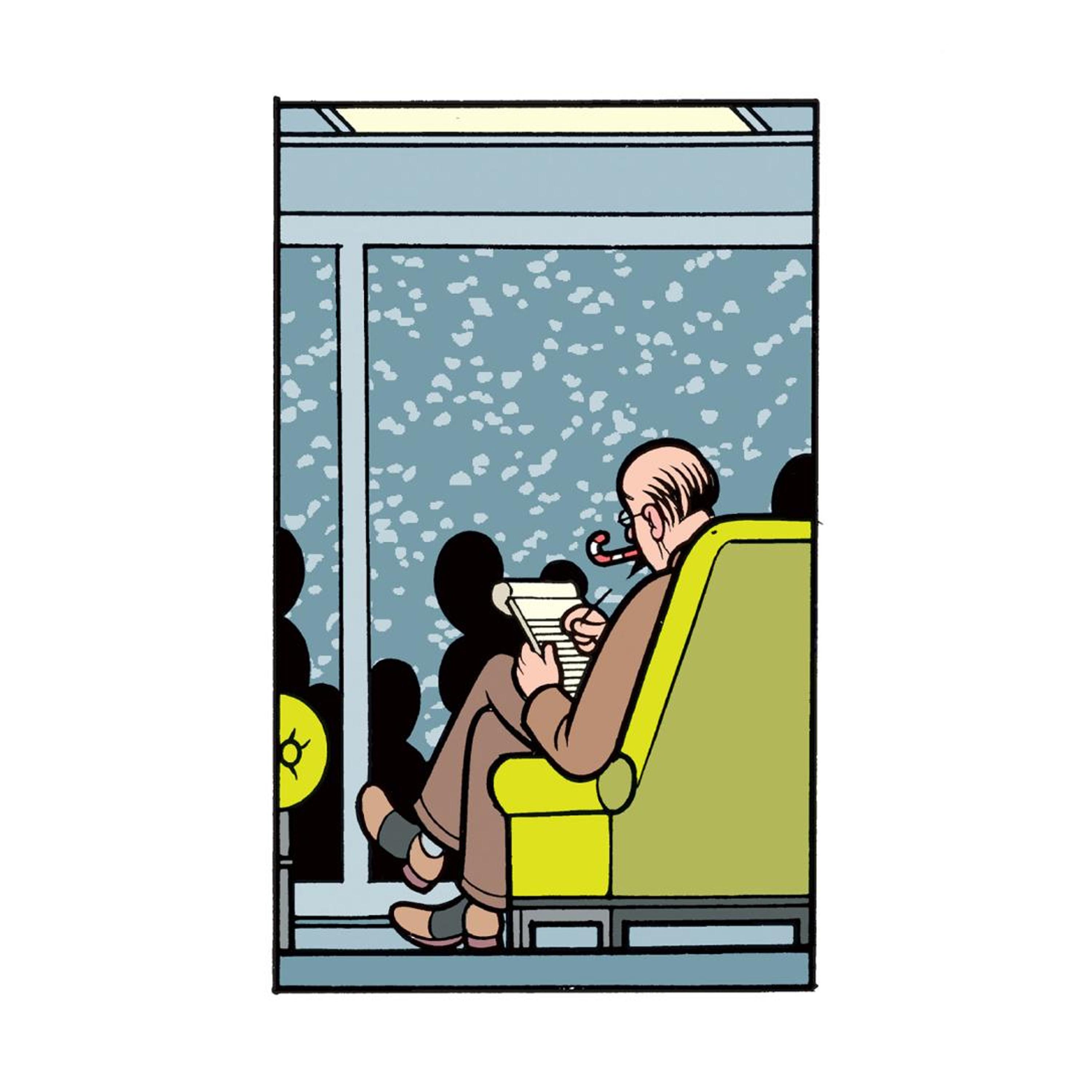
Shalom Auslander goes on vacation with his family, suspects the beloved, chatty old man in the room next door is an imposter, and sets out to prove it. This and other stories about the pitfalls of making snap judgments about others.
Visit thisamericanlife.org/lifepartners to sign up for our premium subscription.
- Prologue: Amy Roberts thought it was obvious that she was an adult, not a kid, and she assumed the friendly man working at the children's museum knew it too. Unfortunately, the man had Amy pegged all wrong. And by the time she figured it out, it was too late for either of them to save face. Host Ira Glass talks to Amy about the embarrassing ordeal that taught her never to assume she knows what someone else is thinking. (8 minutes)
- Act One: While riding in a patrol car to research a novel, crime writer Richard Price witnessed a misunderstanding that, for many people, is pretty much accepted as an upsetting fact of life. Richard Price told this story, which he describes as a tale taken from real life and dramatized, onstage at The Moth in New York. (12 minutes)
- Act Two: There are situations where making judgments about people based on limited information is not only accepted but required. One of those situations is open adoption, where birth mothers actually choose the adoptive parents for their child. Producer Nancy Updike talks to a pregnant woman named Kim, going through the first stage of open adoption: reading dozens of letters from prospective parents, all of whom seem utterly capable and appealing. (6 minutes)
- Act Three: David Rakoff picks a fight with a hit Broadway show. (6 minutes)
- Act Four: Shalom Auslander tells the story of the time he went on vacation, pegged the guest in the room next door as an imposter, and devoted his holiday to trying to prove it. Shalom is the author of Feh: a Memoir. (22 minutes)
Transcripts are available at thisamericanlife.org
This American Life privacy policy.
Learn more about sponsor message choices.
Press play and read along
Transcript
Speaker 1
Support for this American life comes from Indeed. Hiring isn't just about finding someone willing to take the job.
You need a person with the right background who can move your business forward.
Speaker 1 Spend more time interviewing candidates who check all your boxes with Indeed-sponsored jobs. Receive a $75 sponsored job credit with Indeed Sponsored Jobs at Indeed.com slash American.
Speaker 1 Terms and conditions apply. Hiring, do it the right way, with Indeed.
Speaker 1 A quick warning, there are curse words words that are unbeeped in today's episode of the show. If you prefer a beeped version, you can find that at our website, thisamericanlife.org.
Speaker 4 Okay, as adults, it's pretty rare to have a moment where you're talking with somebody in your own country, in your own hometown, in your own language, and you have no idea what is actually happening.
Speaker 4 When things become confusing and not in that, oh, what did he mean by that sort of way, but in an I love Lucy, how did I get myself into this situation kind of confusion?
Speaker 4 Like, for example, Amy was back home in Indiana on a break from college, and she was accompanying her brother's high school class on a trip to this health and science museum they have in South Bend called the Healthworks Kids Museum.
Speaker 4 And just to give you a sense of who the characters are in this story, Amy's brother is autistic and he is developmentally disabled.
Speaker 5 If you had to picture Ben, I would say picture this really handsome star athlete looking guy. who
Speaker 5 sort of has an age of maybe five to eight years old and loves dinosaurs.
Speaker 4 As for Amy, aside from the fact that she's very close to her brother, you can get a good sense of who she is by the conversation that she had with Ben's teacher on the bus with all the developmentally disabled kids driving to this museum.
Speaker 4 Amy was talking to the teacher about her schoolwork, which frankly seems very, very hard. Amy was majoring in physics and studying in Germany.
Speaker 5 In Germany, not only were the classes in German, but we were also using all of these graduate textbooks.
Speaker 5 But she was really nice and she just listened to me the whole way over.
Speaker 5 over so they get to the museum and after some videos and some science experiments where they blow things up it was time to walk around the exhibits so during during all of this one of the things that they had been really pushing they had these new computers that were installed they were computers designed to walk kids through making a really neat identification card And they were all really excited about this.
Speaker 5 I think they must have just gone live, like the day before we came, because they were all just, make sure you use our ID computers. You know, we're so excited about this.
Speaker 5 And you get to print out your ID and pick it up at the front desk. And
Speaker 5 so when we walk out onto
Speaker 5 the actual museum part, my brother and I walk around and he shows me some of his favorite exhibits. And
Speaker 5 this staff member comes up to me and he says, have you made your ID yet?
Speaker 4
Now, for a second, it seems a little weird that he would ask one of the adults to make an ID card. But then we figured it's new.
They're excited for everybody to try this thing, kids and adults.
Speaker 4 So her brother ambles off and she sits down and starts answering the questions on her computer screen. And the guy doesn't go away.
Speaker 4 He keeps finding ways to help her.
Speaker 5 Then it occurred to me, oh, well, maybe he's hitting on me a little bit.
Speaker 4 Which would make sense, but the help that he's giving her keeps getting stranger and stranger. He's giving her instructions for things that no fully functioning adult would ever need instructions for.
Speaker 4 And Amy wonders,
Speaker 4 does he think that she is one of the developmentally disabled kids who are wandering all over the museum?
Speaker 4 But at the same time, Amy thought it was completely obvious that she wasn't. The way she moved, the way she expressed herself, and the guy's manner, his tone of voice, was unmistakable.
Speaker 4 He talked to her like a peer.
Speaker 5
I mean, I almost wonder if maybe that was why I was almost paralyzed with confusion. It's really rare to meet people who don't use some kind of special voice with the mentally disabled.
This
Speaker 5 slightly higher pitched, slightly, I know you're a special person kind of voice. So it was just, it was so strange.
Speaker 4 And then, luckily, the very next question that comes up on the computer screen is one that Amy realizes can resolve all of this confusion, once and for all, definitively, for the both of them.
Speaker 5 So the question is, type in your age.
Speaker 5 Okay, so I'm 21 years old at the time. So I'm thinking, I can type in 21, and he'll realize that I can't be a student.
Speaker 5 And we can just both pretend like we understood what was going on this whole time.
Speaker 5 So I type in 21
Speaker 5 and uh
Speaker 5 and he he looks at me and he looks at the age and he says, oh, Amy, you know, if your age is a number that ends in teen,
Speaker 5 then that number starts with a one.
Speaker 4 So he just assumes you've typed wrong.
Speaker 7 Yeah.
Speaker 5 But I haven't. So at that point, I decide that instead of saying, okay, oh, actually, I am 21, and then letting that fold out, however it would have,
Speaker 5 I erase what I typed, and I type in 18.
Speaker 4 Why?
Speaker 4 Ah,
Speaker 5 I don't know. I mean, I thought, how many more questions could there possibly be?
Speaker 5 I've already told them, you know, everything about myself, how much I weigh.
Speaker 5 And I thought, well, this is just going to be a couple more questions, and then it'll take a photo of me, and then I'll be done. And then he'll never have to know.
Speaker 4
He's a stranger. You're in a museum.
Like, this will be over in like a minute. You can walk away.
Like, who cares?
Speaker 5 Exactly. I felt like it was the lesser of two evils at that point.
Speaker 4 But she is not near the end of the questionnaire.
Speaker 3 Far from it.
Speaker 4 It continues for pages and pages. Then there's a set of paragraph-length questions which require actual concentration.
Speaker 5 And while I'm fast as I can, I'm skimming these questions, trying to get through these. He starts reading them to me out loud,
Speaker 7 word for word.
Speaker 5 And
Speaker 5 I'm sort of melting into my chair and I'm thinking, this is too much. This is way too much of a deception.
Speaker 5 I have to somehow stop him.
Speaker 5 So
Speaker 5 I did. I said, oh,
Speaker 5 I can read.
Speaker 5 And
Speaker 5 he looks at me. He puts his hand on my back
Speaker 5 and he says, your parents must be so proud of you.
Speaker 9 So,
Speaker 5 as you might imagine,
Speaker 5 I'm working really hard to skim through these questions.
Speaker 5 I'm a blur of activity. I'm just trying to get through these questions so I can get out of this room and escape.
Speaker 5 And as I'm working through these questions as fast as I can, I see my brother's teacher walking towards me.
Speaker 5 And she says, Hey, Amy, how's it going?
Speaker 4 And you're thinking, like, oh my God, what's going to happen?
Speaker 7 Oh, oh, Yeah.
Speaker 5 And
Speaker 5
then it happens. He points to me and he says, again, voice full of admiration and pride.
And he says, Amy was just telling me that she can read.
Speaker 10 And how does the teacher take this news?
Speaker 6 Oh my gosh.
Speaker 7 So this teacher who I'd been complaining to about these graduate level classes in German,
Speaker 5 She looks at him and she says,
Speaker 9 of course Amy can read.
Speaker 4 And then the truth pours out. There begins a flurrying of apologizing on all sides.
Speaker 4 Amy apologizing to the guy, the guy apologizing to Amy, both of them, she says, clutching their own hearts as they do this.
Speaker 4 Turns out, he's so careful not to talk down to developmentally disabled students because he himself had a learning disability.
Speaker 4 And so, she had misread what he was doing and why he spoke the way he did, and he misread who she really was.
Speaker 4 And in this case, they both discovered the truth, but just as often, people meet and walk away and never straighten this stuff out. They assume they get it all wrong.
Speaker 4
And that is the subject of today's program. From Chicago Public Radio, it's This American Life.
I'm Ira Glass. Today's show.
I've Got You Pegged.
Speaker 4 Stories of people assuming all kinds of things about other people, usually in error, are showed today in 4 Accident is quite a lineup.
Speaker 4 Richard Price, David Ratkoff, Shalom Auslander, and Nancy Updyke, stay with us.
Speaker 4
Support for this American life and the following message come from Dignity Memorial. When we think about the people we love, Sometimes it's not the big things that we miss the most.
It's the details.
Speaker 4 What memories will the people you love cherish and remember once you're gone?
Speaker 4 Dignity Memorial helps families create meaningful celebrations of the lives of the people who mean everything to them, where the details aren't just little things, they're everything.
Speaker 4 To find a provider near you, visit dignitymemorial.com.
Speaker 1
This message comes from Apple Card. It's a great time to apply for an Apple Card.
You'll love earning unlimited daily cash on every purchase.
Speaker 1 That includes 3% daily cash when you buy the latest iPhone, AirPods, and Apple Watch at Apple. Through this special referral offer, when you get a new Apple Card, you can earn bonus daily cash.
Speaker 1
To qualify, you must apply at apple.co slash get daily cash. Apple card issued by Goldman Sachs Bank USA, Salt Lake City Branch.
Offer may not be available elsewhere. Terms and limitations apply.
Speaker 12 Our Common Nature is a musical journey with Yo-Yo Ma and me, Ana Gonzalez, through this complicated country.
Speaker 13 We go into caves, onto boats, and up mountain trails to meet people, hear their stories, their poetry, and of course, play some music.
Speaker 13 All to reconnect to nature and get closer to the things we're missing.
Speaker 12 Listen to Our Common Nature from WNYC, wherever you get podcasts.
Speaker 4 This is American Life. Today's show is a rerun, Act 1, the Fat Blue Line.
Speaker 4 We begin today with a story about something that happens all the time in all kinds of places, something that is so common that it's not even big enough to make it on the local news.
Speaker 4
Richard Price tells the story, the novelist and screenwriter. He often writes about cops and crime.
He wrote Clockers, he wrote Sea of Love. He wrote for the TV show The Wire.
Speaker 4 He told this story on stage at The Moth in New York back in 2008. He describes it as a tale taken from real life and dramatized.
Speaker 8 In the last novel I wrote, I spent a lot of time on the Lower East Side. And
Speaker 8 as is my want, I wound up in the back of police cars a lot.
Speaker 8 And Lower East Side is a very low-crime area right now. It used to be the worst, but Giuliani and real estate pressure took care of that.
Speaker 8 And now they basically have nothing to do down there in terms of crime.
Speaker 8 So what they do is they sort of sit in fake taxis, you know, four beefy white guys, sit in a fake taxi by the side of the Williamsburg Bridge, and they eyeball what's coming over from Brooklyn.
Speaker 8 And if the car looks like a $200 shitbox or somebody's got an afro or a ponytail,
Speaker 8 they pull up, pull in behind the car, and they wait to see if the guy's going to go all polite in his driving, like put on lane change signals, then they know he's dirty.
Speaker 8 And, you know, so worst comes to worse.
Speaker 8 You know, it's fishing, really.
Speaker 8 It's a big fishing hole, Delancey Street.
Speaker 8 And so I spent all night in this bogus taxi with about, you know, 850 pounds of white beef.
Speaker 8 And
Speaker 8 it's the end of the night.
Speaker 8 They made their
Speaker 8 collars.
Speaker 8 And
Speaker 8
there are two cops up front, and I'm sitting in the back. When I ride with these guys, I don't really comment about what they do.
I don't engage them in any kind of debates.
Speaker 8 It's like I'm there to bear witness and then see what I can do with it in my work.
Speaker 8 Anyways, they're riding up Essex Street. It's kind of Miller time, you know.
Speaker 8 And as they're going up, they pass a black guy, about 30 years old, with dreads, on a bicycle. And on the crossbars, he's got a white kid, about 9, 10 years old.
Speaker 8 And
Speaker 8
the black guy and a white kid, they're kind of chatting. The kid's looking up at the guy.
They look like they're sort of familiar with each other. And the cops drive by, and they're dead silent.
Speaker 8 After about a block, one guy says to the other, he says,
Speaker 8 hey, big guy,
Speaker 8 does that look fishy to you?
Speaker 8 He says, it's fucking midnight. What's going on here? He says, well, what do you want to do, big guy? So I'll tell you, big guy.
Speaker 8
All right, make the light, you know, pull over. Let's see what's what.
So they pull over, bike's coming up Essex.
Speaker 8 They step, one of the cops steps in the road, puts his hand out, says, hey, how you doing? Get off the bike, please.
Speaker 8 You know, the black guy gets off the bike and he goes, hey, officers, you know, like it's an unexpected treat you know hi you know what's up
Speaker 8 and uh
Speaker 8 and uh
Speaker 8 he says um
Speaker 8 do you ever hear of helmets oh yeah gee I'm really sorry at which point the other cop says to the little white kid he says hey big guy what's your name he goes um Noah Rosenberg you know like he's not sure and he says hey Noah come here buddy come on over here and he's and he separates the two and I'm sort of hopping in between the two conversations at this point and the black guy guy tries to follow the white kid and the other cop puts his hand on his chest and he says, no, you stay over here.
Speaker 8
Let me see some ID. He says, what? He says, some ID.
He said, don't look at him. Look at me.
He said, no, no, I was just picking him up from a play date. Did I ask you that? No, no, you don't see it.
Speaker 8
I worked the bar at Schiller's. And you know, again, did I ask you that? Well, no.
He said, why are you trying to divert me? He says, I'm not, go down the same road as me. He goes, okay, okay.
Speaker 8 And he gives him the ID, and at which point he sort of waves to the kid, and he goes, oh, what did I just say to you? He says, no, no, I'm really sorry. It's Noah.
Speaker 8
He's kind of wound a little tight. And he says, oh, really? He said, have a seat.
He points to the curb. He makes the guy sit
Speaker 8
on the curb with his feet in the gutter. And he says, so where are you going? He says, well, I had the late chef.
And he says, it's kind of late to be driving around with a kid on a bike, isn't it?
Speaker 8 At which point I leave those two and I go over to Noah and the other cop. And he says, so your name's Noah, huh? And the kid says, yes, and for the millionth time, I don't have an ark.
Speaker 8 And the cop says, well, you must get that a lot. And he says, oh, my God, you have no idea.
Speaker 8 And he says,
Speaker 8
so, Noah, how old are you? He says, well, next week, I'll be a decade old. So, well, that's great, great.
And where do you live? He says, 333 Avenue B.
Speaker 8
He says, and you go to school around here? He says, yes, I go to the earth school. And he says, oh, cool.
And who do you live with? He says, I live with my mom. And she goes,
Speaker 8
who's that over there? And he says, well, I don't know who your friend is, but my friend is Cleve. And he says, oh, do you know what Cleve's last name is? He says, yeah, Carter.
Cleve Carter.
Speaker 8 Sometimes I call him Coca-Cola. Sometimes I call it Carbon Copy.
Speaker 3 He says, oh.
Speaker 8
She says, do you know him for long? I said, well, yeah, like one, one and a quarter years. He's kind of like my godfather since my other godfather died.
Oh, and
Speaker 8
what do you guys do? Well, he was taking me home from a play date to my mom. He He says, so he knows your mom? And he says, well, yeah, he and my mom are kind of like friends.
He says, kind of like?
Speaker 8 Well, they have like sleepover dates.
Speaker 8
And he says, so your mom knows that you're with him now. She says, well, my mom sent him to pick me up.
You know, my dad lives in Woodstock.
Speaker 8
He says, okay, which point I'm going, okay, let's see what's happening with Cleve. I walk over there.
Cleve's sitting on the, he's sitting
Speaker 8 on the curb, and he's got his feet out there, and he's trying to make it look like it's natural.
Speaker 8 So he's like massaging his like deep thigh muscles, like he's limbering up for the marathon or something. You know, it's just humiliating as shit.
Speaker 8 You know, and he's kind of smiling because you can't win.
Speaker 8 You got to like play through,
Speaker 8 you know. And he's sitting there, and
Speaker 8
the other cop is hitting his driver's license with a mag light, one of those big powerful flashlights. And he goes, so Cleveland, I see you're from Ohio.
And he says,
Speaker 8 he says, yeah.
Speaker 8
He says, Cleveland from Ohio. He says, well, actually, it's from Oxford.
And the guy goes, oh, Miami College. And he goes, yeah, yeah, that's where I went.
Speaker 8
And the cop goes, oh, Wally Zerbiak, who is a big basketball player. And he goes, well, yeah, Wally was a little before my time.
So, oh, do you play ball for them too? He said, well, not basketball.
Speaker 8
I played soccer. Oh, that's amazing because I teach soccer.
I coach soccer out on the island, you know, in a kids' league.
Speaker 8
And he says, you know, that's amazing. I keep waiting for that sport to blow up, but I don't think it's, you know.
And Cleveland's going, yeah, yeah, that's amazing. You know, sitting, you know,
Speaker 8 at which point a Mustang comes by with
Speaker 8 two black guys in it
Speaker 8 up Essex. And the guy
Speaker 8 in the shotgun seat looks out the windows and he sees Cleveland sitting
Speaker 8
on the curb. And he starts yelling out, homeboy to base, homeboy to base.
We got a black man down. I repeat, a black man down.
Speaker 8
And he's like laughing his ass off and the Mustang floors it. You know, and Cleveland's kind of squinting and he's just kind of looking the other way.
He's just like mortified, you know.
Speaker 8 And
Speaker 8 then hopping back
Speaker 8 to the other cop with the kid, he says, so Noah, does Cleveland live with you? He goes, no, Cleveland lives at 444 Avenue D. We live at 332 Avenue B.
Speaker 8 He says, well, you ever been over to his house? He says, only about a million times.
Speaker 8 And he says,
Speaker 8 mostly with your mom, I guess, huh? He says, and by myself.
Speaker 8 He said, oh, really?
Speaker 8 What do you do there? He says, well, you know, sometimes we walk his dog, it's a Rhodesian Ridgeback named Mars.
Speaker 8 And one time he tried to teach me how to make scrambled eggs, but I don't really like his oven because
Speaker 8 you like the pilot match. And it goes,
Speaker 8 you know, and it scares me. And he says, one time, you know, my mom had to go to court in Woodstock, and I stayed with Cleveland for three days.
Speaker 8
And he said, in court, huh? He said, yeah, three days. He said, yeah.
He said, but mostly, I'd say 82.5% of the time we watch television.
Speaker 8 You and Cleveland? He said, yeah, me and Cleve.
Speaker 8 He goes, and the cop said to him, do you ever do anything else with him?
Speaker 8 And he goes, what?
Speaker 8 What do you mean?
Speaker 8 He goes,
Speaker 8 do you do anything else with him? And all of a sudden, the kid's eyes get really big and kind of like wet, like steel.
Speaker 8 And the kid starts kind of like
Speaker 8 kind of like breathing kind of heavy and the cop starts shaking a little bit.
Speaker 8
And the cop says to him, He says, Hey, Noah, look at this. And he pulls his jacket back and he shows him his detective shield on his belt.
He says, You know what that is?
Speaker 8
He says, Yeah, it's a police badge. He says, You know what this means? He says, What? He says, That means you can tell me anything you want and you'll be perfectly safe.
Do you understand that?
Speaker 8 And the kid looks at him and he goes, and he goes, Oh my god, are you going to arrest him? And the cop, his heart's pumping Kool-Aid, and he starts moving over. And he says, why?
Speaker 8 And the kid goes, if you fucking assholes arrest him again one more time just because he's black and I'm not, I'm going to kill myself.
Speaker 8 You came into my apartment and dragged him out because the crazy lady next door said he was a rapist. You put him in handcuffs when he came to pick me up at school.
Speaker 8
You pulled him away from me at the street fair. and made me wait for my mom.
I says, I swear to God, I'm going to lose my mind. You know, and the cops go, whoa, easy, easy, easy.
Speaker 8 At which point, the both cops are looking at each other like, well, what's going on? And all of a sudden, Cleveland sees the kids losing it and he goes, hey, Noah, buddy.
Speaker 8 And the cop goes, what did I just say to you? Stop talking to the kid. And at which point, Cleveland says, officer, you want to put this to rest?
Speaker 8 I tell you what, I'm reaching for my cell phone in here. He says, why don't you call,
Speaker 8 why don't you call the kid's mom and just see what's going on? He says, I'll call the kid's mom. He says, what's her name? She goes, Adina.
Speaker 8 And he calls across to the other cop,
Speaker 8 get the kid's mother's name. And the kid,
Speaker 8 through sobs, is going, Adina.
Speaker 8
And Cleveland gives the cop the mother's number. The cop calls and he says, hey, how you doing? This is Sergeant Daly from the 7th Precinct.
Who am I speaking to?
Speaker 8
And she goes, oh my God, Adina Rosenberg, what happened? He goes, nothing happened. I just need to know, do you know where your son is right now? At which point she freaks.
She goes, where is he?
Speaker 8
What happened? He's supposed to be with Cleveland. He's supposed to be taking him home from a play date.
What happened? What happened? What happened? Well, no, no, no, he's fine, okay.
Speaker 8
At which point, the kid goes, My mom says if I get any more nervous, I'm going to have to live with my father in Woodstock. You fuck, you know.
And the cop's going,
Speaker 8 you know, and
Speaker 8
the cop's going, no, no, no, the kid's great. The kid's fine.
You know, it's this, the only thing is like
Speaker 8 they were riding without helmets, you know, and it's a serious safety violation.
Speaker 3 And she's going, oh my God.
Speaker 8
Oh, Jesus. She says, no, no, no, okay, don't worry about it.
All right. All right.
All right. Good night.
Have a good night. You know, and he hangs up.
Speaker 8 At which point, they bring Cleveland and Noah together again, and they give him this half-assed lecture on bicycle safety. And he says, you know,
Speaker 8 I'm supposed to write you up, but, you know, I'm going to give you a pass this time. And, you know, Cleveland's still kind of smiling, but the smile doesn't go past here.
Speaker 8 You know, it never reaches his eyes. And he gets back on the bike, and the kid gets on the handlebars, and the kid's going through that, you know, post-crying jag, you know, shutter withdrawal.
Speaker 8
And Cleveland's kind of talk him down as he sort of pushes off. And they go disappear up Essex.
And we get back in the police car. And I'm sitting in the back, and I'm not saying a fucking thing.
Speaker 8 And
Speaker 8 they go in dead silence for about two blocks.
Speaker 8 And one cop finally says to the other, he says, You know something, big guy? And the other says, What's that, big guy? He says, Still feels fishy to me.
Speaker 8 And the other cop says, Hey, we gave it a shot, man. That's all we can do.
Speaker 4 Thank Thank you.
Speaker 4 Richard Price has latest novels called Lazarus Man.
Speaker 4 The story was recorded by The Moth, which, of course, is a podcast with all kinds of stories like the one you just heard at them.org or find it wherever you get your podcast.
Speaker 4 Act two,
Speaker 4 yes, no, or baby.
Speaker 4 Well, there's a simple road designed to help us all fight the urge to pigeonhole other people based on a first impression. And I speak, of course, of don't judge a book by its cover.
Speaker 4 But this axiom, this adage,
Speaker 4 this maxim is deeply flawed. And not just because of its annoyingly scoldy self-righteousness.
Speaker 4 The fact is, there are times in life where you must judge a person based on woefully little information crammed into some cover letter or something like that that they have put together.
Speaker 4 One of our show's producers, Nancy Epdike, visited somebody in this very judgy situation.
Speaker 7 Anyone who's not a megalomaniac feels daunted by the prospect of having to separate a group of strangers into a yes pile and a no pile.
Speaker 7 Kim Schwerry is seven months pregnant, and she's facing on her coffee table in Seattle dozens of one-page letters from couples who want to adopt her baby.
Speaker 7 Individually, each letter seems like not enough information, and collectively, they are way, way too much.
Speaker 7 The first time she read through them, they melted into an indistinguishable mass of thoughtful, intelligent, fun-loving, mutually supportive, healthy, active, outdoorsy couples.
Speaker 9
A lot of the hobbies are similar, just hiking, you know, couples from the northwest too. I'm sure that's common.
So,
Speaker 9 like even just this page, you know, hiking, snowshoeing, camping.
Speaker 7 And if you turn to the next page, is there also a hiking park?
Speaker 9 Let's say probably.
Speaker 9 Oh, yes, hiking. There you go.
Speaker 7 Kim's doing an open adoption, which means that she will have a relationship with the family who adopts her child for the rest of her life.
Speaker 7
The cover letters are just the beginning of a long, long process. The whole thing is sort of like super high-stakes online dating.
Judging people is required.
Speaker 7 Kim goes back and forth between practical considerations and pure gut checks.
Speaker 9 Here's something. This couple has another
Speaker 9 child and, you know,
Speaker 9 they're talking, I don't know, they use kind of like like child talk when they're talking about him like it says something about kissing his boo-boos or something and that kind of um
Speaker 11 you know
Speaker 9 I don't know I don't like that very much
Speaker 7 Kim ends up liking a different couple that already has a little boy she likes the idea that her baby would have a sibling She weeds out a family that seems to her too religious and later she frowns on a couple who both have high-powered jobs that they write about at length.
Speaker 7 She wonders if they'd be home enough for the baby.
Speaker 9 These guys, I could see them, you know, working 50-60 hours a week because of their careers.
Speaker 7 A few pages later, Kim makes a face when a couple says they're relational people.
Speaker 9 I'm wondering exactly what that meant.
Speaker 9 Like, there's this whole packet of information, and then, like, I'll focus on this sentence that maybe I don't like. And that makes me feel like I'm like kind of
Speaker 2 judgmental when I do this.
Speaker 9 And sometimes, you know, that doesn't always feel
Speaker 9 good.
Speaker 9 See, and this is something really small, but for some reason it's um that says the opportunity to have a relationship with the child's biological heritage is very important including medical history.
Speaker 9 I just that feels kind of weird to me.
Speaker 10 It's a little clinical. Right, it is a little clinical.
Speaker 3 Um
Speaker 9 I want to be more than medical records, so so that kind of put you off right there.
Speaker 5 Yeah
Speaker 9 It goes back to that judgmental thing, you know, because I mean I've written things and maybe that's not how they meant to portray themselves, but it does, like you said, sound very clinical and
Speaker 9 yeah.
Speaker 7 Just like Kim's having to quickly peg these families, extrapolating all sorts of important things from just words on a page and a few pictures, she's finding that as a single woman pregnant, people are making all kinds of assumptions about her.
Speaker 7 Co-workers assume she's married and starting a family. Those are awkward conversations.
Speaker 7 And if she tells someone what's really going on, that she's putting the baby up for adoption, she better be prepared for a lecture.
Speaker 9 I mean, you're really kind of vulnerable when you're pregnant and you're kind of...
Speaker 9 you're vulnerable to judgment, I guess. You know, people are very prone to once, you know, you say what you're doing, they tell you what they would do and not do.
Speaker 9
And they want to be like, oh, I think you're going to be really upset. And I think this.
And I'm like, no, I think maybe you're the one who's upset, not me, but.
Speaker 7 She says some people are utterly convinced that adoption is just a bad idea all around, which kim takes personally since she was adopted it's one of the reasons she didn't want to get an abortion people feel that um
Speaker 9 if you're adopted that you have this great sense of loss or you just don't know who you are and there's some identity you know there's an identity crisis and you feel abandoned and um
Speaker 9 you know that's not how i felt with my experience um being adopted being adopted exactly you know i felt very loved by my parents.
Speaker 3 Um,
Speaker 9 like the baby's father told me that he thought that I don't know why he said this, but you know, he said that, or he kind of assumed and said this that, you know, he was so much closer to his parents than I was to mine, you know, which isn't true at all.
Speaker 9 And it's just, you know, that's, that's how he felt things must be.
Speaker 7 I waited till just about the end of my interview with Kim to confess that I'd had her pegged all wrong before I spoke to her. I thought she'd be a teenager, confused.
Speaker 7 But Kim is 27, has her own apartment, a good job.
Speaker 9 Right, I'm in a situation where it would be very feasible that I would raise the child on my own, so it's probably harder to understand.
Speaker 7 Okay, so people are making that judgment about you. What what don't they know about you that would make them
Speaker 7 understand?
Speaker 6 I don't know.
Speaker 9 I kind of have this unusual kind of circumstances that, um,
Speaker 9 you know I was engaged and my fiancé passed away and um
Speaker 9 after that um
Speaker 9 you know I kind of think I was lonely and looking for you know someone and I feel like I made I made a mistake you know and I'm I'm
Speaker 9 you know I still I still miss my fiancé and think about him all the time and I just you know I don't feel like I'm emotionally ready to raise a child you know I feel like I feel feel like I could,
Speaker 9 but I just feel like it's not the right time.
Speaker 7 And, you know, especially if it's, you know, if it's something that
Speaker 7 you guys talked about doing together, and here you are.
Speaker 9 Right, exactly. I mean, we're always going to have kids together, and, you know, here I am, you know, like single and pregnant with some
Speaker 9 guy, you know, he's just kind of insignificant fellow.
Speaker 9 You know, and it certainly isn't
Speaker 9 things aren't going the way that, you know, they were supposed to or as planned and um
Speaker 9 right
Speaker 7 Kim doesn't go into her reasons with most people, so they make assumptions about her that she doesn't bother to correct, and she flips through dozens of letters from couples and makes assumptions about them that they'll never get a chance to respond to.
Speaker 7 It's the way of the world. Everyone's a judge, and everyone's the accused, and every day, things aren't going the way they were supposed to, or as planned.
Speaker 4 Nancy Updike is one of the producers of our program.
Speaker 4 Act three, Isn't It Romantic?
Speaker 4 Our show today is about people jumping to conclusions about what others are like. And what we turn to now is corny, stereotyped ideas people have and in this case, put into Broadway shows.
Speaker 4 The story is about a kind of iconic old musical, the show Rent.
Speaker 4 And when that show came out in the 1990s, one of our contributors, David Rackoff, was not a fan. That show, maybe you've seen it or you've seen the movie, was about New Yorkers in their 20s.
Speaker 4 David Rakoff had been a New Yorker in his 20s during the same era depicted in that show. And he thought the play made some mistakes.
Speaker 6 There are 525,600 minutes in a year.
Speaker 6 I learned that from watching Rent.
Speaker 6 From watching rent, I also learned that the best way to mark the passing of these 525,600 minutes would be to measure them out into something Jonathan Larson, the writer of the musical, called Seasons of Love.
Speaker 6 What does that even mean, seasons of love?
Speaker 6 In Rent, the characters live out their seasons of love in huge lofts.
Speaker 6 Some of them have AIDS, which is coincidentally also the name of a dreaded global pandemic that is still raging and has killed millions of people worldwide.
Speaker 6 In rent, however, AIDS seems to be a disease that renders one cuter and cuter.
Speaker 6
The characters are artists, creative types. They have tattered Melian clothes.
Some of them are homosexual, and the ones who aren't homosexual don't even seem to mind.
Speaker 6 They screen their calls, and when it is their parents, they roll their eyes. They hate their parents.
Speaker 6 They are never going back to Larchmont. No way.
Speaker 6 They will stay here living in their 2,000 square feet of picturesque poverty, being sexually free and creative.
Speaker 6 Here's some ways to broadcast creativity in a movie.
Speaker 6 Start plinking out a tune on a piano, scratch a few notes on some music paper, plink some more, suddenly crash both hands down on the keyboard, then bring them quickly up to your head and grab the hair at your temple screaming, it won't work.
Speaker 6 Or sit at a typewriter reading the page you've just written, realize that it's shit, and tear it from the platen and toss it behind you, cut to waste paper basket overflowing with crumbled paper.
Speaker 6 Here's what they do in rent to show that they are creative. Nothing, they do nothing.
Speaker 6
They hang out. And hanging out can be marvelous, but hanging out does not make you an artist.
A second-hand wardrobe does not make you an artist.
Speaker 6 Neither do a hair-triggered temper, melancholic nature, propensity for tears, hating your parents, nor even HIV. I hate to say it, none of these can make you an artist.
Speaker 6 They can help.
Speaker 6 But just as being gay does not make one witty, you can suck a mile of cock, it does not make you Oscar Wilde. Believe me, I know, I've tried.
Speaker 6 The only thing that makes you an artist is making art, and that takes the opposite of hanging out. So when they sing the anthem of the show, that's a lie, really.
Speaker 6 Every song in the show is an anthem delivered with adolescent earnestness. It's like being trapped in the pages of a teenager's diary.
Speaker 6 So when they sing the title anthem of the show, we're not gonna pay this year's rent, followed by a kind of barked cheer of rent, rent, rent, rent, rent, rent, rent,
Speaker 6 my only question is, well,
Speaker 6 why aren't you going to pay this year's rent?
Speaker 6
It seems that they're not going to pay this year's rent because rent is for losers and uncreative types. Rent is for suits.
By contrast, they have the last bastion of artistic purity.
Speaker 6 They have not sold out, and yet their brilliance goes unacknowledged. So fuck you, yuppy scum.
Speaker 6 I know what it's like to feel angry and ignored. I lived in Brooklyn a long time ago, about a block away from a prison.
Speaker 6 During the day, the neighborhood bustled with lawyers, judges, criminals, bail bondsmen, private detectives.
Speaker 6 I lived on a block in a little two-story building that had once been a coach house in the 19th century, and the basement had a red dirt floor.
Speaker 6
On the ground floor below me was an office that did what exactly? Resumes? I can't remember. What I do remember is the man whose office it was.
Raoul was
Speaker 6 knee-bucklingly handsome. If my life had been different, like
Speaker 6 I don't know, if I were like a hot girl with a driver's license, I could have
Speaker 6 put on a tube top and gone outside to wash my car in slow motion or something. But
Speaker 6 alas.
Speaker 6 Once during the day, it must have been the weekend because I was at home, I could hear Raul having sex in the office downstairs.
Speaker 6 I skittered around my apartment like a cockroach on a frying pan, trying not to make any noise while desperately looking for a knot hole in the crappy floorboards.
Speaker 6 Eventually I just lay down flat against the tile of the kitchen floor listening.
Speaker 6 Lying flat against the tile of my kitchen floor, listening to someone else have sex is essentially my 20s in a nutshell.
Speaker 6 I was robbed in that neighborhood twice, and there were days when it hardly seemed worth it to live in a horrible part of town just so that I could go daily to a stupid, soul-crushing, low-paying job.
Speaker 6 Especially since, as deeply as I yearned to be creative, for years and years I was too scared to even try, so I did nothing. But here's something that I did do: I paid my fucking rent.
Speaker 4 The late David Rakoff, his essay about the musical rent, appears in his book Half Empty, but really, you can't go wrong with any of his books.
Speaker 4
Coming up, proof that some people simply should not go on vacation. They can't hack it.
They cannot handle the mellow. That is in a minute from Chicago Public Radio.
when our program continues.
Speaker 1 Support for this American life comes from Superhuman, the AI productivity suite that gives you superpowers everywhere you work.
Speaker 1 With Grammarly, Mail, and Coda coming together, you get proactive help across your workflow so you can outsmart the chaos. Experience AI that proactively helps you go from to-do to done faster.
Speaker 1
Unleash your superhuman potential today. Learn more at superhuman.com slash podcast.
That's superhuman.com slash podcast.
Speaker 4 Support for this American Life and the following message come from Recorded Future. Every day, millions of cyber threats compete for attention, but only a few truly matter to your business.
Speaker 4 Recorded Future cuts through the noise with actionable intelligence. That's why they're trusted by major corporations and organizations around the world.
Speaker 4 They foresee, spotting the signals that others miss, and acting before threats become crises. Recorded Future, know what matters, act first.
Speaker 1 Support for this American Life comes from Mattress Firm. Restless partner keeping you up? Those constant movements can make it hard to get the rest you need.
Speaker 1 Mattress Firm's sleep experts will match you with a bed for deeper rest, like a Temper-Pedic. Its unique temper material absorbs motion for undisturbed rest.
Speaker 1
Shop Mattress Firm's Black Friday sale and save up to $500 on select Temper-Pedic adjustable mattress sets with next day delivery. Restrictions apply.
See mattressfirm.com or a store for details.
Speaker 4
It's this American Life from Iraq Class. Each week on our show, of course, we choose a theme, bring you a variety of different kinds of stories on that theme.
Today's program got you pegged.
Speaker 4
Stories of people making grand assumptions about other people. Sometimes correct, sometimes deeply incorrect.
Today's show is a rerun. We've arrived at Act 4 of our show.
Act 4, Paradise Lost.
Speaker 4 Shalom Aushunter has our story.
Speaker 11 I ruin vacations. That's just what I do.
Speaker 11 In Greece, I was sure the hotel had stuck us with the worst room in the building, even though every room was identical.
Speaker 11 I know that because we switched three times the day we got there. We switched again the morning after, and went home two days early.
Speaker 11 A year later, I spent four days in a Jamaican rainforest complaining about the weather.
Speaker 11 We're in a rainforest, my wife said.
Speaker 11 So?
Speaker 11 So it rains.
Speaker 11 We went home two days early.
Speaker 11 And so last year, when my wife informed me that she had booked us a six-day vacation in Anguilla, a remote island in the British West Indies, I decided that this time would be different.
Speaker 11 It was our first trip in a while, and I'd been doing a lot of work on myself.
Speaker 11 With the money I'd spent on therapy, I could have bought the whole damn island of Anguilla, so I was anxious to see how far I'd come.
Speaker 11 The resort was far more expensive than we could afford. I suspected that my wife was hoping that an exclusive resort would minimize the number of disappointments that could inevitably set me off.
Speaker 11 There was no need for her to worry. This time would be different.
Speaker 11 This time, I would be different.
Speaker 11 The resort we flew to sits tucked away on the eastern end of an utterly pristine inlet of blue-green water on the southern tip of the island.
Speaker 11 The bellman brought our bags into our room, warned us not to feed the iguanas, wished us a happy stay, and left.
Speaker 11 My son started jumping on the bed, my wife joined him, and I pulled open the wooden louvered patio doors that led out to the beach.
Speaker 11 Wow, I said as I stepped out onto the patio.
Speaker 11 For once, the view looked exactly as it had on the website.
Speaker 11
Pelicans circled above the calm still waters. The owner's golden retrievers slept peacefully in the shade beneath a gentle spreading palm.
My wife came up behind me and put her arms around my waist.
Speaker 11 It's Eden, she said.
Speaker 11 Paradise, I answered. Not a cloud in the sky, she said.
Speaker 11 Not a single cloud, I said.
Speaker 11 And then she went inside.
Speaker 11
When I came in, she already had her beach bag packed and was pulling a t-shirt over our son's head. We're going to the beach, she said.
You coming?
Speaker 11 I'll come down after I unpack, I said.
Speaker 11 They hurried out the door, dropped a cracker for the iguana iguana waiting in the shade at the bottom of the steps, and headed down to the beach.
Speaker 11 I quickly put away our clothing, grabbed the room key, and locked the patio door as I closed it behind me.
Speaker 11 Hello, said the old man.
Speaker 11 He was standing at the foot of our patio, holding onto the rail for support.
Speaker 3 Oh, hello, I said.
Speaker 11 His name was Marvin, and he'd been coming to the resort for 25 years.
Speaker 11
Oh, 25 years at least, he said. Maybe more, such a long time ago.
Let's see, I'm 81 now.
Speaker 11 Yeah, the first time I came here was in, oh, let's see, 1980, I believe.
Speaker 11 Really, I said, backing my way towards the beach.
Speaker 11 Here's the thing about people.
Speaker 11 I don't really like them.
Speaker 11
That's why I find racism so curious. There are so many reasons to dislike people.
You're going to go with color?
Speaker 11
So I avoid the people whenever possible. Try to keep keep my distance.
It's really better for everyone.
Speaker 11
Could have been 1982, Marvin continued. Or maybe even 1978, now that I think about it.
No, no, it was 1980. I remember because I was arguing with my wife about Reagan.
Oh boy, did she hate him?
Speaker 11 Uh-huh, I said.
Speaker 11
I looked toward the beach and could see my wife and son running down to the water with his pail and shovel. Well, I better go.
Family's waiting for me and all.
Speaker 11 She's dead now, he said.
Speaker 11 He gently cleared his throat and looked to the ground.
Speaker 11 Damn it, I thought.
Speaker 11 I'm sorry, I said.
Speaker 11
She was a good woman, he said. I nodded.
I'm sure, I said.
Speaker 11 Hotel was very different back then, of course, Marvin continued. Very, very different.
Speaker 11
The restaurant wasn't where it is now, no, sir. That building wasn't even built until 1990 or so.
Maybe 92, even. Fellow named Jeremiah built it with his own two hands.
Speaker 11 By gosh, nobody builds like that anymore.
Speaker 11 As Marvin rambled on, I began to wonder: was there any way I could switch rooms without upsetting my wife? But I stopped myself, pulled myself together. Not this time, I thought.
Speaker 11 We are having a pleasant vacation.
Speaker 11 Is that your wife? Marvin asked.
Speaker 11
Yeah, I said, waiting for me. She's beautiful, said Marvin.
Yeah, I said, well, I bet her skedaddle.
Speaker 11
My wife was beautiful, too. Uh-huh, I said with a wave.
Well, I'll see you later. Marvin waved back, walked up the steps of the villa directly adjoining ours, took out his key, and walked inside.
Speaker 11 The door closed, and the expectorating began.
Speaker 11 Damn it, I thought.
Speaker 11 The trip had exhausted our son, so we had an early dinner and went for a short sunset stroll on the beach.
Speaker 11
Thanks, said my wife, putting her arm through mine. For what, I asked.
For being so good about things.
Speaker 11
I smiled and squeezed her arm. Our son ran through the gentle surf and shrieked with joy.
Soon he grew tired, climbed into my wife's arms, and we reluctantly climbed the patio steps back to the room.
Speaker 11
Good night, said Marvin. He was sitting on his patio next door.
Good night, whispered my wife. Where in New York you from? asked Marvin.
Speaker 11
Upstate, she whispered, as she carried our exhausted son into the room. I spent a lot of time there, said Marvin.
Hudson Valley, I think it was. Might have been the Catskills.
Speaker 11 Yeah, I think it was the Catskills. My wife and I used to take our kids up there when they were younger.
Speaker 3 Okay,
Speaker 11 I whispered.
Speaker 11
We don't talk much any more. My kids, I mean, not my wife.
She's dead. Sure, I whispered.
Well, good night.
Speaker 11 I closed the door behind me and locked it.
Speaker 11 Jesus Christ, I said.
Speaker 11 You okay? asked my wife.
Speaker 11 I'm fine, I said with a smile.
Speaker 11 We put our son to bed, crept quietly out the back door, and lay down together on the lounge chair underneath the stars.
Speaker 11 I love you, said my wife.
Speaker 11 I love you too, I answered.
Speaker 11 Came the sound from next door.
Speaker 11 We lay there a while longer, holding hands in the cool tropical night breeze, watching the shimmering lights of long dead stars, and pretending we weren't listening to an old man drowning in his own phlegm.
Speaker 11 I awoke the following morning in a dark mood. I didn't want my wife to see it, so I crept out of bed, quietly dressed, and went for a walk.
Speaker 11 I made my way to the open-air restaurant that overlooked the sea and sat down for an early breakfast.
Speaker 11 Okay, I thought, so there's an old man next door. Was that worth ruining our whole vacation? I'd worked too long and too hard on myself to be derailed by this.
Speaker 11
I decided to view Marvin as some sort of a test. Maybe it was God's test.
Maybe it was just fate. But I was stronger than Marvin.
I was stronger than a thousand Marvins. He would not defeat me.
Speaker 11 I finished my breakfast and walked back to the room.
Speaker 11 Good morning, said Marvin.
Speaker 11
He was sitting at his patio table, finishing his breakfast. Good morning, I said.
A lovely day, isn't it? Oh, it is, he said.
Speaker 11 Mornings like this, my wife and I used to get up early and go for a long swim.
Speaker 11 That sounds nice, I said.
Speaker 11 She's dead now, he said.
Speaker 11 Hey, I said, who isn't?
Speaker 11 That's true, said Marvin.
Speaker 11 I looked out over the beach and smiled. Check and mate, Marv.
Speaker 11 I was unflappable.
Speaker 11 Auschwitz, said Marvin.
Speaker 11 I turned around.
Speaker 3 Sorry?
Speaker 11
My wife. She died in Auschwitz.
We were quite young, only married a few years.
Speaker 11 Auschwitz, I said.
Speaker 11 Marvin nodded. We were sent to Dachau at first, but after a few weeks they sent us to Auschwitz.
Speaker 11 Auschwitz, I said.
Speaker 11
Sure, my mother, too. She was sent to Bergen-Belsen, but that's not where she died.
She died in Auschwitz, with my father. Probably a pneumonia, that's what I heard.
My father was shot.
Speaker 11
The Nazis shot him. I know this from some people in Miami who knew him in the camps.
Ethel and Morris Goldstein. They died a while ago.
Speaker 11 I should have been compassionate, I know. I should have taken a pad and pen and committed historic paper for future generations.
Speaker 11
But I didn't. Instead, I seethed.
Twenty minutes of genocide stories later, I went into our villa, closed the door sharply behind me, and stood in the center of the room with my hands on my hips.
Speaker 11
What? asked my wife. I threw my hand into the air.
Auschwitz, I said.
Speaker 3 Pardon?
Speaker 11 Auschwitz!
Speaker 11
What are you talking about? She asked. Au freaking Schwitz.
He's a survivor, hon. A Holocaust survivor.
Speaker 11
I don't have anything against Holocaust survivors. Some of my best friends are Holocaust survivors.
Okay, that's not actually true, but I don't have anything against them.
Speaker 11 But if I want to relax and forget about life for a while, maybe hit a bar and have a drink, I'm not going to call Ellie Weizel.
Speaker 11 Hey, Ellie, how's it going?
Speaker 11 I had a tough day. Why don't you come over and watch Schindler's list? Bring beer.
Speaker 11
A Holocaust survivor, I said, pacing back and forth across the room. The place is half empty, and the guy next door is a Holocaust survivor.
I think I've been pretty good about this.
Speaker 11
I didn't let the travel upset me. I didn't let the hacking next door door all night long get to me.
But this is too much. It's too much.
I'm standing in paradise talking about gas chambers.
Speaker 11 My wife was sympathetic, but she'd seen this before and insisted I was blowing it out of proportion. As usual, she said.
Speaker 11
And I said, what's that supposed to mean? And she said, you know what that means. And I said, no, I don't.
And less than 24 hours after our plane touched down in Eden, we were fighting.
Speaker 11
It's your decision, she said to me as she gathered her beach things together. He's not ruining our vacation.
You are.
Speaker 11
No, I'm not, I shouted. Goebbels is.
Blame Goebbels.
Speaker 11
She walked out and stomped down the patio steps. My son began to cry.
A dozen iguanas sat on the deck. Two of them ran inside and hid under the bed.
Speaker 11 Damn it, I thought.
Speaker 11 I spent the next few hours avoiding my wife, hoping that a little time would settle things down between us. I took my son and walked over to the front office.
Speaker 11 Did you feed them? The man asked. We told you not to feed them.
Speaker 11
They're in our room, I said. They're under our bed.
I heard laughter coming from the lobby and poked my head around the corner.
Speaker 11
Marvin was sitting in a wicker chair surrounded by a half a dozen adoring hotel employees. A waiter from the bar brought him a rum punch.
Let me pay you, said Marvin. No, no, Mr.
Speaker 11 Marvin, said the waiter. No, no.
Speaker 11 If there's anything worse than hating someone, it's discovering that everyone else loves them.
Speaker 11 Oh, Mr. Marvin, an attractive female chambermaid cried, he's terrible.
Speaker 11
The man at the front desk smiled in Marvin's direction. What a sweet man, he said, and then shook his head.
And what he's been through.
Speaker 11
At dinner that evening, Marvin sat at the resort owner's table. My wife and I sat nearby, barely talking.
Marvin told funny stories, and everyone laughed.
Speaker 11 Marvin told sad stories about the Holocaust, I guessed, judging by the horror on the face of his dinner companions, and everyone hugged him.
Speaker 11 And when the bill came, and Marvin reached for it, again they refused to let him pay. That was when I decided, with absolute certainty, that the son of a bitch was faking it.
Speaker 11 Holocaust survivor, my ass, I thought.
Speaker 11
I grew up in an Orthodox Jewish community. I've known Holocaust survivors, okay? And they don't go on and on about it.
Elie Wiesel doesn't go on about it. Marvin was no Holocaust survivor.
Speaker 11 He was just an old chatterbox looking for a meal ticket. There's no such thing as a free lunch until you tell everyone sitting next to you at lunch about your stay in Bergen-Belsen.
Speaker 11
Marvin was faking. I was sure of it.
And I was equally sure that if I could just prove that to my wife, all would be forgiven. And I knew just how to do it.
Speaker 11 We came back from dinner, and I put my son into his pajamas and read him some stories.
Speaker 11 My wife sang him some songs and put him to bed, and after that, she put on her shoes and said she needed to take a walk.
Speaker 11
Fine, I said. Good, she answered.
Great, I said. Whatever, she replied.
Speaker 11 I went outside, sat down on the patio steps, and watched the ocean, hoping it would calm me down.
Speaker 11 Suddenly, I heard a groan coming from Marvin's patio.
Speaker 11 I stood up, peeked over the fence that separated our two patios, and saw him asleep on one of his lounge chairs. This was my chance.
Speaker 11 I looked around to see if anyone was watching, went over to his patio, and crept up the stairs.
Speaker 11
He rustled, and I froze. After a few seconds, I tiptoed over to where he was sleeping.
His left arm was propped behind his head, but his right arm was stretched out along the arm of the chair.
Speaker 11 Bingo.
Speaker 11 I made my way back to our room and waited anxiously for my wife to return. A few minutes later, the front door opened.
Speaker 11 Well, well, well, I said as she came into the room.
Speaker 11 Well, well, what? she asked.
Speaker 3 Well, well, well.
Speaker 11 I guess Mr. Auschwitz isn't such a survivor after all.
Speaker 11
What are you talking about? she asked. I held my arm out and pointed to my forearm.
No numbers, I said with a smile.
Speaker 11 At last I'd gotten a clean look at his forearm, and no numbers.
Speaker 11 What?
Speaker 11
asked my wife. No numbers.
If he was in the Holocaust, where are the numbers?
Speaker 11
Her face dropped. What did you do? She asked.
What?
Speaker 11 What did you do? I didn't do anything.
Speaker 11 Did you ask him to show you his numbers? Bloody hell, Shaw, did you ask him to show you his numbers? I didn't ask him to show me his numbers, I said. He was sleeping.
Speaker 11 She pressed her fingertips against her eyes and shook her head. And why exactly would he lie about being in the Holocaust?
Speaker 11 Why? I asked.
Speaker 11 Free stuff. They pay for all his meals.
Speaker 3 They probably pay for his room.
Speaker 11 He's faking it.
Speaker 11 This is ludicrous. Why would he pick the Holocaust?
Speaker 11
What's he gonna say, Baton Death March? It was a hike. Get over it.
You want free stuff? You go with Holocaust.
Speaker 11 Which arm? she asked.
Speaker 3 What?
Speaker 11 Which arm did you check?
Speaker 11 I paused.
Speaker 11 The right one, I said.
Speaker 11 She looked at me.
Speaker 11 They tattooed the left?
Speaker 11 She nodded. And they didn't tattoo everyone.
Speaker 11 How do you know? My neighbors were survivors, she said, both neighbors. None of them had numbers.
Speaker 11 She kicked her shoes off and headed for the bathroom. This isn't about Marvin, she said.
Speaker 11 This isn't about numbers or concentration camps. This is about you.
Speaker 11 All that night and into the next morning, I couldn't sleep. I lay in bed imagining that I'd prove to everyone what a fraud Marvin was.
Speaker 11 I pictured finding a photo of him, circa 1940, somewhere in Miami. I pictured calling the Holocaust Museum in DC.
Speaker 3 Marvin, they would say.
Speaker 11 We have no record of a
Speaker 11 I pictured confronting him at dinner, catching him out on some esoteric German historical fact.
Speaker 3 Wrong!
Speaker 11 Himmler didn't take over the Gestapo until 1934.
Speaker 3 Ha!
Speaker 11
But mostly, I just felt awful. A full-third of our first family vacation was over, and we'd spent most of it fighting.
I was sure our son sensed it, sure that he would hold it against me.
Speaker 11 Sure, I was wrong, but sure I was right.
Speaker 11 At the first sign of daybreak, I got out of bed and went down to the beach. I walked south along the entire length of the shore before turning around and heading back.
Speaker 11
As I grew closer to the beach across from our villa, I saw something dark and heavy in the shallow water. I thought it was a log or a mass of seaweed.
But then I saw it was moving. It was kicking.
Speaker 11 It was a person.
Speaker 11 And as I grew closer still, I realized it was Marvin. It was Marvin, and he was struggling to get to shore.
Speaker 11
I hate to admit it, but even as I ran to help him, I was pissed off. It was bad enough I had to put up with this pain in the ass.
Now I had to save him?
Speaker 11
I grabbed Marvin around his chest, lifting and pulling as I swung his arm across my shoulder. He was coughing, spluttering, trying to catch his breath.
I'm all right, he was saying. I'm all right.
Speaker 11
I helped him onto the beach. I was breathing heavily.
That,
Speaker 11 I said, was the most pathetic cry for attention I have ever seen.
Speaker 11 Marvin laughed and took a moment to catch his breath. My wife, he said.
Speaker 11
Yeah, I said. Auschwitz.
He shook his head. Second wife, he said.
We came here together for twenty five years. We used to get up for early morning swims.
Speaker 11 As I got older, it got harder for me to get back to the shore, undertow and all.
Speaker 11 She would stand at the edge and wait for me to come back.
Speaker 11 She sounds great, I said.
Speaker 11
She was, said Marvin. I shook my head.
Such a shame she wasted all those years with you.
Speaker 11 Marvin laughed again.
Speaker 11 We have the same sense of humor, he said. We should spend more time together.
Speaker 11 I stood up, wiped the sand from my legs and hands, and uttered the most honest thing I'd said to Marvin since I met
Speaker 11 That sounds...
Speaker 3 awful.
Speaker 11 Marvin smiled and we walked back to our rooms. And after that moment, he never bothered me again.
Speaker 11 I'd wasted three days trying to be polite to someone I couldn't stand and nearly ruined another vacation. But by finally being the ass I really am, I'd saved it.
Speaker 11 I was cordial enough. Marvin waved when I saw him in the TV room, telling Holocaust stories to the young couple who checked in that evening, evening, and I waved back.
Speaker 11 He nodded when I saw him at breakfast the following morning, telling a pair of young waitresses about mass graves in Sobibor, and I nodded back.
Speaker 11 And then we finished our breakfast, and my wife took my hand in hers, and she smiled at me, and I smiled at her.
Speaker 11 And together we walked, arm in arm, to watch the sun still rising over the unspoiled beach below.
Speaker 4 Joan House Render. He's the author most recently of the memoir Fair.
Speaker 4 What time
Speaker 4 can accuse
Speaker 4 and carry bad news
Speaker 4 seeds of distrust? It will sow.
Speaker 4 But unless
Speaker 4 you make
Speaker 4 no mistakes in your life,
Speaker 4 you better be careful
Speaker 4 of the stones that you throw.
Speaker 4 World Program is produced today by Robin Simeon and myself with Alex Bloomberg, Jane Marie, Lisa Pollock, Alyssa Shipp, and Nancy Updike.
Speaker 4 Our senior producer for today's show, Julie Snyder, music album, Jessica Hopper, album today's rerun from Suzanne Suzanne Gabber and Stone Nelson.
Speaker 4 Special thanks today to Kim Hevener and Katie Stallman at Open Adoption and Family Services, the adoption agency in the Pacific Northwest that hooked us up with Kim in Act 3.
Speaker 4
Their website, openadopt.org. Thanks also to Don Friedman and Leah Tao, Catherine Burns, and Meg McIntyre of The Moth.
Our website, thisamericanlife.org.
Speaker 4
This American Life is delivered to public radio stations by PRX, the Public Radio Exchange. Thanks, as always, to our program's co-founder, Mr.
Tori Malatiou.
Speaker 4 He joins me right now in the studio today. Tori, get a little closer to the microphone.
Speaker 6 Okay.
Speaker 3 Hey, are you feeling okay?
Speaker 4 I'm Ira Glass. Back next week with more stories of This American Life.
Speaker 4 Next week on the podcast of This American Life, there's a spot in Mackenzie and Isabella's house that's perfect for eavesdropping on their parents.
Speaker 4 It's a small sitting nook on the second floor, right at the top of the stairs.
Speaker 14 So you can hear everything that's going on, or you sit in the rocking chair that's right across the door. So
Speaker 3 they'll have the door closed and you can hear murmurs.
Speaker 14 We're kind of in the shadow, like, I know what's going on, but I don't know exact things.
Speaker 4 What they've been overhearing for the last year and what they think of it. Next week on the podcast when you local public radio station.
Speaker 10 This message comes from Squarespace, offering a library of professionally designed website templates. Grow your business with a customizable website.
Speaker 10 Visit squarespace.com/slash npr for 10% off your first purchase of a website or domain.
Speaker 15 This message comes from Schwab. Everyone has moments when they could have done better, like cutting their own hair or forgetting sunscreen, so now you look like a tomato.
Speaker 15
Same goes for where you invest. Level up and invest smarter with Schwab.
Get market insights, education, and human help when you need it. Learn more at schwab.com.