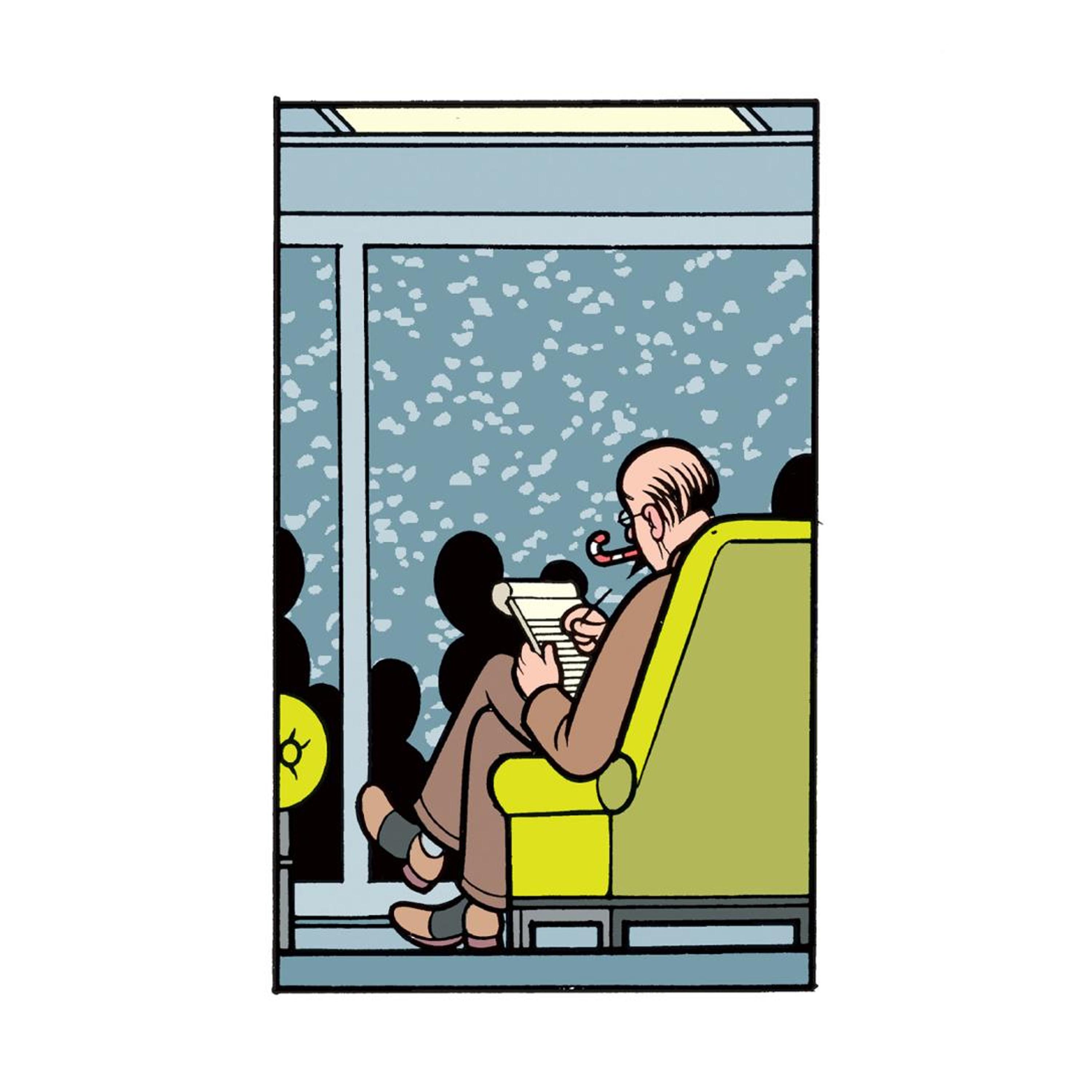
857: Museum of Now
Artifacts and exhibits of this particular moment we are living through.
Visit thisamericanlife.org/lifepartners to sign up for our premium subscription.
- Exhibit One: Ira talks to producer Emmanuel Dzotsi, who brings the first exhibit into the studio with him: a chunk of concrete with some yellow paint on it. He got it from the demolition site in Washington, DC, where the giant Black Lives Matter letters are being dug out of the street with heavy equipment. (8 minutes)
- Exhibit Two: Producer Aviva DeKornfeld talks to Ranjani Srinivasan, who tells the story of how her life was transformed over five days via a series of events that started out confusing and escalated to frightening. (25 minutes)
- Exhibit Three: Producer Laura Starecheski takes us inside one dramatic court hearing on the Trump administration’s executive order and new policy banning transgender people from serving in the military. (20 minutes)
Transcripts are available at thisamericanlife.org
This American Life privacy policy.
Learn more about sponsor message choices.
Press play and read along
Transcript
Speaker 1 Support for This American Life comes from ATT. You know that feeling when someone's already looking out for you before you even need it?
Speaker 1
ATT brings that kind of reliability to your connection with the ATT guarantee. Staying connected matters.
That's why ATT has connectivity you can depend on or they'll proactively make it right.
Speaker 1
That's the ATT guarantee. Terms and conditions apply.
Visit ATT.com/slash guarantee for details.
Speaker 2 From WBEC Chicago, it's This American Life, and I am joined in the studio by my co-worker Emmanuel Jochi.
Speaker 6 Hey, Ira. Hey, there.
Speaker 6
So I have come into the studio today with this, actually. Let me just get it out of this bag really quickly.
Hang on here.
Speaker 3 So that is like a piece of rock about the size of a football, yellow on one side. Mm-hmm.
Speaker 6
Yeah, it's a piece of concrete. Uh-huh.
So there's a story behind this, which is a couple of weeks ago, I went to this one street in Washington, D.C.
Speaker 6 And on that street, there are like, I don't know, maybe a dozen construction workers who were using like all of this heavy machinery to like rip out the words Black Lives Matter, which had been painted on that street as part of like this big mule they'd done in 2020, you know, like right after the murder of George Floyd.
Speaker 10 Yeah, I actually saw that once.
Speaker 2 It's just a giant letters, like 50 feet tall or something, two blocks long.
Speaker 6 Yeah, it was like huge and right by the White House.
Speaker 6 And what I was watching that day as I was there was the city just completely getting rid of it because of pressure they'd been under from the Trump administration.
Speaker 6 I thought that when I got there that there would be crowds or protests, but it was pretty empty.
Speaker 6 Like most of the people that I saw just sort of walked past and kept it pushing, ignored what was going on.
Speaker 6 But then I saw this one black woman sort of stop and like wave over to like one of the lone black guys working on a construction crew, just like you know, pointing at the ground.
Speaker 6 They're yellow on it.
Speaker 13 Sorry. Are you asking for a piece of it? Yeah.
Speaker 14 It was a huge piece. Okay, I'll take this.
Speaker 6 Thank you.
Speaker 14 Oh my god, that's heavy.
Speaker 6 The piece she had was so big. She had to hold it with two hands.
Speaker 6 It was a piece of the letter T in the word matters.
Speaker 6 And the woman holding it, JC, she's a politico, lives in DC.
Speaker 6
She told me she was sitting at a cafe nearby when she saw someone else who had a piece and was like, oh, I want one of those. You just walked right up.
You're just like, oh, can I? Why not?
Speaker 14 I mean, he was very kind to like take a break and get me a piece. And then I didn't like the first piece that he gave me.
Speaker 6 Oh, what?
Speaker 14 I know, but I needed the yellow.
Speaker 15 Like, I feel like the yellow is really a big.
Speaker 6 Because otherwise,
Speaker 6 it's just a piece of concrete.
Speaker 14 Yeah. Like, my kids aren't going to believe me if
Speaker 14 if i say it's from black lives matter plaza it's just a piece of concrete like it needed it needed the yellow oh do you have kids right now oh okay you're talking about future future kids i'm thinking about them yeah yeah yeah
Speaker 6 so i started seeing other people who were doing this too right just like grabbing these pieces of the mural for future generations that did or didn't exist There were these two women who were in town for work.
Speaker 6 One of them was scared that they were actually going to miss their flight because her friend was waiting so long for the construction workers to break off just the right piece of a mural like as a souvenir.
Speaker 6 What time is your flight? I know I'm heading out now. So
Speaker 6 I actually lived in DC when they first painted this street and I gotta say like at the time when I first saw it like I totally understood like how meaningful it was to some folks but personally
Speaker 6 Honestly, I just kind of rolled my eyes and laughed about it with the other black people that I knew.
Speaker 6 Like it it just felt kind of performative. Just like one of the same with a lot of the stuff that was happening back then, right?
Speaker 6
Like Nancy Pelosi, Chuck Schumer and co kneeling in Ken Dayclough in the Capitol. Yeah.
Or all those Black Squares people were posting.
Speaker 6 But now that like I was actually like here, like seeing them tear this message out of the ground,
Speaker 6 it just, I don't know, I was just like, oh, right. It maybe didn't matter that much when it was first put
Speaker 6 but like it definitely mattered now that it was being taken out.
Speaker 16 Yeah.
Speaker 6
Across the street, I saw this older white guy who worked in urban design. He was so excited to have a piece of a thing.
I don't know.
Speaker 17
So these letters are forever letters. It's not just concrete.
It's super concrete. It's fiberglass reinforced, super concrete.
So she built that to last forever.
Speaker 6 For you,
Speaker 6 why is it important for you to have a piece of it?
Speaker 17
I thought it was very divisive. I was very disappointed when the mayor did that.
It was just so divisive to do that. And the rhetoric and the fighting increased after that.
Speaker 6 So you got a piece, you're getting a piece of it kind of as a memento of a thing that you didn't like?
Speaker 2 I think it's healing.
Speaker 17 To get rid of it is kind of a healing situation.
Speaker 6 Okay, so talking to this guy,
Speaker 6 it hit me,
Speaker 6 he's here to mark the end of something, which I realized, oh, we all were. Right?
Speaker 6 Like, I think it was clear to absolutely everybody there on that street that one era has ended and like we're in some very new moment right now.
Speaker 6 And lots of us were just trying to puzzle that out in real time, like what this means.
Speaker 6
Like there were these two women that I met, Saraya and Yitzmeen. Saraya was on the fence about taking a piece at all.
She was just sort of like,
Speaker 6 why would I want a piece of something that never felt real?
Speaker 15 But it's not felt.
Speaker 18 Black Lives Matter.
Speaker 20 We don't matter.
Speaker 21 Oh, interesting.
Speaker 14 We don't matter. It's like, it's like...
Speaker 19 You're taking it away.
Speaker 22 It sucks.
Speaker 15 Yeah, yeah, yeah, yeah.
Speaker 6
There is this thing. Sorry, sorry, sorry.
There is this thing I've been thinking about though, which is like, is this more honest, actually, that they actually are ripping this off? Absolutely.
Speaker 23 Oh, absolutely.
Speaker 19 This is America showing itself because it was never in you in the first place.
Speaker 19 So, so why am I upset that you're upending something that was never in you in the first place?
Speaker 19 I'm not saying that we shouldn't be upset. We definitely should be upset.
Speaker 6 But why are we...
Speaker 19 We can't be upset at people that it was never in them in the first place to even care about somebody else.
Speaker 6 So, as I was leaving the street that day,
Speaker 6 I just felt like, oh,
Speaker 6 right, the America that I know, like the one I grew up in,
Speaker 6 it leaves for sign up, right? Like it says it believes in all of this stuff, you know, that all of us are equal, that, you know, we all want to live in racial harmony, whatever.
Speaker 6 And then it just kind of does what it wants.
Speaker 6 But, like, what I saw, like, the government going to these great lengths to tear up this street and to get every shred of the letters out, like, not even bothering to pay lip service anymore.
Speaker 6 I was like, that feels like a real shift.
Speaker 6 So, yeah, that's that's how I ended up with this piece of concrete, which I guess is just gonna live in my house forever.
Speaker 12 It's like you have a piece of the Berlin Wall or something.
Speaker 6 You know what?
Speaker 6 It does feel like that.
Speaker 7 Like it feels like this thing that I want to show everybody in my life.
Speaker 6 It's like it's a part of my own personal museum.
Speaker 2 Yes, a museum.
Speaker 5 One of the things that, you know, we've been talking about here on the staff, as you know, is it feels like there are so many things happening every day since President Trump took office, like federal agencies being gutted, or a judge ordering the White House to turn some planes around and them seeming to ignore the court order or secret war planning being done on signal on people's phones and shared with a random reporter like there was so much happening so fast and you feel like oh did that really happen and you just i don't know what our staff we've been talking about how we just want to like grab a hold of these things and just put them in a place where we can look at them together just preserve them like a museum a museum of now i mean this feels rude to say on the radio but i'm going to say it which is you know that i'm not going to give you this for your museum right?
Speaker 6 This is mine.
Speaker 7 Fine, because today on our show, we have other historical artifacts of this exact moment we are living through.
Speaker 16 As you'll hear, the people in these stories over and over they seem sort of dumbfounded at what they're suddenly seeing and dealing with in America today.
Speaker 13 We were too.
Speaker 6 Stay with us.
Speaker 29 Support for this American Life and the following message come from Freshworks. Software is a choice that can make or break a business, create better or worse experiences, propel or throttle growth.
Speaker 29 Too often, so-called solutions end up becoming blockers instead of enablers.
Speaker 29 Freshworks builds uncomplicated service software designed to deliver exceptional customer and employee experiences with enterprise-grade solutions.
Speaker 29 Their AI-assisted IT and customer service software is purpose-built to eliminate friction, make employees more effective, and make organizations more productive.
Speaker 1 Learn more at freshworks.com.
Speaker 1 Support for this American Life comes from Superhuman, the AI productivity suite that gives you superpowers everywhere you work.
Speaker 1 With Grammarly, Mail, and Coda coming together, you get proactive help across your workflow so you can outsmart the chaos. Experience AI that proactively helps you go from to-do to done faster.
Speaker 1
Unleash your superhuman potential today. Learn more at superhuman.com slash podcast.
That's superhuman.com slash podcast.
Speaker 26 It's this American Life, today's show, the Museum of Now.
Speaker 5 And let's take a little stroll, shall we?
Speaker 9 Through the museum.
Speaker 10
I'll watch out for the construction right there. There's some stuff.
Yeah, we're just starting to build out our collection here.
Speaker 3 All right, let's begin with this exhibit, a multimedia exhibit.
Speaker 4 This is actually the hold music that people all over the country are hearing when they try to reach the Social Security Administration.
Speaker 2 The agency sends out payments to some 70 million people every month.
Speaker 24 The agency says that it is getting way more calls than usual right now.
Speaker 11 Elon Musk and all the talk of rooting out fraud and kicking dead people off of the rolls seem to be freaking out millions of senior citizens.
Speaker 8 So more of them are calling.
Speaker 7 Audits, by the way, show that lots of dead people are not getting checks.
Speaker 30 That is not a thing.
Speaker 4 Wait times are long even before this, but right now, a fourth of the callers basically get a busy signal and have to try again.
Speaker 7 If you call and you do get put on hold, there is a callback option, but one of our co-workers decided to stay on the line to see how long it would take.
Speaker 32
Thank you for holding. We appreciate your patience.
The estimated hold time is 60 minutes.
Speaker 4 Yeah, it was nowhere close to that.
Speaker 31 They finally picked up at one hour, 39 minutes.
Speaker 23 Hi, thank you for calling.
Speaker 12 The worker who did finally pick up the phone, I will say,
Speaker 7 was super nice.
Speaker 12 Very helpful.
Speaker 6 Of course, you're welcome.
Speaker 30 Is there anything else that I could do for you at all today?
Speaker 32 That's all.
Speaker 30 All right, ma'am. Well, then you have a great rest of your day, okay?
Speaker 32 Hello, at Social Security. Your satisfaction means the world to us.
Speaker 27 Okay, next, walk with me down the hallway here to this next exhibit.
Speaker 12 Okay, stop right there.
Speaker 26 Here we have a short video.
Speaker 7 As you can see, it's playing playing on a loop. It was posted on X by the Secretary of Homeland Security.
Speaker 30 Eight seconds long.
Speaker 10 Security cam footage.
Speaker 20 Plays over and over.
Speaker 3 And to help you understand what you're looking at, Aviva Dekornfeld has the story of the five days that led to this video for the woman who is in it.
Speaker 30 What happened in those five days caught this woman completely off guard because, as far as she knew, or as we know now, what happened to her hadn't happened to anybody else at that point, just three weeks ago.
Speaker 18 Day one, Thursday, 8 a.m.
Speaker 18
Ranjani Srinivasan is not a morning person. She likes to start the day slowly, scroll on her phone in bed.
She gets lots of panicked emails from her students. She's a teaching assistant.
Speaker 18 She's also a graduate student at Columbia University.
Speaker 18 So, day one, she was in bed when she saw an email. Subject line: visa revocation notification.
Speaker 18
But the wording in the email was weird. It said she may be ineligible for her student visa, but also that it had been revoked.
It seems spammy.
Speaker 33 Just because, you know, Columbia sometimes does phishing trainings. So I actually thought that this might be one of those.
Speaker 33 It just seemed so strange. I took a screenshot and actually put it in our, you know, my department WhatsApp group with all the other PhDs asking, did you guys get this?
Speaker 18 What did people respond?
Speaker 33 They were like, oh my god, what the hell is this? And then they told me that they hadn't got this email.
Speaker 18 Ranjani thought, hmm, okay, it seems to be real.
Speaker 18
But she's lived here a long time, nine years, and she's had a lot of visas. Things happen sometimes.
So she emails the International Students and Scholars Office.
Speaker 18
They've helped her out with visa stuff before. And also the Dean of Student Affairs.
Ask for help straightening this out.
Speaker 18 Then she grabs her stuff and heads to the office she shares with the other PhDs, where she spends most of her time, to get some grading done.
Speaker 18 She had 60 student sketchbooks she needed to get through before Monday.
Speaker 18 That evening, she hears back from the International Student's Office, who CCs the Dean of Student Affairs and tells her, Don't worry, this sometimes happens.
Speaker 33
Just book an online advising session through our system and just don't leave the country. Otherwise, you're in legal status.
You can, you know, go to work.
Speaker 33 You can grade your students' work, stuff like that. And that was one of the big questions in my head, right?
Speaker 33 So I was sort of going back and forth during the time waiting for her reply, thinking whether I should, you know, be grading or should I not be grading.
Speaker 18 Oh, you were, so you were trying to distract yourself by grading papers, but then you're like, is this breaking the law itself?
Speaker 33
Yes, exactly. But it wasn't.
So I was told in writing that I was allowed to, you know, just go about my normal life. I don't need to worry.
This is all being treated as very run-of-the-mill.
Speaker 33 And the tone from Columbia is that this happens to many students. It's not,
Speaker 33 you know, a rare thing.
Speaker 18
They tell her the next available appointment is in five days. Five days felt like too long to wait.
The college was telling her that this would all get sorted out easily.
Speaker 18 But Ranjani has always been fastidious about her paperwork. She has an encrypted folder on her computer for all things visa-related.
Speaker 18 She's been in the US since 2016 and knows almost all her entry and exit dates off the top of her head. She doesn't like loose ends and she didn't like the idea of waiting five days.
Speaker 18 So she gets him to change the appointment to the next day.
Speaker 18
Ranjani's from Chennai in the south of India. And in 2016, she was awarded a Fulbright to get a master's in design at Harvard.
And she was very excited to go to an American university.
Speaker 33
The U.S. scholarship is really robust.
You know, there's a great intellectual culture of inquiry. A lot of the people I had read or like my intellectual heroes went to many of these universities.
Speaker 33 You know, David Harvey, he's an economic geographer. And, you know, Ambedkar, who is the architect of the Indian Constitution, actually studied at Columbia.
Speaker 33 So I was super excited to, you know, kind of see the U.S. and like take part in this like culture of inquiry.
Speaker 18 She graduated with a master's from Harvard and then followed her intellectual hero to Columbia to get a PhD in urban planning. Her work focuses on the way that urbanization impacts the labor force.
Speaker 18 She often went back to India to do fieldwork, but she settled happily in her life on campus. She's made lots of friends, including her roommate, another PhD student.
Speaker 18 The university randomly paired them together years ago, and they've since become close.
Speaker 18 Every year, the two of them take a family portrait with Ranjani's cat, Cricket, and send it around as a Christmas card.
Speaker 18 Day two, Friday, 10.30 a.m.
Speaker 18 Rangini's in her bedroom. She hops on a Zoom call for her appointment with the International Students Office Advisor and starts explaining the situation with a weird email.
Speaker 18
Meanwhile, Ranjani's roommate is in the other room, braiding her hair, getting ready for the day. Here's her roommate.
To protect her privacy, we're not naming her.
Speaker 34 And suddenly, I hear this bang, bang, bang, bang, bang, which, you know, it's that particular tone. It's a scary knock.
Speaker 34
And so I step up and, you know, again, half of my hair is unbraided, half of it's braided. The cat's confused.
I'm confused. I go to the door and I go, who is it? Someone yells back, police.
Speaker 34
And I go, okay, whoa, my heart's beating fast. And I just know that I don't want to open the door because one, anyone can yell police.
Two, I'm in my bathrobe.
Speaker 34 And so, you know, any kind of armed men is not walking into my apartment right now.
Speaker 18
Ranjini in her bedroom. She doesn't hear the knock.
She couldn't hear it over the reassurances from the advisor from the international student's office.
Speaker 33 They're basically saying stuff like, don't worry, this sometimes happens. So then I clarify that I can actually grade my students' work, which is forefront in my mind right now.
Speaker 18 The scary knocker knocks again.
Speaker 18 Ranjani's roommate told me she's a citizen and a woman of color who grew up poor, who's had a lot of interactions with the police, none of which she would describe as positive.
Speaker 18
But she knows what to do. She calls from inside the apartment.
What is this about?
Speaker 34
They start reeling off information about Ranjani in a very sort of like good cop kind of way. They're like, oh, we know that your visa was canceled.
We're the only people you can turn to. We really,
Speaker 34
we just want to talk to you. We just have some questions.
And I'm sort of there just like, who's we?
Speaker 34 And I can't see through, I can't see anyone through my
Speaker 34 people.
Speaker 34 And so the voice starts talking about really intimate details of Ranjani's visa and immigration status. And I stop him and I go, wait, do you have a warrant? He doesn't respond to that.
Speaker 34 And I sort of just keep asking, what is this about?
Speaker 18 She goes to tell Ranjani what's happening.
Speaker 33 I guess I wasn't paying attention to the door um i was just focused on the zoom conversation so sometime midway through the conversation through the door she turns and tells me ice is at the door what do you think when you hear that i'm freaking out just freaking out uh i just start shivering and shaking because my i'm still on zoom with my advisor who till the last second was saying you're fine you can go out and teach your students but i tell the advisor that ICE is at my door.
Speaker 33 Tell me what to do. And you can see the advisor's eyes kind of become wide.
Speaker 33 She says, okay, just give me a second. She mutes herself and she's frantically talking to people like higher ups.
Speaker 18
The advisor eventually unmutes, looking relaxed again. And she tells Ranjani that she's safe.
Just don't open the door for ICE. And then she gives her a list of immigration lawyers to contact.
Speaker 33 And I was like, won't Colombia, you know, have a lawyer? Won't they like, you know, be negotiating with ICE on my behalf? Like, why am I on my own?
Speaker 33
And she's like, oh, that's not like something that happens. You shouldn't have any issues.
And then I just told her that, you know, I don't really trust Columbia at this point.
Speaker 33 And then she says, oh, but do you trust me?
Speaker 18 What'd you say?
Speaker 33 I mean, I just told her, I don't know you.
Speaker 18 What'd she say to that?
Speaker 33 She just was like, just call the lawyers and don't open the door.
Speaker 18 They don't open the door and the ICE officers eventually leave.
Speaker 18 Branjini has had enough experience as an immigrant in this country to know that ICE is not supposed to show up at your door a day after your visa is revoked. This is not the way things typically work.
Speaker 18 How it normally goes, you're granted a student visa, and the visa is the thing that allows you to enter the country.
Speaker 18 And once you're here, if you're a student, you can legally stay as long as you're enrolled in school, even if your visa is revoked.
Speaker 18 But if you stop attending school, then you have to leave the country.
Speaker 18
This is what Ranjani was turning over in her head with ice at the door. She still had her status as a student.
She was still enrolled at Columbia.
Speaker 18
The advisor woman from Columbia on Zoom was telling her there should be no issue, but there was one at her door. Ranjani thought, I have to get out of here.
I need to hide.
Speaker 33
I'm absolutely paralyzed with fear. I'm not able to think straight.
I just thought that if I go somewhere else for a bit, I will feel a little safer and things will hopefully blow over.
Speaker 33
I mean, I fully intended to return to my apartment. So, you know, I literally just take like a couple of pairs of clothes and a shajal and a loofah.
So that's all I literally had on me.
Speaker 18 Oh, the loofah made the cut.
Speaker 6 Yeah.
Speaker 33 Well, you know, you need something to keep your spirits up.
Speaker 18 Ranjani moves to her friend's apartment.
Speaker 18 She and her roommate decide that it's safer if her roommate doesn't know where she's going, so that should Ice come back, she can truthfully say she doesn't know where Ranjani is.
Speaker 18 But a few of Ranjini's other friends gather at the new location, and Everett starts calling immigration lawyers to try and figure out what to do.
Speaker 18 Meanwhile, the Dean of Student Affairs, who Ranjani first reached out to when she got this suspicious email from the consulate, calls her and says, Oh, I heard about ICE coming to your door.
Speaker 33
I'm so sorry. Let me know if I can do anything for you.
And then I basically tell her, I'm really scared. Why are they here? I don't understand.
Speaker 33 Can you please like talk to ISSO, the International Students' Office?
Speaker 33 And then they sort of tell me, oh, I will do that. But it seems that, you know, even the International Students' Office or Colombia, nobody seems to be in control.
Speaker 6 Wow.
Speaker 33
Yeah, I'm still calling lawyers. You know, I'm going through all my legal options.
Again, we don't know why this is happening, right? Because I'm still in legal status.
Speaker 33
It's just my visa that's been revoked. So under any circumstance, I legally can be in the country.
I can legally be working. Everything is fine.
Because the way it works is that the visa is,
Speaker 33
you know, just like a key to let you in and out. But your legal status is like a rental agreement of your house.
You know, you have the right to be there even if you lose the key.
Speaker 18 She racks her brain for mistakes she might have made, looks back through all her immigration records, but she can't find anything.
Speaker 18 Day three, Saturday, 6.20 p.m.
Speaker 18 Ranjani's at her friend's place when her roommate calls her. She tells Ranjani, Ice came back to the apartment.
Speaker 6 They didn't have a warrant, but they talked through the door.
Speaker 18 Her roommate recorded it.
Speaker 35
Hey, Ranjani, if this is you, listen. You don't have to answer any questions, okay? But let me just speak.
We were here yesterday. We're here today.
We're going to be here tonight, tomorrow.
Speaker 35 You're probably scared. If you are, I get it.
Speaker 20 We're not,
Speaker 35 the reality is your visa was revoked, okay?
Speaker 35 You are now amenable to removal proceedings.
Speaker 18
Ranjani realizes the situation is not going to go away. The email was not spam.
Ice showing up at her apartment, not a fluke. She was being targeted.
Speaker 18 She'd never heard of this happening to anyone else. The rules, how things normally work, that was changing, but she didn't know it yet.
Speaker 18 And then, the same night her roommate tells her that Ice came back, Ice showed up at the apartment of another student, a Columbia graduate student named Mahmoud Khalil, who had just finished his degree in December.
Speaker 18 Mahmoud was coming home with his wife that night, unlocking his apartment door, when Ice appeared and detained him, took him away to a detention center in Louisiana. Mahmoud has a green card.
Speaker 18 His wife, Nor is a citizen.
Speaker 33
I remember reading about it in the paper, you know, and I was extremely scared. If my flatmate had not been there, that would have been me.
Again, I have no stranger danger.
Speaker 33 I would have just opened the door and they would have detained me. I think the idea of Mahmoud's being in Louisiana and not able to speak to his lawyers scared me greatly.
Speaker 33 It was beyond my imagination.
Speaker 33 As I, I mean, I, during this entire experience, I just felt that this was sort of, you know, sort of a disembodied view of what was happening. It didn't seem real that this could happen to any of us.
Speaker 18 It felt fever dreamish.
Speaker 6 Yeah, no.
Speaker 33 And I was, I couldn't sleep, I couldn't eat. I was, you know, shaking all the time.
Speaker 33
And most of my friends will tell you I'm a very calm person. I'm really good in a crisis.
But this was just
Speaker 33 an unprecedented situation.
Speaker 33 Everything that's happened has been outside the realm of possibility in my head. So
Speaker 33 I had to prepare as if the worst might happen and act in those ways.
Speaker 18 Ranjani did not know Mahmoud Khalil.
Speaker 18
She learned he was a leader of the pro-Palestine protests after he'd been detained. And here, a new thought occurs to her.
She had liked some pro-Palestine posts on social media.
Speaker 18
She'd also signed a few open letters and gone to a couple peaceful protests. And one night, coming home from a PhD picnic, she says she accidentally ran into a big protest on campus.
It was chaotic.
Speaker 18 She says she got swept up by police officers, along with a bunch of other people. She received two summonses for blocking the sidewalk and refusing to disperse, but they were both dismissed.
Speaker 18 And now, Ranjani wondered, is that what all this is about?
Speaker 18 It seemed impossible she'd be targeted so personally for that. But what just happened to Mahmoud Khalil, that seemed impossible too.
Speaker 18 Day 4, Sunday, 5 p.m.
Speaker 18 Ranjani gets an email from Columbia saying that the Department of Homeland Security had now terminated her legal status, and the university was disenrolling her.
Speaker 18 She was no longer a student, no longer a teaching assistant.
Speaker 33 I lost my legal status, I lost my worker status, and I also lost my housing. So I was
Speaker 33 really unhappy. And then when I got this email,
Speaker 33 actually the dean of student affairs in my school came into my building and was ringing the doorbell, trying to find out whether I'd received the email telling me to vacate and getting a confirmation that I've received the email and and I'm going to leave the apartment.
Speaker 33
So at that point, I knew Columbia was either complicit or working with law enforcement. I just felt completely betrayed because I don't have a discipline record.
I have like a perfect GPA.
Speaker 33 Like I haven't done anything. And
Speaker 33 the fact that I just felt like a sacrifice almost. It just feels like the institution doesn't really care.
Speaker 18 Columbia University wouldn't speak to Ranjani's case in particular, but they sent us a statement that says the university follows the law and, quote, takes great care to ensure our legal compliance with all applicable rules and obligations so that our students can participate in the federal student and exchange visitor program.
Speaker 18 Day 5
Speaker 18 Rangini's lawyers told her she could fight this, but she'd likely be detained for some amount of time. No idea how long.
Speaker 18 Though, as it would be a federal case, it would probably be at least a year while it wound its way through the courts. The only way to avoid detention, her lawyers told her, was voluntary departure.
Speaker 18 Ranjini thought, I have some friends and relatives in Canada. That's close by.
Speaker 33 It was quite a quick decision. I bought my plane ticket on Tuesday and I left on Tuesday.
Speaker 33 I think just the idea of detention, you know, at some level I was like, is even a PhD worth spending several years in jail or we don't know how long? We don't know what charges.
Speaker 33 There's so many unknowns. My lawyers kept telling me all this is unprecedented territory and I just thought the risks were too high.
Speaker 33
I don't know. I just spent so many days in panic.
Yeah. And I just, I'm extremely, extremely fearful of detention.
Speaker 33
I'm very claustrophobic and I don't think I would have been able to survive in a cell for like years or I don't even know how long this is going to take. Right.
So they're just too many unknowns.
Speaker 33 Also, the likelihood of winning these lawsuits is also not that high, was also what I gathered. So yeah, I guess my freedom was more important.
Speaker 18 How American.
Speaker 18 Those fears Ranjani had about what might have happened if she'd stayed,
Speaker 18 well, two days after she left at 9.40 p.m.
Speaker 34 I again get the knock, but the knock doesn't stop.
Speaker 18 This is Ranjani's roommate again. She grabs her phone to start recording.
Speaker 34 Whereas before it was maybe 20 seconds of knocking, this time it's just knock, knock, knock, knock, knock, knock, knock in that same aggressive, sort of authoritative way for probably three minutes.
Speaker 18 This time, it's also different because they have campus safety with them, the Columbia Campus Police.
Speaker 34 So someone calls through the door, Hey, you gotta open the door, and I hear a key in my lock.
Speaker 34 and at that point I hop up I am in full sort of defend my home mode they go it's the police we're coming in we have a warrant and they're opening the door so all I hear is hands up hands up
Speaker 6 please let me see your hands let me see your hands hands are up okay hands are up
Speaker 6 where where's your location
Speaker 22 I don't understand the question.
Speaker 36 Where do you reside in this apartment?
Speaker 22 I reside in the door on the right.
Speaker 6 Door on the right? Okay, go over there.
Speaker 22 I have a cat in the living room. Please do not touch her.
Speaker 36 Okay, do you want to bring her in your room?
Speaker 22 Yes, I would.
Speaker 36 Go right ahead.
Speaker 22 And what is your name?
Speaker 6 Is your roommate here?
Speaker 22 No one is here except for me and my cat. What is your name?
Speaker 6 Can you please get that?
Speaker 23 We can talk at the end.
Speaker 6 First, we need to clear this room and make sure there's nothing dangerous or anything in here. Is there any weapons in the apartment?
Speaker 22 There are no weapons in the apartment.
Speaker 6 Where does your roommate reside?
Speaker 22
I'm not. The roommate.
Roommate's legal address is this apartment. Okay, thanks.
Speaker 6 I'm not sure where they are. Okay.
Speaker 34
Oh, my cat's terrified on the couch. I grab her up.
She's freaking out as cats do.
Speaker 6 Come here. Come here, sweetie.
Speaker 6 Come here, sweetie.
Speaker 34 There's a guy in a shirt and a bulletproof vest clearing through the doors.
Speaker 34 He's opening, bang, opening, bang, opening, bang doors, going through everything, opening the closets, opening, you know, all of the stuff.
Speaker 18
The ICE officers are all wearing masks with their comically large bulletproof vests. The campus safety guy, Ms.
Columbia University Lanyard, is just kind of standing around.
Speaker 18 If there is any question of Columbia working with ICE, it seems like it's answered here.
Speaker 18 Eventually, they all leave.
Speaker 23 Here's the return saying we didn't take anything.
Speaker 15 And where's the judge signature?
Speaker 6 Right there.
Speaker 22
U.S. Magistrate Judge.
Okay.
Speaker 6 There you go.
Speaker 35 There you go.
Speaker 6 Thank you. Somebody's there.
Speaker 6 I will not say the same for you.
Speaker 18 Ranjani has been in Canada for just over two weeks now. Columbia still hasn't reached out since Ice raided her apartment.
Speaker 18 She has no idea whether she'll be able to finish the degree she was a few months from completing, the degree she's worked towards for the better part of a decade.
Speaker 18 And Ranjani is only now starting to get some information about what the government says she did wrong.
Speaker 18 The Department of Homeland Security has said that she failed to disclose the two summonses she received last spring when she applied to renew her visa. Ranjani says that was a mistake.
Speaker 18 She didn't think to include them because they'd been dismissed.
Speaker 18 And even though she's left the country, the government has not let up.
Speaker 18 She was eating lunch the other day when she got a message from her union rep saying, there's a video of you circulating online, tweeted out by the head of DHS, Christy Noam.
Speaker 18 This is the video I thought was worthy of adding to our Museum of Now.
Speaker 18 Eight seconds of grainy security footage from LaGuardia Airport. In it, Rongini is kind of jog walking through the airport, pulling her carry-on bag behind her.
Speaker 18 Alongside the video, Christy Noam wrote: It is a privilege to be granted a visa to live and study in the United States of America.
Speaker 18 When you advocate for violence and terrorism, that privilege should be revoked and you should not be in this country.
Speaker 18 She celebrated Ranjini's quote-unquote self-deportation as if running to safety was some kind of admission of guilt.
Speaker 33 Yeah, I was sort of shocked seeing it on Twitter because I actually didn't know who Christy Noam was also. So I didn't really know what was the context of this video.
Speaker 18 Or you're like, why is this random lady tweeting a video of me?
Speaker 33 A little bit, yes.
Speaker 18 What was it like for you to watch the video?
Speaker 33 Oh, I was like, why am I walking so funny? I guess that was the first reaction mentally, but.
Speaker 18 You are kind of rushing in the video.
Speaker 33 Yeah, so basically what happened was I was really hungry and I stopped for a bite and I kind of lost track of time.
Speaker 33 I thought I was late late for the flight.
Speaker 18 It's like the perfect five second snapshot to be like, look, she's running away. But actually, the reason you're walking quickly is utterly mundane.
Speaker 33 Yeah, I mean, you see such people every day in airports, right? Like, so for her to sort of tweet this, it seemed a little strange.
Speaker 18 The day DHS released the video, They also put out a press release saying that Ranjani was involved in activities supporting Hamas, a terrorist organization.
Speaker 18
Ranjani says that's absurd, that she never advocated for violence in any form, and that she was engaged in peaceful protest. I reached out to DHS.
They didn't respond to our questions.
Speaker 18 Ranjani has been personally targeted by one of the world's superpowers. A fact that feels so preposterous and surreal, it's impossible for her to wrap her head around, even now.
Speaker 18 So instead, she finds that her mind keeps landing on more familiar terrain. There's an image that keeps coming back to her.
Speaker 18 It's from day one, Thursday, March 6th, the day she got that first spammy-seeming email.
Speaker 33 I remember sitting in the PhD office and grading and like chatting with, you know, the other, my other friends in there. I guess that's the thought that keeps, you know, sort of looping in my head.
Speaker 33 I'm just like, will I ever be able to do this again?
Speaker 18 Because that was the last normal thing that you'd done.
Speaker 33 Yeah, exactly.
Speaker 33 The sequence of events was just so far out the level of escalation, like it has shaken my sense of reality completely.
Speaker 18 Ranjani contains a kind of contradiction. She's someone who is deeply committed to the rules, and she tried to operate within those rules.
Speaker 18 Even after she left the country, she couldn't help but think that I was in compliance.
Speaker 18 But also, also, some part of her sensed the rules had changed.
Speaker 26 Viva DeKornfeld is a producer on our show.
Speaker 10 Since radiating off the country, more students and faculty have been detained or deported by ICE.
Speaker 2 Secretary of State Marco Rubio was asked at a press conference just how many foreign students have had their visas revoked.
Speaker 3 He said at least 300.
Speaker 37
Might be more than 300 at this point. We do it every day.
Every time I find one of these lunatics, I take away their visa. We're looking every day.
Speaker 7 Coming up, somebody talks to a Trump administration official and holds their feet to the fire about incorrect facts that they're basing policy on in a way I just have never heard.
Speaker 7 Not from reporters, not from other politicians, not from anybody. This official is simply not allowed to walk away from the conversation.
Speaker 12 That's in a minute from Chicago Public Radio when our program continues.
Speaker 1 Support for this American life comes comes from BetterHelp. Most FSA dollars expire at the end of the year, so it's time to use them or lose them.
Speaker 1 With BetterHelp, you can invest those funds in taking care of your mind with online therapy. Join today and you can be matched with a licensed therapist in as little as 24 hours.
Speaker 1 Visit betterhelp.com slash T-A-L to get 10% off your first month.
Speaker 1 Support for this American Life comes from Mattress Firm. Restless partner keeping you up? Those constant movements can make it hard to get the rest you need.
Speaker 1 Mattress Firm's sleep experts will match you with a bed for deeper rest, like a temper-pedic. Its unique temper material absorbs motion for undisturbed rest.
Speaker 1 Shop Mattress Firm's Black Friday sale and save up to $500 on select Temper-Pedic adjustable mattress sets with next-day delivery. Restrictions apply? See mattressfirm.com or a store for details.
Speaker 1
Support for this American Life comes from GoodRX. Cold and flu symptoms got you down? Find relief with GoodRX.
You can save an average of $53 on flu treatments.
Speaker 1 Plus, save on cold medications, decongestants, and more. Easily compare prescription prices and instantly find discounts of up to 80%.
Speaker 1 GoodRX is not insurance, but works with or without it and could beat your copay price. Save on cold and flu prescriptions at goodrx.com slash T-A-L.
Speaker 7 TISAMERICAN Life, Myra Glass.
Speaker 2 Today's program, Museum of Now.
Speaker 7 So many things around us seem to be changing so quickly since President Trump took office that it is hard to keep track.
Speaker 4 We thought it would be a good idea to create this museum where we could all, you know, pause for a minute, consider what is in front of us, what is happening, and let's just head down the hallway here, okay?
Speaker 12 Past the big map of the Gulf of America, and then past the pictures of President Trump on the lawn of the White House with the big red Tesla.
Speaker 13 A great product, he said, by the way, as good as it gets.
Speaker 20 Okay, turn this corner.
Speaker 10 Okay, stop there. Here we are.
Speaker 7 This next exhibit, right in front of us, is a building.
Speaker 3
See the building? Yeah. We have moved an entire federal building into the museum.
The building is the Elijah Barrett Prettyman U.S.
Speaker 4 Courthouse.
Speaker 3 And it's here because it is one of the big gladiatorial arenas of this moment in our country's history.
Speaker 4 Tour the courtrooms in this building and you will find it is full of dozens of cases filed against the Trump administration.
Speaker 2 Cases about fired federal workers, cases about Doge and Elon Musk, cases about turning around planes full of Venezuelans,
Speaker 30 including that case where the judge ordered at least one plane to turn around mid-air, and it didn't happen.
Speaker 20 That courtroom is in this building.
Speaker 8 One of our show's editors, Laura Starcheski, volunteered to drop by and observe what we all assume I have to say would be a weedy federal court hearing here, expecting to be bored with the minutiae of technical legal issues for at least some of the time.
Speaker 12 And instead, Laura found action, drama, comedy. Here is Laura's story.
Speaker 15 I picked a bench on the right, plaintiff side, for my day in federal court.
Speaker 15 The case I was there to see was about an executive order Trump signed in the very first week of his second term, barring transgender people from serving in the military.
Speaker 15 A group of transgender people were suing to block the executive order, claiming unconstitutional discrimination.
Speaker 15 Decorated, elite, upstanding, patriotic transgender service members, many of whom were there that day in court, sitting ramrod straight in the front row. Livelihoods and honor were at stake.
Speaker 15 This was my first federal court hearing. And I don't know what I was expecting exactly, but it wasn't this.
Speaker 21 Good morning, everyone. Please be seated.
Speaker 15
Judge Anna C. Reyes.
We had actors read the courtroom transcript. I wasn't allowed to record there.
Speaker 21
Before we call the case this morning, I want to address some things I saw over the weekend. So, some of you may have heard or heard about a TRO hearing I had on Friday.
It got some press.
Speaker 21 There were a lot of social media posts about it, which I know because my friends kept teasing me about it all weekend by sending me a number of the posts.
Speaker 15 In that other case, a bunch of inspectors general, recently fired by President Trump, asked Judge Reyes for a temporary restraining order, a TRO, to get their jobs back.
Speaker 15 Judge Reyes did not grant the TRO.
Speaker 15 Reyes is a Biden appointee, but clearly anybody expecting her to show knee-jerk sympathy for fired federal officials was going to be disappointed.
Speaker 15 On X, some conservatives were praising her, but other people were mad.
Speaker 21
So I'm just going to give you a few examples. It started off pretty well.
I got a voicemail in chambers which started, Judge Reyes is amazing. And look, judges are people.
I appreciate the compliment.
Speaker 21 I'm not going to lie, I wanted to hear more.
Speaker 21 So it continued, Judge Reyes is an amazing fascist who cannot read because English was her second language. And it ends with, she belongs in a house dress, not in a robe.
Speaker 21
Now look, I do not think denying a TRO makes me a fascist. Also, please be assured, counsel, that I can indeed read.
I've been able to read for about a year now.
Speaker 15
She's funny, I thought. But I'd come here to this courtroom to talk to the plaintiffs.
to focus on them. That's what I thought the story was.
Not this judge. Or this hearing.
Speaker 15 How did this all look to the people maybe about to lose their careers and livelihoods? The plaintiffs had over 60 years of service between them.
Speaker 15
Military careers going back generations, one called a passion and a family tradition. Another called a deep responsibility.
The executive order was, quote, a devastating rebuke, demoralizing.
Speaker 15 If the band stood, I would lose my way of life, one of the plaintiffs said in a declaration. These were were people the military had spent millions of dollars to train.
Speaker 15
Some had been in combat, won medals. Unassailable is the word that comes to mind.
But the plaintiffs would sit silently through the five-plus hours of this hearing, as it turned out.
Speaker 15 Judge Reyes would be the star of the show.
Speaker 15 In this moment, with Congress sidelined or distracted or something, It's all up to the judges, it seems, to determine if the Trump administration is following the Constitution, and if not, to compel them to do so.
Speaker 15 And so I decided to watch Judge Reyes wrestle with the executive order before her.
Speaker 15 Judge Reyes is small, Latina, and just speaking for myself, intimidating.
Speaker 15 Almost immediately, once the hearing got going, her focus fell like the eye of Sauron upon the government's lawyer, Jason Lynch. Lynch was there with two other lawyers for the Trump administration.
Speaker 15 Across the aisle from him were six lawyers on the plaintiff's side.
Speaker 23 Good morning, Your Honor. Jason Lynch, Department of Justice Civil Division, on behalf of the United States.
Speaker 21 You guys are out manned.
Speaker 23 Thank you.
Speaker 15 Lynch, bearded, substantial in his suit, talking so fast the court reporter kept pleading with him to slow down.
Speaker 15 His job was to defend the executive order. Here's some of what it says.
Speaker 15 People with a, quote, false gender identity can't meet the standards for military service.
Speaker 15 The order goes on to say, quote, adoption of a gender identity inconsistent with an individual's sex conflicts with a soldier's commitment to an honorable, truthful, and disciplined lifestyle, even in one's personal life.
Speaker 15 A man's assertion that he is a woman and his requirement that others honor this falsehood is not consistent with the humility and selflessness required of a service member, end quote.
Speaker 15 The implication here is that trans people are false, dishonorable, liars.
Speaker 15 I'm trans, and this kind of accusation isn't new, but I'll admit the words cut to the bone the first time I read them.
Speaker 15 And then there was this point, from an earlier executive order that this one was based on, a blockbuster titled, Defending Women from Gender Ideology, Extremism, and Restoring Biological Truth to the Federal Government.
Speaker 15 I don't know about you, but I'd see that movie. Anyway, the language in that executive order, if you haven't read it, goes like this.
Speaker 15 It is the policy of the United States to recognize two sexes, male and female. These sexes are not changeable and are grounded in fundamental and incontrovertible reality.
Speaker 15 This was the first thing that Judge Reyes kind of drilled down on. She took it up with Lynch.
Speaker 21 Okay, and that EO states, quote, sex shall refer to an individual's immutable biological classification as either male or female.
Speaker 15 EO is court speak for executive order.
Speaker 21 And it states that, quote, it is the policy of the United States to recognize two sexes, male and female. Do you see that? Or do you remember that?
Speaker 23 I've misplaced my defending women, E.O., but I will take the court's word for it.
Speaker 21 Okay, it's important, so I just want you to look at it.
Speaker 23 Okay, let me get it then. So much for being well prepared.
Speaker 15 Lynch was standing in the well, the area in front of the judge in which, while addressing her, he must ask, even to turn his body and walk a few feet over to his desk to grab his laptop or a piece of paper with the executive order printed on it.
Speaker 15 A lawyer friend told me that the staging of all this is important. While standing in the well, the lawyers are subject to the judge's demands and requests.
Speaker 15 The judge could be like, sit down, spin around, whatever she wants, and the lawyer would need to do it.
Speaker 15 And while everyone is in the well together, the judge limits the discussion to what is important and true.
Speaker 15 So there is at least one magical three-dimensional space in America, sized about 300 square feet, where facts are privileged. I can tell you it's real because I saw it myself.
Speaker 21 You understand as a matter of biology, it's just incorrect that there are only two sexes, right?
Speaker 23 Do I understand that to be incorrect as a biological matter?
Speaker 21 Yes, it is incorrect as a biological matter. You understand that, right?
Speaker 23 I don't understand that to be incorrect.
Speaker 21 Well, you understand that not everyone has an XX or an XY chromosome, right?
Speaker 23 Well, honestly, no, I'm not prepared to.
Speaker 21 I mean, it's actually kind of a really important point because this executive order is premised on an assertion that's not biologically correct.
Speaker 21
There are anywhere near about 30 different intersex examples. So someone who does not have just an XX or XY chromosome is not just male or female.
They're intersex.
Speaker 21
And there are over 30 potential different intersex examples. We've got genetic differences.
We have people with XXX chromosomes.
Speaker 21 We have androgen insensitivity, XY genetically, but may have female external sex characteristics and internally have testes.
Speaker 21 There's a 5-alpha reductase deficiency that causes changes in testosterone metabolism.
Speaker 15 She was deep in this material.
Speaker 15 I hadn't been able to tell up until this point if Reyes was leaning in a particular direction with this case.
Speaker 15 Now I could see the things she loves. Science, rational thought, facts.
Speaker 15 Later, in this and other hearings, there would be Star Trek references, Beyoncé, side speech on Newtonian physics.
Speaker 15 For now,
Speaker 15 homework for the lawyers.
Speaker 21 I'm happy to have you guys brief this more if you want, but I'm telling you right now that there are people who are neither male nor female, and so the premise of the executive order is just incorrect.
Speaker 21 And my question to you is, and if you want to talk about this tomorrow, that's fine.
Speaker 21 But my question to you is, what do I do with the fact that the entire order is premised on an incorrect biological assessment?
Speaker 15
This was the first big thwack Judge Reyes took at the validity of the executive order. Lynch didn't have a satisfying answer.
Judge Reyes said he had to write up a brief on the biology of sex for her.
Speaker 15 Around this time, I looked over at a large sketchpad on the lap of an older white man sitting next to me. He was sketching with a pencil some beautifully drawn geometric shapes.
Speaker 15 Next to those were lists of numbers. Next to the numbers, one row labeled direct shots, one labeled indirect shots.
Speaker 6 Whoa.
Speaker 15 Was he keeping score? Tracking how many points the judge landed and how many Lynch did? There were percentages. How long had he been following this case?
Speaker 15
There were layers of sophistication to observing a hearing like this that I couldn't have imagined. I asked the guy later on a break.
He told me he's retired. Court watching is his hobby.
Speaker 15 Comes here to the federal court building four or five times a week just for fun. On the notepad, he was gaming out scenarios while he listened to the judge for his other hobby, backgammon.
Speaker 15 When an executive order gets challenged in court, there's this legal concept that gets applied, a basic test it has to pass.
Speaker 15 It's usually easy, like a limbo bar 10 feet in the air that you can just walk under. Does the order pass rational basis scrutiny?
Speaker 15 Meaning, is the government singling out this group for a legitimate reason? Is this order justified?
Speaker 15 But with this executive order, it was hard to find a justification because none was offered. No military officials in uniform stepped up to testify.
Speaker 15 In fact, there were no complaints at all submitted to the court from anyone in the military that trans people disrupt unit cohesion or harm troop readiness, as the order claims.
Speaker 15 No real evidence, just the naked assertion that trans people are unfit to serve.
Speaker 15 So without convincing evidence, Judge Reyes was left with the words in the order itself and Jason Lynch standing in front of her to answer a very basic question.
Speaker 15 Is this order just demeaning and discriminatory in a common sense way?
Speaker 21 I mean, if I called you a liar, would you find that demeaning?
Speaker 23 So I assume the court is asking in a constitutionally relevant sense whether or not.
Speaker 21 I'm just... No, I'm asking in a common sense way.
Speaker 23 So I don't have an answer in a common sense way, Your Honor?
Speaker 21 Okay, you you don't.
Speaker 21 You don't know if you can tell me that categorizing an entire group of people as dishonorable, lying, undisciplined, whether at work or at home, so you can't tell me sitting here today on behalf of the government whether someone would consider that demeaning?
Speaker 23 I don't have a view to express on that question, Your Honor.
Speaker 21 Quote, a man's assertion that he is a woman and his requirement that others honor this falsehood is not consistent with the humility and selflessness required for a service member, end quote.
Speaker 21 What's the record and the evidence? What's the evidence in the record before me to support this assertion?
Speaker 23 The same answer with the same caveats as before, Your Honor.
Speaker 15
I don't have an answer. I don't have a view to express.
I can't say.
Speaker 15
There were silver clock hands mounted up on the wood-paneled wall above Lynch's side of the courtroom. They were stuck just after 9 a.m.
They never moved.
Speaker 15 And he repeated the same answers over and over and over.
Speaker 21 Would you consider being called dishonest demeaning?
Speaker 23 I think I'm going to have the same answer, Your Honor, which is that we don't concede that it's a constitutionally relevant expression.
Speaker 21 What about immodest?
Speaker 23 Same answer, Your Honor.
Speaker 21 What about lacking integrity? Can you at least give me lacking integrity?
Speaker 21 Anyone with common sense would say that being called someone who lacks integrity, people who have sworn to take an oath, who have sworn an oath to defend the country with their lives, would you consider that to be, as a commonsensical manner, demeaning?
Speaker 21 Or you can't even say that?
Speaker 23 I'd have to give you the same answer, Your Honor.
Speaker 21 Would it be fair to say that excluding a group of people from military service based on unsupported assertions that they are liars, immodest, lack integrity, are undisciplined, and are dishonorable, would you agree with me that particularly where there is no support for any of those assertions, that that is animated by animus?
Speaker 15 Animus. Here, a legal term, meaning roughly hostility towards a specific group.
Speaker 15 Even if, say, a president doesn't like a certain category of people, the Constitution says the government can't treat them differently or worse than others without a sufficient reason.
Speaker 15 And if there is no sufficient reason, or any discernible reason, for the executive order, the judge can conclude that it's simply discriminatory and therefore unconstitutional.
Speaker 21 I want to know whether this executive order signed by the President of the United States, who calls an entire category of people dishonest, dishonorable, undisciplined, immodest, who lack integrity,
Speaker 21 people who have taken an oath to defend this country, people who have been under fire, people who have received medals for taking fire for this country.
Speaker 21 I want to know from the government whether that language expresses animus.
Speaker 23 And I have the same answer as before, Your Honor.
Speaker 15 Lynch seemed to be in the awkward position of not having a counter-argument, and also having no way to answer her questions without saying something that could hurt his case.
Speaker 21 Does that express animus? So when
Speaker 6 I say that
Speaker 21 in a common sense way.
Speaker 23 I understand, Your Honor, that as you said on Thursday, you may write an opinion that says the government refused to answer that question or was unable to answer that question.
Speaker 23 I don't have an answer for you.
Speaker 15 I almost felt bad for Lynch, but he stayed the course, kept stonewalling, which is either the perfect joke for this spot or the worst.
Speaker 15 Reyes paused, thought,
Speaker 15 tried a different tack.
Speaker 21 You know, you're a lawyer. You know how important integrity is to your profession, right?
Speaker 23 Yes, Your Honor.
Speaker 6 All right.
Speaker 21 I made standing orders when I was in the back. My new standing orders say that no one who has graduated from UVA law school can appear before me, so I need you to sit down, please.
Speaker 21 I need you to sit down.
Speaker 15 Lynch actually did go sit down. He left the microphone, awkwardly circumnavigated a large table on the government side, and sat with the other two lawyers.
Speaker 15 An invisible but collective cringe rippled across the courtroom.
Speaker 21 And the reason I don't want people from UVA Law School appearing before me is because, for no reason I'm going to give you, I think they're all liars and lack integrity and are undisciplined and can't possibly meet the high rigors of being a lawyer for the government.
Speaker 21 Now,
Speaker 21 if I actually had that standing order, would that be demeaning?
Speaker 6 Come back up.
Speaker 21 To people from UVA Law School?
Speaker 15 Lynch made his way around the table again and went back up to the microphone.
Speaker 23 Because you actually prevented me from appearing in front of you on that basis, I think it would be fair if courts were subject to the same kind of scrutiny to demand that you support the reason for having done that.
Speaker 15 This was as close as Lynch came, as far as I could tell, to conceding a point.
Speaker 15 It's fair for Judge Reyes to ask the question, to ask the government for one legitimate reason for banning transgender people from the military.
Speaker 15 Trump's Justice Department filed a complaint about Judge Reyes for this forced thought exercise about UVA law school. They asked for an investigation, said she had tried to embarrass Jason Lynch.
Speaker 15 Judge Reyes was open to hearing a reason why trans people should not serve in the military. Indeed, she asked for one, practically pleaded.
Speaker 15 I couldn't count the times over the course of this hearing and the ones that followed that Judge Reyes asked the government lawyers to offer any evidence, any testimony, any studies, any data that would support their case for the executive order.
Speaker 15
She gave them time. She asked for research and written briefs.
Anything. Or anyone.
Speaker 21 If you want to have...
Speaker 21 If you want to get me an officer of the United States military who's willing to get on the stand and say that because of pronoun usage, the U.S.
Speaker 21 military is less prepared than it needs to be, I will be the first to give you a box of cigars.
Speaker 21 You have until you have 10 days to find me a person, find a declarent, anyone who's a commissioned officer, to get on the stand and say that.
Speaker 21 And I'm going to want them on the stand, not just in writing, all right?
Speaker 15 The government never produced any witnesses. No military person took the stand to argue for the executive order.
Speaker 15 Judge Reyes took a few weeks to rule. Meanwhile, an official policy came down from the Department of Defense.
Speaker 15 The policy instructed the military to identify trans people within 30 days and required them to either leave on their own or be forced out.
Speaker 15 So across the military, trans people started to get singled out by their commanders, first slowly, in dribs and drabs, and then faster, as more and more got scooped up and sidelined in different ways.
Speaker 15 One plaintiff told me she had been yanked from her unit as a medic in a combat zone in the Middle East and put on a plane back to the U.S. so the Army could start the process of discharging her.
Speaker 15 Another, a congressional fellow in the Air Force serving at the Pentagon, was put on administrative leave and told to prepare to be separated. That's the military term for kicked out.
Speaker 15 A petty officer showed up for surgery at a Navy medical center in Virginia.
Speaker 15 He was pulled off a gurney after being given anesthesia, but before the surgeon began the procedure, and told to leave the hospital.
Speaker 15 When Judge Reyes finally ruled, she wrote that she was blocking the military policy.
Speaker 15 She found that the policy and the executive order that it was based on violated equal protection rights in the Constitution. She wrote, The military ban is soaked in animus and dripping with pretext.
Speaker 15
Its language is unabashedly demeaning. Its policy stigmatizes transgender persons as inherently unfit.
And its conclusions bear no relation to fact.
Speaker 15 Her ruling said the military could not discharge transgender people just for being trans, and they have to bring anyone who's been put on leave back to active duty.
Speaker 15 This week, the Trump administration appealed the case to a higher court.
Speaker 15 As I finish this story, it's unclear whether the military will be allowed to discharge transgender service members or whether Judge Reyes' ruling will stand.
Speaker 15 If you'll permit me one small digression at this late stage. Back in the courtroom, during the hearings, there was one other court watcher, an even older man.
Speaker 15 with jeans drooping off his skinny butt, dedicated, clearly irregular, not always coherent.
Speaker 15 At one point, apropos of nothing, he called out into the courtroom referencing Brewer Rabbit. They threw me into that briar patch, he said.
Speaker 15 Nothing worse than being thrown into a briar patch on a nice, warm, spring-like day.
Speaker 15 I think it's fair to say that Trump's executive order, with its almost absurdly strong and cruel language, threw a lot of people into the briar patch. Plaintiffs, first and foremost.
Speaker 15 Their families, other trans service members, lawyers, judges, me.
Speaker 15 It started a chain of events, and we might still be at the beginning.
Speaker 15 This case could take a while to wind its way through the courts, months, maybe years, making this the kind of situation that's apparently a little too easy to get into and very, very difficult to get out of.
Speaker 3 Lars Darchesky is one of the editors of our show.
Speaker 10 The actors were Veronica Cruz and Dave Shielansky.
Speaker 10 I said, I love the lie,
Speaker 10 lie the love
Speaker 10 hanging on with pushing.
Speaker 35 Possession is the motivation
Speaker 35 hanging up of the whole damn nation.
Speaker 6 Looks like we always end up in a route.
Speaker 6 Trying to make it real.
Speaker 6 But compared to what?
Speaker 2 Well, our visit to the Museum of Now was produced and edited by Nancy Updike and Khana Jaffe Walt.
Speaker 9 They also sit on the museum's board and construction committee and say that if we need to visit again, they can pull some strings for us.
Speaker 31 They promise they're going to stay on the board, even if the president decides to make himself the chairman.
Speaker 7 Other people who put together today's show: Theoban, Michael Comete, Angela Gervasi, Cassie Howey, Valerie Kipnis, Seth Lynn, Tobin Lowe, Catherine Raimondo, Stone Nelson, Nadia Raymond, Ryan Rummery, Alyssa Ship, Ike Shrees, Khan DeRaja, Lily Sullivan, Amelia Schoenbeck, Christopher Sotala, and Diane Wu.
Speaker 4 Our managing editor, Sarah Abdurrahman, our senior editor is David Kestenbaum. Our executive editor is Emmanuel Berry.
Speaker 24 Special thanks today to Eli Hagar, Tom Cartwright, Molly Mitchell, Liz Goss, Adam Cohn, Catherine Rabettis, Alice Guerrero, Sonia West, Kat, no last name, you know who you are.
Speaker 4 Andrew Zitzer, Yoe Shaw, Karen Ortiz, Annika Barber, and public radio station KCRW in Los Angeles, where I've been recording this week.
Speaker 3 They have been so nice.
Speaker 31 Special thanks to Philip Richards, Sarah Sweeney, and Jennifer Farrell.
Speaker 5 Quick program note, we've been making these bonus episodes every two weeks for months now for our life partners.
Speaker 4 In the most recent one, a former producer named Alex Bloomberg begins a little tour of This American Life stories to cover the news stuff.
Speaker 7 I have to say, there's like this weird time capsule of all kinds of feelings and events.
Speaker 30 If you want to hear those or hear the many, many non-news, very fun bonus episodes that we've made, go to thisamericanlife.org/slash life partners.
Speaker 7 This American Life is delivered to public radio stations by PRX, the Public Radio Exchange.
Speaker 13 Ex-Asocio Program's co-founder, Mr.
Speaker 7 Tory Malatea. You know, that man loves his prop comedy.
Speaker 30 Like, he'll take a red cape and Clark Kent glasses, put them on a slab of sidewalk, and proudly say, It's not just concrete, it's super concrete.
Speaker 8 I'm Ira Glass.
Speaker 30 Back next week with more stories of this american vibe by making me
Speaker 30 but compared
Speaker 38 this message comes from schwab everyone has moments when they could have done better same goes for where you invest level up and invest smarter with schwab get market insights education, and human help when you need it.
Speaker 38 Support for this podcast and the following message come from Humana. Your employees are your business's heartbeat.
Speaker 38 Humana offers dental, vision, life, and disability coverage with award-winning service and modern benefits. Learn more at humana.com/slash employer.