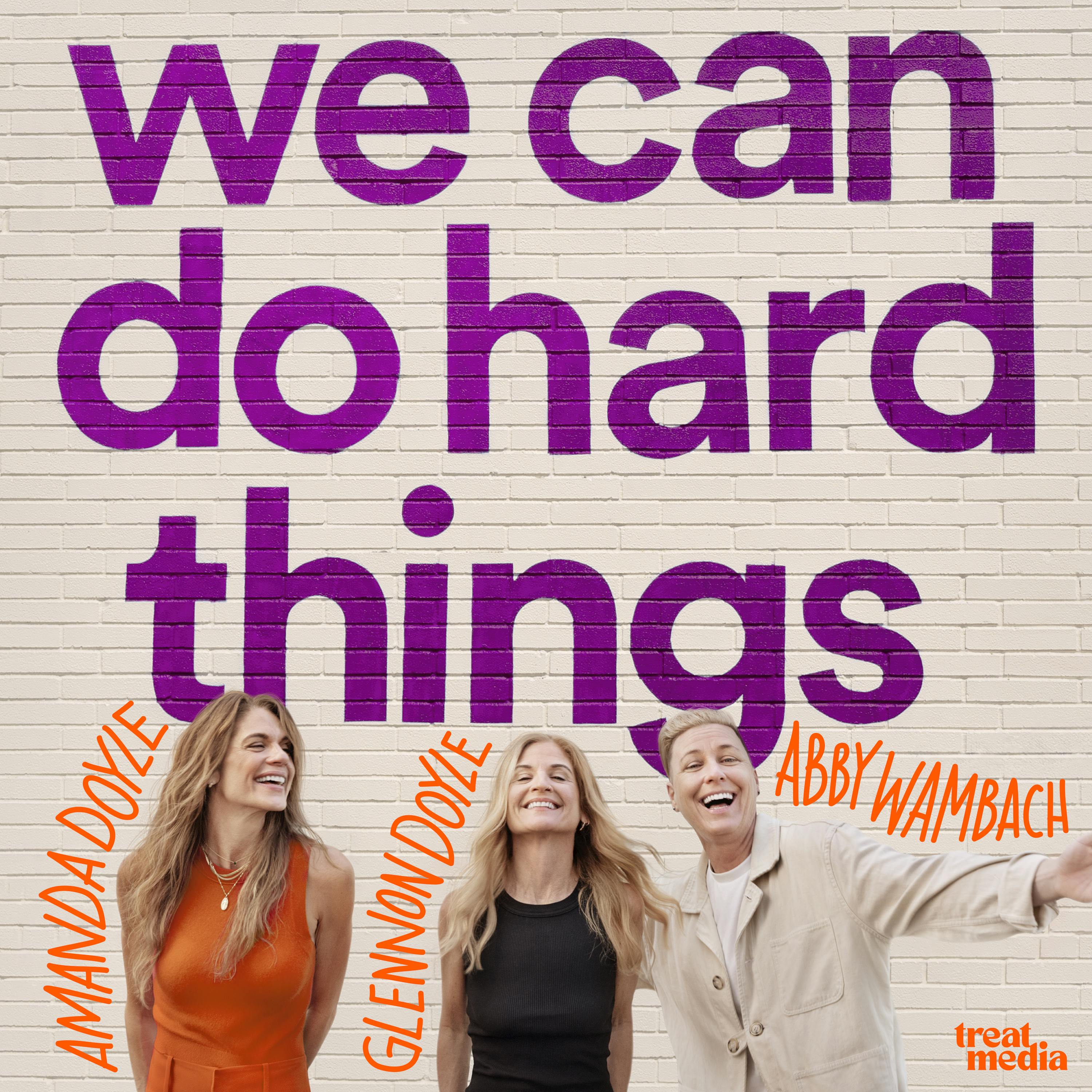
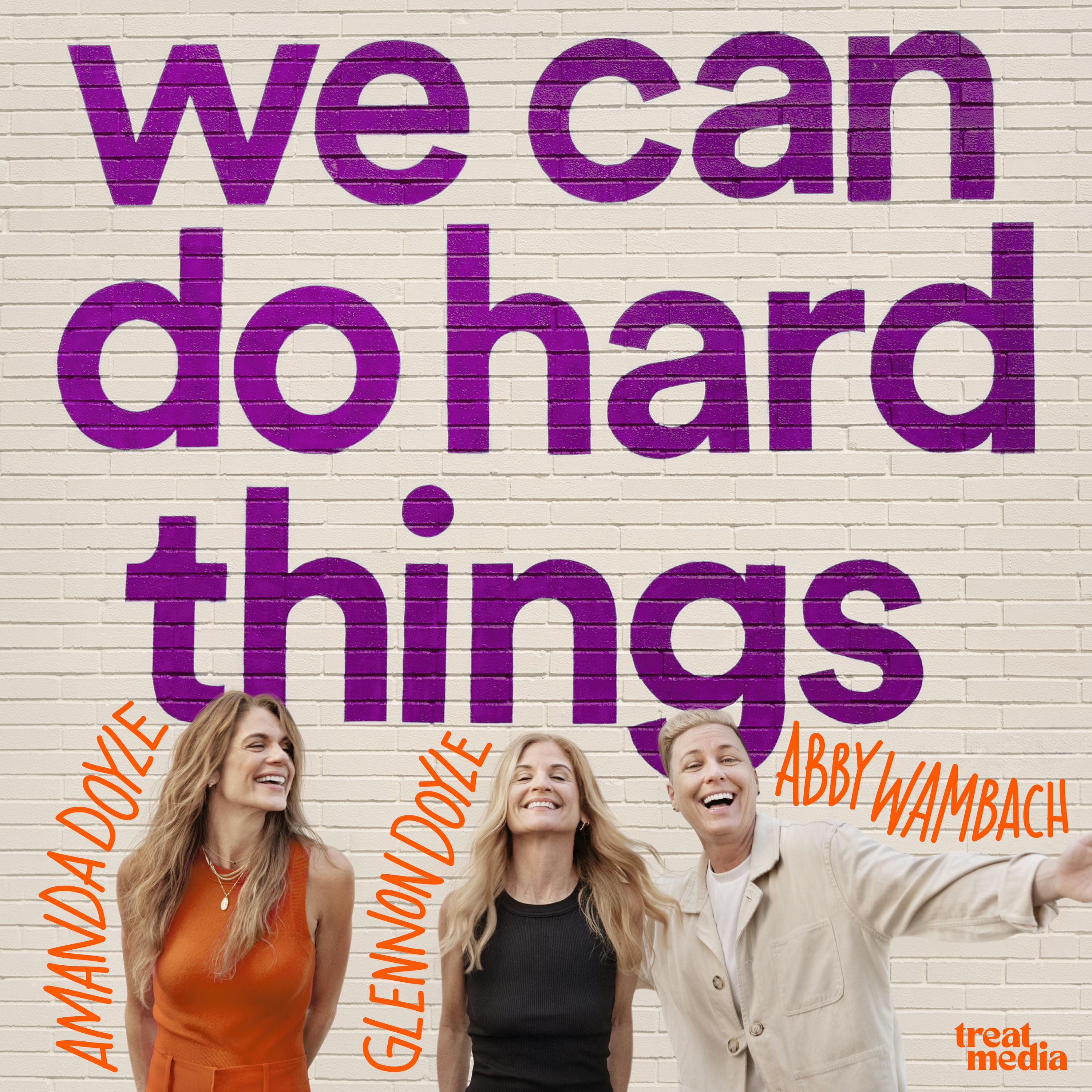
On Not Being Chosen, Re-Parenting Yourself & Getting Started | Live on Tour!
In this special episode, we share moments from an unforgettable night in Portland on our first-ever live tour. We gathered with thousands of you to celebrate our Indie and New York Times Bestselling book, We Can Do Hard Things. We talk about the ache of not being chosen, the grief of lost teams and families, the power of self-parenting, the fear of starting something you may not finish, and the courage to lead hard conversations in your own circles.This tour has been about connection, community, and staying human—and we’re so grateful you’re part of it.
To learn more about listener data and our privacy practices visit: https://www.audacyinc.com/privacy-policy
Learn more about your ad choices. Visit https://podcastchoices.com/adchoices
Press play and read along
Transcript
Speaker 1 One thing I love about our listeners is how industrious all of you are. The stories we hear about you guys going off on your own and starting your own ventures like we did, it's truly inspiring.
Speaker 1 It's a big part of why NetSuite came to us as a sponsor. NetSuite offers real-time data and insights for so many business owners, and by that I mean over 42,000 businesses.
Speaker 1 NetSuite offers the number one AI-powered cloud ERP. Think of it as a central nervous system for your business.
Speaker 1 Instead of juggling separate tools for accounting here, HR there, inventory somewhere else, NetSuite pulls everything into one seamless platform.
Speaker 1 That means you finally have one source of truth, real visibility, real control, and the power to make smarter decisions faster.
Speaker 1 With real-time data and forecasting, you're not just reacting to what already happened, you're planning for what's next.
Speaker 1 And whether your company is bringing in a few million or hundreds of millions, NetSuite scales with you.
Speaker 1 It helps you tackle today's challenges and chase down tomorrow's opportunities without missing a beat.
Speaker 1 Speaking of opportunity, download the CFO's guide to AI and machine learning at netsuite.com/slash hard things.
Speaker 1 The guide is free to you at netsuite.com/slash hard things.
Speaker 1 Netsuite.com/slash hard things.
Speaker 1 Welcome back to We Can Do Hard Things. Today we are bringing you a very special episode live from Portland, Oregon, one of the 10 cities on our first ever tour together.
Speaker 1 Glenn and Amanda and me and Tish, it was so fun.
Speaker 2 My God.
Speaker 1 We gathered with thousands of you to celebrate our indie and New York Times best-selling book, We Can Do Hard Things.
Speaker 1 Tish was on stage, our team was there, and get excited because there is a special guest who was in the room that night.
Speaker 4 That was wild.
Speaker 1 It would be nearly impossible to express what it meant being together with you in person. We decided to share a taste of that magic here.
Speaker 1 And if you love this one, we'll be bringing more of these moments in the weeks ahead.
Speaker 5 The We Can Do Hard Things tour was about connection and community. It was about holding on to our humanity together by not letting go of what makes life beautiful.
Speaker 5 We were so honored to partner with the Florence Project and the Acacia Center for Justice and the entire network of orgs all over the country supporting immigrant families who are fighting for their lives and their humanity.
Speaker 5
All of our tour proceeds went to this life-saving work. We did that together.
All of you, thank you.
Speaker 5 We invite you, no, we beg you you to find and support the heroes in your own city doing this vital work every day to protect our neighbors.
Speaker 5
And for more info on those orgs, you can go to protectthekids at treatmedia.com and find the heroes in your community. We loved our time in Portland.
We did not want to leave.
Speaker 5 This magical night opens, well, you'll hear, with a question from Kara.
Speaker 5 And from there, we just spent an evening talking about the ache of not being chosen, the grief of lost teams and families, the power of parenting yourself,
Speaker 5
the fear of starting something you may never finish, and the courage to lead hard conversations in your own circles. We laughed, we cried, we sang, we love you, Portland.
Our hearts are still full.
Speaker 5 Thank you for showing up for this book, for this community, for each other. Has it ever been more important to do that?
Speaker 5 We love doing life with you. Let's go.
Speaker 1 You can start your question here. Oh, me first? Yes, you first.
Speaker 2 It's so scary. Okay,
Speaker 2 my name is Kara.
Speaker 4 Hi, Kara.
Speaker 2 Amanda, sister, you shared a story in the book where you talked about being at an airport and finding yourself at a crossroads. But the day after your book came out, May 7th,
Speaker 2 the love of my life found herself at a crossroads
Speaker 2
that was very similar. It was beautiful.
Both roads were beautiful.
Speaker 2 And she chose the road that didn't include me.
Speaker 2 You have to know, the three of you have to know, the potent medicine that your book has been to me over the last nine days. It's been incredible.
Speaker 2 It's been the warmest blanket of comfort that's let me stay soft and open and to see the beauty and the wisdom in her decision. My question to you is:
Speaker 2 this book is magical in that there are going to be moments in our lives where different parts of the book speak to us in different ways.
Speaker 2 And I'm just curious if there are any parts of the book right now that speak to you or that are a particular medicine to you right now in your lives.
Speaker 4 You are beautiful, Kara.
Speaker 4 Really.
Speaker 4 Thank you for that.
Speaker 4 It's wow, because the story I was telling in the book that you're referring to, Kara, is when I
Speaker 4 made a decision to leave a path that I really loved in order to come home and marry John, my husband.
Speaker 1 And
Speaker 4 just about how we think when you're grieving something,
Speaker 4 when you have two paths and you take one and then you feel a lot of grief, you think it means you took the wrong path. But actually, and choosing anything you love means
Speaker 4 foregoing and forsaking something else that you love often. And that's why we tend to not make choices
Speaker 4 because it sucks so bad either way that we're like, I'll just stay right here on this part of the path and never go down either. And I just don't think that's the way life works.
Speaker 4 But as you're saying that,
Speaker 4 that
Speaker 4 happened with me with my first husband and I can see from his choices that that is what he needed to do
Speaker 4 and you're a lot more graceful than I am because I've just come around to that like seven years after the fact
Speaker 4 but it's so hard it's so hard and it's so heartbreaking and I don't think it ever goes away because you can
Speaker 4
to not be chosen that doesn't stop hurting. Yeah, it still doesn't, it still hurts me now, you know.
And so
Speaker 4 that's beautiful that you're going through it the way you are.
Speaker 1 And I'm
Speaker 4 sorry and I'm happy for you because there is a path ahead for you, too.
Speaker 1 Can I get a
Speaker 1 hands up for all the people who have not been chosen in this room?
Speaker 6 Here we are.
Speaker 1 And I only say that because
Speaker 1 your pain is specific and real and true.
Speaker 1 And
Speaker 1 now that I have found somebody who chose me,
Speaker 1 I have only now been able to understand
Speaker 1 that
Speaker 1 part of the pain that I was experiencing and being rejected and not being chosen is that I didn't have enough love and respect for myself.
Speaker 1 There was this gaping, missing piece to me that I needed to recover, that I needed to figure out.
Speaker 1 And I don't know if that rings true for you, but
Speaker 1 try to fall so fucking deeply in love with yourself right now.
Speaker 1 Just do that.
Speaker 1 And it sounds like you're doing this with such grace and beauty and compassion for this person
Speaker 1 more than I probably would have.
Speaker 1 But I'm kind of mad at this person right now.
Speaker 1 I don't even know them.
Speaker 1 But yeah, just take like radical self-care, radical self-love, like whatever you can. I've actually just recently fallen in love with myself.
Speaker 1 Just recently. Kind of like feeling myself all of a sudden.
Speaker 1 I know, it's so weird to say that out loud in front of a thousand people.
Speaker 1 Anyways.
Speaker 1
Thank you for that. Yeah, thank you so much.
Let's go up top to the person with the tie on.
Speaker 1 Hey Abby. Hi.
Speaker 1 Former soccer player 23 years, goalkeeper. Woo!
Speaker 1 I was so grief-stricken when I had to leave. My foot doctor said, you'll never walk again if you keep kicking the ball on the same spot over and over again, right?
Speaker 1
Yeah, and indoor, outdoor, I gave it all up. I'm a referee now, it's not quite the same.
Yeah,
Speaker 1 I get to see the same folks, but at the end of the game, I walk off by myself.
Speaker 1 And
Speaker 1 Glendon's book came along
Speaker 1 when my wife left me.
Speaker 1 I'm in love with a beautiful woman up there.
Speaker 5 So it's a two-part question.
Speaker 2 I want to know how to go over the grief of losing that team environment that are your family, and then how to get over the grief of losing the intact family.
Speaker 2 Wow.
Speaker 1 Oh, my God. Portland.
Speaker 1 Portland is coming for us.
Speaker 4 So beautiful.
Speaker 1 I'll just answer the team one because that might be most relevant.
Speaker 1 I don't know about answering that three. I can feel
Speaker 1 broken family though. I got that.
Speaker 1 People ask me all the time if I miss playing soccer and the unequivocally like easiest, quickest answer is like no.
Speaker 1 I did it for 30 years.
Speaker 1 So I don't miss playing the game. I miss the people.
Speaker 1 I miss the feeling of belonging. I miss the feeling of
Speaker 2 like
Speaker 1 energy, of badassery, of
Speaker 1 just shenanigans, like the weird stuff that happens in locker rooms. I'm trying to replicate that on the road.
Speaker 1
It's not happening. It's not going well.
We're not fit.
Speaker 1 It's not happening the same way that it did back then.
Speaker 1 A little different.
Speaker 4 And I think something that I've never even been in a locker room, like ever in my life. I don't know
Speaker 4 what to do there.
Speaker 1 Get changed and you hang out with your teammates and friends.
Speaker 4 That's what I've seen on TV.
Speaker 1 I think something that I've learned in the last couple years about grief,
Speaker 1 it's this idea that we're trying to not feel
Speaker 1 it.
Speaker 1 And instead of not necessarily avoiding it or not wanting to feel the loneliness or the longing for this thing you once had,
Speaker 1 I don't know, there's a part of me that's like, I think the feeling it, like the feeling of that is okay.
Speaker 1 I do.
Speaker 1 I think feeling sad and broken and heartbroken over missing and longing for something that you might not have right this second is okay. It's like expanding our
Speaker 1 capabilities in a way. Now we can't stay in that state forever, right? So what do we do about it? For me, I go to the gym every single morning and P.S.
Speaker 1 I hate working out. Anybody else hate working out?
Speaker 1 I was really good at it for a long time, but I tell you I hate it and I never want to go.
Speaker 1 But I go because there's this little community, and like, Glendon knows this, it drives her crazy, but everywhere I go into, like, every restaurant I go into, like, I know the people.
Speaker 1 I'm like talking to the people. I'm trying to find, I'm like in search of belonging the way that I felt in these locker rooms everywhere I go.
Speaker 1 And I think that that's like kind of a superpower of mine in a weird way. Not to be braggadocious about it, but like, I really think that like
Speaker 1 not everybody is like us in that way. And so keep trying to find your people, no matter what arena you're in, what locker room you're in, what restaurant you're in.
Speaker 1 Like sometimes I have better conversations. Seriously, no offense.
Speaker 1 I have better conversations with somebody I'm just shooting the stupid shit with.
Speaker 4 Oh, you so bad just want to shoot the shit.
Speaker 1 I'm stupid. I want to shoot the shit.
Speaker 1 I don't want to talk about the hardest things in the whole wide world all the time.
Speaker 1 I don't.
Speaker 1 Oh, that's what we're doing wrong. Well, that's all I got.
Speaker 1 Why should I have
Speaker 1 rooms? You're not like intergenerational trauma.
Speaker 1
I love you. I know you do.
And I love our conversations. I am lesbian, so yes.
Speaker 1 And
Speaker 1 let's shoot the shit some more.
Speaker 2 Yeah.
Speaker 1 You want to take the other part of the question?
Speaker 4 Well, I'm just thinking about how it's kind of the same thing.
Speaker 4 Like you lost the team, and then you lost your little team, or you feel like you did.
Speaker 4 And that must be really, really hard.
Speaker 4 I have a feeling, just based on
Speaker 4
you and the way you ask that question, that your family's going to be fine. Yeah.
I think it's because of your openness and your vulnerability.
Speaker 4 It just makes me feel like you're probably a really trustworthy parent.
Speaker 4 I can tell you that I've really
Speaker 4 not just, I feel
Speaker 4 that it is deeply true for me that I know a lot of families that are in their original
Speaker 4 configuration
Speaker 4 that are really broken.
Speaker 4 And I know a lot of families that have changed their configuration and feel so vibrant and so whole to me.
Speaker 4 And I don't think that any family's wholeness or health has to do with whatever structure they've decided.
Speaker 4 I think a whole family is any family where each person in that family gets to bring their whole self to the table. And that's it.
Speaker 4 So I think your little team is going to be okay.
Speaker 4 Because I can tell by the way you just brought yourself to that question that you're the kind of person that fosters people being able to bring their full self.
Speaker 4 So I think your babies are going to be okay.
Speaker 3 The origins of We Can Do Hard Things were once just a dream of community and connection and expression. That dream turned into the podcast you are listening to today.
Speaker 3 Starting your own business is a dream lots of us share, but too many of us let it remain just a dream. Don't hold yourself back thinking, what if I don't have the skills? What if I can't do it alone?
Speaker 3 Turn those what-ifs into why-nots with Shopify by your side. Shopify is the commerce platform behind millions of businesses around the world and 10% of all e-commerce in the U.S.
Speaker 3 from giant corporate household names to brands just getting started.
Speaker 3 You can choose from hundreds of beautiful templates to build your store, use AI tools to write product descriptions and enhance your photos, and even launch email or social campaigns that make it look like you've got a full marketing team behind you.
Speaker 3
Take it from me, if you're launching your own business, you do not want to do it alone. There are tools that can help.
We used Shopify to sell our We Can Do Hard Things merch on our book tour.
Speaker 3 We gave 100% of the proceeds of the merch away to nonprofits, and Shopify helped us to do all of that easily and seamlessly. Turn those dreams into
Speaker 3 and give them the best shot at success with Shopify. Sign up for your $1 per month trial and start selling today at shopify.com slash hard things.
Speaker 3 Go to shopify.com hard things.
Speaker 3 Shopify.com/slash hard things.
Speaker 3 I see so many products out there for hair care. It's hard to know where to start or what I even need.
Speaker 3 My hair texture has changed a lot over the years, depending on what phase of life I've been in or what my hormones are currently doing.
Speaker 3 And if you're someone who is also coloring your hair, it might mean you want a product that really supports the health of your hair.
Speaker 3 I have tried hair masks before, with none that have really stood out to me or which might leave my hair soft for like a day, then back to dry and brittle the next day.
Speaker 3 But that is why I want to tell you about the K18 Molecular Repair Hair Mask. This isn't just another temporary fix.
Speaker 3 It's patented K18 peptide goes deep all the way to the molecular level to actually repair damage from coloring, bleaching, and heat. The result?
Speaker 3
Hair that's soft, strong, bouncy, and completely renewed without feeling weighed down. Using it is simple.
Just a few minutes once a week after coloring, and your hair starts to come back to life.
Speaker 3 It's like giving your hair a reset button, leaving it healthier, smoother, and more resilient than ever before. So yes, we can do hard things, but your hair doesn't have to be one of them.
Speaker 3 With K18, you can keep coloring, styling, and creating while your hair stays strong and beautiful every step of the way.
Speaker 3 Shop K18's mask at Sephora or get 10% off your first purchase with code hardthings at k18hair.com. That's code hardthings at k18hair.com.
Speaker 3
As the air turns crisp and the holidays draw near, comfort becomes the best gift of all. That's why I love quints.
They deliver layers that last.
Speaker 3 Think sweaters, outerwear, and everyday essentials that feel luxurious, look timeless, and make holiday dressing and gifting effortless.
Speaker 3
Right now, I'm obsessed with their camel double-faced merino wool trench coat. It looks straight out of a designer showroom, but costs a fraction of the price.
The quality is honestly incredible.
Speaker 3 Warm, structured, and so elegant, it instantly feels like you are wearing something very much on purpose.
Speaker 3 I have so many items from Quince layered underneath, like button-ups and sweaters, but the coat is my current fave.
Speaker 3 And Quince really does have it all: 100% organic cotton cardigans for under 50 bucks, oversized blazers, classic denim, silk tops, and fleece hoodies, down outerwear, everything to make you look chic, and most importantly, be cozy this fall and winter.
Speaker 3 Step into the holiday season with layers made to feel good, look polished, and last from Quince. Perfect for gifting or keeping for yourself.
Speaker 3 Go to quince.com/slash hardthings for free shipping on your order order and 365 day returns. Now available in Canada too.
Speaker 3 That's q-u-i-n-ce-e.com slash hardthings to get free shipping and 365-day returns. Quince.com slash hardthings.
Speaker 1 Okay, let's do another couple of questions. Yes.
Speaker 2 Thank you so much.
Speaker 2
I'm Elena. Hi, Elena.
Oh my gosh. Oh, there she is.
Speaker 2 I'm 33.
Speaker 2 Y'all have been in my ears, on my walks for so many years, and I can't tell you how fucking grateful I am.
Speaker 2 But speaking of generational trauma,
Speaker 1 I, like many in this room, have a mother.
Speaker 1 Raise your hand if you have or had a mother. Yes.
Speaker 2 And she is beautiful, incredible, loves me so much, and
Speaker 2 couldn't mother me in the way that so many of us hope for.
Speaker 1 Yeah.
Speaker 2 And you all have mothered me in ways I can never explain.
Speaker 1 But my question is,
Speaker 2 how do we mother ourselves? How do we mother each other?
Speaker 2 How do we do that?
Speaker 2 I just want to know.
Speaker 4 What a gorgeous question. It's a beautiful question.
Speaker 4 Got any ideas, sissy?
Speaker 4 I mean,
Speaker 4 do you have any children or do you want them?
Speaker 1 I don't have any children. Okay.
Speaker 4 It might hinge on this question, is that what you're saying?
Speaker 2 Yeah, I mean, for me,
Speaker 4 I learned to mother myself through my kids. Like, I think
Speaker 4 when I see them,
Speaker 4 I mean, they're a giant pain in the ass for sure.
Speaker 2 And
Speaker 4 yet, when I see them and
Speaker 4 I just see how
Speaker 4 absurdly worthy of love they are, my brain can calculate their worthiness of love.
Speaker 4 and grace and joy and peace in a way that I
Speaker 4 would have never thought could translate to me.
Speaker 4 I
Speaker 4 want
Speaker 4 every good thing for them. There's never an equivocation about whether they deserve it or whether at the core of them they're so very good.
Speaker 1 And
Speaker 4 I didn't know that I didn't believe that about myself until I saw it so clearly with them.
Speaker 4 And I thought,
Speaker 4 oh, this
Speaker 4 was true for me, too.
Speaker 4 Like, the natural love and worthiness that I see in them also existed in me
Speaker 3 and still does.
Speaker 4 And so, for me, it's such a simple thing, but until you're confronted with it like that, it took that for me to understand
Speaker 4 that
Speaker 4 I am inherently worthy of that love, and I don't have to, to,
Speaker 4 I should not have to, not that I don't have to, theoretically should not have to hustle and perform for love the way that I understood I had to growing up.
Speaker 4 Because if they don't have to, neither did I.
Speaker 4
And so that I practice that with my kids. I literally try to transfer it.
Like when I have a huge overflowing of love with them, I'm like,
Speaker 4 me too.
Speaker 4 Me too.
Speaker 4 And that helps heal me, I think, that piece of it.
Speaker 4 Yeah, I think
Speaker 4 a big part of being an adult is just constantly reminding yourself and your nervous system that you're an adult and you're safe now.
Speaker 4 Right? Isn't it?
Speaker 4
That is what, I mean, this round of recovery for me is I think the first time I've ever really done recovery. I think every other time I've kept it very cerebral.
I've been able to blame,
Speaker 4 in general, I just, my idea was I have an eating disorder because of the patriarchy.
Speaker 4 And that's true-ish.
Speaker 4 But this round, I've been doing family of origin stuff. Like I've really been allowing myself to
Speaker 4 go back to when I was little and to understand why a little girl would become, feel so afraid that she would have to only live in her mind, only live in books, and control everything through food.
Speaker 4 You know, as a kid, I was not, I was in a family with a lot of love and with a lot of anger
Speaker 4 and a lot of
Speaker 4
complicity in that anger. That might sound familiar to some of you.
I've heard I'm not the only one with that situation.
Speaker 4 But,
Speaker 4 you know, I didn't ever feel like I was in a safe environment to have big feelings, to have an appetite, to grow, to be big in any way, really.
Speaker 4 And so it makes sense that now, every time I get scared, like this last relapse for me came right after the election,
Speaker 4 when I start to feel afraid,
Speaker 4 my little girl self says, oh, we know how to handle this, just shut it down.
Speaker 4 You know, it's like
Speaker 4
you're a wild animal and you protect yourself from being preyed by what? You don't sleep, you don't eat, you don't, you just stay vigilant. You just stay vigilant.
So, for me,
Speaker 4 part of mothering myself now is to remind myself over and over again that I am an adult now. The rules are not the same.
Speaker 4 That it is okay now for me to rest, that it is okay for me to eat, that it is okay for me to be big and loud and grow, because I
Speaker 4 am, there's an adult in the room now and it's me.
Speaker 4 Every time I relapse, it's because I have gone a little bit unconscious and I have let my little girl self start driving again. And she only knows one thing to do, to keep me safe.
Speaker 4 And what responsible adults do is they don't let the child drive.
Speaker 4 Right?
Speaker 4 They love the child.
Speaker 4 They offer the child
Speaker 4 understanding for their fear and their small ideas, and they offer wiser ideas, and then they put the child in the back seat where the child belongs, and they say, I've got this now.
Speaker 4
So that is what recovery is for me now. It's just putting the little girl, and that's what mothering myself is.
There's a mother in the room now, and it's me.
Speaker 4 And so I can let my little girl self do what she needs to do, which is rest in the back seat and just trust that somebody's got the wheel.
Speaker 1 That was pretty good. That was really good.
Speaker 1 Never said that before but that was right. That was very nice.
Speaker 4 So Elena,
Speaker 4 there is someone in the driver's seat now and it's you. So your little girl self can rest.
Speaker 1 Okay let's go up top now.
Speaker 6
Hi my name is Brandy and Thank you guys for being here. My bestie Danny and I have been listening since the very first episode.
Hi!
Speaker 1 Oh my god, Glendon just waved at me.
Speaker 6 So in an opportunity of sharing space with one of my favorite authors,
Speaker 6 my writing mentor would kick me if I did not ask this question.
Speaker 6
And Abby, you brought this up when you said you have a fear of dying. My mom died when she was 36.
I was 15, almost 16.
Speaker 6 And I have this dream of writing a memoir and part of the fear that my therapist and I are working through in addition to IFS and generational trauma and all those things,
Speaker 6 one of the fears that we've uncovered is that I'm afraid, I have this fear in the back of my mind that I'm gonna die young, that I'm not gonna be around, that if I start it, I won't be able to finish it.
Speaker 6 And
Speaker 6 I would just love advice from you three as authors and as amazing gems of warriors of women that are leading us all as far as like how to break that barrier down.
Speaker 2 Well,
Speaker 4 it makes sense that you would be worried that you won't finish it,
Speaker 4 but you definitely won't finish it if you don't finish it.
Speaker 1 You'll start it. Yeah, that's true.
Speaker 1
But like everybody doesn't finish it. You know, like it's not like that's so common.
It is hard to do. It really is.
Speaker 2 But
Speaker 1 you can't let this one fear, because you don't know, you could live until you're 95.
Speaker 1 You know?
Speaker 2 Sorry, I interrupted you.
Speaker 4 I have a little index card next to my computer that has one sentence on it. From, it was a quote from a woman who I think is one of the best writers on the planet, who is in this room.
Speaker 1 Her name is Cheryl Stray. Cheryl Stray!
Speaker 1 Who is also from Portland?
Speaker 4 And it says,
Speaker 4 How it feels to write a book is that it is impossible to write a book.
Speaker 4 That is how it feels. And that's, I have that
Speaker 4 next to my computer. Another way, well, okay, here's what I think.
Speaker 4 Whenever someone says to me, like, I think a lot each day about whether I have a drinking problem, but I'm not sure about it, I'm like, okay.
Speaker 4 You know who doesn't wonder every day if they have a drinking problem?
Speaker 4 People who don't have a drinking problem. Right? So like if you're thinking about it each day, then yeah.
Speaker 4 So I also,
Speaker 4 everyone doesn't feel like they need to write a book.
Speaker 1 Ooh, that's good.
Speaker 4 If you are a person
Speaker 4 who thinks that you need to write a book, then I can promise you that you need to write a book.
Speaker 4 And
Speaker 4 nobody writes a book. All they do is they sit their ass in a chair for like, they decide how many hours they're going to suffer a day, and they're awful.
Speaker 1 It's the worst.
Speaker 4 And if you can do anything else, you should do it.
Speaker 4 But if it nags you each day, then that means that you are a writer and you must write write the book, and that means that you must, you owe it to yourself to decide whether it's one, two, or three hours.
Speaker 4 It can't be more than that.
Speaker 4 And that your butt is going to be in the chair each day, and that that's a deal you're going to make with yourself. And you're not going to worry about when it's done or how it's done.
Speaker 4 All you're going to worry about is that your butt will be in the chair for two hours a day. And you will be so, you will see, it will just suddenly start to happen over time.
Speaker 4
And you'll have your book. So you're going to write it.
Are you going to promise us all right now that you'll write it?
Speaker 1 Let's go!
Speaker 1 I love accountability!
Speaker 4 And if you want to know how to write a memoir, just effing read wild again. Everybody's already read it.
Speaker 1 Yeah, yeah, yeah.
Speaker 1
Okay, let's go down here. Let's go to the back a little bit.
Yes, you jumping. I like the jumper.
Speaker 4 I like the jumper, you said.
Speaker 2 My enthusiasm worked.
Speaker 4 What did she say? My enthusiasm worked.
Speaker 1 Oh, yeah.
Speaker 1 See, I'm a seven, so.
Speaker 2 My name is Bernie, fellow lesbian.
Speaker 1 A.
Speaker 4 Fellow lesbian is a funny thing to say.
Speaker 2 So,
Speaker 4 you know.
Speaker 1
I get it. Okay.
If it works for you.
Speaker 2 So as Dr. Brene Brown says,
Speaker 2
Shame is not a tool of social justice. It's a tool of oppression.
And so as
Speaker 2 this country is shifting and there's a lot of activism going on, a lot of protests, I really want to become a leader of the conversation on anti-racist work,
Speaker 2 both in the bigger aspect of my community and also among friends. And so I was wondering how to normalize these conversations amongst my friends and get past that shame to have these conversations.
Speaker 1 Beautiful.
Speaker 4 So is it shame or is it fear?
Speaker 4 Like I think starting those kinds of conversations with friends and in big groups is, for me it's more fear based.
Speaker 4 What is the shame?
Speaker 4 You can just yell it. Do you mean not shaming other people?
Speaker 4 You mean not shaming, oh, I don't know how to do that.
Speaker 4 Ask an easier question than that.
Speaker 1 Do you mean not shaming other people? No, I want people to get past their own shame.
Speaker 2
Their own shame. Their own shame.
Okay. All right.
That's fair. Okay.
Yeah, yeah, yeah.
Speaker 4 Well, what I would say just off the bat is that there are brilliant, brilliant racial justice leaders and thinkers everywhere who have been doing, I'm sure in this community, who are like, who have been doing this kind of work and who know these things that you're talking about?
Speaker 4 And I think one of the when we're moved in these moments, which is that's glorious, important work that needs to be done, and you should do it. And you should find
Speaker 4 someone in this community who has been working for a long time in that lane to guide you.
Speaker 4 Because
Speaker 4 we don't have to make up anything. We have to bring our gifts to a movement, but a movement only moves because people are doing it together.
Speaker 4 And so I would say your first step is to plug in, find people who do this with their lives, and learn from them. and do what they say.
Speaker 4 I love that you want to do that. Thank God.
Speaker 4 I mean right now
Speaker 4 it's just amazing how
Speaker 4 it felt so easy when it was popular, right?
Speaker 4 Like when everybody was wearing the right t-shirts and old Davey had queer stuff and like now it's a different vibe and so it's more important than ever to be brave with our voices and to,
Speaker 4 you know, I don't know,
Speaker 4 we keep having these Monstera plants on every stage. I think about them constantly because we have a son who is obsessed with plants.
Speaker 4 And he taught me that the Monstera plant is special because all plants grow towards the light, right? I don't know. I'm not a scientist, but I think that they do.
Speaker 4 But the Monstera plant is special because it grows in the... in the rainforest and so there's a huge canopy and so it doesn't get sun but it knows in its like little plant dna
Speaker 4 it just trusts that that it can grow through the dark for a really, really long time because it knows somehow that the light is out there somewhere.
Speaker 1 It's searching for the light. Yeah.
Speaker 4 So I feel like that's what we have to do now, right?
Speaker 4 It's going to be scarier than ever to say the things we need to say and do the things we need to do, but we just have to keep growing in the dark because also that's what those guys were doing.
Speaker 4
They didn't take a day off. They were at tables, they were at meetings, they were planning, plotting, plotting, plotting for when this moment came, they were ready.
And we have to do the same thing.
Speaker 4
So good job. Find the people.
Become that that you want. I mean, just like the book writer, not everybody wants to do that.
So if you want to do it, please do.
Speaker 1 And also, sister, can you tell the story about how fascism wins?
Speaker 2 Well
Speaker 4 this is gonna make you feel cozy.
Speaker 1 No, this is actually
Speaker 3 shame.
Speaker 4 When you're talking about the shame piece, I think that's really important because I think if when we're being super honest with ourselves, when I am, it's like I don't always know
Speaker 4 the right answer to things. I know I'm saying stuff wrong, I know I'm not getting it totally right, right? And I think we do have
Speaker 4 shame is a tool not only used by one side
Speaker 4 of the team,
Speaker 4 I think in sometimes in our world of even even more like moderate and left,
Speaker 4
we utilize shame a little too hard. Yes.
And I think we need to stop that. And the reason I think we do is because it's just,
Speaker 4
it's not effective. It scares people into being quiet, and that's the last thing that we need right now.
So
Speaker 4 what Abby's talking about is that
Speaker 4 in Fascism 1.0,
Speaker 4 in the 1930s, it was, you know, it was a threat all over Europe. It
Speaker 4 There's a couple things about it. First, it started
Speaker 4 because, as Paul Mason says, fascism is the fear of freedom triggered by a taste of freedom.
Speaker 4 This isn't coming out of nowhere.
Speaker 4 It is coming because, like in Fascism 1.0, when the workers' rights movement was getting very, very, very strong all over Europe and it was very, very scary to the elites and the middle class.
Speaker 4 That's why fascism took place, is because there was this fear of these workers' rights. They're coming and they're going to come get what's theirs, right?
Speaker 4 In this moment,
Speaker 4 it feels like the oppressive forces are so strong and so loud.
Speaker 4
But we need to ask, like, why do they need to be so loud? They need to be so loud because the taste of freedom is here, right? It's coming. That's right.
And so
Speaker 4 that's like what's under
Speaker 4 all of this. But in 1.0 in the 30s, when you look at all of the places throughout Europe where fascism was a threat,
Speaker 4 in some places it took hold, in some places it did not. And the factor that determined the difference was
Speaker 4 whether the center and the left formed coalition. Yep.
Speaker 4 So
Speaker 4 it isn't as fun to feel like
Speaker 1 less
Speaker 4 righteous about yourself, but what I'm saying is if we don't know what's ahead, we better damn well look at what's behind us
Speaker 1 and take our lessons from that.
Speaker 4 And in every place where
Speaker 4 the center and the left, through collaboration, through compromise, through sacrifice with each other, joined forces and fought against the fascists, fascism did not take hold there.
Speaker 4 In the places,
Speaker 4 it did not take hold because the right was so strong. It took hold because the left imploded.
Speaker 4 And we can't afford that right now.
Speaker 4 And I think a place, what we can do is have a little less shame production from ourselves, a little more, like if someone is willing to link arms with you and fight against the fascism taking over in this country.
Speaker 4
Let's not like unlink our arms with a test of political purity. Let's just move forward together and do what we need to do.
That's right.
Speaker 1 It is my rule in life to hang out with people that are smarter than me.
Speaker 1 So that's what I've done.
Speaker 3 We can do our things is brought to you by Bumble, the app committed to bring people closer to love. I went through it in my first marriage.
Speaker 3 I was desperately in love and then in a whiplash of a moment, it was gone. I felt abandoned, betrayed, crushed.
Speaker 3 A while out from the divorce, when a friend asked me whether I was ready to date again, I said, listen, listen, I love men, but I also love hamburgers.
Speaker 3
And I just had the juiciest burger and it gave me food poisoning. And I don't even want to look at another burger for a very long time.
When I was ready to look, I was terrified.
Speaker 3 How in the world do you put yourself out there after that?
Speaker 3 I don't think there are a lot of people more courageous and cool than those folks who have been through the depths of heartbreak and are brave enough to reveal their heart again.
Speaker 3 It starts with that first step, a shaky voice inside of you that says, I want this even more than I don't want that.
Speaker 3 I want to share life and this beautiful banged up heart with another beautiful banged up heart. These days, that first shaky step often happens online on a dating app.
Speaker 3 In celebration of you brave ones, we want to tell you about Bumble. What I love about what Bumble is doing is they are making that first step feel a tiny bit less scary, more possible, more human.
Speaker 3 They make you feel more safe.
Speaker 3 New Bumble users have to add multiple layers of verification like mandatory photo, phone number, and ID verification so you can feel more confident that the people you're seeing are who they say they are.
Speaker 3 Plus, profiles aren't just about photos. They highlight personality, interests, and passions so you can get a sense of whether you will actually connect with someone.
Speaker 3
You can be shaky and scared and show up anyway. You can start again.
Bumble helps people do exactly that. Start your love story today on Bumble.
Speaker 3 Every year, I tell myself I'm going to live in the moment during the holidays. And then I blink and it's over.
Speaker 3 The wrapping paper's gone, the tree is shedding, and if I want to relive any parts of it, I have to go through the photo app of my phone. That's why I love Aura Frames.
Speaker 3 They make those moments live on without adding another project to your life.
Speaker 3 I just upload photos of unwrapping gifts, cookie decorating, all of the best parts of the holiday, and now they pop up on the frame all year long.
Speaker 3
Setting it up was ridiculously easy. You just download the aura app, connect to Wi-Fi, and add unlimited photos and videos.
You can even preload pictures before it ships.
Speaker 3
And so when someone opens it, it's already full of love. And it comes in this beautiful gift box.
No wrapping, no stress. They nailed it over there.
You know what I'm talking about, right?
Speaker 3 It's like a frame that looks like it's just like got a picture in it, except all of your pictures rotate through it all year long without you even like making a fancy album.
Speaker 3 For a limited time, visit auraframes.com and get $45 off Aura's best-selling Carver Matte Frames, named number one by Wirecutter by using promo code hardthings at checkout.
Speaker 3 That's A-U-R-A Frames.com promo code hard things.
Speaker 3
This exclusive Black Friday Cyber Monday deal is their best of the year. So order now before it ends.
Support the show by mentioning us at checkout. Terms and conditions apply.
Speaker 3
This show is brought to you by Alma. I want to start with a truth I've learned the hard way.
Taking care of your mental health isn't a one-time decision. It's a daily practice.
Speaker 3 And even when you know you want support, the hardest part is often just figuring out where to start. For me, finding the right therapist changed everything.
Speaker 3
But getting there was kind of overwhelming. Endless searches, phone calls, dead ends.
It's wild that the thing that's supposed to help you can feel so hard to reach. And that's why I love Alma.
Speaker 3 Alma, A-L-M-A, takes all that chaos out of the process. It's a simple, easy-to-use platform where you can search for licensed, in-network therapists who actually feel like the right fit.
Speaker 3 You don't even need an account to browse and you can filter by what matters most to you, their background, specialty, therapy therapy style, and more. And here's the part that really matters.
Speaker 3 This isn't just about checking a box, it's about real connection. 97% of people who found a therapist through Alma say they felt seen and heard.
Speaker 3
And that's the heart of good therapy: someone who gets you, not just your symptoms. Better with people, better with Alma.
Visit helloalma.com/slash we can to schedule a free consultation today.
Speaker 3 That's hello a
Speaker 3 dot com slash W E C A N.
Speaker 1 We're gonna go up top and I think we have to go to these two lovely folks in the sequence. Oh my god, sequence!
Speaker 4 They just the sequence people just high-fived each other by the way. That was really good.
Speaker 3 Oh my god, that's great.
Speaker 2 Hi. Hi.
Speaker 1 We're sisters.
Speaker 1 Sisters, everyone.
Speaker 4 The sequence sisters.
Speaker 1 I just wanted to say, my sister and I were sitting here watching Tish beautifully annihilate all of those songs, and I was getting so teary, leaning on my sister.
Speaker 1 I have two girls, and I just was fast-forwarding seeing maybe a future where my kids are on stage or doing something they love.
Speaker 1 And I just want to say, good job.
Speaker 2 And how'd you do that?
Speaker 1 How'd you do that?
Speaker 1 Oh, oh, that is really shit.
Speaker 1 How did we do it?
Speaker 4 I mean, I will tell you, there's so many answers to that question. But one of the things that is tied to her being on stage is that Tish actually,
Speaker 4 of all three, was the most outwardly sensitive.
Speaker 4 When Abby joined the family, she was having a really hard time, and I wanted her to get into more therapy.
Speaker 4 And Abby said, how about soccer?
Speaker 4 And I was like, is that like therapy?
Speaker 1 Sports.
Speaker 4 Yeah, and
Speaker 4 she started to play soccer and
Speaker 4 I just watched her.
Speaker 4 Through watching her play soccer, I understood what sports are for.
Speaker 4 Because
Speaker 4 it's like this little microcosm where you can experience all the emotions safely and you can fail and flail and win and try and be vulnerable and in this like little pocket of time where it's safe to do that.
Speaker 4 And she just grew and grew there.
Speaker 4 And then one day
Speaker 4 she was having an emotional reaction to something and Abby put a guitar in her hand
Speaker 4 and said,
Speaker 4 why don't you go write a song? I mean it was honestly probably self-preservation for us, right?
Speaker 4 At the time, but
Speaker 4 she found music and
Speaker 4 that transformed her.
Speaker 4 When you have a sensitive kid with a lot of feelings and thoughts, you must get them into art.
Speaker 4
It saved her. She goes into her room and she changes her, she transforms her big feelings into music now, and it's like it's opened up the entire world for her.
It's changed her life.
Speaker 1 And I would just say as they're going through some of the like the teenage years,
Speaker 1 hang on.
Speaker 1 Hang on because then
Speaker 1 they get to a place
Speaker 1 where
Speaker 1 and I'm not saying that she'll stand on stage.
Speaker 1 Your kids will get to the place where they're standing on some stage and they're able to say words like love and hate on a spectrum or generational healing work.
Speaker 1 Like she's 19 years old
Speaker 1 and and that only happens because she was given the space, the pulling our hair out, not knowing what is going on with this kid, the space to find herself.
Speaker 1 Because now she knows she can take herself everywhere she needs to go and she can handle all of the emotions that come up because she's been doing them with us.
Speaker 1 And now that she has this guitar and this microphone and her brilliant lyrics that she's writing and putting to music and making records, like it's just, it's a miracle to me that she
Speaker 1 can do any of it because none of us have any of it. I mean, you're a writer, so I guess you know what that's about.
Speaker 4
Yeah, but musically, I mean, where did that come from? I don't know. It's so weird.
I mean, I would say lastly,
Speaker 1 so weird.
Speaker 4 I think lastly, what I would say to you, since yours are still younger, one thing that I would do differently, I talk to Abby about this a lot, is that I brought my kids a lot of I've got you energy.
Speaker 4 Like I thought that that was my job, like mama bear, no matter what happened, like I've got you, I've got you, no matter what, I've got you, I've got you, I'll take care.
Speaker 4 And I think that if I could do it all over again, I would have shifted that a lot to you've got you energy. Like I was thinking about
Speaker 4 the moment that I die and that the kids are there if I'm lucky enough to have that sort of moment. And
Speaker 4 I was thinking about how I've always thought
Speaker 4 that what they should be thinking in that moment is,
Speaker 4 there goes the best damn mom that ever.
Speaker 4 Like she effing nailed it.
Speaker 4 Couldn't have been done better. That's truly what I thought I was going for.
Speaker 4 And it was only like a couple months ago that I thought, that is not, it's true, it's true.
Speaker 4 It was like two months ago that I was like, that's not right. Like that, that would be so sad because then they'll think, what do we do now?
Speaker 4 Like what, no, like what you want them to think in that moment is,
Speaker 4 I'm going to be okay.
Speaker 4 So it's like,
Speaker 4 do whatever you have to do every single day in and day out so that they learn over time that they've got themselves, so that that is what your parenting is. So at the very end,
Speaker 4 you're leaving and they're saying, I've got me.
Speaker 4 That's the moment.
Speaker 1 So
Speaker 1 unfortunately.
Speaker 4 No, I want to live in Portland.
Speaker 1 No.
Speaker 1 She wants to live live in Portland now, you guys.
Speaker 1 Unfortunately, our time has come where we are going to leave, sadly. But I wanted to call out a few people who have been instrumental at making this book look
Speaker 1 like it looks.
Speaker 6 Val, Annie,
Speaker 1 Rachel, can you guys stand up wherever you are?
Speaker 2 There they are.
Speaker 1 We love you so much.
Speaker 4 That's our team right there.
Speaker 1 Yay!
Speaker 1 These three,
Speaker 1 two of whom live in Portland.
Speaker 4 Literally all the illustrations in this book. Annie drew them all.
Speaker 1
Annie did all of them. The merch.
Val and Annie, you guys have been a freaking miracle to work with. Thank you so much.
Speaker 1 Like, the joy you bring to our team. Do you guys want to hear from Tish one last time?
Speaker 1 Tish, come on.
Speaker 1 Thank you,
Speaker 5
Pod Squad. Thank you for showing up and for helping us stay human with your brave and beautiful questions.
I will never forget those moments with you on the road.
Speaker 5 We cherished every single moment being together with you in person.
Speaker 5 God, we love doing life with you. We're closing this episode the same way we ended each unforgettable night with Tish
Speaker 5 singing We Can Do Hard Things.
Speaker 5 Until next time, I give you Tish Melton and Brandy Carlyle.
Speaker 5 I walked through fire, I came out the other side.
Speaker 5 I chased desire,
Speaker 2 I made sure I got what's mine.
Speaker 2 And I continue
Speaker 2 to believe
Speaker 2 that I'm the one for me.
Speaker 2 And because I'm mine,
Speaker 2 I walk the line.
Speaker 2 Cause we're adventurers and heartbreaks on map.
Speaker 2 A final destination
Speaker 2 we lack.
Speaker 2 We've stopped asking directions
Speaker 2 to places they've never been.
Speaker 2 And to be loved, we need to be known.
Speaker 2 We'll finally find a way back home.
Speaker 2 And through the joy and pain
Speaker 2 that our lives
Speaker 2 bring,
Speaker 2 we can do a heart pain.
Speaker 2 I hit rock bottom, it felt like a brand new start.
Speaker 2 I'm not the problem.
Speaker 2 Sometimes things fall apart.
Speaker 2 And I continue to believe
Speaker 2 the best
Speaker 2 people are free.
Speaker 2 And it took some time,
Speaker 2 but I'm finally fine.
Speaker 2 Cause we're adventurers and heartbreaks on that.
Speaker 2 A final destination
Speaker 2 we lack.
Speaker 2 We've stopped asking directions
Speaker 2 to places they've never been.
Speaker 2 And to be loved, we need to belong.
Speaker 2 We'll finally find our way back home.
Speaker 2 And through the joy and pain
Speaker 2 that our lives
Speaker 2 bring,
Speaker 2 we can do a hard thing.
Speaker 2 adventurers and heartbreaks on that.
Speaker 2 We might get lost, but we're okay with that. We've stopped asking directions
Speaker 2 in some places they've never been.
Speaker 2 And to be loved, we need to be known.
Speaker 2 We'll finally find
Speaker 2 our way back home
Speaker 2 and through the joy and pain
Speaker 2 that our lives bring,
Speaker 2 we can do hard things.
Speaker 2 Yeah, we can do hard things.
Speaker 2 Yeah, we
Speaker 2 can do
Speaker 2 hard
Speaker 2 things.