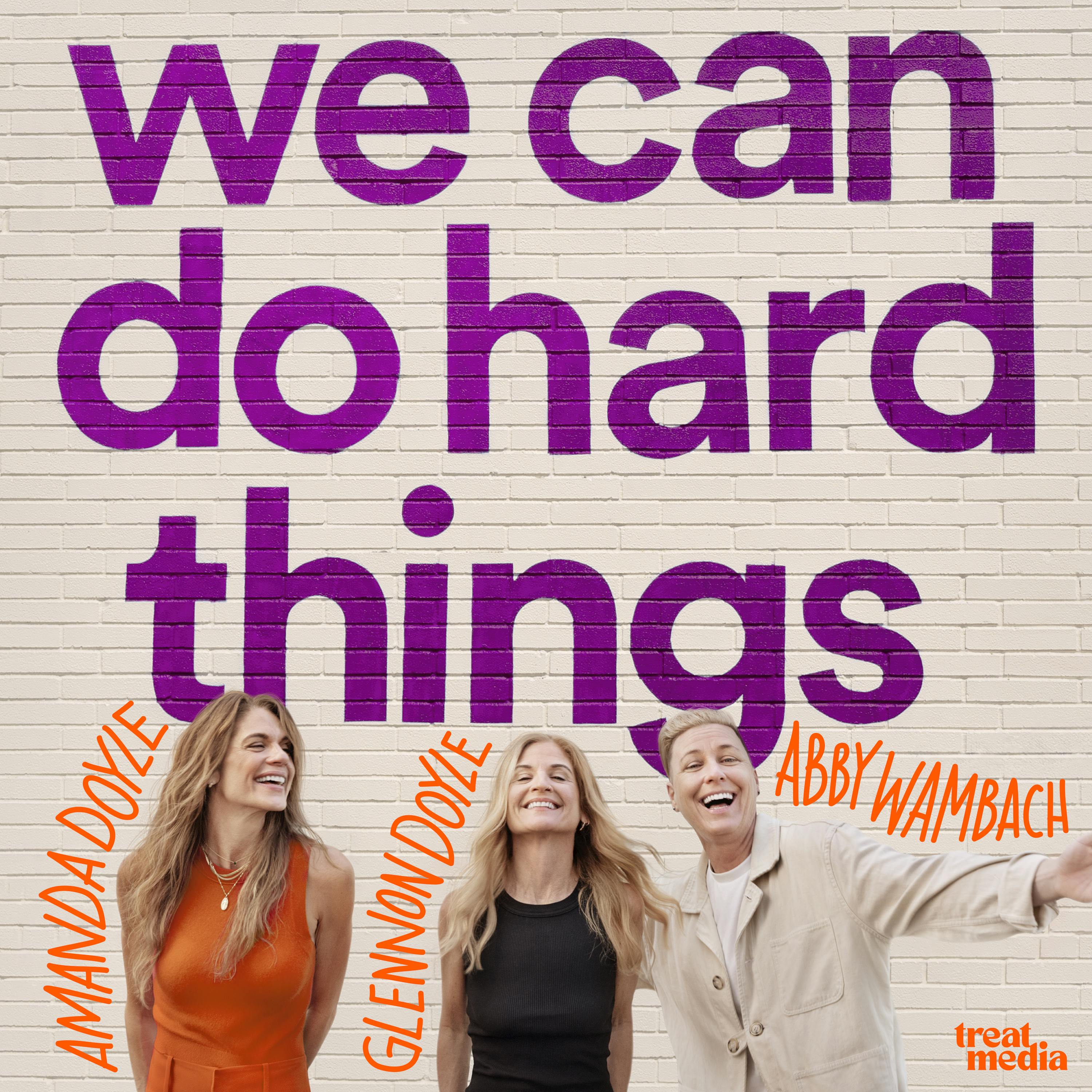
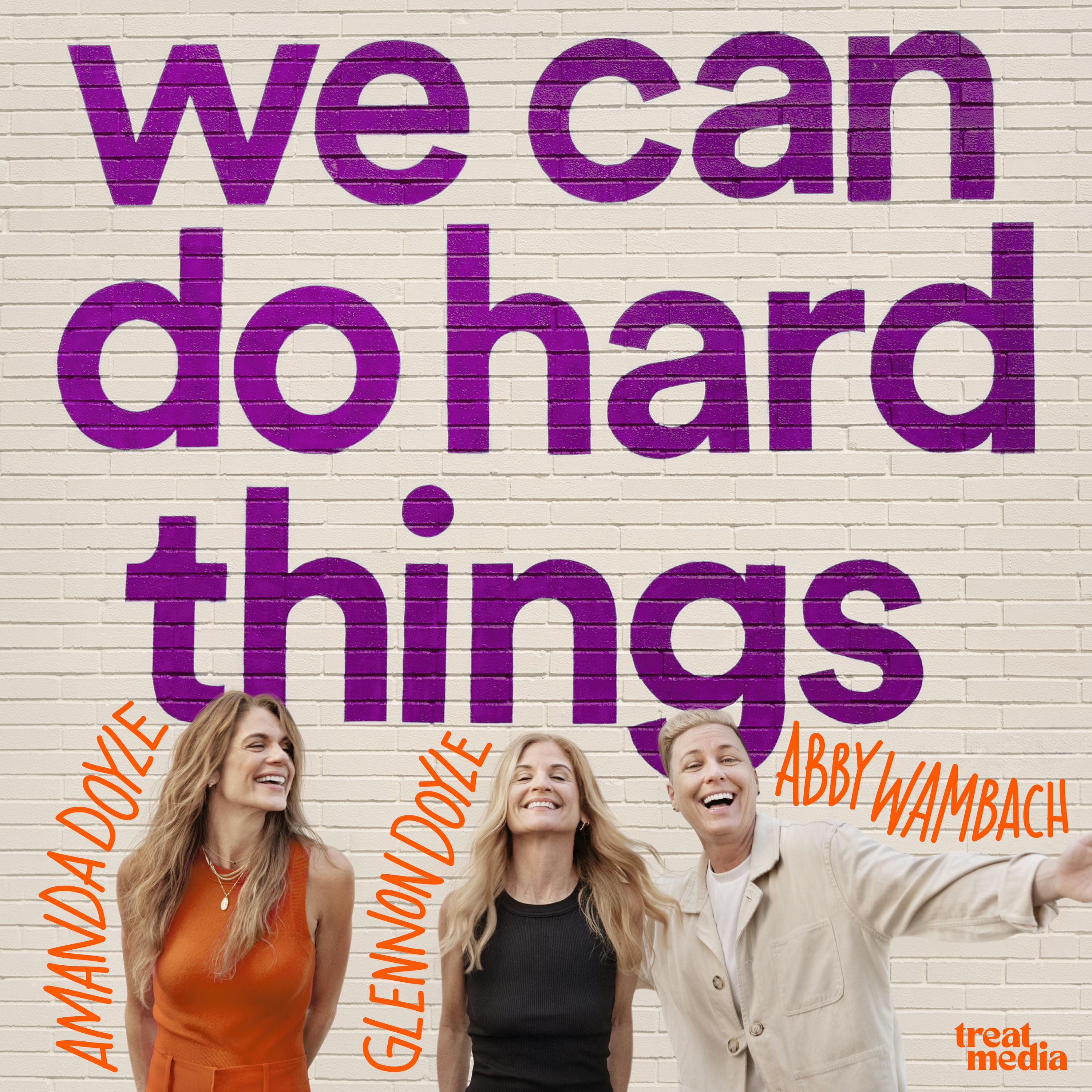
184. When You’re Glad Your Mom Died with Jennette McCurdy
2. How Jennette’s mom enforced extreme calorie restriction to control and bond with Jennette, and the moment her body finally said, No.
3. What led Jennette to step away from acting after her iCarly stardom, and why she doesn’t think “resilient” is a compliment.
4. How Jennette found herself still “doing her mother’s work” in therapy – and how she stopped forcing forgiveness.
5. Why – when you’ve grown up in an environment of chaos and volatility – healthy, comfortable relationships can feel boring.
6. Jennette's relationship with her inner voice – and how she understands and experiences Obsessive-compulsive disorder today.
CW // eating disorders, toxic relationships
About Jennette:
Jennette McCurdy is the New York Times Bestselling author of I’m Glad My Mom Died, which stayed at #1 on the NYT bestseller list for eight consecutive weeks and has remained on the list for 24. In her memoir, Jennette dives into her struggles as a former child actor—including eating disorders, addiction, and a complicated relationship with her overbearing mother—and how she retook control of her life. Jennette has been honored as part of the 2022 TIME100 Next list, and her debut fiction novel will be released in 2024.
TW: @jennettemccurdy
IG: @jennettemccurdy
To learn more about listener data and our privacy practices visit: https://www.audacyinc.com/privacy-policy
Learn more about your ad choices. Visit https://podcastchoices.com/adchoices
Press play and read along
Transcript
Speaker 1 What if you could bleach and color without wrecking your hair? With K-18 Molecular Repair Hair Mask, you can. It's not another quick fix with false promises, it's hair science.
Speaker 1
The patented K18 Peptide repairs hair at the molecular level. That's really, really deep.
So you can keep coloring and still have hair that feels soft, strong, and bouncy.
Speaker 1 Because yes, we can do hard things, but your hair doesn't have to be one of them. Shop K18's mask at Sephora Sephora or get 10% off your first purchase with code hardthings at k18hair.com.
Speaker 1 That's code hardthings at k18hair.com
Speaker 4 Okay, welcome to We Can Do Hard Things. We have a big treat for you today.
Speaker 4 Jeanette McCurdy is the New York Times best-selling author of I'm Glad My Mom Died, which stayed at number one on the New York Times bestseller list for eight consecutive weeks and has remained on the list for 24.
Speaker 4 In her memoir, Jeanette dives into her struggles as a former child actor, including eating disorders, addiction, and a complicated relationship with her overbearing mother, and how she retook control of her life.
Speaker 4
Jeanette has been honored as part of the 2022 Time 100 Next List, and her debut fiction novel will be released in 2024, which I find very exciting. Yes.
Jeanette. I read your book when it came out.
Speaker 2 Oh, thank you. Loved it.
Speaker 4
I was thinking this morning about why I was so excited about it. And first of all, I feel like sometimes people have a great story.
And so no matter what they write, it's going to be good.
Speaker 4
People are going to like it. And sometimes people are just great writers.
And so no matter what they write, it's going to be good.
Speaker 4 And then every once in a while, there's somebody who has a great story and who is a great writer.
Speaker 4 Your book fantastic story but also your writing is so fresh and so exciting and so different
Speaker 2 we've been so excited for this conversation we all adore you how are you today i'm so excited to be here thank you so much for the kind words coming from you i almost can't even believe it you know when somebody that you really respect and look up to so much says something and it's just like i feel dizzy right now i truly feel so excited.
Speaker 2
I just think you're just the best. And the way that you write and make your work accessible so that it can be healing to others, it's helped me heal so much.
It's so rare.
Speaker 2
I think to be able to make something entertaining and meaningful at the same time. And you do that.
And so just The kind words from you is like, is just beyond. And thank you.
Speaker 4 Well, you do that. You are, in this part of your life, it seems to me that you started with acting and performing other people's lives in words.
Speaker 4 And now you are changing your perspective and using your own words and telling your own stories.
Speaker 4 What is a story that you could tell us that you feel like encapsulates the relationship with your mom and the dynamic in your family?
Speaker 2 I feel like it would be just kind of
Speaker 2
starting with what the separate pillars of my life were, which were all kind of unique, a bubble in each of their own senses. So like I grew up Mormon.
I was LDS.
Speaker 2 um there was that bubble i grew up homeschooled because my mom wanted to homeschool my brothers and i so there was that bubble my mom was a hoarder so we lived in a 1200 square foot house with eight people and floor to ceiling um knickknacks and trash our fridge was overflowing always smelling it was just
Speaker 2 a nasty smell the second you walk in the house and usually like four different nasty smells hitting you from different sides of the house. And
Speaker 2 I was also a child actor. My mom had wanted to be an actress her whole life, and she
Speaker 2
wasn't able to. Her parents didn't want her to act.
So, from a very early age, she told me, Hey, Net, I want you to be mommy's little actress. And I did that just knowing my mom's very
Speaker 2 erratic behavior and volatile behavior. And I didn't know this at the time, of course, but I was just in an environment of a lot of chaos and dysfunction.
Speaker 2 And I felt like it was my responsibility to hold down the fort and keep mom happy because I had three older brothers.
Speaker 2 And I felt like as great as they were, they didn't pick up on mom's cues the same way that I did.
Speaker 2 They didn't know, you know, when mom stepped in water with her tights that she was going to have a complete meltdown and that it was just going to be chaos for the rest of the day.
Speaker 2 I felt like anytime she had one of her fits, for lack of a better term, everyone was confused. Like, how did this happen? Where did this come from? She was fine three seconds ago.
Speaker 2 Why is she now screaming at everybody? And I'd think, well, I know exactly what happened.
Speaker 2 Grandpa came home late and then dad came home late and because both of them came home late, she was already triggered and already in her thing.
Speaker 2 And then because the dishes weren't done, she had a meltdown. Like, it just felt very simple in my kid logic.
Speaker 2 So, all of that led me to be very anxious and hypersensitive.
Speaker 2 The anxiety
Speaker 2 wasn't great, and the hypersensitivity didn't feel great for a while. But now, I think it's really useful, and I'm really grateful for it.
Speaker 2 And I feel like it's a really helpful tool, and I'm glad that I have it.
Speaker 4 All that's going on with your mom, and then it feels like
Speaker 4 this
Speaker 4 that she tried to create with you was based on you not individuating you not growing away from her so
Speaker 4 i think a lot of people can probably relate to that with their moms on all different levels with you it became literal when you started noticing that you were developing breasts and growing tell us what happened
Speaker 2
i initially i felt like a puffiness in one of my nipples i thought that that was cancer because my mom had cancer. Oh, that was another, that was another one of the puffins.
People,
Speaker 2
my mom had stage four cancer when I was two. And so the family was always sort of revolving around keeping mom well and keeping mom happy because we didn't want her to die.
And it was really scary.
Speaker 2 And she was on the brink of that for a while when I was really little.
Speaker 5 Didn't she play a movie? that you all watched every single Sunday of her when she was going through the early stages.
Speaker 5 It was like an intentional reminder that she wanted that to be the center of your worlds.
Speaker 2 It's a real illness. Right.
Speaker 2 you you nailed it yeah it was it was this video where she was singing all of us songs uh and she would replay it every Sunday after church she'd pop it she'd have somebody else pop it in the VCR she could never figure out how to work the VCR
Speaker 2 I'm I inherited that from her I'm terrible at technology like thank god for Lauren she helped me to figure out how to work the volume on my computer but my mom just really was
Speaker 2 as I see it kind of fixated on on cancer and the identity that it gave her and it's really sad to me now that I think she didn't have much of an identity outside of that so that was kind of it.
Speaker 2 And then her identity being entrenched in cancer then became, well, I'm going to entrench my identity in my daughter. So when I was 11, I felt just like a breast developing.
Speaker 2
I felt a little bit of puffiness in my nipple, but I thought that it was cancer. I thought, oh, mom had cancer.
Now I have cancer. So I thought, should I tell mom? Should I not tell mom?
Speaker 2
I don't want to stress her out. Eventually, I told her.
And she said, she said, oh, no, that's just, that's boobies coming in net.
Speaker 2
And I said, well, is there anything I can do to stop the boob from coming in? Knowing, well, I'm a child actor. It helps to look younger for your age.
You book a lot more roles if you look younger.
Speaker 2 And I said, Is there anything I can do to stop the boobies from coming in? And she said, Well, yeah, there's this thing called calorie restriction. And she taught me calorie restriction.
Speaker 2 She calorie restricted herself. A lot of her eating patterns started making a lot of sense to me because I would always think, well, she only eats like half of a chewy granola bar before 5 p.m.
Speaker 2 And then she eats a plate of steamed vegetables with no salt, butter, nothing, just steamed vegetables. That was her diet every single day.
Speaker 2 And I had noticed before that it really wasn't the same as anybody else. But as soon as she taught me calorie restriction, I realized, oh, that's what mom's doing too.
Speaker 2
So it felt like a great opportunity for bonding. I wanted to be close to mom.
I wanted to be as close to my mom as I could possibly be.
Speaker 2 And suddenly we have this secret, this thing that she explicitly told me to not tell anyone else about, that it was our little bond.
Speaker 2
And it felt really exciting to me and it felt really special to me. And it felt like, wow, mom and I have a secret nobody else knows about.
She's not calorie restricted with the boys.
Speaker 2
They can do whatever they want. They get their hamburger helper and a whole heaping spoonful.
And I get to be over here with my celery sticks and my 12 mini wheats. And that's going to do it for me.
Speaker 2 I loved it at first. And then,
Speaker 2 of course, eventually did not. That's how it was.
Speaker 5 And she enforced it too, didn't she? She measured your thighs and weighed you, right?
Speaker 2 She measured my thighs.
Speaker 5 That was an enforced thing. Yep.
Speaker 2
She measured my thighs. She weighed me.
She portioned out my meals. We would calorie count together at the end of every night.
She had me on a 1200 calorie diet and then it was a 1,000 calorie diet.
Speaker 2 And I was a growing child. That's
Speaker 2 not how it should go. And I had also thought, well, okay, if I'm on a thousand calorie diet, I'll just eat half my food because then I'll be doing less calories, which will be even better.
Speaker 2
And she'd be like, yay! She'd be so excited. She'd look at it, she'd be like, oh, good girl, good girl.
It lit her up. The anorexia that I had lit her up.
Speaker 2 And I did not know it was anorexia until I heard a doctor confronting my mom about my weight through the doctor's office door. And I didn't know what anorexia was.
Speaker 2 I heard the word and I thought, huh, that's a funny word.
Speaker 2 And I just kind of shoved it down and shoved down any concern because my mom very quickly, she was very, very convincing, really charming, really
Speaker 2
quite captivating. And, you know, I hear her telling the doctor, like, oh, okay, I'll keep an eye out on nets eating behaviors.
I'll make sure, yeah, I'll make sure she's eating normally.
Speaker 2
She's eating normally. I see her every day.
And I'm hearing this thinking,
Speaker 2 I'm not,
Speaker 2
she's monitoring every single thing I eat. It shouldn't be news to her.
Like, I know I'm losing weight. She weighs me.
I know I'm smaller. She's measuring me.
Speaker 2 Um, but I was only 11, I couldn't accept the reality that my mom would be doing something like that.
Speaker 2 There's no way of processing that at that age, so I just kept thinking, okay, well, I just got to trust mom knows best, mom does what's best, mom loves me, and I kept clinging to that denial for a long time, a really long time.
Speaker 4 When did the denial stop
Speaker 2 after she died?
Speaker 2 It was literally after she died. Um, I would say I first started getting the inklings of it.
Speaker 2 You mentioned something about the individuating.
Speaker 2 And something that was really
Speaker 2
interesting to me and really uncomfortable for me was that I grew up thinking, well, my mom wants me to be successful. My mom wants me to be famous.
That's her dream.
Speaker 2 And then I, and when I finally got an opportunity to be a series regular on a show, I thought, great, mom's dream has come true. She's going to be happy now.
Speaker 2 And she wasn't happy, just kind of seemed like it was never enough at that point. But once fame hit and people started approaching me in the streets and it started getting pretty intense,
Speaker 2 then she seemed angry at me and jealous of me. And I thought about this a lot in adulthood and how I think it's that fame was the thing that made her realize we're not the same person.
Speaker 2 Because up until then, it could be we booked it and it could be us hand in hand and us on the sets and her mouthing the words off to the side and looking at me and giving me direction.
Speaker 2
It felt like we were the same person. And then I think they're wanting my picture and not hers.
It seemed to make her really angry and really vicious. She'd scream, I have fans too.
Speaker 2 I'm going to make a vine account, and people are going to love my videos.
Speaker 2 I kind of wish she had made a vine account because I think it would have been so funny. She never did, but it was a frequent threat.
Speaker 2 But I think that was the thing that made her realize, oh, we're not the same.
Speaker 5 And when you're talking about kind of the unveiling, your first therapist when you were 21
Speaker 5 told you that what was happening to you was abuse, and you left that therapist. That was too early to absorb that information.
Speaker 2 Yep.
Speaker 5 Have you heard, Jeanette, of the betrayal blindness theory?
Speaker 2 No.
Speaker 5 Okay, so I came across this when I was thinking about you, and I find it fascinating. This woman, Dr.
Speaker 5 Jennifer Frey, she discovered and named this phenomenon of betrayal blindness and this idea that you do not allow yourself to see the reality of what is going on. Because if you
Speaker 5 the information would threaten the relationship on which you most depend.
Speaker 5 So it's really logical when you think about it. I mean, some ways you can berate yourself, like, how did I not accept that?
Speaker 5 But if the person who betrays you is someone on whom you depend, then you essentially need to ignore the betrayal because responding to it further threatens your attachment.
Speaker 5 And if you're dependent on them, therefore your
Speaker 5
mental, physical, and emotional life. I mean, it makes sense to do that.
And so it's either not knowing or an awareness or for actually forgetting, like actually not having it stay in your memory.
Speaker 5 It's just so fascinating because what's beautiful about that is that
Speaker 5 in her research, she found that you come out of betrayal blindness when you're able to handle the information, when you have built the internal resources to be able to look at it squarely and survive it.
Speaker 4
Of course. That's why I just started recovery from anorexia.
Yeah. I needed to get myself to a place where it was safe enough to let go of the thing that I needed, which is what we all do.
Speaker 4 We don't stop doing the thing, whether it's loyalty to booze or food or a toxic parent, until we know we're strong enough to handle whatever information is going to come up.
Speaker 5 But that's why I think the title of your book seems scandalous, that I'm glad my mom died. But when you think about what would I have had to believe, what would I have had to feel,
Speaker 5 to lose, to accept if I looked at the way she treated me growing up, you would have had to lose so much.
Speaker 5 So when your mom dies and you can actually look at it and realize you can survive, of course you're grateful because you can survive.
Speaker 2 Wow.
Speaker 5 We Can Do Our Things is brought to you by Bumble, the app committed to bring people closer to love. I went through it in my first marriage.
Speaker 5 I was desperately in love, and then in a whiplash of a moment, it was gone. I felt abandoned, betrayed, crushed.
Speaker 5 A while out from the divorce, when a friend asked me whether I was ready to date again, I said, listen, I love men, but I also love hamburgers.
Speaker 5
And I just had the juiciest burger and it gave me food poisoning. And I don't even want to look at another burger for a very long time.
When I was ready to look, I was terrified.
Speaker 5 How in the world do you put yourself out there after that?
Speaker 5 I don't think there are a lot of people more courageous and cool than those folks who have been through the depths of heartbreak and are brave enough to reveal their heart again.
Speaker 5 It starts with that first step, a shaky voice inside of you that says, I want this even more than I don't want that.
Speaker 5 I want to share life and this beautiful banged up heart with another beautiful banged up heart.
Speaker 5 These days, that first shaky step often happens online on a dating app. In celebration of you brave ones, we want to tell you about Bumble.
Speaker 5 What I love about what Bumble is doing is they are making that first step feel a tiny bit less scary, more possible, more human. They make you feel more safe.
Speaker 5 New Bumble users have to add multiple layers of verification, like mandatory photo, phone number, and ID verification, so you can feel more confident that the people you're seeing are who they say they are.
Speaker 5
Plus, profiles aren't just about photos. They highlight personality, interests, and passions.
So you can get a sense of whether you will actually connect with someone.
Speaker 5
You can be shaky and scared and show up anyway. You can start again.
Bumble helps people do exactly that. Start your love story today on Bumble.
Speaker 2 Glenn and I wanted to ask about your recovery.
Speaker 2 I'm aware of everything and I just wasn't sure. How do you feel about being asked how you are in the context of recovery and it being public and all that?
Speaker 4 I feel
Speaker 4 wonderful being asked by you.
Speaker 2 I feel different all the time about it. Yeah, yeah.
Speaker 4 I feel great and safe being asked by you. But when you talk in any interview, or I always feel
Speaker 4 like you understand things that I need need people to understand to be able to talk about it.
Speaker 4
I don't know. It's weird, Jeanette, to be 46 and to have somebody be like, you have this thing that I didn't even know that I was anorexic.
I thought I was just really strongly disciplined.
Speaker 4 So I am finding myself doing a lot of the recovery work that I listen to you talking about in your recovery work.
Speaker 4 Like I'm fascinated by your story of what happened in your family, but I'm way more fascinated by what you're learning right now and how you're individuating now and freeing yourself from
Speaker 4
familial shit because actually it's what we're all doing on different levels. And so I just think the way you talk is so helpful.
And I heard you recently talking about hypervigilance.
Speaker 2 Like,
Speaker 4
I'm like, I'm worried about you right now. I'm worried about the pillow behind you.
I want to know if everything's okay.
Speaker 3 I think one of the things about your book that was really deeply important for me is because you wrote in such a real raw way, it made me understand the process that Glennon is actually going through right now.
Speaker 3 Talking about safety, like in body, talking about wanting to be invisible, talking about all of the obsessiveness. I didn't understand.
Speaker 3 I mean, we had a conversation last night because of your book, that I didn't really understand
Speaker 3 how much energy she was spending thinking about her eating disorder.
Speaker 2 Wow.
Speaker 4 Yeah. And you talk about even little things like
Speaker 4 speaking in extremes. I heard you talking about how you're trying to use gentler language or something, like not speak in extremes.
Speaker 2 I know this to be true of myself.
Speaker 2 And sometimes when I'm like trying to be softer with myself, I'm like, fuck, like, I just want to like give it to myself, but it generally doesn't work when I've done that way for years and years and years.
Speaker 2 Self-compassion isn't my natural instinct. I think it's getting there more so, but it's just not how I generally communicate with myself about all of you.
Speaker 2 Do you just go to compassion?
Speaker 4
Oh, yeah. That's where I've been.
No way.
Speaker 2 No.
Speaker 4 But even for me, it's speaking in extremes about anything.
Speaker 2 Yes.
Speaker 4
I don't dislike someone. I hate them.
I want to stab them. I'm not just.
Not literally. I'm not just like
Speaker 4
a little bit bored. I'm going to die.
I will die if I stay in this place.
Speaker 4 And so
Speaker 4 my therapist was like, maybe we just bring it down a little bit. And so I think about what kind of people would speak like that.
Speaker 4 And I think it might be people who believe that their needs are not going to be met
Speaker 4 if they just speak normally.
Speaker 4 Like who ratchet it up
Speaker 4 because we feel like
Speaker 4 in order for anyone to believe that we need anything, it has to be so intense.
Speaker 3 That is fascinating.
Speaker 2 wow maybe
Speaker 2 i don't know i it sounds true to me yesterday i lost a newspaper i'm embarrassed i saved a newspaper where it was like i i was number one on the list i saved the newspaper because i was really proud of it um why am i it's interesting and why am i embarrassed to say that
Speaker 2 i felt like i felt like oh i can't see that i don't you know yes um but so i saved this newspaper and then it wasn't on the counter where i left it and i i like collapsed onto the kitchen floor like my head in my hair and I'm like,
Speaker 2
like at level of crying. And then I found it where I've moved it.
Of course.
Speaker 2
Of course it was there, but I went to the 10 immediately. I didn't go to a three.
I didn't go to a four. I went to the 10, collapsed.
Speaker 2 Like this is the world is ending because I can't find this newspaper. How am I ever possibly going to find this newspaper again?
Speaker 2 So I really relate to that a lot.
Speaker 4 The inner voice. And I want to talk about the inner voice for you because you deal with OCD, right?
Speaker 4 So one of my favorite stories about you is when you were little and the OCD voice or the intrusive thought started, but you thought it was the Holy Spirit, which PS, I think is really interesting for people raised in religious traditions.
Speaker 4 I have a voice that I thought was God forever
Speaker 4
that it was not God at all. It was the echoes of people who had purported to speak for God.
That's a whole nother thing about religious trauma and realizing that the mean voice in your head isn't God.
Speaker 4 But my favorite part is when your grandpa said, I think Jeanette might be struggling with OCD,
Speaker 4
but you thought it was the Holy Spirit. So in order to end the mystery, you just asked the voice, are you OCD or are you the Holy Spirit? Brilliant.
And the voice said, I'm the Holy Spirit.
Speaker 4 So that was settled. Done as you said.
Speaker 2 Done deal.
Speaker 4 How is that going? What is that like? How do you understand it now? What's that experience like for you?
Speaker 2 I definitely understand it to be OCD. I label it that way when it comes up, when I feel it coming up, because it just labels help me.
Speaker 2 I know they're not the most helpful for some people, but I really like
Speaker 2 a label, like a sticker on it, and like to be able to compartmentalize it in my brain as this is that part.
Speaker 2 But I've noticed it comes up a lot for me when I have a lot of pressure. If I'm doing press, particularly like live press.
Speaker 2 Oh my God, it's like I'll be doing the twirling, I'll be doing the touching the doorknobs, I'll be touching certain parts of my body, ritualistic behavior.
Speaker 2 I'm rolling up my pant leg, rolling down my pant leg. It just,
Speaker 2 gets more triggered around high pressure situations. And I've wondered if it's is it press because it's high pressure or is it press because of what my history is with press?
Speaker 2 And I think it's probably more so the history. But even like I've been holding on to certain things.
Speaker 2 I can't like, I had this shampoo bottle that I was using when the, when the book came out and I felt like, oh, well, this is going so well that I can't get rid of the shampoo bottle because then things aren't going to go well anymore.
Speaker 2 Like if I get rid of this shampoo bottle, it was also a cute shampoo bottle. It had a little elephant on it.
Speaker 4 So, you know, I mean, it's hard to know.
Speaker 2 It's hard to know. There's that.
Speaker 2
There's that. It's hard to know.
But it's fine now. Like, it's fine now.
It does have its flare-ups. And I try to have a sense of humor about it.
Is, I guess, the truth of it.
Speaker 2
I try to be like, okay, there's that thing that's happening again. And I'll be like, is it going to really, it's fine if I don't twirl? And then I'll be like, that I got to twirl.
Just got to twirl.
Speaker 4 It must be interesting to have such an overbearing mom for so long. You didn't even have enough time or space or individuation to have an inner voice.
Speaker 4 Everything was her voice and what she told you. So do you remember when you started to understand that you had an inside voice that you could start to depend on?
Speaker 4 When do you remember beginning to individuate? I remember reading the story about how your body rejected having your first kiss on the set.
Speaker 4 That's interesting. Like your body was, for the first time, was like, no.
Speaker 2 I guess it was probably 14 or 15 at that point.
Speaker 2 I had never kissed anyone, never, you know, I would even try to shut out, you know, romantic thoughts of any kind because I felt like, well, that's a sin.
Speaker 2 I don't want to, I don't want to be doing that. God wouldn't want that.
Speaker 2 And then there was a scene written in the show I was on where I had to kiss a boy and I was petrified, like truly petrified about it. I really didn't want to do it.
Speaker 2 The producer comes over as I'm doing it because my whole body kind of, it felt like I was frozen, like I couldn't move.
Speaker 2 You know, my co-star who was just lovely and so nice and knew that i was so stressed about it was like trying to be really kind and like making sure i was comfortable and i was not like i clearly was not that's not his fault at all and he would be doing the kiss like a like a normal person does a kiss he was like moving his mouth around and you know doing things with his face and i would literally like my mouth was slung open my shoulders were stiff my eyes were wide the producer comes over he's like jeanette can you like move your face around a little bit like get into the kiss a little little bit?
Speaker 2
And I'm thinking like, okay, yeah, got it. Take direction.
If I just think that I'm acting, I can just do it and I can just switch out of myself and be the thing. But I couldn't do it.
Speaker 2 My body, it was to this point where my body was saying, you know what? No, I don't want to do this. I don't want to be kissing somebody that I don't want to kiss for a scene.
Speaker 2
I don't care if it's for a scene. I don't care if it's for a TV show.
I don't care. Like my body was.
refusing for one of the first times to do what I was trying to force it to do.
Speaker 2 And I've always, since the anorexia started, I always been able to force my body to do what I wanted it to and then it just started saying no that's not gonna happen and my relationship with my body over the past few years has has been a lot about letting my body call the shots and that's been completely new um I'm always trying to like shoehorn in logic or intellectualize my way out of like what I what my body is telling me hey, you know, I really need to rest.
Speaker 2
This came up over Christmas. It was like, I need to order Hawaiian barbecue every meal, watch Survivor.
We're going to plow through eight seasons in two weeks. And that's what it's going to be.
Speaker 2
And I was like, no, we're going to write. We're going to type.
And I was like trying to get the computer, forcing the words out. And I was like, this is like this passionate.
It's not going to work.
Speaker 2
If I write this way, it's going to be trash. So I might as well just listen to my body.
And then my body dictated when I was ready to move on. And letting it.
Speaker 2 Call the shots is uncomfortable, but I also feel like really important just considering my history. And
Speaker 2 I'm sure anyone who has a similar relationship with their body understands what I'm talking about.
Speaker 5 I was really amazed by that part when you thought that your objectives in getting into therapy was to figure out how to forgive your mom. Like that was kind of like, okay, I can do that.
Speaker 5
It's all good. Moving right along.
Speaking of labels, I will slap the label of forgiven, all will be well.
Speaker 5 And when you were sitting down with one therapist, she said, what if forgiveness is not the goal?
Speaker 2 What was the quote?
Speaker 4 Stop trying to do your mom's work.
Speaker 2 Mom's work.
Speaker 2 That's still you doing your mom's work. And I like, I doubled over and just, I mean, a
Speaker 2 once in a lifetime kind of, you know, therapeutic breakthrough sob came out of me. And I, I just realized, yeah, I'd been doing therapy totally to get to this.
Speaker 2
this goal that I had in my mind of finding forgiveness for my mom. I was still, I was doing therapy, self-work for my mom.
I was trying to find a way to make everything okay that she had done.
Speaker 2 I was trying to find a way to feel the same way that I felt towards her growing up, feel the way that I yearned to feel towards her.
Speaker 2
And I just, I couldn't. And finally accepting that and having the permission to not have to be like forcing forgiveness.
was incredible. Because I think that's the thing.
I don't know.
Speaker 2
My approach to therapy so often in the beginning and still my instinct is to like force my way to the goal. I still want results.
I still want it to, there to be an end point.
Speaker 2 I'm still like, God, I got to fucking do this for the rest of my life.
Speaker 4 So excited. Apparently.
Speaker 5 Apparently all of us do.
Speaker 2 Probably.
Speaker 2 Probably.
Speaker 4 But I just think that that helped me so much.
Speaker 4 That line, the stop doing your mom's work, because really when we're trying that hard to forgive, what I'm always trying to do is to make it make sense, understand,
Speaker 4 actually just make it make sense, which is not our job. It doesn't make sense.
Speaker 2 That's the person's job. Yeah.
Speaker 5
That's what's or life's job. Their thing.
But life doesn't make one thing.
Speaker 4 That's true.
Speaker 2 Right.
Speaker 4
But I just don't, I truly, and sister and Abby know this, like two things I don't understand that I will ask random people. I will ask my waiter.
I will ask anyone to try to explain to me
Speaker 4
gender and forgiveness. What is forgiveness? Everybody's just saying this word.
No one can explain it to me. None of the smartest psychologists in the world know what the fuck it means.
Speaker 4 And we're all trying for it.
Speaker 4 Do you have any idea what it is?
Speaker 2
Yes. Or you know what gets me when people are like, you don't forgive for them.
You forgive for you. I'm like, well, forgiving fucking them is going to make me goddamn angry.
Right.
Speaker 4 And also the problem for me is not for whom it's for.
Speaker 4 I'll forgive for my mailman if someone will explain to me what it actually is. Does it mean having good feelings? Does it mean not being angry anymore? Because that's not about to happen
Speaker 2 i don't know right thank you i don't know what it means yeah that's what we've all been yearning to say yeah
Speaker 6 i don't know about you but mornings in our house can feel like a marathon before 9 a.m
Speaker 6 And I am just used to powering right on through, which always left me dragging by mid-morning. Cachava has completely changed that for me.
Speaker 6 It's a plant-based superfood meal shake that actually feels like real nourishment, not some chalky health drink.
Speaker 6 With over 85 superfoods, nutrients, and plant-based ingredients, cachava is a whole-body meal that supports your strength, energy, digestion, metabolism, cognition, and immunity.
Speaker 6 And best of all, It's the taste. They really understand that we need to be motivated by actual flavor here.
Speaker 6 I have more steady energy, fewer crashes, and I am not rummaging through the pantry at 10 a.m. for snacks.
Speaker 6 It's become this little anchor in my day, something easy and good I can do for myself, even on the most chaotic mornings.
Speaker 6 If you've seen me recently, I'm probably sipping on their new strawberry flavor. They use real freeze-dried strawberries, and you can really actually taste the difference.
Speaker 6
You've never tasted strawberry like this. Go to cachava.com and use code WeCandoHardThings for 15% off your next order.
That's cachava k-a-c-h-a-v-a.com code we can do hard things for 15% off.
Speaker 3 One thing I want to ask about your relationship with your mom and something that I really related with you on is this childhood success being on television,
Speaker 3 it being kind of your mom's dream, you
Speaker 3 quasi-believing it's your dream, you get good at it, you get famous for it, you're getting all of these positive affirmations for it.
Speaker 4 Does this sound familiar to you at all?
Speaker 2 It's very confusing.
Speaker 2 I want to ask you so many things.
Speaker 3 So confusing, right? And then you're, you're kind of like through your teenage years and you're like, well, shit, I can't really do anything else because this is what I've spent all of my life doing.
Speaker 3 I think this is what I get my self-esteem from.
Speaker 2 And
Speaker 3 I don't know how you'd answer this. And I'm really curious to know, would you change anything?
Speaker 4 And
Speaker 4 last night you were talking to me about what it's like when people say two things to you. One, but you're so good at this.
Speaker 4
So you should want to do it. Yes.
Because she was so good at it. So of course she has to.
Or anybody else would be so glad to have this thing.
Speaker 2 Oh, yep.
Speaker 4 Like people shouldn't have to do things because they're good at them.
Speaker 4 And two,
Speaker 4 you don't have to do something just because somebody else might like to do that thing.
Speaker 2
That's right. Then they should do that thing.
They should do that thing. Yeah.
Speaker 2 Wow.
Speaker 4 Oh my God.
Speaker 2 I'm like really letting that sink in. That's such an important thought.
Speaker 2 I feel so sure there are so many people doing things because they've been told those exact two things over and over and over again.
Speaker 2
And it's this guilt complex that just builds and builds and builds and builds and builds. Like, God, I'm ungrateful.
God, I'm good at it. Okay.
I should do what I'm good at.
Speaker 2 I'm sure that will sink in for a lot of people. Would I change anything?
Speaker 2 To be completely honest, I
Speaker 2
get more self-worth than I would like from success. It's just in my blood.
It's in my system. It's in my patterning, my makeup.
I've really tried to work on it.
Speaker 2 And the fact that I have success now makes me say, oh, well, it was all worth it.
Speaker 2 It was all worth it. Cause now look where we are.
Speaker 2 But
Speaker 2
I don't know if without the success, I would feel that way. Like it's just totally honest.
It's really
Speaker 3 a really truthful and honest thing. Cause I told Glenn, I was like, even though I don't know if it was fully my choice to do what I did, I wouldn't change it because now I have the life that I have.
Speaker 3
And I actually just am going to amend what I said to Glenn. And what you just said is more true.
Yeah. I'm a success person.
Speaker 3
I like feeling successful. It feels good in my bones.
Is that because of the way that I was raised? Is that because it's instinct, like in my DNA? I don't know, but I I love that.
Speaker 2
Abby, is there part of your, I always felt like with before going into auditions, my nervous system was hijacked. I mean, I'd pee 15 times.
I'd be like shaky, shaky, shaky, shaky, shaky.
Speaker 2
And then to have to like overcome that every time to show up and do the thing. My face is shaky.
I don't know if you can see this. I feel like it's twitching thinking of that experience.
Speaker 2 Yet my life is now at a place where I don't have to overcome that nervous system hijack. And I like sometimes crave the nervous system hijack because I'm like well
Speaker 2 is this it like I don't have to do that like intense intense intense volcano happening inside and then calm that and then go and perform and do the thing like if I don't have to do that I'm just skating by this isn't like I need to I need to be struggling I need to be having that experience
Speaker 3 life can't just be comfortable yeah my experience is a little different because my personality I'm the youngest of seven and I loved it when people looked at me and when the pressure was like at the highest That's when I got the calmest, which is probably what allowed me to be so capable for the length of time that I played soccer.
Speaker 3
Um, but I understand because I get that nervous hijacking happen when I have to give a huge speech and read in public. I get that.
My brain stops working. I sweat, I get
Speaker 4 lost.
Speaker 2 Um, and no, I don't ever want that.
Speaker 2 You
Speaker 4 say that I relate to this very much, though. And you say that the healthier you got, the less acting felt healthy for you.
Speaker 2 Yep.
Speaker 4 I, in the early weeks of my recovery, found myself on a stage, looked out and thought, well, this isn't going to fucking work anymore.
Speaker 4 No,
Speaker 2 nope. Wow.
Speaker 4 Nope.
Speaker 4 Because I think I was in my body for the first time and I was like, oh, wait, this is ridiculous. Why would anyone do this? What is happening?
Speaker 4 And the only way I could do this, honestly, I'm just going to stand up on stage and be like, I don't fucking know what's going on in my life. I can't act anymore, which feels so healthy.
Speaker 4 Tell us about that. You had that moment, right? Yeah.
Speaker 2 For me, it was that it,
Speaker 2 I had always wedged my
Speaker 2
psychology into like a character's psychology. It's a really weird thing to do, I think, if you're not psychologically developed.
I was 11 years old.
Speaker 2 Before I was on a kid's show, I booked a lot of like procedural dramas and the thing where the girl's like the murderer or she's abused or she's been kidnapped or she's got Stockholm syndrome, like always just the heaviest roles.
Speaker 2 And I'd be like, well, probably going to get this one because I can cry on cue and I can be fucking real sad. Like, so great.
Speaker 2 And then after my mom died, I felt like, well, okay, my mom was my identity and acting was my identity for so long. And neither of these things feel right anymore.
Speaker 2
It was a point where my body was starting to say, no, no more. I can't go do an audition.
I can't accept this.
Speaker 2 It's hard to say, but there'd be opportunities that, yeah, my agents would be on the other line being like, you'd be crazy to not go.
Speaker 2 You're going straight, straight to a screen test for this sitcom made by this big sitcom creator and you're not going to do it.
Speaker 2
And I thought like, I can't Pratt fall over one more carpet in my life or my soul will be gone out of my body. It will be sucked out of my body because it's just, yeah, right.
And it's true.
Speaker 2 You'd be betraying your soul.
Speaker 4 You'd be betraying your soul to do it again.
Speaker 2
Yes. Yeah.
And that's another, I guess, extreme way of looking at it. And I'd get mad at myself: like, why can't I just show up and do a sitcom and be like, hey, here I am being wacky?
Speaker 2
I couldn't do it. I was suffering.
I was in a lot of pain. And I couldn't just like show up for the bright lights and do the little head bobble and the catchphrase or whatever.
Speaker 2 Like, there's a certain point when a sitcom catchphrase just feels like hell.
Speaker 2 I think if you're really in a dark place, and I was, and I needed to take some time for myself, but for me, that meant walking away from acting.
Speaker 2 And I think it was so I could figure out how I actually thought and felt
Speaker 2 instead of how would this character feel and think in this situation, constantly putting aside my own emotion. It didn't matter how I was feeling growing up.
Speaker 2 It was how does Josie Boyle feel for this scene? Can you imagine what Josie Boyle feels like? It's like, how about can I imagine what I feel like?
Speaker 2 And I finally felt that I needed to figure that out. And I
Speaker 2
debated a lot. My grandparents really did not want me to quit acting.
It was the you're so good at it. It was the how many people would would just die to be in your situation.
And I
Speaker 2 eventually quit. And it was
Speaker 2 not easy because then I had to deal with the self-doubt of quitting and the regret of quitting. And oh, should I have done that? You know, I started trying to write.
Speaker 2
And it's like the second I tell my agents I just want to quit acting and I want to focus on writing, they're like, see ya. Bye.
We don't want to represent you anymore.
Speaker 2
We don't know if you can do that. We know you can do this, but no.
And it was, it was painful.
Speaker 2 And there were many nights in a fetal position crying and doubting and thinking, God, did I make the worst mistake of my life?
Speaker 2 How can something be what I needed to do and also maybe the worst mistake of my life?
Speaker 5 How can something be what I needed to do and also be the worst mistake of my life?
Speaker 2
Yeah, it was really, really tough. And I doubted myself a lot.
But my mental health needed it also, I was working on my bulimia at the time and acting was a direct trigger for it. I'll just say it.
Speaker 2 It was a direct trigger for it.
Speaker 2 The environments of acting, the constant rejection, the constant need to be better than and the constant comparison, every trigger I could possibly have for bulimia was triggered for me by acting.
Speaker 2
And so I felt like I needed to absolutely shut that door. I couldn't like sometimes do it and maybe occasionally.
And if it's the right role, like, no, there's no right role.
Speaker 2 The right role is me being me for right now and figuring out bulimia.
Speaker 3 I think it's so important to just talk about this idea of quitting. We've talked about this on prior podcasts.
Speaker 3 It has such a negative tone to it, quitting, but it created space for you to really sit down and write this beautiful book. We have to as a culture stop talking about this idea of quitting as bad.
Speaker 4
And resilience as good. Right.
Fuck resilience.
Speaker 2 I hate resilience.
Speaker 4 Yeah, we should all just keep going as much as possible in shitty situations. So like, no.
Speaker 2 Can you say more about resilience?
Speaker 2 I just hate that word.
Speaker 4 I just, I think that resilience,
Speaker 4 the glorification of resilience has to be something that was made up by people in power that wanted to keep people going in bad systems and call that a badge of honor.
Speaker 4 Resistance, boycotting, marching, quitting.
Speaker 4 Those are all things that people who have big, super strong inner selves that are like, I'm not going to keep doing this unhealthy thing at the expense of my own mental health and my own joy and freedom for you.
Speaker 4 I don't feel proud of resilience.
Speaker 4 I feel proud of figuring out what isn't working and then being like, I'm not going to do this, even if everybody else wants that thing, even if success is on the other side of it, even if it's celebrated.
Speaker 4 That's, I think that's why I am so in love with people who
Speaker 4 walk away from things that everybody else would want just because it doesn't work for them, whether it's like a marriage or a job or career. That should be celebrated.
Speaker 4
I will be upset if we don't talk about. I feel strongly about your title of your book.
I have retroactive fear that someone would convince you to change it.
Speaker 2 Like you didn't. It's for sure the title.
Speaker 4 But I love titles that are a big idea that
Speaker 4 people need to talk about more. I have two good friends over the last two years who have lost parents and the relationships were very, very, very fraught.
Speaker 4 And because of our closeness, those two friends have discussed with me that when their parents died, there was grief and sadness and there was a freeing that was,
Speaker 4 they could feel it in their body, that like they had been living two lives
Speaker 4
and then that person was gone and they felt freer than they'd ever felt before. And nobody is allowed to talk about that.
But of course it's true.
Speaker 4 And so I just think that the title was earned a shit. And probably just the title has freed a lot of people to talk about that part of.
Speaker 4 losing a complicated relationship.
Speaker 2
I hope so. I think so.
Certainly everyone and their brother tried to get me to change the title.
Speaker 4 I bet.
Speaker 2 Except for my editor. He was really the one person.
Speaker 2 My agent sent the book to seven people, and six of them passed. And they were all like,
Speaker 2 some of them he said, I didn't even read the proposal because you can't do a title like this.
Speaker 2 It's like, okay, cool, great.
Speaker 4 Aren't they regretful?
Speaker 2 But I'm so lucky that my editor actually, his mom passed away from cancer as well. And even if he didn't relate to the,
Speaker 2 you know, particular sentiment of being glad that a parent died. And the way that I did, he understood what I meant by it and he really believed that it was a message worth sharing.
Speaker 2 And he was, I mean, always in my corner at the meetings that I can't imagine how uncomfortable they were when the whole marketing team hears, hey, hey, Simon and Schuster marketing team, we're coming out with a book called I'm Glad My Mom Died.
Speaker 2 Have a great time figuring this one out.
Speaker 4 It's just a delightful rom.
Speaker 3 But it's so perfect because it's got this lovely yellow yellow color and on the bookshelves, we go to bookstores all the time, it's this amazing like juxtaposition between sweet and what?
Speaker 5 So good.
Speaker 2 It really showed me the power of having one person in your corner who really understands it. I mean, he was the person every draft, every marketing meeting, every cover meeting where
Speaker 2 he was backing me up and he understood what I was going for. And he would challenge me in all the right places and all places that I think made it better.
Speaker 2
But really the fundamental, the key pieces that I think were like the spirit of it, he got and supported Sean Manning. I shout him out whenever I can.
He was just the best.
Speaker 5
This show is brought to you by Alma. I want to start with a truth I've learned the hard way.
Taking care of your mental health isn't a one-time decision. It's a daily practice.
Speaker 5 And even when you know you want support, the hardest part is often just figuring out where to start. For me, finding the right therapist changed everything.
Speaker 5
But getting there was kind of overwhelming. Endless searches, phone calls, dead ends.
It's wild that the thing that's supposed to help you can feel so hard to reach. And that's why I love Alma.
Speaker 5 Alma, A-L-M-A, takes all that chaos out of the process. It's a simple, easy-to-use platform where where you can search for licensed, in-network therapists who actually feel like the right fit.
Speaker 5 You don't even need an account to browse, and you can filter by what matters most to you: their background, specialty, therapy style, and more.
Speaker 5 And here's the part that really matters: this isn't just about checking a box, it's about real connection. 97% of people who found a therapist through Alma say they felt seen and heard.
Speaker 5
And that's the heart of good therapy: someone who gets you, not just your symptoms. Better with people, better with Alma.
Visit helloalma.com slash we can to schedule a free consultation today.
Speaker 5 That's hello A L M A dot com slash W E C A N.
Speaker 5 Before you were talking about the adrenaline high
Speaker 5 of going into auditions,
Speaker 5 the relationship with your mom had all of this, the same kind of like intensity and adrenaline, where it was like the tension building up, the explosion, the coming back together, tenderness, and
Speaker 5 you're in a very long-term
Speaker 5
relationship. And I've heard you talk about how sometimes you're like, and I think this is also so important and liberating to talk about for people.
Like, is this too boring?
Speaker 5 I have some of that too, with like used to tolmit being like sexy, sexy, and that's where life is is in this, you know, spiral of
Speaker 5 emotions.
Speaker 2 People don't talk about that enough. Well, and then also, like, nothing's better than makeup sex.
Speaker 2 It's like after you have this blowout fight, and you're like, I'm not talking to you, and it's this just chaos. And it's like, oh, and the passion is crazy.
Speaker 2 I was hooked into that dynamic in really a lot of my previous relationships. And anyone that was shorter term, I realized it was, I left because it was like too, it was too functioning.
Speaker 2 I'm, I'm ashamed of that, but it felt like there was some part of me, I just wanted to be with an addict.
Speaker 2 I wanted to feel like I had something to fix so I could avoid my own stuff. I wanted the colorful dynamics, I'll say, to be polite.
Speaker 2 And now I've been in this relationship with Aria for almost seven years. We were friends for two years beforehand, and it couldn't be healthier or more functioning.
Speaker 2
And then I find my therapy sessions being like, I'm bored. I'm fucking bored.
Sometimes there is that part of me that, you know, whether it's
Speaker 2 the nervous system hijacking, wherever it comes from, my, my nervous system is just like, with, with the ease and with the health and with the comfort, sometimes it's uncomfortable.
Speaker 2 Sometimes it doesn't feel challenging enough. It just feels like, can it be this simple? Can it be this?
Speaker 2 healthy and yeah candidly I've had many a therapy session about about tolerating the the boredom of something something being really healthy while also really knowing that this is this is what's best for me and right for me and good for me and
Speaker 5 navigating it hasn't been the easiest and that makes sense because you said because of the way you grew up you've always been clear in crisis and anxious and calm so it would make sense that when you're in the stability of a calm functioning relationship there is that anxiety where you're like where's the
Speaker 5 where's the heat at here yes like where is it Yes, yes, 100%.
Speaker 2
It's now more familiar, just being that we've been together for so long. I think there's some rewiring happening.
I mean, I guess there would have to be at some point,
Speaker 2
but it definitely has taken a long time. And I still get the urges.
I still get the instincts.
Speaker 2 I know you guys have been talking a bit about sort of internal family systems, and I've been exploring that a bit.
Speaker 2 And there is that part of me that, like, the image that comes to mind is like, I'm in the middle of a parking lot, like, I don't know, 7-Eleven parking lot or something. Lord knows why.
Speaker 2
It's just the image that comes to mind. I'm like flipping everybody off, my tongue's sticking out.
I've got this like angry expression on my face. I'm like, ah, like just ready to like fuck things up.
Speaker 2 And that is a part of me. And I, I,
Speaker 2 Janet. Something that's been working is trying to have a sense of humor about it.
Speaker 4
Oh my God. Mine is Brittany when she was, when she was bald and had the umbrella and hitting the car.
I don't know. Yep.
That's in me somewhere. Yep.
Speaker 4 When you were talking about the fight and then the makeup sex, that feels very much like bulimia to me. And I've never thought about it until you said this.
Speaker 4 But that dynamic of like i'm gonna kick my own ass and like eat all the food
Speaker 4 and then
Speaker 4 i'm gonna throw it all up and have this like euphoric like makeup it's like a makeup thing catharsis catharsis and then in work so that's like what we did with food and then in work it was like this i'm gonna terrorize myself and have the moment beforehand when it's so upsetting and then it'll be over and then it'll be euphoric.
Speaker 4 And then in relationships, and I just wonder if part of our
Speaker 4 this next phase, I'm saying us, because clearly we're just in this together
Speaker 2 is,
Speaker 4 is, is it okay just to be comfortable?
Speaker 4
Like your work now, like you're writing and you're writing beautifully and you're in charge. You're creating and you're deciding.
I said to somebody recently, I'm thinking about moving.
Speaker 4
You are? Well, you know, we're always on Zillow and shit. Oh my God.
And somebody said, oh, you don't like it there. And I was like, no, I love it here.
Speaker 4 Like, this is the first time I've ever been happy.
Speaker 4 So, like, certainly I should move.
Speaker 4 Clearly, it's too
Speaker 4 nice. Yeah.
Speaker 3 It's like you're creating your own chaos to be able to solve it.
Speaker 2 Yeah. Yes.
Speaker 2
Yes. That's exactly it.
Wow. Yeah.
Speaker 2
I feel that so much in my bones. I have a lot more work obligations now.
There's a lot more to do. There's a lot more to deal with and to handle.
So I'm trying to convince myself, well,
Speaker 2
that's the chaos. That's what I can, that's what I can fix.
That's what I can solve.
Speaker 2
And that's been to varying degrees effective, depending on the day. And then there's some times where there's just still the urge.
Do you guys have tools that
Speaker 2 work
Speaker 2 a lot of the time for you for dealing with
Speaker 2 the the urges, the tension?
Speaker 2 So that it's not the creating the chaos to then solve it later like i feel like i did it with i with with bulimia and tolerating those urges and letting and getting to the other side of them and realizing oh at some point they go down and then i don't have the urge anymore and that's amazing and just having enough experience of that under my feet started feeling like power and it started feeling really good but in other areas it just wants to come out and i'd i'd love tips on how to just ride it yeah to the other side My mine is art, like poetry.
Speaker 4 I write poems that are so fucking weird, Jeanette. I just would be so scared that if anyone would see them, it's like my ragey, dark, canyony self, not a good person to run my life.
Speaker 4 Not good in making decisions, but has to live somewhere or it'll come out. So for me, it's like art that no one will ever see.
Speaker 3 For me, a lot of the conversations we have has to do with embodiment or lack thereof, right? And so
Speaker 3 I believe that one of the reasons why I can feel good in laziness and contentment and not needing to create chaos to fix it, I do things for my body that ground me and that bring me closer to the earth,
Speaker 3 whether it be walks or surfing or
Speaker 3 doing any kind of like lifting. And now I'm, I guess I'm getting into yoga, starting to try to like it.
Speaker 3 And that always brings me some sense of contentment inside of my body to become an embodied person.
Speaker 5 For me, instead of looking at
Speaker 5 like calm as the absence of excitement,
Speaker 5
I try to look at it as its own thing. Like it isn't something that lacks something else.
It's a whole separate thing, a thing that has its own beauty and value and isn't defined
Speaker 5 only by its opposition to this other thing that I very much understand, that it is a gift. And so when something is safe and calm,
Speaker 5 it's not just the absence of something else. It's like this, this thing to really
Speaker 5 learn to understand and appreciate.
Speaker 2 I didn't even realize that I saw calmness that way until you just said that. That's completely how I view it.
Speaker 2 I view it as the absence of something else, the lack of something else, the lack of what I'm most familiar with. And so it feels, God, that's really good.
Speaker 4
Thank you, Jeanette. We can do hard things, Pod Squad.
Just, I mean, Jeanette, I can't wait to read your new book. Please send it to me as soon as it comes out.
Please, please, or beforehand.
Speaker 4 Just let me know if you ever need anything. I think you're absolutely wonderful.
Speaker 2 You need,
Speaker 4
Jeanette. I love you guys.
We can do hard things, Pod Squad. We will see you back here next time.
Speaker 2 Amazing. Thank you for having me.
Speaker 4 If this podcast means something to you, it would mean so much to us if you'd be willing to take 30 seconds to do each or all of these three things.
Speaker 4 First, can you please follow or subscribe to We Can Do Hard Things? Following the pod helps you because you'll never miss an episode and it helps us because you'll never miss an episode.
Speaker 4 To do this, just go to the We Can Do Hard Things show page on Apple Podcasts, Spotify, Odyssey, or wherever you listen to podcasts, and then just tap the plus sign in the upper right-hand corner or click on follow.
Speaker 4 This is the most important thing for the pod.
Speaker 4 While you're there, if you'd be willing to give us a five-star rating and review and share an episode you loved with a friend, we would be so grateful. We appreciate you very much.
Speaker 4 We Can Do Hard Things is produced in partnership with Cadence 13 Studios. I give you Tish Milton and Brandi Carlisle.
Speaker 2 I walked through fire, I came out the other side.
Speaker 2 I chased desire,
Speaker 2 I made sure I got what's mine.
Speaker 2 And I continue
Speaker 2 to believe
Speaker 2 that I'm the one for me.
Speaker 2 And because I'm mine,
Speaker 2 I walk the line.
Speaker 2 Cause we're adventurers and heartbreaks on map.
Speaker 2 A final destination
Speaker 2 lack.
Speaker 2 We've stopped asking directions
Speaker 2 to places they've never been.
Speaker 2 And to be loved, we need to be known.
Speaker 2 We'll finally find our way back home.
Speaker 2 And through the joy and pain
Speaker 2 that our lives
Speaker 2 bring,
Speaker 2 we can do a heart pain.
Speaker 2 I hit rock bottom, it felt like a brand new start.
Speaker 2 I'm not the problem,
Speaker 2 sometimes things fall apart.
Speaker 2 And I continue
Speaker 2 to believe
Speaker 2 the best
Speaker 2 people are free.
Speaker 2 And it'll be sometime.
Speaker 2 But I'm finally fine.
Speaker 2 Cause we're adventurers and heartbreaks on that.
Speaker 2 Our final destination
Speaker 2 we lack.
Speaker 2 We've stopped asking directions
Speaker 2 to places they've never been.
Speaker 2 And to be loved, we need to be known.
Speaker 2 We'll finally find our way back home.
Speaker 2 And through the joy and pain
Speaker 2 that our lives
Speaker 2 bring,
Speaker 2 we can do a heart again.
Speaker 2 We're adventurous and heartbreaks on that.
Speaker 2 We might get lost, but we're okay
Speaker 2 back. We've stopped asking directions
Speaker 2 in some places they've never been.
Speaker 2 And to be loved, we need to be known.
Speaker 2 We'll finally find our way back home.
Speaker 2 And through the joy and pain
Speaker 2 that our lives bring,
Speaker 2 we can do hard things.
Speaker 2 Yeah, we can do hard things.
Speaker 2 Yeah, we
Speaker 2 can do
Speaker 2 all
Speaker 2 things