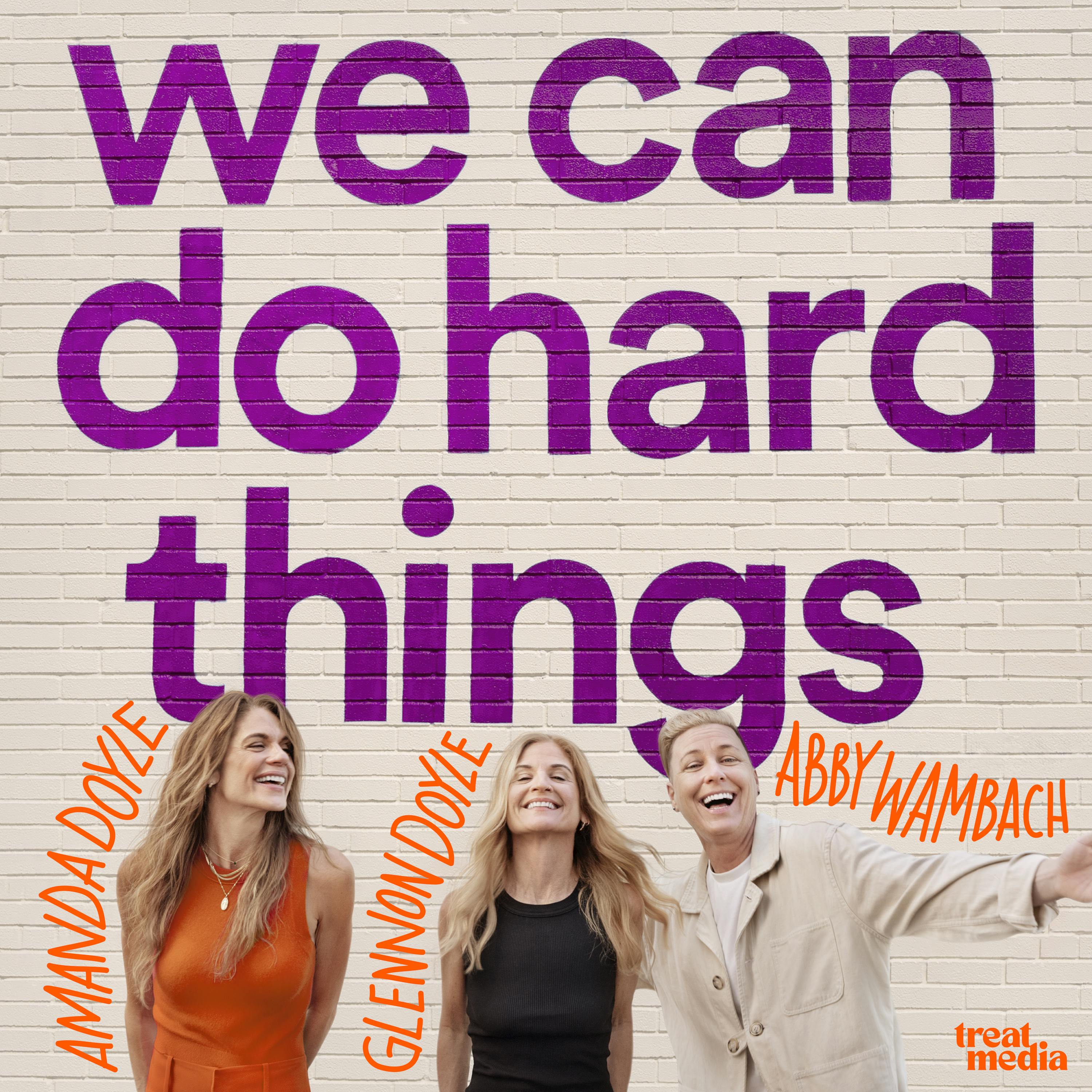
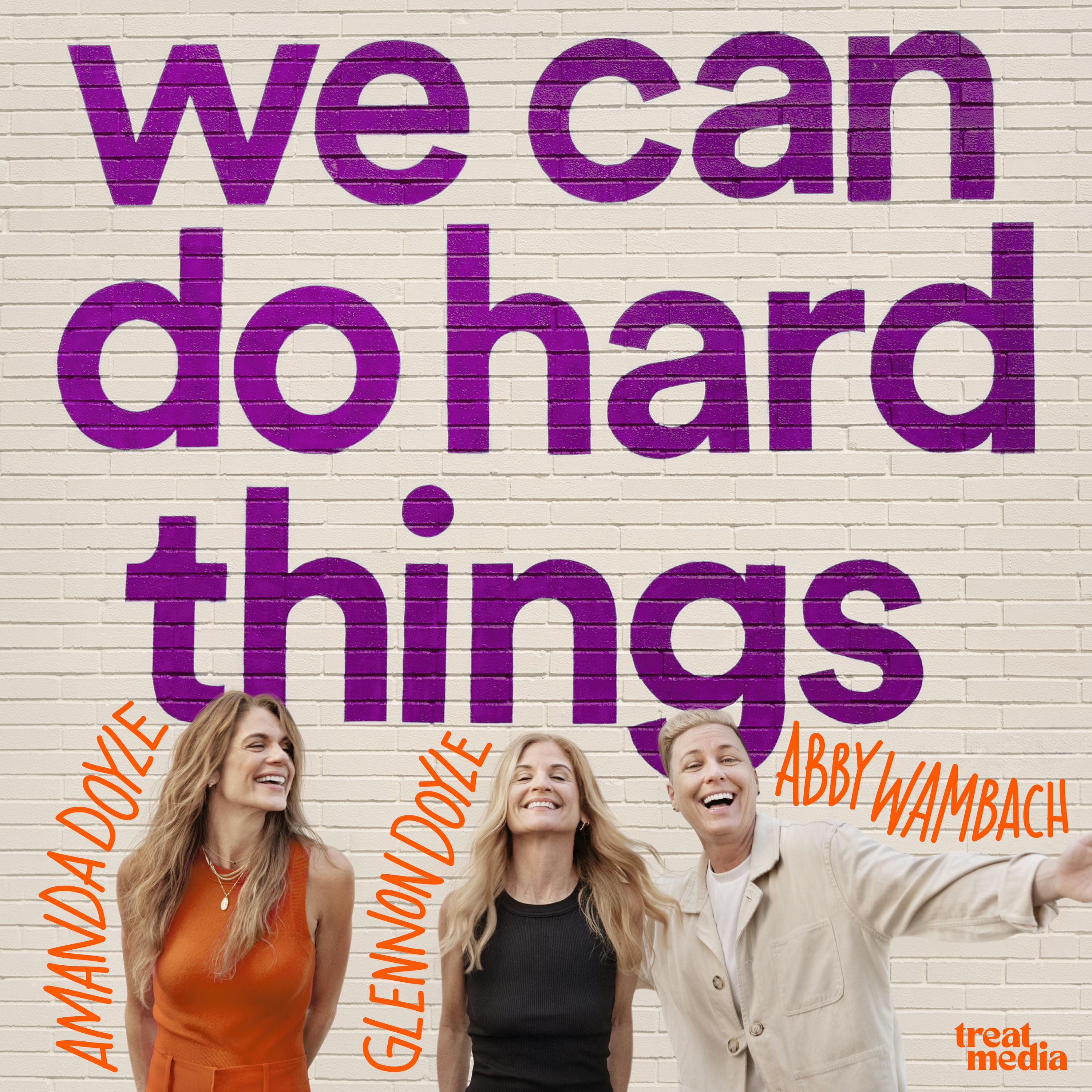
179. How to Fix Our Loneliness with Dr. Marisa G. Franco
2. How Dr. Franco’s work helped Glennon make healthy adult friendships over the past year.
3. Why we’re lonelier than ever – and how that loneliness can make us sick.
4. Why platonic friendships are beneficial to the health of our romantic partnerships.
5. Learning to “trust the spark” when you meet a potential friend – and concrete steps to foster new friendship.
About Dr. Franco:
Dr. Marisa G Franco is psychologist, international speaker, and New York Times bestselling author known for digesting and communicating science in ways tha change their lives. She works as a professor at The University of Maryland and authored the New York Times bestseller Platonic: How The Science of Attachment Can Help You Make—and Keep—Friends.
TW: @DrMarisaGFranco
IG: @drmarisagfranco
To learn more about listener data and our privacy practices visit: https://www.audacyinc.com/privacy-policy
Learn more about your ad choices. Visit https://podcastchoices.com/adchoices
Press play and read along
Transcript
Speaker 1
Here's something that surprised me. 72% of Americans overestimate how much life insurance costs.
We just assume it's way out of reach, expensive like, well, everything is these days.
Speaker 1 That's why I love what Policy Genius is doing. It's not an insurance company, it's a marketplace that makes finding and buying life insurance fast, easy, and actually affordable.
Speaker 1 With Policy Genius, real users have gotten 20-year, $2 million policies for just $53 a month.
Speaker 1 You go online, answer a few questions, and Policy Genius compares quotes from top insurers so you can see all your options laid out clearly.
Speaker 1 Coverage amounts, prices, terms, no fine print games, just clarity. And if you need help, the license agents walk you through everything step by step.
Speaker 1 They'll answer questions, handle paperwork, and make sure you get what fits you. Secure your family's future with Policy Genius.
Speaker 1 Head to policygenius.com to compare life insurance quotes from top companies and see how much you could save. That's policygenius.com.
Speaker 1 To be loved, we need to be lonely.
Speaker 2
Well, hello, everyone. Welcome to We Can Do Hard Things.
Today we're talking about friendship, loneliness, how the hell we do friendship. how we find friends, make friends, and keep friends.
Speaker 2 And before we introduce our guest,
Speaker 2 I want to talk to you about why I'm obsessed with her and why I think this is just the perfect time and place to talk about loneliness and friendship. So last night I got back from a trip.
Speaker 2
Half the people on this friends trip are on this podcast. Okay, so Abby's sister and then a few other friends.
We went away together for friend time. We got back last night.
Speaker 2 This is the second trip that this group has done together. We went away last year.
Speaker 2 When we went away last year together, someone on that trip mentioned some information from her life about eating disorders.
Speaker 2 And it threw me into a tailspin.
Speaker 2 After that is when I went into my deep therapy for anorexia.
Speaker 2 This trip was with that.
Speaker 1 group.
Speaker 2 During my first therapy meeting, the therapist looked at me and said, so how is how you deal with food the same as how you deal with people?
Speaker 2 And so I said,
Speaker 2 oh, come the fuck on.
Speaker 2 What we started to understand together is I avoided food and I avoided people. I restrict myself from food and I restricted myself from friendship.
Speaker 2 That just like food, I decided there was a few safe foods and a few safe people, my family, and then everybody else was unsafe and I kept them away. So
Speaker 2 while I am working on my food avoidance
Speaker 2 proclivities, I am also working on my people avoidance. I have come to understand
Speaker 2 that I am not some kind of different alien human being who does not need
Speaker 2 friendship, sex, or food.
Speaker 2 That I just wasn't doing it the way other people were doing it, which made it so important to them.
Speaker 1 Okay.
Speaker 2 Enter
Speaker 2 my friendship tutor
Speaker 2 who doesn't know that she's my friendship tutor,
Speaker 2 but who, when I read her book, I have actually a 10-page book report on the book,
Speaker 2 who has walked me through my first experiences with friendship, who I think has helped me keep them so far.
Speaker 2 Dr. Dr.
Speaker 2 Marissa G.
Speaker 2 Franco is a psychologist, international speaker, and New York Times best-selling author known for digesting and communicating science in ways that change people's lives, which is so true for me.
Speaker 2 She works as a professor at the University of Maryland and authored the New York Times bestseller Platonic, How the Science of Attachment Can Help You Make and Keep Friends.
Speaker 2 And I just want to tell you,
Speaker 2 Dr. Franco, that if this book can work for me, there's no one it cannot work for.
Speaker 2 Thank you for being here.
Speaker 3 Wow, that was so beautiful. Thank you so much for having me.
Speaker 2 Oh, my goodness. We're going to do two episodes on friendship because it feels so hard.
Speaker 2 So I would love if we could to talk in this episode about why we're lonely and how our attachment styles might keep us lonely and maybe how to find friends and make them and then maybe we can in the second episode talk about how to keep and deepen those friendships that sounds great to me dr franco can we start first for the non-believers like glenn and used to be why do friendships matter what is their power and why do we need them even if we think we don't So first I'll start with why connection matters in general, and then I'll go into friendships specifically.
Speaker 3 But it's interesting that we focus so much when it comes to health on things like diet and exercise, but actually research finds that our social connections predict how long we live even more so than our diet, even more so
Speaker 3 than how much we're exercising. That loneliness, for example, is as toxic for our bodies as smoking 15 cigarettes a day.
Speaker 3
And yeah, so we need connection. We need connection to be functioning well, to be functioning optimally.
Like fundamentally, being lonely is a chronic stress state.
Speaker 3 Like your body's undergoing more inflammation, your sleep is poor because you're waking up to kind of scan for threats at any given time. Loneliness doesn't just change how you feel.
Speaker 3 It changes how you perceive the world, where you perceive that people are rejecting you, even when they're not.
Speaker 3 And so it makes you want to withdraw and it sort of continues the self-reinforcing process of loneliness in a really sad way.
Speaker 3 One of my students, Chris, he was like, it's like an autoimmune disease loneliness. It triggers all of these thoughts and and feelings that perpetuate itself
Speaker 3 but then when i think about the importance of friendship in particular i think about the ways that each person brings out a different side of ourselves and so to know ourselves fully we need to interact with different people who bring up different parts of us like
Speaker 3 you know abby i happen to to know that you enjoy soccer so
Speaker 3 you might have to be around someone else who has the the sort of depth of understanding of soccer that you might enjoy to really be able to have a deeper conversation about it, for example.
Speaker 1 That's Glennon. Glennon has the deep knowledge of the game.
Speaker 3 Yeah, so that's why research has sort of identified that there's actually three different types of loneliness.
Speaker 3 I think a lot of the times we think we only have this desire for like these deep, intimate relationships. And that is one type of loneliness called intimate loneliness.
Speaker 3 But there's also relational loneliness, which is like we want someone as close to us as a friend. And if we don't have that, we still feel lonely, even if we have deep intimacy.
Speaker 3 And there's also collective loneliness, which is our desire for a group working toward a common goal.
Speaker 3 And so, if we're not part of, like, I don't know, a place of worship, a sort of league, volunteering group, we tend to be lonely for that collective that we're a part of.
Speaker 3 And so, you know, I think we've always needed an entire community to feel whole, but we've begun to bury that truth with our narratives of like just finding one person to complete you, and that's it.
Speaker 2 And then that one person,
Speaker 2 it's too much. I feel like I'm I'm one of those Macy's Day parade balloons.
Speaker 2 And for too long, it's been like sister and abby trying to hold on to the balloon. It's too freaking, they're like being swept off the ground every time the wind comes.
Speaker 2 And now I feel like
Speaker 2 I'm trying to bring on more.
Speaker 2 I mean, this, this, this is probably such a terrible, like nobody wants to be a balloon holder, but I'm just saying it feels like there's so many more people and it's, I feel more tethered.
Speaker 4 When I am making these connections i feel more tethered yeah to the earth i think that friendship is that though like i i want to hold the balloon of all of my friends like yeah i think that that is like a really good sign of friendship and your research dr franco not only is it less pressure on the person you said that if in partnerships where there's friendships outside of the partnership, it actually makes you more resilient in it.
Speaker 1 Absolutely.
Speaker 4 That's fascinating too.
Speaker 3 yeah like for example if you get into conflict with your spouse all of a sudden your release of the stress hormone cortisol is like off unless you have quality connection outside that marriage or if i make a friend not only do i become less depressed my spouse is less likely to be depressed or for women in particular who tend to have closer friends for example they're more resilient in heterosexual marriages when they have quality connection outside of that marriage and what we see from the research is that if you only are so focused on one person what happens in that relationship just has such a strong impact on your health and well-being.
Speaker 3 Whereas if you have those tethers outside of that relationship, you're able to stay grounded even when there's ups and downs in that relationship, which fundamentally is a resource for your relationship.
Speaker 3 Yes. Because now you can come back to that relationship.
Speaker 3 Like, I'm not going to come at you in fight or flight mode because I'm able to sort of center from some of the stress we've been experiencing and try to approach you in a gentler and kinder way because I'm more resourced.
Speaker 2 And approaching friendship like a science experiment, which is how I have to do it right now, because none of it's intuitive to me right now, yet.
Speaker 2
Yet. So that weekend that I went away a year ago with these people and I was terrified to go.
I was like, what are we doing? Why are we going on this like women's trip?
Speaker 2
And, but I deeply respected the few women that were going. And I just thought, oh, we'll try it.
Listening to one of the women talk about her life with food.
Speaker 2 switched something in me that reading a million books, interviewing a million people about these very very issues didn't do.
Speaker 2 When I read in your book that friendships expose us to new ways of being in the world, like they show us another life is possible,
Speaker 2 that is what it is. And that's why you kind of have to pick people that you want to be like, right?
Speaker 3 I think so. I mean, there's this theory called inclusion of others of the self, which is like when we get close to people, we include them in our sense of ourselves.
Speaker 3 So if we are befriending people, we want to be like, it's like an expansion of ourselves towards becoming the type of person that we want to become.
Speaker 1 Hmm.
Speaker 2 Do you think that culture hides the power of friendship from us?
Speaker 2 I mean, certainly there's no hiding of romantic, since we're born, the world tells us the most important thing in the world is a romantic relationship.
Speaker 2 One of the reasons I'm so interested in friendship right now is because I'm so into anything that capitalism has hidden from me. I feel like that's probably the answer, right?
Speaker 2 Like going towards, oh, rest. If I'm not supposed to have it, that's probably the answer.
Speaker 1 Love,
Speaker 2
friends, anything that doesn't make me productive. I feel like that's probably where the joy is.
Is it because
Speaker 2 friendship's hard to capitalize on? Like marriage and dating and engagement rings. Once you get into a romantic relationship, you're basically financially fucked for the rest of your life.
Speaker 2 Like everything is, but friendship is outside of things you have to buy.
Speaker 1 Yeah.
Speaker 3 Oh, that is such an original thought. I've never thought of friendship as anti-capitalist, but I love thinking about it that way.
Speaker 3 I will say some historians have sort of speculated that basically friendship used to be valued more. In some ways, people love their friends more deeply than their spouse.
Speaker 3
The spouse was a practical relationship. It was economical.
It was for our reputation.
Speaker 3 And around early 1800s, the genders were considered so distinct that you could only have this deep intimacy with people that are from your gender.
Speaker 3 So friends were writing love letters and carving their names into trees and experiencing all the intimacy that we now consider traditional for like a romantic partnership.
Speaker 3 I think one of the reasons things changed is that as women developed more rights and could own property and, you know, open up a credit card and get a job, they weren't forced and almost coerced into marriage in the same way.
Speaker 3 And if friendship is a significant and valuable and viable relationship that is equal, what if all these women turned towards their friends?
Speaker 1 Wouldn't
Speaker 3 Destroy
Speaker 3 marriage. Yeah.
Speaker 3 And so, in some ways, it's this devaluing process that allows us to continue to be apart as women in the traditional institution when there's no longer the same economic and structural incentive.
Speaker 3
Now it's this very psychological incentive. Like, you don't matter.
You don't have any love without this. You're not a worthy person unless you enter into this type of partnership.
Speaker 1 Wow.
Speaker 4
This show is brought to you by Alma. I want to start with a truth I've learned the hard way.
Taking care of your mental health isn't a one-time decision. It's a daily practice.
Speaker 4 And even when you know you want support, the hardest part is often just figuring out where to start. For me, finding the right therapist changed everything.
Speaker 4
But getting there was kind of overwhelming. Endless searches, phone calls, dead ends.
It's wild that the thing that's supposed to help you can feel so hard to reach. And that's why I love Alma.
Speaker 4 Alma, A-L-M-A, takes all that chaos out of the process. It's a simple, easy-to-use platform where you can search for licensed in-network therapists who actually feel like the right fit.
Speaker 4 You don't even need an account to browse and you can filter by what matters most to you, their background, specialty, therapy style, and more. And here's the part that really matters.
Speaker 4 This isn't just about checking a box, it's about real connection. 97% of people who found a therapist through Alma say they felt seen and heard.
Speaker 4
And that's the heart of good therapy: someone who gets you, not just your symptoms. Better with people, better with Alma.
Visit helloalma.com/slash we can to schedule a free consultation today.
Speaker 4 That's hello A L M A dot com slash W E C A N.
Speaker 1 I also want to know about where we are right now in terms of loneliness. Are people lonelier than ever? And if so, why?
Speaker 3 So
Speaker 3
research finds that it's about 20 to 45 percent of us are lonely. And Very sadly, the youngest generations are the most lonely.
It used to be that they were the least.
Speaker 3
So Gen Z in particular, I'm teaching them right now. And I'm concerned.
Also, the rates of mental health issues are like 50%
Speaker 3 of people their age have mental health issues.
Speaker 3 And so if we look back into history, it kind of started in the 1950s that like our social connection started to go down as people started to use televisions.
Speaker 3 Before then, we spent our leisure time with other people. And all of a sudden, people were spending their leisure time indoors.
Speaker 3 It triggered this sloth-like state where it's like, I'm watching TV, I don't feel like doing anything else. And it takes energy to reach out to and interact with people.
Speaker 3 In the book, Bowling Alone, Robert Putnam, he like looks at all the different factors that predict disengagement from your community and he finds television is the most powerful one.
Speaker 3
But this was in the 90s. So imagine this book came out in the 90s.
Now imagine we have added smartphones because around 2012, loneliness began to spike a lot more.
Speaker 3 And what was happening at that time was that the smartphone became more popular. And it's complex and it's complicated.
Speaker 3 I don't want to simplify things because there's this theory called displacement theory, which is basically the idea that when we use our phones and social media to displace in-person interaction, like I'm just scrolling on TikTok all night, we're a lot more lonely.
Speaker 3
But if we use it to facilitate in-person interaction by like, I see your Instagram post. It makes me realize I want to reach out to you.
Let's get coffee. Or I'm on Facebook.
Speaker 3
So I know what events are happening and I go to those events. We're actually less lonely than people that are not using technology.
But the problem is
Speaker 3 these apps were basically built for isolation to keep us on them. Maybe like Marco Polo or WhatsApp, but most of these apps were not built in ways to get us off of them.
Speaker 3 And if we use them to facilitate in-person interaction, it gets us off the app.
Speaker 2 That's one of the reasons I figured out I have to figure out friendship because I had this one birthday.
Speaker 2 where
Speaker 2 I was on social media and I lagged on. And of course, like there were a million birthday messages because I have a lot of followers.
Speaker 2 And I got like four texts from my people, my family, but no friends.
Speaker 2 And that was my doing.
Speaker 2 I had this like,
Speaker 2 I put all my energy into the intense little teeny circle of my family and then disperse it. at this other level of like social media, but I didn't have that middle community.
Speaker 2 And I was like, by the time I'm 50, I want to like know that there's, there's going to be a group of women who, of course, I'm going to know their birthdays.
Speaker 2 They're going to know mine, whatever, you like show up on those days.
Speaker 2 But I guess I needed to use social media to plan things instead of to avoid things.
Speaker 3 Yeah.
Speaker 4 I've heard you say that one of our issues is that we only have this one word friend to refer to everyone we know
Speaker 4
who isn't our partner. And I've even heard people say things like, I can't stand my friend who's always putting me down or my best friend is so terrible to me.
Are we using the word friend correctly?
Speaker 4 And is that part of our problem? Are those people actually our friends?
Speaker 1 And are we having a vocabulary problem?
Speaker 2 What is a friend? Yeah.
Speaker 3 Yeah,
Speaker 3 I think we are having a problem. It's both a definitional problem problem and a marketing problem.
Speaker 3 I think friendship has a huge marketing problem and that we think of it as like a happy hour every month rather than you can do everything you do with the spouse with a friend aside from sex.
Speaker 3 So my definition of friendship, this came from, I went to a friend's wedding and one of my close friends, her husband was there and he was talking about for his bachelor party, half of his friends had canceled last minute.
Speaker 3 So everyone had to pay like double the price and half the people didn't come.
Speaker 3 And he was kind of talking about his friend who lived in his neighborhood, who he can never get in touch with and never reaches out to him. And I was just thinking, like, that is not a good friend.
Speaker 3
That is maybe good company. Good company is someone whose company you enjoy and you like them as a person.
But a good friend is, I'm committed to you. I'm invested in you.
Speaker 3 I try to follow through with what I say to show up in your times of need, to show up in your times of joy. It's intentional and
Speaker 3 it requires effort. just because we like each other doesn't mean we're friends because we haven't necessarily made that commitment and that investment in each other
Speaker 2 remember when levy said she uses the word friend more carefully than she used to because she doesn't say friend until it's someone that she wants to be responsible for in the in life
Speaker 2 I remember her saying that and being like, well, that's why I don't have any friends.
Speaker 1 And
Speaker 2 I make a joke about that, but that is real.
Speaker 2 And I think it speaks to what your book does and what your work does, which I find very tricky, which is that
Speaker 2 it's about friendship. Like, how can I make a connection with another person? But all of your work is infused with this trickery, which is about
Speaker 2 connection to self.
Speaker 2 Because I can't do any of this shit in your book, Dr. Franco,
Speaker 2
until I figure out my connection to self first. That's what I think is true.
For example, I can't be authentic until I figure out my defense mechanisms are.
Speaker 2 So every time I try to use one of your strategies, I have to go back three things and work on my own shit. So my question is,
Speaker 2 this has to do with attachment style. P.S., this should be the new, like when you're in a bar or in your whatever, and you're like, what's your sign? It should be like, what's your style?
Speaker 2
Like, everybody should have to wear a name tag with their attachment style on it. This is how we should find each other or avoid each other.
Okay.
Speaker 2 Can you talk to us about attachment and how if we knew what our attachment styles were about ourselves and others, it might
Speaker 2 help us be compassionate with ourselves and each other and what an attachment style is and how we can use it to be less lonely.
Speaker 3 Yeah, I love just the way that you describe it because I think you describe it in such an empowering way.
Speaker 3 Our attachment style is basically the sum total of our earlier relationships that have created within us this template for how we assume people will treat us.
Speaker 3 And that template becomes more true than the truth because most of friendship is ambiguous. Like we don't actually know what's going on.
Speaker 3 So whatever our template is telling us and reaching for in light of this ambiguity is the ways that friendship actually impacts us.
Speaker 3
You have these securely attached people. They have this history of healthier, loving, trustworthy relationships.
And they are so good at friendship. Like they're initiating more friendships.
Speaker 3
They're having less conflict when they do. They're working through it better.
They assume their friends will like them. They trust other people, but they also are not Pollyanna about it.
Speaker 3 They'll sort of adjust their expectations based off of the feedback they get in real time. They start with optimism, but then adjust.
Speaker 3 And so these secure people
Speaker 3 have this secure relationship with themselves because fundamentally, one of the ways that our attachment harms us is that our attachment style is a breakdown in our relationship with our emotions, not just other people.
Speaker 3 So, for example, anxiously attached people, they always fear other people are going to abandon them and reject them.
Speaker 3 And so, what happens in their friendship is that they build intimacy very quickly as a sign that you won't reject me, but then it sort of blows up because it doesn't have much of a foundation or because they tend to see rejection when it's not there.
Speaker 3 Like even in their brain, you can see that their amygdala is reacting more strongly to threat than the other attachment styles.
Speaker 3 And that they tend to experience more threat at the neural level in response to their relationships than other attachment styles.
Speaker 3 And so what you tend to see with these anxiously attached people is that they tend to sacrifice themselves to be in relationship with other people because they feel like they need to, otherwise people will leave them.
Speaker 3 And so when it comes to friendship, they're sort of marked by high effort, but low reward.
Speaker 3 They're putting in so much, but yet their relationships are blowing up and they're so fragile and they don't always know or understand why or what are the sort of behaviors that are coming out in your friendships that may influence them in this way.
Speaker 3 And then you have avoidantly attached people who basically don't trust anyone. And so they're kind of taking themselves out of the game of friendship.
Speaker 3
They're not initiating, they're ghosting, they're withdrawing from people. There's not a lot of vulnerability in their connections.
People that are close to them feel like they're kind of an enigma.
Speaker 3 It's kind of low effort and low reward. They tend to focus more on work than relationships and they tend to enjoy their friendships less.
Speaker 3 And so you'll see with avoidantly attached people, like either they have few friends or they have friends, but it tends to be like very shallow, like kind of like party friends.
Speaker 3 And, you know, I wanted to go back to my point about like your attachment style, it's a breakdown in relationships, but it's also a breakdown in an internal relationship to your own emotions because the insecurely attached people in some ways, this sounds like kind of victim blaming.
Speaker 3 So I'll say it and then try to backtrack it a little bit, but they're in in some ways using other people as a tool to regulate their emotions because they haven't learned that to do that for that and themselves internally.
Speaker 3
So anxiously attached people, it's like, I'm constantly feeling this threat. I don't know how to soothe it.
So now I have to control you.
Speaker 3 Now I have to tell you, you need to show up for me in this moment. Now I have to take away your sense of agency and try to force you to reassure me in the ways that I need.
Speaker 3 And the avoidantly attached person, so threatened.
Speaker 3 So I'm trying to handle those feelings of threat and lack of safety by now that shows up in my relationships as me me pushing you away all the time and keeping you at a distance all the time.
Speaker 3 And so I think becoming secure is like, it's about how we relate to our relationships, but it's also like we start to relate to our own emotions in more validating and loving ways.
Speaker 3 So we're able to let other people beef people rather than sometimes needing to use them. in this way that where we're using them to soothe our own emotional world.
Speaker 2 Okay, so
Speaker 1 because the
Speaker 2 attachment is your gut feeling about what's going on, right? It's it's your interpretation of what's happening.
Speaker 4
It's a my favorite understanding of this is a series of predictions. Right.
The way you say it's a series of predictions of like, well, this is what's going to be happening. That's what you're doing.
Speaker 4 This is what's next.
Speaker 2
Right. And so you seek what you shall find.
What you seek, you find. So it becomes reality, pod squares.
This is just what blows my mind. So let's just stay here for a minute.
Speaker 2
Let's take a specific thing. Your friend doesn't call you back.
You make a friendship. You take the leap.
Your friend doesn't call you back.
Speaker 2 A secure attached person thinks, oh, my friend's probably busy, right? Is that what a securely attached?
Speaker 2 An anxious person thinks, my friend hates me and I have to fix it. And an avoidant person thinks, I hate my friend.
Speaker 1 That's great.
Speaker 4 I knew that person wasn't a real friend. Yeah.
Speaker 4 You said that we act in ways that fulfill the prophecy of our greatest fears. Yeah.
Speaker 2 So what's the greatest fear of an avoidant person and an anxious person?
Speaker 3
Yeah, the anxious is that you're going to abandon me. The avoidant is that you're going to hurt me.
It's like if I let you in, you're going to do something to harm me.
Speaker 3
Both of them have trouble feeling safety. I think both of them really share this underlying fear of rejection.
For anxious people, it's on the surface more. For avoidant people, it's like repress.
Speaker 3
Like, I'm not actually scared of you rejecting me. I just don't like you in the first place.
Like, there's this extra extra defense mechanism that happens with the avoidantly attached.
Speaker 1 Hmm.
Speaker 4
So, avoidant manifests the same fear, but with aloofness. Yep.
And anxious manifests the same fear, but with clinginess.
Speaker 3 Exactly.
Speaker 3 It's like two different strategies. And I think it's important to mention, because I don't want to end on a victim-blaming note, that these are coping strategies.
Speaker 3
Hello. We developed them to cope with something.
It was an effective way of coping. Like if you're with someone who you cannot trust fundamentally, it is adaptive to be avoidant.
Speaker 3
Like, it is adaptive to withdraw from them. The issue is not that you have this coping mechanism.
The issue is that you use it indiscriminately.
Speaker 3 So, you don't notice that sometimes people will accept you, or sometimes people are safe.
Speaker 4 This show is sponsored by MIDI Health. For way too long, we've been told that we just have to power through the symptoms of menopause.
Speaker 4 That hot flashes, mood swings, sleepless nights, exhaustion are just part of the natural order of things.
Speaker 4 It's no wonder why 75% of women who do seek help for perimenopause and menopause end up getting no treatment at all. 75%,
Speaker 4 zero treatment. A friend of mine was talking about this just a few weeks ago.
Speaker 4 She'd been dealing with constant perimenopause symptoms and said just trying to find a doctor who actually understands menopause felt impossible.
Speaker 4 Researching specialists, figuring out insurance, waiting forever for an appointment, it's all too much. So I told her, skip all of that nonsense, go straight to MIDI.
Speaker 4 She went online and got an appointment the next day. With MIDI, you can meet one-on-one with a perimenopause trained clinician online from wherever you are.
Speaker 4 They'll actually listen to your whole story and build a plan around you. That could mean hormone therapy, lifestyle changes, preventive care, or all of the above.
Speaker 4 They even send prescriptions right to your local pharmacy. Ready to feel your best and write your second act script?
Speaker 4
Visit joinmitti.com today to book your personalized insurance-covered virtual visit. That's joinmittie.com.
MIDI, the care women deserve.
Speaker 2 So, some signs you might be avoidant:
Speaker 2 Ghosters.
Speaker 2 Ghosting is my best strategy. So is ghosting avoidant?
Speaker 3
Yes. Yes.
Yeah. Ghosting is linked to avoidance.
Speaker 2 I have a new friend. You and she have been my friendship tutors.
Speaker 2 And early on in our friendship, she understood my avoidant situation before I did. And she said to me one day, I want to make sure that you
Speaker 2 just don't leave in our relationship, that you just don't leave. And I went went home with Abby and was like, did you hear that shit?
Speaker 2
I can't promise that. I can't promise that I'm not going to leave.
And Abby said, she didn't say just don't leave. She said, don't just leave.
Speaker 2 Meaning, don't just leave without trying something else first.
Speaker 2 So would it be an avoidant strategy to when a conflict comes up?
Speaker 2 in a friendship, like somebody's hurt my feelings, somebody's done something, an avoidant person just leaves instead of trying something else first. An avoidant person is out of there.
Speaker 2 What would an anxious person do for people who are listening? How do they find themselves in this? How do they know who they are in the friendship?
Speaker 3
So the anxious person probably thinks, it's my fault. It's my fault that there's a problem.
Let me stay engaged because it's my fault.
Speaker 3 And they continue on in the relationship, even though they feel uncomfortable in it and they don't address the problem until they start to boil over or there's like passive aggressiveness that starts to come out.
Speaker 3 And so at some point, there's like this volatility that happens where their friend might be like, what happened? Like, why are you so upset? I didn't even know anything was going on or happening.
Speaker 3
The avoidant is kind of just ghosting earlier on. Avoidant is linked to being more likely to end friendships and in these indirect ways like ghosting.
The anxious is holding on for dear life.
Speaker 3 Sometimes we do see anxious people use avoidant strategies too, where if anxious people feel they're being rejected, they kind of might try to reject first too.
Speaker 3 The The secure person, first of all, they're not assuming something's wrong until they have enough evidence that something's wrong.
Speaker 3 And then, and this was my hardest thing when it comes to attachment, like conflict and friendship is definitely the piece that makes me feel most anxious because I felt like it's my responsibility to get over it.
Speaker 3 And if I'm not getting over it, like that's me not being a good friend.
Speaker 3 And the growth that I experienced in Platonic was just reading about how people that address these issues with their friends, they have more intimacy, they have more closeness.
Speaker 3 There's this psychoanalyst, Virginia Goldner, who talks about how you could have flaccid safety, which is like, we're close because we pretend there's no problems, or you could have dynamic safety, which is like, we're close because we rupture and we repair and we rupture and we repair.
Speaker 3 And whenever there's a rupture, we know that we can. repair.
Speaker 3 And so literally, I needed to read all this research that said people that have open empathic conflict have more intimacy in their relationships.
Speaker 3 And I was like, okay, if the research says, I guess I will try to actually address a problem with my friend, even though I'm so scared because I think she's just going to reject me and or be mad at me for it.
Speaker 3 And that's the other problem that the anxiously attached people, right? They confuse addressing conflict and how you address conflict.
Speaker 3
So often an anxiously attached person, they'll address the conflict, but it's boiled over so much that they're at the point of attack. And it's like antagonistic, fight or flight.
You're a bad friend.
Speaker 3 How could you do this to me? And then their friends pull away and they're like, like, oh, I guess I can't address conflict. It's the self-fulfilling prophecy.
Speaker 3 I guess I have to pretend that I have no needs and keep sacrificing in my relationships. But not knowing that it's not the fact that you brought it up.
Speaker 3 It's how you brought it up because securely attached people, they'll use conflict as an act of love and reconciliation. It'll look like, I want to be close to you.
Speaker 3 And so I want to bring this thing up because I don't want it to pull us apart because you're so important to me. And this is how I felt in this situation.
Speaker 3 But I also want to understand what was going on for you. What were you feeling in this moment? Like, how can we navigate this in the future so that we can stay close?
Speaker 3 That's what conflict looks like for more securely attached people.
Speaker 1 How do we get this way? As a caregiver of children, I'm like trying to
Speaker 1 see their attachment styles, right? And I'm like, are these kids just born this way?
Speaker 2 Am I making them this way? Is it genetic?
Speaker 1 I need to know because I feel very confused, not just dealing with my own attachment styles, but like looking looking to my children as their caregivers.
Speaker 3 It's complicated. Like, I think a lot of the attachment research has like traditionally focused on early caregiving relationships, but now we see that there is a genetic component to it.
Speaker 3 We've also seen that secure attachment has been decreasing over time.
Speaker 3 And so I think that technology use honestly plays a role because you're not getting that time alone with yourself to develop that ability to regulate your emotions.
Speaker 3 Like that time to feel is like part of what keeps you secure but in caregivers that foster more security we tend to see a lot of responsiveness which means if your kid has a need you try to meet it instead of being like well why do you have this need or you know you shouldn't cry or you shouldn't be sad you don't try to dismiss you kind of treat your kid like you would another adult with needs instead of trying to suppress them in your kid.
Speaker 3 You encourage your kid's emotional expression. You validate their emotions.
Speaker 3 Those sorts of behaviors that, in terms of the ways that parents treat their kids.
Speaker 3 Whereas, you know, attachment gets transmitted intergenerationally because someone who is anxiously attached, for example, might take their kids' actions as an affront to them and then are reacting from a triggered space, like, you know, my kid needs to distance themselves, and that's an attack on me.
Speaker 3 And so, I'm going to sort of escalate this.
Speaker 3 Whereas the more securely attached parent can de-escalate with the kid and try to be the source of emotional regulation for the kid, but that requires them to be regulated themselves.
Speaker 2
And then there's this pattern. You said the rich get richer.
That's how I've always thought about attachment. Like,
Speaker 2 if you are a secure person who's just always walked around believing that people are good and that they're going to like you and that most people can be trusted, then you go into relationships like that.
Speaker 2 And then guess what? People like you. And they trust you because when people feel trusted and liked, they like you.
Speaker 2
And so then your entire life is like you're a young white man and you just keep investing money over and over. And then it keeps growing.
You're like, what? Like it's hard. Like,
Speaker 2 but if you're an avoidant person and you go into things thinking, I can't trust them.
Speaker 1 I'm going to get hurt.
Speaker 2
Then they feel that energetically. They don't feel trusted.
So they become more distant. So it's constantly your whole life a self-fulfilling prophecy.
So it's not just your caregivers.
Speaker 2 It's like the relationships you choose later because of that first seed of what you believed about the world.
Speaker 3
Exactly. Exactly.
Like securely attached people,
Speaker 3 it's not just that they relate to themselves well. They also then choose relationships that foster further security in them.
Speaker 3 Like secure people will not choose to be in a relationship that someone who's anxiously attached might
Speaker 3 tolerate because they think they have to. Whereas a secure person, if you're not treating me in ways that align with how I feel about myself, I'm going to go find someone that will.
Speaker 3 And you're right that our attachment, we don't recognize the ways that it's a self-fulfilling prophecy.
Speaker 3 So, one of the tips that I share for making friends, and this comes from the security attacks, is that they assume that people like them, trying to remember to make that assumption.
Speaker 3 So, that when you're deciding, should I reach out to this person? And part of you is like, oh my God, they're going to reject me and think I'm weird.
Speaker 3 You have another voice that says, What if they accept me? What if they might like me? Right.
Speaker 3 And, and that, according to the research, when people are told to make this assumption, when they go into a group, even when this is, this is false, like there's no evidence that you're going to go into this group and be liked, they actually become warmer and friendlier and more open toward other people.
Speaker 3 Whereas we see that people that are rejection sensitive, which is a quality of anxious attachment where you see rejection when it's not there, when someone, for example, is maybe a little bit more tired than usual, they tend to respond by being cold and withdrawn.
Speaker 3 Like these people that always fear rejection are consistently rejecting other people and not realizing it. And then they're getting rejected back.
Speaker 3 And that's why I think understanding attachment style is so important, not so that we can be like, well, I guess I'm doomed.
Speaker 3 And good for all those people that had those healthy relationships, but so that we can be like, oh, I didn't realize how my fears were manifesting in how I treat other people and that I can treat other people differently and get a different result.
Speaker 3 Like it's not hopeless for me.
Speaker 1 That's so good.
Speaker 4 And in fact, there's a likability fallacy, right? It is,
Speaker 4
if you're thinking, well, what she's saying is probably true for most people, but not for me. People don't like me.
It's true that we underestimate that people will like us across the board.
Speaker 3
Yes. So this is called the liking gap.
It's this research where strangers interact. Afterward, they're asked, okay, how much do you like them? How much do you think they like you?
Speaker 3 And so in a bunch of different settings in the lab, in the community center, researchers have found that we underestimate how liked we are by other people.
Speaker 3 And not only that, the people that are most critical of themselves, their liking gap is most most pronounced.
Speaker 3 What that means is you might think that the ways that you are so critical for yourself are the truth, but they're distorting the truth even more.
Speaker 3 Like people like you even more if you're very self-critical of yourself than you think.
Speaker 2 And that comes to the self thing.
Speaker 1 I don't know about you, but mornings in our house can feel like a marathon before 9 a.m.
Speaker 1 And I am just used to powering right on through, which always left me dragging by mid-morning. Cachava has completely changed that for me.
Speaker 1 It's a plant-based superfood meal shake that actually feels like real nourishment, not some chalky health drink.
Speaker 1 With over 85 superfoods, nutrients, and plant-based ingredients, cachava is a whole-body meal that supports your strength, energy, digestion, metabolism, cognition, and immunity.
Speaker 1 And best of all, it's the taste. They really understand that we need to be motivated by actual flavor here.
Speaker 1 I have more steady energy, fewer crashes, and I am not rummaging through the pantry at 10 a.m. for snacks.
Speaker 1 It's become this little anchor in my day, something easy and good I can do for myself, even on the most chaotic mornings.
Speaker 1 If you've seen me recently, I'm probably sipping on their new strawberry flavor. They use real freeze-dried strawberries and you can really actually taste the difference.
Speaker 1
You've never tasted strawberry like this. Go to cachava.com and use code, we can do hard things for 15% off your next order.
That's kachava, k-a-c-h-a-v-a.com, code, we can do hard things for 15%
Speaker 1 off.
Speaker 2 So if I go into being an avoidant person,
Speaker 2
I was an addict for a very, very long time. And I can look at alcohol and food and all the things as avoidance of self.
I suppose they could also be things anxious people would use to numb self.
Speaker 1 Yeah, regulate.
Speaker 2 When I'm reading your work and when I'm reading about attachment and I think,
Speaker 2 I have to have a connection to myself.
Speaker 2
When I was on this weekend, One of my friends needed tampons. Okay.
So I remembered she needs this. And then I was in my room and I was like, I'm going to bring her her this.
Speaker 2 And I told Abby when I came back, I was walking to a room and I was saying to myself, I am a thoughtful person who does thoughtful things.
Speaker 1 I'm a thoughtful friend.
Speaker 2 I am a thoughtful friend who does thoughtful things. Like,
Speaker 2
and it actually helped me. I was like, look at me.
I am doing a thing a friend would do. Is that batshit crazy? And like, is this internal talking to yourself like a friend and liking yourself?
Speaker 2 Because if we think everybody doesn't like us and that makes people not like us, then would liking ourselves believing we're likable really inside not just acting like it would that make friendship easier and how do we like ourselves more and be more connected with ourselves and not avoid ourselves yes yeah
Speaker 3 so
Speaker 3 there is this theory called self-verification theory which is the idea that we look for people that verify our sense of self, whether positive or negative.
Speaker 3 So people that have a more negative sense of themselves, they actually prefer to interact with people who see them more negatively because they feel more understood, because they don't feel like an imposter, because they don't feel manipulated.
Speaker 3 If someone is like, I love you so much, and you don't feel lovable, you're like, you're lying to me, or you're stupid, yeah, you're stupid, or it's only a matter of time until you find out the truth.
Speaker 3 And I don't want to be in this relationship where I feel like I need to play pretend. So, even though all of us want to be loved, if we don't love ourselves, we can't believe that we're loved.
Speaker 3 loved it becomes very very hard and so that's why i think this is you know an idea for a next book that you know the work on the self is really required to build those healthy relationships with other people because we need to work on ourselves so we could actually receive the healthiness and the love that's out there.
Speaker 3 And like I said, I say in Platonic, like avoidant people, when people are loving toward them, they think there's an ulterior motive. They're trying to get something out of me.
Speaker 2 Yes.
Speaker 3 Versus secure people who are like, this is an act of love. Now I feel closer to you.
Speaker 3 The avoidant is like, I feel threatened by you because you're trying to get close to me so that you can harm me more.
Speaker 2 And that comes from lack of self-love and self-esteem because you must have an ulterior motive since I'm no good.
Speaker 2 If I were secure, I would think, of course, this person wants to be good to me because I am good. Why wouldn't they?
Speaker 4 That was the part of your book that blew my mind the most. Those two things that if over time, if you're being in a state of self-protection by not sharing yourself,
Speaker 4 it actually becomes self-harm
Speaker 4 because your biggest resources for getting through things is your ability to connect with people. So, the self-protection turning into self-harm.
Speaker 4 And then, this second piece that goes exactly to what you were just saying, Dr.
Speaker 4 Franco, if you have this imposter thing, well, that's great that you like me or love me, but the only reason you like or love me is because you don't know this thing about me that as soon as you did, you would not anymore.
Speaker 4 So you can't actually really love me or like me. But that becomes
Speaker 4 a ceiling to
Speaker 4 how much love you can actually receive because you internally believe there's no way that your love for me is real because I haven't shared with you this thing.
Speaker 4 And so the sharing of yourself is the key
Speaker 4 lever that dictates how much love you can accept in.
Speaker 3
You're so good at putting it. I mean, I love, like, I love what I wrote, Being Floss Through You.
I'm like, yes, yes, yes, that's it. It's the ceiling.
Speaker 3 It's that if we're never vulnerable, if we're never sharing ourselves, if there's these parts of ourselves that feel so full of shame, then we will never trust love because if you don't know me, how can I trust that you love me?
Speaker 3 And I think for a lot of us who maybe have a lower sense of self-worth, it's like we don't let people know us because we feel like if we do, they're going to reject us.
Speaker 3 That's the avoidantly attached strategy. And Glenn, I honestly like talking to you about it because I think a lot of the times you see avoidant attachment manifested as,
Speaker 3
I just don't like people. I just don't think people can be trusted, or I just don't really need people.
And I see you going that one step further and saying, well, actually,
Speaker 3 there is these fears that manifest as that desire to distance myself from other people. And there's this underlying vulnerability or fear or work that I need to do on myself.
Speaker 3
And I think a lot of people don't get there. They just stay in the place of, I can't trust people.
I don't need people. What value will they bring to my life?
Speaker 3 And it's like, you actually don't know the value they will bring to your life if you never allow yourself to experience it.
Speaker 2
That's it. I didn't know.
When I said, Dr. Franco, I don't need friendship.
Speaker 2
I was right because the way I was doing it was, I always said, it's just a burden. It's just like another thing to do.
It's another burden. And the way I was doing it was, because
Speaker 2
I would get together with someone and they would share themselves. And I would offer my best to them.
And then they would ask me how I was.
Speaker 2 And I would give them what you call packaged vulnerability, which is a story about something that I had already just solved.
Speaker 2 And so it was nothing but a burden because it was no help to me.
Speaker 2 It was no
Speaker 2 figuring out, oh, when my friend talks to me,
Speaker 2 I should say the thing I'm really thinking and really struggling with in this moment.
Speaker 2
Because my go-to was I'm supposed to be vulnerable. So I was bulimic since I was 10 and I was alcoholic.
Here's my vulnerable story. It's vulnerable as shit, but like not
Speaker 2
because it's not what right right now what I'm thinking is I'm really scared. I don't know how to do this.
Are you going to like take over my life? I feel like I'm losing control of my time.
Speaker 2 Are you going to call me every time you need something? How does this work?
Speaker 2 And
Speaker 2 I've I've struggled with mental health my whole life.
Speaker 2 And I think that one of the reasons your work is so important is because I have always thought I don't have time for friends because I just have to spend all day not losing my shit.
Speaker 2 I have all of these mental health strategies
Speaker 2 and I have to do all the things every day to just stay on this side of the
Speaker 2 abyss.
Speaker 2 I didn't understand until this past year when I've been experimenting with friendship. My time with friends
Speaker 2 has helped my mental health more than spending all day doing all that other shit.
Speaker 2 And I say this like it's a science experiment, like I was a big skeptic.
Speaker 2 You know, this friendship just adds another thing to my to-do list.
Speaker 2 I figured out I was anorexic. I figured out all these actual things through exposure to other healthy women's lives and through their support
Speaker 2 that I'm in a better place a year later than I ever have been after decades of mental health strategies that are isolated.
Speaker 1 It's really something because, you know, we just got back from this trip and Glennon has a regimen every single day. She goes on her walks, she's reading, she's doing yoga, doing the things.
Speaker 2 Fox breathing for two hours, like all the things.
Speaker 1
She's doing the things that are regulating her emotions. And then we go on this trip this last weekend.
She doesn't have to do a single thing except talk.
Speaker 1 I actually one night we got back into the room, I said, I can't believe how much you're talking and you're still engaged.
Speaker 1 And I can see that like there's a part of her that's coming to life like it does when she meditates for an hour.
Speaker 2
But she doesn't know I'm back in the room going, okay, let's see. Here's Platonic.
Okay, I'm on page 49. Now, if she says this, I say this.
Speaker 2 Let's stop here and come back because I want to talk the pod squad through your advice about how to find friends, how to make friends, because I actually have followed a lot of it and it's working.
Speaker 2 And I don't like that we have considered so much of this intuitive.
Speaker 2 Because for many of us, it is not at all intuitive. For me, recovery from eating disorders, like, don't tell me to fucking eat intuitively.
Speaker 2
If I could do that, do you think I'd be in this place, right? Like, I need you to tell me what to do first. until it feels natural.
And that's what I feel like your work does.
Speaker 4 And as a little teaser, we've been talking about how the cap on the love and the friendship that you can receive and that feeds your mental health relates to your vulnerability and authenticity.
Speaker 4
And no one knows what the fuck that means. But Dr.
Franco says, authenticity is who we are without defense mechanisms. Okay.
Speaker 4 Just marinate on that for a couple of days and come back because
Speaker 4 that is the stuff. We're going to talk about defense mechanisms,
Speaker 4 how that is your blocker to your authenticity, which is your blocker to your friendship and love in your life.
Speaker 2 But I mean, Dr. Franco probably won't come back because for sure she's going to abandon me in the next.
Speaker 1
Before we head off, I just think it's actually really incredible because I would call myself a secure attachment. Yeah.
And the fact that, like, you're my best friend. I know.
Speaker 1 And the fact that you're such an avoidant, Would you say you're avoidant or anxious?
Speaker 2
Well, I want to talk to Dr. Franco about that because I think I could be both.
Yeah.
Speaker 2 But one of the things that's so hopeful about all of this, and what you repeat over and over again in your work, is that this is all totally changeable.
Speaker 2 I don't know if I would have been willing to go look at friendships if you hadn't proven to me over the last
Speaker 2 however the how long many years
Speaker 2 seven years that all of my ideas were wrong, that this person can be trusted and isn't going to abandon me. And
Speaker 2 you're changing my predictions about what's going to happen, our relationship is. And that's allowing me to test more people.
Speaker 2 Test more people.
Speaker 1 Okay.
Speaker 2
We can do hard things. I'm sweating.
We'll be back with Dr. Franco next time.
Speaker 1 Love you.
Speaker 2 I give you Tish Melton and Brandy Carlisle.
Speaker 1 I walked through fire, I came out the other side.
Speaker 1 I chased desire,
Speaker 1 I made sure I got what's mine.
Speaker 1 And I continue
Speaker 1 to believe
Speaker 1 that I'm the one for me.
Speaker 1 And because I'm mine,
Speaker 1 I walk the line
Speaker 1 Cause we're adventurers and heartbreaks on map A final destination
Speaker 1 we lack
Speaker 1 We've stopped asking directions
Speaker 1 to places they've never been
Speaker 1 And to be loved, we need to be known.
Speaker 1 We'll finally find a way back home.
Speaker 1 And through the joy and pain
Speaker 1 that our lives bring,
Speaker 1 we can do a heart game.
Speaker 1 I hit rock bottom, it felt like a brand new start.
Speaker 1 I'm not the problem,
Speaker 1 sometimes things fall apart.
Speaker 1 And I continue to believe
Speaker 1 the best
Speaker 1 people are free.
Speaker 1 and it took some time.
Speaker 1 But I'm finally fine.
Speaker 1 Cause we're adventurers, and heartbreaks are map.
Speaker 1 A final destination
Speaker 1 we lack.
Speaker 1 We've stopped asking directions
Speaker 1 to places they've never been.
Speaker 1 And to be loved, we need to be known.
Speaker 1 We'll finally find
Speaker 1 our way back home.
Speaker 1 And through the joy and pain
Speaker 1 that our lives bring,
Speaker 1 we can do a hard pain.
Speaker 1 We're adventurous and heartbreaks on that.
Speaker 1 We might get lost, but we're okay with that. We've stopped asking directions
Speaker 1 in some places they've never been.
Speaker 1 And to be loved, we need to be known.
Speaker 1 We'll finally find our way back home.
Speaker 1 And through the joy and pain
Speaker 1 that our lives bring,
Speaker 1 we can do hard things.
Speaker 1 Yeah, we can do hard things.
Speaker 1 Yeah, we can do
Speaker 1 hard
Speaker 1 things.
Speaker 2 We Can Do Hard Things is produced in partnership with Cadence 13 Studios. Be sure to rate, review, and follow the show on Apple Podcasts, Odyssey, or wherever you get your podcasts.
Speaker 2
Especially be sure to rate and review the podcast if you really liked it. If you didn't, don't worry about it.
It's fine.