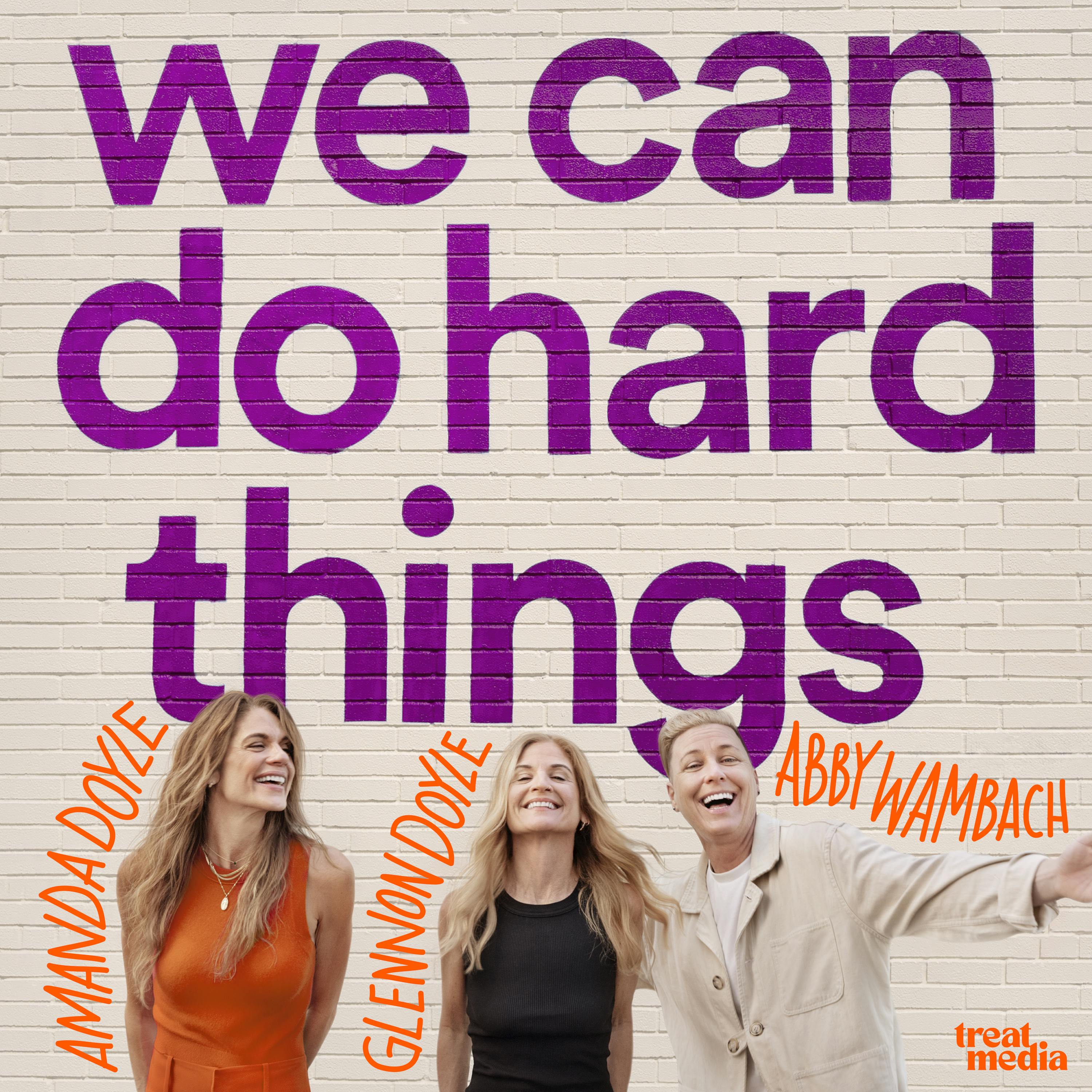
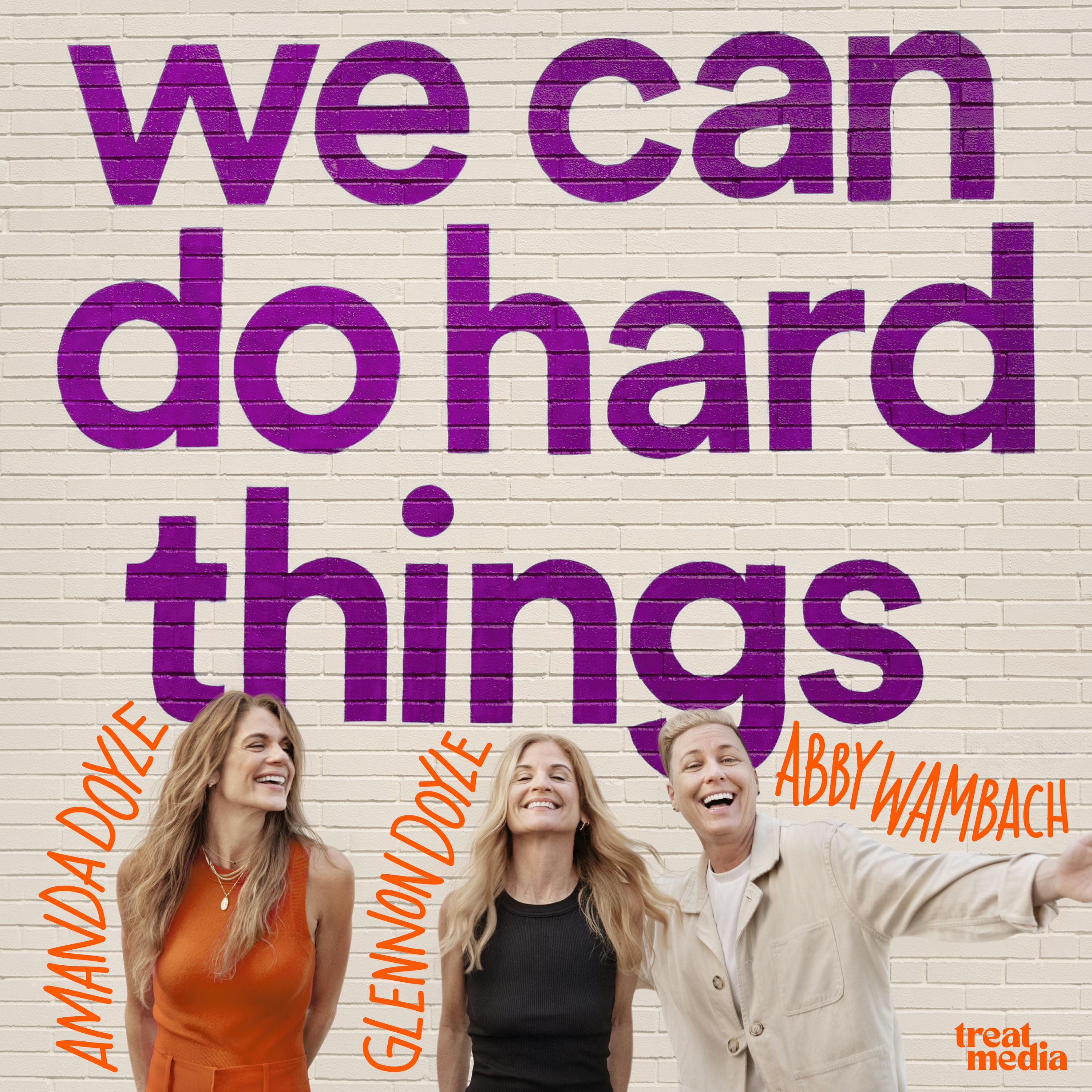
18. “BEAUTY”: How did we get trapped in this cage, and how do we break free?
2. Why is it that when men put work into the world, the world asks if his work is worthy—but when women put work into the world, the world asks if she’s worthy?
3. Why is half the population’s face allowed to exist as is, while the rest of our faces “need” to be covered in concealers, colors, botox, etc., etc....?
4. How is it that the ultimate way to insult a woman is to say that she’s “let herself go”?
5. The better “beauty” standard for women that is liberating Glennon right now.
To learn more about listener data and our privacy practices visit: https://www.audacyinc.com/privacy-policy
Learn more about your ad choices. Visit https://podcastchoices.com/adchoices
Press play and read along
Transcript
Speaker 1 One thing I love about our listeners is how industrious all of you are. The stories we hear about you guys going off on your own and starting your own ventures like we did, it's truly inspiring.
Speaker 1 It's a big part of why NetSuite came to us as a sponsor. NetSuite offers real-time data and insights for so many business owners, and by that I mean over 42,000 businesses.
Speaker 1 NetSuite offers the number one AI-powered cloud ERP. Think of it as a central nervous system for your business.
Speaker 1 Instead of juggling separate tools for accounting here, HR there, inventory somewhere else, NetSuite pulls everything into one seamless platform.
Speaker 1 That means you finally have one source of truth, real visibility, real control, and the power to make smarter decisions faster.
Speaker 1 With real-time data and forecasting, you're not just reacting to what already happened, you're planning for what's next.
Speaker 1 And whether your company is bringing in a few million or hundreds of millions, NetSuite scales with you.
Speaker 1 It helps you tackle today's challenges and chase down tomorrow's opportunities without missing a beat.
Speaker 1 Speaking of opportunity, download the CFO's guide to AI and machine learning at netsuite.com slash hard things.
Speaker 1 The guide is free to you at netsuite.com slash hardthings. Netsuite.com slash hard things.
Speaker 2
Hi, everybody. Thanks for coming back to We Can Do Hard Things.
We recorded this episode before this latest onslaught of pain in the world.
Speaker 2 Our hearts are breaking for the people of Afghanistan and Haiti.
Speaker 2 We started our nonprofit Together Rising a decade ago and so many of you have joined us in turning our collective heartbreak and fury and hope into effective service for people in crisis all over the world.
Speaker 2 Together, we've raised over $30 million of life-saving, world-changing aid.
Speaker 2 The day after the most recent Haiti earthquake, we committed $250,000 to Haiti. And through Friday every penny that Together Rising receives will be deployed to provide urgent relief there.
Speaker 2 We're currently also vetting the most responsible ways to serve in Afghanistan and we'll have ways to help there to share with you soon.
Speaker 2 We know that being a citizen of this world in pain is hard, but we can and will do hard things. We will never allow the fact that we cannot fix it all to keep us from doing what we can.
Speaker 2 We will keep showing up for ourselves, for each other, for the world.
Speaker 2 Thank you for standing with us.
Speaker 2 You can give at togetherrising.org/slash give and you can follow all of the Together Rising stories at Together Rising on Instagram.
Speaker 2 And I continue to believe
Speaker 2 the best
Speaker 2 people are free.
Speaker 2
Hi, everybody. Welcome back to We Can Do Hard Things.
I just want to jump in because I am so freaking excited about this conversation. You're about to hear.
It has lit a fire inside of me.
Speaker 2 And I hope it does for you too. It's about beauty.
Speaker 2 It's about
Speaker 2 the ideas of beauty that keep us stuck. and keep us caged and keep us feeling like we are not enough.
Speaker 2 And it's about how to see that for what it is and reclaim the idea of beauty, not as something that we have to be
Speaker 2 in order to earn worthiness,
Speaker 2 but as something that we get to fill ourselves up with every single day.
Speaker 2 Let's get started.
Speaker 2 Hello.
Speaker 3 Hello, Glenn and Doyle.
Speaker 2 I am sitting in my pantry right now,
Speaker 2 And I'm really looking forward to this conversation with you about beauty
Speaker 2 because it feels like a conversation we've been having for many, low, so many decades.
Speaker 2 And I want to start
Speaker 2 by kind of describing what I've been thinking about as my relationship to this idea of beauty, whatever the hell.
Speaker 2 this idea of beauty is that's planted in us
Speaker 2 young and that some of us spend our lives chasing to earn worthiness, right? So
Speaker 2 I was thinking a lot about myself as a kid and thinking about, you know, when you're a kid, you kind of learn, you just start to learn how to be human and how other people relate to you and how to make people happy and how to be
Speaker 2
pleasing and how to make your way in the world. And one of the ways I learned very early to make my way in the world was that I was a really cute kid.
Yep. I was a very cute kid.
Speaker 2 I matched the look of what a cute kid
Speaker 2 looks like, right? I like long ringlets and all, you know, and I remember that cuteness earning me praise and approval from grown-ups. I could see it on their faces.
Speaker 2 I could see them kind of open up to me. I could see them like reach down and pat me on the head, all the touching, all the, you know, they would light up.
Speaker 2 And so I learned, oh, this is like a currency. Now, obviously, I wouldn't have had that language as a kid, but I did understand that, which meant
Speaker 2 adolescence was unbelievably painful to me. Like when I think about when a lot of my eating disorder started and all of the
Speaker 2 pain came for me right around 10, 11, when I started to lose all that adorableness, right?
Speaker 2 When I, you know, know, got serious acne and I got, started to gain weight and my hair went all wiry and like, I just, I could, sister, like, I remember feeling, you, well, I really only remember feelings as a kid, but I remember going from the world adoring me to the world kind of like looking away from me, right?
Speaker 2 A little girl becoming fully human instead of a doll. and becoming greasy and oily and chunky and frizzy and zitty and that humanness.
Speaker 2 it's like girls aren't allowed to become human. It felt like a fall from grace, right? Like I had lost all of my currency and I had no idea how to get it back.
Speaker 2 And I feel like I spent and sometimes still spend my life trying to get back to that,
Speaker 2 well, whatever the beauty standard is that allows us to all be adored.
Speaker 3 And that, it's so interesting because if you hadn't had that experience, I would, because many, many people go through the awkward middle school adolescent period, but it's interesting that yours is the juxtaposition with the adored, cute
Speaker 3 kid. And sometimes I wonder
Speaker 3 if
Speaker 3 folks are better off who never had the first period, right? Because
Speaker 3 if you're learning that your value is in that, if you're learning that the warmth of the world and the adoration of the world comes from that, and that's your,
Speaker 3 that is where you find your value.
Speaker 3 And then you lose it.
Speaker 3 It's this destabilizing force where you know that you are actually worth less than you were before.
Speaker 2
Yes. And when you're, and that's why even the positive, I think some people think, well, if you're saying positive things about little girls' looks or anyone's looks, then that's fine.
And it's not.
Speaker 2 Because when you over and overall, oh, you're pretty, you're pretty, you're da-da-da, then you learn that that is important. You learn that that is important to your parents.
Speaker 2 It's like freaking purity culture where like, you know, if you're, if you're, if you're, as a woman, if your worth is in never having had sex,
Speaker 2 then
Speaker 2 what about when you become a sexual being? You lose all of that worthiness. The beauty and the purity culture are the same bullshit.
Speaker 3 It's a veiled threat. Every affirmation of
Speaker 3 or compliment on how you look is really,
Speaker 3 I interpret as a veiled threat of don't
Speaker 3 lose that, don't not do that anymore because the praise you're getting right now will be easily and swiftly withdrawn. Yes, yes,
Speaker 2 positive or negative, it's still saying your worth is in how you appear, either good job or bad job.
Speaker 2 But
Speaker 2 yeah, but we're paying close attention, right?
Speaker 3 Yes, the council is monitoring carefully.
Speaker 2 That's right.
Speaker 2 And the idea that there is a council and it gets to monitor and comment is so crazy making.
Speaker 2 The fact, like when you really look at it, when you think about the fact that people can just walk around all day commenting on women's appearance, the entitlement that the world has to just say whatever the hell they want to say about women at any time.
Speaker 3 Right. Well, it's communal property.
Speaker 3 It's like when you're pregnant and just random strangers feel like they can approach you and put their actual hands on your actual body because you've somehow become like a part of communal property.
Speaker 3 For me, that was my first year of college when I went away to school and it was a really tough transition for me to go to school and I
Speaker 3 gained probably 20 pounds. It was,
Speaker 3 and I came back and I remember that summer and I remember just
Speaker 3 ice, ice faces and just kind of looks of pity.
Speaker 3 and um and and the direct comments and i remember walking through the mall and some guy said to me, You used to be so pretty, just as I was walking through the mall. And then,
Speaker 3 and then my good friend from high school sat me down and
Speaker 3 said,
Speaker 2 You just
Speaker 3 really need to not let yourself go.
Speaker 3 And
Speaker 3 that was my moment of understanding that myself
Speaker 3 was
Speaker 3 the way that I appeared. That
Speaker 3 letting myself
Speaker 2 go
Speaker 3 was
Speaker 3 letting my body
Speaker 3 not be
Speaker 3 what people wanted it to be.
Speaker 2 Yeah, because I'm sure all those people,
Speaker 2 wow.
Speaker 2 It's so interesting that idea that like the ultimate insult we can offer a woman is to let herself go.
Speaker 2 And and that's because
Speaker 2 what women are told to do constantly is control themselves right like you're you cannot trust your desire you cannot trust your skin you cannot trust your hair you cannot trust your appetite you cannot try you have to keep a tight rein on all of those things so success is control yourself do not trust yourself control every bit of yourself failure is letting yourself be
Speaker 2 letting yourself go. That kind of freedom is intolerable.
Speaker 3 right and there's a there's we control ourselves for good reason i mean that it because when you think about a woman and what she does in the world it does i mean never mind that i had gone to college adjusted to a brand new world and gotten straight a's no one was interested in talking about that that was not relevant if i didn't also
Speaker 3 look the way I was supposed to look. And that gets replicated a thousand times over every, in all aspects of life.
Speaker 3 So you, you, all anything you do in your family, in your work, in whatever it is that you devote yourself to becomes completely invalidated.
Speaker 3 You can't be secure in that because the world always has this nuclear option. We're always living under threat of that all of that becomes invalidated by
Speaker 3
she's fat and ugly. That's right.
It's just no matter
Speaker 3 how secure we get, we're always subject to that insecurity. And
Speaker 3 that is completely outside of our control. And that is intentional
Speaker 3
because the whole idea of beauty is all about currency and control. I mean, it's just, if you look, it's just not, it's not an opinion.
It is correct that when you look at
Speaker 3 all, and we should get into this, because when you look at every society, it's just as you, as women gain security and independence and gaining currency
Speaker 3 that's actually within their control, the backlash is to put
Speaker 3 us back in a place of constant insecurity in which our power is not based on what we can achieve and build ourselves and keep ourselves, but it is based on external perceptions that are totally out of our control.
Speaker 2 Right. So you're a successful business person, you're a successful mother, you're a successful human, you're doing your, you're making a life, you're out there.
Speaker 2 It doesn't matter because the nuclear option is always, yeah, but you're fat, but you're ugly. And it's like this way of putting women back into this cage.
Speaker 3 And that's just for the average woman trying to go about her life. Forget it if you are a woman.
Speaker 3 I mean, when you look at the women who are running for office, women who are in the media, any woman who is whose ideas are threatening or whose power is threatening,
Speaker 3 they are
Speaker 3 90%
Speaker 3 of the time, the comments about them are about their appearance.
Speaker 2 Oh, absolutely. I mean, I've always thought when men put work out into the world,
Speaker 2 the world asks, is this man's work worthy?
Speaker 2 Okay.
Speaker 2 And when a woman puts work out into the world,
Speaker 2 the world asks, is this woman worthy of even putting out work?
Speaker 2
So all of the attention and response and feedback doesn't even go to the work. I see this all the time.
It goes to the woman.
Speaker 2 We look at her appearance, we look at her relationships, we look at her personality, we look at all of the things, and we decide we attack her, not even the work.
Speaker 3 And
Speaker 3 I think it's subtle, and people don't even realize they're doing it. I mean, when you, when anyone indicates through, it's kind of an audacious thing to walk around
Speaker 2 just
Speaker 3 looking what you look like and daring to use your your voice and and if you say anything controversial or anything powerful I mean it's just when you indicate through your words or through your appearance that you are actually having priorities that are other than pleasing men yes
Speaker 3 other than kicking your own ass to look hot then the people who want to maintain those traditional gender roles in which all of your time and all of your priorities are looking hot punish you. Yeah.
Speaker 2 I mean, that's how I feel now about like what's inspiring to me and what's not. It's like not,
Speaker 2 you know, people, I think what we
Speaker 2 put up these,
Speaker 2 one of the ways we keep women trapped in this body and beauty standard is that we put out examples and ideals, right, in the form of human beings.
Speaker 2 Like, look at this woman, look at this woman, like, look,
Speaker 2 feel like crap because you don't look like this woman. And, you know, there is
Speaker 2 the kind of human woman you see where
Speaker 2 it is apparent that most of their time and energy
Speaker 2 is spent on beauty, right? You can see it in the appearance. And
Speaker 2 that is
Speaker 2 okay and a choice and understandable because, my God, this world does
Speaker 2
offer pretty privilege to people. And it is understandable that some women are just wanting to play the game.
I get that. I do that.
Speaker 2 But there's this other kind of woman who's emerging more and more now, who you can see doesn't spend all of their time trying to conform to a beauty standard, right?
Speaker 2 You can see through their body and their clothes and their face and the whatever, that they have some different priorities that often look like they include joy.
Speaker 2 and like savoring things and, you know, being the subject of their life instead of the object of everyone else's lives, like caring more about their gaze at the world than the world's gaze at them.
Speaker 2 And that is so inspiring to me right now. When I see a woman who doesn't look like she's kicking her own ass to get the pretty privilege that the world offers.
Speaker 3 Well, she's not participating in the standard. And what's so interesting to me, like just look at the beauty standard.
Speaker 3
The actual word standard means an idea that is used to measure in comparative evaluations. Okay.
It's an idea and to be used in comparative evaluations.
Speaker 3 So in order to evaluate women against one another,
Speaker 3 it is,
Speaker 3
it doesn't even exist as a thing. It's just an idea.
It's an idea.
Speaker 2 It's
Speaker 2 an idea.
Speaker 3
I mean, beauty, and I really want to talk about this, but beauty is a made-up thing. It is not fixed.
It is not universal.
Speaker 3 It is very much related to whatever political, economic
Speaker 3 situation of a culture is, which we should talk about.
Speaker 3 But so it's just this idea that is very intentionally placed. But I just feel like running around and screaming, like
Speaker 3
we're in Oz, okay? And I want to scream, there is no wizard. It's just an old man pulling knobs.
Like if we all decided
Speaker 3 not to participate in the standard,
Speaker 3 it would go away
Speaker 3 because there would be no comparative analysis.
Speaker 3 If every woman just decided, I'm going to stop trying to fix what isn't broken because nothing about me is broken and we all set it down, there would actually not be a beauty standard because it only exists because we're all striving to meet it.
Speaker 2 Yeah, it's so good. And
Speaker 2 also
Speaker 2 the so the reason to not participate is number one, so it goes away. And so we break that bondage, that like
Speaker 2 that
Speaker 2
terrible job that we keep passing down to other generations, but also because you can't win it. Like there's no winning it.
So I experienced this when I first started dating Abby.
Speaker 2 Somebody sent me. One of my friends sent me this link to all of this, these horrible things that people were saying about me.
Speaker 3 Okay. we have to just, I mean, that cannot, what is that
Speaker 3 about?
Speaker 3 What is this thing about where people report to you
Speaker 3 things that people say bad about you? And it's, it's in the reporting of it, they're saying, I don't agree with it, but I mean, it's, it's as if they're bringing.
Speaker 3 a huge pile of dog shit and laying it on your front porch and saying
Speaker 3 i also don't like the smell of this dog shit but it's still on your front porch and you weren't going out looking for it.
Speaker 2 That's exactly right.
Speaker 3 People need to stop doing that. Just please stop.
Speaker 2 I mean, it's a little bit, it's comparable, people, to the beauty standard, all right? It's like, I didn't know I had a problem until you told me I was shit and now I'm upset. So thank you.
Speaker 1 One thing I love about our listeners is how industrious all of you are. The stories we hear about you guys going off on your own and starting your own ventures like we did, it's truly inspiring.
Speaker 1 It's a big part of why NetSuite came to us as a sponsor. NetSuite offers real-time data and insights for so many business owners, and by that I mean over 42,000 businesses.
Speaker 1 NetSuite offers the number one AI-powered cloud ERP. Think of it as a central nervous system for your business.
Speaker 1 Instead of juggling separate tools for accounting here, HR there, inventory somewhere else, NetSuite pulls everything into one seamless platform.
Speaker 1 That means you finally have one source of truth, real visibility, real control, and the power to make smarter decisions faster.
Speaker 1 With real-time data and forecasting, you're not just reacting to what already happened, you're planning for what's next.
Speaker 1 And whether your company is bringing in a few million or hundreds of millions, NetSuite scales with you.
Speaker 1 It helps you tackle today's challenges and chase down tomorrow's opportunities without missing a beat.
Speaker 1 Speaking of opportunity, download the CFO's guide to AI and machine learning at netsuite.com slash hard things.
Speaker 1 The guide is free to you at netsuite.com slash hard things.
Speaker 1 Netsuite.com slash hard things.
Speaker 2 Anyway, yes, so I started reading these freaking things people were saying and the overall
Speaker 2 Feeling of it and I know you remember these days sister was you she's ugly she's old she's shouldn't be with abby she's it was just very terrible mean things okay
Speaker 2 so i um it was i how shall we say triggering to me it was a bit triggering to me and i
Speaker 2 first subconsciously and then just because i don't know how to do anything with moderation i spent the next
Speaker 2 months just
Speaker 2 I don't know how to just transforming myself into a what I now see as like perhaps I could have been on the real housewives like I just
Speaker 2 I froze my face I bleached my hair more I added extension I did eyelashes I did all of the things
Speaker 2 which
Speaker 2 I understand now I give myself I feel sad for myself because it it is like I was putting on armor
Speaker 2 right like I felt deeply like oh I'm coming this is a time when I'm going to be more exposed because of Abby because of all the things and I am a public woman in the world.
Speaker 2 And now I cannot be human because of the nuclear option, because no matter what I do, they can say, but if I make myself plastic,
Speaker 2
if I make myself into a Barbie, if I, if I do the thing where I match the ideal, then I'm safe. Right.
Okay.
Speaker 2 And so I did that.
Speaker 2 And I turned myself into as close as a Barbie as a five foot to 45 year old woman can do.
Speaker 2 And I got pretty close. And then
Speaker 2 this article was written
Speaker 2 and came out and somebody sent it to me about how
Speaker 2 the only reason that I had any success with my books is because I was blonde and pretty and thin.
Speaker 2 Okay.
Speaker 2 Because I was palatable to the world
Speaker 2 because I matched the beauty standards. So
Speaker 2 see what happened there is that at first I was not allowed to be out in the world as a human woman because I was too ugly and old.
Speaker 2 And then when I went the other direction, I was not allowed to be out in the world and have any success because I was too pretty and
Speaker 2 young looking.
Speaker 3 So, no, you were allowed to have success, but your success became not based on anything from inside of you. It became based on
Speaker 3 your beauty. So anything that you build, if you're able to build it to break through, then
Speaker 3
your breaking through is attributed to your looks. Yes.
And there is,
Speaker 3 to be fair, there is some truth in that. I mean, the fact there is
Speaker 3 pretty privilege. It is a very specifically white supremacist structure of beauty.
Speaker 2
And aside, everybody go to get one drop Yaboble. Dr.
Yaboble talks about this so beautifully. Sorry, go ahead, sister.
Speaker 3 Yes, everyone read Dr. Yaboble.
Speaker 3 I mean, and in our everyday lives, women who are deemed attractive get more job offers. They earn 20% more than 20% more dollars for the same work as women who are deemed average looking.
Speaker 3 But then it's this double bind that you're talking about because then women who are deemed too beautiful,
Speaker 3 they are perceived as not worthy of trust and they are perceived as being deserving of getting fired. So you have exactly like a two inch window.
Speaker 3 You have to be pretty enough, but not too pretty because then
Speaker 3 your success is attributed to your beauty and people don't trust you and you need to get fired.
Speaker 2 So it's
Speaker 2 it's all just horseshit.
Speaker 2 And like, if this is confusing to you, if this has been a burden on your life, if you spend a lot of time feeling not good enough or not beautiful enough or not, that's not because you're crazy,
Speaker 2 right? That's not because you have any deficiency in yourself. That's not because you're not meeting a standard.
Speaker 2 It's because the world is designed this way to do this to you so that you spend your one wild and precious life not creating, not feeling, not loving, not whatever, but chasing this
Speaker 2 uncatchable,
Speaker 2 what we call dirty pink bunny, right?
Speaker 3
That is correct. That is correct.
And that is what it is.
Speaker 3 For me, I think it is crazy that we all think we are crazy. Like, this is what I want every
Speaker 3 person to understand is that
Speaker 3 when they take polls of America, the number one
Speaker 3 most often cited goal of any goal in a woman's life is to lose weight.
Speaker 2 Okay.
Speaker 3
That is her number one goal. It is not economic independence.
It is not
Speaker 3
job security and advancement. It is not some goal for justice or deeper, more fulfilling relationships.
It is to lose weight.
Speaker 2 Okay.
Speaker 3 When we think about,
Speaker 3 you have to go back historically and see, like in the, in 19, in the 1910s, okay, women started joining the workforce for the first time because of World War I, right?
Speaker 3
They, they needed us because all the men were at war. We came into the workforce, got more independence.
In the 1920s, women earned the right to vote. Okay.
It is not a coincidence that
Speaker 3 just as women won more independence and started having making their way into these forbidden territories, into elected office, into universities, into professions, that that is exactly the time.
Speaker 3 when the standard of female beauty as thinness
Speaker 3 started to prevail in America.
Speaker 2 Okay. Okay.
Speaker 3 That requirement, just as we are becoming a threat to power, is that the ideal female body looks like a malnourished pre-adolescent girl
Speaker 3 who is utterly non-threatening.
Speaker 3
It is, it's intentional and it, and it, and it totally depends. I just feel like we wake up, we think, that is pretty.
Oz, you know, the wizard told us, and so we should keep doing this.
Speaker 3 the wizard is trying
Speaker 3 to
Speaker 3 trying to establish and re-establish norms that work for the power structure that's right and it isn't even it it it so the beauty the idea of beauty is a tool of oppression
Speaker 3 that state
Speaker 3 i'm just saying that standards or beauty are not static It's not an untamed idea.
Speaker 2
It's a taming. It's a conditioning.
It's why when anyone says, ever says to me, and I don't know if you have this thought, but when someone says you're pretty,
Speaker 2 what that means to me is it doesn't feel like a deep, true compliment to me.
Speaker 2 I always feel a little bit of shame in it because
Speaker 2 what that means to me is, I see what you've done there.
Speaker 2 You have kicked your own ass to match very closely the beauty standard that's that's been put out for us in this particular culture in this particular time.
Speaker 3 And another way to say that is: very
Speaker 3 good.
Speaker 3 You are meeting the function we require of women in this society.
Speaker 2
So it makes me feel just obedient. It makes me feel like, oh, you're a good little soldier for the patriarchy.
Good job. Right.
That's why I feel so
Speaker 2 empowered by and inspired by.
Speaker 2 And I feel like a fire lights inside of me when I see a woman who looks like they are doing work in the world this way or that way, but like they're not being a good little soldier.
Speaker 3
And I feel like it's just important to acknowledge, because I'm talking about all of this. I mean, I know I was a women's studies major.
I know all this stuff. And
Speaker 3 it still completely screws me up a hundred times a day. Like I just, it is, I feel like it's important, a just collective acknowledgement that we have been,
Speaker 3
it's like we're in one of those like cults, but we're all inside of it. And so we can't see it.
And I just think we're not going to solve this problem.
Speaker 3 The universe of the world is not going to opt out to the beauty standard and make it obsolete, although we could and we should try. But
Speaker 3 just acknowledging that we are in a beauty cult
Speaker 3 and it's so hard for us to see. And we live in a culture where we have been reared from the very beginning that this is our universally God put it into the world
Speaker 2 standard.
Speaker 3 And so we should have some compassion for ourselves, truly.
Speaker 2
Absolutely. But like, we should give a mantra over and over again: like, the world says, this is what's beautiful.
And then we just try to claim over and over again, what's beautiful is not
Speaker 2 caring less.
Speaker 3 And it has a
Speaker 3
and calling it out when we see it. I mean, all of this has a very, it's a personal impact to our life the way that they are.
Like women being,
Speaker 3
being called out for their beauty makes them not run for office. As we are desperately trying to control our faces and our bodies, we are losing utter control of our bodies.
Amen.
Speaker 2
Say that. Retweet.
Say it again. Say more.
Speaker 3 I mean, all of the legislation we in Texas, in Mississippi, in every, I mean, we literally have lost control of our bodies while we're spending our lives obsessing about controlling our bodies that's right that's right that's right let's come back with some hard questions
Speaker 3 We Can Do Our Things is brought to you by Bumble, the app committed to bring people closer to love. I went through it in my first marriage.
Speaker 3 I was desperately in love, and then in a whiplash of a moment, it was gone. I felt abandoned, betrayed, crushed.
Speaker 3 A while out from the divorce, when a friend asked me whether I was ready to date again, I said, listen, I love men, but I also love hamburgers and I just had the juiciest burger and it gave me food poisoning and I don't even want to look at another burger for a very long time.
Speaker 3 When I was ready to look, I was terrified. How in the world do you put yourself out there after that?
Speaker 3 I don't think there are a lot of people more courageous and cool than than those folks who have been through the depths of heartbreak and are brave enough to reveal their heart again.
Speaker 3 It starts with that first step, a shaky voice inside of you that says, I want this even more than I don't want that.
Speaker 3 I want to share life and this beautiful banged up heart with another beautiful banged up heart. These days, that first shaky step often happens online on a dating app.
Speaker 3 In celebration of you brave ones, we want to tell you about Bumble. What I love about what Bumble is doing is they are making that first step feel a tiny bit less scary, more possible, more human.
Speaker 3 They make you feel more safe.
Speaker 3 New Bumble users have to add multiple layers of verification like mandatory photo, phone number, and ID verification so you can feel more confident that the people you're seeing are who they say they are.
Speaker 3 Plus, profiles aren't just about photos. They highlight personality, interests, and passions so you can get a sense of whether you will actually connect with someone.
Speaker 3
You can be shaky and scared and show up anyway. You can start again.
Bumble helps people do exactly that. Start your love story today on Bumble.
Speaker 2 Okay, hard questions.
Speaker 2 Our first is a write-in.
Speaker 2 Actually, this was
Speaker 2 a bunch of people on Instagram asked us, sister Amanda, to talk about makeup. What are our makeup takes?
Speaker 2 I have to say, I've had every take under the sun about makeup. I started wearing a lot of makeup in adolescence when
Speaker 2 I became very, very zitty. So I used to just cover my face with
Speaker 2
whatever it is, foundation. And then I wore a lot of makeup my whole life.
I mean, up until probably five years ago, every day,
Speaker 2 foundation, eyeshadow, mascara, all of it, all of it every single day. Okay.
Speaker 2 And then
Speaker 2 I started feeling like, what am I doing? I think I just, when you, when you start looking at like, are the guys doing it, right? Which is, is not always
Speaker 2 a good way to analyze feminist issues, but, but it is almost always a good way to analyze feminist issues. So the question being like, okay, wait, this makeup thing, are the guys doing it?
Speaker 2 And then you start thinking about like, what, this is so weird that half the population,
Speaker 2
their face is cool. They're good, right? Their face is okay.
Their face is fit for public consumption.
Speaker 2 But the other half, women, their face is, I guess, so like inadequate or jacked up or ugly or not fit for public consumption that they have to plaster and cover themselves every morning with colors.
Speaker 2
Isn't that weird when you actually think about it? Like, it's so weird. I would just be like looking at the guys, like, what? What? Yours is so great.
Like, I feel like
Speaker 2 the boldness to just walk around showing your face without all these
Speaker 3 raggedy, raggedy faces acceptable to the world, but the rest, but
Speaker 3
older women. It's fascinating, isn't it? I mean, it's, it's just one set of faces, just the world must adapt to accept.
And then the other set of faces, the faces must adapt for the world to accept.
Speaker 3 Exactly.
Speaker 2 It's so weird. So there's Chad over there just hanging out with his face hanging out.
Speaker 3 His face all over his face.
Speaker 2 He got an hour this morning that I didn't get. He got like.
Speaker 2 $100 this morning that I didn't get because of all of these various bottles that I'm constantly convinced are going to change my life, I guess. I don't know.
Speaker 2 And I remember holding up this bottle of concealer.
Speaker 2 Okay, so there's like stuff that you dab that someone convinced me along the line that I had to not only do the foundation, but I had to dab this white liquid underneath my eyeballs so that
Speaker 2
the lines or dark circles under my eyes from tiredness would not show to the world. Okay, that's important.
So one day I was looking at this concealer and I was like, what the hell?
Speaker 2
So now, as a woman, I have to hold up, you know, 80% of the sky. So I'm effing tired.
I'm tired because I'm working so hard.
Speaker 2 But now my job in the morning is to cover up that tiredness so that I don't inconvenience the world that I'm saving constantly by showing the world that I am tired from having to save it.
Speaker 2 I'm protecting the world from my experience of that world.
Speaker 3
Yes. Yes.
You're saving the world from the evidence of the fact that you are saving the world so that they don't have to be like, oh, that's not sweet.
Speaker 2 I don't like to look at that. So the world doesn't say, oh, Glennon, you look so tired today,
Speaker 2 which people like to say. So I find makeup baffling and confusing.
Speaker 2 When I had this, you know, Chad's face versus my face, concealer, no concealer, I promised myself I had this experiment where I was going to wear no makeup forever.
Speaker 2 And then I decided that that hurt my feelings.
Speaker 2 Yeah.
Speaker 3 So that's when you decided that tinted moisturizer wasn't makeup.
Speaker 2 No, it's medicine.
Speaker 3 Medicine.
Speaker 2
Tinted moisturizer is medicine. It's medicinal.
So I now wear tinted moisturizer on my face, which is really just foundation. And
Speaker 2 I also use an eyebrow brush, an eyebrow pencil, because I had a very unfortunate over-tweezing tragedy in the early 90s. So I have a hole in my eyebrow, which I find unacceptable.
Speaker 2 So anyway, I'm, I'm, that's where where I am in the place.
Speaker 2 But I just want to say overall that I think it's freaking weird that women have to are suggested that we cover our faces with crap and men are not
Speaker 2 called.
Speaker 2 Men are not
Speaker 2 vocation.
Speaker 3 Well, I mean, as you know, I have purchased two sets of makeup in my life, one for my first wedding and the second for my second wedding.
Speaker 2 So
Speaker 3 I better stay married because I think that three sets of makeup in a lifetime is probably a bridge too far for me. It's just interesting to me because some people love makeup.
Speaker 3 I mean, I will watch an IG makeup tutorial
Speaker 3
for seven minutes. I will watch people watching makeup tutorials.
I don't know how to do any of it, but there is something so fast. So there's nothing inherently wrong with makeup.
Speaker 3 It's just the fact that we've stumbled into that it's it's an expectation of us and not of other people
Speaker 3 is also an intentional thing.
Speaker 2
Yeah. So like when people are saying, well, I just like makeup.
I love, I do too. I just like makeup, but I am aware that I have been conditioned
Speaker 2
to like makeup. It's not like I was born.
Like I just can't wait to paint my face.
Speaker 2 Right.
Speaker 2
Okay. So now we have a call-in sister.
Ooh.
Speaker 4 Hi, my name is Sarah. So I just had my first child, a daughter, almost a year ago now.
Speaker 4 And as she's growing up, I've noticed that in the toddler section and the girls sections at stores, every shirt is like, girls are smart, girls can do anything, girls can do this.
Speaker 4 And I've been struggling with the idea that girls shouldn't have to pluster, that they are awesome and smart and strong on all of their clothing to prove to the world, but at the same time, understanding that maybe seeing it there there and reading it on clothes and wearing it will instill these ideas in them.
Speaker 4 So, I was just kind of curious on the thoughts on how to approach dressing my daughter to help her understand that she is going to be strong and smart and that she can do anything she sets her mind to.
Speaker 4 So, that's my question and/or topic idea.
Speaker 4 Because there's nothing I want more in this world than to raise a strong woman who will challenge the world with her
Speaker 4
thought and grace. So thank you so much for your podcast.
We love listening every day. I'll talk to you.
Speaker 2 I love these people.
Speaker 2 I love, I know I say that every time, I'll stop, but I just, every time I listen to one of these questions, I'm like, the people who listen to these podcasts, this podcast are so my kind of people.
Speaker 2 Like, I just want to sit with that woman and talk about all of these things for an hour.
Speaker 3 Speaking of your kind of people, I love at the end she said, talk to you later. It reminds me of like how you always say at the end, whatever you're used to saying at the end.
Speaker 3 Remember when you got on your, you're so used to saying at the end of every call and you got off the first line with the publisher of your first book.
Speaker 3 And at the end of the call, the first time you met then, you say, okay, love you, bye. Oh my God.
Speaker 2 I said, I love you to like 10 exact fancy ass.
Speaker 3 Who is the most hilarious awkward thing?
Speaker 2 Love you, bye. And they just look like, uh,
Speaker 3 anyway, talk to you soon, friend.
Speaker 2
Talk to you soon. I love it.
Well, I just, I want you to answer this one because you do such a, I think you do a really cool job of this with Alice, your daughter.
Speaker 2 I am with this color in terms of I think it's weird, all of these t-shirts.
Speaker 2 Every time I see a little girl wearing a t-shirt that says girls can do anything, I just think, but she didn't know they couldn't until you put that t-shirt on her, right? Like
Speaker 2 when you're saying something positive, there's often a negative implied. Like when someone's wearing a shirt that says save the earth,
Speaker 2 what that makes me understand is the earth is in trouble, right?
Speaker 2 So
Speaker 2 I, you know, if you apply the like, are the boys, is there a bunch of boys t-shirts that say boys are smart? Boys can do anything. No, because it's already implied that they can, right?
Speaker 2 So to me, it's like, it's giving girls an extra job. Like now I'm part of this effort to make this thing I'm wearing true, as opposed to like, trying to bring them into the world, not
Speaker 2 even knowing that there's anyone who thinks that they can't do anything when they're that young.
Speaker 3 Yeah, I think I'm agnostic on the
Speaker 3 shirts because I just feel like if people have, I mean, it's a,
Speaker 3
it's a little bit like there's some, I could see how people would get value and encouragement from that. I see both sides of that.
I mean, if you're
Speaker 3 in many cases, seeing, you know, seeing a Black Lives Matter sign is important because you're showing that you are allied with that message and that value. So
Speaker 3 I see it either way. I think for me, we don't,
Speaker 3 it is just,
Speaker 3 I mean, it's not going to solve anything, certainly. So I think it's just for what we do in our house, it's ironic to be answering this question about
Speaker 3 Alice's clothes because when Alice walks out into the world, I'm pretty sure that people feel like no one loves her because she
Speaker 3 wears whatever the hell she wants and it is obvious. But
Speaker 3
I think it, we just focus less on clothes at all, like not giving them a power. at all.
And we really try not to comment on clothes or body or
Speaker 3
beauty negative or positive. But we do do a lot of other things.
We will,
Speaker 3 read a book and notice the pronouns. We will
Speaker 3 change them
Speaker 3 to she just to have that be the case. You know, Alice will ask, why do they, why do they say he here? That doesn't
Speaker 2 she asks that all the time.
Speaker 3 We, I think it's just little things.
Speaker 3 You know, what, what do you think they're trying to say about girls and boys and that? She came home the other day and she was like oh my gosh something at school
Speaker 3 joshua is so confused and i was like what what is it
Speaker 2 he thinks there are boy colors and girl colors
Speaker 3 oh bless her and and so she so we talk about a lot of these things so that so she thinks other people are confused about things amen and and i think we just try to see this subtle i mean it's easy to focus on uh mantra that everyone can get behind but i think just interpreting the world and and noticing things and talking about those that don't relate to clothes and body and beauty are the ways they try to do it and and like everything it's we can obsess about what our kids are wearing um
Speaker 2 but i think they also watch us right i mean i noticed um the clothes thing
Speaker 2 kind of early on as a speaker, I used to think that I had to have like a fancy costume on stage, like real, like I'd put on fancy clothes, right?
Speaker 2 On stage, and I'd put on like cool shoes and like a designer dress and whatever, and then I'd speak. And then what I'd noticed, because I used to do these hugging lines,
Speaker 2 which now post-COVID feels so weird, but anyway.
Speaker 2 50% of what women would say to me in those lines was, I love that dress, or I love those shoes, or I love the, or where did you get the whatever? And it was driving me bonkers for a little while.
Speaker 2 And then I realized oh no no that's what i'm asking them to do
Speaker 2 by putting all of this focus on what i'm wearing i am requesting that of them i'm saying to them this is what i want you to notice this is what i want you to talk about and because of that with most of these women i might have 10 seconds for our entire lives
Speaker 2 and I have set this up so that during those 10 seconds where we are connecting, that's what they're asking me.
Speaker 2 And when I figured that out, that's when I switched to my like uniform of jeans, sweaters, or tank tops and shit, just because when I stopped doing that, nobody,
Speaker 2 people would say things like, in those lines, people would start saying things like, oh, I loved what you said about. or thank you for talking about.
Speaker 2 And nobody would be like, I really like that gray cardigan. Right.
Speaker 3 I really like that black tank top you wear eight days a week.
Speaker 2
Right. I mean, I do.
I wear, I'm wearing my pajamas right now, so I'm not wearing it right now, but I wear, I have 30 black tank tops,
Speaker 2 they're all from the same store. I wear them every day because I don't have to think about it.
Speaker 2 It's a uniform. Again, what are the guys doing? Why do they have their, you know, four
Speaker 2 outfits,
Speaker 2 whereas women have 49,000 different choices? It's because
Speaker 2 it's to keep our minds occupied on what we're wearing and what we're looking like instead of what we're looking at.
Speaker 2 Okay,
Speaker 2 we are going to
Speaker 2 move on to our next right thing.
Speaker 3 The origins of We Can Do Our Things were once just a dream of community and connection and expression. That dream turned into the podcast you are listening to today.
Speaker 3 Starting your own business is a dream lots of us share, but too many of us let it remain just a dream. Don't hold yourself back thinking, what if I don't have the skills? What if I can't do it alone?
Speaker 3 Turn those what-ifs into why nots with Shopify by your side.
Speaker 3 Shopify is the commerce platform behind millions of businesses around the world and 10% of all e-commerce in the U.S., from giant corporate household names to brands just getting started.
Speaker 3 You can choose from hundreds of beautiful templates to build your store, use AI tools to write product descriptions and enhance your photos, and even launch email or social campaigns that make it look like you've got a full marketing team behind you.
Speaker 3
Take it from me: if you're launching your own business, you do not want to do it alone. There are tools that can help.
We used Shopify to sell our We Can Do Hard Things merch on our book tour.
Speaker 3 We gave 100% of the proceeds of the merch away to nonprofits, and Shopify helped us to do all of that easily and seamlessly. Turn those dreams into
Speaker 3 and give them the best shot at success with Shopify. Sign up for your one dollar per month trial and start selling today at shopify.com slash hard things.
Speaker 3 Go to shopify.com slash hard things.
Speaker 3 Shopify.com slash hard things.
Speaker 2 All right, we've got a next right thing for all of you today. And, you know, we started this conversation by talking about the word beauty.
Speaker 2 And I think a lot, I wrote in Love Warrior about the word beautiful. You know, I'm a words person.
Speaker 2 And I started thinking hard about the word beautiful. And what you realize about that word when you think hard about it, or not too hard,
Speaker 2 is that
Speaker 2 it means full of beauty.
Speaker 2 Right? Beautiful means full of beauty. We have switched that concept to mean
Speaker 2 beauty on the outside, covered with beauty, appearing beautiful. But the word means filled on the inside
Speaker 2 with beauty, right?
Speaker 2 It's this idea that a beautiful home or a beautiful person or a beautiful relationship or a beautiful woman
Speaker 2 is a person who has so much beauty on the inside of them, who has taken the time to know what beauty is and is so filled up with it. that you can see it radiating out, right?
Speaker 2 I was
Speaker 2 out really early the other morning. I don't think I even told you this yet, sister, but I was out early walking the dogs at like, I don't know, 5.45.
Speaker 2
And there was this woman walking down the street. And it was just the two of us.
And she probably, she looked like maybe she was, I don't know, 65 or something,
Speaker 2 but she had a full wetsuit on, no shoes.
Speaker 2 Just her hair was wet
Speaker 2 and she was carrying a surfboard
Speaker 2 on her own by herself, walking back up from the beach, which means she had already been out by herself surfing.
Speaker 2 And she just looked so
Speaker 2 effing beautiful that I had to stop and stare. Like, here is a woman who has figured out what beauty is to her
Speaker 2 and found a way to. get it before most people are even up in the morning.
Speaker 2 And it had nothing to do with other people looking at her. She was alone
Speaker 2 and she was radiating.
Speaker 2 So
Speaker 2 our next right thing this week is let's figure out something that is beauty to us and then figure out a way to get it.
Speaker 2 to get filled with it this week. And if this is hard for us because we are used to being the object
Speaker 2 instead of the subject of our lives, right? We are used to
Speaker 2 being, trying to figure out how to be wanted, not figuring out what we want,
Speaker 2 right?
Speaker 2
So this is a switch. And one tip I have that I do sometimes is to always go back to my senses, okay, to figure out what I want or what I think is beautiful.
What do I want to touch?
Speaker 2 What do I want to feel?
Speaker 2 Okay, what feels good to me? What do I want to see? What is beauty to me to see, to fill up visually? What do I want to smell?
Speaker 2 What breathing in?
Speaker 2 What is breathing in beauty to me? What do I want to taste?
Speaker 2 What's filling up that way?
Speaker 2 And also, what do I want to think about?
Speaker 2 What is beauty to me that I can take into my mind? You know, we do so much of our, we are what we consume, right? And we do so much of our consumption, whether it's online or
Speaker 2 we unintentionally,
Speaker 2 right? But one of the things I love about reading books is like you, you make a choice. Now, this is what I want to fill my mind with.
Speaker 2 This is beauty to me. So this week, let's think about going back to our senses, finding what is beauty to us and how will I fill up with it this week.
Speaker 2 And when life gets hard this week,
Speaker 2 don't you forget we love you and we can do hard things.
Speaker 2 Bye-bye.
Speaker 2 We Can Do Hard Things is produced in partnership with Cadence 13 Studios. Be sure to rate, review, and follow the show on Apple Podcasts, Spotify, Odyssey, or wherever you get your podcasts.
Speaker 2
Especially be sure to rate and review the podcast if you really liked it. If you didn't, don't worry about it.
It's fine.