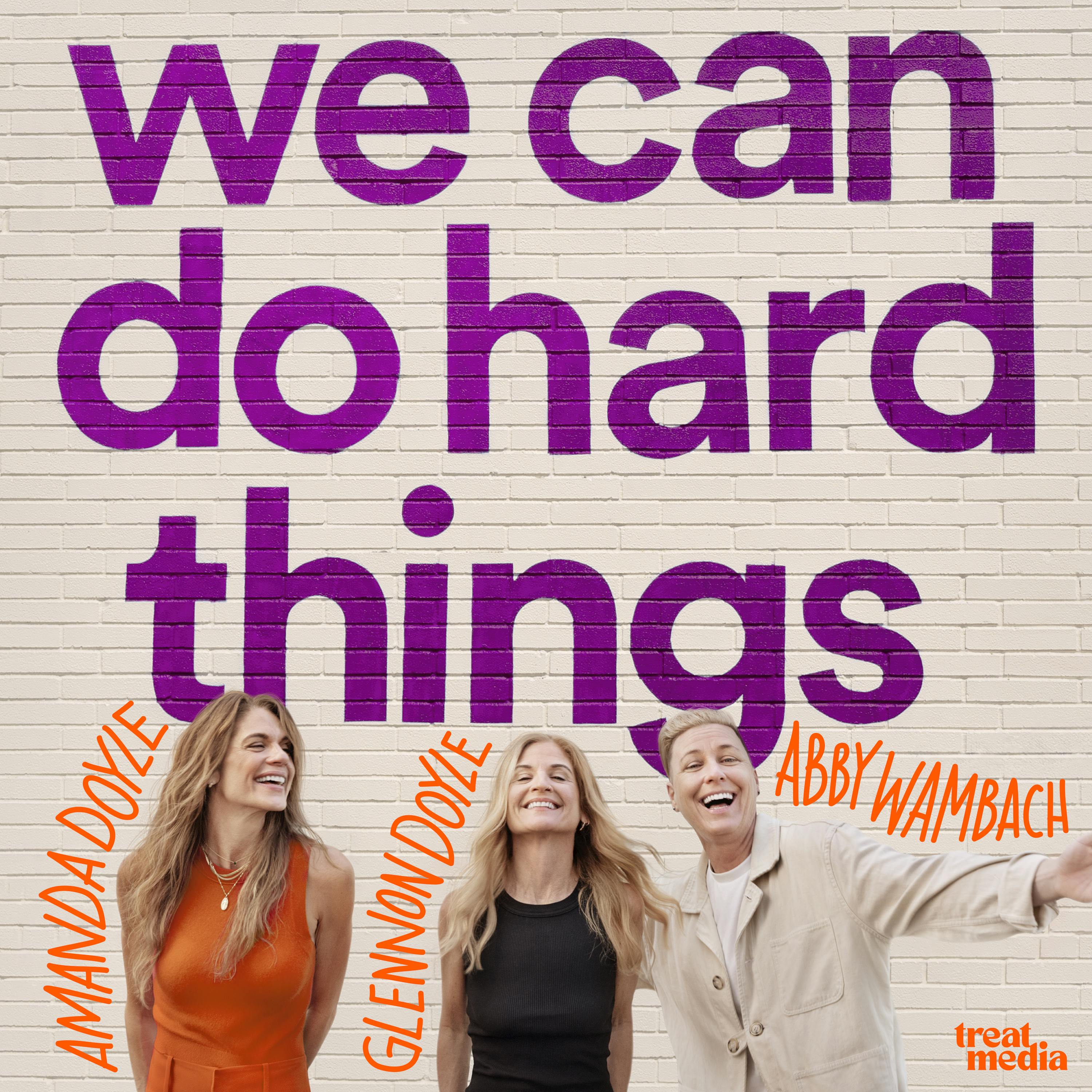
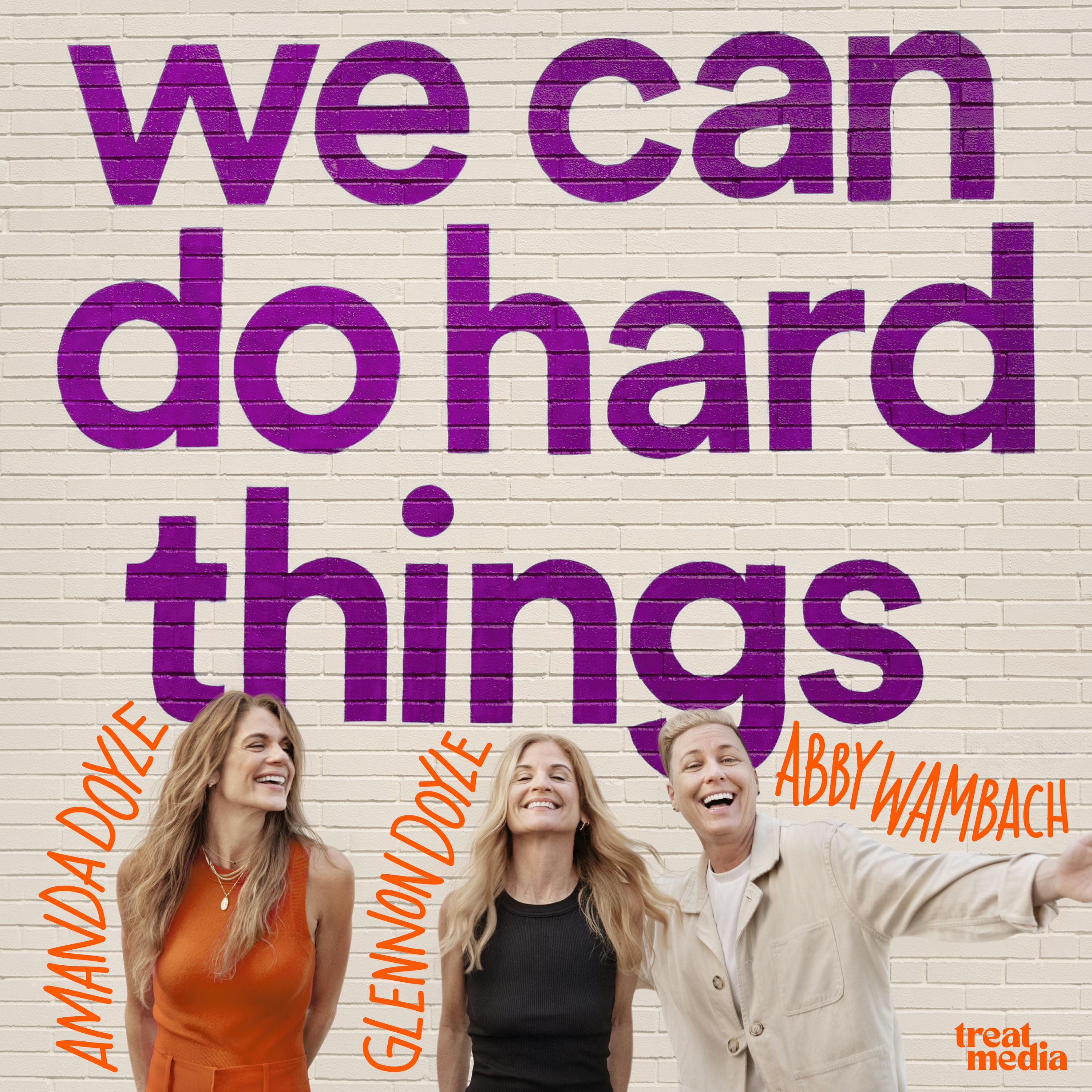
Katie Gavin: How to Know What You Want
Katie Gavin joins us to talk about:
How to identify that kernel of desire inside—and then have the courage to follow it;
Why love addiction can feel like being stuck on a “treadmill in the cosmos”; and
the moment Katie called Glennon a Femme/Dom—and how it changed Glennon’s life forever.
Katie Gavin’s album: What A Relief
About Katie:
Katie Gavin is a musician and member of the pop band MUNA, and released her debut solo album What A Relief this past October 2024—an album about a deep desire for connection and the obstacles standing in the way of achieving that. Gavin’s explorations of desire and intimacy feel time-worn and necessary – songs that might teach a generation if not how to live, exactly, then at least how to look within oneself for guidance about how to move forward. Katie is currently in the studio with MUNA working on their forthcoming album.
Follow We Can Do Hard Things on:
Youtube — @wecandohardthingsshow
Instagram — @wecandohardthings
TikTok — @wecandohardthingshow
Press play and read along
Transcript
Speaker 1 Welcome to We Can Do Hard Things.
Speaker 1 When I tell you that we have been waiting so long and with such anticipation to do this conversation,
Speaker 1
we are talking today to one of the most important artists in our family's life. Yep.
Not just artists, but people, activists, just way of being.
Speaker 2 People we look towards.
Speaker 1 And that's Katie Gavin. Katie Gavin,
Speaker 1 you'll see. This conversation healed parts of us, I think.
Speaker 1 It made us feel hopeful for the future for the first time in a while. It is about so many things.
Speaker 1 It's about how to find that little kernel of desire inside of you and how to have the courage to unleash it out into the world.
Speaker 1 It's about intergenerational healing, about how to honor what's come before us while also letting go of what we don't want to take with us into the future.
Speaker 1 It's about recovery and addiction and how to begin to make our lives that have become small bigger. It's about listening to the signals in our body.
Speaker 1 It's about how to live right now in a way that makes this planet habitable and more beautiful for the next generation. It's hard to believe that all of this is in the conversation.
Speaker 2
It's so beautiful. You'll see.
It's one of my favorite. It's literally one of my favorite conversations we've ever had on We Can Do Hard Things.
Speaker 1 Same.
Speaker 1 Katie Gavin is not only our personal hero, but is also a musician and member of the pop band Muna. of course.
Speaker 1 Life's so fun, life's so fun, you know, and released her debut solo album, What a Relief, which is the soundtrack of our home this past october 2024.
Speaker 1 it's an album about desire for connection and the obstacles in the way of achieving that gavin's explorations of desire and intimacy are time-worn and so necessary right now and her songs truly are sort of like a clarion call for her generation about how to live and how to look inside yourself for guidance and move forward.
Speaker 1 She is currently in the studio with Muna working on their forthcoming album.
Speaker 2 And I just want to say, this is going to, I'm attaching this to Katie's bio. She is now
Speaker 2 my best friend.
Speaker 1 Yes.
Speaker 2 Addie Wombach's best friend. Yeah.
Speaker 3 And that's my dream.
Speaker 1 And also, she calls me
Speaker 1 a femme dom.
Speaker 1 If you want to know what that means,
Speaker 2 this is what's going to be going on our new bios now. Katie Gavin is now our best friend.
Speaker 4 Enjoy.
Speaker 3 Yeah,
Speaker 3 baby, our girl.
Speaker 3 Yeah!
Speaker 3 Hi, babies.
Speaker 4 Hi, so good to see you.
Speaker 2 Oh, my gosh.
Speaker 1 Katie, this might be a normal day for you, but this is a very exciting day for us.
Speaker 4 Shut up.
Speaker 4 No, I'm excited. I'm nervous.
Speaker 1 Oh, God, us too.
Speaker 1 Katie, this is my sister Amanda. You know us, but you two haven't met.
Speaker 4 Hi, babe.
Speaker 5 Hi, Katie. Very happy to know you.
Speaker 4 It's so nice to meet you.
Speaker 3 Where are y'all? This looks so good.
Speaker 1 Oh, really? We're in our basement in a little corner that looks like this, and the whole rest of the room is shit.
Speaker 6 Totally.
Speaker 3 And
Speaker 1 Amanda is in her son's corner of the bedroom, right?
Speaker 1 Yeah.
Speaker 2 But glam. But technically, we're at home.
Speaker 3 Right. Yeah.
Speaker 1 We're at home. Where are you?
Speaker 4 I'm in my band studio. I came here because I was like, oh, I want to like record with a microphone.
Speaker 4 And I got here an hour ago and I literally just figured out how to like get the microphone working with my computer.
Speaker 3 I'm like,
Speaker 4
how do I have a studio and it's this hard to do this? I don't know where anything is. I have like big time, we call it lead singer syndrome.
Like I'm just, I don't know what's going on.
Speaker 1 I think I have that.
Speaker 3
I think you have lead singer syndrome. I think I have that.
I'm going to call it that.
Speaker 1 That sounds so much better than how I've referred to it.
Speaker 4 How do you refer to it?
Speaker 1
Well, I just call it beginner's mind, Katie. I think it's a Buddhist concept to not be aware of what's going on.
Right. And to just be freshly surprised constantly.
Speaker 3 Yeah.
Speaker 4 Yeah, totally.
Speaker 1 Speaking of freshly surprised, we have to basically, we're going to do our best to just be cool about all this, but yeah
Speaker 1 by the end of the hour you're gonna understand how actually important you are to our family
Speaker 3 borderline creepy yeah i kind of feel a little bit like
Speaker 4 a little creepy about it you know
Speaker 1 we you're the most played person in our house you are
Speaker 1 There is, there are a few rooms that I'm in. One thing that's true about Miss Katie Gavin is that put a group of old lesbians in a room
Speaker 1 and they're going to bitch about the next generation for six hours until somebody says Katie Gavin.
Speaker 2 Yeah, that's true.
Speaker 1 And then all the old lesbians are going to go, yes, respect.
Speaker 4
That is the only thing I care about. I think you know this.
Like
Speaker 4 for me, it's like. the elders know everything.
Speaker 4 And by the way, we have to, we have to actually be defining our terms here, though, because I feel like a lot of your, what you're talking about is old lesbians are just the same age as the lesbians that I hang out with.
Speaker 4 So I don't know where
Speaker 4 this is, this is an interesting,
Speaker 4 but anybody who is like, anybody who is at all older than me, first of all, anyone that is at all younger than me is my child. I feel like you're probably the same way.
Speaker 1 I'm like, yes, you are.
Speaker 4 I meet a lesbian that's like three years younger than me. I'm like, you'll understand when you've lived life.
Speaker 3 You know what I mean? I totally hear that.
Speaker 4 It's like, yeah, but I, it's, and it's so freeing to be, I feel like there is something in lesbian culture where it's like, the older we get, the like,
Speaker 4 like we're seen as like hotter and wiser and more revered. And that's really how I feel about like anybody who has lived a little bit more than me.
Speaker 4 I'm just like, I, all I care about is impressing you and being in your good graces. So.
Speaker 1 Wow, you are doing really well with that.
Speaker 1 Brett, can you show Katie just like what just happened the other day with emily and amy and melissa yeah hold on just a second oh my god wait were you there where were where were they i just follow them wherever they are and i ended up in a room with them recording this
Speaker 5 like i just recently got to know katie gavin from
Speaker 3 she is
Speaker 7 amazing human being i love her i just she's a really wonderful human being And she, I went to go see her play her solo show in New York and I met her friends and I, it was like, I was going to say a kid in a candy store, but it was more like, here I am, this person in my age with my experience and trying to use the tools that I have.
Speaker 7 These young people were so inspiring. First of all, they were all non-binary, all her friends.
Speaker 7 One of them was talking about how they flew to Egypt so that they could try to sneak over the border or get food to come.
Speaker 4 Oh, that's pretty good.
Speaker 7 It was like on the ground, complete courage that they wouldn't even call courage. It's just the way that they live their truth.
Speaker 7 So I'm like, y'all tell me what to do and I'll do my best as a middle-aged like whatever.
Speaker 3 Totally.
Speaker 3 Totally.
Speaker 4 That is my bestie right there.
Speaker 4
That is my bestie. I really love Emily so much.
You know, like when you meet somebody and it's just like immediately you don't have to explain anything to each other.
Speaker 4 You're just like, you're one of my, you're one of my people.
Speaker 3 Yeah.
Speaker 4 It was so easy with her. And
Speaker 4 yeah, she came and did Closer to Fine at my solo show in New York. It was really wonderful because I feel like
Speaker 4 Emily is
Speaker 4 one of those icons that I think
Speaker 4 it might be a beginner's mind like has no idea that she's an icon.
Speaker 4 So it was really special to have like her in front of a crowd of young lesbians and non-binaries who were just like absolutely losing their shit.
Speaker 4 Also with Parisa, this is my friend who like definitely is
Speaker 4 kind of like the
Speaker 4 like on the deepest level of activism that I've witnessed in my life.
Speaker 4 But I've never seen them like they're backstage at a lot of my shows in New York and I've never seen them like fangirl over anybody. And they really, yeah, they really lost their shit for Emily.
Speaker 1 Emily deserves that.
Speaker 4 Emily does deserve that.
Speaker 3 Yeah.
Speaker 4 Emily deserves the world.
Speaker 1
So I'm just going to tell you a couple little tidbits of how you have affected my life. First of all, I think we first heard Muna when we were living in Florida.
Our kids were playing you constantly.
Speaker 1
Silk chiffon became my whole personality. And then I had a vision of myself in rollerblades on the strand.
Like you, I was like, this is my personality, and I'm going to manifest this. And so I,
Speaker 1 in the first week that we lived in California, I got, I made Abby go buy me roller skates and I roller skated down the strand.
Speaker 1
And then I fell so hard that strangers had to stop and ask me if I needed an ambulance. Right.
And so that was, I was like, yeah, life's so fun.
Speaker 4 Where did you fall? Wait, do you fall on your ass?
Speaker 5 Yeah.
Speaker 1 In my head. And then someone said, does she need an ambulance? And that was, I had a 10-minute Silksha fun life.
Speaker 3 anyway.
Speaker 1 Try, Katie.
Speaker 4
No, okay, but this is the thing about roller skates is that, like, they are so dangerous that my worst, my worst falls have been on roller skates. I have some friends that are derby girls.
Yes.
Speaker 4 And they, like, you know, during the pandemic, I really like joined everybody in like just becoming like manically hyper-fixated on roller skating.
Speaker 4 Like, we, what happened?
Speaker 1 We needed life to be so fun, Katie.
Speaker 4
We needed fun life. Yeah, we really did.
But I, okay, like, I have now made a distinction between if I'm, if I'm outside, I have to have roller blades because skates are so sensitive.
Speaker 4
And I've had, I've cracked phones. I've like been in bed for three days with like a swollen knee.
Like it's, it's a serious game when you're on skates.
Speaker 3 You feel better.
Speaker 4 But you know what we we should do? We should go to like an indoor rink and get you back on
Speaker 2 the skates.
Speaker 2 I want to do that. Cause like,
Speaker 2 you know, any little rock or any little like change in elevation or like a crack. You're going down on roller skates.
Speaker 1 And I had the socks, Katie.
Speaker 4 I had, I just, I'm sure you look cute as hell.
Speaker 3 Oh, my God.
Speaker 2 Oh, my God.
Speaker 5 Right up until the fall on the end.
Speaker 4
It was a good look. Yeah, totally.
I mean, yeah, it's like, that's what really draws us in is like, it's so, it's cuter. It's cuter than the blades, but it is a really extreme sport.
Speaker 1
It was extreme. Okay.
And then the other thing is when we were in,
Speaker 1
we finally got to talk to each other because we had had a really good friendship. You just didn't know about it yet.
And then we were in
Speaker 1
Mexico with a Brandy's thing. Oh, yeah.
We ran into them at the airport and we're passing them. And there was a lot of us at the gate.
Speaker 2 We were going to Girls Just Want a weekend in Mexico, and Muno was performing there.
Speaker 1 Yeah, and so this lovely group of people walks by, and one of them looks at me and says, I love you. And I do,
Speaker 1
I know. And I do my like humble, sweet face, and I'm like, Thanks.
And then I keep walking.
Speaker 1 And Tish, my daughter, we get like 10 steps away, and she stops me and she goes, And we don't really cuss to each other. She goes, What the fuck?
Speaker 1
She said, Mom, fix it. Go back.
Do you know who that was? And I was like, no way.
Speaker 3 So then we go back. Okay.
Speaker 1 Then, Katie, I don't know if you remember, but we're at a table in Mexico, and you come over.
Speaker 1 And I have to sort of apologize because I've accidentally, in a podcast that we were recording with Brandi and Kath in front of a thousand people, said, Muna is my sexuality.
Speaker 3 And what I meant.
Speaker 4 Wait, wait, wait, pause. Because do you know that I was there?
Speaker 4 In the room, I was standing in the back of the room.
Speaker 3 Oh, that's great.
Speaker 4 I mean, I think what's happening is that we are being creeps for each other.
Speaker 2 Yes.
Speaker 3 So it cancels each other out and we're just like friends. Yeah.
Speaker 3 That's it.
Speaker 2 I've decided.
Speaker 4 Because I felt like I was eavesdropping. Like I was like, I, I guess I, should I not be here? But I'm like, I want to know.
Speaker 2 Well, based on what she said, where Muna is her sexuality, I could understand why you might feel like you were eavesdropping in on something that maybe you shouldn't have been hearing.
Speaker 2 Because, Glennon, you have to explain.
Speaker 1 What I meant was,
Speaker 1 Amanda, I tried, I called my sister. I was like, I said this, but I really need to explain to you what I meant.
Speaker 1 What I meant was that there's a lot of different expressions of gender on the stage and like energies in Muna that I relate to every single one of them.
Speaker 3 I didn't mean
Speaker 1 anyway. Abby was like, She's never.
Speaker 5 And when I said sexuality, what I meant was not sexuality.
Speaker 4 That was just a word I'm saying. I know what you are saying, and I think that's beautiful, but I would take it as more of a compliment if you, if it was the other thing.
Speaker 3 Yeah. But here's actually what I think.
Speaker 3 Here's what I think, Katie. I think
Speaker 4 the way that you all
Speaker 2 move on the stage stage and the way that you perform with such fucking freedom, that wasn't something that for Glennon for many years, straight white person
Speaker 2 and now a queer person. It's like the OGs weren't allowed to express themselves in the way that you all do.
Speaker 2 And so there's this
Speaker 2 jealousy, this like, this like, this craving of like, and watching you do it, it makes us open up and it makes us feel like, oh, we can maybe express ourselves in that way.
Speaker 2 And that is, I think, a form of sexuality. I don't know if it's like pointed in the direction of necessarily you got, I mean, hopefully not, but
Speaker 3 you keep it. Do you know what I mean?
Speaker 4
Yeah, I do. And I remember hearing this part of this conversation.
I think like you and Brandy were going back and forth about like the feelings that come up when you see
Speaker 4 like younger queers
Speaker 4 have
Speaker 4 like a more liberated sense of self and have the ability to like move in public and express their sexuality without as much fear. And I can imagine that that's really complex.
Speaker 4 I can actually relate a little bit because I do feel like the
Speaker 4 like progress of queer representation has been, has moved in such an exponential way that like even
Speaker 4 you know Muna started as a band like publicly in 2014
Speaker 4 so
Speaker 4 this was like
Speaker 5 I'm like guys when was marriage equality was it 2015 yeah okay
Speaker 3 yeah
Speaker 1 it was a nice time while it lasts
Speaker 4 2015 to 2025 so um
Speaker 4
I feel like we have seen a big shift even in our time. Like I remember us having many conversations in the beginning, like, deciding if we were going to talk about our sexuality.
And I also know
Speaker 4 that
Speaker 4 this conversation differs a lot between
Speaker 4 like
Speaker 4 people who present as more femme and people who present as more mask. I think it was a different type of bravery for Naomi and Josette.
Speaker 4 And they also had to go on like a different journey of
Speaker 4 being comfortable asserting like this is how I
Speaker 4 want to represent myself. And it might not make sense to like
Speaker 4 stylists that are used to like mass media projects or whatever.
Speaker 4 But
Speaker 4 like the people who get it like are going to get it.
Speaker 4 So we've seen that difference, but I also like, I totally understand that confusing mix of emotions: like,
Speaker 4 damn, am I envious of this person, or is it, is it like, um,
Speaker 4 actually inviting me into,
Speaker 4 like,
Speaker 4 is this a sign that this is a space that I'm safe to move into now? Um, and like, what does that feel like for me?
Speaker 4 Um, and also, it's so, there's an like an irony there because it's like we wouldn't be able to express ourselves in that way had it not been for like the ways that those who came before us like showed up and fought and really fought you know like
Speaker 4 gay liberation was was no joke like people put their their physical safety on the line so many times so that we can like fake hump each other on stage you know
Speaker 4 and it was so worth it katie i know and i'm so grateful
Speaker 1 for the fight they fought so you could hump.
Speaker 4
And it's really so that I might hump. Yes.
And I will.
Speaker 1 When you came up to me at the table and I tried to explain this, which I didn't need to.
Speaker 3 And
Speaker 1 you said, I understand
Speaker 1 that
Speaker 1 what you're saying about the sexuality expression or the gender expression.
Speaker 1 Because you said, because you are,
Speaker 3 femme dom.
Speaker 3 Yes. Okay, now, Katie,
Speaker 1 when I am asked to explain, who are you in an interview? When I walk down the street and someone and they say, who are you? I say, Katie Gavin says, I'm femme dom.
Speaker 3 It's so true, you guys.
Speaker 2 It's what she says now.
Speaker 3 It's my favorite.
Speaker 1
I like labels. I've never accepted any of them except for that.
And the only problem with it is that I don't understand what the hell it means.
Speaker 3 It just sounds right.
Speaker 3 Although, when I said it to my son, oh god he he said please don't say that to me again yeah so he kind of got a little cringy i think it might mean something else can you explain to me
Speaker 1 what i've been introducing myself as
Speaker 5 i hope it's like a secret society of like
Speaker 4 this is just the energy i get from you i it's also like like you're my femme sister like
Speaker 4 i and i think that this is so, you know, there's so much discourse, and like, Abby, you might know more about this than I do because I think, in some ways, like, I'm not actually as learned about like the femme butch like culture and history as I should be, but I do recognize myself as being like a part of that lineage.
Speaker 4 Um,
Speaker 4 but I think that, um,
Speaker 4 to me,
Speaker 4 femme dom
Speaker 4 uh means that I have embraced that
Speaker 4 one, I'm like, I'm super queer
Speaker 4 and two, I have like a strong feminine energy that like doesn't take away from my queerness. Like I love to get glammed up, I love to like look hot and like have that be a part of my power, you know?
Speaker 4 And I think the dom part,
Speaker 4 it also comes from this history of
Speaker 4 in like a femme butch dynamic, maybe in it from a time where
Speaker 4 people
Speaker 4 weren't as comfortable like expressing desire like in an open way.
Speaker 4 I think
Speaker 4 because like
Speaker 4 butches are in a position where they're not as like physically safe to move through the world because they're clockable as queer.
Speaker 4 I think like femmes maybe took on this role of being the ones to like initiate more, being like more in control of like, I know what's going on here and like I'm gonna make this happen.
Speaker 4 And I think
Speaker 4 that kind of energy like also applies to
Speaker 4 other things.
Speaker 4 I think that another way to explain like my view of femme, like being a femme and being kind of like dummy is like
Speaker 4 that
Speaker 4 there's something about
Speaker 4 my
Speaker 4 it's just like separating this idea
Speaker 4 it's really basic I guess in the end it's like separating this idea of um
Speaker 4 like someone who is feminine needs to like take a more um passive role in things. Like I think I see you as someone who's like, you've really taken so much agency in your life.
Speaker 4 Like, you've really claimed the agency to be like, I'm going to create the life that I want for myself. And I'm going to create a community like around me that feels so good.
Speaker 4 And I want that for all my people too. Like
Speaker 4 the kind of like active
Speaker 4 role that I've seen you play in your world, I'm like, that's a dom. Like, you're just, you're just doming it.
Speaker 1 Put it on my gravestone.
Speaker 3 It's so true.
Speaker 2 And I mean, Katie, like you're, just that you're, the way that your brain is like moving right now, I just appreciate all of that thoughtfulness so much.
Speaker 2 And I don't think that I've ever thought of, because of my, my
Speaker 2 sports background. And yes, I'm, I'm mask and I am very like queer presenting.
Speaker 2 It's interesting how I've never thought of
Speaker 2 my safety because of my sport, but I do think that Glennon has this ability to pass as a straight person, which gives her a little bit more
Speaker 2 privilege and safety in certain spaces.
Speaker 2 And I think that you've noticed that in our relationship and marriage over time.
Speaker 1 Oh my God, that's why I can be fired up.
Speaker 1 It's like when I'm with
Speaker 1 a friend who's black, like and I can get away with being a different way. It's just a level of safety and how you can move in the world.
Speaker 4
Yeah. And having to navigate that individually with like every relationship.
You know, Naomi and Joe and I have had a lot of conversations about like when
Speaker 4 I should be like, you know, a bulldog on their behalf and when they really don't want me to get into it with people.
Speaker 1
Exactly. I have that conversation all the time.
Totally. Like, stop.
This is not, because
Speaker 1 you'll be safe if you start this fight. I mean, I get some things
Speaker 1 and I can be with people who are like you'll be safe for the next 15 minutes if you start this shit and I will not
Speaker 1 interesting.
Speaker 1 And now it's time to thank the companies who allow you to listen to We Can Do Hard Things for free.
Speaker 5 I'm not a dog person.
Speaker 5 That is a thing I would actually say out loud with my own mouth. I'm not a dog person.
Speaker 5 When the kids were eight and 10 and we had the opportunity to adopt a foster dog, it felt to me like grocery shopping or washing jerseys, just part of what a family requires and something you do to take one for the team.
Speaker 5 Then we adopted Seamus.
Speaker 5 And I would like to ask all the tiny baby puppies everywhere around the world, forgive me for my ignorance.
Speaker 5 Because I am now thoroughly convinced that people who are not dog people are just people who have not had a dog.
Speaker 2 And maybe people who most need a dog.
Speaker 5 Because I can't even believe that I almost went my whole life not knowing this particular kind of love.
Speaker 5 Seamus is obsessed with me and I am obsessed with him. I think that maybe dog love is what people are talking about when they call love unconditional.
Speaker 5 I do absolutely nothing and he is absolutely delighted with me. which is why I would do nearly anything to delight him, which is why I got so excited about partnering with Maeve.
Speaker 5 Maeve is the only fresh, ready to serve dog food made with real human-grade ingredients. We're talking beef, kale, sweet potato, blueberries, not pellets, not fillers, actual food.
Speaker 5 And you don't even have to thought. You just scoop it up, serve it, done.
Speaker 5
It's amazing what real food does. His coat is shiny, he has so much energy, and he just seems so happy.
Also, Seamus is a big boy. He's a 75-pound golden retriever.
Speaker 5 And so we're always worried about his hips and joints and the possibility of hip dysplasia.
Speaker 5 So we give him Maeve's hip and joint supplement bars, which are basically treats, but are actually mobility multivitamins.
Speaker 5 And it helps me to feel like he'll be running and wagging and wiggling pain-free for many years ahead.
Speaker 5
So if you've ever had that same little worry in the back of your mind, am I really giving my dog the best? I can't recommend Maeve enough. It's 100% human grade.
It's convenient. No thawing necessary.
Speaker 5
It's delivered right to your door. And most importantly, it's real food that helps your dog feel as good as they make you feel.
Go to meetmaeve.com and use code Pod Squad at checkout.
Speaker 5 I'm just fascinated by the whole conversation about like
Speaker 5 desire
Speaker 5 and agency, too, because even when Glennon's talking about watching Muna on stage and being like, I don't know what it is, but that.
Speaker 5 And you're,
Speaker 5 it's like
Speaker 5 whether it's a
Speaker 5 freedom that I want or something that I'm attracted, it's about desire, right? Not even necessarily desire for
Speaker 5 them, but desire for me.
Speaker 5 Like I,
Speaker 5 I am feeling a pull of that.
Speaker 5 And then to hear you talk even about
Speaker 5 all of these things seem like so rooted in an inability to identify your desire and then somehow to either have or not have the agency to make it so.
Speaker 5
Like even Glennon creating that life that she wants for herself. is an act of desire and an active agency.
And so
Speaker 5 I've just, I've never really,
Speaker 5 I don't know what it means when you can't identify the desire or where that comes from. Like a lot of people can't say, they will say, I don't know what I want.
Speaker 5 I don't even know what I want for dinner, much less what I want for my life or what I want for my relationship or my sexuality or whatever. Do you have any thoughts about like where
Speaker 5 what that comes from, the ability to identify like, I want that, either that person or that life.
Speaker 5 And, like, what doesn't happen for people who can't do that?
Speaker 3 Totally.
Speaker 4 I mean, that's, that's really huge. I think thanks for pulling that out of
Speaker 4 what we're dancing around. I think for me,
Speaker 4 I am so like touched by the grace of God that I was able to get to the point where
Speaker 4 like
Speaker 4 Muna as a project was started started because when I look back, like I was not a person who could identify what I want or a person who was in touch with my like gut instinct at all.
Speaker 4 And I think in a lot of ways
Speaker 4 like
Speaker 4 having Muna made me accountable.
Speaker 4 It's a big part of like what put me on my recovery journey. And like, I want to like get into all that stuff, but I also am curious about how,
Speaker 4 I mean, maybe this is a conversation for like another time, but it I'm still at the beginning of figuring out how to talk about recovery in like a public, public way
Speaker 4 and like
Speaker 4 a way that feels good. So I guess I'm just like asking higher power to help me.
Speaker 1 I mean, for me, the recovery thing is sort of like everything else.
Speaker 1 It's like the desire conversation you're having because when you think about how do you find out what you you want, I don't know how most people do that.
Speaker 1
I truly am a person who has to learn the hard way. That's how my life's always been and will continue to be.
For me,
Speaker 1 identifying desire is a lot like, you know, that story of whoever it was, some famous sculptor who said that all they do is they take a rock and then they cut out what isn't the sculpture, that the sculpture is already in.
Speaker 3 the rock.
Speaker 1
All they're doing is chiseling away what's not the sculpture and then the sculpture. That's what desire is for me.
I have to constantly try things and go, not that, not that, not that.
Speaker 1 I know the not that.
Speaker 1 What I am good at is not suffering through the not that for too long.
Speaker 4 Okay. I was going to say, did you used to feel like
Speaker 4 guilty about when it was not that? Like
Speaker 4 and struggle with, I think I'm still in that part a little bit where it's like, if something isn't working, I feel like it's because I'm doing something wrong and I just have to like figure out how to make it work.
Speaker 4 But I keep hearing this message over and over again that like being able to identify not that quickly and like accepting it is huge.
Speaker 2 Yeah, I think that one of the hard things about for, because I mean, I've been in recovery for almost 10 years now, and you 22.
Speaker 2 One of the hardest parts about recovery for me at the beginning was it made like at first you were like, I can't trust myself because myself got me into this mess.
Speaker 4 Right.
Speaker 2 Story one. And so
Speaker 2 the not that part of this conversation is like holding like loosely to the not that
Speaker 2 of
Speaker 2 whatever choices you're making or, you know, the sculpture. Like, it's like letting go of those parts that you just, that aren't serving you, that haven't worked.
Speaker 2 and I don't know I just I I remember very vividly being like oh I can't trust myself I have to like turn myself over to a higher power or just like really like white knuckle it at first but eventually
Speaker 2 I drank 15 cups of coffee every single day because that was my not that attitude.
Speaker 6 You had to do whatever you had to do.
Speaker 2 And one person said to me long ago, whatever you have to do, just do it in order to not do that, in order to not drink alcohol.
Speaker 1 The sculpture at the center that you're recovering in recovery, like whatever, recovery is recovering an original plan.
Speaker 3 Yeah,
Speaker 4 uncovering. Yeah.
Speaker 1 So it kind of, I guess, for me,
Speaker 1 I get into situation every hour, every day, every situation. And I feel...
Speaker 4 You all get into a lot of situations. Like you have a high amount of situations.
Speaker 1 Yes. High stakes, low clarity.
Speaker 3 Okay.
Speaker 1 And
Speaker 1
I feel a nope. And I also feel yes.
Like I, I feel, oh, this is warm. This feels right.
This feels like an opening, this person, this situation.
Speaker 1
And then there's a not that. And then I spend a lot of time and suffering.
telling myself that it's just me that can't handle that thing and other people can handle that thing.
Speaker 1 And so I should just morph a million ways. Is that what you're talking about?
Speaker 4 Yeah. You know what's coming up for me with that situation is co-writing songs.
Speaker 4 And this has shifted for me, but when we first got signed,
Speaker 4 our
Speaker 4 label was encouraging us to do co-writes. And I struggled with it so much and every like every possible sign in my body that like it wasn't the right thing for me at that time was happening.
Speaker 4 Like I would become so exhausted. I was getting sick, like, all of these things that feel really on the nose.
Speaker 4 But I
Speaker 4 felt
Speaker 4 so bad about it. I was like, what's wrong with me that I can't show up and create in the way that these people want me to and the way that seemingly all these other people can?
Speaker 4 And I think what was going on is like, I
Speaker 4
have a hard time. I wonder how this is with you, Glenn, and with like writing.
I can't, there's a lot of things that make it impossible for me to like actually think clearly. Um,
Speaker 4 and I can't
Speaker 4 like
Speaker 4 always
Speaker 4 actually think when I'm in a room with another person.
Speaker 3 It's quite hard.
Speaker 1 We talk about this all the time. I mean,
Speaker 1 you are an individual sport athlete.
Speaker 4 Totally.
Speaker 1 totally like i but i i love people but i but art to me i i'm amazed when people can do it collectively i'm amazed by moona i'm amazed that you are a person i'm obsessed with the idea of how do we find community and work and life where we can be held and free like held and free held and free and it feels like you're doing that like you have found a way to be so respectful and gorgeous with your art with Muna and then also
Speaker 1 carve out. I mean,
Speaker 1 what a relief. Like the album is our family's heart.
Speaker 2 Yeah, your solo album.
Speaker 3 It is so.
Speaker 1 I will, it is every single theme of my life that is in my heart and mind is one of those songs.
Speaker 2 It is. What a relief.
Speaker 3 It was such a fucking relief.
Speaker 4 That really means the world and it makes me feel like I'm
Speaker 4 doing something right. And that was its own thing of like, I started getting a feeling of like,
Speaker 4 I, these songs like are special to me. Like, I know they're not right for Muna, but they mean something to me.
Speaker 4 And deciding like,
Speaker 4
this is what I want. It might not make sense to other people.
It might not actually be a smart business decision because now it's been like four years and Muna hasn't put out a new album.
Speaker 4 But I'm like, this is what I had to do.
Speaker 4 And like trusting that that's that's the step you have to take like
Speaker 4 to lead you to wherever you're gonna be next you know and like it really did have a pretty like divine purpose in my life in terms of like reconnecting me to um why I fell in love with music and songwriting and um and reconnecting me to this like really like experimental part of myself.
Speaker 4 We often talk about Muna as
Speaker 4 a marriage because we were like, we're contractually like bound to each other and we like create the, like, and we make these things together. And I think y'all maybe know this.
Speaker 4
Like Naomi and I dated in college. Naomi was like my first queer relationship.
And
Speaker 4
we broke up like a month after we got signed. And then we went to couples therapy after we broke up.
And the only way that we can because that's when you really have to make it work.
Speaker 4 And that and when the only way we could explain it to the therapist, we were like, we're a divorced couple that has a child.
Speaker 1 Yes, you're co-parenting.
Speaker 3 That's right. Yeah, we're co-parenting.
Speaker 4 And I think like
Speaker 4 a lesson that I've learned in Muna is like,
Speaker 4 we all have to like
Speaker 4 risk,
Speaker 4 you know,
Speaker 4 we have to take the risk of like leaving and growing individually and pursuing the the thing that feels important and right for us and like changing
Speaker 4 so that the relationship can stay alive. The one thing that hasn't changed is that like
Speaker 4 Naomi and Joe are like my two favorite musicians and creators. And like I
Speaker 4 respect their vision and opinion so much. I think that's what makes a band is like
Speaker 4 respecting somebody's vision and opinion opinion and also
Speaker 4 um
Speaker 4 not having like a toxic environment where you can't express your opinion you know um
Speaker 4 but
Speaker 4 yeah i think that that was like um
Speaker 4 that that was a huge win for me in terms of like having a desire that I was afraid of and like not and then not letting that stop me.
Speaker 1 Was it scary to tell them that you needed to go off on your own? I mean, I'm thinking of other musicians that we know that have done this. How was that for you guys? How were those conversations?
Speaker 1 I'm just thinking of every single person who's in a family or in a friendship or in every who are in these beautiful
Speaker 1 tiny communities, but also feel the yearning for individuality, but are scared to do that because they're scared of hurting feelings. Like, how does that process go?
Speaker 4 It was really like low and slow when we were working on our third album.
Speaker 4 and I already had like most of these songs together and the first thing I asked was like can I take a week and go into the studio like with a group of people and just record these songs like I as like kind of this experimental project like I didn't really know what I was gonna I was thinking like I'll just put it up on band camp or something like I kind of have this like um okay Katie okay
Speaker 4 I have this like like pathological attachment to like starting over i think it maybe has to do with like
Speaker 4 like
Speaker 4 under-earning type of vibe where it's like i want to i i want to like undervalue things so that i don't
Speaker 3 so that it's less vulnerable totally yeah
Speaker 5 oh i get that katie oh that's yeah
Speaker 4 i'm not it's like vibes of like listen i'm not even trying i'm just like i'm not even actually trying no i just i'm like i just spent like three days on it and like so there's no way it could even be good yeah you know under promise over deliver oh that was surprising look how well it did because our expectations were none yeah exactly so i think like i it's funny actually like i guess maybe i didn't really know um
Speaker 4 that it was gonna be something that like snowballed and i didn't I wasn't necessarily being honest with myself about how much I cared about it.
Speaker 4 But I
Speaker 4 like
Speaker 4 recorded this batch of songs. Again, we were working on the third album, and I showed it to Phoebe, who had just signed us,
Speaker 4 signed Muna. And
Speaker 4
she was like, these are good. I want to put this out like as a solo record for you, but I want you to go back in the studio with my producer, Tony Berg, and like work on the song.
Like
Speaker 4 work on it like
Speaker 5 spend more than three days kitty it's worth it yeah and um
Speaker 4 and I I think it was a few like I felt a few different things because first of all like the the early version I did was with my friends and there really is something really special about like those versions of those songs I should send them to y'all it's like there's something really There's something really special about it just being like
Speaker 4 a group of people like throwing something together. Um,
Speaker 4 and like everyone who worked on it, the first version of the project, I'm like
Speaker 4 so grateful to. Um,
Speaker 4 but then I had to contend with, like, okay,
Speaker 4 am I, it was a different conversation then. It was like, okay, I'm, I think I actually want to put this out on a label and like I want to work on it
Speaker 4 like
Speaker 4 as an album that I'm gonna put out, um, in a real way, like, with an album campaign and everything.
Speaker 4 So that became a different conversation, and we decided that I would wait until the Muna album came out. Um,
Speaker 4 and
Speaker 4 you know, I do have to say that, like,
Speaker 4 I think if it had been one of them that had done it, I think I would have had a harder time than
Speaker 4 like
Speaker 4 they
Speaker 4 are
Speaker 4 such
Speaker 4 like understanding and supportive friends. And they were like pretty much immediately able to like put their egos aside and
Speaker 4 let me do what I had to do. So
Speaker 4 And I can't say I would have been able to do the same thing. I think I would have
Speaker 4 maybe required some band therapy therapy sessions.
Speaker 1 Yeah, I mean, it's all co-parenting is all good until the other parent decides to pursue a new partner.
Speaker 3 Like, right, that's totally free. Things get freaking complicated, then,
Speaker 4 yeah, definitely.
Speaker 1 So beautiful. Can we show you?
Speaker 1 Okay, so we did this tour.
Speaker 1 We actually did it for all the network of immigration orgs in the country.
Speaker 1 And we
Speaker 1 started every
Speaker 1 single night with our daughter singing the baton.
Speaker 3 Um,
Speaker 1 okay, so can we just it's just a minute. I just want you to
Speaker 8 song is on repeat in our house all the time, um, and it means a lot to my family. It's kind of about like healing and
Speaker 8 generational trauma, just some light stuff to plus out the ego.
Speaker 8 Um, so this is the baton by Katie Gavin.
Speaker 8 Oh, if I had a daughter, I know what I'd tell her.
Speaker 8 I know what I'd tell her when she's old enough to know.
Speaker 8 I'd tell my daughter she must be her own mother. Cause I can only take her as far as I can go.
Speaker 8 And on the very same day, she'd join a cutter relay. I'd pass her the dawn and I'd say you better run.
Speaker 8 Cause this thing has been going for many generations.
Speaker 8 But there is so much healing that still needs to be done.
Speaker 8 But today I have no daughter, I only have a mother.
Speaker 8 And 9-11, my mother taught me everything she knows.
Speaker 8 And I don't wanna leave her, but she's drawing nearer.
Speaker 8 She's coming around the corner. I can hear you go.
Speaker 3 Go on, girl. Girl, it's a taboo.
Speaker 3 Oh, Tishi.
Speaker 4 Man,
Speaker 4 she can really, we can really do it.
Speaker 4 We can really do it.
Speaker 2 Are you crying, Katie?
Speaker 2
Maybe. Oh, my gosh.
So was Glennon. And like, I was jamming last night to that song because we just finalized that clip.
And I just, I cannot tell you.
Speaker 2 There was, there has been a point that I was playing it so often that my family's like, okay, maybe there should be a different.
Speaker 1 So then we played Inconsolable.
Speaker 3 Yeah.
Speaker 4
Maybe there should be a different song. No, it's really kind of diabolical to make me watch a clip of Tish performing it like for like with you there.
Like, I think that's really too much.
Speaker 3 I think.
Speaker 5 And then there was a night that my mom
Speaker 5 was in the audience.
Speaker 5
So Tish is singing to my mom. We're there.
She's there.
Speaker 4 And then
Speaker 4 we all poofed and no, we're doing violence to people.
Speaker 3 Agreed.
Speaker 4 I had a few shows where, like, I had different family members. When I did the Hollywood Forever
Speaker 4 cemetery show,
Speaker 4
or it wasn't at the cemetery, it was at Masonic Lodge. But my mom sang it and she learned the harmony.
And it was
Speaker 3 the cutest thing.
Speaker 4 And also,
Speaker 4 my older sister is pregnant and so she was there like the last time
Speaker 4 i think it was like red rocks which was one of the last shows on the lucy dacus tour that i did um like singing to my pregnant sister it's like it's really crazy it's really crazy when you're when you're actually like
Speaker 4 uh in the presence of multiple generations of women it just makes me be like
Speaker 1 i love my mom kitty how did that start like i feel i've i have post i have retroactive stress that you there's a that there's a realm in which you didn't follow your desire and you got too scared to do it and then you didn't make this song and then and i just want everybody this is not just about katie this is about the little kernel in your body that thinks that you have a desire to put something that's inside your body, outside your body.
Speaker 1 And should you be brave enough to do it and just look like that?
Speaker 5 and how some somehow that's selfish because like i
Speaker 5 if you thought this doing individual was selfish like you should know that my
Speaker 5 i wouldn't understand my life exactly kitty
Speaker 1 it's so true so what started that kernel because and also like the layers of it where the the irish music and like the choice of the irish sound being part of like the cultural baton of your life and
Speaker 4 just just say anything about that song well first of all I don't want to forget that I am really curious about
Speaker 4 if you have any experiences with with writing and and creating where like after your question this question just kind of made me think about times where I've written something and then I get scared about alternate universes where I like lived the day a different way and like that the thing didn't get created.
Speaker 4 I wonder if that happens to you.
Speaker 1 Oh, all the time. And then I have a million things that I've written that I don't put out because I'm already scared of the alternate reality of me putting that out and what would happen.
Speaker 1 What will happen to that world?
Speaker 3 Oh, yeah, absolutely.
Speaker 4 But I think that the beginning of the baton
Speaker 4 came with like that metaphor of a relay race. I was in
Speaker 4 Nashville,
Speaker 4 again, like on a journey of trying to co-write. And this was one of the first times that I actually had a successful co-writing session.
Speaker 4 I think like people in Nashville are a little slower and calmer, and it like that was helping me. But I was also like just meeting a lot of like cool young women.
Speaker 4 And my friend Maddie Diaz had like had like a full moon ceremony. So I was just like,
Speaker 4 I was just vibing.
Speaker 4 And
Speaker 4 I remember driving and this the metaphor of the relay race like kind of crystallized for me and
Speaker 4 I remember feeling like
Speaker 4 um
Speaker 4 I think there I think I had I had heard somebody say at one point that like you have to find the metaphors for you that you can use as like oars like you have to find the metaphors that are helpful you know like that will move you forward forward on your journey.
Speaker 4 And,
Speaker 4 you know, there's so many ways to talk about
Speaker 4 like
Speaker 4 where we fall short in terms of like loving each other.
Speaker 4 And I think this image of like maybe we're not actually like falling short generationally, but we're like fulfilling the
Speaker 4 part that was like meant for us to fulfill. And and also we're going as far as we can,
Speaker 4 you know, like that's just like
Speaker 4 we're doing, all we can do is like what was meant for us to do. And
Speaker 4 seeing that so clearly, you know, I was also, I think like in my late 20s, like I was maybe 29 when I wrote this song. So I think getting to the place of like,
Speaker 4 um,
Speaker 4 really
Speaker 4 understanding
Speaker 4 not really understanding, let's be honest. I'm not a mom.
Speaker 5 You also won't really understand if you're ever a bird.
Speaker 3 Don't worry.
Speaker 4 That's really
Speaker 4 nice, Katie.
Speaker 3 Great.
Speaker 1
The songwriting is so careful, though. It's so specific and beautiful.
Like, we talk about the line of, I know that my mother taught me everything she knows.
Speaker 1 That is not, that is a way of saying. What a gift.
Speaker 1 We don't, we also, there is so much focus on what they didn't do and what the bad stuff is and what they couldn't get their shit together to clear out and what they and I live in that world often.
Speaker 1 But that line is so wise and generous and true.
Speaker 1
Like one of the times the kids said, my mom is always being the best mom she can be. And I was like, that's sweet.
Like she didn't say she's the best mom.
Speaker 4
Well, yeah, there is a little bit of it. Like when I, when I was going to show my mom, I was kind of like, I wonder if she's going to hate this song.
Like,
Speaker 1 interesting.
Speaker 4 Because I think it takes, like,
Speaker 4 I mean, like, there's so much
Speaker 4
emotion in it. Like, there's there's definitely a sadness there.
It's like we want to be
Speaker 4 like more than we are for each other, you know, like there's always going to be that straining. Um,
Speaker 4 but I think,
Speaker 4 you know, I'm really lucky to have a mom with whom I've had a lot of conversations about, like,
Speaker 4 like, I remember at one point,
Speaker 4 like,
Speaker 4 we'll see if she's cool with me sharing the story, but like, I remember when I was in early recovery, I was probably being like a snob about it.
Speaker 4 And I was like, I actually figured out that there's like actually a way to live that like we should be doing.
Speaker 3 Oh, God, Katie.
Speaker 1 Newly sober and CrossFits and vegans. Vegans.
Speaker 3 No.
Speaker 5 Newly sober. Evangelical.
Speaker 4
No, it's really bad. Yeah.
And I think she was like, you think you're like so much better than me. And it's annoying.
And
Speaker 4 I think
Speaker 4 we had some conversation that kind of was like,
Speaker 4
you did the same thing to your mom when you were my age. Like my mom is really fiercely independent.
And after college, she like went to the Philippines and like
Speaker 4
did work that her mom didn't want her to do because she was like, that's like not safe. And my mom was just like, This is what I'm going to do.
This is what's right for me. And I'm like, I'm,
Speaker 4 I'm separating myself from you right now, but it's because I am the same as you. You know what I mean? Like, I'm like, yes,
Speaker 4 it's because I'm independent like you, you know,
Speaker 4 Katie.
Speaker 1 Every time my kids walk around with their little notebooks and I know they're writing shit about me,
Speaker 1 I'm like, I want you to know that I gave you the match that you're using to light me up.
Speaker 4 Yeah. And like, how
Speaker 4 funny is that?
Speaker 3 It's so funny.
Speaker 3 Great irony.
Speaker 3 Great irony.
Speaker 4 It is. But yeah, I think it was also definitely from a point of like,
Speaker 4 I'm sure y'all went through this in recovery and doing the steps of like just seeing things like, you know, like zooming out and being like, oh, like my grandma was dealing with a lot, you know,
Speaker 4 And seeing how that affects, like it's not just
Speaker 4 like my mom is also a daughter.
Speaker 3 Yes.
Speaker 3 That's so crazy.
Speaker 1 And now it's time for our ads.
Speaker 1 As you may have noticed over the last 20 years, I never know what to do with my hair.
Speaker 1 Sometimes I actually make an effort to do it, but 30 minutes later, it's pulled up on the top of my head again, no matter what.
Speaker 1 Curly-haired life can be tricky, and those of you with straight hair privilege will just have to take my word for it.
Speaker 1 So when Curlsmith reached out to say they wanted to sponsor We Can Do Hard Things, I asked to try their products first.
Speaker 1 They sent me their curl quiz, which took just a couple of minutes, and I answered questions about my curl type, thickness, climate, and dryness. Yes, dryness, important for all of us menopausers.
Speaker 1 The quiz gave me a customized routine and some products to try. So my favorite of the Curlsmith products is the Curl Quenching Conditioning Wash.
Speaker 1 All of their products are great, but this one is awesome. It's a two-in-one conditioner that gently cleanses your hair without stripping it of all the natural oils that you have left.
Speaker 1 It's good stuff, whether you're looking for hydration or frizz control or volume or definition. So thank you to Curlsmith for supporting our show and our hair.
Speaker 1 If you're ready to embrace your natural curls, join the Curlsmith community. Curlsmith celebrates curls because they know it's a curls world.
Speaker 1 Find your curl confidence and take the the curl quiz at curlsmith.com to get 10% off your first purchase or shop curlsmith now at Ulta Beauty.
Speaker 2 Okay, Peloton is shaping the future of fitness with the brand new Peloton Cross Training Tread Plus powered by Peloton IQ.
Speaker 2 So as you might imagine, I'm kind of particular about how I work out. So I have the hardest time running on my own nowadays, got a hurt ankle, but in fact, I just can't really do it anymore.
Speaker 2 And the new Peloton Tread Plus has been a game changer because I can mix things up and I definitely need that variety. The Tread Plus has it all.
Speaker 2 It combines running, lifting, recovery, everything you want. It's been a game changer for me because I can't run hard on my foot right now because I have foot and ankle issues.
Speaker 2 But the tread is forgiving enough and gives me enough incline to get a solid sweat in. But what I love most is that the screen swivels.
Speaker 2
And so it guides me through an awesome weight session after I get on the tread on that incline. It's really amazing, truly.
And it also has my high schoolers used it a few times.
Speaker 2 So I don't know what that says, but I think it's probably a good thing. Seriously, I am stunned at how much I didn't know I needed this tread.
Speaker 2
Plus, Peloton IQ also builds me a personalized plan, weekly classes that match my mood and my goals. Guided by the instructor I connect with most.
And the swivel screen, like I said, is just genius.
Speaker 2
You got to check this thing out, you guys. Let yourself run, lift, sculpt, push, and go.
Explore the new Peloton Cross Training Tread Plus at onepeloton.com.
Speaker 2 One thing certain about the business world, uncertainty. But what if you could replace the guessing game with real-time data and insight? One word, NetSuite.
Speaker 2 Over 42,000 businesses have already future-proofed their operations with NetSuite.
Speaker 2 It's the number one AI cloud ERP, bringing together accounting, financial management, inventory, HR, all in one seamless platform.
Speaker 2 Instead of juggling disconnected systems, NetSuite gives you one source of truth. That means visibility, control, and the ability to make smarter, faster decisions.
Speaker 2 With real-time insights and forecasting, you're looking ahead with the data you can actually act on.
Speaker 2 Whether your company is earning millions or even hundreds of millions, NetSuite helps you respond to immediate challenges and seize your biggest opportunities.
Speaker 2 And when you can close the books in days, not weeks, you are free to stop obsessing over the past and focused on what's next.
Speaker 2 If I were starting a business and hey, who knows what life will bring, I would have booked that demo yesterday.
Speaker 2 Speaking of opportunity, download the CFO's Guide to AI and Machine Learning at netsuite.com slash hardthings. The guide is free to you at netsuite.com/slash hard things.
Speaker 2 Netsuite.com/slash hard things.
Speaker 1 How is your recovery? Where are you in it? And
Speaker 1 what are you thinking about?
Speaker 3 What am I recovering from?
Speaker 1 Or I don't even know. Just what do you want to talk about when it comes to recovery?
Speaker 4 I think I'm, first of all, I think I'm
Speaker 4 ready to
Speaker 4 begin again in a different area, which all which
Speaker 4 life has a way of showing you.
Speaker 3 It does.
Speaker 4 Yeah, the blind spots.
Speaker 3 Damn it.
Speaker 5 Recovery is a slippery slope.
Speaker 4 Totally, totally. But I also feel like
Speaker 4 actually taking it back to this, Amanda, your question about like
Speaker 4 getting in touch with our desire.
Speaker 4 I came into the rooms rooms when I was 24, and like getting sober,
Speaker 4 like
Speaker 4 that first year, I was really
Speaker 4 pretty low functioning. I
Speaker 4 had so much anxiety that I couldn't drive a car. So I sold my car.
Speaker 4 I moved into a house with my best childhood friend who actually is obsessed with this podcast. So
Speaker 4 if you're listening, Becca,
Speaker 4 she's gonna die. Um,
Speaker 4 and I moved into a house with her because I kind of needed um
Speaker 4 like not necessarily supervision, but I needed like co-regulation and accountability.
Speaker 4 And I,
Speaker 4 my life was really small, and I remember like feeling really um
Speaker 4 like
Speaker 4 the progress was on like such a small level. I felt like my life had like shrunk down to a little nucleus, right?
Speaker 4 Um,
Speaker 4 and
Speaker 4 I think at that time, I was like, this takes so long, it takes too long, um,
Speaker 4
and I'm not seeing like the results that I want. I was really impatient, um, with like what was possible.
And I think, uh,
Speaker 4 now it's like, so I've, so now it's like been eight years.
Speaker 4 And I think
Speaker 4 I overestimated like what would change in my life in like the first year of getting sober.
Speaker 4 And I really underestimated like what can change in eight years. Like I think that
Speaker 4 it feels really crazy to witness like in my life the actual laws of like
Speaker 4 the abundance of nature, man. And it's like, if you plant a seed and you
Speaker 4 can wait, like it's crazy what
Speaker 4 can happen, you know?
Speaker 4 Um, and if you know, I'm sure y'all understand this. It's like, there's things that
Speaker 4 really
Speaker 4 change and there's things that really don't change. Like one of my
Speaker 4 biggest addictions is like people and like if there's shiny people, then I can like get lost in fantasy and kind of like my life again like internally it becomes really small just around like one person and so that's a little bit scary because sometimes I am just walking around
Speaker 4 and going about my life not trying to get high you know
Speaker 4 and all of a sudden it it will happen to me you know
Speaker 1 did you just say just stop for a second that I've never heard addiction described that way before but it's a really important way of when your internal life gets very small around something else.
Speaker 1 Is that what you said? Is it like you fill up with that thing as opposed to yourself suddenly?
Speaker 4 Yeah, my sponsor calls it the treadmill in the cosmos. Like, it's like we have this
Speaker 4 entire universe around us of things that can make us feel
Speaker 4 like a huge array of feelings. And we put ourselves on a treadmill and the numbers on the treadmill tell us if we're good or bad, you know?
Speaker 4 It's like, or like a text back is going to tell you if you're good or bad. It's like, I need to make things
Speaker 4 like small and binary, you know? Mm-hmm.
Speaker 1
Yeah, I do know. I do know.
Mine's an actual treadmill, but that's beside the point.
Speaker 4 I'm actually wondering if mine might be an actual treadmill as well.
Speaker 4 My partner pointed out to me recently, like, you know, there's a lot of different things going on with with like different people in my world that I'm close to.
Speaker 4 And like, I have a big impulse to, like, I'm, I can be really codependent and like want to step in and save people.
Speaker 4 And
Speaker 4 my partner pointed out, sorry, someone's throwing something in a dumpster.
Speaker 4 My part, my partner pointed out that I've been like technically working out twice a day, like most days of the week, because I'm like going to the gym and then I'm taking dance classes.
Speaker 4
And I was telling myself, like, oh, it's because like I'm just prepping for this next album cycle. And like, you know, I can like justify things in an interesting way.
But then I was just like, oh.
Speaker 1 I know that O so well.
Speaker 4 Yeah.
Speaker 4 But how beautiful is it when you have like people in your life in your life who can like point gently?
Speaker 1
She's a gentle pointer. She really is.
She does it every day. Do you think that there's something
Speaker 1 inside of us
Speaker 1 that when we chip away everything
Speaker 1 knows what we want, what to do, how to recover, how to be in the cosmos? I'm asking you about baby lizards right now.
Speaker 5 Okay? Totally.
Speaker 4 Wait, tell people what baby, what, because that's how many people are going to be.
Speaker 2 Baby lizards,
Speaker 2 there's a line in Inconsolable, a song on Katie Gavin's solo album. It's called, but I've seen baby lizards running in the river when they open their eyes, even though no one taught them how or why.
Speaker 1 And the context
Speaker 3 is.
Speaker 1 I might have just turned this into our own story. So if this context is exactly, this will be fun.
Speaker 1 But it's like when the context of this idea that Katie's suggesting, that we have something in us that knows how to find our way home and back to each other, just like lizards.
Speaker 1 No one teaches them, but they know how to get to the river to get what they need to survive. The context is a relationship
Speaker 1 where they are shutting down to each other because they feel like internally they're too much of a mess to show themselves to each other.
Speaker 1 So there's a line in it that says, you run into the house trying to be your own savior. Like, that's all I do.
Speaker 1 So,
Speaker 1 but the idea is that if we just keep feeling our way through this, if the two of us in this relationship just keep returning to the part of ourselves like baby lizards that know instinctively how to move next, we get out of our heads and into our bodies, we can find our way back to each other.
Speaker 1 That's my understanding of this song. And also, these two people may have been from families who didn't like hug or love or find their way to each other so much, so they didn't learn it.
Speaker 3 Yeah, I think we're all Irish here, Katie, just so you know.
Speaker 2 Wait, are you really?
Speaker 1 Irish as the days are.
Speaker 3 So cute.
Speaker 4 Yes. Where in Ireland do you know where your family's from?
Speaker 1 My sister knows all of this.
Speaker 5 Where am I? Yeah, we're mostly like
Speaker 5 Konimara, Galway area.
Speaker 4 Cute Galway girls.
Speaker 3 Yeah.
Speaker 4 Well, I think what I'm gathering is that
Speaker 4 you understand this song way better than I do.
Speaker 3 I'm like,
Speaker 4 oh,
Speaker 4 that's so cool that that's what this song is about.
Speaker 4 Um,
Speaker 4 yeah, so I'm like, can you just tell me how to be baby lizard? I think it's also helpful to
Speaker 4 like in my life, um, one of the biggest like signs of progress that I will still celebrate like a little kid is, um,
Speaker 4 let's say I'm having
Speaker 4 a
Speaker 4 like a spiky moment with my partner where like I'm feeling
Speaker 4 upset.
Speaker 3 Spiky.
Speaker 4 We say chippy.
Speaker 3 You're getting
Speaker 4 spiky. Sometimes I have days that are crunchy where I'm just like, why is it so crunchy today?
Speaker 4 But I'm like,
Speaker 4 you know, but I'm upset.
Speaker 4 A huge win for me these days is actually being able to trace back, like,
Speaker 4 oh, they said
Speaker 4 this thing, and it was a little thing, but like, that made me feel like they're not on my side, or that made me feel like they don't listen to me, or, you know, and like
Speaker 4 to actually be able to like find a thread in me. And like,
Speaker 4 and usually I, I don't, I, I, in the past, I ignore those threads because
Speaker 4 again, like
Speaker 4 I
Speaker 4 feel like it's wrong of me to like have these feelings or like it's just something I should deal with on my own, whatever. Like, but acknowledging
Speaker 4 this
Speaker 4 little
Speaker 4 part of me that like needs, like, I'm starting to understand that partnerships is really the space where we can ideally like feel safe to be like the littlest versions of ourselves, you know? know
Speaker 4 um
Speaker 4 and i'm so lucky to have like to have a partner now where they can really meet that version of me and like treat her tenderly and they're like proud of me and will high-five me you know if i like realize oh this is like this is what hurt my feelings you know and a lot of times i'm doing it i have to do it in a voice like oh
Speaker 1 i do too i do a baby voice and it annoys my baby voice. It annoys me because that's like a thing I'm not trying to be.
Speaker 4 No, but like, if that's what gets it out of your mouth. Yes.
Speaker 4 Then, honey, that's what it's got to be.
Speaker 5 This is like 100% what I'm working on in therapy right now, which is this, like,
Speaker 5 90% of my relationship happens in my head.
Speaker 5 Because when something happens, I'm constantly doing the negotiation of like, well, this visceral reaction is incommensurate with this particular thing.
Speaker 5 And so this is therefore unreasonable and something I need to mediate in myself before I present it, because that's just crazy town, right?
Speaker 5 But this,
Speaker 5 my therapist keeps trying to tell me the same thing that like if
Speaker 5 an emotion happens, like, first of all, this is wild, but an actual emotion takes maximum of 90 seconds to flow through you.
Speaker 5 Like if you will actually sit through the cycle of an emotion, it's 90 90 seconds, which means when it's taking you, for example, 72 hours, that is not actually a cycle. That is like you're spinning.
Speaker 5 And the reason you're spinning is because
Speaker 5 like
Speaker 5 that thing when you're saying like that
Speaker 5 hit me in that way that doesn't seem like responsive to what actually happened, because it is hitting the baby lizard. Like that thing is an old thing of yours.
Speaker 5 So you're, you're right that it isn't commensurate with the situation and it's so real and it's going to continue to be real
Speaker 5 until you can bring it out and be like, this is that little thing.
Speaker 5 So it's like that's necessary to avoid it continuing to happen, which is just wild to me.
Speaker 5 I always thought this relationship is for this relationship, not like all of my stuff is here and this relationship is a tool to get to all of that stuff.
Speaker 1
Oh, God, that's so true. We call it the softest self.
You said the littlest self.
Speaker 1 And we call it the softest self, like you're the person that you feel safe with being your softest self.
Speaker 1 And it would make sense when the softest self feels threatened that you would put up a spiky self,
Speaker 3 right?
Speaker 1 It's like when I find myself
Speaker 1 spiky, it's because I have just felt like somebody was going to see the softest self.
Speaker 4 But sometimes I like I don't even realize that that's what I'm doing.
Speaker 4 And so, being able to, yeah, there's something interesting in this conversation about like time.
Speaker 4 And, like, Amanda, what you're saying about like an emotion like flowing through us, like, just like
Speaker 4 the idea that
Speaker 4 when we get these
Speaker 4 signals like from our body, whether it's
Speaker 4 like something hit the baby baby lizard or like something is like not right for us. It's not something that we want, you know, it's like
Speaker 4 working on like the ability to just be listening to like that. And there's something for me about the more I like clear away shame,
Speaker 4 the
Speaker 4 like faster and
Speaker 4 freer I am to express like, this is the message I just got. And like, I don't, it doesn't have to be like good or bad or right or wrong, but like, this is the message I just got.
Speaker 5 Yeah, really interesting. God, which is full circle to desire, right?
Speaker 5 Because, like, if you are getting a message and then you have shame on top of that message, like, shame is the ultimate desire killer. Like, you're not going able to be
Speaker 4 free totally in that way.
Speaker 4 That made me, i immediately just went to being gay i'm like shame is ultimate desire color i'm like i don't i'm like it didn't fully work for me
Speaker 1 your will is strong katie
Speaker 3 i'm like forces
Speaker 4 kind of hot if you're like messed up about it yeah
Speaker 1 if you're a doll thing there there's a whole thing that's a whole nother conversation it's a whole different thing yeah
Speaker 1 oh my god what do you when you think about your baton, like what are you desperately committed to carrying on from your lineage? And what are you thinking about letting go?
Speaker 4 In my lineage,
Speaker 4 again, like the independence of spirit of like the women in my family, I think is so beautiful.
Speaker 4 Elsewhere in my ancestry, like my
Speaker 4 dad
Speaker 4 has an incredibly like tender heart. And he's a lawyer, but he really has like the heart of a poet.
Speaker 4 And
Speaker 4 I really
Speaker 4 honor that, like,
Speaker 4 in him, like, he, he's a really amazing listener. And he's the person that I like know I can, um
Speaker 4 he's, he's someone I know I can go to like
Speaker 4 if I need like kind of like a non-judgmental you know safe space and I think I really hope to like carry that on I think there's so much interesting stuff
Speaker 4 so my kind of like political home in LA is a organization called resource generation
Speaker 4 and um
Speaker 4 I feel like this could be like you know I'll try not to get into a whole different world here, but.
Speaker 1 No, please do. We want, we're going to ask you anyway about what you wanted to, please do.
Speaker 4 Okay.
Speaker 4 Well, resource generation is
Speaker 4 a group for people that have
Speaker 4 like some
Speaker 4 kind of inherited wealth who are interested in like redistribution.
Speaker 4 And
Speaker 4 it has been such a fascinating like process and home for political education to think about.
Speaker 4 I was raised in the North Shore of Chicago, which is like a very
Speaker 4 white, wealthy bubble.
Speaker 4 And I really do believe that
Speaker 4 there is like a very strong,
Speaker 4 like white supremacist culture
Speaker 4 that has certain characteristics
Speaker 4 that I really
Speaker 4 like
Speaker 4 took in when I was younger.
Speaker 4 There's certain things like
Speaker 4 being like averse to conflict,
Speaker 4 like privileging
Speaker 4 like quantitative signs of success over like a physical feeling in your body, you know, like
Speaker 4 and I think also I still struggle with like, you know, growing up in a, in a bubble like that, there's a really
Speaker 4 like
Speaker 4 narrow
Speaker 4 idea of success
Speaker 4 and, um,
Speaker 4 and like valuable, like, people.
Speaker 4 Um, and I think I had to do a lot of like
Speaker 4 unlearning to to understand like, it's okay if that's not what success looks like for me, and that's not the kind of like life that I want to live.
Speaker 4 And that doesn't mean that I'm not grateful for everything that my parents have like given me.
Speaker 4 But yeah, I think that there's a lot of like
Speaker 4 I
Speaker 4 am really interested in like privileging,
Speaker 4 like having
Speaker 4 a rich
Speaker 4 community
Speaker 4 over having
Speaker 4 like endless resources so that I don't need community.
Speaker 4 You know?
Speaker 2 Yeah, that's exactly what we're talking about.
Speaker 4 Communicating. And that's exactly.
Speaker 3 If you could,
Speaker 1 we have our kids, this is the conversations that we're having at our dinner tables constantly.
Speaker 1 And I just know
Speaker 1 that these,
Speaker 1 this is the answer.
Speaker 1 I just know that this is the answer because
Speaker 1 I was telling Abby recently, it's like we're just railing against, you know, hoarding, basically hoarding and greed and more and the Western idea of just like conquering and more and just never sitting, never stopping, everything
Speaker 1 being a conquest. And
Speaker 1 it's like colonialism, even in your life and you're
Speaker 4 right.
Speaker 1 Yeah. It's like,
Speaker 4 I I don't know if you've read
Speaker 4 the
Speaker 4 Naomi Klein's doppelganger.
Speaker 3 Yes.
Speaker 4 So good. So good.
Speaker 1 She's amazing. She's amazing.
Speaker 4 She really is.
Speaker 4 She's kind of the one.
Speaker 4 But I feel like she connected a dot for me with like this hoarding and this kind of like endless
Speaker 4 like defensiveness and like
Speaker 4 and the other side of that being like that there is a
Speaker 4 there's an existence of this like shadow land where
Speaker 4 like the resources that we're hoarding are not present in that place because we're hoarding them and
Speaker 4 there like this kind of mindset globally of like
Speaker 4 you're either
Speaker 4
just this replication of kind of the dynamic of like Israel and Palestine. Yes.
Yes.
Speaker 3 That's all it is.
Speaker 1
That's why no one wants us to talk about that. Because it's just a microcosm of the way we've agreed to run the entire planet.
And if we start to actually see that, we will see all of it.
Speaker 4 Yeah.
Speaker 4 And that it's like connected to
Speaker 4 there's a, there's a, there's a violence in the mentality of like, I need to
Speaker 4 have as much as I can possibly have.
Speaker 4 Maybe you're not like directly
Speaker 4
starving people or killing people. Maybe you are.
Some people are.
Speaker 4 But yeah, I think that
Speaker 4 I think a lot of us, and I think there's something that is like
Speaker 4 really,
Speaker 4 it's been tender to talk about it with my family because
Speaker 4 like
Speaker 4 I think
Speaker 4 it's scary when you first are learning if you if you weren't like uh
Speaker 4 if you didn't grow up in community in like an intimate way of like relying on each other deeply it's a it's hard to learn yeah um
Speaker 4 that you you don't need to always have more than enough like if you can ask other people for help you know yeah but it's like who wants to do that we haven't learned to depend on each other because the individualism has taught us you get what you you get what you need and you care for yourself by your own resources.
Speaker 1 And that has, but it's also very, you know, when I was talking to Abby about how I'm railing against that, this greed and this hoarding, I think what we're being called to by your generation is to not only call that monster out like it's outside of us, but look at that monster inside of us.
Speaker 1 Because while I'm railing at people for being greedy and hurting each other, I am
Speaker 1 just beginning to look at my own hoarding. and my own individualism.
Speaker 1 And I also have seen, and we're having these conversations about generational wealth because of this because of what you're identifying
Speaker 1 but it also Katie I'm seeing
Speaker 1 it feels like the concept of enough
Speaker 1 we just haven't been taught to care about or see any end to it like there's any enoughness
Speaker 1 but what is really clear now is that the people who can't figure out what enough is, even who have a lot, are refusing to say enough to what's going on in the world.
Speaker 1 There's a direct correlation between
Speaker 1 this idea that even our rich friends are so scared to speak out because, why?
Speaker 1 Because you're going to lose your next opportunity, but you already have like
Speaker 4 the you have enough so you can put yourself on the line, right?
Speaker 1 But if you don't know what enough is, you are not free.
Speaker 3 I was
Speaker 4 really almost about to break into Tracy Chapman.
Speaker 3 Yes.
Speaker 5 But I feel like it's sort of like addiction or sort of
Speaker 5 like religion or sort of like this is this is a this is not just like a one degree turn north. This is a whole
Speaker 5 basis on which we have built lives and nations and empires and generations. And we are taught like this is how you keep the baby lizard safe.
Speaker 5
The baby lizard doesn't have any allies or friends. The baby lizard stays safe this way.
And so it's a, and that's really hard to
Speaker 5 replace when you have no
Speaker 5
experience or evidence, but just testimony that the other way will work. Like when people are in community and feel the safety of community, they believe it.
They know know it.
Speaker 5 They know it's far more secure
Speaker 5 than made up paper.
Speaker 1 Yeah. I mean, hopefully now this is just a not this moment.
Speaker 3
Right. Right.
Right. I mean, it's not this.
Speaker 4 I know, but it's, it's, it really has been super confounding
Speaker 4 to see
Speaker 4 people
Speaker 4 not be able to
Speaker 4 like express outrage. And but
Speaker 4 also in my in my life, I think a lot of, you know, most of my friends that have platforms
Speaker 4 are using their platforms. And I think that it's possible that I might live in a bubble where
Speaker 4 people are really speaking out
Speaker 4 and saying free Palestine in a way that maybe you y'all are having a different experience in your life.
Speaker 1 We are having a different experience.
Speaker 4 That's really hard.
Speaker 4 I have
Speaker 4 a friend who
Speaker 4 was raised Zionist and has gone through a really amazing transformation, but it's also been painful. Of course.
Speaker 4 And I think
Speaker 4 like
Speaker 4 I've I've
Speaker 4 looked to her a lot. This is Hannah Einbinder.
Speaker 4 I've looked to her. a lot in terms of like um
Speaker 4 talking to people because i know like she has a lot of um
Speaker 4 conversations with people who don't agree with the way that she's speaking out and
Speaker 4 um she's managed to maintain like really this stance of like i will walk with you i will send you these books like i will be here for you um if you like come with me on this journey and like step across the threshold.
Speaker 4 I know it's scary. I know it's hard.
Speaker 4 I haven't had like as much experience with,
Speaker 4 yeah, people that have been people that aren't speaking out. I guess maybe that's partially because it's like Muna, you know, we like Naomi and I
Speaker 4 part of the reason we were so close was because we were doing like college activism, you know, and like we've just always, that's been our
Speaker 4 community. but I will say that, like, I, it, I've been on my own journey of like, uh,
Speaker 4 I think
Speaker 4 a big thing for me is using my phone, like, not just as a platform, but as a way to, like, I, there's like four or five families that I speak to on a semi-regular basis.
Speaker 4 And just like connecting on a human to human level and being like, what's up? What's going on today? Where are you?
Speaker 1 You're talking about Palestinian families.
Speaker 4 Palestinian families. And it's not, for me, like
Speaker 4 I've had to
Speaker 4 orient my life and my activism in a way that
Speaker 4 I know it's, it's not like this is easy. It's not like this is easy to like look at in a sustainable way.
Speaker 4 And I found that for me, having a few people that are gonna message me and say like,
Speaker 4 how are you doing, Katie? Like, this is what's going on with me today. Like, that keeps my eyes
Speaker 4 like
Speaker 4 on
Speaker 4 this
Speaker 4
genocide in a way that's sustainable. And also like, I have there's other things for me, like going to direct actions.
I don't do it necessarily because it's like
Speaker 4 because I think it's the most effective way to organize, but I do it because I'm the kind of like ADHD person where I get such a buzz from being in the streets with other people who like believe the same thing that I do, that that actually keeps me going.
Speaker 4 I'm a part of resource generation because
Speaker 4 then I'm accountable to like be with people every other Monday who like
Speaker 4 are
Speaker 4 like amazing activists who push me, you know, like I have to set up my life in ways that
Speaker 4 make
Speaker 4 me less likely to like slip away from my values, you know?
Speaker 3
Yeah, I do. It's so good.
It's like recovery. It's like recovery.
Speaker 1
So good. It's another baton situation.
We'll just, we need to let you go. You have so many things to do.
Oh my gosh. I'm not going to stop, but it does
Speaker 1 feel all tied to that like you're you're looking so hard at your little family and what you want to bring and take and then you're looking so hard at your wider family and what the generation has told you about what how to live and
Speaker 1 taking the baton and being like i've got this
Speaker 1 i'll take a little bit and reimagine my own way yeah it's beautiful katie you are so special and we adore you like deeply and we believe in you and everyone we love believes in you.
Speaker 3 And
Speaker 1 y'all see you and just, you know,
Speaker 1 when you need anything, just,
Speaker 1 just, just text somebody.
Speaker 4 I'm just dying to hang out.
Speaker 3 Let's hang out.
Speaker 4
I'm frankly dying to hang out. Let's hang out.
I'm so, I'm so grateful. I can't believe you had me on this podcast.
Are you kidding me?
Speaker 2 This has been my favorite podcast we've ever done.
Speaker 4
No, I can't believe it. I'm, I'm so, so grateful.
Thank you for everything that y'all do. Thank you for being like such leaders.
Thank you, Glennon, for being the femme dom that we have in the world.
Speaker 1 I might curl my hair.
Speaker 5 Be the femme dawn you need in the hair.
Speaker 1
You curl my hair, but I will fuck you up. That's our tagline.
And also, you guys, Pot Squad, we're going to put all of you're going to.
Speaker 1 This is, I know that this album is going to be everyone's just constant. So we'll put the album link and all the things people do.
Speaker 2
What a relief. Go get it.
Katie, get it.
Speaker 1 I love you, Katie.
Speaker 3 Go, go, go, go, go.
Speaker 4 Love you.
Speaker 1 We Can Do Hard Things is an independent production brought to you by Treat Media. We make art for humans who want to stay human.
Speaker 1 Forever Dog is our production partner, and you can follow us at We Can Do Hard Things on Instagram and at We Can Do Hard Things Show on TikTok.