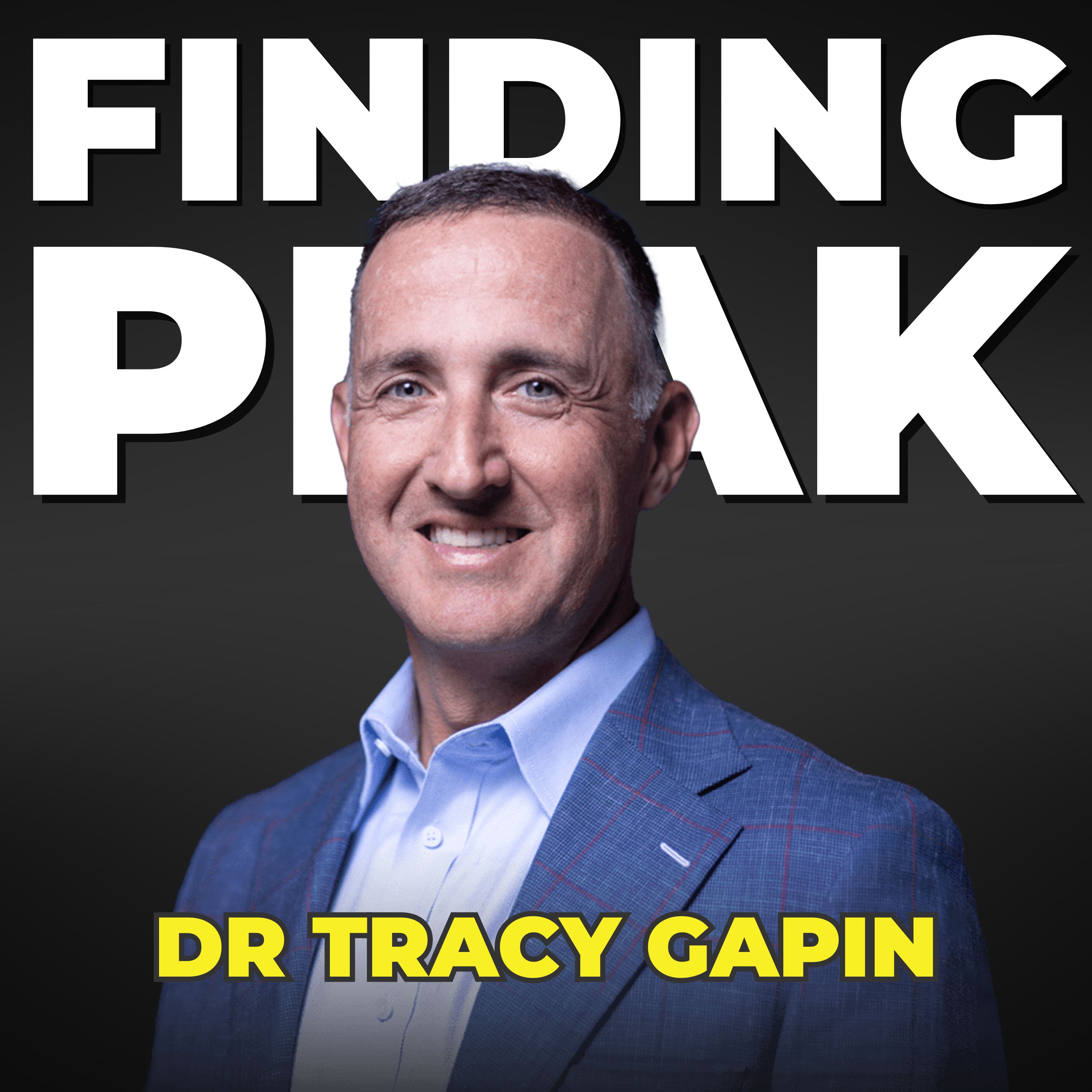
40-Year-Old Men's Health is a Lie | Dr Tracy Gapin
Your doctor, the health gurus, the whole system.
This show is part of the Unplugged Studios Network — the infrastructure layer for serious creators.
👉 Learn more at https://unpluggedstudios.fm.
Advertising Inquiries: https://redcircle.com/brands
Privacy & Opt-Out: https://redcircle.com/privacy
Press play and read along
Transcript
Speaker 1
Hey, what's up, y'all? Kelly Clarkson with Wayfair. My favorite thing about the holidays? Decking out my whole house.
It's not a competition, but if it was, well, I'd win the season with Wayfair.
Speaker 1
Outdoor inflatable Santa, got it on Wayfair. Trees, lights, and ornaments? Wayfair.
Hosting must-haves like dining sets, beds, sheets, and towels, Wayfair.
Speaker 1
For everything in your style delivered with fast and free shipping, visit Wayfair.com or the Wayfair app to win the season. But again, it's not a competition.
Wayfair, every style, every home.
Speaker 3 I believe that there is nothing you can do that will have a bigger ROI return of investment for your business, for your life, than to focus on your health and to really do everything you can to optimize it.
Speaker 3 We're not talking about treating disease, treating illness, taking pharmaceuticals, god forbid. We're talking about optimizing your health.
Speaker 3 That is critical, it's paramount for any small business owner, entrepreneur, anyone who wants to really create something that has real meaning to it.
Speaker 3 To convince someone of that is incredibly difficult. How do you convince someone to want something they don't even recognize they need?
Speaker 2 Dr. Tracy, man, I'm so excited to have you on the show, man.
Speaker 2 These are some of my favorite episodes when I get to talk to people like yourself who are invested in helping us be healthier, more productive, you know, performance. Like, I love this shit.
Speaker 2 So I'm excited to talk to you, man.
Speaker 3 Hell yeah, man. Glad to be with you today.
Speaker 2
Yeah. So something I saw saw that you talked about and write a little bit about is this idea of health span equaling wealth span.
And that just immediately clicked for me.
Speaker 2
So maybe we could start there. Let's let's dive in.
Like maybe what is health span versus wealth span and how do those two things align? Because
Speaker 2 you'll pick this up as we continue to talk.
Speaker 2 I do probably put a little too much context in my questions, but I This to me, this disconnect between the importance of our health and our wealth is something that we were even talking about before we went live.
Speaker 2 I feel like is a major miss for so many successful people. So how do we start to connect these? And why have you like kind of pulled this out as a core message that you share?
Speaker 3
Definitely. Yeah.
You know, and I'm a small business owner entrepreneur as well. So I can relate to most of the guys, men and women who I work with.
Speaker 3 But, you know, what I find is so common is founders, entrepreneurs, small business owners, executives, we are so focused on building our business, business, on our career, of taking care of our clients and generating revenue, what do we do?
Speaker 3 We sacrifice ourselves. We put ourselves behind everyone else.
Speaker 3 We neglect our own health, not realizing how the way our mind and body work or don't work directly affects that outcome that we're searching for.
Speaker 3 And so what I mean by that is, you know, your energy, your focus, your drive, your confidence, the way you show up every day, it directly translates to the bottom line for you.
Speaker 3 And so many people don't recognize that, and they
Speaker 3 will neglect themselves and not really pay attention until there's a major catastrophic health issue, an event, something that happens, when it's often too late.
Speaker 3 And so, I really talk about it's not just prevention, it's about early detection, it's about using all the amazing cutting-edge tools we have available for us now to really find hidden blind spots, find issues that are holding us back without us even realizing it.
Speaker 2 You know, I spent a lot of time thinking about my health.
Speaker 2 I have a hormone optimization specialist that I've been introduced to because I was having some issues with testosterone, which I want to dig in with you and get into in a few minutes. But that's.
Speaker 2
I've always been into health. I had a health scare in 2017 that really ignited that.
Like I basically was an athlete until I was like 25.
Speaker 2 Then I got married and lost every habit that I had about being healthy. And then it wasn't until I was like 35, 36 that all of a sudden I had this health scare.
Speaker 2
And I was like, wow, I got to get my shit together. And, you know, I tend to, when I get into something, dive like super deep.
So, you know, I
Speaker 2
big into like mitochondrial function, which is another question I have for you and different stuff like that. And I have like a at-home steam sauna and I do Kobane.
I do a lot of the crazy stuff.
Speaker 2
And some of it I do for a bit. I don't really, you know, I test it or whatever.
I don't do it. But, but my buddies will be like, what is wrong with you?
Speaker 2 Like, why do you spend so much time thinking about this? And as I said to you before we went live, I was like, I tell them all the time, like, guys, you can be 40 years old and not feel like shit.
Speaker 2
Like, both of those things can be true. Like, you don't have to just go, oh, I'm getting older.
So now I'm going to walk like hunched over. I'm going to complain about my back all the time.
Speaker 2 Like, like, if, I guess my question here is.
Speaker 2 I have a hard time because I'm not a health guy, right? So I don't like, I like to tell people, I tell people what I do, but I don't like, I obviously don't prescribe or anything like that.
Speaker 2 But it's like, how do, how does someone like me, right? If I bump into another buddy who's a hardworking guy, maybe owns a business or whatever, and he, I can see his health is not in place,
Speaker 2 what are, what's something that I can say to him? How do I start to introduce him to the, to the, to a more proactive health lifestyle that can kind of get his health realigned?
Speaker 3 Yeah.
Speaker 3 You know, I believe that there is nothing you can do that will have a bigger ROI return of investment for your business, for your life, than to focus on your health and to really do everything you can to optimize it.
Speaker 3
We're not talking about treating disease, treating illness, taking pharmaceuticals, God forbid. We're talking about optimizing your health.
And so I think that is critical.
Speaker 3 It's paramount for any small business owner, entrepreneur, anyone who wants to really create something that has real meaning to it.
Speaker 3 However,
Speaker 3 to convince someone of that is incredibly difficult, right? It's like, how do you convince someone to want something that they don't even recognize they need?
Speaker 3 And this comes down to the psychology of it all where, you know, you have to want it. And I believe that real transformation happens when you're open and willing to receive that.
Speaker 3
And so many people are not. And so this is why what I like to suggest for a lot of people out there is that's okay.
Don't invest in your health. Don't do anything.
Just get tested.
Speaker 3 Do me a favor and just get tested first. Look at your hormones and inflammation markers and blood sugar control, metabolic health markers, cardiovascular health, micronutrients.
Speaker 3
Look at your gut health markers. Look at cortisol, which is our stress hormone that everyone denies stress is a problem.
Do that testing first and let's just see what it shows.
Speaker 3 And the reason I like to recommend that is because You can't convince someone that they should care about something. You have to show them why it matters to them.
Speaker 3 And so what I do with the testing is it helps people see on paper, and data doesn't lie, that there's some real issues there.
Speaker 3 And then you can start to tie that back to what's your priorities? What's important to you? What's it really all about for you? You know, what's your legacy going to look like?
Speaker 3 And what if you weren't here? You know, what would your wife, what would your husband, what would your kids do? What would your team do without you?
Speaker 3 And when you start to put it in that frame with the data to support the fact that you got to do something. That's when you can start to really reach people.
Speaker 3 Otherwise, it's hard to get people to want to make a change.
Speaker 2
Yeah, I completely agree. You know, I was talking to a buddy of mine the other day, and he's late 30s and he's doing a startup.
Had it successfully starting again.
Speaker 2 And he said to me, Man, he's like, that gear I had 10 years ago,
Speaker 2
he's like, I don't have that gear. And I was like, well, why don't you have that gear? He's like, well, you know, I'm only going to be 40 next year.
And I go, what does that mean? I go, I'm 44.
Speaker 2 I go, on a good day, I still feel like I'm in my late 20s, right? I have energy, I'm strong, you know, whatever. I said, you know, why?
Speaker 2 Like, this isn't rocket science, bro. Like there's, there's tons of data to kind of help you.
Speaker 2 Like you said, you go out, get tested, figure out, it could be, you know, any number of things that you mentioned that you can fix or, you know, through, through being proactive.
Speaker 2 And I feel like people struggle to attach their health to the impact on the business. Like he can't go 20 hours a day because he's not healthy.
Speaker 2 He, he, he can't be, he's not falling into flow state like he did because he's not healthy he does have that afternoon lull where he wants to take a nap because he's not healthy it's like dude like you could get all that time back you could get that focus back but you have to be proactive and that disconnect
Speaker 2 i struggle with why so many people like don't make it and maybe it's just because it's hard right i mean it's another thing to think about is it could it be as simple as just it's another thing to think about so we dismiss it or yeah
Speaker 3 you know yeah it's failure to recognize that you have any problems. So, so a lot of business owners, I hear exactly what you just described.
Speaker 3 You know, it's middle of the afternoon, it's two or three o'clock, and they want to take a nap. Anyone who wants to take a nap in the middle of the afternoon, there's something really wrong.
Speaker 3 You should not want to take a nap unless you're 90 years old. That just is not something that should be part of your day.
Speaker 3
They have brain follow-up, they can't quite focus. They lose their sense of drive, sense of purpose.
They lose their motivation. They lose their confidence in their ability to lead their team.
Speaker 3 They quit putting content out there because they don't feel the same level of drive that they once had. They're not sleeping well because of all kinds of other issues we can get into.
Speaker 3 And that perpetuates this cycle of fatigue and brain fog. And you start to put on some belly fat, or for women, maybe in the butt, and you lose confidence in yourself,
Speaker 3 and everything starts to snowball. But you know what? I don't have time to focus on that because I got to work in the business.
Speaker 3 And so it's recognizing that all those issues directly affect your revenue, affect the success of your business, affect your impact.
Speaker 3 And so it's waking up and realizing that you got to pay attention to stuff and it will have a profound effect on not just your business, but your relationship with your spouse, relationship with your kids, with your friends, your family, the community, everything.
Speaker 3 That's why it's so important.
Speaker 2 Yeah. You know, I was talking to someone the other day and they quoted me the stat on how people just aren't having as much sex as they used to have.
Speaker 2 And
Speaker 2 I thought it was really interesting
Speaker 2 on a couple levels, but I have, you know, again, my gut is not that this is some societal move away from sex, but that like something is off hormonally with us that we wouldn't want. to have.
Speaker 2 I mean, I'm not talking about being a sex maniac, but I'm just saying like a natural rhythm and into even into deeper into your life, like
Speaker 2 there's no reason why you can't have a successful sex life into your 50s and your 60s unless your hormones are way off. And what else could it be, right? I mean, I don't know.
Speaker 2 Does that seem to be like basically this person was complaining to me and saying, oh, you know, well, other people, and I'm just like, bro, like.
Speaker 2 Again, it doesn't have to be that way. Like something's going on with you that you like don't have that drive when you wake up or ever.
Speaker 2 I'm not saying every moment of every day, you have to be thinking about sex, but like there is a natural rhythm to this. And for you to just not have it means something's off, right?
Speaker 3 Yeah, yeah. There are actually three large studies, longitudinal 20 to 30-year studies that have shown here in the U.S.
Speaker 3 as well as in Europe that testosterone levels in men, for example, are about 45% lower than they were 20 years ago. And it's getting worse every single year by another percent or so.
Speaker 3 So, what that means is that a 40-year-old man today today
Speaker 3
has a free testosterone, which is the bioavailable active form that we need. That's about half what it was 20 years ago.
That's massive. It's a massive, like precipitous decline.
Speaker 3
And what that translates into is exactly what you're describing. It's loss of drive.
It's not just sex.
Speaker 3
It's loss of drive and purpose in life. You lose mental clarity and focus.
You lose ability to concentrate, your ability to perform at every level. And so it's sex.
It's also in sport.
Speaker 3
It's in business. It's in relationships.
Everything gets affected. And testosterone is just one hormone.
Speaker 3 You know, guys focus on getting their T-shot or women focus on their estrogen.
Speaker 3 But, you know, we all need testosterone and estrogen and thyroid, nitric oxide, vitamin D, growth hormone, all these hormones.
Speaker 3 There are 40 others we can go through that all act like a symphony and affect how our bodies perform. And most of us are walking around deficient and don't even realize it.
Speaker 2 Yeah, I had a testosterone scare two years ago,
Speaker 2 almost to the month.
Speaker 2 It was, it was like early January.
Speaker 2
So I'm from upstate New York. It's two degrees outside.
We won't see the sun again until May.
Speaker 2 But I'm used to that, right? That normal kind of thing, you take some extra vitamin D. That's why I got the, I'm pointing over here, even though it's off camera.
Speaker 2 I got red light in my steam that I, you know, help get some more vitamin D and et cetera.
Speaker 2 But two years ago, it was like I ran into a brick wall, right? I'm 42 years old and it was like, like you said, couldn't think, no energy, no drive, like just felt like a different human.
Speaker 2 And I went and got tested after about a month and my testosterone was in the seventh percentile.
Speaker 2
I was like, I was basically at zero, essentially. And that started me on this journey of trying to figure out how to do this.
I didn't want to go on TRT.
Speaker 2
So, you know, whatever. I took endocloamine or something.
I always mispronounce it. And then kind of cycled off of that.
Speaker 2 And, you know, lifestyle and diet have gotten myself back to a good level and feel good again.
Speaker 2 But what it got me thinking was, if I'm not as neurotic and kind of bodily aware as I am because of how much I care about my health.
Speaker 2 I probably would have just plowed through that with this massive brain flog and low energy and low libido and low drive for months and not even thought twice about it. So like maybe for the guys who,
Speaker 2 what are the signs that not necessarily just testosterone, but then let's maybe just for men and then we can do women next.
Speaker 2 Like, what are some of the things that, that trigger someone to go, you know what? I gotta, I gotta start, I gotta call Doc Tracy. Like like something is off here.
Speaker 2 Like what should they be looking for in their life that with proper
Speaker 2 with proper activity, you know, like following a protocol you put together, et cetera, like that they can start to get their life back a little bit. Like what are those warning signs?
Speaker 3 Yeah, the most common symptoms we see are
Speaker 3 low energy, hitting a wall early, mid-afternoon,
Speaker 3 don't have the same focus, cognitive function, focus, mental acuity sort of stuff,
Speaker 3 working hard in the gym, but not seeing any gains, still have the belly fat, feel like they're doing everything they can, but nothing's moving, nothing's moving the needle there.
Speaker 3 Low sex drive, again,
Speaker 3 you
Speaker 3 sometimes your wife is chasing you instead of you chasing her if that happens there's there's there's typically something wrong there
Speaker 3 sleep
Speaker 3 good quality sleep actually improves testosterone which improves sleep it's a it's a cycle and so when you have low testosterone it directly impacts sleep quality as well All of these are common signs that we see, but I'll tell you, what happens more often than not, Ryan, is that a man has no symptoms whatsoever and he gets tested and finds his levels are in the tank.
Speaker 3
And that's because we are, we're simple creatures. Men are like, we're masters of adaptation where we compensate.
Like, yeah, yeah, I'm fine. I'm okay.
And we'll, we'll chalk it up.
Speaker 3
It's just getting older, like you said, you know, I'm 40. I'm supposed to be a little more tired.
No, bullshit. You're not.
It's not, that's not okay. That's not normal.
Speaker 3 That's a sign something's wrong. And so we tend to compensate for those symptoms that I mentioned and tell ourselves it's not really there.
Speaker 3 I can't tell you how many hundreds of men I've helped where they thought they felt fine. We fixed their testosterone and they're like, holy cow, I had no idea how bad I felt until you got optimized.
Speaker 3
And so this is why, again, it goes back to just get tested. Don't believe me.
Don't believe there's any problem.
Speaker 3
Assume you're fine. Let's just get tested and see where you are.
And it'll be an eye-opener when you find your labs are not nearly where they should be.
Speaker 2 Yeah, I think that's a wonderful point that you just made that it's almost as if, and I meet these guys, I see them.
Speaker 2 You know, I, you know, I look around, so I coach Little League Baseball, my kids play Little League, and I've told this story on the show before, but I, I went out, my, my son was pitching and I went out to like, just talk to him, he was having a bad inning or whatever, and I just went out to talk to him, and, you know, whatever was happening, there was a moment where I just kind of like did like a 180 degree turn and kind of scan the crowd.
Speaker 2 And I was literally the only male that I could make visual contact with who didn't have a, like a belly, like a, like a belly hanging out.
Speaker 2 And I was like how is this where we've gotten to and you know and all the guys will talk oh you know I'm getting old and this and I'm just like
Speaker 2 it's crazy to me that this is now acceptable and then we all have the same bitches my wife doesn't want to sleep with me I can't get the energy to get to the gym doing yard work is tough so I let it go and and then all these things start to stack because I'm getting older and I'm like
Speaker 2 it's It is insane what the other side of this can look like if you find someone like yourself who can help guide you, you know, through proper testing to this place.
Speaker 2 Like, like, guys, if you're listening to this, like there is this whole other world where you feel amazing, like, like your best self, and you're, you're, like, back to being, you know, I don't know, you're ever going to feel like you're 22 again, but you might feel like you're 28, like still feel pretty good.
Speaker 2 And it's all there for the taking. And I just, I, I hate that so many guys live day to day with this like nagging pain or like you said, brain fog or low energy.
Speaker 2 It's just, it's a shame because it's, it's so fixable. Yeah.
Speaker 3 It also directly translates to longevity as well.
Speaker 3 So I want to emphasize that while testosterone is one of, again, 40 plus hormones we look at, you know, it's part of that symphony I mentioned, but testosterone alone is directly tied to cardiovascular health as well.
Speaker 3 So studies have shown that men with low testosterone, men in the lowest quartile compared to the highest quartile of testosterone levels, have about a 30 to 40 percent increased risk of a major adverse cardiac event at an early age.
Speaker 3
Massive difference. And so it affects lipids, LDL, it affects blood sugar control.
It affects blood pressure. It affects systemic inflammation.
Testosterone is actually a strong anti-inflammatory.
Speaker 3
And it's been shown to directly affect cardiovascular health and longevity. And so this is not just about sex.
It's not just about building muscle and looking good in the gym.
Speaker 3 It's not even about quality of life. It's about lifespan and longevity as well.
Speaker 2 Yeah, being there for your family long term.
Speaker 2 So I told you I went to this hormone optimization specialist after I had the testosterone issue. And we did, and I'm going to butcher it, Nclomidamphine, or I always butcher the freaking name.
Speaker 2 Some big long word that starts with an E and has multiple N's and M's in it.
Speaker 2 And then cycled off of that. And then
Speaker 2
she put me on a tessamoralin, a peptide. We do three months on, two months off, three months on, two months off.
And
Speaker 2 I have found,
Speaker 2 that to me is like a miracle drug. I feel like when I'm cycled on it, after like the second week, I feel amazing.
Speaker 2 No brain fog,
Speaker 2
inflammation down. I feel strong.
I feel driven. I feel like really, really good.
Now, here's my question for you.
Speaker 2 Cause since I've started taking this and I've told a few friends, I get a lot of questions about it. And then obviously I have a podcast.
Speaker 2 So then more people question me about it because I'm an idiot and I tell everyone everything that I'm doing. And,
Speaker 2 and, you know, I only know how I feel on it, but I know there's a lot of people have questions like,
Speaker 2 have these peptides been tested enough?
Speaker 2 Are there long-term ramifications? Like, what should guys be thinking about? Yeah.
Speaker 2 Like, when considering a samoralin, which now you can buy samoralin with, like, just go online and pay 50 bucks and they'll send you samoralin in a vial, right? So like,
Speaker 2 I think we need to be really careful, but seemingly there's some benefits. So, kind of, how should we just go through these peptides?
Speaker 3
And I love peptides. Been prescribing them over eight years now.
So, huge believer in the power of peptides. They're incredible.
Um, I use an analogy that a cake analogy.
Speaker 3 I'm going to get to the end though, but it'll make more sense when I explain peptides.
Speaker 3 So, for the listener, peptides are simply short amino acid chains, like a small peptide, if you will, and they have very precise function, such as reducing inflammation, helping with musculoskeletal repair, with weight loss, building muscle, better sleep, better sex, better cognitive function, clearing up the gut, even cosmetic stuff, anything you can imagine, there are specific peptides that can help you with that.
Speaker 3
Some peptides are FDA approved. So, tessamoralin is one that's actually FDA approved.
There are semaglutide is another one. There are very few that are FDA approved, though most of them are not.
Speaker 3 Where this comes into concern is the fact that it's become the Wild West.
Speaker 3 So what I mean by that is back when I first started prescribing peptides, there were a couple online wholesalers that you can buy them through as research chemicals only. Okay, key words there.
Speaker 3 Now every other
Speaker 3 Every other place you look, they're selling peptides. It's got out of control and the quality is a huge concern.
Speaker 3 So if it's not a 503A regulated pharmacy, you have absolutely no idea what you're getting. It is a research compound.
Speaker 3 And I've seen seen studies where these products either have nothing in them, no active ingredient, or they actually have heavy metal toxins. So you're actually maybe causing more harm than good.
Speaker 3 And so I don't care if they show you a certificate of authenticity because you cannot prove to me that that paper goes with the bottle that's in my hand.
Speaker 3
And so I really caution people against buying peptides online. I love peptides.
to be very clear. I love them.
They're amazing.
Speaker 3
They're incredible molecules that can help you achieve goals very quickly. But I would only use a compounding pharmacy.
And so when I work with clients, we prescribe it from a pharmacy.
Speaker 3
It comes from the pharmacy with the label on it. It's legit.
And so if you can swipe a credit card, like you're saying, to buy a peptide, I would be really concerned.
Speaker 3 And I certainly would not inject a chemical inside me in that kind of environment.
Speaker 2 Yeah, I'm all about testing things, but the idea of buying a random vial of clear liquid that you inject into your stomach sounds insane to me.
Speaker 3 You have no idea what it it is. Yeah.
Speaker 2 And the number of stories, guys, if you go out, you go on Reddit or you go onto any of these message boards, the number of stories of what you said where they're literally just selling you liquid that does nothing in some cases because you have no idea.
Speaker 2
It's not drinking it. It's not like you have no way of knowing what it is and you're injecting it into your body.
And like, and I think the hard part for people is they, I think.
Speaker 2 These drugs do often come with a cost and in some cases are not covered by insurance.
Speaker 2 So some people who are interested in them, I find, I had one guy reach out to me and he's like, he's like, how much are you paying for Tessa Morland?
Speaker 2 And I was like, you know, I don't want to necessarily answer that question to a random person, but kind of gave him a ballpark. And he's like, you're an idiot.
Speaker 2 You can get it for 25 bucks, a vial over here.
Speaker 2 And I'm like, bro, again, not a doctor, but if you're buying that, that chemical, that compound for $25 online, you are not getting what you think you're getting. Like, let's use our brains here.
Speaker 2
Like, let's be smart. Work with professionals, guys.
Obviously, everything that we talk about in this show, like, find a professional.
Speaker 2 Find someone you can trust, whether it's Doc Tracy or someone else, like find someone who knows what they're talking about.
Speaker 2 Because while these can really improve your body, can improve your quality of life, your longevity, you can also really mess yourself up if you don't do the right stuff.
Speaker 3
Absolutely. Yeah.
And this brings me back to the cake analogy I teased you with in the beginning. And now it'll make a little more sense.
That imagine you're baking a cake.
Speaker 3 And you got a lot of ingredients, right? You got flour and sugar and egg and water and baking soda.
Speaker 3 And you put all these ingredients together and you bake your cake and it's sitting there on the drying rack, right? And then when it's cool, what do you do? What do you put on it?
Speaker 3 You put frosting on, right?
Speaker 3
The frosting is the sexy, fun stuff. My analogy here is peptides are like that frosting.
Okay? The ingredients of your cake are optimizing your hormones, fixing your gut, your nutrition, your sleep.
Speaker 3 fixing inflammation, blood sugar control, clearing toxins from your body, getting fitness part of your daily routine, eliminating the impact impact of stress that most entrepreneurs will deny is affecting them, but it is.
Speaker 3 When you fix all of those, those are the ingredients of that cake that's going to taste great when you've used all the ingredients. If you don't use baking soda to bake that cake, what happens?
Speaker 3 It's not quite the same, right?
Speaker 3 And so people try to
Speaker 3 take peptides alone without doing the other stuff, without checking hormones and gut health and everything else we're talking about. And you're not going to get the same results.
Speaker 3 It's like going and buying a can of frosting off the shelf, and that's not a cake. That's not the same.
Speaker 3 And so, context matters. I've heard guys tell me that they're taking these peptides and they don't see any difference.
Speaker 3 They're not building any muscle, they're not burning fat, they don't have any energy, they're not sleeping well, and they're like, these peptides don't work.
Speaker 3 Well, first of all, if you bought them online, you get what you get what you pay for, you know.
Speaker 3 But more importantly, if you don't bake that cake with the proper ingredients, you have no business eating that frosting yet.
Speaker 2 Yeah, that's a wonderful point. It's like, it's like, get your sleep fixed, get your diet fixed,
Speaker 2 you know, get to the gym three times a week or whatever, you know, whatever you need to do, you know, and then and then look to these things that can make you feel amazing.
Speaker 2 Cause I'll tell you, I had a period
Speaker 2
the second time I cycled back on. So I was on for three months, off for two, and then I cycled back on.
And I had this period that was just like a super stressful period.
Speaker 2
There's a lot of stuff going on in business. I was traveling a lot.
So I wasn't sleeping well. I wasn't eating well.
I wasn't hydrating. I wasn't getting as many workouts in as I want.
Speaker 2 And to your point like i i was like oh well maybe i'm like growing uh um not an immunity
Speaker 2 my body's like
Speaker 2 a tolerance yeah i'm growing a tolerance to this you know in my head that's what i'm thinking because one i don't know what i'm talking about and two i'm going i don't feel the same as the first time and then i'll i had to like it you know so then i said something to my doctor and she's like well you've been on the road five out of the last six weeks like have you been working out no have you been eating well no have you been drinking too much yes have you been sleeping well no Okay.
Speaker 2
Well, there you go. That's why, you know, this isn't magic.
It's like you said, it's this amplifier of an, of a really solid base. So I think that's a wonderful point.
Speaker 3 Yeah.
Speaker 2 You mentioned something in there that
Speaker 2 how do we get,
Speaker 2 obviously microplastics are a huge issue, but like
Speaker 2 toxins, these, these things, like we read all these stories about, you know, there's all this stuff in our body now because of the way we eat and how our food is packaged, et cetera.
Speaker 2 Like, one, what role are these toxins playing in how we feel every day? And then, is there a way or a method or et cetera that we can start to remove these toxins out of our bodies?
Speaker 3 Sure, sure.
Speaker 3 So, I believe that endocrine disruptors, which is a fancy term for chemicals, toxins, toxicants in our environment that affect hormone production, hormone function.
Speaker 3 I believe endocrine disruptors have clearly been shown to be the biggest single culprit for the testosterone epidemic I was talking about a few minutes ago. Why hormones are so low?
Speaker 3
Okay, so we know that endocrine disruptors crush testosterone levels. They cause infertility.
They cause autoimmune disease. They cause ADD, precocious puberty, they cause all kinds of cancers.
Speaker 3 So clear causative relationship between these toxins and these major health issues. All right.
Speaker 3 So what am I talking about? I'm talking about in our drinking water. So tap water
Speaker 3
is actually loaded with synthetic estrogen. Women's birth control is in our drinking water.
It cannot be adequately filtered.
Speaker 3 And so women's synthetic estrogen, you're drinking it unless you're filtering your water with some sort of reverse osmosis or carbon block filter. All right.
Speaker 3 There are many other chemicals in our drinking water as well. In our
Speaker 3 food,
Speaker 3 they're loaded with things like atrazine. So like most of the crops in the Midwest, especially corn, is sprayed with atrazine, which is an herbicide.
Speaker 3 People talk about glyphosate, which is the most commonly used herbicide. The second most commonly, just not far behind, is atrazine.
Speaker 3 Every other country on the planet, every other major country on the planet, it's outlawed, it's banned. But here in the U.S., it's still allowed and it's used on our crops.
Speaker 3 And it's been clearly shown that atrazine crushes hormone production and function. Crazy study, actually, where they exposed frogs.
Speaker 3 They exposed male frogs to a very tiny amount of atrazine in their drinking water. And no lie, these male frogs became female and they actually laid eggs and reproduced from exposure to atrazine.
Speaker 3 And we are eating it on our food every day without even realizing it. It's crazy.
Speaker 3
So it's in our drinking water. It's in our food.
Anytime you're eating non-organic fruits and vegetables,
Speaker 3 it's there. If you're eating meat that's not organic, grass-fed, it's potentially full of hormones, synthetic chemicals.
Speaker 3 Personal care products, our laundry detergent, our shampoo, our soap, our deodorant, sunscreen, all of these products that we use are loaded with chemicals that, first of all, they didn't use them 20, 30 years ago either.
Speaker 3 They're saving money. They're finding industrial ways to make these products now.
Speaker 3
And all these chemicals have been shown to crush our health. And so it's a major problem.
It does not get nearly enough attention. So I'm glad you asked about it.
What do we do?
Speaker 3
I don't want to be all doom and gloom here. What do you do about it? Is first of all, awareness.
So there's an app on your phone. The Environmental Working Group, EWG, has made an app.
Speaker 3
It's free if you like things that are free. It's called Healthy Living.
You can download it. It's a green little icon on your phone.
Speaker 3
And you can scan barcodes of products in the store. And you'll see all the chemicals.
You go to like Tide and Cheer Laundry Returning.
Speaker 3
You'll be like, holy cow, I can't believe I've been using this for years. And it'll help you find products that are clean.
and don't have all these chemicals.
Speaker 3 I would insist that you filter your water. I would recommend you never drink from a plastic water bottle again.
Speaker 3 Those plastic water bottles, like Gatorade and Powerade, as well, plastic water bottles, they're made with BPA, bisphenol A, and phthalates, and they leach into your water and they crush you on a daily basis.
Speaker 3 This is why I always have a stainless steel water container with me with filtered water, with reverse osmosis filtered water. So important.
Speaker 3 I would focus on eating organic, grass-fed meat if you eat meat or wild-caught fish if you eat fish. Otherwise, your fruits and vegetables should be organic if at all possible
Speaker 3
because they're all covered in chemicals. And it's all around us.
It's like a, I call it a soup of endocrine disruption.
Speaker 3 And we just need to really raise our awareness and be very intentional in these little micro decisions we make every day to avoid it.
Speaker 2 Is there any way to get the chemicals out of your body?
Speaker 2 And I'll give you an example.
Speaker 2 I was. Scrolling through Instagram, which as a single male in my 40s is basically how I make all of my buying decisions.
Speaker 2 Since that algorithm basically has me more dialed than anyone in history
Speaker 2 it's crazy uh honestly the shirt that i'm wearing the jeans i have on the boots i have on yeah yeah
Speaker 2 all from instagram like just knows exactly what my style is um but so i'm scrolling through the other day and obviously instagram knows that i'm like a nerd for this kind of stuff uh armchair nerd i guess um and it was like this you know i just thought it was funny and that's why i'm bringing it up and i'm i'm interested in like the science behind it but the idea was like you you, you, you adhere these pads to the bottom of your feet while you sleep and it's supposed to have some sort of charcoal, whatever.
Speaker 2 And as the blood passes through the blood vessels, the blood passes through the blood vessels, it sucks out heavy metals and different chemicals. And I was like, you know, whatever.
Speaker 2 One, I don't know if there's any valid science behind that working, but it got me thinking, like,
Speaker 2 I've read that it's very difficult to get microplastics out, but a lot of these other chemicals and toxins that you're discussing, are there ways that we can actually like remove them from the body if they do make it their way in there?
Speaker 3 Yeah, you know, this comes back to, you know,
Speaker 3
those ingredients in the cake I mentioned earlier. One of them is detoxification, helping your body clear these toxins.
And that happens in the gut, happens in the liver.
Speaker 3 And so there's a lot of things we do to test for and optimize the function of your gut and liver for clearing toxins. So that's a big part of it.
Speaker 3 Eliminating exposure is by far the first thing we want to do. And then optimizing those detoxification pathways.
Speaker 3 I'm not a big believer in hacks and buying some tool off Instagram and thinking that's going to fix the problem. I think it's really optimizing from the inside.
Speaker 3 Now, one thing that has been shown to clear microplastics, and it's not yet available here in the U.S., to be clear, will be soon, and that is plasma phoresis.
Speaker 3 So, I want to clarify that the plasma exchange that we have available here in the U.S., the devices that most of like you hear some of these longevity centers talk about offering plasmapheresis, is actually plasma exchange.
Speaker 3 And it has to do with the device and the filter size that's being used. Basically,
Speaker 3 the filter size has to be small enough to catch microplastics. And that technology is not yet allowed here in the U.S.
Speaker 3 We hope sometime in the next year, regulation will relax to where we can bring that in.
Speaker 3 But in Europe, in London, they have these devices all over the place where you can actually filter microplastics.
Speaker 3 And so plasma exchange is great for very short-term term, like clearance of LP-little A. It's an LDL subtype that people have that can increase cardiovascular risk.
Speaker 3 It's helpful for that very short term for a couple weeks, but not for microplastics yet. Yeah.
Speaker 2 I read somewhere that
Speaker 2 regularly giving blood can be a simple hack to this, right? Just regular donations of blood.
Speaker 2 You know, if you go quarterly or whatever, that can be one way to get it out and then your body's recharging fresh. Again,
Speaker 2 you have to be limiting your exposure on the front end or it doesn't really matter.
Speaker 2 But if you are starting to limit your front end, does even something as simple as just regularly donating blood could potentially help?
Speaker 3 It could definitely be helpful. Yeah, you know, plasma donation, especially, it's really all in the plasma, not really the red cells.
Speaker 2
That's good to know. I didn't know that differentiation.
And just maybe for people who aren't aware, the difference between plasma and just standard blood donations.
Speaker 3 So yeah, yeah, to keep it simple, just go donate blood, and that can work as well.
Speaker 3 But specifically, plasma is where they actually separate out your, you know, when you, when you spin your blood in a centrifuge, the red blood cells fall the bottom, the platelets will be in the middle, and then the plasma is all the clear, yellowish, straw-looking fluid that's at the top, that separation.
Speaker 3 And that plasma is where all those toxins live, where all the chemicals and
Speaker 3 the junk and the debris that you're trying to get rid of.
Speaker 3 And so when we do plasma exchange, what we're doing is we are taking that plasma, getting rid of it, and replacing it with albumin, for example, and then putting it back in the body.
Speaker 3 And so that's one option that still is not going to really help with the microplastics, but it definitely helps with toxins in general. Yeah.
Speaker 2 That's good to know. That's very good to know.
Speaker 2 I want to switch to another topic: mitochondria. So, a lot of reading that I've been doing around longevity
Speaker 2 has brought me to the health of our mitochondria,
Speaker 2 the, you know, energizing our mitochondria, et cetera, helping our mitochondria repair.
Speaker 2 One, maybe just quickly, for anyone who is unfamiliar with how mitochondria work in our body, but ultimately, like,
Speaker 2 what role does keeping our mitochondria healthy play in longevity, energy, et cetera?
Speaker 2 And like, is this something that we should be thinking about or is it more of a luxury kind of item? Yeah.
Speaker 3 So, you know, we learn about the mitochondria a little bit in undergraduate, but then in medical school, we actually learn about it a little deeper, about how that's where it's the organelle.
Speaker 3
It's inside a cell. It's the specific part of the cell that produces energy.
And it produces it by manufacturing a molecule called ATP. And your whole body needs ATP for energy.
Speaker 3
Everything that happens depends on ATP and that's your unit of energy. And without ATP, you would die.
You wouldn't exist. And so the mitochondria are where ATP is produced.
Speaker 3
It's also where NAD is manufactured as well. Okay.
And so mitochondria are really important organelles. We now recognize that there are hallmarks of aging.
Speaker 3 So the aging process, what are clear signs of aging? And issues with the mitochondria is one of those.
Speaker 3 So we know it's a really important part of not just daily energy production, but actually longevity as well.
Speaker 3 And so optimizing mitochondrial function, a lot of people think, oh, it's just woo, it's some influences out there making stuff up, but there's actually real science behind.
Speaker 3 It is a key when it comes to energy, when it comes to
Speaker 3 your daily performance, and when it comes to cardiovascular health, when it comes to longevity, it's all directly tied in the end back to the mitochondria.
Speaker 2 How do you supplement? One, One, should you supplement for this stuff?
Speaker 2 And maybe are there,
Speaker 2 let's take this idea of
Speaker 2 energizing our mitochondria, helping them be healthy and et cetera. Because,
Speaker 2 again, not a doctor, but
Speaker 2 there's part of me and the research that I've done that does believe it feels like there's something to this. Like, if you can keep your mitochondria healthy, it helps your body, right?
Speaker 2
They produce the energy, as you said. That seems like a good thing.
I don't need to have a doctorate to kind of see like if that produces the energy, we want to keep that producing the energy. um one
Speaker 2 pre-supplementation are there things that we can be doing in our lives to help our mitochondria function and then is there any you know once we kind of have that base again going back to your cake analogy which i love because i completely agree with right once we have our our base our cake together is there
Speaker 2 keeping our analogy together the frosting the supplementation that can that can help take that further
Speaker 3 Yeah, there is. And I caution people against listening to this and say, oh, all I need to do is just take some supplements and that's going to fix my mitochondria.
Speaker 3
That's been, you know, like, you know, Timeline is a great company out there. I have no financial connection with them at all, but they make a great product called Mito Pure.
And
Speaker 3 it's quite expensive.
Speaker 3 It's not cheap, but it's a great supplement for mitochondria. However,
Speaker 3 if you're eating
Speaker 3 a diet high in sugar, refined processed sugar, refined carbs, if you're drinking alcohol consistently, if your body, you know, in a high-stress stress cortisol state, either from
Speaker 3 poor sleep, over-training, chronic stress affects mitochondrial function as well.
Speaker 3 Toxins we talked about earlier can affect mitochondria. Systemic inflammation, which typically comes from the gut, the microbiome and the gut wall integrity, we could talk about.
Speaker 3 All of these things come back and affect our entire system at a level, really coming down to the cellular level to the mitochondria. And so,
Speaker 3
you know, taking antioxidants to try to improve mitochondrial function has been looked at. There are a lot of supplements that you can take.
It comes down to the fundamentals.
Speaker 3 And it comes down to understanding, you know, I do a lot of work with genetics. And based on your genetics, we can actually understand clearly what your risk factors are.
Speaker 3 How does your body work best and what supplements may be right for you? Because so many people take supplements that based on their body, based on testing, it's not even what they need.
Speaker 3 It's not going to help them.
Speaker 3 And so that's really the key is to focus on the fundamentals and get the testing done to understand what your body needs rather than just shotgunning it and taking a bunch of supplements that may not be what you need.
Speaker 2 So for the testing piece, let's say I'm listening to this, I'm on the treadmill, I want to be healthy, I'm trying to get myself in shape and health is a priority for 2026.
Speaker 3 Yep.
Speaker 2 What if I go to my GP? What should I be asking for in terms of testing so that I'm getting the right test so I can actually make these decisions?
Speaker 2 Or, you know, like what's the right way to go about the testing and what should I ask for so that I'm getting the results that we can actually make some decisions on as you've outlined here. Yeah.
Speaker 3 So
Speaker 3
I practice what is really called precision performance medicine. Okay.
It is optimization. It's focused on prevention, on performance, on longevity, on preventing disease before it happens.
Speaker 3 If you go to your GP and say, doc, I really want to look at
Speaker 3 assessing my mitochondrial function and I really just want to improve my energy and performance and really
Speaker 3
just find ways to optimize. Your doctor's going to look at you and laugh.
And the reason is not that you're wrong. The reason is what I learned when I, you know, I was a urologist.
Speaker 3 I was a board-certified urologist running a busy surgical practice doing robotic surgery for 23 years. Okay.
Speaker 3 I couldn't see it. It's like, you know, like when you're inside the bottle, you can't see the label on the outside.
Speaker 3 I didn't realize it that traditional medicine, especially general practitioners, internal medicine docs, even concierge medical docs, you know, I don't mean to be disparaging against them.
Speaker 3 It's all we're taught. We're taught these are the blood tests to do to look for disease, to look for a real acute problem.
Speaker 3 These are the, we do, you know, a CBC and basic metabolic profile, PTPTT, INR, and all these that I'll argue are worthless labs, but that's all we know to check.
Speaker 3
And back then in those days, I would laugh at functional medicine. I would laugh at this.
Back then it was called anti-aging.
Speaker 3 Now there's this longevity medicine in air quotes for those of you listening
Speaker 3 that I think it gives it a bad name.
Speaker 3 It's the fact that there's a huge gap between our traditional healthcare system, which is so so messed up and broken and focused on disease and based on pharmaceuticals and run by insurance companies and burned out doctors who are miserable and hate their life and have to see 60 patients a day.
Speaker 3 And so they don't have time to focus on your sleep and stress and gut health and nutrition and and all that.
Speaker 3 And then there's this other world of precision performance medicine where we're focused on optimization. And we look over there to where we were.
Speaker 3
And I'm like, I can't believe I lived through that for so many years. And I was suffering, my patients were suffering.
And so
Speaker 3 what do you say to your GP? I don't know the answer to that because they're not going to get it.
Speaker 3 And they have a completely wrong perspective because that's all we're taught as we go through our educational system.
Speaker 2 So, one, I can,
Speaker 2 I'll just quickly share with the audience, if you haven't haven't heard this story before,
Speaker 2
I had an experience this way. I had a wonderful GP and then she retired and I got assigned to someone else in the practice.
And the someone else in the practice is not amazing.
Speaker 2 I'm sure she's a wonderful human, but seemingly not a great general practice, at least from my perspective, because I showed up one day and I had two issues.
Speaker 2
This was during the testosterone issue, right? And I said, my energy is really low. I have massive brain fog.
I just don't feel like the same guy. And at the same time, I got a basic panel back and my
Speaker 2
cholesterol had gone from like 205 to 250. Okay.
And I've always had high cholesterol my entire, since eight, I've been getting blood tests because I've had hereditary high cholesterol.
Speaker 2
And she goes, oh, no problem. I'm going to write you a prescription for Adderall and Lipitor.
And I was like, I don't want either one of those things. There you go.
Speaker 2 Actually, I'll take the Adderall because I can resell that. But I want the, you know, again, I'm not taking the Lipitor.
Speaker 2
If the FBI is listening, I don't really resell Adderall, just so you care. But the, I was like, I certainly don't want to go on Libitor for a whole bunch of reasons.
I don't think I need it.
Speaker 2 I was like, so, but I said, you know, so I said, no, and then I went back and I did some research and I get back and I go, first of all, like 250 is high today, but it hasn't always been considered high.
Speaker 2 I said in two, and again, this is like basic chat GPT search. Like, I'm not even, you know, this isn't even me.
Speaker 2 I go, and second, if my plaque is zero, then is it really, do I need to be on Lipitor at 44 if I have zero plaque and a 250 cholesterol, which, which even my LDL is not bad.
Speaker 2
And she's like, well, I guess you're right. So then she sends me to the MRI machine.
I get the full body scan, come back, my plaque is zero. And she's like, well, do you want to go on the Lipitor?
Speaker 2 I'm like, no.
Speaker 2 And what my point is, like, I felt immediately in that moment like I couldn't trust her anymore. Like, she was trying to push this thing on me.
Speaker 2
And like, I had to advocate against my GP to not go on Lipitor. Like, I don't understand.
Like,
Speaker 2 it's like, I just lost, I was like, I lost all trust.
Speaker 2 I was like, that was when I went and found the hormone optimization specialist who's been a wonderful relationship because she's like function, function, longevity, you know, not as deep as you go, but you know, kind of, that's her space.
Speaker 3 Yeah, that, that was
Speaker 3
my story as well, believe it or not, Ryan said. This was back I was 13 years ago now.
I just turned 40 and I I go for my first physical ever. And I'm a mess.
I'm stressed out. I'm fat.
I'm tired.
Speaker 3
I feel old and I hate my life. I'm a miserable surgeon.
And, you know, surgeons are assholes. It's true.
I was.
Speaker 3
And all my doc wanted to do was put me on a statin. Same story.
Same exact thing. And I knew I needed a lot more than that, but I didn't know what to do either.
I'm a urologist, you know.
Speaker 3 And so that's what made me, triggered me to go back to school and learn longevity, medicine, functional medicine, hormones, peptides, optimization. And what I now see is that it's,
Speaker 3 I almost feel bad for them because
Speaker 3
they don't have any other tools in their toolbox. That's it.
They look at cholesterol. And I'll actually argue, first of all, that cholesterol doesn't even really matter.
Speaker 3
It's actually, you want to be looking at ApoB. Apollipoprotein B is the single most important marker for lipids that most doctors still don't know about.
LDLP, which is LDL particle number,
Speaker 3 the number of LDL particles is so much more important than LDL-C, which is the concentration of cholesterol within those LDL particles.
Speaker 3 Total cholesterol is, I would argue, relatively worthless lab test that they're basing this decision on. And then even if your lipids are a problem, even ApoB is high,
Speaker 3 there's testing that will show us that in many cases, astatin is the wrong drug for you anyway, even if you were going to take a drug.
Speaker 3 And so not only is it the wrong drug for you, but there are so many things that we can do before that to help optimize lipids without even touching a pharmaceutical, like fixing hormones, making sure you're eating the right diet based on your genetics.
Speaker 3 You may be eating the wrong diet for your body,
Speaker 3 cleaning up the gut, reducing inflammation, all, you know, stress, cortisol, all these other things that we can focus on when you optimize that stuff. A lot of times, the lipids take care of itself.
Speaker 2
Yeah. And that's exactly what happened to me.
So I've always been good with diet. I probably eat a little too much red meat, so, but that's fine.
Speaker 2 I'll, if I lose a few months of lifespan because of eating too much red meat, I'm okay with that. Um,
Speaker 2 but you know, basically, once once we kind of confirmed diet, I got she's like, I want you to get back on your workout routine for about a month. So, I did that and got that going.
Speaker 2 And then we did another test, and it was still, you know, whatever. And it was by a combination of the tessamoralin and a micro dose, 1.75
Speaker 2 milliliters per whatever of
Speaker 2 terzepatide. That combination,
Speaker 2 cholesterol came down 52 points.
Speaker 2 What's the fat in your body? Visceral fat percentage came down two percentage points over a three-month period. Like massive change.
Speaker 2 Again, just continuing to eat a good diet, workout, you know, focus on sleep, that kind of stuff, not drinking too much.
Speaker 2 But that combination, and then I was able to cycle off of the Trezepatide, right? And just keep the testamoral in and
Speaker 2 my levels of safe. And it's like, it's like I've been blown away by the difference between that experience, which was custom, thoughtful, right?
Speaker 2 She didn't immediately start sticking tessamoral in my body.
Speaker 2 She's like, I want you to take a month and make sure that like your diet, workout, et cetera, is in shape before we, you know, go down this path for all the reasons that you said, right?
Speaker 2 She didn't want you frosting a
Speaker 2
green bean casserole. She wanted, you want to be frosting the cake.
So, um,
Speaker 2 yeah, I just,
Speaker 2 again, it's, it's why I love talking to people like yourself because like, like what you're talking about, everybody needs to be exposed to this shit because they just accept. And again,
Speaker 2 I think you're completely right.
Speaker 2 We should not, nor do they deserve to bash GPs, but there is so much more that can be done for you if it's done in a way that's thoughtful and custom and understands this level of how your body actually works.
Speaker 3 Yep, yep, agree.
Speaker 2 Yeah. So, um, with the few minutes that we have left,
Speaker 2 I wanted to ask you and kind of finish with gut. You've mentioned it a few times, right?
Speaker 2 I think that in general, this is another area where
Speaker 2 people just don't have a good understanding of how
Speaker 2 what's going on in your gut like essentially drives what's going on in the rest of your body. I think people, most people don't think about that.
Speaker 2
And again, I'm broad stroking it, not a doctor, but like it's so incredibly important. And basically, we just shove things in our face and we forget that we did that.
And it's like, but our,
Speaker 2 and I don't understand the microbiome piece.
Speaker 2
There's like certain bacteria or whatever. I don't understand that.
So maybe we could dig into that. But why is what's happening in the gut so important to our overall health and functionality? Sure.
Speaker 3 So the gut has infinitely more DNA material than our whole body. Crazy.
Speaker 3 And it's a signal.
Speaker 3 The gut sends a signal to our brain for neurotransmitters. It sends a signal to everywhere else in our body for metabolism.
Speaker 3
It controls hormone production. It controls almost everything in some way, shape, or form.
And so the gut is,
Speaker 3 I really believe your health starts and ends in the gut. Now, I want to clarify, I'm not talking about, you know, do you have any irregularity, any cramping?
Speaker 3 I'm not talking about any of that kind of stuff because most people who have gut issues have absolutely no symptoms. So I don't mean gut issues in that type of sense.
Speaker 3 When we're talking about the gut, what we're talking about is you have this balance.
Speaker 3 To make it simplistic, to make this concept easy to understand, it's literally good and bad. You have this battle going on in the gut between the good microbes, the good healthy organisms.
Speaker 3
You need bacteria in your gut. to produce key hormones, produce nitric oxide, produce butyrate, produce these other key molecules.
You know, GLP-1,
Speaker 3 GLP-1 is, you know, semaglutide, terezepatide, these peptides that we now talk about. GLP-1 is actually made in the gut
Speaker 3 and is made by the L cell, a specific cell lining your gut, and it needs acromansia, a key microbe, to make it work. Without acromansia, that cell doesn't produce GLP-1.
Speaker 3 So we believe a lot of obesity issues may actually tie down, tie back down to the microbiome as a driving force for that.
Speaker 3
And so our bodies make GLP-1s, they make a lot of hormones, neurotransmitters get affected by the gut. And so, this balance between good and bad is really important.
It also affects the gut lining.
Speaker 3 So, our gut lining is composed of a bunch of cells stacked next to each other with a mucus-protective layer, an immune layer called the secretory IgA layer.
Speaker 3 It's full of immune cells and mucus, and it protects that gut wall so that only
Speaker 3 single molecules of fats, carbohydrates, and
Speaker 3 amino acids can get absorbed through those cells.
Speaker 3 When you get breakdown of that gut wall, suddenly food particles can now leak, creep between those broken down cells. And once these food particles get below that cell wall, that cell line,
Speaker 3 now everything starts to go haywire. It triggers an immune response, you get systemic inflammation, you get food sensitivities, it affects
Speaker 3
gut. Yeah, when people refer to leaky gut, that is leaky gut.
Exactly. It's breakdown of the gut wall.
And typically it's from alcohol and stress and poor diet
Speaker 3 and breakdown of the microbiome, breakdown of the protective layer of the gut. And that leads to leaky gut.
Speaker 3 And that's when you have issues with thyroid problems, issues with autoimmune disease, issues with brain fog, issues with I can't burn fat. I can't build muscle.
Speaker 3 with low energy all these symptoms you're like oh wait i thought that was testosterone it may actually be coming from your gut
Speaker 3
and so this is where, again, it comes back to tying back to where we started almost an hour ago. That people think my gut's fine.
Well, okay, let's just test it and see.
Speaker 3 And you'll be shocked to find that it's probably not. And that may be the reason why you can't burn those few extra pounds in your belly.
Speaker 2 Tracy, I could talk to you for hours, dude. I have like 30 more questions.
Speaker 2 Love to have you back on the show sometime because there's so many things that I want to talk to you about. Because
Speaker 2 I just taking it all the way back to where we started, I believe as much as I believe anything that health, this idea that you talk about of health span equals wealth span,
Speaker 2 I just, it's absolutely positively the case. Your success long term, right?
Speaker 2 We can have micro bursts of success maybe if we're, if we're unhealthy, but if you want to consistently be healthy and have strong relationships and be around for your kids and your partner and all the fun things you're supposed to be working for in your life that you actually want to do someday, right?
Speaker 2 Like, why be hunched over and barely able to walk and miserable and unhappy and brain foggy and low energy when you actually get to go do the fun stuff that you've built this business to provide for?
Speaker 2 And uh, I love that there are people out there like you who are focused on this, who are sharing the message, who are doing it in a way that's very understandable.
Speaker 2 So, for the people who've listened to this that are like, I want to either get deeper into your world or work with you specifically, where do they do that? How do they do that?
Speaker 3
Oh, thanks so much. So, website is gapinstitute.com.
That's g-a-p-in-institute.com. And I have a gift.
Speaker 3 So, if you go to gapinstitute.com forward slash launch, as in peak launch, so L-A-U-N-C-H, I have, first of all, a complimentary copy of my best-selling book, MEL 2.0, which focuses on men's health, but even the women need it for the men in their life.
Speaker 3 And I have a high-performance health handbook, which is 15 strategies and tactics everyone can start using today.
Speaker 3 And then finally, I have an ultimate peptide guide there for you as well. So really a detailed, scientific, deep dive into a lot of the peptides that we use today.
Speaker 2
Tremendous. Guys, I'll have that link right at the top of the description.
Wherever you're listening to the show or if you're watching on YouTube, just scroll down. I'll have the link right there.
Speaker 2 Make sure you go over and check it out.
Speaker 2 Your health span is equal to your wealth span, my friends. And Doc Tracy, I appreciate the hell out of you, man.
Speaker 4
Hear that? That's my alarm clock. How did I get here? Invested early, retired early.
Now, my morning meeting is with the Shore.
Speaker 4 Get where you're going with DIA, the only ETF that tracks the DAO. Getting there starts here with State Street Investment Management.
Speaker 5
Before investing, consider the fund's investment objectives, risks, charges, and expenses. Visit state street.com/slash IM for prospectus containing this and other information.
Read it carefully.
Speaker 5
DIA is subject to risks similar to those of stocks. All ETFs are subject to risk, including possible loss of principal.
ALPS Distributors, Inc. Distributor.