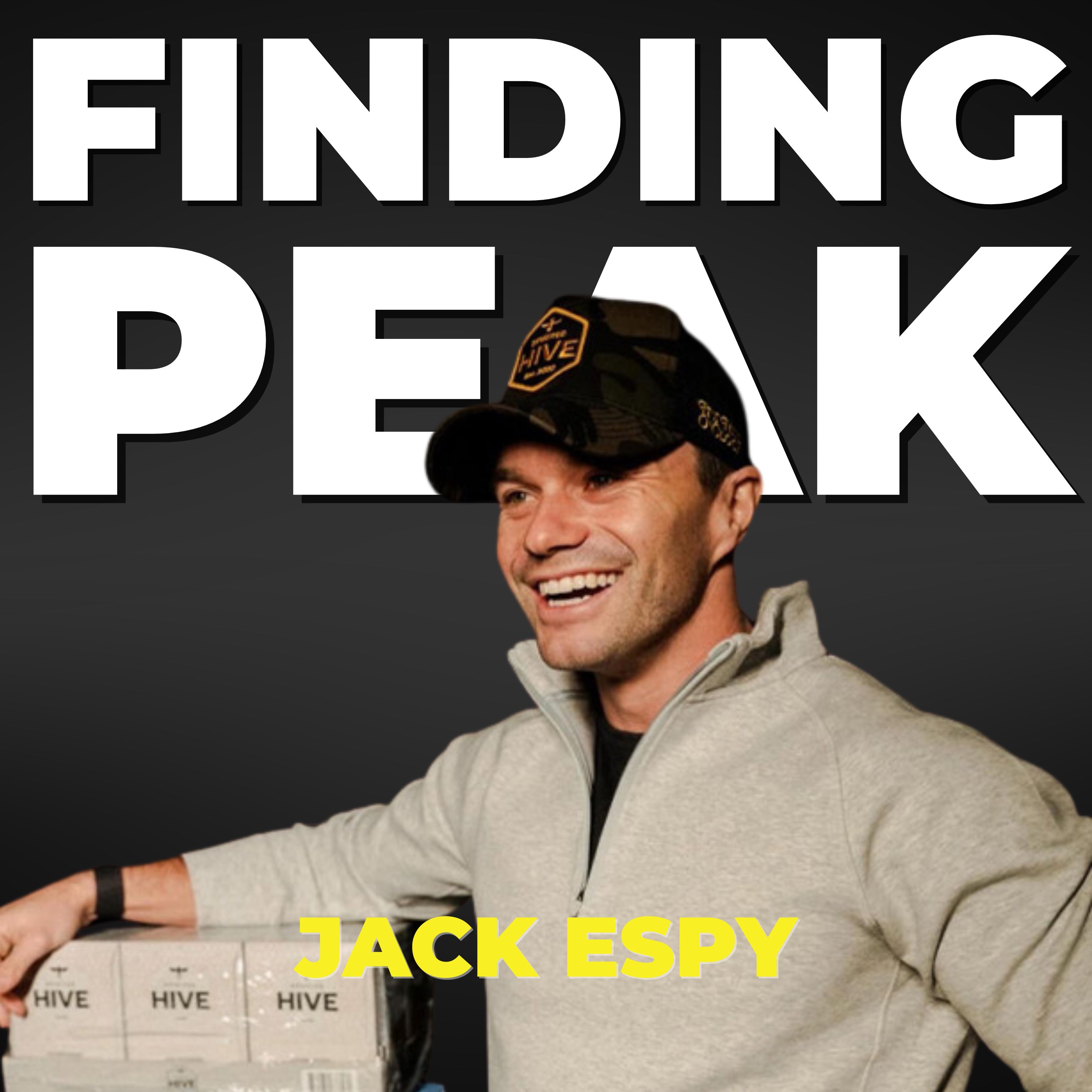
How Honey, Hustle, and Hard Lessons Built a $10M Brand | Jack Espy
Press play and read along
Transcript
Speaker 1
This episode is brought to you by Progressive Insurance. You chose to hit play on this podcast today.
Smart Choice. Progressive loves to help people make smart choices.
Speaker 1 That's why they offer a tool called Auto Quote Explorer that allows you to compare your progressive car insurance quote with rates from other companies.
Speaker 1 So you save time on the research and can enjoy savings when you choose the best rate for you. Give it a try after this episode at progressive.com.
Speaker 1
Progressive casualty insurance company and affiliates. Not available in all states or situations.
Prices vary based on how you buy.
Speaker 2 I wouldn't be where I am today if I hadn't made those, you know, mistakes. First two years, I wouldn't change them for anything.
Speaker 2 It took a lot, a lot longer for us to get to market because I was trying to learn as I went. I had to make those mistakes.
Speaker 2 Going through all those pitfalls and speed bumps along the way got us to market in a way that you know the product was amazing
Speaker 3 what is it about honey because it seems like everything you do is honey related and obviously you've you've tapped into
Speaker 3 a differentiator in the various uh beverage brands that you have that we're going to talk about and i want to dig into them and really talk about your entrepreneurial journey but uh what was it about honey as a sweetener that you decided to really leverage it as much as you have as a as a differentiator in your brand totally yeah i mean i get that question a lot it's it's funny because i've always loved honey ever since i was a little kid um you know from putting it into you know i mean even today i i wake up i put i don't know if you've ever tried this but uh honey and coffee.
Speaker 2
Yeah. That's that's my main sweetener.
Then I put it on steak. I mean, I pretty much only eat meat and fruit and I put, you know, honey on steak.
I put it on everything.
Speaker 2 And how it all kind of started was it was in the middle of the pandemic and the job that I just had out of college, I ended up losing it, which was in real estate finance.
Speaker 2 And what do I do at this time? Like everybody else, I was at home mixing up one too many quarantine cocktails.
Speaker 2 And one night I was mixing my two favorite drinks at the time, which are Moscow mules and Mexican mules.
Speaker 2 And I was making these drinks to my friends and they were like, damn Jack like these drinks are really good like you should can them
Speaker 2 and you know little did I know I didn't know anything about business I knew nothing about you know starting a company or anything like that and you know naive me was like well why not take a stab at this so we're all thinking about different names for this new brand that I was gonna create and I was like well what about the name mint bee
Speaker 2 And they all go, dude, that is the stupidest name I've ever heard of. But why Mint B?
Speaker 2 And I was like, well, you know, because there's mint in a Moscow mule and B, because Moscow mules and Mexican mules are sweetened with honey. And they're like, what are you talking about, dude?
Speaker 2 So little did I know I was making these drinks wrong, but
Speaker 2 because I have that honey addiction, I was just happening to sweeten my Moscow mules and Mexican mules with honey, not even knowing that that wasn't even an ingredient.
Speaker 2 And then to your question, that's kind of when the light bulb went off my head. And I was like, well, what if I took a different approach to this whole industry?
Speaker 2 And instead of sweetening these drinks with you know synthetic sugars like aceritane, sucralose, et cetera, even like I don't like the taste of stevia and I know a lot of people also don't like that taste.
Speaker 2 I was like, well, what if I sweeten it with the world's first natural sweetener, which is honey and it tastes amazing.
Speaker 2 So that's how I started Spirited Hive and also, you know, ended up sweetening the brand with honey.
Speaker 2 And then also my other brands, Trive Soda, sweeten with that brand, sweeten that brand with honey as well.
Speaker 3 And Spirited Hive was first, correct?
Speaker 2 That was first. Yeah.
Speaker 2 So that was my first, you know,
Speaker 2
point at creating a brand. I started with that brand and built that up and that started in 2020, got that to market in May of 2022.
So it took about two years to get it on the shelf.
Speaker 2 Built that brand as a Tennessee, so a Nashville-based brand.
Speaker 2 One thing that's always been a pillar of my life is health and fitness. And I always wanted to create a better for you beverage within the soda category because as I was building this brand,
Speaker 2 I saw the same thing happening in multiple other beverage spaces like a lot of like better for you which was all about calories and low sugar or no sugar and for me I was like well that doesn't mean it's better for you just because it has zero calories and zero sugar doesn't mean it's good for you it means you're you know ingesting different ingredients and synthetic ingredients which I don't want to have in my body so that's why I started strive soda which was a better for you soda that was using honey as a sweetener and also, you know, aiding in hydration as well, because we walk around dehydrated every single day without even knowing it.
Speaker 2 So why not have a great tasting soda that also hydrates you throughout the day?
Speaker 3 So talk to me about those first two years, because that seems like
Speaker 3 you got to have a lot of faith building a brand for two years before you actually put it out into market and actually make, you know, try to make any money on it.
Speaker 3 So what were those first two years like in getting this thing off the ground?
Speaker 2 It was
Speaker 2 a lot of
Speaker 2
at the time I thought it was a lot of failure, you know, because I was like, you know, throwing all the spaghetti at the wall. Nothing was sticking.
I was trying to figure it out.
Speaker 2
I knew nothing about the beverage alcohol industry. I knew nothing about starting a brand.
I knew nothing about being a founder. I knew nothing about being a leader, all these different things.
Speaker 2 And
Speaker 2 it was, it took a lot of time to get. the product to where I wanted it to be because I didn't want to just release a product that had okay branding, had an okay product, like tasting product.
Speaker 2 i wanted everything to be perfect and it took a really long time to get there but all these failures which now i've you know framed my mind a little bit different to look at these failures as lessons you know because all those lessons that happened over those first two years i wouldn't be where i am today if i hadn't have made those you know mistakes or if i hadn't have learned those lessons so First two years, I wouldn't change it for anything.
Speaker 2 I think it took a lot longer for us to get to market because I was trying to learn as I went and I had to make those mistakes and I had to learn those lessons.
Speaker 2 So it took two years to get there where a lot of other founders who have been in this spot before may have been able to get a product to market in six months or a year.
Speaker 2 And realistically, it was more like two and a half years to get there. But again, you know, going through all those pitfalls and speed bumps along the way.
Speaker 2 got us to market in a way that, you know, the product was amazing, but also to I learned so much along the way, which I would have made those mistakes, you know, at some point, but I'm glad it happened early on rather than obviously now.
Speaker 3 Now, when you got to Strive Soda, were you able to take those lessons learned building Spirited Hive and get out to market faster?
Speaker 2
100%. Yeah, we turned that brand around a lot quicker.
And still, you know, we're still tweaking the product to this day. I mean,
Speaker 2 we released with
Speaker 2 one point of branding about a couple of months ago and we're already tweaking it to something and we're probably going to tweak it again.
Speaker 2 And it's it's just always changing, but we got that to market much faster because I knew the blueprint, you know, at least I created that blueprint that I was like, okay, cool, like let's do exactly what we did, you know, subtracting all these pitfalls that I had, get this product to market a lot quicker.
Speaker 2
Whereas before, the blueprint was nothing. I was like, I have no idea what I'm doing.
I'm just trying to figure it out as I go.
Speaker 3 What was one of the big obstacles with Spirited Hive that you were able to step around with a Strive?
Speaker 2 I think the biggest thing was, hmm, that's a good question. I think the biggest pitfall for me was
Speaker 2 figuring out the steps that were involved from having an idea to creating an idea in your kitchen or creating a product in your kitchen, then producing that on a large scale and getting that to market to then get that on the shelf.
Speaker 2 You know, I think for me, that was, I saw that as one big hurdle, not all like small, little hurdles.
Speaker 2 and that's kind of what I broke down in my brain was that's not one big hurdle We have to break that into multiple steps Conquer each one of those steps to then get the end goal of getting it on the shelf and once I broke that down because now I knew you know how to get a product from an idea to you know having package design having you know printed cans and getting that product produced to then okay like now we have to get this in front of some distributors maybe we start selling it independently which now we can do because it's not the beverage alcohol market so that was like a whole like, oh my gosh, this is amazing.
Speaker 2 Like now I can actually sell to Ryan if you have like a convenience store or something like that, which we couldn't do with beverage alcohol.
Speaker 2 So everything was definitely expedited a lot quicker in that process.
Speaker 2 So now people can actually have it on the shelf and purchase it a lot sooner rather than me trying to figure out all that out with Hive not knowing where to turn next.
Speaker 2 Once I completed one step, I was like, okay, now what do I do? I have no idea. So that definitely helped.
Speaker 3 That makes a lot of sense. So, you know, I think one of the areas of entrepreneurship that I have not spent a lot of time is retail product creation.
Speaker 3 So versus, say, a tech startup or a professional services startup, et cetera,
Speaker 3 what, what are some of the unique characteristics of creating a retail product that you think like
Speaker 3 most founders or entrepreneurs in that space,
Speaker 3 like when I think about this, I'm like, you know, I've had a million ideas for something you make in your, like you say, you make something in your kitchen, you come up, it tastes good.
Speaker 3 People tell you to, I mean, people say that crap all the time, right? But you heard that and you turned it into something that we can now buy on shelves at stores.
Speaker 2 What,
Speaker 3
where do you think most people start to go wrong? It just feels like such a big leap. Like, I don't know why.
And maybe it's just because of the space that I'm in.
Speaker 3 Coming up with an idea for a tech product or an app or something and getting it out into the market, like it makes a lot of sense to me.
Speaker 3 But with a retail product, it seems so overwhelming like there's so many cans and so many gas stations and how do you how do you get that shelf space which i know is really tough to get how do you like all it seems like this monumental effort to get a retail product on shelves and actually have it consistently be bought so like where were those places where you were able to get past that step where most people kind of get dashed across the rocks?
Speaker 2 Yeah, I mean, the two biggest things in this industry is distribution and marketing.
Speaker 2 You know, you have to get the product on the shelf and then you have to leverage marketing to pull that product off the shelf.
Speaker 6 And I think a lot of the- Whenever I need to send roses that are guaranteed to make someone's day, the only place I trust is 1-800-Flowers.com.
Speaker 6 With 1-800 Flowers, my friends and family always receive stunning, high-quality bouquets that they absolutely love.
Speaker 6 Right now, when you buy a dozen multicolored roses, 1-800 Flowers will double your bouquet to two dozen roses. To claim this special double roses offer, go to 1-800flowers.com/slash wwo.
Speaker 6 That's 1-800flowers.com slash WWO.
Speaker 2 These brands, and I'll kind of do like a big full circle to answer your question: is a lot of these brands today that may have a successful product to getting it onto shelf, but may like, because a lot of these brands try to go big super quickly.
Speaker 2 So they're like, oh, we'd have this new beverage. We just raised $30 million and now we're trying to go after all 50 states or all, you know, lower 48 states.
Speaker 2
That's great. And they may put up some really good revenue numbers for the first maybe 18 months.
But the big thing is, is just getting product onto shelf doesn't mean anything
Speaker 2 when things actually come in and like, oh, wow, that brand's actually doing well. It's when they start to get repeat orders and their velocities are going up.
Speaker 2 And velocities, I mean purchasing points of purchase per store. So like if your velocities are, you know, two, three, four cases per store, okay, now you're doing well.
Speaker 2 But if you just try to cast a really wide net and try to leverage your points of distribution without leveraging your velocity, then your company is going to implode in a matter of no time.
Speaker 2 And we just kind of saw that over the past couple of years.
Speaker 2 There's been a big restructuring within the beverage alcohol space, mainly within cans, because so many brands try to cheat the system and go after growth rather than profitability.
Speaker 2 So we're taking a different approach at that.
Speaker 2 That's why we've been around for five years is because we're taking a slow approach where we're trying to grow market over market independently rather than cast a really wide net and go after multiple different states at one point in time.
Speaker 2 Realistically, we're such a small company that we couldn't do that.
Speaker 2 I could have the ability to raise a ton of money and go after a bunch of states, but it wouldn't be done in a way that would make sense and
Speaker 2
grow because we want to own each market that we go into. Like Nashville, Tennessee, like we're slowly starting to own that market.
And
Speaker 2
we've been in there for three years now and it's taking that long. So it takes a long time and to your point, it is that daunting.
And I didn't know that.
Speaker 2 And I was super naive to this industry before getting involved in it.
Speaker 2 And sometimes it's beautiful, beautiful to be naive because if I knew all the headache and all the hoops to jump through, I wouldn't have gotten involved in this industry.
Speaker 2
I would have done something else. But, you know, I think it's beautiful to be naive because I am doing and I love what I do.
But to your point, in some states, it really is.
Speaker 2 Like you have to attack every point of distribution you have and you have to manage every point of distribution you have. So it's a huge task and it's a huge undertaking to be able to grow a product.
Speaker 2 That actually is like a viable product over time.
Speaker 2 So that's those two things have to work hand in hand, distribution, getting product on shelf, and then marketing, being able to have good marketing techniques and campaigns, etc., to get that product pulled off the shelf.
Speaker 2 Because then people are going to come back for more.
Speaker 2 I mean, that's the biggest thing: is like if your product tastes good enough, if you get them to buy it the first time from a campaign or great shelf placement or whatever that is, they'll keep coming back.
Speaker 2 But the thing you have to worry about is the other products that are coming to market
Speaker 2
because it's a fickle industry. Some people will be like, oh, yeah, I love that high product, but GGC Surfside just came out and they have a new thing.
Let's go try that. And then, you know,
Speaker 2 it's always working against you
Speaker 3 um so that's interesting so the idea there would be you'd rather be on every you'd rather have a shelf in every store in a market than be in a couple stores and a whole bunch of markets and while it may look better on like a scatter plot right like at the end of the day that density create like people are seeing it everywhere they can't get away from it every gas station they walk in or every beverage store they walk in et cetera depending you know that that's kind of the idea is be very dense in one market and that's how you get traction.
Speaker 2 Yeah. You, what we look for is like whenever we're doing a general sales meeting or talking to distributors or sales reps or whatever it is, it's always,
Speaker 2 we don't want to be everywhere.
Speaker 2 We want to be in the stores that are actually going to sell our product because a lot of these brands go into these general sales meetings and they pitch like, okay, we're putting a sales incentive on X amount of pods and pods are points of distribution.
Speaker 2 So they're going to go out there and they're going to get all these pods.
Speaker 2 But, you know, of the, let's say, 200 pods they get, only 75 are good accounts that will actually keep your velocities up and keep selling your product.
Speaker 2 So when I go in with my head of sales, we take the approach of, hey, we want to go after your top A and B accounts. We will put a great incentive plan together for you guys to get those 75 accounts.
Speaker 2 And then we're not wasting money on the other 125 that maybe get a single purchase through, but then never reorder again.
Speaker 2 And then take that same mentality across multiple states that, because we want to live within an ecosystem of around eight to 12 states. We're in six right now.
Speaker 2 We only want to expand to eight to 12 states because then the idea is to get acquired.
Speaker 2 And if there's, if there's not enough meat on the bone for one of these beverage acquisition companies to come in and be like, oh, wow, you're in 48 states, but your velocities are one case per store,
Speaker 2 they'll sniff through that immediately rather than, oh, you're in eight to 12 states, you're doing six cases per month in each one of your stores. That's a viable product.
Speaker 2 And there's enough meat on the bone for them to come in, increase, you know, economies of scale, decrease cost of goods, put you through their whole distribution pipeline, and they can do that overnight.
Speaker 2 Whereas I can't, obviously.
Speaker 3 So that large like beverage roll-up,
Speaker 3 that organization has, is, is obviously pulling in all the shared services into one. So they have, like you say, economies of scale.
Speaker 3 But then they also have the like a tried and true distribution model set up that they're requiring you to basically plug your brand, your product into this machine that they've built.
Speaker 3 And then that machine goes out and almost guarantees the distribution to a certain extent as long as the product is good and maintains its quality. Is that kind of the idea?
Speaker 2
Pretty much. Yeah, it depends on the beverage acquirers.
You know, there's like the big five, which, you know, I'd love for them to come in at some point because then that is what they do.
Speaker 2 You know, there's other ones that don't have that distribution or the, you know, costly goods to lower that.
Speaker 2 But for the most part, like the big five or six, you know, like Constellation, Diageo, Gallo, those kind of big brands, they can easily do that. And then also, too,
Speaker 2 you know, I think something that
Speaker 2 is
Speaker 2 interesting is, you know,
Speaker 2 one big piece of the puzzle is if you're in all 48 states
Speaker 2 these big partners work with certain distributors so if you're signed with you know 48 distributors and of those 48 they work with 22 of them
Speaker 2 crap now we're gonna have to spend all this money of getting the this brand out of these contracts to then sign with them in the states that make sense to us that we work with.
Speaker 2 That could be like a no-go on a deal. So there's all these different things that you have to kind of work through and think about rather than, oh, you know, Rhode Island wants to bring us in.
Speaker 2
Let's go with Rhode Island. And before, like three or four years ago, I would have been like, I was like, I was doing anything to get distribution.
I didn't care about velocities.
Speaker 2
I was like, it doesn't matter. Let's just get as much distribution as we can.
I need to satisfy investors.
Speaker 2 I need to, you know, make sure that we're still going, going, going and growing month over month. Whereas now I'm like, okay, we got to think about this strategically.
Speaker 2 You know, what states are actually going to do a good job for us? What distributors are going to do a good job for us?
Speaker 2 And how can we, you know, work together with these distributors to hit our velocities? And that comes down to us at the end of the day, not them.
Speaker 2 You know, they can help us get there, but it's all about us working as a team to increase velocity,
Speaker 2 increase sales month over month. So now, since I'm learning so much more about this industry, I'm taking a different approach than I was, you know, three, four years ago.
Speaker 3 Now, did you start the business with
Speaker 3 selling in mind? Or was that something that as you started to get into it, started to understand the beverage
Speaker 3 marketplace as a whole, that you were kind of like, look, like we need to be thinking about how this is packaged up? Because a lot of the things that you're talking about,
Speaker 3 I don't know that a lot of people would think that far out ahead while they're in growth mode, right? A lot of people would just be like, grow, grow, grow, grow, grow.
Speaker 3 We'll figure it out when, when, when, you know, when that becomes a problem.
Speaker 3 But it's seemingly you are taking a very thoughtful and tactical path to set your business up to be as well positioned to be bought in the future as possible.
Speaker 3 Why that mentality versus just, as you've kind of stated, growth at all costs, get revenue up, like take every opportunity?
Speaker 3 Was that a mentor? Was that something you just came to? Like, I feel like that's a fairly unique, especially this early in your career, that's a fairly unique perspective.
Speaker 2 Definitely mentorships. I mean, like, I've talked to a bunch of people that I've met in the founder space within Beverage and their biggest piece of advice.
Speaker 2 And it was like, it was funny because like the first time I heard it, I was like, what the fuck is this guy talking about? I was like, no, like, I'm going to grow as fast as I can.
Speaker 2 And then kept on hearing it from founder to founder to founder because it's not sustainable, you know, and that's the thing is like.
Speaker 2 If you're in this space, the margins are too thin for you to grow that quickly without having to raise a ton of money year over year or quarter over quarter or whatever it is where it's like
Speaker 2 you can get you can be digging that hole very very quickly if you want to grow that quickly so it's all about like how quickly do you want to grow and again things have changed a bunch within this sector in the past in its expedited in the past three years i mean like three years ago We saw a bunch of brands get acquired because they were just chasing as many cases as they could get.
Speaker 2
It didn't matter what their velocities were. I mean, obviously, you still want to have, you know, good, strong velocity, but they were going after pods.
It was just like, how many pods can we get?
Speaker 2
Let's grow this thing. And a lot of these beverage acquirers were like, oh, wow, look at these brands.
Let's, let's eat as many of these up as we can.
Speaker 2
And beginning, in the beginning, I was like, let's chase growth. Let's go after growth as fast as we can.
But the industry slowly started to change because it was like,
Speaker 2
This isn't going to be like that. It's almost like the, you know, the craft beer boom, you know, back 15, 20 years ago.
It's the same exact thing.
Speaker 2 Whereas like a lot of brands got ate up pretty quickly. And then it was like, okay, wait, hold on.
Speaker 2 Now we need to see the viability of this, not only these brands, but the industry in general, the ready-to-drink cane cocktail industry.
Speaker 2 Because like you look at soda, the soda space is completely different than what I'm talking about with Hive. Like Hive is specifically beverage alcohol.
Speaker 2 And it's changed. And in those changes, that's when I've changed my
Speaker 2
strategy is let's grow slow. Let's grow smart.
Let's go a mile deep and an inch wide rather than the opposite, and let's see what happens.
Speaker 2 You know, let's keep going after these velocities and putting these small little, like, almost like goals in place, which, like, hey, let's try to hit this velocity in this state.
Speaker 2
Let's try to hit this velocity in this state. Let's try to get this campaign off the ground.
Let's keep doing this with the end goal of year over year, trying to get a certain case goal.
Speaker 2 Because case goals still matter to us, but it's like, how did you get there? Because, and sorry if I'm spitting so much like kind of beverage knowledge. No, this is great.
Speaker 3 Thank you.
Speaker 2 But, like, there's two ways to get to end revenue or end case goals. You know, you have your points of distribution and your velocity.
Speaker 2 You can have a super high point of distribution with a low velocity gets you there, or you can have vice versa, or you can have both in the middle.
Speaker 2 And that's what we're going for: both in the middle, balancing each other out to where it's like, okay, it's showing that we have steady growth from a points of distribution standpoint, that we're going after more points of distribution with a good velocity with us.
Speaker 2 Because if a beverage acquirer saw that we were just going after points of distribution, they'd be like, no, I can smell through that. I know exactly what you're doing.
Speaker 2 But if it's too much the other way, it's like, okay, you're not growing quick enough. Like, why aren't you growing faster? Why aren't you opening up new markets?
Speaker 2 Because they want to see both working in tandem.
Speaker 2 So yeah, so I don't know if that answered your question.
Speaker 3
No, I think that, no, that's phenomenal. And I think it translates to many other businesses.
So my home industry is the insurance industry, specifically the property casualty industry.
Speaker 3 So, home and auto, commercial insurance, stuff like that. And the exact same thing is true.
Speaker 3 We're in a, it's slowing down a little, but 2020 to 2022 was a huge MA cycle for insurance agencies, very, very similar to what you're saying, right?
Speaker 3 There's these large roll-up organizations, and they're constantly looking for either new brands or new models to roll into this shared service model, et cetera. Exactly what you're talking about.
Speaker 3 And it's similar but different, right? There's a way to grow an insurance business, an insurance agency that is very attractive to roll-ups.
Speaker 3 And then there's another way of growing, which would be kind of similar to your focus on point of distribution, where you have a bunch of scattered different policy types, different carriers that you've written with, like accounts that maybe only have one policy, et cetera, that.
Speaker 3 show maybe, yeah, you're growing, maybe your top line number looks good, but managing this book of business on the back end is so much work and has so much a cost that you're, you know, you have a lower EBITDA or your margins are lower and now you're less attractive.
Speaker 3 So what I love about what you're explaining in detail, and details are great, man.
Speaker 3 Don't hesitate to go as deep as you want is that the lesson here that I'm taking from what you're describing is. You can be an early stage entrepreneur, right?
Speaker 3 Inside of five years would still, I think, be considered early stage, especially since you just launched three years ago with
Speaker 3 Spirited Hive, was
Speaker 3 you can be early stage and be thinking about packaging and how you grow to be attractive to potential buyers at the same time.
Speaker 3 It doesn't have to be this chaotic, hell-bent on growth, nothing else matters. It doesn't, we'll figure all that problem out.
Speaker 3 Like that's one way to go, but there are all, it also seems like you may be exchanging early stage growth and maybe vanity metrics for some ticking time bombs in your business down the road.
Speaker 3 Is that kind of what I'm hearing from you?
Speaker 2 Totally.
Speaker 2 I mean, because for us, like we have to stretch every single dollar we can you know because like again like we're still growing which is amazing and we're growing in the right direction which is great however you know we're still a small brand and i don't want to do any serious raises i mean if it makes sense in a couple years where it's like okay like now to get that next step we're really gonna have to bring on like a series a and really go after it then you know, we'll do it, you know, whatever it takes.
Speaker 2 But we're trying to stretch every single dollar. So we're trying to be as smart as we can on what we can do from not only,
Speaker 2 you know, altering current business on, hey, you know, producing, what should we do? Should we continue to produce with this co-packer?
Speaker 2 Should we go somewhere else that, you know, allows us to, you know, free up some more cash, do smaller production runs?
Speaker 2 And or, you know, do we increase our minimum order quantities with our distributors? Like all of that is thought through.
Speaker 2 Whereas before, I was just like, I don't know, whatever is the industry standard.
Speaker 2 And I think it's okay to go against industry standards as long as it works for your brand on what you're trying to achieve. And yeah, I mean, it's, it's awesome.
Speaker 2 And now like we're trying to leverage market, leverage marketing as much as we can.
Speaker 2 Now, that was the biggest thing that took us only up until like six months to a year ago to really figure out was like
Speaker 2 so much of the industry and a lot of these brands think that once they bring a distributor and once the cases get on the shelf, their job's done. Now it's up to the distributor to sell it through.
Speaker 2 It's like, no, you have to put all these campaigns out there.
Speaker 2 You have to get those three points where someone sees it three times for them to buy and that is the hardest part by far i mean like if people think that distribution is hard yeah distribution is hard but getting people to buy your product is very very hard because there's so many products out there like you go to a beverage if you go to total wine you look at the shelf you'll be like inundated with all these different brands like what do you choose you choose the ones that you know you go to high noon because you've seen that go to sun cruiser because you've seen it spirit of high go i've never heard of that why would i buy that you know so that's why we always have to be like in front of the consumer from you know paid ads to like marketing incentives like campaigns on the shelf like enter in to win a trip to Nashville or whatever that is or events activations getting people to try it so
Speaker 2 that's somewhere where we've kind of shift shifted our budgets more towards marketing on
Speaker 2 helping us go through more product quicker and increase our velocities from a retail standpoint and my head of sales you know you talked you talked about mentors you know i brought on my head of sales about a year and a half ago, and he's changed everything because he's taught me so much on not only sales, but marketing as well and how to leverage campaigns to not only get good shelf placement, but also to deplete product off the shelf.
Speaker 2 Like it can kill two birds with one stone. So it's been awesome.
Speaker 2 I mean, like, that's the biggest thing for me, you know, with building this brand, not knowing anything about it on the way or starting it is, you know, what can you learn from other people and who can you bring on that you put in the seats that really know what they're doing and can help you get to your end goal?
Speaker 3 So, how do you do that? Because, you know, I'm thinking about
Speaker 6 whenever I need to send roses that are guaranteed to make someone's day, the only place I trust is 1-800flowers.com.
Speaker 6 With 1-800 Flowers, my friends and family always receive stunning, high-quality bouquets that they absolutely love.
Speaker 6 Right now, when you buy a dozen multicolored roses, 1-800 Flowers will double your bouquet to two dozen roses. To claim this special double roses offer, go to 1-800flowers.com/slash wwo.
Speaker 6 That's 1-800-Flowers.com/slash WWO.
Speaker 3 The liquor store that I go to. So, again, we'll talk Spirited Hive before we talk Strive, right? And,
Speaker 3 you know, this is relatively new, last three to five years, but this canned cocktail boom has been, like you said, similar to the craft beer boom.
Speaker 3 You know, now there's two entire,
Speaker 3 geez, they got to be 24-foot sections inside this place that are just nothing but, you know four and 12 packs of canned cocktails so as you as you think about spirited hive and and how you separate like
Speaker 3 how do you start to craft that message like why would i go with a spirited hive versus a surf side versus a high noon versus a lucky one that dave portnoy just came out with right like like if you're if you're sitting next to those brands like what are the things that you're actually doing as a as a d to c brand to to stand out like what is the marketing what how does the messaging work?
Speaker 3 How does the placement work on the shelves? Like, is it slipping the guy a fin on the side when he's stacking the shelves? Or like, how does, how does all that actually work?
Speaker 2 Totally. Yeah.
Speaker 2 I mean, it was interesting because, and it's funny to think back on this, but when I first started this brand, I wanted to be the better, quote-unquote, better for you canned cocktail that's 100% sweetened with organic wildflower honey.
Speaker 2
So that was our hook, you know, every single time was we're the better for you canned cocktail, 100% sweetened with honey. And it's, it's stuck with us ever since.
Because like, we're more of like
Speaker 2 obviously our flavors are amazing and they're unique but our big selling point is that we're utilizing a different sweetener to sweeten your product to sweeten our product that isn't synthetic doesn't leave an aftertaste and is a better for you product rather than all these other ones that you know like i just listed And when I first went into my first multiple distributor meetings, even to this day, I get called out for it.
Speaker 2 They're like, better for you? How is this brand better for you? Like, your calories aren't super low. And although our calories are relatively low, I mean, we're 7% ABV, we're around 160 calories.
Speaker 2 So nothing crazy because we're especially at 7% ABV. And I was like, well, what's your definition of better for you? And he was like, well, like, I want to see zero sugars.
Speaker 2
I want to see really low calories. And I was like, okay, cool.
That's, that's great. I mean, we're going from the standpoint of better for you ingredients rather than calories.
Speaker 2 And it was like this for the first year.
Speaker 2 And no one was really claiming better for you in that space because a lot of the people that drink alcohol don't care.
Speaker 2 But there is a segment of the market that's more of a white space of people who love health and fitness, just like myself and probably like you.
Speaker 2 Like, I don't know if you drink, but like for me, I love health and fitness. But like Thursday night, I'll probably have a drink tonight with my family or I have a hive tonight.
Speaker 2
I have a couple of hives over the weekend. And to me, it's all about balance and embracing the balance in your everyday life.
So
Speaker 2 it took a long time for for that to happen.
Speaker 2 And we've gotten a lot of press around that, which is great. I mean, some of it was kind of negative in the beginning, but now it's turned to more positive.
Speaker 2 And now you look at the space, everyone is claiming better for you. Even products that have the worst ingredients ever are claiming better for you.
Speaker 2
And it's like on every packaging across most of the RTD category. So that was our big call out.
But our main call out is that we're 100% sweetened with honey.
Speaker 2 And from shelf placements, placements like where we can kind of tie people in is one they like to see that two in tennessee for us our big selling point is we're a tennessee nashville based company so a lot of people when they go to nashville whether they live there they want to drink local or if they're coming in They want to experience Nashville.
Speaker 2 They want to go to Broadway. They want to do all these different things, but they want to embrace that, you know, honky-tonk vibe.
Speaker 2 And this is like one of our new merchandise we launched is raised on honky tonk and hive is our is our big thing that we're pushing so they want to drink local and it's like always figuring out like okay what is like a cool campaign that we could do that can be at retail level like eye level that someone sees that have never seen this product before that's like i want to buy this you know and one of the things that we did up in michigan was We're in a bunch of Meyers up there, which is, you know, kind of like the major grocery store chain up there.
Speaker 2 And one thing we did was the Raise on Honky Tonkin Hive campaign, which is win a trip to Nashville. So you entice the people to come in to see that scan, to enter into win.
Speaker 2 And then, oh, I'm going to give this a try. Let's see what this tastes like.
Speaker 2 And we really pride ourselves on that our product's so good that they're going to come back for a second time, but you still have to stay in front of them because it's not so much that your product isn't good enough.
Speaker 2 It's what other campaigns are these other brands running that will take their attention off of Hive onto a new brand. So you always have to stay in front of them.
Speaker 2 And I think to your point earlier, like it's so daunting this space is you're totally right. And I didn't know any of this.
Speaker 2 It's like always staying in front of the consumers 24-7 and it's so hard because you can lose an account like that if you take your eye off the wall. So,
Speaker 2 and there's so many different ways to get into that, you know, from marketing to distribution, all those things.
Speaker 2 But, you know, you, you have, it's like a dual-pronged approach, distribution and marketing to be able to stay on top of that.
Speaker 4 Yeah.
Speaker 3 The placement piece to me is so interesting because
Speaker 3 there's another liquor store that I go to sometimes that's like a little more convenient, but it's very small.
Speaker 3 And all of their products that would be in your category, like they have one cooler.
Speaker 3 You know, the kind of very standard national brands like a surf side or a high noon are in there.
Speaker 3 And then every other brand is like stuffed in the bottom of the cooler or is or is warm on the side of the cooler just sitting there.
Speaker 3 And I'm like, man, if you walk in and you're just looking for a four-pack and you don't want beer, but you'd want something canned, you know, maybe you just like the way you feel better the next day.
Speaker 3 If you have a vodka or tequila or whatever instead of a beer, like
Speaker 3 you're just going to take the cool four-pack that's sitting inside the fridge, even if it's not, you know, exactly what you came in for. So,
Speaker 3
and again, I apologize if these are too nerdy, but I'm just interested. I'm so interested in the business because I don't know that much about it.
Like,
Speaker 3 you get the distribution point, right? So, like, the distributor, I'm assuming, says, hey, I tell me where I'm wrong in here.
Speaker 3 It says, I have 20 locations, you know, this is the average volume, whatever metrics they give you, right? So you, you go to that distributor and you say, hey, you know, we're willing to do this deal.
Speaker 3 We want to be in Michigan. How then,
Speaker 3 like, does it cost you money? Is it the quality of the product? Like, if you start hitting a certain amount of volume, do you then not have to pay for the placement?
Speaker 3 Like, how do you actually get that distributor to make sure that your product is like, right? Like, it's like eye-level center cut is like where you want to be or something, right?
Speaker 3 Or like, how do you make sure that your product actually gets seen by the people when they walk in the store?
Speaker 2 So the super interesting thing about beverage alcohol industry is like what you described of like trying to pay to get on the shelf is completely illegal. You can't do that.
Speaker 2
So that goes against tight house laws. And there's so like these laws are back from prohibition.
So like.
Speaker 2
Super archaic. This industry is super archaic.
Whereas like Stripe Soda, literally, I was just, because that's a San Diego-based brand, I was in a store, and he was like,
Speaker 2 you know, I like this brand, it tastes good, but you know, what's in it for me? What are you going to do for me? And I was like, well, you know, we want this shelf placement.
Speaker 2
If I buy out this other product, can we get it on the shelf? And he's like, yeah, there's two cans left. I'm like, okay, cool.
Let's buy those two cans and we'll put it on the shelf.
Speaker 2 And then, you know, there's always something in it on that end. And there's obviously gray area, obviously in the beverage alcohol industry.
Speaker 2 And we always try to stay away from that because, you know, we really, we truly leverage and we truly believe that our product is good enough to be able to withstand and go against these big guys, and it is.
Speaker 2 But the interesting thing is...
Speaker 2 To answer your question on like how you get it on the shelf, when we go into these distributor meetings and we
Speaker 2 pitch to these distributors on general sales meetings on like we have a new product releasing in the spring, so we're getting our annual operating plan all ready to go to start pitching to all these distributors.
Speaker 2
And, like, the big thing is, is like we come up with these campaigns. You know, it's hive o'clock, you know, it's hive o'clock all summer long.
Like, we want to do a
Speaker 2 giveaway, or we want to do have a big shelf display that, you know, calls out all these different things that makes us so much better. And it's an enter into win, or whatever it is.
Speaker 2 That allows us to get the distributor to go out because we put an incentive behind it. So, like, Ryan, you're a distributor rep.
Speaker 2 Like if you go get 10 of those displays, we'll pay you 100 bucks for each display. So that gives you kind of like, you're, you know, free to go hunt and get as many as you want.
Speaker 2
That will get us onto those campaigns. Well, one, it'll be attracted to distributors because they're like, oh, wow, like this is awesome.
Like they've got their stuff together.
Speaker 2 Two, it gets the sales rep out there into the market to go start getting that onto the shelf.
Speaker 2 And however they do that, that's up to them, you know, with their relationships that they have with these liquor stores and chains and all those kind of things
Speaker 2 and then three
Speaker 2 what that does for us isn't even the campaign it's more or less getting the product in front of the consumer having things around it kind of bells and whistles being like hey you know draw your attention to here the big display versus to your point being on the side of the cooler just sitting there it's like i don't know what that is it kind of it kind of what it does it's it gives it credibility.
Speaker 4 Yeah.
Speaker 2 It shows like, oh, wow, how did this brand get this when all these other brands are just sitting here on the side?
Speaker 2 And that's, that's really hard to do as well because you, you have to stay in front of your distributor to be like, hey, we've got these campaigns going.
Speaker 2 And that's what my head of sales and my head of marketing have taught me over the years and over the past couple months is like, we always have to have a campaign in place because If you don't have something in place, then that shelf placement is going to go to a different campaign from a different company that's going to steal your spot.
Speaker 2 So you always have to be staying in front of it because that will help with your velocities too, always having a big shelf placement. And the biggest thing for us is like,
Speaker 2 if you're not cold, you're not sold. So, oh, and it's specific in this industry within, you know, beer and cane cocktails.
Speaker 2 You always have to be cold because no one wants to go in to go buy a warm four-pack because usually they're buying that for later that day.
Speaker 3 You get a crack one when they get home, yeah. Or in the car, depending on where you are located.
Speaker 3 Not that I'm advocating for that, friends.
Speaker 3 So, so, can you sell, and I just don't know the laws here. Could you sell an alcohol? Like, if I wanted to go on your website, could I buy four packs and have you mail them to me? Is that legal?
Speaker 2
Yeah, so it depends on the state, and it's ever-changing. So, that's really interesting.
So, we sell in Connecticut, and through Connecticut, you're allowed to ship out of Connecticut to most states.
Speaker 2 I think it's like 36 states and that literally changes day to day. Like some states get added, some gets taken off.
Speaker 2 So since we have distribution and we have a really good, two actually really good distributors up there, we can sell out of Connecticut and ship to you. What state are you in? New York.
Speaker 2 Yeah, so we can send to New York. We actually used to
Speaker 2 distribute it in New York
Speaker 2 in liquor stores, but it was, it's such a tough market because
Speaker 2 it's very pay-to-play where it's like again look at all this shelf space what are you gonna do for me and we just didn't really get involved in that whole pay-to-play because i was like i don't want to we're already starting business off on that foot i don't really want to continue that you know it's kind of like a hostage situation if i'm going to give in here when like at what point does it you know does it end so we're in a lot of states where and then you know you look at like new york which is only in liquor stores then you look at you know tennessee which is a franchise state so it's only liquor stores and you can only have two per liquor license so like let's say Ryan you owned a liquor store that gives you the right or you own a liquor license that gives you the right to have two stores so now just think about that like we have to go then manage
Speaker 2
all of those stores with my reps Florida is different. Michigan is different.
Those are chain states. So chain states, we just got into Publix Liquors.
So we had to make one presentation.
Speaker 2 And obviously, there's so much more than just one presentation, but we gave a really great presentation. And we are there to help our
Speaker 2
distributors sell through at Publix to be able to hear our velocities, help them. But we got 370 stores from one pitch, and those get managed by our distributors.
Same thing up in Michigan.
Speaker 2 So each state is very different.
Speaker 2 And then you have states that are like Class C states or class B states, which is where I'm at right now, South Carolina and Texas, where on-premise accounts, so like bars and restaurants have to buy through the liquor store, not through a distributor.
Speaker 2 So it all kind of boils down to this idea that you know the United States is the United States, but at the end of the day, each state is pretty much its own country, not only from beverage alcohol laws, but like gun laws, everything.
Speaker 2 Each state has its own laws.
Speaker 2 And that's what I've learned a lot of is like, and it's okay, I never thought in a million years I would know like,
Speaker 2
oh, Class B state. Yeah, yeah, yeah.
Oh, franchise states. Oh, yeah.
And then like control states, which is the, the state actually buys the alcohol. So that's like New Hampshire.
Speaker 2 That's like North Carolina.
Speaker 3 Those are the places with package stores, right? Don't they? Most of the states call them package stores still?
Speaker 2 Exactly. Yeah.
Speaker 3 So how are you, are you? So because you can sell direct and you're also trying to constantly bring people back to buy more, are you doing like direct,
Speaker 3 and I'm going to use the word community, but like community in the virtual sense are you pulling people into a newsletter your social feeds like are you doing online like is there are you doing anything uh from like a digital or content marketing standpoint where you're drawing drawing someone in maybe buys a couple four racks in michigan and sees on the packaging they can get on some newsletter like are you Do you have campaigns to draw them in to then you can stay in front of them digitally as well?
Speaker 2 So lifestyle marketing with Hive is definitely a lot harder than it is for Strive because Strive, you know, for us, direct to consumer is huge. Like we're about to get Amazon up and running.
Speaker 2
We're about to get Walmart up and running because this brand is a lot newer. We just launched like three months ago.
So we're starting to grow our direct to consumer, not only through our website,
Speaker 2 but also through Amazon, also through Walmart. And then, you know, we're still going after retail in San Diego because it's a San Diego-based brand.
Speaker 2 And we're trying to just take that same approach, like, grow small, but still go after chains.
Speaker 2 You know, we're not so much constricted by state laws, really because we can we're free to hunt really whenever wherever but we still don't want to go too big too quickly so with that brand we're trying to build this community not only through email sms
Speaker 2 um but we're trying to build this community uh around the product so trying to do a lot of events trying to you know get people trying it really get it out there which is A breath of fresh air because I could go do a little pop-up tent on the side of the street here in Charleston and sample my product.
Speaker 2
If I I did that with Hive, I'd be arrested immediately. Like you can't do that.
So there's things with this space that's much easier,
Speaker 2 but also harder. You know, and that's a lot that I'm learning most recently is that it's not apples to apples, it's apples to oranges.
Speaker 2 You know, the beverage alcohol industry has, you know, much more constraints.
Speaker 2 but at the end of the day, it is very supplier focused to a certain extent, extent, whereas the non-ALC industry is much more like Wild West, but
Speaker 2 there's just a lot of complexities in it too, that I'm slowly starting to learn as I go. Like, do I work with KHE and UNFI? Do I go DSD, like distributors? Like, how do I do that?
Speaker 2 And we're slow, and I'm getting all this knowledge as I go. And I'm still making, you know, I'm still learning those lessons and making those failures as I go because it's new.
Speaker 2 You know, it's something that's different than the beverage alcohol industry, which is super exciting. So
Speaker 2 I'm very happy that I'm learning these as I go because we're still so small. Like we haven't even really got our feet underneath us yet on the Strive side.
Speaker 2 But trying to take as many lessons I've learned in Hive to bring that over to Strive so I don't make those mistakes again on this brand.
Speaker 3 Have you done anything with like influencer marketing? It seems like with D to C brands in general, influencer marketing can play a huge role.
Speaker 3 I mean, the right person talks about your, you know, puts your can down in the shot in a podcast or whatever, and, or, or a, you know, a set or, you know, on their Instagram or whatever.
Speaker 3 And now, you know, you can, you can see massive lifts. So have you dipped your toes into that space and how does that work for you?
Speaker 2
So with Strive, yes. So we're getting into that right now.
We haven't done anything recently because I guess there's a couple of different things, a couple of different reasons why.
Speaker 2
We launched middle to end of August. So we've been in market September, October for two months.
Initially, when we launched, we weren't fully
Speaker 2 realistically
Speaker 2 sure how we were marketing the product because it's a new industry. You know, we didn't know if we wanted to go full in on soda, if we wanted to go hydration, if we wanted to do a balance.
Speaker 2 And now we've realized that, you know, we are soda, like that's what, how people drink our product.
Speaker 2 And, you know, hydration and honey are just additional benefits that come with having a great tasting soda.
Speaker 2 So now since we know that, then we've been able to really fully update our website to really portray that, you know,
Speaker 2 and now we're ready to bring people on because we didn't want to bring people on too early to where, you know, they could be messaging something that we didn't want them to message and that we weren't even sure about.
Speaker 2
So now we have this kind of really good brand book that we're like, okay, like awesome. Like this is how people are drinking our product.
This is how they like love to have it in their everyday life.
Speaker 2 Now, let's have our influencers come on and start portraying that message, use that UGC whitelisting, all that stuff, get it out there.
Speaker 2 So, that's something that we're going to start doing in the next couple months.
Speaker 2 On the Hive side, we had a kick-ass influencer program that I ran for a little while, brought someone in to run it, and it was doing really, really well for a while.
Speaker 2 The thing that we didn't really realize is people don't really buy ready-to-drink cocktails online.
Speaker 2 it's something that it's just like and it was just kind of we we didn't know until we actually tried it and it was really fun building that program we had some amazing influencers on there who really loved the product and just really believed in it and believed in our mission and this whole idea of like who's your hive who's your community who the people that you love to be around is your hive and it could be your close friends your new friends your old friends work friends really whatever bringing the sense of community together uh and creating that hive and that's what we really try to portray online through social, et cetera.
Speaker 2
And we did an amazing job doing it. But at the end of the day, we're in the business of making money.
And from a direct-to-consumer perspective, it just wasn't coming through.
Speaker 2 Like, we were still doing great month over month from our sales perspective, but like
Speaker 2 how much we were paying all these influencers versus how much we were making from this play from direct-to-consumer wasn't working. And the problem with that is, too, is,
Speaker 2 and to your point, you know, with most of all these other industries, whatever marketing tactic you use, you pretty much have something that you can look at from a statistics standpoint and be like, okay, we launched this marketing campaign and we received
Speaker 2 $100,000 in revenue from that marketing campaign.
Speaker 2 It's not as easy within consumer product goods because we don't know, like let's say you're one of our influencers, Ryan, and we saw that you made, you know, on one post, you brought in two grand worth of revenue from direct to consumer.
Speaker 2 But we have no idea of your followers who went out and bought that at retail level. So it's so hard to really judge that
Speaker 2 because you can look at it two ways. Like, is the idea for this campaign for influencers on the hive side, is it all about revenue and that's it?
Speaker 2 Or is it getting the product out there, getting people seeing it?
Speaker 2 Because for a while, we were really going after like health and wellness influencers, which again was kind of seen as like, why are you doing that?
Speaker 2 But within that space, everyone knew Hive, which was amazing, like everyone knew it.
Speaker 2 And we do anticipate bringing that back at some point in time.
Speaker 2 But our main focus right now is getting our ambassador side of Strive and Hive up and running and then getting our UGC and whitelisting up and running for Strive to really test that out.
Speaker 2 Because again,
Speaker 2 Strive Soda is so much more of a direct-to-consumer product than Hive is. So we're going to see, hopefully see a much bigger uptick in revenue from launching that program than we would with Hive.
Speaker 3 So do you see your, and I'm assuming there's a, like a parent business that sits over these two brands.
Speaker 3 Do you see yourself as like a,
Speaker 3 I'm going to take beverage as a whole, not just alcohol or non, but like this beverage space as a whole. Do you see this as you got like a bet, you're like a beverage brand incubator?
Speaker 3 Like this is something every couple years you'll bring a new product out or, or do you think, you know, between strive and hive you have enough to do that it'll be more flavors and more variations inside of that or like now that you kind of have this roadmap i guess do you become almost like an incubator to to be bringing new products out to market because you have now a template for for doing it in a way that is successful and also is packaged up properly and etc like do you see that as a potential path for you
Speaker 2 that would be a dream i mean honestly like honey holdings owns both brands, which is a fun name, but
Speaker 2
I would absolutely love to continue building brands. My bandwidth won't allow that.
I mean, I'm already kind of tapped out as it is, juggling both of these brands.
Speaker 2 I think once it gets like Hive is, you know, either acquired or is at a point where, you know, there's a new CEO running it or whatever it is at some point, like my whole idea is to keep innovating and building brands.
Speaker 2 I think the reason I would have never built Strive if I didn't see that gap in the market where I was like, this is what I really like. You know, I really want to create a better for you product.
Speaker 2 Is it a soda? Is it a hydration beverage? That's only sweet with honey because no one's done that. And I was like, ah, I was like, do I do it? Do I not? And I was like, screw it.
Speaker 2 You know, there's no time like the present. If I'm in over my head, I'm in over my head.
Speaker 2 But to do that a third time, I just wouldn't be able to do that.
Speaker 2 I think one thing to your point, which we're already innovating, like I've got an innovation call next week with my team on what are the new products we're releasing.
Speaker 2 Like I said, we have a really exciting product that we're actually releasing with Hive in the spring, which I'm super pumped about, which is very new.
Speaker 2 Do you know when this episode will be released?
Speaker 3 A couple weeks.
Speaker 2
A couple weeks. I'll just, I mean, it's not really a secret.
We're coming out with a T. So all of our products are 7% ABV.
So we have three core products, which is our take on a Mexican Mule.
Speaker 2
So, it's a ginger and lime-infused honey. We have our take on a Cosmo, which is our bestseller.
The girls are absolutely obsessed with that one. So, that's a cranberry and lime infused for our vodka.
Speaker 2 My favorite, which is our take on a Tom Collins, so that's a lemon and juniper berry-infused honey for our gin.
Speaker 2
And all those are 7% ABV. Again, only sweeten with honey.
But we're releasing a new version, which is a little bit different. It's going to be 4.5%.
Speaker 2 And again, that's because of all these beverage alcohol laws some states don't allow you to sell so like Florida for example if you're 5.9 and under you can sell in grocery so since we're at seven we can only sell in liquor stores so now we're going to be free to hunt at grocery stores and convenience stores etc in Florida so this is a 4.5 it's a spiked tea with a vodka base sweetened with honey and a little bit of lemon And that, I don't know if you golf, Ryan, but perfect golf drink.
Speaker 3 I was going to say, it sounds like an amazing golf cocktail.
Speaker 2 It's like, and the whole
Speaker 2 plan that we're doing behind it is the Honey Hills Country Club. So we're doing all this merch that's gonna be releasing around spring, early spring, and throughout the summer.
Speaker 2
But it's promoting, you know, like a perfect summer beverage. So super excited to release that.
And then we've got some new innovation on the Strive side.
Speaker 2
We're gonna be releasing two new flavors next spring, spring, summer. So that's super exciting.
And then there's ideas underneath Strive
Speaker 3 that may be not liquid form which will be really cool so we're working on some very exciting stuff on both brands that's awesome now one last question for you you know you've kind of taken the lead on um as you've mentioned a couple times better for you and and ultimately i think even probably the bigger differentiator uh versus that language is is the honey you know sweetening with 100 honey
Speaker 3 have you seen and or how do you handle uh mimicry right i mean i'm assuming someone has seen hey these guys are seemingly differentiating and doing pretty well with this honey-only sweetening.
Speaker 3 Have you seen people start coming out to the market with similar, you know, a similar formula, a similar branding or trying to be the honey sweetener play as well?
Speaker 3 Or do you guys still kind of own that space? And when people do start mimicking you, how do you keep yourself separated?
Speaker 2 I mean, you know, it's a form of flattery, you know, always. If someone's trying to mimic you, you're doing something right, which is awesome.
Speaker 2 And yes, we've had a couple of brands in the past and present that have, you know, taken our same play from a sweetener form, but also to, like, I always look at it as like,
Speaker 2 you know, the more the merrier, because then that's only educating more people, opening up that space to be bigger within the category.
Speaker 2 I mean, yes, we'll be able to have a smaller market share of that, but at least it's expanding it. So,
Speaker 2 you know, because if we're just one brand out there that's only sweetened with honey as a soda, that's hydration people are like oh cool that's awesome like I love that drink but if multiple brands are doing it brands are doing it then it's like okay that that's expanding you and also too like
Speaker 2 from a selfish perspective I'm like oh damn like I would love to be the only one in the space maybe you know with these other brands we'll grow more but also too like my whole thing at the end of the day is like
Speaker 2 I want people to have better for you products that are actually better for you.
Speaker 2 And if that means there's more products that are coming to market, so be it. I don't really care.
Speaker 2 You know, and we're seeing honey being used all over the place in new protein bars that it's like sweetened with honey rather than sucralose, aspartain, all of that.
Speaker 2
Like for me, I'm like, oh, heck yeah, that's amazing. Let's keep that innovation going because it's leading in that direction.
And I care. At the end of the day, I care about health.
Speaker 2
I care about fitness. I care about feeling my best.
And I also care about other people feeling their best. And the only way to do that is to have more products in the market for it to be more viable.
Speaker 2 And, you know, on the hive side, we've had multiple brands in the space, you know, that have been sweetened with honey. And, you know, I think it's totally fine.
Speaker 2 I think when it gets to the point where packaging is being copied and that kind of stuff, that's when I'm like, wait, hold on, let's kind of figure this out here.
Speaker 2 And that's always tough because you got to get lawyers involved and all those kind of things. And obviously, try to avoid that as much as you can.
Speaker 2
But, you know, you're never going to be free of it. You know, it's always going to happen.
If you're doing something right, people are going to copy you. And we've seen it at the high level.
Speaker 2 You know, like, I don't know if you've been looking, but Anheuser-Busch has copied,
Speaker 2 was it Sun Cruiser or Surfside? They came out with a brand that looked identical to it.
Speaker 3 And like, yeah, I saw something. I saw like an article, like a headline.
Speaker 2 Yeah, so it's going to happen regardless. And like, that's the main point of flattery right there.
Speaker 2 What a massive brand is copying you or a massive beverage conglomerate is copying you, then you know you're definitely doing something right, but you still have to protect your best interests at the end of the day.
Speaker 3 Dude, I know there's a lot of people that health and wellness is important to them to listen to this show. And I know there's a lot of boozers as well.
Speaker 3 And people that are always looking for products like Strive Soda that, you know, they may enjoy their afternoon soda that they have. And geez, if I can get rid of all the sweeteners and
Speaker 3 feel good about what I'm drinking, you know, I think. I think there's a lot of people that are going to be interested in what you're doing.
Speaker 3 If they want to get deeper into your world, you know, learn more about the products, buy the products, see if they're in their area, et cetera, or see if they can have them ship to them.
Speaker 3 Where should people go? How do they get deeper into both your world, like you specifically, if you're doing anything or talking about this stuff online, and/or the products themselves?
Speaker 2
Totally. Yeah.
So if you're interested in Spirited Hive, just at Spirited Hive on Instagram and spiritedhive.com. We ship to around 37th different states, 37, 36.
So go on there.
Speaker 2 And then if you are in Michigan, Florida, Georgia, Tennessee, Texas, and Connecticut, we sell in liquor stores and all those in all those states. And then on Strive, we're just getting kicked off.
Speaker 2 But if you guys live in San Diego, we sell in most of the convenience stores and kind of grocery stores in that area. And then you can also buy us at strive soda.com.
Speaker 2 And then if you want to get in touch with me, I'm, you know, on social media a good amount. So if you want to shoot me a DM on any questions you have or founder questions or anything, it's at Jack SP,
Speaker 2 ESPY.
Speaker 3
Dude, appreciate the hell out of you. I really enjoyed the depth.
I could have gone another hour with you here. I really love the depth that we got into in the business.
Speaker 3 I appreciate you taking the time and kind of nerding out because I think even if someone's not in the same business as you, I think a lot of the problems that you're approaching and how you're thinking about them, you're doing in the right way.
Speaker 3 And so much of getting better at what.
Speaker 3
We do it individually is learning from other spaces that aren't our own. So I love these episodes, especially when we go deep like this.
And appreciate the hell out of you and your journey, man.
Speaker 3 Thanks so much.
Speaker 2
Awesome. Well, Ryan, I really appreciate you having me on.
It was a great conversation and I love getting deep too.
Speaker 2 I mean, I love educating people on an industry that I knew nothing about only so long ago. And it's just getting, you know, other people that know it.
Speaker 2 I mean, it's, it's business advice, even if it's not, like you said, even if it's not in your industry.
Speaker 2
You know, it's business advice at the end of the day or what you've learned, what you, you know, lessons you've learned along the way. So I really appreciate you having me on.
And I've had a lot.
Speaker 3 Yeah, no, I love it, man.
Speaker 3 And, you know, I think the other thing from your story that I think is really admirable is that, like you said, five years ago, you didn't know a single thing about this space.
Speaker 3 And I think so, so many people have ideas, things they want to do, an entrepreneurial spirit inside them of something they may want to build.
Speaker 3 And we don't realize that while five years at the start feels like a long time, but five years in looking back to you probably feels like yesterday, you know, to a certain extent.
Speaker 3 So it's, it's, it's not as long a time to to kind of bring your dreams and bring, turn them into something tangible that you're actually making money at and doing every day.
Speaker 3 And I think it's a wonderful story. So thank you so much, bud.
Speaker 2 Of course. Yeah, Ryan, I'll leave you with this.
Speaker 2 I think one thing about like a piece of advice if I could give any potential entrepreneur, this is mainly for people who like are scared to take that first step.
Speaker 2 I think I don't always want to look at my story, but my story is different to your point. Like I knew nothing about
Speaker 2
the beverage alcohol industry. I knew nothing.
My whole background was real estate finance, real estate development to go work for someone else. So I had never had a job.
Speaker 2 I knew nothing about business.
Speaker 2 And I took that step. It doesn't matter if it's a well-calculated step or if it's a super messy step and you have no idea what you're doing.
Speaker 2 The biggest thing, and I know it sounds so cliche, is just taking that step of going full in. And like, it will be super scary, but you'll learn it along.
Speaker 2 If it means a lot to you, you'll learn everything you need to know about that industry and you'll become a pro at it in no time. But you just have to take that first step, you know, to do it.
Speaker 3
I love it, bro. I love it.
Nothing but success to you. Appreciate the hell out of you.
Speaker 2 Awesome. Well, thank you so much, Ryan.
Speaker 7 Introducing new Sylvania LED Ultra Fog and and PowerSport Lights.
Speaker 7 This powerful upgrade delivers cool white clarity and crisp visibility on the road ahead, so you can reignite the love for your car with lights that make it feel like day one.
Speaker 7 And built with a compact design for a DIY install, these fog lights are backed by over 100 years of lighting expertise to bring you LED Ultra knife it and help you see better at night.
Speaker 7 It's time to fall for your car all over again.
Speaker 5 Sylvania, light that lasts.
Speaker 8 Introducing Fidelity Trader Plus with customizable tools and charts you can access across all your devices. Try our most powerful trading platform yet at fidelity.com slash trader plus.
Speaker 5 Investing involves risk, including risk of loss. Fidelity Brokerage Services LLC, member NYSE, S-IPC.
Speaker 9 Reese's peanut butter cups. They go perfectly with music,
Speaker 9 podcasts, and welcome back to the show. Even nature sounds.
Speaker 9 Oh, and the thing where someone crinkles tissue and whispers at you.
Speaker 4 Hello.
Speaker 9
Look, I'm not here to judge what you listen to. I'm here to judge you for not eating Reese's while you listen to it.
Reese's.
Speaker 9 Ashley, go back to the nature sounds.
Speaker 9 Nice. Yeah, that's really nice.