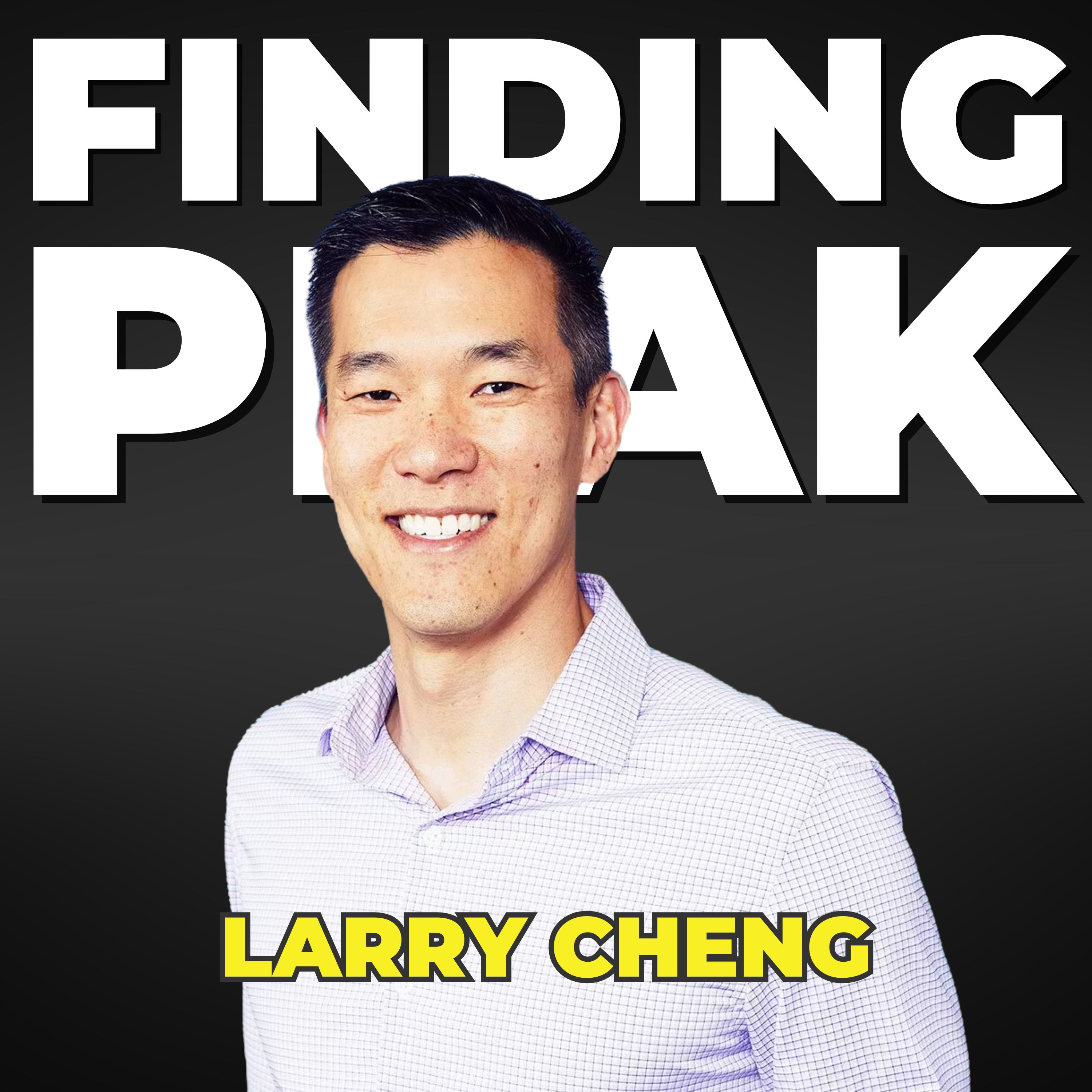
200 Rejections to a Billion-Dollar Exit: Larry Cheng on Resilience and Growth
This show is part of the Unplugged Studios Network — the infrastructure layer for serious creators.
👉 Learn more at https://unpluggedstudios.fm.
Advertising Inquiries: https://redcircle.com/brands
Privacy & Opt-Out: https://redcircle.com/privacy
Press play and read along
Transcript
Speaker 1 Hear that?
Speaker 2 That's me with a lemonade in a rocker on my front porch.
Speaker 3 How did I get here?
Speaker 2
I invested to make my dream home home. Get where you're going with MDY, the original mid-cap ETF from State Street Investment Management.
Getting there starts here.
Speaker 7
Before investing, consider the fund's investment objectives, risks, charges, and expenses. Visit state street.com/slash IM for a prospectus containing this and other information.
Read it carefully.
Speaker 7
MDY is subject to risks similar to those of stocks. All ETFs are subject to risk, including possible loss of principal.
Alps distributors, Inc. Distributor.
Speaker 8 This podcast is supported by The Real Real.
Speaker 10 Meet Christine.
Speaker 11 She loves shopping. And this
Speaker 3 is the sound of fashion overload.
Speaker 12 Too many fabulous things, not enough space.
Speaker 13 So Christine started selling with the Real Real.
Speaker 14 I've always loved collecting designer pieces. Gucci bags, Prada heels, but my style keeps evolving.
Speaker 5 Selling with the Real Real?
Speaker 15 Game changer. I earn more and they do everything.
Speaker 16 Seriously, just drop off your items or schedule a pickup.
Speaker 10 We handle the photos, descriptions, pricing, even shipping.
Speaker 17 You just sit back and watch your items sell fast to our 38 million members.
Speaker 5 And I get peace of mind knowing I earn more selling with The Real Real than anywhere else.
Speaker 8 Exactly.
Speaker 16 This?
Speaker 13 That's the sound of your closet working for you.
Speaker 9 The Real Real.
Speaker 19 Earn more, save time, sell fast.
Speaker 13 And right now, you can get an extra $100 site credit when you sell for the first time. Go to therealreal.com to get your extra $100.
Speaker 20 TheRealReal.com. That's the realreal.com.
Speaker 1
My philosophy is you try and turn the long maybes into a quick no. That saves you time.
Every firm has a fit, it's the type of deal that's in their comfort zone.
Speaker 1 You want to assess whether you're a good fit, you could spend two months and it's not a good fit at the end. So I try and make it easy for people to turn me down.
Speaker 1
We might not be the right stage, we might not be the right sector, maybe we don't have enough proof points. Let me tell you all the reasons you can turn me down.
I will not take it personally.
Speaker 1 Try and encourage the no, and that will save you time because
Speaker 4 the place that I wanted to start with you is actually a tweet that I found from a few weeks ago.
Speaker 4 It's just something that intrigued me and I was wondering where it came from. You said, just a thought this morning, a personal philosophy applicable to selling, fundraising, et cetera.
Speaker 4
Don't take no's personally. Don't take yeses for granted.
I'd love just,
Speaker 4 I think you're dialed on on that
Speaker 4 and just interesting where that came from and kind of how that applies to both the businesses you run and the businesses inside your portfolio.
Speaker 1 Yeah, so let's go there.
Speaker 1 When we started Volition Capital, we're a private equity firm specifically focused on growth and we had to raise a fund. And a fund is made up of different investors.
Speaker 1 very institutional, like university endowments, big charitable foundations, wealthy family offices, and so forth. And when we first started this firm in 2010, it was two years post-financial crisis.
Speaker 1 No one wanted to invest in a new emerging firm. They wanted to even cut their allocations to this asset class and only stick with the firms that they knew.
Speaker 1
And I put my head down, I talked to 200 different investors, and they didn't even say no to me. Most of them ghosted me.
And in my world, the investors are called limited partners, LPs.
Speaker 1 And the reason they ghost you is because they want to see if you can raise your fund and get close to your target and then they can come in at the finish line. And
Speaker 1 I didn't take any of those turndowns or ghostings personally because honestly, I understood.
Speaker 1
We are a new firm. There are reasons to not invest with us.
It's a long-term commitment. It's like a marriage.
And I didn't take it personally. And somewhere in like 200 to 210,
Speaker 1
someone actually committed. And that started the ball rolling.
And we got a few more investors and we ultimately raised our first fund.
Speaker 1 And our first investment out of that fund was Chewy, which became the leading Petwood e-commerce business, which I'm sure we'll talk about, multi-billion dollar exit.
Speaker 1
And we've been off to the races the last 15 years. And so now we're sitting here where we are 15 years later.
And
Speaker 1 I still don't take turn downs personally because there are going to be times when certain investors, they can't invest or it's not the right fit. And that's A-OK.
Speaker 1 And we certainly don't take for granted any investor who wants to invest in us
Speaker 1 because we know how hard it is the first time. And so you always treat your LPs, your investors well.
Speaker 1
You care about what their needs are. You're transparent with them and all that good stuff.
And so that's always been my philosophy.
Speaker 1 I thought it applied even just to selling at anything is it seems like a healthy philosophy to go after it with.
Speaker 4 Yeah, I completely agree. So 200 meetings before you got your first yes.
Speaker 4 I mean, even if you logically have this, you know, don't take no's personally, like I might say detach from the outcome, you know, whatever, whatever. way you phrase it, right?
Speaker 4 Like even though logically we can sit here and go, yeah, detached from the outcome, detach, like, you know, you get banged over the head 200 times or ghosted, you know, there's a little bit like, how do you, I think a lot of people would give up before, before they would hit 200 meetings, you know, without a, without a yes.
Speaker 4 Like there had to be moments in there where maybe you were questioning your investment thesis or who you were going after.
Speaker 4 Like, how do you stay committed to the mission to get to that point where you hit that 200 and first meeting and you get that first yes, right? Like, how do you emotionally work through that?
Speaker 4 Because I think that's where a a lot of people, logically, I think we understand, but emotionally seems to be where we break down.
Speaker 1 It's not that you don't learn along the way. It's not that you don't try to improve your story and react to what you're hearing.
Speaker 1 But there was no fundamental questioning of what we were doing and no fundamental question of the strategy. The strategy that we were talking about then is the same strategy we're doing today.
Speaker 1 And I think it's just maybe there's a little bit of context that, yeah, there are valid reasons to not invest. There are valid reasons to wait.
Speaker 1 And you don't need to take any of that personally and just keep going.
Speaker 1 And actually, when I got my first job in this industry in 1998, I was two years out of college. I was in consulting and I was trying to break into this industry.
Speaker 1
And I kind of told myself the same thing. I said, I'm going to reach out to 100 people in this industry by any means that I can.
And I am not going to worry about the response.
Speaker 1 I am just going to get to 100 people and then we'll think about it.
Speaker 1 And
Speaker 1 ironically, I got to 100, but someone in the first 10 actually gave me a job and that's how I broke into this industry, you know, in 1998. So
Speaker 4 what was it that initially attracted you? Like what was the, what was the thing that said, this is where I want to be, this is where I want to build a career?
Speaker 1
Oh, yeah. So I was in consulting at a Bain spin out.
We were doing
Speaker 1 growth strategy advice to Fortune 500 companies.
Speaker 1 On the side, I was trading penny stocks and I was trying to make a buck like and I put all this money into this penny stock that was doing broadband wireless and and I had convinced half the firm my consulting firm to invest in this stock it was called cellular vision usa I still remember it and it turned out to be a total bust but
Speaker 1 but I
Speaker 1 what I realized is I like the scorecard of investing.
Speaker 1
I was an athlete. You like to win or lose.
You know if you're right or wrong. I think that's fun.
It motivates me. So that was fun.
I liked tech.
Speaker 1 i liked innovation so that was fun and and that got me into investing and to i started venture capital at best and reventure partners and um and i haven't stopped fun had stopped having fun ever since it's been 27 years i work with phenomenal entrepreneurs every single day and um it's a lot of fun yeah i i'm i'm with you i
Speaker 4 like my hobby outside of what I do and it's more than a hobby because obviously you're playing with money is I want
Speaker 4
I still love looking at the pink sheets. Like I still love.
I hear you. I hear you.
I
Speaker 4 there's a,
Speaker 4 I won't say the company, but there's a psilocybin company in Toronto that I caught at like 30 cents right before, right when the first research started coming out that psilocybin could be really good for PTSD and particularly soldiers.
Speaker 4 And I was like, you know what? Like
Speaker 4 I've had a really good experience with psilocybin, like, you know, my own experimentation, we'll call it, or supplementation, maybe. So it doesn't sound like I'm using it just to get high.
Speaker 4 And
Speaker 4
I was like, this, there really is something to this, right? I had had very positive results. So I was like, screw it.
Threw like a couple thousand bucks in, you know what I mean?
Speaker 4
Like, again, you're, you're, you're, you're, they're all just like powerball tickets anyway. So, so, you know, and then this thing goes from like 30 cents to nine bucks.
Yeah. And you're like,
Speaker 4 holy sh, you know, I mean, and this was, this was probably like 10 years ago, like right at the very beginning of this move. But,
Speaker 4 it's intoxicating. But like you said,
Speaker 4 there's 10x the losers, right? So, you know, one of the things that I've always been really interested in philosophically, you hear this a lot with VCs.
Speaker 4 I think with venture firms and stuff, it's maybe a little less.
Speaker 4 But it's, we're going to place 20 bets and hope one of them goes big because we figure the other 15 of them are going to go to zero, four will be maybe get our money back.
Speaker 4 And then one, we have, so when you're, like, I'm really interested in the in that philosophy right like
Speaker 4 because every bet and just taking this this kind of uh arbitrary example of 20 companies or whatever right portfolio um
Speaker 4 obviously when you're going in you you must believe that each company has the potential to be that grand slam winner but you know they're not like how do you sort through those and and work through because i think a lot of people who are listening to this who maybe haven't raised vc capital or or dealt with a large fund, like you hear these things, maybe you hear about something on, you know, on one of the CNBC or on a news story, but it doesn't, I think a lot of people just don't understand how this side of capital raising actually works and like what you guys are thinking through when you're considering companies.
Speaker 1 That's a great question, Ryan. And I think it's an important thing to elevate to all of your listeners is first, let me say there are different asset classes within private equity.
Speaker 1
Venture capital is the early stage group. Where I sit, volition capital is growth equity.
It's investing in growing businesses with revenues and so forth.
Speaker 1 And then there's buyout, which is large companies leverage transactions to go buy them.
Speaker 1
You're right. Venture capital is what we call a high loss rate asset class.
They lose money a ton. It's about 70% of the time.
Speaker 1 And they try and make it up on the one big winner, exactly what you described.
Speaker 1 I think it's really important before you take venture capital dollars to understand that reality. That is the underwriting philosophy of the firm.
Speaker 1 Growth equity, we tend to lose money maybe 20% of the time as an asset class because we're investing in growing businesses. We don't want to lose money.
Speaker 1 And in some sense, the upside is a little bit less than the huge home runs that you might experience in venture.
Speaker 1 But where there's a conflict, I think, and the entrepreneurs need to understand this, is if you take on venture money, that partner who you're working with, that firm that you're working with, if they are good at their job, will lose money about 60 or 70% of the time.
Speaker 1 There's no difference in loss rate between a really great venture firm and a mediocre one. The only difference is how much they hit the home runs.
Speaker 1 And so, all of the advice that you're gonna get from early stage venture.
Speaker 9 This podcast is supported by the real real.
Speaker 10 Meet Christine.
Speaker 11 She loves shopping. And this
Speaker 3 is the sound of fashion overload.
Speaker 12 Too many fabulous things, not enough space.
Speaker 13 So Christine started selling with the real real.
Speaker 14 I've always loved collecting designer pieces. Gucci bags, Prada heels, but my style keeps evolving.
Speaker 5 Selling with the real real?
Speaker 15 Game changer. I earn more and they do everything.
Speaker 16 Seriously, just drop off your items or schedule a pickup.
Speaker 10 We handle the photos, descriptions, pricing, even shipping.
Speaker 8 You just sit back and watch your items sell fast to our 38 million members.
Speaker 5 And I get peace of mind knowing I earn more selling with the real reel than anywhere else.
Speaker 8 Exactly.
Speaker 10 This?
Speaker 13 That's the sound of your closet working for you.
Speaker 9 The real real.
Speaker 19 Earn more, save time, sell fast.
Speaker 13 And right now, you can get an extra $100 site credit when you sell for the first time. Go to therealreal.com to get your extra hundred dollars.
Speaker 20 The realreal.com. That's the realreal.com.
Speaker 1 Your firm is to go for the home run because that is their business model. So it's going to raise as much capital as you can, invest it as aggressively as you can, grow as aggressively as you can.
Speaker 1 And if it doesn't work out at the end, so be it, because they have a portfolio. But if you're the founder,
Speaker 1
that company is your entire net worth. It's your entire life's work.
And you have to decide what type of investor mentality you want to bring on.
Speaker 1
And so a lot of our founders don't want venture dollars because of that very dynamic. For us, we hate the idea of losing money.
We understand if we lose money, that means the founders lose money.
Speaker 1
That means everything that they've worked for, they've lost. That's a terrible outcome.
And so we talk about helping founders reach their dreams without risking them.
Speaker 1 And there's a balance of saying, let's not screw up this whole thing while we go for it, but be aggressive within a range.
Speaker 1
And so it's more risk adjusted where we live, but you're totally right. Venture is a different ballgame.
When you have a portfolio, it can work great. When you're the founder, there's risk there.
Speaker 4 So maybe break down, if I'm a founder and maybe I'm coming to this, I'm doing my first real raise, right, outside of maybe a friends and family or someone I know personally, right?
Speaker 4
I'm going out to a firm I don't know. I'm building a connection.
I'm starting to introduce them to my business. And let's say I have a good thesis, thesis, a good business, and a good model, right?
Speaker 4 Something that people will be interested in. Okay.
Speaker 4 What advice would you give to these founders as they start to think through
Speaker 4 the set of filters to figure out who they actually want to work with? Right. Like you said, there's different venture for the most part is, you know, hey, 20 bets, hope one's a home run.
Speaker 4 But even inside of there, maybe there's different levels of aggressiveness. I know, I know people that have, I know founders that have been on both sides, right?
Speaker 4 They took some venture money and then they thought they were getting a partner and all they were getting was money. And then
Speaker 4 I know other founders who thought they were just taking on money and all of a sudden got someone sitting over their shoulder, you know, questioning every decision they make.
Speaker 4 So like, how do they start to think through or is there maybe a framework that you would recommend for figuring out which type of partner is the best for you and what you want to achieve with your business?
Speaker 1 Yeah, probably the first
Speaker 1 question of the framework is, do you need to raise capital at all?
Speaker 1
And you can build great businesses without raising capital. You can bootstrap it all the way.
And there have been some phenomenal outcomes.
Speaker 1 And the first delineation is that. And what you should feel in your business to raise capital is that you are missing the opportunity.
Speaker 1
And there's something you could be investing in quite accretively if you had a bigger balance sheet. You should feel that in your bones.
If you don't feel that, maybe you don't need to raise capital.
Speaker 1 Certainly don't raise capital because your friends are raising capital and you see press releases of companies raising capital. That's the worst reason.
Speaker 1 But if you feel like there are investments that you are not making or you're too risk averse with your thin balance sheet to actually make the right choices, then that's where I think you should start looking at it.
Speaker 1 So let's just say you're in that bucket of, okay, let's raise some capital. Then the question is,
Speaker 1 what type of underwriting or philosophy of the partner do you want to bring on board?
Speaker 1 Do you want someone who has the mentality and perhaps the experience of just gunning for it will help you raise tons of capital, will keep the eye on the prize of a multi-billion dollar outcome, and you know that there's some risk to that.
Speaker 1 And sometimes that is exactly, they will take a ton of risk and they will swing for that one in 20 or maybe one in 100 shot.
Speaker 1
And maybe that's right for you. And so that's great.
If you want someone who has a different mentality and is going to be more risk adjusted, maybe growth equity is the right partner.
Speaker 1 And so you start to look within that sort of delineation. Then when you pick one, you look for partners that have sector expertise or value add in the areas that you need or have
Speaker 1 portfolio companies that are relevant to your work, have the same philosophy and how they're going to work with you. Are they going to be too overbearing or not?
Speaker 1 You start to delineate underneath that. But I would say that's kind of the trio of how you would think about it.
Speaker 4 Yeah.
Speaker 4 And I love that you started this with your story about, you know, you had 200 phone calls before you got your first yes because that has been my experience raising money is that like in our heads, we're like, oh, I'm gonna contact some companies and I'll bring someone in.
Speaker 4 It's like, nah,
Speaker 4 10 names is not enough. Like, you gotta be 50, 100.
Speaker 4 I mean, it takes a lot of phone calls and it takes that founder, most often the founder, the one raising the money, it takes them away from the business quite a bit.
Speaker 4 And, you know, I guess, like, my last tactical question around this, at least for now, is
Speaker 4 how does the, what is your best recommendation for founders who maybe are still
Speaker 4 operationally
Speaker 4 important to the business? They play a vital operational role. And now they have to go raise,
Speaker 4 how do they manage their time? How do you set your business up? So as a founder, you do have the bandwidth to go out and do all these phone calls and take all these meetings. Because I know in the,
Speaker 4 there's two separate times where I've raised money. You know, it's like months and months of your life.
Speaker 4 Like all you're doing is like, you know, 20 phone calls a a week and preparing for them and adjusting based on feedback and, you know, all this different stuff.
Speaker 4 And you kind of lose touch with your business a little bit if you're really going after this. So
Speaker 4 how do you set your business up to make sure that you, you can actually do that and you don't lose the business while you're trying to get money, I guess?
Speaker 1 Yeah, you know, my philosophy is you try and turn the long maybes into a quick no, and that saves you time. And
Speaker 1 every firm has a fit and it's the type of deal that's in their comfort zone.
Speaker 1 And you want to assess whether you're a good fit because you could spend two months and it's just not a good fit at the end. And so I try and make it easy for people to turn me down.
Speaker 1
Listen, I was like, you can, I totally understand. We might not be at the right stage.
We might not be at the right sector. Maybe we don't have enough proof points.
Speaker 1 Let me tell you all the reasons you can turn me down and turn this company down. And I will not take it personally if you do.
Speaker 1 And maybe we'll talk to you in the next round and try and encourage the no.
Speaker 1 and and that will save you time because I'm gonna guess that 99% of the time if you encourage the no and you get the no that wouldn't that wouldn't have been there anyways had you tried to cultivate it and so that's where I save time the right investor will say wait wait time out no we love what you're up to this is a perfect fit and and hopefully that that clarifies everything for you yeah what I love about
Speaker 4 what I'm hearing from your philosophy is very much an abundance versus scarcity mindset.
Speaker 4 And I think that's how you have to approach this and probably approach everything, but this line turn the long maybes into quick no's.
Speaker 4 Like, this isn't just fundraising advice, whether it's dating, right, selling,
Speaker 4 basically, basically anything associated,
Speaker 4
getting to know, and this is a very big fan of Chris Voss. I've met him a couple of times and gotten to know him in a very small amount.
I don't want to pretend like we're close, but
Speaker 4 his whole philosophy is shoot for no, right? Push for no, because one, no's give people security, right?
Speaker 4 So, so part of it is it's, I feel much more confident when you give me an opportunity to say no to you versus I feel like you're pushing me towards a yes.
Speaker 4 I become much more hesitant, much more willing to go, well, this sounds good.
Speaker 4 Let me socialize it among my team and I'll get back to you in a month, you know, like now, you know, now you're just sitting there in purgatory.
Speaker 4 So I think it's tremendous life advice, not just fundraising advice. But I think this,
Speaker 4 like, is it,
Speaker 4 you know, I guess for me, this idea of thinking through abundance and scarcity, while it feels ethereal to a certain, I think, to some people who are very kind of tactile,
Speaker 4 it really is a core to where you started, right?
Speaker 4 If you're not thinking from a place of abundance, you're not going to make 200 phone calls because you're going to think after the first 10, I'm screwed. No one wants this.
Speaker 4 There's no other opportunities out there. And
Speaker 4 you have to believe, you know, if you believe in
Speaker 4 your vision, your mission, or your, in this case, your investment thesis, you have to believe there's eventually going to be someone who agrees with you and wants to come in, or you're almost dead on arrival.
Speaker 1 Yeah,
Speaker 1 I believe in the financial sense that capital finds good opportunities. I believe in the market.
Speaker 1 And so
Speaker 1 if you are a good investment opportunity and the market is efficient, it should find you.
Speaker 1 And now you need to go out, you need to do your work to go tell the story and meet folks.
Speaker 1 But it's not a question of whether there's a match out there.
Speaker 1
You just got to go get it. And so the more efficiently you can do that, the better.
So you kind of have to, I actually believe in the efficiency of markets.
Speaker 1 I believe if you have a good investment product, when I'm meeting with investors, it's not. whether we'll get capital.
Speaker 1
There's people that should be investing in us. And same with the company and so forth.
And perhaps I've been married for a long time. So perhaps in dating too, Ryan, it also makes sense.
I don't know.
Speaker 1 But yeah, you kind of trust the outcome and then just manage the process.
Speaker 4 Yeah, yeah, I'm with you.
Speaker 4 I think if you're upfront with who's a good fit and who's not and believe that there's enough opportunity out there that you will eventually find it, that just becomes a filtering mechanism.
Speaker 4 Like, you know, I've, the first time I raised money, you know, one of the investors that we brought on.
Speaker 4 Like, I wish we hadn't, like in hindsight, you know what I mean? So it's like we were kind of instead of providing a
Speaker 4 Let's put it let me let me frame this the right way um we we made what i would consider a classic mistake in that we
Speaker 4 we glossed everything to make it seem right for this particular investor where i think if we were maybe a little more pragmatic not that the business was bad i mean the business ended up doing fine and everything was good but for this particular investor if we had just been kind of
Speaker 4 fully transparent and and exactly real with where we were going you know instead of like, hey, we need money, like we want to get someone in.
Speaker 4 I think this person would have selected out and we wouldn't have had the downstream problems of now the friction of it really wasn't the right investment for them.
Speaker 4
It didn't really fit what their expertise was. They didn't understand the market.
So there was a lot of friction there. And it's like, I was so anxious to get that capital in the door that I
Speaker 4 didn't put the right filters in place and then had all this friction downstream that I wish that I didn't have. So that was like a really good life lesson.
Speaker 4 And just in general, for people listening, like the wrong money is almost as bad as no money.
Speaker 1 That's it's worse.
Speaker 1
I have a couple of thoughts on that. First is the relationship between an investor and an operator, an entrepreneur.
I mean, it may last longer than most marriages in this country.
Speaker 1 So you should be making that choice above everything else on the basis of trust. Like, do you trust this person?
Speaker 1 Do you want to be married to them in some context? Set aside valuation, set aside value adds, all of that stuff. That's the most foundational thing.
Speaker 1 You raised something that was secondly that I thought was really interesting. I often ask this question in a first meeting with a company, but you can invert it.
Speaker 1 The question I ask is, is, okay, if we go through this entire diligence process with you, what is the worst stuff that we're going to find? What are the worst metrics that are going to bother us?
Speaker 1 And can you just tell them to me now? So I can tell you if it's worth it to go through the entire diligence process.
Speaker 1 And again, that's a reverse qualification, right? Like, can my firm stomach your greatest risk? Because firms have different personalities. And so in some ways, if you want to reverse qualify again,
Speaker 1
put out the bad stuff first. Say, here, this is what you're going to find.
And be upfront, be transparent. And if they can handle it, great.
Speaker 1 If they can't, you've saved yourself two months of due diligence. And so.
Speaker 4
Completely love that. I call it eight miling.
And I use that in all aspects, you know, in a lot of different aspects of my life. I think it's a good sales tactic.
Speaker 4
I think it's a good relationship builder. It's good for partnerships, all kinds of stuff.
Like just like,
Speaker 4 and I actually learned this from a mentor of mine 15 years ago in my first executive position.
Speaker 4 I was, you know, I got brought along on a lot of meetings as a young professional at the time. You know, I think I was 29 and I was a CMO.
Speaker 4 And I got to sit in a lot of rooms that maybe I, maybe technically on paper, shouldn't have been sitting in those rooms, but I got to listen in and be part of these conversations. And what
Speaker 4 the CEO at that time, and he, he, he, he was kind of a slippery son of a gun, but he was very good at what he did. And, you know, he would start certain meetings like,
Speaker 4 here's what this looks like if it doesn't work, right? Like, here's how, if this doesn't work, if we do what we're about to do, what we came to sit at this table to talk about.
Speaker 4 Here's what it looks like if everything falls apart. If after six months, we hate each other.
Speaker 4
Here's how we get out of this. And he would literally start by talking about the end.
And at first, I was like,
Speaker 4 you know, it just didn't make any sense to me. I just didn't have enough life experience at that time or business experience to understand what he was doing.
Speaker 4 But then he explained to me what you're talking about. He's like, I don't, if they hate what this looks like, what this could potentially look like in six months, I want to know now.
Speaker 4 He goes, he goes, also, it's a backdoor sales tactic because it shows that it kind of shows that you don't need them or that you're willing to talk about the end. And it's almost like an assumed sale.
Speaker 4
Like, we're going to do business together. But if it goes bad, here's how we get out.
Right.
Speaker 4 And, and that's where I kind of came up with this, I, this, I called it the, I go, you're eight miling them, right? Where Eminem at the end is like, here's all the bad things about me.
Speaker 4 Now tell them something they don't know, you know, and that's kind of where I got that from.
Speaker 4 And, um, but it's a wonderful, I mean, one, I think it does create healthy relationships, absolutely, and it sets that filter up front.
Speaker 4 It also is a sneaky, really good way to create
Speaker 4 that assumed sale or, or, or urgency mindset of like, oh my gosh, these guys, like, they're, they're sophisticated enough to think about the end first. Like, okay.
Speaker 4 And that, you know, it was a whole different kind of conversation. So I love that.
Speaker 1 I was trying to figure out the eight mile reference. So thank you for explaining that to me.
Speaker 4 Yeah, yeah, yeah. No, I just, I, you know, I've always found that, um,
Speaker 4 uh, I've always found that scene at the end to be, like, it's a wonderful scene. It's, you know, dynamic and the rapping and all that kind of stuff.
Speaker 4 Philosophically and just from a, from a business perspective, I always, I found it's like you've completely taken away when you put all, like you, you said, put the warts out first, right?
Speaker 4 Here's, here's the three metrics that, you know, when people say no to us, here's the three metrics that they use to say no. And if you don't, you know, if whatever, right?
Speaker 4
But just in a, in, in a relationship, right now, so I bring up the dating thing. I got divorced three years ago.
So I had to go through some dating. I'm now seeing a woman.
Everything's very good.
Speaker 4
And I'm happy, but like, but dating again in your 40s, I was like, oh my God, like it's, it's, it's wild, dude. It's wild.
It is a wild world and
Speaker 4
whatever. It's all good.
But, but the idea is like
Speaker 4 by by Eminem, you know, in this scene for guys, if you haven't seen the scene, basically the idea is at the very end, there's a rap battle, and the best guy, you know, Eminem's going up against this guy who's been the like top guy in this rap battle for, you know, months or years or whatever.
Speaker 4 And essentially, what he does, because the rap battles are usually tearing each other apart, he in his version of it basically says all the shitty stuff about himself, right? So he's going,
Speaker 4 you know, you know, he's like, you know, so it's, it's mostly like, uh, it's very urban Detroit, so it's mostly black guys. And these, a lot of these guys use the fact that he's white against them.
Speaker 4
And he's like, look, I am white. I am a bum.
I am a trailer park. You know, my mom is broke.
You know, but he says all this stuff, right?
Speaker 4 And basically, he takes away all the ammo that the other person would use against him.
Speaker 4 And I said, okay, well, I don't do rap battles, but I would rather, if I'm going to sell something to you, right, say, okay, here's
Speaker 4 here's where we're not great. You know,
Speaker 4
this thing and this thing, you know, other competitors, they might do that better. If those are high priorities for you, then, you know, whatever.
But this thing and this thing, we're awesome at.
Speaker 4 And now by leading with the things we're not good at.
Speaker 4
Like you said, if those are major problems, that person immediately steps away and you don't have to waste your time. It's the quick no that you said earlier.
So yeah, you can use it if you want.
Speaker 4 That's how I refer to it.
Speaker 1 If you search my tweet archive, since you have already done that, I do have a post, which I think is adjacent and relevant, where I say for good CEOs, they give me the bad news early and the good news late.
Speaker 1 And what happens a lot is you go to a board meeting or something, and the CEO will say, we're about to sign this, we're about to sign that, and I think we're going to land that and this, and I try to get you really excited about what might come.
Speaker 1 Oftentimes those don't come or you know, it doesn't come exactly the same way.
Speaker 1 But what's really trust building is when there might be bad news and they come early with it like I'm seeing some problems here it might turn into something and they don't tell you any good news until it actually happens like tell it after the fact and so that's a really a trust building posture that I think my best CEOs adopt I love that that that is that is tremendous advice guys if you're if you're listening that also works I think really well with your team right when you're having team meetings again it's if if trust is important to you which it should be right and in these things um
Speaker 4 I think when you hide the warts that everyone knows are there, right?
Speaker 4 It creates this like gossipy culture of like, oh, why that must be really bad because he's not talking about it, even though we all know, right?
Speaker 4 Or maybe it's worse than we thought, where if you just come out and go, hey, we missed our quarter by 3%.
Speaker 4 Here's the reasons. You know, we're going to fix this one, you know, whatever the issues are.
Speaker 4 You know, what's funny is, and you probably see this, is oftentimes when you lead with the problems, again, you eight-mile them,
Speaker 4 people will go, oh, I know how to solve that. Oh, you're having that problem.
Speaker 4 We got this, you know, especially with a situation like yours where you have all this experience and other companies, you know, you're, you're in a position to go, oh, if you're having that problem, we got two companies over here that have already solved that.
Speaker 4 You know, either we can connect you or, hey, let's spend an hour. I can show you how to fix that problem.
Speaker 4 And now all of a sudden, these things that were problems aren't that you would never know about if you buried that stuff. 100%.
Speaker 4
Yeah, yeah, yeah. I love that.
Well, dude, I want to, I want to transition to Chewy because
Speaker 4 I want to talk about this story. So, guys,
Speaker 4 you were
Speaker 4 first or early into Chewy and
Speaker 4 first into Chewy, which is amazing. And then this is the largest e-commerce exit in history, right? Chewy
Speaker 4
at the time. Yep.
So, so talk to me about just the process of finding a company.
Speaker 4 Did you know or just have a feeling or hopeful? Like, what is it?
Speaker 4 Like, what is the experience of being first into a company that then has the largest exit in its sector at that time ever like how does that what does that process from start to finish look like and and how do you navigate that sure so for those who don't know chewy is a pet food e-commerce company and we invested in the company in 2013
Speaker 1 We found the company, we have analysts, folks recently out of college who were calling companies and one of the analysts called Chewy and I hopped on a call with them and they said they were trying to sell pet food online.
Speaker 1 If you don't know, back in the dot-com era, the biggest bust of all of the dot-com companies in 2000 was this company called Pets.com.
Speaker 1 It had a sock puppet as its kind of mascot and it was just a huge debacle of like how can you send 50 pound bags of dog food over the mail and make any money? Like it's stupid.
Speaker 1 And that persisted in the venture and growth equity mindset. So I spent some time meeting with them and what I realized is that the world had kind of changed.
Speaker 1 And at the highest level, this is a great area to invest and it's sort of contrarian, is look for big failures, let time pass, and see if those models might work today. And what had changed with
Speaker 1 Chewy is, number one, there's this whole humanization of pets movement where people wanted to buy organic, grass-fed, like all the best stuff, whereas we used to buy like Purina kibble in the grocery store and we don't do that anymore.
Speaker 1 So basically that bag of dog food got more expensive, which made it more affordable to ship.
Speaker 1 And then just the proliferation of online shoppers, more pets, like more than half of households have pets. And so the market just got a lot bigger for online pet food e-commerce.
Speaker 1 And I remember, literally, this is what happened. I was in a pet smart and I was.
Speaker 8 This podcast is supported by The Real Real.
Speaker 10 Meet Christine.
Speaker 11 She loves shopping. And this
Speaker 3 is the sound of fashion overload.
Speaker 12 Too many fabulous things, not enough space.
Speaker 13 So Christine started selling with the Real Real.
Speaker 14 I've always loved collecting designer pieces. Gucci bags, Prada heels.
Speaker 5 But my style keeps evolving. Selling with the Real Real?
Speaker 15 Game changer. I earn more and they do everything.
Speaker 16 Seriously, just drop off your items or schedule a pickup.
Speaker 10 We handle the photos, descriptions, pricing, even shipping.
Speaker 8 You just sit back and watch your items sell fast to our 38 million members.
Speaker 5 And I get peace of mind knowing I earn more selling with the real reel Real than anywhere else.
Speaker 8 Exactly.
Speaker 16 This?
Speaker 13 That's the sound of your closet working for you.
Speaker 9 The Real Real.
Speaker 19 Earn more, save time, sell fast.
Speaker 13 And right now, you can get an extra $100 site credit when you sell for the first time. Go to the RealReal.com to get your extra hundred dollars.
Speaker 20 The RealReal.com. That's the realreal.com.
Speaker 1 Getting pet food for my dog, and I had met with Chewie, and I knew Chewy was trying to be the low-cost, low-price point player.
Speaker 1 And I started looking up every, in this store, I started looking up the price point of the exact same product on Chewy.
Speaker 1
And Chewy was 30% cheaper than what PetSmart was in store, Petco in store. And I was thinking, it kept happening over and over again.
And I knew Chewy's financials in my head.
Speaker 1 And I thought, wait a second. You're saying that I can just order on Chewie for 30%
Speaker 1 lower price. I don't have to come here, drive here, park, see if my product is even in stock,
Speaker 1
and carry it home and lug it all home. And it just seemed like a no-brainer value proposition.
It's basically a more convenient, lower price point service for exactly what you're already buying.
Speaker 1 And so we made an investment and the company grew from,
Speaker 1 so we met it when they were doing 25 million in revenue. And about the time that we invested, they finished the 70 million revenue year.
Speaker 1 And they went to 200 million to 400 million to 900 million to 2 billion in revenue and onwards as a public company. And it was a great success.
Speaker 1 And much credit to Ryan Cohen, the team who actually took on Amazon in the pet food vertical
Speaker 1 by having better service for the pet customer.
Speaker 4 Did that,
Speaker 4
this probably isn't the right follow-up question, but it's where my brain goes. It's like, did that...
Did that push you into looking at other like e-commerce verticals?
Speaker 4 Like, did you get like that all of a sudden, oh, hey, there's an opportunity? and then you start snowballing into those?
Speaker 4 Or did that feel like a one-off opportunity in terms of it's vertical because of the space and the timing, et cetera?
Speaker 1 So we definitely did some more
Speaker 1 in e-commerce. However, doing more in e-commerce helped us to appreciate how unique Chewy was as a company.
Speaker 1 And we do a very foundational analysis called customer cohorts, which is you track how much a customer spends over time.
Speaker 1 And in Chewy, for a transactional consumer e-commerce business, it was like the customer came and they never left. They kept spending the same amount and we're talking over time for a decade.
Speaker 1 And so it was the most stable, predictable
Speaker 1 spend pattern of any consumer business we have seen.
Speaker 1 And normally like a very good enterprise product gets that kind of retention dynamic. And so
Speaker 1
Chewy had figured out something in a great category. It's definitely a special company.
We sold the business for $3.3 billion
Speaker 1
after just three and a half years after investing. And it was a great success for us, but hard to replicate.
I do think I have a company right now that reminds me of Chewy
Speaker 1
called US Mobile, which is a mobile carrier. You can get your cell phone service through them.
And so it's taken like a decade to find a company that has similar dynamics.
Speaker 4 So a company like Chewy that comes in, you said they're doing 25 million when you made the the investment.
Speaker 4 They looking for,
Speaker 4 was that just financial? And then you sit on a board?
Speaker 4 Are they looking for guidance, support, help?
Speaker 4 When you're at that size,
Speaker 4 what are you looking for
Speaker 4 out of your investors that come in?
Speaker 4 Like have they already got the team mostly in place and your job is really just to kind of follow along and maybe just be a fiduciary as far as a board member, et cetera, or investor?
Speaker 4 Or are they still at that point looking for you? Hey, can you make a connection here? Do you have any expertise here, et cetera?
Speaker 1 Yeah, I mean, at the time, they had never raised capital. They didn't have a board.
Speaker 1 And so the first board meeting in the firm's history was after we invested, me and the two founders, which was a lot of fun. I'll always remember that first board meeting.
Speaker 1 They didn't really know what was supposed to happen in a board meeting, which is totally fine.
Speaker 1 But the two founders handed me four printout pages from QuickBooks. And they said, and they passed it to me over the table and said, okay, so what do we do in a board meeting?
Speaker 1 That was the board meeting. And
Speaker 1 it was a relatively brief one, I have to say.
Speaker 4 But
Speaker 1 by no means, at the point that we invest, the team is not fully built out, the strategy is not fully developed,
Speaker 1 and the capital needs may not be fully addressed. And so there was a lot of big steps with that company.
Speaker 1 We made a strategic decision to actually insource all of our own fulfillment centers for fulfillment capacity.
Speaker 1 We were using a third party and we decided to actually build our own, which is a huge decision. We helped to raise capital to do that.
Speaker 1 And
Speaker 1 there were expansions in different product categories, expansions in different geographies. And so it was, there was a lot going on at the time.
Speaker 4 But I think
Speaker 4 for you guys listening at home, one of the big takeaways from there is think about this. Chewy's 25 million in revenue, right? And you're saying they don't have everything built out.
Speaker 4 They don't have everything, you know, every system's not.
Speaker 4 So I think you know just take a little pressure off yourself guys when you're building these companies and and you're early to i think there's a lot of stress that i think founders put on themselves to to be to be mature faster than maybe is even a positive right i think some of some sometimes immaturity in certain places helps you look at problems differently ask for help from people et cetera when we when we race to maturity really fast that we sometimes get this idea that like we're supposed to know everything and we're supposed to know how a board meeting works and we're supposed to know how every system works.
Speaker 4 And it's like that, you know, I've talked to very successful people on this show, 100 million plus, you know, exits and all this different stuff.
Speaker 4 And they'll even tell you the day they're exiting 10, 15 years into their business, they still don't feel like they have everything lined up.
Speaker 4 So it's like, you know, there's, there's, I think sometimes, especially early or first-time founders, et cetera, they put so much pressure on themselves to be perfect when I don't know that anyone, you know, and I guess maybe I'm just looking for validation on this, like you're not expecting them to be perfect when they start talking to you.
Speaker 1 Not at all. All of our companies, we would probably describe as raw operationally.
Speaker 1 I often say like over the course of our investment, a lot of things change, but certain important things stay the same.
Speaker 1 What stays the same is sort of the problem that you're trying to solve, the customer that you're focused on, your commitment to that mission,
Speaker 1 the culture that you're trying to instill into your business, that stays the same. What changes is the scale
Speaker 1 and the organization of that scale in a better change because you want to grow. And so how finance changes, sales, customer success, your board, you know, all of this stuff,
Speaker 1 it'll be, you know, hopefully if you're successful, 10, 50, 100 times the size.
Speaker 1 But who you are as a company should stay the same.
Speaker 4 Now, you also sit on the board of directors of GameStop still today? Yep. Were you on the board during
Speaker 4 the big, what was it, the Reddit run-up or whatever, the message board when everyone was going and driving the price all over the place?
Speaker 4 Were you there when that was going on?
Speaker 1
Thank goodness, no. I came in right after that, and maybe I'll connect the two.
Yes, please. Ryan Cohen was the founder and CEO of Chewy, co-founder and CEO of Chewy, and he became the...
Speaker 1
active and investor behind GameStop and is now the CEO of GameStop. And so that's how, that's my connection to GameStop.
And I, I joined the board to help out shortly after all of that.
Speaker 4 Yeah. Now, just, I know you weren't there during the time, but I'm sure you've had discussions about that moment since.
Speaker 4 And I know even there's been a couple secondary tries at doing a similar run up and it hasn't worked as well, et cetera.
Speaker 4
Like when you're sitting on a board and, you know, I've never sat on the board of a public company. So, you know, this is experience that I don't have.
I'm very interested.
Speaker 4 Like, and you cease, like, you see that kind of like your stock price, everyone looks at a company basically, if you're, if you know, and I'd say particularly amateur, unsophisticated investors, and they basically just look at price and they look at how much they're willing to spend on something and they put this arbitrary value on it, right?
Speaker 4 When you're sitting there as a board member and you really understand how these market dynamics work and you watch something like, you know, some price manipulation happening, which is what was happening, right?
Speaker 4 I mean, they were people were driving the price up and
Speaker 4 obviously it came back down, but but, you know, how
Speaker 4 do you handle that as a public company and, and managing, you know, what's happening with a stock price and, and, you know, having to hit quarterly earnings and all that kind of stuff versus the, the private company world where you're not necessarily on that time clock if you're, you're able to pay your bills, right?
Speaker 4 As long as you're not running out of money, you're not necessarily on a clock like with a publicly traded company.
Speaker 4 You, you have to do quarterly earnings reports, you have people pushing price up, pushing down, shorts, you you know, all these different things that you have to deal with. Like,
Speaker 4 how do you manage the value of the company differently? And just what are some of the things you have to consider public versus private?
Speaker 1 Yeah, I appreciate the connection between the two because I live in the private company world and I'm on a couple public company boards, GameStop and Grove.
Speaker 1 And I think I bring that private company mentality into it, which is I don't worry about the day-to-day movements of the stock price or, and I actually don't look to optimize for a quarterly earnings uh report because our job is to build the business for the long term and uh and make those decisions that set the business on a great foundation to grow profitably in the long run um and um and that's what we do so if there's volatility between here and there it's you know that i don't even i it's not even occupying my mind to be honest it's um it's really about just making the right decisions for the business over the long run awesome all right well i i want to transition into what you're seeing in the market today because i have a bunch of of questions from where you sit and what you think about.
Speaker 4 First, I want to go to crypto, right? In general, is this a space you follow? And two, like, obviously we've seen a big move down.
Speaker 4 Bitcoin actually was, it's kind of bounced back up a little bit, but as of last week, it was down 10% year over year.
Speaker 4 You know, a lot of questions around the crypto space.
Speaker 4 My personal belief is that this, the technology, outside of the tokens and the value of the tokens, the technology is absolutely game-changing, revolutionary, and ultimately where I see a lot of businesses going over time.
Speaker 4 But that seems to be, you know, I look at like the, I'll give you an example. I look at the insurance industry and the insurance contract in particular.
Speaker 4 And if insurance contracts were put onto a blockchain and that was ubiquitous across the industry, how much faster, how much more transparency, how much more
Speaker 4
pricing stability I think could be built into the market. But no one has even stepped their toes in that.
I mean, it's literally just conversations at association meetings, et cetera. So,
Speaker 4 where do you see kind of crypto in general?
Speaker 4 And are there any businesses or spaces that you see taking the application of a blockchain or crypto technology in general and actually being applied outside of just the tokenization of this technology?
Speaker 1 Yeah, crypto is funny. When crypto is riding up, everyone's like, it is the game-changing
Speaker 1 currency
Speaker 1 of the world. And when it's going down, it's like, there's no intrinsic value.
Speaker 1 It's a joke. It's a Ponzi scheme.
Speaker 1 And
Speaker 1 I do think there are practical applications.
Speaker 1 Probably the most likely and most bullish on is just the use of stable coins for international money transfer.
Speaker 1 That's a slow, expensive, complicated process. And I think that's where the combination of crypto and blockchain can
Speaker 1 can do very basic business things like make a transaction cheaper and faster and that's what it needs to do
Speaker 1 I think there is utility for certain currencies as an inflationary hedge and as in the same way gold is you could say gold is not a cash producing a yielding asset but I mean it's gone on a bull run the last couple years but it's always been occupied a space I think there's space for that in crypto.
Speaker 1
There's a lot of junk in crypto. There's a lot of stuff that's going to be worth nothing and already is.
And
Speaker 1 so that's sort of the nature of speculation in an early market.
Speaker 4 Yeah.
Speaker 4
I'm with you on this. The stable coins to me are so obvious.
I mean, just I know a lot of founders, a lot of just business owners in general that I talk to,
Speaker 4 the ones that are leaning towards the future a little bit, are paying, say, either expats or virtual assistants assistants or overseas.
Speaker 4 They're paying them in USDC or USDT because it's one of transacts immediately. So they have the money instantaneously, essentially.
Speaker 4 The fees, you know, there's no essential fee for the transaction for the most part, or at least relative to what it would cost to, you know, pay them internationally through a standard, you know, service.
Speaker 4 And just taking that expense out of the business, especially if you have a large international team,
Speaker 4 it can get you more bodies.
Speaker 4 I mean, I literally know people who have been able to put more bodies on their team simply by paying in, you know, in stablecoin versus paying just because of the fees you pay to transfer internationally.
Speaker 4 It's just easier for everybody. That one seems so obvious.
Speaker 4 I follow and I'm very intrigued and
Speaker 4 speculate quite a bit on Bitcoin. I think the rest are,
Speaker 4 you know, I think it's very interesting how
Speaker 4 much sentiment drives that particular space. Like
Speaker 4 it's crazy. It's like the, this big human psychology experience.
Speaker 4 It's wild.
Speaker 4 But yeah, I find it. And I think the underlying tech, as much as I can understand it as a, as a, a, a, a lowly
Speaker 4 math major with a liberal arts degree, um,
Speaker 4 you know, as much as I can understand it, I see that the technology itself being game-changing, but the real world applications have have been slow, very slow.
Speaker 4 I unfortunately think a lot of that has to do with the craziness associated with the tokenization. And if that wasn't so, there wasn't so much garbage out there, I feel like there'd be
Speaker 4 more
Speaker 4 effort and enthusiasm behind bringing it into kind of how we operate and businesses outside of that space. But so
Speaker 4 I guess the next one that we have to talk about from where you're sitting is AI, right? I mean, obviously,
Speaker 4
we talked a little bit before we went live around ChatGPT selling ads. Like, you know, there's so much news.
We're in the model wars.
Speaker 4 It's freaking nuts, you know, like every day someone's got a new point something that's X better than someone else. And, you know, and then everyone's just using it to write emails.
Speaker 4 So it's like, what are we even talking about?
Speaker 4 But, you know, from your seat, when you're, when, you know, with, with your investment thesis, like, what are you, what are you seeing coming that gets you excited that you're spending time on from a, from a sector perspective?
Speaker 1 Well, it's interesting. If I extrapolate up, I have seen more companies, AI companies, in the last 10 months that I would say have gotten to 10 million of revenue
Speaker 1 with less than 10 employees and probably less than one year being in market than I have in my entire career. It is shocking, and that's all on the rails of AI.
Speaker 1 And there's a huge amount of experimental spend in everything. And what's challenging for us as investors is we don't know what's going to stick.
Speaker 1 And there's whatever work is working, there's 50 competitors along the same lines.
Speaker 1 And the way I think about it is not dissimilar than how you might think about crypto or just any other business is,
Speaker 1 you know, set aside the revenue growth because there's so much experimentation happening. Who is solving a real long-term business problem or consumer problem well?
Speaker 1 Who is doing it in a way that builds a moat for your business? And I just ask those two questions and try and decipher everything else through that.
Speaker 1 But we're seeing really,
Speaker 1
I mean, I can't even begin because we're seeing so many applications. And by the way, all of our portfolio companies are embracing AI across their businesses.
And so it's really fun.
Speaker 1 The hype cycle needs to chill out a little bit. All those VCs we were talking about at the beginning of the episode,
Speaker 1
they're all feeding into the hype cycle. They know it.
They're all paying super high valuations that will not sustain and they know it. They just don't want to be the last ones
Speaker 1 holding the bag.
Speaker 1 But AI will certainly be transformative.
Speaker 4 Yeah,
Speaker 4 as an experiment, I was using one of like the vibe coding platforms just to say, like, you know, you read all this stuff online, you hear different things.
Speaker 4 And I was like, okay, I want to just see like
Speaker 4 what's real and what's not real. Like, how hard is this actually to do? And, you know, I think very basic, you know, just for those who haven't played with these things at home,
Speaker 4 you know. very basic applications,
Speaker 4 simple API connections into different systems. You can set up and create some
Speaker 4 nice little neat,
Speaker 4 you you know, kind of straightforward functional applications you can vibe code pretty well.
Speaker 4 And then there becomes a spot where if you want to really take this to the next level, you have to do real development work and solidify the systems and do different stuff that I think is the next level.
Speaker 4 But what hit me was
Speaker 4 if
Speaker 4 this Jamoke sitting in his house on a Saturday morning while his kids are watching TV is vibe coding up an application that I can sell in three hours, right?
Speaker 4 How does someone who's out there maybe solving a similar problem, but I'll say in a more real way, I don't want to discount a vibe-coded platform, but like, you know, in a more entrenched and long-term way, right?
Speaker 4 How do you figure out the signal from the noise in that scenario, right?
Speaker 4 So, like, let's say you, you've taken on, you've put your own money in, you have a team, you're doing something similar, and maybe from a consumer perspective, sounds similar, but is deeper, richer, more secure, et cetera, than something I just, you know, told the computer to make while, you know, again, while I was having my cup of coffee on a Saturday morning, but to a consumer front-facing, very difficult to differentiate between my very light, vibe-coded thing and this, this more entrenched piece.
Speaker 4 How are you working with, or what are you seeing from your portfolio companies or just the market in general? Like,
Speaker 4 I don't want to say real businesses, but,
Speaker 4 you know, how do they,
Speaker 4
how, if this is, if this is something that I'm going to do for 10 years, right? This is a real company. I want to expand it.
I want to grow it.
Speaker 4 I'm going to eventually want to take on capital, whatever, versus my like little side hustle, side quest project, right?
Speaker 4 How does that company stand out today when there's so much noise in the marketplace versus the 400 vibe coded things that kind of look and feel like it?
Speaker 1 Yeah. Well, businesses can differentiate on other things other than the code of their product, right? And so, I mean, we talked a little bit about Chewy.
Speaker 1 Chewy was going directly up against Amazon, who was much, you know, the 800-pound gorilla.
Speaker 1 And we won on customer service. So I look for
Speaker 1 an AI application slash company to, can they differentiate on other things? Is there a community element that's emote? Is there a service element that's emote?
Speaker 1 Is there a pricing and packaging orientation that's better suited for their market?
Speaker 1 So there's layers around the business. Is there a go-to-market strategy that is different than the other one?
Speaker 1 Because you can win by doing a lot of other things right when the despite the products being sort of comparable.
Speaker 1 Think about how many versions of water are on the shelf.
Speaker 1 If there's a commodity product, perhaps it's water.
Speaker 1 Yet certain water brands win, like Liquid Death or others,
Speaker 1 and that's because they've done something different with brand and distribution and their community and so forth. So I almost think about it in that dimension is, okay, forget the code for a second.
Speaker 1 Let's look at everything else and how are you going to win?
Speaker 4 Yeah,
Speaker 4
it's funny. I was thinking through this idea with coffee.
I had a founder of a coffee brand on
Speaker 4 Seven Weeks Coffee. He was on a few weeks ago.
Speaker 4 And, you know, we were talking about this because, man, I mean, there are just a million micro, you know, we'll call them micro coffee roasting brands out there.
Speaker 4 And he's, you know, he basically said, and, you know, and his spin was more like
Speaker 4 his was like a Christian pro-light, you know, very kind of classic Orthodox Christian views is kind of the tact he took.
Speaker 4 But, you know, you look at black rifle coffee, you look at, you know, all these different, they all, the way they differentiate, I mean, I,
Speaker 4
if you can tell me that you can really taste the difference between all these different things, I think you're lying to me. I mean, not that they're not good, but I mean, come on.
I mean, there's.
Speaker 4 10 million different roasted coffee beans.
Speaker 4 There's only so many ways you can make it taste, but but it very much feels like the brand and the connection to the community is how they differentiate themselves.
Speaker 4 It could literally be roasted in the same place and put a different package on it that speaks to a different audience. So, do you feel like today,
Speaker 4 my, my, what I'm, what I have been talking a little bit about and thinking through is that
Speaker 4 while brand has always been important, content and how you tell your story has always been important, in this kind of era of AI where people can spin up narratives so quickly, it's it it almost feels like
Speaker 4 your brand, your message, your community, and this is kind of where my question is going, the, the personal brand of the founder or founders has become more important than ever before.
Speaker 4 Almost like, like, I mean, look at Elon Musk, like none of his companies do, I mean, obviously Elon Musk is an exception to an exception. So I get what I'm asking here, but
Speaker 4
none of his companies do advertising. None of them.
It's just him on Twitter, you know, talking, saying crazy shit, and everyone goes and checks out his company, right?
Speaker 4 So I guess every, very few founders will ever be Elon Musk or say the crazy shit that he says as much as I love him.
Speaker 4 You know, how do you balance that, right? Do the founders need to have a personal brand today?
Speaker 4 Does there have to be some core intrinsic, you know, this happened in my life and this is why I started it story? Is that more important than before you think because of this?
Speaker 4 Or is it just kind of Same and need to be good?
Speaker 1 I think it's really important. And I preach this to my founders and CEOs to be external and to be authentic and to be engaged where your community is.
Speaker 1 A great example of this in my portfolio is the founder and CEO of US Mobile, Ahmed Katak.
Speaker 1
He is dominating Reddit. All product development ideas go on Reddit.
All announcements go on Reddit. Customer service is on Reddit.
Speaker 1 I think we have the largest corporate subreddit on Reddit for US Mobile.
Speaker 1 And it's a very authentic community,
Speaker 1
and he's right in the middle of it. And he takes hate, he takes love, he takes everything in between.
And
Speaker 1 I think we're in a day and age where the face and the founder and the CEO of the business can't be hidden. You've got to be upfront, and you've got to engage, and you've got to be real.
Speaker 1 And
Speaker 1 even as a public company CEO, it's like if you're going to rely on the quarterly earnings call as your communication with shareholders, that's from 50 years ago.
Speaker 1 I mean, we've got to come into this age. And
Speaker 1 so, I actually think that is super important.
Speaker 1 And if you, to go back back to your AI question, if you have two AI companies with like products, but you have one founder who's built a community in a social ecosystem around it and the other who's just coding in the back, you know, then you have two different, completely different companies.
Speaker 1 And so I'm very much forward
Speaker 1 on that dimension.
Speaker 4 Yeah, I look at...
Speaker 4 Jensen Wang from NVIDIA and as their run-up has happened and he started getting out there more before the big run-up but but during it he has been out front you see him at more conferences more more you know talks more whatever more panels than than I think you saw him in in previous years and I have to believe that that is not uh accident right i think that's not like one day he just woke up and said oh i think i'll start doing more talks today i mean it very much feels like a strategy and you know the messaging behind it of like you know i i think it's it's gone viral quite a few times now but that whole like, it's supposed to be hard talk that he gave, like, I feel blessed that, you know, I had these hardships because they made me better.
Speaker 4
And, you know, too many, too many founders are looking for easy. And, you know, that whole thing he did, I'm butchering it.
You can go find it, guys.
Speaker 4 It's gone viral a couple of times, but, and it's brilliant. I mean, it's absolutely brilliant.
Speaker 4 But it also kind of makes you like when you hear that, if you're that type of like, you know, I'm going to go get it. You know, I'm going to work hard.
Speaker 4 Like, I'm going to dominate the world mentality, whatever your thing is, like, you can't help but like now lean towards him a little and be like, geez,
Speaker 4
I kind of hope these guys win. Like, I love that.
Like, you can't help yourself.
Speaker 4 It's a human reaction.
Speaker 4 And, you know, I guess my last question for you around this is just like, if you do get that founder who really wants to just sit in the dark room and code, that's their zone of genius.
Speaker 4 That's where they want to be.
Speaker 4 Would you, and if there's another option, add it, but I guess that the two that I'm thinking about are, do you recommend that that founder stay in the room and stay in their zone of genius and hire out a face to go out and start telling the story?
Speaker 4 Or is it, look, like, I know that's where you want to be, but part of your role as the founder and CEO of this company is you need to spend some time in front of people and start to develop that side of your career of how you operate.
Speaker 1 Yeah, I probably shouldn't knock founders who want to sit in a room and code because there have been some great founders
Speaker 1 who are in that bucket, Mark Zuckerberg being one of them,
Speaker 1
who I've met in the past. But I might suggest this, just turn on the camera during your day a little bit and be who you are.
And
Speaker 1 maybe you're basically Twitch streaming as you code.
Speaker 1 But people want to see the real thing, and even if it's just a little bit every day,
Speaker 1 It actually says something. It tells your shareholders, your customers, whoever, something about you.
Speaker 1 You don't need to be Jansen Huang
Speaker 1 and go do TED Talks if that's not who you are.
Speaker 1 But even sharing a little bit from your day, I think that's awesome.
Speaker 4 Yeah, I love that idea. And it's funny.
Speaker 4 I've been in insurance for a long time, been an executive different things.
Speaker 4 Today, I do more consulting and coaching. And then obviously I run this media business.
Speaker 4 And
Speaker 4 sometimes like
Speaker 4 I don't want to say bored because I probably always have something to do, but like, let's say I'm just kind of like banging around through my day.
Speaker 4 A couple of times I've just popped open my phone, turned it on live to like Instagram or something. And I'll just be banging away on my work talking about an idea or something I'm doing.
Speaker 4
And then people ask some questions. And like, those will go crazy.
Like, people will be like, why are you doing this?
Speaker 4 Why, why, you know, why did you, you know, and some of it's like silly decisions, like, why did you choose Substack for like your home for your business, you know, whatever.
Speaker 4 And, you know, these are real questions that people have, you know,
Speaker 4 varying degrees of difficulty and triteness, but
Speaker 4 ultimately important to people. And
Speaker 4
I'm literally working just with the phone on alive. And then you're looking down and seeing questions that come up and answering the questions as you're working.
And it's very simple to do.
Speaker 4 And I think that
Speaker 4 I think we're people,
Speaker 4 particularly people who tend to be more
Speaker 4 tacticians of the thing that they do,
Speaker 4 they don't want always that content piece.
Speaker 4
It almost feels like beneath them sometimes. I've had people say like, wow, that content stuff's for influencers.
I don't want to be an influencer. I'm like,
Speaker 4 you are an influencer.
Speaker 4 You're the CEO and founder of this company.
Speaker 4
You are an influencer. Whether you think you are or you aren't, you are.
And I think that's a real thing that we just can't get away from today.
Speaker 4 It just feels, it feels like just.
Speaker 4 It feels like part of the job. It doesn't feel optional anymore.
Speaker 1 Yeah,
Speaker 1 I do Twitter live streams every once in a while, maybe once a month, something like that. And the first time I did it, I had a very clear agenda of what I wanted to talk about.
Speaker 1
And I had certain questions I wanted to address and this and that. And I put together a nice PowerPoint deck.
And now I'm just like, I'm going to go live, whatever you guys got, let me know.
Speaker 1 And we just go.
Speaker 1 And it's always well received. I think people want to see you in your real element and just be who you are.
Speaker 4
Yeah, I completely agree. Larry, this has been an incredible conversation.
I can talk to you for another couple hours. I love your methodology.
I love your mindset and how you're approaching this.
Speaker 4 And I think in particular,
Speaker 4 this idea, you know, we've talked about a lot of really good stuff, but this idea of
Speaker 4
turn your long maybes into quick no's. If there's anything, guys, that we can take away, this is, it's great for fundraising.
It's great for sales.
Speaker 4 Like I said, it's great for really anything in your life that you're trying to achieve. We don't want to waste time on the people who aren't serious or committed to us.
Speaker 4 And there's 8 billion people in the world.
Speaker 4 So if you have something of even the smallest amount of value or potential, eventually you will run into someone who believes in what you believe and wants to be part of it and just keep going.
Speaker 4 I absolutely love it.
Speaker 4 Larry, where can people get deeper into your world if they want to follow along with your journey or they just want to know more about Volition and what you're doing?
Speaker 4 And maybe they are a founder and they want to talk to you guys. Like, how do they get deeper into your space?
Speaker 1
Yeah, so Volition is VolitionCapital.com. I'm very active on X.
So my handle is Larry VC.
Speaker 1
And both Volition Capital and myself are on LinkedIn as well. So those would be probably the X.
LinkedIn and the website are the ways to go.
Speaker 4
Tremendous. And guys, I'll have links to everything that Larry just mentioned, whether you're on YouTube or wherever you listen to podcasts.
Just scroll down in the description.
Speaker 4 I'll have links to everything.
Speaker 4
Dude, appreciate you. Appreciate the time.
Tremendous. And anytime you want to come back on, open invitation, my friend.
Thanks so much, Ryan.
Speaker 1 It's a lot of fun. Take care.
Speaker 6 Say what you want about AI, but it's here.
Speaker 22 And it's helping businesses get more done in a day. Wix's website builder is infused with AI so you can stay ahead.
Speaker 6 Create a beautiful, functional website just by describing your idea.
Speaker 22 Track how your site appears in AI search results.
Speaker 6 Create custom images on demand, or launch an entire campaign in a matter of minutes.
Speaker 22 Wix gives you AI wherever you need it. Try it now for free at Wix.com.
Speaker 21 Hear that? That's me in Tokyo learning to make sushi from a master.
Speaker 7 How did I get here?
Speaker 21
I invested wisely. Now the only thing I worry about is using too much wasabi.
Get where you're going with SPY, the world's most traded ETF.
Speaker 21 Getting there starts here with State Street Investment Management.
Speaker 7
Before investing, consider the fund's investment objectives, risks, charges, and expenses. Visit state street.com/slash I am for prospectus containing this and other information.
Read it carefully.
Speaker 7
SPY is subject to risks similar to those of stocks. All ETFs are subject to risk, including possible loss of principal.
Alps Distributors Inc. Distributor.
Speaker 7 Everybody knows Shaq, but off camera, he's just a regular guy.
Speaker 23 People never believe me when I say I'm just like them. I take out the trash, do dishes, and I struggle with moderate obstructive sleep apnea, or OSA.
Speaker 23 And a lot of adults with obesity also struggle with moderate to severe OSA. You know those scary breathing interruptions during sleep? The loud snoring, choking, and daytime fatigue?
Speaker 23
I knew I had to talk to my doctor. Don't sleep on the symptoms.
Learn more at don't sleep on OSA.com.
Speaker 7 This information is provided by Lilly, a medicine company.
Speaker 4 The first impression of your workplace shouldn't be a clipboard at reception. Sign in app turns check-ins into a moment of confidence for your team and your guests.
Speaker 4 Visitors, contractors, and staff can sign in by scanning a QR code, tapping a badge, or using an iPad in seconds.
Speaker 4 We handle the security, compliance, and record-keeping behind the scenes so you can focus on people, not paperwork, and hence security without compromising visitor experience.
Speaker 4 Find out more at signinapp.com. That's signinapp.com.