Taxes due today on goods sold tomorrow
Though it’s hard to say how much tariff-driven sticker shock consumers can stomach, some retailers have begun raising their prices. Other companies are rushing to set up “foreign trade zones” which allow them to sit on imported goods while they figure out their next move. In this episode, we'll also discuss how Trump's trade war — and the uncertainty it generates — is affecting a flower delivery business, the job market and American farmers.
Press play and read along
Transcript
Speaker 1 This marketplace podcast is supported by Wealth Enhancement, who understand that dreams don't happen by chance, it takes a plan.
Speaker 1 They're ready to build your wealth blueprint for retirement, investing, taxes, and everything else your financial life brings.
Speaker 1 It reveals gaps and highlights opportunities you may have missed at no cost to you. Find out more at wealthenhancement.com slash blueprint.
Speaker 2 This podcast is supported by Odo. Some say Odoo business management software is like fertilizer for businesses because the simple, efficient software promotes growth.
Speaker 2 Others say Odo is like a magic beanstalk because it scales with you and is magically affordable.
Speaker 2 And some describe Odo's programs for manufacturing, accounting, and more as building blocks for creating a custom software suite. So Odo is fertilizer, magic beanstock building blocks for business.
Speaker 2
Odoo, exactly what businesses need. Sign up at odoo.com.
That's odoo.com.
Speaker 3 On the program today, it's not what the data is so much, it's what the data means
Speaker 3 from American public media. This is Marketplace
Speaker 3
in Los Angeles. I'm Con Risdall.
It is Monday, today, the 28th of April. Good as always to have you along, everybody.
Speaker 3 We are starting to get to the point where we're going to get a better sense of the damage that President Trump's trade policies are doing to this economy. Remember, a whole lot of data lags.
Speaker 3 So we're going to get some pre-tariff information this week, the March trade balance, an update on gross domestic product and PCE, the Personal Consumption Expenditures Price Index, as all you all know by now, the Federal Reserve's preferred measure of inflation.
Speaker 3 We're going to get the April jobs report on Friday. and the Conference Board's Consumer Confidence Survey for the month just ending as well.
Speaker 3 But we are also getting sort of a crystal ball thing going on with what's coming down the pike on the inflation front.
Speaker 3 She's and Taimu, which ship mostly from China, have already raised their prices to account for those tariffs.
Speaker 3 Marketplaces Kristen Schwab gets us going with how policy is affecting pricing and whether those new higher prices are likely to stick.
Speaker 5 Companies usually wait as long as they can to raise prices, but Scott Linsecumbe, VP of trade at the Cato Institute, says many firms have already hit their breaking point.
Speaker 6 It's quite rational to preemptively raise prices because you're going to need the capital to cover the eventual tariff payment.
Speaker 5 Tariffs are taxes owed today on goods sold tomorrow. The next big change to tariff policy comes Friday when the de minimis exemption is set to end.
Speaker 5
That's a rule that allows parcels worth $800 or less to be imported tax-free. More than 90% of cargo enters the U.S.
this way, according to U.S. Customs and Border Protection.
Speaker 5 And it's key to the business business plans of Xi'an and Taimu.
Speaker 6 You know, we're really reaching a crunch time with all of this.
Speaker 5
Maybe tariff policy will soften. Maybe it'll become more extreme.
Either way, importers can't wait forever. They have to start making decisions on pricing.
Speaker 5 Diana Smith directs retail and e-commerce at Mintel.
Speaker 8 I think one of the strategies that they could be employing is to use more of a dynamic pricing kind of model.
Speaker 5 Adjusting prices based on supply and demand as companies gauge how consumers respond to sticker shock.
Speaker 5 Jason Miller, a professor of supply chain management at Michigan State, says that will also influence inventory strategy.
Speaker 7 Importers are likely to only bring in the best-selling items for which they make a strong margin for.
Speaker 5 It means our selection of toys and toasters may shrink.
Speaker 5 And Miller says eventually, as the supply of merchandise retailers stocked up on to get ahead of tariffs dwindles, more companies will increase prices.
Speaker 7 A couple more months, we will certainly start to see an impact.
Speaker 5 There's also less cargo coming in through West Coast ports than there was a year ago. That could mean supply shortages and even more inflationary pressure down the line.
Speaker 5 I'm Kristen Schwab for Marketplace.
Speaker 3 Wall Street started a fresh week today mostly. Come, we'll have the details when we do the numbers.
Speaker 3 The reality of tariffs is that there ain't no getting away from them.
Speaker 3 Not for consumers, because if you're buying something that's imported into this economy these days, you are going to wind up paying more.
Speaker 3 And not for businesses, which have to figure out whether and how much of the tariff to pass along to said consumers.
Speaker 3 But there are, give or take, 300 places in the United States where businesses can park their imports and temporarily not get hit with tariffs while they figure out what to do about the tariffs.
Speaker 3 Marketplaces Sabri Benishore has today's tariff economy premer about foreign trade zones.
Speaker 9 Back during the Great Depression, Congress allowed the creation of little magical kingdoms where tariffs didn't apply.
Speaker 10 People can bring things into a foreign trade zone, import them in from all over the world with no duties paid at the moment.
Speaker 9 Jeff Toffel is president of the National Association of Foreign Trade Zones. Congress created these tariff sanctuaries because the U.S.
Speaker 9 then, as now, was behind a wall of tariffs, the Smoot-Hawley tariffs, some of them as high as 53%.
Speaker 10 And during those times, very similar to what we see right now, tariffs were making it difficult for U.S. businesses to compete on the global market.
Speaker 9
So Congress wanted to cut businesses a break. But there were some some catches.
Once the goods leave a foreign trade zone to go into the rest of the U.S., their tariffs do have to be paid.
Speaker 11 Think of it like a waiting room.
Speaker 9 Tim Hizinga is director of Warehousing Solutions for Traffics, a logistics company that also helps firms set up FTZs.
Speaker 11 There is no limit on how long you can store it for. So the deferral of those duties is really, really big for a business in terms of managing their costs, cash flow.
Speaker 9 It used to be that a company could choose to wait out high tariffs and bring goods out when the rates might come down, but the Trump administration has ended that option. Tariffs are locked in now.
Speaker 9 The FTZs are, though, still giving companies needed time and flexibility.
Speaker 9 Porphyria Waters is president of TradeFlex Group, a customs broker and consultancy that helps companies set up and operate FTZs.
Speaker 13 At least hold the goods in the foreign trade zone until their customer pays for the goods or agrees to pay for the extra cost of the duties.
Speaker 9 If a customer doesn't want to do that, the goods can just be sent back to where they came from.
Speaker 9 The National Association of Foreign Trade Zones says in some regions, there's been a quadrupling of inquiries about FTZs.
Speaker 14 Like a couple weeks ago, I was on the phone from 7 in the morning till 9 at night, literally not stopping.
Speaker 9 Some companies use foreign trade zones by kind of becoming one. They can get their factory certified as an FTZ.
Speaker 9 That way, they import parts tariff-free, then assemble them into some new thing, and then when the final product comes out, they pay a lower tariff or no on it.
Speaker 13 And an automotive is very widely used because you can bring in different components, different raw materials that may have a higher duty rate than the finished good that is produced.
Speaker 9
So a high tariff on parts comes down to a low tariff on whole cars. But the Trump administration has also removed that option.
Again, Jeff Toffel with the National Association of FTZs.
Speaker 10
The administration has inadvertently pulled the rug out from these companies. There's over half a million U.S.
workers that work in these zones.
Speaker 9 Without the ability to bring in parts duty-free, there's less incentive to manufacture final goods here.
Speaker 9 Business models have been upended, and not just by the changes to FTZs, but by the unpredictability of it all. Ray Grove is with Thomson Reuters, which makes software to help companies operate FTZs.
Speaker 15 This is something that's impacting our customers across the board, regardless whether they're in oil and petrol, pharmaceuticals, vehicle parts, consumer electronics, vehicles, chemicals, you name it.
Speaker 9
Foreign trade zones can help with tariffs. They can't do anything for uncertainty.
In New York, I'm Sibri Benishore for Marketplace.
Speaker 3 Sometimes, when you look back, you realize just how much this economy's been through the past five years or so.
Speaker 3 Case in point, the ongoing saga of Christina Stemble, who we call from time to time, about the ups and downs of her direct-to-consumer flower companies called Farm Girl Flowers.
Speaker 3 There was the shutdown of her warehouse in San Francisco just as the pandemic hit in March of 2020.
Speaker 16 You know, we had to throw out $150,000 worth of flowers. We had to furlough almost 200 people.
Speaker 3 There was the drama of those PPP loans. Remember those? The first round of which she missed out on because the money got snapped up so fast.
Speaker 3 Also, there was spending big money on COVID safety precautions.
Speaker 16 Over $100,000 a month keeping our team safe.
Speaker 3 The great shipping and supply chain crisis.
Speaker 16 Almost 50% of our Valentine's Day packages not delivered on time.
Speaker 3 Inflation.
Speaker 16 Rose's were more than doubled.
Speaker 3 And oh yeah, the failure of not just her primary bank.
Speaker 16 And I get a text message from my chief of staff, and she says, have you heard about Silicon Valley Bank? And I was like,
Speaker 3 what? But also her secondary bank.
Speaker 5 First Republic.
Speaker 16 And they were like, oh, get your money out immediately.
Speaker 3 So how are things now? We wondered with, you know, tariffs just a couple of weeks before Mother's Day?
Speaker 16 It definitely threw a wrench and everything.
Speaker 16 I feel like I've said that phrase with you a lot though over the years. So it's never when, you know, or if the shoe is going to drop, it's always when.
Speaker 16
We were getting ready the next Monday after that. We were supposed to launch our Mother's Day offerings.
So we'd already, you know, priced it all out with all of our partners.
Speaker 16 And then, you know, we found out about the tariffs and everybody just kind of freaked out a bit. I'm not going to lie, a little bit of freak out to start.
Speaker 16 One of our bouquets, you know, usually has about 20 different types of flowers and greens in it. So, you know, they're sourced from everywhere, from the U.S., from South America, from Europe.
Speaker 3 So trying to get a lot of money. So like in one bouquet, you have various sourcing supply chains, right?
Speaker 16 Absolutely. So, you know, at first it was 25% from Europe and 10% from South America.
Speaker 16 And, you know, then it's like, okay, well, which products can we sub or, you know, how much is going to go up from this partner and this partner?
Speaker 16 So it was a lot of spreadsheeting and trying to figure things out and then getting on the phone with every vendor to figure out what it was going to look like.
Speaker 3 We have talked a lot,
Speaker 3 you and I, about the trials and tribulations of the logistics of your business.
Speaker 3 And I can't imagine how much, I mean, you just described it for me, but it's incomprehensibly more complicated now because of what the president is doing.
Speaker 16 Absolutely. It's, you know, and I wrote a letter to all of our customers and followers about it.
Speaker 16 And, you know, I was really trying hard not to get political about it because that's the first way to get people to just turn off their ears, especially because, you know, when I started, you'll remember, you know, when we talked way back when, you know, we were only sourcing American-grown flowers.
Speaker 16
And, you know, I really believed in this. I grew up on a farm in northern Indiana.
You know, I tried the only American flowers and we ran out of flowers and we had to start sourcing internationally.
Speaker 16
I tried to do only American manufacturing. We made everything in-house from our 40,000 square foot warehouse in San Francisco.
We made no profit. So, you know, I had to try a different way.
Speaker 16 And so it is a bit scary to me to see how we think that it's going to bring manufacturing back when I tried that. And
Speaker 16 I couldn't go back to that. There's no way I could go back to that.
Speaker 3
You and I have spoken, I don't know, six, eight times over the last, I don't know, eight-ish years. I'm making that up.
We could go back in the archives.
Speaker 3 But the point is, almost every time that you and I talk,
Speaker 3
you have a relentless optimism. and hope.
And granted, we're talking on a phone line and you and I have never met in person, but you sound a hair more
Speaker 3 not downbeat, not defeated, but there's a okay, sorry about this pun that's about to come. The bloom is maybe off the rose.
Speaker 16 Oh,
Speaker 16 that's interesting because I actually feel the opposite. I think in the past.
Speaker 3 Good, good, good.
Speaker 16 Yeah, I think right now I have a lot of assurance because I've
Speaker 16 had to pick up the pieces so many times that I know that we can get through it. I just know it's going to be hard.
Speaker 16 Where in the past, there were so many times that I really didn't know if we were going to. I mean, and sadly, it means people's jobs.
Speaker 16 It means, you know, cutting corners in ways that I don't want to cut corners, but I know we can get to the other side of it. So you probably are hearing a calmness about me that usually isn't there.
Speaker 3 I'm usually amped up on too much coffee. Fatigue, too, right? I'm probably hearing fatigue.
Speaker 16 Yeah, it's tiring.
Speaker 3 How much longer are you going to keep doing this?
Speaker 16
You know, that's interesting. You know, I think when I talked to you a couple of years ago, I was really determined to sell the company.
You know, that's what I built it for.
Speaker 16 I gave myself 10 years and then I gave myself 15 years. Even my passcodes on some of my computer things were like, you know, what that date was going to be.
Speaker 16 And, you know, I always went past that date many times.
Speaker 16
Now I've completely changed my perspective. And I think that's also given me a bit of calmness a bit because now I'm not building it to sell.
I'm building it.
Speaker 16 I'll probably be doing this another 10 or 15 years at least.
Speaker 16 I'm just building it to be like the 99% of businesses out there that are small businesses and that aren't doing the Silicon Valley dream of trying to get hundreds of millions of dollars at the end of the day.
Speaker 16
And that has actually given me a lot of peace. So I'll probably do it a lot longer.
We'll probably talk another eight to 10 times, hopefully.
Speaker 16 There'll probably be at least 10 more shoes dropping.
Speaker 16 But I know we'll get to the other side of it.
Speaker 3
Mother's Day is coming up. Farm Girl Flowers.
I'm just saying. Christina Stemble runs it.
Christina, thanks a lot. I appreciate your time.
Speaker 17 Thank you, Kay.
Speaker 3 Coming up.
Speaker 18 Broadway sales are up. Pedestrians can cross streets more easily.
Speaker 3
How taxing drivers is changing New York City. But first, let's do the numbers.
Dow Industrial is up 114 points today, about 3 tenths percent, 40,227.
Speaker 3 The NASDAQ subtracted 16 points about a tenth percent 17 366 the s p 500 we'll call that flat 55 and 28 door dash is offering to buy london-based delivery service deliveroo for 3.6 billion dollars doordash ticked up less than a tenth percent today deliveroo rocketed up 16 and a half percent domino's pizza reported a first quarter profit of just under 150 million dollars in its earnings report this morning shares served up six tenths of one percent papa john's ticker symbol pzza up seven-tenths percent.
Speaker 3 Yum Brands, which operates Pizza Hut, delivered three-tenths of one percent. Bonds, basically flat yield on the 10-year T-note, 4.2%.
Speaker 3 You're listening to Marketplace.
Speaker 2 This podcast is supported by Odo. Some say Odo business management software is like fertilizer for businesses because the simple, efficient software promotes growth.
Speaker 2 Others say Odo is like a magic beanstalk because it scales with you and is magically affordable.
Speaker 2 And some describe Odo's programs for manufacturing, accounting, and more as building blocks for creating a custom software suite. So Odoo is fertilizer, magic beanstock building blocks for business.
Speaker 2
Odoo, exactly what businesses need. Sign up at Odoo.com.
That's ODOO.com.
Speaker 1 This marketplace podcast is supported by Wealth Enhancement, who ask, do you have a blueprint for your money?
Speaker 1 Wealth Enhancement can help you build the right blueprint for investing, retirement, tax, and more.
Speaker 1 With offices nationwide, there's an advisor who's ready to listen and craft a blueprint for your future. Find out more at wealthenhancement.com slash build.
Speaker 17 Even though severe cases can be rare, respiratory syncytial virus, or RSV, is still the leading cause of hospitalization in babies under one.
Speaker 17 RSV often begins like a cold or the flu, but can quickly spread to your baby's lungs. Ask your doctor about preventative antibodies for your baby this season and visit protectagainstrsb.com.
Speaker 17 The information presented is for general educational purposes only. Please ask your healthcare provider about any questions regarding your health or your baby's health.
Speaker 19
We all take good care of the things that matter. Our homes, our pets, our cars.
Are you doing the same for your brain?
Speaker 19 Acting early to protect brain health may help reduce the risk of dementia from conditions like Alzheimer's disease.
Speaker 19 Studies have found that up to 45% of dementia cases may be prevented or delayed by managing risk factors you can change. Make brain health a priority.
Speaker 19 Ask your doctor about your risk factors and for a cognitive assessment. Learn more at brainhealthmatters.com.
Speaker 3
This is Marketplace. I'm Kai Rizdahl.
It's possible, possible, barring late-breaking tariff news, that the economic through line of this week is going to be the labor market.
Speaker 3 By this time, Friday, we're going to have a bit more clarity on what uncertainty is going to mean labor-wise, with new data about job openings, Jolts, which comes out tomorrow, and the April unemployment report at the end of the week, as I said up at the top with Kristen Schwab.
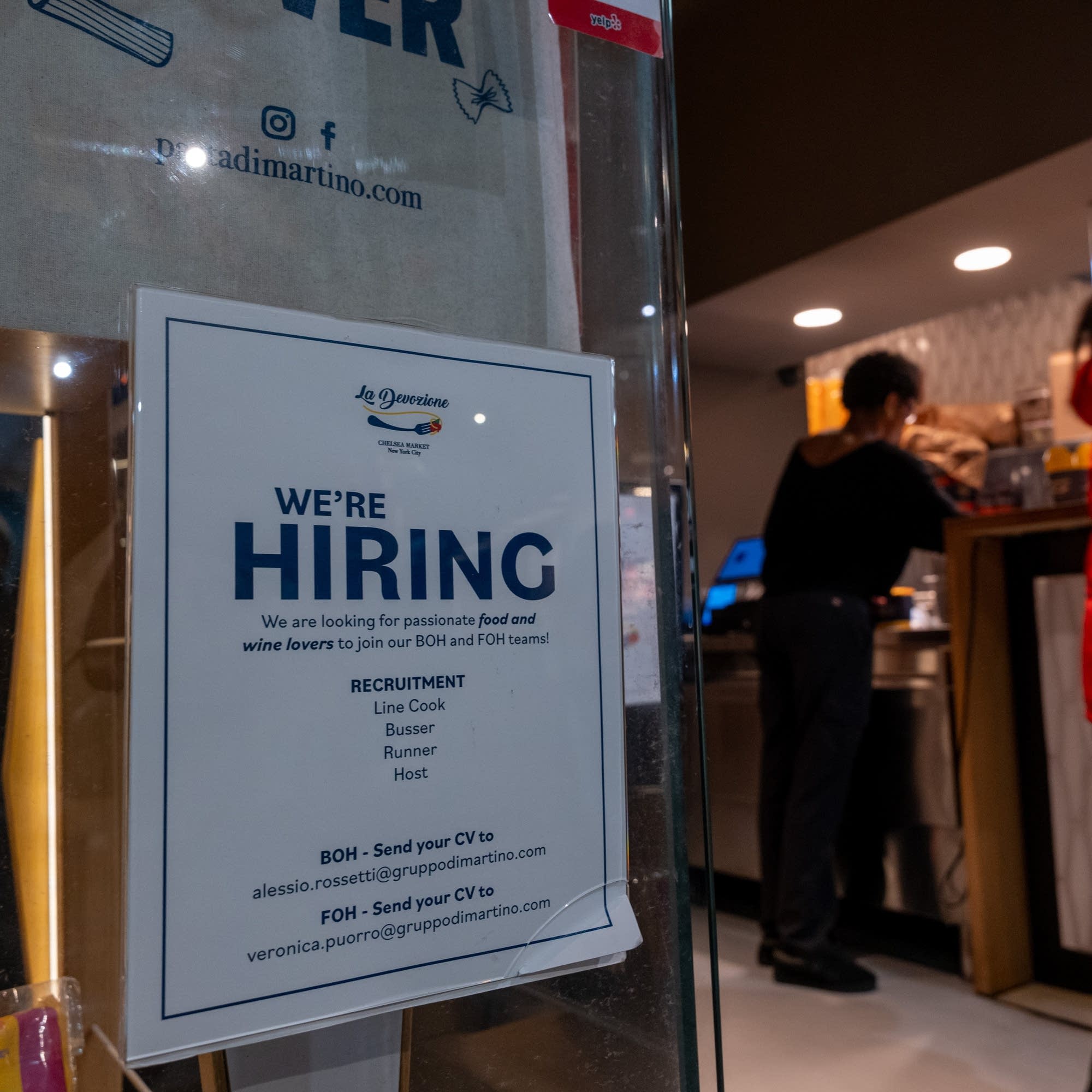
Speaker 3 What we do know right now is that a lot of companies are taking kind of a wait-and-see approach before making the investment that is hiring new people. A lot of companies, but not all.
Speaker 3 With some insights into who's hiring in this economy, Marketplace Elizabeth Troval reports.
Speaker 20 It's a great time to be looking for certain upper-level jobs, like in healthcare, says Alan Gorino with consulting firm Corn Ferry.
Speaker 21 So huge demand for hospital administrators healthcare operations execs senior clinical managers higher level roles in ai and data science are also open as well as certain parts of the energy marketplace like utilities construction and green energy so renewable energy modernizing infrastructure government stimulus is driving you know some of this so you've got senior project managers, engineers, top execs.
Speaker 20 Employers are also looking to fill roles in finance and accounting, says Karen Warren with talent firm Robert Half.
Speaker 23 It's well documented that the employers we're seeing are still competing for specialized talent, and particularly in finance, maybe at that senior accounting, accounting manager space.
Speaker 20 These are bright spots at a time when the hiring rate is low, according to Yelena Shaletseva, an economist with the conference board.
Speaker 22 Companies are extremely cautious about hiring new employees and this situation is exacerbated by this extremely high level of uncertainty that we observe that uncertainty is already showing up in compensation packages says jack jones with the human resources firm mercer and i think employers are being more cautious not only given the
Speaker 24 like kind of economic uncertainty, wanting to be more conservative with their compensation and how they're hiring.
Speaker 20 But also, he says, it's a steadier labor market, so there's less of a need to hike up salaries for new hires. I'm Elizabeth Troval for Marketplace.
Speaker 3 According to the Department of Agriculture, in the year 2024, American farmers exported $176 billion worth of agricultural goods. In the year 2025, It is not going to be near that much.
Speaker 3 The latest batch of export data from the USDA shows that in the week after the U.S.-China trade war really got going, overseas sales of American cotton and soybeans were down 50%, 5-0% over the week before, sales of U.S.
Speaker 3 pork off 72%.
Speaker 3 President Trump has said, first of all, that there are going to be government payments to farmers affected by the trade policies he put into place that shut those farmers out of foreign markets.
Speaker 3 But also,
Speaker 3
the U.S. farmers should just get ready to start selling their crops and livestock here.
As Marketplace's Savannah Peters reports, it is not that simple.
Speaker 25
Picture, if you will, 12,000 metric tons of U.S. raised pork.
That's the volume of orders canceled by Chinese customers in the first full week of the president's trade war.
Speaker 24 Yeah, we got to find a home for that pork.
Speaker 25 Carl Setzer with Consys Ag Consulting says China is a key destination for American meat with no ready international substitutes. Setzer says we can count on U.S.
Speaker 25 consumers to eat up some of the surplus.
Speaker 24 Especially ahead of the U.S. grilling season.
Speaker 25
But we can't snap our fingers and make the whole population grill a rack of ribs every night. Long term, there's just not much room for the domestic market to grow.
Then there are crops like U.S.
Speaker 25 cotton, some 85% of which is exported.
Speaker 12 We've developed to supply foreign markets.
Speaker 25 Primarily, China, says John Robinson, an agricultural economist at Texas A ⁇ M. He says the infrastructure needed to process cotton into fabric doesn't really exist here.
Speaker 25 So American farmers would have to attract new international markets.
Speaker 12 If they're bales, they're going to move, but they'll have to move at lower prices.
Speaker 25 And most farm commodities have a shelf life.
Speaker 25 Peter Friedman with the Agriculture Transportation Coalition says manufacturers can pause production while they wait for clarity on tariffs, but a soybean crop or a hundred head of cattle.
Speaker 26 They keep producing, they keep growing.
Speaker 25 So, if China's not buying and domestic markets can't absorb the surplus, what happens to those crops and livestock?
Speaker 26 You know, it's a darn good question.
Speaker 25
And one, the ag sector is trying to figure out in real time. But if the U.S.
and China don't reach a deal soon, Friedman says some crops could be destined for landfills.
Speaker 25 I'm Savannah Peters for Marketplace.
Speaker 3 Here's a story from the Marketplace desk of incentives that really do matter. This one comes with a side order of politics.
Speaker 3 It's been almost four months since New York City started charging people to drive into parts of Manhattan, the part south of 60th Street specifically.
Speaker 3 Nine bucks for passenger cars, if you feel like taking a drive.
Speaker 3 New York, both the state and the city, say the first congestion pricing program in this country is working, that it's reducing traffic and it's raising revenue for the city's transit system.
Speaker 3 The Trump White House, though, is trying to end it, calling it fundamentally unfair.
Speaker 3 Sean Duffy, the Secretary of Transportation, has given New York until May 21st to shut it down or risk losing federal funding and approval for other transportation projects.
Speaker 3 Oh, and there are lawsuits, too.
Speaker 3 Like I said, incentives. Marketplace to Samantha Fields has more.
Speaker 27 On Fifth Avenue, just north of 60th Street and just outside the congestion pricing zone, Peter Caballero is double parked in front of a hotel, loading equipment into a white van.
Speaker 28 I'm an audio video engineer, and I do corporate events.
Speaker 27 He's based in Staten Island, and these days he tries not to come into Manhattan much anymore because of congestion pricing.
Speaker 28 It's just too expensive, it makes no sense. And when you got to transport equipment, you got no choice.
Speaker 28 So it sucks.
Speaker 27 When Caballero does have to come in for a job, he generally passes the toll along to his customers.
Speaker 28
Which the client is always not happy about, but you have no choice. I mean, who has to pay it? You know, it's the little guys that are paying it.
The guys are just trying to make a living.
Speaker 27
Plenty of people, including the president, agree with Caballero. Congestion pricing is not exactly popular.
But public opinion is shifting.
Speaker 27 A February poll by the nonprofit Partnership for New York City shows 37% of New York City voters support it now, more than when it went into effect.
Speaker 27 And among those who actually drive into the zone a few times a week and pay the toll, 66% are in favor.
Speaker 4 Folks who commute from New Jersey or Long Island or the Hudson Valley see that they're saving time.
Speaker 27 I met Tom Wright, president of the Nonprofit Regional Plan Association, on the corner of Canal Street and Broadway in Lower Manhattan on a recent weekday afternoon.
Speaker 4 Six months ago, Canal Street was a parking lot this time of day. I mean, all time of day, because it's a major east-west connector.
Speaker 27 Before congestion pricing, this was one of the few ways people could drive from Brooklyn, Queens, or Long Island into New Jersey for free.
Speaker 4 So we were essentially incentivizing truckers to use this local road as their route. And so it was a parking lot most of the day.
Speaker 27 But now that it costs $9 for cars and up to $21 for trucks to drive into Lower Manhattan during peak times, Wright Wright says that's changed.
Speaker 4 What we're kind of seeing here is
Speaker 4 things are moving along.
Speaker 27 There are still plenty of cars and trucks on the road, but traffic is flowing. It's down by about 8% in the zone.
Speaker 4 As a city planner, you try and model outcomes and make the best guess as to how a policy will work out.
Speaker 4 And it's remarkable how this one is working out pretty much exactly as we had hoped and anticipated.
Speaker 27 The new toll is also generating revenue for the MTA, the city transit system, about about $100 million in the first two months.
Speaker 27 Only about 10% of people who commute into Midtown and Lower Manhattan drive. Most take public transit, and it's in dire need of upgrades.
Speaker 18 We're operating with a 100-year-old subway system, which is often subject to track failures or signal failures. So these upgrades are essential.
Speaker 27 Sarah Kaufman, director of the Rudin Center for Transportation at NYU, says money from congestion pricing will also go toward improving bus service.
Speaker 18 It's a win for transit riders, especially if we're talking about advocating for lower income populations. Bus riders tend to have on average lower incomes than car drivers or even subway riders.
Speaker 27 Buses are already moving faster just because there's less traffic and Calpun says there are other positives too.
Speaker 18
Overall, activity in the zone is up in terms of foot traffic and commercial activity. Broadway sales are up.
Pedestrians can cross streets more easily and noise is vastly reduced.
Speaker 27 She says it's noticeably quieter by her office, downtown on 17th Street. In New York, I'm Samantha Fields for Marketplace.
Speaker 3
All right, we got to go. No time for a final today.
Too much meat talking, too much news.
Speaker 3 Our daily production team includes Andy Corbin, Nicholas Guillong, Maria Hollenhorst, Iru Ekbenobi, Sarah Leeson, Sean McHenry, and Sophia Terenzio. I'm Kyle Risno.
Speaker 3 We will see you tomorrow, everybody.
Speaker 3 This is APM.
Speaker 16 Even when you're playing music,
Speaker 17 you're always listening to your baby, especially when RSV is on your mind.
Speaker 17 Baphortis, nercevimab ALIP, is the first and only long-acting preventative antibody that gives babies the RSV antibodies they lack.
Speaker 17 Baphortis is a prescription medicine used to help prevent serious lung disease caused by RSV or respiratory syncytial virus in babies under age one, born during or entering their first RSV season, and children up to 24 months who remain at risk of severe RSV disease through their second RSV season.
Speaker 17 Your baby shouldn't receive Baphortis if they have a history of serious allergic reactions to Baphortis, nursevimab ALIP, or any of its ingredients.
Speaker 17 Tell your baby's doctor about any medicines they're taking and all their medical conditions, including bleeding or bruising problems. Serious allergic reactions have happened.
Speaker 17 Get medical help right away if your child has any of the following signs or symptoms of a serious allergic reaction, such as swelling of the face, mouth, or tongue, difficulty swallowing or breathing, unresponsiveness, bluish color of skin, lips, or underfingernails, muscle weakness, severe rash, hives, or itching.
Speaker 17
Most common side effects include rash and pain, swelling, or hardness at their injection site. Individual results may vary.
Ask your baby's doctor about Faifortis.
Speaker 17 Visit Fayfortis.com or call 1-855-BAFORTIS.