The weather outside is frightful (so's the heating bill)
The average cost of heating is expected to jump more than 9% this winter, according to projections from the National Energy Assistance Directors Association. In this episode, why energy bills are up — for home heating and home cooling. Plus: Productivity measurements don’t match up to our service-based economy, Americans invest in U.K. soccer teams, and a growing sector provides training and staffing to AI startups.
Every story has an economic angle. Want some in your inbox? Subscribe to our daily or weekly newsletter.
Marketplace is more than a radio show. Check out our original reporting and financial literacy content at marketplace.org — and consider making an investment in our future.
Press play and read along
Transcript
Speaker 1 This podcast is supported by Odoo. Some say Odoo business management software is like fertilizer for businesses because the simple, efficient software promotes growth.
Speaker 1 Others say Odoo is like a magic beanstalk because it scales with you and is magically affordable.
Speaker 1 And some describe Odoo's programs for manufacturing, accounting, and more as building blocks for creating a custom software suite. So Odo is fertilizer, magic beanstock building blocks for business.
Speaker 1
Odoo, exactly what businesses need. Sign up at odoo.com.
That's odoo.com.
Speaker 3 This marketplace podcast is supported by Wealth Enhancement, who understand that dreams don't happen by chance, it takes a plan.
Speaker 3 They're ready to build your wealth blueprint for retirement, investing, taxes, and everything else your financial life brings.
Speaker 3 It reveals gaps and highlights opportunities you may have missed at no cost to you. Find out more at wealthenhancement.com/slash blueprint.
Speaker 5
It's going to cost you more to stay warm on Christmas this year. Plus, we've got a stocking full of widgets, toys, and games all coming up.
From American Public Media, this is Marketplace.
Speaker 5
In Washington, D.C., I'm Kimberly Adams in for Chi Rizdahl. It's Thursday, the 25th of December.
Thanks for joining joining us on this Christmas day.
Speaker 5 It's a holiday associated with cooler, if not downright cold, weather in much of the country. And as the temperatures drop, more people are cranking up the heat.
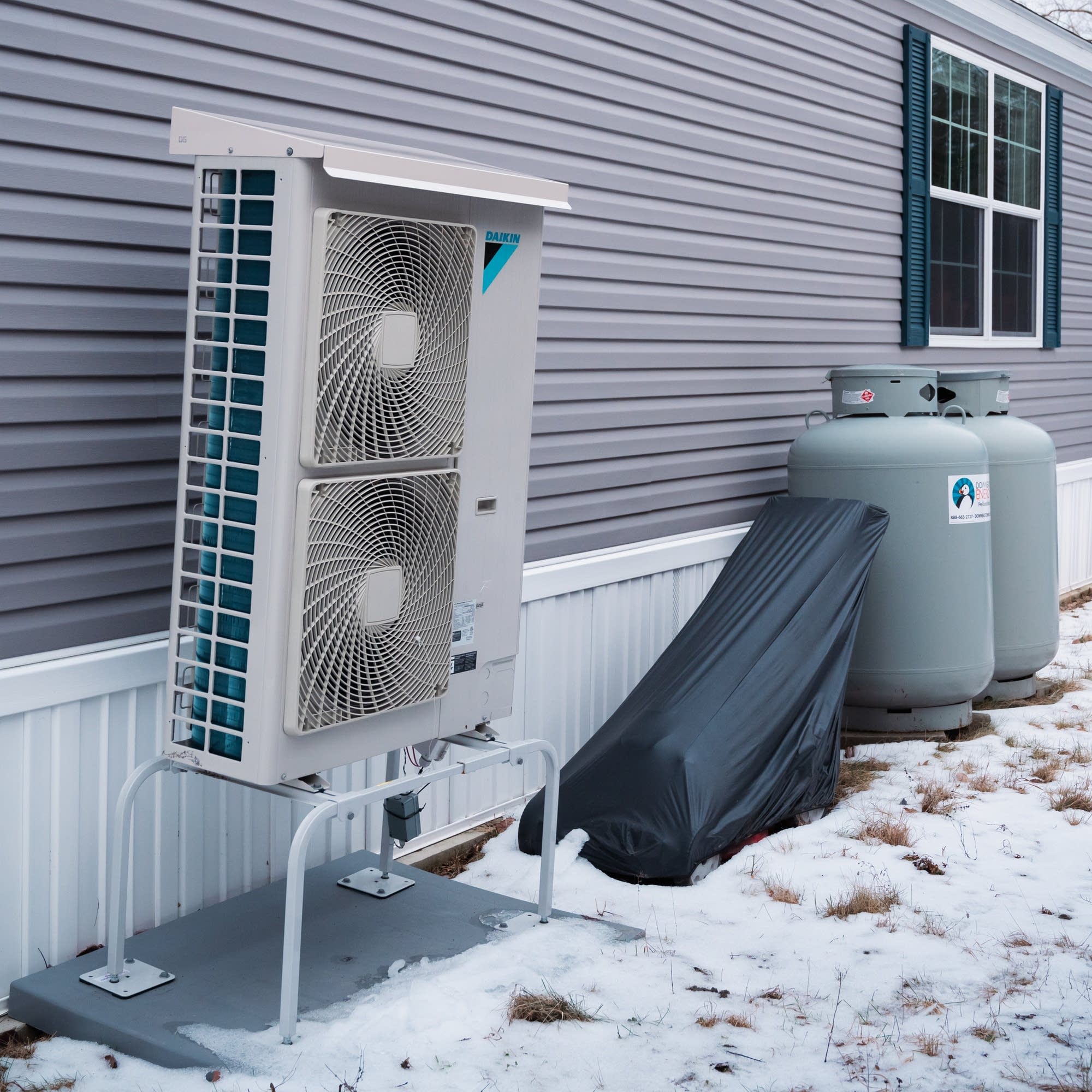
Speaker 5 But a lot of folks may be pausing at the thermostat thinking about what that energy bill is going to look like. This winter, the average cost of heating is expected to jump more than 9%.
Speaker 5 That's according to projections from the National Energy Assistance Directors Association.
Speaker 5 And federal support for states to help low-income people with utility bills was delayed about a month this year because of the government shutdown.
Speaker 5 Marketplace's Carla Javier looked into the causes and consequences of these higher heating prices.
Speaker 6 Even before winter sets in, families have already been struggling with utility costs, says Mark Wolf of the National Energy Assistance Directors Association.
Speaker 7 We estimate about one out of six families are behind in the utilities bills right now. They owe about $23 billion to their utilities.
Speaker 6 He says that's because customers are catching up from high costs over the summer.
Speaker 7 The cost of cooling your house was the highest it had been in more than a decade.
Speaker 6 In the past, the home heating season was the big expense.
Speaker 7 Now we have both an expensive home heating season and an expensive home cooling season.
Speaker 6 Really squeezing customers. Wolf says there are a lot of reasons why heating keeps getting more expensive.
Speaker 6 There's the rising cost of natural gas because of market volatility and companies upgrading their infrastructure.
Speaker 6 And even if a customer's home is heated with electricity, that's getting more expensive too, says David Konisky, Indiana University professor and co-director of the Energy Justice Lab.
Speaker 8 We have heard a lot about AI and data centers, but also just as utilities are modernizing and upgrading the grid, these costs are passed down to consumers.
Speaker 6 And that's on top of all the other rising costs.
Speaker 8 Whether it's food or health care and higher energy costs is just one more thing.
Speaker 6 Another essential thing. Those who can't pay may accumulate debt.
Speaker 8 This leaves them in a pretty vulnerable situation with their utility because utilities do have the ability to shut off customers when they are behind on their bills.
Speaker 6 Though there is help available. Most states offer protections from shutoffs, and some nonprofits can help cover some costs.
Speaker 6 There's also the federally funded low-income home energy assistance program, but Kiniski says less than 20% of eligible people actually get relief through the program.
Speaker 8 It's not an entitlement program, so once those resources have been expended, they're not available to anybody else.
Speaker 6 Kiniski says the government could increase LIHEAP funding, and states, local governments, and utilities could offer more emergency assistance.
Speaker 8 But these are really band-aids, right? They are helping people get through the immediate material hardship that's being created by the higher prices.
Speaker 6 Over the longer term, he says changing rate structures and identifying energy efficiency upgrades will help people better afford their utilities. I'm Carla Javier for Marketplace.
Speaker 5 Markets across the world were closed today for the Christmas holiday. We'll unwrap some other things when we do the numbers.
Speaker 5 Several recent analyses and reports say one of the factors driving up energy costs in parts of the country is the growing energy demand from data centers, and that demand is only set to rise given the explosive growth of AI.
Speaker 5 But despite the billions and billions and billions of dollars flowing into AI companies from investors, most of these companies haven't turned a profit yet.
Speaker 5 On the flip side, the companies in the business of supplying AI companies with new data straight from humans, those are growing fast.
Speaker 5 Josh Jezza is the investigations editor at The Verge, where he wrote about what it takes to feed the beast that is AI models. Josh, welcome to the program.
Speaker 9 Hi, thanks for having me.
Speaker 5 You open this piece by talking about Mercor, whose 22-year-old founders have become like the youngest self-made billionaires ever. What is this company?
Speaker 9 Mercor is interesting.
Speaker 9 They started as a sort of AI job interview staffing agency company, and then they started getting requests from AI training data companies looking for people like software engineers to produce training data for AI models and realized pretty quickly this is where the big business is and pivoted and now they're valued at $10 billion.
Speaker 5 I think so many people are familiar with these stories about AI models being trained on data scraped off the internet. But you're talking about a whole different kind of training.
Speaker 5 Can you explain that difference?
Speaker 9 Yeah, so the scrape data gets the models to a baseline of they're able to predict text very well.
Speaker 9 But as the models have gotten better and better and people want to use them for actual things in the world, now you need fairly specific examples of problems engineers might face and their solutions, or very complicated examples of something that an investor or a consultant might do.
Speaker 9 There just isn't enough high-quality data out there on the internet already existing to take the models further than where they are.
Speaker 5 The story highlights how it almost harkens back to the old days of Amazon's mechanical Turk, where people were doing like these what seemed just sort of mind-numbing tasks for pennies, but helping train kind of the precursor to all of this.
Speaker 9 Yeah, that's really where this got its start.
Speaker 9 Amazon mechanical Turk kind of leads fairly directly into this realization that, oh, if you have a ton of labeled data, you can make models that are much more effective than anything we've seen before.
Speaker 9 At the time, it was a lot of very basic image recognition. You know, this is a cat, this is a dog.
Speaker 9 And really, just over the last 20 or so years, you can see things get more and more specific and sophisticated until now you have these complicated data products that take, you know, days potentially for specialists to produce.
Speaker 5 Who are the workers actually providing all of this training data these days?
Speaker 9
A lot of the tasks ask for some sort of advanced degree. If you just go sector by sector, the biggest one is software engineering.
Then you have finance, consulting, medical backgrounds, lawyers.
Speaker 9 In terms of the people doing the work, you have grad students, you have practicing professionals who are doing it as kind of a side gig.
Speaker 9 And then you have a lot of people who have been unable to find work in their chosen profession. And this is sort of a fallback.
Speaker 5 What's it like actually working for these companies be that person who, whether you're filling time as a side gig or you can't find work in your field, what's it like actually working for them?
Speaker 9 Aaron Powell, it can be strange. They often don't know who they're actually working for, whose model they're ultimately training.
Speaker 9
They're sort of given these fairly complicated assignments and told to do them. And that's basically the extent of their knowledge of the system they're part of.
It can be potentially very lucrative.
Speaker 9 People can make more than $100 an hour, but it's very intermittent and very unpredictable. And so if you're actually depending on this for a living, it can be extremely stressful.
Speaker 5 There is so much money going into AI right now, but a lot of these big name companies that we hear about in this space aren't actually turning a profit, but these training companies are. Why is that?
Speaker 9 These companies are sort of similar to NVIDIA, the chipmaker. They're kind of the proverbial sellers of picks and shovels during a gold rush.
Speaker 9 The big AI companies are investing a lot of money in the hopes that they reach sort of a level of intelligence with these models where they become fantastically profitable.
Speaker 9 But right now, they're losing money. But all that money they're losing is going to companies like NVIDIA to build data centers and then companies like Mercor to get the training data that they need.
Speaker 9 So for these companies, right now, this is a great business to be in.
Speaker 9 And you can see that in investor interest and the number of other companies that are sort of tangentially related to this space who are reorienting around it.
Speaker 5 What do you see as the future of this industry?
Speaker 9
This is a big question. I think broadly, you have two possibilities.
One is that AI does become generally intelligent.
Speaker 9
And in that scenario, this is sort of a temporary state, and you don't need this data forever. The model can learn math and finance and go on to do your taxes.
That's not what we're seeing right now.
Speaker 9 And so the other possibility is that these models, they need a lot of bespoke data on each application.
Speaker 9 And in that scenario, this is going to be a huge industry because any company that wants to actually use AI to do something useful is going to need to then produce data to get it to do that.
Speaker 5 Josh Jezza is the investigations editor at The Verge and co-wrote the piece Feeding the Machine with his co-author, Hayden Field. Thank you so much.
Speaker 9 Thank you.
Speaker 5 The United States has been on a bit of a winning streak with productivity in the last few years.
Speaker 5 With the exception of the first quarter of this year, productivity has been on the up and up since 2023, according to data from the Bureau of Labor Statistics.
Speaker 5 Now, to get to that productivity figure, economists do some version of the equation, how many widgets can a person produce per hour? But what exactly is a widget? Marketplace's Sarah Leeson explains.
Speaker 10 When I first heard the term widget, it was in an economics class back in high school.
Speaker 10 But it comes up in college courses too, like the intro ones Timothy Taylor used to teach at Stanford and the University of Minnesota, where he learned that being a little bit vague can actually be helpful.
Speaker 11 One year I was using wheat and somebody, it turned out their family was farming in North Dakota and they wanted to talk to me about price differentials for like red number two hard Durham or something like that.
Speaker 2 And I was like, don't know about that. Can't help you.
Speaker 10 These days he's the managing editor of the Journal of Economic Perspectives.
Speaker 12 And so instead of wheat, we could talk about widgets.
Speaker 10
Widgets are the general stand-in for any good being produced. Radios, t-shirts, cans of soup, all widgets.
By definition, they're not really real, and that's the point.
Speaker 10 But still, I'm a visual learner.
Speaker 11 I think of widgets as something amorphous. Like, you can almost think of them as the stuff that goes into 3D printers.
Speaker 10 Gotta be honest, Tim, I'm not really sure what that looks like.
Speaker 10 The Oxford English Dictionary tells us that the word widget first came on the scene in 1924, and it actually had nothing to do with economics at first.
Speaker 10 Instead, it came from a play called Beggar on Horseback.
Speaker 11 It's a comic play about a young man who only wants to play classical music, but he's in love with the daughter of a wealthy industrialist.
Speaker 10 He tries to go work for her father at, quote, the biggest manufacturer in the world of overhead and underground underground and aerial widgets.
Speaker 11 Part of the comedy is that he has no idea what this means.
Speaker 10 After that, the word widget just started showing up, like in this stop-motion economic explainer from General Motors in 1939.
Speaker 13
Here's your money, Mr. Widget Maker, and here's your widget, Mr.
Farmer. That's all there is to it.
Everyone is happy. The widget maker has the money, and the farmer has his widget.
Speaker 10 GM's widgets, of course, are cars. Although, in the video, the widgets look more like dumbbells.
Speaker 10 But outside of the classroom, or educational videos, or this show right now, I guess, people don't really talk about widgets.
Speaker 11 I mean, I don't hear, I don't know, the head of the Federal Reserve or the head of the Treasury saying, you know, just think about it in terms of widgets, everybody.
Speaker 10
There's probably a lot of reasons Fed Chair Jerome Powell isn't talking about widgets in his pressers. It'd be kind of silly, for one.
But also, our economy has changed.
Speaker 10
Manufacturing only makes up around 10% of our GDP now, down from more than a quarter at its peak. Because these days, we're a services economy.
And historically, widgets weren't services.
Speaker 10 They were tangible things. Here's how Joanna Marinescu, an associate professor at the University of Pennsylvania, pictures them.
Speaker 14 In my mind, I see like
Speaker 14 little marbles or something like that. You know, it's like plop, plop, plop, plop, widget, widget, widget, widget.
Speaker 10 In the services sector, though, the widgets being produced are way harder to count than marbles.
Speaker 14 If we're talking about software for accounting, what is exactly the unit that's being produced by an accounting software? Who knows? So that makes it super hard.
Speaker 14 However, it's not completely impossible.
Speaker 10 Take healthcare.
Speaker 14 You can look at cancer research, and so you can measure per additional paper, now now that's your widget, how many more years of life saved.
Speaker 10 In today's economy, widgets might look like lines of code written, children cared for, haircuts given, or dogs walked. And as our economy keeps changing, the way we visualize widgets will too.
Speaker 10 I'm Sarah Leeson for Marketplace.
Speaker 15 Coming up, I believe that the opportunities have not even been scratched.
Speaker 5
The beautiful game and U.S. investment.
But first, let's do the numbers. Markets across the world were closed for Christmas, so let's let's unwrap some other bits of holiday data.
Speaker 5 Stores expect nearly 16% of items to be returned this calendar year, down from almost 17% last year. The National Retail Federation says that's about $850 billion worth of merchandise.
Speaker 5 What you might want to not return is one of those gifts from the Carol-inspired 12 Days of Christmas list. You know, hiring 11 pipers piping or 12 drummers drumming.
Speaker 5 The PNC Christmas Price Index list increased by 4.5% this year. Price tag $51,476.12.
Speaker 5 Any guesses on the biggest jump? Those five golden rings, which are up 32.5% from last year at $1,649.90 for those five golden rings. You're listening to Marketplace.
Speaker 2 Winter's the perfect time to explore California, and there's no better way to do it than in a brand new Toyota hybrid.
Speaker 2 With 19 fuel-efficient options like the stylish all-hybrid Camry, the Adventure-Ready RAV4 hybrid, or the Rugged Tacoma hybrid, Toyota has the perfect ride for any adventure.
Speaker 2 Every new Toyota comes with Toyota Care, a two-year complementary scheduled maintenance plan, an exclusive hybrid battery warranty, and of course, Toyota's legendary quality and reliability.
Speaker 2 Visit your local Toyota dealer and test drive one today so you can be prepared for wherever the road takes you this winter. Toyota, let's go places.
Speaker 2 See your local Toyota dealer for hybrid battery warranty details.
Speaker 16 At Capella University, learning the right skills could make a difference. That's why our business programs teach you relevant skills you can take from the course room to the workplace.
Speaker 16 A different future is closer than you think with Capella University. Learn more at capella.edu.
Speaker 17 Skipping cold and flu season is plan A. But if you do get sick, be prepared for plan B with Kleenex Lotion Tissues.
Speaker 17 Kleenex lotion tissues moisturize skin, helping prevent the added discomfort of red, irritated skin on top of your cold and flu symptoms. So this cold and flu season, grab Kleenex lotion tissues.
Speaker 17 Visit Kleenex.com to learn more and buy now. For whatever happens next, grab Kleenex.
Speaker 18 What if you could have reliable and intelligent Wi-Fi at the same price for five years? That's the Xfiniti five-year price guarantee.
Speaker 18 No annual contracts, no hidden fees, and our best equipment included. Just five years of Wi-Fi that boosts speeds to the devices that need them most.
Speaker 18 that finds and fixes problems before you even notice them and that keeps you gaming in the fast lane. Lock in your price and unlock the possibilities.
Speaker 5 Xfinity. Imagine that.
Speaker 18 Select plans only, restrictions apply.
Speaker 5 This is Marketplace. I'm Kimberly Adams.
Speaker 5 Sarah Leeson was just talking about how widgets are more of a concept than an actual product, but there are some things, take some toys for example, that only work because of their physical nature, whether that's how they feel in your hands or how they move.
Speaker 5 Which brings us to this next installment of our holiday mini-series on the history of toys.
Speaker 19 My name is Michelle Parnett Dwyer and I'm a curator responsible for toys and dolls at the Strong National Museum of Play in Rochester, New York. So the Slinky was invented by Richard James.
Speaker 19 He ended up working for the Navy during World War II.
Speaker 19 Part of his assignment was to come up with a way to keep their important equipment stable while the ships were at sea.
Speaker 19 And at that time he was tinkering around in his office and he watched a spring fall off of his desk and fall gracefully across the floor and he thought I would love to come up with a novelty toy that could replicate that same movement.
Speaker 19 So he brought the idea home to his wife Betty and said what do you think? They borrowed about $500 to manufacture it.
Speaker 19 He went to Gimbal's toy department store in Philadelphia and said, I want to demonstrate this amazing product that I've come up with so that kids can understand how to play with it.
Speaker 19 And allegedly, he did just that and it sold out in 90 minutes.
Speaker 19 So Slinky is doing very well through the 1950s. During this time, Betty is predominantly at home raising six children and Richard is running the company.
Speaker 19 He eventually decides to confess to Betty that he has not only been cheating on her, but he has also run Slinky into the ground and that the company is broke.
Speaker 19 He says to her, you can either sell and liquidate the company or you can take over. It's up to you, but I'm out of here.
Speaker 19 One of the first things that Betty does is sort of bring Slinky back into popular culture.
Speaker 19 She partners with someone to come up with a jingle, which is the famous jingle we all know where it says, what walks downstairs alone or in pairs? It makes the slinkity sound.
Speaker 19
I spring, a spring, a marvelous thing. Everyone knows it's slinky.
In the 1970s, she
Speaker 19 purchased an idea for a plastic slinky.
Speaker 19 And then in the 1990s, she gets a call from Pixar and they said, we would love to bring your slinky dog into our movie movie Toy Story.
Speaker 19
And she said, absolutely, please do that. She maintained the company into the 90s.
I believe she was close to 80 when she retired. I have a love-hate relationship with Slinky.
Speaker 19 Learning more about Betty. created more of a soft spot for me because I find her story very inspiring.
Speaker 19 But I also absolutely despise them because I have never had a slinky that doesn't get tangled within a matter of minutes.
Speaker 19 And supposedly, most American households don't have the right stairs to actually do some of the tricks with a slinky, so that's very frustrating as well.
Speaker 5 Michelle Parnett Dwyer, curator at the Strong National Museum of Play in Rochester, New York. One last classic toy history coming up tomorrow.
Speaker 5 from toys to games the beautiful game Professional soccer in Britain has long attracted foreign investment often from oil-rich Gulf countries but increasingly owners from the United States are getting in, including a new one this week.
Speaker 5 Martha Stewart became a minority owner of Welsh soccer team Swansea City AFC. The team plays in England's second division for what it's worth.
Speaker 5 Stewart joins her friend Snoop Dogg, who became a minority owner in July. Now, of course, next year, the United States will play host to the most famous international soccer tournament, the World Cup.
Speaker 5 And so, might we see more American investors trying their hand at soccer ownership? The BBC's Will Bain has been looking at how that investment is shaping the game.
Speaker 21 From private equity mega funds to Hollywood actors and hip-hop stars, what was a drip-drip of US investment into British soccer has become something of a deluge.
Speaker 21 More than a third of the 72 professional clubs from England and some from Wales as well are now either fully or part owned by US investors.
Speaker 15 I believe that the opportunities have not even been scratched.
Speaker 21 That's the businessman and lawyer Rob Kuwig.
Speaker 21 He'd been a long-term owner of Wickham Wanderers in the leagues below the Premier League, but he's back to ride the soccer roller coaster once again, having this summer bought Reading FC.
Speaker 21 He told us why from his home in Louisiana.
Speaker 15 The more I looked at it, it's an undervalued commodity or asset. that most people don't understand in England.
Speaker 15 For us, we thought we could get in and do some things that that would change valuations and actually show that you could operate it in a sustainable manner. And we did it.
Speaker 21 Undervalued how?
Speaker 15 It's an international mark. People really love the game of soccer, obviously, but on a purely economic basis, you could not buy a minor league baseball team in America for the equivalent amount.
Speaker 21 Two years ago, Birmingham City, one of the clubs based in the UK's second largest city, Birmingham, was taken over by the US private equity firm Knighthead Capital Management.
Speaker 21 And along with them came a very famous minority owner.
Speaker 12 We're here to support the club.
Speaker 12 We want success on the pitch. We want to be winning, and that's what we're committed to.
Speaker 21 The NFL star Tom Brady. And what do you need if you have a celebrity owner like, say, Wrexhams, Ryan Reynolds, and Rob McElhenney?
Speaker 21 Well, a competing documentary sold to a streaming platform, of course.
Speaker 12 The way we've been sold it, we're going to the top.
Speaker 12 We're trying to make Birmingham City a world-class team.
Speaker 21 If that was one stream of revenue, Nighthead Capital had other plans for growing its revenues off the pitch as well.
Speaker 21 A promise, for example, to build a new so-called sports quarter for the city, including a 62,000 all-seater stadium, an indoor events arena and new training facilities.
Speaker 21 So what do fans at Birmingham make of their US owners so far?
Speaker 22
It's just unrecognisable. I mean we're stood out by the fan park that we never had before and We've got full houses.
We're selling out every week. We see what they see, and it's revenue.
Speaker 22 Everything's about revenue.
Speaker 21 But is it worth it? And do clubs actually make money from the exposure they get from them?
Speaker 21 Here's Christina Philippu, Associate Professor in Accounting and Sport Finance at the University of Portsmouth.
Speaker 20 Absolutely. I mean, if you look at 24 accounts with Wrexham, they went from, in terms of sponsorship and advertising revenue, it went up more than seven times, okay, from 2023 to 2024.
Speaker 20 That is massive.
Speaker 21 And Professor Philippu says a lot of these brands simply wouldn't get behind the club if it wasn't clear there was truly global interest. I'm the BBC's Will Bain for Marketplace.
Speaker 5
This final note on the way out in this season of giving. Let's take a look at how charitable we Americans are these days.
According to the World Giving Index, the U.S.
Speaker 5
is the sixth most generous country globally. FYI, Indonesia has the top spot.
But here in the States, we spent close to $600 billion in 2024 for the causes we care about.
Speaker 5 Wallet Hub developed a metric to rank the most charitable states in America as well, with Wyoming and Utah at the top, at the bottom, Nevada, and New Mexico.
Speaker 5 Our daily production team includes Livvy Burdett, Andy Corbin, Maria Hollenhorst, Sarah Leeson, Sean McHenry, and Sophia Terenzio.
Speaker 5 Will Story is the supervising senior producer, and I'm Kimberly Adams. We'll see you tomorrow.
Speaker 5 This is APM.
Speaker 4 Winter is the perfect time to explore California, and there's no better way to do it than in a brand new Toyota hybrid with 19 fuel-efficient options, like the stylish all-hybrid Camry, the adventure-ready RAV4 hybrid, or the rugged Tacoma hybrid.
Speaker 4 Toyota has the perfect ride for any adventure.
Speaker 4 Every new Toyota comes with Toyota Care, a two-year complementary scheduled maintenance maintenance plan, an exclusive hybrid battery warranty, and of course, Toyota's legendary quality and reliability.
Speaker 4 Visit your local Toyota dealer and test drive one today, so you can be prepared for wherever the road takes you this winter.
Speaker 2 Toyota, let's go places.
Speaker 4 See your local Toyota dealer for hybrid battery warranty details.