The job market won't start fresh in 2026
The labor market has been tightening all year, and Americans have grown increasingly anxious about their ability to find new jobs. A bit of good news? New unemployment claims fell last week. But that isn’t likely to signal a full job market turnaround in the new year. Plus: AI investment hasn’t slowed under Trump’s tariffs, a TikTok creator shares “recession recipes,” and we learn about the history of Legos.
Every story has an economic angle. Want some in your inbox? Subscribe to our daily or weekly newsletter.
Marketplace is more than a radio show. Check out our original reporting and financial literacy content at marketplace.org — and consider making an investment in our future.
Press play and read along
Transcript
This Marketplace podcast is supported by Wealth Enhancement, who ask, do you have a blueprint for your money?
Wealth Enhancement can help you build the right blueprint for investing, retirement, tax, and more.
With offices nationwide, there's an advisor who's ready to listen and craft a blueprint for your future. Find out more at wealthenhancement.com/slash build.
This podcast is supported by Odoo. Some say Odoo business management software is like fertilizer for businesses because the simple, efficient software promotes growth.
Others say ODU is like a magic beanstalk because it scales with you and is magically affordable.
And some describe Odoo's programs for manufacturing, accounting, and more as building blocks for creating a custom software suite. So Odoo is fertilizer, magic beanstock building blocks for business.
Odoo, exactly what businesses need. Sign up at odoo.com.
That's odoo.com.
Dueling data on jobs, more on what's behind that GDP jump, and to be on theme for the holiday, toys. From American Public Media, this is Marketplace.
In Washington, D.C., I'm Kimberly Adams in for Chirizdal. It's Wednesday, the 24th of December.
Good to have you along, everybody. We got some relatively good news about the job market today.
The Labor Department reported initial claims for unemployment benefits fell by 10,000 nationwide last week. That's now down to the historically low level we saw before the pandemic.
It's a very different story than what we saw in the delayed government jobs report, which showed that since September, the economy lost about 40,000 jobs, while unemployment spiked higher to 4.6%.
Other than the pandemic, that's the worst unemployment rate we've seen since 2017. So, one report says fewer people are filing for unemployment, while the other says there are more people unemployed.
How does that work? Marketplace's Mitchell Hartman is here to help it make sense. Let's start with the positive employment news.
It's good to see that jobless claims are low.
Ryan Young is chief economist at the Competitive Enterprise Institute. There came in about 10,000 people underestimates, which is 10,000 paychecks that are safe.
Except that might not tell the whole story. Michelle Evermore at the National Academy of Social Insurance is an expert on the unemployment system.
Initial claims, as I always say, only measure people who lose work and then apply for unemployment insurance.
And right now, Evermore says the workers losing jobs are least likely to apply for unemployment insurance.
So that's black workers, people who are part-time for economic reasons, people who are marginally attached to the workforce. They may have exhausted their unemployment insurance.
Right now, the unemployment rate is not high by historic standards.
But as it gradually rises, it becomes a bigger problem for the economy and for particular worker groups, says Dean Baker at the Center for Economic and Policy Research. Right now, it's at 4.6%.
Go back a couple years, we're at 3.4%.
The unemployment rate for whites has not risen a lot, 3.9% now. But for black workers, it's at 8.3%.
That's a high unemployment rate. I mean, if that were the overall unemployment rate, we'd say we were in a bad recession.
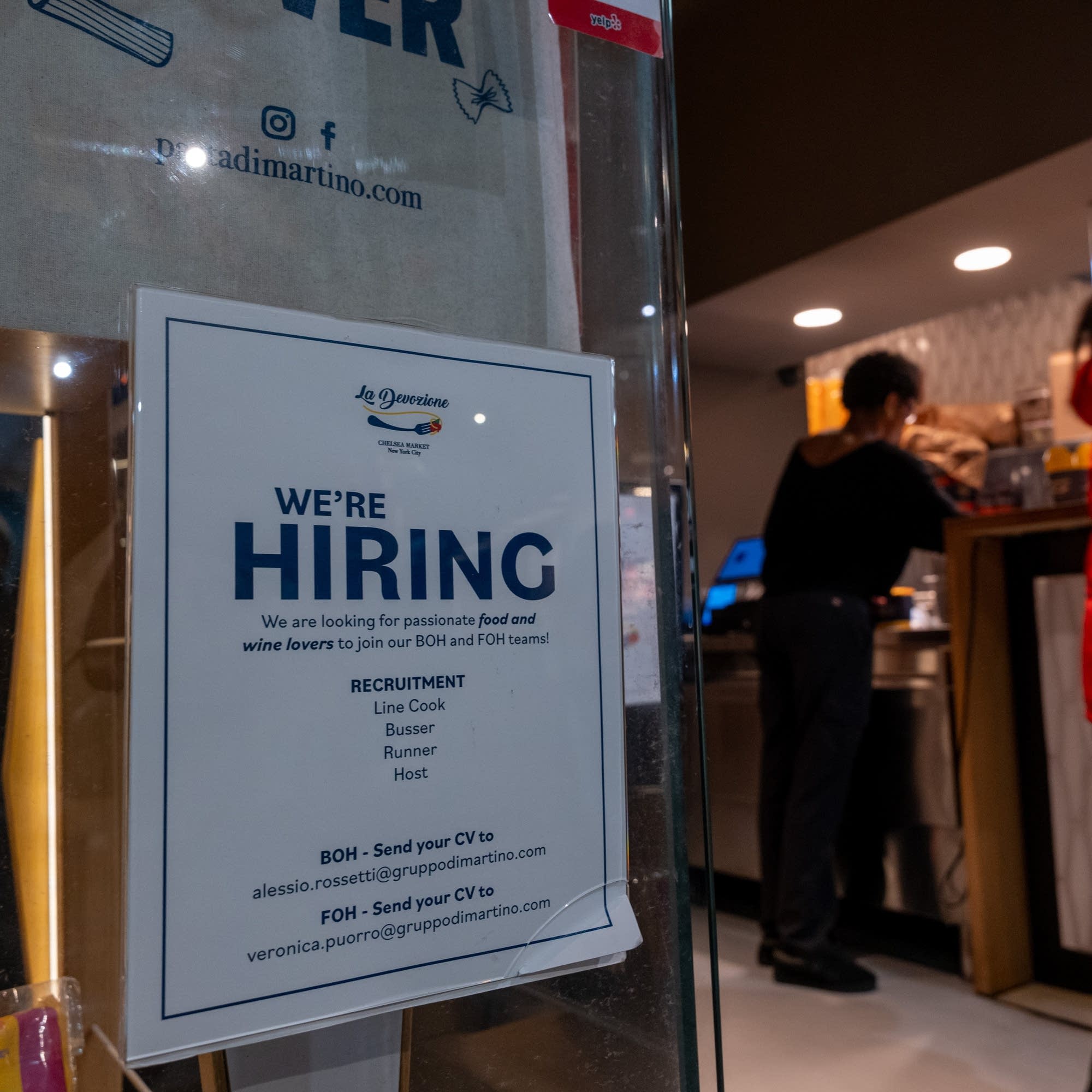
And there's not a lot of encouraging news heading into 2026, says Mike Fratentoni at the Mortgage Bankers Association, because job creation has basically stalled out.
There really was no net employment growth from April through November. Businesses are just cautious about hiring.
The hiring rate is really as low as it's been over much of the last couple of decades.
And you see employees very cautious as well. All All this has knock-on effects for the rest of the economy, from consumer spending to housing.
If people don't feel confident in their employment situation, it's unlikely they're going to move forward to buy a home.
And surveys find Americans are ever more apprehensive that they're going to lose their jobs or see their pay cut in the coming year. I'm Mitchell Hartman for Marketplace.
A short trading day this Christmas Eve on Wall Street, but it was open long enough to hit a new high. We'll have the details when we do the numbers.
I want to follow up on that surprisingly good and also delayed GDP report that came out yesterday, which showed the U.S.
economy grew at an annual rate of 4.3% in the third quarter, the highest reading in two years.
It was surprising to many economists because they expected ongoing uncertainty, particularly around President Trump's tariffs, would have some effect on the economy.
And though the growth was driven partly by
rising consumer spending, As we reported yesterday, that spending has been concentrated among higher-income households.
But growth was also boosted by continued spending and investment in an industry that has gotten a pass on some of those tariffs. Two familiar letters, AI.
Marketplace's Megan McCarty Carino has more.
Big tech companies have spent roughly $400 billion to build AI data centers in 2025.
These giant facilities are sprouting up across the country to train and run AI models, and they require a lot of components, says Philip Luck at the Center for Strategic and International Studies.
Steel, aluminum, copper, all the cooling and electricity. Many of those construction materials are imported and subject to tariffs.
Then there's what's inside.
You get this big building, but in reality, it's the little chips that are so expensive. Those alone are about 45% of the value of any data center.
Those graphics processing units that have sent NVIDIA's valuation into the stratosphere are the single biggest line item for data centers.
Chris Miller, a history professor at Tufts and author of Chipwar, says though they're designed in the U.S., they're pretty much all fabricated abroad.
Largely Taiwan and Korea, which manufactures most of the memory chips inside of data centers today.
Those have been exempt from tariffs for now.
A 25% tariff on chips from China has been delayed to 2027, and the Commerce Department is investigating national security concerns around semiconductors that could still result in tariffs.
It's clear the president wants to impose tariffs. He's repeatedly promised to do so.
But the administration is trying to weigh the desire for tariffs with the costs that it would impose on some of America's biggest technology companies.
Tariffs have already cost big tech an estimated $5 billion this year, says Dan Ives, head of tech research at Wedbush Securities.
Around the edges, it could hurt some spend, but the reality is like we're going to have trillions being spent over the next few years.
So he says, even billions in tariffs likely won't stop those trillions in investments in AI data centers. I'm Megan McCarty-Carino for Marketplace.
This time of year, the internet is filled with influencers sharing ambitious holiday recipes. But elsewhere online, people are sharing strategies for how to put any kind of food on the table.
In 2023, 18 million families were food insecure, up a million from the year before, according to the USDA, which has stopped tracking those numbers under the Trump administration.
Meanwhile, grocery prices have shot up more than 25% in the past five years, which means there's a different kind of food influencer gaining traction on social media right now.
The kind who will teach you how to cook something delicious on a budget. Marketplace's Alice Wilder has the story.
Kiki Ruff's videos usually start the same way.
If this is your first time being poor, I'm Kiki. There's no telling what recipe will come next.
It could be a batch of hot dog buns, roasted tomato soup, or caramel apples.
But whatever she makes in her Indiana kitchen, you can be sure it will be cheap. Ruff has dubbed her creations recession recipes.
She told me that she frequently fields requests from hungry followers who are adjusting to their new economic reality.
If they are going to a food bank for the first time and they're getting flour and lentils, they're like, well, I don't bake, and what is a lentil?
On Ruff's channel, flour turns into donuts, and lentils become chili or burgers. She got the idea for recession recipes while scrolling LinkedIn.
There was someone who popped up on my feed who was talking about how he was in a transitionary period with his job and he couldn't buy granola bars or fruit snacks for his daughters anymore.
They had to cut the expense and how stressful it was for his daughters. That LinkedIn post inspired her to put together her first recession recipe.
She posted it to TikTok in February 2025.
And the next morning, she woke up to 90,000 new followers. Ruff has a full-time job in software software technology, but she immediately decided to devote her free time to making more videos.
Today, she has over half a million followers between TikTok and Instagram. If you want an idea of what her videos are like, imagine if your favorite babysitter taught you how to cook.
Now, the next part, you get to get a little crafty. We're gonna season these.
Ruff is warm and goofy, but will also dole out some tough love if the moment calls for it. Oil your pan!
Oil your pan!
Oil it! She wears heart-shaped glasses and has the red hair of an off-duty Disney princess.
I'm at Rough in the parking lot of an Aldi in northwest Indiana, where she does most of her grocery shopping. So, what is our budget for this grocery shopping trip?
I'm gonna try to get this under $15.
She grabbed a quarter to rent a cart and we headed in, laser-focused on our grocery list. Oh, pizza dough.
We'd be making pizza rolls.
Think cinnamon rolls, but with a savory filling and tomato sauce for dipping. They only have jalapeno.
I'm allergic to jalapeno. We're going to roll with it though.
Wait, check behind. There might be.
Someone regular. Oh, regular.
Okay, perfect. I think we're going to get this under like $8.
Our total came out to $6.82.
I have to admit that when I asked Ruff if we could make a holiday dish together, I wasn't imagining pizza rolls.
But she pointed out that potlucks are common this time of year, and there can be pressure to deliver something impressive. When you're invited somewhere, you don't want to show up empty-handed.
But if you're only working with $10, it becomes, okay, can I go get the tiniest fruit plate in the world? Can I go get a block of cheese and just bring cheese? Or, like, maybe I should just stay home.
Yeah, yeah, absolutely.
And it's like, I think financial shame is so deeply rooted that it is going to change the way that people gather, that there might be less events within your friend group because, hey, like, no, I actually have to pay rent now.
Ruff's hope is that this recipe will means someone can say yes to a holiday potluck and be proud to bring a homemade dish.
We return to Ruff's home slash studio where her husband helped her set up a camera and lighting in front of the kitchen stove. As a kid, Ruff loved to cook.
She told me this story while popping butter in the microwave.
When I was little, I wanted to be a chef really bad, and I wanted to own my own restaurant, and I was trying to teach myself the fundamentals of cooking, but I stopped cooking around the 2008 recession because when I would mess up, it would waste too too much from our family.
Most of the frugal skills that Ruff teaches to her followers, she learned the hard way.
After dropping out of college, she worked two minimum wage jobs and relied on food stamps, amounting to $40 a month. I was constantly monitored, which was frustrating.
And I remember I got a 25 cent an hour raise at one of my jobs and I lost my EBT. It's this difficult, lengthy process.
It does not feel like, hey, we're coming in and helping you. And then the second you do a little bit of good for yourself, it can be yanked out under your feet.
So then you're not actually getting ahead. She sometimes had sleep for dinner and lost a lot of weight.
Then a friend gave her a four-ingredient cookbook.
And I started building my skills off of that and then just having staples that I could make when I had the time between the two jobs.
Once Ruff re-enrolled in college, she was able to get back on her feet. and had reliable access to food.
But years later, things still feel precarious.
A couple years ago, when I could put whatever I wanted in my cart, it felt like the highest accomplishment. And it's just, it's not the case anymore.
Why is that?
Grocery prices have gotten so extreme that it's irresponsible to just be like, oh, yeah, I can bring home donuts. No, I need to make them because I can't spend $5 on a box of donuts.
It's just like there is way more budgeting to it now. This past year, staples like coffee and bananas have gotten a lot more expensive.
Rough makes some money off her videos, but the algorithm is fickle. The first month that I released this series, I made $3,000.
And that, to me, I was like, yeah, I can get new tires, I can get my oil changed, whatever.
But the next month, Ruff earned just $175.
Once the oven is preheated and the ingredients are laid out on the counter, it's time to shoot today's video. You have no money.
You've been invited to a holiday party.
You have to bring a dish and don't want to bring... mmm, I need to sound more excited.
She spoke off the cuff and laughed through mistakes.
In just a few minutes, the pizza rolls were assembled, and not long after, it was time to take them out of the oven. Oh my god! Wait!
That's so cute already!
Ah, look at her! The rolls were golden brown, and cheese was sizzling on the aluminum foil.
Ruff arranged them on a plate, poured pizza sauce into a ramekin, and presented the final product to the camera.
You're bringing these cute little things to your party and they're gonna taste so good too!
I said before that her videos usually start the same way. Well, they end the same way too.
Please remember to eat and also, I love you. Just to our left on the fridge is a note with the same phrase.
A friend left it for her during those difficult, hungry years. And I try to give it to other people because that is the greatest gift I've been given.
Ruff told me that after I left, she planned to split the roles with her husband and get right back to work, editing her next video. I'm Alice Wilder from Marketplace.
Coming up. There's no system within the toy industry.
There's no system. Someone should get on that.
First, though, let's do the numbers.
U.S. markets had a shorter trading hours today because it's Christmas Eve.
The Dow Jones Industrial Average gained 288 points, 6 tenths percent, to finish at 48,731.
The NASDAQ rose 51 points, 2 tenths percent, to close at 23,613. And the SP 500 gained 22 points, a third of 1%, to wrap the day at 69.32.
More than 122 million Americans will travel more than 50 miles from home over the holiday period that ends with New Year's Day. That's the benchmark AAA uses to forecast holiday travel.
This year's holiday season should set a record, rising 2.2% over last year's also record season. Many holiday travelers will fly to make their journeys, so let's check in with some airline stocks.
Southwest lost two-tenths of a percent, United gained 1.1%,
American rose half a percent, and Delta banked two-thirds of a percent. Bonds were up a hair, the 10-year Treasury yield fell very slightly to 4.13%,
and you're listening to Marketplace. This podcast is supported by Talkspace.
When my husband came home from his military deployment, readjusting was hard for all of us. Thankfully, I found Talkspace.
Talkspace provides professional support from licensed therapists and psychiatric providers online.
Military members, veterans, and their dependents ages 13 and older can get fast access to providers, all from the privacy of their computers or smartphones.
I just answered a few questions online, and Talkspace matched me with a therapist. We meet when it's convenient for me, and I can message her anytime.
It was so easy to set up, and they accept Tricare. Therapy was going so well, my husband and I started seeing a couple's therapist through Talkspace 2.
Talkspace works with most major insurers, including TRICARE. Match with a licensed therapist today at talkspace.com/slash military.
Go to talkspace.com/slash military to get started today.
That's talkspace.com/slash military.
Winter's the perfect time to explore California, and there's no better way to do it than in a brand new Toyota hybrid.
With 19 fuel-efficient options, like the stylish all-hybrid Camry, the Adventure-Ready RAV4 hybrid, or the rugged Tacoma hybrid, Toyota has the perfect ride for any adventure.
Every new Toyota comes with Toyota Care, a two-year complementary scheduled maintenance plan, an exclusive hybrid battery warranty, and of course, Toyota's legendary quality and reliability.
Visit your local Toyota dealer and test drive one today so you can be prepared for wherever the road takes you this winter. Toyota, let's go places.
See your local Toyota dealer for hybrid battery warranty details. At Capella University, learning the right skills could make a difference.
That's why our business programs teach you relevant skills you can take from the course room to the workplace. A different future is closer than you think with Capella University.
Learn more at capella.edu.
So good, so good, so good. Get ready because clear the rack is on at your Nordstrom rack store.
Now through Thursday, January 1st, find incredible deals on Wear Now styles on on sale for even less at Nordstrom Rack.
Take an extra 25% off red tag clearance throughout the store from brands like Rag and Bone, Madewell, Adidas, and more. All sales final.
The best stuff goes fast.
So shop this sale at Nordstrom Rack today. Please see NordstromRack.com or ask a store associate for details.
This is Marketplace. I'm Kimberly Adams.
Solar power is an abundant, renewable energy source, good for powering our homes and businesses. But it can also have some benefits for agriculture.
It's called agrovoltaics and the team from our climate podcast, How We Survive, visited a farm outside of Denver where the practice is going strong.
Marketplace senior correspondent Amy Scott has the story. I'm at a farm in Longmont, Colorado, looking out at an array of more than 3,000 solar panels glinting in the sun.
It covers just over four acres of land where the solar panels are, and it powers about 300 homes in our community. Byron Komenek is the owner and manager of Jack's Solar Garden.
He named it after his grandfather, who bought the original farm in the early 1970s and grew hay and wheat. When Komenek took over in 2018, he was looking for ways to increase the farm's income.
Our family had been losing money on the farm, essentially, over a number of years, and the idea was how do we make our farm more useful financially for our family and do something useful for our community.
And that's when he stumbled on the idea of agrovoltaics, the practice of using the land underneath solar arrays to grow food. Can you show us some of what's growing under here?
Yeah, let's go get in the shade. Yeah, it was just a ploy to get in the shade.
We're visiting in late summer on a scorching day.
The solar panels are elevated six and a half to eight feet off the ground, creating microclimates below as they tilt throughout the day to face the sun.
I think of myself as a shade peddler a lot of times. Like the more shade that's accessible to people, to animals, to crops, that's going to be useful in the hotter, drier parts of our country.
For the past five years, Cominec has partnered with a non-profit called Sprout City Farms to grow fruits, vegetables, and herbs in rows beneath the solar panels.
We're growing a ton of tomatoes, peppers, onions, a lot of greens. Katie Ketchum is the field and harvest manager.
She says there are some eccentricities involved with farming amidst solar panels.
Maneuvering equipment and stuff like that can be challenging. We have a small walk-behind tractor.
We can't really drive a traditional tractor in between these panels.
But maybe the biggest advantage is more efficient land use. Cominix says as millions of acres convert to solar farms to meet growing energy demand.
We don't have to leave the land useless.
We can continue to make use use of it, creating jobs for people underneath the solar panels,
producing food for our communities, keeping rural communities, especially more afloat. And as a business, he says selling electricity makes more money than hay production ever did.
Next year, he plans to add another income stream, a UPIC Berry operation beneath the solar panels. In Longmont, Colorado, I'm Amy Scott for Marketplace.
For more stories about climate solutions in our food and agriculture systems, check out the new season of How We Survive wherever you get your podcasts.
I was looking today at the top toys of 2025, as determined by Toy Insider, and on the list was, of course, a slime toy, products themed around kids' shows like Bluey and Miss Rachel, but I was also surprised to see some toys I remember from my own childhood, Care Bears and Tamagotchis, revamped for the modern era.
In the spirit of the gift-giving holidays that many are celebrating, we've put together a couple of pieces you'll hear over the next three days on the history of some classic toys that have stood the test of time.
Names that should sound familiar to you because you might have played with them as a kid, or maybe, just maybe, you're still playing with them now. My name is Daniel Konstanski.
I am the author of The Secret Life of Lego Bricks and the U.S. editor for Blocks magazine.
So the Lego Group began life as a woodworking company owned by a gentleman by the name of Ole Kirk in rural Denmark, a town called Billand.
And he worked as a woodworker building a whole variety of different structures until the Great Depression.
What he was encouraged to do by a trade magazine at the time was to focus on small household goods that could be sold, you know, for much less money because people just didn't have nearly as much disposable income during the Great Depression.
And one of the things that he started making along with housewares, things like, you know, ironing boards, ladders, et cetera, was toys. And lo and behold, that is what sold.
At the end of World War II, Ole Kirk went and saw a demonstration of a plastic injection molding machine and immediately was enamored with it.
One of the things that he ended up making was these small plastic bricks that would eventually be sold as a product called automatic binding bricks.
Within the company at this point, his four sons were involved, and there was kind of this attitude of, well, you know, we make good quality wooden toys.
A dad wants to kind of pursue this crazy thing, you know, okay.
The next important piece of the story comes when Godfred Kirk Christjansen, who is the second generation owner, goes on a trip to England for a toy fair.
And on the way back, he happens to catch the same fairy as a buyer from one of the major department stores in Copenhagen, and they strike up a conversation.
And this gentleman happens to say something along the lines of, there's no system within the toy industry. There's no system.
And so he went back and assessed his entire product line.
And the only product that he thought might fit that bill was his dad's bricks. He reinvented it into something that they dubbed the Lego system in play.
That was what became Town Plan, which was a series of products that was based around city living, where you would have a display mat that you could then build different structures on.
They had small cars that were scaled to it. And this turned into a huge seller for the Lego company and was what really launched them into becoming the brand that we know today.
Most kind of agree that there is somewhere around 1.1 trillion Lego elements that have been made at this point.
And in terms of mini figures, there are now, again, more have been produced than there are people on the planet. So we are outnumbered by the tiny Lego populace.
If they ever rise up, we're in trouble.
Lego products have been a part of my life since I was three years old. My dad came back from a business trip.
He brought me a tiny little set, little $3 set, I think it was.
My childhood passion for it was what inspired me to become an engineer, which is what I do today for a living.
What was really special was over COVID, we worked together as a family on a massive Hogwarts castle. Many core memories have been made around that experience.
So it's a really fun thing for me and something I really enjoy as a family.
Daniel Konstanski, author, engineer, and self-proclaimed awful. That's an adult fan of Legos.
This final note on the way out today: Legos can be a safe bet for a holiday gift, depending on who it is. But what about some cryptocurrency in your virtual stocking?
According to a survey done by Visa, more than one in four shoppers would be excited to get crypto as a gift. But when it comes to Gen Z, almost half would be game.
Our media production team includes Brian Allison, John Fokey, Montana Johnson, Drew Jostad, Gary O'Keefe, and Charlton Thorpe. I'm Kimberly Adams.
We'll see you tomorrow, everybody.
This is APM.
You've got a big day. So you use unstoppable scent boosters to give your laundry non-stop freshness.
So no matter how long the day goes, you can't stop this power, this walk, this pose, this struct, this look, this talk.
Your clothes will be so fresh you can confidently strut into that end-of-the-day meeting like a boss, boss, boss, boss, boss, boss, bosses. Let's talk business in my office.
Add new unstoppable speeds to your wash for 24-hour non-stop freshness so you can smell Unstoppable.