Say goodbye to affordable clothing
Trump’s tariffs will touch the vast majority of industries, but apparel — clothes, shoes, accessories — will be particularly impacted. Around 98% of clothing sold in the U.S. is imported, primarily from China. In this episode, we look at how tariffs have complicated the apparel supply chain. In short? Even fast fashion may no longer be cheap. Plus: The services sector braces for tariff-induced stings, home sales rose in March and a community bank CEO talks handling uncertainty.
Press play and read along
Transcript
Speaker 1 Running a business is hard enough, so why make it harder with a dozen different apps that don't talk to each other? Introducing Odo, the only business software you'll ever need.
Speaker 1 It's an all-in-one, fully integrated platform that makes your work easier. From CRM, accounting, inventory, e-commerce, and more.
Speaker 1 And the best part: Odo replaces multiple expensive platforms for a fraction of the cost. That's why over thousands of businesses have made the switch.
Speaker 2 So why not you?
Speaker 1 Try Odoo for free at odo.com. That's odoo.com.
Speaker 3 The year-end clearance sale is going on now at your local Honda dealer. Honda cars, SUVs, and trucks are on clearance during happy Honda Days.
Speaker 3
Get 2025 accords, pilots, and ridgelines on clearance with big savings on the full Honda line. Gas, hybrids, and EVs.
All new Hondas are in stock. Honda, KBB.com's best value and performance brand.
Speaker 3 This is the time to get a new Honda with clearance savings. Search your local Honda dealer today.
Speaker 4 Facebook 2025 Consumer Choice Awards from Kelly Blue Book visit kbb.com for more information.
Speaker 5 Apologies in advance, but we gotta do a little math to get going today.
Speaker 5 From American Public Media, this is Marketplace.
Speaker 5
In Los Angeles, I'm Kai Rizdahl. It is Wednesday today, the 23rd of April.
Good as always to have you along, everybody.
Speaker 5 Take 145,
Speaker 5 Cut it in half. More than half, actually.
Speaker 5 What do you got? What you've got, according to reporting today in the Wall Street Journal, is the perhaps soon-to-be new tariff rate on most Chinese imports to this economy.
Speaker 5 The journal stresses President Trump hasn't made an actual decision yet, but the paper says the new rate could be somewhere between 50 and 60 percent.
Speaker 5 To be clear, that would still be an astronomically high tax on imports, just less astronomically high.
Speaker 5 The response from Chinese officials today, and I'm paraphrasing here, kind of goes like this: we can talk or we can fight, Beijing says. It's up to you.
Speaker 5 The reason, of course, that these tariffs matter so much is that we are fundamentally a services economy.
Speaker 5 The services sector, and this is according to the Bureau of Economic Analysis, it accounts for more than 70% of gross domestic product, which I mention because this month, services grew at its second weakest pace in the past year.
Speaker 5 That's according to SP Global this morning. And the weak growth is thanks in part to weaker demand, and the businesses surveyed by SP pinned the blame for that on,
Speaker 5
yeah, tariffs. So, Marketplace Adjustin Ho looked into how vulnerable the U.S.
services sector might be to the ongoing trade war.
Speaker 6
The U.S. exports about a trillion dollars worth of services each year.
That's about a third of all U.S.
Speaker 7 exports.
Speaker 6 Abby Samp is with Oxford Economics.
Speaker 8 This would be things like law, consulting, accounting, financial services.
Speaker 6 Services like these are not directly subject to retaliatory tariffs right now, says Robert Johnson, an economics professor at the University of Notre Dame.
Speaker 6 But he says the services sector will be indirectly affected by retaliatory tariffs on goods. That's because goods producers rely on the services sector.
Speaker 9 A car producer will use lawyers, accountants, and bankers in order to produce that car. And so all of the services that those car firms use ought to be also worried about retaliatory tariffs on U.S.
Speaker 9 exports of goods.
Speaker 6 Johnson says China and other countries have plenty of other tools they can use to crack down on American services.
Speaker 9 So, for example, they could announce restrictions on the ability of U.S. consulting firms to do business in China or restrictions on U.S.
Speaker 9 financial firms in selling financial services into various markets.
Speaker 6 The big concern for the services sector as a whole, both those that export and those that do all their business here, is what will happen if the tariffs cause the whole economy to contract, says Megan Schoenberger, senior economist at KPMG.
Speaker 8 Because when
Speaker 8 economies either slow or enter a recession, spend on services tends to decline.
Speaker 6 That's something Matt Hetrick has already noticed.
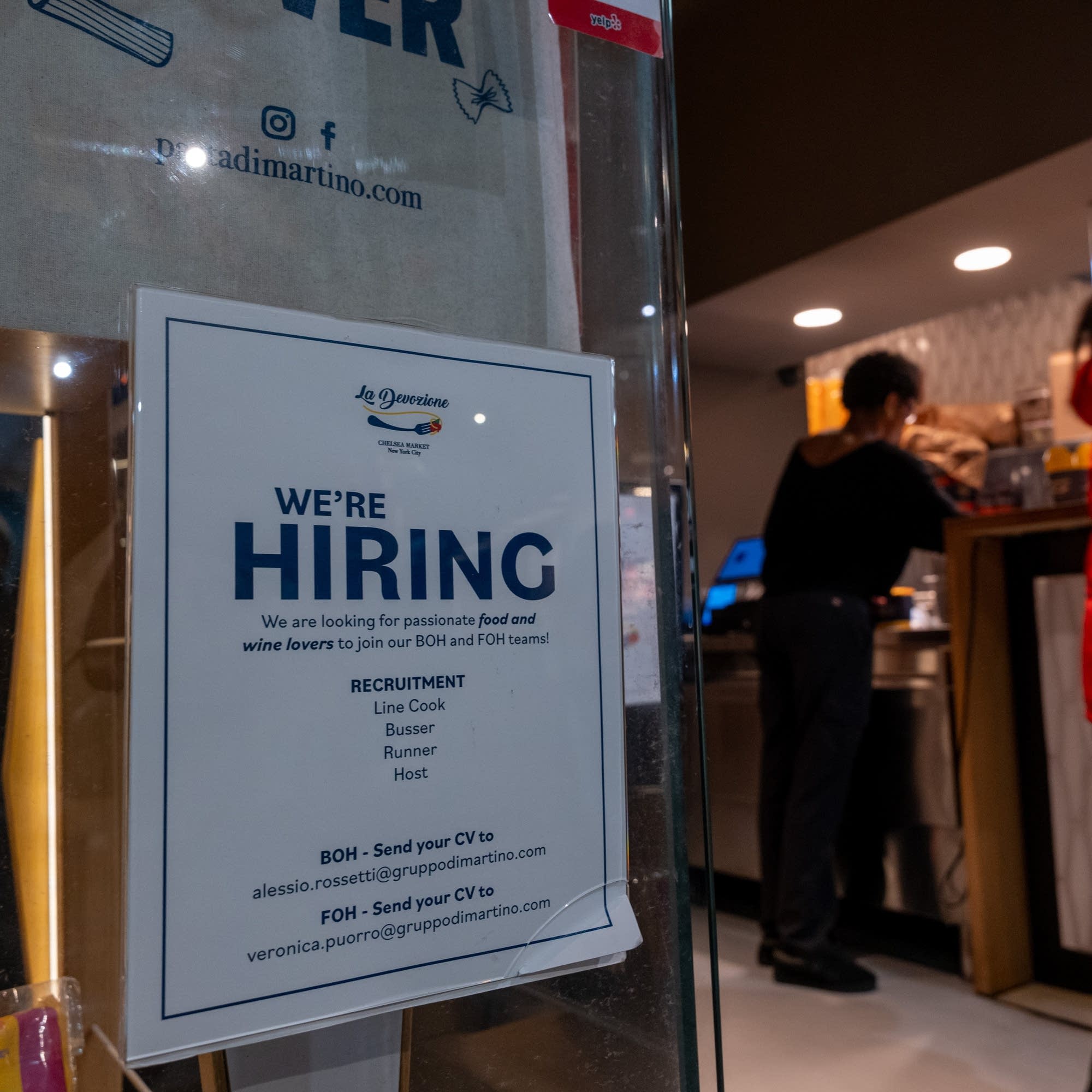
Speaker 6 He runs an accounting firm called Harmony Group, and many of his clients are restaurant owners who are especially vulnerable to tariffs on imported goods.
Speaker 6 Hetrick says many of them are trying to cut back on accounting services.
Speaker 10 There have been people who have reduced the scope of their work with us, looked to move to a lower package or something of that nature, a lower service level to help save some money to offset their input costs.
Speaker 6 Hedrick says other clients are scaling back expansion plans. Also not a great sign.
Speaker 10 We think there's going to be a slowdown in the speed at which there are new restaurants basically built.
Speaker 6 So Hedrick says if the restaurant industry contracts, his business could too. I'm Justin Howe for Marketplace.
Speaker 5 You know, sometimes in this job, you look at the headlines and then you look at the markets, and then you wonder aloud to nobody in particular, what are those people thinking?
Speaker 5 Because, yeah, stocks rallied today on that tariff walkback news, but 50 or 60 percent, that is still serious sand in the gears of this economy. We will have the details when we do the numbers.
Speaker 5 With the hopefully unnecessary caveat that pretty much any economic data collected before the April 2nd tariff Palooza should be taken with a grain of hopefully not imported salt.
Speaker 5
We got some numbers today on new home sales. The Census Bureau says sales were pretty strong last month, up almost 8% year-on-year.
And the median price to get that new home smell was about $404,000.
Speaker 5 Not cheap, but about $30,000 cheaper than it was a year ago. Marketplace at Matt Levin has more on the present and future of the new home market.
Speaker 11 If you're wondering who was buying newly built homes last month, especially with mortgage rates edging near 7% on a 30-year fix, picture Picture a couple of disheveled-looking parents touring a model home with a couple kids in tow.
Speaker 11 The ones with that desperate look on their faces that says, I will pay absolutely anything to live in a home with more than one bathroom.
Speaker 12 They've accepted that interest rates are going to be elevated. They've accepted the current environment that they're in.
Speaker 11 Kara Lavender is with John Burns Research and Consulting.
Speaker 12 They can't wait any longer. They're out of space.
Speaker 11 She says new construction has some advantages right now over older homes. Rising renovation costs make those affordable fixer-uppers not so affordable.
Speaker 11 But the biggest advantage, with a new home, you actually may not have to pay 7% on that 30-year fixed after all.
Speaker 12 So one of the main things that's pushing people to new homes over resale are the interest rate buy downs.
Speaker 12 And it's something that the large builders, the public builders really have the ability to buy down pretty significantly.
Speaker 11
Of course, those interest rate buy downs cost home builders money. Homebuilders that are seeing other costs start to rise.
Justin Wood builds mostly townhomes in Portland, Oregon.
Speaker 11 Here's an email he got earlier this month from one of his suppliers.
Speaker 13
This is from my heating guy. It says, attaches your quote.
We are expecting a 20 to 25% pricing increase on the Duckless product. That's after to after the end of April.
Speaker 13 I recommend that we order all this equipment for your project ASAP.
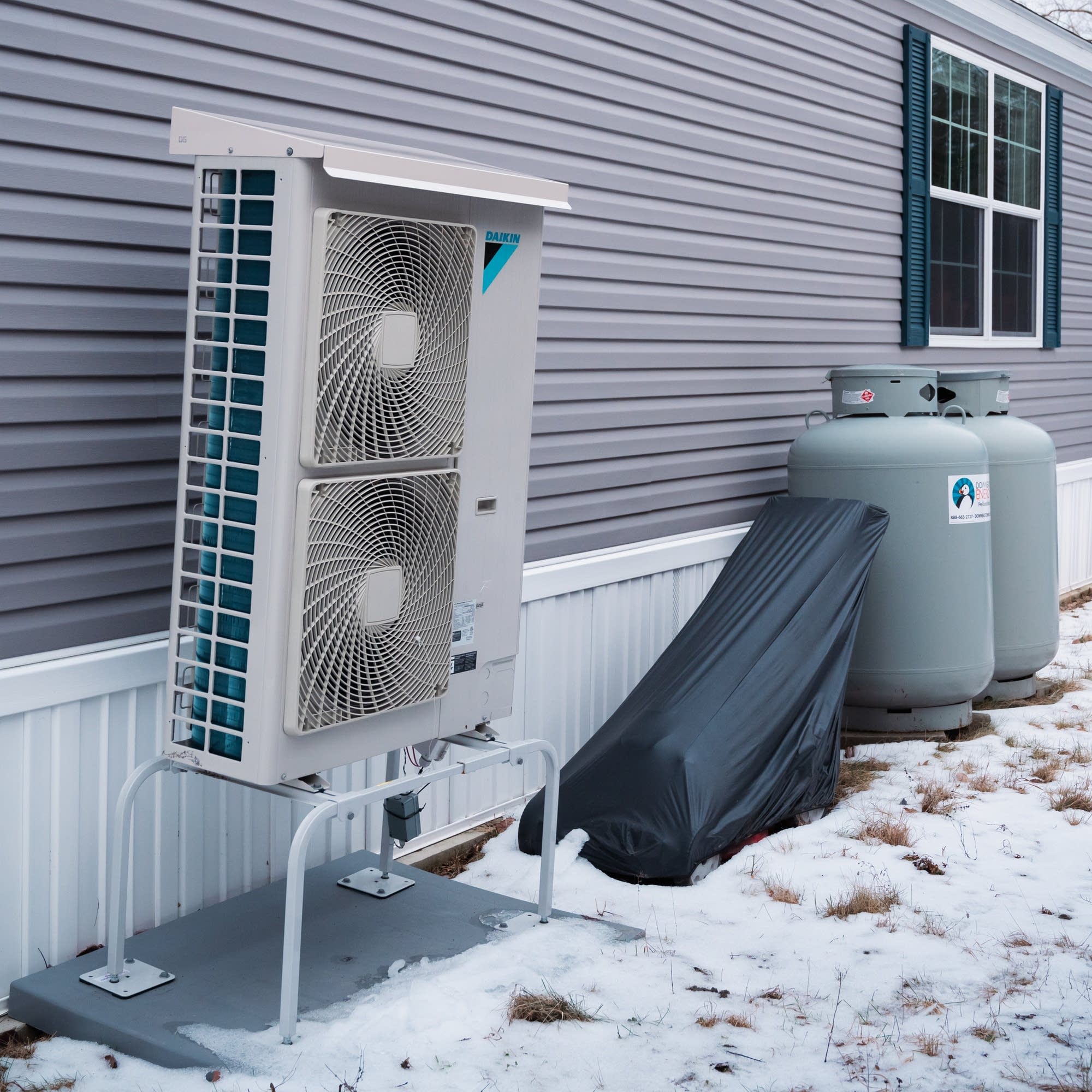
Speaker 11 A lot of HVAC components are made in China. But Wood says, even more than the tariffs themselves, it's not knowing what headlines he'll see tomorrow that's really weighing on his business.
Speaker 13 I'd really like Washington, D.C. to figure out how to get things in just our economy to calm down a bit, you know, and just kind of move past some of the uncertainty.
Speaker 11 Wood says that uncertainty really hurts the buyers, the ones willing to share that crowded bathroom a little while longer.
Speaker 14 I'm Matt Levin for Marketplace.
Speaker 5 Seems like a long time ago now, but it was April just two years ago that the banking sector was one of the big economic stories. Silicon Valley Bank ring a bell, small and regional bank bailouts.
Speaker 5 Here in the spring of 2025, banking is doing better. It's the whole economy that's the challenge, all the uncertainties specifically.
Speaker 5 So we've called our favorite community banker, Lori Stewart, of Sound Community Bank in Seattle to see how things are going. Lori, it's good to talk to you again.
Speaker 15 Great to talk to you again. I was thinking, Kai, we started these conversations more than five years ago before COVID.
Speaker 5 Oh, my goodness. Did we really?
Speaker 2 Yeah.
Speaker 15 We talked about things like PPP loans.
Speaker 5 Oh, man.
Speaker 5 The good old days, the bad old days, I don't even know. But,
Speaker 5 well, look, you have guided us in the banking world through thick and thin.
Speaker 15 And as we look at this economy right now and all that's going on how you feeling well you know uncertainty is is like a fog descending on us right our employees are uncertain worried about their 401ks our clients are uncertain they don't know whether to go vertical on construction projects the news cycle is 24 seconds instead of 24 hours so That uncertainty really impacts productivity and what gets going.
Speaker 15 The good news is banks are resilient and we're here and we want to be here for our clients as they get more comfortable.
Speaker 5 The catch, of course, is that your job, no small part of it anyway, is managing risk.
Speaker 5 And how does one running a community bank like yours manage that risk when the fog is so thick and honestly you don't know, you know, most times when there's fog, you kind of know when it's going to lift sort of.
Speaker 5 Now we just don't know.
Speaker 15 That's right. I feel like I'm that big ship out in Puget Sound.
Speaker 15 But, you know, what I know about those ships out in Puget Sound when the fog comes is they slow down, but they don't stop. They're cautious, but they're not frozen.
Speaker 15 So we continue to keep our ears to the market, to hear from our folks and try and address each risk as we can, remembering that we've built up capital for uncertain times.
Speaker 15 So we can take a little bit of risk when things are in the state they are like now.
Speaker 15 And you know, Kai, another risk we think about is fraud risk.
Speaker 15 And so there's lots of different things to think about. Interest rate risk, credit risk, and now fraud risk.
Speaker 5 How are your depositors acting? Are they saying, Lori, what's going on? Are they saying, should I leave my money in the bank?
Speaker 5 I mean, you know, we're not that far removed from Silicon Valley Bank and all that. And now, you know, there's all this.
Speaker 15 You know, my email and my voicemail box just has lit up this quarter with lots of clients at lots of different phases of their life being anxious and wanting to talk about, you know, what should I do?
Speaker 15 I talked to a very mature client that said his dad used to bury money in the backyard, and that's what he was going to do. He was going to take his money and bury it in the backyard.
Speaker 15 We talked about the fact that his wife was in a wheelchair and I said it's going to be really hard for her to dig up that money to go to the grocery store, right? But I mean, that kind of fear.
Speaker 15 But the good news is when we talk through most of these things, folks get comfort with the banking system. You know, there's never been a penny lost in an FDIC insured deposit account.
Speaker 15 And then we always say, it doesn't hurt to have a little cash around, but not a lot. You know, the safest place is in the bank.
Speaker 15 But again, I do talk to tons of clients about this guy.
Speaker 5 When you talk to your business clients, what's their worry about growth?
Speaker 5 I mean, look, the the way this economy grows is by businesses making investment and businesses don't do that when there's uncertainty. What's your vibe?
Speaker 15 Really depends on the business, right? Depends on whether I'm that
Speaker 15 small restaurant looking for serving Mexican food and looking for tequila and avocados, whether I'm a builder of homes, anxious about supply chain and costs.
Speaker 15 And in talking to our contractors, they think a huge huge number of their workers are undocumented. So they may have supply chain, cost, and immigration issues.
Speaker 15 A few of them have decided to pull back.
Speaker 15 Another thing I hear is, you know, we were excited about maybe there would be a spring home buying season this year.
Speaker 15 And that, I don't want to say it's dried up, but certainly less interest in the last couple of weeks and more concern about should I make that transaction?
Speaker 5 Should Should I move forward?
Speaker 5
Lori Stewart, she runs Sound Community Bank up Seattle. Lori, thanks a lot.
It's always good to talk to you. Sorry, it's been a while.
Speaker 15 It's great. Call me anytime, Kai.
Speaker 5 Should you be in need of banking news in the wee small hours, might I recommend a little thing that we do around here called the Marketplace Morning Report, David Broncaccio and the gang.
Speaker 5 All the news you need to start your business day.
Speaker 16 Coming up, I essentially just said if you boycott fossil fuels, you can't do business with the state of Texas.
Speaker 5 Sustainable investing. Or not.
Speaker 5 But first, let's do the numbers.
Speaker 5
Yeah, big rally evaporated into kind of a medium big rally by close today. Dow Jones Industrial Average, 419 points to the good 1%, 39,606.
The NASDAQ grew 407 points. That is 2.5%.
Speaker 5
Hence the really happy music. 16,708.
The S ⁇ P 500 added 88 points, 1.6%, 5,375.
Speaker 5
Matt Levin was telling us some things about the state of the home building industry. Toll Brothers, up 7 tenths percent.
Lennar grew about a 10th tenth percent.
Speaker 5
Pulte Group found about two-tenths of one percent. The couch cushions.
Elon Musk says he's going to spend less time with Doge and more time with Tesla. You make the value judgment there.
Speaker 5 That did seem to cheer investors even after the company announced disappointing earnings. Tesla charged up 5.3% today.
Speaker 5 Learning app company Duolingo ascended 10% after Morgan Stanley upgraded its stock. The Pittsburgh company also recently announced it's adding a new learning course for the game of chess.
Speaker 5 Also, how do you say tariffs in a foreign language? You're listening to Marketplace.
Speaker 7 You've finally broken loose from work. Three friends, one tea time,
Speaker 7 and then the text. Honey, there's water in the basement.
Speaker 7
Not exactly how you pictured your Saturday. That's when you call us, Cincinnati Insurance.
We always answer the call because real protection means showing up, even when things are in the rough.
Speaker 7 Cincinnati Insurance, let us make your bad day better.
Speaker 7 Find an agent at cinfin.com.
Speaker 17 Lowe's early Black Friday deals are going fast.
Speaker 18 Don't miss up to 50% off select major appliances. Plus, up to an extra 25% off when you bundle select major appliances.
Speaker 17 And with Christmas around the corner, you're going to need more string lights, right?
Speaker 18 Save $4 on GE LED 100 count string lights. Now just $5.98.
Speaker 2 Lowe's, we help.
Speaker 17 You save.
Speaker 18
Valentine 12.3. Selection varies by location.
Select locations only while supplies last. See See Lowe's.com for more details.
Speaker 19 AI agents are everywhere, automating tasks and making decisions at machine speed. But agents make mistakes.
Speaker 19 Just one rogue agent can do big damage before you even notice. Rubrik Agent Cloud is the only platform that helps you monitor agents, set guardrails, and rewind mistakes.
Speaker 19
So you can unleash agents, not risk. Accelerate your AI transformation at rubric.com.
That's R-U-B-R-I-K.com.
Speaker 17 It's never too early for Lowe's Black Friday deals.
Speaker 18 Snag some of our biggest savings of the season right now, like 25% off select pre-lit artificial Christmas trees.
Speaker 17 And get yourself free select DeWalt, Cobalt, or Craftsman tools when you buy a select battery or combo kit before the Black Friday rush. Because everyone loves free stuff, right?
Speaker 2 Lowe's, we help.
Speaker 17 You save. Dollar through 12.3 while supplies last.
Speaker 18 Selection varies by location.
Speaker 5
This is Marketplace. I'm Kai Rizdahl.
There might be a narrow slice of one particular industry or another that's not going to be touched by President Trump's tariffs.
Speaker 5
Honestly, trying to keep track is a lot. But the fact is, virtually every industry that sells goods in this economy is going to be hit.
And the tariffs are going to have an outsized impact on apparel.
Speaker 5
Something like 98% of all the clothing sold in the United States States is imported. That's from the United States Fashion Industry Association.
And the top supplier?
Speaker 5 Yeah, the country that President Trump's tariffing at 145%, or maybe 50% or 60%. We don't actually know right now.
Speaker 5 But even companies that can find workarounds to their Chinese supply chains, and even if they do actually make their clothes here, a lot of times fabric and buttons and whatnot are still coming from overseas.
Speaker 5 Marketplace's Kristen Schwab has more.
Speaker 20 Andrew Chen's signature product is jeans, specialty pairs for denim nerds. And one thing that makes them special is that they're put together in the U.S.
Speaker 21 Early on in the brand when we were still learning how to make jeans, there was a lot of value that came with being able to visit the factory to understand and really get acquainted with that process.
Speaker 20 Chen co-owns the menswear brand 316. His CS100X jeans retail for $250.
Speaker 20 And he says his company pays a premium to have the garment assembled in San Francisco. Note the word choice here, assemble, because the actual denim fabric is made in Japan.
Speaker 21 We specified everything about it, from the number of dips of indigo that the yarn gets to the hand feel that we want to the way that it's supposed to look two or three years down the line after you've been wearing it faithfully.
Speaker 20 Japan is known for salvage denim, made on old school looms that give the fabric a finished edge. The process is tedious and labor-intensive.
Speaker 21 There's a long and storied, over a century's worth of history of, you know, textile development, of denim development, of indigo dyeing. It's a part of their culture.
Speaker 20 It is not a part of ours in the U.S., at least not anymore. Most denim, whether it's specialty or mass-made, is produced abroad.
Speaker 20 In fact, most textiles are made overseas, mostly in Asia, which is a big reason why a lot of clothing is also manufactured there, says Phyllis Savachko at Apparel Consulting Agency Stateless.
Speaker 21 They're very good at what they do in apparel manufacturing.
Speaker 12 It's skilled labor.
Speaker 21 They have all of those process steps nailed down.
Speaker 20
Chinese manufacturers are especially skilled at something called vertical integration. Basically, factories that do it all.
Fabrics, buttons, trim in-house.
Speaker 20 There's no calling one supplier over here to check on a shipment or calling another over there to make sure the thread will match. Savachko says this saves companies a lot of time and money.
Speaker 20 But tariffs are changing the equation.
Speaker 22 I've been working on costing for clients and I've seen it double and triple.
Speaker 20
So some apparel makers are looking to leave China and move production to Vietnam or India or South Korea. They are unlikely to come to the U.S.
anytime soon.
Speaker 20 For one, that's going to cost companies and in turn consumers a lot more, mostly because of labor. Sonia Lipinski runs the fashion retail practice at Alex Partners.
Speaker 23 You know, we've been trained that we can get goods at such affordable prices, it's going to be really hard for consumers to kind of swallow what it would take to afford locally produced product.
Speaker 20 Even if consumers are willing to pay higher prices, it would take years to move production to the U.S.
Speaker 20 Brands have to buy equipment, train workers, and open up factories specializing in fabric, zippers, buttons, and sequins. That takes a lot of capital.
Speaker 20 And to get there, companies would need trade policy certainty.
Speaker 23 And when there's this much uncertainty, retailers are unlikely to make a significant capital investment until they are more sure about how things are going to sort out.
Speaker 20 For Chen at 316, there's no way his small menswear company could afford to run its own fabric factory. He has just 15 employees.
Speaker 20 He says they're expert designers, not experts at turning cotton into denim fabric.
Speaker 21 To open up our own manufacturing facility, that is its own skill set.
Speaker 21 We wouldn't know where to begin or how to do it.
Speaker 20 So he says he'll keep importing from Japan, and inevitably, the price of his jeans will have to go up.
Speaker 7 I'm Kristen Schwab for Marketplace.
Speaker 5 ESG investing, environmental, social, and governance issues and how they can affect portfolios has been a thing for a while now. Climate change, for instance, which poses both risks and opportunities.
Speaker 5 The past couple of years, though, ESG has been getting some grief.
Speaker 5 So, in the most recent season of our podcast, How We Survive, Marketplace's Amy Scott digs into the backstory of the backlash against ESG. Here you go.
Speaker 7 Okay, a little vertigo here.
Speaker 7 Oh my God.
Speaker 7 We are in the,
Speaker 7 I guess this is the Capitol Rotunda, right?
Speaker 7 There's a star at the top of the dome that says T-E-X-A-S, Texas.
Speaker 7 I'm at the state Capitol building in Austin to meet a man named Jason Isaac, who has a bit of a reputation.
Speaker 16 It was Congressman Raskin who called me the Carbon King when I was testifying in front of Congress.
Speaker 7 You've embraced it.
Speaker 2 I have. I love it.
Speaker 16 It's my license plate.
Speaker 5 I've got it on my business cards and my wallet, and I remind myself.
Speaker 16 And yes, absolutely. And I wish everybody else could be the Carbon King, too.
Speaker 7 Isaac is CEO of the American Energy Institute, which represents oil, natural gas, coal, and nuclear companies.
Speaker 7 And you should know, he does not accept the overwhelming scientific consensus that human activity is causing catastrophic climate change.
Speaker 16 I mean, if we're living in a catastrophic climate crisis, I want more of it because people are prospering like never before because of energy.
Speaker 7 Before he became known as the Carbon King, Isaac was working at a conservative think tank, the Texas Public Policy Foundation.
Speaker 7 He says around 2019, he started to hear complaints from oil and gas companies that banks were turning them down for loans and other financial services because fossil fuels had fallen out of favor.
Speaker 16 I didn't know what ESG was at first. I just said they're discriminating against politically unfavored industries like oil and gas and forestry and guns and ammunition manufacturers.
Speaker 7 And so what did you decide to do about it?
Speaker 16
Well, it was interesting because one of them kind of challenged me. It's like, Jason, you've got to fix this.
And so I thought, oh, gosh.
Speaker 7 Isaac, who had previously served in the Texas House of Representatives, decided to write a bill.
Speaker 16 I essentially just said if you boycott fossil fuels, you can't do business with the state of Texas.
Speaker 7 Texas Senate Bill 13 prohibits any government entity in Texas, including cities, school districts, and public pension funds, from doing business with financial firms that the state determines are working against oil and gas.
Speaker 7 After it became law in 2021, the state created a blacklist. It includes huge companies like BlackRock, HSBC, and UBS that can no longer bid for certain business in Texas.
Speaker 14 There are real victims here.
Speaker 7 Chris Hollins is the city controller of Houston. He oversees the city's $7 billion budget.
Speaker 7 One of the most important things that financial firms do is help towns and cities like Houston borrow money to fix roads or upgrade schools using the bond market.
Speaker 7 Holland says when fewer firms compete for that business, Texans end up paying more.
Speaker 14 That's money that we're not spending on hiring more police officers.
Speaker 14 It's money that we're not spending on fixing potholes or beautifying our parks to make this a better city to live in and enjoy with your family.
Speaker 7 A study from the Federal Reserve Bank of Chicago and the Wharton School estimates a pair of anti-ESG laws in Texas raised borrowing costs by $300 to $500 million in the first eight months they were in effect.
Speaker 7 Meanwhile, Hollins says climate disasters keep pummeling the state.
Speaker 14 We're the energy cap of the world, and just, you know, in recent past, we can't keep the lights on during certain natural disasters. And the recovery is getting more and more costly.
Speaker 7 To Hollins, who's a Democrat, the ESG backlash is another tactic to delay action to address the crisis and will cost Texas not just money, but lives in the future.
Speaker 7 But to conservative lawmakers, it's another front in the broader culture war. SB 13 in Texas helped set off a flurry of anti-ESG legislation across the country.
Speaker 7 According to climate research firm Pleiades Strategy, since 2021, legislators have passed nearly 50 laws in 21 states. I'm Amy Scott for Marketplace.
Speaker 5 There's a tangled web of dark money and interest groups behind the pushback against ESG. Amy and crew laid out on the new season of How We Survive.
Speaker 5 It is, of course, available wherever you get your podcasts. Just follow us there.
Speaker 5 This final note on the way out today, brought to you by the Federal Reserve's Beige book and the current state of this economy.
Speaker 5 The Beige book, this time around, it is, of course, the Fed's region-by-region anecdotal look at things. This time around, it runs 51 pages.
Speaker 5 You do a little Control-F, you see the word tariff is in there 107 times, uncertain or uncertainty
Speaker 5 89 times.
Speaker 5 That's a lot. Our media production team includes Brian Allison, Jake Cherry, Justin Dueller, Drew Jostan, Gary O'Keefe, Charlton Thorpe, Juan Carlos Torado, and Becca Wineman.
Speaker 5 Jeff Peters is the manager of media production, and I'm Kyle Risdahl. We will see you tomorrow, everybody.
Speaker 5 This is APM.
Speaker 7 You've finally broken loose from work. Three friends, one tea time,
Speaker 7 and then the text. Honey, there's water in the basement.
Speaker 7
Not exactly how you pictured your Saturday. That's when you call us, Cincinnati Insurance.
We always answer the call because real protection means showing up, even when things are in the rough.
Speaker 7 Cincinnati Insurance, let us make your bad day better.
Speaker 7 Find an agent at cinfin.com.