Holiday hiring doldrums
Retailers don’t seem to be looking for many temp workers this holiday season. But it’s not the only sector that hires winter workers — event venues, transportation and warehousing still have some demand. Also in this Thanksgiving episode: There’s a growing market to manage kids’ screen time, a musician combats AI scraping, and a family explores stock market investing.
Every story has an economic angle. Want some in your inbox? Subscribe to our daily or weekly newsletter.
Marketplace is more than a radio show. Check out our original reporting and financial literacy content at marketplace.org — and consider making an investment in our future.
Press play and read along
Transcript
This podcast is supported by Odoo. Some say Odoo business management software is like fertilizer for businesses because the simple, efficient software promotes growth.
Others say Odoo is like a magic beanstalk because it scales with you and is magically affordable.
And some describe Odoo's programs for manufacturing, accounting, and more as building blocks for creating a custom software suite. So Odo is fertilizer, magic beanstock building blocks for business.
Odoo, exactly what businesses need. Sign up at odoo.com.
That's odoo.com. This marketplace podcast is supported by Wealth Enhancement, who ask, do you have a blueprint for your money?
Wealth Enhancement can help you build the right blueprint for investing, retirement, tax, and more.
With offices nationwide, there's an advisor who's ready to listen and craft a blueprint for your future. Find out more at wealthenhancement.com/slash build.
We're a business show, so of course we're going to talk about retail on this Black Friday eve, but also the climate impact of what's on our plates.
We'll have a tale of two steaks from American Public Media. This is Marketplace.
In Denver, I'm Amy Scott in for Kai Rizdahl. It's Thursday, November 27th.
Good to have you with us on this Thanksgiving holiday.
And a special shout out to those who will be working these next few days in the retail frenzy known as Black Friday.
Though there may be fewer of you this year, we heard from Kristen Schwab yesterday about the overall low hire, low fire job market.
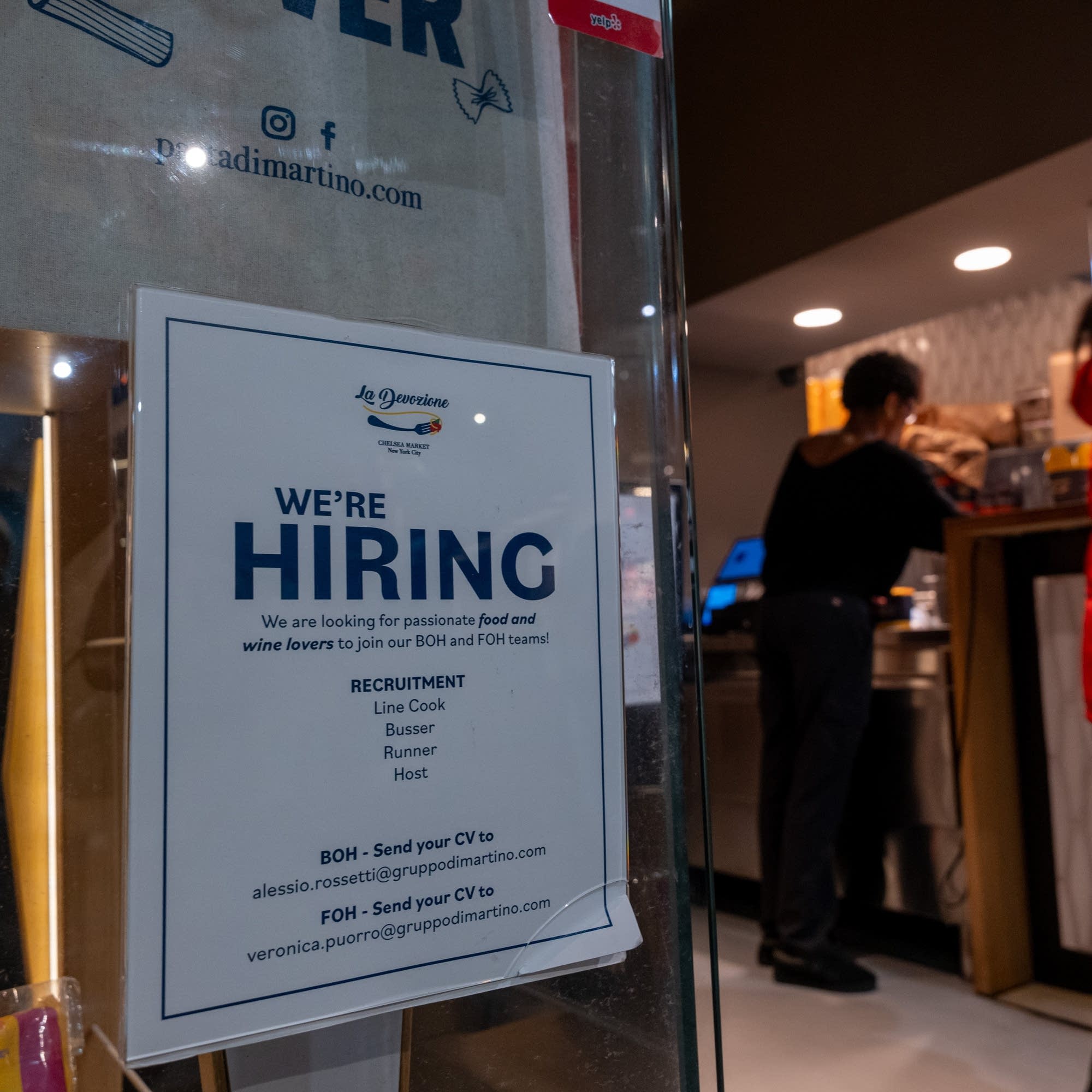
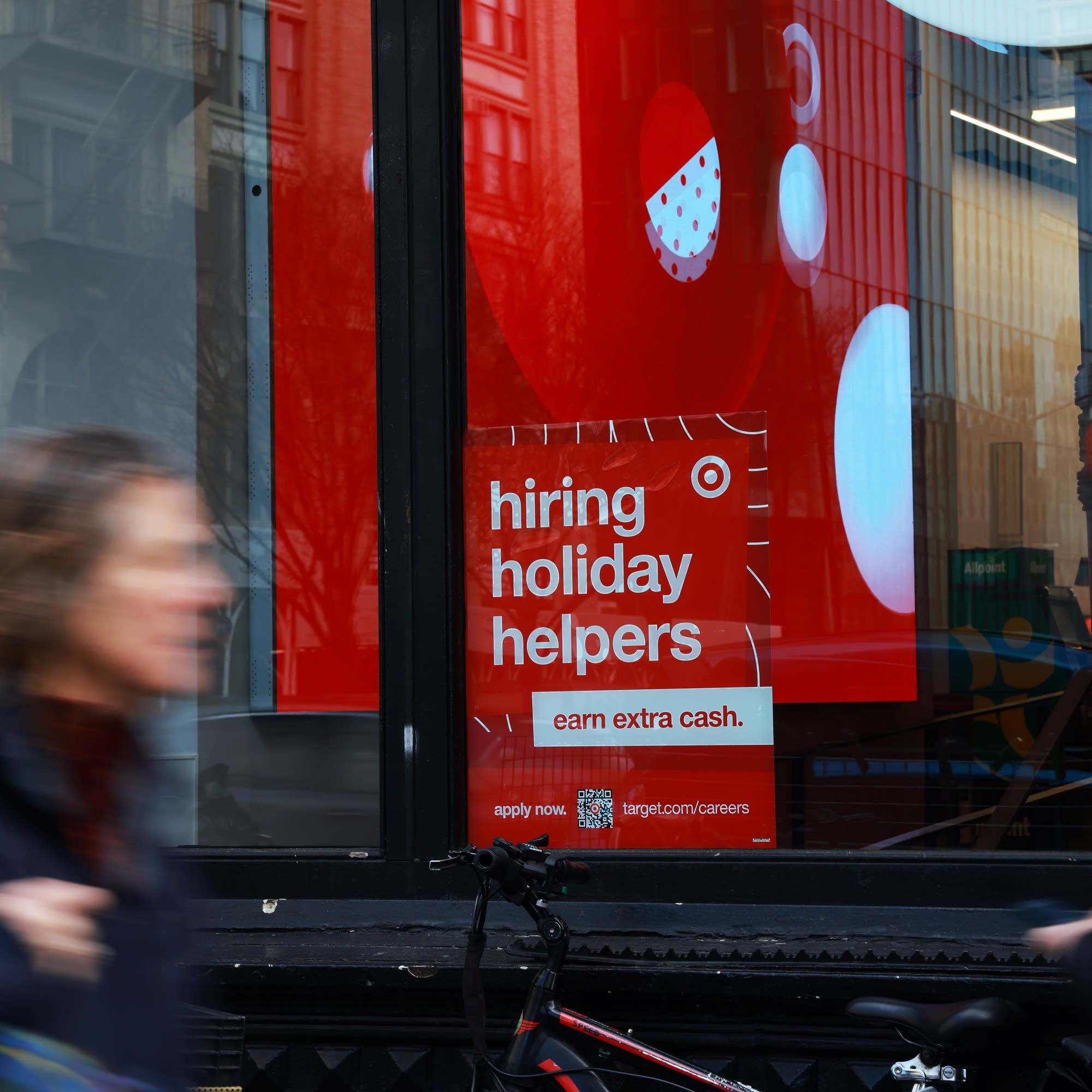
But in retail, layoffs have been piling up, and hiring for temporary positions this holiday season is expected to be the weakest in 15 years.
But retail, of course, isn't the only industry that staffs up this time of year. Marketplace's Carla Javier checked out the state of seasonal hiring elsewhere in the economy.
Alan Benson at the University of Minnesota applied for some seasonal retail jobs as part of his research a few years ago. He didn't get one then.
And now?
My luck would probably be worse. Yeah.
That's because the unemployment rate has ticked up. And more people are looking to earn a little extra money.
Rajnam Budari of Manpower says the staffing company has seen about a 10% increase in applications for temp jobs this season. But at the same time, he says,
just a high-level job postings did decline 2% month over month in October and is now about 5% lower year-to-date compared to 2024.
Some companies may be asking existing employees to take on more shifts rather than hiring more seasonal workers, says labor economist Alicia Sasser-Modestino at Northeastern.
Though, she says, places that hold holiday parties, restaurants, bars, and event venues still have demand for workers.
A lot of this labor supply that usually fills those kinds of jobs is typically immigrant labor.
And so we've seen a lot of chilling effect on that particular group in terms of engaging in the labor market. Another industry looking for temp workers, transportation and warehousing.
Samir Maghani of the staffing app InstaWork says its data shows those opportunities are up 20 to 25% year over year.
I think some of that is related to terrorist, the economy, global conflict, just a lot of uncertainty has led that sector to want to be very conscious about how much full-time labor they're investing.
Seasonal hiring trends give insight into how employers are feeling about the economy heading into the busiest time of the year, says Corey Staley at Indeed.
Overall, what we're seeing in seasonal hiring right now is really a reflection of what we're seeing in the broader labor market, which is a cooling market that's getting harder and harder to break into.
I'm Carla Javier for Marketplace. U.S.
markets were closed for the Thanksgiving holiday, so we'll take a spin around the globe when we do the numbers.
I kind of hate to bring this up on this day all about feasting, but about a third of the greenhouse gases heating up our planet comes from our food, growing it, processing it, and packaging it, transporting it.
And the biggest source of those emissions is meat. One solution you might have heard about is known as regenerative agriculture.
Think idyllic rolling hills, cattle roaming and grazing across acres of grass, crops grown without pesticides.
The thinking goes these practices help restore soil health, and healthy soil doesn't just produce a healthier ecosystem, it also stores more carbon in the ground.
But as a climate solution, the reality is more complicated. So for our podcast, How We Survive, I took a trip to Tamales, California, north of San Francisco, to visit Stemple Creek Ranch.
I have to say, I didn't expect a rancher to be wearing flip-flops. Yeah, I'm the hippie rancher.
That's Lauren Poncha, the owner and a fourth-generation rancher.
Stemple Creek is a regenerative ranch that sells grass-raised beef and lamb and pasture-raised pork and chicken. And I'm visiting today to see what those practices look like firsthand.
Poncha takes me to a special part of the ranch. Oh my god, that is like so bucolic.
It's one of my favorite places.
Trees and tall grass surround a big pond, which is completely still. But it wasn't always like this.
Part of adopting regenerative practices included revitalizing this area.
None of these trees were here. 10 years ago, I planted them all, so they're all sequestering this carbon.
Poncha says his ranch has always prioritized conservation and protecting wildlife.
Then about 15 years ago he teamed up with a local group trying to promote climate-smart agriculture. At first he says it was just a way to get free compost.
And then what it really did was open my mind about soil health and connectivity amongst living plants. Carbon is just another piece of that link.
And I'd be naive to say what we're doing is actually going to have a huge significant impact on just on my ranch, but if everybody around the world did this, it would have a huge significant impact.
As a climate solution, though, there's a debate brewing. Well, this is where I start getting in trouble.
That's journalist Michael Grenwald.
He wrote the book, We Are Eating the Earth, all about the ways our agriculture systems are hurting the planet.
The organic, grass-fed beef that people love so much because there's this sense that the cows are treated better and that maybe it's better for the planet. It's certainly worse for the climate.
Worse, he says, because it takes longer for the animals to get to slaughter weight, which means they have longer to emit methane into the atmosphere, while regenerative grazing requires more land that might otherwise be left alone as forest or wetlands storing carbon.
One study of a ranch in Georgia found its regenerative grazing system required two and a half times more land than conventional practices to produce the same amount of meat.
In his book, Grunwald turns to a surprising solution, factory farms.
And look, you know, they treat people badly, they treat animals badly, they use too many antibiotics, they're lobbying against environmental regulation and climate action.
But one thing about them is that they do make a lot of food, and we are going to need more food with less land.
To understand how a factory operation makes efficient use of land, I had to go see for myself.
Good morning. Good morning.
You must be Steve.
Steve Gable runs Magnum Feed Yard about an hour outside Denver. He's owned the place since 1993, and his priority here is efficiency, producing as much beef per input as possible.
There's 35,000 cattle cattle here today that have to eat two times every day.
So
you're basically fattening them up for a while. Exactly.
We challenge the livestock from a performance perspective.
If they're going to gain two pounds a day, when genetically they have the ability to gain four pounds a day, you can understand what that does to economics. So our goal is to maximize performance.
To see how how Gable's operation maximizes performance, I climb into his truck for a tour. Gable likes to describe the feed yard as a hotel.
He says the pens are the cattle's bedrooms and the mill facility where they produce the cattle's food.
This would be the kitchen area. So
extremely important to us. We're feeding about $90,000 worth of feed every day.
Today they're processing yellow corn to make corn flakes, and they'll mix that with alfalfa hay and a protein supplement, plus vitamins and probiotics that get added in micro-doses.
Gable drives us to the pens to see the cattle. I'm looking at hundreds, if not thousands, of black steers munching at the concrete feed bunk or standing out in the dirt.
Just listen.
Pretty quiet. There's 35,000 cattle
here.
You hear anybody that sounds like they're being abused? The cattle have about 250 square feet of pen space per animal compared to 1 to 10 acres at Stemple Creek.
Climate journalist Michael Grunwald says there are other downsides to factory farms, from animal welfare to air and water pollution.
But the fact is, if you care about the climate, you need to care about making beef more efficiently because that's where the emissions are.
Even better, he says, eating less beef, which he says, pound for pound generates 50 times more greenhouse gas emissions than coal.
You can hear more about some surprising solutions to reduce our foods' impact on the climate on our podcast, How We Survive. It's available wherever you listen to podcasts.
Over the summer, a little-known band took the music world by storm. They were called the Velvet Sundown.
The catch, they didn't actually exist.
The band and the music were fabricated using artificial intelligence. More recently, in the past couple of weeks, two different AI songs topped the country music charts.
The technology behind these artificial songs is trained on real music by real musicians, and mostly without permission. Some are choosing to fight back.
Here's today's installment of our newest series, My AI Economy. My name is Ben Jordan.
I am just east of Atlanta, Georgia, and I am a musician, content creator, and scientist.
About two years ago, I started looking for a way that AI music could be detected, just for my own amusement, more or less. And then there was another thing that I was kind of obsessed with
called adversarial noise, which, for example, if you have an Amazon Echo or Siri or something something like that, I can play a sound that might not even be a human voice and do something called a targeted adversarial noise attack on it to where I could tell it to open your garage door, but all it would hear is, you know, some instrumental classical music, but the AI hears something different that humans do.
I started thinking, what if you paired that sort of attack with music itself to obfuscate the data to AI that is trying to train on protected content.
Traditionally, there's Poisinify and Harmony Cloak, and Harmony Cloak actually obfuscates the harmony and song structure itself. Here's some of their own demos with some pretty simple, basic music.
Now, here's what they create from the files encoded with Harmony Cloak.
And Poisinify, on the other hand, actually exploits those instrument classifiers. So normally an AI would think that it hears guitars and drums.
You can actually do a targeted attack and say, no, you're hearing harps. And those two things together is a really complete package to obfuscate data from AI.
I think I just really dislike tech.
I think I just really dislike the entire ecosystem a lot.
But I actually don't see this as a huge threat. I don't feel like I have this, you know, gigantic sum of money that somehow I'm not getting because AI exists.
But what I do see is my YouTube channel.
For a very long time, I couldn't play my own music because
through publishers, I would constantly get copyright strikes or I would have to give my own royalties through myself to middlemen.
And I eventually got all of that sorted out, but it was a massive headache and nobody knew how to deal with it. Yet, somehow, with the AI industry, they've gotten away with it.
And I think that disparity is actually what probably drives me more than anything else.
When we look at the value of music, if you find a musician that you really want to listen to or it really resonates with you, you generally will Google information about the musician because you're looking for that human element.
You're, oh, are they married? Where do they live?
What are their inspirations? You have all these questions about their personal life. But I think that that's ultimately what has always given music the majority of its value.
And AI is the opposite of that.
Love that. That was Ben Jordan, a musician and scientist on the outskirts of Atlanta, Georgia.
Coming up. Well, you can either invest in a stock
or you could invest in a bank of dad. Decisions, decisions.
But first, let's do the numbers.
U.S. stock markets were closed for Thanksgiving and will close early tomorrow.
So let's see what the rest of the world did as we engage in the things we usually do on this holiday: drive, fly, cook, gather with friends and family, play some football, maybe watch some football, and sneak some peeks at the month that is now known as Black Friday shopping deals.
Oh, and if you are still on the road and need to make a gas stop, the national average is about $3.03, according to AAA. In Colorado, my home state, the average is $2.61.
So, overseas, in Japan, the Nikkei gained more than 1%. In China, the Shanghai Composite notched nearly 3 tenths percent.
Moving to Europe, Britain's FTSE was basically flat.
Germany's DAX rose two-tenths percent. You're listening to Marketplace.
Indulge in all your holiday faves this season, knowing you're getting the good stuff your body craves with cachaba's all-in-one nutrition shake.
It's your post-holiday recovery kit with 25 grams of protein, 6 grams of fiber, greens, adaptogens, and so much more. And it actually tastes delicious.
With six indulgent flavors to choose from, it's easy to make a superfood-packed shake. From chocolate, vanilla, and chai to matcha, coconut acai, and strawberry.
You can even savor the season and enjoy getting the nutrition you need.
There are endless ways to personalize your cachava, whether you prefer it straight up or enjoy adding fruit, peanut butter, nut milk, or even iced coffee.
With every two scoops of cachava, you're getting the highest quality ingredients. No fillers, no nonsense.
Holiday nutrition has never been this easy or delicious.
Go to cachava.com and use code news for 15% off. That's cachava, k-a-c-h-a-v-a.com and use code news.
Hear that?
Exactly.
That's quiet.
The kind you can breathe in.
The kind you find in Montana valleys or the wide spaces of the Rocky Mountain West. Out here, the days don't blur together.
They open wide.
When you're ready for this place, Clearwater will help you find it. Clearwater properties.
Claim your space. Licensed where required.
Equal housing opportunity.
The year-end clearance sale is going on now at your local Honda dealer. Honda cars, SUVs, and trucks are on clearance during Happy Honda Days.
Save thousands on the new Honda today with 0.99% financing. 2025 Accords, Pilots, and Ridgelines are on clearance.
Plus, see big savings on the full Honda line.
Like financing as low as 0.99% APR on the new 2025 Ridgeline. Don't miss Happy Honda Days.
Search a local Honda dealer today. See Dewit for Financing Details, Financial Credit, or Google Offer N1526.
This is Marketplace. I'm Amy Scott.
Parenting has been stressful in any era, but there's a factor that today's parents are dealing with that our ancestors really didn't have to worry about.
I'm talking about the tablet, the smartphone, the smart watch. Between navigating social media, screen time, parental control features, it can be overwhelming.
And according to a Pew study, a majority of kids 12 and under have access to a tablet or smartphone.
Heather Kelly is a tech reporter at the Washington Post, where she wrote about the emerging business of helping parents manage their kids' tech use. Heather, welcome to the program.
Thanks for having me. So this story hit home for me as a parent struggling with just how to manage my kids and my own screen time.
Give us the picture, though. How has parenting changed in this era and how big of a problem is this?
So I will reveal this also came from my own life a little bit.
What I found, I've been covering this for a long time, and I wanted to take a step back and look at the fact that all of these things parents have to do is basically another job.
Like you have all the stuff our parents used to do and this whole other full-time thing to worry about and manage.
And I noticed it was driving some caregivers and parents, I'm not saying us, maybe some other ones,
a little bit nutty. And so I wanted to sort of focus in on that and sort of how it's starting to rule our lives.
Well, and one of the things you found is that people are actually spending a lot of money dealing with this problem. Some parents have hired a professional screen time coach.
I mean, first of all, what does it say to you that that job title even exists? I think it says that man is a genius. I think there is
when parents are this overwhelmed, right?
They often turn to outside help, you know, tutors if they're having issues with math, you know, therapists if they're having, you know, issues communicating with a teenager so it almost seems logical that this is a new thing they're having a lot of problems trying to keep control over and they're turning to somebody who can help them especially with like the technical side i mean i don't know if you've tried to set up parental controls recently but it's absolute insanity.
It takes forever. So I definitely see people wanting help on that as well.
And one of the things you raised is that kids have a way of getting around all of our controls, which is kind of terrifying.
Yeah, they are finding ways around absolutely everything.
They are using shared Google Docs on their school Chromebooks to have inappropriate conversations, to bully each other, just to kill some time instead of doing math.
They're using Bible apps to reach, you know, unfiltered web browsers or forums where they're talking to strangers.
That does not seem like the intent of a Bible app.
It does not. And that's kind of the genius.
Almost every app has like a hidden little browser in it they're finding. They're even using Google Maps.
So the kids are busy.
One thing that I find myself managing is my kids' requests for additional screen time on many different apps throughout the day.
even when i'm like traveling and not even in the same state as them i'm answering these things um so i don't know uh you know obviously this coach you spoke to charges for his services but what did you learn that you might be able to share with other parents who are struggling with this well so all the experts i talked to um a lot of them are were like you know what we think it's going to be technical advice.
We think we're going to talk to parents about these simple things. And what it turns out to be is about the big talks that we need to have with them.
You know, our parents used to talk to us about drugs and sex, and now you need to talk to your kids about sextortion and their screen time and online bullying.
So there's also a lot of help with how do we keep these lines of communication open? How do we kind of keep tabs on our kids' emotional well-being, especially when it comes to their technology usage?
Trevor Burrus, Jr.: What about legislation? I was interested to see, and I think it was a Pew survey, that a majority of parents actually want legislation and policies that protect kids online.
Oh, absolutely. Yeah, it was Pew, and it was a very bipartisan issue they found.
And most parents want more action from the tech companies, and a little less so, they want more action from legislatures.
And I don't think that either is necessarily happening at a rate that they're satisfied with.
There's probably going to be more statewide laws than there will be national laws around it.
But there is, you know, there's some pressure on these companies from lawmakers to sort of get ahead of it and try and release their own safety features.
All right. Heather Kelly wrote about the challenges of managing kids' screen time at the Washington Post.
Thank you so much. Thank you.
From one parenting challenge to another, how to teach kids financial literacy. One father and son break down what they've picked up by investing together and the big lesson they learned along the way.
Before I started investing, my money wasn't really doing anything.
And if I invest,
I can
get
more interest
than if I put my money in a bank.
I made a deal with my parents, and then my dad said, Well, you can either invest in a stock
or you could invest in
like a bank of dad.
The bank of dad basically is saying however much money you put in the bank of dad and then at the end of the year he'll give you like a guaranteed amount of interest.
I was pretty excited when Joshua asked me if he could invest his money. I wanted to reward him for saving, and this seemed like a good learning opportunity.
Ultimately, I wanted to let Joshua make a choice about risk and reward, and encourage him to think of investing as a long-term activity.
So I offered a certified deposit with the Bank of Dad, which guaranteed a 6% rate of return.
I chose the stock market rather than Bank of Dad because I wanted to see if I could actually do well in buying and selling stocks.
I invested in an ETF for the SP 500. I picked this one because
dad said it would probably give more interest
than um
uh certified deposits. I would say I was checking the price maybe like once a week, two times a week.
If the stock went up or down, I would feel either good or like
bad, kind of.
It's really stressful when you invest. Overall, I think the project has been very successful.
Having real money involved makes the lesson very tangible.
Investing is a really complicated topic, but I think the best way to learn is to try it and see what happens.
You might lose some money, but I like to think of it not as losing money, but buying a lesson. Just try to make sure the lesson isn't too expensive.
I would like other kids to know that it's okay to invest. Just don't put all of your money in one stock, or don't put all of your money in a risky stock, or don't put any money like
in stocks if you can't afford to lose it.
That was Joshua and his dad, Michael, in California, speaking with Marketplace's podcast for kids and families. It's called Million Bazillion, and a new season is out now.
Find it wherever you get your podcasts. Oh, and as always, please consult your own financial advisor.
This final note on the way out with a hat tip to CNBC: a survey from ATT Business found that Black Friday is more popular with young shoppers.
40% of Gen Z respondents plan to do most of their holiday shopping on Black Friday, compared to 32% of millennials, while older shoppers, including presumably Gen X, plan to put it off until a week or two before Christmas.
I mean, we were called the slacker generation.
Seriously, though, it makes sense that young shoppers early in their careers would be sensitive to Black Friday deals.
A separate survey from PWC found that members of Gen Z plan to spend almost a quarter less this holiday season than a year ago. The biggest drop of any generation.
Our daily production team includes Livvy Burdette, Andy Corbin, Maria Hollenhorst, Sarah Leeson, Sean McHenry, and Sophia Terenzio. Will Story is the supervising senior producer, and I'm Amy Scott.
We'll be back tomorrow.
This is APM.
The year-end clearance sale is going on now at your local Honda dealer. Honda cars, SUVs, and trucks are on clearance during happy Honda Days.
Get 2025 accords, pilots, and ridge lines on clearance with big savings on the full Honda line. Gas, hybrids, and EVs.
All new Hondas are in stock. Honda, KBB.com's best value and performance brand.
This is the time to get a new Honda with clearance savings. Search your local Honda dealer today.
Base up 2025 Consumer Choice Awards from Kelly Blue Book. Visit kbb.com for more information.