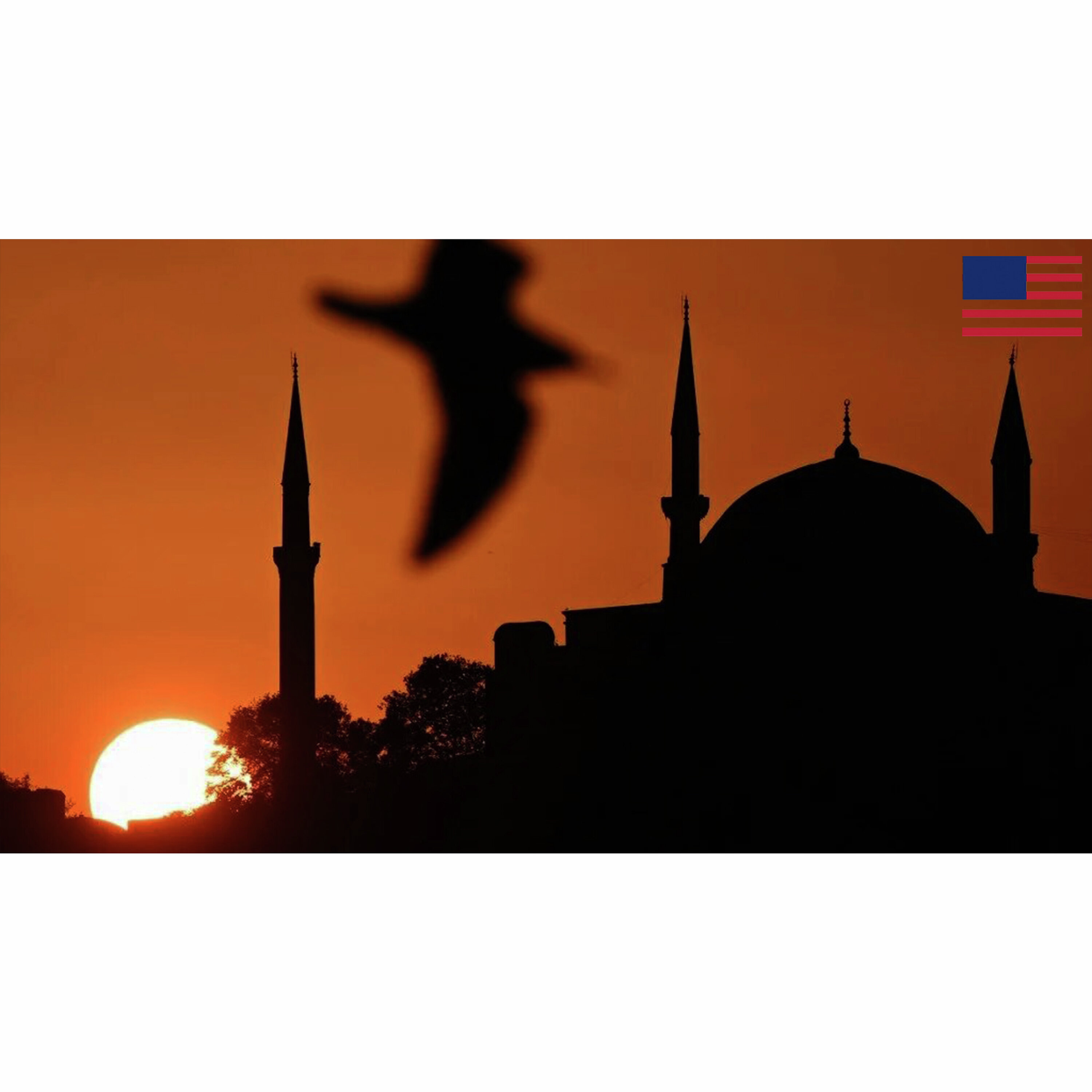
THOUGHTCRIME Ep. 77 — Can Islam and the West Co-Exist?
Charlie, Jack, Tyler, and Blake spend the whole episode centered on a single crucial topic: With the Islamic holy month of Ramadan upon us, is Islam compatible with conservatism and with Western civilization?
Watch ad-free on members.charliekirk.com!
Get new merch at charliekirkstore.com!
Support the show: http://www.charliekirk.com/support
See omnystudio.com/listener for privacy information.
Press play and read along
Transcript
Speaker 1 Hey, everybody, Thought Crime Thursday, all about
Speaker 1
one topic. One topic.
It's about Islam. It's all about whether or not Islam is compatible with Western civilization.
So I think you'll really enjoy this conversation.
Speaker 1
Email me as always, freedom at charliekirk.com and subscribe to our podcast. Open up your podcast application and type in Charlie Kirk's show.
It's a great episode. It's thoughtful.
Speaker 1
If you have questions about Islam, we answer a lot of it. We dive into it.
Text it to your friends. Enjoy it.
And email me as always, freedom at charliekirk.com. Buckle up, everybody, here.
We go.
Speaker 3 Charlie, what you've done is incredible here.
Speaker 4 Maybe Charlie Kirk is on the college campuses.
Speaker 5 I want you to know we are lucky to have Charlie Kirk.
Speaker 2 Charlie Kirk's running the White House, folks.
Speaker 6
I want to thank Charlie. He's an incredible guy.
His spirit, his love of this country, he's done an amazing job building one of the most powerful youth organizations ever created, Turning Point USA.
Speaker 3 We will not embrace the ideas that have destroyed countries, destroyed lives, and we are going to fight for freedom on campuses across the country. That's why we are here.
Speaker 1 Noble Gold Investments is the official gold sponsor of the Charlie Kirk Show, a company that specializes in gold IRAs and physical delivery of precious metals.
Speaker 1
Learn how you could protect your wealth with Noble Gold Investments at noblegoldinvestments.com. That is noblegoldinvestments.com.
It's where I buy all of my gold. Go to noblegoldinvestments.com.
Speaker 1
Okay, everybody, it is Thought Crime Thursday. Welcome in.
We have the gang, we have Blake, we have Tyler, we have Jack. And as I said, should say is Anshala, happy Ramadan.
Speaker 1
Happy Ramadan. Wait, we don't honor that around here.
And we never will.
Speaker 5 Blake.
Speaker 1 What is Ramadan?
Speaker 4 Ramadan is the holy month in the Islamic calendar.
Speaker 4 You can't say a specific time it is because they use a full full lunar calendar in Islam, which is a bit shorter than the Gregorian calendar.
Speaker 4
So Ramadan was in, I want to say, July or June, a decade ago. It's worked its way all the way back to March.
I think it moves by like a couple of weeks a year or so. And so it'll soon be in winter.
Speaker 4 Those will be very chill Ramadans because during Ramadan, if you're a devout Muslim, you cannot eat and you cannot drink anything, even water.
Speaker 1 While the sun is up.
Speaker 4 While the sun is up.
Speaker 1
And I think... But that, so it gets harder.
It's It's a harder Ramadan in March than it would be in November.
Speaker 4 Yeah, in the northern hemisphere, of course.
Speaker 1 Yes.
Speaker 1 But
Speaker 1 there's been cases, remember when Ennis Cantor,
Speaker 1 and some other Muslim basketball players, they literally didn't eat all day, and then they had to try to eat and drink stuff right before the basketball game.
Speaker 4
Yep, exactly. It can get really crazy.
Obviously, it can get really extreme.
Speaker 4 If you're one of the, as we'll be discussing soon, one of the many Muslims who've moved to like, for example, Sweden, high up there
Speaker 4 uh near the arctic circle you can get to where your day you know when it was in summer for example you'll be having a ramadan fast that's you know 18 19 20 hours long if it goes full 24 hours the islamic law is you follow mecca times so does that mean that as it keeps moving towards winter that we're going to see more muslims move northern yeah yeah now yeah now you'll have a ramadan fast that's like you know freaking so alaska is going to get like conquered by the muslims go drink and eat all day chill out and you know fairbanks be like yeah
Speaker 5 this is came up for me when when we were at guantanamo so the detainees you know we had to obviously observe ramadan when they were um you know when they were being held and so yeah that's closer to the equator rather than further away but it was also like yeah off of mecatime as you say blake and then also it was that you couldn't basically you couldn't you know you you had to sort of like leave them alone completely i can't get into it too much but you you had to sort of leave them alone until after night and so or after you know after sunset so basically my entire schedule flipped from you know diurnal to nocturnal so basically it meant i was working night shift all during ramadan because everything was completely off limits in the detainee camps during ramadan and so who was who was the prisoner at that and then jack and who was
Speaker 1 who was the prisoner during that month right and you have to wonder like who's actually interesting
Speaker 4 that the question is who actually ends up being the prisoner and who ends up being the warden yeah Yeah, and you know, a funny thing about Ramadan is so it's fasting during the day, but if you've been around some of the restaurants, you may know they tend to feast at night.
Speaker 4 And so there have been studies indicating that even though it's a month of fasting, the average Muslim gains weight during Ramadan. I believe it.
Speaker 4 Because they're pigging out every single night and they put on some pounds.
Speaker 1
I'm no fan of Islam, which is what we're going to talk about. But I do kind of admire religious structures that forgo the flesh.
Fasting practices, I do actually have a soft spot for.
Speaker 1 I'm not saying I have a soft spot for Islam. I just say I just do think that more people involving in the limitations of indulgences
Speaker 4 are generally good. It's respected, Charlie.
Speaker 5 There's actually a Christian tradition that is very remarkably similar to what you're describing.
Speaker 1 What you mean Lent? Well, Lent is very important and should be embraced, but it's not as extreme as not drinking water.
Speaker 2 You know, the Orthobros, though,
Speaker 5 the Orthobros in Great Lent, it's pretty extreme. They go like full vegan in Orthodox.
Speaker 5 And they do 47 47 days.
Speaker 5 So they don't take Sundays off. And it's basically, I believe, and correct me if I'm wrong, but I believe it's all animal products completely.
Speaker 1 Wow. And Blake, what were you going to say?
Speaker 4 Similar thing. Like, yeah, Orthodox Great Lent is
Speaker 4
no oils, no meat, no dairy. So you're basically down.
It's almost like a diet of like bread and vegetables is kind of what you're encouraged to.
Speaker 4
And I think you're sufficiently, you know, if you're going hard at it, I think you're supposed to abstain from sex as well, even if you're like married. Interesting.
So there's a lot of
Speaker 4 stuff that possibly
Speaker 5 you're doing great Lent then.
Speaker 4
Yeah. And then similarly, like Catholic Lent was more intense.
Like the traditional Catholic Lent was no meat all of Lent.
Speaker 4
And they totally have like gone softball on that, where it's only on Fridays. And that used to just be the norm.
any Friday all year long.
Speaker 8 And
Speaker 4 in theory, it was like, well, you're supposed to, that's where you kind of got people saying they give up stuff for Lent.
Speaker 4 It was sort of, you can replace the no meat thing that's universal with a choose your own adventure approach to Lent.
Speaker 4
But I feel like that's a cop-out. You actually want things that are expected of everyone because that's what encourages people to actually do them.
And it used to be
Speaker 4 significant enough. That's where the filet of fish came from at McDonald's.
Speaker 1 I don't know if I ever told this on air. I can't remember, but my grandma was super Catholic.
Speaker 1 Every Friday, no matter what it was, even beyond Lent, was at no meat on Fridays.
Speaker 2 And that was,
Speaker 1 I was raised in that kind of a culture. I was.
Speaker 1 No meat on Fridays. Yeah.
Speaker 4 And there's a very rich Christian fasting tradition
Speaker 4 that, like, Wednesdays were, I think, again, some Orthodox still do this, but I think historically, Wednesdays were sort of a semi-fast day.
Speaker 4 You would have so many more fasts. Lent, or not Lent,
Speaker 4 Advent is also like a fasting period, is intended to be. There's a very rich Christian tradition of fasts and abstentions throughout the year that were very special.
Speaker 2 Yes, you guys do fasting once a month.
Speaker 7 Mormons are weak. We only do once a month.
Speaker 2 But it's a 24-hour fast? 24-hour. No, it's basically.
Speaker 7 It's supposed to be 24-hour.
Speaker 1 So it's 12 fasts a year. Right.
Speaker 4 Is it just food or is it water, too?
Speaker 7 It's supposed to be everything.
Speaker 7 No drinking, no water.
Speaker 1 See, the no water is tough for me.
Speaker 7 That's the toughest. For 24 hours that you can make it.
Speaker 4 No jello.
Speaker 7 But they would always, like, people would always like hawk the, like, the water fountain at church because it's always on Sunday and like like oh bad morvin drinking of the water fountain.
Speaker 4 I feel like they could just turn it off or something
Speaker 4 like deactivate the water.
Speaker 1 No, the no water thing is that's tough.
Speaker 1 I drink an extraordinary amount of liquid as you could tell like I mean I I have like three gallons of fluid a day and no water.
Speaker 7 I've been drinking a lot lately. It's good for you.
Speaker 1 It gets all the toxins out. It's great.
Speaker 7 It's so much happier.
Speaker 1 Blake is some sort of
Speaker 2 Charlie. Are you still doing less than like row caffeine?
Speaker 1 Yeah, it's amazing.
Speaker 2 Row caffeine.
Speaker 7 Since I started drinking more water, and obviously with this, but since the election, I lost a lot of weight.
Speaker 1 It's incredible.
Speaker 1
History, economics, the great works of literature. Did you study these things in school? Probably not.
Or even if you did, maybe it's time for an enjoyable refresher.
Speaker 1 Hillsdale College is offering more than 40 free online courses, including their newest course on totalitarian novels.
Speaker 1 In this free eight-lecture course, you'll learn from Hillsdale College president Larry Arne as he goes in depth on four novels, 1984, Brave New World, Darkness at Noon, and That Hideous Strength.
Speaker 1 I love all four. Even though these novels were written in the 1930s and 40s, they're highly relevant today as they show what a tyrannical government does to human nature.
Speaker 1 More importantly, they can show us that faith, family, and friends are worth fighting for. Maybe you read these books a long time ago in school.
Speaker 1 Maybe you've heard others talk about them, and they seem a little intimidating. Let Hillsdale College, America's greatest college, help you make the most of them.
Speaker 1
Go right now to charlieforhillsdale.com to enroll. There's no cost, and it's easy to get started.
That is charlieforhillsdale.com.
Speaker 4 C-H-A-R-L-I-E for Hillsdale.com.
Speaker 4 All respect aside, though, we've been having this discussion offline a lot lately because we've been seeing, you know, obviously there's more Muslims in the West than there ever were when we were growing up, certainly more than a century ago, and the trends indicate that will continue.
Speaker 4 And we now kind of, so we have the open debate is: is
Speaker 4 Islam compatible with conservatism and is Islam compatible with Western civilization as we understand it and we especially are talking about this because a politician in Australia recently described Australia's approach to freedom this way let's play clip 296.
Speaker 9 There's been some that have been agitating in the parliament to nullify the laws, to remove them off the statute books.
Speaker 9 Think about what kind of toxic message that would send to the New South Wales community. And I think the advocates for those changes need to explain what do they want people to have the right to say?
Speaker 9 What kind of racist abuse do they want to see or be able to lawfully see on the streets of Sydney?
Speaker 9 I recognise, and I've fully said from the beginning, that we don't have the same freedom of speech laws that they have in the United States.
Speaker 9 And the reason for that is that we want to hold together our multicultural community and have people live in peace free from the kind of vilification and hatred that we do see around the world.
Speaker 4 So, multicultural, but that's who's they've been having those arrive in Australia far more than they were in the past.
Speaker 4 Yeah, much larger numbers because they have immigration from India, immigration from Africa.
Speaker 4 Um, and it's very funny how he's like, we do this because we're multicultural, unlike the the United States of America.
Speaker 1 I know, as if we're not multicultural.
Speaker 7 They also have the huge Indonesian influence.
Speaker 1 Yeah, which are all Muslims.
Speaker 2 Yes,
Speaker 4 overwhelmingly so. And so
Speaker 4
we have that. We, of course, have that in Britain.
We have European countries considering blasphemy laws.
Speaker 4 And part of this is Islam, they do have a tradition of taking their blasphemy more seriously, which you could say is admirable, but it's also okay, guys. Like, we have a history of freedom of speech.
Speaker 4 We have a history of freedom of religion. And unfortunately for all of you, freedom of religion includes the right to say that the Prophet Muhammad was not an Abro guy.
Speaker 4
It's the freedom to say Islam is bad. And we have societies that are passing laws against this.
And I think we're going to be having more discussion of this because what you especially see now is
Speaker 4 there's almost a there's a take in certain factions of conservatism in the US that like
Speaker 4 I'm sure you know Jack could describe this too, that Islam is based, basically.
Speaker 4 I remember a few years ago, there was that meme, Islam is right about women, which was done to short-circuit liberal brains because they can't criticize Islam.
Speaker 4 But you're also basically saying that Islam being anti-women is a good thing.
Speaker 4 So it was trolling the left, but you'll just also hear people on the right say, you know, unironically, oh, you know, Islam is more socially conservative. They have more marriages.
Speaker 4
They're better in these ways. And I think we're going to see people say we should align with them more overtly.
Or you might even see some people are just going to join Islam.
Speaker 4 They'll say, I want to join a religion that's not
Speaker 4 that. I want a religion that's not cucked.
Speaker 4 I don't see it.
Speaker 1 I'm not going to see it. I don't think a lot of white people are going to join Islam.
Speaker 2 I don't know.
Speaker 1 Is that a lot, not some?
Speaker 7 That ad that Charlie tweeted out was pretty gay. It was a pretty gay ad.
Speaker 11 Okay, okay.
Speaker 4 So let's play that out. All right, let's play 293.
Speaker 2
Hey, hello, boy. Asalaamu Alaikum, sister.
What are you doing here? What does it look like I'm doing?
Speaker 7 I'm studying the art of patience.
Speaker 2 You can't eat for another four hours.
Speaker 2 The month of patience.
Speaker 1 Okay, well, first of all, there's bacon on that burger.
Speaker 4 Yeah, it looks like a bacon burger.
Speaker 7 No, first of all, I'm concerned about.
Speaker 5 It definitely looks like bacon.
Speaker 11 This tastes like beef bacon.
Speaker 4 I don't know.
Speaker 11 No, this just came up and wasn't.
Speaker 5 This is obviously an actor, by the way.
Speaker 7 No, no, I'm upset because for some reason, I'm getting served these ads on Instagram.
Speaker 4 What's in your algorithm?
Speaker 2 I don't know. My algorithm on my you page on Instagram.
Speaker 1 Think about it. It's like probably like hyper masculine.
Speaker 2 What have you been looking up?
Speaker 1 Hyper masculine content with fast food.
Speaker 2 And women.
Speaker 10 I don't look at fast food with Ramadan.
Speaker 2 Tyler Ramadan. Tyler's Abu Bakr.
Speaker 5 Tyler, you have to go into Mormon Lent for this.
Speaker 2 Mormon Lent for Tyler.
Speaker 2 I want to let
Speaker 2 you know Instagram.
Speaker 1 I want to know the algo recipe that got Tyler caught in a Canadian Ramadan.
Speaker 6 I don't.
Speaker 6 It starts in a moment.
Speaker 5 Canadian Ramadan. Wait, so we've got Canadian Ramadan versus Mormon Lent here no
Speaker 7 I was so offended because it was just Canadian I didn't care about the rest of it I'm like I don't want any surf Canadian ads like this is no it's much deeper than that it's much deeper was it like a Tim Hortons ad or something gosh so but but too many Canadian
Speaker 11 says you didn't bring up
Speaker 4 since you did bring up you don't think we'll see people in the west
Speaker 4 a lot of whites for sure but let's play this is out of the uk
Speaker 2 did you say a lot
Speaker 4 let's play clip 291.
Speaker 12 pc Paul. I've been a police officer here for 16 years
Speaker 12 and in January I reverted to Islam.
Speaker 10 I started studying the Quran and I started to
Speaker 10 look into Islam and it's just such a wonderful, wonderful, peaceful religion.
Speaker 10 In a period of five months, I've read the Quran twice and I've not
Speaker 10 missed the prayer. Young people, they're coming to me and they say, Paul, because I can say to them, are you praying?
Speaker 10 Because I know I'm praying all the prayers and it's nice because they'll come and say actually now we're praying so
Speaker 10 it will work it works together like I can rub off on them and then they will inspire me and they'll rub off on me
Speaker 10 people have asked me why did you choose Islam and my answer is I didn't I didn't choose Islam. Allah chose me.
Speaker 4 Allah chose me.
Speaker 1 Okay, so is that like a BBC propaganda film?
Speaker 4
I think it was an Islamic Community Center. It's a few years old.
I just remembered it when we were going to do this topic.
Speaker 7 But this is propaganda. I've actually seen something really frightening recently.
Speaker 7 There are a bunch of influences, again, Instagram.
Speaker 11 It's on your algo.
Speaker 7 I'll go through this. There's influencers
Speaker 7 who are saying positive things about the Quran.
Speaker 1 Oh, no, that's been happening.
Speaker 7 Oh, boy. I know, but I've seen the
Speaker 7 uptick recently.
Speaker 2 So let's say white influencers.
Speaker 1 So the bigger,
Speaker 1
they can, Islam can spread through importation or conversion. Those are the two big ways.
And the West has primarily been taken over by importation. Agree, right, Blake?
Speaker 4 Yeah, it's almost very heavily driven by immigration.
Speaker 1 Whites are far more likely to fall victim to secularism than Islam.
Speaker 4 On balance, yes.
Speaker 1
Yeah, for sure. Vast majority balance.
I don't care about this weird lunatic I can't understand. But if that starts to change, I will happily adjust that statement.
Speaker 1 What Blake said, though, is very important. And Jack, I want you to respond to this.
Speaker 1 For young Islam speaks to young men that are very displeased with a hyper-feminized culture and they're very upset with how feminine the American church has become and how
Speaker 1 female-centric it has become, which is so emotion and compassion and know more about reason and people's sensitivities.
Speaker 1 How, Jack, do you respond to somebody in good faith that says, Jack, why shouldn't we either convert or be open to Islam or be friendly with Islam? There's no abortions in Islamic countries.
Speaker 1
There's no transgenderism in Islamic countries. There would be no drag queen story hour in Islamic countries.
How would you respond to that, Jack?
Speaker 5 Well, I mean, there's a few examples that I can point to, but you know, obviously
Speaker 5 it's just this, is that Christianity has been central to the history and to the story and the development of Western civilization, really, since the days of the Roman Empire, since when Jesus literally came almost immediately, he began having an impact in his area.
Speaker 5
Then, of course, course it spread throughout. Blake and I did a whole series on this around Christmastime.
So the idea that we can just take a foreign,
Speaker 5 you know, a foreign religion and import it into the West, it would completely change who we are, completely change our system of law, completely change our institutions, it would completely change everything that makes us us.
Speaker 5 And it would do so in the name of, oh, well, they're a little bit more masculine than us. And I would actually put that at the fault of the current heads of the church
Speaker 5 in the United States, certainly the church in the West. Charlie, you and I have talked about this for years at this point.
Speaker 5 But, you know, when you look at it, there's a reason that actually my friend Joshua Lysak, we did the books together, my co-author, he has a phrase for it. He says,
Speaker 5
there's this brand of Christianity out there that's like, Jesus is my boyfriend. And it's kind of, it's very feminine coded, like, oh, I'm in love with Jesus.
He's my boyfriend.
Speaker 5 And you hear this in like a lot of music you hear it in a lot of uh sermons and homilies as well where it's it's just very female coded very emotional it's all touchy feely and you never hear anything about condemnation of sin you never hear anything about say about the word hell
Speaker 1 Hey, Charlie Kirk here. Ever see your dog slowing down or having health issues and wonder what can I do to make them better?
Speaker 1 Well, my friend, add rough greens to your dog's food for 90 days and you'll see changes that will amaze you, guaranteed. Invented by naturopathic Dr.
Speaker 1 Dennis Black, Rough Greens wants to invite you and give your pup the Rough Greens 90 Day Challenge. In the first 30 days, you'll see shinier coats and increased energy.
Speaker 1 By day 60, your dog will have a stronger immune system, less shedding, and improved joint function, all due to live nutrients you've added to their diet.
Speaker 1 And at 90 days, better digestion, reduced inflammation, improved heart health, and you might even have reduced their cancer risk. Fetch a free jumpstart trial bag for your dog today.
Speaker 1
Go to ruffgreens.com. Just use promo code Charlie.
That is roughgreens.com, promo code Charlie, and just cover shipping. You don't have to change your dog's food.
Speaker 1 To improve your dog's health, just add a scoop of rough greens. That is ruffgreens.com.
Speaker 1 So here's my theory.
Speaker 1 My theory is because the father of the Godhead is the least emphasized part of the Godhead of modern Christianity.
Speaker 1 we have we have churches that focus on the holy spirit all the time we have churches that focus on jesus all the time you rarely hear about god the father and that's because a lot of people have father wounds and it's looked as being too patriarchal and i think the way that we combat islam in the west is we speak about god the father who is rules and order and discipline and regimen All three obviously are God.
Speaker 1 The Godhead is the Trinity is an incredibly complex topic that we don't have to get into today, which we all agree in the Trinitarian God.
Speaker 1 But God, think about how rarely you hear about God the Father. If you were to talk, you open a random,
Speaker 1 even in Catholicism, which I have great respect for, I would say that Jesus is definitely talked about even more than God the Father. But the liturgy, fair enough, you know, talks about all three.
Speaker 1 But let's just say you open up a random Christian sermon, and it's even a good Bible-based church. Chances are they're not going to be talking about God the Father.
Speaker 1 And when you have a generation and a country that is is seeking order, that is seeking rules, then talking about that portion of the Godhead, I think, is incredibly important.
Speaker 2 Blake?
Speaker 4 Yeah, I was thinking, as you said, about, you know, yeah, God the Father, the God of rules, also like the God of judgment, a thing you're not going to see, that you'd see in medieval Christianity all the time is, you know, images of the last judgment or images of just judgment in general.
Speaker 4 Even that, that can even come, I think, through Christ.
Speaker 4 So have you ever seen,
Speaker 4 been at the Basilica of the Immaculate Conception in DC?
Speaker 2 Incredible. And it's got that right behind the altar.
Speaker 1 I now try to go every time I go into the chat.
Speaker 4 Yeah, and see if you guys can bring up the interior of that.
Speaker 1 The closest thing, I think, to a European-style.
Speaker 5 My brother just got in a little bit of trouble there because he was leading a protest against the newly installed archbishop
Speaker 5 on Bennon.
Speaker 4 I haven't followed that story, but I'm thinking of when you look behind the altar, if you guys can even zoom into that a little bit,
Speaker 4 I think that's Jesus, even though it kind of looks God the father-y, uh, but he kind of looks very stern and menacing.
Speaker 4 Yeah, this is, and that's an element of God that there is that God is merciful and God is forgiving, but God is also the ultimate judge.
Speaker 4 I once had a friend of mine in college who said, like, when I see that, like, I want to like fall on my face and confess my sins because I face judgment.
Speaker 8 And
Speaker 4
that's definitely an aspect. We have a very touchy, feely, like emotionally resonant Christianity, you know, like Jesus as your life coach.
Correct.
Speaker 4 And that appeals to a lot of people, but I don't know that it gives the level of strict hope.
Speaker 2 I completely agree.
Speaker 1
And it's, by the way, it's feminine is what it is. It's because it's a young woman that doesn't want to be offended.
She's like, oh, you can't tell me anything wrong, you know, so Jesus is my buddy.
Speaker 1
Like, actually, God is there to judge you. And God is there to tell you that you did wrong.
And they're like, oh, that drives people away from the church. Well, actually, it didn't for 2,000 years.
Speaker 1 What you're doing is driving people people away from the church. This whole modern, sloppy, watered-down, it's driving people to Islam is what it is.
Speaker 4
The truth is, I think the great hack of Christianity is it is able to have all of those elements. So it does have the forgiveness loving element of the church.
And we must moderate it.
Speaker 4 As we sometimes say, it's not that things that are effeminate or feminine are bad
Speaker 4
or that things that are masculine are always good. It is that you need things in the balance.
And Christianity has historically had that balance, and it's like out of alignment now.
Speaker 4 And I think we'll see, like, if, yeah, if as long as that void is there, like, if the perception is that Islam is the, is the macho religion that is demanding of you, you know, who's to say we couldn't see all those guys who are in trende Aragua or whatever, who currently they join weird, bastardized versions.
Speaker 1 They are primed for Islam.
Speaker 4 Yeah, they're like the cult of, you know, the saint death and all of that.
Speaker 1 My prediction is that Islam will find its way through Latino and black men in our hemisphere. It will not,
Speaker 1 young white Christian men,
Speaker 1
I don't think are prime for it, but young Latino men that go into gangs, they are prime for Islam. The whole everyone's against you.
You just want to be strong. Join Islam.
Speaker 1 Talk, Blake, about how Islam has found itself in this very patriarchal way in the past.
Speaker 4 Yeah, so obviously a lot of guys end up joining in prison, for example. And you could even say, like, and there, it might be an improvement.
Speaker 4 Like, it's better to follow, like, the rules of praying five times. Like, yeah, pray five times a day, fasting, that over, you know, like total moral anarchy.
Speaker 4 But obviously, we prefer Christianity overall. And there's a lot about Islam that, you know, well, as we saw in that clip, you know, it's like a very peaceful religion.
Speaker 4 Well, well, no, because in Islam, in contrast to Christianity, Islam rigidly defines a lot more of what you're supposed to do and how you're supposed to live your life.
Speaker 4 However, there's a lot more explicit rules. Christianity, it's almost like both a strength and a weakness.
Speaker 4 The Bible doesn't really get into the details of, for example, what does a majority Christian country look like? Correct. We have vibes.
Speaker 4 We have instructions from Paul to individual communities of believers because, you know, our scriptures stopped at the point where we were still an underground church of a few thousand people.
Speaker 4 And we've reached a point where there are countries that have been Christian for over almost 2,000 years. And now our problem is like, you know, we have the decaying of that.
Speaker 4
We don't have a lot to go off of there. But Islam is different.
Islam was a war leader, Muhammad. He unites these tribes in Arabia.
Speaker 4 And you from the beginning have an Islamic society, an Islamic group that from top to bottom is Muslim.
Speaker 4 And very shortly after his death, we start getting pretty strict rules on what Muslims are supposed to to do. I think we've talked about before.
Speaker 4 Are you familiar with hadiths?
Speaker 1 Well, the hadith are like writings of teachings.
Speaker 4 They're saying, I think it means sayings. And it's a set of, they're extremely long.
Speaker 4 They're about as long as the Talmud, I think, of things that the Prophet Muhammad said or did or how he reacted non-verbally to other people doing things.
Speaker 4 So you'll have a hadith that is like, so-and-so did this, and Muhammad smiled and laughed when he did this, thus showing it was not bad. And within this, you have certainly a ton of generic stuff.
Speaker 4 You know,
Speaker 4
this is how you pray properly. This is how you cleanse yourself properly.
Some of them are kind of funny.
Speaker 4 Just because this is humorous, the hadiths, you have to be ritually cleansed to pray. And someone says, if I fart,
Speaker 4 does that make me unclean? And the Prophet Muhammad said, if you don't smell it and you don't hear it, it's okay. If you smell it or hear it, then you got to purify yourself.
Speaker 4 But if it's silent and non-deadly, you're okay. 100% real but there's also serious ones
Speaker 4 that is 100% real I have it bookmarked on my computer I'll look it up if you want me to I of course I keep bookmarks of funny hadiths in my computer of Islamic flashlights more
Speaker 4 full page of literally look at me I'm gonna show it to you just to prove that I'm not making it up Islamic flash funny history I have funny hadiths and I've got
Speaker 7 maybe you need more subscriptions and less subscribers
Speaker 4 all right okay you're calling calling my bluff. All right.
Speaker 4 So this is from the ablutions, wudu, section of the Sunnah al-Bukhari.
Speaker 4 My uncle narrated Abad bin Tamim. My uncle asked Allah's messenger, peace be upon him, about a person who imagined to have passed wind during the prayer.
Speaker 4 Allah's apostle replied, he should not leave his prayers unless he hears sound or smells something.
Speaker 1 So this is all that hummus that they were starting to eat.
Speaker 1 That hummus really starts to get the GI tracked.
Speaker 11 Exactly.
Speaker 7 I can't believe you don't have Netflix and you have this.
Speaker 7 This is a weird personalist description.
Speaker 4 But more seriously,
Speaker 4 the Hadiths also have guidelines, for example, on how you wage war as a Muslim. So we have Hadiths that say the most honorable thing you can do as a Muslim is to engage in jihad for Allah.
Speaker 4 And even though I remember after 9-11, they would say, well, jihad, you can have a jihad in your heart against like the sins within you.
Speaker 4 But if you read them, and there's hundreds of these, it is very clear they mean actually going to war for Islam.
Speaker 4 There's examples where like a woman says, like, I would love to be a warrior, like, to go on jihad. And he says, like, because your faith was so great, you will get to do this.
Speaker 4 And it actually describes, she, she sails to a foreign land and she just drops dead when she gets there.
Speaker 4 And that's a great thing because if you die while on jihad, that's like a auto-paradise thing in the Hadith.
Speaker 4 So it's not that she had to fight, it's not that she had to die fighting, but that she just died while on the jihad journey.
Speaker 4 And they even get into, they have guidelines for how you distribute war captives, which includes like slaves, sex slaves. Like this is all described in the hadiths in a very literal way.
Speaker 4 And so I like to point out to people is you'll sometimes hear Islam needs a reformation to make it more compatible with the West. But as you would know,
Speaker 4 like the Protestant Reformation, the belief is they're taking Christianity back to its roots before stuff was layered over it from paganism and so on.
Speaker 4
And if you do that with Islam, you're going back to what the Hadiths say. You're going back to what is written down in our early scriptures.
And they have all of this in it.
Speaker 4 And so to reform Islam in any other way,
Speaker 4 you actually have to say we need it to just do the sort of you know, gay liberal thing that Christianity has done where they just decide to ignore all of their scriptures.
Speaker 1 Privacy loan debt in the United States totals about $300 billion.
Speaker 1 About $45 billion of that is labeled as distressed.
Speaker 1 Now, this may not be available in all states for you, but YReFi refinances distressed and defaulted privacy fooded loans, and nobody is coming to bail you out. And bankruptcy is not an option.
Speaker 1
So check it out at yrefi.com. That's why FY.com.
You can even skip a payment every six months up to 12 times without penalty. Just call 888-YREFI34 or log on to yrefi.com.
That is yrefy.com.
Speaker 1
YReFi.com. YReFi refinances your distressed and defaulted student loans to get you guys out of debt.
So please take a look at it right now at yrefi.com. YREFY.com.
Speaker 1 It can reduce your monthly payment and guarantees interest rates under 6%, ensuring affordability and financial relief. Go to whyrefi.com, yrefy.com.
Speaker 2 So
Speaker 1 I think that there is some truth in that. So, Jack,
Speaker 1 what then do we, so let me ask you a question, Jack.
Speaker 1 If,
Speaker 1 let me be as provocative as I can here.
Speaker 1 Would you, if you found out that there was a Republican running as a Muslim, how would that, how would you process that?
Speaker 5 Well, if there's a Republican running as a Muslim,
Speaker 11 yeah, sorry other way around yeah they're not running
Speaker 5 a muslim running as a republican yeah as a practicing muslim so the way that um
Speaker 5 you know it's similar to you know i guess the way you would say like jfk ran as a catholic right he ran as a for president as a catholic that um
Speaker 5 not not in terms of the uh religion in terms of the the grammar um that
Speaker 5 that the way that you would look at it is to say, look, okay, these are the things we believe. These are the things that we want.
Speaker 5 These are the things things that we're pushing for, and you've got to leave it up to that. You certainly have to leave it up to that district.
Speaker 5 Here's the way I look at it, right? This, because this really centers around the idea of integration and assimilation when it comes to
Speaker 5 migrants, because Islam is not a Western religion. Islam did not originate here naturally.
Speaker 5 There's no history in Western civilization of it other than the invasions, the Turks, the Ottomans coming through, the Balkan history with this,
Speaker 5
Spain, et cetera, et cetera. That's the history, Barbary pirates.
You know, you can talk about the Houthis right now in relation to the Barbary pirates. That's been the history of
Speaker 5 the connection. So, my question would be:
Speaker 5 can this
Speaker 5 be done compatibly with what that clip the Australian premiere was talking about earlier there?
Speaker 5
This is our system. This is our culture.
You are coming here. You're bringing your own values and your own culture with you.
Speaker 5 So are you doing so in a way that actually complies with the standards and mores of our majority culture? Or are you going to turn around, like you see on happen on campus all the time,
Speaker 5 are you going to turn around and say that our majority culture has to bend and has to accommodate and is mandated to have to twist ourselves in pretzels and
Speaker 5 turn ourselves inside out to accommodate your minority imported culture.
Speaker 1 So, I mean, I asked for a reason because I endorsed a friend of mine who's actually my family physician, Dr. Zudi Jasser, who's Muslim.
Speaker 1 However, he actually speaks out more against Islam than almost any Christian will. I mean, he will use the Hadith against Islam.
Speaker 1 And he's like, we have to, his argument, and we're going to have him on the show soon, is we need to actively ignore like some of the more insane Muhammadan teachings, and we need a reformation.
Speaker 1 And so, however, he's an extraordinary minority, like
Speaker 1
self-admission minority. So, I think you're right, Jack.
I think it depends. And I got some hate.
Oh, Charlie, how dare you, as Tyler knows, endorse Zudi?
Speaker 2 I was like, well, you know, I'm not going to apologize.
Speaker 1
It wasn't that bad. It wasn't that bad.
But I guess let's just talk more broadly.
Speaker 1 Either anyone can take this.
Speaker 1 Should we think, let's say if there is someone that's not like Zudi, let's say it's someone who is
Speaker 1 very religious, someone who's an imam.
Speaker 7 I can't think of it.
Speaker 1 just someone comes in and they say hey you know we're we're doing this mass movement and we want to you know continue forward against all this stuff and we might agree with them on issues at what point do we draw the line of collaboration with well it's kind of Islamic fundamentalists it's kind of happening a little bit in Michigan right now right it is because you had so many
Speaker 7 that felt so detached because the left went so far into all these issues that they felt completely sidelined in Michigan. And that's why many voted
Speaker 7 a majority is what we're reading and exit polling supporting President Trump. So it's a great question to ask because I don't know the answer.
Speaker 7 Because in Minnesota and Michigan, this is a real community-based issue of saying, hey, how do you engage?
Speaker 7 you know, the Orthodox Muslim community in some kind of way here.
Speaker 1
So, Blake, I want your thoughts. I mean, I'm torn.
I mean, during the election, I remember there were hundreds of young Muslim men that would come up asking for selfies, loving everything.
Speaker 1
They hated my Israel stance, but they loved the whole vibe of what we were doing. It's hard to kind of see them individually being, you know, the problem.
I look at things more broadly.
Speaker 1 I think that when you import a macro ideology, you get a macro erosion of the culture. And that is irrefutable.
Speaker 4 Yeah, I think maybe a helpful way to think of it is when we think of how we're often in agreement with conservatives in other pretty different countries,
Speaker 4 like
Speaker 4 I mean, I'm almost thinking like conservatives in like Japan, conservatives in India, conservatives in Russia, like you know, people who share our values in entirely different places, that we can be aligned with them, but that wouldn't necessarily mean like, oh, we should merge our countries together or something.
Speaker 8 And
Speaker 4 so
Speaker 4 with, you know, devout Muslims in the U.S., I think what we can say is if we agree on particular issues, we should collaborate. But big picture,
Speaker 4 we don't want America to become a Muslim country, whereas they would probably regard that as a great thing.
Speaker 1 Let me ask you, let me interrupt you. Is it a stated goal of Islam to take over other countries?
Speaker 4 It's certainly a stated goal to spread Islam. And they have a much they have a richer tradition of both, I mean, just outright conquest in the name of religion.
Speaker 4 And also, you can get documents like the Muslim Brotherhood has put out texts that basically say, you know, our demographic tidal wave is a way for us to expand our influence in the West.
Speaker 4 And, you know, a notable thing that's worth knowing is there are prophecies in Islam that are expressly related to them one day conquering the West.
Speaker 4 So this isn't just a general, you know, let's spread our religion because we love it. It's that the Prophet Muhammad had
Speaker 4 like sort of prophecies that are recorded that one day Islam will conquer Rome. It will conquer the Roman Empire.
Speaker 4 And so for them, like if you're a devout Muslim, there's a real sense of, you know, one day we will, you know, have the crescent over the city of Rome because we'll defeat the Christians.
Speaker 8 And
Speaker 4 again, that's just, it's a difficult thing for us to engage with because we don't favor that outcome. But there are a lot of these guys.
Speaker 4 Let's put up that chart with the numbers of what percentage of different European countries are going to be Muslim by 2050 if
Speaker 4 migration rates go.
Speaker 4 Yeah, like if we look at that, I think it's like Sweden's at 30% there.
Speaker 1 They're at 30% now?
Speaker 4 No, in the future. This is 2050 in like a high migration scenario.
Speaker 7 When Ramadan is during the winter. There you go.
Speaker 4 Exactly. And then you can see it's like 15% in Italy.
Speaker 4 If Italy is 15% Muslim, that will mean the city of Rome itself will probably be 40% Muslim or something like that because they're going to cluster in the big cities.
Speaker 7 We were just talking about Toronto the other day. Toronto is like a quarter Chinese and like 20% is like 15 to 20% Muslim.
Speaker 2 Yeah.
Speaker 4 And I wouldn't be surprised if there are 10 times as many practicing Muslims as there are practicing Christians in the city of London.
Speaker 1 Oh, without a doubt. Well, and so the
Speaker 1 obvious way of looking at this is that a Christian nation becomes a secular nation, then that must import new people to sustain their materialism, so then they import Islam, and then it becomes an Islamic nation.
Speaker 1 It goes in sequences.
Speaker 4 Yeah, and it's interesting because
Speaker 4 we haven't yet seen a country that goes over that tipping point of it was a Christian country and becomes a Muslim. It's so speculative.
Speaker 2 The UK is getting there. But France is close.
Speaker 4 And France is scarily close, but it still isn't fully there. The closest would be probably Lebanon, where it seems to have been a lot of people.
Speaker 2 That's of course
Speaker 2 a Muslim country.
Speaker 4 Lebanon was, when it was created, Lebanon was majority Christian.
Speaker 2 That was was baptized.
Speaker 1 My wife is like one-fourth Lebanon.
Speaker 4
Yeah, exactly. And they ended up here.
Correct.
Speaker 4 So that's not so much immigration. That's a lot of the Christians left because they tended to be wealthier, so they emigrated.
Speaker 1 So Beirut would be the Paris of the Middle East.
Speaker 4 It was a gorgeous city. And now it's the Paris of the Middle East because it's a giant slum.
Speaker 2 It's awful. Yeah.
Speaker 1 So that begs a broader question. Now let's.
Speaker 1 I wanted the whole episode on this because
Speaker 1 the other stuff is there's nothing else going on.
Speaker 1 Why is it that Islamic countries are so crummy?
Speaker 1 Now they might say, but Dubai, but Qatar. So you got to reconcile that.
Speaker 4 Okay, so is there one that's nice that didn't happen to be built on a giant pile of money that they had to pay other people to dig up for them?
Speaker 2 Yeah, and realistically.
Speaker 1 Okay, again, I'm not a defender of Islam, but
Speaker 1
I want us to go through this because this is an important thought exercise. So Turkey is not great, but it's not third world.
It's probably second world, right?
Speaker 1
Lebanon used to be, but they were Christian. Okay.
But the majority of Islamic countries are rather poor, very, very tribal, right? Libya, Algeria, Egypt, Iraq.
Speaker 4 And I want to flag something, which is,
Speaker 4 I think it would have a better explanation if they were basically always that way. But a lot of places that are not great in our Muslim countries now were once like the apex of civilization.
Speaker 4 Like the Persian Empire ran the Middle East, was an innovative country. Like, there's stuff that they were hugely culturally influential.
Speaker 4 Like, if you were to say, what are the three great civilizations in maybe zero AD, you'd probably say, like, the Romans, the Persians, and the Chinese in terms of their ability to influence the world.
Speaker 4 Like, there's Persian stuff everywhere. Persia gave us chess.
Speaker 4 Persia gave us like a lot of mathematics. They had actually
Speaker 4 a decent number of inventions came out of Iran.
Speaker 7 You've been to Iran? I've been to the border. Which one?
Speaker 7 The Armenian.
Speaker 1 I don't really went to Armenia.
Speaker 7
Been to Yerevan. It's beautiful.
I went to the Ararat region.
Speaker 1 Oldest Christian country.
Speaker 7 I had to see Mount Ararat, the oldest church, Christian church in the world is at the base of Mount Ararat.
Speaker 1 And that was like 200 AD, right?
Speaker 2 Yeah.
Speaker 1 Is the Ark in Armenia?
Speaker 7 No, it's in Turkey, but the Ararat region is right on the border of Turkey.
Speaker 7 And
Speaker 7
I took a taxi out. It was like the the most dangerous thing I've ever done.
It was like the dumbest thing. I got into Yerevan and took a taxi out to Mount Arab.
Speaker 4
And that's a similar thing worth flagging. So like Turkey is the Turks, but if you take a DNA test, they're basically Greeks.
They're descended from the people who've been there a long time.
Speaker 4 I say Greek, and they were really probably the people who were just always in that area. The Greek Muslims.
Speaker 4 Yeah, so they were, when it was a Greek empire, when it was the Roman Empire, the Byzantine Empire, as they call it, that was a place that produced a ton of scholarship, produced a ton of innovation.
Speaker 4 It was probably actually the most technically
Speaker 4 the most literate and advanced part of Europe. And Turkey is not.
Speaker 4 And this is actually a thing that they've asked themselves.
Speaker 4 And like we invented the printing press in, I want to say like 1500. It took, I think, almost 200 years for the printing press to really take off in the Islamic world.
Speaker 4 And it's a question that certainly has driven them berserk, like Salafism. So
Speaker 1
hey everybody, Charlie Kirk here. Brand new year, brand new opportunities to change the world for the better.
It's easier than you might think.
Speaker 1 You can save babies by providing ultrasounds with pre-born.
Speaker 1 Together with the sanctity of human life month, we're going to save 35,000 babies to show the world that not only do we believe life is precious, but we're going to do something about it.
Speaker 1 Your gift of pre-born will give a girl the truth about what's happening in her body so that she can make the right choice. What better way to start this new year than to join us to save babies?
Speaker 1 And $28 a month will save a baby a month all year long. A $15,000 gift will provide a complete ultrasound machine that will save thousands of babies for years and years to come.
Speaker 1
And will also save moms from a lifetime of pain and regret. I am a donor to this organization, and you should be too.
Start this new year by being a hero for life.
Speaker 1
Go 833-850-2229 or click on the pre-born banner at charliekirk.com. That is charliekirk.com and click on the pre-born banner.
I'm a donor. You should be too.
CharlieKirk.com, pre-born banner.
Speaker 7 So I have a question on a question. Jack might have some thoughts on this too.
Speaker 7 If it wasn't for the Cold War,
Speaker 7 would
Speaker 7 you know the Muslim diaspora be as great as it is, especially across Western Europe?
Speaker 7 Because the.
Speaker 5 So,
Speaker 5 right. So you're talking about this idea that, you know,
Speaker 5 I mean, there was a lot of
Speaker 5 carving up of, you know, not, by the way, not just the Middle East, but also Africa during the Cold War, this huge fight for, you know, which side is going to come in.
Speaker 5 So you had the communists running amok all over the globe, trying to use the, you know, loot the treasury of the Soviet Union, well, loot the treasury of the Russian Empire to go and expand the revolution.
Speaker 5
And so prop up all these communist groups. How does the West respond? The West responds by trying to prop up their own groups.
And what does this do? This creates this diaspora.
Speaker 5 So, of course, you see, you know, elements of this like the revolution in Tehran in 1979, see Sony Persians, you know, flee because of that,
Speaker 5 the overthrow of the Shah, you know, what, 20-some years prior, et cetera, et cetera.
Speaker 5 You could go down the list of all the things. that have happened between
Speaker 5 Israel and Egypt and the various wars from 1948 on that all involved the Arab world and all involved this massive, massive instability.
Speaker 5 You know,
Speaker 5 I'll look at it this way.
Speaker 5 I think that a lot of the influx of migrants in general has more to do with the legacy of World War II than anything else, because it just created this idea, particularly.
Speaker 5 So I went to Sweden and Malmo,
Speaker 5 which is one of these areas with no-go zones, I guess in like 2017, and went right into the no-go zones. There were shootings going on.
Speaker 5 There were actually gang wars going on between the migrant gangs that were coming in in the current era, so in like 2015 on, versus the migrants that had been there since the 70s.
Speaker 5
And so you had like Somali gangs fighting Arab gangs, basically. And the local actual native Swedes were just pretty much caught in the crossfire.
This also led to massive expands in
Speaker 5
rape numbers, which is something that, of course, we've seen across, you know, Sweden, Germany, Ireland. Now, Conor Greger talking about it.
I guess he's running for president.
Speaker 5 He even says, uh, talking about this issue and what they're turning Ireland into. So, I think that
Speaker 5 it's an aspect of decolonization as much as anything else. I think it's an aspect of the legacy of World War II.
Speaker 5 Um, you know, you could say if the Cold War hadn't happened, I think that a lot of things would have changed if communism wouldn't have happened. Put it that way.
Speaker 5 It's it's very, very hard to say that, uh, you know, what could have been otherwise, though.
Speaker 1 So, what Blake is getting at, though, is what about Islam makes these once great peoples, they obviously genetically have the brainpower to succeed. And Persians are not dumb, right? Genetically.
Speaker 1 What is it about Islam in practice that turns once great places into hellholes?
Speaker 4 So, and this is the thing that you can debate, because there was like an Islamic golden age, as they'll say, where it seemed Islam was a lot of people. They mentioned that all the time.
Speaker 4 Yeah, they mention it all the time.
Speaker 4 But what's funny is when they were in their golden age, it was some Arab Muslim rulers on top of societies that were not really muslim yet so egypt was i think over 50 christian probably they're not sure until when but maybe until like the 1200s or so um same with large persons i mean the middle east in general was maybe 25 30 christian until world war one
Speaker 8 and
Speaker 4 one factor that seems actually really interesting is uh in like the dark ages and the middle ages Christianity, we don't know exactly why this was, but they got really gung-ho that there's one sin God hates more than any other, and it's consanguinous marriage.
Speaker 4 You can't marry your cousins anymore. And so, and we have evidence of this.
Speaker 4 Like, a ruler, you know, a pagan king would convert to Christianity, and he'd write a letter to the bishop or to the pope and say, okay, I'm a Christian now. What am I supposed to do?
Speaker 4
And we have some of the responses that they wrote back. And it was always kind of three things.
And they would say, observe the Sabbath.
Speaker 2 You'd like that. I love that.
Speaker 4 Observe the Lenten fast. Observe the fast.
Speaker 8 Love that.
Speaker 4
And don't marry your cousin. You can't break any of the marriage rules.
And so the marriage rules were obviously definitely no, like marrying your nieces, your brother, sister.
Speaker 4
Don't marry your godchildren. That's equal level of incest.
And then the big one is don't marry your first cousins. And sometimes they'd get stricter, your second cousin, your third cousin.
Speaker 4
And they're just insanely gung-ho about this. They never stop talking about it.
They enforce it really hard. And a big theory is that this actually caused sort of the
Speaker 4 it broke the sort of clannish systems of kinship that exist in most pre-modern societies. You have a clan, you marry other people in your clan.
Speaker 4 And this, one, it just lowers your IQ because you kind of, you have a buildup of genetic dead weight. And it also
Speaker 4 makes it so you look to other people within your clan. You don't sort of have a group-based, more general altruism, for lack of a better term.
Speaker 4 And some people hypothesize that this basically helped launch Western civilization on its big upward trajectory.
Speaker 4 And if you look at the worst parts of the Muslim world, which are some of the ones that we, for whatever reason, are the most gung-ho to bring in.
Speaker 4 Like Pakistanis who moved to Britain, other Pakistanis will tell you they're coming from the worst part of Pakistan.
Speaker 1 And Pakistan is not a great country.
Speaker 4 Pakistan is not a great country, and they're coming from, I can't remember the name of it, but it's like one of the worst parts where they have
Speaker 4 an over 90% rate of them, for example, marrying first cousins.
Speaker 8 And
Speaker 4 if you're from a society where 90% of people marry their first cousins, it actually lowers the genetic. It lowers your genetic pull, it lowers your IQ, and it just makes you backwards.
Speaker 4 It's weird to say, but not marrying your cousins is like a technological breakthrough on par with like the printing press or the steam engine.
Speaker 4 It's the technological breakthrough of marry random people you're not related to.
Speaker 1 And isn't that also one of the reasons why our settlers to America were so strict about keeping family records?
Speaker 4 That's a big drive.
Speaker 1 There was like this whole like that the family records must be really kept so that when you meet a mate, we can both look and make sure. Yeah, yeah, because you
Speaker 4 can't break the marriage rules, man.
Speaker 4 And what's funny is this gets obscured because who we remember best are you know nobles and nobles would get exemptions from this because you know noble marriages were so important.
Speaker 4 So you look at the you know the king of England and yeah, he has to he marries his cousin for some complicated reason, but like you needed the pope to sign off on that.
Speaker 4 And the pope was not signing off on that for you know a random dirt farmer in the middle of France.
Speaker 1 And
Speaker 1 there are what, 40 Muslim-majority countries? 45?
Speaker 4 45, 50 or so.
Speaker 1 So the richest are obviously Saudi Arabia, Qatar, and UAE, and Bahrain.
Speaker 4 Bahrain, Brunei.
Speaker 1 And then Iran. But Iran is actually a story of a once wealthy, great power that's been made super compromised because of Islam.
Speaker 4 Yeah, and I mean, it was a much nicer country under the Shah, who was nominally Muslim, but like very westernizing.
Speaker 4 And you have a common trend of this where you'll have some of the most successful leaders in Muslim countries.
Speaker 4 They'll say they're Muslim, they'll observe some external forms, but they're clearly they desire to modernize in a Western direction, and that's what the Shah would do.
Speaker 4 And it's not super easy to say how badly,
Speaker 4 like, what's Iran's natural potential? Because to some extent, we obviously sanction them a lot.
Speaker 4 But yeah, they clearly were at the absolute apex, and they fall into being at best like a middle-income country
Speaker 4 under
Speaker 4 many centuries of this faith they adopted.
Speaker 1 So, I guess the last question is an important one. Is Islam capable of a reformation?
Speaker 4 What I would say is, I think they already had it.
Speaker 4 So, for them, for example, like the age of colonialism, they were dominant for a long time. The Ottoman Empire was a Muslim empire, and they conquer half of Europe.
Speaker 4 They look like they may conquer Rome. And suddenly, it's 1850, and they're getting their butts kicked.
Speaker 4 The Europeans have all this technology they don't understand, and they're whooping on them, and they're getting colonized. And so what you get is Salafism.
Speaker 4
So Salafism, that is the ideology of Wahhabism. That's the ideology of al-Qaeda.
It's the ideology of ISIS.
Speaker 4 It's very much make Islam great again, where they say, we built up all of this medieval stuff on top of Islam. We got away from the words of the prophet.
Speaker 4 We need to go back to the basics and practice true Islam. I would say that spiritually is what a reformation would be.
Speaker 1 Jack, final thoughts? Islam, the West, is it compatible?
Speaker 5 Honestly, I don't think it's compatible. I think the West has Christianity at its core.
Speaker 5 The West has always been majority Christian since we've had the rise of Christianity and
Speaker 5
since the advent of Western civilization as we know it today. They are indelibly linked.
And America has always been a Christian majority nation and continues to be a Christian majority nation.
Speaker 5 And America is at its best when our moral core is Christian.
Speaker 7 Tyler, I'm still thinking about that white kid in Canada who's eating bacon and why you're getting that ad served to you.
Speaker 2 And why you've got an ad served to you?
Speaker 4 That's what started. Is that the Islamic Reformation that they'll start eating?
Speaker 7
It really did really incidentally start this whole thing. And if you're getting these ads too, you should immediately delete Instagram.
I think. I think that's what you should do.
Just knock it off.
Speaker 7 Take a full Ramadan to think about it.
Speaker 1
We want to hear from you. What do you guys think? Freedom at CharlieKirk.com.
Till next week, keep on committing thought crimes. The West and Islam, are they compatible? Thanks, guys.
Speaker 1
Talk to you soon. Thanks so much for listening, everybody.
Email us as always, freedom at charliekirk.com. Thanks so much for listening, and God bless.
Speaker 4 For more on many of these stories and news you can trust, go to charliekirk.com.