The C.D.C.’s Vaccine Chief on Why Quitting Was His Only Option
Health Secretary Robert F. Kennedy Jr. tried to fire the agency’s director, Susan Monarez, igniting a standoff that prompted three other senior officials to resign.
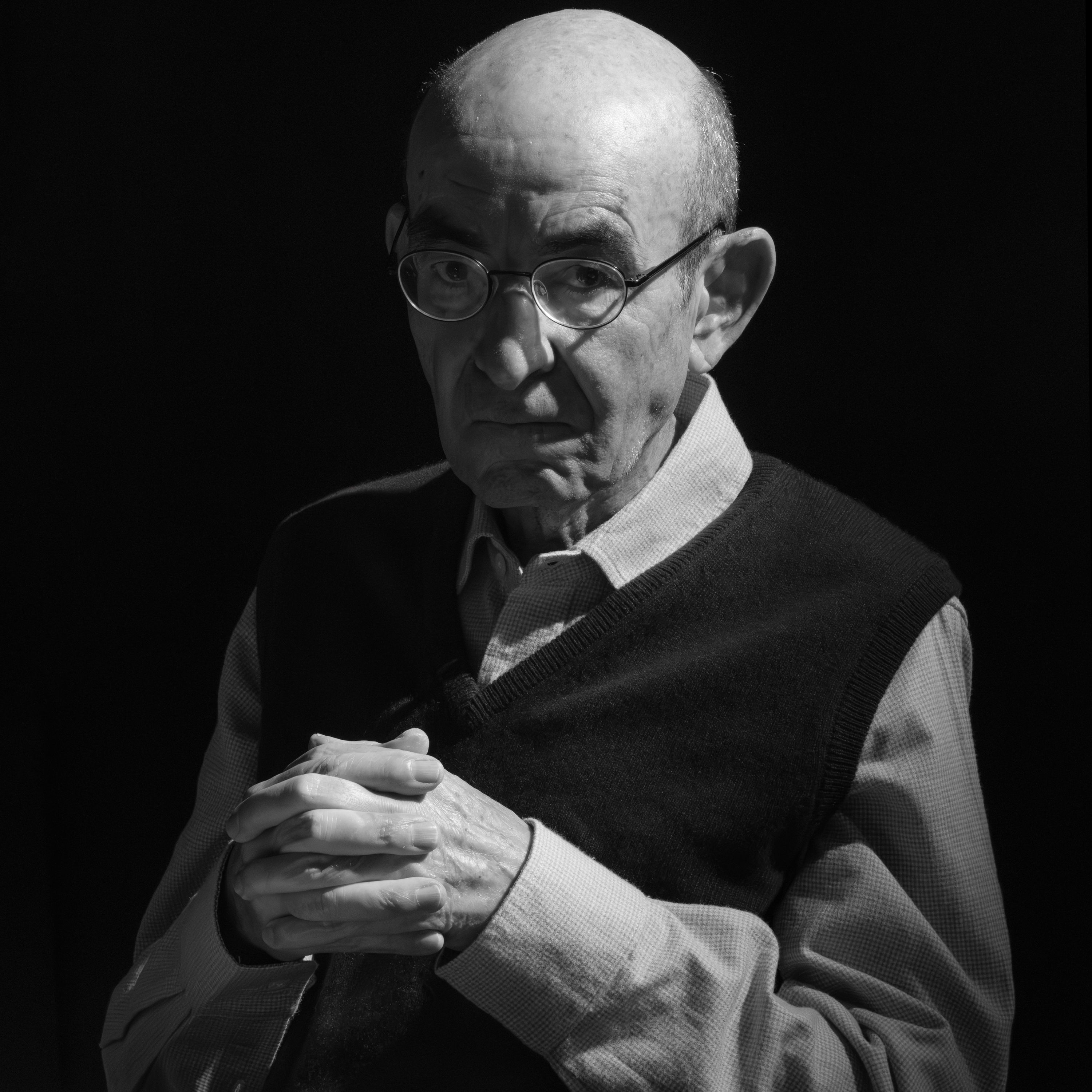
One of those officials, Dr. Demetre Daskalakis, explains why he chose to take a stand.
Press play and read along
Transcript
Speaker 1 Brought to you by the Capital One Saver Card. With Saver, you earn unlimited 3% cash back on dining, entertainment, and at grocery stores.
Speaker 1 That's unlimited cash back on ordering takeout from home or unlimited cash back on tickets to concerts and games. So grab a bite, grab a seat, and earn unlimited 3% cash back with the Saver card.
Speaker 1
Capital One. What's in your wallet? Terms apply.
See capital1.com for details.
Speaker 2 From the New York Times, I'm Rachel Abrams, and this is the Daily.
Speaker 2
Over the past 24 hours, the U.S. Centers for Disease Control and Prevention has been plunged into turmoil.
Health Secretary Robert F. Kennedy Jr.
Speaker 2 tried to fire the CDC's director after she refused to fire top agency officials or commit to new recommendations on proven vaccines.
Speaker 2
The clash has caused a standoff with the White House, and it's prompted three other senior officials to resign from the agency. One of them was Dr.
Dimitri Daskalakis.
Speaker 2 We spoke with him just hours after he left the CDC for good about why he chose to take a stand and what he feels he's leaving behind.
Speaker 2 It's Friday, August 29th.
Speaker 2 Hello.
Speaker 2 Hi. I'm going to let a producer check before we do all our greetings and everything to make sure you're all set up correctly.
Speaker 3 I don't have headphones because I was escorted away from my headphones at CDC. So I'm sorry about that.
Speaker 2 All right. We ready to roll, guys?
Speaker 3 I am if you are.
Speaker 2
Dr. Dimitri Daskalakis, thank you so much for being here, even without your headphones.
We are talking to you at about 12.30 on Thursday afternoon.
Speaker 2 And before we get into the details of why we are talking to you today, can you just tell me what has your day been like?
Speaker 3 I think the right word is complex. So I am an infectious disease doctor, and I was the director for the National Center for Immunization and Respiratory Diseases.
Speaker 3 And in the evening yesterday, I resigned. And so my morning has been about packing my office, dusting off the glass dust from the bullets that went through my window.
Speaker 2 Wow, during the shootings. Yeah.
Speaker 3 I wasn't there, thankfully. I was having surgery, but I definitely
Speaker 3 have a lot to say around that.
Speaker 3 But dusting off the glass dust from my belongings, trying to pack as much as I can, and then ultimately, you know, having my access revoked at CDC and being escorted off the campus by folks who I work with very closely and who I love.
Speaker 2 Wait, like your colleagues had to like, what, grab your arm and take you out? Or how did that work?
Speaker 3 Folks that we work with every day from security, people that we trust, following orders as was appropriate to escort us off campus, revoke our access and take our IDs.
Speaker 3 And so I am no longer a CDC employee. And like I said, I was escorted off lovingly, but definitely escorted off to campus.
Speaker 2
So as you said, you have resigned last night. That's why we're talking to you today.
And the news also broke yesterday that the head of the CDC, Dr.
Speaker 2 Susan Menares, was basically fighting to keep her job amid this very public battle with Health Secretary Robert F. Kennedy Jr.
Speaker 2 And
Speaker 2 you and three other high-ranking officials left very publicly this week. And so I am sort of curious.
Speaker 2 You had said that you are director for immunizations, meaning that you are leading vaccine policy for the country.
Speaker 2 You obviously have been in the middle of a lot of controversy when it comes to this attempted firing and with RFK's leadership, his mandates, what he wants to begin with.
Speaker 2 So I guess the first thing I want to ask you is, can you give just a little bit of background about how you ended up at the CDC? What were you doing there to begin with? What was your mandate?
Speaker 3 I'm an infectious disease doctor. So I really started doing clinical work in New York City.
Speaker 3 After doing a lot of work with the HIV Ending the Epidemic program in New York State, I was promoted to be the deputy commissioner for disease control.
Speaker 3 That's in effect, the chief of infectious diseases for the New York City Department of Health. I was in that role until November 2020.
Speaker 3 So I joined CDC to be the head of the Division of HIV AIDS Prevention.
Speaker 3 I was in that role for three months and then was pulled into the COVID-19 response where I was in charge of the vaccine task force when the first boosters were coming out and was then asked to be the director for the National Center for Immunization and Respiratory Diseases.
Speaker 3 So I am your vaccine guy at CDC along with Dan Jernigan, who actually focuses on the vaccine safety piece of vaccines.
Speaker 2 So just to put it really simply, you have worked under both Democratic, Republican administrations, Biden, Trump. How long have you been at CDC all told?
Speaker 3 About five years.
Speaker 2
So I want to fast forward a little bit. In late 2024, early 2025, Trump gets re-elected.
He takes office. It's very clear that he was going to install RFK Jr.
as health secretary.
Speaker 2 What was your initial reaction to that?
Speaker 3 So, you know, maybe I'm a pathological optimist, but I, you know, I listened to the hearings. I, you know, watched them avidly.
Speaker 3 I took notes and said, how can we work within what we know is scientifically correct and clinically valid to be able to realize the vision of the secretary?
Speaker 3
Like we've been doing all this work to try to do that. The thing that experts like the most is to share their expertise.
And we were all geared up to make sure that we let him know the deep.
Speaker 3 information around the diseases that we cover and the vaccines that we know have prevented so many bad outcomes in kids and adults.
Speaker 3 And even though we offered that to several of his executive staff, we've never been taken up on it.
Speaker 2 And we're going to get to all of that, but Robert F. Kennedy Jr.'s stance on vaccines was no secret.
Speaker 2 And so I just sort of wonder, what did you see that gave you hope that you would be able to communicate effectively what you believe the science to be and what you believe public policy should be?
Speaker 3 So like I said, I watched everything that the secretary was doing from when he was doing his confirmation hearings, and he said he was landing at HHS with no presupposed notions, no predecided ideas.
Speaker 2 And you believe that?
Speaker 3 I've worked under so many politicals that I have to believe it.
Speaker 2 There's no choice but to believe it if you're going to do your job.
Speaker 3 That's right. You know, the American people have spoken.
Speaker 3 They voted for a president and that president has installed a human into this position who he feels confident will support the health of people in the United States.
Speaker 3 So you have to start from the point of. How are we going to work with this to realize the vision while also making sure that vision understands the science?
Speaker 2 Can you give us an an example of something early on that you were able to work with that you felt fell in line with your mission and perhaps the mission of Kennedy and of the CDC in that moment?
Speaker 3 Yeah, I think that one of the great examples is sort of managing the measles outbreak in Texas.
Speaker 3 We definitely, you know, saw that there was some disparate messaging between sort of, you know, mainline public health and some of what the secretary said.
Speaker 3 And so I think that we worked really carefully to make sure that we reflected some of the secretary's vision or most of the secretary's vision into the communication that we made.
Speaker 3 So, I'll give the example. You know, I traveled to the part of Texas where the outbreak was happening.
Speaker 3 And when I went there, I learned from the providers as well as the community that if you always leave with vaccine in that community, it doesn't work.
Speaker 3 And so, you know, in Texas, one of the issues was that people didn't feel comfortable going to emergency rooms or didn't know what the signs were to take their kids to the ERs.
Speaker 3 And so, what would happen is the kids would land very, very ill.
Speaker 3 And so we shifted the message from being like an only vaccine drumbeat to including vaccine prominently, but also talking about what the signs were where you should get into your car and drive to Lubbock because it's an hour away.
Speaker 2 I seem to remember at this moment, Kennedy got a lot of criticism for basically sending a message that people should get vaccines, but you should also be allowed to decide what you want to do.
Speaker 3 Yeah. We really tried to do our best to meld sort of that piece of it into the guidance.
Speaker 3 So, I mean, I think that that's what we do in government is really try to figure out a way to sort of achieve the vision while making sure that we're staying, you know, very close to the science.
Speaker 2 Can you talk to me about when you actually started seeing things that worried you? What were some of those early signs?
Speaker 3 I think that the thing that worried me the most was.
Speaker 3 the narrative around the firing or the dismissal of the 17 members of ACIP based on the fact that somehow they were compromised because of conflicts of interest.
Speaker 2 And remind us quickly, ACIP.
Speaker 3
Sure. It's the Advisory Committee for Immunization Practices.
It's the body in the U.S., housed at the CDC, that advises the director of the CDC on vaccine policy.
Speaker 3 Those policy decisions are ultimately the CDC directors, but it's the committee that advises.
Speaker 2 And you're seeing Kennedy fire the people at this organization that is central to developing and issuing vaccine policy.
Speaker 3 People who are vetted, people who have scientific reputations around the country as being like the best and brightest in the area.
Speaker 3 And the narrative for why they were fired was around their conflicts of interest and the fact that this administration can't put their stamp on this committee fast enough to achieve the policy goals of the agency.
Speaker 2 Wait, I'm sorry. So the stated policies were what?
Speaker 2 For firing them, that they did not fall in line with the administration?
Speaker 3 So the two things were that they were riddled with conflict, conflict, which was patently untrue. They had been vetted for conflicts of interest.
Speaker 3 And at every meeting, if they had any conflict, they stated the conflict and then did not participate in the votes.
Speaker 2 But what you're saying is basically, to you, what it looked like was that the real reason these people were dismissed is that the administration was like, we can't control these guys.
Speaker 3 So he clearly stated that because their terms didn't turn over fast enough, they couldn't have people on the committee that represented the administration's point of view.
Speaker 2 In your mind, what was the administration trying to control exactly by getting rid of these people? Like, what would it mean to control that group with these firings and installations of other people?
Speaker 3 You know, the ACIP is responsible for making soft guidance. So, it's not regulatory guidance.
Speaker 3
And what that means is it's not the thing that goes on the label for the vaccine that says who can and can't get it. It's softer.
It's guidance to clinicians.
Speaker 3 And that guidance is also the thing that triggers coverage by insurance companies.
Speaker 3 And so, by controlling controlling that guidance, what it does is there is a path of least resistance to frankly limit access for vaccines to people.
Speaker 3 So, you know, the ACFE can recommend to the CDC director to further constrain who can get a vaccine. And so that's what I think this is all about.
Speaker 3 And I think that there's also, frankly, the need to please a political base who may have specific views around vaccine.
Speaker 3 And this is one of the more public ways to make good on of the promises made around vaccines, including COVID.
Speaker 2 The takeover of the committee that you've just described, that's the reason why we've seen guidance change about who needs what vaccines, despite the science, is what you're saying.
Speaker 2
And for you, this is a huge red flag that you have seen in this administration. I'm wondering.
As this is happening, were you consulted on any of these changes?
Speaker 2 Is anybody consulting with you before these things are announced? Or I'm thinking specifically about the guidance, for example, about children children getting COVID-19 vaccines. Yeah.
Speaker 3 So this was not related to ACIP, the announcement by the secretary to change the childhood schedule. I learned about the change of the childhood schedule on X.
Speaker 2 You learned about it on social media, like the rest of us.
Speaker 3 That is correct. So I was sitting in a meeting with senior leaders at CDC.
Speaker 3 And as I was sitting there talking about the outbreaks that I was managing, my phone blew up with, I didn't know you guys were changing the children's schedule.
Speaker 2 People texting you? Yeah.
Speaker 3 Not from HHS, people in the world, because because they see.
Speaker 2 People in the world, your friends and family or whoever seeing this and being like, this doesn't sound like you. Correct.
Speaker 3 So we then asked the question, you know, what's going on? Can we see some kind of documentation? Because they were like, implement the change. But we've never seen anything in writing.
Speaker 3 So we asked if we could see the sort of supporting data that led to the decision. And we were told no.
Speaker 2 Just flat out no.
Speaker 3 Flat out no.
Speaker 2 But can I ask you, did you ever actually have a conversation with Kennedy about any of this or any of his senior staffers? Or is it just that no communication? Did you ever try?
Speaker 3 Yes.
Speaker 2 And what would happen?
Speaker 3 So we offered to do briefings when he first started. I think some people were able to brief some lower level staff, but not staff that were Secretary Kennedy's staff.
Speaker 3 So no one from my center has ever briefed the Secretary.
Speaker 2 On anything.
Speaker 3 Correct. On anything.
Speaker 2 So basically, you don't have a line into RFK, and he's not seeking out. your advice or the advice of people who are theoretically supposed to advise him on things like this.
Speaker 2 How did you feel about that at the time?
Speaker 3 I felt that this was highly atypical that we weren't able to sort of share our expertise up the chain to be able to, you know, provide information that could be meaningful and thought process.
Speaker 3 And so what I kept thinking was, we're not doing this, but there sure is a point of view up there. I wonder who's doing it.
Speaker 3 Like my job is to make sure that we're giving good science so people can make good decisions.
Speaker 3 And if I can't make sure that that science is untouched by non-scientific influence, I cannot say that I'm doing my job.
Speaker 3 I believe that CDC science is going to be compromised by HHS.
Speaker 3 And if that science becomes biased, if it gets unduly influenced, then I can't have my
Speaker 3 name on that science as something that I think should be used to make important decisions for people's lives.
Speaker 2 We'll be right back.
Speaker 1 This podcast is supported by the International Rescue Committee. Co-founded with help from Albert Einstein, the IRC has been providing humanitarian aid for more than 90 years.
Speaker 1 The IRC helps refugees whose lives are disrupted by conflict and disaster, supporting recovery efforts in places like Gaza and Ukraine, and responding within 72 hours of crisis.
Speaker 1 Donate today by visiting rescue.org slash rebuild. Scaling your business requires the right expertise at the right time.
Speaker 1 With Upwork, you can find specialized freelancers in marketing, development, design, and more.
Speaker 1 Experts who are ready to help you take your business to the next level with more than two decades of experience with a simple and ambitious goal to pioneer a better way of working.
Speaker 1
Visit upwork.com right now and post post your job for free. That is upwork.com to post your job for free and connect with top talent ready to help your business grow.
That's upwork.com, upwork.com.
Speaker 1 On January 6th, ID Network revisits one of the most notorious cases of the past 25 years in the new documentary event, The Cult Behind the Killer, the Andrea Yates Story.
Speaker 1 When Andrea Yates drowned her five children in 2001, the world was shocked. How could a mother do something so horrific?
Speaker 1 This three-part documentary exposes how the sinister influence of a cult may have driven Andrea's postpartum depression to the most tragic extremes.
Speaker 1 Don't miss the cult behind the killer, the Andrea Yates story, January 6th on ID.
Speaker 2 Dr. Daskalakis, can you be a little bit more specific? Like, what are you specifically worried about in this moment?
Speaker 3 So, yeah, I'm very worried that CDC data will either be presented in a light that's inaccurate or will be manipulated in a way that doesn't reflect reality.
Speaker 3 And that's going to be what will lead decision making. The other piece is I'm also very worried about unvetted sources of data becoming the prominent data that's presented.
Speaker 3 We had that happen at the last ACIP meeting with unvetted presentation about thimerosol that had not been fact-checked by anyone at CDC or any other scientist.
Speaker 2 Thimerosol is an ingredient in vaccines that Kennedy wanted removed from vaccines, if I'm not mistaken.
Speaker 3 Correct. It's a preservative that is used in O about 4% of influenza vaccines only that lets some doctors' offices a multi-dose vial that's cheaper so they are able to get more for their buck.
Speaker 3 And some places just can't afford to get a single dose vaccine for the number of people they have to vaccinate. So it's a small thing because all of the data says that thimerosol doesn't do anything.
Speaker 3 But a presentation that does not sort of go along with any of the science posted on the CDC or FDA website for years now.
Speaker 3 Presentation was made that tried to implicate thimerasalt with neurocognitive and disorders such as autism.
Speaker 2 Which I would imagine you say that there is not evidence for it.
Speaker 3 There is no evidence for it.
Speaker 2 I'm really struck by the fact that you are describing a CDC that is poised to distribute misinformation to the public, which is something that feels very ironic given the fact that RFK Jr.'s whole platform is to basically get better information to the public so they can make better decisions, be healthier.
Speaker 2 And it feels like we should point out here that the shooting that you mentioned that was at CDC headquarters in Atlanta, the shooter, as far as we know, he believed that the COVID vaccine had made him ill.
Speaker 2 And so I just wonder, how did you feel thinking about some of the risks and the consequences of bad information? How were you making sense of that event?
Speaker 3 Yeah, I mean. I wasn't on the campus because I was having surgery that day, thankfully, but I do really believe that words matter.
Speaker 3 The secretary has come out and said mRNA vaccines are the deadliest vaccines known to humans. It's untrue.
Speaker 3 And so like that kind of loose and fast language, I think gets into people's psyche, especially in the circumstance where they already have some fundamental disagreement around vaccines or other things.
Speaker 3 So do I think that what the secretary said made the shooter shoot up CDC?
Speaker 3 No. Do I think that it made the environment where that could happen? Absolutely.
Speaker 2 What did he say after the shooting?
Speaker 2 I mean, you said you never briefed him on anything, so I assume you didn't talk to him in this moment, but did he, I don't know, issue some sort of internal memo or make a speech or what was the communication about the shooting internally from him?
Speaker 3 As far as I can tell, there was a visit to CDC when staff wasn't there.
Speaker 3 Our staff was working from home because of the fact that they would have to be, in effect, a police scene if they were coming in at that time.
Speaker 3 He, I think, released a tweet that was, you know, very much thoughts and prayers, and then subsequently went to a studio and shot a television show where he said that experts should not be trusted.
Speaker 3 And I'll say that I actually think that they're taking the shooting as a way to accelerate some of the work that they're doing, because I'll say in the last two weeks, the reason that I quit is because I think they've accelerated the work that will compromise CDC science.
Speaker 2 Can you be a little bit more specific? Like, what was the final straw for you? What's been happening the last couple of weeks?
Speaker 3 I think the final straw was really the possibility of not having scientific leadership at CDC.
Speaker 3 So, you know, Susan potentially not being there, compounded about by the sort of death by a thousand cuts that I've already suffered here.
Speaker 3 But the notion that we weren't going to have any scientific leadership and that, you know, the next ACIP meeting is coming.
Speaker 3 I know that what's going to go on there has a very high probability of compromising CDC's reputation and data. And so I just can't be a part of that.
Speaker 2 I think a lot of people will listen to this and they will understand what you are saying and the reasons why you have left.
Speaker 2 And you could not allow anything other than science to dictate how you would act at the CDC. But I do wonder,
Speaker 2 some might also say that you senior leadership that recently just left, you are the last bulwark against the very things that you are now saying are untenable and are dangerous.
Speaker 2 And so I guess what I'm asking is if you guys leave, like who else is left and what protection is there?
Speaker 3
Yeah. No, I think it's a great question.
And I held on for seven months, despite some really wild times. I found that there was no path to doing good public health in the environment anymore.
Speaker 3 And so I do wish them great luck in trying to execute the meeting without people who are able to guide them through the process.
Speaker 3 At the end of the day, I've given all that I can to CDC and to public health. I've had a really strong career.
Speaker 3 And, you know, I really feel like that my utility to the American people is done there because I'm not able to control what is absolutely going to be compromised science.
Speaker 2 Obviously, the nightmare scenario that a lot of people right now are worried about when they look at the landscape of public health and public policy is that there could be another pandemic and we are not going to have the right scientists in charge and we're not going to have the right policies in charge.
Speaker 2 And that basically
Speaker 2 something other than science will dictate our response. And I wonder if you share that particular nightmare.
Speaker 3 I'm very concerned about the public health security of the United States.
Speaker 3 I'm concerned about the individual health of people, but i'm also very concerned that the erosion of scientists not only at cdc but also at fda nih and and frankly in academia with the aggressiveness that's happened toward that funding as well that we really are losing the people who know how to do this i do think that there's going to be a vacuum i can't tell you when it's going to happen but infectious diseases always find a way and we have less visibility in what's happening with infectious diseases across the entire globe we've been a leader in that space, and that's ended.
Speaker 3 And so I'm worried about things like Ebola, where we have been able at CDC to stop infections at their source before they cause a threat to the U.S.
Speaker 3 If we're not there, don't know what's going on, it may not be until it lands on our shores that we know what's happening.
Speaker 2 In the scenarios that you're talking about, like what do you do, you, Dr. Daskalakis, do if you've left the CDC and you're worried about something, as you said, coming onto our shores?
Speaker 2 Like what lever is there for you to pull for public health?
Speaker 3 So, you know, the CDC that we're talking about today is not the CDC of even two years ago. And so I don't think that the place to be currently is in federal public health to be effective.
Speaker 3 So, you know, I think that the need for some fearless advocates who know the inside is necessary.
Speaker 3 And I hope that, you know, lifting the red flag so folks who are policymakers, folks in government really understand that there's something extremely wrong.
Speaker 3 And also, I think it's important for the American public to know that they really need to be cautious about the recommendations that they're hearing coming out of ACIP, given what we're telling you.
Speaker 2 Wait, just so I'm clear, you're saying that the American people should now be wary of the advice they get from the agency that is tasked with keeping them safe.
Speaker 3 Yes.
Speaker 2 I feel like that is an extraordinary thing for a person who has just left the CDC to say.
Speaker 2 And at this point in the second Trump administration, we have heard of so many many people who have left their posts in government. These are longtime civil servants.
Speaker 2 They're maybe trying their hand at the private sector or nonprofit sector.
Speaker 2 And I guess I'm curious about just more broadly, how you think of the role of the federal government in this moment and the function of government going forward.
Speaker 3 Yeah, I don't know what the future is because it's not been expressed. I have a lot of slogans that I'm hearing from HHS, but not a lot of vision of what actually happens with public health.
Speaker 2 Wait, I have to ask you about these slogans, though, because everything you're saying, if you're saying don't trust what you're hearing from the federal agencies, is one of those slogans, do your own research.
Speaker 2 And is that what you think at this point? Because you're telling people, don't listen to the officials.
Speaker 3 I think that at this point, you should ask your doctor, like what the interpretation is.
Speaker 3 Look at what professional organizations that represent the doctors and providers that you trust, what they're recommending, and really question what's happening sort of on the federal level because of undue influence and directives that are not transparent.
Speaker 3
So radical transparency, I've not seen any of that. Gold standard science, not seen any of that either.
And so these are the things that I hear that to me are code for it's my way or the highway.
Speaker 3 And so that is not the way public health works. And that's not the way science works.
Speaker 2 When you resigned, you wrote a very strongly worded letter. And I want to read you a paragraph from it.
Speaker 2 You said, public health is not merely about about the health of the individual, but it is about the health of the community, the nation, and the world.
Speaker 2 The nation's health security is at risk and is in the hands of people focusing on ideological self-interest.
Speaker 2 And I would just like you to reflect on how that holds up to the idea that you mentioned earlier that the best way people can keep themselves safe right now is to talk to their doctor.
Speaker 2 How did it feel to write that publicly?
Speaker 3 I've never been one to hold back in my entire career.
Speaker 3 It felt like the right thing to do. It felt hard.
Speaker 3 But
Speaker 3 I made a promise when I became a doctor and I made a promise when I went to CDC that I would make sure that I work to improve the health of people.
Speaker 3 And so it's my job as a clinician, as a physician, and a public health professional to really make sure that folks know what's happening. And so I felt very stressed by writing it.
Speaker 3
I don't want to put myself up for attack because I'm sure I'm going to get it. But I am very, very worried about the safety of our country and our health.
And I had to say it out loud.
Speaker 3
I think that the data is going to be compromised. The science is not going to be the science.
It's going to be some Frankenstein of science and ideology.
Speaker 2 whose reaction were you worried about the most when they learned about your resignation
Speaker 3 my husband's
Speaker 3 that's going to cause all sorts of backlash um given our current environment i've already gotten a bunch of homophobic comments on my social media and so i imagine that will just make it worse but that's the truth I moved my husband to Atlanta so that I could be at the CDC.
Speaker 3 I wish I could say it was some academic or other public health person, but my family matters first.
Speaker 2 What has he said to you so far about your decision to leave?
Speaker 3 It all worked out okay. He knows that the time had come for me.
Speaker 2 Dr. Dimitri Deskalakis, thank you so much for your time.
Speaker 3 Thank you for having me.
Speaker 2 On Thursday afternoon, Senator Bill Cassidy called for the Senate Health and Human Services Advisory Committee on Immunization Practices to indefinitely postpone their meeting on September 18th.
Speaker 2 In a statement, he said that, quote, if the meeting proceeds, any recommendations should be rejected as lacking legitimacy, given the seriousness of the allegations and the current turmoil in CDC leadership.
Speaker 2 We'll be right back.
Speaker 1
We all have moments when we could have done better. Like cutting your own hair.
Yikes. Or forgetting sunscreen so now you look like a tomato.
Ouch. Could have done better.
Speaker 1
Same goes for where you invest. Level up and invest smarter with Schwab.
Get market insights, education, and human help when you need it. Learn more at schwab.com.
Speaker 1
A biotech firm scaled AI responsibly. A retailer reclaimed hours lost to manual work.
An automaker now spots safety issues faster.
Speaker 1 While these organizations are vastly different, what they have in common sets them apart. They all worked with Deloitte to help them integrate AI and drive impact for their businesses.
Speaker 1
Because Deloitte focuses on building what works, not just implementing what's new. The right teams, the right services and solutions.
That is how Deloitte's clients stand out.
Speaker 1
Deloitte together makes progress. Support for this podcast comes from GoodRX.
The holidays are here, but so is cold and flu season. Find relief for less with GoodRX.
Speaker 1 You could save an average of $53 on flu treatments, plus save on cold medications, decongestants, and more. Easily compare prescription prices and find discounts up to 80%.
Speaker 1 GoodRX is not insurance, but works with or without it and could beat your copay price. Save on cold and flu prescriptions this holiday season at goodrx.com/slash the daily.
Speaker 2 Here's what else you need to know today.
Speaker 2 Lisa Cook, a governor on the Federal Reserve Board, sued President Trump on Thursday over his decision to fire her for alleged mortgage fraud.
Speaker 2 The lawsuit sets the stage for a landmark legal battle over the future of the nation's central bank.
Speaker 2 The president has said he was dismissing Cook over accusations of mortgage fraud, even though she has not been charged with any wrongdoing.
Speaker 2 Cook's lawsuit said the president did not have legal cause to fire her and described her ouster as unprecedented and illegal. She also framed Mr.
Speaker 2 Trump's actions as part of an overtly political campaign to pressure the independent Fed into lowering interest rates.
Speaker 2 This weekend, a heads up that we'll be sharing some shows that we think you'll enjoy.
Speaker 2 First, as usual, the interview, where Lulu Garcia Navarro talks with acclaimed author Arundhati Roy about her new memoir that explores her complicated relationship with her mother and also about her fears for the direction America is headed.
Speaker 2 Then something new starting this Sunday, and every Sunday through the end of the year.
Speaker 2 My colleague, book review editor Gilbert Cruz, will be hosting a weekly roundtable where he'll talk with a rotating cast of critics, editors, and reporters who cover movies, TV, the internet, styles, food, and so much more.
Speaker 2 I hope you give it a listen.
Speaker 2 Today's episode was produced by Alex Stern, Shannon Lynn, Rob Zipko, and Ricky Nowetsky. It was edited by Paige Cowitt and MJ Davis-Lynn, and was engineered by Alyssa Moxley.
Speaker 2 Special thanks to Aporva Mandovilli and Michael Mason.
Speaker 2 The daily's engineers are Chris Wood and Alyssa Moxley. with engineering support from Brad Fisher, Maddie Masiello, Nick Pittman, and Kyle Grandilo.
Speaker 2 Music on the show is composed by Dan Powell, Marian Lozano, Alicia Baitoupe, Diane Wong, Pat McCusker, Rowan Niemisto, and Sophia Landman.
Speaker 2 Our theme song is by Ben Landsberg and Jim Brunberg of Wonderly.
Speaker 2
Our radio team is Jodi Becker, Rowan Ni Misto, Diane Wong, and Catherine Anderson. Alexandra Lee Young is our deputy executive producer.
Mike Benoit is our deputy editor.
Speaker 2 Paige Cowitt is the editor of The Daily. Ben Calhoun is our executive producer.
Speaker 2 Special thanks to Paula Schuman, Director of Audio for the New York Times, to Deputy Managing Editor Sam Dolnick, to the founding editor of the show, Lisa Tobin, and to Deputy Director of Audio, Larissa Anderson.
Speaker 2
That's it for the daily. I'm Rachel Abrams.
See you on Tuesday, after the holiday.
Speaker 1 On January 6th, ID Network revisits one of the most notorious cases of the past 25 years in the new documentary event, The Cult Behind the Killer, The Andrea Yates Story.
Speaker 1 When Andrea Yates drowned her five children in 2001, the world was shocked. How could a mother do something so horrific?
Speaker 1 This three-part documentary exposes how the sinister influence of a cult may have driven Andrea's postpartum depression to the most tragic extremes.
Speaker 1 Don't miss The Cult Behind the Killer, The Andrea Yates Story, January 6th on ID.