How Trump Is Changing American Capitalism
The U.S. government has been made the largest shareholder of Intel, one of the most iconic companies in the country. Senator Bernie Sanders has praised the move, while conservatives have criticized it as socialism.
Andrew Ross Sorkin, a columnist at The Times, explains how Mr. Trump’s deal could reshape America’s approach to capitalism.
Press play and read along
Transcript
Speaker 1 Brought to you by the Capital One Venture X card. If you love to travel, Capital One has a rewards credit card that's perfect for you.
Speaker 1 With Venture X, earn unlimited double miles on everything you buy and turn all of your purchases into extraordinary travel.
Speaker 1
And you get premium benefits at a collection of luxury hotels when you book through Capital One Travel. Plus, you'll get access to over 1,000 airport lounges worldwide.
Capital One.
Speaker 1 What's in your wallet? Terms apply. See CapitalOne.com for details.
Speaker 2 From the New York Times, I'm Natalie Kitroff. This is the Daily.
Speaker 3
The president spoke with reporters. He says that the U.S.
will have a golden share in U.S. steel.
Speaker 4 Shares of rare earth producer MP Materials on pace for their best day in history. DOD will be MP's largest shareholder after poverty.
Speaker 5 NVIDIA and AMD have agreed to give the U.S. government 15% of the revenue.
Speaker 2 In a series of extraordinary deals, President Trump has muscled himself directly into the business of corporate America. Friday night breaking news, it's on Intel, Intel Stock is.
Speaker 2 Including making the U.S. government the largest shareholder of Intel, one of the most iconic companies in the country.
Speaker 8 It really is
Speaker 4 almost uncharted territory, is it?
Speaker 2 It's a move that's been praised by Bernie Sanders and criticized by by conservatives as socialism.
Speaker 2 Today, my colleague Andrew Ross Sorkin on what all this means and how it could reshape America's approach to capitalism.
Speaker 2 It's Tuesday, September 2nd.
Speaker 2
Andrew, we've seen Trump insert the government into U.S. companies in a bunch of ways in the last few months.
But the recent news that the U.S.
Speaker 2
government was taking this ownership stake in Intel is the thing that convinced us we had to come to you. This was the bombshell.
This is a major corporation.
Speaker 2 And this kind of move is just extremely rare. And you, as our resident expert on all things corporate America, have been trying to make sense of it.
Speaker 11 There's no question that the decision by the administration to take a 10% stake in Intel is is a watershed.
Speaker 11 It's a watershed not just for the world of business, but for the much larger idea around capitalism,
Speaker 17 around free markets,
Speaker 21 around the idea that the United States has spent the last century exporting the concept of free market capitalism and has been critical.
Speaker 25 of state-run capitalism.
Speaker 27 And in so many ways, even politically, this flips the entire script of the approach that Republicans and conservatives have taken towards business for so many years.
Speaker 13 I can't tell you how many business leaders I've spoken to over the last several days who are looking at this and have so many questions, have so many questions, not just about the particulars of the U.S.
Speaker 29 taking stake in this company, but in what it portends,
Speaker 30 what it means.
Speaker 17 You know, the last time we saw anything like this, and really the only times this has ever happened in American history where the U.S.
Speaker 15 government's gotten this engaged in business, it's been in the context of a crisis.
Speaker 28 We had this happen in 2008 with the investment banks, with the automobile makers, but it happened because those companies were considered in absolute distress and that the effect of letting them go bankrupt was going to be cataclysmic for the rest of the country and its economy.
Speaker 2
Right. The idea then was that these banks were too big to fail.
Incidentally, the title of your book on this subject, the idea was this was necessary to contain major economic fallout.
Speaker 15 Exactly.
Speaker 33 And look, that moment unto itself created all sorts of debates around the country that last even to this day around the very idea of bailouts and how the government should or should not be involved in the world of business.
Speaker 34 And so here we have this example of Intel, which is just the latest in a string of transactions in which the U.S.
Speaker 27 government has taken effectively stakes in businesses or otherwise collecting tolls or other things that they haven't done before.
Speaker 17 at a time when we're not in crisis and how that may rewrite the rules of capitalism.
Speaker 2
So let's talk about how all this started. You mentioned that Intel is part of this string of transactions.
Take me through that.
Speaker 33 So earlier this year, we saw Nippon, which is a steel maker in Japan, try to buy U.S.
Speaker 6 steel.
Speaker 12 And the president stepped in and said, I'll approve this deal, but I'll only approve this deal if the United States gets what's called a golden share.
Speaker 11 So this is a special share that has certain governance powers, which effectively allow the U.S.
Speaker 30 government, in many cases, to control what Nippon Steel does with U.S.
Speaker 26 Steel in the future.
Speaker 2 How so? In what way?
Speaker 23 Well, for example, if the U.S.
Speaker 9 government decides that Nippon wants to close down a factory that's owned by U.S.
Speaker 30 Steel, they could say no.
Speaker 11 In certain cases, they may try to even be able to require Nippon Steel to to make investments in ways that Nippon Steel wouldn't normally.
Speaker 34 So it just changes the complete dynamic of the business.
Speaker 2 Right.
Speaker 24 And then in July, we saw the Pentagon take a stake in a rare earths minerals company, which is something we've also never seen the government do in this kind of context.
Speaker 15 And then after that, we saw an even more unique transaction.
Speaker 10 Trump administration officials, you know, they had been railing about how we should not allow our chip makers to export their chips to China.
Speaker 2 Right. It was prohibited.
Speaker 22 It was prohibited until the CEO of NVIDIA goes to the White House and makes the case to the president that they should be able to sell less advanced chips in China.
Speaker 2 Right.
Speaker 22 And the president says, you know what? Okay, I'll let you do that, but you are going to pay me, you're going to pay the U.S. government a 15% tax on those chips.
Speaker 31 Now, some people look at that and say, that's a 15% VIG.
Speaker 2 What's a VIG?
Speaker 33 A VIG is like what the mafia would do.
Speaker 36 You take a VIG.
Speaker 2 Uh-huh, like extortion.
Speaker 34 I mean, that's one way to, I'm being polite about it, but you can sell the chips, but we're going to take a piece of the action.
Speaker 6 We're going to take 15% of every chip that you sell.
Speaker 2 It's also just, as you said, it's a tax, right? Which is not something that Republicans typically want to do, tax corporations.
Speaker 12 It's the antithesis of what they've talked about for all of these years.
Speaker 17 You know, Ronald Reagan has a famous quote where he says, the nine most terrifying words in the English language are: I'm from the government and I'm here to help.
Speaker 27 And here we are in a situation now where a Republican president is saying, the U.S.
Speaker 17 government is here to help and not just here to help.
Speaker 27 We want to own you.
Speaker 2 And then we get this Intel deal.
Speaker 11 And that was really the biggest bombshell of all.
Speaker 11 And let me go backwards just a minute to give you the backstory of that, because unto itself, I think it's fascinating, and it has the entire business world wondering what comes next.
Speaker 27 In this instance, Fox News does a report.
Speaker 43 The CEO's name is Lip Bhutan.
Speaker 12 About the CEO of Intel.
Speaker 44 He was formerly the head of Cadence Design Systems, a software company enabling chip design, but it was found guilty of violating export control, selling the technology and cadence design to a Chinese military university.
Speaker 15 Alleging and claiming that he has ties to the Chinese government.
Speaker 42 And that report sets off President Trump to the point where he literally takes to Truth Social.
Speaker 45 On Truth Social, President Trump wrote, The CEO of Intel is highly conflicted and must resign immediately. There is no other solution to this problem.
Speaker 36 Questioning
Speaker 6 the CEO whether he should be the CEO of Intel and what's happening at Intel.
Speaker 27 And remember, importantly,
Speaker 10 Intel was a recipient of billions of dollars of grants from the Chips Act in 2022 during the Biden administration, where they had committed to build advanced chips and what are called foundries in the United States.
Speaker 13 And that came after COVID, where we decided as a country that we needed to have a more resilient supply chain.
Speaker 17 We couldn't rely on all of of the major important chips being manufactured in Taiwan.
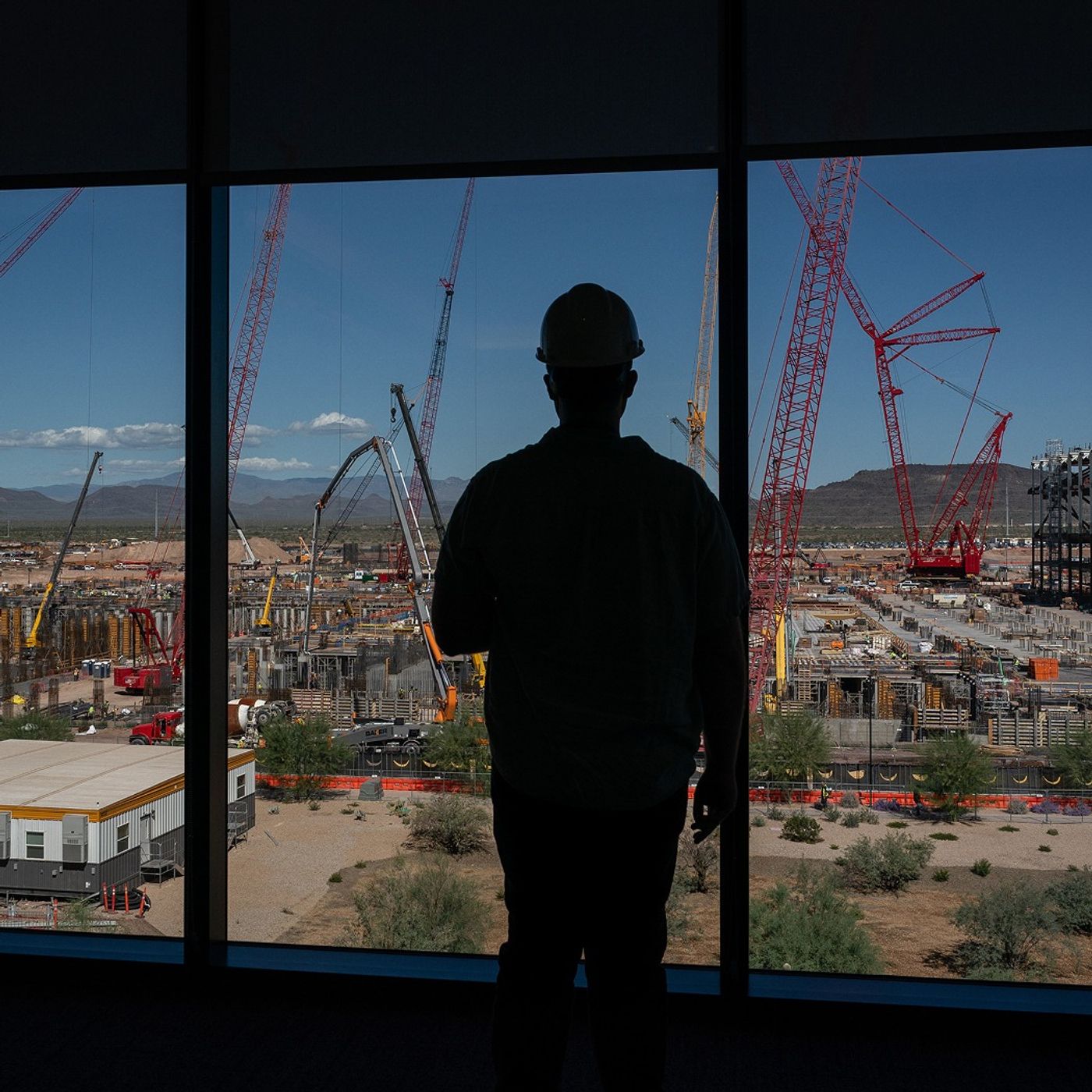
Speaker 6 And so Intel is literally building huge manufacturing facilities in places like Arizona with the expectation that this grant money is coming their way.
Speaker 2 So they have a lot at stake in all of this.
Speaker 28 All the construction workers are there, and they're just waiting for more checks to keep coming for years.
Speaker 2 Right.
Speaker 27 So the CEO of Intel is now under fire in the biggest way because you have the President of the United States criticizing him, criticizing Intel,
Speaker 11 and he and the board of Intel go into crisis management mode.
Speaker 32 And what do they tell him to do?
Speaker 19 They say, go try to take a meeting with the President of the United States in the White House.
Speaker 6 This president loves to meet with CEOs, call the White House, and get a meeting.
Speaker 2 Like, make this go away. This needs to be solved.
Speaker 36 Somehow make this go away because if it doesn't go away, the CEO might lose his job and he would go away.
Speaker 30 So the CEO goes to the White House, sits in the Oval Office with President Trump and makes his case.
Speaker 27 And in the context of making his case for himself, for the company, the president has a suggestion.
Speaker 22 Well, you know, we're giving you all of this money.
Speaker 17 And by the way, there's still billions of dollars in grant money that has been allocated to you, but we have not sent the check yet.
Speaker 33 So you're going to still need that money.
Speaker 30 I think the U.S.
Speaker 33 government, given the fact that we're helping you so much, should own a piece of your company.
Speaker 17 The CEO, given, I think, all of the pressures around him, against him personally, and the pressure on the company and the pressure on the board, says, okay.
Speaker 27 Wow.
Speaker 34 And so the president then takes to Truth Social and says that we, the U.S.
Speaker 13 taxpayer, has just gotten 10% of the company, and he says that we got it for free.
Speaker 2 And did we get it for free?
Speaker 35 It's a good question.
Speaker 28 Sort of.
Speaker 33 We had committed and allocated this money as part of the CHIPS Act to Intel. That money was supposed to go to Intel anyway.
Speaker 39 Intel now is justifying its decision to give the 10%
Speaker 33 in part because if you were to add up all of the dollars that the U.S.
Speaker 6 government had granted the company, it would buy you the equivalent of 10% of the company.
Speaker 2 Do we know why Trump is doing these deals, like with Intel, but also with these other companies that we talked about? Is there a motivation that ties all of this together?
Speaker 11 You know, if there's a through line to all of this, it's the general concept that Trump believes, as he has articulated for decades, that he believes the U.S.
Speaker 11 government and the taxpayer is ultimately getting ripped off
Speaker 17 and is oftentimes getting ripped off by businesses
Speaker 33 and, in many cases, getting ripped off by other countries.
Speaker 17 That's the rationale, for example, behind the tariffs.
Speaker 19 And he's somebody who's saying there's no free lunch.
Speaker 11 If the taxpayer is going to give a business money, the taxpayer should get something directly from it.
Speaker 28 Historically,
Speaker 24 the philosophy of grants, for example, was that the U.S.
Speaker 27 economy and therefore the taxpayer indirectly would be a beneficiary of giving various grants to different industries or businesses or whatnot.
Speaker 6 Sometimes we've wanted to increase innovation in EVs, and so we've subsidized that in the past or windmills, something the president is against.
Speaker 26 But we never asked for something directly in return because what we were getting in return was hopefully a larger economic benefit.
Speaker 2 And in this case, Trump is saying, we, the American taxpayer, the American government, we need something much more tangible than that.
Speaker 11 Very much so.
Speaker 30 He wants to be able to say, I gave out X amount of money and I can look right here and I can do the math and I can show you that we got X amount back.
Speaker 25 And then some.
Speaker 2
And it's not just money compensation that he's getting in these these deals. He and the U.S.
government are also getting control, control over these companies, sway over their decisions.
Speaker 2 This is something that we've seen the Trump administration do over and over again with a bunch of institutions in this country. In this case, what is that control about?
Speaker 10 There's two things going on here. One is this issue of national security.
Speaker 11 The president has been very outspoken about his worries that China is going to one day take over Taiwan.
Speaker 15 And if that happens, the U.S.
Speaker 11 is going to be in a real problem spot because most advanced chips in the world are made there.
Speaker 24 And so he says to himself that he needs to have more control over the idea that Intel is going to have success in the United States, and he would like to have a hand in that.
Speaker 36 There's another issue which is just broader.
Speaker 33 that has almost nothing to do with national security and has everything to do with what President Trump would call the art of the deal.
Speaker 36 You use the word control.
Speaker 24 He might use the word leverage.
Speaker 14 He likes to have leverage over somebody else, over a company, over an individual, over a country.
Speaker 38 And
Speaker 10 he is now finding every opportunity he can to create that leverage.
Speaker 21 He doesn't have to be able to use the leverage.
Speaker 10 He may not even know what he wants from the leverage, but leverage creates optionality.
Speaker 36 That's That's the negotiating theory of the case.
Speaker 2 But on the other hand, Trump isn't running a company. He is the president of America.
Speaker 2 And the tools that he's doing to get leverage in these cases, the extent of the government intervention, that's just a pretty big departure from what you normally see in America.
Speaker 2 There isn't all that much precedent for this, as you've said.
Speaker 22 There's almost no precedent for these kinds of deals in this country.
Speaker 11 There's precedent for them in China. There's precedent for them in Russia, there's precedent for them in France.
Speaker 13 But we've always been a country that has advocated for this idea of free market capitalism.
Speaker 11 Having said that, it's not exactly like free market capitalism is somehow the most popular concept in the world these days.
Speaker 37 And there are a lot of people who look at the idea of free market capitalism and say it's not working for them.
Speaker 30 And in many ways,
Speaker 12 Donald Trump is puncturing the idea that free market capitalism ever existed.
Speaker 33 He's saying free market capitalism has actually been a myth, that the U.S.
Speaker 27 government has always been subsidizing all of these businesses in all sorts of different ways.
Speaker 38 And
Speaker 30 instead of pretending it's a free market and getting nothing for it, he's saying, give us something back for it.
Speaker 6 And that very idea in America is so provocative.
Speaker 2 We'll be right back.
Speaker 1
Ollie knows the back-to-school chaos all too well. Schedules, carpools, relearning Algebra 2, it's a lot for you and your crew.
Ali makes wellness an easy and delightful part of your routine.
Speaker 1 Need immune support kids will enjoy? Try Kids Multi plus probiotic. Is bedtime a struggle? Go with Kids Sleep for gentle support.
Speaker 1 Moms, support your immune system, nutrition, and more with Women's Multi. Grab these products at Ali.com or retailers nationwide.
Speaker 1 These statements have not been evaluated by the Food and Drug Administration. This product is not intended to diagnose, treat, cure, or prevent any disease.
Speaker 7 If you thought goldenly breaded McDonald's chicken couldn't get more golden, thank golder! Because new, sweet, and smoky special edition gold sauce is here.
Speaker 47 Made for your chicken favorites.
Speaker 28 I participating McDonald's for a limited time.
Speaker 49 Imagine relying on a dozen different software programs to run your business, none of which are connected, and each one more expensive and more complicated than the last. That can be pretty stressful.
Speaker 48
Now imagine Odo. Odoo has all the programs you'll ever need and are all connected on one platform.
Doesn't Odoo sound amazing?
Speaker 48
Let Odo harmonize your business with simple, efficient software that can handle everything for a fraction of the price. Sign up today at odo.com.
That's odoo.com.
Speaker 2 Okay, Andrew, tell us about the reaction to these moves, to this provocative idea that the government should get a stake or some kind of say in the companies that it is helping in one way or another?
Speaker 36 Well, the real surprising part of this in Washington is just how the politics have almost flipped.
Speaker 24 So Bernie Sanders, for example, loves this idea.
Speaker 21 When the CHIPS Act was first put in place in 2022, folks like Elizabeth Warren and Bernie Sanders were specifically articulating the idea that we should be getting something for these big grants.
Speaker 11 So he's been out there for years advocating the idea that corporations should not be getting welfare, that all of these subsidies are bailouts, and that we shouldn't be involved in it.
Speaker 11 And if we are, we should be getting something for it.
Speaker 30 In a way, so much of what the president's doing is taxing corporate America, something the Democrats have long been advocating for.
Speaker 2 It is fascinating. You know, there's so many ways in which Trump's economic policies just don't fall within traditional party politics.
Speaker 2 Tariffs, obviously being something that Republicans don't typically favor.
Speaker 2 And this, too, in a kind of dramatic way, because here you have one of the most progressive members of Congress saying, good, this is good.
Speaker 32 You know, his approach really has pulled in a certain subset of Democrats who look at at least some of his policies and say, yeah, that's what we should be doing.
Speaker 11 Now, on the other end of the spectrum, while much of the Republican establishment has, in truth, been pretty quiet about all this, they're not commenting on what the president is doing, there are some prominent conservatives who are kind of going out of their mind about this.
Speaker 50 Republican Senator Rand Paul criticized the deal before it was finalized, posting, if socialism is government owning the means of production, wouldn't the government owning part of Intel be a step towards socialism?
Speaker 11 The conservative commentators look at this and say to themselves, this is a slippery slope.
Speaker 3 You can't just be against socialism when the left does it. So if you support socialism, apparently Donald Trump is your guy.
Speaker 43 If you are a free market capitalist, you do not want government investing in public companies. It may prioritize government goals as opposed to profit maximization.
Speaker 19 The United States is the most dynamic economy in the world.
Speaker 28 They would argue that capitalism across the globe has raised people out of poverty.
Speaker 10 They would tell you that innovation comes from competition, not protectionism.
Speaker 41 And once you have the government picking winners and losers, and that's the phrase, picking winners and losers, you no longer have the idea of Adam Smith's invisible hand at work.
Speaker 27 Right.
Speaker 2
No more invisible hand. Now we have the very visible hand of Donald Trump, of the U.S.
government, the strong arm, if you will.
Speaker 15 Exactly.
Speaker 2 So, just to do a reality check here, as dramatic as these moves may be, there are plenty of other countries that own stakes in corporations that they think are important to national security.
Speaker 2
This happens in Europe. France and Germany have a stake in Airbus.
I covered aerospace. That's a really successful company.
And those countries are some of the biggest economies in the world.
Speaker 35 Sure, but we've been critical of those countries for years for that approach, in large part because because we look at their economy and we say that it doesn't grow nearly as fast as the United States.
Speaker 17 It's not nearly as dynamic.
Speaker 10 You're not seeing the kind of innovation out of Europe that you've seen out of the U.S.
Speaker 6 over all of these years.
Speaker 42 Where's AI come from?
Speaker 17 Not Europe.
Speaker 42 Where did the internet come from?
Speaker 17 Not Europe.
Speaker 28 And so I think, sure, there are other places that...
Speaker 36 have economies that work to some degree, but what's made the American experiment so successful has been this very idea of a quote-unquote free market.
Speaker 2 You're saying this kind of free market where you limit government intervention as much as possible, that's a key part of America's economic identity.
Speaker 2 It also explains our success as a country, at least until now.
Speaker 11 Well, that's the argument.
Speaker 19 And the question is,
Speaker 11 is this just a one-off or is this really the beginning of something much bigger?
Speaker 11 You know, I spoke with Kevin Hassett, who runs the National Economic Council for the Trump administration, and he has said, as has the president, as has now Howard Luttnick, Secretary of Commerce, that this is the beginning, that the administration wants to have stakes in more businesses, specifically has identified the idea that defense companies may be up for grabs in terms of the U.S.
Speaker 33 government taking stakes in them, given how much business the U.S.
Speaker 11 government gives them.
Speaker 21 You know, Lockheed Martin, a huge part of their business, as you might imagine.
Speaker 33 The U.S.
Speaker 11 government is their largest customer. Should the taxpayer not just pay them, but have a stake in the company itself?
Speaker 34 These are the questions.
Speaker 40 And it's not just defense companies.
Speaker 31 Think about all of the businesses that interact with the U.S.
Speaker 40 government.
Speaker 17 There are construction companies in America whose biggest client is the U.S.
Speaker 19 government.
Speaker 25 Should we own a stake in those construction companies?
Speaker 10 And this goes then to the competition question, which is once you own a stake in the business, does the competition end?
Speaker 27 Meaning the next time the US government has to choose between two companies that it wants to use for whatever, maybe it's building an airplane, maybe it's building a building, is there actually a competition based on the lowest price and the best service?
Speaker 34 Or does the U.S.
Speaker 32 government say, actually, we own a 10% stake in this one, so we actually have to use this one?
Speaker 30 And then, by the way, longer term, does the U.S. taxpayer actually pay more?
Speaker 2 But if I could push you on that just a little bit, some might argue that Americans already live in a world where competition has been stifled.
Speaker 2 You know, there's antitrust cases against some of the biggest tech companies in this country.
Speaker 2 And when you think about one of this country's biggest industries, healthcare, there's been all this consolidation.
Speaker 2 And I think a lot of Americans would probably say, look, we're already paying through the nose on hospital bills and drug costs.
Speaker 2 Is the argument from critics that that would be worse if the government owned stakes in a lot of these companies?
Speaker 26 I think the critique is that you're right.
Speaker 12 We don't have enough competition in this country as it is, but that this would make it worse, not better.
Speaker 30 And think about this.
Speaker 35 The next time a company in which the government has a stake wants to buy another company, how would regulators think about that?
Speaker 25 For example, would they say, well, this is good for the American taxpayer because we own a stake in it,
Speaker 31 even though it would be bad for competition.
Speaker 2 You're saying it could lead to more consolidation, potentially.
Speaker 11 It just changes the entire incentive structure because all of a sudden the government, the taxpayer, is now an official owner in these businesses.
Speaker 2 I want to turn to the potential benefits that we'd theoretically be getting in exchange for these deals, including the government stakes and private companies.
Speaker 2 The whole argument from the Trump administration is that ultimately they are extracting better deals on behalf of the U.S. taxpayer.
Speaker 2 My question is, does that money that the administration, that the government may be getting from Intel, from NVIDIA sales, from these other companies, do we know how it would actually benefit?
Speaker 2 the American taxpayer?
Speaker 14 Well, ostensibly, the benefit would be in the form of revenue to the government.
Speaker 33 And if you think about the enormous budget deficit, which is in the trillions of dollars that we have today, I mean, I think there's no question that we already live beyond our means.
Speaker 6 We're already trying to find other ways to raise revenue to pay for things.
Speaker 11 I can't tell you where the money directly is going to go.
Speaker 6 Will it be used for the social safety net?
Speaker 11 Will it be used to pay down debt?
Speaker 26 Will it be used for infrastructure spending in the United States? Will be used for education?
Speaker 30 I don't think we know the answer to that question,
Speaker 11 but the arguable benefit is that it would go into the coffers of the U.S.
Speaker 33 government and the coffers need filling.
Speaker 31 It's also worth noting that, you know, you go back to the financial crisis of 2008 and the U.S.
Speaker 17 government did rescue the banks at that time. and the automakers at that time.
Speaker 33 And it was very unpopular. And it was unpopular because people thought it was a freebie.
Speaker 29 People thought that the money was going out and was never coming back. And the truth is that the U.S.
Speaker 42 government made a profit on that money.
Speaker 23 And so the benefit was that not only did it make a profit directly, it also managed to prop up those companies and businesses and keep them in business, which kept the economy alive, kept people in their jobs, etc.
Speaker 2 Okay, stepping back, I think it's probably worth noting that Trump won two elections now on the argument that this economic system has not worked for a huge swath of people in this country, that people had been left behind, they had lost good factory jobs.
Speaker 2 And so I wonder if there aren't going to be people who look at this and say, sure,
Speaker 2 you may be kind of breaking the system, but that's what I voted for.
Speaker 17 There's no question that many Americans voted for Trump to break the glass.
Speaker 11 That's what they wanted him to do.
Speaker 29 They wanted him to change the way this economy works.
Speaker 33 Now, whether they want these specific changes, I think is still a big question.
Speaker 26 I think an even bigger question is how permanent these changes really are.
Speaker 10 You know, when I talk to CEOs, even in the past couple of days, they talk about this phrase, a generational shift, that we are in the midst of a generational shift in capitalism, a generational shift in the very idea of free markets where we own these businesses for decades to come.
Speaker 33 The decisions that get made around that business or industry no longer have to do with profits or employees or anything else.
Speaker 15 It has to do with potentially the influence of what comes from Washington.
Speaker 11 And who knows who's going to be in the White House?
Speaker 6 Maybe it'll be President Trump.
Speaker 14 who's influencing this, but down the line, it could be a Democrat, could be Bernie Sanders.
Speaker 32 But when the government becomes an owner in the business, that influence shifts the direction of travel such that business could potentially become deeply political.
Speaker 2 Andrew, thanks so much for your time.
Speaker 14 Thanks for having me.
Speaker 2 We'll be right back.
Speaker 1
Ollie knows the back to school chaos all too well. Schedules, carpools, relearning algebra too.
It's a lot for you and your crew. Ollie makes wellness an easy and delightful part of your routine.
Speaker 1 Need immune support kids will enjoy? Try Kids Multi plus Probiotic. Is bedtime a struggle? Go with Kids Sleep for gentle support.
Speaker 1 Moms, support your immune system, nutrition, and more with Women's Multi. Grab these products at Ollie.com or retailers nationwide.
Speaker 1 These statements have not been evaluated by the Food and Drug Administration. This product is not intended to diagnose, treat, cure, or prevent any disease.
Speaker 7 If you thought goldenly breaded McDonald's chicken couldn't get more golden, thank golder! Because new, sweet, and smoky special edition gold sauce is here.
Speaker 47 Made for your chicken favorites.
Speaker 28 I participate in McDonald's for a limited time.
Speaker 8 It's a big moment for your chicken favorites. A new McDonald's sauce to make your goldenly breaded mitt crispy sandwich even more golden.
Speaker 51 The new sweet, smoky, dangy special edition gold sauce at Participating McDonald's for a limited time.
Speaker 2 Here's what else you need to know today.
Speaker 2 In a last-minute flurry of legal action on Sunday, a federal judge temporarily blocked the Trump administration from deporting Guatemalan children who had already been put onto planes.
Speaker 2 The judge expressed frustration with the government, saying it was surprising that the administration had tried to get the minors out of the country in the wee hours of the morning on a holiday weekend.
Speaker 2 A lawyer for the government said the children were going to be reunited with their parents in Guatemala, but a lawyer for the children disputed that, saying that at least some of the children didn't want to return.
Speaker 2 Migrant children have posed a challenge for the Trump administration's immigration crackdown because they're entitled to special legal protections.
Speaker 2 And the death toll from an earthquake that hit Afghanistan on Sunday has climbed to more than 800 people, authorities said, warning that the fatality count would likely rise.
Speaker 2 So far, only a handful of countries have offered humanitarian assistance to the Taliban government.
Speaker 2 Foreign countries have become reluctant to send aid to Afghanistan in recent years as the Taliban faces accusations of diverting humanitarian assistance to their fighters and favoring some communities over others.
Speaker 2 Afghanistan has been battling various crises, and hospitals have shut down since the Trump administration completely cut off all U.S. foreign aid to the country earlier this year.
Speaker 2 Today's episode was produced by Ricky Nowtsky, Stella Tan, and Carlos Prieto.
Speaker 2 It was edited by Lisa Chow and Chris Haxel, and was engineered by Chris Wood.
Speaker 2
That's it for the daily. I'm Natalie Kitroff.
See you tomorrow.
Speaker 1 Brought to you by the Capital One Venture X Card. If you love to travel, Capital One has a rewards credit card that's perfect for you.
Speaker 1 With Venture X, earn unlimited double miles on everything you buy and turn all of your purchases into extraordinary travel.
Speaker 1
And you get premium benefits at a collection of luxury hotels when you book through Capital One Travel. Plus, you'll get access to over 1,000 airport lounges worldwide.
Capital One.
Speaker 1 What's in your wallet? Terms apply. See CapitalOne.com for details.