Le Heist
Catherine Porter, a New York Times international correspondent in the French capital, explains how the robbery unfolded.
Press play and read along
Transcript
Speaker 1 all have moments when we could have done better.
Speaker 2 Like cutting your own hair.
Speaker 1 Yikes.
Speaker 3 Or forgetting sunscreen so now you look like a tomato.
Speaker 5 Ouch. Could have done better.
Speaker 6 Same goes for where you invest.
Speaker 8 Level up and invest smarter with Schwab.
Speaker 9 Get market insights, education, and human help when you need it.
Speaker 7 Learn more at schwab.com.
Speaker 11 Hey, it's Natalie.
Speaker 11 Taking a quick second here because we here at The Daily are working on a fun little project, something that we'll share later as a special bonus episode for New York Times subscribers.
Speaker 11 The idea is simple. We're going to be talking to our fascinating colleagues here at the New York Times about who they are and how they do their jobs.
Speaker 11 And as a part of that project, we want to hear from you. What's the one question you've had for our colleagues but never gotten the chance to ask?
Speaker 11 We started with games, and now we're going to go to the Times restaurant critics, Tajil Rao and Lagaya Mashan. They're both new to the job, and they've brought a lot of exciting changes.
Speaker 11 One is in California, the other one's in New York City. They're no longer dining anonymously, and they're reviewing restaurants all over the country.
Speaker 11 I personally have a ton of questions for them: like, how are they going to get fair service from restaurants? How do they know they're not getting treated differently than us regular folks?
Speaker 11 How do they pick where to go? And also, most importantly, what's their most controversial food take?
Speaker 11 Get us your questions, please, by leaving a message at 212-556-4000. Again, that's 212-556-4000.
Speaker 11 Okay, here's the show.
Speaker 11 From the New York Times, I'm Natalie Kitroff. This is the Daily.
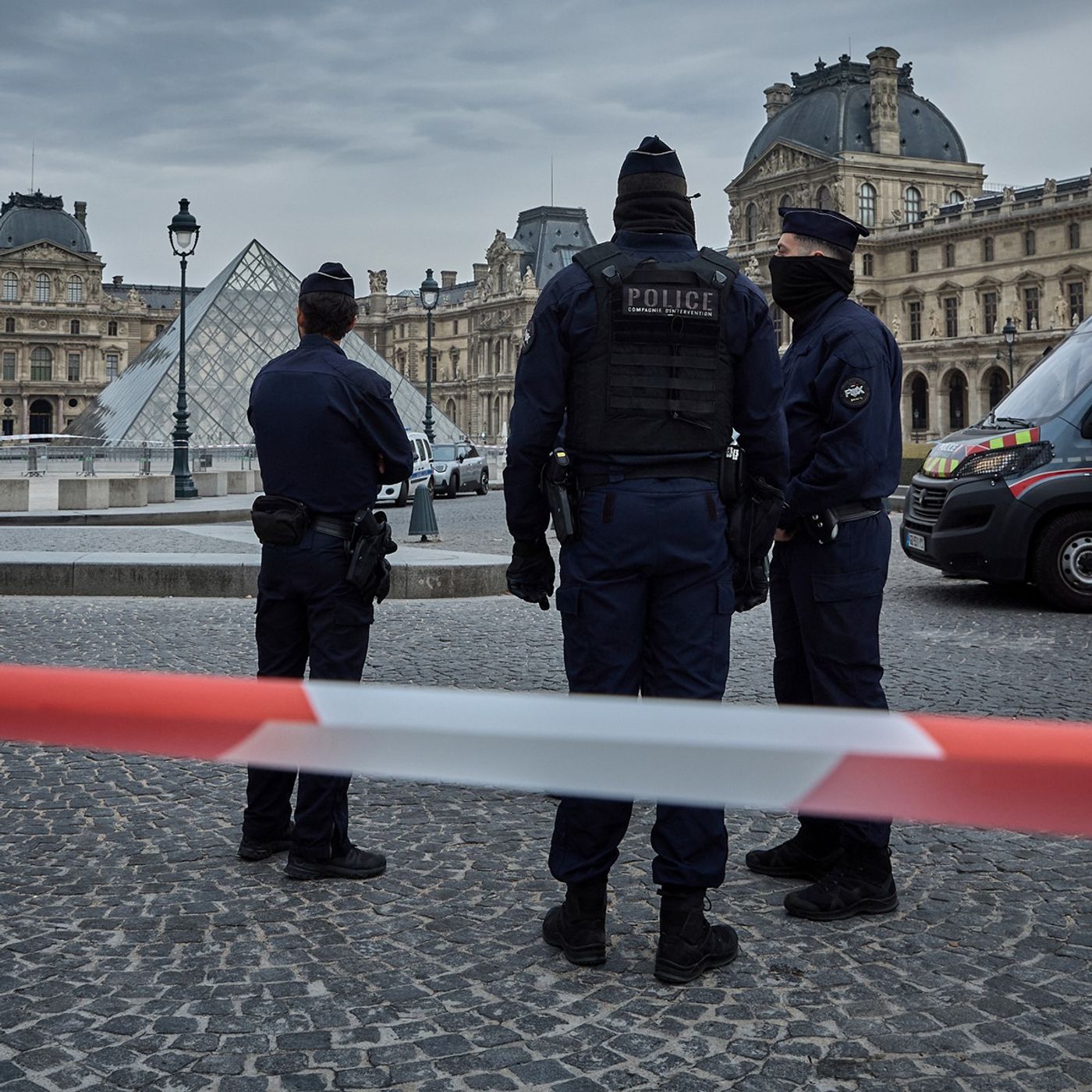
Speaker 12 The world's biggest museum, a symbol of France, now a crime scene.
Speaker 11 Over the weekend, a group of thieves staged a remarkable heist at one of the world's most famous museums.
Speaker 11 Officials in Paris say the masked crooks used a basket lift and cutting tools to just break into a gallery.
Speaker 11 Stealing some of the most precious and culturally significant jewels in Europe in the middle of Paris in broad daylight.
Speaker 13 It's like a scene from a film. Yeah, you could not make it up.
Speaker 14 I thought it was a joke. Like, no, not possible.
Speaker 11 As new details emerge about the brazen theft at the Louvre, the response in France has been a mix of shock, disbelief, and fascination.
Speaker 15 This is the heist of the decade, you know. It's as bad as it gets.
Speaker 11 How could the world's most visited museum be robbed with such brazen audacity?
Speaker 11 Today, my colleague Catherine Porter explains how the robbery happened and why so many feel as though they may have just lost a piece of their history for good.
Speaker 11 It's Wednesday, October 22nd.
Speaker 11 Catherine, hi. How are you? This is probably the only taping where I've literally been like, I need us to begin so I can ask my questions right now.
Speaker 11
I mean, that's not true. It's not the only one.
But this is a very special episode, and I need to talk to you about this story. I have read everything about this heist
Speaker 11 and I'm not satisfied still.
Speaker 11 I am ready for you okay good just to start tell me exactly how a group of jewel thieves broke into the louvre and stole these very precious items just start from the beginning tell me exactly what happened as far as we know as far as we know this heist started at 9 30
Speaker 13 last Sunday morning.
Speaker 13 Typical, kind of quiet Paris morning. And what we know is this truck that had a ladder attached to it rolls up to the Louvre with two motorcycles.
Speaker 13 Now you might wonder why is there a truck with a ladder on it, but in Paris it's pretty common sight because this is how you move your furniture in and out of your apartments because of how skinny the halls are.
Speaker 13 So
Speaker 13 it rolls up, parks right up against the building on the sidewalk, and two people pop out
Speaker 13 and they set out traffic pylons around the truck and they have fluorescent vests on like public workers do.
Speaker 11 So like anybody looking at this from the outside might think this is a completely normal scene. Nothing to see here.
Speaker 13 Nothing necessarily to see except for the two men that then went up this electric ladder to the balcony on the second floor were masked.
Speaker 13 So that might have tipped you off if you were there, but to be honest, this is the quiet side of the Louvre. It's near the Seine, not a lot of foot traffic.
Speaker 13 So they go up the mechanical elevator in a kind of bucket, like a cherry picker. They get to this balcony onto the second floor of the Louvre and they use what are known as angle grinders.
Speaker 11 Which is what exactly?
Speaker 13 Kind of like electric hand saw
Speaker 13 to saw through the window that leads into what's known as the Apollo Gallery.
Speaker 11 It's this golden, long,
Speaker 13 beautiful
Speaker 13 wing of the Louvre that literally was built by Louis XIV as a model for his Hall of Mirrors. And it houses the royal jewels of France.
Speaker 11 Is this like a very popular part of the Louvre? It certainly sounds as though it's iconic.
Speaker 13 Super iconic. It's not as popular, obviously, as the Mona Lisa,
Speaker 13
but it's pretty close. You know, when you go in there, it's often quite crowded.
It's really opulent. There's paintings on the ceilings, on the walls by famous people like Delacroix.
Speaker 13 There are hanging tapestries. There are sculptures, and these cases down the middle that hold the crown jewels.
Speaker 13 The thieves break in using the saw.
Speaker 13 We hear from people who work in the Louvre that there was an explosion of glass and there were a number of security guards inside who really quickly evacuated the room.
Speaker 11 So they didn't approach the thieves.
Speaker 13 No. The protocol in the Louvre and most museums is if you are confronted with an intruder that has things that seem like they could be weapons, your priority is protect people.
Speaker 13 So they did what they were instructed to do, what they've been trained to do. They got people out and very, very quickly.
Speaker 11
And how many people were there at the time? I mean, 9.30 a.m. on a Sunday does not seem like the ideal time to rob the most famous museum in the world.
Was it crowded?
Speaker 13 Well, we don't know how many people were in that room. That's like one of the details that has not surfaced yet or been disclosed by investigators.
Speaker 13 We do know that the Louvre is like the most visited museum in the world. Up to 30,000 people visit every day.
Speaker 13 We've seen videos and spoken to people who were quite frantic, not knowing why they were being evacuated. Many were running to get out.
Speaker 13 I mean, there was huge fear at first that either there was a fire or this was a terrorist attack.
Speaker 11 So the thieves are inside. What happens next?
Speaker 13 What we know is that they go like directly to two cases that are in the middle of the line of cases and they use their power saws to cut into them and break them open.
Speaker 11 I had heard there was some video footage taken of the thieves stealing the pieces. Do we know anything about how they were acting, what they were doing, their general demeanor at the time?
Speaker 13 Yeah, we've seen those videos. They were given, I guess, to a local French TV station.
Speaker 13 They're quite blurry, but you see clearly one of the two men wearing something over his head, like a black covering on his head. He's got his yellow vest on, and he just, he looks incredibly calm.
Speaker 13 Like there's no franticness. He's just sawing away.
Speaker 13 What we have been told by the chief Paris prosecutor who's in charge of leading the investigation into this is that these are seasoned. They think that they're part of a gang.
Speaker 13
They clearly knew what they were coming for. They were pretty precise and fast, and they didn't seem panicked at all.
But all this was, you know, fairly quick.
Speaker 13 Our timeline shows that they arrived outside the building at 9:30. They got up to that window on the top of the mechanical ladder.
Speaker 13 Four minutes later, they broke in and they were out within four minutes and down and gone.
Speaker 13 So,
Speaker 13
amazing. That's pretty fast.
I mean, I know in terms of heists, it's not the fastest. There have been many faster.
Speaker 13 People who study this stuff say it's not crazy fast, but it was fast enough that they escaped and
Speaker 13 they have not been found.
Speaker 11 So, okay, let's talk about that escape. I'm trying to imagine it.
Speaker 13 What does it actually look like?
Speaker 13
You know, they jump out the window that they came in. They go down the same bucket, ladder to the bottom.
We understand also that they at this point attempt to
Speaker 13
set fire to the truck, to the bucket itself. We don't know why.
There's been lots of speculation they were trying to remove any kind of DNA or fingerprints, basically.
Speaker 13 And at this point, what we know is that some security guard or guards come chasing towards them on the ground.
Speaker 13 They drop a couple things, including one of their security vests and the bottle that they were using to spray gas onto the this cherry bin to light it on fire and they jump on the back of two waiting motorcycles and speed away
Speaker 13 one you know very juicy detail is that they dropped one of the nine things they originally grabbed right right and it was this incredibly precious crown, an imperial crown that was made for the last Empress of France who was married to Napoleon III.
Speaker 13 I can tell you a little bit about it. I have been learning a ton about these types of things.
Speaker 11 You're like the world's expert in crown jewels now.
Speaker 13
Well, not before this, but I have become one. Hold on.
So this crown had eight golden eagles on it, 1,354 regular diamonds, and then 1,136 rose-cut diamonds, as well as 56 pretty sizable emeralds.
Speaker 11
Okay, so they dropped this crown, but they did manage to get eight items. Take me through what those were.
What were some of the biggest gets?
Speaker 13 So,
Speaker 13 you know, again, my crash course and learning about royal jewelry. A lot of these items stem from either Napoleon III
Speaker 11 or Napoleon himself.
Speaker 13
So I'll take you through a couple. There was this incredible emerald necklace and earring set that Napoleon gave to his second wife for their wedding in 1810.
Wow. So that's just one.
Speaker 13 Then there's this decorative bow that was worn by Empress Eugenie that has
Speaker 13 more than 2,000 diamonds.
Speaker 11
Oh my God, I saw a picture of that one. It was like hard to look at.
It was so shiny, even just in the pictures, you know.
Speaker 13 And there's like a pearl
Speaker 13 kind of tiara that's also incredibly jaw-dropping.
Speaker 13 But Natalie, one thing that points to that these thieves knew what they were doing is they didn't go for what was really the most expensive item in those cases.
Speaker 13 They went for these items and there's a lots of discussion about, you know, maybe they thought these ones would be easier to break down and easier to
Speaker 13 smell and break apart and sell in small pieces. But, you know, among those cases is this incredible diamond that's known as the Regent
Speaker 13 that was bought by the Duke of Orleans in like the early 1700s and was on the centerpiece of Louis XV's crown and then later was on Napoleon's sword, on Louis XVI's crown.
Speaker 13
And it's like the size of a plum. Wow.
But lots of jewelry experts say it would be just far too easy to identify and really hard to pawn off.
Speaker 13 So we have a sense that this is more of a commodity grab than an attempt to get beautiful heritage pieces for some kind of kooky specialist collector who wants to hold things alone in a vault. Right.
Speaker 13 And so if you're going for commodities, you're looking for things that can be quickly disassembled and sold in small pieces. Right.
Speaker 11 These are thieves, the idea is who are looking to sell these things and make money, not mount them in their homes.
Speaker 11 I can imagine it's a lot easier, right, to sell a single diamond than a distinctive necklace, for example.
Speaker 13
Right. Well, you can't sell that distinctive necklace because it's already been traced.
You know, like Interpol has put it on its list. You would get caught very, very quickly.
Speaker 13 But the idea of what experts are telling us is
Speaker 13 that you would break it down into small pieces, maybe carve some of the larger stones into smaller stones so they're less identifiable.
Speaker 13 You know, one expert says you string them into a different kind of necklace and sell it and pawn it off that way.
Speaker 13 But certainly if you try and auction anything off, people will be on the alert looking for these things.
Speaker 11 Can I ask, you know, everybody's been talking about these crown jewels as priceless, but obviously there is a price that you can attach to these things, right?
Speaker 11 Do we know what was the worth of the things they stole?
Speaker 13 Yeah, we just found out.
Speaker 13 Up until now, there's been lots of speculation about how much they might have escaped with, but the head of the investigation just went on public radio literally minutes ago and said that the estimation they have is they're worth 88 million euros.
Speaker 13 Whoa, which is a ton.
Speaker 13 But she also said this interesting thing. She said, look, you know, if you were to break them apart and melt them down, they'd be worth a lot less.
Speaker 13 In some ways, almost beseeching to the thieves, like, please don't do this. You know, you're not going to make as much money as how we read it in the office.
Speaker 11 For what purpose, do you think? Out of a desire to keep these precious items intact?
Speaker 13 Yeah, I mean, even if they're worth 88 million euros, I think to the country of France and
Speaker 13 the history of the country, they're worth a ton more.
Speaker 13 Historically, symbolically, culturally, these things are priceless.
Speaker 13 And so I think, in some ways, a lot of people have been talking about, you know, how much they'd be worth, but really, the loss is more emotional for the country than I think it is financial.
Speaker 11 We'll be right back.
Speaker 1 We all have moments when we could have done better, like cutting your own hair, yikes, or forgetting sunscreen so now you look like a tomato.
Speaker 5 Ouch, could have done better.
Speaker 6 Same goes for where you invest.
Speaker 8 Level up and invest smarter with Schwab.
Speaker 9 Get market insights, education, and human help when you need it.
Speaker 7 Learn more at schwab.com.
Speaker 16 This podcast is supported by Bank of America Private Bank.
Speaker 16 Your ambition leaves an
Speaker 16 What would you like the power to do? Bank of America, official bank of the FIFA World Cup 2026.
Speaker 16 Bank of America Private Bank is a division of Bank of America NA member FDIC and a wholly owned subsidiary of Bank of America Corporation.
Speaker 17 Your home is an active investment, not a passive one.
Speaker 2 And with Rocket Mortgage, you can put your home equity to work right away.
Speaker 17 When you unlock your home equity, you unlock new doors for your family, renovations, extensions, even buying your next property.
Speaker 9 Get started today with smarter tools and guidance from real mortgage experts.
Speaker 7 Find out how at rocketmortgage.com.
Speaker 17 Rocket Mortgage LLC, licensed in 50 states, NMLS ConsumerAccess.org, 3030.
Speaker 11 So, I want to ask just about the reaction to some of this.
Speaker 11 If the assumption is that these thieves are going to break these things down, maybe melt down the gold, sell it for parts, make as much money as possible,
Speaker 11 how are French people responding to that possibility? It is the history of this country that could be disappeared.
Speaker 13 I think the predominant reaction has been shock and not that at the idea of these things being melted melted down per se, but just at the whole of what happened on Sunday morning.
Speaker 13
The fact that these people could that easily get into the Louvre has caused, you know, a lot of different kinds of emotional reactions. There's been anger.
People are stunned.
Speaker 13
Some people are quite emotional about it. The country's justice minister, he said that this is a certain sign of a failure.
We have failed. It has been politicized.
Speaker 13 There's been people, particularly on the right wing of the spectrum, blaming the government for not putting enough money into security. There's been questions about what is the security of the Louvre.
Speaker 13 And there's just been sort of people bemoaning the fact that this could happen in the center of the city, in
Speaker 13 the most famous, most visited, most coveted, most protected museum in France and likely the world.
Speaker 11 Right. The reaction that you're describing sounds like it's one of a sense of
Speaker 11 self-questioning that's happening because of
Speaker 11 just how highly trafficked this area was. How could this possibly occur?
Speaker 13 Right. Yeah.
Speaker 13 There's that sense and also just the sense of tragedy.
Speaker 13 This country watched the Notre Dame almost burned down and people lined the banks of the Seine with tears in their eyes, you know, many of them kneeling watching it.
Speaker 13 I think French people living here, they are
Speaker 13
very critical culturally. They're people who like to strike.
They like to complain. They're pretty critical,
Speaker 13
but they love their history. If you go into a French bookstore, like one out of every four books is a history book.
People know their history. They visit the museums.
Speaker 13 This is like a very important cultural place in French people's hearts. And
Speaker 13 I think people are appalled, shocked, and really grieving to a degree.
Speaker 13 The thing that's really interesting is that, you know, France doesn't actually have a huge amount of royal jewels like this because of the revolution.
Speaker 11 Explain that.
Speaker 13 So, you know, the revolution, which ended in the beheading of the king and queen at the time, at that time, the Louvre was sacked. A lot of things were stolen, including some of the jewels.
Speaker 13 But then, you know, France has a really ambivalent relationship with its royal history. It's a very proud republic.
Speaker 13 And during one of those republics, they decided that they were going to take what was left of the royal jewels and auction them off. And that's what they did in the late 1800s.
Speaker 13
They auctioned off tons of these jewels. And incredibly, the lion's share of them were bought by an American who was a founder of Tiffany's.
Oh, wow.
Speaker 13 So, you know, the Louvre has been spending decades now trying to get them back.
Speaker 11 In reading about this story, I learned that this is one of several thefts from French museums this year. Can you tell me about some of those other episodes? Like, what is going on?
Speaker 13 Yeah, even this week, there was a small museum that was burgled twice in a row. And we were looking at, like, should we do a story on this?
Speaker 13 So it was funny that when this happened, I was like, oh my God.
Speaker 13 But yeah, last month, someone went into the Natural History Museum, which is only a couple subway stops away from the Louvre, and using kind of similar tools, cut into some cases and took out a bunch of molten raw gold and made off with them.
Speaker 13 The same month, last month, a museum down in Limoges, southwest of Paris. Thieves broke into a museum and stole some ancient china.
Speaker 13 In November of last year, thieves using bats went in during the day also to a quite famous museum not far away from where I'm sitting.
Speaker 13 So, you know, there's definitely a streak of these right now in France.
Speaker 11 Is there an understanding that these robberies are connected in any way?
Speaker 11 I mean, I'm just wondering, it does feel like it's out of another era that you have this string of museum robberies, you know, and I'm wondering if the thieves either are in any way working together even loosely or are targeting the museums for similar reasons.
Speaker 13
There's no indication that people are working together. Yes, this seems very old-fashioned, except for in one way.
This happened in broad daylight. you know, when people were in the museum.
Right.
Speaker 13 And that's pretty new. There's a modern art museum here that was famously burgled in the middle of the night and a man made off with five very famous tableaus.
Speaker 13
And he did it in a classic way. Like when you're thinking about the movie in your head, which here is known as Lupin, it's a very famous series.
If you haven't seen it,
Speaker 11 I've seen it. Yeah.
Speaker 11 I feel like I'm watching it in real life right now.
Speaker 13
But, you know, like it's, it's secret. Yeah.
And often that's at night or in some way that people don't see it happening.
Speaker 13
This is like very brazen in that we do know that, you know, there's CCTV cameras all around the Louvre. There were people there even.
So it's a little bit different.
Speaker 13
And the lead investigator is talking about this being like incredibly organized. She doesn't think there was just four people.
She thinks that there's many more involved in this.
Speaker 13 So we don't know anything about these four guys who broke into the Louvre though.
Speaker 13 So, you know, it's hard to say what kind of connections, but clearly they're either copycatting or there's some ring that's sponsoring them.
Speaker 13 Those are questions that we hope to be able to answer in the weeks to come.
Speaker 11 What are the next steps in the investigation? Like, what are the investigators telling you about the manhunt for these guys, about their investigative strategies?
Speaker 11 Do we know how they're going about trying to catch them?
Speaker 13
No, what we do know is that there were 60 police investigators on the case. Now we know it's up to 100.
We know that they've been using DNA methods, fingerprinting.
Speaker 13 They've been using surveillance cameras. We know that the truck was left behind.
Speaker 11 Yeah, they didn't manage to burn it.
Speaker 13
They didn't manage to burn it. We know that they had just recently basically stolen it.
And so investigators are speaking to the person they stole it from.
Speaker 13
But that's the gist of what we've been told by investigators. They are being incredibly tight-lipped about it at this point.
I think they will speak more once and if they find them.
Speaker 13 But there's a real feeling that there's a race against time to try and get them before these precious jewels are broken apart and secreted away.
Speaker 11 My final question for you, Catherine, is: do you think it's possible? And it sounds like it might be, that these thieves actually pulled this off?
Speaker 11 Like that they could get away with it?
Speaker 13 Yeah, I mean, I think it's possible that we will never see those
Speaker 13 again.
Speaker 13 But I think France has a pretty good record of capturing some of these people. In fact, the person who is said to have broken into the Natural History Museum was just charged today.
Speaker 13 She was captured in Barcelona. I think, given the amount of cameras and evidence that the cops have, that they will be able to trace who these men were.
Speaker 13 If someone tries to sell, you know, that beautiful diamond bow that we were talking about earlier, then no doubt they'll get caught and it will be returned. And that is the best case scenario.
Speaker 13 But if they take each of those thousand-plus diamonds off and make something entirely different out of it, maybe a tiara, I don't know, an anklet, a bracelet for a very rich person, then who would notice at first?
Speaker 13 You would need to be an expert to be able to trace those diamonds to that bow. So it seems much less likely,
Speaker 13 in this case, that these beautiful pieces of French heritage will make their way back.
Speaker 11 Catherine, thanks so much.
Speaker 13 You're welcome, Natalie. It was such a pleasure to be talking to you.
Speaker 11 We'll be right back.
Speaker 1 We all have moments when we could have done better.
Speaker 2 Like cutting your own hair.
Speaker 1 Yikes.
Speaker 3 Or forgetting sunscreen so now you look like a tomato.
Speaker 5 Ouch. Could have done better.
Speaker 6 Same goes for where you invest.
Speaker 8 Level up and invest smarter with Schwab.
Speaker 9 Get market insights, education, and and human help when you need it.
Speaker 7 Learn more at schwab.com.
Speaker 18 Every day, it feels harder to talk, really talk, about the issues that divide us.
Speaker 18 That's why PBS presents Breaking the Deadlock, an Emmy-nominated series where leading voices from law, politics, and culture confront ethical dilemmas drawn from real life, and no one knows how the story will unfold.
Speaker 18
Guided by Professor Aaron Tang, the panel wrestles with fictional scenarios that generate real debate with nuance, integrity, and accountability. Breaking the deadlock.
Stream now on the PBS app.
Speaker 17 Over the last few decades, the world has witnessed incredible progress.
Speaker 17 From dial-up modems to 5G connectivity, from massive PC towers to AI-enabled microchips, innovators are rethinking possibilities every day.
Speaker 17 Through it all, Invesco QQQ ETF has provided investors access to the world of innovation with a single investment.
Speaker 6 Invesco QQQ, let's rethink possibility.
Speaker 17 There are risks when investing in ETFs, including possible loss of money. ETFs' risks are similar to those of stocks.
Speaker 17 Investments in the the tech sector are subject to greater risk of more volatility than more diversified investments.
Speaker 17 Before investing, carefully read and consider fund investment objectives, risks, charges, expenses, and more in perspectives at Invesco.com. Investor Distributors Inc.
Speaker 11 Here's what else you need to know today.
Speaker 19 We are one week into President Trump's historic peace plan in the Middle East, and things are going, frankly, better than I expected that they were.
Speaker 11 On Tuesday, Vice President J.D. Vance traveled to Israel as the U.S.
Speaker 11 seeks to shore up the fragile ceasefire deal in Gaza, which has come under strain with repeated flare-ups of violence in recent days.
Speaker 11 Vance didn't give a deadline for Hamas to disarm, a key part of that truce agreement, and he also didn't specify how officials would make sure the group agrees to do so.
Speaker 19 We've got a lot of work left to do. This is going to take a very, very long time.
Speaker 11 The vice president did express optimism that the deal would hold, but said the process of securing long-term peace would take time.
Speaker 11 And a White House official said on Tuesday that Trump had no plans to meet with Russian President Vladimir Putin in the immediate future.
Speaker 11 A pivot after Trump had suggested last week that he would meet with the Russian leader soon to discuss an end to the war in Ukraine.
Speaker 11 Speaking to reporters, Trump said he wanted to avoid a, quote, wasted meeting with Putin.
Speaker 11 White House Press Secretary Caroline Levitt said that after Trump had a call with Putin last week, the Russian leader had committed to sitting down with him.
Speaker 11 Today's episode was produced by Shannon Lynn and Caitlin O'Keefe.
Speaker 11 It was edited by Brendan Klinkenberg, fact-checked by Susan Lee, contains music by Dan Powell, Pat McCusker, and Marion Lozano, and was engineered by Chris Wood.
Speaker 11
That's it for the daily. I'm Natalie Kitroet.
See you tomorrow.
Speaker 1 We all have moments when we could have done better.
Speaker 2 Like cutting your own hair.
Speaker 1 Yikes.
Speaker 3 Or forgetting sunscreen so now you look like a tomato.
Speaker 5 Ouch. Could have done better.
Speaker 6 Same goes for where you invest.
Speaker 8 Level up and invest smarter with Schwab.
Speaker 9 Get market insights, education, and human help when you need it.
Speaker 7 Learn more at schwab.com.