'The Interview': John Green Knows That No One Really Loves You on the Internet
Press play and read along
Transcript
Speaker 1
We all have moments when we could have done better. Like cutting your own hair.
Yikes. Or forgetting sunscreen so now you look like a tomato.
Speaker 2 Ouch. Could have done better.
Speaker 1
Same goes for where you invest. Level up and invest smarter with Schwab.
Get market insights, education, and human help when you need it. Learn more at schwab.com.
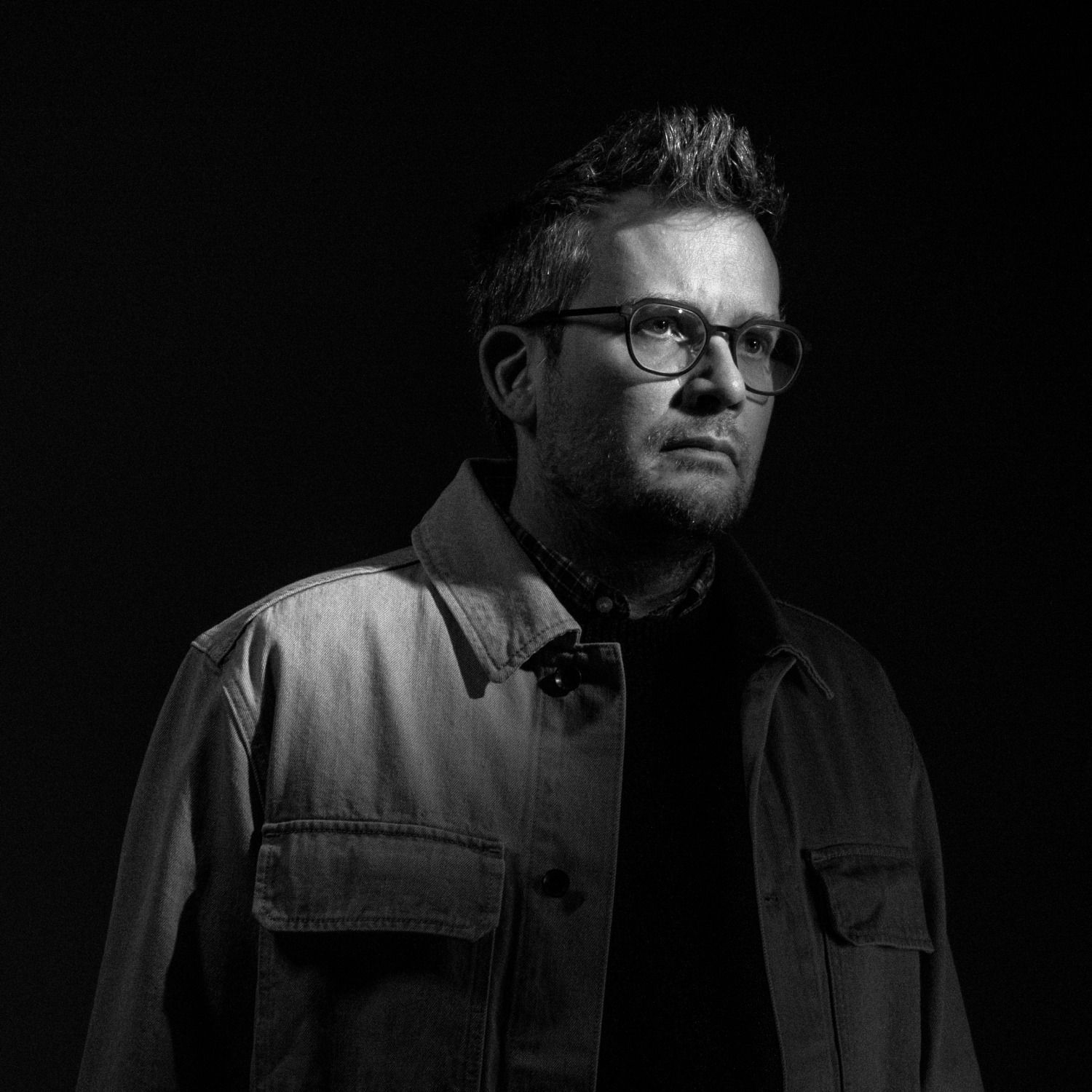
Speaker 3 From the New York Times, this is the interview. I'm David Marchese.
Speaker 3 In a time of widespread disconnection and hopelessness, John Green's work dares to stay hopeful.
Speaker 3 His YA novels, especially the mega best-selling The Fault in Our Stars, have shown his gift for speaking the emotional language of teens.
Speaker 3 For almost 20 years, Green and his brother and best friend Hank have shared earnest and charmingly nerdy videos to a devoted YouTube audience of millions, in which they explore all sorts of things.
Speaker 3 Anxiety, mental health, religion, you name it. If it's something that's kept you up at night, the Greens have probably made a video about it.
Speaker 3 And then more recently, Green turned his attention to global health with this year's non-fiction bestseller, Everything is Tuberculosis.
Speaker 3 Despite all that work, Green himself has battled over the years with his own feelings of disconnection from his fiction writing, his fans, and from his own sense of purpose.
Speaker 3 And it's a battle that he knows, as so many of us do, that he'll need to keep fighting.
Speaker 3 Here's my conversation with John Green.
Speaker 3 John, thank you for taking the time to speak with me today. I appreciate it.
Speaker 4 It's a pleasure. You know, I'm just going to start with a heavy question.
Speaker 3 So I think underneath a lot of your work, whether it's fiction or nonfiction or online content, is the idea of hope.
Speaker 3 And I saw somewhere that you said hope is the correct response to consciousness.
Speaker 4 Yeah. So what does that mean?
Speaker 3 And also, where are you with hope right now
Speaker 3 when we're in a moment that, you know, certainly
Speaker 3 could encourage a lot of hopelessness?
Speaker 4 Yeah, well, I think despair is a daily presence in my life and something that I have to try to ward off using all of the magic and meaning that I can find.
Speaker 4
And, you know, I've lived with major depression in my life. I have pretty severe OCD.
I have a lot of anxiety. And I can't afford despair.
I really can't.
Speaker 4 I don't think humanity can afford despair because the problem with despair is all it does is make more of itself, right?
Speaker 4 Like I wouldn't have an issue with despair if it caused me to be like a better human or a better dad or whatever. But despair for me just sort of like sinks me deeper and deeper into the couch.
Speaker 4 And that is my kind of daily temptation.
Speaker 4 I keep in my wallet a little note that says the year you graduated from high school, 12 million children died under the age of five and last year fewer than five million did that's still way too many it's still an absolute indictment of humanity that we allow so many children to die every year and yet at the same time the progress is real and i think holding those two competing ideas together is the great challenge of my my life do you think hope multiplies itself in the way that despair does i think it can um I don't know that it always does.
Speaker 4 I mean, the problem with hope is that it feels like a very easy word. You know, it feels like very convenient and sort of kumbaya.
Speaker 4 But I'm interested in the kind of hope that holds up to scrutiny, the kind of hope that does hold up to the worst things that happen to us, that holds up to our worst days.
Speaker 4 That's the kind of hope that I'm interested in. And that's much harder to come by, I think.
Speaker 4
You can't just feel hope and then let that feeling pass over you. with joy and pleasure.
You have to take it into the real world.
Speaker 4 You have to see that hope in action.
Speaker 3 I'm also curious about the connections between hope and suffering. I know that when you were a much younger man, you were a chaplain in a children's hospital and witnessed a lot of,
Speaker 3 I would say maybe incomprehensible suffering. How did you take opportunities for hope away from all the unhopeful experiences you had?
Speaker 3 Because I could very easily imagine somebody working in a children's hospital and seeing, you know, kids die from cancer and then leaning towards despair rather than leaning into hope.
Speaker 4 Yeah, and I think that's fairly common. I mean, I mean, look, working at the hospital is the axis Mundi around which my life spins.
Speaker 4 You know, that six months is the most important six months of my life in a lot of ways, because
Speaker 4 I was on one clear trajectory.
Speaker 4 I was going to become an Episcopal minister, and then suddenly I wasn't because my experiences at the hospital so fundamentally challenged my understanding of the universe, my understanding of God, that I just couldn't go through with it.
Speaker 4 I had to move forward with a different life.
Speaker 4 And so I don't want to pretend that I emerged from that feeling all hopeful and happy.
Speaker 4 I emerged from it feeling scared and overwhelmed and devastated by what I'd seen and by the reality that suffering is not just unjustly distributed, but fundamentally unjust in the fact of it.
Speaker 3 Is there a particular experience from your time at the hospital that maybe set you on a different path?
Speaker 4 There was a really bad fire that
Speaker 4 where I was on call for the fire, and it was four kids, and two of them died, and two of them were very badly burned.
Speaker 4 And,
Speaker 4 you know, there's not much to say about that, except that
Speaker 4
trying to be with people in that moment of devastation is difficult. Obviously, not nearly as difficult as it is to live through.
But trying to,
Speaker 4 you know, support people in that moment is really hard work. There is no reason for children to die.
Speaker 4 You know, I had a religion professor once who told me there is a law that says that no parent should bury a child and someone needs to enforce it. And that's how I felt coming out of the hospital.
Speaker 4 Like there was no one enforcing that law. But
Speaker 4 a lot of the questions that interested me before the hospital just don't interest me anymore. I'm not really interested, for instance, in the question of like whether God is really real or whatever.
Speaker 4 The question that's important to me is how can we work together to bring about the world that God, as I understand it, wants us to have.
Speaker 3 Why does what you just described, why does it not fit within sort of the religious or intellectual purview of being a minister?
Speaker 3 Like, what was the disconnect you felt that precluded you continuing on that path?
Speaker 4 I'll be honest, there's two things. So, first off,
Speaker 4 on a very functional, practical level, I was in a church basement with my mentor and he was ordering candles out of a catalog.
Speaker 4 And I was like, wait a second, this isn't all just like worshiping God and like helping people and ministering to people. You have to order candles through a catalog.
Speaker 4
And I was like, that's a deal breaker for me. Like, I can't do that.
And it's, I, I still
Speaker 4
mundane or like you just didn't. It's just the kind of thing that I'm bad at, David.
Like, I'm not good at ordering candles. And I'm still not good at it.
So that was like one thing.
Speaker 4 But then there was the much deeper kind of philosophical, theological thing, which is that I felt like there were aspects of the liturgy that I would be asked to repeat as good news that I just wasn't sure I believed.
Speaker 3 You know, in thinking about your work and your experiences, again, whether it's in fiction and, for example, in The Fault in Our Stars, writing about teenagers who are extremely ill, or in your most recent book, Everything is Tuberculosis, writing about global scale illness.
Speaker 3 Again, they both connect for me to the idea of suffering.
Speaker 3 I'm just curious if you feel like you're drawn to suffering.
Speaker 4 I feel like I'm drawn to
Speaker 4
people who are suffering and trying to make sense of suffering and trying to be with people in a meaningful way who are going through difficulty. I've always felt like that.
I don't know why.
Speaker 3 What's your hunch about why you're drawn to it?
Speaker 4
Well, it's a big deal, for lack of a better term. You know, I mean, suffering is a big, big deal.
And it's a huge part of the human experience.
Speaker 4 And it's a part we often deny or minimize or attempt to look away from. And in doing that, I worry that sometimes we deny or minimize or look away from the humanity of people who are suffering.
Speaker 4
And then also in my own life, I've, you know, known some suffering. I've, you know, I haven't been dying before, but I have been really sick before.
I've been
Speaker 4 really scared before. And so I'm also grappling with it on a personal level.
Speaker 3 How much do you think one can
Speaker 3 prepare for suffering? You know, for example, you just described experiencing suffering in your own life. Did that experience or even your sort of artistic experiences help you
Speaker 3 with having, for example, your brother and best friend, Hank, have to deal with a cancer diagnosis a few years ago?
Speaker 4 Nothing prepared me for Hank getting cancer.
Speaker 4 When I found out he had cancer, before we knew what kind of cancer, which is a terrifying couple of weeks, I went for this walk through the woods, just knowing that being in the forest would calm me down a little bit.
Speaker 4 And I could barely put one foot in front of the other. I remember thinking, you've been with so many people who had this experience, and it has in no way helped you have this experience.
Speaker 4 So, yeah, I don't think it helps really, to be honest with you.
Speaker 4 And, you know, if
Speaker 3 your work and your experiences in no way was able to prepare you for your experience with Hank, who is doing fine right now, is that, is that right?
Speaker 4
Yeah, yeah, yeah. I would say better than fine.
Better than fine. It's hard to slow Hank Green down.
Yeah.
Speaker 3 But if your experience were
Speaker 3 ultimately ineffectual when it came to your situation with your brother, what do you think the implications of that are for your work generally? Like, is it, how much can it help other people?
Speaker 3 And how much does it ultimately just have to be about you expressing what you need to express?
Speaker 4 Well, I think art does help us feel less alone. I really believe that.
Speaker 4 But I also think that like one of the reasons I stopped writing fiction was because I forgot or didn't understand like what fiction was for anymore.
Speaker 4 And so, you know, when you write a nonfiction book about tuberculosis, you know exactly what you're trying to do, which is raise attention to the fact that 1.5 million people are dying every year of a disease we've known how to cure since the 1950s.
Speaker 4 When you're writing fiction, I think the mission is a lot more complex and amorphous and abstract.
Speaker 4 When fiction works for me, It's because I'm also bringing my deepest self to the story just like the writer did. I'm bringing my own experiences of loss and grief.
Speaker 4
I'm bringing my own joys and hopes to the novel. And there is a magic in that.
I think fiction can be transformative.
Speaker 4 But I also think that, you know, part of the reason I haven't written a novel in eight years is because I lost track of how that works.
Speaker 3 The way you put it was when I stopped writing fiction. Do you mean that definitively?
Speaker 4
No, not at all. In fact, I'm writing fiction now.
So what were
Speaker 3 some of the things that you lost track of?
Speaker 4 Yeah.
Speaker 4 So I wasn't sure what role my novels could play in the moment in which I found myself,
Speaker 4 you know, starting in 2018.
Speaker 4 Another factor for sure is that lots of readers were inevitably reading me into my stories. And that was very uncomfortable and difficult for me and hard for me to navigate.
Speaker 4 I mean, I wrote a novel about a girl with OCD. I also have OCD.
Speaker 4 Navigating the distance distance between that girl and me became very complicated and fraught in a world where everyone assumed that my OCD was identical to Ace's OCD.
Speaker 3
Aaron Ross Powell, so you wrote The Fault in Our Stars in 2012. And then that book wasn't just a bestseller, which would have been a dream come true for any author.
It was sort of this
Speaker 4 world-eating mega bestseller.
Speaker 3 The numbers I've seen are like 20 million copies sold or something like completely wild like that,
Speaker 3 which I think is a level of success like way beyond what any writer who's not like a crazy egomaniac can reasonably expect.
Speaker 3 How did that level of success change how you think about what you could do moving forward?
Speaker 4 Well, on the one hand, it offered me a tremendous amount of freedom because The Fault in our Stars was so successful that I didn't need to write another book. I was able to
Speaker 4 write write exactly the book I wanted, exactly when I wanted. So on that level, it was wonderful.
Speaker 4 And then it was also wonderful on the level of reaching so many readers and having readers respond so generously to the book and share it with their friends and their parents and their kids.
Speaker 4 But there's another level at which
Speaker 4 it's difficult.
Speaker 4 You know,
Speaker 4
when you're up near the center of U.S. pop culture, it's not an entirely entirely pleasant experience, at least for me.
It's sort of like being at the top of a mountain where there isn't much oxygen.
Speaker 4 I wanted to get off the top of the mountain pretty quickly, to be honest with you.
Speaker 4 And
Speaker 4
yeah, parts of it were really difficult. Parts of it were really hard.
You know, we had to move, like people would come to our house. Lots of things in our lives changed.
Speaker 4 that we didn't necessarily want to have change. But
Speaker 4 looking back, I feel nothing but gratitude for that experience because the book has reached so many people and it's given me lots of opportunities that I could never have dreamt of.
Speaker 3 Aaron Powell, I want to just briefly move to an idea that's connected more to everything is tuberculosis, which, you know, of course is not just about tuberculosis. It's also about global health.
Speaker 3 It's undeniable that the Trump administration in various ways has pulled back from aiding global health. And I think there are all sorts of,
Speaker 3 to varying degrees degrees of plausibility, all sorts of political or economic arguments that could be made for why the Trump administration is dismantling USAID.
Speaker 3 How do you understand the Trump administration's moral or philosophical attitude when it comes to making moves like that?
Speaker 3 I was talking to a friend not that long ago about this same subject, and his attitude was, that's what evil is. Now, to my mind, that's maybe an exaggeration.
Speaker 3 I don't know if I I understand it as evil, but like, how do you understand the decision to make moves that result in more suffering? Where do you think it comes from? What motivates it?
Speaker 4 Well, I would say that the belief that some human lives have more value than others is the root of all evil. And this is clearly an expression of that belief.
Speaker 4 I don't understand it. I guess I understand it as a belief that
Speaker 4 the United States, with its limited resources, should focus on the needs of the United States.
Speaker 4 But that is such a narrow-minded way to think about how the United States became the country that it has become in terms of its power, in terms of its relative wealth, in terms of its ability to
Speaker 4 have some say in what happens in the world.
Speaker 4 If you want to take a sort of traditional conservative approach to it, it's the best use of soft power that the United States has ever had.
Speaker 4
If you want to take a moral philosophical approach to it, the U.S. is directly responsible for saving tens of millions of lives through PEPFAR.
It's supported the Global Fund and USAID.
Speaker 4 And so it's something that traditionally I think Americans have had real cause to feel proud about.
Speaker 4 The dismantling of USAID, the questions around support for the Global Fund, the questions around support for PEPFAR,
Speaker 4 It's just devastating.
Speaker 4 And so for me, I guess to be honest, like, I can't look back because if I look back, I feel such grief and such anger.
Speaker 4 I can only look forward and try to say, okay, well, given the world in which we now live, what can we do together?
Speaker 3 I want to turn now to the subject of YouTube and the work you do there. You know, there's all sorts of evidence that social media and watching videos and living online is bad for young people.
Speaker 3
I think there's very little evidence that it's good for them. Yeah.
Do you have any ambivalence about participating in an ecosystem that might just generally not be good for kids and teens?
Speaker 4 Yeah, I made a video a while back called Am I Cigarettes, where I wondered if
Speaker 4 just by creating content on the social internet, I might be a sort of form of tobacco consumption. I do have a lot of ambivalence about it and I go back and forth on it a lot.
Speaker 4 There have been years where I really didn't use the social internet except for YouTube. And then there have been years where I used it a lot.
Speaker 4 And the years where I didn't use it much were happier years for me.
Speaker 3 Where did you land on the question of, am I cigarettes?
Speaker 4 Yeah, I mean,
Speaker 4 I came out of that video quite unsure as to whether I'm cigarettes. My brother then made a follow-up video where he was like, we're food
Speaker 4
and there's a lot of bad food out there, but hopefully we're good food. And I thought that was a good point.
I think that abandoning the space is probably the wrong response.
Speaker 4 I do think that YouTube has become a really productive place to... share educational resources, to lower barriers to educational access for people.
Speaker 4 And so I feel less ambivalence about using that space. And our particular community, I think,
Speaker 4
is really important for a lot of people. It's really, it's a big part of their identity.
And I think the work we do together is useful and important.
Speaker 4 In
Speaker 3 the nonfiction book that you published before Everything is Tuberculosis, The Anthropocene Reviewed.
Speaker 4 Yeah, what a title.
Speaker 4 Can you pronounce that word more smoothly than I can? I mean, only via practice. Wait, say it right now.
Speaker 3
Anthropocene. Oh, that was much better.
You know, the book consists of it's short essays where you review all sorts of things in the world and then at the end give them a star rating.
Speaker 3 And one of the reviews is of the internet, which you gave a rating of three out of five stars.
Speaker 3 And at the end of that review, that essay, you ask a bunch of rhetorical questions, including what does it mean to have my way of thinking and my way of being so profoundly shaped by machine logic?
Speaker 3 What does it mean that having been part of the internet for so long, the internet is also part of me? I want to know your answers to those questions.
Speaker 3 What happens to you when the internet becomes a big part of who you are and what you do?
Speaker 4 I think the
Speaker 4 easy answer is that the internet, when the internet becomes part of you, you cede a certain amount of your overall sense of self to online experience, which can be wonderful in some ways, right?
Speaker 4 Like, I mean, how else, you know, I was, this is going to surprise you, David, but I was a big nerd when I was a kid. And I would have loved to be.
Speaker 4 I would have loved to be able to connect with young people the way that young people can connect with each other now across time and space around shared affinities or shared interests, right?
Speaker 4 Like, it would have been amazing for me to have a relationship with other people who were obsessed with collecting every version of the 1986 Chicago Cubs baseball cards.
Speaker 4
The internet has facilitated communication in lots of really beautiful ways. And then there is the cost.
And I feel like I have lived both sides of that coin.
Speaker 3 But
Speaker 3 tell me more about how you've lived both sides of that coin.
Speaker 4 Well, you weren't on Tumblr in 2012 when Tumblr loved me, but you also weren't on Tumblr in 2014 when Tumblr didn't love me as much,
Speaker 4 is what I guess I would say.
Speaker 3 What was going on in 2014?
Speaker 4 Just a lot of like
Speaker 4 bad faith interpretations of my work, I would say.
Speaker 3 Was any of that illuminating?
Speaker 4 No. No.
Speaker 4 And,
Speaker 4 you know,
Speaker 3 I think with the rise of YouTube and social media, you know, that's also resulted in a rise in young people wanting to be on YouTube and obviously on social media.
Speaker 4 And is there something that you as a public figure wish that
Speaker 3 teens understood about what it means? to put yourself out there publicly?
Speaker 4
Well, I understand the urge to have outside affirmation. I think that's something we all have.
And I think when we're young, we have it perhaps most profoundly.
Speaker 4 I know that when I was a teenager, I wanted to be known and loved. And being famous on the internet feels like a wonderful shortcut to that.
Speaker 4 It feels like everyone knows you and everyone loves you, but in fact, no one knows you.
Speaker 4
So I think there's a lot to recommend making stuff online. for people.
I love it. I'm very grateful that I get to do it every week.
I've been doing it every week since 2007.
Speaker 4 I want to do it every week for as long as I can do it in a way that feels productive and helpful.
Speaker 4 I also think that the feeling that somehow
Speaker 4 being
Speaker 4 famous or
Speaker 4 achieving 100,000 subscribers or a million subscribers or whatever number of subscribers feels like it will fill the hole inside of you. It will not.
Speaker 4 There is no filling the hole inside of you with the internet.
Speaker 4
Well, I don't want to say that. That's not always true.
Let me see. Let me let me, that's a great question.
Let me think about how to answer it more honestly.
Speaker 4 I think there's a lot to recommend about being a YouTuber, but I also think that
Speaker 4 being famous when you, especially when you're young, is really disorienting.
Speaker 3 What was the
Speaker 3 What were you saying in your answer that felt dishonest?
Speaker 4 Just that like, I don't know what it's like to get famous when I'm 16. And so like it's not my job to preach to them.
Speaker 3 In a couple of ways, we've touched on the subject of anxiety. And
Speaker 3 it's
Speaker 3 well, I mean, the success of Jonathan Haight's book, right, The Anxious Generation, I think speaks to a real feeling that our kids are more anxious than they used to be.
Speaker 4 Yeah, but I was anxious way before they were.
Speaker 3 Well, and so this is related to to my question.
Speaker 3 As someone who has really struggled with anxiety, and I'm sure you get these kinds of questions, but what do you say to young people when they want to know how to try to reduce or manage anxiety?
Speaker 4 It's really hard. I mean, living with intense anxiety is the hardest thing I've ever done.
Speaker 4 It's really hard. And I think that's the first thing is acknowledging that it's really hard and that acknowledging that surviving it is itself a win.
Speaker 4
I find going outside helpful. I find exercise helpful.
I find
Speaker 4 even though it makes me anxious in the short run, I find being with other people helpful.
Speaker 4 You know, a lot of the things that make me feel less anxious in the moment make me feel more anxious in the long run. So if I'm at a party, I'm already anxious because who wants to go to a party?
Speaker 4
But I sometimes will deal with that anxiety by like getting on my phone. And that makes me feel better in the moment, but it actually makes me feel worse in the long run.
What makes me feel better?
Speaker 3 You're being on your phone at the party.
Speaker 4
At the party. Yeah.
What makes me feel better in the long run is engaging with other human beings as I find them, even though that causes me more initial anxiety.
Speaker 4 And so I've learned over the years to try to do that stuff, to take my medication every day, to do all the stuff that I'm supposed to do, the stuff that science says works. But it's still really hard.
Speaker 4 Like,
Speaker 4 I mean, you know, I'm fairly anxious now because this is a weird circumstance,
Speaker 4 but I'll be much more anxious when it is over because I'll be hyper-analyzing everything I said and everything I didn't say and yada, yada, yada.
Speaker 4 So it's funny because anytime things are good and things are relatively good right now, I understand that that's temporary. And then when things are bad, that feels very permanent.
Speaker 4 Like when I'm dealing with really high anxiety every day, it feels like that's going to be forever. Or if I'm dealing with major depression, it feels like that's going to be forever.
Speaker 4 So it's easy for me to tell myself it's temporary when things are good. It's really hard to remind myself that it's temporary when things are bad.
Speaker 4 Yeah.
Speaker 3 It can feel like an unfortunate quirk of evolution that our brains can, I think, tend to fixate on.
Speaker 4 threats much more than we're likely to fixate on
Speaker 3 possible positive things.
Speaker 4 I often think about what it would be like to be a different mammal and how then I would also be always responding to threats.
Speaker 4 Like if I was a squirrel, I would also be in a constant state of worry and fear.
Speaker 4 And that worry and fear would be completely justified, just as my current worry and fear is like, I'm right to be afraid of dying. Like I am going to die.
Speaker 4 And that is a super weird thing to have happen to a being with a consciousness.
Speaker 4 Like I'm not wrong to be panicked the same way that like squirrels aren't wrong to be panicked when they're crossing the street. It just doesn't happen to be helpful.
Speaker 3 How did, um, or how has being a parent affected your own anxieties?
Speaker 4 Pretty profoundly. I mean, you know,
Speaker 4 there's the old cliche that your heart beats outside of your chest, and that's true in some ways. And so, you know,
Speaker 4 I worry intensely for my kids. It's impossible not to.
Speaker 4 I've never had a job so interesting, and I've never had a job so hard as being a parent.
Speaker 3 Have your kids read your books?
Speaker 4 No, no. And I don't think they have any interest in it.
Speaker 4
I mean, I didn't care what my dad did when I was a kid, and I don't think they care much what their dad does, and that's, that suits me just fine. I know, it's pretty great.
It's humbling, isn't it?
Speaker 4
Oh, yeah. And like, but like, I mean, why would they? Like, I mean, I don't, uh, you know, I, um, I knew what my dad's job was, but I didn't think about him.
Yeah.
Speaker 4 You know, the whole point of having a good dad is that you don't have to think about them very much. Just
Speaker 4 be there.
Speaker 3 This is a tangential thing, but I think it was in the New Yorker profile of you from almost 10 years ago, something like that.
Speaker 3 The writer was writing about how you were studying creative writing in college, and you had an experience where you read a story in class that had a sex scene in it.
Speaker 3 And then your professor said, I guess in front of the whole class, you've never had sex before, have you?
Speaker 3 Do you remember the anecdote that I'm talking about?
Speaker 4 I barely. I haven't told that story in a long time.
Speaker 4 I completely forgot that was in the New Yorker. How horrifying.
Speaker 3 But, you know, of course, the professor, you know, you said he was right.
Speaker 4 Yeah, he was. Do you remember what gave it away? No, I mean, I don't remember at all.
Speaker 4
Probably just a general romanticization of sexuality, I would imagine. But I have no idea what gave it away.
That's really funny, though.
Speaker 4 Yeah, it was,
Speaker 4
I remember that class. I had a great teacher, and he did say that in front of the whole class.
But then apparently, you used to give class updates on like your progress on that problem. Oh, my God.
Speaker 4 Did I really?
Speaker 4 That's what's in the story.
Speaker 4 Oh, my God. You're making me feel like I'm folding into a series of increasingly small polygons until I just disappear.
Speaker 4 I'm just wondering, like, who was this guy? Who was
Speaker 4 that guy?
Speaker 3 Who was that man at that point in his life where he is.
Speaker 4 Oh, David, thank God we all have the capacity for change and growth.
Speaker 4 No, I don't remember that at all. I mean, I remember not having had sex in college for sure, um, but I don't remember
Speaker 4
talking about it. I don't remember that at all.
I don't remember talking about it in class, and I'm duly horrified by the fact that I did.
Speaker 3 Because my thing was I would, you know, the idea of even the idea of that seems absolutely mortifying to me. So I was trying to understand
Speaker 4
who would have done that willingly. Also a little bit incongruous with the person I believe myself to be, you know, like, which is a funny thing.
Like as
Speaker 4 we get older, the stories we tell about ourselves change of course
Speaker 4 and you know when i was young i told one set of stories about myself and now like when i tell some of those stories i'm always like oh no i don't like that story at all like i don't like that guy and what what do you think the story you're telling about yourself now is
Speaker 4 just a just a just a dad in indianapolis man like just uh
Speaker 4 don't give me that don't no no no i mean that's no no just a dad in indianapolis what that's the that's That's the story I'm trying to tell, whether or not it's real or not.
Speaker 3 After the break, John and I talk again about why he's so drawn to writing about young people.
Speaker 4 The first
Speaker 4
embrace of those feelings is just so intense. It's so overwhelming.
There's no irony to it. There's no emotional distance between you and it.
There is only the reality of experience.
Speaker 4 And I think in my fiction, I do want to go back that.
Speaker 2 This podcast is supported by the American Petroleum Institute. Energy demand is rising, and the infrastructure we build today will power generations to come.
Speaker 2 We can deliver affordable, reliable, and innovative energy solutions for all Americans, but we need to overhaul our broken permitting process to make that happen.
Speaker 2 It's time to modernize and build, because when America builds, America wins. Read our plan to secure America's future at permittingreformnow.org.
Speaker 2 Every day, countless people turn to TikTok in search of something new.
Speaker 2 And whether it's topics like science and history or literature and math, they're finding individuals who make knowledge accessible.
Speaker 2 TikTok adds a new layer to learning by turning curiosity into everyday discoveries. Readers share recommendations that revive forgotten classics and launch new authors into the spotlight.
Speaker 2 Parents trade tips that make everyday challenges feel a little easier. Home cooks pass down family recipes and global food traditions while language learners swap tricks that make new words stick.
Speaker 2 People on TikTok are teaching life skills like budgeting, job prep, or how to fix something around the house right alongside lessons on philosophy, art, and culture.
Speaker 2 And every day, diverse voices offer new perspectives on the issues shaping our world: from learning and creativity to community and connection.
Speaker 2 TikTok is a tool for curiosity, a resource for self-education, and a place where discovery turns questions into conversations. To learn more about the world and about yourself, discover TikTok.
Speaker 3 John, thanks for taking the time to talk with me again. I appreciate it.
Speaker 4 Yeah, no, it's my pleasure.
Speaker 3 When we were talking earlier, you said that
Speaker 3 I think it was around 2018 was the year you pointed to as being a time when you became unsure of what role novels could play in that moment.
Speaker 4 My novels.
Speaker 4
Your novels, your novels. Yes, yes.
Other people's novels, very useful to me. You did it.
Speaker 4 What was going on in that moment that caused that uncertainty for you well i think some of it was the first trump administration a feeling that certain aspects of american life that i'd taken for granted were not to be taken for granted i think some of it was personal my own lifelong struggle with ocd and anxiety When I got home from the Turtles All the Way Down tour, my last novel's tour, I became quite sick, both physically.
Speaker 4 I got this disease called labyrinthitis, but also mental health-wise. And so I think I didn't know how to use my novels or how to use my fiction to respond to that moment.
Speaker 4 And then I also think that on some level, I just forgot what my novels were for, like what the point of them was. It started to feel almost like indulgent, I guess, to like just do.
Speaker 4 this fun stuff all the time.
Speaker 4 I don't know. I think the truth is that part of it was personal and part of it was
Speaker 4 just feeling kind of overwhelmed by the prospect of publishing for such a broad audience, to be honest with you.
Speaker 4 You know, like it's a great gig in a lot of ways and one I'm one I'm very grateful for, but it was also overwhelming.
Speaker 3 And you also said that part of the problem with writing fiction back then was that
Speaker 3 you were feeling like because you had a public life, readers were taking that as sort of an opportunity to read your work autobiographically that, you know, you sort of felt maybe uneasy about that.
Speaker 4 Yeah.
Speaker 3 Have you just decided that's part of the gig now or have you come to terms with that in some way?
Speaker 4 I think it's part of the gig and it's a good gig, right? Like it's easy to focus on the parts of your job that are hard or that are not ideal, but I really like my job.
Speaker 4
There are aspects of my job I like less. And that's true for every job I've ever had.
Like every job involves paperwork and I hate paperwork.
Speaker 3 Or ordering candles.
Speaker 4 Or ordering candles. Yes.
Speaker 3 thank you.
Speaker 4 Exactly. I've tried to find the least paperwork-y ordering candles jobs possible, but there is still some version of ordering candles in every job.
Speaker 4 And I hope that over time, I do think that taking this break from fiction has allowed me to think differently about that stuff.
Speaker 4
That, like, you know, maybe it's okay that they're going to read me into the story. Maybe that's inevitable.
I read J.D.
Speaker 4 Salinger into Catcher in the Rye, even though he made it very clear he didn't want me to do that, but I still did. You know, I still looked for hints of the author in the story.
Speaker 4 I just think that's a human impulse.
Speaker 3
Well, you have some. Did you try and send a letter to J.D.
Salinger at some point? I did.
Speaker 4 You remember a lot more of my life than I do, David.
Speaker 4
You've researched it more recently. But yeah, I tried to write Salinger a letter.
I read this biography of Salinger in my high school library, and then I tried to.
Speaker 4
I did. I wrote him a letter.
I wrote him a letter to like the address that was on the proto-internet, you know, the like CompuServe 1993 internet.
Speaker 4 And
Speaker 4 obviously, I never got a response, but
Speaker 4 I felt really compelled to tell him
Speaker 4 that his book had meant a lot to me.
Speaker 4
And I did, I don't actually need him to have read that. I needed to say it.
I don't need him to read it.
Speaker 3 Yeah.
Speaker 3 You know, whether it's
Speaker 4 your
Speaker 3 work in global health or
Speaker 3 making YouTube videos on any number of subjects or making podcasts. You're doing a lot of work that is not writing fiction.
Speaker 4 That's true.
Speaker 3 And I know for myself, like I really think of myself as a writer and I do relatively little writing anymore.
Speaker 3 And I was wondering if how that works for you, given that you're making all this other stuff and like I said, kind of doing less writing than you were doing 15 years ago, 20 years ago.
Speaker 3 Has your self-conception changed at all?
Speaker 4
It has changed a little bit, to be honest. I mean, I still think of myself as a writer, but I'm conscious of the fact that I spend a lot of time not writing.
I also always had a day job, though.
Speaker 4
So I try to think of it as like, well, I like having a day job. Having a day job is good for me.
It's good for my brain. I like not writing all the time.
Speaker 4 If writing was the only thing I did, I think I'd put a lot of pressure on myself as a writer. But I don't think of myself as certainly as just a fiction writer anymore.
Speaker 4 I mean, I haven't written a novel in almost 10 years. So obviously I'm not primarily a fiction writer.
Speaker 3 You also said something along the lines of your fiction tends to work best when you can bring your full self to the story that you're working on.
Speaker 4 Yeah.
Speaker 3 And I thought, like, why is it that you think you're able to bring your full self to the writing of YA fiction in particular?
Speaker 4 Well, I think that for me, my own teenage years were so important
Speaker 4
because so many things happened for the first time. I lost a friend for the first time.
And so that meant grappling not just with grief, but with the unjust distribution of suffering in our world.
Speaker 4 I fell in love for the first time, which meant not just the feelings of falling in love, but also the way that it sort of narrows your vision and becomes overwhelmingly the most important thing in your life.
Speaker 4
I, you know, grappled with the questions of what I owe other people and what I owe myself for the first time, like independent of my parents. That time of my life was so important to me.
It was so,
Speaker 4 I think partly because I was at boarding school and so I was with my friends all the time, 24 hours a day, seven days a week, and my enemies, it should be noted, partly because I was
Speaker 4 the first
Speaker 4
embrace of those feelings is just so intense. It's so overwhelming.
There's no irony to it. There's no emotional distance between you and it.
There is only the reality of experience.
Speaker 4 And I think in my fiction, I do want to go back to that. I do want to have that feeling where, like, I don't have to have ironic distance between me and the question the way that now I do.
Speaker 3 You want to get back to the lack of ironic distance. Is that what you're saying?
Speaker 4 Yeah.
Speaker 4
Yeah. I want to get back to where you look at the stars and you are truly overwhelmed by the size of the universe.
And for me, that was high school.
Speaker 3 Yeah.
Speaker 3 Do you think you could approach fiction in the same way and with the same level of emotional intensity if you were writing novels for adults?
Speaker 4 Well, the novel that I'm working on now is about and for grown-ups. So I guess we'll see.
Speaker 4 You know, we talked a little bit earlier about faith.
Speaker 3 And you said that
Speaker 3 you're not really interested in the question of whether God is real.
Speaker 4 That really bugs people.
Speaker 3
I'm sure it does. But this is the question I have about that.
So, you know, I've had a couple conversations just in my life with, well, I'm thinking of one in particular with a Catholic priest.
Speaker 3 And I presented this idea to him that I feel like I can have transcendental or spiritual or religious-like experiences without...
Speaker 3 necessarily having to connect them to a belief in a higher power or a God. And Father Jonah is his name.
Speaker 3 I'm sure he wouldn't mind me talking about this, said very respectfully, like, actually, I kind of think belief in the God is like, that's the whole deal. And if you're not there,
Speaker 3 then
Speaker 3 you're kind of missing the point.
Speaker 3 Yeah.
Speaker 3 How is that not the case? Or why is it not the case for you?
Speaker 4
Well, I do hear that. Yeah.
I mean, I do hear that from a lot of theologians. And I think that their experiences of the numinous or the sacred or whatever might be different from mine.
Speaker 4 And theirs might be contingent upon
Speaker 4 God
Speaker 4 being
Speaker 4 really real, whatever that means. For me, those experiences of the sacred, of God's presence, of God's presence in my life and in the life of the world, they are real.
Speaker 4 Like, I know that they're real because I have them.
Speaker 4
And I have them in prayer. I have them when I am overwhelmed by suffering, when I am overwhelmed by fear.
I have those experiences of the sacred. Whether or not those experiences are like,
Speaker 4 are constructed by my brain or are experiences of a living God is irrelevant to whether the experience was real for me.
Speaker 4 And so what I'm interested in is like, how do I get more of that experience, that experience of feeling proximal to the sacred, that experience of feeling close to a justice-loving God.
Speaker 4 How do I get more of that experience? And how do I bring about or how do I help in whatever small way I can, bring about the world that God would wish to see on earth?
Speaker 3 And how does one get more of the experience of the sacred?
Speaker 4 Well, through practice, mostly in my experience. I think, you know, that's why people who pray a lot have it more.
Speaker 4 But also, I mean, you know, I was.
Speaker 4 in this deeply impoverished neighborhood in Manila with Doctors Without Borders a couple days ago,
Speaker 4 watching these
Speaker 4 profoundly committed healthcare workers
Speaker 4
try in very difficult circumstances to get people access to good care. And, like, that makes me feel close to God.
That's a sacred experience for me.
Speaker 3 And, you know, I think kind of in ways both explicit and implicit, we've touched on the idea of hope throughout our conversation.
Speaker 4 And are there things that you think adults could learn from teens about hope?
Speaker 4 Well, I think we need to put down our armor a little bit, our armor of cynicism and irony and
Speaker 4 thinking that we know about everything that matters, and everything that matters is how well the minivan handles and how much the mortgage is. I think we need to put some of that down sometimes and
Speaker 4 try to grapple with the beauty of the world as young people do in an open way, in a vulnerable way.
Speaker 4 For me, that's where the real magic is.
Speaker 4 I said earlier, and it's cheesy as I'll get out, I know, but I said earlier that when you're lying down with your friends under a big sky at night and you're looking at the stars and you're conscious of how large the universe is, that's a really borderline, for me, sacred experience.
Speaker 4 And
Speaker 4 if you lose that in adulthood, you've lost something really important.
Speaker 3
That's John Green. To watch this interview and many others, you can subscribe to our YouTube channel at youtube.com slash at symbol the interview podcast.
This conversation was produced by Wyatt Orme.
Speaker 3
It was edited by Annabelle Bacon. Mixing by Sonia Herrero.
Original music by Dan Powell and Marion Lozano. Photography by Devin Yalkin.
Speaker 3 The rest of the team is Priya Matthew, Seth Kelly, Paola Newdorf, Eddie Costas, and Brooke Minters. Our executive producer is Allison Benedict.
Speaker 3 Next week, Lulu talks with Simon Cowell about his new docu series and how he looks back on being American Idol's resident villain.
Speaker 4 What is the line, do you think, between bluntness and humiliation?
Speaker 4
I've got to be honest with you. That's why I did change over time.
I mean, I did realize I'd probably gone too far.
Speaker 3 I'm David Marchese, and this is the interview from the New York Times.
Speaker 5 This podcast is supported by Bank of America Private Bank.
Speaker 5
Your ambition leaves an impression. What you do next can leave a legacy.
At Bank of America Private Bank, our wealth and business strategies can help take your ambition to the next level.
Speaker 5 Whatever your passion, unlock more powerful possibilities at privatebank.bankofamerica.com. What would you like the power to do? Bank of America, official bank of the FIFA World Cup 2026.
Speaker 5 Bank of America Private Bank is a division of Bank of America and a member FDIC and a wholly owned subsidiary of Bank of America Corporation.