The Autism Diagnosis Problem
Health Secretary Robert F. Kennedy Jr. has called the steep rise in autism cases “an epidemic.” He blames theories of causality that mainstream scientists reject — like vaccines and, more recently, Tylenol — and even instructed the C.D.C. to abandon its longstanding position that vaccines do not cause autism.
Today, Azeen Ghorayshi explains what’s really driving the increase in diagnoses.
Press play and read along
Transcript
Speaker 2 The future belongs to those who trust their data.
Speaker 1 AI promised intelligence, but it also exposed everything we couldn't see: scattered data, hidden risks, shadow decisions.
Speaker 1 Now there's a new way forward where protection, governance, and AI trust move as one. See your entire data estate in real time.
Speaker 4 When resilience, security, governance, and AI trust converge, innovation moves safely and faster. Veeam and Security AI, accelerating safe AI at scale.
Speaker 6 Learn more at Veeam.com.
Speaker 7
Robert F. Kennedy Jr.
has repeatedly cited the skyrocketing autism rates as central to his mission as Health and Human Services Secretary.
Speaker 7 He's laid the blame at the feet of everything from Tylenol to vaccines, and he recently instructed the CDC to abandon its long-standing position that the latter do not cause autism.
Speaker 7 But while the rates of autism have increased in recent decades, the reasons are more complicated than what Kennedy has presented.
Speaker 7 Today, Azine Qureshi explains what's really driving the increase in diagnoses.
Speaker 7 It's Monday, November 24th.
Speaker 7 So Azine, the Make America Healthy Again movement and RFK in particular have really put autism in the spotlight. RFK Jr., of course, has called autism an epidemic.
Speaker 7 And I think it is fair to say that he has instilled a lot of fear in people about what the root causes of autism are. And you've spent a lot of time thinking about this as part of your reporting.
Speaker 7 And so that's where I'd like to start. And in particular, I want to talk about the numbers.
Speaker 8 Yeah, so Autism diagnoses among children in the United States have been rising pretty consistently for decades.
Speaker 8 In the year 2000, which is the first year that the CDC started collecting data on this question, they found that one in 150 eight-year-olds in the United States had an autism diagnosis.
Speaker 8 That number has risen consistently every year that they have published their report.
Speaker 8 And the most recent data that they published, which came out this year, found that one in 31-year-olds has an autism diagnosis.
Speaker 7 So it goes from one in 150 to one in every 31 children.
Speaker 8
Yeah. And I mean, that's a a huge increase, right? And RFK really frames this as an epidemic.
He says, you know, there's something in our environment that is causing autism to spread like wildfire.
Speaker 8 But that's misleading.
Speaker 8 You know, from all the experts that I've spoken to, they've acknowledged that there are environmental factors that likely interact with our genetics that are contributing to the rise in autism.
Speaker 8 You know, there's things like pollution, for example, people choosing to have children later in life. But those those are ultimately a really small part of the explanation for this rise.
Speaker 8 And the biggest reason that we know of that is driving this increase actually has to do with how we define what autism is. And that definition has been expanding over the last several decades.
Speaker 7 So basically you're saying that the tent has gotten bigger, but not necessarily because there is a true fundamental increase in the number of people who have autism, even if that's part of it.
Speaker 7 It's that more people are being captured within this expanding definition.
Speaker 8
Yes, but there has been a growing fight over whether this tent has grown too large. These are fights over resources.
There are fights over research priorities.
Speaker 8 Parents, activists, doctors, scientists who are researching this are starting to really grapple with whether
Speaker 8 everyone in the community is getting what they need, given that the needs of people under this very broad tent can be very different.
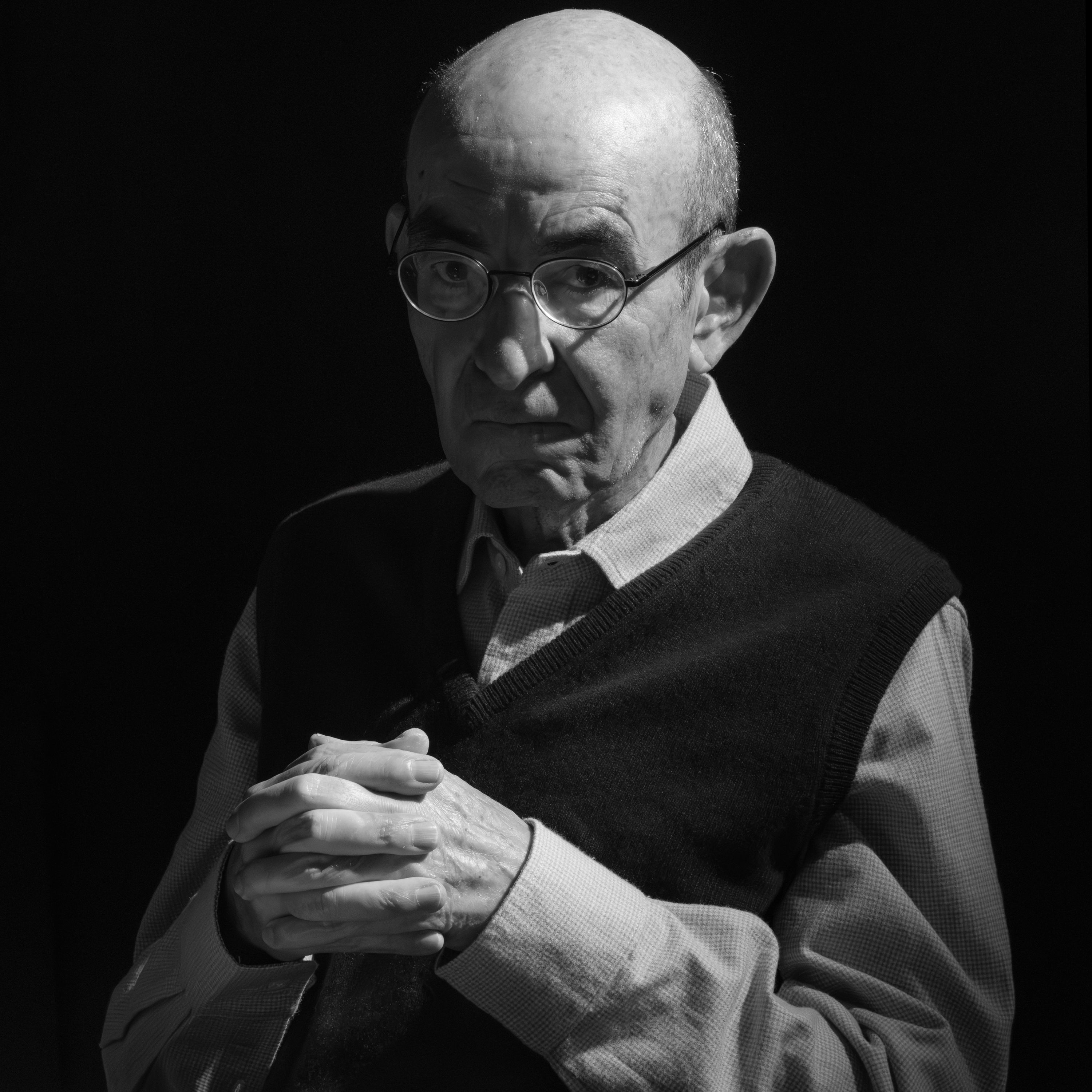
Speaker 8 And one of of the people I've been talking to for a while about these rising tensions is this psychologist named Kathy Lord. Her career basically tracks our understanding of autism.
Speaker 8
She is a legendary autism researcher. She has been actively involved in defining criteria for the disorder.
So she's really been at the center of a lot of this change.
Speaker 7 Tell me a little bit about her and sort of her backstory.
Speaker 8
So she's a clinical psychologist. She's at UCLA.
Hi, Kathy. Hello.
She has spent her whole career studying and working with people with autism.
Speaker 8 What drew you to the field of autism in the first place?
Speaker 9 I think I liked the kids. I just thought they're so interesting.
Speaker 8 Kathy in the 1970s as an undergrad started working with children who had what today we would call autism.
Speaker 9
The kids that I saw then, we assumed they were not verbal. We assumed they couldn't talk.
They did not look at us.
Speaker 8 The kids that Kathy was seeing, many of them had intellectual disabilities. Some of the kids would be rocking back and forth, avoiding eye contact.
Speaker 8 Many of them wouldn't talk, couldn't talk, or even would just repeat what was said back to them.
Speaker 9 We didn't understand why would a child be moving their fingers in an unusual way, like starfish.
Speaker 9 Or why were they upset when they, you know, someone put something down in a place that they hadn't expected it to be.
Speaker 8 And at the time, psychologists and psychiatrists thought maybe this was a form of schizophrenia.
Speaker 9 Well, originally, it was both considered childhood schizophrenia or infantile psychosis.
Speaker 8 Why did they think it fit the profile of schizophrenia or psychosis?
Speaker 9 I think part of it is that we use the term psychosis when people do things that we don't understand.
Speaker 7 And what were the clinicians telling the families, like telling the parents, and what kind of treatment were they suggesting?
Speaker 8 Yeah, so at that time, parents were basically told that there was nothing that can be done.
Speaker 9 You know, don't even try. Just send them away.
Speaker 8 And that they should send their kids away.
Speaker 9 And live your life because they'll never be able to do anything, which is not true, but that is what people were telling them.
Speaker 8 It was really in the heyday of a pretty dark period in psychiatry's history where institutionalization was very common.
Speaker 8 Kids were sent off to often state-run institutions where they were basically hidden from society.
Speaker 7 So when and how does that start to change?
Speaker 8 So yeah, when Kathy was entering the field, this is a time when there was a shift away from thinking that these kids could not be helped to realizing that actually there were things that psychologists could do that could help these kids.
Speaker 9 How do I both adjust the world around them, but also how do I give them tools, for example, to communicate that would allow them to learn.
Speaker 8 And as this shift is underway, in the year 1980, autism gets added to the Diagnostic and Statistical Manual of Mental Disorders. And this is considered the Bible of psychiatry.
Speaker 8 The fact that the diagnosis was added in that year was really significant.
Speaker 7 So this is the first time autism is officially recognized as a diagnosis. Where does it go from there?
Speaker 8 Yeah, Yeah, so at the time, the definition for autism was very narrow.
Speaker 8 The DSM said that the essential features were lack of responsiveness to other people, language problems, and quote, bizarre responses to various aspects of the environment.
Speaker 8 And all of that had to develop. in the first 30 months of their lives.
Speaker 8 The DSM specifically said that autism was considered very rare, and it estimated that something like two to four kids in every 10,000 would have this diagnosis.
Speaker 8 But pretty much from the get-go, there were questions around what autism actually was, how it should be defined.
Speaker 9 We were thinking that, wait a minute, there are people that don't have language delays, but who actually have some of the same social difficulties that autistic kids have.
Speaker 8 Clinicians were asking really sharp questions about what autism really was.
Speaker 8 They were asking, what if a kid does not have a language delay? What if they are able to speak, but they speak differently?
Speaker 9 And I think also people were more aware that cognitive disabilities, like intellectual disabilities, are a feature, but they're not always there for autism.
Speaker 9 Not everybody with autism has an intellectual disability.
Speaker 8 How do we sort of draw lines around this disorder when there seem seem to be all sorts of kids with sort of different manifestations of what seems like the same thing.
Speaker 9 We then said, wait a minute, we need to make this broader.
Speaker 8 And that's sort of when this idea of the autism spectrum gets introduced for the first time, that maybe this is sort of a continuum of traits and we're thinking a little too narrowly in the definition of autism that we have.
Speaker 8 So the way the medical community deals with this is in 1994, two really big changes happen.
Speaker 8
One, they loosen the criteria for autism itself. And second, they create a new related diagnosis called Asperger's.
And that sort of captures a lot of the edge cases that we were just talking about.
Speaker 8 So it's the first step in really a broadening of what we think of as the sort of constellation of autism.
Speaker 7 So does broadening the definition and also capturing this other group of kids, does that help settle the question of what autism is and isn't?
Speaker 8 I mean, it was supposed to, but then Kathy does this research that attempts to look at how people are actually being diagnosed.
Speaker 9 We did a study where thousands of kids were seen and all given the same diagnostic batteries.
Speaker 8 And she finds that Asperger's in particular is a really squishy diagnosis.
Speaker 8 What determines whether a child would get diagnosed with Asperger's had more to do with what clinician they saw than what criteria they met.
Speaker 9 The clinic in the Midwest would say somebody had autism and a clinic in the East Coast would say they had Asperger's.
Speaker 8 It made clear that these definitions are still not specific enough and they're not reliable.
Speaker 9 It was very confusing and resulted in kids who often over a lifetime might get an autism diagnosis, then an Asperger's diagnosis, and then sometimes have to come back to an autism diagnosis.
Speaker 9 So it really seemed like scientifically this is not useful.
Speaker 8 Diagnoses matter because diagnoses are the key to getting the specific medical attention that you need, to getting the specific services at school that are going to help support you.
Speaker 8 A diagnosis is also key for insurance coverage for behavioral therapy.
Speaker 8 And then they also matter at the level of how a person and their family conceives of who they are and what they are struggling with.
Speaker 7 So it sounds like it's both meaningful personally, but also quite meaningful in terms of resources.
Speaker 7 As you mentioned, like there are meaningful stakes here for the people involved in terms of what they get access to, whether it's healthcare or school resources or beyond.
Speaker 8
Yes, exactly. And so that led to the medical community rethinking once again how they are defining autism.
And so in 2013, Kathy was actually on the committee that made this change.
Speaker 8 Basically what they decided was these lines that we're drawing are not reliable. They're not consistent.
Speaker 8 And the way that they decided to resolve this issue was to fold everything together under one single diagnosis. So autism spectrum disorder.
Speaker 8 And that meant that the kids who were severely disabled, the kids who maybe couldn't speak or maybe had an intellectual disability, had the same diagnosis as someone who would have formerly been diagnosed with Asperger's.
Speaker 7 So basically, Asperger's as a category is getting eliminated. The definition of autism is expanding and the whole tent basically is getting bigger.
Speaker 8
And it's being recognized as a single tent. You know, before, I think there was recognition, like these things are related to each other.
Now it's being viewed as one thing, one group of people.
Speaker 8 And sort of in parallel to the changes that we've been talking about, there was also the growth of what became known as the neurodiversity movement.
Speaker 8 This movement was really about beginning to view autism through a different lens and rejecting the idea that it was a disease in need of a cure.
Speaker 10 I think I'll start out and just talk a little bit about what exactly autism is. Autism is a very big continuum.
Speaker 8 Often the advocates in the neurodiversity movement, like Temple Grandin, were on the milder end of the spectrum or would have formerly had an Asperger's diagnosis.
Speaker 10 Einstein and Mozart and Tesla would all be probably diagnosed as autistic spectrum today.
Speaker 8 And they emphasized that many of these traits, instead of being seen as pathologies, they could be seen as just differences.
Speaker 8 You know, sometimes they even referred to them as superpower, that they could be things that made a person, an autistic person, see the world in a different way that was actually really valuable to society.
Speaker 11 Literally in our investment committee meetings, we talk about whether or not this founder has the right balance of RIS and TIS.
Speaker 8 Mark Zuckerberg's sister is quoted as saying that, you know, to succeed in the technology industry, you need a little bit of the RIS and a little bit of the TIS, RIS being charisma and TIS being autism.
Speaker 11 Neurodivergence is a superpower, and we look for people that live their lives differently, and I think it also...
Speaker 8 There was really this recognition that some of the ways that autism could change your thinking could be really beneficial, especially in an industry like tech.
Speaker 8 At Microsoft, we believe individuals who are neurodiverse bring creative new ideas and perspectives to our workforce. Microsoft even launched a neurodiversity hiring program.
Speaker 8 Downstream from the efforts of those early activists was just a broader awareness and embrace of autism in society.
Speaker 12 I'm actually making history tonight as the first person with Asperger's to host SNL.
Speaker 8 You have that at the level of Elon Musk going on Saturday Night Live and saying at the time that he had an Asperger's diagnosis.
Speaker 12 Or at least the first to admit it.
Speaker 12 So we'll make a lot of eye contact with the cast tonight.
Speaker 8 There's sort of a cultural embrace of autism that extends to media and TV. We have the Big Bang theory.
Speaker 13 I realize you're also on your own tonight, so if at some point you find yourself with nothing to do, please do not disturb me.
Speaker 8 Love on the spectrum.
Speaker 14 I
Speaker 14 can't think of anything to say about it, but I'm still having a good time.
Speaker 8 Me too.
Speaker 8 We have a character with autism on Sesame Street. Julia doesn't say a lot.
Speaker 12 That's right.
Speaker 9 And she may not do what you expect, like give you a high five. Yeah, she does things just a little differently.
Speaker 8 So it's really this movement away from stigmatizing autism and being in some cases proud of autism as a label.
Speaker 7 It's really striking, Azine, how the label Autistic has really changed so dramatically just in my lifetime.
Speaker 8 Yeah, I think this is all really a victory for the neurodiversity movement.
Speaker 8 And the stigma begins to fade so much that for a lot of families, it actually becomes desirable in some ways to have a diagnosis for your kid if they have some of these struggles.
Speaker 8 It actually becomes a way for them to be validated and again, you know, be able to access resources that might be able to help them.
Speaker 8 But all of these changes, the increase in diagnoses and the really increased awareness, all of this ends up leading to a lot of unintended consequences for the autism community itself.
Speaker 7 We'll be right back.
Speaker 3 AI promised intelligence, but it also exposed everything we couldn't see.
Speaker 1 Now there's a new way forward where protection, governance, and AI trust move as one.
Speaker 4 Veeam and Security AI, accelerating safe AI at scale.
Speaker 6 Learn more at Veeam.com.
Speaker 15 Brought to you by the Capital One Saver Card. With Saver, you earn unlimited 3% cash back on dining, entertainment, and at grocery stores.
Speaker 15 That's unlimited cash back on ordering takeout from home or unlimited cash back on tickets to concerts and games. So grab a bite, grab a seat, and earn unlimited 3% cash back with the Saver card.
Speaker 15 Capital One, what's in your wallet?
Speaker 8 Terms apply.
Speaker 15 See capital1.com for details.
Speaker 16
I'm Brian Rosenthal. I'm an investigative reporter at the New York Times.
My dad is a scientist.
Speaker 17 My career has been devoted to scientific teaching and research.
Speaker 16 I remember growing up, I didn't fully understand what he was doing every day. But now that I work as an investigative journalist, I do understand.
Speaker 17 So you have to start with facts. From those facts, a hypothesis appears, and then you work on trying to test that hypothesis.
Speaker 16 I do the same thing, obtaining documents, crunching the data and I talk to as many people as possible to get to the bottom of the story.
Speaker 16 The New York Times does not publish until we can prove that something is true.
Speaker 16 The best scientists are able to do that deep work because they receive funding from their university or from the government. We as journalists depend on funding from subscribers.
Speaker 16 You can support that type of work by subscribing to the New York Times.
Speaker 7 So, Azine, before the break, you mentioned that the widening group of people diagnosed with autism had unintended consequences. Explain what those were.
Speaker 8 So, while broadening the tent did expand access to help for a huge number of people, it also brought in many different kinds of people with many different kinds of needs.
Speaker 8 And that has raised these tensions over which which of those needs get prioritized in a world where there's a really limited pile of resources to help.
Speaker 8 And there's two really big areas where we see this. And the first is schools.
Speaker 8 You know, I spoke with a lot of families who had kids with severe autism who said that as the number of kids with less severe disabilities has increased so much over the years, it's made it harder to access school services that are actually geared towards their kids, their kids needing a lot more help and a lot more support to get through the day.
Speaker 8 I talked to parents who said that their kids had been kicked out of multiple schools.
Speaker 8 Basically, they're being told their kids are too autistic to be in the classrooms that are actually designated for kids with autism.
Speaker 8 I spoke with another parent who talked about having to actually pull her son out of a school where he was eloping, the word for running away, which is a common problem among kids with severe autism.
Speaker 8 And the school didn't have gates. It was just not a safe environment for him.
Speaker 8 And there was actually a survey that was conducted by the National Council for Severe Autism that found that, you know, of the 800 parents that they surveyed, 80% said that they had been told that their kid was actually too disruptive, even for programs that were geared towards kids with autism.
Speaker 8 So these families are really frustrated because the pool of resources is not expanding at the same rate as the number of children with autism is expanding.
Speaker 8 And they're actually finding it harder to get the help that they need for their kids. And their kids need a lot of help.
Speaker 7 What is striking me here is that years of work went into destigmatizing autism.
Speaker 7 And the end result of that is that you have people increasingly being included in different aspects of society, included in schools, included in classes, being prouder to talk openly about their condition.
Speaker 7 However, that has also meant more people competing for a finite number of resources.
Speaker 7 And the irony of this is that the net effect seems to be that the students with the most severe needs are being excluded from places like the classroom, as you mentioned, because they are being told, we simply do not have the resources to support you in this environment and you're going to need to go elsewhere.
Speaker 8 Yeah, absolutely. And I've heard that from countless parents of kids with severe autism.
Speaker 8 We've seen a really similar thing play out in terms of autism research.
Speaker 8 Even as the amount of money that has gone towards researching autism has grown substantially year over year, we've actually seen a decrease in studies that are focused on people with the most severe impairments.
Speaker 8 I spoke with a child psychiatrist in Boston who actually did a review of all treatment studies from 1991 to 2013.
Speaker 8 And he found that the proportion of studies that included participants with severe autism declined from something like 95% of the studies to just 35%.
Speaker 8 And this is being driven by some very sort of logistical factors and a sort of perspective on how this research should be approached.
Speaker 8 You know, a person with severe profound autism can't go online and fill out a survey. You know, that's a really easy way to get data on large groups of people is to have them fill out online surveys.
Speaker 8 They also can't go sit in a brain scan machine that is loudly humming for an hour.
Speaker 8 And at the same time, the research priorities around autistic people's lives have moved away from the sort of questions that are seeking a cure or a treatment for autism and more towards the sorts of questions and concerns that are of a lot more importance to people on the milder end of the spectrum.
Speaker 8 So questions around mental health or employment. And, you know, the parents of the severely autistic kids who I spoke with said those concerns do not relate in any way to their kids' lives.
Speaker 8 You know, their kids are struggling with things like eating or learning how to talk.
Speaker 7 Right, employment is not going to be an option for these families. They have different concerns.
Speaker 8 For a lot of them, it won't be. So this group being lumped together has led to a lot of disagreements over how to approach these problems.
Speaker 7 It sounds like a lot of the discussion that you're describing is actually not about trying to understand what autism is.
Speaker 7
It's actually about what kind of resources those designations unlock for families. And I can imagine that that could maybe pit families against one another.
Is that going a step too far?
Speaker 8 No, I think that is definitely a dynamic that is playing out.
Speaker 8 I think the dividing line in the community is a little more complicated than that too, in that it's really these parents of the kids with severe autism who are now at odds with activists who are self-advocates, who are autistic people themselves, who say, you know, we have a shared experience as members of the autistic community that you can't understand.
Speaker 8 understand and i think that is a really difficult dynamic that has played out in this community is
Speaker 8 who gets to speak for the community when there are such broad needs and the people on the most severe end of the spectrum often cannot speak for themselves
Speaker 8 kathy was there sort of a moment in your own practice where you realized there might have been a downside to this expansion?
Speaker 8 Like this is having some negative consequences that we didn't prepare ourselves for.
Speaker 9 Yes, I think so.
Speaker 8 And Kathy has this experience as well on a committee where they are discussing housing for autistic people.
Speaker 9 And there was an autism self-advocate and then a bunch of other people from different agencies.
Speaker 8 And she is on the committee with an autistic self-advocate who is really pushing against the idea of group homes, arguing that basically it's taking us back to the dark days of psychiatric institutionalization that we've really moved away from.
Speaker 9 When I say group home, I'm thinking of like four or five people who live in a house with like two other people who are helping take care of them.
Speaker 8 And she has this realization.
Speaker 9 I felt like they didn't understand that these are people that have nowhere to live except with their parents who are getting older and can't take care of them.
Speaker 8 She felt like that the self-advocate did not understand that this is for people who have the most severe needs, who do need round-the-clock care, who cannot live independently.
Speaker 9 But I think the idea that they were representing autism
Speaker 9 as if they were experts on all forms of autism, that was certainly something that I had a hard time with, that I won't forget.
Speaker 8 And she talks about how that experience really made her worry about who gets to speak for the experience of autism, who gets to make choices for that community, who gets represented, who gets resources, has been made much more difficult by just how broad the range of experience contained in this diagnosis has now become.
Speaker 7 So as Kathy sees these unintended consequences playing out, what does she see as the solution?
Speaker 8 Can you talk about the proposal of this category of profound autism, sort of when that came to be, and then obviously your involvement in it too?
Speaker 9 Yeah, so we were, I mean, Lancet offered us the opportunity to set up an international commission across disciplines.
Speaker 8 Kathy and a group of other researchers and clinicians and autism advocates have actually been over the last several years proposing that perhaps there needs to be a separate category for the people with the most severe disabilities.
Speaker 8 So she in 2021 is leading this thing called the Lancet Commission.
Speaker 7 Wow. So basically it sounds like she's undoing the work that she's backed for decades in order to broaden the category.
Speaker 8 Yes, in a way.
Speaker 9 And then there was a lot of discussion about what on earth we call this.
Speaker 8 What this group of experts ends up proposing is a separate category that is called profound autism.
Speaker 8 And the way they defined it is having minimal or no ability to speak or an IQ of less than 50 or both and requiring 24-hour access to a caregiver.
Speaker 8 So it's really about recognizing that there is a part of this population with very severe needs and having a label so that that group of people can be identified.
Speaker 7 So essentially, after years of expanding this definition, Kathy is now proposing something that would chop up the spectrum once again.
Speaker 7 But what would the practical effect of that be, of that cleaving off of one other group?
Speaker 8
Aaron Powell, first, this is not an actual diagnosis that has been proposed. Profound autism is a label that has casually grown in use over the years.
I hear clinicians using it all the time.
Speaker 8 The reason to have this label, I think, ultimately boils down to recognition. So recognition that this is a group of individuals with really severe needs.
Speaker 8 the round-the-clock care being right there as part of the definition, I think tells you a lot.
Speaker 8 And I think flowing out out from that is the hope that this will be a group that will be able to get more in terms of the services that their families have really struggled to get for them over the years.
Speaker 7 But for now, at least, even if they were to cleave this off into a separate category, it's not like it would direct resources to some of these people that need it most.
Speaker 8 Yeah, I think that's certainly the hope, but I don't think we know.
Speaker 8 And, you know, it's definitely not clear that this is going to be a magic solution that fixes these issues that Kathy and others have identified.
Speaker 7 Given all of these consequences that we have talked about and this lopsided allocation of resources that some parents have pointed toward, does Kathy think it was a mistake to broaden the diagnosis?
Speaker 7 Just especially given that she's trying to undo some of that now.
Speaker 8 I asked her if she regretted in any way the sort of role that she played in expanding the diagnosis.
Speaker 9 I do think it has backfired to some degree.
Speaker 8 I think there's broad recognition and Kathy certainly also recognizes that
Speaker 8 folding everything under one diagnosis hasn't worked.
Speaker 9 The whole idea of autism awareness, those are things that are really good, but I do think that we have contributed unwittingly to having diagnoses that are very complicated.
Speaker 8 What is not clear is what will work and what will fix the problems that they were trying to solve for in the place without leaving anyone behind.
Speaker 8 The parents of kids with profound autism maybe will be satisfied by having a distinct diagnosis, but that still leaves a lot of people with wide range of needs. Kathy is also worried about.
Speaker 9 I mean, I don't know what to do, you know,
Speaker 9 how to solve this, because I think the solution is not linear. It's not going to be you're in this group, you're in that group.
Speaker 9 I mean, there aren't two groups. I don't think we could agree on three groups or four groups.
Speaker 8 I also spoke with autistic self-advocates who are really worried about if the diagnosis is split apart.
Speaker 8 The message that that sends is that the people who don't have profound autism don't have autism at all. And I think there's a real fear about that.
Speaker 8 support being lost, that then we will be dividing the spectrum up into people with real autism and not real autism. And I think that's a real concern too.
Speaker 9 How do we move forward? I don't know.
Speaker 8 Kathy, thank you so much for taking all this time and for walking us through all of this.
Speaker 9 No, thank you.
Speaker 7 It feels a little bit like a sad irony that there have been so many people like Kathy who worked so hard to get people help and in the process destigmatized this diagnosis of autism and expanded what it means.
Speaker 7 And in so doing, they now fear that that work might have harmed some of the people who needed it most. And it is not clear what any real solution for everybody in this community could look like.
Speaker 8 Yeah.
Speaker 8 You know, having this separate category made for profound autism will maybe solve some of the problems that we've been talking about, but it still leaves a lot of unanswered questions about where is the line between a disability and a difference?
Speaker 8 Who should be speaking for a community that is as broad as this one?
Speaker 8 Where are diagnoses helpful and where can they, in some cases, cause harm? I think these are a lot of questions that the field of psychiatry in general is wrestling with right now.
Speaker 8 And I think those are still unanswered.
Speaker 7 Azine, thank you so much.
Speaker 8 Yeah, thanks for having me.
Speaker 7 We'll be right back.
Speaker 3 AI promised intelligence, but it also exposed everything we couldn't see.
Speaker 1 Now there's a new way forward where protection, governance, and AI trust move as one.
Speaker 4 Veeam and Security AI, accelerating safe AI at scale.
Speaker 6 Learn more at Veeam.com.
Speaker 18 If you find yourself bewildered by this moment where there's so much reason for despair and so much reason to hope, all at the same time, let me say I hear you.
Speaker 18 I'm Ezra Klein from New York Times Opinion, host of the Ezra Klein Show.
Speaker 12 And for me, the best way to beat back that bewildered feeling is to talk it out with the people who have ideas and frameworks for making sense of it.
Speaker 18 There is going to be plenty to talk about. You can find the Ezra Klein Show wherever you get your podcasts.
Speaker 7 Here's what else you need to know today.
Speaker 19 I have too much self-respect and dignity. I love my family way too much.
Speaker 19 And I do not want my sweet district to have to endure a hurtful and hateful primary against me by the president that we all fought for.
Speaker 7 In a stunning announcement late Friday, Congresswoman Marjorie Taylor Greene, once one of President Trump's most loyal allies, said she would resign from Congress in January.
Speaker 7 Greene kept her plans tightly under wraps, surprising some of even her closest colleagues.
Speaker 19 Loyalty should be a two-way street, and we should be able to vote our conscience and represent our district's interests because our job title is literally representative.
Speaker 7 Her announcement came days after President Trump branded Green as a traitor because of her efforts to release the Department of Justice's files related to Jeffrey Epstein.
Speaker 19 Standing up for American women who were raped at 14 years old, trafficked and used by rich, powerful men, should not result in me being called a traitor and threatened by the President of the United States, whom I'm not.
Speaker 7 She also said that her time in Congress came with an onslaught of attacks and death threats, and that her own alienation from the Republican Party meant the inevitability of the alienation of the MAGA base.
Speaker 7 In an interview with ABC News, Trump called Green's plans to retire early, great news for the country.
Speaker 7 Today's episode was produced by Alex Stern and Nina Feldman, with help from Diana Wynne, Jessica Chung, and Ricky Nowetsky. It was edited by MJ Davis-Lynn with help from Patricia Willens.
Speaker 7 Contains music by Marianne Lozano, Pat McCusker, Diane Wong, and Dan Powell, and was engineered by Chris Wood.
Speaker 7
That's it for the daily. I'm Rachel Abrams.
See you tomorrow.
Speaker 1 The future belongs to those who trust their data.
Speaker 3 AI promised intelligence, but it also exposed everything we couldn't see.
Speaker 1
Scattered data, hidden risks, shadow decisions. Now there's a new way forward where protection, governance, and AI trust move as one.
See your entire data estate in real time.
Speaker 4 When resilience, security, governance, and AI trust converge, innovation moves safely and faster. Veeam and Security AI, Accelerating Safe AI at scale.
Speaker 6 Learn more at Veeam.com.