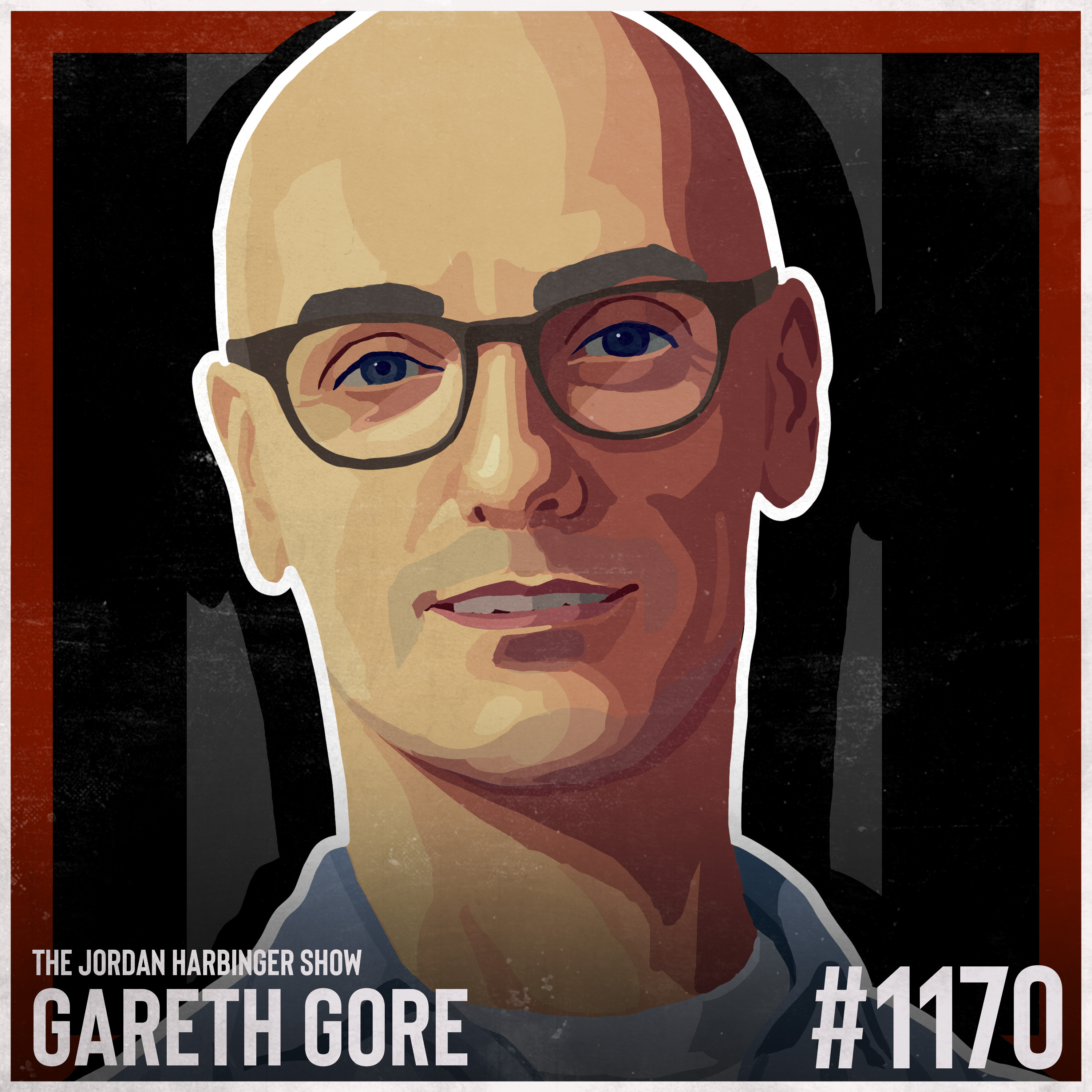
1170: Gareth Gore | This Vatican Cult Corrupts Courts and Sells Slaves
From Supreme Court infiltration to human trafficking, secretive Catholic cult Opus Dei wields dangerous power. Gareth Gore exposes its operations here!
Full show notes and resources can be found here: jordanharbinger.com/1170
What We Discuss with Gareth Gore:
- Journalist Gareth Gore discovered secretive Catholic cult Opus Dei's control of Spain's Banco Popular through archived records after the bank's 2017 collapse — revealing decades of financial manipulation.
- Opus Dei recruits girls as young as 11 from poor communities, promising education but enslaving them as unpaid domestic workers in "hospitality schools" worldwide.
- The organization has deeply penetrated US political circles, with connections to Supreme Court justices through Federalist Society leader Leonard Leo — potentially influencing major rulings.
- Members endure physical self-harm rituals, live under surveillance, and submit to "chat" sessions that collect compromising personal information for manipulation.
- The good news: the vast majority of Opus Dei members are genuinely good people who'd be horrified to learn about the trafficking and manipulation happening in their organization's name. New Pope Leo isn't just aware of Opus Dei's shenanigans — he began actively working to dismantle its power structure within hours of taking office.
- And much more...
And if you're still game to support us, please leave a review here — even one sentence helps!
- Sign up for Six-Minute Networking — our free networking and relationship development mini course — at jordanharbinger.com/course!
- Subscribe to our once-a-week Wee Bit Wiser newsletter today and start filling your Wednesdays with wisdom!
- Do you even Reddit, bro? Join us at r/JordanHarbinger!
This Episode Is Brought To You By Our Fine Sponsors:
- The Cybersecurity Tapes: thecybersecuritytapes.com
- Caldera Lab: 20% off: calderalab.com/jordan, code JORDAN
- Oura Ring: 10% off: ouraring.com/jordan
- Wayfair: Start renovating: wayfair.com
- Quince: Free shipping & 365-day returns: quince.com/jordan
See Privacy Policy at https://art19.com/privacy and California Privacy Notice at https://art19.com/privacy#do-not-sell-my-info.
Press play and read along
Transcript
Speaker 1 This episode is sponsored in part by Dell. It's time for Black Friday, Dell Technologies' biggest sale of the year.
Speaker 1 Enjoy huge savings on select PCs like the Dell 16 Plus, featuring Intel Core ultra-processors, and with built-in advanced features, it's the PC that helps you do more faster.
Speaker 1 Plus, earn Dell rewards and enjoy many other benefits like free shipping, price match guarantee, and expert support.
Speaker 1 They also have huge deals on accessories that pair perfectly with your Dell PC and make perfect gifts for everyone on your list. Shop now at dell.com/slash deals.
Speaker 2 Extra value meals are back. That means 10 tender juicy McNuggets and medium fries and a drink are just $8.
Speaker 1
Only at McDonald's. For limited time only, prices and participation may vary.
Prices may be higher in Hawaii, Alaska, and California and for delivery.
Speaker 3 What can 160 years of experience teach you about the future?
Speaker 3 When it comes to protecting what matters, Pacific Life provides life insurance, retirement income, and employee benefits for people and businesses, building a more confident tomorrow.
Speaker 3
Strategies rooted in strength and backed by experience. Ask a financial professional how Pacific Life can help you today.
Pacific Life Insurance Company, Omaha, Nebraska, and in New York.
Speaker 3 Pacific Life and Annuity, Phoenix, Arizona.
Speaker 1 Coming up next on the Jordan Harbinger Show.
Speaker 4 Most normal organizations, when confronted with like super serious allegations of like human trafficking, grooming of kids, drugging your own members, spiritual abuse, breaking the seal of confession.
Speaker 4
They would come out and they would say, these are really serious allegations. We are going to take them very seriously.
We're going to investigate them, get to the bottom of them.
Speaker 4 And if anyone needs to be brought to justice, we'll ensure that's done. Opus Day's response has been to stick its fingers in its ears and go, la la la la la la la, this guy's a liar.
Speaker 4
This guy's a liar. And I think that's really quite telling.
This is an organization that has zero intentions of addressing its failures and addressing abuse inside of its ranks.
Speaker 1 Welcome to the show. I'm Jordan Harbinger.
Speaker 1 On the Jordan Harbinger Show, we decode the stories, secrets, and skills of the world's most fascinating people and turn their wisdom into practical advice that you can use to impact your own life and those around you.
Speaker 1 Our mission is to help you become a better-informed, more critical thinker through long-form conversations with a variety of amazing folks-from spies to CEOs, athletes, authors, thinkers, performers, even the occasional national security advisor, real-life pirate, or special operator.
Speaker 1 And if you're new to the show or you're looking for a handy way to to tell your friends about the show, and of course I appreciate it when you do that, I suggest our episode starter packs.
Speaker 1 These are collections of our favorite episodes on topics like persuasion and negotiation, psychology, geopolitics, disinformation, China, North Korea, crime and cults, and more.
Speaker 1 That'll help new listeners get a taste of everything we do here on the show. Just visit jordanharbinger.com slash start or search for us in your Spotify app to get started.
Speaker 1 Today on the show, we're talking about a cult, a century-plus old cult that permeates the Catholic Church, involves legislators, bankers, even justices of the Supreme Court right here in the United States.
Speaker 1 It's called Opus Day. And if you've seen the Da Vinci Code, you have a bit of an introduction to it, maybe a little fictionalized introduction to it.
Speaker 1 The truth of this cult, actually, I find even stranger than the book and the movie, albeit without the murderous albino monk.
Speaker 1 Here to unwind all the craziness is investigative journalist Gareth Gore, who started investigating the downfall of a major bank and found the insanely strange rabbit hole that we're discussing here today.
Speaker 1 All right, here we go with Gareth Gore.
Speaker 1 Thanks for coming down here, man. TYX Studios hooking up this place is a, it's, well, first of all, one of the nicest studios in London, but thanks for coming on down.
Speaker 1 I know we tried to do this before.
Speaker 1 I have to say, when you first pitched me this, and I'm sure that I'm not the first person to give you this reaction, I thought, okay, what kind of Looney Tune, QAnon, conspiracy theory nonsense is this?
Speaker 1 Because it just, it actually sounds too insane. And then I obviously, as our conversation continued, I realized, oh, okay, this guy brought receipts.
Speaker 1
This is not like a weird internet meme conspiracy thing. This is a historical cult that has just not been put in check for how long? 100 years? Almost 100 years.
It's shocking. I read the whole book.
Speaker 1 If I didn't read the book, I still probably wouldn't actually believe you.
Speaker 1 So hopefully the audience comes along for the ride here because it is one of those things where it's so ridiculous. You just think, how is this possible? What led you to investigate?
Speaker 1 connections between this secretive group and the United States Supreme Court?
Speaker 4 I mean, you're not alone in having that conclusion. I think even people that have been inside Opus Day are still years later trying to work out what the hell happened to them.
Speaker 1 Yep, what happened? Yes, exactly.
Speaker 4 But I mean, so I fell into this completely by accident. So I am a financial reporter by background.
Speaker 1 Okay.
Speaker 4 And basically what happened was that in 2017, a huge bank in Spain just collapsed overnight, which kind of, you know, in this day and age isn't.
Speaker 1
It can happen. I was there for the 2008 financial crisis.
Banks collapsed.
Speaker 4 Precisely.
Speaker 4 And in fact, up until that point, the previous 10 years i'd spend a lot of time kind of traveling to sweden germany russia even reporting on bank failures and kind of reporting from the ground trying to work out what happened and at first it seemed like the same old story of like you know this bank a bunch of guys and they were almost all guys had you know taken too many risks allowed things to get out of control and kind of were too embarrassed to admit to their mistakes.
Speaker 4
And so the whole thing crumbled into dust. It seemed like that was the story.
And so I and almost everyone else that reported this story wrote that and kind of moved on.
Speaker 4 But there was something about the story that kind of seemed a bit odd. For one, most of the shareholders that lost their money tried to sue, tried to get some of the money back.
Speaker 4
Because, you know, literally their shares went from, I don't know, like 100 euros to zero overnight. And so they were like, what the hell? We want to get some of this back.
Right.
Speaker 4
So they were all suing. They're all these court cases.
But the biggest shareholder of all, this kind of group which called itself the syndicate, it's not ominous at all.
Speaker 4 Yes, if you're going to pick a name, then.
Speaker 1 yeah we want to fly low-key so we're calling ourselves the syndicate but you have to say it with a low tone and look behind over your shoulder before you say i mean that is actually it's act comically ridiculous yes i mean and like so many elements of this story you almost have to pinch yourself and you're like is this for real like right it's like dr evil inventing this it's just so if you're trying to run your cults under the radar you guys are blowing it yes it's not the way to do it but so this group seemed to be whilst everyone else was suing they seemed to be kind of intent on just quietly disappearing So that piqued my interest.
Speaker 4 And so I began to dig and I basically fell into this rabbit hole, which I almost feel like I'm yet to emerge because every time I feel like I'm kind of crawling out, I'm done with the book or whatever, something else drags me back in.
Speaker 4 Someone contacts me or whatever. And you're like, oh, my goodness.
Speaker 1 It's either Goodfellows or the Godfather where the guy says, every time I try to get out, they suck me right back in. It's one of those mafia movies.
Speaker 1 So the cult is called Opus Day for people who are wondering what that is. Is it O-P-U-S-D-E-I? Two words.
Speaker 4 Which is Latin for for the work of God.
Speaker 1 I think the audience is going to either have never heard of them or some people will go, wait, isn't that from the Da Vinci Code? And we'll get into that in a bit.
Speaker 1
So the book starts with the collapse of this bank. It's Banco Popular or Banco Popular for us Americans out there.
And this is not a small bank that just went under.
Speaker 1
It's not like they just had a couple locations or they were headquartered in Madrid. This is like a, I won't say it's the J.P.
Morgan Chase, but it's a massive bank chain, right?
Speaker 4 It was one of the top five banks in Spain.
Speaker 4 they had thousands of branches across the country it was impossible to walk around a city like madrid or barcelona without seeing one of these branches so you know every spaniard knew this bank absolutely what happened if your money was in the bank when it collapsed so all the shareholders lost all of the money right the bondholders they lost billions too so the bank was kind of sold overnight in this kind of fire sale for parts basically for parts it was sold for one euro to Banco Santandero, which is one of the largest banks in the world.
Speaker 1 For one euro?
Speaker 4 For one euro.
Speaker 1 Okay. well, fine.
Speaker 4 So as part of that deal, they acquired all of the bank's kind of assets and debts.
Speaker 4 They also acquired, and this is key to the story, and we can get into this later, they also acquired the bank's old archives, which suddenly opened up this whole story to someone like me who came knocking on the door asking to see the receipts.
Speaker 1 I'm surprised that they were willing to show you that stuff.
Speaker 4 I suspect, I still haven't asked them why, but I suspect they didn't know what they were sitting on. I think it was literally that.
Speaker 4 They had acquired this warehouse full of papers and they were like, well,
Speaker 4 it's probably like really boring stuff.
Speaker 1 If you want to waste your time going through that stuff, go right ahead. Don't expect us to supply the coffee.
Speaker 4 This mess is not ours. So even if he finds something, then it's not, you know.
Speaker 1
I mean, and they're right. Yeah.
They bought it for one Euro and they basically probably what saved the depositors who had their funds in there. So they're like, we're the hero of the story.
Speaker 1
That's not going to change if he finds something that the other thing did. It just makes us look better for having not dropped the ball on all these people's funds.
That's true.
Speaker 1 So I assume there's smoke, smoke, there's fire, right? So were there any shareholders that didn't lose money because they, I don't know, liquidated their shares a couple months prior?
Speaker 1 Basically, did anybody have a heads up that this was going to happen and bail?
Speaker 4
I don't think so. I mean, it was kind of a slow train wreck.
I see. You know, these things often are.
Speaker 4 And so the funny thing is, actually, the Opus Day foundations that were benefiting from the bank and which were semi-controlling it, they basically put more and more money into the bank as it started to disintegrate because for them, it had been their cash cow for so many years and it had been such a core part of how the cult had kind of grown it was their access to huge amounts the golden pool of money it was the golden use for many years and so i think they lost as much as everyone else because they were desperate not to lose control of this thing and so they just kept putting in money right until the end oh i see so how did the bank collapse because don't you kind of have to be abusively negligent with funds in order to lose that kind of business?
Speaker 4 Yeah, I mean, the bank was like massively overexposed to the whole real estate sector in Spain,
Speaker 4 which collapsed from post-2008. There was just kind of a very slow collapse.
Speaker 1
Never recovered. Okay, I see.
I see. So, before we get into what you found in those bank records, because I'm going to guess it's not nothing, otherwise we wouldn't be here.
Speaker 1 Let's do a little bit of background on Opus Day the cult.
Speaker 1 We don't have to get too in the weeds on the history of the people who started it or whatever, but it sure sounds like it started, like you said, almost 100 years ago.
Speaker 1 And it kind of just sounded like a labor trafficking organization, for lack of a better word.
Speaker 4 Okay, so
Speaker 4 Opus Day kind of means the work of god was dreamed up i guess you might say or by this spanish priest called jose maria escrivar he went on retreat in 1928 and um whilst on retreat he had this what he called a vision he said it was directly from god yeah for this kind of new organization these guys never make business plans they just get downloads directly from god right they can't just sit around and make something up yourself it's interesting you kind of you said that because it's impossible to know for sure but my interpretation is so he'd come from this family that had basically fallen from grace.
Speaker 4
They were a wealthy family whose father basically, whose business went bankrupt. And so they'd known the good times.
They had all these servants. And then suddenly they kind of hit rock bottom.
Speaker 4 The father died. And this guy, Jose Maria, as the eldest son, I think he felt this huge weight on his shoulders of having to kind of bring the family back up to its kind of proper status.
Speaker 4 So I think he really was on the hunt for.
Speaker 1
a business idea. Yeah, it sounds like it.
Yeah. It sounds like it.
And he maybe didn't have the acumen to start a proper business. So he's like, a cult.
Why not?
Speaker 4 Yeah. And at one stage, he trained as a priest, which is not, it wasn't that abnormal for the oldest son at that stage in Spain.
Speaker 4 In fact, my partner's uncle, who's the eldest man in the family, he also trained as a priest. Not Opus Day.
Speaker 1 He didn't join a cult, but
Speaker 4
made a hard brain at her. She was also from that part of Spain.
So he went on this retreat and he got this vision. And his idea was...
there was a gap in the market.
Speaker 4 So if you're a Catholic, you're either kind of an everyday Catholic, you go to Mass every Sunday, you confess whenever you sin or whatever, you're either that, or if you want to go a bit deeper, you become a priest or a nun.
Speaker 4
And there was nothing in between. And he's like, you know what? There's a little niche here I could carve out for myself.
Sure.
Speaker 4 And so what he did was he invented this new organization, which was for ordinary Catholics, but it allowed them to go deeper into their faith.
Speaker 1
So this is like, you're not the people who go to the gym three times a week. You're not the people who become professional athletes.
You're the people who want to go to the gym every single day.
Speaker 1
Maybe you're running a triathlon. It's like, we need those Catholics.
We want the ones who want to, because they have these rituals that are serious. And I want to talk about some of these.
Speaker 1 I don't want to get ahead of ourselves here. The recruiting process for this sounds a little bit like Scientology.
Speaker 1
It's like, hey, you don't need those pesky friends and family that aren't into this as much as you. You got to hang out with us.
We're the ones who are really heads down on this.
Speaker 1 And the love bombing about how great it is and how you're doing, like you said, God's work, or they named the thing God's work, right? And it just starts to spread among, was it students at first?
Speaker 4 Was that yeah, students initially, well, I mean, to begin with, he really struggled to get any recruits.
Speaker 4 I mean, he became so desperate at one stage that he went kind of to sit beside this dying woman to kind of give her the last rites or whatever and he said to her you know what when you get upstairs when you get to heaven could you maybe like intercede could you maybe kind of send down a miracle for me to help me get some followers at another stage he almost quit the priesthood entirely because it just wasn't working out in the like the first five years he had something like eight followers or whatever he was getting desperate right but he's like the worst influencer ever imagine asking a dead person like i just have a a quick favor.
Speaker 1 When you get up there, can you just ask God to do me a solid? It's like, I'm going to be the new guy or the new gal. I don't know how much cloud I'm going to have.
Speaker 4
You know what? Maybe it works because, you know, they have almost 100,000 members these days. So maybe, maybe that chat paid off.
I'm not sure.
Speaker 1 I can ask God to give me the blue check mark. That's basically what he's asking for.
Speaker 4
But he started to hone his methods. And he very quickly came up with this kind of blueprints for recruitment.
It very quickly became very culty as well.
Speaker 4 He talked about how you should never target people as a group. You should try and pick them off one by one.
Speaker 4 Never go after someone who's older than 25 because his belief was that once you hit 25, you began to ask too many questions. You became kind of set in your ways and it was hard to...
Speaker 1 Your prefrontal cortex is developed and you won't fall into this nonsense anymore.
Speaker 4 Absolutely. And also like he
Speaker 1 told the people.
Speaker 4 that he targeted, he told them not to tell their friends or family that they were considering joining. And so, you know, there are all of these real kind of red flags for anyone on the outside.
Speaker 1 Maybe cults were kind of not as widespread as they are now.
Speaker 4 In some ways, he was ahead of his time. I mean, in some ways, I've got to take my hat off to him and be like, wow, I mean, this is way before Hubbard and Scientology and the rest of it.
Speaker 1
And to be fair, the last cult that really took off was Christianity. I know that's going to ruffle some feathers, but look, we're talking about the year zero.
It was by all definitions sort of a cult.
Speaker 1 It was just maybe a little bit less creepy than Opus Day or Scientology.
Speaker 4 And so once he got these guys in, they were generally expected to live in an Opus Day residence. So that, you know, they could be watched and controlled 24 hours a day.
Speaker 4 And then they were given this thing that they call the plan of life, which is basically a schedule of prayer, mortification, and all kinds of other requirements.
Speaker 1 Okay, so what's mortification? Because this is just one of the weird practices of the members. And I think people who've seen, is it the Da Vinci Code movie? Yes.
Speaker 1 They show a little bit of that there, and it's... Decidedly creepy.
Speaker 4 Yes, and there are lots of things about the Da Vinci Code which are completely internalized.
Speaker 1 You don't say.
Speaker 1 Okay, so it's not a historically accurate movie.
Speaker 4 Tarn.
Speaker 1 Thanks for coming in.
Speaker 4 But some elements are true. And so the corporal mortification, okay, what is that? It basically means hurting yourself, punishing your body.
Speaker 4 Corporal mortification is something that Christians have done for hundreds of years, but it's kind of fallen out of practice.
Speaker 1
So mortification. Mortified now means embarrassed, but I suppose before it means like some sort of degradation, essentially.
Yeah. Just like carrying the heavy wooden cross on your back, kind of?
Speaker 4
Absolutely. It's bringing yourself closer to Christ by kind of feeling the pain, I guess, that he felt on the cross.
And yeah, people do that in various different ways.
Speaker 4 The two ways in Elpa's day, there are two kind of primary methods. There are other smaller things, but the two main ones, they have these two devices.
Speaker 4
One is called the silis, which is like a barbed wire. that you wear around a part of your body, normally the thigh.
So you attach it to the thigh, and these kind of claws dig into your thigh.
Speaker 4 You wear it for like two hours a day.
Speaker 1 It's like a dog collar? One of those pinchy dog collars?
Speaker 4
It's kind of like a chain. It's kind of like a wire.
Like a spiky barbed wire with these spikes that kind of go onto the inside.
Speaker 4
So whenever you sit down, you wear this under your trousers or whatever. Oh, under your pants.
Whenever you sit down, it digs into your leg.
Speaker 1 Why would you sit down?
Speaker 4 Why would you do anything?
Speaker 1 Yeah, why would you put that thing on in the first place? They're asking the real questions.
Speaker 4 But you can wear it around other parts of your body. So for example, the founder of Opposed Day, this guy called Escriva, he was kind of obsessed with his weight.
Speaker 4 And so he wore this thing around his waist, possibly as punishment, also for his kind of gluttonous habits.
Speaker 4
So one thing is the Scilis, this kind of chain. The other thing is called a discipline, which is basically a whip.
Normally it's a rope, maybe three, four, five, six strands.
Speaker 4
And you take off your shirts. Sometimes you take off your pants as well and you whip yourself over your shoulder.
The founder of Upper Stay took this to a whole new level.
Speaker 4 So he would attach razor blades
Speaker 4 to the end of the rope. So whenever he hit himself on the back, the razor blades would cut into his skin.
Speaker 4 And, you know, his followers would write about going into the room after he'd been doing this and there'd be blood like spattered on his back.
Speaker 1 Oh, my gosh.
Speaker 4 Yeah. It's pretty
Speaker 1
gnarly. It started out like something they do at Pride Parade in San Francisco and ended up like a Japanese horror movie.
That's really gross, man.
Speaker 4 It is really gross. And, you know, like these practices go on today as well.
Speaker 1 So people are still whipping themselves with the cat of five tails or whatever this guy had.
Speaker 4
Absolutely. People are still doing this.
In fact, there are different kinds of members of Opposite.
Speaker 4 But if you're kind of one of the elite members, these so-called numeries, you're expected to wear the sillis for two hours every single day with that fail.
Speaker 4 And you're meant to do the discipline once a week on Saturdays.
Speaker 4 So yeah, it's kind of all part of the plan of life.
Speaker 1 You can't pick your own flogging methods, I guess.
Speaker 4
Life is so prescribed. So, you know, you get up at a certain time every day.
The first thing you do is you get out to bed. You're not allowed to kind of dawdle for even a second.
Speaker 4 It's called the heroic minute. You get out of bed, you kiss the floor, and the first word you say is serveam, which means I serve God.
Speaker 1 Okay, so you're like a robot at this point. You're kind of like a robot.
Speaker 4
And then you have a whole day of mass. You say like 15 different prayers.
You've got these corporal mortification things to do. And you're also meant to go out to work and recruit people as well.
Speaker 1 Wow. So they're super pious, but somehow they're also thieves that ended up bankrupting a bank somehow? I mean, is that a fair assessment at all?
Speaker 4 Well, I mean, there's this whole culture inside of Obisday, which is that you should do whatever's necessary to basically expand the movement. And to...
Speaker 4 So Escrieval called, he saw his followers as part of this kind of hidden militia that would infiltrate society and use their positions there to basically push society in the right direction.
Speaker 1 That's extra creepy, right? That's the part where it's like, you go from, hey, let people do what they want if they're going to be religious fanatics. We have religious freedom in this country.
Speaker 1
Let them do what they want. They're not hurting anybody but themselves.
And then it's like, oh, actually, they're seeking to control.
Speaker 1 It's ironic because I'm guessing these are the same people that spread conspiracies about Jews controlling the world. And they're like, no, really, though, we're trying to do that.
Speaker 4
Well, you know what? Escrival was something of a conspiracy theorist himself. I see.
And there was quite a big evolution.
Speaker 4 So initially when it started out, that the group was in the kind of late 20s, early 30s, like I said before, it was basically this kind of elite organization to help Catholics just to kind of go a bit deeper.
Speaker 4 Like the backdrop here is super important because, so this is Spain, early 1930s, a country on the brink of civil war.
Speaker 4 Like the workers have literally risen up, overthrown the monarchy, and they're beginning to turn their backs on things like the church.
Speaker 4 So the church for centuries had controlled large parts of society, not least education. And so people were like, what the hell? We don't want this.
Speaker 1
You said civil war. Sorry to interrupt.
This is civil war. So it's just like the communists versus, or am I too early for that?
Speaker 4 I mean, there were some communist elements, but it was more generally, I mean, it was kind of a coalition of the left.
Speaker 4
I mean, literally the workers rose up and were like, we were sick of the old order. So they kicked out the monarchy.
I see.
Speaker 4 And the socialists and a coalition took over and they started to unpick the church's dominance over society they secularized education this kind of stuff things which are quite common these days so escrivar sees what's happening around him and he's absolutely horrified and so he begins to transform this group that he's begun to to grow and his writings become really quite aggressive he thinks there's a massive conspiracy going on he thinks the Jews, the communists, and the masons are teaming up to like overthrow Christianity.
Speaker 1
Right. Meanwhile, the Jews are just like, leave us alone.
Yeah, come on.
Speaker 4 No, and so he kind of rethinks the whole idea of Opposede and he turns it into basically a kind of a political organization.
Speaker 4 He sees his followers as this kind of militia and he literally tasks them with infiltrating government, business, the world of education, becoming journalists and kind of using their positions there to be this kind of guerrilla reactionary force that will fight back against these conspiracies.
Speaker 4 But is it domestic only at this time or are they trying to christianize the whole planet he sees what's happening in spain as part of this global battle he calls it the re-christianization of the world i'm guessing that kind of thing doesn't happen peacefully yes well no he talks about you know people fighting and he very much sees it as a battle between his followers and what he calls the enemies of christ anyone that isn't part of opers day is an enemy of christ so yes at this stage it's it's just in spain but in the 1940s it begins to go international.
Speaker 1 What does the Pope think about all this at this point? Is this like, oh, okay, those are the hardcore Catholics or
Speaker 1 are they secret and the Pope doesn't know about it?
Speaker 4 At first they kind of not really on the Vatican's radar. Escrivar is expanding the kind of the organization diocese by diocese.
Speaker 4 So he goes into each diocese, which is kind of for non-Catholics or it's just kind of a local area kind of thing.
Speaker 1 Yeah. Like a county, but for Catholics?
Speaker 4 Yeah, kind of.
Speaker 4 And he goes to the bishop in charge there and says, hey, would you mind if we set up a residence and we kind of, you know, we're doing good work here, you know, whatever.
Speaker 4 But some bishops are kind of a bit suspicious. So he decides at some stage, you know what? I need authorization from the Vatican itself because then we can go anywhere.
Speaker 4 And we don't have to ask permission. And in, I think it's 46, he gets permission from the Vatican to do his work, whatever.
Speaker 4 And that kind of opens up the horizons and very quickly they start to expand to Portugal, across Europe, and even to the States.
Speaker 1 So who's leading Spain at this time? Is this already the time of Franco? Is he like a military dictator? Is that fair?
Speaker 4 Yeah, absolutely. And, you know, Escriva, this supposedly deeply Christian guy, has absolutely no qualms about cozying up to this brutal dictator.
Speaker 1 To be fair, that was De Rigueur for the... Wasn't the Vatican sort of turning a blind eye to the Holocaust during this period of time as well? It's not like the highest moral standing that can be.
Speaker 4 That is true. But I mean, actually, the victory of Franco in the Civil War is like a critical moment for the group.
Speaker 4 Before the war, you know, he had all these grand ideas, but he really struggled to recruit. He comes back into into Madrid in, I think it's March 39.
Speaker 4
He literally rides into Madrid on the back of this military truck alongside all these Francoist troops. And he arrives in this city that's been absolutely decimated.
Hunger is everywhere.
Speaker 4
You've got kids kind of like hunting through garbage piles for potato skins. They want something to eat.
Women are selling their bodies because it's the only way to get money, get some food.
Speaker 4
You've got all of these diseases that have not been seen since the medieval times kind of coming back. So he is a good Catholic Christian priest.
He arrives back and sees all all this.
Speaker 4 And what does he do? Does he go out and help the people? No, no. He sets about making money and expanding his business, this thing he calls the family business.
Speaker 4 And very quickly he starts cozying up to the regime, offering Opus Day services. He basically offers to kind of go into team up with the regime.
Speaker 4 And he offers Olpus De as a service to basically hunt out any kind of subversive groups out there in factories and on the farms.
Speaker 4 and to kind of help to kind of damp down any kind of political uprisings or whatever.
Speaker 4 He also sets up all of these residences and franco like for people that don't know much about the franco years he was an absolutely brutal dictator right even after the war obviously both sides committed atrocities during the war but during peacetime after the ceasefire he murdered tens of thousands of his political opponents he pushed like hundreds of thousands of people into concentration camps he was sending left wing people to the Nazis to be experimented on.
Speaker 4
Oh, wow. And meanwhile, Escriva, the founder of Opus Day, is offering Opus Day services to help this guy.
Escriva's hosting private retreats for Franco and his wife at the palace outside of Madrid.
Speaker 4 You know, it's incredible just how much of a blind eye he turns, you know.
Speaker 1 So Franco's like a minor Hitler-esque character in a way.
Speaker 4 Yeah, and he actually wanted to, he really tried to cozy up to Hitler and offered him all kinds of things to help him. Hitler, I think, very much looked down on his mind.
Speaker 1 No time for this.
Speaker 1 Jeez. My gosh, these are some despicable characters.
Speaker 1 So, the new members of this cult, I assume eventually, these students who are in Opus Day, they've started to form companies and come of age and get the, are they getting the jobs to have influence?
Speaker 1 And are they being placed now that they've sort of won the civil war and they're on the good side or the side, they're on Franco's good side, they're able to, I don't know, work in the government or something like that.
Speaker 4 Yeah, no, totally. So, what happens is that Escriva's got this vision of his members need to infiltrate the kind of upper echelons of society in order to shape society.
Speaker 4 He's recruiting very much people from the elite, people from good families, people from money, people who've got great prospects, you know, tomorrow's leaders. He's recruiting them at university.
Speaker 4 And so like five, 10 years after recruiting them, many of these people are really climbing up the ladder. By the 50s, a number of ministers in the kind of national government are members of Opus Day.
Speaker 4 And, you know, the Opus Day network runs far and wide. Opus Day itself has several businesses, but also many of its members are kind of deeply embedded into a really corrupt society as well.
Speaker 4 And so it's all through connection. So the closeness of Open State to the regime means that a lot of its members and Open State itself gets lots of favors.
Speaker 4 So they get like export deals, they get the nod to like open up this new business. And so it becomes very beneficial financially as well.
Speaker 1
So it's a revenue generating enterprise at this point. It's not just...
get the rich kids and they'll get their parents to send us money.
Speaker 1 Now it's we've got special sweetheart deals with the government because we're cozying up to to the dictator.
Speaker 4 Absolutely.
Speaker 1 Absolutely. That's another sort of left turn into making this a little bit more evil, right? It's like, okay, if you want to whip yourself, not at, you know, not, we don't love it, but okay.
Speaker 1 And then it's like, no, we're trying to take over the world and we're going to do that by cozying up to this really crappy regime.
Speaker 1 And they're slowly getting more and more evil, kind of from the sound of it.
Speaker 4
And slowly getting bigger and bigger. I mean, by the 50s, they were present in, I don't know, like something, like 20 countries, including the States.
They've expanded to Latin America, across Europe.
Speaker 4
They have thousands of members. And, you know, as this thing grows, the speed of expansion becomes greater because they've got more and more resources.
Sure.
Speaker 4 And so they can open more residences, more schools, and whatever. So the recruitment method becomes much more kind of efficient.
Speaker 1 At what point do they go, hey, we need a bank? How does that come about?
Speaker 4
By the early 50s, they had already had a pretty big network of companies in Spain. They had bookshops and publishers.
They had like a film distribution company.
Speaker 4 So like, you know, they were the equivalent of like minting kind of VHS cassettes kind of things. Sure.
Speaker 4 I mean, it's kind of, but these were ways to make money. But I think they very quickly realized that there was a limit to how much this network of businesses could generate.
Speaker 4 And by getting the kind of hands on a bank, that would take them to a very different level. Because suddenly you've got access.
Speaker 4
to this massive pool of savings that all the depositors have put in there. Like banks have balance sheets in the trillions of dollars.
Wow.
Speaker 4 Of course, we're not talking talking that level of money back then in the 1950s and certainly not in Spain. It took you from here to the ceiling.
Speaker 4 The way they got into the bank as well is kind of extraordinary. So I think it was the chief executive of the bank or the vice chairman or something.
Speaker 4
He found out about some dodgy deal that the chairman had done. And he, as a good Catholic, was like, this kind of is really eating at me.
I need to like share this with someone.
Speaker 4 He was friends with someone from Opus Day. And so he decides to basically open up his heart.
Speaker 4 to this Opus Day guy, thinking that the Opus Day guys, you know, as another good Christian, he's going to just give him some kind of confidential advice and kind of pat him on the back, tell him, you know, the moral thing to do.
Speaker 4 Instead, the Opus Day goes back and informs all of his colleagues back at the center, and they come up with a plan to use this bit of information to oust the chairman and take control of the bank themselves.
Speaker 1 So it's like an intelligence network instead of a confession booth.
Speaker 4
Yeah, and they hijacked this bank. Wow.
And that alongside the victory of Franco, this is the other critical moment in Opus Day's history where they suddenly take this turn and the sky's the limit.
Speaker 1
You know who's probably not involved in human trafficking? The amazing sponsors who support this show. We'll be right back.
This episode is sponsored in part by Cachava.
Speaker 1 Someday as I get so deep into recording for you guys that I end up having to skip a meal or just forget to eat one, I'll look up from the mic like, wait, it's 9 p.m. How did that happen?
Speaker 1
All in the name of another great episode or three. So on those late nights, when the house is quiet, Jen, and the kids are asleep, my reward for a long day of work is cachava.
It's convenient.
Speaker 1 It's really tasty it's actually a whole body nutrition that is ready in seconds which for me is key because if it takes longer than 30 seconds i'm just going to bed at that point with every two scoops you get 25 grams of 100 plant-based protein 85 plus superfoods nutrients plant-based ingredients all the good stuff your body needs without the junk no artificial flavors no preservatives no soy no gluten none of that nonsense it's packed with fiber probiotics and b vitamins that support metabolism digestion even cognition basically all the things i need after talking for eight hours straight my voice is about to give out my go-to actually is the strawberry flavor.
Speaker 1
I blend it with ice, a little bit of milk, but the chocolate and a little peanut butter. Mmm, that is next level good.
You also got vanilla, matcha, coconut, acai, all legit options.
Speaker 5
Your future self will thank you. Go to cachava.com and use code Jordan for 15% off your next order.
That's cachava. K-A-C-H-A-V-A.com, code Jordan for 15% off.
Speaker 1
This episode is sponsored in part by Vital Proteins. You've probably heard of Vital Proteins.
They're the number one brand of collagen peptides in the U.S.
Speaker 1 And for good reason, a lot of people, myself included, take it pretty much daily to support things like healthy hair, skin, nails, bones, joints, all the good stuff that starts to matter more the longer you've been walking around on this planet.
Speaker 1 But now, Vital Proteins is shaking things up. Literally, you can tell a dad wrote this copy with a brand new collagen and protein shake.
Speaker 1 And this isn't your average protein shake that tastes like chalk and sadness. This one's light, chocolatey, super smooth, and it's got something pretty unique going for it.
Speaker 1 High quality protein, 30 grams of it plus collagen. That's pretty good ROI.
Speaker 1 Usually you're choosing one or or the other, but Vital Proteins gives you both a ready-to-drink shake you can toss in your bag or fridge, zero added sugar, no artificial sweeteners, and no karaginin.
Speaker 1 And I don't know what that is or if that's even how you say it, but you're supposed to avoid that.
Speaker 1 If you're already taking collagen or you're just curious about how it might support your hair, skin, nails, joints, and you don't want any carrageenin, this is a super easy, tasty way to try it.
Speaker 1
Get 20% off by going to vitalproteins.com and entering promo code Jordan at checkout. This episode is brought to you by Progressive Commercial Insurance.
As a business owner, you take a lot of roles.
Speaker 1 Marketer, bookkeeper, CEO. But when it comes to small business insurance, Progressive has you covered.
Speaker 1 They offer discounts on commercial auto insurance, customizable coverages that can grow with your business, and reliable protection for whatever comes your way.
Speaker 1 Count on Progressive to handle your insurance while you do, well, everything else. Quote today in as little as eight minutes at Progressive Commercial.com.
Speaker 1 Progressive Casualty Insurance Company, coverage provided and serviced by affiliated and third-party insurers. Discounts and coverage selections not available in all states or situations.
Speaker 1 If you're wondering how I manage to book all these great authors, thinkers, and creators every week, it is because of my network, the circle of people I know, like, and trust.
Speaker 1 I'm teaching you how to build your own cult, I mean network, for free over at sixminutenetworking.com.
Speaker 1
This course is about improving your relationship skills, inspiring other people to want to develop a good, positive relationship with you. It is non-cringy.
It is down-to-earth.
Speaker 1 It does not involve slave labor, for better or for worse.
Speaker 1 Just practical exercises that'll make you a better connector, a better colleague, a better friend, a better peer in a few minutes a day is all it takes.
Speaker 1
And many of the guests on the show subscribe and contribute to the course. So come on and join us.
You'll be in smart company where you belong. You can find the course again.
Speaker 1 It's all free over at sixminutenetworking.com. Now, back to Gareth Gore.
Speaker 1 I know at some point it becomes about bringing in poor people from other countries or other parts of the country and kind of using them to serve the members. I mean, this is also sort of very...
Speaker 1
I hate to use the same example over and over. It's very Scientology, right? They do those audits on you where you have to confess things and then they use it against against you later.
Yep.
Speaker 1 And they bring in kids from the Midwest and they basically say, oh, you're going to go to Hollywood and hang out with Tom Cruise.
Speaker 1 And all you have to do is work for free full-time in our museum or whatever. I mean, it's very much a similar recipe from the sound of it.
Speaker 1 Honestly, I was going to say except for the religious thing, but Scientology has that too.
Speaker 4 The thing that makes this so much worse is that this is an organization which has been legitimized by the Catholic Church.
Speaker 4
It's an official part of the Catholic Church. It has the stamp of approval from the Pope, from the Vatican.
Wow. With Scientology, people are like, ah, just a minute.
Speaker 4 This is like just some crazy hooky people.
Speaker 4 Yeah. I'm like, wait, aliens? What are you talking about?
Speaker 4 But with Opus Day, people, I think when they're first introduced to Opus Day, especially until recently, when there wasn't much information about it, they just assume, well, there must be good people.
Speaker 4 They have the, you know, the stamp of approval. So what they need, and I guess this is what you were alluding to, is they need workers because they need people to go out there
Speaker 4 and to find targets, to groom them, and to pounce to get them them into the group. They have this kind of elite army, I would call them, of people called numeries.
Speaker 4 These are people who've taken, they're not quite vows, but they've basically promised their lives to Opus Day.
Speaker 4 They take these pledges of poverty, which means that they give all of their money to Opus Day. They take a pledge of chastity, which means that basically they're married to Opus Day.
Speaker 4
And they also, which I guess is related to that, they take a pledge of obedience. So whatever Opus Day requires of them, they do it.
This is the kind of core group, the numeries.
Speaker 4 And they live in special gender segregated open stay residences. They have a director watching over them who tells them kind of what to do, who to target.
Speaker 4 And they're constantly under pressure to go out there and find recruits. So you have those guys, the kind of the key workers.
Speaker 4 But at one stage in the 40s, the founder kind of realized that I guess they were spending a lot of money on domestic servants at the residences.
Speaker 4 So they had all of these women who coming in to like cook and clean for the men. And numeries can be men and women, but they always had these kind of servant girls who would come in.
Speaker 4 And he came up with this idea of, why don't we open up membership to these servants? But they weren't allowed to join on the same terms as the other numeries.
Speaker 4
So he kind of invented this new class, this underclass of membership called the numery servants. And they were all women.
This is not a class opened up to men.
Speaker 4 And, you know, you're basically kind of, you would join as a servant. And
Speaker 4 in a way, it became a source of free labor for Opus Day because once these servants became members, they were expected to hand over their paychecks back to Opus Day.
Speaker 4
So Opa Day was paying them and then saying, Someone, you need to give that back to us. And at one stage, just didn't bother paying them.
Why bother?
Speaker 4 And the creation of this new subclass was the greatest gift that God had ever given to Opus Day.
Speaker 4 This goes on today. And soon there's going to be a trial in Argentina where Opus Day has been formally accused of human trafficking.
Speaker 1
Yeah, that's what this is. It's slavery.
It's not a gift from God. You're just enslaving people.
Speaker 4
Absolutely. And Opus Day to this day operates this network of what it calls hospitality schools around the world.
Oh, there's a euphemism. There's absolutely a euphemism.
Speaker 4
And what they do is they go around to poor communities. They knock on the doors.
They find young girls. They find girls who are like 11, 12 years old.
Speaker 1 Oh, geez, like actually very young girl.
Speaker 4
Kids. They find kids.
And they say to the kids and their parents, hey, you know, like around here, there are no prospects for your girl.
Speaker 4 But if you send her back to the big city with us, you know, over in Lagos or over in Buenos Aires or over in Mexico city we run this amazing school where we teach the girls how to cook and clean and they work towards a qualification it's a way to a better life for them and so the girls and the parents they're like
Speaker 4 these guys are from the catholic church how bad can it be how bad can it be well yes and the girls only when they're kind of hundreds of miles away from their families do they perhaps realize what's happening and they are manipulated, coerced, pushed into joining Gopa's Day as these numery servants.
Speaker 4 It's a huge scandal, and it's happening all over the world across Latin America and Nigeria, the Philippines.
Speaker 1 And to be clear, this is not 1950 where this is happening. This is still happening in 2025.
Speaker 4
Absolutely. So there's this trial that's about to happen in Argentina.
Some women have recently come forward in Mexico. But I know for a fact, because...
Speaker 4
The bank in Spain was financing the creation of all of these schools. Sure, yeah.
So in the archives, I found all kinds of documents, which
Speaker 4 basically there's a whole network of these schools financed by the bank. I don't know exactly how many, but we're talking dozens, if not hundreds, of these different schools around the world.
Speaker 1 That's a great segue into what else you found in those bank archives, because it just seems to me if they were doing something so awful, they would have tried to get rid of the records.
Speaker 1 But then I think, okay, the Germans and the Holocaust, they've used IBM machines and they...
Speaker 1 tracked everything and they sure they burned some stuff but there was just too much to get rid of is that the same kind of situation we're dealing with here yeah i mean i think
Speaker 4 i mean the funny thing is i mean the collapse of the bank whilst terrible for all of the investors you know was great for was great for me it worked out well for you yeah because i mean like nobody would have ever been given access to those records they never expected in their wildest dreams that the bank would collapse sure and then someone like me would come around sniffing around kind of trying to piece things together
Speaker 4 exactly yeah so i think there was just maybe it was a similar thing with the nazis they just didn't think they were ever gonna get caught they didn't think they were gonna lose they didn't think they were going to have any accountability, right?
Speaker 1
If you own a bank, it's like, oh, you can keep track of this. No one's going to, it's our bank.
No one's going to look at it here.
Speaker 4 And also a lot of these guys, you know, the founder of Opposed A had this kind of, these kind of phrases where he talked about things like holy ruthlessness and holy intransigence, which basically the message is anything goes.
Speaker 4 If you're doing what God wants, then it's kind of okay to cut a few corners or to do a few wrong things.
Speaker 4 He actually told one of his followers, actually the guy that was leading the bank, he said, when you look around and you see people doing bad things, don't worry too much because you're probably going to see these guys again in heaven.
Speaker 4 It's kind of fine. God will kind of look the other way for certain things.
Speaker 1
I'm not a religious scholar, but I feel like the religious teachings of Jesus, et cetera, were not like, you can just do whatever you want. God's on our side.
It's cool.
Speaker 1 We're just going to look the other way and, you know, by any means necessary. That doesn't seem like something Jesus would have said.
Speaker 4 And also like Catholicism has this kind of unique kind of get out of jail free card as well. If you confess and you repent, it's all fine, right?
Speaker 1 I mean, this is coming to you from the people who were like, hey, your relative is in the seventh circle of hell. And if you want to get them up a few notches, just give us a bunch of money.
Speaker 1
The corruption in this particular organization is not brand new. Yeah.
No, absolutely. Jeez.
Oh, my goodness.
Speaker 4 But yeah, I mean, I mean, like, because they didn't think they were ever going to get caught, I mean, this kind of stuff I found, I mean, there was one incident where one of the bank's employees, an Opus Day member, had been sent to Venezuela with a suitcase full of money.
Speaker 4 And we don't know exactly what it was for, but it was probably to start up a new Opus Day school there.
Speaker 4 Anyway, he got arrested because actually the Venezuelan police thought he was a communist and it caused this big kind of diplomatic incident.
Speaker 1 This was before they loved communists in Venezuela, I suppose.
Speaker 4
Well, yeah, this is in the 60s, actually, when Venezuela was like kind of oil boom kind of guy. And this guy gets caught.
There's this whole diplomatic incident.
Speaker 4 And all these negotiations, he gets sent back to Spain.
Speaker 4 And when he comes back to Spain, he's collected at the airport by a bunch of Opus Day minders who then put him into this mental asylum because they're worried that he's kind of going to crack and he's going to tell everyone what he was really up to and where the money came from and all this stuff.
Speaker 4 And then he basically disappears. Now, this whole story is kind of documented in the bank's archives.
Speaker 1 Wow.
Speaker 4 And, you know, like so many times in researching the book, you kind of come across something and you're like, what? Like, and you almost can't believe what you're reading. Yeah.
Speaker 4 But it's there in black and white. You back it up with other evidence and you almost have to pinch yourself.
Speaker 4 Yeah, there's some incredible stories like that in the book.
Speaker 1 Yeah, there are quite a few stories like that in the book as well.
Speaker 1 It seems like the group Opus Day begins to ask Catholics to essentially exert their influence in professional and political spheres.
Speaker 1 There's a Supreme Court justice in the United States that's in this cult, correct?
Speaker 4
We don't know because membership of Opus Day is completely private. Okay.
But we do know that in the early 2000s, maybe your listeners will have heard of this thing called the Federalist Society.
Speaker 1 Yeah, I had a branch in my law school. Oh, really?
Speaker 1
And how was that? I just remember they were conservative, and a couple of my friends were in it. They're like, you should join.
It's right up your alley. But I don't really know much else.
Speaker 1 I'm not sure.
Speaker 4 So, I mean, one of the most powerful guys inside the Federalist Society is a guy called Leonard Leo, who is a huge fan of Opus Day. He's given a huge amount of money to Opus Day.
Speaker 4 He sent his kids to the Opus Day schools in Washington, D.C. He sits on the board of directors at the Opus Day Center in central Washington.
Speaker 4 I mean, he has been the person who's probably single-handedly most responsible for the kind of shift of the Supreme Court over the past 10 years or whatever.
Speaker 4 In the early 2000s, there was this incident at a party, which this only came out recently, where a boss from the Federalist Society, and maybe that was Leo, maybe it was someone else, there was this incident where...
Speaker 4 at a party where I think Chief Justice Roberts had either just been appointed to the court or was about to be appointed.
Speaker 4
And this big boss from the Federalist Society said, don't worry, he attends Opus Day evenings of recollection kind of once a week. He's one of us.
You don't need to worry about him.
Speaker 4 Whether or not that means he's a member or not, I'm not sure.
Speaker 1
Wow. Okay.
Well, that's really kind of scary. Yes.
Can you provide any sort of overview of methods or tactics that the groups use to influence political or maybe judicial decisions in any way?
Speaker 4 Yeah, I mean, so, I mean, I was talking kind of recently to a numeri from Spain.
Speaker 4 So what happens once they've found people to recruit, the way that Opus Day operates is that, of course, you're expected to kind of whip yourself and do the rest of it and go to mass and confession and the rest.
Speaker 4 But they also have this additional requirement, which is called, they call the chat. Sounds nice and friendly, right?
Speaker 1 Whenever it sounds that innocent, it's always horrific, right?
Speaker 4 And this thing is like, it's meant to be done every week or every two weeks.
Speaker 4 And basically, a numeri comes out to you and sits with you and you open up your heart and you tell them everything about your life, your sex life, your professional life, whatever.
Speaker 1 That's incredibly awkward to think about.
Speaker 4 And they give you guidance.
Speaker 4 Yeah, this celibate.
Speaker 4 This celibate guy that you don't really know kind of giving you guidance about your sex life.
Speaker 1 A 40 year
Speaker 1 older than me celibate man is going to tell me what to do with my sex life.
Speaker 4 I'm pretty sure that the
Speaker 4 kind of sex life advice is always the same, which is like you only have sex to procreate and you should be having as many kids as possible.
Speaker 4 So I mean, that's basically all of the advice they need to give.
Speaker 1 I'm starting to think I'm not a good fit for Opus Day, Gareth.
Speaker 4 But these, I mean, these chats, chats kind of over the years, have been used to kind of collect information and have been used also to abuse the kind of relationship, the confidence that the member puts into Opus Day.
Speaker 4 So for example, I mean, one of the guys I was talking to recently, a guy from Mexico, was telling me about every time he got back to the center after doing one of these chats, he had to put together this report card.
Speaker 4 Now, because they didn't want to have a paper trail, the report card, and this was even in the 2000s, was put together on a typewriter with kind of a carbon copy underneath.
Speaker 4 So you're typing out all of these intimate details about this guy you've just sat with, about, I don't know, like trouble he's having at work or like marital problems.
Speaker 4
You're typing it all up into a record. One copy gets kept at the center, put into a safe there or whatever, and the other copy gets sent to the regional headquarters of Opus Day.
Wow.
Speaker 4 So for years, they literally had all of these files with compromising information. And, you know, they would read this and work out ways of using this information to further their agenda.
Speaker 4 I mean, okay, I should at this stage disavow people who have the notion that there's some guy sat in Rome, the head of Opus Day, issuing orders down to like Leonard Leo or whatever.
Speaker 4 That's not the way it works.
Speaker 1
The U.S. Supreme Court.
But yes, that's not the way it works.
Speaker 4 The way it works is that they use these chat sessions to gently push people into the right direction. And often that oversteps the mark.
Speaker 4 So they might be told about how to think about a certain political issue and kind of they misuse Catholic teachings to push them in a certain direction.
Speaker 4 I've heard stories about senior judges as well, members of Opus Day, being given certain books and articles to read on cases that they're currently kind of sitting on as a way of like pushing them to make the right decision on certain things.
Speaker 4 Wow.
Speaker 4 So these chats, which is supposedly just meant to be like almost like a therapy session helping you to be a better Catholic, Opus Day is collecting information and then using that information to work out what buttons it can press to maybe get you to give some more money or to team up with some other members of Opus Day to further this anti-abortion group or agenda or whatever it might be.
Speaker 1 I was going to ask about that because, of course, the abortion cases, Roe v. Wade in the United States, it's front and center, has been for a while.
Speaker 1 And you get these justices on there, and it's like, okay, if your whole mantra is by any means necessary and God's okay with our plan and isn't subject to the laws of man, how do we know you're making impartial judgments with respect to something like Roe v.
Speaker 1 Wade? And the answer is you're almost certainly not doing that. And you're being nudged to do what the church wants, which is completely inappropriate.
Speaker 4 And actually, not just what the church wants, because I mean, the kind of Catholicism that Opus Day has been pushing has been not the same as what Pope Francis was pushing during his papacy.
Speaker 4 And it's too early to talk about Pope Leo, but it's These are not accepted Catholic teachings, and this is not what the Vatican is pushing. This is a very perverted reading of Catholicism.
Speaker 4 It's a very conservative, reactionary reading of Catholicism, where they pick bits of the Bible to support what is really a kind of ultra-conservative agenda.
Speaker 4 It's using scripture to push back on anything progressive and for anything kind of left-leaning. And it's a misuse of religion, really.
Speaker 4 Yeah. Yeah.
Speaker 1 So is it safe to say that these people are more conservative than the Pope?
Speaker 4 Certainly more conservative than the current Pope and the last Pope, whether they were more conservative than John Paul II, who was pretty conservative, and Benedict, I'm not sure.
Speaker 4
I mean, actually, John Paul II saw Opus Day as a great ally. Yeah.
He gave them this kind of special status, which effectively allowed them to operate outside of the normal hierarchy of the church.
Speaker 4 He saw them as like his special army.
Speaker 1 I was going to say, it's like Catholic special forces. Precisely.
Speaker 4 I mean, so when he became pope in the late 70s, The Church, I mean, as it is today, was kind of deeply divided. He didn't really know how Rome works properly.
Speaker 4 He was worried about bishops in, you know, far-flung places like the States and Latin America who were maybe left-leaning and who weren't listening to his edicts.
Speaker 4 And so I think he literally gave Opus Day this special status because he wanted them to be his special forces.
Speaker 4 He would dispatch them to certain countries that were causing trouble and say, go do your thing. And so he would basically kind of subvert and undercut.
Speaker 4 the existing church structure in those countries in order to push his conservative agenda. Opuste were very happy to do that.
Speaker 1 Sure, of course. Do you think it's going to,
Speaker 1 I'm sure it's really hard for you to say, but if they got special status under that previous pope, do you think there's a world in which the current pope is like, hey, by the way, this is ridiculous and a perversion of the religion.
Speaker 1 We should probably reel these guys in.
Speaker 4
That already started to happen under Francis. I see.
Opus Day has been riddled with accusations of abuse for decades.
Speaker 1 Labor trafficking, what else?
Speaker 4 Labor trafficking, I mean, grooming of children. It's kind of...
Speaker 1 Well, that's on brand.
Speaker 4 I mean, the ranks of the numery ranks because of all the pressures on them those ranks are absolutely riddled with mental illness and what Opus Day does is it covers that up by heavy use of prescription drugs.
Speaker 4 So they have these Opus Day doctors which prescribe drugs for you know a numerary who's having a hard time is sent to the Opus Day doctor comes back with this kind of long prescription of drugs they're meant to take you know many of them I've spoken to people who've come out the other side.
Speaker 4 They leave Opus Day and they go and see a proper doctor. And the doctor is like, why the hell are you on this long list of drugs? This is doing nothing for you and it's making you worse.
Speaker 4 So yeah, there's kind of drug abuse, all kinds of kind of financial fraud and kind of spiritual fraud as well that we're talking about before with the chats.
Speaker 4 So in the late 2010s, Pope Francis became aware of some pretty horrendous abuses inside of Opus Day and he decided to take action.
Speaker 4
In 2022, the Pope issued this thing called a motu propio, which is basically a papal decree. It's like, this is an order coming from the Pope.
And he basically ordered them to get their act in order.
Speaker 4
He said, like, you guys, you now have to rip up your statutes and start again. You've got to kind of basically redraw your constitution because it's fucked up.
He maybe didn't use those words.
Speaker 1 Yeah, he might have.
Speaker 4 He's talking Spanish, of course.
Speaker 1 Sounds nicer.
Speaker 4 But he basically put them on notice, say, you guys need to clean up. So since 2022, Opus Day has basically dragged its feet.
Speaker 4 Now, what's interesting about current current events is that just before he died on Easter Monday, Pope Francis had been on the cusp of signing into law this huge reform of Opus Day.
Speaker 4 So it had all been kind of agreed with the Vatican. A week later, Opus Day was meant to have this big vote to approve it internally, and then it would get sent back to the Pope.
Speaker 4 He'd sign it off, and the reforms would be done. So within hours of the Pope dying, Opus Day cancelled the vote.
Speaker 1 They're like, maybe we don't have to do this anymore.
Speaker 4 And actually, then there was this huge campaign started to lobby about for who was was going to be the one who was.
Speaker 1 I was going to say, what if they probably, if their enemy is no longer in power, maybe they can get their own guy in there.
Speaker 4 Well, there was this extraordinary situation as well, where for a time, Pope Francis's body was lying in state in St. Peter's Cathedral.
Speaker 4 Members of the public and the cardinals were all kind of lining up to pay their respects.
Speaker 4 This one Opus Day cardinal turns up and is photographed standing over the Pope's dead body, wearing his cardinal robes.
Speaker 4 Now, what's interesting about that is that a couple of years earlier, Pope Francis had banned this guy because of all of these sexual abuse allegations. He'd banned him from wearing his cardinal robes
Speaker 4 and banned him from making any public statements. He then starts to use his time in Rome.
Speaker 4 He's lobbying alongside a bunch of other kind of conservative forces within the church for a hardline conservative pope. They didn't get what they wanted.
Speaker 1 That was my next question. Is Pope Leo a hardline conservative or no?
Speaker 4 See, with Pope Leo, they clearly didn't get what they wanted.
Speaker 4 And what's interesting is that Pope Leo, one of his very first acts, one of his very first audiences, he summoned the head of Opus Day to come and see him and basically demanded an update about worthy reform.
Speaker 1 Where were we at with that thing we were supposed to sign on Friday? Yeah, yeah, you remember that thing? What thing?
Speaker 1
I don't remember. Oh, really? Let me refresh your memory.
This is interesting.
Speaker 4 I mean, for me, that's a very clear signal that this Pope.
Speaker 1 Sounds like it's a priority.
Speaker 4 Absolutely. Literally day one, his first set of meetings, Opus Day guy is brought in.
Speaker 1 Where are we with
Speaker 1 the mess that you've been making for the last century?
Speaker 4 And there are signals coming from the Vatican. I've been hearing from sources that, you know, the message is to victims, you aren't going to be disappointed.
Speaker 4 There's going to be some big reforms coming out.
Speaker 4 So, I mean, we will see.
Speaker 1 Wow. Yeah.
Speaker 4 It's all a bit up in the air.
Speaker 1 Are there any specific cases, let's say, in the United States under the Supreme Court that you believe were influenced by Opus Day, besides Roe v. Wade?
Speaker 4
I think the way to think about it. Okay, so Opus Day, it's not just the Supreme Court.
Like, Opus Day has spent years inserting itself into the very fabric of Washington, D.C. in conservative circles.
Speaker 4 And so, yeah, a bunch of people will be members of Opus Day,
Speaker 4
but I think the best way to think about Opus Day is as a network. Some people will be members.
Other people just have kind of brushes with members or with the network. And so it's about creating a...
Speaker 4 a culture.
Speaker 4 It's about informing that culture and creating kind of an ecosystem of people like us so that when Trump's looking to appoint appoint the right person to head up, I don't know, Department of Education or whatever it might be, there are a bunch of candidates here who are well-versed in Catholic teachings or in kind of conservative Catholic teachings who can be relied on to push through the right kinds of policies and rulings.
Speaker 1 What are the implications of this for the future of, let's say, democracy and judicial independence, especially in the United States?
Speaker 1 Because if there's all these people sort of waiting in the wings and the rest of the folks are highly suggesting that they be appointed to specific positions.
Speaker 1 The whole Illuminati, you know, the Jews control the world conspiracy that they've been projecting onto Jews, but it's actually happening with them.
Speaker 4 Yeah, I mean, there was actually this one priest in D.C., a quite a famous Opus Day priest called
Speaker 4 C.J. McCloskey,
Speaker 4 and he didn't mince his words. He talked about this great battle coming and the potential for war and
Speaker 1 how
Speaker 4 good Catholics should expect to kind of go into battle with progressives and, you know, there may well be blood or whatever.
Speaker 1 Oh, like a real war.
Speaker 4 Yeah, like absolutely, like a real war.
Speaker 4 And, you know, he very much kind of advocated for a kind of theocracy because a theocracy, I think, my understanding of it is that it's, it's kind of literally you have priests in charge who kind of take messages from God.
Speaker 4 And I don't think they quite see that happening, but I think, and we're kind of starting to see this to a certain extent with Trump, it's about having our guys in charge, people who we can trust, people who are like us, who believe the same kinds of things, who have a very similar outlook on Western civilization and what a family should look like and what schooling should look like and what society should look like.
Speaker 4
It's more about that than an Illuminati of like a group of guys getting in a room together. And it's about a culture.
And Opus Day is, they have all of these plans in the US to expand.
Speaker 4 I mean, what they've very successfully inserted themselves into the Washington, D.C. kind of circles.
Speaker 4 I mean, one stat I kind of like to talk about is as a Catholic organization, you'd expect the Opus Day membership in the States to be concentrated in predominantly Catholic cities, like places like Boston, Chicago, New York, Miami these days, I guess, with the large Hispanic population.
Speaker 4 But the largest Opus Day community in the States is Washington, D.C. And that's because that's where they focus their recruitment efforts and because that's where you need to be to influence society.
Speaker 4 So having, I guess, cracked the political judicial worlds, the next stage that they see is they really want to crack the education sphere.
Speaker 4 So they have these big plans to expand the Elpis Day school networks across the country.
Speaker 4 They're already present at all of the Ivy League universities, but they have these big plans to, again, expand their presence there to influence the kinds of debates that are happening on campus to try to kind of shift them to insert more conservative talking points.
Speaker 1 But also they're recruiting tomorrow's elite as well they've already got today's elite it's about grooming the next generation of leaders to make sure they're also on the on the same page i guess they're not really hidden because you know about it but it seems like they don't maybe really advertise this particular thing i mean they're recruiting but they're not necessarily advertising how much power that they're trying to exert over specific cultural moments this is because
Speaker 4 i mean they very much like to keep kind of all of these things at arm's length um because it gives them plausible deny
Speaker 4 But also what's interesting is what marks Opus Day out from the rest of the church is that for the rest of the Catholic Church, anybody's welcome to join. Whereas Opus Day is by invitation only.
Speaker 4
You can't go onto the Opus Day website, punch in your details and get like a pamphlet in the post or brochure or whatever. It's exclusive.
It's a club. You know, they literally choose you as a member.
Speaker 4
They decide who they want. They decide whether that person's pliable, whether that person will be beneficial to the group.
And then you're invited in. So it's absolutely by invitation only.
Speaker 1 Are they true believers, all these people, you think? Or is it kind of like a power structure like any other?
Speaker 4 That's a great question. I think it depends
Speaker 4 how advanced Opus Day is in that country. I think here in the UK, for example, Opus Day is relatively small.
Speaker 4 And I think the people that join it here do it because they're really serious Catholics and they're looking for something Catholicism kind of pro or whatever.
Speaker 4 But I think Opus Day in some parts of the world has so successfully inserted itself into society, particularly into kind of the political and business circle.
Speaker 4 So in places like Spain, for example, and across Latin America, I think being part of Opus Day and being part of the network can be extremely beneficial to you kind of if you're starting a business, you kind of, you might get a few connections or a few deals through your pals in Opus Day.
Speaker 4 It very much works like that in Spain.
Speaker 1 Sort of like Scientology. I mean, I don't know that many other cults, so I'm constantly harping on this.
Speaker 1 But yeah, a a lot of people they join when they want to become an actor because it's like, oh, well, all the producers in this town are in there, not all, but many.
Speaker 1 And the casting people are in here, and they're kind of going to pick you over other people if you join. And you're like, oh, that's kind of a club, and it's got the self-help element.
Speaker 1
And then after you, you're in it for a while, you're like, oh, aliens, huh? You know, or whatever the next few levels of this thing are. And it sort of sounds like that.
Like, yeah, I'm Catholic.
Speaker 1
I'll go a little hardcore. Why not? It's kind of cool.
I'm into it already.
Speaker 1 Look, I got promoted at the bank because one of the the directors is Opus Day and I kind of came to it for some career advice. And look, I'm on the partner track now or whatever.
Speaker 1 And then it's like, nah, you're in the club. You don't want to relinquish that for no good reason.
Speaker 4 I see Opus Day, in my mind, it's a kind of politicized club.
Speaker 4 It's kind of like a boys' club, although women are admitted as well, but with this kind of weird veil of spirituality, which does a couple of things.
Speaker 4 I mean, it kind of it means that people who are considering joining kind of drop their guard because they're like, oh, it's just part of the Catholic Church. It's pretty fine.
Speaker 4 But that spirituality element is also used to control people.
Speaker 4 It's also used, I think, especially in the world of politics, as a way of like, you've got a priest patting you on the back saying, oh, yeah, your ultra right-wing view on this, it's kind of justified in the Bible.
Speaker 4
So it's kind of fine. It's kind of, it's almost like a reassurance kind of thing.
So it's, yeah, so it serves a bunch of purposes.
Speaker 4 But yeah, I mean, I'm under, no doubt, it's kind of a deeply reactionary political network that uses this kind of veil of spirituality basically to entice people in and to keep them in.
Speaker 1 If you want to support this show, all you need to do is flay the skin on your back open with a whip or support the amazing sponsors that make this show possible. We'll be right back.
Speaker 1 All right, remember, the machine knows if you're lying. First statement: Carvana will give you a real offer on your car all online.
Speaker 1
False. True, actually.
You can sell your car in minutes. False? That's gotta be.
True again. Carvana will pick up your car from your door, or you can drop it off at one of their car vending machines.
Speaker 1
Sounds too good to be true, so true. Finally caught on.
Nice job. Honesty isn't just their policy, it's their entire model.
Sell your car today, too. Carvana.
Pickup fees may apply.
Speaker 5 This is a real good story about Drew, a real United Airlines customer.
Speaker 1 After almost four years of treatments, I was finally cancer-free. My mom's like, where do you want to go to celebrate? I'm like, let's go somewhere tropical.
Speaker 1 And then pilot hopped on the intercom and started talking about me. And I was like, what is going on here? My wife beats cancer too, and I wanted to celebrate his special moment.
Speaker 5 That's Bill, a real United pilot.
Speaker 1
We brought him drinks and donuts. We all signed a card.
I was smiling ear to you. Best flight ever for sure.
That's how good leads the way.
Speaker 6
Adobe Acrobat Studio, so brand new. Show me all the things PDFs can do.
Do your work with ease and speed. PDF spaces is all you need.
Do hours of research in an instant.
Speaker 6
With key insights from an AI assistant. Pick a template with a click.
Now your prezzo looks super slick. Close that deal, yeah, you won.
Do that, doing that, did that, done.
Speaker 1 Now you can do that, do that with Acrobat.
Speaker 6 Now you can do that, do that with the all-new Acrobat. It's time to do your best work with the all-new Adobe Acrobat Studio.
Speaker 1 If you like this episode of the show, I invite you to do what other smart and considerate listeners do, which is take a moment, support the amazing sponsors. They make the show possible.
Speaker 1 All of the deals, discount codes, and ways to support the podcast are searchable and clickable over at jordanharbinger.com slash deals.
Speaker 1
If you can't remember the name of a sponsor, you can't find the code. Shoot us an email.
We are more than happy to surface codes for you.
Speaker 1 It is that important that you support those who support the show. Now for the rest of my conversation with Gareth Gore.
Speaker 1 So Dan Brown writes the Da Vinci code. Did this cause ruckus inside Opus Day? Because no group wants their thing fictionalized to be like a massive hit and make them look crazy and psycho.
Speaker 4 I remember during the kind of research for the book, I spent some time in New York and I spoke to the guy there, the Opus Day spokesperson. who discovered that whole thing.
Speaker 4 Part of his job was to kind of read Publishers Weekly, which for those people who aren't into the publishing world, is basically an industry magazine, which tells you like the latest titles that are about to be launched or whatever.
Speaker 4 And he was kind of flicking through this, kind of on the lookout for anything that might be about Elpis Day.
Speaker 4 And he just comes across this crazy novel by this guy called Dan Brown, who'd had a couple of like minor hits before this, but he wasn't really well known at this stage. This is like 2003 or whatever.
Speaker 4 And he finds out that this book basically, one of the main characters is an Elpis Day Numery, an Albino monk.
Speaker 1
Oh, the Albino monk. I forgot about that.
Yeah, right, right, right.
Speaker 4 Who goes around killing people to keep churches secret secret?
Speaker 1 And yeah.
Speaker 4 So obviously all of that kind of bit is like made up or whatever.
Speaker 4 But I think at first they were like, really? Like,
Speaker 4 we're kind of going to be a kind of a group of that's ridiculed or whatever. But they, I think they very quickly realized that they could turn it to their advantage.
Speaker 1 We're so famous, we got parodied by this hit novel. Look, Tom Hanks is in this movie about us.
Speaker 4
And so they ran with it. So they basically inserted themselves into the news cycle as like, hey, you want, you've heard about the Da Vinci Code.
Now come meet the real,
Speaker 4 the real Opus Day, which is this kind of highly polished public relations side of the organization. They don't tell you about the human trafficking or the drugging or the grooming of children.
Speaker 4
They kept that secret. But they told me that basically it was a turning point for them in the States.
Suddenly they had a lot more members because people were like, ah.
Speaker 4 They very successfully inserted this highly polished image of Opus Day into the media.
Speaker 1 And so, you know, you had pieces in like Time Magazine, the New York Times that were talking about the real Opus Day, which was anything but I suppose they also would attract people who go, oh, I'm cool being a little bit evil and justifying it with religion.
Speaker 1 So they probably get the contingent of those people as well who are kind of like, I have no qualms abusing power. Where do I get some?
Speaker 4
There is that. There is that.
And actually,
Speaker 4 I, you know, I get a lot of trolls on social media.
Speaker 1 I can imagine.
Speaker 4 There are a lot of people that fall into that category of like, I'm going to support these guys because they're the bad guys.
Speaker 1
Right. And because, yeah.
Why not? Yeah. Yeah.
Speaker 1 I was going to ask if you feel like you've maybe got a little bit of a target on your back exposing this or have you faced any resistance or danger and exposing this?
Speaker 1 Because a lot of times these groups don't love it when investigative journalists go through their archives and find a bunch of dirt.
Speaker 4 Yeah, I mean, it was kind of odd because the Opus Day were helpful, but not helpful through the process.
Speaker 1 Surprise, surprise.
Speaker 4
Because they were like. oh, we're totally transparent.
We've got nothing to hide.
Speaker 4 And I was like, great.
Speaker 1
Show me that. Let's go with this.
Yeah.
Speaker 1 We're not that transparent. So
Speaker 4
to their credit, you know, they arranged many interviews for me. They invited me into a bunch of their centers.
I didn't just take their word for it.
Speaker 4 I also like did my homework and I met, you know, I arranged my own interviews, met former members, did a huge amount of digging in the archives, whatever.
Speaker 4
But to answer your question about do I, I mean, it's kind of been a weird experience. I mean, I fell into this.
story by accident. I didn't set out to write something about Hopper's Day.
Speaker 4 So I think they've kind of struggled a bit with that element because it's kind of easy if someone comes and writes a book who has an agenda. Then you get the albino monk after you.
Speaker 4
Well, yeah, or someone who's like for maybe like a disgruntled former member who writes a book. It's kind of easy to dismiss that.
Yeah. But because I fell into it by accident.
But they've tried.
Speaker 4 I mean, like before the book came out, we had a few difficult months where Opus Day hired an extremely expensive and extremely aggressive defamation firm.
Speaker 1 Especially in the UK, that's tough, right?
Speaker 4 Yeah, well, actually, this was in the US.
Speaker 1 Oh, it was.
Speaker 1
Because I know in in the UK, defamation is so much easier to harass people. Yes.
Yes.
Speaker 4
But because the main publisher was American, Simon and Chister. I see.
They kind of, you know, they came after us there. And they sent a lot of kind of aggressive letters, basically.
Speaker 4 I mean, I think the intention was to
Speaker 4 make Simon and Chusta think twice about publishing this.
Speaker 1 But crap, he cashed his advance check, so we kind of have to.
Speaker 4 I think they were like trying to send the message, you know, like, you know, maybe you've paid this guy in advance, but hey, there could be a lot more trouble.
Speaker 4
And why don't you just kind of like quietly make this book go away? Yeah. But to someone, it's just his credit, they stood by me the whole way.
Yeah, that's impressive.
Speaker 4
You know, like it's, it's really impressive. And, you know, I thank them and my, you know, hats off to them.
But that wasn't the end of the kind of campaign.
Speaker 4 You know, before the book even came out, before they'd even had a chance to read a page of the book, they issued all of these statements saying it was all conspiracy theories. It's all lies.
Speaker 4 I mean, like, how can you say something is lies if you don't even know what's written
Speaker 4 in there? Like, it's not true. And then, um, we're going to assume it's all lies.
Speaker 1 Yeah.
Speaker 4 And once the book came out, they launched this whole kind of disinformation campaign. They tried to do this whole character assassination.
Speaker 4 I've had all this kind of army of trolls online trying to take me down.
Speaker 1
And I'm waiting for the emails that say, like, oh, he took you for a ride. Everything you said was false.
You're going to have this other guy on and hear the truth.
Speaker 1
I get that every time I do something like this. Here's another guy.
He'll show you the truth. And you look the guy up and it's going to be like.
Speaker 1 A guy who's a lifelong priest from the Spanish church lives in Texas. Now, it's going to be somebody like that.
Speaker 4 Absolutely.
Speaker 4 I mean, I think the most interesting thing for me is that most normal organizations, when confronted with like super serious allegations of like human trafficking, grooming of kids, drugging your own members, spiritual abuse, breaking the seal of confession, they would come out and they would say, these are really serious allegations.
Speaker 4 We are going to take them very seriously.
Speaker 4 We're going to investigate them, get to the bottom of them. And if anyone needs to be brought to justice, we'll ensure that's done.
Speaker 4
Opus Day's response has been stick its fingers in its ears and go, la la la la la la la la la. This guy's a liar.
This guy's a liar. And I think that's really quite telling.
Speaker 4 This is an organization that has zero intentions of addressing its failures and addressing abuse inside of its ranks.
Speaker 4 Because the founder said the vision for Opus Day came from God, and because the founder wrote this vision down in meticulous amounts of detail, to challenge anything that the founder wrote down is to challenge the whole foundation that this group is built upon, is to challenge this notion that it's an idea from God.
Speaker 4
And so they're trapped. They can't question anything about the way it runs because that's kind of what the founder said.
And the founder said it came from God. So how can we challenge God?
Speaker 4 So they've kind of got themselves into this kind of vicious circle, I think.
Speaker 1 Were there any specific moments during your investigation that really shocked or deeply disturbed you?
Speaker 1 I mean, again, it's going to be hard to pick one with the labor trafficking and all this stuff, but anything stand out?
Speaker 4 I went out to Argentina to meet there's a group of 42 women there who were recruited as kids and basically enslaved by Oprah's Day.
Speaker 4 And, you know, meeting with many of those women, hearing their stories was just absolutely horrendous.
Speaker 4 I mean, can you imagine, I mean, I've got three daughters, two of them are that age where these girls, you know, and it's just to think of these poor kids
Speaker 4 being enticed with this kind of carrots of a better life and then ending up being kind of led into this horrendous life of servitude.
Speaker 4
I mean, they were literally working 14 hours a day for no pay, 365 days a year. They were not allowed to go out onto the street on their own unaccompanied.
I mean, it's like the handmade's tale.
Speaker 1 It really sounds like it.
Speaker 4 In real life. One of the most uncomfortable moments was, you know, Opus Day said it didn't have anything to hide.
Speaker 4
And so I said, look, I'd love to come into one of these schools that still exists in Argentina these days. And I said, look, here's a school I found.
I know it was directly financed by the banks.
Speaker 4
There's a direct link to what I'm investigating. And they're like, ah, but it's all fine.
All the girls are happy there. I was like, well, fine.
Let me come come in. Let me talk to somebody.
Speaker 4
And this went on for days. So I like whilst it on.
I'm like, look, I've got, I'm leaving tomorrow. If I don't speak to them tomorrow, then that's it.
And we'll try, we'll try.
Speaker 4 And then I get a call like in a few hours before I'm leaving. I'm afraid they've had a vote inside the school and the girls have voted that they don't want to say
Speaker 1 these people who are enslaved and have no, aren't allowed to go out on their own have voted to not allow anyone to go.
Speaker 4 They've voted no, they said they don't want you in because then they might be uncomfortable having a guy around and journalist.
Speaker 4 But they've nominated two people to come and be kind of spokespeople for the group. You know, they'll meet you at the Upper State office or whatever.
Speaker 4 So I was like, okay, well, it's not ideal because I kind of, you know, but fine. And so I went off and had coffee with these two young women.
Speaker 4 And I was like, yeah, so I heard that there was, you guys had a vote. And they were like, what are you talking about?
Speaker 4 And so I'm like, you know, it's just so many moments.
Speaker 1 Didn't even get the lie straight. Forgot to brief them on the bullshit that they gave you on the phone call.
Speaker 4
Oh my gosh. So many moments like that where, you know, they feed you what sounds like a plausible excuse or explanation or lie.
And then you dig into it and you find out it's just all horseshit.
Speaker 1
Like well-orchestrated horseshit. Yeah.
Right. Yeah.
Hey, when you go there, he's going to ask about the vote. We told him we all voted and that you're the spokespeople.
Speaker 1
They just show up totally unprepared. Yeah.
It's so, it's comically rough.
Speaker 4 It had been the thing where, you know, basically I was asking about what had happened at the Vatican with Pope Francis and this clampdown.
Speaker 4 And, you know, this one senior guy in El Paste was telling me how it was all nonsense. I, you know, what really happened was this.
Speaker 4 And then the more I dug into the story and the more I asked him, like, well, how can you say that? How do you know this? And it became apparent that he was just making the whole thing up. Yeah, sure.
Speaker 4
But I think the reason they've got away with it for so long is because it's complicated. Journalists don't have a huge amount of time.
You know, they're under pressure to kind of get the next story.
Speaker 4
Generally, yeah. And so it's been, I think, quite easy for them over the years to brush people off with kind of these explanations about whatever.
And I only fell into this by accident.
Speaker 4 If the bank hadn't collapsed, then much of this story might have remained untold. I think so.
Speaker 1 What's this about hiring retired FBI agents to investigate people? Do you want to comment on that?
Speaker 4 Yes. I mean, so that was, so, I mean, a lot of people inside Upa's Day have been unhappy about Pope Francis and the way he was pushing the church in a slightly more progressive direction.
Speaker 4 And so they had this campaign going, kind of thinking, well, this papacy is kind of lost, but we can try to make sure the next guy is one of us.
Speaker 4 And so they started this campaign and they hired a bunch of former FBI FBI agents, former CIA agents to collect dirt on potential candidates for the next pope. And they did this in the end.
Speaker 4 So when ahead of the conclave that has just happened, they published this website and published this book with all of this kind of dossier inside on each of the potential candidates.
Speaker 4 The idea being that they were going to smear a few of them and try to get... one of their guys elected.
Speaker 1 It failed. Wow.
Speaker 1 I'm sure that why it failed is probably a whole separate book, but it's interesting because you would think that if there's an actual real-life conspiracy going on inside the church with all these levers of power, they probably had a pretty good chance of getting their own guy in.
Speaker 1 And there's other people who were not interested in that.
Speaker 4 Yeah, I mean, the conclave is literally like 130 guys who get to vote in secret.
Speaker 4 And so I guess kind of trying to push that election one way or another, no one will ever know how many votes Poplio got or whatever.
Speaker 1 Yeah, it could have been close.
Speaker 4 It could yeah, I mean, like, so yeah, I mean, there was every chance they might get their guy in.
Speaker 4 And, you know, leaking the right information, he's not linked to Opus Day as far as I know, but this, the nominated ambassador to the Vatican, this guy called Brian Birch, he's linked to a website that put out this crazy story about one of the leading candidates for pope just hours before the conclave about how this guy had collapsed and all these ambulances had to be brought.
Speaker 4 I mean, clearly, and they had to, they pulled the story in the end.
Speaker 4 I mean, it was part of this wider campaign to smear the liberal progressive candidates with the hope of getting a more conservative pope.
Speaker 1 So what do you think Opus Day's goals are now? I mean, back in the day, it was re-Christianize the whole world. Do you think they're maybe shifting it up a little bit?
Speaker 1 Or are they still kind of like, now we want the whole world to be re-Christianized?
Speaker 4 I think Opus Day right now is purely focused on survival. It's pretty clear that Francis wanted to bring them down or to, you know, push them to massively clean up.
Speaker 4 It looks like Leo wants to go the same way. So I think right now it's about trying to save as much of it as they can.
Speaker 4 I'm sure there are a bunch of die-hards inside Opus Day that are like, whatever the pope does, a bunch of us will carry on.
Speaker 4 This is an organization that has hundreds of kind of shell companies around the world. They have assets in the billions.
Speaker 4 In the US alone, I totted up something like a hundred non-profits that are linked to Opus Day.
Speaker 1 Really? So this is almost like a parallel Vatican in some ways.
Speaker 4
Yeah, absolutely. And in fact, after Pope Francis began to clamp down, they started to sell off some of the properties.
You know, they had this Tiffany mansion in Boston.
Speaker 4
They had this 16th century castle on the banks of Lake Como in Italy. Well, you know, they start selling this stuff off.
Why? I think it's to have liquidity,
Speaker 4 to have money in the right places, just in case Opus Day is closed down, because these non-profits officially have nothing to do with Opus Day.
Speaker 4 So even if Opus Day is closed down, they'll continue to kind of exist. And I think it's a way of restarting the project in another name.
Speaker 4 So I think there's still this kind of diehard core who, no matter what happens with the Vatican, even if the Vatican closes it down, they'll still seek to kind of further the agenda.
Speaker 4 They'll seek to carry out God's work and the teachings of the founder, José Maria Scriva, no matter what.
Speaker 1 I am so curious what my Christian and especially my Catholic listeners think of this.
Speaker 1 I'm sure that somebody who's listening to this is in Opus Day and is going to be like, yeah, this guy's got it all wrong.
Speaker 1 Because whenever I talk about Scientology, I get emails from people who are in Scientology. I don't know how high ranking they are, but they're like, you got it wrong.
Speaker 1 It's like a self-help thing, blah, blah, blah. But then you talk to, I don't know, Leah Remini or somebody who's high up in Scientology and they're like, no, this is, it's crazy.
Speaker 4 I think this is a good moment, actually, to say that I think the vast majority of Opus Day members are probably good people.
Speaker 1 Yeah, they're just really hardcore Catholics. Who don't have a clue what's going on.
Speaker 4 Like, they don't have a clue about this human trafficking and the way that, you know, certain members are being drugged and all of these abuses going on.
Speaker 4
I think they would be be absolutely horrified to find out what is going on inside the organization. I mean, obviously, I want them to read my book.
Go read my book. You'd have to buy it.
Speaker 4 Go and get it from the library. If you
Speaker 1 buy it, but maybe hide it.
Speaker 4
Well, yes. Or, you know, like I'm on Twitter.
And feel free, you know, if you want to DM me, I'm happy to enter into conversation or whatever. But I haven't made this stuff up.
Speaker 4
There are several other places you can go. I mean, in the 90s in the US, there was a website set up by former members called the Opus Day Awareness Network.
It's kind of fallen into disuse.
Speaker 4
There's a Spanish language kind of community called Opus Libros. On Reddit, there's an Opus Day community these days, an Opus Day Exposed community.
There are lots of former members out there.
Speaker 4 So, you know, if you are a member of Opus Day or you don't believe me for what, you know, you think this guy's got skin in the game, he just wants to sell his book.
Speaker 4 Go speak to these other people and like find out what's really going on.
Speaker 4 There's an excellent documentary on HBO Max, which came out recently called How I Left Opus Day, which is the, I think it's 13 women, former members of Opus Day.
Speaker 4
Some of them are these numery servants from all over the world. You know, it's not just Argentina or Spain or whatever.
They're from all over the world who talk about their experience.
Speaker 4 It's not just me saying this. This is a, yeah, this is a widespread problem.
Speaker 1 Yeah, it's so interesting. In your opinion, what is the best way for the public at large to remain vigilant against these kinds of sort of hidden influences or groups?
Speaker 4 Or is it just more like be aware that if you're joining a hardcore religious organization that maybe there's a shady side to it I don't know what do you think my advice with Opus Day would be to steer clear you can't stay far enough away from this organization because once it gets its clutches into you it will really rip you apart and and take advantage of you completely I mean my opinions on I'm not religious myself but I mean my opinions on Catholicism and religion more generally are like if that rocks you above does something for you Religion can be a very positive thing, fine.
Speaker 4 But Opus Day is not a positive thing and in my opinion, should be completely eradicated.
Speaker 1 What do you think can be done to safeguard institutions like, for example, the Supreme Court or just the judicial branch in general?
Speaker 1 What can we do to safeguard them from external manipulation by groups like Opus Day?
Speaker 4 I don't know. And I kind of hesitate as a non-American giving you guys advice about what to do.
Speaker 1 I think that maybe you should rethink that position. I think we can use a little external.
Speaker 4 Well, you know, we tried to give you our advice like 200 years ago or whatever.
Speaker 1 Yeah, we weren't good. We didn't take that, did we? Didn't take that well.
Speaker 4
But I mean, it's kind of odd for me as a Brit, looking at the way the judiciary works in the US. Over here, being a judge is like being a doctor.
It's not a politicized position.
Speaker 4 You don't get kind of Democrat doctors and Republican doctors. So why should you have that in the judiciary? It just kind of seems very odd.
Speaker 1 That's a really good point.
Speaker 4
Yeah. Like, I mean, certainly here, so like judges appoint each other and it's kind of seen as a professional guild almost.
It's not, they're not political appointees.
Speaker 4 There are no elections or whatever.
Speaker 4 And when I look across the pond and see how things are done there and how it's so politicized and how your stance on certain issues can mean the difference between you getting a position on the bench or not, I find that extraordinary.
Speaker 1 Extraordinary is a good word for it.
Speaker 4 I mean, especially since the judiciary is meant to be kind of the third pillar.
Speaker 1 Yeah, that's the point.
Speaker 4 You have the executive and you have the legislator. And this is meant to be a different thing that's kind of removed from those other two legs of government.
Speaker 4 But clearly it's not because, you know, you have people who are the Republican president is appointing Republican judges who are approved by Republican Senate. And it just seems very strange.
Speaker 4 And the UK judiciary is not perfect either.
Speaker 4 But yeah, I don't know.
Speaker 1 What's with the wigs? That's my question. Well, you know what?
Speaker 4 As a guy with...
Speaker 1 You could use one.
Speaker 4
Yeah, sure. I could use a word.
Yeah. Maybe I'm in the wrong job.
Speaker 1
That's right. That's right.
Go to law school and you can pick up a wig. Gareth, thank you so much, much, man.
Really interesting. We'll link to the book, of course, in the show notes.
Speaker 1 I appreciate you coming on. Glad we were finally able to do it.
Speaker 4 Thanks, Jordan, for having me on. Been a pleasure.
Speaker 1 Join us as Adam Gamal, a Muslim Arab-American and former Egyptian refugee, recounts his rise to become a key operative of one of the U.S.'s most secretive military units in this two-part podcast series.
Speaker 1 In part one, Adam delves into the high-stakes world of counterterrorism and covert operations, revealing the personal and ethical complexities of fighting terrorism from within the shadows.
Speaker 7
I came to the U.S. to give me the right to dream.
In Egypt you didn't have that option.
Speaker 7 It's not cliche, I'm not trying to recruit people to join the army, but I was like, here is a key actually to be as American as anybody can argue with you. And it was joining the military.
Speaker 7 You end up there by pure determination, by having grit, and by being a bit lucky. So we were basically getting our tasks from Secretary of Defense level.
Speaker 7 Join Special Operation Command in charge of three main missions. Counter-narcotic, counter-terrorism, and hostage rescue.
Speaker 7 I believe myself, if my dad did not push me towards like getting the right education, then maybe I would have gone in the wrong direction. So education is gonna help people prosper.
Speaker 7 They're gonna help people actually critically analyze the information they are receiving.
Speaker 7 So when somebody's bullshitting them about, hey, if you go to the bathroom with your right foot, not your left foot, you're going to hell.
Speaker 7 If you have an educated person gonna look at him and say, you know what, man, this doesn't make any fucking sense. And then I believe to educating women is crucial because they are raising us.
Speaker 7 A lot of people spend more time with their moms than with their dad because they nurture us and they do all of these things.
Speaker 7 So if we have a population of educated women in the Middle East or in any of these countries, I think these countries will prosper. And it would be harder to convince these guys to become terrorists.
Speaker 7 Business is war and business is good. When we give people the proper education, we all live a better life.
Speaker 1 Tune in to uncover his unique journey and critical insights only he can provide on episode 978 of the Jordan Harbinger Show.
Speaker 1 All things Gareth Gore will be in the show notes at jordanharbinger.com. Advertisers, deals, discount codes, ways to support the show, all at jordanharbinger.com slash deals.
Speaker 1 Please consider supporting those who support the show.
Speaker 1 Also, our newsletter, We BitWiser, the idea is to give you something specific and practical, something that'll have an immediate impact on your decisions, your psychology, your relationships in under two minutes.
Speaker 1
And if you haven't signed up yet, I invite you to come check it out. It's a great companion to the show.
JordanHarbinger.com slash news is where you can find it.
Speaker 1
Don't forget about six Minute Networking as well over at sixminutenetworking.com. I'm at JordanHarbinger on Twitter and Instagram.
You can also, of course, hit me up on LinkedIn.
Speaker 1 And this show, it's created in association with Podcast One. My team is Jen Harbinger, Jace Sanderson, Robert Fogarty, Tatasidlaskis, Ian Baird, and Gabriel Mizrahi.
Speaker 1 Remember, we rise by lifting others. The fee for the show is you share it with friends when you find something useful or interesting.
Speaker 1 The greatest compliment you can give us is to share the show with those you care about.
Speaker 1 If you know somebody who's interested in cults, political influence, and the like, definitely share this episode with them.
Speaker 1 In the meantime, I hope you apply what you hear on the show so you can live what you learn. And we'll see you next time.
Speaker 8 When someone walks into your workplace, a guest, a contractor, a delivery, do you really know who they are? That's where SignIn App comes in.
Speaker 8 It's the simple secure visitor management system that replaces paper logs with instant visibility.
Speaker 8 Scan an ID, sign in, and you'll know exactly who's on site and why they're there Because confidence starts with control.
Speaker 8 Over 22,000 businesses already trust SignInApp to keep their workplaces safe, professional, and welcoming.
Speaker 1 Try it free at signinapp.com.
Speaker 8 Smart, secure sign-in for workplaces.
Speaker 1 This episode is sponsored in part by Everything Everywhere Daily. You've heard the phrase, learn something new every day? Sounds nice, but do you actively do it?
Speaker 1
That's where Everything Everywhere Daily comes in. This podcast makes it effortless.
Just 10 minutes a day, you'll walk away with a fascinating fact, a slice of history, a science gem.
Speaker 1 It's no wonder the show has climbed up to the top as the number one history podcast.
Speaker 1 It covers history, science, technology, geography, and stories of remarkable people, always in a way that keeps you hooked. Not sure where to jump in? Start with these favorites.
Speaker 1 The eruption of Krakatoa, Nature's Fury in one of the deadliest volcanic events ever recorded, or the spice trade, how a handful of spices changed the course of global history.
Speaker 1
If you want to make learning effortless and fun, check out Everything Everywhere Daily. It's quick, fascinating, and a perfect way to stay curious.
Listen now, wherever you get your podcasts.
Speaker 1
This episode is sponsored in part by the Something Something You Should Know podcast. Finding a great new podcast can feel like searching for a needle in a haystack.
Let me save you some hassle.
Speaker 1 Check out Something You Should Know with my friend Mike Carruthers. Every episode is packed with fascinating insights that you can actually use.
Speaker 1 Mike interviews top experts on topics that shape your life, like how to optimize your brain chemistry, the best and worst ways to apologize. Probably could have used that recently.
Speaker 1 Why couples hate to talk about money. No matter the topic, Mike asks the questions you'd want to ask, getting straight to the good stuff.
Speaker 1 And the conversations are always engaging, always insightful, guaranteed to leave you a little smarter than before. They've got thousands of five-star reviews, but do you even need that?
Speaker 1
I'm recommending it. You don't need other people's opinion, right? At this point, I would hope.
Anyway, give it a listen. Just search for something you should know wherever you get your podcasts.
Speaker 1 Look for the bright yellow light bulb and start listening to something you should know.