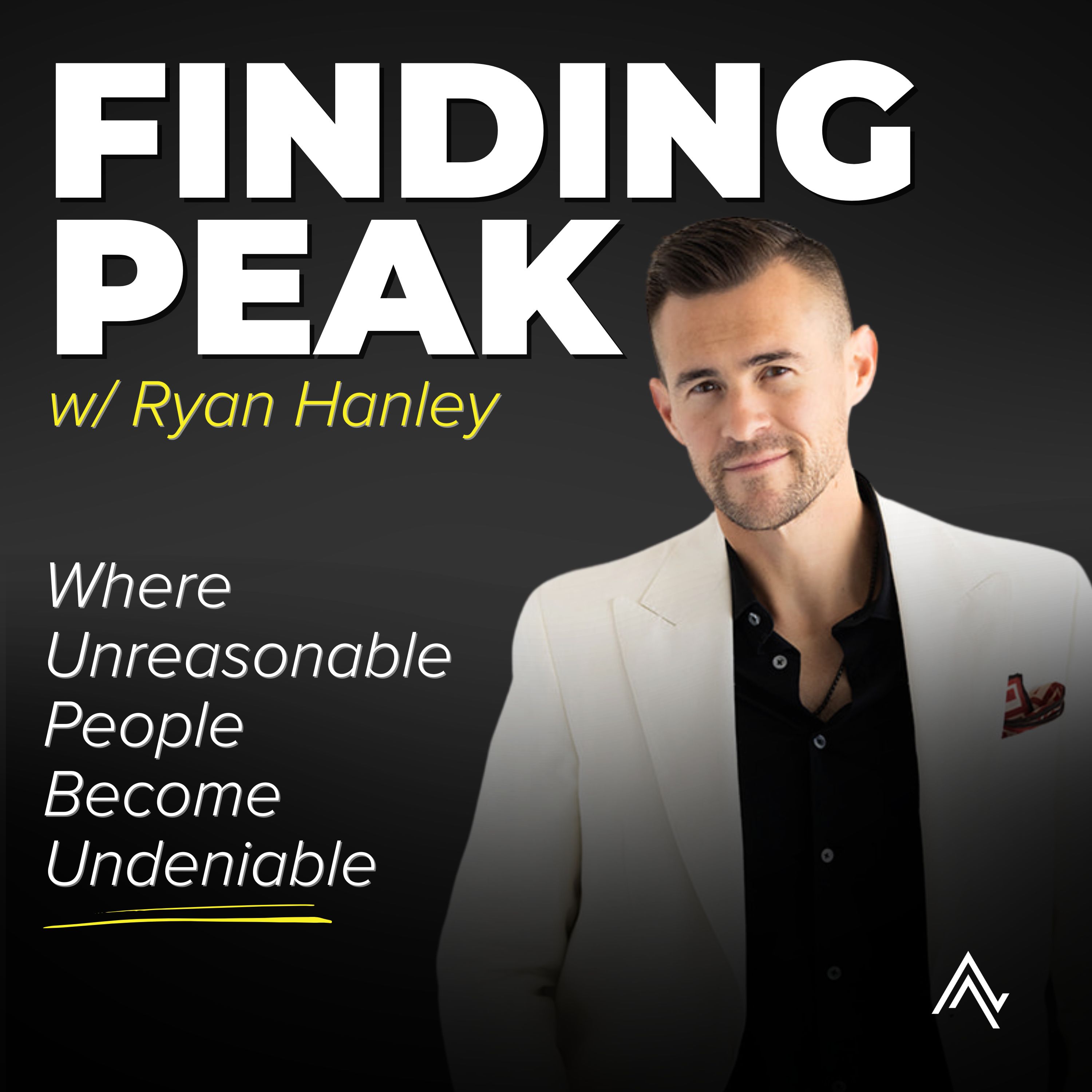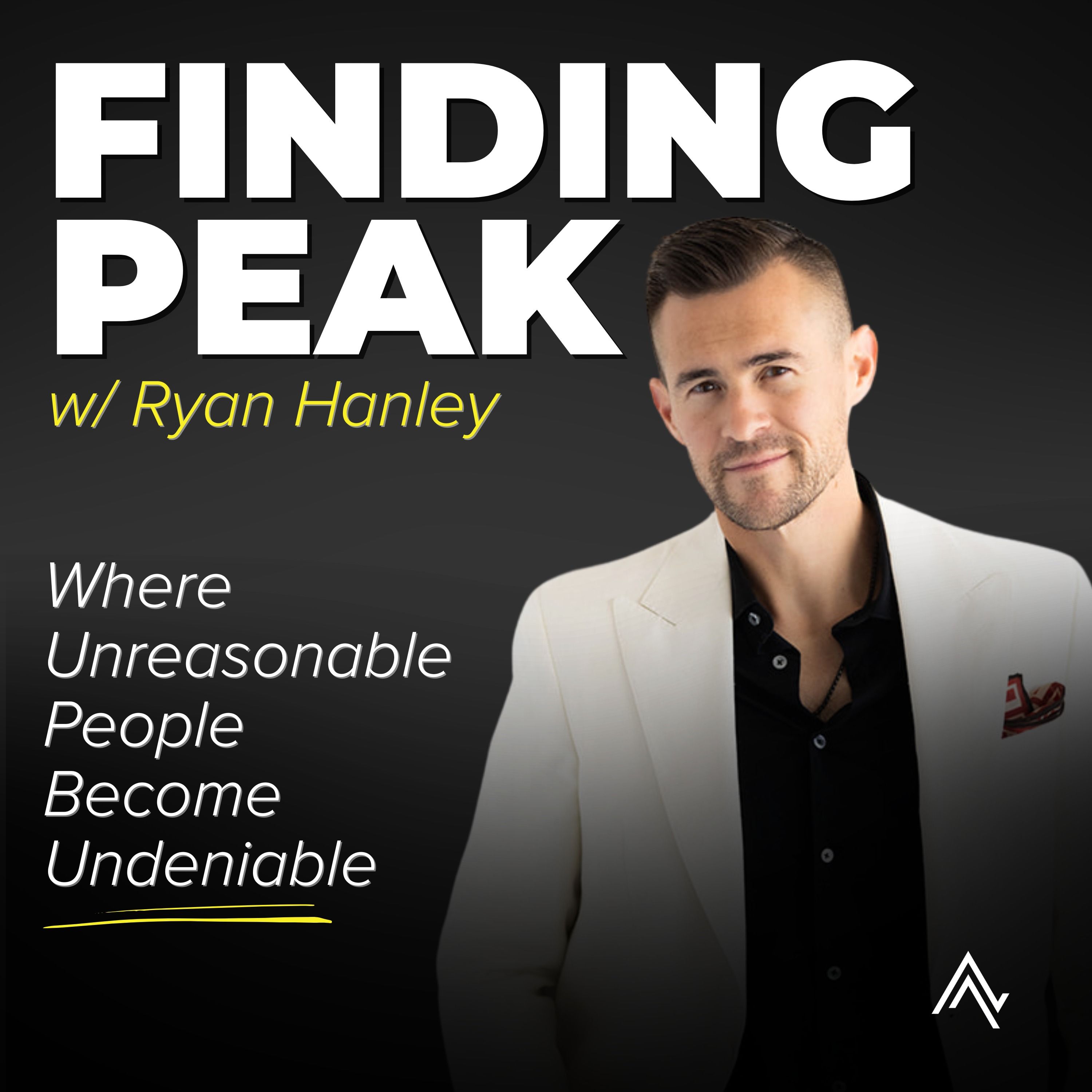
Unlocking Transformative Leadership: The Power of Curiosity, Presence, and Resilience | Dr. Eric Peeples
Press play and read along
Transcript
Speaker 1 This episode brought to you by Progressive Insurance. Do you ever find yourself playing the budgeting game? Shifting a little money here, a little there, and hoping it all works out?
Speaker 1 Well, with the Name Your Price tool from Progressive, you can get a better budgeter and potentially lower your insurance bill too.
Speaker 1 You tell Progressive what you want to pay for car insurance and they'll help find you options within your budget. Try it today at Progressive.com.
Speaker 1
Progressive Casualty Insurance Company and affiliates. Price and coverage match limited by state law.
Not available in all states.
Speaker 5 10 years from today, Lisa Schneider will train in her office job to become the leader of a pack of dogs.
Speaker 6 As the owner of her own dog rescue, that is.
Speaker 8 A second act made possible by the reskilling courses Lisa's taking now with AARP to help make sure her income lives as long as she does.
Speaker 11 And she can finally run with the big dogs and the small dogs who just think they're big dogs that's why the younger you are the more you need aarp learn more at aarp.org slash skills
Speaker 12 when your company works with pnc's corporate banking you'll gain a smart and steady foundation to help you carry out all your bold ideas but while your business might not be shaky you might still experience shakiness in other ways You might be outbid on the perfect summer house.
Speaker 14 Your kid might not attend your alma mater. Or your yacht might be jostled by stormy waters.
Speaker 14 No amount of responsible banking can prevent these things, except maybe the yacht, because we tell you boats are generally a bad investment.
Speaker 12 PNC Bank, brilliantly boring since 1865. The PNC Financial Services Group Inc., All Rights Reserved.
Speaker 2 Oftentimes, we live with such a high level of urgency that
Speaker 2 we don't have time to stop and smell the roses. We're kind of like, I'll just go into the store and buy some, versus me stopping and actually looking at something living.
Speaker 2 Every encounter I have with a person is a treasure hunt.
Speaker 15 Let's go.
Speaker 3 Yeah, make it look, make it look, make it look easy.
Speaker 15 The Ryan Hanley Show shares the original ideas, habits, and mindsets of world-class original thinkers you can use to produce extraordinary results in your life and business. This is the way.
Speaker 3
Hello, everyone, and welcome back to the show. We have a tremendous episode for you today, a conversation with Dr.
Eric Peoples.
Speaker 3 Dr.
Speaker 3 Eric is a keynote speaker, executive coach, and pastor, and we dive deep into what he is seeing out in the marketplace among leadership trends, how his most successful clients are using certain mindsets, certain leadership mindsets to dial in and to finish big with the projects they have in front of them.
Speaker 3
This is an absolutely phenomenal episode. If you are in a leadership position or ever wish to be in one, take notes.
My friends. As always, we don't run ads on this show.
Speaker 3 And all that I ask in return is that if you enjoy the content, share it with a friend, text it to somebody, email it to a colleague.
Speaker 3 And if you're feeling super froggy, leaving a rating and review on Spotify or Apple helps tremendously for new individuals such as yourself to find this show and understand exactly what we're talking about here and what we're trying to do.
Speaker 3
Get better, become the best version of ourselves, become focused, formidable. finishers.
My friends, I love you for listening to this show. Let's get on to Dr.
Eric Peeples. Dr.
Speaker 3 Eric Peoples, my man, I'm so excited to have you on the show.
Speaker 2
Dude, so good to be here with you, man. Love, love just what you're doing.
Love the energy. So excited.
Speaker 3 Dude,
Speaker 3
I always know it's going to be a good conversation when I have to say, like, stop talking. Like, let me hit record.
Like, you know what I mean?
Speaker 3 When we're like kicking it before we go live and we're just like crushing conversation and I have to like catch myself and go, this is like what we should be talking about because people are going to want to hear this.
Speaker 3 So,
Speaker 3 you know, I got to see you speak live. We got to spend,
Speaker 3
you know, probably 45 minutes chatting before you talked. I kind of caught you on the side at the event.
And, dude, I just love your approach, your nature. Like,
Speaker 3 I'm always,
Speaker 3 I'm always intrigued by guys who are confident, who are
Speaker 3 strong characters, strong-willed, strong in their beliefs, but at the same time have this like humility
Speaker 3
understanding and compassion for people. And, like, that's what immediately drew me into you.
Not to just stroke your ego right off the ramp.
Speaker 3 But I was so, I'm so impressed by the way that you handle yourself in those environments. Because I know, especially when you're a speaker, you're getting bombarded by people all over the place.
Speaker 3 And sometimes it can be, I don't want to say overwhelming, but it's just you're trying to do your thing and you get all this stuff. And you were just so generous for your time.
Speaker 3 And I just wanted to start the conversation by saying how much I appreciated that.
Speaker 2 Well, it was, it was, you know, it's, uh, it's a joy to connect with you.
Speaker 2 And I think one of the things, too, it works both ways in the sense of, you know, there's something dynamic when another leader who's a high achiever who's going after it has curiosity.
Speaker 2 And when I say curiosity, not just kind of to curiosity to poke holes, but literally, like, you have a learning attitude that is, it's, I love it. That's that to me.
Speaker 2 I, I think humility, if you're a learner, a lifelong learner, humility is a part of the package. If you walk into a room and think,
Speaker 2
I'm the biggest and baddest and I know everything, then you're in the wrong room. Find another one.
Cause, dude, I love learning. So I appreciate what you're sharing.
Speaker 3
I think that's a really good point. I love that.
I think one of the first descriptors on your Instagram profile is lifelong learner because I'm the same exact way.
Speaker 3 I read ferociously a lot of different topics.
Speaker 3 I just love taking in information. And one of the things, I actually had a conversation with a friend about this the other day.
Speaker 3 He said something similar, like if you're, if you're the, you know, the, the alpha in the room or whatever, you're in the wrong room. And I said, well, I said, you know, I agree with that.
Speaker 3 And we always want to be surrounding ourselves with people who are going to push us. But I also think there is something to the fact that
Speaker 3 You may think you're the alpha in the room, but there's always something you can learn from people, right?
Speaker 3 Like someone who's just starting out, well, they might just be starting out in this part of their life, but maybe they went through something when they were growing up, or they're also a concert pianist on the side or whatever.
Speaker 3 And yeah, maybe like in a certain context, you're the alpha, but I feel like if we, like you said, approach all situations with curiosity and humility,
Speaker 3 we can learn from everybody. And I think too often
Speaker 3 people hit a certain level of success or whatever knowledge or status. And it's like, well, you know, what could I possibly learn from that person?
Speaker 3 They're only doing X amount of revenue or their business is this or they're only this old. And it's like, yeah, except everybody has these ridiculous, amazing stories.
Speaker 3 And you probably know this from your podcast too. And there's just so much you can learn from people.
Speaker 2 Yeah.
Speaker 2 Yeah. And, you know, I think that
Speaker 2 with that whole learning piece, it's just, again, I just, I think the just the, you know, the older I get, the more experiences that I have, the places I go, I think there's the reality of, you know, we're in a, being in a room and, and learning from life experiences and hearing what other people think.
Speaker 2 I think the gift of presence and being,
Speaker 2 you know, listening and not just, you know, metacognition where you're listening and you already have an answer for what someone's saying, but when you're listening and you're really listening and someone can, you can say to the person, I'm actually hearing you.
Speaker 2 You're making a statement or, hey, tell me a little bit more of that. How did that happen? And I just, I'm always curious.
Speaker 2 You know, I'm on a plane plane a lot and I might say to someone like, hey, so how'd you get started? And it's never like,
Speaker 2 you know,
Speaker 2
you're connecting in dots, but life is like this. It'll rarely is it this linear, right? And it's just, I love that.
It's just, it's, it's a joy to me to have the experiences.
Speaker 3 How do you, how do you cultivate presence in your life? Because
Speaker 3 I, and I've mentioned on the show so the audience knows this, but I have like diagnosed very high-level ADHD.
Speaker 3 And for a long time, I was that guy who like you'd be on the last syllable of your last word of what I perceived was the last word of your sentence. I'm already responding, like, on top of you, right?
Speaker 3 Or, like, I'm trying to project how your sentence is going to finish in my head as I'm listening to you, and I can't wait to respond, even if I'm incredibly interested in what you said.
Speaker 3 And I've had to really work hard.
Speaker 3 And actually, part of my work on this podcast, even though I literally just did it to you, part of my work on this podcast has been trying, it's been like an exercise in trying to be a better listener and being more present in the moment for someone um that that at least from the outside as an observer is very good at being present in the moment how do you do you work on it is there a practice is there is it just something that you do you prep yourself sometimes like i sometimes in the hotel room will like be present in this moment nothing else matters for the next two hours you're gonna go down you're gonna shake some hands get to know what's going on do your thing afterwards you're gonna listen to people you know whatever like i will like almost prep talk myself to be present present in the moment.
Speaker 3 Do you have anything that you do like that, or how have you cultivated that presence?
Speaker 2 I think there's two things, and that's a great question because
Speaker 2 oftentimes we live with such a high level of urgency that
Speaker 2 we don't have time to stop and smell the roses. We're kind of like, I'll just go into the store and buy some, versus me stopping and actually looking at something living.
Speaker 2 And so, one of the things that
Speaker 2 I train myself in just from
Speaker 2 being around older leaders who are brilliant, brilliant people. And that is every encounter I have with a person is a treasure hunt.
Speaker 2 And so like me talking to you, I'm like, man, I, this guy, I love, you know, my attraction to your heart was for
Speaker 2
the heart for people. Like you want to help people win.
And so when I hear that, I'm like, dude, I'm in. However, I can be a part of that story, that journey, like that's easy for me.
Speaker 2 Now, I can tell you that there have been lots of,
Speaker 2 you know,
Speaker 2 conversations, lots of like, just, you know, people are like, hey, I've got this big idea and it's bigger than a screen, right? So it's like crazy stuff. And you're like,
Speaker 2 yeah, but are you making a difference? Are you making it matter for others? And I think one of the, so that's, that's one. I'm just curious.
Speaker 2 I mean, I'm going to, I'm going to be with Ryan today and it's going to be a treasure hunt, man.
Speaker 2 He's going to say something that I'm going to take a note on and it's going to, it's going to spark that. And the other part, just from a real practical standpoint, is, is that I actually
Speaker 2 I have my ring on my wedding band and I will sit there and sometimes if it's flying, you know, conversation with others, I will actually
Speaker 2 put my hand, my hand over my ring and I will spin it 15, 20 times just to make sure that I'm hearing what you're saying. Yeah.
Speaker 2 I'm not
Speaker 2 engaging because I think you're at the end of your sentence or whatever, because I'm much like you I'm a my mind works really quickly and so I have to create I have to create pauses otherwise I will step I'll step on the moment versus add to it yeah I I read I was reading
Speaker 3 Eckertolli's the the power of now which I highly recommend to everyone
Speaker 3 I found the second half to be a little repetitive, but the first like 50 to 60% of the book is just absolute pure gold for this particular topic. And
Speaker 3 in there, there was this idea of space, like building space between your response. And
Speaker 3 it's not just one, so you can collect your thoughts and make sure that your response is thoughtful and something that you actually mean to say, but it also shows the other person,
Speaker 3 it's respect for that other person in the conversation.
Speaker 3 Because when you finish, when that person finishes and you immediately jump in, now there's moments, maybe you're with your buddies or your friends and you're all jacked up and you're telling story, and that's a different environment.
Speaker 3 But when you're in a moment where you are trying to learn from someone and you are listening to them,
Speaker 3 and I've really tried to do this, I'm probably gonna mess it up a couple times on the show. Forgive me for that, but
Speaker 3 what it does is it shows that other person I care enough about you to delay my response and actually be thoughtful in how I respond to you. Because
Speaker 3 if you're listening to this, guys, you know, one way that you can see it is how often when you first respond, do you correct that initial three, four words that you start with?
Speaker 3 Or do you say a few words and then almost repeat those couple words again before you get to your thought? What that shows is I haven't actually collected myself.
Speaker 16
This episode is brought to you by Progressive Insurance. You chose to hit play on this podcast today.
Smart Choice. Progressive loves to help people make smart choices.
Speaker 16 That's why they offer a tool called Auto Quote Explorer that allows you to compare your progressive car insurance quote with rates from other companies.
Speaker 16 So you save time on the research and can enjoy savings when you choose the best rate for you. Give it a try after this episode at progressive.com.
Speaker 16
Progressive Casualty Insurance Company and affiliates. Not available in all states or situations.
Prices vary based on how you buy.
Speaker 5 10 years from today, Lisa Schneider will train in her office job to become the leader of a pack of dogs.
Speaker 6 As the owner of her own dog rescue, that is.
Speaker 9 A second act made possible by the reskilling courses Lisa's taking now with AARP to help make sure her income lives as long as she does.
Speaker 9 And she can finally run with the big dogs and the small dogs who just think they're big dogs.
Speaker 11 That's why the younger you are, the more you need AARP.
Speaker 9 Learn more at AARP.org slash skills.
Speaker 17 It's time your hard-earned money works harder for you. With the Wealthfront Cash Account, your uninvested cash earns a 3.5% APY, which is higher than the average savings rate.
Speaker 17 No account fees, no minimums, and free instant withdrawals to eligible accounts anytime. Join over a million people who trust Wealthfront to build wealth at wealthfront.com.
Speaker 17 Cash account offered by Wealthfront Brokerage LLC, member FINRA SIPC, and is not a bank. APY on deposits as of November 7th, 2025 is representative, subject to change, and requires no minimum.
Speaker 17 Funds are swept to program banks where they earn the variable APY.
Speaker 12 Here for the Lowe's early Black Friday deals.
Speaker 13 You're right on time for some of our biggest savings. We're talking up to 50% off select major appliances, plus up to an extra 25% off when you bundle select major appliances.
Speaker 13
Holiday lights going up soon? Select ladders are up to 50% off right now. Get Black Friday prices without the Black Friday crowds.
Lowe's, we help you save.
Speaker 13
Valent through 1119, selection varies by location. Select locations only.
While supplies last. See Lowe's.com for more details.
Speaker 3
Enough to respond yet. And what I've found, I can be much more thoughtful in my responses when I try to build in even a beat, just a, just a beat.
And that person, now they want to listen to you.
Speaker 3 They don't, you know what I mean? Versus, you know, something, somebody to say something to you and you respond. And you can just tell they're just like,
Speaker 3 you know, I don't care what you're saying
Speaker 3 it's just it's an interesting it's such an interesting thing um the other thing in that book and i apologize i'm talking i just want to get this out of my face um
Speaker 3 he's got this idea that i
Speaker 3 it makes perfect sense when you hear it it's a little ethereal uh so i do apologize to you guys if you're not into this kind of stuff but i think it's valid He makes the very clear point early in the book that there is literally no such thing as the future or the past.
Speaker 3 It doesn't exist.
Speaker 3 All that exists is this moment right now with you. And to spend every moment that we spend out in the future or back in the past is
Speaker 3
essentially a waste of time. Not that we shouldn't do self-reflection, not that we shouldn't do goal setting.
Those are powerful things.
Speaker 3 But if I'm sitting here going, okay, I got to get through this conversation with Eric and then I got this thing I got to do for this project over here and this. Now I'm not here with you.
Speaker 3 I'm not in in this moment with you. I'm living in another time or place, and it doesn't allow you to be at your best.
Speaker 2 Sounds like sports psychology.
Speaker 3 Yeah.
Speaker 2 You know, the last, and you know, especially working with some leaders in the field of with high achievers as it relates to sports,
Speaker 2 how do you, the last miss you made, the poor golf swing you took, you know, living in the present, living in the now.
Speaker 2 That's, I think that's a very interesting thought. I also do believe in the time and energy that we invest in the moment is,
Speaker 2 I've heard it said, a professor told me, called it one time, the gift of presence. And so that I'm able to, it's not only is it
Speaker 2 me exchanging the gift of being present here, but I'm also receiving the gift of understanding, learning,
Speaker 2 curiosity, growth. And I think when you curate your respective relationships,
Speaker 2 you don't find yourself saying, wow, what a waste of time. Because you're living with such a high level of intentionality, not
Speaker 2 just out of from a give and take standpoint, but you're going, wait a second.
Speaker 3 Are you tired of endless follow-ups and missed opportunities in your sales process?
Speaker 3 chasing leads is a losing game that's why i created the one call close system a battle-tested sales system that uses behavioral psychology to close deals in just one call no more let me think about it no more i'll get back to you using the one call close system we took new reps from 25 close ratio to over 80 in just three months to grow fast you must close deals faster at zero extra marketing cost the one call close system allows you and your reps to build trust, address pain points, all while watching your revenue skyrocket.
Speaker 3
Ready to stop chasing leads and start closing? Visit masteroftheclose.com today. Close twice as many deals this time next week.
Visit masteroftheclose.com to learn how.
Speaker 2 I'm going to be in the right room with the right people at the right time.
Speaker 2 And so being a good investor or even a good steward of my time and energy, that curates the moment from being simply an opportunity, right?
Speaker 2
And being like distracted by those things to understand, wait, that's a distraction. This is a real opportunity because I'm in a room with curious people.
I'm learning. I'm growing.
I'm developing.
Speaker 2 I'm adding value. And so the idea of past or presence, I think that, you know,
Speaker 2
how you learn also has to be a part of that factor too. Yeah.
And that's just, you know, from a, you know, from a purely educational standpoint. Some are organic learners, others are not.
So,
Speaker 2
you know, we all can, we go, we can write books with theories too. I mean, maybe it works in this world.
Yeah. And maybe for others too.
Speaker 3 Imagine what your life would be like if you were fully present in every moment, viewing it through the filter
Speaker 3 of opportunity. Like every moment, every interaction from the coffee that you're handed by a barista to the exchange of a Coke at the at the counter on a gas station or a conversation like this one.
Speaker 3 If you were fully present and passing it all through the filter of this is an opportunity, and maybe that opportunity is very small and nothing comes of it, but you don't know if you're always just projecting out or assuming you know.
Speaker 3 You know, I mean, that's the other thing. And I find that I sometimes, I guess in my past, I've worked very hard, especially as I accumulated more leadership positions.
Speaker 3 And really, that's where I want to take our conversation ultimately is into leadership, but
Speaker 3 was
Speaker 3 you, you, by being, by being present,
Speaker 3 you're able to fully grasp each opportunity as presented and dissect it for what it is. And
Speaker 3 instead of what I did in the past was go, I already assume I know what Eric's going to say. So I'm just going to kind of plow through this instead of, man,
Speaker 3
I wonder where Eric's going to take this conversation today. Like, man, I can't wait to find out where we go.
Like, what branch of
Speaker 3 the brain or knowledge or experience are we going to touch it? Like, it's just a, it's like this tiny little reframing, but man, it opens up the world.
Speaker 3
And, and that kind of leads me into where I wanted to go with you. You, you work with a tremendous number of high achievers all over the world.
You, we were talking about a little before.
Speaker 3 You've, you know, you're recently in Ecuador, you're traveling to Brazil, you're all over the country.
Speaker 3 You know, when I first met you, you were at a mastermind full, a room full of 100 of the, some of the best minds in the insurance industry, high achievers.
Speaker 3 Like, I guess, what is the state of leadership today?
Speaker 3 When you're, when you were talking about high achievers, the individuals, the men and women that are just, they're dialed in, their team's behind them, things are going well.
Speaker 3 Like, what is the state of that leader today? What does that look like?
Speaker 2 I think that's a really great question
Speaker 2 because we all have,
Speaker 2 you know we all have internal pressure going on and external pressures that are going on and so depending upon your vertical market I what I am seeing is it depends on the pressures that people are actually
Speaker 2 I wouldn't even say under, but I would say the pressures they're responding to. And so
Speaker 2
one of the things I love doing in why I travel is I love helping leaders lead. I love them helping them win and focus and finish strong.
And one of those pieces is, in winning, is
Speaker 2 what's important now.
Speaker 2 And so I would say the universal struggle when the pressure is on is becoming
Speaker 2 living from in a silo, living in isolation,
Speaker 2 your own,
Speaker 2 even
Speaker 2 I would say it's almost like it's not cocooning, it's just
Speaker 2 running hard after,
Speaker 2 running hard after things. And
Speaker 2 so some of the questions that are popping up and then running hard after things, and that could either be you're acquiring stuff, that's also a knee-jerk reaction sometimes.
Speaker 2 I have less of a problem with people going after stuff because you can always sell it than
Speaker 2
where you're burning your life and time. You can always make more money, but you can't make more time.
And so I'm watching the burn ratio. And so I'll say this:
Speaker 2 from a professional standpoint, I'm I'm seeing people who are struggling with the intergenerational disconnect.
Speaker 2 You know, the average
Speaker 2 35-year-old is spending as much time on video games as a 15-year-old now.
Speaker 2 Your
Speaker 2 people are after, you know, on their social media, you know, show the best, hide the rest.
Speaker 2 34% of our population is dealing with
Speaker 2 has
Speaker 2 being interviewed, said, surveyed, that they wrestle with loneliness once a week.
Speaker 2 Some people think about being lonely once a week, and 10% say they wrestle with loneliness
Speaker 2 every day. So, this isn't like,
Speaker 2 you know,
Speaker 2 Joe Average, I'm talking about people who are moving the dial in some form or fashion. And so, when you think about
Speaker 2 how that's directly connected to the pressures, I was to winning is
Speaker 2 the misalignment with what's important now.
Speaker 2 What's important now from a 30, a 40-year-old is different than what's important now for a 60-year-old.
Speaker 2 And so, I think it's those having those moments of clarity where we really come to grips with in our lives, where we're going,
Speaker 2 I need to make sure that I'm around
Speaker 2 again,
Speaker 2
I'm a big proponent about the right relationships. I'm around people that can challenge me to curate my moments.
Like, for instance,
Speaker 2 do you need to go to Hawaii for a month? Or should you go to Hawaii for two weeks because
Speaker 2 that's where you're going to be best recharged? Like this different sentence, it can sound really
Speaker 2 granular, but
Speaker 2 that's where the kind of the...
Speaker 2 crazy decisions are made when you're talking to yourself. And I'll say this and let you go here.
Speaker 2 One of the conversations, one of the things I found about Eric Peoples is that when I have a conversation with myself, me, myself, and I, I'm always right.
Speaker 2 I've never had a bad idea that I haven't thought, dude, you know what? And without talking to someone else, I'm like, that's a great idea. Sometimes it's not.
Speaker 2 So who are you talking to to help create friction? Friction's good
Speaker 2 to focus on what it is you say you're after.
Speaker 3 So there's a bunch of questions that I have in there. The first one is specifically about about loneliness, and this can be in your work and your personal feelings, however you want to answer.
Speaker 3 Part of me,
Speaker 3 so I like being alone. I enjoy it.
Speaker 3 I have two kids. I have a decent number of friends.
Speaker 3
I have a woman who I've been seeing for a little more than a year now, and it's a great relationship, and everything is good. I love spending time with her.
But at the same time,
Speaker 3
I really enjoy being alone. And that wasn't always the case.
That's something that I've worked on and whatever.
Speaker 3 Do you think that some of
Speaker 3 the
Speaker 3 feelings of loneliness are
Speaker 3 a misalignment with what spending time with yourself really is, or people aren't doing the work? Like, to me, part of it to me is:
Speaker 3 like,
Speaker 3 is there, can we reframe loneliness as positive time spent with ourself? And is it maybe culturally we just have, we've lost the skill of being alone?
Speaker 2
Okay, I'll say it this way. And I'm reminded my wife tells me to don't make two points, make sure you finish the second one because otherwise I just have two points.
I get hung up on the first one.
Speaker 2
But the first one is there's a difference between loneliness and solitude. What you're speaking about is solitude.
You've got all these other relational factors that
Speaker 2 make you who you are.
Speaker 2 that
Speaker 2
you, so there's a giving out, right? You're pouring out, you're giving out, you're responsible for things. You've recognized that responsibility.
And so now you're saying,
Speaker 2
I gotta need some me time, which is healthy. Most people don't have me time because they don't like me time.
And what I'm talking about is they don't like themselves.
Speaker 2 And when you don't like yourselves, then the sound of silence is the echo of your misalignment, dissatisfaction is so loud that you start putting and pulling things into your life.
Speaker 2
You create a vacuum by nature because you're trying to fill it with something. And so you hear the words fulfilled.
I'm not fulfilled. Well,
Speaker 2 you know what? It's fulfillment is, I think, is directly connected to even the seasons in your life. I remember for my, you know, you said your two boys, you know,
Speaker 2 I, I know, I,
Speaker 2
you say something? No. Okay, I know the funny part about it.
It's like, but fulfilled, I remember when my daughter was 14 or 14 months old and fulfillment was her sleeping other night.
Speaker 2 We're like, oh man,
Speaker 2 it's like, you know, it's like rest is a weapon. Sleep deprivation
Speaker 2 is for torture. Over, you know, 50, it's 50 hours to 70, you're cracking, you're telling, you're singing, you're telling everything.
Speaker 2 And so, in the season you're in, what does it look like for you to live a fulfilled life? Well, you've defined what's important now, so now let's focus on that. How do we get there?
Speaker 2 How do we get from here to there? And so, if you, if so, loneliness is the sense of unfulfillment.
Speaker 2 Solitude is where you're able to rest, reflect, and even an attitude of gratitude is, is that thread is we throughout the conversation. And so, you know,
Speaker 2 there's a, I think there's a major, there's, there's this disconnect when people are, are you lonely? Well, most people who said they're lonely are burnt out.
Speaker 2 Well, you're giving energy to the wrong things.
Speaker 2 And the, and the, the
Speaker 2 drive to not disappoint people is
Speaker 2 dangerous.
Speaker 3 Yeah.
Speaker 3 One thing that helped me in this area was
Speaker 3 I've been described as a disagreeable person.
Speaker 3 And I used to take that as a negative.
Speaker 3 And I did a lot of reading on this. And actually, there's a guy,
Speaker 3 his name's Eric Weinstein. I don't know if you've heard him.
Speaker 3 He's a,
Speaker 3
I'd say, he's an intellectual to a certain extent. He's a physics guy, math guy, and he does a lot of podcasts and stuff.
And I really fell in love with his work. And
Speaker 3 he talked about on the show, and this was like a year or two ago that I heard this. He talked about his
Speaker 3 relationship to his disagreeableness. And he's like,
Speaker 3 we've developed a false narrative around what it means to be disagreeable.
Speaker 3 And what he said was
Speaker 3 questioning things,
Speaker 3 having your own opinion,
Speaker 3 understanding and being okay with,
Speaker 3 I could have an opinion that I share with you today that you could just say,
Speaker 3 I hear you, I don't agree.
Speaker 3 And technically, that pushback is disagreeableness in the purest sense of the context, but it's, am I going to be okay with this person that I respect, enjoy, and care about disagreeing with opinion I have?
Speaker 3 And I am, you know, and it took a long time to get there.
Speaker 3 And what, and my point in this little diatribe is that when you start to become okay, I think a lot of that loneliness, that sense of being alone is,
Speaker 3 I want, I need everyone to like me and agree with me and I need to agree with them and everything needs to be okay and happy and fun. It's like, that is just simply not life.
Speaker 3 And in fact, when you start to be okay with the fact that I can enjoy someone, care about someone, and we could have two or three things that we just intrinsically disagree about and that's perfectly fine.
Speaker 3
All of a sudden you start to go, oh, like I'm not alone. That person likes me.
We're connected.
Speaker 3 We just disagree on this one topic over here, which is perfectly fine because there's like 17 other topics that we do agree on.
Speaker 3
And we like don't, we don't focus on all the things that we do agree on that we shared values we have. We tend to focus on that one value that we disagree on.
And then that creates this disconnect.
Speaker 3 And now all of a sudden we're like, we're isolated and by ourselves. And
Speaker 3 I just don't think we talk about that type of stuff because coming all the way back to leadership, I mean, geez,
Speaker 3 you know and can speak to it even more than I can. Like when you're a leader,
Speaker 3 Everybody's going to disagree with you about something you say, right? I mean, you just, that's part of the job.
Speaker 2 It is. And
Speaker 2 one of the big challenges that we face is that when you think that leadership is a popularity contest, then
Speaker 2
there's two things that happen. And I'm going to say two things that happen, and I'm going to actually say the two.
Number one is you're not being true to yourself.
Speaker 2 But number two, the people who think they know you have actually never met you.
Speaker 2 Imposter syndrome. Well, I don't want to say this because what happens if I get in trouble? Well, what does happen if you get in trouble?
Speaker 2 Now, again, I think there's a difference as far as I ask also pre-qualified people in the conversations. I ask them, hey, so I don't say, tell me your toughest moment.
Speaker 2 I go, have you ever played a sport? And depending upon what the sport is, like, what did you play? Baseball?
Speaker 3 Baseball, yeah. Yes.
Speaker 2 Okay, baseball. So let's see.
Speaker 2
I mean, can you count how many times you got hit by a ball? I mean, come on. I mean, that's just, that's a part of it.
And you, and the thing is, is that you you have a resolve that you didn't quit.
Speaker 2 You did not win every game you played. And so
Speaker 2 there's a disconnect, even in the leadership development process now.
Speaker 2 There's the push of followership development process versus leadership development process.
Speaker 2 One of the folks that mentors me has had a lot of influences, John Maxwell.
Speaker 2
You know, for me, I'm okay, if you will, with my understanding my inadequacies because I know I need to grow. I know I need to learn.
Then
Speaker 2 I'm not threatened by you saying that you don't think I'm enough. That's okay.
Speaker 3 It doesn't matter.
Speaker 2 You know,
Speaker 2
I'm picking at pickleball. I don't know why I'm picking pickleball.
Everyone says don't play it, but
Speaker 2
I'm an aggressive person. I played sports.
I played football, which is full contact, right? And I'm thinking, I said, I'm going to learn how to play pickleball in the
Speaker 2 kind of in the back 40, because I know I played racquetball, table tennis, I played racket sports, and I just love a golf. I love the part of just full on, full tilt, right?
Speaker 2 And so like, I've got to know my audience, but I also need to know me, learning the game, the different pieces of it.
Speaker 2 But when you are an athlete, I think there's a part of the mix in your life as a leader where you understand what it means to lose, having the resolve to get back up, and also making the decision.
Speaker 2 Like, you know, the only thing I didn't lose, I'm learning.
Speaker 3 So, I football was my, baseball was my love, but football was my favorite sport.
Speaker 3 So, I was, uh, I had a scholarship to play football in college, and I got three concussions my senior season, and it ended my football career. Yeah.
Speaker 3 Um, but what I loved about football in particular, uh, and baseball has a lot of this too, but I'm similar to It was like
Speaker 3 all those societal
Speaker 3 governors that we have to put on our personality to like integrate into like, you know, rational human like niceness.
Speaker 3 In football, you can take, you can turn all those governors off and you just get to be 100% aggressive. And what
Speaker 3 I think...
Speaker 3 You know, what we miss when we watch highlight reels or we look at our favorite stars is we look at the great catch or or throw or tackle, and we don't see how the play before that linebacker who got the sack on the highlight reel, the play before they got blindsided by a guard that they didn't see, and they were picking themselves up off the ground.
Speaker 3 You know what I mean? And they got drool coming out of their mouth, and blood, and they're, you know, they're kind of like shaking it off.
Speaker 3 Yet they turn around, get the play call, get back in their position, and then they make the highlight reel play.
Speaker 3 And
Speaker 3 you're forced in the mode,
Speaker 3 at least from my experience I've never played sports like rugby and some of the others that are also full contact but
Speaker 3 you are forced to say all this pain I feel is not gonna stop me from the goal that I have in whatever the position is I play in that particular sport it translates I do think it translates to a lot of different sports a lot of different things but in particular I find football players get one they get this like meathead character tag which is I think completely false if anyone who's played the game you cannot be a meathead meathead.
Speaker 3 You can act like a meathead, but you are not a meathead. The meatheads don't make it.
Speaker 3
And, you know, there's, it's fun. I think they act like meatheads because it's fun.
Who doesn't want to act that way?
Speaker 3 But it, uh, but like in regard, they're all, you know, the most successful are incredibly, incredibly intelligent individuals. And, you know, you, you are going to get knocked down.
Speaker 3 Not like, oh, I didn't make this sale. Like literally knocked to the ground and have to pick yourself back up and re-engage in the game.
Speaker 3 And if you have an ounce of hesitation, you are going to get knocked back down to the ground again until you lose that piece of you.
Speaker 3 And I think that type of mentality is what we need to have as leaders today is like, it's okay. Like, you know, we look at,
Speaker 3 I'm listening to Walter Eisenson's biography of Elon Musk, right? And I love Elon Musk. I think he has an incredible number of personality traits that I think could be questioned.
Speaker 3 However, this is an individual who, in the purest sense, has been knocked to the ground so many times and he just keeps getting back up and that's how he got to be there.
Speaker 3 And also a level of craziness and a willingness to destroy his personal life and all these other things. But
Speaker 3 I just,
Speaker 3 it's like we've lost.
Speaker 3 We've lost aggression. Do you agree with that? Like we've we've made aggression into this toxic thing that
Speaker 3
I don't think it has to be. It can be toxic.
And I don't mean yelling and being a jerk, but there's an aggressive nature to leadership that I feel like has been, has been, I don't know, just
Speaker 3 put in this box of bad. And I just,
Speaker 3 I don't know how to break it out, I guess.
Speaker 2 I think you're onto something because it also too is understanding the audience. You know, it's people who,
Speaker 2
you know, if we were sitting in a room listening to a leader share about all the wins they've had, our curiosity would be sparked. Tell me about your failures.
Tell me about the challenges.
Speaker 2 You didn't get from here to there without some valleys, some potholes, some challenges, some pick yourself up, dust yourself off. You didn't even get there.
Speaker 2
Maybe you didn't even get there by just picking yourself up. There are others who helped you get up and to move.
And that, you know, that
Speaker 2 just blows up the fallacy of self-made man. No, there's some resolve and determination that you have to have when it's obvious what your assignment is.
Speaker 2
And I'm a per, you know, as a person of faith, understanding purpose. It is what I know why I get up in the morning.
I know what I'm after.
Speaker 2 I love helping leaders lead. But there also is that part, the vetting process inside of me that says,
Speaker 2 you know what?
Speaker 2 It's, you've got to want it. If I want what you want
Speaker 2 more than you, then I'm wasting my time. But if I can throw gas on the fire, if I can open a door for you or
Speaker 2
connect you with someone you need to know, then hey, awesome. I'm excited to be a part of it.
And this domestication of the leadership approach, I think, is a great fallacy. And in some ways,
Speaker 2 why many aren't winning.
Speaker 2 And when I'm talking about winning, I'm not just talking about, hey, winning, what's important now in the sense of like, I'm talking about winning overall, where the grand scheme of things, you're able to say,
Speaker 2 this is the target, this is what I'm after, and I'm finishing well, where people, it's undisputed. You know,
Speaker 2 people can say whatever they want to about
Speaker 2 Elon Musk, but the bottom line is, is that he's winning. In some form or fashion, he's winning in a way that others would want to.
Speaker 3 Yeah. And I think it's perfectly reasonable to say,
Speaker 3
I don't want his life. I don't want his life.
No. He's even said, you don't want my life.
However, to throw out everything,
Speaker 3 and I had a, I hate when I do this, but I had this online argument about Elon Musk with a guy, which I, you know, whatever. And he's saying, what has he ever achieved? And I'm like,
Speaker 3
I'm like, I get it. You, what it ultimately came down to was he didn't like his personality.
And it's like, okay, I can appreciate that you don't like his personality.
Speaker 3 His personality doesn't really bother me that much. I wouldn't want his life.
Speaker 3 I wouldn't want that. But how can you deny results, right? And I had a podcast guest,
Speaker 3
and I'm going to butcher his last name, Rajiv. I apologize.
It's Rajiv
Speaker 3
Peshwara. Rajiv Peshwara.
If you go back,
Speaker 3 his shtick is,
Speaker 3 and I don't mean shtick in a negative way, is positive autocratic leadership. And he got there because he was doing a survey for some client, and it came back that over 16,000 responses.
Speaker 3 They date, they had like, what would you want in a leader and all these characteristics, like a personality test, but what you would want of a leader. And it came back unequivocally.
Speaker 3 20 countries, more than 20 countries, 16,000 plus responses that an autocratic leader like Steve Jobs or Elon Musk is what people want to follow.
Speaker 3 And I found it so intriguing because everything we read today is, you know, this nice kind of beta personality and everybody's equal and all this kind of stuff. And I,
Speaker 3
those are come from good places. I don't mean those to be, to, to downgrade those.
But at the end of the day, we need someone who's got a vision and we believe is going to pull the ship.
Speaker 3 You know, you see these, you know, great leaders, you know, stand behind their team and
Speaker 3 poor leaders stand out in front. And I'm like, I don't think that's true.
Speaker 3
I think great leaders do stand out front and they act as the tip of the spear. They deflect all the, they take all the fodder.
They take all the hits and the flack so that their team can be amazing.
Speaker 3
If you're standing behind them, they're taking that crap. And I want that guy or gal who's going to be like, screw everyone.
We're going.
Speaker 3 Like, you know, we're going to get bloodied and beaten and yelled at, but at the end of the day, we're going to get to this place that we all want to go to.
Speaker 3 And it takes a little bit bit of like like oomph like like guts like a little bit of
Speaker 3 Angela duckworks grit like you you need this and I just feel like we don't cultivate it enough anymore no well it's I don't I I don't think that we
Speaker 2 cultivate I think cultivation for
Speaker 2 I would say for leaders to lead
Speaker 2 requires someone giving an opportunity and taking a risk and
Speaker 2 and it also requires failment failure and so what ends up happening is again that whole idea of domestication as far as leaders we we you know it's it's that part where we
Speaker 2 and I think that also there's that there's that it can be generational, but also to from a global standpoint, there's lots of nations and people and cultures that that is not the mindset.
Speaker 2 The mindset is very much along the lines of
Speaker 2 my ceiling is your floor. So if I'm going to help launch you into your next, your next now, then I've got to tell you the truth.
Speaker 2
I can't pretend that you're not going to take some hits. You're not going to take some shots.
That's a part of the mix.
Speaker 2 That's when's the last time you went to buy a car and you asked them, do they have a, did it come, does it go on a windshield?
Speaker 2 No, it comes with a windshield, it comes with tires, comes with a challenge. And you know what?
Speaker 2
Before you drive off a lot, you have to have insurance because they're betting you do have an accident and you're betting you don't. No, you're betting.
You're like, I'm going to have an accident.
Speaker 2 No, no, no.
Speaker 2
They're betting you don't. And so we have challenges.
We have stuff.
Speaker 2 And, you know, I just look at this and I go,
Speaker 2 if we want to be people who impact the future, then we've got to act like it. We've got to have the conversations.
Speaker 2 You know, I've say to my leaders, I'm not here for your comfort. I work with, and I don't say that trying to, as an ogre or trying to be, but I will not be.
Speaker 2 I would say domesticate in a sense of saying, listen,
Speaker 2
you know, I work with people who, it's like live fire. I work with warriors.
I work with people who are all about life to the floor. And so for me,
Speaker 2
having conversations like, come on, come on, people. Like, let's go.
Like,
Speaker 2
they don't need to be amped up. They are.
They don't need to be,
Speaker 2 they need to understand their big deal is loyalty. Their big deal is
Speaker 2
we are committed to the cause. to win.
And here's the other part, whatever it costs. I think what some of the things you're saying, if I had had to sum it up, I'd say the challenge is right now
Speaker 2 we're dealing with people who've count the cost and they think it'd be better for Ryan to pay than for me.
Speaker 3 Yeah,
Speaker 3 yeah, slightly.
Speaker 3 Something you said just spurred a question that I'm interested in, and you can answer however you want or not answer it if you feel uncomfortable. But,
Speaker 3
you know, you said man of faith, myself as well. I wear a cross, I've tattooed a cross on my arm.
I actually have two crosses on my arm.
Speaker 3 I very much much
Speaker 3 faith is a big part of my life. And I'm interested in your take on
Speaker 3 like free will versus fate as someone who strives to be the best version of themselves. Where do you stand on that particular idea?
Speaker 2 You know, I think one of the, if I understand it correctly, just free will, you're saying, you know, whatever happens, happens.
Speaker 2 And then there's the other side that is, I'm going to do this because I have the faith for it. Is that what you mean?
Speaker 3 I mean,
Speaker 3 is our outcome in life predetermined? Or do we have the ability to dictate the outcome?
Speaker 2 Okay, so you're talking about, so from a theological standpoint, that's called predestination, my foreknowledge.
Speaker 3 But anyway,
Speaker 2 I think that one of, it's really interesting that question because.
Speaker 2 You know, I've lived long enough where
Speaker 2
there were enough people that didn't believe in me that caused me to question what I felt that was burning in me. And now when I look down the line 30 years later, they were wrong.
I was right.
Speaker 2
I can't say I wasted my time, but I'm so grateful for those challenges, or if you even would say the resistance. Friction is good.
Friction is how we drive our cars. Friction is how we fly planes.
Speaker 2 It's friction. And so the idea of being a purpose-driven person, which I believe is important.
Speaker 2 And being purpose-driven, again, in my world that I live from, is not just acquiring things, but impacting people.
Speaker 2 You know, I, just among the other things I do, there's time, I just did a funeral three weeks ago, a guy said, hey, man, can you do my mother's funeral?
Speaker 2 You know, nothing she said towards her last hours was, I wish I had more stuff. It was always more time, or
Speaker 2 I wish I could talk to this person. And, you know, when you begin to think about that whole free will, I think that a lot of folks,
Speaker 2 that's a really great card to cash when we just don't want to take responsibility.
Speaker 2 And I, you know, where we just were kind of like, you know what, I don't want to have to, I don't want to have to pay the price. I don't want to have to attach,
Speaker 2 not, it's not even a belief system, but I just want to do my own thing. What will what be, what will be will be.
Speaker 2 I can't imagine
Speaker 2 living like that because it just, it's like pop all the hope balloons.
Speaker 2 As a person of faith, again, it's getting clarity on why you live.
Speaker 2 I live to help people win.
Speaker 2
I want to help you win. I don't care if it's riding your bicycle, man.
I'll be out there and put training wheels on that thing. We'll start with a tricycle.
Like, what's our goal? Let's go.
Speaker 2
Because most people who live from the place of it being all about self-requirement, 50 years after your death, no one will even remember you. That's powerful.
That's brutal. That's frightening.
Speaker 2
And that's taking into consideration. Again, I've, you know, I got my doctor organization leadership do.
I study all this stuff.
Speaker 2 How do the mom and pop shops that started 50 years ago, they don't exist anymore? How did they get gobbled up by big box companies? Well, there was something to be said.
Speaker 2 And more and more, that's uncommon because
Speaker 2 uncommon the sense of something being lasting 100 years.
Speaker 2
But if you go to Japan, they have a 100-year business plan. Oh, man, what's that all about? They think intergenerational.
And so when we start putting into the mix of free will and other things,
Speaker 2 I haven't heard a lot of that thinking
Speaker 2 stay connected to generational wealth.
Speaker 2 The long game, oftentimes
Speaker 2 it's been filled, the folks I've actually worked with in that kind of along those lines, it's been filled with a lot of regret because they didn't count the cost fully.
Speaker 2
But when you step out, I say say step out, you're living by faith, as a person living by faith. Yeah, there's a part of disappointment.
Yes, there's challenges that go through, but you know,
Speaker 2 that happen. But ultimately, at the end of the day, you can say, I did the best I could versus I tried.
Speaker 2 Now, try means something in horseshoes and grenades, but the best I could might mean me jump on top of that grenade.
Speaker 3 I had a coach in high school.
Speaker 3 I'm a baseball, on a baseball team. I played in a very high-level baseball team, and we were struggling in the middle of the season, and a lot of it was just,
Speaker 3 we weren't getting along as a team, kind of playing for ourselves. And he said,
Speaker 3 this is a guy that also smoked a cigar on third base as he was coaching third base, so understand the time period that we're in.
Speaker 3 He goes, you sons of bitches, you're not just playing for the name on the front of the jersey. You're playing for the name on the back.
Speaker 3 And what he meant by that was: every action you take out here isn't just a reflection of you or this team, it's a reflection of your parents, it's a reflection of your siblings, of the grandparents that come watch you play, of the cousins that come watch you play.
Speaker 3
Like, you're playing for more than just yourself or this team. You're playing for everyone who supports you, who cares about you.
Because if you act like a clown out here, that reflects on them.
Speaker 3 And
Speaker 3 that has stuck with me.
Speaker 3
I don't think I had, I probably, you know, I was probably 16 at the time. I probably hadn't thought that deeply about it.
But when he said that, it shut every single guy in that dugout up.
Speaker 3
We went on to go all the way. We lost a tough game in the state championship, but we went on to turn our season around, played amazing.
That, I'm telling you, you could have heard a pin job.
Speaker 3 Not a single guy in that team had probably ever heard something like that said that way and explained in that way. And I'm paraphrasing a little bit and there were way more curse words.
Speaker 3 But it was, it was like this moment where I, I, to what you said, like,
Speaker 3 when in America did we lose generational thinking? Like, when did we stop saying, I'm not living for me or just me. I'm living for my kids.
Speaker 3 I'm living for my kids' kids so that I can instill lessons in them.
Speaker 3 I can set them up, you know, through, you know, whatever, however I feel I need to to do that so that they then can be in a position to take care of their children and their children, and on we go.
Speaker 3 Like,
Speaker 3 when do we lose that?
Speaker 3 I don't know the answer, but it feels like we have to a certain extent.
Speaker 2 I think the word that comes to my mind is, and I talk about this often, is responsibility, right?
Speaker 2 There's this part where your coach was speaking to you all, and
Speaker 2 you took responsibility. And
Speaker 2 you break that word up, response ability.
Speaker 2 You
Speaker 2 had the ability to decide right there.
Speaker 2 I am empowered to make a decision right now for my future, for my friends, for my family, for my people, who I represent. And I'm going to represent them well.
Speaker 2 And so when you look over, you know, just over generations and in the past probably. 50 years even,
Speaker 2 maybe more, maybe 75 actually, there was a pivot from,
Speaker 2 well, it's not out of my hands. You know,
Speaker 2 we've got shareholders to care for.
Speaker 2 I have to do this and I've got to make the cut. I'm sorry because it's, and so that responsibility as if, you know, like some,
Speaker 2
it gets lost in translation. Like no one has the ability to make me mad.
I choose to be mad. I have.
I have a response ability. My response is someone's ignorance doesn't mean I've got to escalate it.
Speaker 2 I can say, you know what?
Speaker 2 And I'll say something simple.
Speaker 2 A couple of days ago, I'm in the supermarket. I'm waiting in line.
Speaker 2 I've took the, there's a, you know, you take the ticket for your waiting line to Deli, and, and there was a stack of numbers on the top.
Speaker 2 And I took with a number from off the top, and I'm standing there, and the guy says, 98. And I had been standing by the, the deli guy says, 98.
Speaker 2
I've been standing next to a guy for probably five minutes just waiting. He's 98.
And the guy looks at his, I said to him, what number are you? He goes, I'm 99. I go, oh, you were here before me.
Speaker 2
So I switch. He switched with him.
I take 99. He's like, wow, that's very, that was very kind of you.
Like,
Speaker 2
thank you. Like, he was in shock.
Remember back in the day when that was just normal?
Speaker 3 Like, what even, like, literally, I'm like,
Speaker 3 what happened? Yeah.
Speaker 2 What happened to just not decency and consideration?
Speaker 2 When you're convinced that you actually have to fight for everything you get all the time, that no one's going to ever take care of you. You've got to take care of you to such a level where, you know,
Speaker 2 if we had the Titanic happen nowadays, there would be, who knows who would be in the boat because of the fighting, the craziness that would be going on because
Speaker 2 we think that our moments right here are the most amazing moments ever.
Speaker 2 I say this, you know how your moments will be measured 50 years from now when your grandchildren are talking about you and your kids' kids are talking about it. like, it's like, what, how?
Speaker 2
I remember with dad, man, this experience. I remember that guy, Ryan, man.
He had said, it was so powerful. I had this moment in my business.
Speaker 2 I thought it was all over, and he says something to me that was amazing.
Speaker 2
Let's make our moments count. That's what's missing, I think.
And today, we're not taking our responsibilities. Like,
Speaker 2
I live in victimhood, and I live from a place of I'm not empowered. No, you are empowered.
You have to choose.
Speaker 3
Dr. Eric Peoples, my friends, it is such a pleasure.
Oh my gosh, I could go for hours. I'm stopping here only because I could talk for another two hours with you.
Easy. This is amazing.
Speaker 3 It's giving me fodder.
Speaker 3 We'll do this again in six months or so, bring you back on the show. Hey, I'd love to.
Speaker 3 I just enjoy your viewpoint on the world. I think your approach, as I started with, is this
Speaker 3 really wonderful and needed mix today of passion and strength mixed with humility and understanding. And I think we need more people like you out doing what you do.
Speaker 3 Where can people connect with you and go deeper down the rabbit hole in your work?
Speaker 2
Well, you can find me Eric Peeples Leadership Podcast. That's one of them.
And I can't wait to have you on mine. It's going to be awesome.
Speaker 2 Stay tuned. I got a new assistant.
Speaker 3 Yay.
Speaker 3 Coming.
Speaker 2
Yes. And also EricPeeples.co.
That's my Instagram handle. But you can find me through podcasts, Instagram.
And stay tuned. I'm looking forward.
Hey, back.
Speaker 2 It would love to be be back in six months to tell you more about the book we're writing it's gonna be awesome for sure done deal hey thank you so much i wish you know the best my friend hey my friend honor to be with you thanks again
Speaker 3 let's go yeah make it look make it look make it look easy hey stand up thank you for listening to the ryan hanley show
Speaker 15 be sure to subscribe and leave us a comment or review wherever you listen to podcasts
Speaker 3
close twice as many deals by this time next week. Sound impossible? It's not.
With the one-call close system, you'll stop chasing leads and start closing deals in one call.
Speaker 3 This is the exact method we use to close 1,200 clients under three years during the pandemic. No fluff, no endless follow-ups, just results fast.
Speaker 3 Based in behavioral psychology and battle-tested, the one-call closed system eliminates excuses and gets the prospect saying yes, more than you ever thought possible.
Speaker 3
If you're ready to stop losing opportunities and start winning, visit masteroffeclose.com. That's masteroftheclose.com.
Do it today.
Speaker 5 10 years from today, Lisa Schneider will train in her office job to become the leader of a pack of dogs.
Speaker 6 As the owner of her own dog rescue, that is.
Speaker 9 A second act made possible by the reskilling courses Lisa's taking now with AARP to help make sure her income lives as long as she does.
Speaker 7 And she can finally run with the big dogs and the small dogs, who just think they're big dogs.
Speaker 11 That's why the younger you are, the more you need AARP.
Speaker 9 Learn more at AARP.org slash skills.
Speaker 13 Here for the Lowe's early Black Friday deals, you're right on time for some of our biggest savings.
Speaker 13 We're talking up to 50% off select major appliances, plus up to an extra 25% off when you bundle select major appliances. Holiday lights going up soon? Select ladders are up to 50% off right now.
Speaker 13
Get Black Friday prices without the Black Friday crowds. Lowe's, we help.
You save. Valent through 1119.
Selection varies by location. Select locations only.
While supplies last.
Speaker 13 See Lowe's.com for more details.