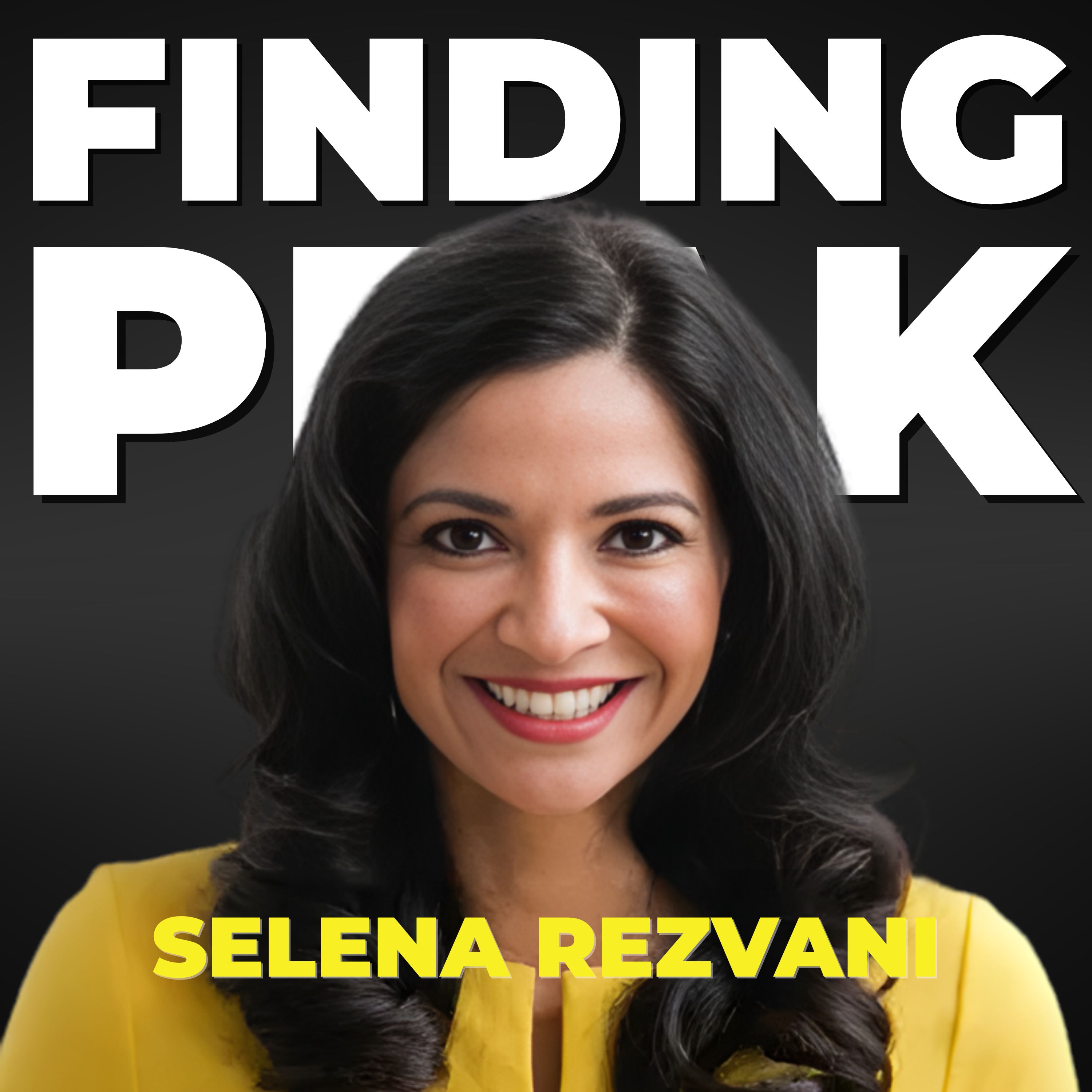
Stop Blaming Gen Z (You're the Problem) - Selena Rezvani

Press play and read along
Transcript
When your company works with PNC's corporate banking, you'll gain a smart and steady foundation to help you carry out all your bold ideas.
But while your business might not be shaky, you might still experience shakiness in other ways.
You might be outbid on the perfect summer house, your kid might not attend your alma mater, or your yacht might be jostled by stormy waters.
No amount of responsible banking can prevent these things, except maybe the yacht, because we tell you boats are generally a bad investment. PNC Bank, brilliantly boring since 1865.
The PNC Financial Services Group Inc., All rights reserved. You need to be the shit umbrella.
There is so much faux urgency, fake deadlines, urgency culture is everywhere.
At some point, we decided nobody should have to wait for anything. It's okay to kind of live in an emergency type mode.
A lot of cultures are like that, and it's so normal, we don't even clock it, let alone stand up to it.
One of the things we as leaders need to do is to be that shit umbrella, to get really good at ruthlessly prioritizing.
Selena, I'm so excited to have you on the show today.
A lot of the stuff that you are an expert in, have written books in, et cetera, right about on LinkedIn to your 75,000 plus followers are topics that I know every leader in the country is dealing with.
Real, everyday dealing with these issues.
And I love episodes when we're like dialed in on what's like the kind of pulse of conversations in this moment and i think this this you know particularly two topics that we kind of were discussing before we went live um surveillance culture
gen z versus other generations etc like these are the things that that from from small businesses on main street with 15 employees to
mega corporations with 150,000 employees, they're all having these discussions every every single day. So I appreciate you taking the time and I'm excited to have you here.
Well, thank you.
All of your work inspires me. So it's going to be a great conversation.
Well, I appreciate that.
And I will try to hold up my end to the bargain, but it's tough when I got heavy hitters coming in like yourself, you know?
Well, I want to get right into the to the Gen Z one and I'm going to set just a little bit of context and let you roll.
So I was having this conversation the other day with a friend of mine who's a multi-time entrepreneur and he's at it again and he's got, I think, somewhere in like the 20s of employees in his current company.
And he was talking about Gen Z, which is what we were talking about. And I was, the discussion that we were having was,
and I hate to make this negative. So take this as a casual conversation with two people who are kind of quasi-bitching at each other about things.
But it was like, I struggle more with millennials than I do with Gen Z. And he struggles more with Gen Z than millennials.
And we were kind of going back and forth over which one was, which one was worse to deal with.
And,
you know, I've found, and here's, I'll leave you with, I want to give you this thought and then let you rip.
My argument for why millennials are worse is that the bad ones are sneakier. And I don't mean sneakier in an intentional way.
I mean it's harder to tell the employees that are going to fit your culture versus not fit your culture. That's what I mean by bad.
I don't mean actually bad people.
I just mean fit your culture versus not. With a millennial, I feel like with Gen Z,
I've found it to be way more obvious up front. This person's either a fit or they're not a fit.
The not fits are really not fits, right?
You may be able to wedge a millennial that's not a great fit in for a while. Gen Z, not at all.
But I feel like it's, you can tell faster and easier.
With the millennials, I felt like they all kind of looked the same and you didn't know what you were getting until you got them in in the door.
And then it was like you were opening a present on Christmas Day. Like, am I getting a good present or am I getting a bad present?
So with that context laid, I would love for you to dive into this because I know you're getting this question almost on a daily basis.
So often, and it's such a topic that people have strong feelings about. Like there is no comment I get that's neutral or kind of middle of the road.
It's often anger and frustration around entitlement and other ideas. But look, I think one of the issues that we're seeing right now with Gen Z is they grew up in
a highly participative world.
Like, yes, I went out to dinner. I'm going to leave a Yelp review.
I'm going to go on the website of my favorite retailer. I'm going to tell them and give them input on what I would like more of.
School projects, right? There is a lot of giving input in real real time, having your voice included.
Imagine growing up that way and then being welcomed by a workplace where like emails are written like directives.
Meetings are sometimes monologues where one person overrules. You know, sometimes people say they want one thing, like we want an innovative culture here.
But they shoot down every idea.
Like that is the quickest way to annoy a Gen Z.
So one of the things I like to share with people, if you want to be that leader who reaches this group, like think co-creation.
You know, think involving them like they are a focus group who are part of, you know, your product creation, improvements.
you know, service ideas, things you're doing to constantly improve. Don't just give them the mandate and think compliance.
It's not going to work with them.
How much of the entrepreneur culture that's kind of been prevalent since we'll say early 2000s, really mainstream early 2000s? Obviously entrepreneurship has been around for a while.
But to me, how I see a lot of this dividing, and again, not an expert on the topic, just someone who's managed people for a long time.
It feels like they come out of the Gen Zs are coming out of this idea where entrepreneurship was everywhere, right? You could start a Twitch stream. You could start a Shopify dropship store, right?
And they're toying with entrepreneurship from even really young ages, or at least exposed to it.
And then many times, and maybe this is for the first time, you have,
you'll take a guy that may traditionally be a jock, right? And you would think like his idols would be, you know, Josh Allen or, you know, Tom Brady or some sports star.
And instead, their idols are Elon Musk or Sarah Blakely or, you you know entrepreneurs and now we're starting to idolize these business figures and then when you get into a culture that doesn't match like your entrepreneurial idol you're like
what is going on totally you know that feels like a big disconnect too I want to get back to the entitlement but how much do you think this wave of
putting entrepreneurship on a platter has impacted how they approached jobs when they first get into the market?
Well, I think it's totally been glamorized entrepreneurship as kind of the lone genius who, you know, created the thing in their garage or their basement.
And, you know, we are all kind of enraptured by those stories. Those are cool and fun to listen to.
I think Gen Z is unique with all that, you know, kind of the stories that they've seen, the specific characters and personas.
What I think is interesting about Gen Z is their need to pursue entrepreneurship isn't just about revering or, you know, furthering their hobby or their passion project. It's a career
insurance policy.
It's actually going to keep them safe because many of them aren't getting jobs. They are living at home or they're needing to work more than one if they're fortunate enough to have one.
So I think they're viewing entrepreneurship as a necessity, you know, to survive
because their skepticism of corporate America and employers is fairly high. You know, so they're thinking, let me, let me do this and shore up what I can, what I can control directly.
I couldn't, I think this is a topic that has not been addressed enough. And I think it is, when I listen to other podcasts or shows on TV or et cetera, I hear,
I hear highly successful people talking about this topic, often in a way that I think misses the key element, which is this idea of loyalty, right? A lot of times,
a lot of the initial friction is like, I gave you this job, and now you're questioning every decision I make, and I'm the boss.
And, you know, like, not that I don't want you to be spirited and thoughtful, but at the same time, like, sometimes I just need you to do what I need you to do.
And like, there's all this friction, okay, back and forth. And
I feel like the part that's missed is
20 to 30-year-olds, right, and capturing maybe some of millennials, some Gen Z, maybe even some of whatever the previous generation.
The world that they've come into in terms of affordability, I know that's a big political kind of buzzword today, affordability, but it feels very real.
The safety piece is, that's such a crucial point.
They may have a job and they may be thankful that they gave you a job and they may even enjoy their job.
But at the same time, they're going, yeah, I'm making $90,000 out of college and it's good and I can like live.
But at any given moment, this company could axe me and I got nothing to fall back on.
And now it's going to take me six months to find another job and I might not be able to make 90,000 in my next job.
And, you know, and now, and if they don't have that safety net, they're not able to show up every day confidently because in the back of their mind their whole time they're going, am I going to lose this job?
Am I going to lose this job? So it's like,
where do you fall on allowing them to have some portion of...
like a side hustle or, you know, it's almost like, is there a cultural element where you could say almost like Google did where 10%, is back in the day Google but 10% of your time could be spent on a non-Google project as a way to like cultivate their creativity and kind of give them that entrepreneurial or scratch that entrepreneurial itch
yeah I and I love that Google did that and I think it works well for an employee you want to engage in the long term right it's a really great way to appeal to them and say I see you as a full person not just a coder you know or not just an HR analyst, right?
But somebody with interests and depth.
I actually think things are going to go the opposite way with Gen Z. And I think it's because
they so do not center
as the main part of their identity, like a lot of generations before them have. And probably like a lot of those Elon Musk and Sarah Blakely, you know, cool entrepreneur stories have done.
This is a group that does not want work to be the centerpiece of their life and their identity. In fact, one Gen Z said to me, like, work is only one small part of who I am.
So I think as that continues, I think we're going to see more project-based work, more gig work, more of a kind of cafeteria-style choice of being able to come in and work on a certain basis that's probably not
full-time as we know it.
You know,
FaceTime means the most. Whoever's here the longest is rewarded the most.
I think we're going to see things get cut up in pieces and parts.
And I actually think that's going to help Gen Z to survive rather than just looking for those big whales, the full-time jobs.
How much of that do you think is youthful fantasy? Because there was a time in my life when I believed in Santa Claus as well.
You all still?
I pretend. I lie to my children and say that I do.
And I ask that to say, like, I think that sounds amazing, right? I get to work on these projects as I want, and I can go on my hikes and take my selfies in Spain. And, you know,
except at the same time, this is also the loudest group talking about affordability as well. And it's like, you know, it's almost like that line from
Big Lebowski, like, do as your parents did. Go get a job, sir.
You know what I mean? This episode is brought to you by Progressive Insurance.
Do you ever think about switching insurance companies to see if you could save some cash? Progressive makes it easy.
Just drop in some details about yourself and see if you're eligible to save money when you bundle your home and auto policies.
The process only takes minutes, and it could mean hundreds more in your pocket. Visit progressive.com after this episode to see if you could save.
Progressive Casualty Insurance Company and affiliates. Potential savings will vary.
Not available in all states.
So it feels nice to be able to work on the projects that you want. And hey, I do a gig here and I do a gig here and that's great.
And maybe if you're supremely talented, you can make enough to survive. But a lot of this, a lot of the friction that I see happening in our culture is this, I want to live in New York City.
I want to be in Manhattan. I I want to be able to go do fun things, but I also don't want to work for a big company.
I want to work when I want to work.
I want to be work in coffee shops on my own schedule. And it's like, how do we balance those two things? Because it doesn't seem to be working so far.
Yeah.
Well, speaking of working remotely or flexibly, you know, where you want to, we know from research during the last five years that there is not a benefit to mandating coming back into the office.
So there's still a real gap there between employees being mandated with RTO and leaders doing the, we need this for the culture. You know, and
I don't think that's going anywhere. I think the smartest leaders are going to flex.
They're going to realize how much flexibility leads to loyalty.
and feels like basic respect and caring to employees. Like you see me as a grown-up who's capable of managing my own time, schedule, and tasks.
And you're most likely, if you're that great leader, you're focusing more on outcomes than how long I'm on red or green, on messenger. I completely agree.
I guess this kind of leads us naturally into the other topic that we were discussing in the green room, which is this surveillance.
culture that so I'd love for you to break this down because as much as I'm agnostic to what works and what doesn't. Like I don't have a bias in one direction.
I don't want to go into the office every day. I do think breathing the same air in an appropriate amount of time makes sense.
I don't want you keystroking me, nor would I work ever work anywhere where you're keystroke tracking me. But at the same time, you know, we do need to like.
get our shit done and actually, you know, hit our outcomes if those are what are given. So it feels like there is a way to balance lifestyle with performance,
but this counter move to surveillance culture does not feel, at least at face value, like the way to go to me.
So I'd love for you to break down what this is and what you're seeing, and then some of the impact that it's having.
Yeah, I mean, we have such smart software today
that can analyze how much we're typing in a given hour, our use of apps, right, on our work computer, most definitely when a particular app or your entire computer is asleep and down versus active.
And that's probably just the beginning, right, of what's possible.
Not to mention all your emails and things are searchable, like websites you visited. So I think
in my mind, as soon as I heard about surveillance culture, I thought, to me, this is something you do with an employee you want to fire.
Like this is something something you do with somebody who you're looking for evidence that I know you're not doing, pulling your weight.
You know, I know that you're probably taking a nap six hours a day on the couch of the eight we're working. That's how it feels to me, like evidence and like punitive.
You know, the idea of using this on employees who you either think are doing an excellent job or doing fine and meeting expectations is just the opposite of human motivation.
Right? There's something to be said for us feeling like capable grown-ups at work. Trust, it goes such a long way.
And
this is a hard one because even if you, as a manager, object to the software, the spy software, the bossware, as some people call it,
your organization's mandating it. And
it's a very uncomfortable place to be if you're a manager today. I got a lot of pushback about two years ago.
I did a solo episode of the show, and I can't remember the number. You can probably go back and search it if you're interested.
Whatever, I'll just say it here. Where there was a lot of talk during COVID of the quiet quitting, right? Quiet quitting was a huge topic.
And then
all this conversation started around loyalty, et cetera.
And my opinion has been for a very long time that corporations, because they have a bigger mouthpiece, or at least they did for a long time, because independent media, independent opportunities to share your voice weren't as large as they are even in the last three years.
They were able to push the conversation towards the employee. The disloyalty is coming from the employees.
It's the millennials. It's the Zenniel, whatever.
And while I think that culturally we've messed these generations up in a way in which there is some entitlement and different stuff that whatever. I don't think that's the reason, right?
There was a day, and this is my dad's generation. He was a mechanic on the railroad.
So he has a pension. He knew 30, he's never getting fired.
30 years in, he's going to get a pension, right?
You work. And obviously there's productivity issues that come with guarantee, you know, with hard to fire jobs and stuff.
But, but he knew that if he put in the time and got to a certain point in his career, he was going to be taken care of, his family would be taken care of, and he'd be okay.
And there was a loyalty there, right? You put in the time, we'll make sure you're taken care of. And there's economics and all that kind of stuff.
But when that started to go away, when you got Jack Welch, who I think it's absolutely ridiculous that we hold him up as this bastion of leadership, because I don't know anybody from my perspective who has wrecked leadership in terms of how they've popularized, you know, we're just going to chop heads on the bottom 10%,
you know, for whatever reason. Like,
I feel like it's the corporations that broke the loyalty agreement first.
And then the employees reacted by going, well, if I can't, if I know, if I, if I'm going to be here for 20 years and there's nothing on the other side of that for me or 30 years or 40 years, well, I'm just going to do three or four years.
And the next, as soon as I find something better, I'm going to jump. And employees are going, oh my, employees are going, oh my God, you know, look at this culture.
No one sticks anymore.
And it's like, yeah, because they can't trust you. Like you at any time will chop 30,000 people and, you know, just go, oh, that's just us, you know, making our numbers.
And then you wonder why your employees don't stick. It's crazy to me.
I think you're so right.
And I think that employer-employee contract, and I don't mean like the formal paper we sign, you know, I mean the kind of symbolic contract and relationship has been broken for a long time and in favor of the employer.
And just one example of that is this built-in expectation: if you're an employee, you should give discretionary effort. You should go the extra mile.
Right. And there's some employees that might look at that today and say, but what have you done for me lately? Like, would you go the extra mile for me if I was hurt, injured,
sick for a prolonged period?
I needed you, would you, would you go the extra mile? And I think that's a fair question. You know, I, like you, had a parent who was a nurse at the same hospital for 25 years,
but after injuring herself at the end of her career, she was kind of pushed out and like given really meager retirement.
And that's not lost on us who come up after that generation and see them either mistreated or overworked or,
you know, given stress and toxicity that they never signed up for. So I think we're savvy of that, you know, kids of that generation, maybe boomers and above.
But
look, I think there's so much that can be done
to
kind of invite in Gen Z into the conversation, right? To give them some choice early on, a voice early on in their tenure. It doesn't mean they're at the boardroom table making, you know, decisive,
you know, huge decisions about the future, But it does mean they are involved and that's not some act of generosity they earn after five or 10 years of tenure.
Like their voice counts as an early employee, as a junior person, whether it's, you know, we need a new benefit. Let's revise what we have and get some ideas and crowdsource what people want.
So often people don't include that generation. It's just like,
the grown-ups will make the decision over here and we'll inform you of the outcome. Yeah.
I think one of the legacies of the boomers in particular that I'm looking forward to being gone is an over-indexing on ego in all decisions.
They're not the only ones with ego. There are certainly, I'm 44, going to be 45.
There are certainly people my age who have ego and below and all around. It's, it's a human trait.
However, you know, one of the defining characteristics, in my opinion, in my experience, of the boomer generation in terms of of their management style is very ego-driven.
It's the, I've been here for 30 years, you've been here for three days, so what you think doesn't matter.
You know, regardless of what their life experience is, what they learned from their parents, internships, other jobs they had beforehand, what they learned in college, right? To your point.
Who's to say that a 23-year-old doesn't see something from a new angle that has, and can provide even a small insight that could help move a project forward, or to you say, a benefit that brings in an entire new cohort of high-quality employees or team members.
And the other thing too, that I feel like so few leaders do, and this was not my original thought, this was shared with me by a mentor that I think he probably got from someone else as well, which is this idea of very early on asking and checking in on a regular basis, is this a job or a career?
Because those are two different tracks. And there's no reason that you can't have, and again, I'm speaking to you.
I want to hear your feedback. I'm just, I love this topic.
I'm so interested in it.
Like, there's no reason you can't have people
who this is a career track for working alongside people who this is a job for.
And maybe the career track people do have a different set of loyalty or benefits or whatever, which is fine because there are people that are going to want to show up at nine, stamp their TPS reports, slide them across the table, punch out at five, go live their life.
They don't want to get emails. They're never going to show up to a Saturday meeting.
And that should be completely okay.
Yep. And then the people who it's a career track for, you're like, hey,
if this is a career for you, sorry, but the 10 a.m. meeting on Saturday, that sucks.
We get it. You got to be there because you're telling us it's a career.
Yeah. And I think, look, it's part of what I talk about in quick leadership is it's a tougher gig today.
You're managing exactly what you just said. Let's say
maybe somebody very ambitious who can't climb fast enough. You know, I want to advance.
I'm a goal getter. You're going to be managing somebody who is here for the good enough job,
which
isn't isn't necessarily something to stigmatize right there's something to be said for someone who wants to come do a respectable job and leave work at work you know and i'm going to leave every day at five and that's the arrangement between us and then of course you're also managing people who are disengaged And I really try to say in that case, it's not a question of that person has no spark.
It's often that they have a lost spark. Something happened.
Something made them feel completely disembowered or disengaged.
They kind of got demoted on a certain project or were brushed aside and not given credit for something
that they might have led on.
Something happened. And so it kind of puts you in the,
you know, as a manager, needing to wear yet another hat. to tailor your management style to the person in front of you and say, I've noticed X, Y, and Z.
You engaging less in meetings, you know, you contribute a lot less than you used to. And I see this in your performance.
I want to talk to you about it.
When do you feel like you lost that engagement? Ask them. You know, they're going to have a point of view on it.
But I think don't look at that as that's a foregone conclusion or why bother.
Often it's a question of reconnecting them with something that mattered. And I think you brought up a word I really love because we don't talk about this word enough, but ego.
You know, you think about boomers, I'm Gen X, and I know I was raised with this, which is that you talk a little differently when you get in the room with the SVP. at your company.
You know, you speak with more reverence. It's not unusual to say things like, I know you're so busy or I know your time is tight.
I only have one question, right?
Like we often do this and put folks on a pedestal. And it's something we've learned.
Oh, that's a form of respect based on that person's status. Gen Z does not believe in that.
And to them, it's like this stiff old-fashioned ritual that we other generations are like coming to work and performing. And so to them, it's like very silly.
You ask me a question and you're the SVP or you're an associate, I'm going to most likely answer you the same way. And that rubs a lot of people the wrong way.
To me, I feel like both sides have to come a little more to the middle, right?
I often hear this conversation positioned, and I do not feel like this is how you're positioning it, but I hear it positioned as like either Gen Z is wrong, right?
And like, what's wrong with them, right? This is probably the emails that you're getting and some of the conversations I've had.
Or you get, you know, these crazy, ego-driven, you know, boomers who just who won't get out of the way and won't let us do our thing, right?
And you're positioned as one side or the other, when really it's, there needs to be more active leadership and almost, you know, I think, and this is a lot of your work and it
quick leadership addresses a lot of this is like
your book, Quick Leadership. And guys, I'll have links to all of Selena's work in the show notes.
So just scroll down, whether you're watching on YouTube, wherever you're listening, whatever, just scroll down. You can get the book.
And this isn't your first bestseller. You've had previous.
I'll have those linked up as well.
But
like we've kind of lost the art of leadership, right? It's just show up.
I've reached a position or I was a high performer at a task and now I'm managing people even though I don't have a clue what I'm doing or even want to do it. Right.
And then you also have Gen Z who's saying like, I don't care if you're an SVP or an associate where
My honest to goodness take is there should be a little respect given to that person who's put in the time, who has the experience, who does have, who has gone through some of these things before, probably dozens of times and may have acquired some insight and have a little bit of experience knowledge that they can provide and they're not just these older morons who want to just make money and push young people down right like and don't know how to save a PDF right which is the running joke yeah and it's like it's like you know and and I think it's it's this how do you get both groups moving to the middle how do we start to have conversations where
I know we're broad-stroking Gen Z, but we'll say Gen Z starts to understand that, like, look, like,
being that we're human beings, there is a level of respect and appreciation for process and company culture that needs, you need to integrate in if you're going to be part of, right?
You, you don't get to just have a job and then go, this is the way I work, deal with it. That, that, I don't think that's the right answer.
However, but there also needs to be, leadership needs to be a little understanding of the fact that if you want your company to grow and you want to hire people, This block isn't going anywhere.
Like, this is the next group of people that you have to hire. And if you don't change in some regard, you're not going to be able to get the best of the best out of that group.
How do those two groups start to come together?
Yeah, well, I just want to say one thing as we talk about that, which is one phenomenon I hear from so many people is talking about Gen Z as though they kind of landed here from another planet.
and parachuted in. And I can feel like that too.
I can relate to feeling that way sometimes, but we have to remember like they are a product of us.
You know, iPads that are in their hands that we might, you know, be criticizing them for being such digital natives, we put in their hands.
So I think there needs to be a little bit of togetherness and I think responsibility that like, this isn't a group that just landed on our planet.
We've influenced them. You know, we've put new tools and technologies in their hands and
we were willing to take that risk. We didn't know how it would turn out with children.
Well, now we do. You know, so I think that's an important thing to step back and just remind ourselves.
These are creatures. These are people of our own, you know, making and influencing.
I think you're right. I think, in terms of bridging the generations, I think we could use some of Gen Z's directness.
I even welcome some of their casualness in the workplace in terms of it being less like
formal and performative and like let me put my work mask on and be business self now.
I appreciate that and I think they can bring that and there's something we can learn from
some of their kind of
healthy entitlement. We tend to hear that word entitlement and think all bad.
That's a nasty bad word. That's a bad trait to have in somebody.
I think there's such a thing as healthy entitlement where it's not over the top. You know, it's not
move over and, you know, let me get mine. It's not that.
It's simply
being aware of being a good self-advocate, knowing, you know, you're offering me something and I'm offering you something in this employer-employee relationship.
And
one
side cannot monitor that. You both have to be monitoring, are we doing right by each other? Is there an issue here? Am I doing two two people's jobs for the same pay I used to be getting? Right.
So there's a constant need to be that self-advocate, to bring some healthy entitlement. And I think that's a positive thing that Gen Z brings.
At the same time,
yeah, boomers have a ton of experience. They've also done and accomplished things Gen Z knows nothing about.
They've like lived through civil rights, for example, and brought about laws, right, in the 60s and 70s around hiring fairly and not discriminating.
They've seen things change drastically socially and at work and have been part of those changes. And I think we do need to honor that institutional knowledge we have, honor that experience.
I just think it's going to look a little less like we're used to.
Yeah, I completely fawning over that person. Yeah,
I completely agree with,
I do like the cash, the more casual. I'm going to say, I'm going to exchange, I would exchange the word casual for authentic, right? Just being a little more true to who you are as a person.
I agree that the mask, I feel like today,
regardless of what generation you are, but certainly I think the younger generations are more dialed to this.
They smell inauthenticity miles away.
Like it's like they have radar for inauthentic. And maybe that's because of YouTube culture or TikTok or just in general.
You know, everyone's stuff is everywhere. You know, you can't really hide today.
And most people choose not to hide. They purposely put all their stuff out there.
And when there's a disconnect between the work you and the real you,
that is not appreciated. That is not an appreciated trait anymore.
And it, I do think that's very positive.
Very interested.
The holidays are here, and that means it's the most wonderful time of the year to save with Racketon. Use Racketon to stack cash back from your favorite stores on top of holiday sales.
That's savings on savings. With Racketon, you can get cash back on gifts for everyone on your list.
From toys for the kids to kitchen gear for the person who loves to cook to electronics for everyone.
You can even save on something for yourself. Just shop the stores you love and cash back is automatically added to your account and you can get paid with gift cards, PayPal or check.
Or eligible American Express card members can even choose to earn membership rewards instead of cash back. It's truly a no-brainer.
Join for free today and get a new member bonus after minimum qualifying purchases. Just go to racketon.com, download the app, or install the browser extension.
That's R-A-K-U-T-E-N.
Terms and conditions apply.
The idea of healthy entitlement, I think is interesting. And I agree.
I think a lot of people are going to hear that. And even with the word healthy is in front, they're going to bristle.
Yeah.
I know when my
peers or people reach out to me, man,
that word entitlement, there needs to be like a four-letter version of the word entitlement with the way that they use it, right? Like
it's very difficult. And I think where,
where
I know where I have struggled at times, and I'd like to believe that I handle this well, and I feel like I've done okay with these, with these individuals.
Most of my experience with it in a negative way has been either complaining or people asking me questions. And so I know it's there.
But it's,
I think what all, all a good, let's say a good leader who is in, say, the, the, you know, the
Gen X boomer, you know, early boomers who have maybe 10, 15 years, 20 years left of their career in a management or leadership capacity with these individuals.
You know, one of the things that I've been talking to them about is the loss of mentorship or apprenticeship culture.
So, do you feel like
one of the solves to this could be bringing in more of a mentorship or apprenticeship culture into your business where maybe they're not in a decision-making capacity, but they're with their boss when they're going to that big meeting.
And maybe they're sitting in the back of the room or the, or the side, because I'll tell you, where I cut my teeth in leadership was
as a young executive in my early 30s, I was brought into every C-suite meeting. And no, I didn't have a talking role.
I sat in the back and I listened.
And then we would have a powwow after, and hey, what did you hear? And what did this person's reaction, right? But like, but I was there.
I got to see my boss, how they, how he negotiated, or how he responded to a tough question or a
curveball that we didn't, we didn't game plan for in a negotiation. And I got to listen both, both positive and negative, to how he responded.
So do you see that as a potential solution?
Absolutely. And there's so many employees, if you talk to them in all kinds of organizations, who feel underinvested in, not invested in.
And I agree with you that like on-the-job training, shadowing, apprenticing is so valuable, and there's no substitute for it.
It also can lead to people, you know, having more faith in you.
And I'll never forget in my own career in management consulting, being very young, early 20s, and having a mentor at my firm say to me, Selena, why don't you give the presentation to the client next week?
And it was like, what? Like, you think I'm capable of that?
And it was like a thrill and terrifying at the same, you know.
But that's what you get, right? When you're absorbing in those rooms and you're being given that gift of exposure. So I think it's wonderful.
I think the issue is
there are so many different kinds of cultures. One, a really great one would be, say, a coaching culture.
And that's where it's normalized to give feedback.
It's normalized to get out of a client presentation and say, like, you know, Ryan, I thought one thing you did great was this.
Next time, why don't you try this other thing to sharpen up, you the experience for the client? That's so normalized that it's not weird, it doesn't sting.
At the same time, maybe the person giving the presentation is asking you, they're soliciting it themselves, saying, Hey, you saw me in there. What's one thing you thought I did well?
One thing I should try differently next time.
And there's this sense that it's like incumbent upon managers and more seasoned folks to give,
to mentor, to train, to have the patience to like stop and explain something that maybe this junior or new person clearly doesn't know yet. That is, that's not the norm that I see.
You know, because there are so many kinds of cultures. There's like a get it done yesterday culture, which
when speed is like your huge main goal, guess what goes right out the window is mentoring and, you know,
growth of employees because like oh that's just like a little fringe benefit that's nice but that's not a necessity yeah it's it's throwing the baby out with the bathwater yeah forgetting that your business so one of the concepts that
changed how i approached my both my career how i managed how i led etc was this idea of seasons of a business which when you hear it seemingly makes complete and utter sense i had just never heard it until i was about 35.
and all of a sudden I was like, oh my God, like you can have a, and again, this comes down to communication and having trust and respect with your team, but like you can explain.
And I have found in different, you know, when I, so I, uh, my most recent engagement was, I, or engagement, my most recent company, I founded a digital national commercial insurance agency.
We're fully remote. I only met four of my 27 employees in person ever.
You know, we grew the business. We sold it, exited from it.
It was, it was a great experience.
But one of the things I found the team to be very receptive to, and this was only because I had acquired this knowledge, not because I didn't learn it at the time, was I would explain to him, like, guys, for the next two months, we got to go.
Like, we're going to grind. Like, I'm going to be a little harder to get a hold of.
Like, it's about putting numbers on the board for the next two months.
Like, we have to, bam, this is what we're doing. We're putting this project on hold, this project on hold.
Like, we're dialing down our meetings. We're selling, we got to go sell some stuff.
Like, get after it. But then, after two, two months, or whenever you hit that target, you can downshift back into, all right, let's start communicating a little more.
Let's make sure he's going to his training, she's getting the guidance she needs over here, whatever, this tool. And like, I feel like your team will
respond to you and will, will, will be flexible to you if you
share with them, one, what's actually happening, which bewilders me that there are leaders that try to hide what's actually happening in a company, their employees, like they don't know, right?
That to me is bananas. And two, like that, they feel like like they won't, they're like almost afraid they won't come along for the ride.
So they don't tell them.
And all of a sudden, they just change the way they're leading or what they're saying to them. And now the employees at the water cooler are going, what the hell is wrong with, you know, John?
You know, he just, he's turned into a monster the last two weeks.
And they don't realize that he got a big goal put on his head or, you know, she got a big goal, you know, whatever, whoever the leader is.
And that's why they're feeling stressed and that stress is coming downhill. And it's like, it's just,
it's like we're, we, we,
it's, it's so much like it's abundance versus scarcity.
Like, we go back to these like base core mantras, like that abundance mentality of like, if I share with you that we're gonna, we need to go get it, and you're like, nope, I'm not doing it.
Well, then I have my answer. I know who you are, right? I know what you're, what you're gonna,
but if you're like, okay, I can press the gas pedal for two months, I'm willing to come along. It's like, all right.
And then you just have to be good about making sure they get the downshift when it's time for that. But this like
pedal to the floor, hustle culture bullshit, like it's grind all the time. Like there's enough studies out to know that
all the glamorizing of that is exceptions to the rule, not the rule.
Or at least that's, that's my opinion of this, is that we have taken a few examples of people who work 20-hour days for three years and we hold them up.
And it's like, no, that's the exception to the rule. And, and, and it's survivor bias, right? It's survivor bias that they were successful because they put 20 hours in, right?
Now there's plenty of companies that have been plenty successful that didn't work 20 hours a day, day, seven days a week for the first three years the company was created.
I just, but we don't stop and think about these things. So
if there's a leader or a manager listening to this who's struggling, what's the first step to start to rein in this team and become a more congruent unit, a more successful unit with the differing of generations and maybe differing of belief structures?
Like, how do you start to pull this in if you're the leader and you, but, and you truly want to be successful, you just don't know how to get there?
Yeah, it's a great question. And
I think personally, as the daughter of a workaholic, I lost my dad when he was young.
I was 13 and he passed of a massive heart attack, checked himself out of the hospital at one point to give a presentation against medical orders.
Like that's that's the person who was my dad and was very successful and a really cool guy in a lot of ways. But like, man, it's not a winning formula.
And it's part of what like galvanizes me and excites me about my work and wanting to help leaders do it differently, not just so it's sustainable for them, but so that it's sustainable for their people.
And I really agreed with what you said about like seasons to work.
I think a sprint you're doing within your organization can be actually energizing and exciting to employees. You know, I think they can get that like contact high of like, oh, this is cool.
We are going to sell and meet that revenue goal or like, we are going to deliver this incredible product for the first of its kind or whatever.
I think you can grab that. I think the key is to recognize real human rhythms.
Okay, you're going to ask me to do that for six weeks or you're going to ask me to do that for this long. What happens after?
because they're watching noticing remember they've given their discretionary effort their extra mile
how are you now going to
replenish them or make them whole in some way it may be saying hey guys we're going to do some like pretty chill work over the next two weeks
You know, I'm asking you to, and I understand that you need to be selectively excellent. We can't all be excellent all the time.
We don't have infinite resources, right? Internally.
And I think the best managers recognize that, like out loud. I know I just asked a lot of you all.
As a result, here's what we're going to look like or perform like over the next two weeks, three weeks. Or I'm giving you the first two days of this week off, you know, where you are
trying to put things in some kind of balance that will mean so much to your employees and it's not just a sprint it could be you've asked them to work over the weekend or you know you've asked them to give that something extra what is even a small gesture you can do to say i see you
i noticed what you did i appreciate you it means so much
And I don't think it happens enough, you know, especially praising, recognizing for progress, not just just results. Yeah.
A lot of this feels like
poor
leadership positioning. And what I mean by that is
I think a lot of organizations are really bad at hiring leaders. They're good at hiring people with nice resumes.
They're good at hiring people who may have been very good individual contributors in a task that's underneath that leadership position.
Very bad at hiring leaders. Because to me, this is one of the things that I said to my team:
as soon as we had a team that was big enough, like as soon as was possible, I pulled myself out of day-to-day operations.
I said to the team, look, like, I'm not selling anymore. So, it's an insurance agency, highly sales-oriented.
And at the time, I was the number one salesperson, as many
leaders of companies are in the early days, right? They often take either business development or leader or sales, one of those, or if they're in engineering, but I'm not nerdy like that.
I'm more of a bullshitter.
And my point to that is like, I did that because I had learned, learned, not this is, again, not an original thought, learned, learned that like the CEO, the president, that leadership position, and then that position, but inside of a department or of a large organization as well.
is not the individual contribution. It's the leadership and performance of the team.
And that is lost. Like, I don't know where that got lost in the communication or or the training of leaders.
But I mean, oftentimes when I'll talk to maybe a, I have a lot of,
I help a lot of startup founders get from what I call launch to escape velocity.
And escape velocity being when you can finally pick your head up and you're paying your bills and you're not worried you're going to crash into a mountain every day. Okay.
And oftentimes the stuck point for them to reaching escape velocity is they're still in everyday opportunity.
They're still the number one salesperson and trying to be the CEO and then wonder why they're having so many downstream problems.
And the very first thing I'll say to them is: you have to get out of, you either have to go full tilt top salesperson and hire a CEO, or you need to hire a top salesperson and get out of that and become the CEO because that is a job.
This, to me, and I shouldn't say.
I'm interested in your experience with this, but it's just because this is, I've never done the research and it's not what I think about every day. But it's almost like
we look at the CEO or the president role as a title, but not a job. Like we forget that it is a very specific job with a very specific job description.
And we just try to like add that into whatever we're doing over here as well. And that just never goes well.
Why do you think so many leaders refuse to move out?
And I know in large organizations, this might be less of a problem, or at least slightly less of a problem, but a lot of mid-tier, mid-sized companies down to even, you know,
small businesses, maybe not micro, like this is a huge problem for them. And how do they start to make that leap?
And maybe what is a trigger for someone who's listening today going, I am struggling with this and I am also the top engineer or top salesperson or whatever.
Like, how do they start to make that transition, even just from an emotional standpoint? Yeah, I think it's easy to keep your hands in what you know.
right because we all get a little ego cookie when we experience that great feeling of mastery. Like, I know this, I have experience in this.
I have a thousand war stories, right?
A lot of people aren't going to be quick to leave that or just put it in other people's hands. So, I completely understand finding yourself in it in this overdue way.
But I think there's a few things at play. I think one is: I use this term, it's kind of cheeky in my book, but you need to be the shit umbrella.
And I don't just mean that for your team, team, which I do, but also for you.
There is so much faux urgency, fake deadlines, like urgency culture that is everywhere where like at some point we decided nobody should have to wait for anything and that it's okay to kind of live in an emergency type mode.
And a lot of cultures are like that. And it's so normal, like we don't even like clock it, let alone stand up to it.
And so I think one of the things we as leaders need to do is, you know, there's a few things, but one is to be that shit umbrella, to get really good at ruthlessly prioritizing. You know,
I'm going to push back on some of those urgent requests of my team, which to be honest right now is just distraction. And it's not like a strategic priority for us right now.
Maybe it's a, it would be nice if we could, but we can't. And
that's a form of advocacy that you and your team need for their calendars, for their schedules. I sometimes liken it to like Batman.
And I say to people, you know, when Batman was in the bat cave, right, he was doing important work. He wasn't just like chilling.
He's reviewing crime rates. You know, he's studying maps.
He's like innovating on the Batmobile.
And then what happens?
It's like the bat signal goes off and he drops everything right and goes and attends to that it's kind of like that with your people when you're asking them to attend meetings all the time um or go put out a fire right that that may or may not be absolutely necessary you're taking them away from that like mission critical focus time where they can do their best and contribute with the most impact.
And I think sometimes we are reckless with that time as managers, both for ourselves and for other people.
So I think that's just a different mindset to take. But if you're able to do that, to learn to say no,
to audit your calendar more often and say, I have some ridiculous recurring meetings here that this shouldn't be, if you're willing to kind of prune you know your calendar with your team to say we're going to meet less often for less minutes.
We're going to involve the least amount of people. Be sparing with what you're asking of people.
I think that's an important thing that's going to help you
because the worst thing you can be called as a manager by your people is spineless.
They want an advocate. So your role is to be the buffer.
And there's just one other thing I would add: which is, I think the best leaders stop seeing their role in that ego-driven, I need to be the smartest, I need to be the toughest way.
And I think they see themselves more as a facilitator.
My job is to facilitate you all doing well, kind of like the conductor in the source, you know, the symphony, right?
My job is to communicate, make sure you're aligned so that you can do and produce your best to remove blockers out of your way.
But it's not to be this all-knowing, my hands are in every bucket kind of person.
I agree with everything that you just said. I love the idea of a shit umbrella.
I think that's 100, one, it's a phenomenal visual for what we're actually dealing with on a day-to-day basis, right, as leaders.
But I love that.
But
I think your comment on how reckless we are with our time might be the conversation of our era, right? There's so much distraction. I mean, I'm sitting here, I'm looking at you, right?
I have a screen up over here of notes. I have a screen up here of your books, right? That I can reference.
My phone's over here that could go off.
I'm sure there's, you know, something, some appliance could go off upstairs or, you know, I mean, like, there's so much distraction in our lives.
And, and that is really like, who can cut through that and be strong and committed to.
Things simple things like just time blocking out the most important tasks in your day, you know, understanding that four hours on the right thing is better than 20 hours on a whole mess of menagerie of things, right?
And can you work on the same project for an hour straight, one project versus what so many people do is I'm gonna pull up this important project, but then every three minutes, I'm gonna check my text message, check my email, call someone, look at my social media.
You know, like you're, we're so, it's so rare today that we're just dialed on one task throughout the day that we can really become, you know, do exceptional work on. on.
And it just, I think, I think that's really dialed.
You know,
I talk about it like from a responsibility. So I believe in a responsibility hierarchy, but not a communication hierarchy, to your point.
I think we need to listen to everybody.
Everyone should have a voice.
But I think in order for things to actually get done, from a responsibility standpoint, an accountability standpoint, we need to have a hierarchy.
However, the miss, and I think this is what you're describing, and this is where I would love your feedback, is that when it comes to support, we have to take that hierarchy,
that triangle and flip it upside down, right? So I might, the buck might stop with me as the CEO of my company or of a company
in terms of responsibility. So I sit at the very top of the triangle or pyramid or whatever from a responsibility standpoint.
However, when it comes to the support structure for the organization, we flip it up. Like the CEO should be the most supportive of the managers or C-suite that's above them.
And then they need to be the most supportive of their VP layer.
And then up to where the people that are doing the work, they're up at the top and they should have all these layers of support underneath them, making sure that their day is clear, their mind is clear, their, you know, whatever needs they have from a getting shit done perspective are taken care of so they can freaking fly.
And it drives me nuts when you talk to an organization and the leaders go, man, I wish they would just shut up and do their freaking jobs. And you're like,
what have you done to put them in a position to win? Besides giving them a paycheck and a computer and a phone, like, what do you actually do on a day-to-day basis to make sure that person
has the space and the bandwidth to actually get their job done? Like, do they even know what their outcomes are that they need?
I mean, how many employees simply don't even know like what their ultimate goal is, like the outcome they need to produce at the end of a month or a quarter. Like they don't even know.
They just show up because it's never been communicated to them or 15 different things are communicated to them on a daily basis and they have no clue what they should be working on. It's insane to me.
I agree with you. And I've worked at one of those like 100,000 employee places where
there was a total lack of clarity and frustration because things changed so fast. Like felt like flavor of the week kind of trends.
and, oh, we don't care about that anymore. We're off to this.
And what a quick way to burn employees out, right? Not to mention just confuse them on a day-to-day level. But I think you're right about that like inverted pyramid.
I think it's managers' jobs to like absorb the criticism.
You know, for a fail or a fumble that happens within your team doesn't mean you don't rectify it and talk openly about, let's look at how this happened and how to prevent it, but that is part of your role to absorb that criticism.
And it's also part of your role to deflect the praise. You know, so when something goes great and it's directed at your team, really pulling them up and putting them in the spotlight.
And I think there's so many ways we can, what I call like power share. instead of hoard power.
Little things, but that mean a lot to employees. There's one I talk about in my book,
Ask Three Before You Answer. So again, there's that pressure.
I knew, I know, I grew up with this idea that like leaders should know it all, should be, you know, so smart, have the solutions.
But when somebody asks you a question, let's say in a team meeting, I'm having this problem with a client. What should I do? You could swoop in with the answer or you could ask them some questions.
You could say something like, Well, what have you tried so far?
Or,
you know, what is your gut saying is the right next step?
Or, you know, a third question where you're getting them to flex their problem-solving muscles. And what are you doing? You're demonstrating trust, too.
I don't need to swoop in, you know, perfect me with all the answers and
save you.
You've got what it takes. And like, don't great managers do this? They inspire trust.
They extend trust and confidence to you. And it's just a small thing, but it's, you know, also erring on the side of delegating with trust, you know, delegating more completely.
Again, we can get so in the habit of giving the answer all the time that when someone says, like, hey, Selena, I'm going to plan our wine and cheese event on Monday night.
Which of these five cheeses do you want? Like, I could sit there and really give it thought and tell them specifically, or I could say, you know what? I trust your judgment.
Yeah, it's funny.
I had a moment that I didn't mean to be a moment, which became one. I was sitting in a meeting with my team.
It was an all-hands meeting.
You know, I'd say I, up until that point, We'd grown very rapidly.
So we've been a very small team before, and I kind of did need to make most of the decisions because we were moving so fast and we were small and we're growing.
But we had hit a point where we were in a more structured and organized growth environment and it added team members, et cetera.
I was having kind of a not awesome day, just a lot on my brain, not necessarily problems, but just, you know, I was a little overwhelmed.
And we're sitting in Saw Hands meeting and someone asked a question. And I just like, it was like I didn't have any more willpower left.
And I just go, I literally said, you know what?
I don't have a clue how to answer. I don't know.
I don't have no idea. I have no, what you're at.
I don't know. Right.
And it was funny. So everyone kind of giggles, right?
And there's like, is he serious? And I go, no, I'm serious. Like, I think it's a good question.
I just don't know what the answer is. Like, I have to go do, I go, but why don't you go take a figure, you know, go figure out what you think the best answer is.
And we'll try that first.
You should have seen this woman's face. She lit up like a freaking Christmas tree, right? Because it was like, think about, again, and this is all just learned experience.
None of this was done on purpose, but, you know, I'm watching her react and I'm like,
you could tell,
like what you said, trust, empowerment, like she, she very clearly knew what she needed to do next, right?
Like she was going to go out and figure this out and come back with a solution and it ended up being a great solution.
But I wouldn't have done that.
if the moment hadn't been what it was and I just kind of came off the cuff and I, but from that moment on, I just started being okay going like, okay, this thing over here, I do know.
This is what I want on this particular issue. I want this.
Let's execute this. Okay.
But on these two things over here, I either don't have an opinion, which is another place where we tend to inject ourselves.
Like, it's okay to say, I honestly don't have a preference on which way we go, right? That's okay. It's also okay to say, I don't know.
I don't have every answer.
I couldn't agree more with you because sometimes there is like a culture of I'm the manager, so I'm going to put my stamp on everything.
You're going to send me something for my final approval. Well, I'm going to change it 10%
because I always need to be in there somewhere on the final deliverable. And it's simply not necessary.
When you're doing that, you are training people perfectly to over-depend on you.
And what does that do as a professional? It makes you feel like my judgment is not needed here.
This person in the role of like parent always has to sign off.
You know, I don't have what it takes to necessarily
do this successfully. That's the opposite of how you want your people to think.
So I think it takes so much for those of us who grew up with some of these outdated images of a leader that they should be bulletproof, that they should be all-knowing, that they, you know, that they should be
have never made mistakes and like really challenge ourselves on a daily basis to say those things are actually holding us back.
Because the best managers, like they talk about their mistakes, they don't act like they're bulletproof.
They say things like, you know, let me tell you about a time I undercommunicated and what I learned from that. Or I assumed no news was good news.
or fill in the blank, right?
It's going to mean so much to your people because so many of them look at you and think they must have never screwed up
they must have never struggled you know they must have like kind of been born a leader and on this golden path and it's not true like they've probably had just as many doors slammed in their face if not more
so
The way that can humanize you as a leader is everything.
Tell them about a time your thinking changed and evolved on something. Like they will welcome it.
Yeah.
Leadership is so incredibly difficult.
But at the same time, I feel like we make it way harder than it needs to be. Like, it's really not,
it's really,
I hate to say this this way, but like
out of all the things that need to be done in an organization, It's not even close to the top, in my opinion, in terms of difficulty. We make it difficult.
Like sales is hard.
Creating product out of thin air as an engineer is hard. Like there are a lot dealing with customers who call in with problems that are upset, that's hard.
Leading is not hard. We tend to make it hard.
And, you know, that's why I love when, you know, I'm able to meet people and showcase their ideas like you seem you just.
You know, what I loved about your work, and as I was researching, you know, our conversation, you know, I just feel like you have a very pragmatic view.
You seemingly pull from maybe both
a slightly more liberal philosophy. And I don't mean politically liberal, I just mean like more open, but also very real world, right?
If you take those two sides, like some of this is, I think we do need to be more open, more,
I don't love the word inclusive, but but but but just
free of spirit and and uh um free uh free of spirit is the wrong way to say that I mean like you know it the diversity of thought is so incredibly necessary in our business.
And, you know, one of the things I've never understood about the hiring issue and like the, whether it's, you know, bigotry, misogynist, racism, and hiring, I've never understood that because we operate in a capitalist environment.
And if you're a capitalist, all you should really want is the best person. Like, right? Like, that's, that's all you should want.
Like, who gives a shit who they pray to, who they have sex with, what color they are. Like, that is, those are the stupidest reasons to hire somebody if you're, if you're truly trying to make money.
So, I've never really understood that.
But, but this idea of bringing in these different voices, allowing them to be heard, acknowledging them, even if it's to say, look, that's a wonderful idea, but we can't execute on it for three months.
So, I hear you. It's going on the list and I appreciate the idea, but it's three months from that.
That's a perfectly okay thing to say. Instead, we say, be quiet, you haven't had enough experience.
Or we give them, we placate them and say, oh, that's an amazing idea. We never execute on it.
And now they feel just as not heard, right? But these are all like us as leaders. It's not the people.
Like, we started with Gen Z, but I feel like what I love about this conversation is that here we are towards the end.
And what we've really come back to is it doesn't matter Gen Z, millennial, boomer, whatever. It's, it's who are you as a leader? And can you
position yourself and grow as a person
to move with what that specific individual needs and how they fit into your team. Does that seem like a good way of surmising where we've gotten to?
Yeah, I do. And I agree.
Like some of the terms feel flowery to say, like they feel a little woo-woo to say, leaders, you need to create psychological safety, right?
It's kind of like, well, what is that? What on earth is that?
And they may sound that way. They may sound a little woo-woo and be authentic and all of that.
But man, there is some truth to this.
And like you said, being in a capitalist society, what do capitalists like? Numbers, hard numbers and metrics. Well, we have so much of that to show that a cognitively diverse group
makes better decisions, right? Has better deliverables, not necessarily easier to work with, right? Because there's more of a rub, more tension, but that's what leads to the better outcome.
Easy shouldn't be the goal. That's the part that drives me nuts is like when you get that like to your point if you have a homogenous group
they are way easier to manage because you you know what to expect however you are also absolutely missing opportunity so you're making a conscious decision if you you know if you're uh if you're if whether it's political or or geo geographic or whatever you're you know you only hire men or you only hire whatever it is right you only hire people under 40.
it's okay to maybe over over-index on certain personalities or types that seem to do better.
But if you don't have that, if you aren't the type of leader who is willing to be flexible enough to bring in these different thoughts and these different viewpoints, both from generationally, culturally, et cetera, geographically, like you are missing opportunity.
Like you are making a choice, a conscious choice to limit your opportunity and to limit the upside that you can produce. And I've just never, I've never been able to rationalize that as a human being.
And maybe it's because I have severe ADHD and all I care about is forward progress. And I can't even be bothered with things that slow that down.
But like, I've just never been able to wrap my head around that because this seems like some basic human psychology. And everything that you're talking about makes complete and utter sense.
Like you've given them the playbook with just the basic amount of human psychology, but no one wants to go that deep. It's, I give you a paycheck, do your job and shut up.
And it's just destroying companies.
We need more. You know, you talked about us hiring not so well for leaders.
I also think like we underequip them once they're there.
Maybe they were a brilliant engineer and now they're the engineering manager. Let's equip them.
Let's assume this is not inborn. People don't know this.
They don't learn it in school often.
Give them some tools. Give them a toolbox.
Give your people like a shared language so they can help each other and identify, oh, you're doing that really well and support each other.
Or, hey, you know, I noticed you're doing that thing we learned about. You know, you're kind of talking over people and it made it really hard to contribute last week, right? We need that.
It's hard to be like the lone,
you know,
hero.
trying to do this stuff by yourself in an organization. So
equip your people, make it shared common knowledge and vocabulary. It becomes so much easier.
Yeah, I completely agree.
And the last thing I'll throw on this is my final thought is simply, I think we need to stop assuming a negatively perceived
behavior is happening intentionally.
And this was the case for me, the talking over the thing, right? My brain is going really fast all the time. And I didn't even realize why.
up until I was actually diagnosed back in 2020.
I didn't understand why I was the way that I was. And I I used to get a lot of feedback about talking too fast, which I do talk too fast, or talking over the top of people.
And finally, I had someone come and say, you're being so disrespectful. And I was like, I was blown.
I was like, when they said I was being disrespectful, it was like a gunshot. You know,
that's like the last thing that I wanted to be. I was just.
so excited about what we were talking about and where we were going. Like I get all amped up.
And, you know, at that time, not understanding how to control myself, I was just like vibrating with how excited I was to figure out the solution.
And, you know, I didn't understand that if I answered really quick, people would think I wasn't listening to them and these different things.
And it's like, sometimes I think we just need to approach people in a way that, like, if there is a perceived problem, we ought, we shouldn't go into that conversation with the assumption they're doing it intentionally or they're doing it for nefarious or negative reasons.
Sometimes a lot, most people just, we're all freaking humans who have all this crazy stuff going on in our lives all the time. And a lot of times we just don't even realize what we're doing.
And not that that's, you know, not that we shouldn't be self-aware, but I do think a lot of problems get caused by assuming intentionality that isn't necessarily there. Yes, I agree with you so much.
It's actually one of my favorite tips from quick leadership is about LGI versus MGI, which is just the simple framework, least generous interpretation, most generous interpretation.
And just asking yourself in a pissed off moment when you're feeling like spinning nails and you're making certain assumptions in your head. I wrote to that person twice today.
Like, why, you know, they just don't think I'm important, right? You start filling in the blanks, not always generously, right?
And it may be that actually they're in all day meetings and they are working to get you what you need.
But you would never know that, right?
Taking a minute to say, what kind of interpretation am I making here? And how might I change the one I have if I don't like it? You know, they've always helped me in the past.
I'm going to trust in this situation that they're working hard and they're busy and that they are going to get back to me. And if they don't by tomorrow at nine, I'll call them again.
But it's just a little thing we can use to label what's going on because we've all been there.
That person in front of us who's driving so slow, like we all make up stories about how thoughtless and this, that, to the other that is when we have no idea what's going on in there.
Well, I think a phenomenal way if you're a go-getter to start getting that leadership education is to connect with you, follow your work, particularly on LinkedIn.
And not only your most recent book, Quick Leadership, but as well as a lot of the other books that you've written.
Besides, say, LinkedIn, the books, et cetera. Where is the best place for people to get deeper into your world so they can start following along with your methodology and what you teach and preach.
Yeah, thank you. My books are available everywhere.
Books are sold.
And I make leadership video content five days a week. So I put that on Instagram and TikTok.
And I'd love to hear from you all. Kind of jump in.
Let me know what you want videos and role plays about that have to do with sticky workplace situations.
So that would be a great place to find me. Well, I appreciate you and your work and your methodology.
And I know this is the second book in a series.
When the third one comes out, we'd love to have you back on the show. Thank you.
I wish you nothing but the best. And thank you so much.
Thank you. Thank you for elevating leadership.
Suffering from dry, tired, irritated eyes? Don't let dry eyes win. Use Sustain Pro.
It hydrates, restores, and protects dry eyes for up to 12 hours. Sustain Pro, triple action dry eye relief.
At Capella University, learning the right skills could make a difference. That's why our business programs teach you relevant skills you can take from the course room to the workplace.
A different future is closer than you think with Capella University. Learn more at capella.edu.
You've finally broken loose from work. Three friends, one tea time,
and then the text. Honey, there's water in the basement.
Not exactly how you pictured your Saturday. That's when you call us, Cincinnati Insurance.
We always answer the call because real protection means showing up, even when things are in the rough.
Cincinnati Insurance, let us make your bad day better.
Find an agent at CINFIN.com.