Bad with Money? Get Better with Tori Dunlap
Glennon, Abby, and Amanda are doing something they've never done—talk about money. It's one of the most vulnerable topics, especially for women, where silence and shame still dominate.
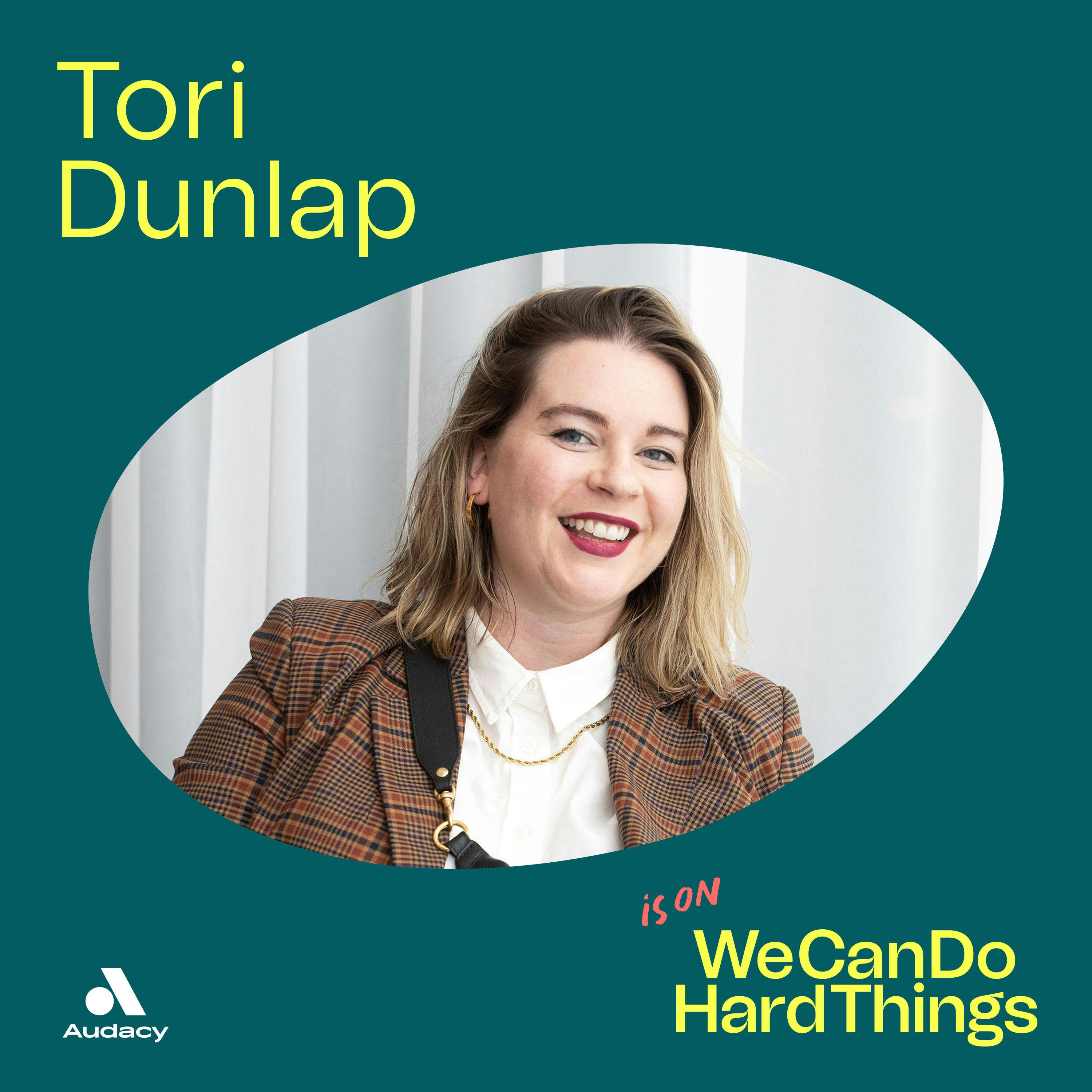
Joining them is Tori Dunlap—New York Times bestselling author and feminist finance expert—to help break the stigma, spark the conversation, and guide us toward financial freedom.
-How shame—not numbers—is often the biggest barrier to financial well-being-Why women are conditioned to shrink around money and how to reclaim power-Using money as a tool for safety, agency, and freedom-Practical steps to begin healing your relationship with money, starting today
Tori Dunlap is the Author of the instant New York Times bestselling book “Financial Feminist”; host of the #1 Business Podcast, Financial Feminist; and co-creator of Treasury, an investing education platform that has over $82M invested. After saving $100,000 at age 25, Tori quit her corporate job in marketing and founded Her First $100K to fight financial inequality by giving women actionable resources to better their money. She has helped over five million women negotiate salary, pay off debt, build savings, and invest.
To learn more about listener data and our privacy practices visit: https://www.audacyinc.com/privacy-policy
Learn more about your ad choices. Visit https://podcastchoices.com/adchoices
Press play and read along
Transcript
Speaker 1 What if you could bleach and color without wrecking your hair? With K-18 Molecular Repair Hair Mask, you can. It's not another quick fix with false promises, it's hair science.
Speaker 1
The patented K18 Peptide repairs hair at the molecular level. That's really, really deep.
So you can keep coloring and still have hair that feels soft, strong, and bouncy.
Speaker 1 Because yes, we can do hard things, but your hair doesn't have to be one of them. Shop K18's mask at Sephora Sephora or get 10% off your first purchase with code hardthings at k18hair.com.
Speaker 1 That's code hardthings at k18hair.com.
Speaker 2 Tori Dunlap is the author of the instant New York Times best-selling book, Financial Feminist, host of the number one business podcast, financial feminist, and co-creator of Treasury, an investing education platform that has over $82 million invested.
Speaker 2 She has helped over 5 million women negotiate salary, pay off debt, build savings, and invest, and really, as you'll hear in this episode, sort of change their entire stories that they have around money.
Speaker 2 Because I am so terrified to talk about money, this is the first conversation I think I've ever had publicly about money. So,
Speaker 2 sweatily,
Speaker 2 let us jump in.
Speaker 2 Tori!
Speaker 3 I'm so excited to meet you. Hi, everybody.
Speaker 4 Tori, what a when we got to the part in your book with the Glennon and Together Rising shout out. We were like, what?
Speaker 4 It was so exciting. We were texting each other like, ah, that's so exciting.
Speaker 3
I can't cry this early. This is my goal is to get through this interview without crying.
Oh.
Speaker 3
Yeah, I'm so excited to be here. Thank you for having me.
We're really excited.
Speaker 5
I'm really grateful for you. Big fan.
I follow you. I listen to all your advice.
Speaker 3
You're wonderful. That's very sweet.
Abby, do you know that you and I have met? I'm about to tell the most embarrassing story that's ever happened to me. Okay.
So Abby, you and I have met.
Speaker 3
It was 2019. I was in my early 20s.
I was with my mentor in Seattle and we were about to hear Liz Gilbert speak. And this has been, yeah, I've seen her a couple of times.
Speaker 3 I met her in college very briefly and told her, you're who I hope to be when I grow up. And she goes, no, you're who I hope to be when I grow up.
Speaker 3 That's great.
Speaker 3 and there's this woman sitting next to us and this person in the audience comes up to this woman and goes oh my gosh i'm so sorry but can i have a photo and this person gracefully says of course and my mentor who's so sweet she's like my second mom and she's so curious and so kind but had no idea who this woman was and goes hi i'm sorry like who are you and she goes oh i'm abby and
Speaker 3 my mentor goes what do you do for work and abby goes ah i used to play soccer And this woman in front of us whips around and goes, she used to play soccer?
Speaker 3
This is Abby fucking womba. And just goes on and on, like World Cup, Olympian.
And both of us who don't know a lot about sports are like, oh my God.
Speaker 3 And I pull out my phone and I do the quick, very subtle, but not so subtle Google. And I'm like, Abby, oh, oh, oh.
Speaker 3
And then someone comes and gets Abby and is like, Abby, Liz would love you to sit in the front row. And I think Glenn and you are maybe there.
And both of us are just like, shit.
Speaker 3 Okay, that's all right. So, Abby, you and I have met.
Speaker 3
And I had the most embarrassing moment of my life where at the time I had no idea who you were. And now, of course, I'm absolutely obsessed.
And so I just, yeah, it was so embarrassing.
Speaker 3 It was the moment of like, well, okay,
Speaker 3 that was pretty cool. And I didn't appreciate it for what it was in the moment.
Speaker 2
Well, that's a beautiful vortex. Liz, Abby, Tori, all in the same place.
Come on.
Speaker 3 Well, and how humble is Abby?
Speaker 3 Oh, I play soccer. I used to play soccer.
Speaker 5 It's hard to be in those situations because, first of all, we were all there for Liz.
Speaker 5 And I do remember this interaction, actually.
Speaker 3 Yeah.
Speaker 5 And these are like the kind of weird moments because I'm there as a fan.
Speaker 5
Right. Honestly, Liz Gilbert's one of my favorite authors.
She's one of our best friends. So, you know, it's one of those things that, and it's always actually quite fun to be like, oh, I'm Abby.
Speaker 5 And somebody else be like, wait a second, you know, it's like a fun little game that I like to play with people.
Speaker 2 Because you know, they're going to Google it later and go, oh, shit.
Speaker 3
Yeah. Yeah.
Yeah. Yeah.
Speaker 4 Look it up later.
Speaker 3 I love it. Yeah.
Speaker 4 Well, speaking of not knowing things,
Speaker 4
this is a great segue or segue, as Glendon likes to say. We're very excited for this conversation, Tori.
And I loved your book.
Speaker 4 And one of the things that I love about your work, and I think is so different and important, is that you just dive straight into the story under the story, the one that is unconscious in us, but makes us avoid thinking about or talking about or even facing our money issues.
Speaker 4 And so what I thought was so helpful is, and what we want to focus on with this, is that all of the practical advice in the world
Speaker 4 doesn't work until you have unearthed and like emotionally unpacked
Speaker 4 what your emotional barrier is to money. And so that's what we want to kind of focus on today because it just is precursor to all of that.
Speaker 4 If we want to change our financial situations, we have to unpack what is happening in our relationship to money.
Speaker 4 So I want to give two scenarios, real life things, dynamics that might be happening in our lives.
Speaker 4 And can you, they're unrelated to money, but I feel like maybe these are things that happen in people's lives. And can you help us understand why our money relationship is like these things
Speaker 4 and help us unpack that kind of emotional money stuff? That sounds great. So scenario one, you are venting about your relationship.
Speaker 4
Your friends keep telling you, you need to have that one conversation with that person or you need to break up with that person. You know they're right.
Of course, they're right.
Speaker 4 They've always been right.
Speaker 4
But you can't do it. You can't have the conversation.
You can't break up with them. So you keep doing the same thing over and over.
And the cycle continues forever and ever. Amen.
Scenario two.
Speaker 4 I know that I feel better when I exercise, when I move my body. I know it in every aspect of my life.
Speaker 4 I don't do it, Tori.
Speaker 4 I don't do it. There's something happening that one cannot understand, but I don't do it.
Speaker 4 And instead, I just shame myself for infinity for not doing the thing that I know I should do to make myself feel better. How are these things like money, money, Tori?
Speaker 3 In a lot of ways.
Speaker 3 This is the thing that I want everyone to understand about my work. It's very easy to see what I do, okay, finance expert, you know, personal finance and go, okay, that's a niche thing.
Speaker 3
It's not at all. All of us have to interact with money.
And the problem is very few of us want to do that.
Speaker 3 So the first example you gave is what we call the ostrich effect, which is burying our head in the sand, acting like our problems don't exist and expecting our money to just magically get better because we're so terrified to look at it.
Speaker 3
And the second one is, I know I would feel better if I looked at my money. I know I would feel better if I took some strides to get there.
But again, it feels so uncomfortable.
Speaker 3 And what we're really talking about and what I know you all talk about on your show a lot is this feeling of shame.
Speaker 3 And it's so wrapped up in how we view money, how we view our relationship with money, whether we think we're good with money or not.
Speaker 3 We believe somehow that we were either born with the good with money gene or born with the bad with money gene, right?
Speaker 3 We think that we should just naturally know how to save money or how to pay off debt.
Speaker 3 And we don't understand it's just a skill like learning a new language or learning an instrument, but we see it as a moral failing, especially as women.
Speaker 3 And so then if we're starting there of I already feel shame for not knowing enough, I feel stupid, I'm not good with math, so I'm not good with money, all of these things prevent us from being able to have an honest conversation with ourselves about our spending or looking at our debt.
Speaker 3
And then the shame cycle just continues. We then spend more money to try to make it okay.
And then we feel shame about that spending. So it is
Speaker 3 not easy. But I also have to, and we'll talk about this, I'm sure, but I have to convince everybody listening that it's not about whether you have an economics degree or not.
Speaker 3
It's not about being good with math. It's actually about emotions.
And most women are very, very good at understanding their emotional triggers, about how they feel, about what they want.
Speaker 3 And we're actually extremely good with money once we start to understand the basics of it.
Speaker 3 Yes.
Speaker 3 Okay, your whole look into the emotions of money.
Speaker 4 Can we just work through
Speaker 4 some of that? I don't know if you want to start with kind of like our money imprint
Speaker 4
or work up to it, but the ideas about money that we have, especially as women like that, even the wanting of money is selfish and ick. Yeah.
If rich men are powerful, rich women are conniving.
Speaker 4 Can you give us some of those emotions and how they play out?
Speaker 3
Yeah. I'll give you an example that I found in the research.
I'm going to use the gender binary here because it's easier just to explain here. When we grow up as children, stereotypically,
Speaker 3 what kind of toys are boys given? They're given
Speaker 3 Legos, trucks, things to build, right? They are told that their value to society is in their own ingenuity, is in their own critical thinking, their own ability to be resilient, right?
Speaker 3 Okay, the Legos get knocked down, we build them again.
Speaker 3 What are girls given?
Speaker 4 Dolls, dolls, kitchens, easy bake ovens, a bridal veil.
Speaker 3 We give a literal child another child to take care of.
Speaker 3
Wow. Like, that's insane.
We say to a four-year-old girl, here's your dolly and you're going to be mama to a dolly.
Speaker 3 And so we tell her that her value to society is in how giving she is, how selfless she is to someone else. How if you give of yourself, society, people will like you more.
Speaker 3 So as we grow up and we're internalizing these narratives, what then starts to happen when women say, you know what, I am deserving of more money, or I do want to play bigger.
Speaker 3
And I do believe that I want to be rich. I want to have more money.
Society realizes she's not playing her role.
Speaker 3 She's not playing her role of being so selfless to the point where she's giving everything
Speaker 3 and putting herself last.
Speaker 3 So society then weaponizes that altruism and goes, you should just be grateful,
Speaker 3
right? Your boss tells you, you should just be grateful. that you have a job at all when you go to ask for a raise.
The Instagram comments tell you, you should just, why aren't you humble
Speaker 3 like you should just sit down
Speaker 3 because the patriarchy realizes you're no longer controllable
Speaker 3 the patriarchy's worst nightmare is an uncontrollable woman who has money amen and i love being the patriarchy's worst nightmare yeah that's the feeling i want for every single woman on this planet but even as a child we're getting these narratives which is
Speaker 3 money is only there so that you can take care of your kids or so you can pay your people properly at your company. It's not for you.
Speaker 3 And like, I love love being a woman and I love that I have altruism baked into my bones, but the expectation for men is not the same. So we have that narrative that starts when we're very, very young.
Speaker 3
We've all heard that it's impolite to talk about money. We are more likely statistically to talk about any other uncomfortable topic.
Sex, death, politics, religion. We will talk about.
Speaker 3 anything before we'll talk about money.
Speaker 3 And that is another patriarchal narrative meant to keep us playing small because if we don't talk about money, I have no idea that Chad, who got hired two years after me and has the same degree I do, is making $20,000 more.
Speaker 3 And I have no idea that my best friend is also in debt and is also financially struggling, but I feel so much shame for it.
Speaker 3 So there's that narrative going on too. And then, Amanda, you were saying, which I think is the worst one,
Speaker 3 men are allowed to pursue wealth. That is something that is not only conditioned, but it is worshipped.
Speaker 3 And yet the pursuit of wealth for women is greedy, gauche, bad.
Speaker 4 It's probably not hers anyway.
Speaker 3
Right, right, right. It's daddy's money.
It's your husband's money. You didn't earn that money.
And it's because,
Speaker 3 again, when you start to believe, maybe I am worthy of money, maybe I am worthy of all of these things and I don't have to put myself last. the patriarchy panics.
Speaker 3
And it's not about money, really. It's not about a government, a a stack of government-issued paper.
Like, I don't want that. That doesn't give me anything.
Speaker 3
I want the options that money can buy me. That's right.
I want the ability to be able to leave unsafe relationships or situations
Speaker 3 and have money be not the reason I can't leave, but the reason I can.
Speaker 3 I want it to be able to give me the ability to donate to causes I believe in and to start a business and to go to therapy and to travel and to be well-rested.
Speaker 3
So, that is my whole idea of this work: is it's not niche. It's not just Excel spreadsheets.
It is literally the tool to complete and total freedom for women.
Speaker 5 Bam.
Speaker 3 Hmm.
Speaker 2 It's interesting that with women, it's so outside of the story of what makes you worthy to pursue money. Like what makes you worthy is to not pursue money and only pursue whatever goodness is.
Speaker 2 And men,
Speaker 2 it makes me sad for men too, actually, and that I don't usually say that.
Speaker 4 Totally.
Speaker 2 But because if their only worthiness is pursuing money, so there's a double-edged sword of it.
Speaker 2 It's like, what if you're a dude that that's not your gift or whatever, then you're, it's equally horrific for everybody.
Speaker 3 Yeah. I mean, I found this crazy, this crazy stat that in heteronormative relationships, when
Speaker 3
the woman in the relationship makes more than their male partner, they will lie and say they make less. Yes.
And when the man makes less, he will actually lie and say he makes more.
Speaker 3 Like patriarchy hurts men just as much as it hurts women. And I think this is why
Speaker 3 we have a society that worships the pursuit of wealth for men and stockpiling and hoarding and demands constant selflessness at the expense of yourself for women. And I'm fucking sick and tired of it.
Speaker 3 Wow. Yes.
Speaker 4
This starts, like you said, so early. You know, you mentioned the toys and stuff.
I was blown away to learn that our beliefs about money are imprinted,
Speaker 4
like we adopt them and keep them unless we change them from the time that we're seven years old. Yeah.
In the second grade.
Speaker 4 So, most of us, unless we have thought really critically about the stories that we are holding about money,
Speaker 4 are holding the same beliefs we had in the second grade
Speaker 4
As the air turns crisp and the holidays draw near, comfort becomes the best gift of all. That's why I love Quint.
They deliver layers that last.
Speaker 4 Think sweaters, outerwear, and everyday essentials that feel luxurious, look timeless, and make holiday dressing and gifting effortless.
Speaker 4
Right now, I'm obsessed with their camel double-faced merino wool trench coat. It looks straight out of a designer showroom, but costs a fraction of the price.
The quality is honestly incredible.
Speaker 4 Warm, structured, and so elegant, it instantly feels like you are wearing something very much on purpose.
Speaker 4 I have so many items from Quince layered underneath, like button-ups and sweaters, but the coat is my current fave. And Quince really does have it all.
Speaker 4 100% organic cotton cardigans for under 50 bucks, oversized blazers, classic denim, silk tops, and fleece hoodies, down outerwear, everything to make you look chic, and most importantly, be cozy this fall and winter.
Speaker 4 Step into the holiday season with layers made to feel good, look polished, and last from Quince. Perfect for gifting or keeping for yourself.
Speaker 4 Go to quince.com/slash hardthings for free shipping on your order and 365-day returns. Now available in Canada, too.
Speaker 4 That's q-u-i-n-ce-e.com/slash slash hard things to get free shipping and 365 day returns.
Speaker 3 Quince.com slash hard things.
Speaker 5 You know what we don't talk enough about? Sleep. I mean, we spend a third of our lives doing it, and it literally impacts everything.
Speaker 5 Your mood, focus, workouts, even how you show up for the people you love. But here's the thing.
Speaker 4 Not all sleep is good sleep.
Speaker 5 That's why I'm obsessed with my Coupe Sleep Goods and my Coupe Adjustable Pillow. It is revolutionary because it's an adjustable pillow where you can remove or add fill to fit your sleep needs.
Speaker 5 Back sleeper, side sleeper, stomach sleeper, this pillow actually adapts to you, not the other way around.
Speaker 5 I got two of these king-size original adjustable pillows after I completed the short sleep quiz, which I highly recommend everyone do. You can ensure you're buying the exact right pillow for you.
Speaker 3 I I love it.
Speaker 5
I love being able to take out the fill until it was perfectly adjusted to my neck and spine. You can feel the difference and I want all of our listeners to try this pillow.
Upgrade your sleep.
Speaker 5 Visit coopsleepgoods.com slash hard things to get 20% off your first order. That's C-O-O-P sleepgoods.com slash hard things.
Speaker 4 I see so many products out there for hair care. It's hard to know where to start or what I even need.
Speaker 4 My hair texture has changed a lot over the years, depending on what phase of life I've been in or what my hormones are currently doing.
Speaker 4 And if you're someone who is also coloring your hair, it might mean you want a product that really supports the health of your hair.
Speaker 4 I have tried hair masks before with none that have really stood out to me or which might leave my hair soft for like a day, then back to dry and brittle the next day.
Speaker 4 But that is why I want to tell you about the K18 Molecular Repair Hair Mask. This isn't just another temporary fix.
Speaker 4 It's patented K18 peptide goes deep all the way to the molecular level to actually repair damage from coloring, bleaching, and heat. The result?
Speaker 4
Hair that's soft, strong, bouncy, and completely renewed without feeling weighed down. Using it is simple.
Just a few minutes once a week after coloring and your hair starts to come back to life.
Speaker 4 It's like giving your hair a reset button, leaving it healthier, smoother, and more resilient than ever before. So, yes, we can do hard things, but your hair doesn't have to be one of them.
Speaker 4 With K18, you can keep coloring, styling, and creating while your hair stays strong and beautiful every step of the way.
Speaker 4 Shop K18's mask at Sephora or get 10% off your first purchase with code HardThings at k18hair.com. That's codehardthings at k18hair.com.
Speaker 2 How do we know what our story is?
Speaker 4 It's a great question.
Speaker 3 Glennon, thank you.
Speaker 5 Okay, here we go.
Speaker 3 We're going to do an exercise if you guys are willing.
Speaker 5 Yay. I love this.
Speaker 3 What is your first money memory? What is the first time you remember thinking about money?
Speaker 3 Okay.
Speaker 2 One time I
Speaker 2 forgot my lunch in elementary school. I think I was in like second grade.
Speaker 2 And I went to the grocery store with my mom after school. And I saw this like plastic covered sandwich at the deli, which we never would have bought a freaking plastic.
Speaker 2 Like that's like for the Rockefellers and shit, right? We would not have.
Speaker 2
The grocery store, my parents were both teachers. The grocery store, we knew exactly what we were getting.
We had to stay under a certain number.
Speaker 2 And I said, I'm, mom, can I just please have that sandwich? Because I was so hungry. And she said, okay, you can have that sandwich.
Speaker 3 And I was like, what? This is the height of luxury. Yeah.
Speaker 2
Height of luxury. It felt so loving.
It felt so, and that I don't know what, but that is my first memory of, oh my God, my mom's going to buy me that $4
Speaker 2 sandwich.
Speaker 3 So how do you think that influences the way you look at money now, or maybe the way you looked at money before you unpacked some stuff?
Speaker 2 Well, I'm going to say it makes me wonder about, you know, all of my food issues.
Speaker 2 So that, I think money and food and people are tied together for me. I think maybe like
Speaker 2 money
Speaker 2 can be love.
Speaker 2
I have a lot of scarcity about money, a lot of scarcity. And like, I'm scared of it being out of control.
I'm scared of wasting it. I'm scared of, I have a lot of fear around money.
Speaker 2 I haven't talked about money. I think you know I've been talking out loud to people for 15 years, 20 years, and this is my first money talk ever.
Speaker 2 So I don't know what it says, but that's
Speaker 2 my imprint.
Speaker 3 Anybody else want to go? I'm curious.
Speaker 3 I'm playing therapist. Yeah.
Speaker 5
So I have like two distinct memories, and they're kind of related. My father was self-employed.
He had his own business.
Speaker 5 And so at the end of every night, he would take the money out of the till and wad it up and bring it home in his pocket. And
Speaker 5 there was a sense, ironically, like when I was a kid, when my dad would, we would go to dinner or something, he would pull out this huge wad of cash, but it was just the business's money, right?
Speaker 3 Yeah.
Speaker 5 And so I always had this like thought, like, oh, when I get older, I want to carry around a huge wad of cash, which is weird to think about when you're a little kid.
Speaker 5 And then I remember going to a friend's house, and their dad, we wanted to walk to the candy store, but none of us had any money. And their dad pulled pulled out a huge wad of cash.
Speaker 5 And I remember correlating this joyful walk to the candy store because he gave us like five bucks each. And at that time, five bucks was like, you know, I felt like I had a million dollars in my hand.
Speaker 5
Yep. And so I just remember being like, that is what I want.
I'm going to for sure.
Speaker 5 have a wad of cash to be able to give to kids because it was like this, this most most joyful thing and we went and we got all the like the little little raspberries and the swedish fish
Speaker 5 and so a lot of my connection and ironically once i got into a family and had children my desire to spend money on joy things
Speaker 5 ramped down a little bit because i had a responsibility for a family so i had to be more mindful of that And I'm kind of in the process of working through that right now to get back to just, hey, let's figure out like what we can spend on joy stuff what are the experiences i want to be able to have or give to our children so that's like my first memory about money well it sounds like that wad of cash meant safety yeah and power right being the man right yeah and the flex of being able to pull out of water bills and be like five dollars sure yeah totally yeah and my dad never had any insecurities around money and then you know interestingly enough like things happen throughout the whole of a of a person's life but I just remember that there was an energy that he and that friend's dad who pulled out that money, the energy and vibe.
Speaker 2 Masculinity? Is that
Speaker 5
what I was like? That I know that that is something that I want. I want to be able to have that energy of safety, of power, of freedom in a way.
Yep.
Speaker 3 Amanda?
Speaker 2 I have two also.
Speaker 4 I remember sitting in a car.
Speaker 4 we had this like white tiny hatchback car that my dad drove that he had to start with a screwdriver. Like there was no key, it wouldn't start.
Speaker 4 So he would put in a screwdriver to start it every morning. And we had in the
Speaker 4 in between, I remember sitting in the passenger seat, watching him start the car with the screwdriver. And in the console, like between the two,
Speaker 4 he had a rotary phone because this was just around the time where people were starting to get like those bag cell phone things.
Speaker 4 And he thought it was so obnoxious that people were doing this, that it was like a
Speaker 4 show of like
Speaker 4 wealth and privilege that like people had these bags with these phones in them. That he put a rotary phone there.
Speaker 4 And when we would pull up with our screwdriver car at a red light, he would like pick up the rotary phone
Speaker 3 to mock them
Speaker 4 that they had the phone. So this idea of like only losers yes need to like show that they have money
Speaker 4 there's like value in being able to make do with what you have and like
Speaker 4 it kind of like a mocking yes suspicion of people who have money and then The other memory I have, Glenn, I wonder if you remember this. I don't know.
Speaker 4 I was probably like in third or fourth grade, but you wanted to borrow my, one of my sweaters to wear to school.
Speaker 4 And I remember, and my mom gave this to me last year.
Speaker 4
So I know that I didn't just make this up. I have it in my office.
I wrote up a contract
Speaker 3 for her borrowing of the sweater.
Speaker 4
I kid you not. I should go get it from my office.
It had collateral.
Speaker 2 Yep. Interest.
Speaker 4 It had interest.
Speaker 4 It had collateral.
Speaker 4 Her collateral was her upcoming that weekend babysitting gig so she was putting on the line that collateral if she didn't return my sweater in a particular time and then it was like quote unquote notarized with a with a dinosaur stamp yeah the dinosaur stamp was at the end and glendon had to sign it and i had to sign it and i just remember feeling like okay i can be in control of a situation we can
Speaker 4
make this work for us. And there's an upside.
Hey, if she loses my sweater, I'm going to get her nine bucks from babysitting.
Speaker 2 And in your own defense, it was a pink forensa sweater with a roll top neck.
Speaker 4 See, I didn't remember anything about the sweater, but that makes sense. Yeah.
Speaker 3 Well, and it was official with a dinosaur stamp.
Speaker 4 So yeah, you can't go back in a dinosaur stamp.
Speaker 3
Absolutely not. Yeah.
So, I mean, thank you all for sharing. And I think anybody at home can do this.
Speaker 3 You can start to understand maybe some of the beliefs you have or maybe some of the misconceptions you have about money.
Speaker 3 For me, I grew up with really financially educated parents because they both didn't have a a lot, especially my dad. And so they were like, okay, we're going to teach her about money.
Speaker 3
And it was one of the best gifts I got. And so when I was probably five, I wanted to go see Annie the musical.
I majored in theater.
Speaker 3
That should prove to you that you don't have to be good with math to be good with money. And I really wanted to go see it.
And I had an Altoids tin.
Speaker 3
And my parents told me, you're going to save up your money. She can buy a ticket.
Now, tickets were like $22 or whatever. And I did, I was not going to save $22.
Speaker 3 It was the act of, hey, if you want something,
Speaker 3
you have to save for it. So I got all my quarters and my pennies that I found on the ground in a tin.
And then the day had come and I was so excited.
Speaker 3
And I remember being in the back seat, still, I remember this. And we were driving.
And I remember about halfway to the theater that I had forgotten my tin. And I was like, oh, no.
Speaker 3
And I start bawling in the back seat. And my mom's like, what's wrong? And I was like, I forgot my money.
So I'm not going to be able to go. And my mom was like, you're fine.
We'll cover you.
Speaker 3
That was the plan the whole time. But it was, okay, if you want something, you have to save for it.
And I internalized that.
Speaker 3 And I, you know, went through all of my life going, okay, we're going to budget for things we want and we're not going to spend frivolously.
Speaker 3 But then the interesting thing with growing up in a very financially educated household is that anything that wasn't nine to five job with a 401k with a stable paycheck felt like a risk.
Speaker 3 So even in, you know, a very positive financially educated household, when I was on the precipice of quitting my job to run my business, I had already saved my first 100K.
Speaker 3
I was on Good Morning America. The business was making money.
And yet I had my very well-meaning parents in my ear going, yeah, but what about your health insurance? What about your 401k?
Speaker 3 What about your stable paycheck? And so that, like, even in positive situations, the money story can start to creep in in a potentially negative way.
Speaker 3 And if I would have done what my parents wanted and stayed in my job, I'd be living a very, very different life right now.
Speaker 3 And I joke with them all the time, like, hey, aren't you glad I didn't take your advice?
Speaker 3 But that's the interesting thing is that even like the positive memories or the positive narratives around money can sometimes be, okay, well, we're going to save everything we can, but then you end up not spending any sort of money.
Speaker 3 And Abby, it kind of sounds like that's what's happening where it's like, okay, I'm going to keep the money because we have to protect our children. We have to protect the life we've built.
Speaker 3 But then in doing so, you know, you might forfeit all of the incredibly fun experiences.
Speaker 3 And we see this a lot with people who have had some sort of trauma in their childhood is they either spend money and willy-nilly, very crazy, or the opposite of that, which is they hoard all of it and they don't allow themselves to have any sort of leeway because they're so afraid that the other shoe is going to drop.
Speaker 3
Right. Right.
Right. Right.
Speaker 2 If we all have the wrong stories, Is there a right story? Like, what are we replacing all of these?
Speaker 2 Because I certainly have, I mean, Amanda, when you're saying that, I'm like, oh my gosh, the amount of times that Abby and I have talked about like
Speaker 2 unearthing my idea that rich people are bad.
Speaker 2 Like, that is what I,
Speaker 2
and I accidentally taught my kids that before I made a lot of money. So now I'm trying to undo that story for everybody.
And it's hard. Tori, when Abby came into the family, she had a
Speaker 2 fancy car. Okay.
Speaker 2 So our child used to say, you can't pick me up in the, Abby had to sell the car because our kid was so humiliated that our family would have a rich car.
Speaker 2 So she had to sell her car.
Speaker 5 You sold it. I sold it.
Speaker 2
The child wouldn't get in it. And so I had to real quick, like undo all the story.
So my question is, what's the best money story that we should be shooting towards?
Speaker 3 I'm going to give you a non-answer answer, which is like, I don't want anybody out there to be like, my money story is bad and then feel shame about that too.
Speaker 3 That is one of those that is actually completely uncontrollable.
Speaker 3
And that is a good chunk of personal finance, really, is that we've been made to believe that, you know, our money is 100% in our control. Our financial futures are 100% in our control.
They're not.
Speaker 3 It's about 20% personal choices and 80% systemic oppression.
Speaker 3 racism, ableism, sexism, homophobia, a trillion dollar student debt crisis, stagnating minimum wages, a lack of paid family leave federally in the country.
Speaker 3 So I first have to acknowledge for folks that if you don't have a good money story, or if you grew up with these narratives that I talk about in my book, I'm not going to talk about money because that's impolite.
Speaker 3
I rich people are shit. So, I don't want to be rich.
I'm going to actively push away wealth. That's not your fault.
That is social conditioning.
Speaker 3 So, when we talk about if there is a right money story, I do think that
Speaker 3 so much, of course, of money is emotional, but that when we look at money, it feels like it's either moral or immoral.
Speaker 3 Again, that stack of government-issued paper has some morality to it.
Speaker 3
And it doesn't. It doesn't.
What we do with it is where the morality comes in.
Speaker 3 We know plenty of rich people who are terrible human beings, who exploit people and who pursue getting wealthy just to get more and more and more and more.
Speaker 3 And we also know plenty of rich people who are doing incredible things with the money and incredible things with their platform and with their power.
Speaker 3 Nothing bad happens when women have more money.
Speaker 3
Nothing bad happens when women have more money. And so I don't want that stack of government issued paper.
That doesn't get me anything.
Speaker 3
Again, I want the options and the choices that money affords me. Women are more generous when we have money.
Women are more powerful when we have money.
Speaker 3 We are able to control our own destinies, to create opportunities in our communities.
Speaker 3 It is so incredible to see the messages I get from women that say,
Speaker 3
I left my 10-year marriage that he was abusing me every day and I couldn't leave because I didn't have money. And now I can.
And I took my daughter with me and I left.
Speaker 3 That's a real story from our community. Or I have my first thousand dollars and it doesn't feel like a lot, but wow, I feel so much more powerful and confident in every aspect of my life now
Speaker 3 because
Speaker 3 it's about giving ourselves options and choices.
Speaker 3 So, the right money story, and I'm putting that in quotes, is the one where you feel like you have ownership over your money rather than money owning you.
Speaker 5 One thing I love about our listeners is how industrious all of you are. The stories we hear about you guys going off on your own and starting your own ventures like we did, it's truly inspiring.
Speaker 5 It's a big part of why NetSuite came to us as a sponsor. NetSuite offers real-time data and insights for so many business owners, and by that, I mean over 42,000 businesses.
Speaker 5 NetSuite offers the number one AI-powered cloud ERP. Think of it as a central nervous system for your business.
Speaker 5 Instead of juggling separate tools for accounting here, HR there, inventory somewhere else, NetSuite pulls everything into one seamless platform.
Speaker 5 That means you finally have one source of truth, real visibility, real control, and the power to make smarter decisions faster.
Speaker 5 With real-time data and forecasting, you're not just reacting to what already happened, you're planning for what's next.
Speaker 5 And whether your company is bringing in a few million or hundreds of millions, NetSuite scales with you.
Speaker 5 It helps you tackle today's challenges and chase down tomorrow's opportunities without missing a beat.
Speaker 5 Speaking of opportunity, download the CFO's guide to AI and machine learning at netsuite.com/slash hard things.
Speaker 5 The guide is free to you at netsuite.com slash hard things.
Speaker 5 Netsuite.com slash hard things.
Speaker 5 I don't know about you, but mornings in our house can feel like a marathon before 9 a.m.
Speaker 5 And I am just used to powering right on through which always left me dragging by mid-morning. Cachava has completely changed that for me.
Speaker 5 It's a plant-based superfood meal shake that actually feels like real nourishment, not some chalky health drink.
Speaker 5 With over 85 superfoods, nutrients, and plant-based ingredients, cachava is a whole-body meal that supports your strength, energy, digestion, metabolism, cognition, and immunity.
Speaker 5 And best of all, it's the taste. They really understand that we need to be motivated by actual flavor here.
Speaker 5 I have more steady energy, fewer crashes, and I am not rummaging through the pantry at 10 a.m. for snacks.
Speaker 5 It's become this little anchor in my day, something easy and good I can do for myself, even on the most chaotic mornings.
Speaker 5 If you've seen me recently, I'm probably sipping on their new strawberry flavor. They use real freeze-dried strawberries and you can really actually taste the difference.
Speaker 5
You've never tasted strawberry like this. Go to kachava.com and use code we can do hard things for 15% off your next order.
That's cachava, k-a-c-h-a-v-a.com, code we can do hard things for 15%
Speaker 5 off.
Speaker 4
This show is brought to you by Alma. I want to start with a truth I've learned the hard way.
Taking care of your mental health isn't a one-time decision. It's a daily practice.
Speaker 4 And even when you know you want support, the hardest part is often just figuring out where to start. For me, finding the right therapist changed everything.
Speaker 4
But getting there was kind of overwhelming. Endless searches, phone calls, dead ends.
It's wild that the thing that's supposed to help you can feel so hard to reach. And that's why I love Alma.
Alma.
Speaker 4 A-L-M-A takes all that chaos out of the process. It's a simple, simple, easy-to-use platform where you can search for licensed, in-network therapists who actually feel like the right fit.
Speaker 4 You don't even need an account to browse, and you can filter by what matters most to you: their background, specialty, therapy style, and more. And here's the part that really matters.
Speaker 4
This isn't just about checking a box, it's about real connection. 97% of people who found a therapist through Alma say they felt seen and heard.
And that's the heart of good therapy.
Speaker 4
Someone who gets you, not just your symptoms. Better with people, better with Alma.
Visit helloalma.com slash we can to schedule a free consultation today. That's hello A L M A dot com slash W E C A N
Speaker 4 When we think about proven proven diets don't work
Speaker 4
because you're not listening to your body and all you're doing is restricting. And so it's going to come back around.
Talk to us about the messages
Speaker 4 that women get about budgeting being deprivation and why that is a huge pile of horseshit.
Speaker 3
This is my favorite thing to talk about. Okay, two things.
One.
Speaker 3
Women are told that the reason they're not rich is because they spend money, right? You have a shopping addiction. It's the manicures.
It's the lattes.
Speaker 3 It's the Taylor swift tickets right that's the reason you're not rich because you spend frivolously notice how frivolous spending is never about nflcs and tickets
Speaker 3 it's never about golf clubs it's never about video games it's never about power tools it is never about the stereotypically masculine things it's about the stereotypical feminine things right the reason you're not rich or the reason you can't buy a house or the reason you don't have a million dollars is because you spend frivolously
Speaker 3 so already there's a a double standard for men's spending versus women's spending. And my second point is that the advice for men, the financial advice for men is actually really, really good advice.
Speaker 3 Even if I went and Googled, right, financial advice for men 2025, this advice is going to be expand, make more money, negotiate your salary, bring in a bonus at work, invest your money in the stock market so it can grow, start a business, invest in real estate.
Speaker 3
That is the advice for men. Make more money, expand, become the biggest, baddest, fullest version of yourself.
What is the advice for women?
Speaker 2 Get smaller. Shrink.
Speaker 3 Shrink, yes. Control your strength.
Speaker 3
Exactly. The reason you're not rich is because you overspend on lattes.
So if we were to actually take that advice, one,
Speaker 3
it's not good advice. You cannot.
budget your way, frugality your way out of your financial situation.
Speaker 3 So if I did cut every single thing that brought me joy, that's a limited amount of money when your earning potential is in theory limitless.
Speaker 3 So, that's one, just bad advice, but two, it also makes you hate your fucking life.
Speaker 3 And
Speaker 3 it deprives you of joy and the things that a lot of women like have as hobbies or ways to connect with other women. And, like, I'm not a conspiracy theorist, but that's not an accident.
Speaker 3 No, like it's not an accident that women are told, stop spending money, right? Control yourself,
Speaker 3 shrink, hate your life, and that's how you're going to get rich. The mask doesn't work and it also fucking sucks.
Speaker 4 It also ruins the cyclical effect that starts when you start to get money and enjoy money, you want more money.
Speaker 4 When the only thing, when this model of deprivation eliminates the only upside of money, you stop trying to pursue money because you're not getting an upside of it.
Speaker 3 There's no happiness.
Speaker 3 You're like, why am i doing this this doesn't feel good and you said diet and that's what i bring up in my book is 99 of diets don't work because the more you tell me i can't have fried chicken the more i want fried chicken and like that's not willpower that's literal psychology which is if you take it away i want it more and also that's not sustainable that's not consistent there's a reason why every diet is called a crash diet right it's not a lifestyle it's a diet and it's the same thing with spending and i actually see a lot of people do this they'll go on no spending months or no spending years.
Speaker 3 I think, you know, of course, learning how to mindfully spend is really important. I have a whole chapter about it.
Speaker 3 But you can't tell yourself to not spend money because you're more likely to sabotage yourself later. You're more likely to go on a spending binge, right?
Speaker 3
And it's also just not fun. Like I am not the personal finance expert who's going to tell you you can't spend money.
That's not any fun. You can have both.
You can take care of your finances.
Speaker 3 You can save money and you can invest and you can pay off your debt and you can also have nice things.
Speaker 3 And that equation doesn't have to be, I never enjoy my money ever again.
Speaker 2 Yeah, it's just interesting as a wider thing that whether we're talking about sex or leadership or work or money, that the bucket of advice to men is always do these things.
Speaker 2 And the bucket of advice to women is always don't do these things. It's just always a list of don'ts, which is absolutely goes against human nature.
Speaker 2 Like men, do and do invest, do lead, do speak big, do
Speaker 2 women, don't buy the latte, don't be too loud, don't have sex, don't, it's just so fascinating.
Speaker 3
It's really about like, don't enjoy your life. Don't have any sort of joy.
And we've had a couple of folks on my show who have talked about like the good girl trap, right? That's what this is.
Speaker 3
And I know you all talk about this a lot. Like it's the same thing with money and it's control.
It is control.
Speaker 3 And when you start to have your own money, you get to control your own life. Like I was saying before, I am uncontrollable.
Speaker 3 If I'm not happy on a date, I can throw down my credit card and I never have to see that person again. If I don't like my job, I can quit because I have the money to quit.
Speaker 3 Like I never have to be in a situation that doesn't respect me anymore. Money allows me
Speaker 3 to
Speaker 3 fully be the person I want to be. And it allows me to show up for myself, to show up for my community.
Speaker 3 And it allows me to exercise my self-worth because I never have to stay in a situation that doesn't respect me.
Speaker 5 Can I give an analogy that happened to me all the time, like playing soccer?
Speaker 3 Yeah.
Speaker 5 So there's like so many different components of like when you're playing the game that matter and that you have to train.
Speaker 5 But one of the things that I realized that throughout my career that was like inhibiting me from being the best Abby I could be was fitness.
Speaker 5 And so I was like, okay, what I'm going to do for the rest of my career is all I'm going to do is I'm just going to like work so hard on fitness because then when I was in the game, I wasn't having any thought or stress or worry about can I make that run?
Speaker 3 There was no question.
Speaker 5 So like the correlation between this and money for me is like, when we are experiencing our lives, if we are stressing or wondering or in confusion about this thing that kind of really does offer us this like entryway into a calm, contented, loving, beautiful life, it can sabotage the whole thing.
Speaker 5 If you're just fucking stressing, like, oh, can I have this thing? And it's, it's a seed that's been implanted in you by the system.
Speaker 2 But you're saying, it's so fascinating because you're saying your energy, you were like, I don't have to think about whether I have the energy I need to get my job done on this field. That's right.
Speaker 2
And then money is like, I don't have to think about whether I have the energetic resources I need to get my work done on this earth. Like it's the same.
But Tori, how do you deal with, I'm with you.
Speaker 2 You are ahead of where the world is.
Speaker 2 So my question is, when you stop believing this thing about women and you start to say, it's okay, okay, I want the power, I want the money, I'm going to do what I need to do, the world still doesn't feel good about that.
Speaker 2 Like the world hates you and they don't even know why. They're just like, there's something about her, like we don't like her.
Speaker 2 I remember starting to feel so bad about myself when I started to become financially successful because I would watch myself. on stages or in interviews.
Speaker 2 And the second anyone started to mention my success, I would immediately bring up my philanthropy every time.
Speaker 2
And it was unconscious until I saw it. And I was like, oh, my God, I'm doing the thing where I know that the world will not accept a woman who does well unless she's also doing good.
Yep.
Speaker 2 And so immediately, as soon as anyone mentioned it, I would say, oh, God, I got to like earn my right to exist
Speaker 2 by bringing out my various doing good.
Speaker 3 You have to justify it.
Speaker 5 Right.
Speaker 2 So like, how do we deal with a world that will despise the fact fact that we are beyond that idea?
Speaker 3 I want to give the metaphor too, that most listeners have probably experienced, which is you buy something nice for yourself and people go, oh, that looks really nice.
Speaker 3
And you go, I got it on sale, right? My sister does it. That's all the time.
That's the version I think that most people experience. It's the same thing for me.
Speaker 3 It's like, oh, my business made this much, but. I gave this amount to charity or I paid my people this or I'm charging this rate because I have a team, right? There's always a justification.
Speaker 3 I don't know if I have an answer for you.
Speaker 2 It's honest.
Speaker 3 No one likes a cheetah, Glennon. No one likes a woman who is uncontrollable and who is embodying the fullest version of herself.
Speaker 3 But I will say that every time I do it, Every time I show up as the biggest, baddest, fullest version of myself, there are always people in my Instagram comments, sometimes in my life who are like, What are you doing?
Speaker 3 Like, again, be humble, play small.
Speaker 3 But also, there's all of these women who go, finally,
Speaker 3 like, finally,
Speaker 3 I can own what I want.
Speaker 3 Finally, I can
Speaker 3 like who I am and like my choices without any sort of justification.
Speaker 3
And it's a constant battle. It's a constant fight.
It is. I will never fully know, of course, how much sexism impacts my work on a day-to-day basis.
I will never know that.
Speaker 3 But I know that I get passed over for opportunities because I am not as palatable as someone else.
Speaker 3
I know that men who say the exact same things I do get the opportunity over me because it's easier to hear all of this out of a man's mouth. Like, I know all of this.
I don't know.
Speaker 3 I don't know the answer. I think you just have to do it anyway.
Speaker 5 I think that we need to create a force, a mass of women who start to get really comfortable without being liked.
Speaker 5 This idea that we need to be likable and accepted by the world is just bullshit, right?
Speaker 5 Because here's the thing, you might walk into a room full of men, and if your bank accounts are the same, they probably won't like you, but guess what? They probably will do.
Speaker 5 They might actually respect you. There's a respect that I have felt because likening it to soccer.
Speaker 5 When I walk into a room, I get male privilege, not just because of the way that I look and the way that I present, but because I actually do something better than them at their game.
Speaker 5 Or I did. And so that is something that I was always able to know that I was getting
Speaker 5
peer-to-peer respect from men. in the athletic space.
And I think it probably will be the same.
Speaker 2
That's why rich lesbians confuse the shit out of them. Rich lesbians is like, they don't, their brains explode.
They're like, where'd you get it?
Speaker 4 But that's reinforcing the same binary. When are we going to stop worrying about whether men respect us? That's right.
Speaker 3 Who gives us
Speaker 3 a fuck?
Speaker 3 That's right.
Speaker 4
That's the same. That's the not being liked and not worrying like we're going to win so that they respect us.
No, when are we going to be like, where is my source of self-respect?
Speaker 4 Where is my internal?
Speaker 4 I can walk into any room because I don't give a flying fuck whether the men or women or whoever, because I've got my back, because I know I can take myself out of this room or into any room I want, because I have figured out a way to bypass all of those shitty consolation places on the way to taking care of myself and having my own self-respect because I don't have to ostrich.
Speaker 4
I don't have to hide from anything in my life. I know my finances.
I know my worth and I know how to take care of myself.
Speaker 5 That's good.
Speaker 3
I like that. Well, and again, money allows you the ability to do that.
I'm in a room of men. This happened the other day.
Oh my God.
Speaker 3 I was at an entrepreneurship dinner and I was one of two women and it was like, you know, 40, 50 men. And this man starts asking me what I do, which is my favorite question.
Speaker 3
Cause I'm like, oh, you're going to hate this. Here we go.
I teach women to be good with money. And he's like, oh.
And then basically asks me for the next 25 minutes if that's really needed.
Speaker 3
I walked. I was just like, I'm not doing this with you.
I like thought we were going to have a nice conversation. It was very clear we weren't.
And I was just like, I'm just going to leave.
Speaker 3 Like, I don't have to be in that room. I don't have to earn his respect.
Speaker 3
I don't fucking care. And I think that money allows you the ability to do that.
It allows you the ability to exercise your self-worth. You get to walk at any time.
Speaker 3 You get to leave at any time and go to a situation that does respect you. But Abby, you did prompt something for me, which is
Speaker 3 we can't do the tearing down other women in 2025. Like we're done with that because that sometimes is the worst.
Speaker 3 If we want to create a system and a collective that does allow women to unabashedly pursue money and allow them to be the fullest, best version of themselves,
Speaker 3
men are going to say shit, fine. We cannot have women do it too.
Because some of my worst comments are not from men. They're from women.
Speaker 3 Because the women haven't done their own work to see that I am a mirror for them.
Speaker 3 So when I show up in a bikini and I like myself, when I talk about my accomplishments, when I talk about how much money I've made,
Speaker 3
it feels like an attack unless you've done the work. It's not an opportunity.
It feels like an attack. And
Speaker 3 I just need women to support each other. I need that because we're, Glennon, you asked, how do we solve this? I think that's it.
Speaker 3 That is what we have to solve, which is seeing other women as inspirations and as motivation, not as a threat, not as an attack.
Speaker 2 What do people do first?
Speaker 2 If they're listening to this, because we could talk for six more hours and I'm so annoyed that we're not going to be able to already, but like, what would your advice be for them today if they listen to this and they're like, I'm going to make one step
Speaker 3 towards
Speaker 2 more money, more power, more agency, more knowledge, whatever it is? What do they do?
Speaker 3
I'll give you three quick ones. One is to un-ostridge yourself.
So get yourself a down comforter cocoon and like look at your money. It's going to be painful.
It's probably going to be a little scary.
Speaker 3 But you know, the horror movies where you can't see the monster and you never see the monster? That's scarier than a horror movie where you know what the monster looks like.
Speaker 3
And that's what happens when you don't know what's going on with your money. It's like driving a car and you have no idea how much gas is in it.
You don't have a gas gauge anymore.
Speaker 3
And that's what happens when you're driving through life and you don't know what's going on with your money. So.
Make it something you can look forward to. Take out from your favorite restaurant.
Speaker 3
Like have an actual date with your money. Sit down, look at your money, look at the lay of the land.
And so we can then start to understand what the plan is from there. So that's the first thing.
Speaker 3 Second thing is that you need to understand, again, you don't have to stop spending money, but I do need you to stop spending money on shit you don't care about.
Speaker 3 We don't want your hard-earned money to go to things that you actually don't really like. when it could be going to things that absolutely light you on fire.
Speaker 3 And so we have a practice in my book to assign your three value categories. These are the three areas in your life where you get the most joy.
Speaker 3 So for me, mine are travel, food out, and love going to good restaurants, and nesting, but really plants.
Speaker 3 You can kind of see it behind me, but I have about 50 plants in my house and I love them and they're my babies. And that's where I spend my money.
Speaker 3 So identifying these are the areas in my life where I want the majority of my spending to go. And then you can start to understand, oh, am I spending my money on things I don't really like?
Speaker 3 Or is my spending aligned with my values? And then you don't have that guilt of spending money because you're like, I know that I'm going to get a lot of joy out of this.
Speaker 3 I know that these are things that I absolutely love. And the last thing that anybody can do is automate your savings.
Speaker 3 So set up an automatic transfer from your checking account to your savings account. Maybe that's $200, maybe that's $20 a month.
Speaker 3 But we want to get in the habit of starting to save and also doing what we call in the industry, paying yourself first.
Speaker 3
So setting aside that money, that as soon as your paycheck hits, the money's already gone to your savings. You don't have to think about it.
It's saving on autopilot.
Speaker 3 And you can set that up at any bank and just start with a little bit of money and increase it from there.
Speaker 4 Can I offer two things from your book that I thought were so helpful in the framing? And they're about the things that you talked about.
Speaker 4 You talk about really like a mindfulness practice of your money, paying attention to what is happening in your body when you're spending money.
Speaker 4
So this idea of like money as self, we think it's self-care. Like I just, I want that manicure because it makes me feel good.
And maybe it does. Maybe that is your value.
Speaker 4
And you will find out by paying attention to yourself. But But often it's like what you're calling self-soothing.
Like I just had a fight with my partner. I just got a snarky comment from my boss.
Speaker 4 I feel like shit. And so I went to click on that thing that it wasn't really,
Speaker 4 it was more of a soothing than a caring for yourself.
Speaker 3
Yeah. It's bubble baths or face masks, right? And we think that's self-care.
Self-care is hard shit.
Speaker 3 Self-care is going to therapy and eating a salad when you don't want to eat a goddamn salad and going to the gym because you know it's going to make you feel better.
Speaker 3 And it's also looking at your money. And we have a whole chapter about that.
Speaker 3 And I appreciate you bringing it up because I think that is one of the lies we've been believing because self-care has been commodified.
Speaker 3 It's been, you know, put under capitalism where it's, oh, we just need this face mask or this massager or this like
Speaker 3
technic. device that we bought on TikTok and it'll solve all our problems.
And that's self-care. No, that's self-soothing.
Speaker 3 Self-care is the hard shit that actually makes your life better, but feels pretty uncomfortable in the moment.
Speaker 2 I mean, do you remember when, sister, when we used to call, or I think I used to, or maybe dad did, used to call how I would go to Target or any of these like home stores and I would buy all this shit, but I couldn't really afford it.
Speaker 2
So I would bring it all home. And then the next day, I would return it all.
And we called it my bulimic shopping because it was an exact replica of I'm self-soothing by binging and purging.
Speaker 2
And so I was. acting out this thing that was not actually healing in any way.
It's just so interesting how it can be just exactly exactly correlated to the food and the money thing.
Speaker 4 I also think there's like the soothing and the self-care.
Speaker 4 It's like, Abby, do you remember when you were first starting to get together with Glennon and we were talking about money and you were like, but I work so hard for this money and I just love that feeling of when I get something I want.
Speaker 4 And it gives me this zing. And so why would I work so hard for the money and never get the zing?
Speaker 4 And so do you remember when we sat down and we looked and we set up bank accounts and I was like, you will have the zing. This zing is going to be unlike any zing you ever had.
Speaker 4 Like you take this money and you put it in the account and then you check it every day.
Speaker 4 And it's going to be a zing that out zings all of the purchasing zings.
Speaker 3 Yeah. Yeah.
Speaker 5 I mean, that completely changed my life because mine too.
Speaker 3 Mine too.
Speaker 5 Because I was like, I only got the zing when I got the money in the checking account and then I spent it on something.
Speaker 5
So I'd save up and I'd spend it on something. And then sister was like, yeah, but I've got a different zinger.
It's a better zinger and it's going to go deeper.
Speaker 5 And so now I get that zing when I look at my savings account and I see how hard we're working and I see a future, a safety in the future that we might want one day.
Speaker 5 That was life-changing, sissy.
Speaker 4
So it's not giving up the zing. No.
It's replacing it with something that is an actual taking care care of yourself
Speaker 4 zing.
Speaker 3
Yeah, the dopamine works the same way, right? So we get a hit of dopamine whether we spend money or whether we save money. It actually, it's the same brain chemical.
It fires the same way.
Speaker 3 However, usually when you save money, the guilt isn't there and the shame isn't there.
Speaker 3 Whether if you're spending money to try to make yourself feel better, the guilt and the shame is right around the corner. That's right.
Speaker 3 And again, we're not shaming you for spending money, but we do not want to spend money on things that we actually don't care about and that we don't give a shit about.
Speaker 3 And I want you to have something to show for your hard work, right?
Speaker 3 I want you to have something to show for all of the time you're spending working really, really hard at your job or really, really hard in your business.
Speaker 3 And that is my biggest fear is that when women do start making good money, I want you to have something to show for it.
Speaker 3 I want you to not only be able to spend money on the things that you love, but also take really good care of yourself, set yourself up well financially so that you can start investing, so you can start creating generational wealth for you and for future generations.
Speaker 3 Like there's something so powerful about that too.
Speaker 3 After the Espes, about just like, that's what we're talking about here. Yeah.
Speaker 5 Like,
Speaker 3 I went into a completely different retirement than all these men and I didn't know how I was going to afford my rent.
Speaker 3
Like, that's what we're talking about is like, you didn't have the opportunities that you should have had because of money. And so like, I just think about that all the time.
Yeah.
Speaker 3 Of like, if you want to look at one particular example of like how money can completely change somebody's life, you were at the top of your game and you were not getting compensated in the same way.
Speaker 3 Totally.
Speaker 5 Like, and I've been in all the rooms like throughout the end of my career, I was in all the biggest rooms. I met with all the most popular and wealthiest CEOs in the world and
Speaker 5 talked with all of the most successful people that you know. And I just remember feeling like, oh,
Speaker 5 I'm not the same as them. I had this feeling of like less than because I knew that my bank account just was not even, not even what anybody would even imagine my bank account to be.
Speaker 5
It was the difference of that. And so actually at the time, and Glennon knows this, I was like, fuck this.
I, I'm going to make the most money as I, that I possibly can now.
Speaker 5 And I've been able to make more money now in my retirement than I did times like 20 than I did as a women's soccer player. And people are like blown away when they hear that reality.
Speaker 3 And nothing bad happened when you got more money.
Speaker 4 And nothing bad happened when you got more money.
Speaker 3
No. And nothing bad happens when women have more money.
Nothing bad happens. They're more generous.
They take care of themselves. They take care of their communities.
They give to causes they believe.
Speaker 3 Like, it's just nothing bad happens.
Speaker 2 But it's so interesting that you just keep saying that because that is how it feels. It feels like something bad's going to happen.
Speaker 3 Like when you're taught, when you're taught that,
Speaker 2
you actually feel like I'm flying too close to the sun. I'm wanting things I shouldn't want.
There is an in your body feeling of something bad's going to happen. So I'm just,
Speaker 2
I think it's so cool that you keep saying that. It sounds like a simple thing, but I think it's in a spell or an anti-spell of some sort.
It's really cool.
Speaker 3
I appreciate it. Thank you for having me.
And I would be remiss. Thank you both.
I have Untamed and Wolfpack on my desk. And
Speaker 3 Glenn and I have a really difficult relationship with my mom.
Speaker 3 And
Speaker 3 Untamed, one i don't think i'd do the work i do now if i hadn't read untamed and the second thing is like i wanted to please my mother so badly that i gave
Speaker 3 so much of myself away
Speaker 3 and the moment i started doing the things that i wanted to do it was really hard on our family but i felt so free i felt so free and so um I just really appreciate the work you all do.
Speaker 3 I listen to this show every week. And
Speaker 3
it's such a joy and an honor to be here. So thank you.
And I couldn't do it at the beginning because I was going to be a wreck. So thank you.
Speaker 5 You're
Speaker 5
awesome. Keep doing the shit.
Keep doing your work. And we'll be watching you all the way.
Speaker 4 As Sonia Renee Taylor tells us, what we have shame around, we avoid.
Speaker 4 And we are avoiding thinking about our money because of shame. So everyone go check out Tori's, Her First 100K, the book, Financial Feminism, the investing tool that is Wild Treasury.
Speaker 4
Let us get rid of our shame. Yes.
No shame. We are going to look at our stuff without shame and we are going to take care of ourselves.
And there are ways to do it. So, Tori is your girl.
Speaker 4
Check it out. Thank you for talking with us, Tori, and thank you for your work.
Thank you.
Speaker 3 Thank you for your work. Thank you for having me.
Speaker 2 If this podcast means something to you, it would mean so much to us if you'd be willing to take 30 seconds to do these three things. First, can you please follow or subscribe to We Can Do Hard Things?
Speaker 2 Following the pod helps you because you'll never miss an episode and it helps us because you'll never miss an episode.
Speaker 2 To do this, just go to the We Can Do Hard Things show page on Apple Podcasts, Spotify, Odyssey, or wherever you listen to podcasts, and then just tap the plus sign in the upper right-hand corner or click on follow.
Speaker 3 This is the most important thing for the pod.
Speaker 2 While you're there, if you'd be willing to give us a five-star rating and review and share an episode you loved with a friend, we would be so grateful. We appreciate you very much.
Speaker 2 We Can Do Hard Things is created and hosted by Glennon Doyle, Abby Wambach, and Amanda Doyle in partnership with Odyssey.
Speaker 2 Our executive producer is Jenna Wise-Berman, and the show is produced by Lauren Lograsso, Allison Schott, and Bill Schultz.