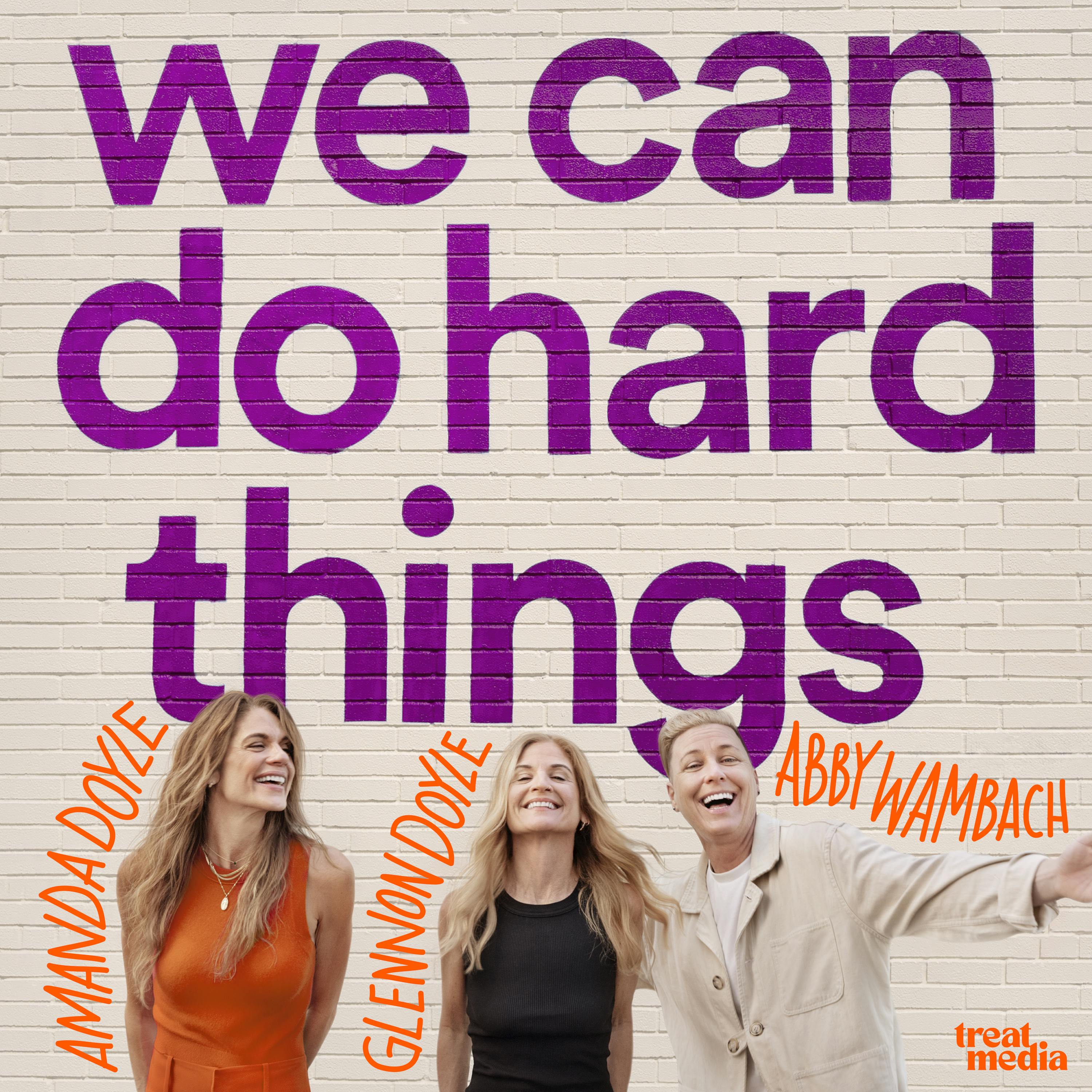
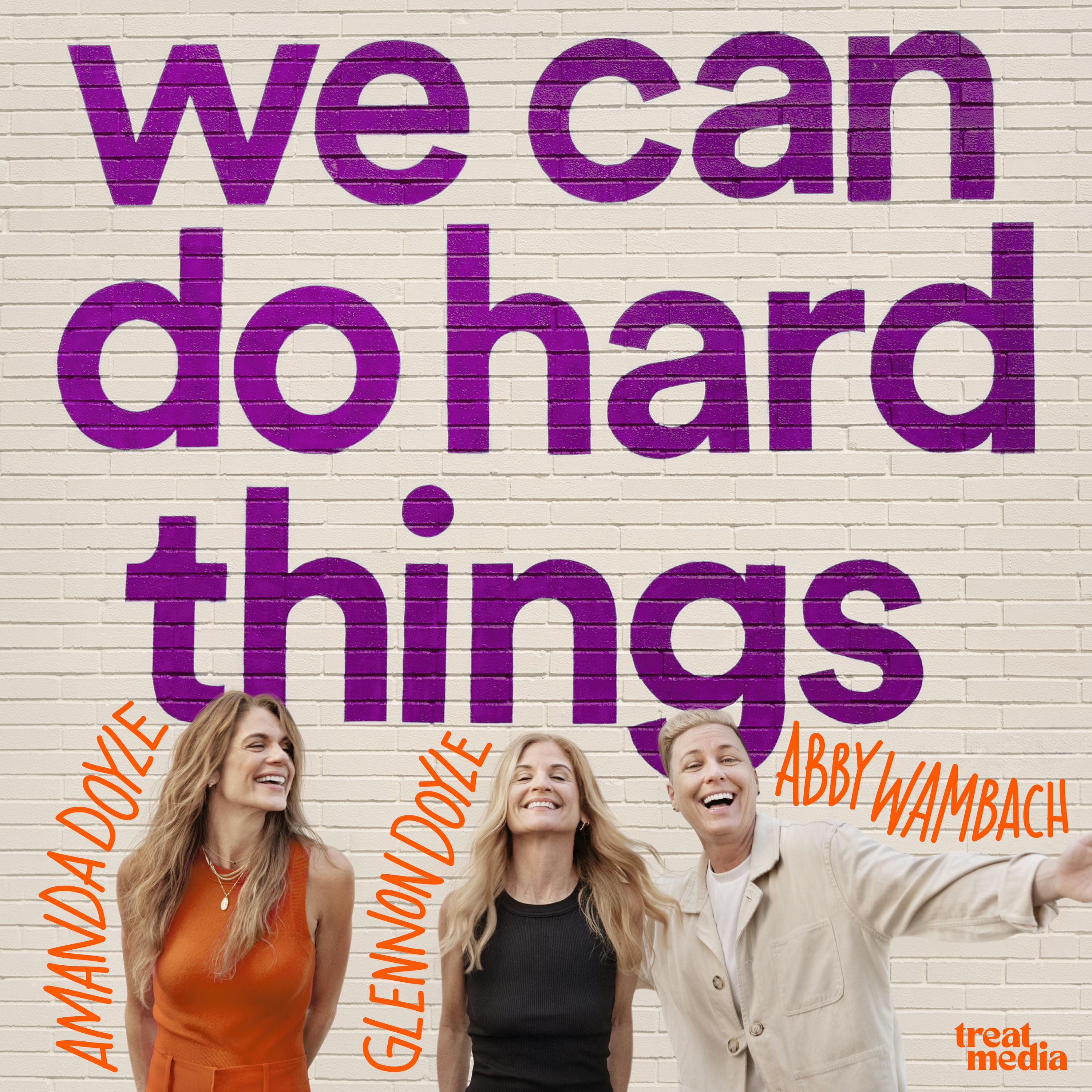
155. When Should We Quit? with Abbi Jacobson
2. The life lessons of improv comedy: How to get out of your head, trust your choices, and make something together.
3. Abbi and Abby share similar but opposite stories about relationships that changed their lives (and whether to tuck or untuck shirts).
4. Why reimagining A League of Their Own was the Next Right project for Abbi – and how its label as a “queer show” frustrates her.
About Abbi:
Abbi Jacobson is a co-creator, co-showrunner, executive producer and star of the critically acclaimed show A League of Their Own. Prior to this, Abbi co-created, wrote, directed, executive produced and starred for five seasons in Broad City. She is the author of the New York Times bestseller I Might Regret This, and is currently adapting “Go Like This,” a short story by Lorrie Moore.
IG: @abbijacobson
To learn more about listener data and our privacy practices visit: https://www.audacyinc.com/privacy-policy
Learn more about your ad choices. Visit https://podcastchoices.com/adchoices
Press play and read along
Transcript
Speaker 1 What if you could bleach and color without wrecking your hair? With K18 Molecular Repair Hair Mask, you can. It's not another quick fix with false promises, it's hair science.
Speaker 1
The patented K18 peptide repairs hair at the molecular level. That's really, really deep.
So you can keep coloring and still have hair that feels soft, strong, and bouncy.
Speaker 1 Because yes, we can do hard things, but your hair doesn't have to be one of them. Shop K18's mask at Sephora Sephora or get 10% off your first purchase with code hardthings at k18hair.com.
Speaker 1 That's code hardthings at k18hair.com.
Speaker 4
Okay, welcome to We Can Do Hard Things. We're very excited.
Abby and I are really excited. We are.
Speaker 4 Abby Jacobson is a co-creator, co-showrunner, executive producer, and star of the critically acclaimed show A League of Their Own. Yes.
Speaker 4 Prior to this, Abby co-created, wrote, directed, executive, produced, and starred for five seasons in Broad City. Y'all.
Speaker 4 She is the author of the New York Times bestseller, I Might Regret This, and is currently adapting Go Like This, a short story by Lori Moore. Abby,
Speaker 3 man, I'm gonna, that I can't even handle.
Speaker 3 I'm excited to be here.
Speaker 2
I mean, seriously, we have been obsessing over you. I have just deep dove in on Abby Jacobs.
I deep dove in. No.
I am dove in right on in. And we'd never watched Broad City.
Speaker 4
We're a little old. Like we just missed.
When Broad City was on, I was watching a lot of like Wonder Pets and
Speaker 4
Blues Clues. Okay.
But we have this one very cool member of our team, only one cool person on our team, Allison.
Speaker 3 And she
Speaker 4 goes.
Speaker 2 Sorry, Dina.
Speaker 4 You have been her number one, like we must get Abby Jacobson. Yeah.
Speaker 4
So I read your entire book this week. We've binged Broad City.
We can't stop.
Speaker 4
Well, we'd already watched A League of Their Own. You are just effing delightful.
Yes.
Speaker 4 You are a delightful human being.
Speaker 3
I don't know what to say. That means the world from you two.
I'm an avid listener.
Speaker 3 Are you kidding?
Speaker 3
Listen, yeah, I love this. This is one of my favorite podcasts.
Oh my God. I listen to it all the time.
Jodi and I listen to it all the time, separately and together. Yes.
Speaker 2 Yeah.
Speaker 3
It's so good. It's truly helpful in my existence.
So I just feel like we're fine.
Speaker 2 Like we probably both feel. that we're all friends just based on the work that we've done and the work we've all consumed from each other's work.
Speaker 2 So it's like, I actually, I just said, I was like, I feel like I'm friends with Abby.
Speaker 4 I know. We just,
Speaker 3 listen, this is the beginning.
Speaker 2 Yes. Okay, good, good.
Speaker 2
That was my backdoor way of asking if you want to be real friends. IRL.
Okay, perfect. Okay.
And IRL, same amount of syllables as in real life.
Speaker 4 Okay, so we might be doing a lot of that, Abby.
Speaker 4 We aren't joking.
Speaker 3 You know what? That's so funny. I was like, why do I know that?
Speaker 3 It's been a second for me.
Speaker 4
In your book, I loved it so much. Both of us have a lot of things that we relate to you about and differently.
Yeah.
Speaker 3 Okay. I feel that as well.
Speaker 4
Yes. So you said that in your 20s, you had dated men, but you had never really been in love.
And you said you'd gotten to this point where you felt like you just weren't cut out for love, right?
Speaker 4 That you were made of solid rock and that you'd be written about later in life as the woman who never fell in love.
Speaker 3
Yeah. Yeah.
I really felt that way. I mean, I dated a lot of dudes and I like loved dudes, but I just was like, wait, I'm not, I'm not, I don't know.
Maybe I'm just not able to connect in that way
Speaker 3 at all, I guess.
Speaker 2 Yeah.
Speaker 4 This just got me. You said you had an underlying sense of loss within your body for an experience you knew was essential to being alive.
Speaker 2 God.
Speaker 4 That's, do you even remember that now?
Speaker 2 A few minutes ago.
Speaker 3 In real deep, real quick. I'm like, whoa.
Speaker 3 Yeah, you know, I also wrote that in a very particular time.
Speaker 3 I wrote it right after
Speaker 3 I had fallen in love.
Speaker 3 I had fallen in love and then like
Speaker 2 been
Speaker 3
heartbroken. So I was like writing about this in the aftermath.
So I wonder if I had written that before. I don't know if I'd be able to be that vulnerable about it.
Speaker 3 But yeah, I do remember feeling like, what's wrong with me? Something's wrong with me. It's in everything I make.
Speaker 3 I think it is also like our society keeps like putting things in our faces that that show us what what we're supposed to be and what society wants us to be and i think at least when i grew up you know i'm 38 uh it was rom-coms very heteronormative you fall in love you have kids like it was very like by the book like this is the only way And yeah, I just felt like, I guess I'm not
Speaker 3
like in this world. Like, I don't know.
I'll like find my own. But I do remember writing that.
And I was terrified.
Speaker 3 I mean, the title of the book is called, I might regret this, because I was very terrified of putting any of that out into the world without it being like behind Abby Abrams.
Speaker 3 It's way easier for me to like
Speaker 3 put that experience into Abby Abrams on Bread City, which is like the way, the way that I had her. sort of ask a woman out was exactly the way I did it.
Speaker 3
So like all these experiences I like to like put into shows. So, when I was doing the book, I was like, this isn't, this is just me putting it out there.
It was very scary.
Speaker 3 Do you know who was like, Abby, fucking write this book? Is your bud Sam Berby?
Speaker 2 No way.
Speaker 3 We were working on a project forever, and she was like the one of the main people when I was writing that book that was like, write the worst stuff you feel.
Speaker 2 Expose it all.
Speaker 4 Sit at your typewriter and bleed, Abby.
Speaker 2 Yes, bleed.
Speaker 4 That's all we want blood. If you're not going to bleed, don't sit down.
Speaker 2 Well, do you do you regret it? I have to ask. No, no, okay.
Speaker 3 No, I don't regret it at all. I was able to like tell stories or tell my experiences in the beginning through Broad City, which is very
Speaker 3 based on me and Alana, but like amplified. And then we were able to like sneak in vulnerabilities and personal things.
Speaker 3 And I think if you watch the whole thing, you see it like it really starts to get heavier underneath it all.
Speaker 3 But I find now that that's sort of like all i have
Speaker 3 is
Speaker 4 sharing those things so i don't regret doing that anymore or i don't even fear regretting it do you ever get confused about which one is you because for people for the pod squad listening abby this is abby okay but abby wrote and played abby on Broad City, who is Abby, but more of an amplified, exaggerated version of Abby.
Speaker 4
So you've got Abby, who is you, real Abby, and you've got Abby, Broad City, Abby. You've got book Abby.
I'm asking this as a person who sometimes gets confused about
Speaker 4 which,
Speaker 3 like,
Speaker 2 what is art and what is real?
Speaker 4 What is art? What is real? Which one is real? Is it real if I don't work it out publicly? Like, how do you figure all that out?
Speaker 3 I think that, you know, when we were ending the show, it was Alana and I both feeling like we needed to know ourselves, know the real Abby and Alana.
Speaker 3 And that was sort of part of why, one, we wanted it to end on a high note where we felt it was really still great and not just keep going for the sake of going, but also because
Speaker 3 at least I felt like
Speaker 2 I
Speaker 3 was a little bit of a workaholic, definitely workaholic.
Speaker 3 I didn't have a big life balance, life work balance, and I was very confused because I would give so much of myself to Abby Abrams on the show, even if she's amplified.
Speaker 3 But I'm sure you both feel this.
Speaker 2 People who
Speaker 3 know your work and see you in real life, it's the most
Speaker 3 complimentary thing to feel like, I know, like, oh my God, we're like, we're best friends.
Speaker 3 Like, they know you, but then it is confusing because.
Speaker 3 I, while I love sharing and ultimately, don't we all want to be like known and seen and heard and understood? I also am like, wait, I also need some
Speaker 3 like just me.
Speaker 3
I'm not fully sharing everything with the world or else I will go crazy. Yeah.
It's very confusing and hard to manage a little bit.
Speaker 2 Yeah.
Speaker 4
Yeah. Let's tell the people how you got to this place.
You applied after high school to go to Atlantic Theater Conservancy, which what I understand from your book was like a fancy pants theater place.
Speaker 3 Is it fancy pants? It's like a real deal, dramatic David Mammet
Speaker 3 and William H. Macy's school.
Speaker 3 So it's like very heady,
Speaker 3 very
Speaker 3 theater.
Speaker 3 Like,
Speaker 3
clearly, I'm proving, I'm proving why I shouldn't have been there. I'm like, it's theater.
Theater. Theatery.
Speaker 2
Theater. Theater.
Okay.
Speaker 3 Serious.
Speaker 4
What I love is that this is your dream to go there. You go there and then you start to realize, I don't know if I feel good here.
You were just like terribly uncomfortable.
Speaker 3 It felt very, um,
Speaker 2 is pretentious the right word, or highbrow
Speaker 2 acting,
Speaker 3
which is what I thought. I went to art school, so I studied visual art, so drawing and painting.
And then I minored in video.
Speaker 3 I went to a school called Micah, Maryland Institute College of Art in Baltimore. And I was in while I was doing video art, I sort of realized I really do want to be an actor.
Speaker 3 I always wanted to be an actor, but that's
Speaker 3 who becomes an actor. I was like, that's not a thing like
Speaker 3
I would ever do or tell anyone at home that I grew up with. Like, that's just not a reality that happens.
Anyway, but then at school, I was like, let me just apply.
Speaker 3 This is what I've always wanted to do. And I really wanted to go into like drama.
Speaker 3 I would love to do some more dramatic, whatever.
Speaker 4 See, she still can't say.
Speaker 3 She still can't.
Speaker 4 She is an actor and she's scared to say she wants to.
Speaker 3 Well, I always say writer for if someone says what do i do i say i'm a writer first because most of the things i've acted in i've i've written but i got in i i went up i prepared an audition i went up to new york i got in and so i was like holy like i'm gonna
Speaker 3 here we go you know here we go this is like the real deal and then the first week was
Speaker 3 one of the worst weeks of my life.
Speaker 2 Oh no.
Speaker 3 Like
Speaker 3
you sign up and you're so excited for this thing. And it's just not how my brain operates.
It It was analyzing scene studies in a way that probably works for a lot of actors.
Speaker 3 And if you would see what I do now, it like totally makes sense that I would not go there. I like being very improvisational and open and like figuring it out and not
Speaker 3 highbrow. I don't think of myself as high.
Speaker 4 Yeah, not lowbrow, but like medium browser not lowbrow.
Speaker 2 Medium brow.
Speaker 3 I was miserable and I was, I was like, well, I guess I can't be an actor. Like, I'm failing at this.
Speaker 3
I had like a breakdown in the street, which I thought also now looking back is sort of like a rite of passage and living in New York. I think that everybody does that.
But yeah, I quit.
Speaker 3 I had to quit sort of pretty soon in order to get my deposit back.
Speaker 3 And then I felt
Speaker 3
like a failure. I'd moved to New York.
No one in my family had ever like left Philadelphia.
Speaker 3 My brother worked with my dad. Like I was the one, I was like
Speaker 3 going to do this thing and then I couldn't do it.
Speaker 3 And then I discovered the upright citizens brigade, which like that world is totally how my brain works, comedy and improv. And then I sort of just kept going.
Speaker 4
It's like you queered theater. This is a pattern for you.
Thank God.
Speaker 4 Because a lot of times we go into the thing, the norm,
Speaker 4 and then we hate it and don't feel comfortable there. So we think there's something wrong with us.
Speaker 4 We just stay and try to be better at it and slowly die inside. This is why quitting is so fucking important.
Speaker 3 Yep.
Speaker 4 Because I was reading that part of the book when you were in that theater thing and thinking, oh, when you follow your own
Speaker 4 self, you end up with Broad City.
Speaker 3 Exactly. Because I met Alana in like an improv practice group, which I really don't want to go into the.
Speaker 3 The specifics of improv, whenever I go into it, I'm like, people are falling asleep. This is so.
Speaker 3 But can you you do it a little bit yeah can you do it a little bit just specific like uh it's almost like a cult
Speaker 3 it's just this world that a lot of people that
Speaker 3 that find it i met darcy doing improv and alana and i met in this practice group it's basically this space it was a theater a black box theater that was under a supermarket called Gristidi's.
Speaker 3 It's in like the basement of a supermarket.
Speaker 3 And it was like the most special place I had found in New York City where every night after I worked at anthropology, just like Abby did on Brought City and at the Rockefeller Center one.
Speaker 3 And I can't believe they let me shoot there after all those years. But
Speaker 3 anyway,
Speaker 2 so
Speaker 3
I walk in and there is a palpable energy. People are going on stage with no, with nothing, getting a suggestion from the audience.
And
Speaker 3 together, however many people are on stage, whether it's three or eight, they're making something.
Speaker 3 That to me is fully the opposite of Atlantic,
Speaker 3 which was like analyzing a sentence for like an hour versus what could happen, the possibilities, trying and failing. Like people, you would bomb so hard, and then someone would like save you.
Speaker 3 It just was this like teamwork, very,
Speaker 3 it actually, it is, it was so not a queer, there there were like not that many queer people, but it felt so queer.
Speaker 4
Yeah, yeah, that's what I mean. I don't mean like queer sexually.
I mean, queer.
Speaker 3 No, no, no, but like it is like
Speaker 3 the queer world of acting. It's not outcast because,
Speaker 3 but a little, like it is the weirdos.
Speaker 2 I just want to say, because I'm kind of a leader in what I used to do, and quitting, like the definition of quitting for me,
Speaker 2 it's like pivoting. Like you went to this place, you're like, oh, nope.
Speaker 2 Like you had a full body no, and it gave you the chance to pivot and experience something different with Upright Citizen Brigade.
Speaker 2 And I think that to me, like that is the really important lesson here that a lot of us find ourselves doing things that we're like, this is just like a full body no.
Speaker 2 That doesn't mean necessarily you're a failure. It just means that that shit's not for you.
Speaker 2
And it's opening up this other door over here. So like, don't forget to pivot.
Yeah.
Speaker 3
That's what you do. Because it not, I've never thought about it that way.
I've always felt like I quit this thing
Speaker 3
so hard, but it was just a pivot. Yes.
I feel like if most people look back on those quitting moments, it really just pivoted them into the next,
Speaker 3 the right thing or like closer to the right thing.
Speaker 4 And sister's not here to be the nerd. Sister's not here.
Speaker 3 I know I'm very, you have to tell sister that I'm such a fan and high and all that.
Speaker 4 Oh, she would want me to remind us all.
Speaker 2 What does quitting mean of the word quit?
Speaker 4 It's quietus, which originally meant to set ourselves free yes okay it only got the negative connotation during the industrial revolution when they wanted us all to become robots so it used to be a very powerful freeing like badasses quit because no that's not for me and having the full body no experiences is sometimes more important than full body yeses because it's like knowing yeah knowing what you don't want is information.
Speaker 2
It has nothing to do with like failure. I can totally relate to leaving your family.
You're taking this big risk. You're going outside of like the family norm.
Speaker 2 And so what are they all going to think when I, when I say I'm quitting this place?
Speaker 4 Well, relationally, some people could be in like a heterosexual marriage for like 14 years.
Speaker 2 Who said
Speaker 4 I should just be trying harder? Like this is just,
Speaker 4 this is just, it's something wrong with me.
Speaker 3 It is so interesting to recognize like there are those moments where in your full body, you feel a thing.
Speaker 2 Yep.
Speaker 3 But I mean, to not act on that is
Speaker 2 wild, right? It's so wild.
Speaker 5
Every year, I tell myself I'm going to live in the moment during the holidays. And then I blink and it's over.
The wrapping paper is gone, the tree is shedding.
Speaker 5
And if I want to relive any parts of it, I have to go through the photo app of my phone. That's why I love Aura frames.
They make those moments live on without adding another project to your life.
Speaker 5 I just upload photos of unwrapping gifts, cookie decorating, all of the best parts of the holiday, and now they pop up on the frame all year long.
Speaker 5
Setting it up was ridiculously easy. You just download the Aura app, connect to Wi-Fi, and add unlimited photos and videos.
You can even preload pictures before it ships.
Speaker 5
And so when someone opens it, it's already full of love. And it comes in this beautiful gift box.
No wrapping, no stress. They nailed it over there.
You know what I'm talking about, right?
Speaker 5 It's like a frame that looks like it's just like got a picture in it, except all of your pictures rotate through it all year long without you even like making a fancy album.
Speaker 5 For a limited time, visit auraframes.com and get $45 off Aura's best-selling Carver Matte Frames, named number one by Wirecutter by using promo code hardthings at checkout that's aura frames.com promo code hard things this exclusive black friday cyber monday deal is their best of the year so order now before it ends support the show by mentioning us at checkout terms and conditions apply
Speaker 2
I think it must be really interesting for you too, as an actor, to really love this like improv thing. I want you to tell me more about what it is like in your body on that stage.
Because guess what?
Speaker 2 We're all doing this weird improv thing all the time.
Speaker 4 So, and you said it's a Bible of values. Yes.
Speaker 3
I haven't done it in a while. And I was just talking to Darcy about wanting to do it.
Darcy Cardin, who I'm talking about,
Speaker 3 wanting to do it again because she's so good. And there's still a little bit of like a hesitancy because I was never like
Speaker 3 quote unquote successful at improv, like in that theater. And that's why Alana and I made Broad City.
Speaker 3 But again, I think I am successful at improv in my work, which like bringing the values and like that kind of experimentation into Broad City and then into league, it's the most terrifying thing.
Speaker 3 I would equate it maybe with where you're meeting someone new, where you have this, where, where you have to remind yourself that being nervous is good.
Speaker 3 Being nervous is actually being excited being nervous is excitement you know what i mean you have to like shift it where you're like this is good these are good feelings like i can do this and so it's like a nervous is mixed with a will to be confident it's a teeny microcosm i think for living life which is
Speaker 3 i have to put myself out there
Speaker 3 try
Speaker 3 There's going to be all these other people I have to like try and trust as much as I can and help and support. And hopefully they're going to do that for me.
Speaker 3 And
Speaker 3 there's gonna be like super highs and there's gonna be like super bad lows and we'll like then
Speaker 3 the lights will go out and we'll like get to do it again
Speaker 4 what does using the top of your intelligence mean this is a
Speaker 3 right you said this is an improv thing and also don't think yes so the don't thinking is is like the ucb method like one of their slogans which means you work
Speaker 3 like abby i would imagine it's exactly equivalent i think to being an athlete where like you work out and you train and you practice and you get your muscles and the team is like
Speaker 3 so used to working together. So that when you go out into the field, you're not thinking, right? You're just like doing and you're operating and you like know each other and trust each other.
Speaker 3 And to get in your head, I imagine, while you're playing would be the worst thing.
Speaker 2 Yep. Yeah.
Speaker 3 So it's like, don't think.
Speaker 2 It's like your commit, the commitment to like letting
Speaker 2 what should unfold, letting letting that actually unfold
Speaker 3 while also putting your own energy and spin into it i bet that that's a lot like improv yeah i mean you're still you're still obviously making choices and and decisions like very on the fly but you've worked enough and with improv we you you practice that skill set to like kind of get to a point when you go on stage for a show, you're sort of like not thinking and just just trusting that your choices will work or they'll fail or they'll be what they are.
Speaker 3 Like it'll,
Speaker 3 there's nothing like it.
Speaker 3 That those, that hour or whatever, however long it is, you're like almost high. Not that I've ever done anything that would be, I'm gonna, no, no, we know.
Speaker 4 Um, in the book, it was so funny to me because there's you have this one part that's all about um improv and the magic of it and yes and and just don't overthink and all the things and then right afterwards you're talking about how you used to go to a bar afterwards and then you were so self-conscious and you couldn't talk to anybody and i'm like i'm with the book i'm like abby just improv yeah yeah yeah but that's the thing where it was like it was this thing i found that that like the goal was to be all i wanted to be in real life like i wish i could be confident and trust myself more and
Speaker 3 um like
Speaker 3
be open. And I think over here, I was seeing all these people doing that.
I was so in awe of it. And so I sort of did it as much as I could.
And I guess I felt that high
Speaker 3 over here because
Speaker 3 I am very insecure and naturally, I mean, yeah, I just am that. It's a good thing for someone like me to get into or to find.
Speaker 4 I can also do improv. It's the opposite of everything.
Speaker 2 Yeah, I think that just watching Broad City too,
Speaker 2 I can see the parts of the scenes where you and Alana are just going into it.
Speaker 2 Not only is it funny, but it's like I can feel that magic when I'm watching it, even on something that's been edited and produced, like a television show.
Speaker 3 Not all improv when you go to watch it.
Speaker 4 We learned that. I'm just saying.
Speaker 3 It's as good as it feels to do it.
Speaker 3 Yeah, like most of it is
Speaker 3 what you saw where we were making fun of it.
Speaker 3 And everyone that made broad city we all met doing improv but it is also terrible and so the improv you saw uh in the show is very much like not using the top of your intelligence so okay yes when you sort of like go low go blue quickly what does that mean go blue quickly it's like coming out and being like someone is gonna correct me it's almost like being gross and um crude and perverted crude yes yeah okay did you just search that no i i was like oh, if someone like texts you that was like, yes, it's crude and perverted.
Speaker 3 Which like sometimes you can like get there in a, in an intelligent way,
Speaker 3 but sometimes it's just like going for the easy, what you think will make people laugh. Cause it's really about someone walking out
Speaker 3
and saying and trying something, being a character. And the yes anding is like, is acknowledging their choice and not negating it.
and adding to it.
Speaker 3 And so sometimes using the top of your intelligence is you know these things. So like
Speaker 3 inform the scene with all the things you know and don't go. Yes.
Speaker 2 This is basically the difference between Glennon's humor and my humor. I go blue
Speaker 2
because I'm just searching for a laugh. I don't, I don't even care how I get there.
And Glennon goes and tries to use her the highest of intelligence.
Speaker 3 Thanks, babe. Listen, I go Brett City is like half is like
Speaker 3 both. So I'm not like above, I'm not above going blue, but yeah
Speaker 4 so i we talked about this this morning and i love this so much because the queering of the theater gave us all of the abby magic yes bread city with league of their own which i can't wait to talk about in a minute when you queered your love life you're engaged to a woman now we'll get to that too yeah yeah yeah this is so exciting okay she's so excited i'm doing this she was like there was a moment where you were dating this first person who you were in love with long ago and you had never tucked in your shirt before
Speaker 4 yeah okay this is the biggest deal okay it's a total
Speaker 4 shirt the queering of the clothes okay why did you not tuck your shirt in ever first of all
Speaker 3 i think i didn't tuck in my shirt i never really thought this was like a queer thing this is more of um
Speaker 3 in line with like my insecurity and not being confident with my body and all this.
Speaker 4 I don't mean when I say queer in all of these ways, all I mean is like being yourself.
Speaker 3
Yes. And that's, and yes.
And she was like, why don't like you, you look so good. Like, why don't you tuck in your shirt? Cause tucking in your shirt, you, you see more of your body.
Speaker 3 And I'm, I was always like pulling it out and like
Speaker 3
very insecure. And then I tried it and I was like, wait, I do really like the way I look and I like the way I feel.
And I think it was partially about
Speaker 3 how I felt in that moment too, like with her and all that.
Speaker 3 I'd probably tucked my shirt in a couple times but maybe not felt like that was a thing that like um looked good on me or that i felt confident in and yeah so when you
Speaker 4 you said to her
Speaker 4 one of the last things
Speaker 4 bringing this up i just think it's so important i know so and then you i want you to tell abby your story about shirts one of the last things i said to her was you changed my life you taught me how to tuck in my shirt which obviously didn't just mean you taught me how to tuck in my shirt so what did you mean?
Speaker 3 Did you finish league?
Speaker 4 Yeah,
Speaker 3 the i think that's one of the last, I think that's like the last thing Carson says,
Speaker 3 yeah, I can't help but bring humor into any situation.
Speaker 3 That was like a devastating moment, and it meant so much more.
Speaker 3 That relationship did fully change my life and gave me the confidence, like be like knowing I was queer, which took me so long,
Speaker 2 uh,
Speaker 3 gave me such a different confidence in everything.
Speaker 3 And
Speaker 3 the shirt tuck just felt really
Speaker 3 like a part of it, even though it was like the smallest thing.
Speaker 4 Yes, it always is the smallest thing.
Speaker 3 And then I really did see myself.
Speaker 3 I really did feel so different.
Speaker 3 Let me hear this shirt story.
Speaker 2 Yeah, I had the opposite situation.
Speaker 2 So in college in the late 90s, I came from an all-girls Catholic school, high school, went to college, and my first girlfriend in college, she just says to me, you know,
Speaker 2 why don't you try untucking your shirt?
Speaker 2 And I was like, huh, because this is like, this is like,
Speaker 3 this is so funny.
Speaker 4
Because her mom dressed her like Talbot's. She went to a Catholic school.
She was like her queer Abby Wombach self tucking her shirt.
Speaker 2 But I think like the bigger point to this story, like truly,
Speaker 2 is this idea. And I don't mean to genderize it or
Speaker 2 talk about like guys and
Speaker 2 women in relationships versus two women.
Speaker 2 But I do think that this is one of the things about being in a relationship with somebody who can truly be honest with you because they are experiencing what you're experiencing in so many ways of this world.
Speaker 2 And so the way that my girlfriend at the time and the way that your ex was able to express this information was able to be understood and realized, and then put into action in a way that is actually life-changing.
Speaker 4
It's so beautiful though, because it's about the tucking. Some people need to untuck.
Some people need to tuck.
Speaker 2 Yes.
Speaker 4 Everybody needs to be seen.
Speaker 3
I honestly don't feel like I was walking through the world like hiding this thing. I think I don't know.
I'm truly like what was happening. I went to arts.
Like, I don't know what was going on.
Speaker 3
Blinders, I don't know. But it felt like she was saying, you're hiding this.
You're hiding your body.
Speaker 4 Yeah.
Speaker 3 And you don't need to. You're not revealing this part or something.
Speaker 3 Yeah.
Speaker 4 You're hiding and yours was hiding. The closest I've come to that moment, because I still don't know how to dress in a way that makes me feel like I'm, I have no idea.
Speaker 4
I always feel like I'm wearing a costume no matter what. I don't know how to match my insides to my outsides with clothes.
But I used to come home.
Speaker 4 every day and like the second I'd get in the door, I'd like peel off my skin tight pants and take off my shoes and my heels and take out the things from my hair, my, you know, all this shit.
Speaker 4 And I'd say, I said to you one day, do you want to go get cozy?
Speaker 4 And you said, oh, I live cozy.
Speaker 4 And I was like,
Speaker 2 what the fuck?
Speaker 3
You cannot leave cozy. That's wild, Glenn.
And I'm like you, where I'm like, I got to get into my, like, I got to go change to like, go, like, watch TV.
Speaker 4 Exactly. Me too.
Speaker 4 And she's like, why why would you wear something that you out in the world that you that that it would is less comfortable than the thing you would like why would you ever do that?
Speaker 2 Yep.
Speaker 3 Wait, I feel like I want for you
Speaker 3 to find clothes that make you feel more you. There should be someone you can go to.
Speaker 4 Abby, all I do is change from costume to costume. Like, do you all make a dairy route?
Speaker 2 Yes!
Speaker 4 There's my girl boss suit outfit.
Speaker 3 But like, what is my trying on? What if you like like went to a department store and just like tried, tried random stuff on just to see? Worst case scenario, you'd be back where you started.
Speaker 2 I think I need to do that. I mean,
Speaker 2 you put on three to four outfits a day.
Speaker 4 Because I'm constantly trying to figure out what the hell
Speaker 4 what is it? You know, I grew up like all this horrible, like
Speaker 4 tight stuff that was just about like the way that I appear and not how I feel.
Speaker 2 Some of it's like also armor in a way.
Speaker 4 You can see the tucking really did a number on us.
Speaker 2 Okay.
Speaker 3 That's so fascinating that yours was the complete opposite, but did the same thing.
Speaker 2 I love that.
Speaker 2 Yeah.
Speaker 5
As the air turns crisp and the holidays draw near, comfort becomes the best gift of all. That's why I love quints.
They deliver layers that last.
Speaker 5 Think sweaters, outerwear, and everyday essentials that feel luxurious, look timeless, and make holiday dressing and gifting effortless.
Speaker 5
Right now, I'm obsessed with their camel double-faced merino wool trench coat. It looks straight out of a designer showroom, but costs a fraction of the price.
The quality is honestly incredible.
Speaker 5 Warm, structured, and so elegant, it instantly feels like you are wearing something very much on purpose.
Speaker 5 I have so many items from Quince layered underneath, like button-ups and sweaters, but the coat is my current fave.
Speaker 5 And Quince really does have it all: 100% organic cotton cardigans for under 50 bucks, oversized blazers, classic denims, silk tops, and fleece hoodies, down outerwear, everything to make you look chic, and most importantly, be cozy this fall and winter.
Speaker 5 Step into the holiday season with layers made to feel good, look polished, and last from Quince. Perfect for gifting or keeping for yourself.
Speaker 5
Go to quince.com slash hardthings for free shipping on your order and 365 day returns. Now available in Canada too.
That's q-u-in-ce-e.com slash hardthings to get free shipping and 365-day returns.
Speaker 5 Quince.com slash hardthings.
Speaker 4 We need to talk about Alana and Broad City because we can't do that without getting to a league of their own. And what, I just freaking love.
Speaker 4 Are you and Alana still as close as you used to be with this?
Speaker 3 Yeah, but I don't see her as much. I still go back and forth to New York a lot, but she's in New York and I'm more in LA now.
Speaker 2 Okay.
Speaker 4 So you two just improv, you're like, you leave your fancy school, you go to improv, you're not like completely let in the boys club at improv, right?
Speaker 4 So you and Alana just decide to make a freaking show? Like, how did this happen? Yeah.
Speaker 3 We were on a practice team, which is like what the community kind of does, where you like practice one night a week with a coach
Speaker 3 doing improv. And then we would host shows at like a little teeny theater
Speaker 3
called Under St. Mark's.
You'd team up with a couple other teams and you'd have a night of it. You'd give the audience like shots of a terrible thing to get them to come.
Speaker 3 It was just like a fun, such a fun community of all these people trying to do this.
Speaker 3 And we were the only two girls on our team. And we were just really good friends for two years doing that.
Speaker 3 She's just like so unique and different than anyone I'd met or especially any of my other female friends that I had known from high school or college.
Speaker 3 The dynamic that you see on Broad City was just like always that.
Speaker 3 and then amplified, but we just cracked each other up. And then two years after doing this improv team, we sort of realized, what if we made something? We cannot get on
Speaker 3
the UCB stage. We can't, we're both like trying to audition for commercials, trying to become actors.
Nothing. What if we make these little vignettes?
Speaker 3
And so we had a web series called Broad City for two years. So we started that in 2009 and did like 35 web episodes for two years.
And then at the end of it, we had gotten this manager and she was
Speaker 3 What if let's pitch it as a show? And we somehow, through this like crazy
Speaker 3
series of events, got Amy Poehler to be in the finale of the web episode, which was just like wild in itself. Like, that alone, we could have been like, We're done.
Right, you know, like we did it.
Speaker 3 And then once we sent it to her, we said, We're going to LA to pitch this as a show. Would you ever want to be
Speaker 3 an executive producer on it?
Speaker 4 And she said, Yes, and she said yes and
Speaker 3 yes and let and
Speaker 4
let's do it. Amazing.
So she
Speaker 4 crazy. And was she was she's a big part of the upright citizen brigade.
Speaker 3
She was one of the owners. Yeah.
No way.
Speaker 4 So this is like freaking
Speaker 2 her seeing and she produced Broad City, right?
Speaker 4 Yeah. She saw the magic.
Speaker 2 Amy is the best.
Speaker 3
So it's so ironic. Like we couldn't get on stage there at the place that she owned, but she was not like there day to day.
And then we ended up like going totally around.
Speaker 3 She ended up making a show that was farther away from anything we thought where our like dream was.
Speaker 3 And then
Speaker 3 we made that. So it was also like quite a learning curve taking these little vignettes, which are scenes very short into a TV version.
Speaker 2 For the parents out there who have teenagers and 20-something year-old kids right now, it is a good peek into their kind of sense of humor or sense of themselves.
Speaker 2 I'm telling you, it's, it's, it, it made me know my kids' experience a little bit better.
Speaker 3
I love that. I think we maybe are outdated.
Like the kids now, I don't, I think we're
Speaker 3
different than we were. Do you know what I mean? Yeah.
Season one came out when I was 30.
Speaker 2 Oh, wow. Hello.
Speaker 3
When we were playing, I'm 38. So we were playing, like, I was playing 25 and Alana was playing like 21.
She's four years younger than me.
Speaker 4 It's very much us, though, to just discover something that like has, for you, was like a decade ago. That is very on-brand for us.
Speaker 3
I think it makes sense. It has a pocket.
It was not ever like
Speaker 3 massive.
Speaker 4 Well, speaking of what's been massive, we just interviewed Gina Davis last week.
Speaker 2 Oh, you did. Yeah.
Speaker 4 The League of Their Own, your version is unbelievable and incredible. And I don't know if version is the right word.
Speaker 3 I caught a reimagining.
Speaker 4 A reimagining.
Speaker 3 I don't feel like we're not adapting.
Speaker 3 That was like a big thing that people were like,
Speaker 2 are you going to like ruin our movie?
Speaker 3 You know, they're so different, I think. So it's like a reimagining.
Speaker 2 Totally different.
Speaker 4 And also all the good, all the good stuff that people were probably afraid of losing is all still there. Yeah.
Speaker 2 Yeah.
Speaker 4 League of Their Own as an idea, as the first movie was really important to both of us for different reasons.
Speaker 4 Why was it important to you? What about that story felt important to you?
Speaker 3
So that film came out in 92. I think it was one of the first films I saw in a theater.
Oh, cool.
Speaker 3 And I played a lot of sports as a kid. Soccer was my main sport, not softball.
Speaker 2 But I did play softball.
Speaker 3 For me, it was,
Speaker 3 well, one, seeing
Speaker 3 women playing professional sports, even though they were in skirts. I
Speaker 3 just seeing that on screen and seeing the ensemble of women, that group playing together and hanging out and be like funny. I don't think I'd seen that on screen.
Speaker 3 I mean, I think that and like Mighty Ducks were my big,
Speaker 3 but Mighty Ducks is like the one girl that's like hiding that she's a girl, you know? And I just felt very connected to it. I was pretty young, but I think I was like, that's like us.
Speaker 3 Like me and my teams, like that's the one movie we get in that way.
Speaker 3 And I, even though that, you know, they were way older, but I just, I loved it. I did not sense
Speaker 3
as a child, like the queer undertone at all. It is a kind of an iconicly queer film, but not queer at all at the same time.
Yeah. What is that?
Speaker 4 Like, why?
Speaker 4 Because all the things that are like, are queer, but not queer are the things that my whole life I've been like, huh.
Speaker 4 I love that thing, but I don't know why.
Speaker 4 Why
Speaker 4 is League of Their Own so queer? I mean, you queered it now.
Speaker 2 It's like, yeah, the film to the reimagining.
Speaker 4 Everything has been manifested
Speaker 4 in the reimagining.
Speaker 2 Well, because the storyline of the film is a bunch of women that are doing something that has only been allowed and allotted for men.
Speaker 2 And because of the concept that all of like the players were over in war, it's like the thing you're not supposed to touch.
Speaker 2 But when you watch something like that and you are that, you're like, that's it that's what i want to do it opens up a different door that never was there before and the relationships between the women yeah that's right wait i'm curious what you're what you felt well first of all i've never played a sport i mean i tried to play lacrosse but it wasn't great it wasn't good
Speaker 4 i love that that was the one you went for well it was brand new in our high school so it was like if you didn't make any other team gotcha gotcha gotcha okay art house um abby just got teepeed last night.
Speaker 4
Cause our kid is in a sport. So their, their team came and TP'd their house.
And I was so excited. And Abby was like, Why are you so excited?
Speaker 4 And I was like, because I wasn't relevant enough in high school. In high school to ever get TP'd.
Speaker 4 I took pictures yesterday morning outside of my house, like having been TP'd because it felt like such a high school cultural moment. Anyway, I'd never been part of a team before.
Speaker 3
You're not taking it down. Right.
No. God.
Speaker 2 It's proof that i've arrived yeah i i took it down
Speaker 2 so
Speaker 4 i was a
Speaker 4 kid who was very isolated who i all i did was read i didn't have a lot of friendships or i didn't have any relationship with boys that weren't
Speaker 4
i just was always performing I wasn't worried about like how I felt. I was worried about how I looked.
I wasn't worried about, you know, my body was for
Speaker 4 appearing a certain way. And so, watching athletes, I feel the same way when I first met Abby and started following the national team.
Speaker 4 And I, I would like get emotional, like cry watching them play soccer because I was like, oh, these are a bunch of women who believe in something together. This has nothing to do with men.
Speaker 4 This is their own,
Speaker 4 a league of their own.
Speaker 4 There was just something like another planet. It was like another planet to me that I had always been yearning for, but had never been part of.
Speaker 2
Yeah. And I think that movie for me was just like, I had been dreaming of this idea of something and it was in my head.
That was it.
Speaker 2 And then there was this movie that put my dream into a context that made me be able to
Speaker 2 see it for the first time, you know, and talking to Gina, it was just so lovely to be able to express that to her.
Speaker 2 Because at the time, this is 92, when I first watch it and it comes out, there is no such thing as like women's professional soccer.
Speaker 2
And so, right, you know, you go down the road four years, and that's when our women's Olympic team was in the Olympics for the first time. They win gold.
And then 99 was a few years later.
Speaker 2 So it is important for people to see shit in order to become it. It's not 100% necessary because there are pioneers, but to me, that's what it was.
Speaker 2 It was like this thing that I could see that then I could attach my dreams to in some ways.
Speaker 4 And now you put Carson, and it feels like
Speaker 4 i don't know i've i it's really important it feels really important to me i love her i love
Speaker 4 the journey again there's so much of you yeah am i right about that like how do you do this how do you write this like how did it happen i guess i i also get nervous
Speaker 3 uh how many times i'm gonna do a supercut of how many times i say i'm nervous same
Speaker 3 Yeah, I'm nervous. I think I always felt
Speaker 3 with Carson. I didn't sign on to Actin It for a long time because I wanted to make sure I,
Speaker 3 I don't know, I was always writing it with Will Graham. I wanted to make sure that I loved it and it felt,
Speaker 3 I don't know.
Speaker 3
I also was scared. This journey has been terrifying.
It's people's favorite movie.
Speaker 2 Right. Yes.
Speaker 3 It is a big, big one to
Speaker 3
touch, you know. To reimagine.
Yes, to reimagine. But I feel like with Carson, there's a lot of me in Carson, and then also a lot that's not.
Speaker 3 But I think I liked adding, I like adding that personalness to it.
Speaker 3 And I also listen, I want to do roles that aren't so much like me, but I feel like the show as a whole is a little bit of a Trojan horse
Speaker 3 of
Speaker 3 the some of the bigger,
Speaker 3 um,
Speaker 3 bigger things we're saying
Speaker 3 with it. So you're coming into it
Speaker 3 and
Speaker 3 with me running, and it's like very funny, but also it's like about real things.
Speaker 3 The one thing I think I am confident is, is like my relatability.
Speaker 3 And I even feel weird saying that.
Speaker 2 Own it, sister.
Speaker 4 You are relatable to consider yourself relatable.
Speaker 3 I feel this way. I'm like and a very approachable, relatable character to be like following this intense journey that's going to like
Speaker 3 turn our life completely upside down.
Speaker 2 You know what we don't talk enough about? Sleep. I mean, we spend a third of our lives doing it, and it literally impacts everything.
Speaker 2 Your mood, focus, workouts, even how you show up for the people you love. But here's the thing.
Speaker 3 Not all sleep is good sleep.
Speaker 2 That's why I'm obsessed with my Coop Sleep Goods and my Coupe Adjustable Pillow. It is revolutionary because it's an adjustable pillow where you can remove or add fill to fit your sleep needs.
Speaker 2 Back sleeper, side sleeper, stomach sleeper, this pillow actually adapts to you, not the other way around.
Speaker 2 I got two of of these king-size original adjustable pillows after I completed the short sleep quiz, which I highly recommend everyone do. You can ensure you're buying the exact right pillow for you.
Speaker 3 I love it.
Speaker 2 I love being able to take out the fill until it was perfectly adjusted to my neck and spine. You can feel the difference, and I want all of our listeners to try this pillow.
Speaker 2 Upgrade your sleep, visit coopsleepgoods.com/slash hard things to get 20% off your first order. That's c C-O-O-P sleepgoods.com slash hard things.
Speaker 4 As you and Will were doing this, what was your dream for it?
Speaker 2 Yeah.
Speaker 2 How would it change things or people?
Speaker 3 I think because we made it, you know, so much of this was over COVID, which was this terrifying time that we're still in.
Speaker 2 Yeah.
Speaker 4 Hello, we are still in. Yes.
Speaker 3
Ultimately, I want people to feel things when they're watching anything I make. So they're laughing, they're feeling connected to it.
They're feeling emotional maybe when that's happening.
Speaker 3 But I think bigger picture, my goal was always sort of for people to feel
Speaker 3 seen
Speaker 3 and less alone.
Speaker 3 It's the same with Broad City.
Speaker 3 It just league is a little bit more stories to be seen and heard and felt connected to and to feel less alone and to feel like oh i i i feel like oh that's me and my friends that's me and if i don't have that team yet or if i don't have that best friend yet
Speaker 4 they're out there like there are there are those people i don't know and for now i can watch the show and feel feel it you know it's a double thing with league like in broad city it feels like what everybody it felt it feels very like the human condition is seen yeah like i feel like the human condition is being seen and celebrated and we can all just laugh.
Speaker 4 And League feels like there is that, but it's also really important. So like the race, the whole,
Speaker 4 the real story is also being seen.
Speaker 2 Yes.
Speaker 4 I mean, of the struggles of
Speaker 2 these women honored. The full stories are being honored, which no, doesn't happen.
Speaker 3 We got a chance to talk to Penny Marshall before she passed away, which is incredible.
Speaker 3 And just to go into that a little bit more is that, you know, there's a scene in the film where there's a foul ball and a black woman picks it up and chucks it back to Gina Davis, and there's no dialogue.
Speaker 3 If you blink, you miss this scene. And the audience is supposed to feel
Speaker 3 like, wow, she's, she's incredible. She's got a great arm.
Speaker 4 Why?
Speaker 3 Like, she's clearly not allowed to be on the team because of, because she's black and it's 1943. We are getting all of that information from this one little moment and then nothing.
Speaker 3 And so, like, that league, the All-American Girls Professional Baseball League, League, was this incredible opportunity, this door that opened for white women and white-passing women, which is like my character.
Speaker 3 That door opens. And we're seeing half of our reimagining is showing that.
Speaker 3 And we're also exploring the white passing women and what it was like for Latina women, Esti and Lupe.
Speaker 3 Those characters are dealing with this whole other experience of what it's like to be sort of burying who they are to be able to play on this on this team.
Speaker 3 And so the film only really explores what it's this incredible league for like some women.
Speaker 3 But what about the rest of the athletes that were incredible? Hundreds and thousands of
Speaker 3
women of color played baseball. And so we really took in the pilot that we're nodding to that scene.
So Max, who's played by Shantae Adams, that throw happens.
Speaker 3 And the show is half my world and half Max's world. And what happens when that that door closes for women of color who were incredible athletes?
Speaker 3 And her character is inspired by three women who played in the Negro Leagues, Connie Morgan, Tony Stone, and Mamie Peanut Johnson. I knew about Tony Stone
Speaker 3 before
Speaker 3 we started, but this show had like a heavy
Speaker 3 research element. There's like a researcher on full-time, which believe it or not, Broad City, we did not have that.
Speaker 4 I was shocked.
Speaker 3 And so, yeah, you're shocked.
Speaker 5 Yeah.
Speaker 3 I didn't know about the, but about Connie and Mamie and, or Billy Harris, who is like the Jackie Robinson of softball and all these leagues. And it's like, right, of course.
Speaker 3
But we know the one movie with the white women playing. And so it was so important for us to show.
as many experiences as we could.
Speaker 3 And listen, we're not, there are a lot more experiences we're not able to show, Case. But for us, this was like, so far, these are the stories we were so excited to share.
Speaker 3 And we felt like they really weren't
Speaker 3
in the film. In 92, there are some different stories that Hollywood was showcasing.
And I think we have an opportunity here to show a lot more.
Speaker 3 And that also obviously includes like, it's such a queer show.
Speaker 3 A lot of the women on this league were queer.
Speaker 3 And
Speaker 3 that's not in in the film at all.
Speaker 3 And
Speaker 3 that was really important for us to show. It's
Speaker 4 what, it's the power and the necessity of reimagining. That's this is what it is.
Speaker 4 Why does League of Their Own need to be reimagined? Well, it did need to be reimagined.
Speaker 4 And hopefully, in 20 years, 25 years, there will be another little one will come around and the consciousness will be so different that it will need to be reimagined again. Yes.
Speaker 4
That's the power of evolution and consciousness raising. And the art needs to to reflect our raised consciousness.
And that's what you did. And it's beautiful.
Speaker 3 Can I ask you guys a question? Yes.
Speaker 3
About this, because I've been talking about the show for a while. And I go all over the place with talking about this.
But Abby, you had said that
Speaker 3 content and seeing this
Speaker 3 is so important. Stuff can happen without.
Speaker 3 these stories being being like shown to us in film and tv or whatever but it does have a huge impact And I think there is queer content more than ever being put into the world. And I
Speaker 3 think it's essential to know it's queer content.
Speaker 3 And I also, there's a part of me that hates so much that it's like the queer
Speaker 2 show.
Speaker 3 It makes me insane. Do you feel that way? Or do you like,
Speaker 3 just sort of like, I guess when we get to a point where it's not labeled in that way, that's it.
Speaker 2 But
Speaker 2 that's the point. That's 20 years of it.
Speaker 4 But there's 10 or 50.
Speaker 4 But that's because there are people who have to live in both spaces. Yes.
Speaker 4 There are people who are forward-thinking, who are already driven mad by the fact that we have to label stuff queer now because they can see a true, more beautiful world where that's not going to be a thing anymore at all.
Speaker 4 And they want to start living it now,
Speaker 4
which I also feel is super, super important. I love in Schitt's Creek, right? Where Dan Levy, there was no homophobia.
There was nothing like in the, in the town.
Speaker 4 And he was like, well, we did that so that we could show the way it should be and the way it will be eventually. Because does art imitate life? Does life imitate art?
Speaker 4 If life imitates art, then we need to be the ones who are showing this is how it will be. Let's encourage the world to recreate that.
Speaker 2 Right.
Speaker 4
So I don't know. I mean, it little things are so in Brad City.
When Alana was like, I'm going to a straight wedding this weekend.
Speaker 2
I love that. That I mean, I looked at you.
I was like, you're like, ah, straight wedding. So good.
Speaker 3
Yes. This is the thing in scripts that I do.
People often put if they're, if they're going to state someone's race,
Speaker 3 a character's race,
Speaker 3 it's, if you read a lot of scripts, you notice that white is never.
Speaker 3 Like the
Speaker 3 industry operates on a default
Speaker 3 so that white is never included, but any other race, if it's specified, is included.
Speaker 3 And then you're like, wait, you're either using all of them or that's just like an inherently fucked up way of operating.
Speaker 2 That's right.
Speaker 4
And that's so beautiful. Like it's just the little ways that you can do that.
Sometimes it takes somebody to say straight wedding to be like, yeah, why are we all shit?
Speaker 2 Yeah.
Speaker 4
So Abby, we love you. Thank you for this.
We think we just, please keep all of your vulnerability and all of your magic. Who you are comes through in every single thing that you do.
Speaker 3
I can't handle it. That means the world to me.
Thank you. I'm so, I feel very honored to be on here with you too.
Speaker 2
Same. What a good conversation.
We love you. Keep fucking kicking ass.
Speaker 4
Yes. And we love you, Pod Squad.
See you back here next time.
Speaker 4 I give you Tish Melton and Brandy Carlisle.
Speaker 4 I walked through fire.
Speaker 2 I came out the the other side
Speaker 2 I chased desire,
Speaker 2 I made sure I got what's mine
Speaker 2 And I continue
Speaker 2 to believe
Speaker 2 That I'm the one for me
Speaker 2 And because I'm mine,
Speaker 2 I walk the line.
Speaker 2 Cause we're adventurers and heartbreaks on the map.
Speaker 2 A final destination,
Speaker 2 we lack.
Speaker 2 We've stopped asking directions
Speaker 2 to places they've never been.
Speaker 2 And to be loved, we need to be known.
Speaker 2 We'll finally find our way back home.
Speaker 2 And through the joy and pain
Speaker 2 that our lives
Speaker 2 bring,
Speaker 2 we can do a hard game.
Speaker 2 I hit rock bottom, it felt like a brand new start.
Speaker 2 I'm not the problem,
Speaker 2 sometimes things fall apart.
Speaker 2 And I continue
Speaker 2 to believe
Speaker 2 the best
Speaker 2 people are free.
Speaker 2 And it took some time,
Speaker 2 but I'm finally fine.
Speaker 2 Cause we're adventurers, and heartbreaks are back.
Speaker 2 A final destination
Speaker 2 we lack.
Speaker 2 We've stopped asking directions
Speaker 2 to places they've never been.
Speaker 2 And to be loved, we need to be known.
Speaker 2 We'll finally find our way back home.
Speaker 2 And through the joy and pain
Speaker 2 that our lives
Speaker 2 bring,
Speaker 2 we can do a hard thing.
Speaker 2 Cause we're adventurers and heartbreaks on that.
Speaker 2 We might get lost, but we're okay. With that, we've stopped asking directions
Speaker 2 in some places they've never been.
Speaker 2 And to be loved, we need to be known.
Speaker 2 We'll finally find our way back home.
Speaker 2 And through the joy and pain
Speaker 2 that our lives
Speaker 2 bring,
Speaker 2 we can do hard things.
Speaker 2 Yeah, we can do hard things.
Speaker 2 Yeah, we
Speaker 2 can do hard
Speaker 2 things.
Speaker 4 We Can Do Hard Things is produced in partnership with Cadence 13 Studios. Be sure to rate, review, and follow the show on Apple Podcasts, Odyssey, or wherever you get your podcasts.
Speaker 4
Especially be sure to rate and review the podcast if you really liked it. If you didn't, don't worry about it.
It's fine.