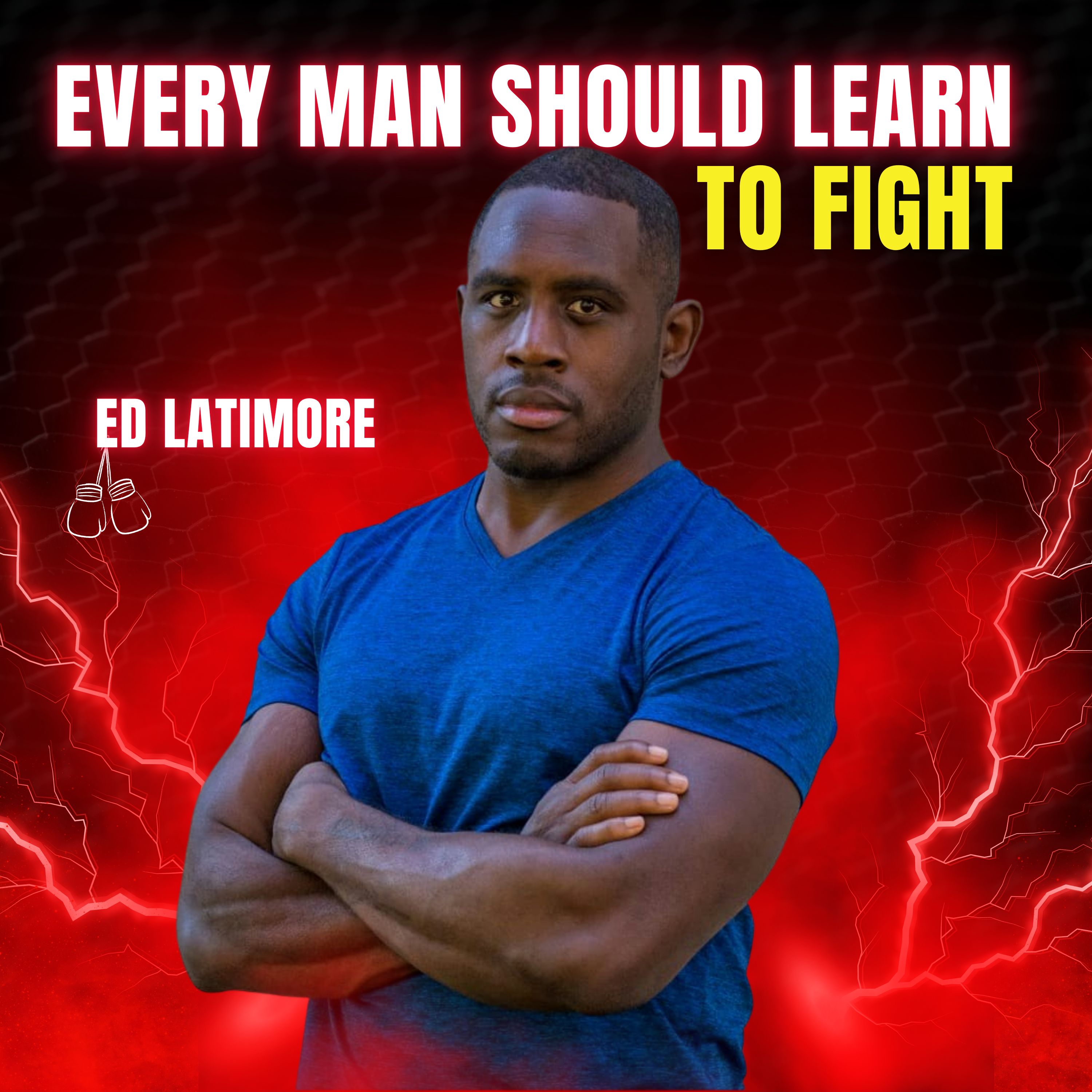
Why Every Man Should Learn to Fight (It's Not What You Think) | Ed Latimore
Press play and read along
Transcript
Speaker 1 This episode is brought to you by Progressive Insurance. Do you ever think about switching insurance companies to see if you could save some cash? Progressive makes it easy.
Speaker 1 Just drop in some details about yourself and see if you're eligible to save money when you bundle your home and auto policies.
Speaker 1
The process only takes minutes and it could mean hundreds more in your pocket. Visit progressive.com after this episode to see if you could save.
Progressive Casualty Insurance Company and affiliates.
Speaker 1 Potential savings will vary. Not available in all states.
Speaker 2 That got put on steroids when social media came out and gave everyone a voice. The voice that was the loudest and the most negative got amplified.
Speaker 2
So that got everyone thinking because we spend so much online. That gave them something to attack, something to defend.
One of my favorite books is The Epidemic of Absence.
Speaker 2 And that book is about how our allergies develop.
Speaker 2 And the author makes this point that as a country's GDP goes up, its incident of food allergies also goes up as the environment becomes cleaner because your immune system doesn't go, you know, there's nothing else for me to do.
Speaker 2
I'm going to chill out. It's like, no, I've been fending off diseases for most of your existence.
I got to attack something else. Ooh, there's a protein, like, like, like in
Speaker 2
a peanut or a shellfish. Let me go after that.
All right. I think psychologically the same way.
We don't have anything to
Speaker 2 conquer, anything to put our
Speaker 2
human nature of conflict behind. So we invent it.
Then we find it in each other.
Speaker 3 What if your biggest breakthrough is waiting on the other side of your biggest breakdown?
Speaker 3 After getting fired from my third executive position, I realized God didn't create me to work for someone else.
Speaker 3 So I founded my own company, bootstrapped it, and sold it for seven figures in less than four years. This podcast is for unreasonable people seeking unreasonable results.
Speaker 3
My name is Ryan Hanley, but most people just call me Hanley. And if you're ready to stop making excuses and start making moves, you're in the right place.
This is the way.
Speaker 3 The good news about this being my show is I can do whatever the fuck I want.
Speaker 2 Very cool, man. Very cool.
Speaker 2 That's the spirit for sure.
Speaker 3 It's the beauty of owning something.
Speaker 3 So, all right, man.
Speaker 3 Dude, I'm so excited to talk to you.
Speaker 3 I was actually first exposed to your work when you were on on the james algae show which i'm a big fan of oh yeah yeah i love james right yeah yeah i mean that was a while ago it was a few years ago and then i started following you on twitter and i i love the way that you approach different topics and you know i i'd like to start you know there's tons of stuff in your backstory that i'd love to talk about because there's some some weird there's some there's some similarities like just put white and rural and you know you know you're you're black and urban you know what i mean but like but the that you talk about in terms of what impacted you, being surrounded by drugs and alcohol and bad influence, like that's, that's my story, but in the middle of nowhere in a town of 900 people, you know what I mean?
Speaker 3 So I think there's some wonderful things to talk about, but I want to dig into this thing that you brought up in the green room, which is, I believe, and I think you agree that this is one of, if not the topic of our day, which is why are we as a society, particularly the U.S.,
Speaker 3 so incredibly polarized today? Like, how do we come back together?
Speaker 3 Why is this topic so important to you specifically?
Speaker 2 Well, for me,
Speaker 2 it's really important. And this is,
Speaker 2 it might not be obvious, but I'm black. Okay.
Speaker 2 So
Speaker 2 one of the things that, you know,
Speaker 2
I'm aware of is, you know, just being black and white. And that's not going to go where most people think it's going to go.
I'm just going to like,
Speaker 2 you know, I don't want to telegraph and make it seem like I'm about to say something, something crazy. But
Speaker 2 when you grow up as a minority, and the way I grew up, kind of, you know, poor disadvantages and everything, everyone expects you to think a certain way.
Speaker 2 They expect you to fall in line, I think, with,
Speaker 2 and now I'll use the terms, you know, with kind of the democratic liberal way of thinking.
Speaker 2 My experiences, even when I was living in that situation for most of my life,
Speaker 2 have naturally led me to think more like
Speaker 2 not in all things, but in certainly some key things, like a conservative. And that always bugged me
Speaker 2 because
Speaker 2 one, I shouldn't be expected to think a certain way because of who I am, because of my race,
Speaker 2 and two, why does my way of thinking, which is pretty much, you know,
Speaker 2 I don't want to like you, I guess I got to use the term, but it could be best summed up: self-reliance. You can do things, figure this out.
Speaker 2 No one's coming to save you type deal. Okay.
Speaker 2 And it bugged me: like, why does that align with one side of the political aisle and the opposite to the other? And then I thought more about it. And you know what? I realized
Speaker 2 this is, and this is a really new realization. It is not
Speaker 2 a liberal versus
Speaker 2 progressive. It is
Speaker 2 not liberal versus conservative or progressive, whatever. And it's not Democratic versus Republican.
Speaker 2 It's like, how can we weaken
Speaker 2 the
Speaker 2 United States? I really believe this now.
Speaker 2 And
Speaker 2 I thought about this more and more. And then I uncovered some of the interview of Yuri Beznamov, or Beznimov, I hope I'm saying that right.
Speaker 2
A KGB agent that defected back in the 80s. This is the 80s.
he's talking about this. And he says, you know,
Speaker 2
he's talking about the Soviet plan to destabilize. And he's like, look, we don't need to come in and like take over a country.
We don't need to do it violently.
Speaker 2 First, we're just going to, we're going to co-op your institutions. It's going to take us like 15, 20 years, but eventually we'll make sure
Speaker 2 everyone.
Speaker 2
is very liberal. He doesn't say liberal.
He says like, I think he says sympathetic to like Marxist and communist causes. And then from there,
Speaker 2 then they're going to be teaching your, you know, your children and they're going to handle that. And then the next generation will grow up and they're going to think a certain way.
Speaker 2 And in this way of thinking, we don't, everything is, everyone's going to be so confused that you could show them facts to their face and they're going to be like, no, you're crazy.
Speaker 2 That's not the truth. I think.
Speaker 2 We are being
Speaker 2 now part of this is intentional. And even if it's not intentional, the other thing that we have is is you have this incredible individualism that's part of the united states history right
Speaker 2 that got put on steroids when social media came out and they gave everyone a voice and the voice that was the loudest and the most negative because of the way the algorithms work those got amplified And so that got everyone thinking because we spend so much of our time online, you know, touch grass is a meme, but like that's it's a real thing people need to do.
Speaker 2 But I got everyone thinking
Speaker 2 the world is really that bad. And that sort of, and that gave them something to attack, something to defend,
Speaker 2 make them feel like their values are under assault. And then the last thing to put a bow in it is
Speaker 2 one of my favorite books is The Epidemic of Absence. And that book is about how our allergies develop, right?
Speaker 2 And the author makes this point that as a country's GDP goes up,
Speaker 2 its incident of food allergies also goes up as the environment becomes cleaner because your immune system doesn't go, oh, you know, there's nothing else for me to do. I'm gonna chill out.
Speaker 2
It's like, no, I've been fending off diseases for most of your existence. I gotta attack something else.
Ooh, there's a protein, like, like in
Speaker 2
a peanut or a shellfish. Let me go after that.
All right. I think psychologically the same way.
We don't have anything to
Speaker 2 conquer, anything to put our
Speaker 2 the human nature of
Speaker 2 conflict behind. So we invent it and we find it and we find it in each other.
Speaker 3 I think you're 100% right. And I think this plays in a lot of different ways.
Speaker 3 Something we've discussed on the show before, and I have some guests hopefully coming on in the next few months is like, what happened in the early 70s, right?
Speaker 3
Like, what the heck happened to this country? Our testosterone. L-testosterone is down 59% since 1972.
The average male carries 59% less testosterone in their body than 1972, right?
Speaker 3 We go off the gold standard and now inflation is at, you know, if you look at the inflation numbers, if you look at debt numbers, if you look at money in the system, if you look at basically every negative metric that you can possibly look at since the early 70s, we've seen these major changes.
Speaker 3 And it all aligns with when,
Speaker 3 and guys, I'll have the link to the interview that Ed just referenced with Yuri that the KGB agent
Speaker 3 essentially you know the communists realized that they couldn't beat us they couldn't beat us from a from a industrial standpoint they couldn't beat us militarily and they couldn't beat us from an innovation and science technology standpoint so the only thing that they could crack was our psychology and you know i was introduced um
Speaker 3 about a year ago to this idea because i've because i've struggled with with with the postmodern liberal mentality, right? Like, there's no receipts to back up any of the philosophies.
Speaker 3 There's zero receipts, right?
Speaker 2 Or there are, and they don't point to the conclusion they want you to point to. And so it's like, oh,
Speaker 2 yeah,
Speaker 3 I had to adopt very early in my life, and seemingly you did as well, that like I had to live in reality.
Speaker 3 I couldn't live by theoretical ideas of what some utopian thing that could happen if
Speaker 3 only X and Y.
Speaker 3 There is evil in the world.
Speaker 3 Good people do bad things, right? Crazy things happen that you don't expect that have no reason.
Speaker 3 And essentially, you have to build a life that defends against these things.
Speaker 3 And if you do not, if you're not building a life of positivity, and I think God plays a big role in this, right? Like, all of a sudden, people start grasping for things.
Speaker 3 And you look at like, like, I don't like elon musk so i'm going to draw swastikas on random teslas in parking lots as a like what's this craziness like and but that's that is a holy crusade like you know i mean these are secularists but they're on a holy crusade i mean they feel justified like like morally justified in taking some random human that they don't know who bought a tesla at sitting in a parking lot and keying a swastika into it.
Speaker 3 And like, okay, so stepping back from that, like we need things in our life. And you do talk about this that are, that are hard.
Speaker 3 Like we, we need to have things that are, that challenge us in a, in a positive way. So
Speaker 3 how do we start to crack that conversation? I, I really struggle with this because I don't think, I in no way think my philosophy on life is right. I make mistakes all the time, right?
Speaker 3 But I do try to pursue and completely open to ideas that could point me in a better direction.
Speaker 2 Right.
Speaker 3 And I just, but there's so many people you run into who are just
Speaker 3
like limping through life. They're just like dragging themselves and they believe anything they see on TV and they don't want to go deeper than surface level on anything.
And
Speaker 3 I guess part of the reason of doing this show is trying to expose people who are interested or open to the idea, to new ideas.
Speaker 3 Like, how do we start to crack that and help people maybe come back to this idea of living in reality?
Speaker 2 Like, like
Speaker 2 their life. One of the things that I always tell guys
Speaker 2 when they are having trouble,
Speaker 2 you know, losing weight, being antisocial, finding a date, whatever,
Speaker 2 you know,
Speaker 2 it always comes back to a retreat from reality.
Speaker 4
Hey, it's Parker Posey. How did I get here? I love improvisation when it comes to acting, but when it comes to a real life plan, I stick to a script.
Cue the music.
Speaker 6 Invest in your story with DIA, the only ETF that tracks the DAO from State Street.
Speaker 7 Getting there starts here.
Speaker 5
Before investing, consider the fund's investment objectives, risks, charges, and expenses. Visit state street.com/slash IM for perspectives containing this and other information.
Read it carefully.
Speaker 5
DIA is subject to risks similar to those of stocks. All ETFs are subject to risk, including possible loss of principal.
Alps Distributors, Inc. Distributor.
Speaker 2
Like you said. And it's so easy to retrieve from reality.
Like, if I wanted to,
Speaker 2
I could, the Netflix is incredible. And that's just Netflix.
That's just the commercial one. I popped up TikTok last night and I swiped over on the For You tab.
I didn't even notice existed.
Speaker 2
And before I knew it, I had wasted 15 minutes watching some kid play Mortal Kombat 2. And I was like, whoa, hold up.
How is this a thing?
Speaker 2 And that's just one example. When you're looking at YouTube, my point is that there's lots of,
Speaker 2 there are so many ways to
Speaker 2 numb yourself and just be a passive consumer and do everything you can to have just enough to passively consume because humans like every other organism in this universe will seek the most energy efficient path in other words we we do things the easiest way possible assuming it you know we do what we can to survive but we we try to do that the easiest way possible the way out of that is to seek out hardship intentionally now I'm not the dude that's going to tell you to go take cold showers.
Speaker 2 You know, I get where the movement comes from, and that's certainly a step in the right direction, but it's not really practical.
Speaker 2 I tell guys,
Speaker 2
go learn how to fight. Go learn.
Don't go get into a gym and train for six months to 12, six to 12 months to take a fight.
Speaker 2 And that six to 12 months, if you commit yourself to that goal, a few things are going to happen that can't happen any other way.
Speaker 2 One, the obvious.
Speaker 2 You're going to get in incredible physical shape. Whatever your issue was, losing weight and being healthy, you're probably going to fix it.
Speaker 2 And on top of that, because of the opportunity cost of going to the gym, you're not going to be sitting around wasting your time.
Speaker 2 I think one of the reasons, well, one of the major reasons I got sober and one of the major reasons why I didn't make any really big mistakes when I was in the throes of alcoholism is because I had this thing I was focused on.
Speaker 2 which was my training.
Speaker 2 So I would never let myself get too crazy and I could put the brakes on when I, sometimes, not all the time obviously but but it never got as bad as i i saw it be for some people when you go train for a fight you take care of that health thing
Speaker 2 you end up because of the structure of a fight gym
Speaker 2 you end up making real friends a lot of guys talk about not having friends
Speaker 2 there's all types of surveys i wrote an article about this about how uh over the age of 23
Speaker 2 people
Speaker 2 really don't make new friends especially men at least uh women are a bit better at this actually a lot better at this, but men are really bad.
Speaker 2 If you train in the gym for a year, it will be impossible to not have friends.
Speaker 2 You'll be kicked out if you're not able to work with people. I have never had a problem making friends, and I realize that it's not because there's something special about me.
Speaker 2 It's like, okay, I graduated high school. I had this little break, and then I got into fighting when I was 22.
Speaker 2
And then fighting introduced me to a bunch of other people. And then I enlisted in the military.
That introduced me to a bunch of new people.
Speaker 2
and now it's like a self-referring system. I meet people all the time who get recommended to hang out, have coffee, stuff like that.
But there's that aspect: living in reality. Can you make friends?
Speaker 2 Next part: look,
Speaker 2
forget the political correctness, man. Let's be real here.
If you can take care of yourself and you're strong and you are together, you're going to attract women into your life. And,
Speaker 2 you know,
Speaker 2 whether they're suitable for long-term dating or not, that's a different problem.
Speaker 2 But that's a problem a lot of guys don't even get to solve because they haven't solved the first one, which is just getting a ticket to the dance.
Speaker 2 We'll worry about if she's a good dancer later. You got to get invited to the dance first.
Speaker 2 So for me,
Speaker 2 not just physical activity, though physical activity does matter.
Speaker 2 Not saying you, you know, if you got to pick between going to a fight gym and just going to your 24-hour fitness, please go to 24-hour fitness and don't be a fat ass.
Speaker 2 But like, if you got the option to get to any type of fight gym, I'm partial to boxing because that's what I came up in, but BJJ works, Judo works.
Speaker 2 Well, anything works that forces you to face fear, compete with another guy in a social environment. I think people forget how, or don't forget, they just don't know how social a
Speaker 2 fight club is. But it's not social like we're sitting around playing video games, shooting and shit.
Speaker 2 We're talking shop, you know, and that's the other thing that's kind of crucial to networking that no one talks about. Like, oh, how do we network?
Speaker 2 The first part of networking is like being good enough at something.
Speaker 2 It ain't got to be like world changing, but you got to be good enough at something where people are like, oh, let me talk to this guy.
Speaker 2
He seems interesting, or he has something to teach me, something to offer. And then your social skills come into play and you build off of that.
But that one right there. And if you look at
Speaker 2 everything in our society right now, it is pulling people away from that physical activity, not even fighting, but that physical life, that living outside, that interacting with others, that's a big deal.
Speaker 2 And we're getting further and further away from it. And the numbers are starting to show
Speaker 2 in,
Speaker 2
I guess, metrics of social development. and social satisfaction, especially amongst men.
The stat that still blows my mind. The 27% of men under the age of 30 are virgins.
Speaker 2
And we're talking like over 18s. We're not counting like, you know, grouping in like eight-year-olds and shit.
We're talking about guys that like should be in their crown trying to date, meet women.
Speaker 2 One in four.
Speaker 2 And that's crazy.
Speaker 3 The idea of being a virgin at 30 is so foreign to me. I didn't even,
Speaker 2 you got kids. I mean,
Speaker 3 I can't even, I can't even wrap my head around that. I mean, like, you know, so when this idea of toxic masculinity came out, right?
Speaker 3 I found it abhorrent. I just, I was like,
Speaker 3 everything about my life
Speaker 3 has been,
Speaker 3
has been cultivating masculinity, right? Strength. Like if someone breaks in my front door, I may not win, but I'm going to fuck the guy.
I'm going to cost him.
Speaker 2 Right.
Speaker 2 You might rob me, but you're going to know that
Speaker 2 the police are going to be able to, when they find you, they're going to know that you was just in something. You have to explain the marks, you know? Yes, yeah, exactly.
Speaker 3 Like,
Speaker 3 I say to people all the time, they're like, why, you know, so I'm I'm a gun owner and, you know, I got butt, especially in New York.
Speaker 2 Talk about the state in New York, yeah.
Speaker 3 Yeah, a lot of people, a lot of people, you know, there's a lot of people that are like, oh, I can't believe you have guns in the house. And I'm like, look, if someone decides at 2 a.m.
Speaker 3 that they're going to come in my house,
Speaker 3
I'm going to make sure that they regret that decision. Again.
I have no idea if fate is going to have me win that altercation, but I'm going to make sure they regret that decision.
Speaker 3 That is my obligation as a man is to defend my home, my people, right? That's my obligation. And like it has been taught and men have been so just like they've just been so docile.
Speaker 3 Like they like everything is about, oh, your feelings and vulnerability.
Speaker 3 And look, like, like, I'm not against, you know, being able to express and understanding that you have layers beyond just the surface, all that stuff. That's very, very important.
Speaker 3 I, I, the best advice I ever got in my entire life was from a mentor about seven years ago. And I was going through some stuff.
Speaker 3 And he said, look, go get a counselor, meet with that person every other week for the rest of your life, and just consider it a life expense.
Speaker 3 Like it just became an expense that you pay, like your Netflix bill or your heat or your mortgage. And that is some of the best advice I ever got because I get to talk to this person, explain things.
Speaker 3
I don't know why. I react this, but whatever.
That's good. But we got to get back to understanding what our role is in society.
Speaker 2 Right.
Speaker 3 And our role, like I was talking to my sister, is a wonderful human being, but she's unfortunately been indoctrinated into postmodern liberalism.
Speaker 3 Like, I said to her, you know, she was, she's, she questions a lot of my beliefs, right? And I skew conservative, obviously, and not even conservative. I don't even like that term.
Speaker 2 Like, yeah,
Speaker 2 we'll dig back into that.
Speaker 3 Yeah, like, I like to live, like, again, my, my, the way I like to frame it is I like to live in reality, right? And I'm like, men are replaceable.
Speaker 3 God created us in a way that we're replaceable, right? If there's people invading, we all go out and get the crap kicked out of us and killed.
Speaker 3 And a few of us come back so that the women can repopulate the community and the community continues.
Speaker 3 Like, we need the women to be safe because they're the ones that create the little humans that allow us to keep going as a, as a species.
Speaker 3
And the men, you know, they can get beat up and they can get killed. And that's what we're for.
We're the cannon fodder.
Speaker 3 But if you're sitting in your basement and you're 300 pounds and your contribution to society is your level in some game, I'm not against video game, whatever. If that's what you're into, it's great.
Speaker 3 But like,
Speaker 3
like you said, you have to be fit. You have to have a personal philosophy on life.
Acquire skills. You don't even have to be the best.
You just have to be committed to acquiring them. And like
Speaker 3 the idea that this is somehow toxic or foreign or antiquated thought process, I can't even wrap my head around. Like open your eyes for 10 seconds and look what's happening in the world.
Speaker 3 Not much has changed other than than the fact that shit just happens faster.
Speaker 2
Yeah, and it's faster and we're more aware of it. Yeah.
We didn't have this the way things come. It's crazy.
But like that phrase toxic masculinity, you know, I've gone back and forth on this because
Speaker 2 like I said, my whole thought process is
Speaker 2 rooted in reality and truth.
Speaker 2 As I examine something,
Speaker 2 if some of my beliefs skew towards a liberal idea, it's only it's not because it's a liberal idea, it's only because they happen to get that one right.
Speaker 2 If it skews towards a conservative rather than happening to get that one right, am I still here?
Speaker 2
Sorry about that. Uh, my old, I was, uh, I gotta, oh, I can't see you.
Hold on, sorry about that. You can edit this, I'm assuming.
Okay,
Speaker 2
great. Uh, here I am, I'm back.
All right,
Speaker 2 but um,
Speaker 2 yeah, if if if my ideas skew one side or the other, it's only because as I sat and thought about the idea
Speaker 2
and really analyzed it, that's where I had landed. And I can give you examples of that.
But on the toxic masculinity thing, that was one of those things. I'm like, okay, well, they're not saying.
Speaker 2
At first, my brain was like, you know, this is kind of like that word trick they use with immigration. They're like, no, we're not against immigration.
We think illegal immigration is a big deal.
Speaker 2 You got to use the adjective. So, I'm saying,
Speaker 2 okay,
Speaker 2
in this case, we're saying toxic masculinity. Okay, so maybe they're saying, you know, the toxic side.
And then, and then I had to stop myself.
Speaker 2 But they're not saying toxic humans, you know, are poor
Speaker 2
qualities. It's masculinity and something inherent about masculinity.
There's a toxic expression of it. I don't like that because
Speaker 2 I'm positive. I would bet, at the very least, no
Speaker 2 positively masculine male came up with this toxic masculinity. It was either a woman or it was a wolf in sheep's clothing, as I like to call it.
Speaker 3 It's a socialist construct. Toxic masculinity is 100% a socialist construct.
Speaker 2 Yeah,
Speaker 2 it's absolutely insane because
Speaker 2 once you hijack the conversation in that way, then...
Speaker 2 You don't leave.
Speaker 2 Let's put it like this.
Speaker 2 I would probably not give the term as much flack as I do if they had just as much of a concerted effort to discuss positive masculine, but that's not a thing.
Speaker 2 And so it's like, what are we, we're going to highlight all these negative features of Daws and realize,
Speaker 2 and in doing so,
Speaker 2
not realize that a lot of what you're determining is toxic is just how you feel about it. It's not inherently toxic.
It's how you feel about it. It's like that old joke, right?
Speaker 2 What's the difference between
Speaker 2 a bitch and a slut and a bitch, right? That's like the joke.
Speaker 2 A slut bangs everyone at the party, a bitch bangs everyone at the party, but you. It's like,
Speaker 2 it's a joke, right? But the idea, the joke is that, okay, you're using your feelings to determine what the words mean.
Speaker 2 And okay, people do that all the time, but when they receive,
Speaker 2 when they make it into cultural discourse to the level that they do, then you start, then you change everything. You get guys afraid to be, I want to say afraid.
Speaker 2 But what we do see is that we got a lot of guys who are affected, we're behind. I mean, in every metric of life, you know, we are behind women significantly.
Speaker 2 And look, I don't believe parody is ever possible.
Speaker 2 But for reference, when women were behind men and rates of graduation and salary and things like that in the 70s uh the difference from parity in their dire in our direction or their direction however you want to look at it is much smaller than the difference in parody now in the other way we're further behind we are for we're just further behind but no one wants to address that because you know 86 cents to the dollar and that keeps getting parrot parity parity parity
Speaker 2 that now you can't even discuss what's really going on because you have bought into an old idea, how reality was, and you haven't adapted, you haven't updated because it's not in your interest to update it at all.
Speaker 2 So, so, so, like, yeah, when you ask me a thing that gets me passionate, you know,
Speaker 2 the hot topic, this is another one too, because, because there were a lot of things I didn't have an opinion about. That's how I win a lot of the, or how I keep my sanity.
Speaker 2
I just don't have opinions on these things. I don't think about them.
Like, like the trans issue, ah, right? It wasn't really a thing for me to think about because whatever, right?
Speaker 2
And then I had a son. So now I got to think about a bunch of stuff.
I got to think about a bunch of stuff and make sure and have very clear lines of like, okay,
Speaker 2 here's what's not going to happen.
Speaker 2 And if that means I got to lose a friend or two. Now, unfortunately, I don't think it'll come to that, but that's like the idea because relationships are very important to me.
Speaker 2 But They're not more important than making sure that my offspring can live without me as a functional human being.
Speaker 2 That's how I define kind of raising a kid, that like eventually they're able to continue without you and they'll miss you, but
Speaker 2 you don't leave too soon and you make sure they're equipped to deal with life.
Speaker 3 Yeah, my issue with equality,
Speaker 3 so this idea of toxic empathy, right?
Speaker 3 This is a concept I was also introduced to about a year ago.
Speaker 3 Again, searching through like where, how does someone take postmodern postmodern liberal beliefs and actually believe that this is the way the world should work?
Speaker 3 Because I literally, I can't wrap my head around it. Like, again, I don't, there's no receipts for the methodology that shows positive progress in any society, right?
Speaker 3 Like, like, we're literally, if you go back and you find out where do these ideas come from, they all come out of,
Speaker 3 you know, originally, originally from Marx, and then they've been mutated and manipulated. And these ideas were applied to Russia and the Soviet Soviet Union, hasn't worked, fell apart, right?
Speaker 3
Cuba fell apart. Venezuela fell apart.
Like, look at North Korea versus South Korea. I mean, there's just example after example after example of when you
Speaker 3 when you put equality uh or uh um
Speaker 2 quality of outcome
Speaker 3 of equity versus equality of opportunity right when you when you miss when you conflate those two things your society falls apart because when you have driven hardworking people like like take elon musk right Not a perfect human.
Speaker 3
I have to leave with that preference. However, the reason I think so many people dislike him is not because of anything he said or done.
They're fucking jealous of this guy.
Speaker 3
They're jealous that a human being is willing to sleep on a cot in his workplace in order to do things that no other human has been able to do. Figure out.
uh evs and make them uh and make them um
Speaker 3 right yes yeah space solar City. He's got a whole digging company that no one talks about to reduce traffic and congestion in major cities, like thing after thing after thing.
Speaker 3 He comes in and he finds all this waste, fraud, and abuse
Speaker 3 inside of our government through Doge, right? So when I look at it, when I think about this idea of where, why would you say everyone needs to be equal versus
Speaker 3 which I would believe, I would believe if everyone could be equal, I'm all for it. Don't get me wrong.
Speaker 3 But what pisses me off about that philosophy is, is there's the only way to get there is to create equality of opportunity.
Speaker 3 And that's nobody on the postmodern liberal side talks about opportunity, right?
Speaker 2 Like
Speaker 3 there are communities, both black communities and white communities where I live that nobody gives a shit about. Nobody, right? We want to prop everyone up.
Speaker 3 We want to send them free money and free food and all this stuff, which if that helps them get out of the situation they're in i am all for that i'll donate as much as anybody i'll contribute i'm all for that stuff but behind that
Speaker 3 nobody is helping them actually get out no one's introducing the sports or fitness or education or entrepreneurial programs or mentorship there's none of that so it's like okay what you want to do is just hand people for free and but keep them in the little box that they're in.
Speaker 3 That's what I hear when I hear that philosophy. And that's what pisses me off about it because
Speaker 3
everybody, every American should have the ability to get themselves out of wherever they start. Because we're not all going to start the same, but that's the shit that pisses me off.
And, like,
Speaker 3 and to me, when I look at the individuals who are spouting this, they're usually coastal, well-educated elites, right? So they're already in a place where they can spout this philosophy out.
Speaker 3 They're not actually living it. And, or it's someone in my mind who simply doesn't, who is jealous of the outcome, but unwilling to put the work in to get there.
Speaker 2 Right.
Speaker 2 And on top of that, there's also
Speaker 2 the kind of PR side of it.
Speaker 2 It looks good to your group of people that are, you know, like you said, well-educated elite, or like did the group think, you know, back what I was saying about how a lot of my thoughts.
Speaker 2 took me in a different direction.
Speaker 2 It's amazing how there's this assumption that because I'm black, I'm supposed to think and feel a certain way, which is the exact opposite of diversity in the purest sense of the word.
Speaker 2 And so it's champion, it's championing this surface level diversity and not diversity of thought.
Speaker 2 As long as you know, you can be different, just don't be different in the way we, you know, in a way that pits you against our ideas and our beliefs. And I've always found that fascinating.
Speaker 2 Just how far people will go to look the way they think they should look.
Speaker 2
To have the ideas that they think they should have and to fit in. Because I believe that that is a lot of it, too.
I was just having a discussion with someone the other day about
Speaker 2 how
Speaker 2 they were pulling up the
Speaker 2 county-by-county wind map for elections.
Speaker 2 And
Speaker 2 look, I have no idea.
Speaker 2 I go back and forth on it all the time about
Speaker 2 the validity of the 2020 election. What I won't do is call anyone who thinks it was really
Speaker 2 crazy because
Speaker 2 our country has a long history of
Speaker 2
manipulating outcomes. And it's nuts.
Like someone made a post on Twitter a few weeks ago, like the CIA is wild because
Speaker 2
something will happen. You'll say that it's a conspiracy theory.
And everyone's like, yeah, you're crazy. Why would you think that?
Speaker 2 And a few years later, the CA comes out and goes, Yeah, we did that shit. And then it just keeps going.
Speaker 2 But pulling up that,
Speaker 2 but back to that demographic map, kind of county by county, I was making the point, and I had to show my map.
Speaker 2 I was like, Well, for thank goodness for like the electoral college, because all a candidate would have to do is win like the 10 major cities and not bias, not by a small margin, not by a major margin to secure the presidency.
Speaker 2 Because people in
Speaker 2 the
Speaker 2 what LA, San Fran, or the whole Bay Area,
Speaker 2 the Northeast corridor, all the big cities are the 10 biggest cities in southern Texas.
Speaker 2 You end up with people who think the same by region. And that is
Speaker 2 so interesting to me because we were looking at a true difference of like thoughts and everything like that. You wouldn't expect to see it so uniformly represented.
Speaker 2 Every now and then, you get a place that like turns. You know, like I think
Speaker 2 Miami has a Republican mayor at San Diego as well. But for the most part, this is a fairly consistent pattern.
Speaker 2 To keep to keep appearances up and fit in,
Speaker 2 you adopt the beliefs of those around you. So, what may have started as a bad idea
Speaker 2
only because no one else was willing to go, yo, that's a really bad idea. Let's pull the reins back on that.
It continues sticking around.
Speaker 2 I used to watch John Oliver right before I realized he was like crazy political because I don't watch anything that's politically charged no matter how I feel.
Speaker 2 And my wife had pulled up a clip of his where he was talking about the, I can't remember the exact name of the bill. in Florida, but it was the one that was called Don't Say Gay Bill.
Speaker 2 That's what they were called.
Speaker 2 And as he was breaking it down, I'm sitting there going, how could you be for this, though? Like, like, like, because the idea is that you're discussing
Speaker 2 the bill will forbid the ability to discuss sex in classrooms. I thought it was all over school, like, I thought it was everyone in school, right?
Speaker 2
Turns out it was just people like in the third grade and below. And I said, That's that's nuts.
Why would you like Lamb Bastards?
Speaker 2 So, I'm sitting here looking at him like Lad Bastard and trying to find the logic behind it. And
Speaker 2 even if he did have some points, my issue is to not be willing to consider like why the other side thinks this way.
Speaker 2 And when people lose the ability to do that, they're absolutely dumbfounded. It's amazing how many people in 2016 couldn't believe Trump won.
Speaker 2 And I'm just sitting here on Twitter, you know, the months before going.
Speaker 2 I don't think you guys realize how most of the world thinks because you are insulated. I'm sitting on Twitter with
Speaker 2 over 100,000 followers going.
Speaker 2
And I see different things. I'm like, I don't think.
And on the flip side, when 2020 was coming along,
Speaker 2 I thought way before anyone else, and it was quite vocal about it, I thought Biden was going to win, not because he was a better candidate, but I thought people, I thought the
Speaker 2 powder keg was right and people were really out on droves. And this time,
Speaker 2 this time was super clear. I mean,
Speaker 2 but it's amazing how not clear it is to people who are like, like, if you can't admit that your strategy, that you're on the losing side, then you can't even come up with a strategy to
Speaker 2 rectify that. And we're talking about like a political campaign, but that idea applies to how we interact with everyone else.
Speaker 2 If you can't understand why someone might have a problem
Speaker 2 with Bud Light
Speaker 2 endorsing
Speaker 2 a trans person whose primary audience is children somehow anyway,
Speaker 2 then then
Speaker 2
you are never going to be able to, like, we can't fix this. Like, we, we can't, and that's where I lose hope a lot of times is that to me, the, the answer for this part is painfully obvious.
Like,
Speaker 2 without getting into any type of restrictions on our freedoms, but the answer is painfully obvious. We need to put as much time into educating young people on
Speaker 2 as much time as we put in, like, teaching them math and history and science, all that stuff is important.
Speaker 2 We also need to put a lot of time into teaching them how to think and have conversations and interact with the other person and really make that not just an afterthought, you know, as a thing you only bring up when it's a problem and disrupts the learning experience, but it needs to be the learning experience, like how we
Speaker 2
talk to the other side. Because if you can do that, right, I think a lot of bad ideas get weeded out.
But right now, what we have is
Speaker 2 a climate that lets bad ideas just fester
Speaker 2 and grow. And there's no way to beat them because if you attack them, you make them larger by the by the
Speaker 2 what the hell is her name? Streisan effect. And if you ignore them,
Speaker 2 then they blindside you. I don't know where at a PTA conference or something like that.
Speaker 2 So you have to figure out,
Speaker 2 and
Speaker 2 there's no way to attack the idea.
Speaker 2 We got to hope that
Speaker 2 smart people, and fortunately, there are enough smart people and enough organizations on part of One Builders that are like going, hey,
Speaker 2 we need to start
Speaker 2
talking to the next generation. You can't really do anything about all.
I mean, some of them will come around.
Speaker 2 But if you teach kids how to like interact and learn from one another and be curious and then challenge ideas and not be so damn butthurt when they're bad ideas or just show them how ideas work.
Speaker 2
I mean, it's, that's the only way out. That's how I feel.
I mean, I wish there was a.
Speaker 3 I'm with you, dude. And as far as the parenting thing goes, and
Speaker 3 this is, I'm going to take a direct shot at everyone who's listening who's a parent who abdicates their responsibility to be a fucking parent. Like, you need to talk to your children.
Speaker 3 You need to interact with them. You need to discuss what are you doing at work? Why are you making the decisions? Like, I discuss everything with my children.
Speaker 3 Like, like, you know, and they, and I know they get sick of it sometimes and i can tell when they're zoning me out and their freaking kids are 11 and 9 but we have like deep discussions about stuff and i ask them questions and how do you feel about this and how would you handle this and you know right now sports are big in their life because again they're nine and 11.
Speaker 3 so like i put a lot of things in context of sports and you know but it If we're not, if we're not engaging with our kids, if we just shove them off on the coach at the sporting event and go sit in a chair with stare at our phone, and every time they look over to see if you're watching, your face is buried in a phone.
Speaker 3
Guess what they think? Right. They think you don't give a shit.
They stop listening. You know what I mean? They start acting out.
Speaker 3 Now their ears are open to anyone who will talk to them because you're not talking to them. You're not engaging with them.
Speaker 3 So now you're opening the door to crazy assholes who may have an agenda shoving shit in your kids' brains that you don't agree with.
Speaker 3 But hey, you abdicated that responsibility by checking out and spending more time with your phone than you do with your kids.
Speaker 2 There's a great,
Speaker 2 in that organization I was talking about, there's a guy, Tony McAlier.
Speaker 2 And Tony is a former neo-Nazi who left a life behind and now really devotes his life to making people curious and ask questions so bad ideas don't continue and we can decrease polarization.
Speaker 2 And he was telling a story in one of our calls about he used to do gang intervention stuff too.
Speaker 2 And he was saying a mother contacted him and said that her son has been, she found that her son was on um
Speaker 2 i can't remember one of the big white supremacy forums but she's like we don't raise him like that we don't bring that around
Speaker 2 this stuff we don't know how it came
Speaker 2 you know how he got to it we just need some help and he was talking to her what he discovered though is that those people on that forum
Speaker 2
treated her son better than any of the other kids at school. And so that opened up this gate of like, oh, I got a group I can belong to.
This is like how gang, how gangs work in general.
Speaker 2 It's like, okay,
Speaker 2 you got this broken situation. Nobody, clearly your father don't give a shit about your parents around.
Speaker 2
Come to us. We'll take care of you.
All you got to do is sell your soul, basically, and possibly your life.
Speaker 2 And understand, like, like you just make that connection on a broader level. Like, yeah, if you're not involved
Speaker 2
with your children's life, that trickles a cascade effect. I'm writing a speech right now about this whole idea of personal leadership.
And it's like the butterfly effect.
Speaker 2 It starts with what you do, with what you do, and then how that extends to the rest of your community.
Speaker 2 If you're not involved in your children's life, you're teaching them how to, not only are you teaching them how to interact with people, but you're not teaching them how to interact with people.
Speaker 2 And then they're going to end up, you know, pissing somebody off or bullying or teasing some kids at school.
Speaker 2 And you get enough weak-minded kids who've done that because their parents have not been present.
Speaker 2 Then you end up creating another kid who's going underground to these forms, who's joining gangs, things like that, because he feels like, oh, they get him, they understand him.
Speaker 2 Now they have nefarious, outright, hostile purposes for your child.
Speaker 2 it was your job you know and you you left it you left it up to chance hoping it would happen and it did yeah and and this extends to to every aspect of our life.
Speaker 3 Like, you know, if you're normally listening to this show and you like the entrepreneurial business shit, guys, like what we're talking about is not relegated to our personal lives or our relationship with our children or our spouse.
Speaker 3
This goes for everything. You know, one of the, one of the biggest changes.
So, so I had, I had a lot of things going on in my life back in like 2016, 2017.
Speaker 3 And, you know, I was traveling too much and my kids were young and I wasn't spending time with them and I wasn't connecting with my wife.
Speaker 3
And I, you know, I was drinking too much and you're you're out at conferences. And, you know, you're doing all this different stuff.
And thank God I avoided most of the major mistakes.
Speaker 3
I never cheated and didn't do any of that. But, but in terms of relationally to my business, I became very selfish.
I became very self-oriented. It was about my persona, my brand.
Speaker 3 I wasn't, okay.
Speaker 3 And this idea
Speaker 2 of
Speaker 3 intentionality. right like it literally changed the course of my life and i have to give credit and i've talked about him a thousand times in this show Jordan Peterson for this, because I read
Speaker 3 10 Rules for Life. And that book was like a starting point.
Speaker 3 I'm not going to say that it's a be all, end all of all books on personal responsibility and intentionality, but it started me down this path.
Speaker 3 And I started saying to myself, like, if you can just be intentional with your actions, it doesn't mean every decision you make, every action you make is the right decision.
Speaker 3
That's, you have to give yourself grace for that. And that's where, you know, I'm God-fearing guy.
I'm a Christian.
Speaker 3 You know, that's where like, you know, a a relationship with God can really help and giving yourself grace and love and peace.
Speaker 3 But be intentional. Either the world, either you dictate to the world or the world dictates to you.
Speaker 3 I mean, that's, that's, that's, my football coach, you know, so I played football in high school, loved football. I ended up getting injured or I probably would have played in college.
Speaker 3 I ended up playing baseball in college. But
Speaker 3 like my football coach used to always say, he dictates to you or you dictate to him and it's your decision. That's it, right? I'm assuming the same thing is true with boxing, right?
Speaker 2 Absolutely. I was just talking about that.
Speaker 3 Like, you know, I would love, you know, for you to maybe break this down and show how this has worked in your life.
Speaker 3 And particularly, you know, I'm such a huge advocate for sports, especially sports with contact, because
Speaker 3 you learn who you are, right? When you, when you have to, you know, when, when, you know, I never boxed, I do boxing for fitness, but I've never box boxed.
Speaker 3 When you, when you, when you try to tackle someone, you know, so I was a middle linebacker and you come around a corner and you square up with that running back, either you're tackling him or he's mowing you down.
Speaker 3 And sometimes, and it goes both ways, you could be at the top of your game and some guy just catches you and now you're pulling your dick up out of the dirt and you got to brush yourself off and it's the next play.
Speaker 3
And that guy's walking back to the huddle with a big ass smile on his face because he just mowed you down. And now you got to go do it again.
And you learn about yourself in these moments.
Speaker 3 Like, am I a person who is willing to take that hit and get back up and go do it? Because he may do that shit to me again. And I got to go do it because this is my job.
Speaker 2 This is why I'm here.
Speaker 3 And that like,
Speaker 3
it is so important for us to test ourselves, I guess. And I get so concerned with safe environments, like this idea of safe, safe.
Obviously, I don't, I'm not an advocate for violence, like
Speaker 3 random negative way, but like
Speaker 3 our world is not safe. So why do we create these incredibly safe, these, these, these vanilla, whitewashed fucking environments for our kids?
Speaker 3 And then we put them out in the world and we wonder why they can't handle adversity.
Speaker 2
You should, man. Dr.
John Height writes about this in the Caudal of the American Mind,
Speaker 2 where he's talking about
Speaker 2 like the over-parenting and the safe issues. And what it does is it creates,
Speaker 2 yeah, they
Speaker 2 it creates children who are not
Speaker 2 who who don't realize they won't break,
Speaker 2 you know,
Speaker 2 and so every little thing is hey, it's Parker Posey.
Speaker 4 How did I get here? I love improvisation when it comes to acting, but when it comes to a real-life plan, I stick to a script. Cue the music!
Speaker 6 Invest in your story with DIA, the only ETF that tracks the DAO from State Street.
Speaker 7 Getting there starts here.
Speaker 5 Before investing, consider the funds' investment objectives, risks, charges, and expenses. Visit statestreet.com slash IM for a perspective containing this and other information.
Speaker 5 Read it carefully dia is subject to risks similar to those of stocks all etfs are subject to risk including possible loss of principal alps distributors inc distributor like a hyper
Speaker 2 it triggers a hyper response because it's it's it's not uh they haven't tested themselves
Speaker 2 it and it's you know the lack of lack of context which right there is that or like you know one example i like to give that is completely uh outside the physical realm
Speaker 2 you know you're 44 i'm 40. When we were growing up, if we wanted to talk to a girl, we had to like go, we had to get asked for our phone number.
Speaker 2 Okay.
Speaker 2 And sometimes that went well. Sometimes you got clowned and everybody else knew.
Speaker 2 And then if it went well, then you had to call. And when you called,
Speaker 2 you probably had to talk to your father or mother first.
Speaker 2 And then they got past you on the phone. And then
Speaker 2 they might have been listening on the phone, too. It could have been crazy.
Speaker 2 But all of that is like that's a resilience rejection, that's a resilience-building activity where you face the possibility of rejection or embarrassment in multiple instances.
Speaker 2 And it doesn't stop when you get older.
Speaker 2 The only difference is now you don't have to deal with it, it actually gets harder because, even though you don't have to deal with parents, now you got to like go approach her directly under no pretense a lot of times.
Speaker 2 So,
Speaker 2 how contrast that to today? You just slide in somebody's DM, you don't don't have to ever, you don't even have to ask them for their phone number. You just send a message.
Speaker 2 You don't have to do any of this hard stuff that forces you to face the possibility of being outright protected and getting your feelings hurt a little bit.
Speaker 2 And I think that stuff is formative. It's not quite
Speaker 2 a rite of passage,
Speaker 2 but in many ways,
Speaker 2 it triggers the same type of or a similar type of,
Speaker 2 okay this did not kill me i'm gonna be all right you know you get your heart broken i used to say growing up you know if you're gonna get your heart broken you should get it broken when you're young because you might need to nurse those wounds and figure things out and it's better to do it when you ain't got to go to work the next day you got you know people to feed stuff like that um if you don't if you don't experience these these things growing up it it kills you when it happens or even younger you know we we let him get his skin knees we are so excited he got his first skin knee my because my kid's a lot not a lot younger he got a lot younger he's two and a half he's running around walking and and you know you got the conflict and i say this in the most positive terms conflict but the mother she wants to keep him safe i'm like no get out of this and go skin your knees and climb up the climb up the thing we'll figure it out now i'm not gonna let you do something that's gonna get you killed That's how I weigh everything.
Speaker 2
Okay, will this kill him? Yes or no? If no, all right. All right.
Will he be seriously injured if it goes poorly if no all right continue um
Speaker 2 and then and then is someone else going to get hurt if no all right this is great and it's amazing when you when you have that check now it's like all right you know because because it's not that i want him to get hurt but i know that he needs to like
Speaker 2 get hurt he needs to experience this that's why like like i'm not i'm probably not going to push my son to compete Because competition for boxing, especially when you get past the local level, is, I mean, it's like all sports.
Speaker 2 It's a lifestyle, but unlike other sports, you know, the goal is to hurt the other person.
Speaker 2 There's no penalties for hands to the face or unnecessary roughness. Like, this is a real game or a real thing.
Speaker 2 But he will absolutely be in the boxing gym and will learn how to fight and learn how to train. Not just for the physical stuff, right?
Speaker 2 Not just to learn what it takes
Speaker 2 to be hit and all that, right? But also, you know, to feel that pressure because a boxing ring is an inch, it's a lonely place.
Speaker 2 And it's the worst kind of lonely. Normally, when we think about lonely, you're by yourself.
Speaker 2 There ain't nobody around, but no, you're out there by yourself in the ring, but everyone else is looking at you, right? Buddy of mine said it best. He's like, you know what, boxing is the best sport?
Speaker 2 Because
Speaker 2
if you're at a basketball game and a fight breaks out in the stands, everyone looks at the fight. He stops looking at the game.
And it's like that. It's like that.
So that's what fighting is.
Speaker 2 Everyone's attention on you.
Speaker 2 So you learn how to deal with that you learn how to deal with uh it's also the closest i can get him to my life growing up without him having to live my life growing up because the boxing gym is like
Speaker 2 you ever see john wick and uh and they got the concept of the continental no no business in the no business the continental right uh can't kill nobody nothing like that boxing gym is kind of like that you could get the you know drug dealers cops everything all in the same place working out training and nobody as long as you don't do any business on the premises nobody's doing anybody you know not you know obviously if you kill somebody they find out you're there but like for the most part
Speaker 2 it's it's an environment where you get to you get to touch the the street but not be in the street and that's i need him to see that as well because we like like bro i live in the suburbs i sometimes i forget to lock my door at night that's not a good thing that makes me nervous But sometimes I forget.
Speaker 2 But I, but like, you know, if somebody came in here, you know, that, that, that's a different thing. But like, it's not a worry.
Speaker 2 Like when I live in the middle of the city and, and we know our neighbor and it's friendly, and I ain't got to worry about him getting his ass kicked on away somewhere when he grows up.
Speaker 2 Stuff like that.
Speaker 2 Point is, it's very different than how I.
Speaker 2 And so I, but I, but, and how I grew up did
Speaker 2 build some lessons, but at what cost? And so I got to figure out out how to get him those lessons without the cost.
Speaker 3 Dude, it's that I struggle with the same thing, you know, like
Speaker 3 I remember walking around my town at 12 years old
Speaker 3 and I was blessed in that I had two parents that loved me, right? So I consider that that's a blessing.
Speaker 2 That's the biggest blessing.
Speaker 3 They were divorced, but thankfully lived in the same town, different sides, but you know, whatever. But in its tiny little town, I mean, it was just 900 people in my town.
Speaker 3 So it's not like, you know, different sides was like a minute walk.
Speaker 3 But my, my point is like, every male role model in my life was either a drug addict, a criminal, or an alcoholic, right?
Speaker 3 And I remember walking around my shitty little town with one stoplight, two gas stations. That was it, right? We're, we're 30 minutes from the closest city.
Speaker 3
I just remember looking around being like, I got to get the fuck out of here. Like, I'm sick of fighting with the kids that have nowhere.
They're not going anywhere, right?
Speaker 3 So they're always looking for the kids that are maybe a little more put together, trying to get at them. And, you know, this constant conflict and all this kind of stuff.
Speaker 3 And, you know, I'm just looking at it going, you know, I got to get out. And all the hardship from that, right?
Speaker 3 The getting beat up, the riding the bus and kids pinning you in the back and having to fight your way out and, you know, school shit and all this.
Speaker 3
Like, I don't want my kids. There's a part of me that doesn't want my kids in any way to have to go through that shit.
And again, I live in the suburbs now too. So it's, you know,
Speaker 3 like it's not even as much a possibility. I mean, they go to Catholic school, for Christ's sake.
Speaker 3 So they, you know, that all being said, there's also a part of me that says, when my first company didn't work and I had to restart, when I got fired from a job that I absolutely, absolutely adored, and it was my fault.
Speaker 3 I, I, I had to come back from like, like, I have, I have built this resilience in my life that allows me for whatever reason to keep coming back.
Speaker 3 And a lot of that is because I learned I freaking had to, like, like you said, and you've written about, and I think it's phenomenal. Like,
Speaker 3 nobody is coming to save you. Now, unfortunately, for kids that grow up in the suburbs, and this is the, this is the part that I, I so relate to what you're going through.
Speaker 3 When you grow up in the suburbs and everything's safe and you have money to pay for shit, there is always someone coming to save these kids.
Speaker 2 And
Speaker 3
when they, when they, and this is the part that scares me, is like, once they get thrown out into the world, that no longer is true. That's no longer true.
And
Speaker 3 they're going to have to dissect good idea, bad idea, good opportunity, bad opportunity. Do I keep going or do I quit? You know, like, you know, am I, can I be confident? Can I be my own person?
Speaker 3 Can I stand on my own two feet? Can I manifest whatever, you know, whatever ideas or goals I have in my life?
Speaker 3 And, and that comes from getting the shit kicked out of you, not always physically, but but having bad things happen.
Speaker 3 Like bad things have to happen to you to go through the experience of generating the skills
Speaker 3 to come back from that. And I feel like today, because we've created such safe environments, and this goes for organizations as well.
Speaker 3 I mean, look at all these organizations that are killing their DEI programs and killing all these safety net programs right now.
Speaker 3 Granted, I understand why those exist because there are racist fuckheads out there that will make bad decisions. But again, here's my thing.
Speaker 3 I've never never understood racism and some of it is maybe just because like i played sports and there were brown and purple and yellow and white and tall and fat and we didn't give a as long as you were all pointing in the same direction so maybe that's some of that but also like if you go back to this living in reality concept
Speaker 3 di doesn't work because not everyone is equal right right racism also doesn't work because that doesn't allow you to capture the best and bring them into your organization so it's like i get this move but i and i'm super interested in this, in your take, because you're, cause you're a black dude, right?
Speaker 3 Like, I had a buddy of mine, a good friend, uh, actually big, big podcaster
Speaker 3
as well. And, and he's a black guy.
And we were talking a little bit about this. And I was like, dude, I felt.
And again, I'm a white dude. I'm six foot four.
Speaker 3 You know,
Speaker 3 there's not a lot of like racist shit coming at me, you know what I mean?
Speaker 2 So I understand.
Speaker 3 I never really lived that, you know, like I was fat when I was younger. So I kind of understand being singled out for the way you look, but completely different.
Speaker 3 I'm not even going to try to relate that.
Speaker 2 I understand a little.
Speaker 3 But, you know, in the in the 90s and early 2000s, I felt like culturally, like, not that we had it figured out, figured out, but like, kind of,
Speaker 3 it wasn't like it isn't like, it feels like we've taken a big swing back.
Speaker 3 Like, like, yeah, there were, yeah, there were some racist assholes, but we all kind of like, when we found them, we kind of like carved them out and pushed them.
Speaker 2 Yeah, it was like, it was like, oh, you're racist. What's wrong with you? Like, trying to do.
Speaker 3
Yes. But I feel like we've now like swung back to all of a sudden.
It's like, I look around and I'm like,
Speaker 3
because I'm a white dude, I'm like racist now. I don't, I don't understand that.
Like, I don't even, like, I guess I just like, do you feel like we've swung back?
Speaker 3 Do you think that's just the narrative that I've been placed upon us?
Speaker 2 Like, here's my thought process about all of this on the racism side of it.
Speaker 2
You got to accept an uncomfortable truth. And once you accept that, then you can deal with this.
Like everything, once you accept reality, you can do it. And the uncomfortable truth is
Speaker 2 there are really two here.
Speaker 2 One,
Speaker 2 there will always be
Speaker 2 someone
Speaker 2 who is racist.
Speaker 2 And when I say racist, I want to be very specific.
Speaker 2 There will always be someone who makes their decisions solely based on race or makes an important decision that affects other people, and they will consider race over merit
Speaker 2 or any innate quality over merit, right?
Speaker 2 There's the first one. The second one you got to accept is that that's kind of our nature.
Speaker 2 That doesn't mean it's, it should be tolerated or accepted, but that's just what we have an in-group preference. And not only that, but that combines with how our brains try to take shortcuts.
Speaker 2 Oh man, you know, for the four to five last guys who beat my ass with black,
Speaker 2 there's something wrong with black people, right? That's kind of how our brains work. That's a simple example, but you get how that extends to like
Speaker 2 all things.
Speaker 2 Once you accept those two things, then you can
Speaker 2 formulate a strategy to deal with it. And you can do a few things,
Speaker 2 some of which work. Like we were talking about DEI.
Speaker 2 I have.
Speaker 2
I have been relatively vocal. I would not put this in the category of a hill I will die on, but it's probably a hill I fight on for a little while.
Um, that I think DEI has done more harm than good.
Speaker 2
Now, before I say why, let me jump back and make sure to anybody listening is very clear. There was very much time in our country where we absolutely needed concepts like affirmative action.
I
Speaker 2 need people to understand that, but this is a lot like that
Speaker 2 stat about women are less than men. Once we move past it, we have to update
Speaker 2 or
Speaker 2
we end up pissing the other side off and swinging back. And this is why this actually leads nicely, was not intentional.
What my issue with a lot of, not all, but a lot of
Speaker 2 DEI is. People do not appreciate,
Speaker 2 like you were saying just now, you didn't even realize it maybe, that even in some of the language chosen, like I'm a white guy, I'm racist. People don't realize that when
Speaker 2 you decide to single out a group specifically to bolster them, okay, I think a lot of people have no problem with that initially.
Speaker 2 But when the stats start looking different and people's lived experiences start looking different than what you're supposedly battling against,
Speaker 2 and you start to go on the offensive, you know, I never forget Tom somebody started talking about anti-racism to me. I was like, bro, isn't that just like not being racist?
Speaker 2 Like, no, no, no, you got to,
Speaker 2 what you do is you fester resentment in the people who are supposed to like, well, they're not supposed to do anything really.
Speaker 2 But when you tell them, I guess, when you tell them we're doing this to make things more equal, I don't think people have a problem with that when you dress up in that good language.
Speaker 2 When you start to actively exclude them, well, what you're doing is racism. Now,
Speaker 2 no one calls it racism, or at least not at the institutional level, but it is in the pure sense.
Speaker 2 Like when you start to exclude based on race, but for a different reason, this is only for black people.
Speaker 2 Okay, some things we did need at some point, but if we start saying that we're going to make our mission based on race,
Speaker 2 when merit is the only thing down, well, now we're assuming that, you know,
Speaker 2 that the white guy was less qualified or whatever. This was like the whole problem with affirmative action at one point is that people started to feel like merit was being given second place for race.
Speaker 2 When things get out of hand, I think we need to step in and correct. I think that's one of the things, one of the functions the government should do.
Speaker 2 And sometimes, I won't even say sometimes, I actually think they've done a great job legislating away a lot of things that could have contributed to systemic racism.
Speaker 2 And it it takes some generations or a generation to trickle down.
Speaker 2 In particular, I'm talking about the Warren Court, the Warren Supreme Court, and a lot of rulings they made that have fundamentally shaped the way the country looks now. I really believe that.
Speaker 2 With that said,
Speaker 2 now
Speaker 2 there comes a point where you have to let
Speaker 2 people be people.
Speaker 2 And you have, when I say that, you have to
Speaker 2 hope that
Speaker 2 all the changes you've made, all the progress you've made
Speaker 2 sticks, and that the cultural attitude is different now.
Speaker 2 And if people step out of line, you have to step, push them back in line viciously.
Speaker 2 But when you start to mandate that people need to behave a certain way and your language is also racist, like if you just swap out black with white,
Speaker 2
you know, or white with black in some cases, you know, no matter what, it's still just as racist. but they go, no, they're the majority, they can't be racist.
And I'm like, no, it's still racism.
Speaker 2 Then you have a problem. So, so I've had this discussion with mainly with people who disagree.
Speaker 2 And those are the people you should have discussions with if you're trying to sharpen your thought process.
Speaker 2 And I will fully admit, I've become a bit more refined about it over time, but my general point still stands that after some point, if you want the progress to continue, you have to have faith in people to uphold it.
Speaker 2 When you start to come up with the heavy hand of bureaucracy
Speaker 2 and there's no reason to.
Speaker 2
Now, maybe there were, maybe there was a reason. Maybe all of a sudden, you know, people were being discriminated against.
But it's also just as likely
Speaker 2 that for whatever reason, back to the opportunity thing we were talking about.
Speaker 2 The people who were getting the opportunities to develop the skill sets,
Speaker 2 they weren't being denied that, or they didn't have, or I won't even say being denied, they weren't given access to it. So I think it's a complex problem, but the simple handed,
Speaker 2 the simple, heavy-handed solution of mandating quotas, that if there's one thing that basically,
Speaker 2 I don't think it's like basic economics, we'll say like economics 201, 202 teaches is that when you mandate things and don't let the market adjust on its own, you end up with either, or you usually end up with a shortage.
Speaker 2 Rarely do you end up with a surplus, at least not a positive one. And I think the same thing applies to cultural ideas,
Speaker 2 in particular how we treat people. If you want people to treat each other well and you mandate it, you're going to end up with less people treating each other well.
Speaker 2 If for no other reason, then there's no,
Speaker 2
it's subjective. There's no objective measure.
And it leaves open a lot of
Speaker 2 ways for people to
Speaker 2 overtly take advantage. And then covertly,
Speaker 2
that resentment builds. I'm well aware of this.
And I don't know why. And I seem to be one of the only people
Speaker 2 who has
Speaker 2 thought about it this way, at least when I see a lot of the pushbacks.
Speaker 2 So maybe I'm completely wrong on this, but I 100% believe that if you continue to make white guys feel like there's something wrong with them for being white, you're going to see the same thing happen
Speaker 2 with
Speaker 2 white people that you see with white men or men in general, telling them that there's something wrong with them for being men.
Speaker 2 We've seen the rise of the red pill in the mantle sphere and a lot of the more, and I hate, I won't even use the word, the more destructive influences
Speaker 2 that have taken advantage of the malaise of young men because they're being told something's wrong with them and and and women women have all these advantages and the the numbers don't paint that picture at all and
Speaker 2 so they don't feel like anyone understands them so they get driven into they get driven into your favorite your favorite masculine influencer who is just spouting a lot maybe some good things but but laced under that is this vein of hate and and not self self-development and on top of that is profiting heavily from it yeah you end up doing you end up with the exact same thing that story i told you earlier about the kid who ended up in the white supremacy forums, you'll do the same thing.
Speaker 2 And people are like, oh, bring it out in public so we can see it. Like, do you understand how the internet works? Like,
Speaker 2
that's not, that ain't how it works anymore. The rules have changed.
People, they're not updating their software. All of that to say, in general,
Speaker 2 I think a lot of
Speaker 2 the D
Speaker 2 mandates
Speaker 2 will do more harm than good, and it won't be immediate. It will be long term.
Speaker 2 And by the time we finally start to see it, we'll be like, oh, I don't know why all of a sudden 50% of Americans think that, you know, blacks should have their own city.
Speaker 2 I have no idea why they think that.
Speaker 2 Well, it took 20, 30, 40 years, but sure enough, just like it took when did Lovely versus Virginia, 67, right? Are you familiar with that case, right, where it was legal?
Speaker 2 The Supreme Court finally said, yo, interracial marriage is okay. Like, like, because some states said it was cool, some hadn't, but it wasn't federal.
Speaker 2 And the Supreme Court hops in and goes, all right, this is straight. That was 67.
Speaker 2 Now, if you say something to somebody about being in an interracial relationship, they're like, it's like, well, you're racist. What's wrong with you? But, but how long did that take?
Speaker 2 I remember when I was in high school dating white girls and I was getting looks or someone would say something if the girl was white. So, 20 years ago, so it's until 67,
Speaker 2 90. Well, I was in high school in the 2000s, so we got another 30 years, and now it's like an accepted attitude.
Speaker 2 No one bads and I obviously got some guys who you know are some people who have their preference, and there ain't nothing wrong with your preference.
Speaker 2 But in terms of like an outright vitriol to the concept of interracial marriages or being
Speaker 2 shown in the media,
Speaker 2 that that's gone.
Speaker 2 It's almost a red, almost a complete relic of the past, And you got to let that happen. But the other thing can happen just
Speaker 2 on just the same timeframe, a negative attitude, and that's how we'll regress.
Speaker 3 I look at this stuff and I'm like, there should be one filter. American, non-American.
Speaker 2 Right.
Speaker 2 When was the country the most united? And this is... on a on a philosophical idea, I guess, or
Speaker 2 psychological. When we like most united recently, after the 9-11 attacks because it was no longer we're targeting blacks while it's no it was
Speaker 2 they attacked us in a vicious
Speaker 2 vicious public obvious way
Speaker 2 um and and that's that's an unfortunate quirk of human psychology with with uh people unite much more easily around a common enemy than a common ally. And I wish it wasn't that way,
Speaker 2
but it is. You know, you want to see world peace.
World peace will happen when the aliens invade.
Speaker 2 Agree,
Speaker 3 hey, with all the crazy shit that's been coming out lately, that might that might be happening sooner rather than later.
Speaker 2
Oh, man. Um, you know, just as a side note, I mean, my background, I went to school for physics.
Let me tell you something.
Speaker 2 Uh, if a if an alien species makes contact, whatever they're they have the technology, there ain't we can do i mean like
Speaker 2 it's it's
Speaker 2 i saw one guy write about it it'd be like, when you find an anthill, well, you might not even find an anthill. You might step over and squash it and not even realize it was there.
Speaker 2 That's like the level of technological difference required because we can't, we can, shit, it takes us, it takes us six months to get to Mars at this point. Yeah.
Speaker 2 Yeah.
Speaker 3
I'll leave you with this. There's this, there's this clip that I found on Instagram, and it's this guy from Eastern Europe.
And he starts the clip with this
Speaker 3 Yahoo dude from, I'm assuming, the Midwest and the country. And he's rigged out his,
Speaker 3 I think it's a charger. It may be a Mustang,
Speaker 3 a sports car
Speaker 3 with, and he's running it off of two outboard motorboat engines. And this thing's, you know, and he's got the American flag coming out the back.
Speaker 3 And, you know, he's bombing this thing around, whatever.
Speaker 3 And this European dude, you know, and he's got the accent and he, you know, he's kind of broken English and he goes, this is what Americans do do when they're bored on a Saturday.
Speaker 3
He goes, He goes, I don't, I don't know that it's the best idea to fuck with these people. And I was like, this is the beauty.
Like, why don't we embrace this?
Speaker 3 Like, people look at that and like, some country bumpkin, you know, whatever. And I'm like, he put two outboard, 400 horsepower outboard engines where the engine of his car should have been.
Speaker 3
And he's bombing around in an old Mustang. Like, that's fucking amazing.
Like, that's who we are. We are innovators.
We're, we're ambitious and, and, and driven and, and crazy.
Speaker 3 I mean, Americans are crazy. And I'm hoping for a day when we can get and fully embrace the full spectrum of just banana shit that we can come up with because of the diversity,
Speaker 3 the experiences, the education, the communication, the, you know, I mean, like, that's the stuff that I'm hoping someday we can grab onto because it's just not possible anywhere else like that's what i feel like so many people in the states have lost sight of is is there's a level of entitlement that i just simply uh i i i can't even tolerate it like we hit i don't care where you were born in what shitty ass situation you were born into by being born in this country right now you hit the birth freaking jackpot because
Speaker 2 you're you born in that shitty situation any other country you're right my My most popular video on my YouTube channel is what growing up on the projects taught me about why people stay poor.
Speaker 2 And I start that out
Speaker 2 saying that I grew up as poor as you can grow up in America. I was very clear
Speaker 2 because,
Speaker 2 you know,
Speaker 2 I go on to talk about going through
Speaker 2 Puerto Plata in the Dominican Republic and seeing like, houses with a there's no floors, it's just mud. And whenever it rains, it washes away.
Speaker 2 And then seeing the shanty towns outside of Mexico City and stuff like that.
Speaker 2 I lived in Portugal for a while, and that's a this is a pretty nice country, but there's still places like when you're poor, you're really, really poor, and and it's it's a very different kind of opportunity we have here.
Speaker 2 Uh, and and we got there's a lot of support,
Speaker 2 you know, if you have kids in this country and you don't have health insurance, you get out of, you got chip, at least in PA, we call call it chip.
Speaker 2 I don't know what it is in New York, but it's a, your kid gets health care. Like,
Speaker 2
we have a lot of opportunity here. We have a surplus.
It's, it's easy to,
Speaker 2 if you hustle, you can do anything. And I'm not talking about that old pull your bootstrap up deal, but like, you know, you can make,
Speaker 2 you can go find any
Speaker 2
job. If you're healthy, right? If you're not healthy, that's a different issue.
But if you're healthy, you know, you ain't never out the game.
Speaker 2 There's always something you can do, even with just manual labor. And there's so many opportunities.
Speaker 2 And back to your point about the equality of opportunity versus, I always say outcome versus opportunity.
Speaker 2 And I think a lot of the postmodern liberalism and then, and which gets its roots from a lot of the Marxist stuff,
Speaker 2 they focus on the equality of outcome, and you can't do that because then you disincentivize people to go through the process to take opportunities. But we have so, there's so much opportunity here.
Speaker 2 People still,
Speaker 2 even with the craziness
Speaker 2 that the media portrays of our country, people still want to come here. And I know this, this isn't me speculating and just spouting off numbers or spouting off like talking points on the media.
Speaker 2 My wife was the assistant director of international missions
Speaker 2 at Duquesne University here
Speaker 2 in Pittsburgh. And so I know they,
Speaker 2 the Chinese, Saudis, Central America, they're sending their kids here if they have the money.
Speaker 2 And they're not even a big, I mean, Duquesne's not a big school, but it's an expensive school.
Speaker 2 And so I know that
Speaker 2 this is still the place people want to come to and people want to be. And we don't appreciate that a lot, I think.
Speaker 2
Let's put it like this. I was one of those guys for a while.
I was like, oh man, I can't wait to get out of the country,
Speaker 2 you know, dude, and get away from America. And this was me at one point.
Speaker 2 And then I spent a lot, especially over the last 10 years, I spent a lot of time out of the country, lived in another country, and I'm just like, you know,
Speaker 2 America is great.
Speaker 2 Like,
Speaker 2 there's just no other way around it. Oh, it's got its problems.
Speaker 2 No one is going to say America doesn't have its problems. But
Speaker 2 what you have to accept, and back to this reality thing, what you got to accept is that you're going to have problems everywhere.
Speaker 2 How big are those problems versus the opportunities?
Speaker 2
When you start doing it that way, because look, it's easy to be excited about anything when you focus only on the upside. Super easy.
It's when you start comparing the downside, you go, okay, well,
Speaker 2 do I want,
Speaker 2 this is a funny thing to me,
Speaker 2 no disrespect to anybody living in Portugal, because for the most part, it is a great, clean, efficient,
Speaker 2
well, actually, efficient is probably a bit of a strong word. It's a great country.
But we lived in a suburb of Lisbon
Speaker 2
and this is Lisbon, man. It's the biggest, it's the capital.
It's a suburb. It's a great place.
There was dog shit everywhere on the floor on the sidewalk.
Speaker 2 And I was just like, huh, and that's just what people do. And I asked my wife
Speaker 2
Portuguese. I'm like, what is this? It's just how it goes.
I'm like, okay.
Speaker 2 Compare that to like
Speaker 2 here, you know, somebody will kick your ass if you like let your dog shit and don't pick it up. Like, like, people police that stuff.
Speaker 2 It's just, but, but on the flip side, look, I got real sick over there once. I had to go to the hospital in the ER, hold on.
Speaker 2
I got, and then we go to check out the hospital and they give us the bill. They don't mail it to us.
They give us the bill. It's $125 for an ER visit.
Speaker 2 125 euros.
Speaker 3 Yeah.
Speaker 2 There's a trade-off. I mean,
Speaker 2 it's what, what, what do you accept? With that saying, you know, the hospital,
Speaker 2
we had not had to go to a hospital before. And so we kind of picked one.
uh out of a hat there were two and and we chose the one turns out we chose the public hospital uh not the private one.
Speaker 2 And the public hospital, that was an experience.
Speaker 2 I could dive into that. But look, let's just say in America,
Speaker 2 our hospitals are a lot closer to hotels.
Speaker 2
I didn't realize that. I thought that was just normal until I went to a hospital in another country.
You don't want to stay.
Speaker 2
You know, you're not going to die. They're going to take care of you, but you're not like, let me get some food in a cafeteria.
What cafeteria?
Speaker 2 hey
Speaker 3 dude this has been a tremendous conversation uh the book is hard lessons um from the hurt business uh coming out right around this episode i'm gonna drop it on the day so guys today
Speaker 3 today
Speaker 3 the book is live on amazon we're gonna have links scroll down whether you're watching on youtube listen or wherever scroll down or just go to amazon highly recommend i purposely stayed away from the book and our conversation because i wanted people to see all the other sides of you so that day when they get to this book they know exactly what they're getting the type of guy behind the what you're teaching dude i think the world of your work i said at the beginning i've been a fan for a long time ever since i heard you on james altitude and it's been such a pleasure to spend time with you today my friend hey i appreciate that man and you know what i because i have no idea what like other podcast hosts and guests do but but you're you're probably one of the first guys if not the first guy who was like we stayed away from the book because i was sitting here like halfway through going you're going to talk about the book at all But then I was like, okay, this is a good strategy.
Speaker 2 You know, I don't logic, the white rapper, Logic, he's got this song 44 bars and he says, this week is looking crazy due to high demand because people in this day and age don't buy music, they buy the brand.
Speaker 2
And he's talking about him. Like the songs are great, but it's him that moves everything.
Zubi's got a very similar concept too.
Speaker 2
I'm talking to him about how he sold his independent music. It's like, me, the music is an extension.
So, so you know, just it's cool that you recognize that.
Speaker 3 Well, hey, man, I just could talk to you for another two hours, but I want to be respectful of your time and of the audiences.
Speaker 3 Um, besides getting the book, if people want to get deeper into your world, what's the best way to do that?
Speaker 2 Uh, you know, before I would say follow me on Twitter, man, but I've been blowing up on YouTube, I'm really having a good time over there, yeah.
Speaker 2 Um, and yeah, but because I'm Ed Lattimore everywhere, Ed Lattimore on Instagram, on Twitter. My website is edlattimore.com.
Speaker 2 And my YouTube, you know, you're typing YouTube, Ed Lattimore, but I had to get Ed Lattimore once. Some weirdo took it before I could.
Speaker 2 So, yeah,
Speaker 2 that's how you found me, man. Really, I hate to say it because it sounds so self-important, but just Google
Speaker 2 and I'll pop up.
Speaker 3 No, I'll leave you with this.
Speaker 3
So there are about seven other adult Ryan Hanleys around my age in the world. And I have gotten messages from the other six.
They all started as hate messages at first.
Speaker 3 Like, I can't get on the first page of Google for whatever their thing was because I just like took over, you know.
Speaker 3 So if you Google Ryan Hanley, I'm basically all, or, you know, I don't, Google search doesn't look the same now, but I was like all 10 for years and years.
Speaker 3 And then they all finally started going, hey, man, like, how do I do this thing where I can get on there too? Like, what are you doing? Like, it was funny.
Speaker 3 And I've like made friends with a couple of them now, like the other Ryan Hanleys, you know what I mean? Because I can't get found, but
Speaker 3
it's a dog-eat-dog game for that Google search space. So more power to you for getting it.
Dude, keep doing you. I appreciate you so much.
You got an open invitation to come back anytime you want.
Speaker 3
I know the book's going to be a huge success. And I know the audience is going to love it.
So thank you for your time today.
Speaker 3 What if I told you that your biggest breakthrough is waiting on the other side of your biggest breakdown?
Speaker 3 What if the very thing you're afraid of, losing control, facing uncertainty, getting knocked down, is exactly what you need to discover who you're really meant to be?
Speaker 3 This podcast is for unreasonable people seeking unreasonable results.
Speaker 3 If you're tired of playing small, if you're frustrated with where you are versus where you know you should be, if you're ready to stop making excuses and start making moves, then you're in the right place.
Speaker 3 My name is Ryan Hanley, and after getting fired from my third executive position, I finally realized something. God did not create me to work for someone else.
Speaker 3 That's when I founded Rogue Risk, bootstrapped it from the ground up, and sold it for seven figures in less than four years.
Speaker 3 This is also when I developed the Reality OS framework, a leadership methodology that helps entrepreneurs find their signal in a world of noise.
Speaker 3 Whether you're stuck in revenue growth, struggling with leadership, or simply know you're capable of more, but can't figure out how to get there, this show will give you the clarity, tools, and inspiration you need to break through to the next level.
Speaker 3 So, subscribe to the Ryan Hanley Show wherever you listen to podcasts.
Speaker 3 And if you want to go deeper down the rabbit hole, visit findingpeak.com to join our community of leaders who refuse to accept ordinary results. This is the way.
Speaker 9 There are millions of podcasts out there, and you've chosen this one. With Yoto, your kids can have the same choice.
Speaker 9 Yoto is a screen-free, ad-free audio player with hundreds of cards, stories, music, and podcasts like this one. But for kids, just slot a card in and let the adventure begin.
Speaker 9 Now through December 1st, Yoto is having its biggest sell of the year. YotoPlay.com.
Speaker 4
Hey, it's Parker Posey. How did I get here? I love improvisation when it comes to acting, but when it comes to a real-life plan, I stick to a script.
Cue the music.
Speaker 6 Invest in your story with DIA, the only ETF that tracks the DAO from State Street.
Speaker 7 Getting there starts here.
Speaker 5
Before investing, consider the fund's investment objectives, risks, charges, and expenses. Visit state street.com slash IM for perspectives containing this and other information.
Read it carefully.
Speaker 5
DIA is subject to risks similar to those of stocks. All ETFs are subject to risk, including possible loss of principal.
Alps Distributors Inc. Distributor.
Speaker 10 Now's the time to start your next adventure behind the wheel of an exciting new Toyota hybrid.
Speaker 10 With the largest lineup of hybrid, plug-in hybrid, and electrified vehicles to choose from, Toyota has the one for you.
Speaker 11 Every new Toyota hybrid comes with Toyota Care, two-year complementary scheduled maintenance, an exclusive hybrid battery warranty, and Toyota's legendary quality and reliability.
Speaker 11
Visit your local Toyota dealer today. Toyota, let's go places.
See your local Toyota dealer for hybrid battery warranty details.