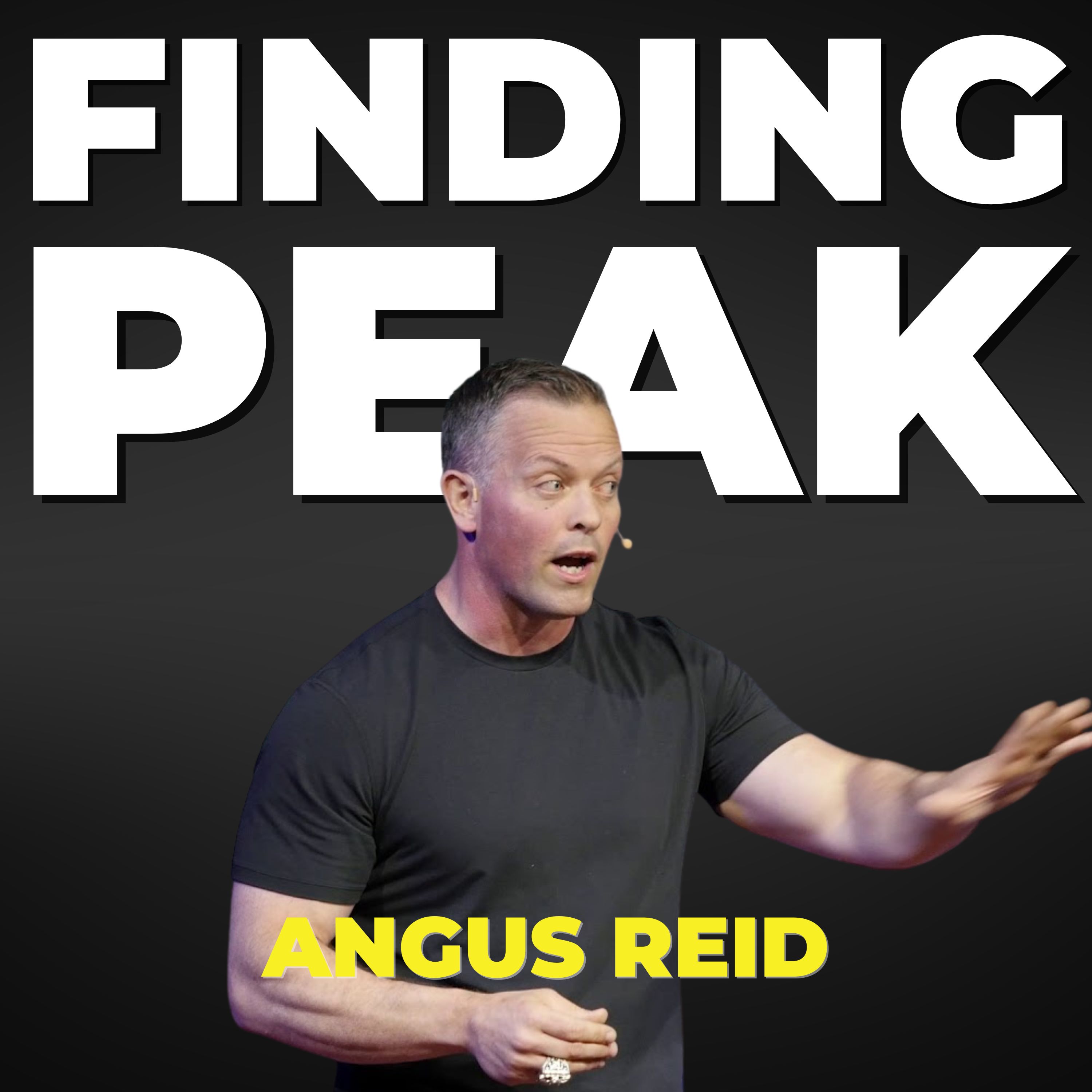
Concussions, Ozempic and Leadership Through Crisis
Press play and read along
Transcript
Speaker 1
This episode is brought to you by Progressive Insurance. You chose to hit play on this podcast today.
Smart Choice. Progressive loves to help people make smart choices.
Speaker 1 That's why they offer a tool called AutoQuote Explorer that allows you to compare your progressive car insurance quote with rates from other companies.
Speaker 1 So you save time on the research and can enjoy savings when you choose the best rate for you. Give it a try after this episode at progressive.com.
Speaker 1
Progressive casualty insurance company and affiliates. Not available in all states or situations.
Prices vary based on how you buy.
Speaker 1 Hey, Fidelity.
Speaker 1 What's it cost to invest with the Fidelity app?
Speaker 1
Start with as little as $1 with no account fees or trade commissions on U.S. stocks and ETFs.
Hmm. That's music to my ears.
I can only talk.
Speaker 2
Investing involves risk, including risk of loss. Zero account fees apply to retail brokerage accounts only.
Sell order assessment fee not included.
Speaker 2
A limited number of BTFs are subject to a transaction-based service fee of $100. See full list at fidelity.com slash commissions.
Fidelity Brokerage Services LLC member NYSE SIPC.
Speaker 3
The Who's Down and Who Newville were making their list, but some didn't know. Walmart has the best brands for their gifts.
What about toys?
Speaker 1 Do they have brands kids have been wanting all year? Yep, Barbie, Tony's, and Lego. Gifts that will make them all cheer.
Speaker 4 Do you mean they have all the brands I adore?
Speaker 1 They have Nintendo, Nespresso, Apple, and more.
Speaker 3 What about?
Speaker 3 So the who answered questions from friends till they were blue. Each one listened and shouted, from Walmart? Who knew? Shop kissed from top brands for everyone on your list in the Walmart app.
Speaker 3 Lifespan, health span, joy span. And joy span, it is not just how long and how well you live, but how joyous you live, how creative you are, how
Speaker 3 cognitive you are of your horizons and where you are when you're you're working. So if you look at
Speaker 3 any of those factors, concussions or not, single most important determinant in all decades of life with regard to all-cause mortality, as well as brain health, is VO2 max.
Speaker 3
And you know, that's really technical. No, it's not really.
It's really exercise. Are you
Speaker 3 able to get some form of exercise around three hours a week? It doesn't have to be the most intense. It doesn't have to be you know, sprinting, running, cycling, climbing a mountain,
Speaker 3 just walking, walking up inclines, walking
Speaker 3 and building your cardiovascular strength,
Speaker 3 insulin resistance,
Speaker 3 importance of sugars, as you say,
Speaker 3 not just diabetes, but type 2 diabetes, pre-diabetes, what's your insulin resistance?
Speaker 3 What's your lipid profile? How can you manage that?
Speaker 3 So, as you might might guess it it all pulls together in these wonderful ways that if someone says well what's most important uh the answer is yes yes all of the things that i just mentioned are critically important and for an audience like yours that are you know entrepreneurial people uh whether they're building business ventures, whether they're building a family, whether they're building their own life, their own capability and creativity and ability to think, act, and innovate, as I like to say, in creative ways.
Speaker 3 All those things are going to be fueled by a healthy body, which drives a healthy mind, which drives the ability to think and make connections,
Speaker 3
almost epiphanous moments that you wouldn't see if you weren't able to do that. Plus, as you know, you're an athlete, both a current and former athlete.
You know,
Speaker 3 there's a almost Zen-like state that you get from exercise,
Speaker 3 a reflection and ability to think clearly about what's going on in your surroundings and how you adapt to your surroundings. So it's mystical, but it's also highly scientific.
Speaker 4 Like a lot of people who were former or were athletes in high school or college,
Speaker 4 you get into your life, you get into the more sedentary work life, office life, et cetera, whatever your career is, and you start to let the habits slip that kept you in shape during the times when you were more athletic.
Speaker 4 And you look in the mirror and you start convincing yourself that you're still an athlete or you're still in shape, even though what you're seeing and your reflection doesn't necessarily say that that's the case.
Speaker 4 And in 2017, I had this moment where I was so riddled with inflammation from eating like crap and drinking too much and not working out enough and traveling without a good plan for being on the road and all these things that on the second day of a conference that I was putting on,
Speaker 4
I literally couldn't finish, could not finish the conference. I was the MC and I couldn't go back out.
And it changed the entire course of my life since then.
Speaker 4 This was 2017, lost 25 pounds, got all these things. Okay.
Speaker 3 So
Speaker 4 one of the things that I come across a lot with the clients that I coach, they come to me for business related things, but oftentimes their
Speaker 4 physical health is so out of whack that starting to dial in on some of the mental habits or mental frameworks that I might want to teach them from a business perspective.
Speaker 4 It's almost irrelevant to talk about some of these items in a business context because their physical health is so
Speaker 4 is so out of alignment.
Speaker 4 When you come across these people or just your best guidance for what this might be, how do people get started?
Speaker 4 How does someone who has let themselves start to fade away, what are some of the small things that they can do?
Speaker 4 And I i know you're not necessarily like a health coach or whatever but obviously dealing being in the nfl seeing what what goes on and then getting to know so many of these guys after their careers right how how do you how do you start to get this in line and what are some of the what are the
Speaker 3 20 things that are going to give you the 80 results for a for a working professional excellent question you know first of all when i talk about the distinction between leadership and leading leading being what we do not what we we say.
Speaker 3 Leadership is worthless because it's what you say, and anybody can say anything. Leading is what you do.
Speaker 3 So, I always tell people the leader you're looking for is you. The answers are not above us, they're within and among us.
Speaker 3
And the answer is: it's never too late, it's never too late to start. The time to start is now.
The person to start that process is you.
Speaker 3 And, you know, I always tell my patients, my colleagues,
Speaker 3 treat exercise like a medication because it is a medication stronger than any medication known to man
Speaker 3 stronger than lipid lowering drugs than hyper anti-hypertensive drugs than um GLP-1 agonists, the Ozempics, Rebelsis, those kinds of things.
Speaker 3 All great medications, but the strongest thing that you have is yourself. And begin when? Begin now.
Speaker 3 doesn't matter what shape you're in right now any exercise is good exercise as long as you don't overdo it sure you want to be out of breath if you have chest pain then that's a different story altogether and it can start as simply as as you get a stand-up desk work standing up instead of sitting down you know the old saying you know sitting is the new smoking
Speaker 3 uh because for a lot of different reasons it's bad for our our posture it's bad for our muscles uh our hamstrings tighten up.
Speaker 3 Most people who complain of back problems, it's not their back, it's their hamstrings and their hip flexors. You know, stretch three to five times a day at work while you're at work.
Speaker 3
And so movement matters. And it doesn't matter when you start it.
It matters that you start it. And no one can start it for you.
Speaker 3 Other people can help you by saying, hey, did you get a chance to work out today? Hey, did you ever get that stand-up desk? You know, hey,
Speaker 3 are you planning on having healthy snacks when you're at work? You know, you don't have to be some kind of psychotic
Speaker 3 out there
Speaker 3 trying to convert the whole world.
Speaker 3 Convert your world.
Speaker 3 And that begins as you do very well with your podcast to, you know, Henry Adams said, a teacher affects eternity. He can never tell where his influence ends.
Speaker 3 And I would say that's what you do with your podcast is you affect eternity. You don't know how many people you're affecting, but you do it, I presume,
Speaker 3 to help others and in hopes that
Speaker 3
most of your guests, myself probably excluded, are trying to help others. That's why they are so passionate about what they do.
So, you know, the answer to who is you. Yeah.
Yeah.
Speaker 4 Yeah. Well,
Speaker 4 I will say I started this podcast because I realized about a decade ago, I was having some career, I don't want to say struggles because I was successful by measurables, but just wasn't feeling satisfied.
Speaker 4 I realized that I get more pleasure out of watching the light bulb come on for other people than my own success.
Speaker 4 And that's why I became basically manic in creating and sharing and trying to take big ideas and break them down and connect with wonderful people like yourself who are willing to share their expertise.
Speaker 4 Because
Speaker 4 you said it, man. Like, like one person,
Speaker 4
one person hears something you say and it clicks over for them, then all the work was worth it. Like literally all of it.
I mean,
Speaker 4 that's why we do these things.
Speaker 3 Yeah, you know, you can't make this up.
Speaker 3 I just finished a book, as you may know, called Leadership is Worthless, but Leading is Priceless.
Speaker 3 And one of the things I talk about in there is my beautiful and brilliant wife, Maureen, and I had three boys, now young men.
Speaker 3 And when they were younger, when I used to take them to school, anytime I was in town, I drove them to school in the morning.
Speaker 3 I always said precisely the same thing to them, which is one more step in the journey of discovering where your deep joy intersects the world's deep needs. I swear I said this to them.
Speaker 3
They prefer to take the bus, as you might guess. They don't want to hear dad say something like that.
But you have to start with your deep joy. Yeah.
Speaker 3 Not the world's deep needs, because the world's deep needs are unfathomable. They're infinite.
Speaker 3 and and i find a lot of people who are unhappy who are depressed who are burnt out because they have failed to follow their deep joy so i get asked as you do what's your deep joy doc and it's helping other people find and express and live and embrace their deep joy.
Speaker 3 So I think we're saying very, very similar things in terms of what drives us to do what we do.
Speaker 6 I love it.
Speaker 4 I want to ask you a very technical question just because I've been getting asked it a lot.
Speaker 4
You know, I'm 43 years old. I'm six foot four, 190 pounds, in pretty good shape.
I work out quite a bit, eat, try to eat well.
Speaker 4 And I get people will ask me if I'm on Ozempic or if I've taken Ozempic, which I have not. I have friends that are on it.
Speaker 4 And what I found interesting about Ozempic in general is almost to a number, every person I know who's on it
Speaker 4 doesn't really know what it does,
Speaker 4 doesn't really know why they're on it, but their doctor recommended it or someone recommended it to them. They somehow got on this thing and it's quote unquote working, but it's
Speaker 4 like they're not overly informed in it.
Speaker 4 And maybe just because I think it is a hot-button item, I think there are a lot of people who are either considering this drug or recommending it and or being recommended it. And you brought it up.
Speaker 4 Maybe you could just give us a couple minutes on onozimbic and GL
Speaker 4 GLP1 uh drugs in general yeah so
Speaker 3 this is i don't mean to be on a tirade but medications are great and and glp1 glucagon like uh protein or peptide agonists meaning they act that way can be very helpful and and the primary uh indication for that is uh
Speaker 3 is insulin resistance um
Speaker 3 you know, glucose built up in
Speaker 3 the blood. Fortunately, we can measure that not just with a fasting glucose, but with hemoglobin A1C, which is going to give you a 30-day,
Speaker 3
you know, blood sugar, fasting blood sugar is a Polaroid. It's a snapshot.
At that moment, in that time, at that day, your blood sugar was X.
Speaker 3 But hemoglobin A1C gives us a 30-day shot of, okay, this was what it averaged over time. So that's the way to think about it.
Speaker 3 And I know that Ben Greenfield and Peter Attia and Andrew Huberman and I and others, and I don't put myself at their level in any way, all say the same thing.
Speaker 3 It's a great medication for the purposes for which it was designed. And what concerns me is, you know, if somebody's taking,
Speaker 3 say,
Speaker 3 what about GLP1s, whether it's Ozimpic or anything else? And my first question is, how much do you exercise? You know, what do you eat? How do you eat? You know, inflammation, massive issue.
Speaker 3 Are you taking B6 and B12 in your diet to help pull
Speaker 3 inflammation? People think of inflammation probably a whole different episode as, well, that's just local inflammation. Well, there's no such thing as local inflammation.
Speaker 3 It's all systemic, body-wide inflammation.
Speaker 3 So for the purpose, you know, if somebody's taking it strictly for weight loss, what they're going to be able to do is look in the mirror and say, wow, I look a lot better.
Speaker 3 And people tell me I look a lot better.
Speaker 3 And that has a purpose but what's inside what is your v02 max what is your cardiovascular health what is your uh blood pressure which is elusive for a lot of people uh what is your insulin resistance uh you know not hemoglobin a1c alone but it's your total insulin and issues like that so you know fan of the drug in context, in the context of movement, of cardiovascular, of muscle strength.
Speaker 3 You know, the older that you get, and let's just say you told us your age, and I would say, I'm not. I won't say how old I am, but I'm not.
Speaker 3 Like you as an athlete, the longer ago we played, the better we were.
Speaker 3 Exactly.
Speaker 3 It was a lot better. But that sense of movement,
Speaker 3 put it all in context, what you eat, you know, how you exercise, how you move, what's your muscle strength? Are you getting enough protein?
Speaker 3 And don't just use a mirror tests of, boy, I look better, I've lost weight.
Speaker 3 People tell me I look better, but what's your true, not just cardiovascular health, not just your insulin health, but your brain health, your ability to move and
Speaker 3 feel productive, the joy span aspect we talked about.
Speaker 4 Yeah, the journey that I went on in 2017
Speaker 4 was
Speaker 4 all about inflammation. I went and saw saw a doctor, just my, just my
Speaker 4 general practitioner at the time, explained to her what had happened at this conference. And we did some blood work and she came back and she's like, your inflammation numbers are off the charts.
Speaker 4 And I can't remember exactly what the number was, but those were the words that she used. And I had had,
Speaker 4 it's not going to really translate in the video if people are watching, but if you're listening, I'll try to explain it.
Speaker 4 I had so much scar tissue and built up inflammation in my right elbow from playing baseball for so long that literally I could only get my right arm to like a, to, to like a 120-degree angle.
Speaker 4 I couldn't straighten it all the way.
Speaker 4 So I went and saw a specialist and we went on a anti-I basically just went on a diet that was all about anti-inflammation, removed anything that caused inflammation as much as I possibly could from my diet, except for coffee because I was unwilling to give that up, but I figured fairly negligent impact in general.
Speaker 4 But
Speaker 4 and
Speaker 4 what I've,
Speaker 4
in a month, I felt like myself. In six months, I felt 10 years younger.
A year later, I felt like I was in my 20s again. And I was bouncing around the house and running and lifting seven days a week.
Speaker 4
And like my, my brain was like on fire. Like, I don't know how to describe it to people.
It was like.
Speaker 4 When I say on fire, like it was like when you were a kid.
Speaker 4 It was like being all the way back to just thoughts, connecting, serendipity, creativity, problem solving, endless energy, because I just removed, it was just inflammation.
Speaker 4 I went back, my inflammation numbers were like down at the bottom, you know, like 95th percentile, I think. And that alone was this enormous game changer.
Speaker 4 I want to ask you one more health question, and then I have one more question about leadership.
Speaker 4 So I'm going to change that, just the inflammation piece and to give people, just backing up what you just said, I lived lived that. The other things, I've never tried Ozempic.
Speaker 4 I haven't focused too much on glucose levels or anything. That hasn't really been a problem for me, but just that simple thing you were talking about with inflammation changed my life.
Speaker 4 I recently found out over the winter
Speaker 4 that
Speaker 4
I just wasn't feeling like myself. And I had some things happen with work and life and, you know, all these messy things.
I was like, it's wintertime. I live in upstate New York.
Speaker 4 Like, you know, we're all vitamin D deficient during that time and miserable anyways. And, you know, whatever.
Speaker 4 But man, I just, I've lived this, you know, I've done this cycle 43 times and this one was different. So I
Speaker 4 did some blood work. Actually, I was listening to Huberman on, I think it was Rogan, and he was talking about the impact of testosterone on male bodies post-age 40.
Speaker 4 And he recommended this service called
Speaker 4
Maximus. I'm not recommending them for anyone at home.
He just, that he mentioned that name. So at-home blood test, whatever.
I was in the sixth percentile for testosterone for men my age.
Speaker 4 I had what I had seven. I don't know what the, what the thing was, right? But I had 77 micrograms, 77.
Speaker 3 That's way low.
Speaker 4 Yeah, way,
Speaker 3 way low.
Speaker 4 So
Speaker 4 I started taking an oral that they recommend before you do any kind of like supplementation in terms of like injections or anything. You know, this is kind of step one in their process.
Speaker 4 They don't like to go right to injections.
Speaker 4 And four months later,
Speaker 4 I'm not all the way back, but it's insane how much better I feel. Workouts, the whole thing.
Speaker 4 So I would love if you could help, you know, because a lot of our audience tends to be 35 to 55 is like our primary range.
Speaker 4 We tend to skew a little towards men, but a lot of women as well that listen to the show.
Speaker 4 But for that group, particularly for men, I think I've talked to a lot of my friends since this happened and I found this out and none of them. know what their testosterone level is.
Speaker 4
They don't track it. They don't work on it.
They don't even think about it. They just assume they have it, right? Because they're guys.
Sure.
Speaker 4 And like, maybe just talk a little bit about the importance of it, how we can track it, how we can, how we can keep, you know, keep our testosterone levels up or at least at a healthy range, because I feel like this is something that
Speaker 4 just from what I've read, just from what I've heard, it feels like a bit of a,
Speaker 4 I'll use the word pandemic for men in particular, that we're just operating at low testosterone levels and we don't even realize.
Speaker 3 Yeah, there's no question about it. And, you know, but I will say it's both men and and women.
Speaker 3 And so let me start with women first.
Speaker 3 Strangely enough, you know, you don't have to be a post-menopausal woman to
Speaker 3 understand
Speaker 3 endogenously what the effects of hormone imbalance is like. And the
Speaker 3 well-meaning studies on hormone replacement therapy in women, post-menopausal women,
Speaker 3 did a huge disservice to them. You know, there are a lot of them that had depression, a lot of them had,
Speaker 3 you know, anger issues,
Speaker 3 had physical issues.
Speaker 3 When I see a woman in the emergency department, I'm an emergency physician in addition to sports medicine, and she's got a frozen shoulder.
Speaker 3 You know, she's a postmenopausal woman who, yes, I can give her a steroid or PRP injection and just open her shoulder up like that. But what caused it was hormonal imbalance.
Speaker 3 So, whether it's testosterone creams, you know, there's a whole suite of solutions and forward-thinking physicians.
Speaker 3 Yours must be very good because she was interested in your inflammasome, for lack of a term, but also
Speaker 3 the hormonal balance that you're in, because as you say, most people don't even test it in the first place. So there's all these things
Speaker 3 are opening up and more and more physicians, primary care and otherwise, are beginning to say, oh, yeah, this is there's a real need.
Speaker 3
I mean, you and people look at you and I, we're quintessentially male-looking guys. Yeah.
So you would just assume, well, our testosterone must be fine.
Speaker 3 Well, no, let's measure it and then let's see, okay,
Speaker 3 how do we get there? So, you know, I was not just a linebacker, football player, but I was a theology major, and so, which is a pretty interesting combination. Yeah, yeah, yeah,
Speaker 3 But, but how wonderful that the more you know about science, the more you realize these things are all tied up together in serendipitous ways, to use a term that you used.
Speaker 3 Thomas Walpole wrote that original story.
Speaker 3 And yet, logically, they make sense.
Speaker 3 They may be epiphanous in the way they come to us, but once you absorb them and think about them and see how your life changes as a result of changing those hormonal balances, you begin to say, I look better, I feel better, I move better, I think better, joy span.
Speaker 3 I'm making connections that I didn't see before or wouldn't have seen before.
Speaker 3 Even in, I grew up in the Midwest, so like you, I know that Persephone is the goddess, not just of winter, but death. as well.
Speaker 3 So, you know, understanding that
Speaker 3 seasonal affective disorder, so-called sad, red light therapy, all kinds of pieces. And I realize to some, probably a minority of your audience, they may say, This guy's kind of wacky.
Speaker 3 He's got all this, you know, broad medical, trying to pull in all these things that traditional medicine doesn't think of.
Speaker 3 Well, bad on traditional medicine for not thinking of these connections and how they affect how we view life.
Speaker 3 So I think we're, thank God, medicine's changing. People are becoming much more forward-thinking in terms of how these connections
Speaker 3 interconnect and what they mean.
Speaker 4 Well, Doc, I thank God for people like you, Huberman, Atia, these medical professionals who 20 years ago, we'd never hear from you guys ever.
Speaker 4 You guys would not be out front on podcasts, in media, sharing these ideas.
Speaker 4 I mean, people love to take shots at Huberman, but the number of people that he is at least exposed to ideas that have helped them, you know what I mean? Like,
Speaker 4 I think it's, it is, it is, you know,
Speaker 4 the internet, the, the broadness and massiveness of information can be overwhelming, but at the same time, uh, it has helped me in so many ways personally be able to find things, get exposed to ideas, and particularly why I love having individuals like yourself who are more health and fitness related on the show is because I have told my clients, I've told every team I've managed, your health is a competitive advantage in business.
Speaker 4 Now, obviously, it's incredibly important to what you said, joy span, health span, et cetera.
Speaker 4 But if you're simply just a pure capitalist, type A driven, make money at all costs type of person, which I have no problem with that either, your health is a competitive advantage in that space.
Speaker 4 And, you know, I look at, when I sit down at a business meeting and I look across the table, if I'm negotiating with someone and I see that they're out of shape, they're sweaty, I know I can outlast them.
Speaker 4 I simply know that I can outlast them in that meeting.
Speaker 4 And there will come a point when they become tired, frustrated, irritable because they're not in good shape, their fitness is not together, their mind is foggy, maybe they're hungover, et cetera, that
Speaker 4 I can just beat them in that place because I know I can just be more present and more focused longer than they can be. And for that reason alone, guys, take everything that Dr.
Speaker 4 Tom is saying incredibly seriously.
Speaker 4 We can't leave our health simply to our physicians. I think physicians are amazing and I am not knocking them in any way, but I think we need to take more ownership as well.
Speaker 3 To be clear, I mean, my father used to say, my dad was a World War II veteran
Speaker 3
and, you know, not a traditionally educated man, but full of wisdom. And he used to say, son, you can teach Sunday school and make money.
There's no reason you can't do both.
Speaker 3 There's nothing wrong with either one of those.
Speaker 3 So I do believe in purpose and in joy span and a sense of deep joy to which we connect our lives. But
Speaker 3 I've had multiple entrepreneurial businesses, both in healthcare, in ambulance companies. I continue to invest in opportunities that I think will help broaden horizons for other people.
Speaker 3 And so it's, you use the term competitive advantage appropriately.
Speaker 3 It's ROI.
Speaker 3 It's return on investment.
Speaker 3 You know, build into your schedule the exercise and the eating habits we're talking about, the testing to determine what is really your baseline, because it is competitive advantage and it's a return on investment.
Speaker 3 It's a way of being able to say, I can't.
Speaker 3 One of the things that's most important is, first of all, I always tell people, number one, every person is a leader. Lead yourself, lead your team.
Speaker 3 Number two, every person is a performance athlete, no different than my 2,500 athletes in the NFL, involved in a cycle of performance, rest, and recovery. Performance, rest, and recovery.
Speaker 3 And we have badly neglected rest and recovery.
Speaker 3 And then third, the work begins within.
Speaker 3 If we're going to reform our systems, we have to reform ourselves to have the energy, the wherewithal, the joy span, the brain health to be able to come up with those creative solutions because the way we're working isn't.
Speaker 4
working or it isn't working well enough could work better all right i have i have one more topic that I want to hit with you. I appreciate your time so much.
This has been amazing. Slight pivot, but
Speaker 4 you were part of the crisis response team for the anthrax attack back in 2001. And
Speaker 4 you can go into that detail as much as you think is necessary. What I'm really interested in are your thoughts, particularly around leadership and crisis, right?
Speaker 4 These moments in which something happens, a black swan event that we did not see coming that has drastic, severe, and urgent
Speaker 4 or requires urgent response.
Speaker 4 How do we approach this?
Speaker 4 How do we make sure that we are present in the moment? We do not become overwhelmed. How do we handle these crises?
Speaker 4 Because you see them on TV and we all armchair quarterback, the decisions people make.
Speaker 4 But for anyone who's ever been involved in one, and thankfully I've never been involved in anything quite so dire as what, as that situation.
Speaker 4 But to me, it just doesn't seem rational to think that we would all make these perfect decisions afterwards. And
Speaker 4 so how do you approach these things? How do we be the
Speaker 4 leader that you recommend in your book in these moments of severe and urgent crisis?
Speaker 3 Well, it's a great question.
Speaker 3
Starting maybe 10,000 feet and coming down, leadership is worthless because it's what you say. and anybody can say anything they want.
Leading is priceless because it's what you do all day, every day.
Speaker 3 Everyone is a leader.
Speaker 3 Every business owner, every entrepreneur, every CEO, but also every person within that organization, within that team, every single mother, every mother and father within a family are leading the team of their family, and their actions matter
Speaker 3 a great deal. Figure out your deep joy and attach our
Speaker 3 confined, constrained years of life and the health that we are investing in, as we talked about before, in feeding that deep joy.
Speaker 3 Because we should all be leaping for joy going into work, not just going home from work.
Speaker 3 Leading from the time we wake up in the morning and swing our legs out to say, how will I lead today?
Speaker 3 How will we lead our team today? So it's very much in the act of voice. The boss, and I always capitalize that, is someone who's quite convinced that he's the most important person in the room.
Speaker 3 But the leader is someone who knows that her job is to make everyone else feel that they're the most important person in the room, that they have agency for their lives and how they act
Speaker 3 will determine the ROI, the return on investment. in their life, whether it's a business, whether it's an interpersonal relationship,
Speaker 3 whatever it is that they happen to be doing. And I would say there's no, I happened to have dinner, my wife and I had dinner with
Speaker 3 Sully Sullenberger and his wife. She asked, you know, what's your philosophy on this? You've been leading in times of crisis your whole life.
Speaker 3
And my answer was, I don't think there's any leading except in times of crisis. And she laughed and turned to Sully and said, you guys have been talking.
I had no idea what they were talking about.
Speaker 3 Sully laughed and said, well, I've always said, you're not really a pilot until the engines go silent.
Speaker 3
Well, what are you until then? I said, just a driver, just a very expensive, very well-trained driver. And that's true in our lives.
You know, what are we before we're leading in times of crisis?
Speaker 3
We're just drivers. And that's no place to be.
You know, where we want to be. But you don't have to live the life I've lived.
Speaker 3 You don't have to have been at the Pentagon on 9-11, led the bioterrorism attack,
Speaker 3 the concussion crisis, the COVID crisis, going to Ukraine.
Speaker 3 Next week, I'm helping escort 60 D-Day veterans back to Normandy for the 80th anniversary.
Speaker 3 Just blessings.
Speaker 3
Everyone faces crisis. We live in times of crisis.
We're in what I would call the perpetual whitewater of change. We go from change to change to change to change to change.
Speaker 3 And the question is, are you going to be the author? of the change in your life or are you going to let somebody else be the author of that change?
Speaker 3 are you going to proactively say these are the changes made because innovation does not occur at the speed of intelligence creativity or genius it occurs at the speed of trust the ability to trust others because if you're serious about innovation and we all should be you innovated your life when you learned what your testosterone levels were, what your inflammation levels were, and you chose to make changes.
Speaker 3 You chose to innovate within that in the midst of that crisis. That crisis is no different, maybe in location.
Speaker 3 I would say it's not actually in magnitude. The stage is different.
Speaker 3
But, you know, lots of folks, as you know, just keep doing what they've been doing. And that's not going to work.
We've got to be able to understand that most people don't mind change.
Speaker 3 They mind being.
Speaker 3
change. And that's why I say the answers are not above us.
They're within and among us. And that
Speaker 3 in primitive to be able to say, who's the leader you're looking for? The leader you're looking for is you.
Speaker 4 One follow-up question to that.
Speaker 4 I'm going to use the both positive and negative response to Jordan Peterson as a benchmark for this, but it feels to me like there is a large portion of our population that is just dying for anyone who will help us be more personally responsible and and accountable.
Speaker 4 And there is
Speaker 4 another enormous and maybe smaller, but certainly just as vocal portion of our population that's seemingly
Speaker 4
Close twice as many deals by this time next week. Sound impossible? It's not.
With the one call close system, you'll stop chasing leads and start closing deals in one call.
Speaker 4 This is the exact method we use to close 1,200 clients under three years during the pandemic. No fluff, no endless follow-ups, just results fast.
Speaker 4 Based in behavioral psychology and battle-tested, the one-call close system eliminates excuses and gets the prospect saying yes, more than you ever thought possible.
Speaker 4
If you're ready to stop losing opportunities and start winning, visit masteroftheclose.com. That's masteroffeclose.com.
Do it today.
Speaker 7
There used to be very little visibility and control in treasury. Today, JP Morgan Payments delivers real-time dashboards and control at your fingertips.
That's the power of clarity.
Speaker 7 That's JP Morgan Payments.
Speaker 8
Copyright 2025. JP Morgan Chase Company, All Rights Reserve, JP Morgan Chase Bank, and a member of FDIC.
Deposits held in non-U.S. branches are not FDIC insured.
Speaker 8
Non-deposit products are not FDIC insured. This is not a legal commitment for credit or services.
Availability varies. Eligibility determined by JPMorgan Chase.
Visit jpmorgan.com/slash payments.
Speaker 8 Disclosure for details.
Speaker 6 At the University of Arizona Online, we bring a top-ranked education to you. We offer 150-plus programs, 100% online.
Speaker 6 Expand your career opportunities by earning a degree that meets you right where you are. Learn from the same faculty and earn the same degree as on-campus students.
Speaker 6
Build your future with Arizona Online. Classes start every seven and a half weeks.
Apply today and make your tomorrow amazing.
Speaker 5
This is the story of the one. As a maintenance supervisor at a manufacturing facility, he knows keeping the line up and running is a top priority.
That's why he chooses Granger.
Speaker 5 Because when a drive belt gets damaged, Granger makes it easy to find the exact specs for the replacement product he needs.
Speaker 5
And next day delivery helps ensure he'll have everything in place and running like clockwork. Call 1-800-GRANGER, clickgranger.com, or just stop by.
Granger for the ones who get it done.