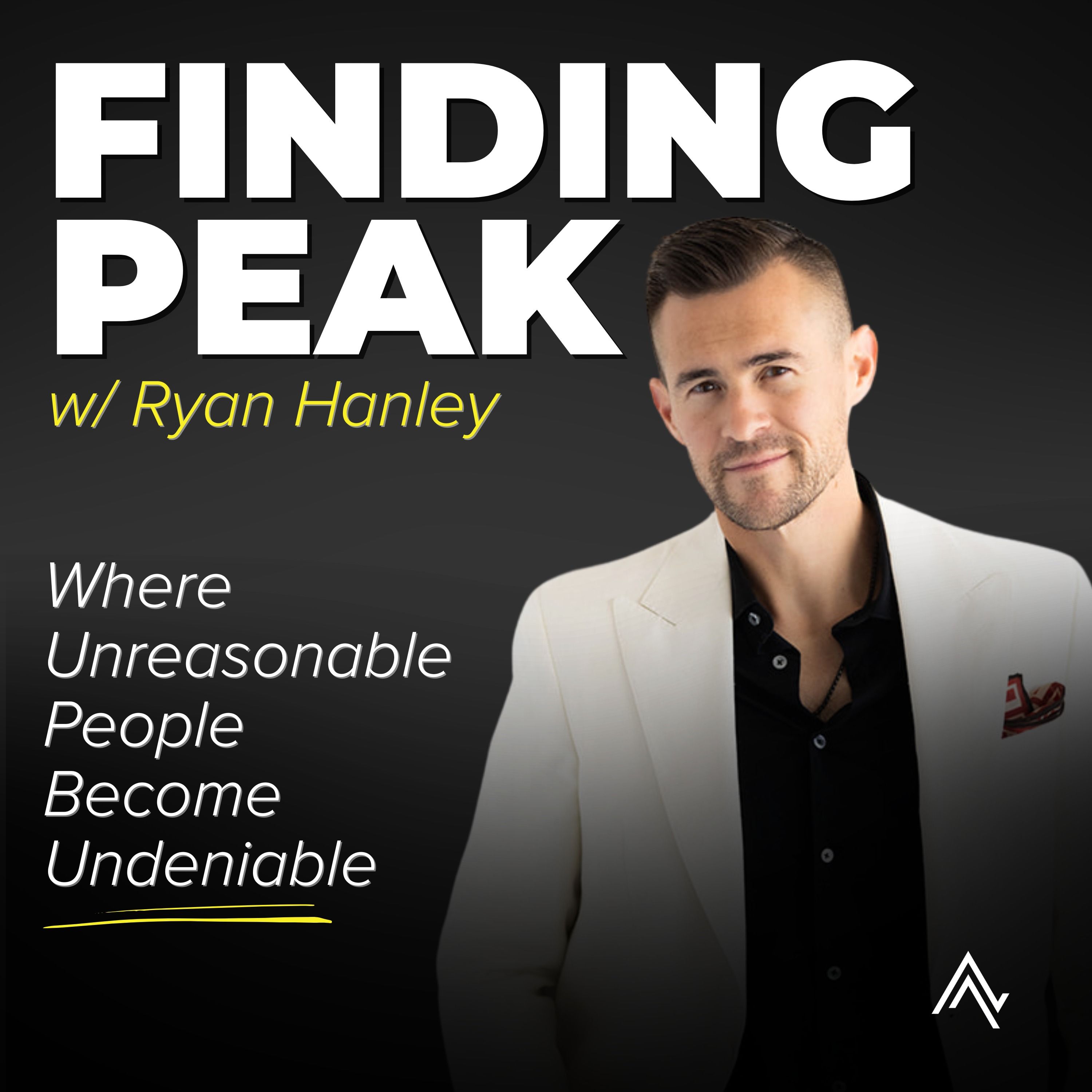
245. Mastering Peak Performance in Sports and Business with Dre Baldwin
Press play and read along
Transcript
Speaker 1 This episode is brought to you by Progressive Insurance. Fiscally responsible, financial geniuses, monetary magicians.
Speaker 1 These are things people say about drivers who switch their car insurance to Progressive and save hundreds. Because Progressive offers discounts for paying in full, owning a home, and more.
Speaker 1
Plus, you can count on their great customer service to help you when you need it. So your dollar goes a long way.
Visit progressive.com to see if you could save on car insurance.
Speaker 1
Progressive Casualty Insurance Company and affiliates. Potential savings will vary.
Not available in all states or situations.
Speaker 2 October brings it all.
Speaker 3
Halloween parties, game day tailgates, crisp fall air. At Total Wine and Moore, you'll find just what you need for them all.
You'll find thousands of wines, spirits, and beers at the lowest prices.
Speaker 3
Mixing up something spooky? Total Wine and Moore is your cocktail central for all your Halloween concoctions. You'll always find what you love and love what you find.
Only at Total Wine and Moore.
Speaker 3
Curbside pickup and delivery available in most areas. See TotalWine.com for details.
Spirits not sold in Virginia and North Carolina. Drink responsibly B21.
Speaker 5 There used to be very little visibility and control in treasury.
Speaker 6 Today, JP Morgan Payments delivers real-time dashboards and control at your fingertips.
Speaker 5 That's the power of clarity.
Speaker 6 That's JPMorgan Payments.
Speaker 7
Copyright 2025. JP Morgan Chase and Company, All Rights Reserve, J.P.
Morgan Chase Bank, and a member, FDIC. Deposits held in non-U.S.
branches are not FDIC insured.
Speaker 7
Non-deposit products are not FDIC insured. This is not a legal commitment for credit or services.
Availability varies. Eligibility determined by J.P.
Morgan Chase.
Speaker 7 Visit jpmorgan.com/slash payments disclosure for details.
Speaker 2 In a crude laboratory in the basement of his home.
Speaker 8
Hello, everyone, and welcome back to the show. Today, we have a tremendous conversation for you.
We are talking with Dre Baldwin. He is the CEO of Work on Your Game Inc.
Speaker 8 And I got to be honest with you guys, when I was introduced to Dre, I hadn't heard of Dre before, checked out his work.
Speaker 8 And, you know, what my method for bringing guests on, especially guests who I've never met before or don't know, you know, some of the people that come on the show, I've had multiple conversations with.
Speaker 8 In this case, I hadn't met Dre before. And when you're, I don't like to do too much research.
Speaker 8 I don't like to over-investigate someone because I want the conversation to be real and organic and authentic.
Speaker 8 And I want to dial in on the things that that particular guest is interested in in that day.
Speaker 8 But in this case, I kind of accidentally got sucked in because my philosophy, the philosophy that we talk about here on finding peak, becoming the best version of yourself, the pursuit of peak performance, discipline, consistency, perseverance, confidence, all these kinds of things.
Speaker 8 Dre's work dials in completely.
Speaker 8 And it's not even just the way he talks or what he talks about, but his story of working through adversity and, you know, becoming a professional basketball player, how he built his platform as a speaker, as a coach, the work he does in helping young athletes and how that expanded into the business community, the entrepreneurial community.
Speaker 8 He's done multiple TED talks.
Speaker 8 I actually, you know, I was making dinner the other night for my kids and I got, I went all the way through one of his keynotes and then had that, then that went into, after we were done and I was cleaning up, I was listening to his TED Talks and I got really deep into Dre's work and I'm a huge fan and I'm so glad that I'm able to share him and what he does with you guys.
Speaker 8 We're going to have all kinds of shout outs and links at the end of the show as well as will be in the show notes for ways that you can connect with him. I highly recommend that you do that.
Speaker 8 Before we get there, I just want to tell you guys, I love you for listening to this show.
Speaker 8 if we want to keep getting amazing guests like dre on the show i just need uh uh one thing from you guys if if you're not subscribed subscribe whether you listen on apple spotify whether you're watching on youtube wherever you are would love for you to uh subscribe to this show and share the show right whether you're you're just kind of adding some comments onto uh what we're already talking about or if you disagree with something or you think that we didn't approach it the right way those types of dissenting or disagreeing opinions are how this conversation expands and how we all get better at what we do uh and lastly if you can if you're willing to uh ratings and reviews of this show help us immensely going to apple going to spotify and leaving a rating review is so incredibly important to growing the show because guests like dre who who don't know me we didn't know each other before we connected on this they go and they look at those ratings and reviews that's what i do right to get a feel is this sound like someone who's gonna who's gonna do right by me who's gonna challenge me who's gonna make this a great episode that's where we get that information when we're guests on other podcasts.
Speaker 8 And if you can go and talk about why you listen to this show, why someone might want to be a guest on this show or listen to this show, that means so much to me personally. It's why I don't run ads.
Speaker 8 My ask of you guys is not that you support a sponsor because I can make money other ways.
Speaker 8
My ask of you is that if you enjoy this work and you want this work to reach more people, that you either subscribe, share, or leave a review. review of the show.
That helps me. It helps the audience.
Speaker 8
It helps us get more guests. It helps us expand this message that through this work, we can be the best version of ourselves.
I love you guys for listening.
Speaker 2 Let's get on to Dre Baldwin.
Speaker 2 Well,
Speaker 8 my man, I'm very excited to have you on the show.
Speaker 8 You know, when your people reached out and I started researching, I was taken immediately by
Speaker 8 this concept that you have of the third day.
Speaker 8 I watched, watched, you know, I started researching and then I ended up watching like two or three of your keynotes. And,
Speaker 2 you know,
Speaker 8
I love this concept. It fits right in with what we talk a lot about here on the show, what I do in my own work, in my own talks.
And I'd love to start there.
Speaker 8 I'd love for you to break this concept down for the audience. And,
Speaker 8 you know,
Speaker 8 we can start with what this idea of the third day is.
Speaker 2
Perfect. So the third day, Ryan, is all about how you show up and give your best effort when you least feel like it.
So this is just this.
Speaker 2 It came from actually my background in basketball because at this time, I had a lot of ball players follow me on YouTube and they would see me in the gym.
Speaker 2 And I would always work out in this gym in Miami that still exists, not far from where I am now. And it would appear, it was obvious that there was nobody else in the gym.
Speaker 2 And anybody who plays basketball knows it's hard to find an empty basketball gym to yourself. Yeah.
Speaker 2 Because basketball is a very popular sport. So these players would say, well, Dre, do you own the gym? Is it attached to your house? Do you rent it out?
Speaker 2 How are you getting this gym to yourself all the time? And that's where I came up with this concept of the third day because on the first day, everybody shows up.
Speaker 2 They're all excited to use this thing, whatever it is. or to do this thing or to show themselves off or whatever the job is.
Speaker 2 Second day, still pretty excited, but a little bit less than they were on the first day. And by the third day already, and I mean this metaphorically, it doesn't have to be three days.
Speaker 2
But by that third day, this is when people realize that this thing that they signed up for is real work. It's a real job.
There's a real grind. It's not all fun and games.
It's not one big party.
Speaker 2 And that's when we find out who is serious about doing the thing versus who is not.
Speaker 2
And I went on to explain to the basketball players that the reason why my gym is always empty is not because I don't own the gym. I don't rent it out.
I don't block anybody else from coming in.
Speaker 2
It's simply because I'm willing to show up more often than everybody else is. So most of my videos, there's nobody else in the gym simply because I'm here.
more often than everybody else is.
Speaker 2 So that most of the time I'm recording, nobody else is there. There's a few times there'd be a couple, no random stragglers, but most of the time it was was me by myself.
Speaker 2 So that's where the concept came from the third day.
Speaker 8 Yeah, I love that. And I think that, you know, this idea, you know, it, it sounds, you know, persistence, resilience, these kind of things,
Speaker 8 consistency.
Speaker 8 I'm infatuated with Kobe Bryan. I always have been, his mentality.
Speaker 8 You know, I feel like. anyone who who can't relate to him can't see past maybe some of the some of the kind of michael jordan-esque personality traits which also made him so successful.
Speaker 8 And there's a story, I think Kevin Garnett tells it that speaks to what you're talking about. He was on a podcast and I was listening to,
Speaker 8 and he says, you know, we're all coming back.
Speaker 8 This is
Speaker 8
one of the Olympic teams. And they're all coming in.
at 3 a.m. from the club or wherever they were.
They're out partying, having a good time, whatever city they were in.
Speaker 8 And they're coming back to the hotel.
Speaker 8 And Kobe's already got ice on his knees and he's sitting in the lobby and getting ready for his next workout already have done workout at done one workout at 3 30 in the morning and you know when you think about that and you pull it all the way back and this is i'm so what i love about your story and what you've done is you can relate it not just to to to the athletic world but into the business world as well because you know this this concept i think we it makes sense in sports right you put in more work you show up that extra day you're consistent it makes a lot of sense i feel like, and this is where I really would love to get your translation.
Speaker 8 I think a lot of people who maybe haven't experienced that or maybe just played sports in high school and were never super serious, they struggle to translate that mentality into the business world.
Speaker 8 How does that start to show up in a business context?
Speaker 2 Taking, you mean taking the mindset that works in?
Speaker 8 Yeah, that third day concept and continuing to show up. How does that translate from sports to say to a business world?
Speaker 2 Okay.
Speaker 2 The story you were telling, I don't know know if you said Kevin Garnett or do you say Kevin Durant?
Speaker 8 Garnett is who I meant. If I said Durant, I apologize.
Speaker 2 I meant Kevin Garnett. He was
Speaker 2 it, was it Durant? Yeah, Garnett and Kobe didn't play on the same Olympic team.
Speaker 8 All right, then it was Durant.
Speaker 2 Whatever it was, yes.
Speaker 2 Yeah, Garnett only played in, he played in 2000. Kobe didn't join the USA till 2008.
Speaker 8
Yes. So I watched way too many of these interviews.
So I apologize
Speaker 2 for two of them up.
Speaker 8 But the story is accurate in terms of these guys guys are showing up at 3 a.m. and Kobe had already got his workout in.
Speaker 2
Right. Yeah, I heard those stories about the about the 08 team and probably the 12 team as well.
Yeah.
Speaker 2 But anyway, to answer your question there, there are many similarities and many differences between the sports world and the business world.
Speaker 2 And it's a difficult transition for a lot of athletes because I even tell people this to this day that being an athlete is the easiest job you're going to have if you're going to become an entrepreneur.
Speaker 2
I do a lot more work now. It's a lot harder job now than it was when I was playing sports.
A long day in sports is maybe three hours, maybe four if you have a hard driving coach.
Speaker 2 But in the business world, a long day is the entire day, right? You go to sleep, you still got stuff you didn't finish. So
Speaker 2 the biggest thing that can translate over at the same time, let me say it this way.
Speaker 2 At the same time, the reason why many people in the business world like to recruit athletes is because we have some traits baked into us from our sports experience that apply very well in business.
Speaker 2 Number one, we're competitive.
Speaker 2 So anything that has to do with sales or anything where there's measurements and it's clear, hey, who's doing better than who, athletes are great for that because we're naturally wired to compete.
Speaker 2 Discipline, just showing up every single day and doing the job, even when it's not easy, even when it's not fun, even when it's a grind.
Speaker 2 Athletes, we always, we're used to doing that as athletes because we got to go to practice every day. But at the same time, we want mine going to practice because we appreciate the games.
Speaker 2 We appreciate the competitiveness that comes with it. And we know that there's an end goal far down the road, like winning the championship that comes with doing the practices every single day.
Speaker 2
So we appreciate that. Number three, athletes have to be coachable.
You can't be an athlete if you are not willing to be coached.
Speaker 2 Whether you're doing a solo sport like boxing or golf, you have a coach or a trainer.
Speaker 2 If you're doing a team sport, you got, first of all, your coaches holding you accountable, but also your own teammates will hold you accountable.
Speaker 2 If you're not doing the job you're supposed to do, so we are highly coachable, meaning you can tell an athlete, hey, you're messing up, you made a mistake, you didn't do what you were supposed to do.
Speaker 2 And athlete is used to taking that.
Speaker 2 We're used to taking that kind of accountability to our faces even in front of everybody and it's not going to cause us to fold up and and quit whereas a lot of people don't have that experience they they can't handle it and also the mental toughness that in the sports world if you're a boxer there's no way you can win a boxing match without getting hit in the face a couple times you're going to get hit you guys you can still win the fight but you're going to get punched now if you're a basketball player eventually somebody's going to block your shot or dunk on you or cross you over or you're going to miss a couple shots in a row it's going to happen you can still win the game but you have to take that and you got to keep going.
Speaker 2
So in sales, for example, there's no salesperson in the world who closes every sale. We get phones hung up on us.
We get doors slammed in our faces. We have people telling us, no, don't call me again.
Speaker 2 And we have to show up to the next sales call as if the last one didn't happen. So many of these pieces that, and one last thing I'll give you is performance.
Speaker 2
I mean, the sports world, you got to perform. We do all that practice.
And when we get our chance, we got to go out there and do our things. And it's the same thing in the business world.
Speaker 2 We do all our preparation and research and learning about our prospect and the product and all of that.
Speaker 2 And then we get to the sales call or the presentation or whatever it is, the expo hall, we got to go out there and perform.
Speaker 2 So there are many similarities from the sports world that apply to the business world.
Speaker 2 And I mean, I don't know if you set me up with this question, but the thing is, the work on your game philosophy is all about extracting those things from the sports world and then translating and articulating how they apply in business.
Speaker 2 So that's really basically what I do. Yeah.
Speaker 8 Well, I'd like to believe that I'm good at interviewing people. So it was a setup for you because
Speaker 2 I knew what you had coming next, man.
Speaker 8 I love your whole philosophy. So I tried to put you up on there.
Speaker 2 My job, you know, I play sports too.
Speaker 8 So I like to put the ball right on a T. I was a baseball player now.
Speaker 8 But no, no, no. You can roll right into it, dude.
Speaker 8 This is great stuff.
Speaker 2
Thank you. Well, I tried to play baseball for a while.
I wasn't too good. So luckily, I switched over to basketball.
Speaker 8 Funny as it is,
Speaker 8 I loved, always loved basketball, but I just wasn't great at it. So I was a football and a baseball player.
Speaker 8 And I played high school basketball, but I was like, I was the 12th guy that they'd run out there just so the big guys could beat me up and run into me and stuff during practice.
Speaker 8 I didn't get much burned. But
Speaker 2 I think
Speaker 2 that's what they called it.
Speaker 8
Yeah, exactly. That's what it was.
They're like, bring the big football dummy in, let the big guys beat him up for a while and do their skill moves on him. And we won't care what happens.
But
Speaker 8 I actually was a ref for 12 years and did some college, ultimately had kids and couldn't keep going. But I love the game.
Speaker 8 And what I found really interesting, and this is completely aside from what we're here to talk about i just i love basketball um
Speaker 8 when you see it so i haven't played through high school i never i didn't play in college i played baseball in college but uh i having seen the game from the referee side work you know seen the angles of that sport um now i coach my kids i mean whatever it's it is what it is but like you get this really interesting view that I almost wish
Speaker 8 you know I look at young ball players today and I'm like, I wish they could see the refs' perspective, not for the mentality and that kind of stuff. That's not what I'm talking about.
Speaker 8 The angles that you have to take to see the game at to be a good referee.
Speaker 8 You then go back to playing, those,
Speaker 8 you see the, you see a completely new set of angles to the sport that you didn't necessarily see as a player that weren't there.
Speaker 8 It's, it's a really interesting perspective that I try to share with my players now
Speaker 8 that I coach because
Speaker 8 a lot of coaches and a lot of players have only seen the game from that player's perspective. They've never actually worked the angles that you have to see the ref's perspective.
Speaker 8
And what it does is it opens up, I found it opens up different opportunities. It's really, it's just interesting.
It's anecdotal, but it's interesting.
Speaker 2 That is interesting. Have you thought about or have you ever called a ref and said, come to practice and talk to the players about what they see?
Speaker 8
Yeah. So it's funny.
So my dad's been a ref for 36 years. He's the one that got me into it.
And I have had him talk to the guys a little bit because
Speaker 8 what you see, there are a lot of, there are a lot of open passing angles that when you're playing, some guys intrinsically see them, but they tend to be elite.
Speaker 8 And what I've, what I've said to some of my guys who maybe just don't have that natural intuition, who are still developing, that is there are these angles that you, that are there.
Speaker 8 that when you're playing, you might not see, but they're, but they're absolutely positively there.
Speaker 8 And if you can fill those spaces, it's, it has a lot to do with, you know, I try to get them to move a lot without the ball because it's those guys seeing those lanes
Speaker 8 through this different perspective that helps them. And sometimes I'll have them stand on the baseline and
Speaker 8 watch
Speaker 8 how a ref will see the game and see that type of angle. And then when they go out and they practice, they can kind of move into different spots that maybe the defense isn't expecting.
Speaker 8 It's interesting.
Speaker 2
That is interesting. Yeah.
I don't know.
Speaker 8 Someone who actually knows the game better than me should take that and turn it into something really good. But
Speaker 2 there's something there. Yeah.
Speaker 8 It gives you that idea of like, you know, we all have,
Speaker 8 and I think about this from business too, like
Speaker 8 what are, what are the unknown unknowns kind of idea? Like, like, I think that's what that perspective is. And where I picked up on that is, hey, we know this business really well.
Speaker 8 What are, are there parts of it that we just don't even know?
Speaker 8 that we don't know exist that maybe someone else is seeing or a vendor is seeing that we don't see et cetera it's it's it's uh it's an interesting way of looking at it but but let's get into um let's get into your philosophy around around this particular topic
Speaker 2 sure around which part yeah they'll work on sorry work on your game your work on your game philosophy that's that's where we were headed before i took us off track right so what you just said though there ryan actually uh goes in line with something that i talk about and i tell people my superpower in business because you know working as a coach you know there are a lot of coaches out there a lot of authors a lot of people talk about mindset or entrepreneurship or even former athletes doing things.
Speaker 2
I tell people my superpower is insight. And what you just described is insight.
It's helping people understand what they weren't even aware that they didn't understand.
Speaker 2 But once they understand that they could use it, now they're like, oh, wow, that is a paradigm shifting perspective. Now that I see that, now I see things completely different.
Speaker 2 Now I realize that I was asking myself the wrong question. Now you help me see a different question I should be asking myself.
Speaker 2 And that's where all the difference is because these days with all the access we have to information, a lot of times people are looking for answers.
Speaker 2 The problem is they get the answers to the wrong questions. So even if you get the right answers, you still have a problem.
Speaker 2 So for me, my biggest thing when I'm working with people is helping them get insight. Okay, I see what you're asking and what you're looking to do.
Speaker 2 Let me show you the questions that you weren't even aware that you need to be asking. And once we answer those, that'll knock out not only the questions that you had, but also the questions
Speaker 2 that would come up after that, that we needed to resolve anyway.
Speaker 2 So the work on your game philosophy to answer your question here is based around four pieces mindset strategy systems and accountability as far as what we do with business people but the foundation of it started with i believe you're referring to the mindset pieces was discipline confidence mental toughness and personal initiative and those things all came from my background in sports so where that started was while i was on youtube this is before it was youtube this is before it's right around the time we started to say social media yep i had an audience of ball players who were following me and they found out about my background.
Speaker 2
I only played one year high school ball. I walked on and played D3 college ball.
And at this point, I wasn't pro player, but I was sometimes employed, sometimes unemployed pro-basketball player.
Speaker 2 So I would be in this empty gym in Miami, and they're like, Wait a minute, I thought you were a pro basketball player. Why are you in an empty gym in Miami? Shouldn't you be playing for somebody?
Speaker 2 And I would tell them, I'll answer these questions. I would say, well, I'm a free agent right now, and I was waiting for the phone to ring.
Speaker 2 So they would just start asking, well, Dre, what keeps you coming to the gym every day to work out? Because you don't even know when the phone's going to ring again.
Speaker 2 And sometimes I didn't know if the phone would ring again.
Speaker 2 Not when, but if it was going to ring again. What kept you coming to the gym and working out even in your teen years when you weren't making the high school team?
Speaker 2 Or how do you get the confidence to perform? Because anybody who knows the sports world, Ryan, you know that you practice all year and tryouts for the high school team is like one day. Yeah.
Speaker 2 So 364 days of practice per one day. And if you don't do good that one day, you got to wait a whole other year before you can try again.
Speaker 2 So how do you get the confidence to perform in that one chance that you get? Even at the pro level, often your tryout is literally one day.
Speaker 2
Or you barely made the high school team, walked on to college. No, you're in and out of your in and out of pros.
Sometimes you're not signed.
Speaker 2 What's the mindset behind somebody who keeps trying despite all the quote unquote reality in front of you that says this probably isn't a good idea?
Speaker 2
And from there, so from the first one, I started talking discipline. Second question, I started talking confidence.
Third one, mental toughness.
Speaker 2 And the fourth one was, people just asked, how do you get started on things? Because there were a couple of things I had gotten started on.
Speaker 2 Number one, playing basketball overseas, because most of my career is played in Europe.
Speaker 2 A lot of ball players who are aspiring at that time, because that was my target audience, these aspiring 13, 18-year-old ball players, mostly male.
Speaker 2 How do you get started playing overseas if I actually wanted to?
Speaker 2 Because the overseas basketball world is not like being a lawyer or a doctor where you can read the, you follow the, fit these requirements, you make it. It doesn't work like that.
Speaker 2
It's a very shadowy industry. So I had figured it out and I started to explain it back to people.
How do you get started? Or they would ask, well, how do you get started getting known on the internet?
Speaker 2 Because now at this point, we're starting to hit this inflection point where the internet went from being a thing for geeks to a thing that people would consume to a thing that people wanted to participate.
Speaker 2
Now it's starting to be a participation. Now people are starting to create content and I was already doing it.
So people are like, well, how can I get known on the internet?
Speaker 2 Because now it's starting to look like we can see it now, Ryan, but at the time it was starting to look like.
Speaker 2 Maybe somebody could do this as a full-time job, just be on the internet and put stuff out. And I was already doing that.
Speaker 2 So they were just asked how to get started on this stuff and i obviously was a person they could tell just from my experience and the things i would tell them that i'm a big initiative taking individual so they would just ask about that so i started talking about personal initiative so that's where the four pieces came from discipline confidence mental toughness personal initiative as i started sharing those things the athletes would say to me well two things happened here athletes said to me dre the way that you're explaining this you sound like a philosopher you sound like a college professor like you sound like a professional speaker and that kind of gave me a light bulb moment.
Speaker 2 Like, hey, maybe I could just go and talk about this stuff. And maybe there's a, is there an industry for this?
Speaker 2 I didn't know it was such a thing as just standing on a stage and getting paid to give a speech at this time. This is about 2010.
Speaker 2 And the other thing that happened was people who didn't play sports, actually, three things happened. Let me tell you the second thing before I get to the third thing.
Speaker 2
Second thing was I started explaining these concepts in a video every week. I called it the weekly motivation.
I did this video every Monday.
Speaker 2 Now, at this point, I'm putting out videos on YouTube every single day. Six days a week is just basketball: how to dribble, how to shoot, how to jump higher so you can dump.
Speaker 2 This is literally on the court basketball or off-the-court training, but it was all training.
Speaker 2 Mondays, I would do the weekly motivation, and this would just be a little two to five minute selfie video before selfie videos were a thing on my cheap little camera because we didn't even have video cameras on the phones at this point.
Speaker 2 Right. And I did that video every Monday for 400 Mondays in a row.
Speaker 2 And that laid the foundation for what we have now because those pieces that I laid, those bricks that I laid there, I really just went back and revisited them as I started to put together these things for the non-athletes.
Speaker 2 Because the third piece, Ryan, was people who didn't play sports started seeing those weekly motivation videos. They weren't watching me show you how to do the Kobe move.
Speaker 2
They were watching me talk about mindset, about discipline, about confidence, because I wouldn't relate it just to sports. I would just talk about it, period.
even though my audience were athletes.
Speaker 2 And these people would say, Dre, I don't even play sports. No, I don't even, Dre, I didn't know who you were, but my son was watching watching your YouTube video and I heard it.
Speaker 2 I overheard what you were saying. And these things that you're saying, they apply to people who are not athletes the same way they apply to people who are athletes.
Speaker 2 And that was the moment, Ryan, that I realized, okay, I can have an audience outside of the sports world because I always knew I wanted to do something outside of sports.
Speaker 2
I just didn't know how I was going to do it. And at this point, this is about 2010.
I played from 20, 2005 to 2015. So I still played for five more years.
The phone didn't ring.
Speaker 2 And at that point, from 2010 to 2015, I started to lay the foundation for the business that we have today because I started to share messages that were applicable to people who were not playing sports with respect to the fact that a lot of the athletes who were following me at that time, many of them would not go on to even play in college, let alone play pro.
Speaker 2
They were all going to transition out of sports anyway, just like I would at some point. Athlete careers are very short.
So eventually we all move on to something else.
Speaker 2
So I would love to say I was so clairvoyant that I could, I could have laid all this out in 2010. I didn't.
I couldn't. But luckily, it worked out that way.
Speaker 2
I started to put these pieces together because I was thinking outside of basketball. I knew I didn't want to be a trainer.
I didn't want to be a referee. I didn't want to be a coach.
Speaker 2
I didn't want to be an analyst. I wasn't going to be the old guy at the LA Fitness.
I was going to get done playing and I was done.
Speaker 2
I was going to walk away cold turkey, which is exactly what I did in 2015. And I was going to move into a different space, which is what I did.
And luckily, I already had a runway.
Speaker 2 So my transition from being an athlete to being an entrepreneur was much smoother than it is for a lot of athletes.
Speaker 2 And the main reason for that is because my ride to get in was much rougher than most athletes. So it's kind of the first shall be last and the last shall be first.
Speaker 2 What was that like when you hung him up?
Speaker 8 Did you have, I mean,
Speaker 8 you obviously had made the decision and committed to it, but there had to be some residual emotion.
Speaker 8 I think a lot of guys struggle with that, even if they're confident in their next step.
Speaker 8 Do you still think about it?
Speaker 8 Do you still think about the days of playing?
Speaker 8 How do you handle that? And I'll give you the context of my question.
Speaker 8 There are two moments, there are two activities in my sports career. One, sacking a quarterback as a middle linebacker, and two, hitting a home run
Speaker 8 that I find it very, very difficult in a professional environment to recreate
Speaker 8 the emotion that you feel in those moments, right? Maybe that's the similar to hitting a big three or dunking or whatever, whatever it is equivalent to basketball.
Speaker 8 Obviously, like I said, I didn't play basketball at a high level.
Speaker 8 So I, you know, I hung my cleats up a long time ago, you know, outside of the occasional beer league softball game that I get pulled in as a mercenary for. I'm, you know, I, I,
Speaker 8 you know, for the most part, I just train to stay, stay fit today.
Speaker 8 But those two moments, It's funny. I still have dreams.
Speaker 8 I still, I still will, you know, occasionally wake up and have moments where you recreating, your brain is recreating these, these moments in your head that I find you just cannot get, or I shouldn't say can't.
Speaker 8 The closest thing I've found is speaking on stage is the closest thing that I've found. I'm a speaker as well.
Speaker 8 One, do you, do you, can you relate to that? Do you, do you have that similar thing?
Speaker 8 And two, have you found aspects or been able to replace some of those electrifying sports moments in your professional career?
Speaker 2
yeah. So, several things.
Number one,
Speaker 2 I don't still have the visions of the athletic stuff as much as I did when I first stopped. So, it's been almost 10 years since I stopped playing.
Speaker 2 So, one of the things that I would even tell myself, and I did this consciously, is when I first stopped playing and I would get, know, that, that, just that visionary in your mind, I would always envision something that was athletic, something that you did with your body physically, because that's the world that I came from.
Speaker 2 And that's the way that that i could express whatever energy i had i expressed that energy through the basketball court or through lifting weights or whatever it was but then i consciously started telling myself okay well if that's going to be over then we have to shift this mindset and we can't start defaulting to envisioning athletic performance we got to start envisioning whatever business performance is going to be i didn't even know what it was going to be i had to start shifting the way that i defaulted to thinking because I knew I was moving into a different space.
Speaker 2 And that took some time, but I got there.
Speaker 2
The second thing is, I still work out every day. I go, I drop basketball.
I don't touch it. I have not, again, when I said cold turkey, I literally mean cold turkey.
Speaker 2
Last game was a three-on-three tournament that finished final sponsored. We won $10,000, and I haven't played a single official game basketball since, not even pickup.
So
Speaker 2
when I walked away, I just dropped basketball and picked up other things. So now I like to run.
I'll run like 10Ks. I've done a couple marathons, stuff like that.
And I go to boxing gym.
Speaker 2 So that's the way I can still do, get my physical rocks off, still do that kind of stuff.
Speaker 2 And as far as what can emulate that high of getting a nice dunk in a game or just getting a reaction from the audience when they realize like, oh, this guy can do some stuff that maybe we didn't think he could do.
Speaker 2
We didn't know who he was. Now he just did that.
Oh, he's actually, he can play. That's, I think the closest thing is being on the stage as a speaker.
Yeah, I think that is the closest.
Speaker 2 That's as far as the things that I do, because that's the only place where you have a crowd. You know, in business, you're doing it online.
Speaker 2 You do it through email, you're talking to one client, or you got one consultant, consulting gig.
Speaker 2 But the only place you have a crowd in the business world is as a speaker so yeah i would agree that that's the closest that you get to it uh unfortunately there aren't 82 games a year at least not for me my business not that not
Speaker 2 there yet yeah
Speaker 2 right so yeah that's the closest is the speaking and then it's really the biggest thing that i tell athletes and we don't always have a choice in this luckily i had a choice is hopefully you get it all out of your system so that you're not looking back like damn maybe i could have did this maybe i could have done that.
Speaker 2 And that's why I said I was lucky enough to be able to walk away from the game because, for a lot of athletes,
Speaker 2 they say, you know, sometimes you're the last one to find out your career is over. Right?
Speaker 2
That you are forced out of the game. You don't choose to walk away.
You're forced out. So, luckily, I was able to walk away and I didn't have any regrets of anything that I didn't do.
Speaker 2 Or, of course, there's always, it'd be great to play against this guy again so I could beat him or these people. But, other than that, no, I got everything I wanted to get out of it.
Speaker 8 Yeah, no, that's, I appreciate that a lot. I think that's very useful for a lot of people, myself included.
Speaker 8 I, my, my moment of truth was I was playing semi-pro ball in Washington, D.C., which was, you know, they paid your expenses and some other nonsense, but I still had a straight job. And
Speaker 8 after college, and
Speaker 8 I walked into a meeting and I, and my boss looks down at me and goes, Did you have a game last night? And I said, Yeah, yeah, we won, you know, whatever. And
Speaker 8 he goes, Yeah, I can tell
Speaker 8 there's blood coming through your khakis. And I looked down and, you know, where I had stole second base at some point in the game and
Speaker 8 I had a blood, the blood stain from where I slid was coming through my khakis. And it obviously opened up, you know, on my way to work.
Speaker 8 And that was when I was kind of like, you know, I think it's time. You know what I mean? Like,
Speaker 8 you know, I'm not getting picked up by any pro teams at this point. You know, I had a couple, I had a couple shots and whatever, and it was all good.
Speaker 8 And look, I was very satisfied with my sports career, so I have no regrets, but it um, it was funny. It was just, you know, she kind of looked me up and down and was like,
Speaker 8 Yeah, you know, you might want to start thinking about the fact that you can't show up to business meetings with bloodstains and cabbies, you know, and that's
Speaker 2 probably you're probably right about that, you know.
Speaker 8 Uh, baseball ain't paying the bills at this point. Um, but so, so there was something that you said in uh, I think it was your TEDx talk on that really struck me.
Speaker 8 That when i'm talking particularly i think to
Speaker 2 uh
Speaker 8 uh to younger professionals who have maybe gotten past that like i'm brand new to business phase and are in are starting to figure out what what they want to do um
Speaker 8 but but
Speaker 8 they all we all kind of hit this moment or a lot of people hit this moment where
Speaker 8 we we kind of we want to be more than we are, but we're not, but we, but we're hesitant to do the things to get there.
Speaker 8 And, you you know, you, you addressed a bunch of things in the TEDx talk that I saw, but the one that really resonated with me that I would love for you to address is idea of a fear of success.
Speaker 8
Because I think a lot of people hear a fear of failure. They understand it.
They've heard a million talks about it. It's kind of a concept that they have their thoughts on.
Speaker 8 But I don't think many people consider a fear of success.
Speaker 2 And
Speaker 8 I would love for you to expand on this, talk about it, and why it is actually something that we need to think through in order to move forward in our careers.
Speaker 2
Man, so that fear of success, I actually recorded some content on it. It was about a 30-part series or 30 piece, 30 points.
Yeah, yeah, yeah.
Speaker 2
10 parts, 30 points. I talked about the fear of success.
I wish I could recite all 30 to you. I don't know off the top of my head.
Speaker 2 But when it comes to that fear of success, I think is one of the main things that slows people down these days because Obviously, we can see other people's success.
Speaker 2 I think fear of failure used to be the biggest thing, let's say before before we had the internet and we were all interconnected because we didn't know, we didn't really know what success looked like if you didn't already have it and you weren't close to someone who had it.
Speaker 2 But now you can see a lot of people who are successful. You can see all the stuff that they're doing and that they have and that they say and et cetera, et cetera.
Speaker 2 And I think a lot of people now start to overthink it because we have access to so much information that people just get ahead of themselves mentally and start beating themselves before they even get to.
Speaker 2 before they even get to a thing, they're beating themselves. It's kind of like driving with the emergency brake on.
Speaker 2 So that fear of success, I'll i'll give you a funny example there's a girl i knew years ago uh we were living in the same building and she said hey can you come with me because you knew i worked out and you knew i was an athlete said can you when i'm next time i go to the gym can you just show me how to do some workouts and stuff because she had never worked out in her life and i said sure i'll show you how to use the machines and show you some exercises and she told me what areas of her body she wanted to work on etc i said all right cool she said oh jerry one more thing she gave me a disclaimer she said no before we even do that I want you to know I'm not trying to be one of those gym girls who has all these muscles and looks like a man and has it because she's too muscular.
Speaker 2 I don't want to be that. And I said to her, well, you never worked out in your life.
Speaker 2 How about we just figure out you get into the gym two days in a row before we worry about you having too many muscles? Yeah.
Speaker 2
And this is what happens with a lot of people. They start fearing the things that might happen with success.
I remember once I was talking to some kids. I was working with a volunteer group years ago.
Speaker 2 These kids were seventh and eighth graders. And the question asked to them was, would you want to be rich and make a lot of money in life? And a lot of these are all young men.
Speaker 2 They all, many of them, consensus said, no, I don't want to make a lot of money because when you have a lot of money, you have all these problems.
Speaker 2 People try to take your money from you, and they want to steal it from you, and you get sued. And I'm like, Where did y'all learn this? Where'd you get it? Where are you getting this from?
Speaker 2 And again, it's just slowing themselves down for something that they haven't even achieved yet.
Speaker 2 So, when it comes to the fear of success, I think one of the biggest things that gets in people's way is the expectations that come with it.
Speaker 2 Because when you're successful, the first thing that happens is the other people who are not as successful as you, they are not going to try to catch up to you because many people think that's what happens, that you become successful to all your peers.
Speaker 2
They see you being successful. They're going to say, oh, well, what is Ryan doing? Well, let me get on that same plane of what he's doing.
Let me get on, let me ride with him.
Speaker 2 That's not actually what happens. What happens is most people will just stop playing.
Speaker 2 They'll go sit on the sideline and watch you because it's easier for them to watch and live vicariously through you as a success than it is for them to do what you did to become a success because it's not as easy as it looks on TV.
Speaker 2 And why is that? Why would somebody fear that? Why does that matter? So let's say you got a whole audience of people now watching you be successful. Why would you fear that? Why would you resist that?
Speaker 2
The reason that people end up resisting that because people are not dumb. They can think a couple steps ahead.
Well, if everybody's on the sideline watching me be successful, what does that mean?
Speaker 2 That means I need to keep being successful. That means whatever I did to become successful, I must keep doing it.
Speaker 2
So it's one thing to make the game winning shot today, but now the next game, they expect you to do it again. And the game after that, and the game after that.
That's an expectation.
Speaker 2 That becomes a weight on your shoulders. Once you show that you can be successful, now everyone is going to expect you to keep being that level of success all the time.
Speaker 2 And the thing is, Ryan, it's not that people don't know how to do it, because once you've done a thing to create success, whatever that means, then you already know the formula.
Speaker 2
You can just deconstruct what you just did in order to be successful. The challenge is not tangible and physical.
Can you do it? The challenge is mental and emotional.
Speaker 2
Are you willing to push yourself to do it? That's the challenge. And this is why, and you mentioned Kobe Bryant earlier today.
And for me, it would be Michael Jordan.
Speaker 2 And what made Michael Michael Jordan who he was is not that he won the championships and the sneakers and the stats, it's the fact that once he became successful and all the expectation was on him to keep being that guy, he actually did it.
Speaker 2
He delivered on it and he never came off it. He stayed up there.
He never fell down. That is the challenge.
And that's a mental and emotional thing. You can't count that.
You can't measure it.
Speaker 2
There's no film on that. So when people talk about Jordan and Kobe and LeBron, nobody misses that.
Most people don't mention that part.
Speaker 2 And they don't bring it up in arguments because it's hard to quantify. but that is the main thing that made him who he was
Speaker 8 yeah you know one of the things that one of the reasons i started this podcast
Speaker 8 you know when i speak when i when i coach clients etc
Speaker 8 it's it's almost never on tactics and in fact i almost get frustrated when uh someone over-indexes on tactics. It's always fine to ask about tactics.
Speaker 8 Tactics are important and sometimes they can be obstacles. So I'm not trying to knock them.
Speaker 8 But on the realm of importance, with all the, you know, successful people I've worked for early in my career that I've been peers with, I have friends who are very successful when we get together and talk, and you probably know this from your own circles and your own clients, right?
Speaker 8 When you're sitting down and, you know,
Speaker 8 some of my friends, you know, whether it's a glass of whiskey or you're just chilling or whatever you're having, whatever you're, you know, you're just sitting there, no one ever goes, you know, that tactic we put in place didn't work, right?
Speaker 8 That that's never the conversation. It's never, it's never, you know, we did this and this sales process didn't work and that's what screwed us.
Speaker 8 It is always something that has to do with their mindset, how they approach the situation.
Speaker 8 Maybe there was an employee related issue and they came at it too aggressively or they didn't reframe their thoughts before they approached something or they allowed their emotions to help them make a decision.
Speaker 8 And it's, it's why I love conversations like this and
Speaker 8 talking to guys like yourself is that, you know, so much of your work is around the idea of mindset and
Speaker 2 how we connect.
Speaker 8
And I think one of the important things, I was actually just talking to a buddy of mine who's a very successful speaker. And we speak on a lot of the same topics.
And I said to him,
Speaker 8 I was asking him about,
Speaker 8 what do you do when you're on a speaking docket and you know that someone else earlier in the day, et cetera, possibly had talks on the same topics as you, right? And his response was,
Speaker 8 we could say the same words and half the audience will relate to her and half the audience will relate to me. And I think that this is kind of speaking to what you're talking about is
Speaker 8
you just have to keep going. Right.
Because
Speaker 8 there are always going to be people who maybe the way I could say the same things you're saying and people are like, I don't get it.
Speaker 8 And then you frame it with the third day or talking, you know, framing it in context of your basketball
Speaker 8
career. And all of a sudden, bam, it like clicks over for them.
And if we just stop because we feel like X number of people or some arbitrary number of views on YouTube haven't been hit yet,
Speaker 8 we completely missed the purpose of doing the work. And, you know, you've used multiple times this idea of discipline.
Speaker 8 I think it's cliche to say discipline is important, but so I don't necessarily want you to explain why it's important. I would love for you to explain how you cultivate discipline in your own life.
Speaker 8 How do you bring that out in yourself?
Speaker 8 How do you, and maybe even expanding on that as you give your answer, when you feel yourself fall off the path of discipline, how do you correct and bring yourself back on?
Speaker 2 Excellent question. So first thing is most of the time when people are looking for some type of mindset
Speaker 2 boost or advancement or enhancement, they're usually looking for confidence.
Speaker 2 And I ask people, if you could change any internal trait about yourself, something that we can't see or touch, but you can feel it and it matters. What is it? Answer is always confidence.
Speaker 2 I want to be more confident, have more self-esteem, believe in myself more, which
Speaker 2 makes sense because, Ryan, if people
Speaker 2 understand by deductive reasoning, if I believe in myself more, I'll try more things, I'll do more things, I have maybe better energy when I do it, and that'll lead to better performance, more results.
Speaker 2 And it's true, confidence will help you do all of those things.
Speaker 2 the challenge is people don't know where to get confidence from how do you actually get confidence and the truth is discipline creates confidence so if you look at the most confident people you know or at least people who are most confident in a particular area they are usually highly disciplined in that area as well that's the reason why they're so confident because they've done the work they've earned their right to be confident now then the question becomes let's take another step back Where did discipline come from?
Speaker 2 Discipline is a result of structure. When you have a proper structure in place, you will be disciplined because you don't have to force it.
Speaker 2 See, the challenge with discipline, Ryan, is that a lot of people try to make themselves be disciplined. And I hear from people all the time they say this.
Speaker 2 I'll ask them, somebody, you know, DMs me or texts me and I say, well, what's the biggest challenge you're dealing with right now? And they'll say something like, I need to be more disciplined.
Speaker 2
I need to be more just lack of discipline. There'll some some form of that rhymes with that.
And I say, okay, well, what are you doing to fix it? That's always my follow-up question.
Speaker 2
Whatever they say, what are you doing to fix it? And they'll say, well, I just got to be more consistent. I got to push myself more.
I got to get more motivated.
Speaker 2
I just got to be more disciplined at the thing. In other words, I have a problem doing this.
So what I need to do is get better at doing this.
Speaker 2 In other words, they got a circular issue that they can't solve. That's usually the issue that people have when it comes to discipline.
Speaker 2 And the reason why I explain to people that structure creates discipline is because when you have the proper structure, if you simply follow the structure, Discipline comes out of the bottom of the funnel, metaphorically speaking.
Speaker 2
You don't have to make yourself be disciplined. All you have have to do is follow a process.
Discipline comes out. So structure, process, systems, also on a personal level, habits.
Speaker 2
These are all, in this context, they all mean the same thing. It's a process that you follow, the same things the same way every time.
The outcome is discipline.
Speaker 2 So that's where you get that result of being a more disciplined. individual.
Speaker 2 And again, that discipline produces the confidence, the confidence to the performance, performance to the results, results to the rewards. What was the rest of your question?
Speaker 2 I forgot it here while I'm talking.
Speaker 8
No, no, no, it's great. No, it's awesome.
And I'm perfectly happy to reframe the second half. Um,
Speaker 8 when you find yourself off the path, right? So, so I think,
Speaker 8 how do you correct yourself? How do you, how do you see that? And what do you do to get back on? I, and, and, I'll give you the context of this question: is I had
Speaker 8 a good client of mine call me the other day and say, I've been doing the things and everything was great.
Speaker 8 And then, kid gets sick, wife goes out of town, tough board meeting comes up three weeks later, all the structures and processes have been destroyed and he's back to square one.
Speaker 2 And
Speaker 8 his question was,
Speaker 8 like, he felt defeated, right?
Speaker 8 And
Speaker 8 so it's, how do you catch yourself and get yourself back on that path when you find yourself falling off of it?
Speaker 2
Well, the first thing is you have to have a system of checks and balances so that you actually notice that you're off whatever you're supposed to be on. So at least he knew he was off.
Yeah, yeah.
Speaker 2 At least that's the first step. He knew he was off and he called you and told you he knew he was off.
Speaker 2 Now, someone of a lesser quality, lesser caliber, either would have been off and not known it or they wouldn't have been off, known it, and didn't call you and tell you.
Speaker 2
So at least he called, he knew it and he said something and he knew he needed to get it fixed. So he calls you to help him get it fixed.
So he had to do three things there.
Speaker 2
And most people don't do one, two, or three. So that's the first thing is you have to have a system of checks and balances.
That's why the fourth piece of our program is accountability.
Speaker 2 Because accountability is not just for the people, it's also for the process. Because if your process is not producing the desired result, we got to fix the process.
Speaker 2 And if the person is following the person is not following the process and not getting the result, then we got to fix the person. So the number one thing is you got to catch yourself.
Speaker 2
So for me, I'll give you a personal example. I like to try to get out with my son for a walk by 5 p.m.
Eastern. And for about two weeks, I was leaving at 5:17, 5:20, 5:30, 5:40.
Speaker 2 I was letting work leak into that time and it was pushing back my evening routine. I was going to bed late and then I wake up at the same time every day, early, and I wasn't getting enough sleep.
Speaker 2
So my energy was terrible for about three weeks straight this month as we're recording this. And I had to catch myself.
I said, okay, I have to stop doing this.
Speaker 2 I have to be done work at a certain time. Doesn't mean work I'm going to be doing is less.
Speaker 2 It means I need to do a better job of getting more work done in the time that I do have rather than buying, rather than stealing from my time, which is impossible because because there's no such thing as managing time.
Speaker 2 It goes the same pace no matter what you do. I need to manage myself and get my stuff done in the time that I have so that I'm not stealing from one activity in order to finish another activity.
Speaker 2
So I had to catch myself. That's all part of accountability.
And this is why we have the systems of checks and balances.
Speaker 2
And this is why in anything, anybody has an accountant, accountants do double entry. Why do they do double entry? To make sure that they made a mistake on part A, that part B catches it.
All right.
Speaker 2
That's the whole point. That's the reason why you have accountability.
And it's literally they're called accountants. The reason is they're holding themselves to account.
Speaker 2 So you have to have a way of holding yourself to account or being held to account.
Speaker 2 This is why people in the military perform at a higher level while they're in the service than when they're out because they're always being held to account when they're in the service.
Speaker 2 Athletes, we're used to being coached. This is the reason why business people like to hire athletes because we are used to being held accountable.
Speaker 2 So when you hold them accountable at work, they can take it. Whereas someone who's not used to that, they may bristle and fall apart when they're being held accountable.
Speaker 2
So these are these processes, and that's a structure. That's the form of a structure.
The military is probably the most structured environment known to man.
Speaker 2 I've never been to the military before from what I hear. And the next closest place is probably in the sports world, team sports.
Speaker 2 And the next is maybe certain businesses, not all of them, but certain businesses. And then hopefully you get some people who can apply these things in their own lives.
Speaker 2 So the answer to your question is you have to have a way of checking yourself. And the only way you can check yourself is there must be a structure in the first place.
Speaker 2 Because if there's no structure, then there's nothing to check. So your client who called you and said, everything's off structure.
Speaker 2
Well, how do you know everything's off structure is because there's a certain thing is being on structure. Because before they hired you, maybe there was no structure.
Right.
Speaker 2 So if they would have been in that same situation without hiring you, there would be no one to call and nothing to talk about because there's nothing to hold it against.
Speaker 2 So for me, if I say I want to be done work at 5 p.m., Even if I just said that, if I don't, I don't have any other structure to my life, I want to be done work at 5 p.m.
Speaker 2 And I look at the clock and it's 5.30, at least I have that holding me accountable.
Speaker 2 So when people hear these words, structures, and they hear people talk about systems, a lot of business people talk about systems all the time and processes.
Speaker 2
People think it's some big complex thing and it can be, but it doesn't have to be. It can be very simple.
The calendar app on your phone that you get for free is a structure.
Speaker 2 It is a system because it's 24 hours in a day. All you got to do is put all your activities in there and you'll realize that you can't do everything because everything isn't going to fit.
Speaker 2
That is a form of a structure. So a structure can be extremely simple.
It can be extremely complex, but there needs to be one in order for it to be disciplined.
Speaker 2
So if you want to be a disciplined person, anyone listening to this, you must have a structure to follow. No structure, no discipline.
I love that.
Speaker 8 I'm reading this
Speaker 8 really good book,
Speaker 2 The Effective Executive.
Speaker 8
It's by Peter Drucker. And, you know, read the book, don't read the book.
The core idea is
Speaker 8 too often we focus on getting things done instead of getting the right things done. And that is, I talk to,
Speaker 8 I talk to my clients a lot about this because, you know, a lot of the people that come to me are
Speaker 8 not lazy people. They come to me because they're not lazy, but they feel like they're still not getting the results that they should get despite working really hard.
Speaker 8 And I think too often we, there's two things I see is one, we just, we just check boxes and consider that activity getting things done and reframing that prioritizing is very important.
Speaker 8 The second thing that I see, and I think some of this comes out of, you know,
Speaker 8 kind of my JAO Christian values or whatever,
Speaker 2 is, you know, I have this, I have this
Speaker 8 quote that I say to myself all the time, it's very short,
Speaker 8 grace upon grace, right? We need to give ourselves grace. When you fall off, when you're getting out at 522 and 517 and 516, you know, some people will get really mad at themselves, right?
Speaker 8 And be like, I can't do this. What's wrong with me?
Speaker 8 You know, my son's important to to me this time is you know they and they they allow all this negative emotion to flood themselves when they miss their marks and i talk to my clients a lot about like
Speaker 8 you're going to mess up 10 000 times all the time everyone does listen to any
Speaker 8 anyone and anyone who's been a success in any way when they when they get past the like early egotistical years and they get into the reflective years of their career they will share with you all the mistakes that they made along the way and we need to give ourselves i think grace and, and which helps us, I found, helps some of these people get back on the path easier because, you know, like with this guy, he was so mad at himself when he called me.
Speaker 8 And I said, I said, look, like, you know, we do monthly check-ins.
Speaker 2 And, you know, so I hadn't heard from him, you know, I said, how you doing?
Speaker 8 Whatever, what's up? And I could tell he was upset. And he's like, and I, and we have very simple, you know, I like to use physical copy for just the right things, right?
Speaker 8 I like to use physical, because I think there's something about physically checking a box.
Speaker 8
It's got some, it just helps people. It doesn't work for everybody.
Some people like more digital stuff. But he said, I haven't checked the box in three weeks.
Speaker 2 That's what he said to me.
Speaker 8
And I was, and he was so upset. And I just said, take a deep breath, man.
Like, it's all good. It's three weeks of your life.
Speaker 8 Like, here's the key: getting back on the path, not allowing this to derail you for longer. Right.
Speaker 8 And I think to your point, and this is why I love the way you broke this down, is that when once we've built that structure once, getting back on the path is so much easier because now we can say, okay, all right, I'll be okay.
Speaker 8
Three weeks is not the end of my life. I know the process.
Let's get right back to it. Let's start doing it again.
Whatever that thing is, right?
Speaker 8 If it's if it's sports or if it's business or if it's being a good spouse or partner or a good parent or a good community leader, whatever that thing is,
Speaker 8 I see so many people derail themselves further because they want to like punish themselves for what is just being inhuman. And,
Speaker 8 you know, I don't know.
Speaker 8 interested to how much you've seen that and
Speaker 8 it, you know, how, you know, have you, have you applied grace or concepts like that?
Speaker 8 Or how do you talk to people when they're being in, they get to that really negative place when they've missed a goal?
Speaker 2 Well, a couple of things that you said there that I want to make sure I say before I, before I even answer that question.
Speaker 2 So when you said you have, you get off the structure, get back on it, it's much easier when you're getting, coming to it the second, third time, fourth time, besides the first time.
Speaker 2 So going back to that concept of the third day, we call that the first day.
Speaker 2 So the first day would be like, let's say someone was really on their thing when it comes to working out or whatever the process is your client was following, but he stopped following it.
Speaker 2 And then when you come, you get off it for a while and then you come back to it, you're at what we call the first day, which is when you know what it feels like to be in the flow and being performing at your highest level, but you're not there because you've been off for a minute.
Speaker 2 So you're a little bit rusty.
Speaker 2 So you got to get back, but you have to respect the process that you do have to start back at step one, but you'll be able to get to step 10 much faster than you did the first time around.
Speaker 2 But you must respect the process. We can't just go from zero to 100 because we got to build you back up.
Speaker 2 It's kind of like when Michael Jordan retired, went to play baseball, came back, wasn't exactly Michael Jordan anymore, was still pretty good.
Speaker 2 But then he had to spend that offseason getting back to being Michael Jordan, and then he won three more championships. So he had to respect the first day.
Speaker 2 He had to go back and do the work all over again. So I wanted to mention that you brought that up.
Speaker 2 Then the other thing is when you talk about the effective executive, the titling is perfect perfect because a lot of people focus on being productive. I just want to be productive.
Speaker 2 Productive is checking the boxes, like you said, and we all fall victim to that.
Speaker 2 Just yesterday, for example, I'm finishing up a course, a marketing course I'm trying to create, and I'm going to create. And I could have recorded some content yesterday.
Speaker 2
Recording content is easy for me. It's my comfort zone.
But I said, you know what? I need to finish. Let me finish making this funnel, which is a little bit more work, is a little bit more tedious.
Speaker 2
But creating the content would have been very easy for me, autopilot. Let me finish making a funnel.
And that funnel will be ready today. I'll probably be launching that course this weekend.
Speaker 2 But the whole thing is I had to catch myself not trying to be productive, but instead being effective, because that is going to matter much more for the long run than me making another video or two.
Speaker 2
Yeah. And it's the hierarchy is productivity, efficiency, effectiveness, because productivity is just checking boxes and doing anything.
You can be productive at doing a bunch of nonsense.
Speaker 2 Then you can be efficient, meaning you're getting a whole bunch of things done. But again, the things you're getting done, do they matter? Like what you just said.
Speaker 2 And then effective is getting things done that matter. That's the level that we all want to be at.
Speaker 2 Even if you only get one thing done in a day, that one thing can be more important than the other 20 little itsy bitsy things that you were doing yesterday. All right.
Speaker 2 So it's a matter of those things. And can you ask the question again? I forgot what the question was.
Speaker 8 To be honest with you, I don't even know because that answer was so good.
Speaker 2 I can't.
Speaker 8 I said I was a good interviewer, but I was lying.
Speaker 8
You know, I want to be respectful of your time. I want to respectful of the audience's time.
And I have one final question for you. And you can answer this any way that you want.
Speaker 8 So take this wherever you want to go.
Speaker 8 I titled this podcast, Finding Peak.
Speaker 8 And, you know, it was a testament to my own pursuit of peak performance, understanding kind of journey, not a destination.
Speaker 8 And oftentimes, and as I've grown the podcast, it's become even more important to me that this is a archive for my own, I have two boys, for my boys to understand what this journey means and what their father was thinking about at this time.
Speaker 8 They're younger, they're eight and 10. And some of these concepts, although I try to talk to them about these concepts, some of them still go over their head.
Speaker 8 And I'm like, you'll understand when you get older, but let that stuff marinate. So,
Speaker 2 you know,
Speaker 8 taking into account everything you've already said, and you can repeat answers you've already made
Speaker 8 in your own pursuit of peak performance in your life, whether that's your basketball career, your entrepreneurial career,
Speaker 8 your relationship with loved ones, your son, et cetera.
Speaker 8 So take this whatever direction you want.
Speaker 8 In the pursuit of peak perfection or peak performance, I'm sorry,
Speaker 8 if there was one thing,
Speaker 8 just one thing that you could instill upon your child and say, here is the, if you grab this one thing, you got the best chance of becoming the best version of yourself, the best version of however God made you.
Speaker 8 What would that one thing be?
Speaker 2 That's a great question.
Speaker 2 I've never been asked that one. The one thing that I would give him to be the best version of himself is
Speaker 2 it would be tapping into investing in yourself is understanding the concept of investing in yourself.
Speaker 2 that in life we have five forms of investment time money attention energy and focus And anything in which we want to be successful, you must invest all five. There are no shortcuts to that.
Speaker 2 And any challenge that he ever faces, he needs to look at: has he made the investments that will position him to resolve and handle that challenge that's in front of him?
Speaker 2
As long as he understands that, then he can look and say, okay, I'm having this problem with my body. I'm having this problem with my business.
I'm having this problem with my relationships.
Speaker 2 Have you made the investments?
Speaker 2 And then he can just by deductive reasoning, that is a structure in itself, look at and see where he may be deficient, fix that deficiency.
Speaker 2 It usually will lead him in the direction, if not completely solving the problem.
Speaker 8
I love that answer. Man, it's been my absolute pleasure to connect with you and chat with you.
I love your work. I love what you're doing.
Speaker 8 For those listening to this show or watching on YouTube, where is the best place for them to connect with you, learn more, learn more about the courses you have, your books, your work?
Speaker 8 Or if they want to hire you to speak, where are the best places to drive people?
Speaker 2 well people can get a that concept the third day i got a book on it i can give people a free copy can i share that yeah share whatever you want man this is this is full promo time you you you you gave so much value to us i want i want you to give as get as much back as you can perfect well this is the book the third day the decision that separates the pros from the amateurs so as i talked about made a YouTube video about this 10 years ago.
Speaker 2 And then I did a TED talk about it, like when I first got out of sports. And then I wrote a book about it.
Speaker 2 So this book is all about how you show up and give your best effort when you least feel like it.
Speaker 2 I'll give you a free copy of this paperback version of the book all you got to do is go to thirddaybook.com the book is free we just ask that you cover the shipping again thirddaybook.com as far as everything else that we're doing uh once you get this book you'll be on my email list and i sent out a lot of email i sent out about a million and a half emails uh this month so you'll be on my email list you'll know everything we got going but uh WorkonYourgameUniversity.com is the place where we're most focused right now.
Speaker 2 That's usually, that's where we do our coaching, consulting, etc.
Speaker 2
And you can, if you want to reach out to me about anything else that is not covered on one of those sites, you can just send us an email. I am very easy to reach.
All our profiles are public.
Speaker 2
I'm on every social media platform. So just look my name up.
I'm hard not to find. So just send us a DM or email, and we're easy to reach.
Speaker 8 Dre, it's been such a pleasure having you on the show.
Speaker 2 Thank you for having me. Thank you for sharing your platform, Ryan.
Speaker 8
Close twice as many deals by this time next week. Sound impossible? It's not.
With the one-call close system, you'll stop chasing leads and start closing deals in one call.
Speaker 8 This is the exact method we use to close 1,200 clients under three years during the pandemic. No fluff, no end-housed follow-ups, just results fast.
Speaker 8 Based in behavioral psychology and battle-tested, the one-call closed system eliminates excuses and gets the prospect saying yes, more than you ever thought possible.
Speaker 8
If you're ready to stop losing opportunities and start winning, visit masteroffeclose.com. That's masteroftheclose.com.
Do it today.
Speaker 6 There used to be very little visibility and control in treasury. Today, JPMorgan Payments delivers real-time dashboards and control at your fingertips.
Speaker 5 That's the power of clarity.
Speaker 6 That's JP Morgan Payments.
Speaker 7
Copyright 2025, J.P. Morgan Chase Company, All Rights Reserve, J.P.
Morgan Chase Bank, and a member, FDIC. Deposits held in non-U.S.
branches are not FDIC insured.
Speaker 7
Non-deposit products are not FDIC insured. This is not a legal commitment for credit or services.
Availability varies. Eligibility determined by JPMorgan Chase.
Speaker 7 Visit jpmorgan.com slash payments disclosure for details.
Speaker 4 It's Black Friday at Paragold, the destination for luxury home. Save up to 30% on the largest ever selection of design's best brands with beautiful quality pieces for every style and space.
Speaker 4 Plus, enjoy free design services and fast, free, full-service delivery on most items. Shop the sale in store and online at Paragold.com only from November 25th through December 2nd.
Speaker 9 Support for this podcast comes from Progressive, a leader in RV insurance.
Speaker 9 We've all made RV mistakes, like not pest-proofing the RV for winter, but there's one mistake you shouldn't make, not insuring your travel trailer.
Speaker 9 Progressive RV Insurance can protect your travel trailer when your auto or home insurance can't. Get Get a quote at Progressive.com, Progressive Casualty Insurance Company and affiliates.
Speaker 9 This episode is sponsored by Morgan Stanley's Thoughts on the Market. It can be difficult to stay up to date on the financial market in today's ever-changing environment.
Speaker 9 With so much commentary at any given moment, it's hard to cut through the noise to gain quality, actionable insights. Morgan Stanley is here to help with their podcast, Thoughts on the Market.
Speaker 9 Thoughts on the Market is your daily market snapshot covering trends across the global investment landscape and offering perspectives from Morgan Stanley's leading economists and strategists.
Speaker 9 It's one of the only daily podcasts providing real-time commentary from a financial institution on the day's biggest questions and topics.
Speaker 9 And with most episodes under five minutes long, market clarity can fit seamlessly into your daily routine. Staying informed has never been easier.
Speaker 9 Listen and subscribe to Thoughts on the Market wherever you get your podcasts.
Speaker 10
We all take good care of the things that matter. Our homes, our pets, our cars.
Are you doing the same for your brain?
Speaker 10 Acting early to protect brain health may help reduce the risk of dementia from conditions like Alzheimer's disease.
Speaker 10 Studies have found that up to 45% of dementia cases may be prevented or delayed by managing risk factors you can change. Make brain health a priority.
Speaker 10 Ask your doctor about your risk factors and for a cognitive assessment. Learn more at brainhealthmatters.com.