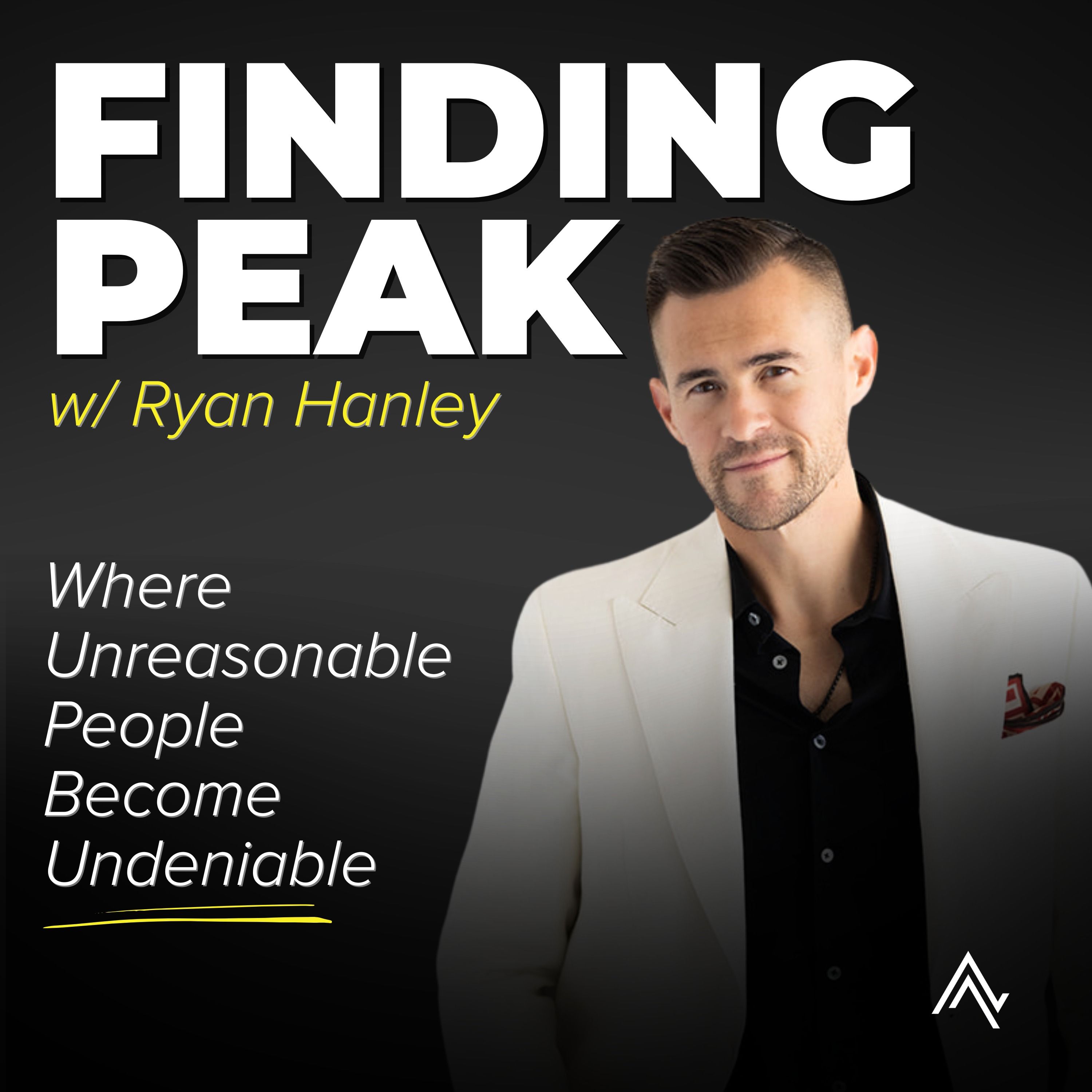
RHS 161 - Chris Cline on Death by Overcomplicating Insurance
They explain why hard times demand a determined focus on simple, repeatable tasks that produce results.
Don't miss this episode…
Episode Highlights:
Ryan shares that he is relaunching his newsletter, Finding Peak, which is focused on becoming the best version of yourself that you could possibly be. (2:17)
Chris mentions that everything in the world is now on a single device, and it's not so much about being on the phone as it is about what is done there. (13:39)
Ryan explains how Antifragile by Nicolas Nassim Taleb made him think about how he positions himself in the world, the skills he wants to acquire, and how he wants to set up his business and career so he can sustain himself personally and professionally. (21:15)
Chris talks about the evolutionary way the brain works and how that impacts all aspects of our lives. (27:18)
Chris discusses why he thinks people in the industry make things too complicated. (31:56)
Chris explains that commercialized, competitive rating is one of the industry's hottest topics right now. (39:33)
Chris believes that there is no such thing as the best tech stack unless it precisely matches the agency's business strategy. (47:50)
Chris explains mid-funnel technology and why it is so successful right now. (56:24)
Ryan believes that the winners and losers will be separated by true leadership moving forward. (1:05:52)
Chirs mentions the importance of remaining steadfast around what you're trying to get accomplished, and truly giving your teams what they need to be successful through that. (1:16:50)
Key Quotes:
“Our brains are processing what's in front of us differently based on the experiences we've had. But you know, you and I can be in the same room and see very different things. But the core fundamental things I think we would see, it's just how do you let that stuff that sits in the margins, the complex stuff, the subconscious level stuff, minimize the interpretation.” - Chris Cline
“You've got a relentless focus on processes first, making sure you got the right people in the right roles, doing the right things, and then use technology to bring that stuff to life.” - Chris Cline
“Whenever things get funky, leadership wins. Being able to set a clear vision. Remain steadfast to it, be a clear and active champion around what you're trying to get accomplished. And truly give your teams what they need to be successful through that is integral.” - Chris Cline
Resources Mentioned:
Chris Cline LinkedIn
Agents Council for Technology
Reach out to Ryan Hanley
Press play and read along
Transcript
Speaker 1
October brings it all. Halloween parties, game day tailgates, crisp fall air.
At Total Wine and Moore, you'll find just what you need for them all.
Speaker 1 You'll find thousands of wines, spirits, and beers at the lowest prices. Mixing up something spooky? Total Wine and Moor is your cocktail central for all your Halloween concoctions.
Speaker 1
You'll always find what you love and love what you find. Only at Total Wine and Moore.
Curbside pickup and delivery available in most areas. See TotalWine.com for details.
Speaker 1 Spirits not sold in Virginia and North Carolina. Drink responsibly B21.
Speaker 2 What can 160 years of experience teach you about the future?
Speaker 2 When it comes to protecting what matters, Pacific Life provides life insurance, retirement income, and employee benefits for people and businesses building a more confident tomorrow.
Speaker 2 Strategies rooted in strength and backed by experience. Ask a financial professional how Pacific Life can help you today.
Speaker 2 Pacific Life Insurance Company, Omaha, Nebraska, and in New York, Pacific Life and Annuity, Phoenix, Arizona.
Speaker 3 When it comes to gifting, everyone on your list deserves something special. Luckily, Marshalls buyers travel far and wide, hustling for great deals on amazing gifts, so you don't have to.
Speaker 3
That means your mom gets that cashmere sweater, your best friend, that Italian leather bag. Your coworkers unwrap their favorite beauty brands, and your nephews, the coolest new toys.
Go ahead.
Speaker 3 At prices this good, you can grab something for yourself too.
Speaker 4 Marshalls, we get the deals, you gift the good stuff.
Speaker 3 Shop now at marshalls.com or find a store near near you.
Speaker 5 Well everyone and welcome back to the show.
Speaker 5 We have an absolutely tremendous episode for you. A conversation with Chris Klein, the executive director of ACT, the Agents Council for Technology, an all-around absolutely tremendous dude.
Speaker 5 One of my, just not just my favorite people in the industry, but one of my favorite people in life.
Speaker 5 Chris and I have just wonderful conversations about all different kinds of topics all the time, most of which have nothing to do with insurance.
Speaker 5 But being that Chris's background and mine are so different, but we think very much alike, we always have these dynamic conversations about what's going on in our space and success and what it looks like and how we, how we, not just the very kind of shallow tactical things, but the deep strategic thoughts, conversations, cultural
Speaker 5 issues inside of businesses, leadership, the dynamics of personal behavior. They're just always awesome conversations that I enjoy.
Speaker 5 And this conversation, which I will say admittedly, starts just a little bit slow as we kind of get into the meat and potatoes. But once we do, I think you're absolutely going to love it.
Speaker 5 We talk about why we are over-complicating insurance and why now more than ever is a time to simplify, to dial in, to really
Speaker 5 attack advanced leadership tactics, why we have to be leaders both of ourselves and of our businesses.
Speaker 5 And whether you are an actual leader in your business or not, you are a leader of your own career, of your own life, of your family. And it's time to think about these things in a deeper way.
Speaker 5
And we talk a lot about that. I think you're absolutely going to love this episode.
I'd also encourage you to stick around because at the end, Chris has released his very first single.
Speaker 5
Chris is a musician and an artist. released his very first single and you'll get to listen to that at the end of the show.
You can also find it on YouTube.
Speaker 5 You can find it it on Spotify, Apple, iTunes, all the places where music is.
Speaker 5 But instead of the normal outro,
Speaker 5 you're going to hear Chris's new song, Let's Go for a Ride. So with that,
Speaker 5
let's get on to Chris. One quick thing before we get there.
Guys, I'm kind of relaunching
Speaker 5 a branded newsletter that I had for a while and set away. We're relaunching Finding Peak.
Speaker 5 Finding Peak was a concept around professional development, growth, personal development, how to be kind of whatever it looks like, particularly to us, the best version of us that we can possibly be.
Speaker 5 And,
Speaker 5 you know, things that I struggle with, but I'm, you know, things that have been successful, things I struggle with, things that I learn. I want to share these topics with you because
Speaker 5 the way I operate is always trying to iterate that James Alticher, kind of 1% better, kind of choose yourself mentality.
Speaker 5 I'm always trying to find little tips, little hacks. I'm always developing different mentalities.
Speaker 5 I'm always trying to mature into what can help me be the most successful version of me and be the most successful version of me as a dad, as me as a partner, me as a leader, me as a salesperson, me as a insert, you know, baseball coach, all these things.
Speaker 5 And I want to continue to share that journey with you. Starting with Rogue, starting Rogue two years ago, two and a half years ago now, you know, I just didn't have the time for it.
Speaker 5 But as we evolve as a business, I'm starting to have these moments where I can create a little more, share some of these experiences with you guys, and hopefully help both, you know, you listeners to the show,
Speaker 5 members of our industry, members of the SIA ecosystem and network of families.
Speaker 5 It's not obviously specific to SIA, but in general, I want to help the people in our world, in our space, who think the way that we do,
Speaker 5 you know, you being the listeners and me, I want to help them and share some of these stories and stuff.
Speaker 5 And if you're interested in that, this is a long-witted way to saying if you're interested in any of that, if it sounds interesting, if you want to receive these newsletters as they come out, go to findingpeak.com.
Speaker 5
So that's findingpeak, F-I-N-D-I-N-G-P-E-A-K.com. Go to findingpeak.com.
That's going to be the name of the newsletter.
Speaker 5 You know, we have about a thousand subscribers today, um, and hopefully, we're going to grow that and just continue to share. And, um,
Speaker 5
you know, just so go check it out. Hopefully, you'll subscribe.
You'll get some updates from the show. You'll get updates from people who are on the show.
Speaker 5 You'll get updates on books, on tactics, and then just in general, articles, videos, different pieces of audio that I create and share with you.
Speaker 5
And hopefully, will help you in your own journey to peak performance. So, relaunching that brand, kind of excited about that.
So, go to findingpeak.com if you want to subscribe.
Speaker 5 Otherwise, guys, I love you for listening to the show. Let's get on to one of my absolute favorites, Chris Klein.
Speaker 7 Dude.
Speaker 6 MASH reruns.
Speaker 7 What?
Speaker 6 MASH reruns.
Speaker 6 What
Speaker 7 you going creeper on me? You going no video or what?
Speaker 6 Oh, not on video.
Speaker 7 No, not intended.
Speaker 6 Oh, there he is.
Speaker 7 What's up, dude?
Speaker 6 This is it. this is it this is the deal this is the one miserable rainy weather out there and
Speaker 6 i don't know it's just that time of year at least it's not freezing out it is not freezing here it's like 60 it is also rainy but it's november 1st and it's 60 degrees out it's crazy i'll take it yeah i was looking back you know i guess that's one of the weird things about like these memories that pop up in social media like we've had some pretty cold days like by now
Speaker 6 in recent years. So it's
Speaker 6 with all the running I'm trying to get done, like it's, it's been good.
Speaker 7 Yeah, I mean, so last night was obviously Halloween, and my kids are still young enough that they do Halloween. I don't know if your son does, but
Speaker 7 yeah, like last year trigger treating, you know, we walk with the same families every year.
Speaker 7 And last year trick-or-treating, we were like talking about how we only made it to this one corner of the neighborhood because it was so cold and windy and everyone was so miserable that, like, we kind of looked around the bend at the house and we're like,
Speaker 7 let's just head back.
Speaker 7 And, um,
Speaker 7 you know, and this year we went farther down the neighborhood just because you know, it was beautiful out and you know, so whatever. So, it's just it is uh, it is interesting,
Speaker 7 and this probably seems trivial to start a podcast talking about this, but like it is interesting how much the weather impacts our life, you know.
Speaker 7 Um,
Speaker 7 one of my thoughts, yeah, one of my favorite quotes is from uh Nuke Lelouch in the movie Bull Durham.
Speaker 7 And,
Speaker 7 you know, the woman at the very end is asking him, he's finally in the big leagues.
Speaker 7 And the woman is at, he's like being interviewed or whatever. And he's, he's ripping off all these cliches and whatever tripes that Crash Davis had taught him.
Speaker 7 And at the end, he says one that Crash hadn't.
Speaker 7 he basically runs through all these all these cliches that crash had taught him on the bus when they were in the minors and then there's one that Crash may have taught him, you don't know, but he hadn't said it on the bus, which is
Speaker 7
baseball is a great game. Sometimes you win, sometimes you lose, and sometimes it rains.
Think about it. And, you know,
Speaker 7 is again, it's a silly movie and it's a silly quote at the end of a movie, but that quote is always stuck in my mind
Speaker 7 for a couple of things, not because of the weather aspect, but because basically what it says is:
Speaker 7 if you love what you do,
Speaker 7 it's just another day. It's just, you know what I mean? You show up, you play baseball every day, that's what you do.
Speaker 7 Sometimes you win, sometimes you lose, and sometimes it rains, but you play baseball every day, that's what you do. And I think that I don't know why, but that has always stuck in my head.
Speaker 6 Well, think about like that when,
Speaker 6 and
Speaker 6 I don't know, to go just to dive deep into something somewhat esoteric, right? I mean, when you were a kid, like
Speaker 6 playing little league or whatever, like
Speaker 6
the most heartbreaking thing in the world was a rain out. Yeah.
Like you would have played in the rain and the mud and everything else because you loved what you did and you did it for the passion.
Speaker 6 So you were willing to endure all that. So it's kind of
Speaker 6 stinks that games get canceled for, you know, for rain right now because it's not just perfectly manicured. And it's the same thing like in the bicycle world that I always did.
Speaker 6
Like, I mean, as a kid, who cares if it rains, right? We'll just get muddy. It's fun.
We'll just,
Speaker 6 but
Speaker 6 there's always, there's always, I guess, the other side of the coin, I guess, but wild.
Speaker 7 Well, I think that, um,
Speaker 7 I think that,
Speaker 7
you know, this year has been an interesting year for me as a human. And I've had to reflect and grow.
And,
Speaker 7 you know, even with this podcast, I've been off, I've been on.
Speaker 7 You're actually going to be the first interview of really a relaunch of the podcast. I'm going to double into it a little bit more, put a little more work and effort into this venue.
Speaker 7 Gotten rogued to the point where it's now, I can now,
Speaker 7 I'm not implementing every strategy. So I can research, I can discuss, I can strategize, and then
Speaker 7 test.
Speaker 7 different things in different departments in the business and help it grow without everything having to be me, which kind of crushes the researching and discussion part.
Speaker 7 But my point in saying all that is,
Speaker 6 you know, when we,
Speaker 7 as I feel like as we, as we mature,
Speaker 7 you really have one of two options, right? So when you're young, it's all passion, it's all go, it's all, you know, whatever your thing is.
Speaker 7
You know, you can, you can, you can be pissed that your kid plays video games all the time, but they're passionate about it. They love it.
It's what they're into, right?
Speaker 7 And surprisingly, there's some research coming out that
Speaker 7 I just read the other day by James Clear, who wrote
Speaker 6 the
Speaker 7 Atomic Habits, which is a book I'm sure a lot of people who listen to this wrote.
Speaker 7 He's done a ton of research lately on video game playing and kids playing video games.
Speaker 7 And what they've found is that kids who play three hours or under of video games actually have improved analytical skills in certain areas of their life.
Speaker 7 And specifically, things like
Speaker 7 problem solving,
Speaker 7 math.
Speaker 7 They can,
Speaker 7 something else about like narratives and storytelling,
Speaker 7 they can find
Speaker 7 inconsistencies or stuff in narratives because this is the, they're basically playing out these worlds over and over and over again.
Speaker 7 And
Speaker 7 guess my long way of saying this is, I think as we get older, we become wusses.
Speaker 7 Things we
Speaker 7 get to these places where we like every everything needs to be perfect, right? Like everything needs to be the perfect situation, the perfect setting.
Speaker 7 If I'm not going to take that job unless every one of my peers and my mom and every book I read and every news article says that this is, this is right where I should be.
Speaker 7
And, you know, that I wanted to make $50,000 a year, but this is only 47. So no, I'm not going to do it.
And, you know, and instead of,
Speaker 7 I don't know,
Speaker 7 sucking it up and just getting after it. And
Speaker 7 I don't know. I just,
Speaker 7
I, I, I just come back to that a lot. Uh, I've also tried to hire a lot of people this year, which has been, I mean, you want to get a freaking master's degree in psychology.
Try to hire people.
Speaker 7 Phew, woof.
Speaker 6 Now, you said a lot. I mean, just the whole nature of like,
Speaker 6 i don't know it's so weird like
Speaker 6 people older than us well i guess i'm got a decade on you right we might might say that there's a wussification of youth but yet i find myself combating this a lot like
Speaker 6 as people age and the amount of responsibility that you you you objectively have but i think that you heap upon yourself like
Speaker 6 it naturally makes you more conservative and you know i I zero interest in talking politics ever in my life if I can avoid it. But like you see that in just the way politics works.
Speaker 6 And
Speaker 6 it's just fascinating to see, but like this, that
Speaker 6 conversation, I love to read that book around like kids and
Speaker 6 sort of with
Speaker 6 some
Speaker 6 like boundaries that
Speaker 6
the video game thing is not as bad as it seems. And you know, you see it all the time.
These kids today, they're on their phone, they're on their phone, they're on their phone, they're on their phone.
Speaker 6 And I think back like, like when I was a a kid, like, I was running around with, like, I never really had a Game Boy, but like, kids had Game Boys, they had a Walkman, like, you know, they had the TV,
Speaker 6 like, you know, I mean, you had like, but every single thing in the world is now on one device.
Speaker 6 So, I think it's not so much about being on the phone, it's about what, you know, what is being done there. Like, my son, like, really doesn't watch a lot of TV, but he consumes like legit content.
Speaker 6 Like, he loves dinosaurs and science and sort of like biology type stuff as he looks at what's next and he's watching that stuff on tv on on his phone so he's on his phone
Speaker 6 but 20 years ago he just would have been curled up in a ball on on the sofa and yeah i don't know it's just a fact or listening to music and those kind of things too so i don't know it's just all about context and the journey over time so this is an i so so my kids are obviously playing video games and stuff and and i let them play more video games than um
Speaker 7
you know their mom does or you know whatever and you know and i've done a lot of research on it i don't just let them play because I'm a lazy parent. I let them play because I read about stuff.
And,
Speaker 7 you know, one of the things, and again,
Speaker 7 there's always a counter argument to this. So someone who could be listening and be like, ah, you know, they rot your cortex and they're all going to be dummies and zombies, you know, whatever.
Speaker 7 But, you know,
Speaker 7 there is, there is research that I found as well. And this, I don't, I can't remember where I read this unlike the thing about from James Clear, but
Speaker 7 around how because we've so
Speaker 7 sterilized our world, like kids don't play outside. You know why kids don't play outside today? Not because of video games, because of helicopter parents.
Speaker 7 People don't play outside because they watch the news and some kid in some place in some town that they've never heard of before, that they would have never known happened before 25 years ago.
Speaker 7 Something happened to them, and therefore they assume it's going to happen in their backyard and they don't let their kids run around the neighborhood. So how do kids explore?
Speaker 7
You know what kids want to do? Explore, get in trouble, learn things. They're in full sensory mode.
They're in full, what is this like? What happens here?
Speaker 7 If I do this, if I jump off this, if I break this, if I whack this tree with this stick, what happens? Right.
Speaker 7 I mean, that's the world that we all romanticize, yet we don't allow our children to play in that world anymore.
Speaker 7 So all these kids are in, you know, in their seven, eight, nine, 10, they're in this full exploration mode.
Speaker 7 All they want to do is bump into things and try things and run around and get hurt and play football and or whatever, whatever, you know, whatever they want to do.
Speaker 7 But instead, we're like, no, you will sit in the house and I will know where you are at all times. And I'm going to put this device on your leg so I can track it on my phone.
Speaker 7 And you need to tap that device every 30 minutes so that I know that you're okay in my head. And then I will give you your 30 minutes of tech time.
Speaker 7 And then after that 30 minutes of tech time, then you need to, you're going to go for two hours to baseball. And here's what you're going to do.
Speaker 7
And then from, you know, and you're like, holy shit, these kids don't get to explore anymore. Like they don't get to do any of the stuff.
So, so like when I watch my son play video games, he's like,
Speaker 7
that's like explore time. Like, that's like, you know, I live in a freaking apartment building.
I, I, I'm, I'm bitching about this, yet I will not allow him to go play out in the ditch, right?
Speaker 7
There's a ditch next to my apartment building. That's the only patch of grass.
It's where we play football and baseball. And it.
crushes my soul as a parent that my kids play in a ditch. But like,
Speaker 7 I don't want him out there because there's a lot of wackos that live in this freaking apartment complex and I get nervous. He's still just eight, right?
Speaker 7 But at the same time, I'm like,
Speaker 7 shit, like he doesn't get to, all he wants to do is go explore and I won't let him. So what, so I let him play video games because it's, it's exploration.
Speaker 7 It's, it's a chance for their mind to try new things and jump off of stuff and die in the game. But you can't do that in real life.
Speaker 7
So um, not that I want him jumping off of things and dying, but like, you don't let them explore as much. So this is like their chance to explore.
This is how they try new things and test stuff.
Speaker 7 And I don't know, I don't,
Speaker 7 I don't know that I'm fully bought into this concept yet, but there's something to it.
Speaker 6
Yeah, I don't know. We could spend, I mean, people do spend hours, they dedicate their lives to these, you know, to these studies and what's good and bad.
And, you know, how do you let kids be kids?
Speaker 6 And, you know, what are you the learning? Like, how do you know that an oven's hot unless you burn your hand once in a while, right? And,
Speaker 6 you know, your example of just hitting trees with sticks and will it work or is it going to like recoil and
Speaker 6 you know you're going to get to go to school in the morning with a gash across your forehead which was kind of cool because you know little chrissy liked it when you know
Speaker 6 you came to school with a cut on her head your head or whatever but i don't know man it's fascinating and then how do you keep that spirit as you get older you know and it's just
Speaker 6 we talk about it a lot you were saying that like just how do you
Speaker 6 how do you stay like in a world where you're continually focused on this whole continual learning thing is a catchphrase, but it's worse than that. It's a little bit of risk.
Speaker 6 It's putting yourselves out there. It's what's the new hot,
Speaker 6 not hot as in Paris Hilton hot, but that's hot.
Speaker 7 But like, how do you tell? Is Paris Hilton still who we're referencing is like the hot person of today? I feel like.
Speaker 6 I don't know.
Speaker 7 Who's just like, where did Paris Hilton? That's a good idea.
Speaker 6 Like, like, who, who is, right? I don't know.
Speaker 6 Kaylee Cuoco, or did I just date myself even better?
Speaker 7
I have no idea. Cindy Crawford.
There we go.
Speaker 6
Oh, wow. All right.
Yeah.
Speaker 6
I don't know. It's just fascinating to think about and just pushing yourself and taking things that are, I don't know, not risky, but that do get you outside your comfort zone a little bit.
Yeah.
Speaker 6 I've been thinking about that like a lot and just the creative process and,
Speaker 6 you know, what are things that are sort of like
Speaker 6 you allow the raising of the kids and the career and, you know, all the things you have to deal with in your personal lives, whether you consciously recognize it or not, you allow it to suppress some of that
Speaker 6 creativeness that, and I think everybody has it.
Speaker 6 And it's just, you know, some things I've been like even personally trying to, you know, to do lately. It's like, I know I've shared this with you probably for like three years.
Speaker 6 I'm going to write a book, right? And there's like, all the notes are here, but. like, why the heck haven't I sat down and like started to write the thing?
Speaker 6
I've been trying to figure out how to play music. And actually, I wrote a song and released the damn thing.
Like it's just like, and that was scarier than anything I've done professionally.
Speaker 6 And like maybe four people I've listened to. And I don't even care, right? But it was just, it was the process.
Speaker 6 And I don't know, I find that like
Speaker 6 when I was in school,
Speaker 6 I mean, I think you know this, but like I was a fine art major in college.
Speaker 6 And, you know, it was that that quintessential art kid with the goofy hair and the funky clothes and just trying to figure things out. But there was something that was deeply rewarding and
Speaker 6 sort of advancing about
Speaker 6 what was going on with people in that world:
Speaker 6 they really exposed their passions and the things that they were dealing with internally. And how does that all come together in the creative process?
Speaker 6 Like, you know, it kind of hit me recently, I was thinking about, you know, hear like comedians are tortured souls, or something like that, which is perhaps overly dramatic, but there's something
Speaker 6 to like allowing that to come out in a,
Speaker 6 I don't know, somewhat of a controlled way, just to not let it fester. And you don't end up at the end with
Speaker 6 simple regrets.
Speaker 7 Yeah.
Speaker 7 Yeah, I think, I think, so a lot of my thinking on this particular topic has come out of
Speaker 7
I read, I'm in the middle of reading a book called Anti-Fragile by Nicholas Nassim Taleb. And if anyone wants to expand their mental horizons, take on this particular book.
It's 400 pages. It's thick.
Speaker 7 There are words in it.
Speaker 7 According to Grammarly, I have
Speaker 7 my vocabulary is wider than 98% of the people that use Grammarly.
Speaker 7 And I have probably looked up 50 words. This is just wild
Speaker 7 how smart and deep and twisting this is. But the
Speaker 7 concept is really interesting. So he calls it
Speaker 7 the triad.
Speaker 7 People, systems, communities, take any
Speaker 7 entity that you could wrap your head around. And particularly, I think about this not so much from a country basis or a community basis, but I think about it.
Speaker 7 I've been running what he's saying through the frame of
Speaker 7 my company, Rogue, and what we're trying to do, and then my own personal life. And basically, you can be
Speaker 7 fragile.
Speaker 7 You can be robust, or you can be anti-fragile.
Speaker 7 And
Speaker 7 the definition of anti-fragile,
Speaker 7 in a sense, I'm broad stroking here, is
Speaker 7
you benefit from downside with infinite benefit from upside. So basically, no matter what happens, you can't be hurt.
And
Speaker 7 again, some of this is frame of reference, how you position your mental, but some of it is also very much how you position your life and the things that you do and how you position yourself.
Speaker 7 So that when, and this is also the guy that wrote the book, Black Swan.
Speaker 7 I just read another book by him called,
Speaker 7
it's going to kill me. This is going to kill me.
Hold on.
Speaker 7 Oh, skin in the game. Man, you can tell it's early.
Speaker 7 Skin in the game is another book that he wrote all about how, you know, basically the long and short of that game is never do business with someone who was unwilling to put skin in the game.
Speaker 7 And how, you know, basically, and he, you know, uses things like politicians who, you know, for the most part, politicians are the worst version of our society.
Speaker 7
I mean, no A plus players are becoming politicians. I mean, all these people who we debate as like being awesome, no matter what side you're on.
I mean,
Speaker 7 think about the choices that we're presented with. Like, no matter what side you're on, we're basically dealing with C plus and B minus players, right?
Speaker 7 And, you know, he talks about how so much of political systems, of, you know, the banking system of these different things is these, you know, fragile,
Speaker 7 non-skin in the game systems, which basically means people are able to re-benefit without having to take any reward without having to take any of the downside.
Speaker 7 So you look at something like the insurance industry.
Speaker 7 And while I'd say we probably are more in in the robust category, there are, if you can position your career, say, work in the insurance industry and develop world-class sales skills, you're creating what is, what can be considered to a certain extent, an anti-fragile career because we're technically a very inflation proof,
Speaker 7 inflation-proof industry. We are
Speaker 7 kind of ubiquitous throughout every other ancillary industry that exists in the country. Much of our product, many of our products are mandated.
Speaker 7 And if you can sell that product, you'd be hard pressed to find a black swan event outside of, say, like
Speaker 7 the apocalypse that you can't have a job, that you can't sustain and get by. You know, he's not always talking about,
Speaker 7
you know, world domination. That's not necessarily what being anti-fragile is about.
It's about surviving.
Speaker 7 And, you know, his whole pitch, I shouldn't say his whole pitch, but a big part of his pitch, and this is kind of where I position my mind.
Speaker 7 And maybe you can tell where, where, why, why my brain is where it is this morning, is that
Speaker 7 too often what we think about and how we position our lives is to maximize current moment without consideration for what the downside could be in certain situations.
Speaker 7 We just assume certain things can't happen, right? This my company can't go out of business. My department can't be let go.
Speaker 7
My spouse will never cheat on me. My, you know, I can never get sick.
We don't consider these things that are coming down the pipe. And therefore, we've created all these fragilities in our lives
Speaker 7 because we just assume that what we're spoon-fed as like the appropriate life to live is the best life when in truth, what you're really doing is placating entire industries set up to maximize.
Speaker 7
benefit from you without any negative impact of you happening to them. And it's very, very heady.
It's taken, I still obviously don't don't have my brain fully wrapped around it, but
Speaker 7 it's really made me start to think about how I position myself in the world, the skills that I want to accumulate, the books that I read, and how I want to set up my business and ultimately my career so that,
Speaker 7 you know, I am, I can sustain personally and as an organization. And
Speaker 7 I don't know, I just, it's, it's, I start to think like, how often are we, myself included, thinking about
Speaker 7 concepts this deep?
Speaker 7 And
Speaker 7 should we do it more often?
Speaker 7 Do we just allow life to flow over us and not consider
Speaker 7 all the decisions we're making day to day?
Speaker 6 Yeah, gosh, I don't know. There's a lot in, obviously there's ridiculous amounts inside all of that, but like as you were explaining that book and I was scribbling it now, like there's so much in
Speaker 6 that that goes into like
Speaker 6 deep, deep down in the just the evolutionary science of the brain and the way the brain works.
Speaker 6 And it comes all the way down to some of the fight or flight things and how the brain normalizes things and sort of keeps us focused.
Speaker 6 I mean, there's reasons why quotes like the most common cause of failure is sacrificing what you want most for now
Speaker 6 exist, you know, under cheesy cliches. And there's psychological, deep evolutionary reasons.
Speaker 6 I mean, believe structures, I suppose, could be challenged in that, but like, why do we like overeat on candy on these types of things?
Speaker 6 Because there's just sustainability and availability, and there's just something about survival that seems to take over and all of that. And
Speaker 6 that just, I think that just shows up everywhere in every aspect of life, whether somebody's actually thinking about it that consciously or not, right?
Speaker 6 And when you read the books, it's easy, easier, I guess.
Speaker 6 to kind of wrap your head around that and see that whatever book you read has examples in it but when you carry that all the way out into the business world or these deep complex systems i mean they're all based on
Speaker 7 whether they're intended to be or not they're all functioning on a standard set of principles around yeah just the evolutionary way the brain works yeah and that's one of the one of the things that i that i took from this particular book um which i which i cannot recommend enough although you will hate me while you're reading it because it's i mean i i read for 25 minutes before i jumped on the podcast and i got through like 10 pages, maybe,
Speaker 7
not even. You know what I mean? It's heavy.
It's heavy.
Speaker 7 But one of the things that he talks about a lot, especially at the beginning, and he's making a couple of points is about how
Speaker 7 complex systems tend to be more fragile and that we over, you know, we need to really fight our urge, which seemingly is natural, although.
Speaker 7 maybe isn't to make things more complex than they need to be, right? So this is one of the early takeaways I took from the book.
Speaker 7 And that anti-fragile systems tend to be the simplest version of whatever that system can be and still be successful.
Speaker 7 Because the more parts you have, the more people you have, the more everything that you have, the more opportunities you have for
Speaker 7 some event, whether normal or black swan, black swan being event you can't see coming that has devastating effects on a system.
Speaker 7
the more you can't see these things coming. They become blind spots.
They become obstacles. So, you know, one of the things that
Speaker 7 I am working on, we're not nearly there. Nothing is there with Rogue.
Speaker 7 But, you know, is how do we simplify process? How do we simplify systems? How do we get, you know, you don't need some 30-point sales script.
Speaker 7
You don't need to have these complex follow-up sequences of 17 different touch. You don't need that stuff.
All that stuff does is lend you to some changing in the, you know, the
Speaker 7
the texting, you know, the notifications around texting. And now you're 15 of your 17 points, you just can't send out anymore.
Well, now you're screwed, you know what I mean, and all this stuff.
Speaker 7 And it's like, get to the simplest version of what allows you to be successful and what you and develop the skills in those simple systems that allow you to be the most successful.
Speaker 7 And ultimately, you're creating a process that allows you to navigate and move through these events versus them wrecking something and having devastating effects on you. And
Speaker 7 simple is hard. Simple is really, really hard.
Speaker 7 It's also incredibly uninteresting.
Speaker 7 You know, when you talk about simple concepts, how do we, people are like, I'm not willing to pay for simple. Simple is too easy.
Speaker 7 Well, you know, you look at, you look at a lot of speakers, you look at a lot of, they all have these five points here and the triangle of this and the, you know, work through this thing and all these touch points.
Speaker 7 And it's like,
Speaker 7 I feel like the more we can focus on simple systems, the more we can get, I don't want to say get back to basics because it doesn't, simple doesn't necessarily mean basic.
Speaker 7 I feel like that's the path to success in what is increasingly becoming an overcomplicated world with so many voices that it becomes hard to manage.
Speaker 7 And I feel like we open ourselves up to a lot of vulnerabilities.
Speaker 6
It's interesting. Yeah.
So I'm guessing the book will eventually get there, or at least there'll be some commentary on that. And I think about this a lot too.
Speaker 6
Like we, we, generic, I mean, the proverbial we. Yeah, but also like probably the literal we too.
Yeah. And I think,
Speaker 6 like, even just inside the space where you and I play, like this industry, you know, what's the future of the industry look like? And how does tech adoption look? All that kind of stuff, which
Speaker 6 probably boring in the grand scheme of things, but we overthink it. We just have this natural tendency to make things really complex.
Speaker 6 We just become devoid of fundamentals and volume and conviction become a proxy for accuracy in this dynamic. And so like,
Speaker 6 it seems counterintuitive, but I find myself having that conversation more and more.
Speaker 6
Like, I mean, not to get too insurancey here, but like, that was really the genesis of that article I wrote at IA magazine, like slow down. Yeah.
Like, slow down to speed up.
Speaker 6 And it's just, we're making stuff too complex. I mean, was it Billy Williams has that concept? Like, there's only only how any way you want to build it, there's only like 21 or whatever number it is.
Speaker 6 There's only so many processes in an independent agency, right? And to your point, like, just make them as simple as efficient as possible. And
Speaker 6 I'm a firm believer, the average customer doesn't want the number of interactions that like we're trying, we're trying to create.
Speaker 6 And so
Speaker 6 we really are making this complex, and that's in our industry and that's in our lives.
Speaker 6 And I don't know what that tendency is because it's counter to what I think think we just talked about, which is the brain's natural tendency to want to sort of set aside the trivial stuff that doesn't allow you to either fight or flight.
Speaker 6 Like, there's a reason why, like, we all see things differently, right? Because our brains are processing what's in front of us differently based on the experiences we've
Speaker 6 had.
Speaker 6 But,
Speaker 6 you know, you and I could be in the same room and see very different things.
Speaker 6 But the core fundamental things,
Speaker 6 I think we would see. It's just how do you let that stuff that sits in the margins, the complex stuff, the subconscious level stuff, minimize the interpretation of what's laziness.
Speaker 7 I think the reason we like overcomplicated things is we're lazy. And the reason I'm, and what I mean by that is, does it permit like
Speaker 6 procrastination or decision making?
Speaker 7 It's an excuse mechanism. It's like, I am, you know what? I didn't buy her 10 point strategy, or I, I, you know, I did this, I bought this course, but, but then, but it's never put into place, right?
Speaker 7 Or, you know, I did all these things and it didn't yield this result. And it's like,
Speaker 7 how about, you know,
Speaker 7 the rogue risk lead generation strategy is the same freaking strategy that I've been using since 2009. Like nothing has changed.
Speaker 7 I use a simple keyword research tool to find keywords that then I create videos about that I then turn into blog posts that I then share on social media.
Speaker 7 I have done that simple process over and over and over and over again for more than a decade. And it drives my business forward today.
Speaker 7 It's been the catalyst for every bit of success that I've had in the insurance industry as a practitioner. And,
Speaker 7 you know, I've looked at LinkedIn strategies and I've looked at
Speaker 7 lead buying strategies and I've looked at follow-up strategies and I've looked at all this fancy, crazy stuff, you know, start a local podcast, which is not a bad idea, you know, but for me, it's simple.
Speaker 7
It's repeatable. It's not sexy.
I mean,
Speaker 7 I hired this young girl to come do
Speaker 7 marketing for us and she's marketing major at a local college and whatever. And I explained to her our process and I could tell she like looked at me and she didn't say it.
Speaker 7 And she's, she's nice and she's working hard and she's going to be good. But I could tell when she first looked at me, that's it.
Speaker 7
You know, that was like her look was like, that's, that's what you do. That's, that's it.
That's the whole thing. And I was like, that's how we get 300 leads a month.
Right there.
Speaker 7
You just, you, that, you just, that's the whole secret. I just rinse and repeat.
I am okay with simple, basic, repeatable processes that yield results. I don't need the new
Speaker 7
granted. And I've tried them all.
I've made all the mistakes. This is, this is, this is a learned thing.
Speaker 7 This is not like intrinsic to me you know what i mean like i'm not even i didn't wake up with this knowledge this is 40 year old scarred beaten stepped on you know sued fired hated you know shamed all you know that version of me um now battle tested and and whatever can stand here and say
Speaker 7 i as soon as something feels complex to me i basically just write it off
Speaker 7 I basically just write it off.
Speaker 7 As soon as I start here, if I'm at a conference or I'm reading an article or I'm listening to a podcast and something starts to feel complex, I'm like, nah, I'm good. Don't need that.
Speaker 7 That's way too difficult.
Speaker 7 The number of that will, because, cause the only, am I, you know, so the only things that work long-term are repeatable and simple in my mind that I've found repeatable and simple.
Speaker 7 If it's not repeatable and simple, then it's, it has no chance of success. And then the third phase is obviously, does that repeatable and simple process yield results?
Speaker 7 But like, if it's not repeatable and simple, there's no way to get consistent long-term results because you'll give up or something will change.
Speaker 7 Or, and I didn't understand this term at the time, you're essentially building fragility into the process because there's so many steps or there's so much complication. And
Speaker 7 that's, you know, this is a major move that we've, that I've made in my own, in, in my career and in my leadership, specifically over the last year. And
Speaker 7 it's yielding results. It allows us to measure and be successful, but
Speaker 7
it's not sexy. No one wants to hear about that.
No one wants to hear that one simple process done repeatedly and into monotony has been the secret to our success.
Speaker 7
No one gives a shit because none of them have done it. I've told them, tell them for 13 years, they don't care.
So I can tell you empirically, no one gives a shit.
Speaker 6 Well, it's not the shiny new toy, right? And it's no, and it's, and to your point, it is not sexy and romantic.
Speaker 6 And it takes a relentless commitment to execution too, right? Because
Speaker 6 even with all that you just said and what you empirically know about your process and how even, and I'm certain you can look back and say, you know, the way you're doing it, the way you're executing it, the tools you use, like those might have evolved, but the recipe is the same and you're just committed to it.
Speaker 6
And, and, um, but that's not, that's not cool for some people, right? And we want to, and, and also people are being sold stuff all day long. Yep.
Right.
Speaker 6 The cake mix that you're using every day that you like and you enjoy isn't good anymore. It's, It's out of date, you know, and there's, and that level of,
Speaker 6
I don't know, I feel horrible for agents everywhere. And it's another conversation we have.
It's like, it's, again, it's in the spirit of all that, like
Speaker 6 just because somebody wants to sell you something or that they have identified a friction point doesn't mean it's worth
Speaker 6 solving for it or spending the time, effort, and energy.
Speaker 6 And I was, I was, maybe getting a little bit again to insurance here, but I was really looking at like the market share data and the universe study.
Speaker 6 And, you know, and then then you start to think about like the bottom amount of tech adoption and a simple one right it's one of the hot buzzings but things right now in our industry is commercial lines comparative rating you know you and i both have personal friends that own yes fantastic firms that are doing that but adoption is still very very low at the agency count level yeah um by some accounts as low as like seven or eight percent maybe as high as 25 right but i have an entire i can't wait for you to finish because i have an entire thought process on this i'm like chomping at the bit not to interrupt you please keep going I had to say that.
Speaker 7
My ADD is firing off the hook right now because it's so early in the morning. But, like, I just had to say that.
Keep going. Keep going.
Speaker 6 No, but like, but I come back and say, now, how much of the market is controlled by the firms that have adopted it? But, but why are we not?
Speaker 6 And now I got derailed on my whole thought process on why we're not adopting it or not. But like,
Speaker 6 it's,
Speaker 6 it's, it's the way I think the way our industry is set up, it's, it, it's not a requisite to success
Speaker 6 for
Speaker 6 70% of the agencies to know the bell curve
Speaker 6 yet, perhaps, for example. So, man, I got completely lost on my thought there.
Speaker 7
Sorry. And I have no, no, it'll come back.
I mean, that's all me.
Speaker 6 I either come back or I'll conclude that it was a worthless thought. But, like, there was something where I was going down this path, and it was like, like, like, but why isn't
Speaker 6 the adoption there? It's not, it might be a reluctance to change.
Speaker 7 It's not, it's not a reluctance to change. So, I have, I'm going to tell you, here's my thought on this so I can get this out of my face and stop interrupting you like a jack.
Speaker 7 They're not necessary.
Speaker 7
They're not necessary. It doesn't mean they don't add value if you can build the right process around them.
They certainly do.
Speaker 7 But
Speaker 7 again,
Speaker 7 I think
Speaker 7
you don't need that. So I, dude, I did a video the other day just on a whim.
I was walking. It was a couple of weeks ago.
Speaker 7 I just got done with calls with two different carriers who had told me that their UX was this. And I basically told them,
Speaker 7
your user experience is a dumpster fire. It's absolutely terrible.
They're like, well, why aren't you writing more business? And I said, because look how freaking hard it is to use your system.
Speaker 7 And you got this little technical hangup and you won't open up states unless we have a piece of business that we're going to write there.
Speaker 7 And why would my team stop what they're doing and then send you our license, even though I've told you 400 times that we're licensed in all 50 states and then have you open up the state and then go back in the quote.
Speaker 7
They've already moved on, they're not going to do that. Like, so it's all these little UX things.
So, I'm having this like frustrating day.
Speaker 7 I go for a walk, and I'd say, and I did this, I did this video.
Speaker 7 The title of it was, Maybe We Should All Just Be Hartford Captives.
Speaker 7 Well, this thing went a little viral,
Speaker 7 both for good reasons and for reasons that some people found negative. I didn't find them negative because, you know, screw those people.
Speaker 7
But my point was: the Hartford is easy to use. They're easy to work with.
It's intuitive. I can train someone on quote bind issue with the Hartford in less than five minutes.
Five minutes.
Speaker 7 I can take one of my new producers and go, here's how you quote bind issue with the Hartford in less than five minutes.
Speaker 7
It all makes sense. It all works.
If you have a license and understand basic insurance terminology, you can quote bind issue most accounts with the Hartford in their system. It's amazing.
Speaker 7 Then on the back end, they have all the servicing functionality.
Speaker 7 And essentially, my point was, if I weren't a dummy which i am i would go back in time i'd get rid of all my other appointments and i'd be a hartford captive until the day i found that i wasn't making money because i was a hartford captive because i and i wouldn't need an agency management system which means i wouldn't need download which means i wouldn't need insert 17 other freaking stupid tools that i have to have because of all you know multiple carriers and all the billing crap and all this nonsense that takes place in an agency i would just be a harper a Hartford captain.
Speaker 7 And that's what it would be. Okay, that was my, that's what I said.
Speaker 7 And I said, the reason, you know, and this is, this is kind of how I ended it was the reason that I feel that companies like, and I'm not going to say their names because
Speaker 7 I don't want to get in any more trouble than I already have,
Speaker 7 you know, don't understand what I'm saying is because they're talking to where the puck is today.
Speaker 7 They're calling their agent with $2 million in premium with them in Indiana, who's 67 years old, who's a good guy, who's been writing with him for a while, and goes, What do you think about our UX?
Speaker 7 And he goes, Hey, Tammy, what do you think about, you know, insert carrier?
Speaker 6 And she goes, ah, they're fine.
Speaker 7
And he goes, you guys are fine. And they go, great.
Checkbox, we're doing awesome. And my point was,
Speaker 7
I don't know many carriers. I would put pie in this.
I would put pie in here. I think Chubb is doing some good things.
They're not at Harvard's level yet, but they're on the right path.
Speaker 7
I'd put Hartford, obviously, there and a few others. Travelers isn't bad.
I think
Speaker 7 nationwide tends to be a two steps forward, three steps back kind of carrier. But like,
Speaker 7 you know, there are other carriers who I feel like are pushing to where the puck is going.
Speaker 7 And,
Speaker 7 you know, my point saying all this is like
Speaker 7 simplifying,
Speaker 7 bringing all this stuff in, thinking about only what is necessary to run your business allows you to put, to do more of the things that actually generate business.
Speaker 5 What's up, guys? Sorry to take you away from the episode, but as you know, we do not run ads on this show. And in exchange for that, I need your help.
Speaker 5 If you're loving this episode, if you enjoy this podcast, whether you're watching on YouTube or you're listening on your favorite podcast platform, I would love for you to subscribe, share.
Speaker 5
Comment if you're on YouTube, leave a rating review if you're on Spotify or Apple iTunes, et cetera. This helps the show grow.
It helps me bring more guests in.
Speaker 5 We have a tremendous lineup of people coming in, men and women who've done incredible things sharing their stories around peak performance, leadership, growth, sales, the things that are going to help you grow as a person and grow your business.
Speaker 5 But they all check out comments, ratings, reviews. They check out all this information before they come on.
Speaker 5
So as I reach out to more and more people and want to bring them in and share their stories with you, I need your help. Share the show.
subscribe if you're not subscribed.
Speaker 5 And I love for you to leave a comment about the show because I read all the comments, or if you're on Apple or Spotify, leave a rating review of this show. I love you for listening to this show.
Speaker 5
And I hope you enjoy it listening as much as I do, creating the show for you. All right, I'm out of here.
Peace. Let's get back to the episode.
Speaker 7 And, and that is. like the big lesson one of the big lessons of rogue for me is
Speaker 7 there is no greater detriment to our success than than the the excuse making and procrastination that comes from chasing shiny objects.
Speaker 7 And if we can just get that cancer out of our day-to-day mental thought process, things like, should I use a comparative rater in commercial yes or no? Well, do you not know where the business goes?
Speaker 7
Now I pretty much know where the business goes. You don't need a comparative rater in commercial.
You don't.
Speaker 7 If you work in the eastern half of New York State, and write mostly Main Street bops and consultants and maybe a couple LROs,
Speaker 7
you know exactly where the business goes the moment it hits your desk. You don't need a commercial comparative rater.
You don't need one. They're unnecessary.
Speaker 7 You do need a commercial comparative rater. If you write in Vermont, Massachusetts, Connecticut, and New York and write 10 different industries,
Speaker 7 there's no way for you to know what the appetite is in all those states and what the pricing is going to be. There, you need a commercial comparative rater.
Speaker 7 So I think that these are some of the things that we don't think about. We think, well,
Speaker 7 you know, my big eye tech person told me I need a commercial comparative rater because that's what all the best agencies are doing. So now I got to go spend $500 a month.
Speaker 7
It doesn't mean you don't, but it also doesn't mean that you do. And nothing against the big eye.
Just that's where you get it from.
Speaker 6 It's neither here nor there, really. I mean, I guess, because it's
Speaker 6 exactly the concepts I've been thinking about a lot. And I guess, you know, I mean, it's overly cliche to say it, but I, anytime I stand on stage, I try to qualify.
Speaker 6 I've never had to buy one meal for my family from a commission check by running an independent insurance agent, right?
Speaker 6 So it's purely just observations and having had literally hundreds, if not thousands of these
Speaker 6
conversations over the years. But it's people process technology, exactly what you said.
And I've tried to say this all the time, like it's so easy to get
Speaker 6 influenced by really loud voices and the promise of
Speaker 6 something.
Speaker 6
There are very different, one of the cool, I have a slide that I use now. It just says 40,000 equals 40,000.
Used to say 35,000 equals 35,000.
Speaker 6 But however many independent agencies there are, there's that many different sort of opinions as to how one could be run, right?
Speaker 6 And what a highly digitized agency trying to write minimum premium BOPs in 48 states needs is exactly like you said, is very different than an agency that's got one or two locations that wants to serve Main Street and five counties.
Speaker 6 It's just a very different set of tools that are needed. And
Speaker 6 all both of those organizations are being sold,
Speaker 6
just generically sold, the same set of tools. And every contractor doesn't need the same set of tools.
I mean, every consult, I mean, nobody needs the same set of tools, right?
Speaker 6 And so this whole like, what's the best tech stack thing, it's to me, it's a fallacy. There is literally no such thing unless it follows exactly what your agency's business strategy is.
Speaker 6 You've got a relentless focus on processes first, making sure you've got the right people in the right rules doing the right things, and then use technology to bring that stuff to life.
Speaker 7 Yeah. I, if, you know, I kind of, um,
Speaker 7 I have really,
Speaker 7 I've realigned the way that I think about new technology. One, one, I'm blessed that I get to speak to a lot of technologists.
Speaker 7 And I, the podcast also affords me a lot of opportunity to talk to people who've had experience that I trust and all that kind of stuff.
Speaker 7 So, so versus maybe the standard Main Street agent who doesn't get to have some of the conversations I do, I understand that I'm blessed in so much as I have some, I get some additional insight.
Speaker 7 That being said, if you're not explaining to me who the product is not for and who should never even consider it and
Speaker 7 going even maybe a level deeper and saying, if this is what your goals are, we can't help you or maybe shouldn't help you.
Speaker 7 If you're not almost anti-selling me your product, I kind of tune you out at this point because, you know, walking through the ITC showroom, which was an incredible event, absolutely incredible event.
Speaker 7 And this is nothing against ITC. It was one of the best conferences I've I've probably ever been to, or certainly been to in years
Speaker 7 in the insurance industry. I really, really enjoyed it.
Speaker 7 But everyone is telling you why their product is for you. Well, you know, you plug this in, attach this here, but
Speaker 7 I just, the deeper I get into rogue, the more, and, and, you know, and, and, and as we try to go from, you know, we're a year ago today, I had three people. It was me and two other people a year ago.
Speaker 7
Today, we're at 19. So, like, we're, we're, we're, we are making all the mistakes really fast.
And, and, and for that, and what I'm trying to do is,
Speaker 7 and what I'm realizing is the longer it takes to train somebody, that can, that can blow up your business, right?
Speaker 7 If it takes three months, six months to get somebody rocking and rolling, that's a killer, right? So, okay, so products that are easy to train on. It's why I hate Salesforce.
Speaker 7
I hate Salesforce in our industry. Hate it.
We'll never use it unless I'm absolutely forced to by someone who's paying me a lot of money. I will not use Salesforce
Speaker 7
because it's hard to train on. It's incredibly difficult to train someone on Salesforce.
And I've done it. It's really, really difficult.
Speaker 7
I found that HubSpot for a marketing professional, HubSpot very easy to train on. Try to train someone how to sell on HubSpot or service on HubSpot, very, very difficult.
That's why HubSpot failed.
Speaker 7
for us as a potential, you know, we were trying to make this transition away from traditional agency management systems. Didn't work.
Big fail.
Speaker 7 Now certs, super easy product that a lot of startup agencies use and i got nothing against the now certs guy it is incredibly difficult to train someone how to use now certs that's the failing better agency better agency has some has some one of the reasons i really like better agency and and you know and i've gone back and forth on it but will and nick and team a lot of friends there very very easy to train people on better agency and you might say hey they're a lightweight crm agency management system whatever that's true not not taking away from not saying that they're perfect very easy to train on very easy to train on so it's like these are some of the things that I feel like when we start thinking about our business beyond just what's the new process or tool that I can plug into the side of this thing that
Speaker 7 when we start going down deeper and saying, okay, I'm going to put this in place and I'm going to get, say, a 3% incremental benefit.
Speaker 7 But what is the, what is the downside that I get from the, now it, now it takes me six months to onboard someone versus the two months or one month that it took before I use this system or process, right?
Speaker 7
Like though, you know, we're not weighing all those things. We're not, we're not thinking about the, the, the, the places where this isn't for us.
Tell me why this product doesn't work for me.
Speaker 7 Like, how am I going to fail using this product, which is a question that I ask every vendor now and have for a while. I actually picked that up from, um,
Speaker 7 ah, geez, I can't remember who I picked that up from, but I picked that up back in my big eye days. Um, they used to always ask, why would this not work? Like, I get all the reasons it would work.
Speaker 7
You, vendor person selling me, tell me why this wouldn't work for me, and then you get some really interesting answers. And sometimes that's what sells you.
I mean, a lot of times, right?
Speaker 7 When you buy something, that's what sells you, but what it does is it cancels a lot of people out because they can't tell you why it wouldn't work for you, and that's scary.
Speaker 6 Well, that's interesting. You see,
Speaker 6 I admittedly had not
Speaker 6 contemplated as like a line item the difficulty in training and how much like ineffectiveness that can sort of create across an organization. And if you've got a
Speaker 6 set of processes that are built around people doing certain things in certain time, in certain timelines, like it can disrupt a lot, you know, a lot of things.
Speaker 6 And so being able to think through that and just continues to support and then just bolting stuff on, like
Speaker 6
the analogy of, you know, Chevy Chase, you know, Christmas vacation where he just jammed everything in and nothing worked. Like it comes back to this most simple.
explanation of the scientific method.
Speaker 6 Like you can't, you got to test variables singularly or you'll never really know what made a difference. And so being very intentional about how you deploy anything new
Speaker 6 or remove anything,
Speaker 6
it's got to be the amount of intentionality of that is critical. Otherwise, you'll never really know what did or didn't cause the benefit or the, you know, or the detriment.
Yeah.
Speaker 7 I'm going to give you another, you guys, another example. So we just recently moved to Nexture,
Speaker 7 X Dimensionals Agency Management's Nexture. A lot of people in the retail space haven't heard of Nexture.
Speaker 7 That's because they've been very successful in the large agency and like network space, but they're moving into retail.
Speaker 7 And I'll be honest with you, it's a pretty incredible system when compared against other agency management systems.
Speaker 7 I wouldn't put it against other industries' technology, but as an insurance piece of technology, it's a really powerful, great system.
Speaker 7
One of the things they do not have is a Kanban or pipeline style view of their sales process. Okay.
Now, that's a fairly standard feature in most sales systems.
Speaker 7 And actually, Mick, you know, it was funny. I was texting with Mick because he's doing some different stuff and working for a couple of clients.
Speaker 7
And, you know, he was checking out Nexture and he's like, I love this. I love this, but I can't handle not having Kanban.
And I said, bro.
Speaker 7 So I called him real quick and I said, I'm going to tell you a quick story.
Speaker 7 So when we did the demo for Nexture, and I had my entire team at the time, I think we were like 14 people, six of them were salespeople.
Speaker 7
six, seven, whatever it was. We did the demo.
So we go through the demo, service teams raving, this is going to be amazing, blah, blah, blah.
Speaker 7 You know, they also hated our other setup, which was basically agency, zoom, hub spot, and now search, which I'm surprised I didn't get.
Speaker 7 Like, I didn't wake up with one of them standing over me with like a knife to my throat one day, but
Speaker 7
they're like, this is going to be amazing, whatever. And I said, well, I said to the sales team, I go, geez, you know, I don't, I don't love the sales.
And they go, what are you talking about?
Speaker 7 This is going to be great.
Speaker 7
And I go, I go, it doesn't bother you. There's no like pipeline view.
They go, why would we care that there's a pipeline view? It doesn't mean anything.
Speaker 7 All the information we need, every communication we need, every communication with service, our ability to push, to push to accord forms and push those out and send them to like everything we need to be successful is in there.
Speaker 7 Why do we need a pipeline view?
Speaker 7 Dude, I'm telling you, like if this was a jet.com commercial, my head would have exploded and blue smoke would have came out. Like, I was like, what are you talking about? This is a pipeline.
Speaker 7
Didn't mean anything to them. It meant nothing.
So when I called Nick, I go, bro, I'm going to to tell you something. Take this for what it's worth.
You and me were like
Speaker 7 new tech, you know, work the process, you know, this visual, you know, that's who we are. So we're putting all this emphasis on this pipeline view.
Speaker 7
I'm telling you, six out of six of my producers could care less, didn't bother them at all. And we're like, everything else, everything we need to be successful is here.
That's a you thing.
Speaker 7 And I was like, oh my God. I mean,
Speaker 7 that's why we completely moved off. We We don't have any kind of pipeline view.
Speaker 7 We're not using Pipe Drive or we're not even using what you'd consider a classic CRM because none of them need it to be successful.
Speaker 6 That's interesting, right? I mean, because it just shows you the like every role in the, in, in, in any business has a slightly different perspective on stuff. And I think that's why.
Speaker 6 Again, I mean, I'm going to say this out loud and you tell me if I'm nuts, but I think this sort of mid-funnel tech is what is actually the most successful right now. It's making.
Speaker 7 Give me an example of mid-funnel tech, just for the audience.
Speaker 6 Like what, like what Peter McDonald's doing with Wonder Write, and you know, these kind of things like a human being enters meaningful data one time and it populates the stuff they need to actually transact business.
Speaker 6 Like they're not.
Speaker 6 And I remember this going back to my days leading an underwriting team, you know, and you get an underwriter that's frustrated, like, how come when a CSR calls me, they demand an answer in like five minutes, but when I need a piece of information on an account, it takes five days.
Speaker 6 And I think to your point, not to overly simplify this, but
Speaker 6 like it's inbox to outbox, inbox to outbox. And so anything that makes that easier in the amount of transactions, it's getting an app, it's getting a car, it's
Speaker 6 simple. And so, like,
Speaker 6 I think that that kind of stuff, it's not sexy, it's romantic, it's sort of just in the, it's sort of in the bowels of a business, but that's where the efficiencies are ultimately gained.
Speaker 6 And people don't feel like they're turning their wheels all day long. You You know, I don't know about maybe he's not, maybe that's not the perfect example, but that
Speaker 6 top of the funnel stuff is really romantic, right? We're going to fill it full of leads, and you know, everybody's going to do all this really cool stuff.
Speaker 6 We're going to talk about marketing and branding, but like, if it just gets log jammed and people don't have any effective tools to do anything with it, or they're entering the same crap over and over again,
Speaker 6 it seems like it gets really frustrating. And that's, that's where it seems like the opportunities are are starting to move the needle.
Speaker 7 Yeah, I would say, you know, again, to this point, that's why I I look at like a Relativity 6, what Relativity 6 was doing, which most agencies will never even know that they're using Relativity 6 product.
Speaker 7 Do you know what I mean? They're the Relativity 6. If you guys go back and listen to that, the episode with Alan, probably somewhere in the last 10 episodes or so, I interviewed him.
Speaker 7 But like, they basically have an algorithm that when you type a business name or a business location into their search bar, it goes out to the internet, scrapes hundreds of websites and does all this different stuff and pulls back a very accurate depiction of what the NICS code is for that particular business, right?
Speaker 7 Not just based on what's in a database somewhere, but what they're actually putting out on the internet and all this kind of stuff. And
Speaker 7 it's actually really, really interesting. And even he would say it's not 100%, but combined with maybe a traditional database, if you compare the two, you know, whatever.
Speaker 7 But like, I look at that and I say, like, that is the future of us doing business better. You know,
Speaker 7 third-party tools that are outside of and and again my opinion changes a lot so you guys are going to hate me for this but like if you make me input data twice i'm probably not using you anymore and if you make me input data twice i'm probably redacting you from my tech stack because
Speaker 7 i know this isn't new and it's not sexy and that's why these type of opinions don't go viral but like
Speaker 7 duplicate entry is the killer of process like i just found out that one of my one of my producers and she's an absolute rock star has been using his Hiscocks to put a lot of business with.
Speaker 7 And I was like, you know, I immediately like made this face and I felt bad because she's, she's killing it. She's doing great.
Speaker 7 But like, truthfully, we write so many policies in a week now that I'm not like, you know, whatever, able to like stay on and everything.
Speaker 7 And I said, why are you using Hiscocks? Because I only have to put in four pieces of information and I can quote and she inserted like seven things. And I was like,
Speaker 7 you know, it's not the best policy form. And I don't, you know,
Speaker 7 it's not really, you know, we, you know, there's like a whole bunch of reasons. I don't love that you're using them.
Speaker 7 Nothing against the company. You know, they do have some good products too.
Speaker 7 But like, I was like, why aren't you using like Chubb or the Hartford for these classes of business that she was writing with Hiscox? And she's like, well, you know, I don't know.
Speaker 7
And I just was like, this was first, easiest path of least resistance. And that's just whack.
There was like a neuron built into her brain. Easy path, easy path.
Speaker 7 First path she tried, bam, you know, and now, and it's like, these types of things are what get us into trouble.
Speaker 7 We take this first easiest path, we, you know, or, or whatever, or, or we want someone to use a carrier, but they're really hard to use, or they make us duplicate entry, or their download sucks, or their billing is, and, and these little touch points,
Speaker 7 it's just becoming, at least in my world,
Speaker 7
all the paper is the same. You can't sell me on how great your paper is.
It's all the same today. So, like, now it becomes UX, UX, UX, UX, in my opinion.
Speaker 7 That is, that is going to be the the killer for these carriers is UX.
Speaker 7 And
Speaker 6
it's got to be easier. But that's inbox, outbox.
Like, you know, I mean, she wasn't thinking about stuff the way you were, which is,
Speaker 6 you know, ENO risk. Am I maximizing commissions on every one of these accounts? You know,
Speaker 6 those kind of things, right? But it was four pieces versus seven pieces versus 17 pieces versus 47 pieces, right?
Speaker 6 And she sold her an account. Yep.
Speaker 6 And so, you know, there probably is some dialogue there around around like buying a tool because your staff finds it the easiest and they don't care about the funnel.
Speaker 6 You might care about the funnel, right? So how do you sort of blend those?
Speaker 7 I think as a leader, we got to get past ourselves, Chris. I think that today,
Speaker 7 I did another video about this on LinkedIn, whatever, the other day. I think now,
Speaker 7 now
Speaker 7 we are entering a period of time where
Speaker 7 your leadership abilities can separate you and really drive.
Speaker 7 We're going to see success in business based on leadership today, where I think for the last 10 years or so, basically from 2008 to today, everything was growing. Everything was easy.
Speaker 7 Tech was everywhere. Budgets were big and shitty, bureaucratic, middle manager, you know, like
Speaker 7 whatever leaders could sit in these organizations and see success, even though they weren't actually leading.
Speaker 7 And I think today, I think with how fast the world is moving, money is starting to dry up, especially in our industry, markets are getting hard, right?
Speaker 7
We got 5G on our phone. So everything is faster, everything is quicker, everything's more mobile.
Like today,
Speaker 7 more than ever before, I feel like real thoughtful leadership is going to define the winners and the losers, where before it was just how much could you fundraise or if you had a good idea or whatever, you know, or whatever, you could just kind of scrape by doing what, you know,
Speaker 7 being a fast follower to best practices. And I just don't know that that's the case today.
Speaker 7 I think active, engaged, thoughtful, empathetic, caring leaders who are, who are reading, who are communicating, who are talking, who are engaged, who are asking their people, asking their customers what they want and getting beyond themselves, getting beyond the ego of themselves.
Speaker 7
That's who's going to separate themselves. I mean, that's what I'm trying to work towards.
And some of those things are not easy for me, but
Speaker 7 like, I just honestly believe that we're going to, the winners and losers are going to be separated by true leadership moving forward
Speaker 7
and people who are willing to take risks. And I don't think that, I don't think you can just coast by anymore.
I just think we're hitting an economic cycle where,
Speaker 7 you know, for the first time in a lot of people's career, right? I started.
Speaker 7 I started in this industry at the last year of the last hard market, 16 years ago, 17 years ago, depending on on how the timing works. And
Speaker 7
so I've really never experienced a hard market. I've read about it.
I've talked to a million people who live through them, and I kind of am aware of what's coming.
Speaker 7 I don't think a lot of young leaders and a lot of even people in their, in their 40s and early 50s really understand what's coming. And even if it's short, I don't know.
Speaker 7
I think it's going to be really interesting. I think there's going to be a lot of fortunes.
and a lot of failures over the next 12 to 24 months.
Speaker 6 Yeah, I mean, I should love to kind of of hit sort of this, like put something on the calendar out there in whatever 2024 and kind of revisit that. And, you know, you're right.
Speaker 6 I mean, I think that's the thing.
Speaker 6 The cycles are, I don't know, it's hard to say they're really different when you're talking about 20 years, but you just talk about on the carrier side all the time as you're talking about underwriters and producers who've never had to sell like a dynamic where not only are prices going up, coverage is getting harder to find in terms of conditions are becoming a little bit more aggressive, right?
Speaker 6 And, you know, and it was cyber is going through that really hard. And there are other markets all over, you know, or other, you know, product lines all over the place that
Speaker 6
will certainly go through that. And, you know, leadership starts to, I don't disagree with you.
I guess a long way of saying I completely agree with you.
Speaker 6 And I think that, you know, whenever things get funky, like leadership wins.
Speaker 7 Yeah.
Speaker 6 Being able to set a clear vision.
Speaker 6 remain steadfast to it, be a clear and active champion around what you're trying to get accomplished
Speaker 6 and truly give your teams what they need to be successful through that.
Speaker 6 I mean, it sounds really simple, right? I mean, anybody can stand on stage and talk about it, but it's hard. It's hard in the moment.
Speaker 7 Yeah.
Speaker 6 It's hard.
Speaker 7 I think the Bruce Lee quote of, I'm going to butcher the quote, so I'm paraphrasing, but basically, I'm not scared of the guy who's practiced. 10,000 punches.
Speaker 7 I'm scared of the guy who's practiced one punch 10,000 times. I think if I can give any, you know, my, my, my, what I'm telling myself, okay, I'm not going to give anyone advice.
Speaker 7 This is what I'm repeating to myself over and over again: is be the company that practices one punch 10,000 times, not the company that practiced 10,000 punches.
Speaker 7
I think that's who we were early in our career in rogues history. I think that's what I've been in previous iterations of my career trying to be that thing.
And
Speaker 7 I think that's a more immature view. I think the more mature view of success is the person, you know, not not guy, person
Speaker 7 who practices one punch 10,000 times. I think
Speaker 7 that's where we're headed. And I think in a hard market, competitive environment where there's less money,
Speaker 7 more scrutiny,
Speaker 7 I think that's the path to success.
Speaker 6 Well, you know, just to pull that thing at a very tactical and elementary level, like what does that actually mean when you say that out loud? That's niches.
Speaker 6 That's being very, very clear about who you are and who you aren't, and remaining steadfast to that and not chasing shiny objects, right? And so
Speaker 6 making that decision would go circling back around to a number of different things.
Speaker 6 Like, it's really important to be clear about what you want your business to be, what you want to be as a person, what you, and, and
Speaker 6 you can't, it's that, it's, I don't know, if you don't know where you're going, any road will get you there. Like, if you don't have a path set and say, I want to be X,
Speaker 6 then every exit's cool.
Speaker 7 Yeah,
Speaker 7 I completely agree.
Speaker 7 I know we're five minutes over.
Speaker 7 I have just a couple of questions I want to pepper you with because we didn't talk about any of the things that I had you on to originally talk about, although that's often the case with our conversations.
Speaker 7 What was the name of, what's the name of the song, and where can we find it?
Speaker 6 It is Let's Go for a Ride
Speaker 6 on all of your popular streaming services. Okay.
Speaker 6 And, you know, so the story on that in like super, super short, it was never really intended to be released like that, But I wrote the song, I had written the music, and written's probably even more proactive, but like I had just come up with this melody, right?
Speaker 6 And I'm like, oh, I want to figure out how to frame it. And every time I kept playing, I kept hearing words.
Speaker 6
And they've kind of been inspired over the last few years of things going on, you know, in my life. And then it just like, you hear musicians say it just came to them.
Like it literally took.
Speaker 6 10 minutes to write the lyrics. So then I practiced it, I performed it, and I recorded it, just my cell phone leaning up against a stack stack of books.
Speaker 6 I'm like, well, how do I get this to where I can listen to it? And my buddy actually produces music and publishes. He's like, ah, here's the service you can
Speaker 6
go. And next thing you know, it's on all these streaming services.
So it's kind of wild.
Speaker 7 So, um, is it cool if I download it and play it at the end of the episode so people can hear it?
Speaker 6 I don't have a problem with that at all, right? I'm not trying to get rich off of it. It was just, it was just, it's just going all the way back to the way beginning, right?
Speaker 6 It's just, how do I like, like, how do you like not wassify yourself and try new things and put yourself out there?
Speaker 6 I can stand on stage in front of, you know, 500 people in an industry event and talk about the crap we talk about that.
Speaker 6 But going to a bar for open mic in front of 20 people and then releasing and doing this, putting this song on iTunes are scarier than any other.
Speaker 7
It's amazing. I'm so happy for you, dude.
I love it. I love it.
So guys,
Speaker 7 just I have a couple more questions for Chris and then we're going to let him go because I'm sure he's very busy and I'm sure I'm supposed to be doing something other than this. But
Speaker 7
the so the song is called Let's Go for a Ride by Chris Klein. Obviously, you know who we're talking about, but I'm going to play it at the end.
So keep listening.
Speaker 7 Keep listening at the end. Instead of the normal outro, I'm going to find the song, download it and play it then so you can hear it.
Speaker 7 But then go download it and buy it and listen to it on Spotify so that Chris makes like 100th of a penny.
Speaker 7 But we want to support him in that journey.
Speaker 7 No, but go listen to it. I think that'll be great.
Speaker 6 And for all the people that would even be remote, that even actually do listen to it all the way through, I know I can't sing. We'll just leave it at that.
Speaker 6
It's just a pure, full-blown, like pour your heart into something. I'm a horrible, horrible, horrible singer.
It's bad.
Speaker 7 I find that hard to believe.
Speaker 7 But also, so is Janice Joplin, and we love her. So
Speaker 7 there we go.
Speaker 7 The book.
Speaker 7 You've mentioned the book before.
Speaker 7 I know it's going to happen eventually. I know it's not a book yet.
Speaker 7 What is the working title for the book? And what is the working subtitle if you had to give us one right now, just to tease us so we know what's coming? Just give us that.
Speaker 6 So, this may be familiar to you because we talked about it
Speaker 6 over Mountain News and Chicken Wings in Kentucky.
Speaker 6
But it's the inertia of legacy. And just in full transparency, I actually formed an LLC by the same title.
Yep. Just to let some of this creativity kind of flow through something like that.
Speaker 6 And at right, wrong, or indifference, I was advised to kind of just put all this stuff over there. And
Speaker 6 so even though the song is through me behind all the scenes, it's still an inertia of legacy thing.
Speaker 6 And so just the concept is, and I know I thought you and I would talk more about this, and we probably could crank another hour out, but like, you know, I'm a science junkie, a space junkie.
Speaker 6 And
Speaker 6
there's something about legacy that in our industry can have a negative connotation, but I think in the real world, it's a powerful tool. Yep.
And inertia, right?
Speaker 6 You know, it's just about an object at rest stays at rest unless, or a mid-motion stays in motion unless acted upon. So
Speaker 6
it's all about really managing your legacy. So there's some sort of self-helpy kind of connectivity to science and mathematical stuff.
And that's going to come together.
Speaker 7 Well, I remember when we talked about the concept, I just thought it was great. And I do, dude, I think you're on the button.
Speaker 7 I mean, one of the first lessons that I actually learned from Chip Basioko,
Speaker 7 friend turned, frenemy turned friend again. Chip and I are on very good terms now and busting balls via text again,
Speaker 7 was how as much as we want to push forward, we need to respect the past and respect the people that got us here. And I think that
Speaker 7
is very difficult. And you and I have talked about this, right? When you and I are sitting in the audience and someone is talking on stage.
who is disrespecting the people who got us here.
Speaker 7 It's okay to question the things that they're continuing to do or decisions they made or to present other options, but to disrespect the people in our industry that got us here, who provided the environment that allowed insurance professionals to live the lives that we lived, feel like you're setting yourself up for failure because the people that came before us,
Speaker 7 while we may disagree with their methods in this moment, in terms of applying all of those methods to this moment.
Speaker 7
They are the ones that set the stage for us to be able to do the things that we do today. And there's no denying that.
So I love that. But how do you turn that legacy?
Speaker 6 how do you what are those small little like what didn't we blow up some asteroid with a rocket how do you how do you skip a rocket off that asteroid and get it get it on back onto course or something that's went to central like and i keep putting these notes together and kind of framing together an outline for them just exactly like you're supposed to do my son's a senior so we're learning how to weave as we do research for for papers together but yeah you're right i mean like
Speaker 6 we launched a rocket ship 7 million miles away or something like that it took like six months to get there And we flew something the size of a refrigerator into something smaller than a football field.
Speaker 6 Yeah.
Speaker 6 And not 21, I mean, like that's, that's total inertia, right? But it's also just as simple as
Speaker 6
just getting up 15 minutes earlier to write or to get another mile in the treadmill. Like those little things are very meaningful in all of our lives.
And, you know, your point about like.
Speaker 6 standing on stage, taking shots and disrespecting.
Speaker 6 Like one of the things that this industry, I think, is past a little bit, but people coming into our industry and trying to convince us to change by telling us we suck.
Speaker 7 Yeah.
Speaker 6
And it does not work. No.
Cause we don't.
Speaker 7 It's like tell it, like you're fat. You should lose weight.
Speaker 6 Well, that's not a way of motivating you.
Speaker 6 Right.
Speaker 7
No, that seemingly does not work. Yeah.
You know,
Speaker 7 I
Speaker 7 don't know when it was 2017, 2018. At some point, my mind.
Speaker 7 And even and even maybe it was 2016, back when the insure tech revolution was really hitting us.
Speaker 7 I started saying, like, insurance is not broken. Like, this isn't broke.
Speaker 7
There are course corrections or pivots. There's maybe some things that we could, you know, sail off into the sunset.
But in general, this is not broken.
Speaker 7 Like, when your house burns down, you get a check back. You know what I mean?
Speaker 7 Like, you know, I used to say that to my customers who would, you know, bash when I, when I hear someone bashing or like cocktail parties, when I hear someone bashing insurance, ah, insurance.
Speaker 7
You know, you walk into these conversations every once in a while. And I was like, you know what? I hear you.
And I get it. And I I get that insurance can be frustrating.
Speaker 7
But like when your house burns down, the town isn't rallying to like barn raise your house back up. Like that's not happening.
Like no one gives a shit.
Speaker 7 They're just going to drive by it and point and go, geez, I wish they would get rid of that ugly thing. The only, the only entity that is coming to your, to your, to save you is an insurance company.
Speaker 7 And for that reason, we're not broke.
Speaker 7
So I think it's, it's very important. So I know we probably got to wrap.
There's, I'm, we're going to have to schedule something again because I didn't even get to, I came in on another topic.
Speaker 7
I shouldn't have read before I came in. That's the product of reading right before I came into the podcast.
So I had all this stuff in my brain, but I love this concept of
Speaker 7 not overcomplicating insurance, of really taking a step back, of getting away from shiny objects, getting away from, you know, 20-step, brand new tactical programs.
Speaker 7 I think less is more. Get really, really good at doing one or two processes.
Speaker 7 and just hammer, just dump money into those things that you've, that punch that you've taken 10,000 times and you're the best at. I think now is the time more than ever to do that.
Speaker 7
I think niche is one way to go about it. I think just, I think you could go, it doesn't have to be a niche.
It could also be a process.
Speaker 7 It could also be a way of delivering something, you know, figure out what that thing is and be really good at it. And I think simplification, I think the answer for the next.
Speaker 7
for the foreseeable future. And certainly what we're working on at Rogue is simplification.
How do we simplify what we do and get really good at those simple processes?
Speaker 7
It's so much harder than just buying more shit and trying to plug it in and thinking it's all going to work. I don't know.
Well, I mean, think about it this way, right?
Speaker 6 And you know, I mean, just the
Speaker 6 simplification, be very clear, whatever it is, like, no, like, call a play, just be convicted to a play. And it's football season, and I know you're a diehard Bills fan.
Speaker 6 Oh, by the way, the Cowboys are on a roll too. So
Speaker 6
maybe you get a shot to recover from Mr. Norwood's kick 30 years ago or whatever it was.
But
Speaker 6 when they get into the huddle, they just don't go, well, just go run whatever route makes you happy, right? Like they run a play.
Speaker 6 And I guarantee all 11 players don't go to the line of scrimmage being,
Speaker 6 I might have picked a different play, right? But you know what? We rate, we called a play.
Speaker 6
The coach, the quarterback, somebody said, this is the situation. This is what we're going to do.
And it's my job to go run. And just go run the play.
Speaker 6 If it doesn't work, you'll learn from it. But you just can't go out there and have everybody doing whatever they want.
Speaker 6 And or back to the every road thing like you just got to have some conviction and i think that's a personal thing that's a business thing whatever it is
Speaker 7 chris uh it's always amazing getting a chance to talk to you i appreciate that you allow me these meandering conversations although i love where we went and i think i think we i think we had a really good chat uh i appreciate the hell out of you man and um
Speaker 7 uh you know people want to get at you linkedin where where would be the best place for people to connect learn more about the work you're doing at act uh What's the best website for them to check out?
Speaker 7 Where are all the places they should go?
Speaker 6 Yeah, I mean, I'm on LinkedIn pretty actively
Speaker 6 and
Speaker 6 no pun intended, but Capital Act, we've been trying to do more on social media.
Speaker 6 You know, I mean, one of the things I noticed about ACT, predecessor Ron and Ginny had done some great stuff, but it's the proverbial if a tree falls in the forest and nobody's there to hear it, doesn't make a noise.
Speaker 6 Yep. So we're trying to do more on social, try to productize our content.
Speaker 6
A lot of rooms to go, you know, a lot of ways to go. But LinkedIn and Twitter, probably the best.
Um, professionally defining
Speaker 6 iTunes, Spotify, and uh, YouTube, right?
Speaker 7
I love it. I love it.
So, guys, the next thing you're going to hear is Let's Go for a Ride by Chris Klein. Go get it on Spotify, bro.
I love you. Be good.
Take it easy.
Speaker 6
Take it easy, buddy. Thanks, Brian.
Bye.
Speaker 5
Close twice as many deals by this time next week. Sound impossible? It's not.
With the one-call close system, you'll stop chasing leads and start closing deals in one call.
Speaker 5 This is the exact method we use to close 1,200 clients in under three years during the pandemic. No fluff, no end-nils follow-ups, just results fast.
Speaker 5 Based in behavioral psychology and battle-tested, the one-call close system eliminates excuses and gets the prospect saying yes, more than you ever thought possible.
Speaker 5
If you're ready to stop losing opportunities and start winning, visit mastertheclose.com. That's masteroftheclose.com.
Do it today.
Speaker 8 This is the story of the one. As head of maintenance at a concert hall, he knows the show must always go on.
Speaker 8 That's why he works behind the scenes, ensuring every light is working, the HVAC is humming, and his facility shines.
Speaker 8 With Granger's supplies and solutions for every challenge he faces, plus 24-7 customer support, his venue never misses a beat. Call quickgranger.com or just stop by.
Speaker 8 Granger for the ones who get it done.
Speaker 9 AI is changing by the minute, and cybercrime is changing with it. In the future, the businesses that thrive will be the ones prepared for both.
Speaker 9 MasterCard Cybersecurity and Fraud Prevention for Enterprise uses an advanced AI-powered network to assess over 32 million cybersecurity risk events every day, protecting your business in the moment and securing your tomorrow.
Speaker 9 Because a new era of growth demands a new standard of security. Get ready for what's next at mastercard.com/slash cybersecurity.